
Doug Lewars's Blog, page 60
October 23, 2017
Hawkwood's Voyage
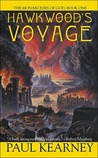 Hawkwood's Voyage by Paul Kearney
My rating: 5 of 5 stars
*** Possible Spoilers ***
This is a great, rip-roaring fantasy much in the style of Steven Erikson. If you like one you'll probably like the other. Being number one in a five-volume series, only one of the many subplots is even partially resolved and there's plenty of room for the author to carry on in the remainder of the volumes.
This book is surprisingly short for a fantasy but well crafted. There are something on the order of seven subplots so the reader is not short of intrigue. The state, the church, and individuals vie for power or mere survival on a grand scheme. Much of the story takes place aboard a sailing ship and it is clear that the author has done his homework because - as far as I can tell from Wikipedia - he has accurately described the tasks needed when the boat is forced to ride out a storm of almost hurricane strength. Likewise, he has provided some good descriptions of land battles, troop movements, military constraints and tactics.
For those who like fantasy that involves magic but not so much in the way of magical creatures - this author uses werewolves but that's about it - I think that that I can highly recommend the story.
View all my reviews


Mr Bones
 Mr. Bones: Twenty Stories by Paul Theroux
My rating: 2 of 5 stars
*** Possible Spoilers ***
There are 20 stories in this book. I enjoyed 4, disliked one so thoroughly I didn't finish it and found the remaining 15 to be okay - but nothing special. I would not recommend this book. It's not really bad. It's just that there are so many better works out there that I can't see wasting time on this one.
View all my reviews
October 14, 2017
Unsettling Canada
 Unsettling Canada: A National Wake-Up Call by Arthur Manuel
My rating: 2 of 5 stars
*** Possible Spoilers ***
This book was splashed over the Toronto Public Library's website as a 'must read for Canadians'. I'm always a little sceptical when I hear that something *must* be read, but I decided that it wouldn't hurt and might be interesting.
Basically Unsettling Canada is a combination autobiography, history, and political polemic that describes the Indigenous struggle against Canada. Arthur Manuel is the indigenous equivalent of the SJW. He dislikes colonialism and, by extension, Canada and Canadians with the exception of that subset of Canadians who occupy the far left of the political spectrum and are prepared to bow obsequiously to aboriginal demands.
The book is quite repetitious in places and rather tedious but if it accomplishes one thing it clearly indicates what that subset of the indigenous population who might describe themselves as activist want. Here's how it works. Imagine a map of Canada - just the outline - no provinces or territories. Now imagine it colored with just two colors - say green for those parts claimed by the indigenous peoples as being their territories, and orange for Canada. What you would see is that the vast majority of that map would be green. And that is the *starting* position for any negotiations between indigenous people and Canadians.
Not happening.
To accede to that claim would guarantee economic ruin for Canada and for Canadians. And, from the book it is clear that economic privation is one of the chief weapons in the arsenal of the indigenous activists. For example I think that most people believe that the softwood lumber NAFTA trade disputes that occurred on various occasions were driven by American Forestry Interests - and certainly they had a role - but this book makes clear that it was Canada's indigenous people who gave them the ammunition to attack Canada and attack it they did. Likewise, these native activists have been attempting to do an end-run around Canada by pressing their claim at the United Nations. Now that may seem like a reasonable approach but when you consider the fact that the United Nations is made up of a hodgepodge of underdeveloped countries all trying to undermine the West it becomes clear that what is going on is a sustained attack against the western values of free enterprise and capitalism - generally under the facade of environmentalism.
The author claims that these issues are racist in nature and he is absolutely, one-hundred percent correct. This is a struggle between indigenous and non-indigenous people. There is no middle ground and it is racist on both sides. Not only is there bigotry on the part of individuals - again on both sides - but the core issue as to who owns the real-estate that is known as Canada, is racist.
Although this book focuses strictly on indigenous issues and Canada, it illustrates a much broader issue that is seen more clearly south of the border. Americans, and by extension Canadians - although not so obviously - are polarized along the lines of politics, race, class, religion - in fact any demographic you can think of is a polarizing factor. Indigenous land claims constitute just one more log on the fire. In 2017 there is next to no common ground among people. I don't expect to see outright civil war in the United States, nor do I expect to see it in Canada, but I do expect to see a continuation of any number of irritants that drive people apart and result in sporadic outbreaks of violence. The author makes it clear that he supports only non-violent protest - but it is equally clear that whenever you get two antagonistic groups together there will be some individuals who will cross the line. Remember the Oka crises and Caledonia. With respect to Oka remember the iconic image of the Mohawk warrior wearing a camouflage shirt, a red bandana over his mouth, his left arm high in the air in defiance and holding a gun. The author might like to believe that indigenous protestors are non-violent, but that is nothing more than a marketing ploy.
In general, if your politics are of the far left you will enjoy this book as will many indigenous people. On the other hand if you are on the far left, you probably already know, or think you know what the author is saying so it might not be worth reading it from cover to cover. For those whose politics are right of center you won't enjoy it; however, it might be worth reading just to understand what the other side is thinking and on what they are basing their claims. For those in the middle you might find it a bit tedious - and rather repetitious in places - but as long as you keep in mind that this is a position of the far left of the indigenous spectrum then I think it may be informative.
View all my reviews
October 11, 2017
Down to Earth Sociology
 Down to Earth Sociology: Introductory Readings by James M. Henslin
My rating: 3 of 5 stars
*** Possible Spoilers ***
I actually enjoyed this book although it was not what I was expecting. When September rolls around and all the kids go back to school, one feels like taking up some new academic interest. I thought that Sociology might be of some use to a writer, so I used Google to locate 'Sociology 101' and scanned entries until I found a course that listed the accompanying textbook. Although the actual book was available only in the Toronto Reference Library and I didn't feel like making the trek, I found this book by the same author. It was a much earlier edition but I figured it was changed only to such an extent that university students would be required to purchase a new book every year in order to protect them from the dangers of saving money that might come from reselling course texts. So I selected it and started in.
Since this was the text accompanying a university course, I figured it would describe in detail the methods used by sociologists. It did - sort of. I'd guess that there were about 20 or so pages of the 588 that were devoted to that subject. The rest consisted of individual sociological papers - interesting perhaps - but hardly informative with respect to the practical aspects of the science.
There are two approaches to the study of sociology - quantitative (scientific) and qualitative (guesswork). This author favors the latter by a wide margin. He did explain how to conduct either type of study and he discussed in some detail the various tools and techniques that are used to gather data. Unfortunately he was a little terse when it came to explaining how the analysis - particularly of qualitative data - might be carried out. In a quantitative study statistical analysis may be used and anyone with a math background is probably pretty familiar with that; but in the case of qualitative studies, how are the results to be analyzed? Judging from what I read it appears you pretty much make it up as you go along.
The rest of the book as has been noted, consists of sociology papers. Perhaps the author was hoping that the reader might come to understand the process by reviewing the results; and, in fact, a number of authors did attempt to explain how they went about their work - at least as far as how they collected the data. It appears they seem to think that data analysis is an in-born skill.
If you'd like to read a wide-ranging smorgasbord of sociology papers then this book is quite good. The papers are interesting and well written; however, if you want to understand how to analyze various aspects of modern society and draw relevant conclusions then I think you may need to look elsewhere.
View all my reviews
September 30, 2017
Deadhouse Gates
 Deadhouse Gates by Steven Erikson
My rating: 5 of 5 stars
*** Possible Spoilers ***
Well, that was a short reincarnation ... but I digress.
The term 'Deadhouse Gates' refers to a portal - a means of travel from one location to another - not, perhaps as fast as one might think; but a lot faster than could be accomplished by means of Air Canada. It, however, is a fairly small part of this novel. And this novel comes as quite a surprise after Volume 1. I was expecting that the story would carry on from where it left off and it does ... sort of. It takes place a year later, in an entirely different location, and with mostly different people. A few individuals made it across from Volume 1 but most didn't. We do occasionally hear of their doings but what we hear is pretty sketchy.
In any event it appears that the Empress does have her problems - an army in open revolt on one side of her and an uprising in other lands. Imagine a colonial power such as Britain when it controlled India. Now imagine not a comparatively peaceful transition but one in which a huge army and a large number of citizens are slaughtered. Increase the scope. Suppose that a country the size of France was dominant over the rest of Europe and then those countries rose up in an unbridled wave of fury and ferocity. That's sort to the thing that the poor old Empress has to contend with.
This story, of course, is Sword and Sorcery - perhaps more sword than sorcery but there's plenty of both. At no time does the pace slow and there is plenty of action from the beginning to the end - and there are an awful lot of pages in between. There are great battles, betrayals, stealth and skulduggery - and enough plot twists to keep even the most jaded reader going. Steven Erikson certainly knows how to write battle scenes on a grand scale - something that's not as easy as it sounds. When huge armies collide things get messy and describing the clash in such a way as to make it real for the reader is highly impressive.
I took a few minutes to review this saga online and apparently we are in the middle of events surrounding the Malazan Empire so I expect the additional books in the series to go backwards as well as forwards - something I don't really care for at a personal level; but I certainly intend to keep reading so I'll just have to live with it. In any event, Book 2 could be read without ever reading Book 1 and it would still make sense - mostly. As with Book 1, there are many characters and so for the first fifty or so pages I was constantly flipping back to the cast of characters in the beginning but after that I had become sufficiently familiar with them that I could just keep reading. I read this book in 'e' format which was okay but unfortunately I was unable to enlarge the maps at the beginning so as to make sense of them. They're not really necessary for figuring out what's going on but I would have liked to take a peek at them from time to time.
Although subtle, the author does allow himself a little editorializing along the way. One of his 'messages' for example is that war is unpleasant. Now who would have guessed that? In addition, he really, really doesn't like nobility. There are a few other 'educational' stirrings that grated just a bit; but for the most part they can be ignored and the reader can get back to the good stuff - the killing and maiming of both good guys and bad guys either on a battlefield or in a back alley. You really can't go wrong with an assassin who pretty much carves his way through an entire guild of assassins although he doesn't fare so well when magic is involved. Anyway, the knives are sharp, the swords are whetted to perfection, and blood flows from cover to cover. This is a great book and I highly recommend it.
View all my reviews
September 20, 2017
Gardens of the Moon
 Gardens of the Moon by Steven Erikson
My rating: 5 of 5 stars
*** Possible Spoilers ***
If the Harry Potter series can be classified as light fantasy and Tolkien as classic fantasy then Gardens of the Moon would probably be dark fantasy. It's set in a world that has both humans and non-humans - sorcerers and gods. An empire is attempting to expand its territory and is being met with fierce resistance. An empress who came to power by assassinating the former emperor - and her husband - wishes to consolidate her power by eliminating everyone who served the former regime. This is a work of shifting alliances, betrayals and intrigue. It is also one of the best fantasy stories I've read in years. That said the first hundred or so pages were a little tough sledding. The author introduces so many characters and subplots that it was difficult to keep track. I found I needed two bookmarks - one where I was reading and one at the list of characters provided in the front so I could figure out who was who. Still, the effort was 100% worthwhile.
This is book one of a ten book series so one can't expect all the various plots to be resolved but I have to say that the author builds to a remarkably effective climax. The book held my attention right to the very last page. One thing I didn't care for was that the author introduced a bunch of new characters near the end that forced me back to the list of characters at the beginning all over again. Presumably he was setting things up for volume two but for me it was just a little jarring. Still there are grim assassins, thieves, great battles of magic as a dark power is unleashed and intrigue among the gods. What could be better?
I fully intend to read volume two and probably the remainder of the series although I have to admit that this author has his work cut out for him. Speaking from personal experience, the farther into a series one writes the more difficult it is to keep track of past event and characters. Yes, use of a spreadsheet simplifies things but it isn't a perfect solution. I know that I'm forever having to check a prior volume to make sure I'm not contradicting myself or messing up a subplot and this author has so many balls in the air so to speak that I can only imagine how difficult it must be for him to remain consistent as the series progresses.
In general if you like lots of subplots, lots of intrigue, and a large cast of characters you'll enjoy this book. It's a bit demanding for the reader but I think the investment is well worth making.
View all my reviews
September 4, 2017
We Generation
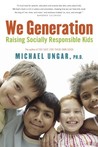 We Generation: Raising Socially Responsible Kids by Michael Ungar
My rating: 4 of 5 stars
*** Possible Spoilers ***
I was prepared to hate this book on sight. I read it because I was hoping to understand the logic, or lack of it behind Millennial and, even more, Generation Z thinking. That, however, was not the author's objective. Instead he was attempting to focus on how, as a society, we might encourage 'We Generation' thinking. However, despite the book's purpose, and the fact that it didn't provide much clarification on generational thinking, there were, at least parts that made sense. Yes the author is certainly far left of center on the political spectrum and yes, the book is something of a left-wing liberal polemic but the author tempers his idealism with a healthy dose of realism in many sections. Near the end he tends to go a little over the top but presumably he wanted to build up to a big emotional finish.
He points out that parents are important to children. While that might be self-evident he goes on to point out that providing children with monster homes, the latest gadgets, ferrying them from one activity to another is, in fact, to deny parenting - to replace it with things, status and schedules. He points out that children want parents to be a part of their lives - something that may be far from self-evident when young people seem to spend 90% of their time on their phones and the other 10% completely tuned out; nevertheless, he suggests that if a child appears to be lost, appears to have entered a world that is completely distant from that of the parent's, that child still wants to be found and to be brought once more into the family and the community.
He also understands that raising a child is not formulaic - that children are individuals and, while this author is not big on individualism, he appears to acknowledge that parents cannot raise children algorithmically and still be successful. There has to be give and take and he acknowledges and, in fact encourages this. He points out that discipline is essential but is careful to point out that beating children is counter productive - however satisfying it might be. They need to be taught both responsibility and accountability because those attributes are necessary for surviving in society and in business. On the other hand he thinks it is both acceptable and laudable for children to challenge authority to the point of being obnoxious - something I disagree with but then, this isn't my book and I'm not raising children.
This author appears to prioritize social cohesion well above individuality and, while the notion is abhorrent to me, personally, in a world of over 7 billion people, he may be correct. However it seems to me that as the pendulum swings to the left and 'social justice' becomes the mantra of the media, there is, at the same time, an increasing tyranny of the herd that does not, in my opinion, bode well for the future.
Overall, think the book is sufficiently balanced to be worth reading. For parents it might provide some valuable insight as to the actual needs of their offspring and for others ... well, it's well written and not overly preachy.
View all my reviews
September 3, 2017
Dracula's Brethren
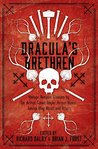 Dracula's Brethren by Richard Dalby
My rating: 5 of 5 stars
*** Possible spoilers ***
This book is described as 'vintage vampire classics' but not every story is about vampires. There are a few routine ghosts, one mummy and some other critters but certainly vampires predominate. The stories are arranged chronologically by date of publication and span the years 1820 to 1910 although a couple are based on legends that go back hundreds of years before that.
There's a good chance you'll recognize some of the author's names but the books for which they're noted have nothing to do with the supernatural. These are some of their lesser known works and there's a good chance you'll not have come across any of them in your other reading. For example Louisa May Alcott is known for Little Women, Little Men and who knows - maybe Little-Accidents-Resulting-From-Poor-Birth-Control but here her story is about an Egyptian curse that comes to fruition in the form of a plant that was both vampiric and deadly poisonous. it is a fine story with a macabre ending and totally unlike what you might expect from this author. Then there's a story by Arthur Conan Doyle but it has nothing to do with Sherlock Holmes. It does end on a remote British isle - in a storm - and involves a cliff - but I'll say no more.
Not one of these vampires is named Edmund or Edwin or whatever name is currently fashionable - I've rather lost track. These are serious vampires. You can be absolutely certain that no high school girl is going to get hot over these guys. One vampire is, perhaps, mildly attractive and the daughter of a Lord nearly succumbs to his blandishments but she's saved in the end - not by her own actions but with the help of her father, a loyal retainer and pure dumb luck. Many of these vampires don't even take on human form.
For those who like horror tales I highly recommend this book - just not right now. Wait until January, the night is pitch black, and a bitter north wind is rattling the windows with freezing ice pellets. Turn up the thermostat a degree or two, or, if you're so fortunate as to have a fireplace, put a fresh log on. Then make yourself a nice cup of hot chocolate, dim the lights except for the one you need to read, curl up with this book and enjoy. This will work even better if you're all alone for the evening. But if there comes a soft tapping upon your door - a sort of slithering noise on the other side - don't open it. It's probably just the wind - probably - and besides - you really don't want to know.
View all my reviews
August 24, 2017
God Bless You Mr. Rosewater
 God Bless You, Mr. Rosewater by Kurt Vonnegut Jr.
My rating: 2 of 5 stars
*** Possible Spoilers ***
Kurt Vonnegut Jr. is considered to be one of the masters of Sci-Fi; nevertheless, I did not enjoy this book. It did fascinate me however.
It was published in 1965. That year, Lyndon Johnson was sworn in as President of the United States. Lester Pearson was Prime Minister of Canada. The war in Vietnam was being aggressively pursued by the United States. Anti-war protesters were active. Racial unrest was rife in Selma Alabama. Bob Dylan shocked his fans by going electric at the Newport Folk Festival and the Beatles premiered the movie Help. 'I Can't Get No Satisfaction' by the Rolling Stones and 'Ticket to Ride' by the Beatles were big musically. The Baby Boomers spanned the teenage years and had I read this book at that time I probably would have thought it was exceptionally cool.
It's a satire that attacks Capitalism, Free Enterprise, Wealth, and America in general. Now that it's 2017 I've heard that song a thousand times before and I'm sick of it. Nevertheless, the parallels between Vonnegut's outrage at the time and the outrage being expressed by the left today is remarkable. It would appear that precious little has changed in 52 years. For that reason you might seriously consider reading this book - but don't expect to be entertained much. The satire - such as it is - is laid on thick. Kurt Vonnegut Jr. was not one for subtlety. The characters were mostly uninteresting and wooden. The one exception is a very minor character who appears late in the novel. Her name is Lila and she appears for only about five pages but she was a 13 year old girl who was sufficiently enterprising to buy up large quantities of smut and then sell it to her friends at vastly inflated prices. Her I enjoyed; but as I said, she appeared in only the smallest of roles and was quickly buried.
Another interesting parallel between then and now was that the author points out that automation was making for a scarcity of jobs. These days we have automation, analytics and off-shoring but the effect is the same. I found that interesting and rather surprising.
One other thing about this book is that the author appears to have been at war with the word 'and' and boycotted it whenever possible leaving quite a number of sentences seeming awkward.
If you're looking for a good story forget this one. On the other hand, if you wish to read about protest back then and compare it to protest now you may want to consider it.
View all my reviews
August 22, 2017
The World According to Bertie
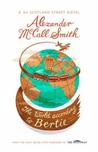 The World According to Bertie by Alexander McCall Smith
My rating: 5 of 5 stars
*** Possible Spoilers ***
Anyone who has ever heard me rattle on about writing - and my friends have learned to flee at the first sign of this - knows that my principle rant is that if you're going to tell a story then tell a story - which means you have to have a plot. It doesn't necessarily have to be a strong and compelling plot but there has to be one. Simply put, you need something that stretches between page 1 and wherever you wind up. Subplots are fine and, in my opinion, to be encouraged, but you still need that central plot.
Various modern - supposedly avant-garde writers eschew plot in favor of some sort of stream-of-consciousness writing. I don't read those authors and if I stumble across one by mistake I put the book down and go on my way. On exactly one occasion I read a book from cover to cover that was lacking a plot. The reason I continued was that I couldn't believe what i was seeing. By page 67 I was thinking - when is this story going to start. By page 100 I was thinking - how can this author go for a hundred pages without saying anything. By page 150 I'd abandoned hope but wanted to read on just to verify in my own mind how bad the book was. I won't mention the name of that particular author but he is well-known among the Sci-Fi set so evidently there is an audience for books without plots.
Alexander McCall Smith is an exception. This book - along with may of his others - doesn't have one dominant plot but instead a bunch of very limited ones. Forty-four Scotland Street is a fictitious address but a real street in Edinburgh. The author follows the lives of a number of characters who live there or nearby. Nothing particularly dramatic happens but the book is interesting nonetheless and well worth reading. It's not a page-turner. It's more of a read-a-bit-and-then-set-the-book-down-and-reflect sort of novel. In fact it's difficult to say who the principle character really is. Certainly I was drawn to Bertie, the six-year-old child prodigy who wants most of all to live the live of a normal boy - something his mother will never allow seeing as she regards normalcy as abject failure and will accept nothing sort of exceptionalism. However as a character, Bertie, being only six, is reactive. He observes a great deal but lacks the experience to understand much of what he is seeing and the adults in his life are very protective of their own world-views and therefore seldom provide him with a great deal of useful information. Instead they equivocate as many adults are wont to do with small children.
There is a great deal of humor in the book although most of it is very gentle and laid back. I did have a laugh when Bertie innocently asks his psychiatrist if he, the psychiatrist, is the father of Bertie's baby brother. There are plenty of hints that this is in fact the case but it appears that the good doctor, for all his protestations that patients need to explore all their lines of thought rather shies away from this one.
Simply put, I loved this book and Alexander McCall Smith's books in general. He has a nice gentle touch as an author and still manages to slip in some of his observations on society and where its going. He doesn't always approve.
View all my reviews


