
Doug Lewars's Blog, page 58
February 2, 2018
Requiem For The American Dream
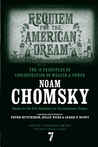 Requiem for the American Dream: The 10 Principles of Concentration of Wealth & Power by Noam Chomsky
My rating: 3 of 5 stars
*** Possible Spoilers ***
Going in you probably realize that anything by Noam Chomsky will be a polemic for the far left. This is no exception. If your politics are left of center you will probably enjoy it. If your politics are more to the right you won't enjoy it but you may learn from it. Of interest are the areas where Chomsky describes a problem in such a way that it's almost as if he's shifted from one side of the political spectrum to the other. Consider globalism. Globalism is lethal to the North American worker and Chomsky recognizes that. On the other hand globalism has increased the standard of living for an incredibly large number of individuals - not North American individuals but people nonetheless. You really can't have it both ways although Chomsky tries by suggesting that the solution to the problems to globalism can be cured with what amounts to universal Marxism. There are a number of these little contradictions throughout the book and I found them very interesting.
This is a book that apparently was based on a movie. I've never seen the movie but there are definite limitations that exist when most features run between 90 minutes and 2 hours. Abbreviation is an absolute necessity so, basing a book on a movie means that things are going to get a little terse at times. There are plenty of assertions and few of them are backed up. There is an excellent bibliography if one wants to follow up but I have doubts that anyone would want to wade through it. I certainly don't.
In general the book is well-written if nothing else. It's an easy and mildly pleasant read provided you don't throw it across the room at some of the more 'up with the barricades' parts. It also points out a number of real issues. In my opinion Marxism isn't a viable solution and in the past, revolutions have just replaced one set of bad actors for another. That doesn't alter the fact that there are significant issues in North America that should be considered. I don't have a solution and neither does Chomsky however much he may think he has, but at least he provides the reader with something to think about.
View all my reviews


January 26, 2018
Catacombs of Terror
 Catacombs of Terror! by Stanley Donwood
My rating: 2 of 5 stars
*** Possible Spoilers ***
This is a combination thriller and comedy although the comedy is strictly tongue-in-cheek so you won't find yourself laughing much. It is done in the classic detective genre - rather scruffy private investigator who gets himself entangled in a deep and sinister plot. I wouldn't say it's a page-turner but it kept me interested until the end so it's not bad and the pacing is excellent. The author relies on a few too many cliches for my taste but I suppose that's required in writing this sort of satire so I guess it's okay. The story comes with a nice twist at the end although I was left wondering if the author deliberately gave it that twist or if he simply ran out of time to finish the book. It's a fairly good story for a rainy Sunday afternoon but there are plenty of better books you can read.
There was one aspect of the story that seemed a bit sloppy. The bad guys have almost the entire city covered with CCTVs so they can watch everyone. Our hero locates himself in the one spot that doesn't have these camera from where he makes a cell-phone call. And it doesn't occur to him that cell phones are remarkably easy to hack and trace. Worse yet this doesn't occur to the bad guys either which means it probably didn't occur to the author - but it should have. There were a number of other loose ends in the story - like why - but from the point of view of simple unquestioning story telling it's okay.
View all my reviews
January 22, 2018
Mort
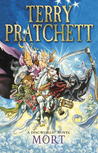 Mort by Terry Pratchett
My rating: 5 of 5 stars
*** Possible Spoilers ***
As usual with Terry Pratchett, the pacing was fast, the asides were irreverent, and the characters were distinctive. I loved the book but I can quite understand that it is not for everyone. Those who take themselves and the world around them with great gravitas will probably find this story far too frivolous for their taste but, for those who enjoy silliness, this book is for you.
View all my reviews
January 14, 2018
Carry Me
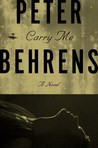 Carry Me by Peter Behrens
My rating: 4 of 5 stars
*** Possible Spoilers ***
I was quite prepared to hate this book so it came as a pleasant surprise that I rather liked it. Before starting I’d read both positive and negative reviews. The positive ones were too gushy and the negative ones stated that the book was excruciatingly boring. I suspected that they were correct and that I’d be thoroughly bored.
I wasn’t. Certainly the pace of this book is slow and the plot is fairly limited. Most of it is the narrator attempting to understand his own feelings as he encounters world after world that he doesn’t understand. He’s born in 1909 so is a small child during the First World War where his father is interned in England because he holds German citizenship – more by accident than because he was born there. The young lad can’t really understand why his father is locked up nor why the children at school bully him relentlessly; nevertheless he survives and even begins to thrive when his mother moves them to Ireland.
Following the war, the family is deported to Germany where they do quite well. The father receives employment from a wealthy German aristocrat and the narrator progresses well at school, makes friends and the family carves out a new life. However, as they are thriving we see the gradual deterioration in German society. It starts off small and gradually escalates.
The narrator of course falls in love with the daughter of the Baron for whom his father works but it is a very slow relationship. They both go their own ways for years and years. It is only after the narrator had been given a job in the Baron’s company – and a good job at that – that they reunite and gradually form bonds. The problem, of course is that the Baron is Jewish and, by extension, so is his daughter; and Jews were becoming less popular in Germany.
Gradually the society deteriorates. Hindsight, however, is twenty-twenty and neither Billy, the narrator, or Karin, the Baron’s daughter – nor any of the others with whom they are associated – can really believe that what they are seeing isn’t merely an aberration – a temporary breakdown in society that will be rectified in time. And so they stay, and things become progressively worse until they are forced to leave. But by this time the damage has been done and although they make it to America, Karin, is unable to put her life back together. Billy does, because the author realized that no matter what happens, life usually goes on, somehow. People wake up in the morning, do whatever they have to do during the day and go to bed at night. They survive. They may not be happy. They may have regrets, but they carry on – mostly.
Sometime ago I read, ‘Do not Say We Have Nothing’ and the parallels were impressive. In that book we have China’s Red Guards terrorizing the population. Here, we have the Nazi Brown Shirts doing the same thing. I watched a movie recently in which footage of the student riots in Iran were shown when the American embassy was overrun by the mob and hostages were taken. Whether it’s the Red Guards, the Nazi Brown shirts, the Iranian Students, the Colectivos in Venezuela or Antifa in North America, they’re all the same – young thugs cherry-picking from various ideologies in order to run amok and act out violently against anyone they don’t like – or who just happens to be in the wrong place at the wrong time. In North America we like to pretend that we’re immune for societal collapse. Perhaps we are – perhaps not.
Although I enjoyed this book, I don’t recommend it for everyone. I think one needs to be older to appreciate it. As noted above, the pace is very slow and rather out of touch with much of today’s fiction. One needs to have lived long enough to understand the narrators feelings as well as his shortcomings. There are times in the book he acts badly but there are times when most people fail to act in accordance with their values. I believe that the best audience for this book would be older than 65 but I could be mistaken. Read the first 15 pages. The author’s style is pretty clearly illustrated in that sample. If you don’t like the first 15 pages there’s a good chance you won’t like the rest of the book and will probably find it highly frustrating.
View all my reviews
January 13, 2018
The Management Style of Supreme Beings
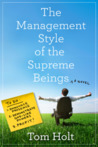 The Management Style of the Supreme Beings by Tom Holt
My rating: 5 of 5 stars
*** Possible Spoilers ***
It's hard to go wrong with Tom Holt. This wasn't the funniest book I ever read and one doesn't read Mr. Holt for deep insightful ideas. This book was light-hearted fun and I enjoyed it thoroughly.
View all my reviews
January 5, 2018
The Obelisk Gate
 The Obelisk Gate by N.K. Jemisin
My rating: 3 of 5 stars
*** Possible Spoilers ***
This book won the Hugo award for best novel. If it deserved the win then the competition was pretty feeble. By approximately page 10, I was ready to award it one star but as it progressed things improved - at least a bit.
The best thing about this book is the world building. That is masterful. The story takes place at least 20,000 years from now on an Earth that is seismically unstable. Periodically eruptions of some sort or other create great dust storms that black out the sun and create winters that last for hundreds of years. Humans have somehow adapted to this and survived although their long-term survival is questionable. Some people are normal, some have magical talents that enable them to control some of the seismic activity, and some are barely human. Little is known about the latter but they can move through earth and stone like someone swimming through water - except faster. Those who have magic are hated and feared - with some reason because they cannot always control their magic and when they don't the people around them die. That's the good part.
This is the second book in a series and I haven't read number one so it was a little confusing. Fortunately the author included an appendix so that most of the terms are explained. I've seem some criticisms claiming that the work suffers from 'second book syndrome'. Frankly I don't believe that this exists. A book is either worth reading or it isn't. Just because certain character and plot elements are laid out in the first book has no bearing on how the second should or should not appear. I suspect that 'second book syndrome' is what you get when a reader who has read book number one fails to have his or her expectations met and is unrelated to the merits of the story at hand.
There were a number of things I disliked. The author uses mostly second person present tense to tell the story and it doesn't work. It comes across as stilted and pretentious. In addition, the pacing is painfully slow at times. It does improve as the book progresses but long about page fifty the reader needs to continue reading more from stubbornness than from interest.
All the characters are damaged. I realize that is the fad these days among 'artistic' works and is probably how this book managed to win the Hugo but one is tempted to pat the protagonists on the head and give them a lollipop.
If you wish to see world building at its best then I can recommend this book but that's all it is - a technical exercise - masterfully performed. If, on the other hand, you're looking for an entertaining story then is book is probably not for you.
View all my reviews
January 1, 2018
Uprooted
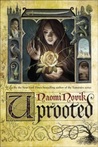 Uprooted by Naomi Novik
My rating: 4 of 5 stars
*** Possible Spoilers ***
There are certain risks to writing reviews, chief among which is the possibility that what you are reviewing might be yourself rather than the story at hand. Before embarking on a new novel, or at least before getting too deep into it, I like to take a look at the existing reviews both positive and negative. I try and find a couple of them rating the book at five stars and another two at one. Sometimes I can’t find really bad reviews and have to settle for a two but tastes vary so much that this doesn’t happen very often.
Highly negative reviewers are frequently vehement in their opinions but not necessarily articulate. They know that a book has annoyed them; but they may not know exactly why. In the case of Uprooted, I found three bad reviews and a host of good ones. One comment caught my attention. The writer could not understand how anyone could give such a novel four or more stars. The answer of course, is obvious. People come at books from different backgrounds and hold different mindsets but that reviewer couldn’t seem to comprehend how anyone could enjoy a book that he found so offensive. So it goes.
The most common criticism of this work is that The Dragon – a senior sorcerer – is abusive towards his apprentice. He is certainly harsh and he blusters a lot; but I don’t get the feeling that he is abusive – at least not as I would define abusive and that is likely the crux of the issue. This is NOT a book for radical feminists. It is not for those who expect men to be sensitive-new-age-personages. It is not for those who rail at classism. The Dragon is the top wizard in the kingdom. This guy is number one, the big cheese, numero uno and he’s over a hundred years old. While he is certainly full of himself it is also true that he has earned the prestige that accrues to the title of being first and foremost. And his responsibilities include being able to maintain a détente with a competing kingdom that has more wizards than his kingdom’s. He is not inclined to suffer fools gladly but he earnestly attempts to understand his apprentice’s methodology and adapt his teaching style so as to optimize her talents.
One of the conflicts so revealed is that between logic and intuition. The Dragon has carefully crafted spells that are recorded and repeatable. Although he uses magic – he is a sorcerer after all – he uses and researches it scientifically. Our heroine uses intuition. She feels her way along the path of magic towards whatever destination she has in mind. Her spells are not always repeatable and generally cannot even be analyzed. The author suggests that both approaches are valid but it’s clear that she leans towards the intuitive one. Those with an IT background may well identify with The Dragon. Those coming from the arts may lean towards the heroine. Being able to relate to both is tricky.
A second criticism leveled against the book is that the heroine is a snowflake. However it should be noted that her background is rural – a small village far removed from big-city life. She has a very limited world view and she’s only 17 when she’s taken from her parents and told that for the next 10 years it will be her lot to act as a servant in the Dragon’s tower. True, she has magic and quickly upgrades from servant to student but she has no aspirations beyond living what she perceives is a normal existence. This is not an ambitious heroine. This is not a heroine who thinks, hey, I have magic – I can become a VIP in the kingdom and wield great power. Nope, this is a heroine who would like very much to pack the whole thing in and go home to Mom and Dad, find some sort of boy-next-door to marry, have babies and live a sedate and comfortable life – albeit one that comes with mud, brambles and berries. In fact, this is a heroine who is pretty much the antithesis of the modern, urban feminist. So if there is any surprise that there are some 'ones' among the ratings, the surprise should probably be that there are so few of them.
I thoroughly enjoyed the story. I found the ending to be a little clichéd perhaps but I doubt that I could have done any better. The pacing tended to be just a tiny bit slow but not excessively. Uprooted won the 2016 Locus award for best fantasy novel and the Nebula award in 2016 for best novel. Personally I don’t think it was so good as to warrant that kind of praise but then I don’t know what the competition had to offer so maybe it was the best. In any event if you like fantasy then this is a remarkably good story.
View all my reviews
December 26, 2017
Jeeves and the Yule-Tide Spirit
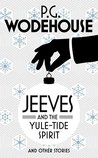 Jeeves and the Yule-Tide Spirit and Other Stories by P.G. Wodehouse
My rating: 5 of 5 stars
*** Possible Spoilers ***
I think it would be difficult not to enjoy a book by P.G Wodehouse. This was a collection of short stories and, while I might have preferred a few more featuring Bertie Wooster and Jeeves, they were all enjoyable nonetheless.
Mr. Wodehouse did his most prolific short-story writing in his early years, and, while I didn't check every story in this book, the ones I did check were all written before 1940. Therefore, while I recommend the book to anyone with a sense of humor, it might seem terribly politically incorrect to many of the younger, more earnest members of our society. For those so encumbered with the modern bent towards social engineering, I think they might be generally happier giving this work a pass. However, I consider it improbable that they would have time for, or even stumble across any of the P.G. Wodehouse works while attempting to keep up with the latest avant-garde literary must-reads and social-media crises which seem never-ending; so it is likely not an issue.
Therefore I think one might well select a time of mid-winter solitude, put another log on the fire, pour a brandy or rum eggnog or perhaps some mulled wine with cinnamon, glance at the reds, blues, greens and yellows of the Christmas tree lights shining through the tinsel and settle back to enjoy these thirteen marvelous Christmas presents.
View all my reviews
December 19, 2017
Open Season
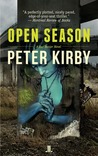 Open Season by Peter Kirby
My rating: 5 of 5 stars
*** Possible Spoilers ***
If you like detective stories and thrillers this is one of the best. There are lots of plot twists and the villains are proper villains - nothing good about them. Witnesses die left and right leaving the police scrambling to obtain evidence and break the case open. I was expecting a bit more to be made of the subplot and was a little disappointed with that but the lack of continuity doesn't impact the story to any great extent.
Like any recently published novel there is the obligatory sex scene but you can just skip over it and get on with the interesting parts. Plus it's only three or four pages and has nothing to do with the plot.
The story is interesting and the pacing is terrific. It happens that the author does a bit of editorializing of his political views but everyone has a bias of some sort and every author does a bit of that sort of thing. Peter Kirby is just a little more heavy handed them most. Plus if your own views happen to be left of center you can say 'right on!' and give a fist pump and if they happen to be on the right of the spectrum you can say 'yeah, yeah' and read on with the adventure. Yes there is a fair bit of proselytizing but it's so well written that is just blends in with the story and isn't abrasive. I thoroughly enjoyed the book and I highly recommend it to anyone who likes police stories with lots of murders.
View all my reviews
December 16, 2017
A Daughter of No Nation
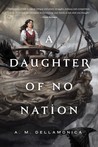 A Daughter of No Nation by A.M. Dellamonica
My rating: 2 of 5 stars
*** Possible Spoilers ***
This was the winner of an Aurora award for 2016. I'm not sure why. I did make it through the entire book but it was a struggle and I thought about giving up numerous times. Fortunately near the end of the book the author got serious about her story and stopped trying to annoy the reader by focusing on her heroine's lack of maturity.
Most people seem to like it and most comment on the impressive amount of world-building that was done. I have to concede that the world-building was first rate and by far the best part of the novel. Unfortunately it was overshadowed by the unpleasantness of the heroine. “As Beck walked away she gave Sophie a scowl that was clear enough: Stop being a histrionic princess!” If only the author had taken her own advice. But alas he did not and we are left with Sophie's angst throughout the story.
“The image of those altered goat-people in the marsh had seized her imagination again, and she was flailing in a sea of guilt.” The goat-people are slaves who have been altered by magic to combat a particularly invasive plant species. Sophie has never seen them before. She was in no way responsible for the plight; nevertheless, she immediately reacted to their situation from a position of guilt. This is the kind of individual she is and we're left to live with that for much of the novel.
She is twenty-five years old. We're told she's defended her thesis so she's either got a Master's Degree or a Doctorate. She has turned down a job interview for the Scripps Institute. The Scripps Institute is a real facility. It focuses on research and education in the biomedical field. Sophie has majored in biology but we're told she's taken courses in both physics and chemistry as well.
In short, Sophie has a solid STEM background yet she acts like someone who has graduated from a humanities program. I regard that as the chief problem with this book. She has to be intelligent in order to have acquired her academic credentials and yet she acts like an SJW. She’s warned that anything she might do to improve her birth mother’s lot is probably going to backfire. She’s new to the world in which she finds herself. She’s learning as she goes but she recognizes that she has a long way to go. So what does she do? She double’s down in her plan to effect a rescue. In fact she displays an abysmal lack of rationality at every turn.
I'm not entirely sure who the audience for this novel might be. Techies will like the world-building but find the heroine's histrionics painful in the extreme. Females who like romance novels will find the science boring. Perhaps those who are wedded to the social justice movement might like it but they might find that the story intrudes too much on the proselytizing. This is the second volume of a trilogy and I don't intend to read volumes one or three.
View all my reviews


