
Doug Lewars's Blog - Posts Tagged "fantasy"
Uprooted
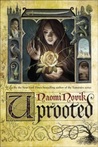 Uprooted by Naomi Novik
My rating: 4 of 5 stars
*** Possible Spoilers ***
There are certain risks to writing reviews, chief among which is the possibility that what you are reviewing might be yourself rather than the story at hand. Before embarking on a new novel, or at least before getting too deep into it, I like to take a look at the existing reviews both positive and negative. I try and find a couple of them rating the book at five stars and another two at one. Sometimes I can’t find really bad reviews and have to settle for a two but tastes vary so much that this doesn’t happen very often.
Highly negative reviewers are frequently vehement in their opinions but not necessarily articulate. They know that a book has annoyed them; but they may not know exactly why. In the case of Uprooted, I found three bad reviews and a host of good ones. One comment caught my attention. The writer could not understand how anyone could give such a novel four or more stars. The answer of course, is obvious. People come at books from different backgrounds and hold different mindsets but that reviewer couldn’t seem to comprehend how anyone could enjoy a book that he found so offensive. So it goes.
The most common criticism of this work is that The Dragon – a senior sorcerer – is abusive towards his apprentice. He is certainly harsh and he blusters a lot; but I don’t get the feeling that he is abusive – at least not as I would define abusive and that is likely the crux of the issue. This is NOT a book for radical feminists. It is not for those who expect men to be sensitive-new-age-personages. It is not for those who rail at classism. The Dragon is the top wizard in the kingdom. This guy is number one, the big cheese, numero uno and he’s over a hundred years old. While he is certainly full of himself it is also true that he has earned the prestige that accrues to the title of being first and foremost. And his responsibilities include being able to maintain a détente with a competing kingdom that has more wizards than his kingdom’s. He is not inclined to suffer fools gladly but he earnestly attempts to understand his apprentice’s methodology and adapt his teaching style so as to optimize her talents.
One of the conflicts so revealed is that between logic and intuition. The Dragon has carefully crafted spells that are recorded and repeatable. Although he uses magic – he is a sorcerer after all – he uses and researches it scientifically. Our heroine uses intuition. She feels her way along the path of magic towards whatever destination she has in mind. Her spells are not always repeatable and generally cannot even be analyzed. The author suggests that both approaches are valid but it’s clear that she leans towards the intuitive one. Those with an IT background may well identify with The Dragon. Those coming from the arts may lean towards the heroine. Being able to relate to both is tricky.
A second criticism leveled against the book is that the heroine is a snowflake. However it should be noted that her background is rural – a small village far removed from big-city life. She has a very limited world view and she’s only 17 when she’s taken from her parents and told that for the next 10 years it will be her lot to act as a servant in the Dragon’s tower. True, she has magic and quickly upgrades from servant to student but she has no aspirations beyond living what she perceives is a normal existence. This is not an ambitious heroine. This is not a heroine who thinks, hey, I have magic – I can become a VIP in the kingdom and wield great power. Nope, this is a heroine who would like very much to pack the whole thing in and go home to Mom and Dad, find some sort of boy-next-door to marry, have babies and live a sedate and comfortable life – albeit one that comes with mud, brambles and berries. In fact, this is a heroine who is pretty much the antithesis of the modern, urban feminist. So if there is any surprise that there are some 'ones' among the ratings, the surprise should probably be that there are so few of them.
I thoroughly enjoyed the story. I found the ending to be a little clichéd perhaps but I doubt that I could have done any better. The pacing tended to be just a tiny bit slow but not excessively. Uprooted won the 2016 Locus award for best fantasy novel and the Nebula award in 2016 for best novel. Personally I don’t think it was so good as to warrant that kind of praise but then I don’t know what the competition had to offer so maybe it was the best. In any event if you like fantasy then this is a remarkably good story.
View all my reviews


The Obelisk Gate
 The Obelisk Gate by N.K. Jemisin
My rating: 3 of 5 stars
*** Possible Spoilers ***
This book won the Hugo award for best novel. If it deserved the win then the competition was pretty feeble. By approximately page 10, I was ready to award it one star but as it progressed things improved - at least a bit.
The best thing about this book is the world building. That is masterful. The story takes place at least 20,000 years from now on an Earth that is seismically unstable. Periodically eruptions of some sort or other create great dust storms that black out the sun and create winters that last for hundreds of years. Humans have somehow adapted to this and survived although their long-term survival is questionable. Some people are normal, some have magical talents that enable them to control some of the seismic activity, and some are barely human. Little is known about the latter but they can move through earth and stone like someone swimming through water - except faster. Those who have magic are hated and feared - with some reason because they cannot always control their magic and when they don't the people around them die. That's the good part.
This is the second book in a series and I haven't read number one so it was a little confusing. Fortunately the author included an appendix so that most of the terms are explained. I've seem some criticisms claiming that the work suffers from 'second book syndrome'. Frankly I don't believe that this exists. A book is either worth reading or it isn't. Just because certain character and plot elements are laid out in the first book has no bearing on how the second should or should not appear. I suspect that 'second book syndrome' is what you get when a reader who has read book number one fails to have his or her expectations met and is unrelated to the merits of the story at hand.
There were a number of things I disliked. The author uses mostly second person present tense to tell the story and it doesn't work. It comes across as stilted and pretentious. In addition, the pacing is painfully slow at times. It does improve as the book progresses but long about page fifty the reader needs to continue reading more from stubbornness than from interest.
All the characters are damaged. I realize that is the fad these days among 'artistic' works and is probably how this book managed to win the Hugo but one is tempted to pat the protagonists on the head and give them a lollipop.
If you wish to see world building at its best then I can recommend this book but that's all it is - a technical exercise - masterfully performed. If, on the other hand, you're looking for an entertaining story then is book is probably not for you.
View all my reviews


