
Maggie James's Blog, page 9
April 30, 2019
Five Unusual Novel Structures
For my fourth novel, 'The Second Captive', I adopted a two-part structure, together with a prologue and epilogue. Not particularly unusual, but it got me thinking. Just how weird and wacky can a novelist get with the way he/she constructs a novel? And are there any examples I could share with my blog readers? It turns out there are plenty. Here are five examples of novels that take a different approach to the classic chapter-by-chapter structure. 1. 'Dolores Claiborne' - Stephen King 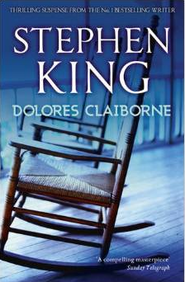 'Dolores Claiborne' is a 1992 thriller by Stephen King, narrated by Dolores herself. The novel is unusual in that there are no chapters or other section breaks. Instead, the book is a single continuous piece of prose that reads like a monologue. It sounds strange, but it works. Here's a summary of the plot.
Dolores Claiborne is being interrogated by the police, under suspicion of murdering her wealthy employer, an elderly woman named Vera Donovan whom she has looked after for years. The two women had a difficult yet close relationship. Dolores is adamant that she is innocent; however, she does confess to killing her husband, Joe St. George, almost thirty years before, after finding out that he sexually molested their fourteen-year-old daughter. Dolores's confession develops into the story of her life, her troubled marriage, and her relationship with her employer. Along the way we also get glimpses into the personal lives of the police officers interrogating her, disclosed through Dolores's commentary, which demonstrates an astute grasp of human nature. 2. 'The French Lieutenant's Woman' - John Fowles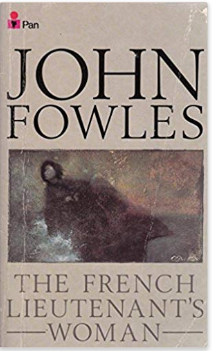 'The French Lieutenant's Woman', written by John Fowles in 1969, is a historical fiction novel. It's unusual in that the narrator intervenes throughout the novel and later becomes a character in it. Furthermore, he offers three different ways for the narrative to end. (No plot spoilers, I promise!) After the first ending, the narrator appears as a character sharing a railway compartment with the male protagonist. He tosses a coin to determine the order in which he will portray the other two possible endings, emphasising their equal plausibility. Here's a summary of the plot.
Sarah Woodruff, the 'Woman' of the title, also known as 'Tragedy', lives in Lyme Regis as a disgraced woman, supposedly abandoned by a French ship's officer named Varguennes who has returned to France and married. She spends a lot of time on The Cobb, a stone jetty where she stares out at the sea, thus increasing her mysterious reputation. One day, Charles Smithson and Ernestina Freeman, his fiancée, see Sarah walking along the cliffside. Ernestina tells Charles something of Sarah's story, and he becomes curious about her. He has several more encounters with Sarah, and ends up falling in love with her. Returning from a journey to Ernestina's father, Charles has the choice of either returning to Ernestina or visiting Sarah. It's at this point that the first possible ending kicks in, triggering the appearance of the narrator in Charles's railway carriage and the other endings. Intriguing! 3. 'Slaughterhouse Five' - Kurt Vonnegut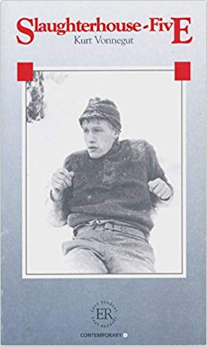 The novel boasting the unwieldy title of 'Slaughterhouse-Five, or The Children's Crusade: A Duty-Dance with Death' was written in 1969 by Kurt Vonnegut. It's a satirical novel that's partly autobiographical, being based on Vonnegut's World War Two experiences, particularly the fire-bombing of Dresden. Its structure is unusual in that the story is told in a non-linear order and events become clear through various flashbacks (or time travel experiences) involving the narrator. He describes the stories of Billy Pilgrim, who believes himself to have been in an alien zoo and to experience time travel. Here's a summary of the plot.
Billy Pilgrim is a disoriented, fatalistic, and ill-trained American soldier who refuses to fight in the Second World War. He is captured by the Germans and transported to Dresden where he and his fellow prisoners are housed in a disused slaughterhouse in Dresden. Their building is known as "Schlachthof-fünf" ("Slaughterhouse Five"). During the fire-bombing, the prisoners of war and their German guards hide in a cellar, causing them to be among the few survivors. After the war ends, Billy suffers post-traumatic stress disorder and is put into psychiatric care.
Once released, he marries a woman called Valencia Merble, and they have two children: a son, Robert, and a daughter named Barbara. Years later, on Barbara's wedding night, Billy is captured by an alien space ship and taken to a far-off planet, where he meets a porn star. She and Billy fall in love and have a child together. He is then sent back to Earth to relive past or future moments of his life. In 1968, Billy and a co-pilot are the only survivors of a plane crash. Whilst recovering, he shares a hospital room with a Harvard history professor. Billy talks about the bombing of Dresden, with the professor claiming it was justified. After Barbara takes him home, he sneaks out and drives to New York City. That evening he wanders around Times Square, visiting a bookstore featuring pornography, which brings back memories of his former love. Later, he guests on a radio show where he talks about his time-travels, culminating in being kicked out of the studio. He returns to his hotel room, falls asleep and time-travels back to 1945 Dresden, where the book ends.
4. 'Pale Fire' - Vladimir Nabokov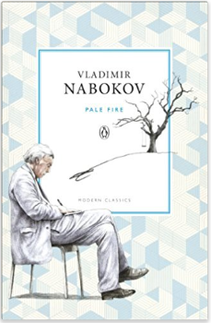 This novel, written in 1962, is unusual in that it's presented as a 999-line poem entitled "Pale Fire" by the fictional John Shade, with a foreword and lengthy commentary by an academic colleague of the poet, Charles Kinbote. Together these elements form a narrative in which both authors are central characters. The reader can chose to read 'Pale Fire' in the normal linear fashion, or by jumping between Kinbote's notes and Shade's poem. The interaction between Kinbote and Shade takes place in the fictitious town of New Wye, Appalachia, where they live close to each other. Kinbote writes his commentary in a tourist cabin in the equally fictitious western town of Cedarn, Utana.
Canto 1 of Shade's poem includes his early encounters with death and what he believes to be the supernatural. Canto 2 centres on his family and the apparent suicide of his daughter, Hazel. Number 3 focuses on Shade's search for knowledge about an afterlife, whilst 4 offers details regarding his daily life and his poetry, through which he attempts to understand the universe.
Kinbote acquires the manuscript, overseeing the poem's publication, telling readers that it lacks only line 1,000. In his role as co-narrator, he tells three stories, one being his own, especially his friendship with Shade. Kinbote's second story deals with King Charles II, "The Beloved," the deposed king of Zembla, claiming he inspired Shade to write the poem by recounting King Charles's escape to him. The final story is that of Gradus, an assassin dispatched by the new rulers of Zembla to kill the exiled King Charles. In the last note Kinbote makes, to the missing line 1000, he tells how Gradus killed Shade by mistake.
Isn't that all weird and wonderful? 5. 'The Unfortunates' - B S Johnson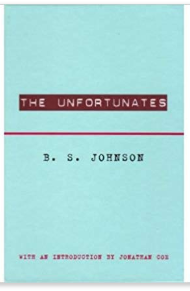 B.S. Johnson's 1969 experimental novel 'The Unfortunates' consists of 27 unbound chapters in a box. The first and last chapters are specified but the other 25 can be read in any order. These range in length from a single paragraph to twelve pages.
The author explained this unusual structure by saying it was a better way of conveying the mind’s randomness than the imposed order of a bound book. Here's a summary of the plot.
A sports writer is sent to Nottingham on an assignment, only to find himself confronted by ghosts from his past. As he attempts to report an association football match, memories of his friend, a tragic victim of cancer, haunt his mind.
Let's hear from you! As I mentioned above, this post is only the tip of the iceberg when it comes to unusually structured novels. What ones have you read that go beyond the norm in terms of structure? Perhaps you're a novelist yourself who's written a book that's a bit different. Leave me a comment and let me know!
'Dolores Claiborne' is a 1992 thriller by Stephen King, narrated by Dolores herself. The novel is unusual in that there are no chapters or other section breaks. Instead, the book is a single continuous piece of prose that reads like a monologue. It sounds strange, but it works. Here's a summary of the plot.Dolores Claiborne is being interrogated by the police, under suspicion of murdering her wealthy employer, an elderly woman named Vera Donovan whom she has looked after for years. The two women had a difficult yet close relationship. Dolores is adamant that she is innocent; however, she does confess to killing her husband, Joe St. George, almost thirty years before, after finding out that he sexually molested their fourteen-year-old daughter. Dolores's confession develops into the story of her life, her troubled marriage, and her relationship with her employer. Along the way we also get glimpses into the personal lives of the police officers interrogating her, disclosed through Dolores's commentary, which demonstrates an astute grasp of human nature. 2. 'The French Lieutenant's Woman' - John Fowles
'The French Lieutenant's Woman', written by John Fowles in 1969, is a historical fiction novel. It's unusual in that the narrator intervenes throughout the novel and later becomes a character in it. Furthermore, he offers three different ways for the narrative to end. (No plot spoilers, I promise!) After the first ending, the narrator appears as a character sharing a railway compartment with the male protagonist. He tosses a coin to determine the order in which he will portray the other two possible endings, emphasising their equal plausibility. Here's a summary of the plot.Sarah Woodruff, the 'Woman' of the title, also known as 'Tragedy', lives in Lyme Regis as a disgraced woman, supposedly abandoned by a French ship's officer named Varguennes who has returned to France and married. She spends a lot of time on The Cobb, a stone jetty where she stares out at the sea, thus increasing her mysterious reputation. One day, Charles Smithson and Ernestina Freeman, his fiancée, see Sarah walking along the cliffside. Ernestina tells Charles something of Sarah's story, and he becomes curious about her. He has several more encounters with Sarah, and ends up falling in love with her. Returning from a journey to Ernestina's father, Charles has the choice of either returning to Ernestina or visiting Sarah. It's at this point that the first possible ending kicks in, triggering the appearance of the narrator in Charles's railway carriage and the other endings. Intriguing! 3. 'Slaughterhouse Five' - Kurt Vonnegut
The novel boasting the unwieldy title of 'Slaughterhouse-Five, or The Children's Crusade: A Duty-Dance with Death' was written in 1969 by Kurt Vonnegut. It's a satirical novel that's partly autobiographical, being based on Vonnegut's World War Two experiences, particularly the fire-bombing of Dresden. Its structure is unusual in that the story is told in a non-linear order and events become clear through various flashbacks (or time travel experiences) involving the narrator. He describes the stories of Billy Pilgrim, who believes himself to have been in an alien zoo and to experience time travel. Here's a summary of the plot.Billy Pilgrim is a disoriented, fatalistic, and ill-trained American soldier who refuses to fight in the Second World War. He is captured by the Germans and transported to Dresden where he and his fellow prisoners are housed in a disused slaughterhouse in Dresden. Their building is known as "Schlachthof-fünf" ("Slaughterhouse Five"). During the fire-bombing, the prisoners of war and their German guards hide in a cellar, causing them to be among the few survivors. After the war ends, Billy suffers post-traumatic stress disorder and is put into psychiatric care.
Once released, he marries a woman called Valencia Merble, and they have two children: a son, Robert, and a daughter named Barbara. Years later, on Barbara's wedding night, Billy is captured by an alien space ship and taken to a far-off planet, where he meets a porn star. She and Billy fall in love and have a child together. He is then sent back to Earth to relive past or future moments of his life. In 1968, Billy and a co-pilot are the only survivors of a plane crash. Whilst recovering, he shares a hospital room with a Harvard history professor. Billy talks about the bombing of Dresden, with the professor claiming it was justified. After Barbara takes him home, he sneaks out and drives to New York City. That evening he wanders around Times Square, visiting a bookstore featuring pornography, which brings back memories of his former love. Later, he guests on a radio show where he talks about his time-travels, culminating in being kicked out of the studio. He returns to his hotel room, falls asleep and time-travels back to 1945 Dresden, where the book ends.
4. 'Pale Fire' - Vladimir Nabokov
This novel, written in 1962, is unusual in that it's presented as a 999-line poem entitled "Pale Fire" by the fictional John Shade, with a foreword and lengthy commentary by an academic colleague of the poet, Charles Kinbote. Together these elements form a narrative in which both authors are central characters. The reader can chose to read 'Pale Fire' in the normal linear fashion, or by jumping between Kinbote's notes and Shade's poem. The interaction between Kinbote and Shade takes place in the fictitious town of New Wye, Appalachia, where they live close to each other. Kinbote writes his commentary in a tourist cabin in the equally fictitious western town of Cedarn, Utana. Canto 1 of Shade's poem includes his early encounters with death and what he believes to be the supernatural. Canto 2 centres on his family and the apparent suicide of his daughter, Hazel. Number 3 focuses on Shade's search for knowledge about an afterlife, whilst 4 offers details regarding his daily life and his poetry, through which he attempts to understand the universe.
Kinbote acquires the manuscript, overseeing the poem's publication, telling readers that it lacks only line 1,000. In his role as co-narrator, he tells three stories, one being his own, especially his friendship with Shade. Kinbote's second story deals with King Charles II, "The Beloved," the deposed king of Zembla, claiming he inspired Shade to write the poem by recounting King Charles's escape to him. The final story is that of Gradus, an assassin dispatched by the new rulers of Zembla to kill the exiled King Charles. In the last note Kinbote makes, to the missing line 1000, he tells how Gradus killed Shade by mistake.
Isn't that all weird and wonderful? 5. 'The Unfortunates' - B S Johnson
B.S. Johnson's 1969 experimental novel 'The Unfortunates' consists of 27 unbound chapters in a box. The first and last chapters are specified but the other 25 can be read in any order. These range in length from a single paragraph to twelve pages.The author explained this unusual structure by saying it was a better way of conveying the mind’s randomness than the imposed order of a bound book. Here's a summary of the plot.
A sports writer is sent to Nottingham on an assignment, only to find himself confronted by ghosts from his past. As he attempts to report an association football match, memories of his friend, a tragic victim of cancer, haunt his mind.
Let's hear from you! As I mentioned above, this post is only the tip of the iceberg when it comes to unusually structured novels. What ones have you read that go beyond the norm in terms of structure? Perhaps you're a novelist yourself who's written a book that's a bit different. Leave me a comment and let me know!


April 16, 2019
Book Review - 'The Two Faces of January' by Patricia Highsmith
Today's blog post is a guest offering by Michael Nutt, who has very kindly reviewed Patricia Highsmith's novel 'The Two Faces of January' for me. The novel has been made into a movie starring Viggo Mortensen, Oscar Isaac and Kirsten Dunst. Take it away, Michael!
A rather curious title... Patricia Highsmith was the finest exponent of the psychological thriller. Her most famous works - 'Strangers on a Train' and the Tom Ripley cycle of novels - are some of the most enjoyable reads of my life. And now I must add the recently filmed 'The Two Faces of January', her ninth novel, first published in 1964, as one that I can thoroughly recommend.
The rather curious title refers to the connection between the month of January, in which the story unfolds, and the Roman god Janus, in whose honour the Romans named the month. Janus is usually depicted as having two faces, as he looks both to the future and to the past. To the ancient Romans, Janus was the god of beginnings and transitions, and thereby associated with gates, doors, and passageways, as well as endings and time. You can find these themes appearing throughout the novel. The story begins with a passenger ship slipping through the Corinth Canal at night. On board are an American couple - Chester MacFarland and his young wife Colette - taking a vacation in Europe and arriving now in Greece. The opening descriptions are of a passage from one world to another, a transition between countries, but also an image that evokes birth, a new beginning. We soon learn that the man is a shyster on the run from the American authorities, trying to escape his past. Locked in an unspoken pact of murder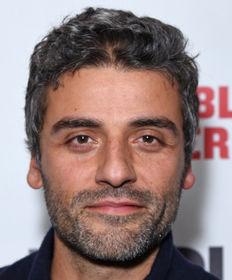 Oscar Isaac (Rydal Keener) They are observed by a slack young American, Rydal Keener, who is struck by Chester's resemblance to his recently deceased father (whose funeral he chose to miss), while Colette reminds Rydal a little of his cousin Agnes, his first, ill-fated love from some ten years ago.
Rydal is using an inheritance to fund a couple of years away in Europe writing poetry and avoiding a planned career in law back in the States. He amuses himself by playing games of chance, and starts to include the American couple, so uncannily reminiscent of those people from his past, in his latest scheme even if he is unsure quite what it might be yet.
Rydal is a particularly Janus-like character, looking both to the past and to the future. He carries the psychological scars of his relationship with his late father and his cousin Agnes, and this unfinished business in his past keeps drifting into the present and casting a fog over his future. Unwittingly, Chester and Colette drift onto his radar. By chapter three their worlds have collided - or dovetailed, it would be more accurate to say, as Chester and Colette find themselves locked in an unspoken pact with Rydal over an incidental murder. A tale of two Ripleys Viggo Mortensen (Chester MacFarland) It is typical of Highsmith that these are deeply flawed characters, psychotic anti-heroes whose appearance of normality hides psychopathic personalities and murderous tendencies. As in her 'Talented Mr Ripley', she describes a world of European exoticism, as her characters tour the sun-drenched Mediterranean; the novel was published a year after its American author had permanently relocated to Europe. Highsmith keeps the reader guessing about the games these three con artists might be playing. It is a tale of two Ripleys, as Chester and Rydal manoeuvre warily around each other, with a devious woman thrown into the mix for good measure. Gradually, insidiously, Chester becomes increasingly dependent on Rydal as the trio go on the run to Crete, while taking in a spot of tourism along the way as they travel the island. And all the while Colette seems to be taking a seductive interest in Rydal... You know that things can only go badly for these people, and it is not long before the body count rises and events take on their own crooked logic.
Highsmith is always adept at pulling off a surprise, taking the story in an entirely different direction from where you thought it was heading. Like a card sharp flicking an ace from the palm of her hand, she throws in a key scene set in the deserted Temple of Knossos that causes the narrative to lurch into a crazy, unexpected turn, tying the two male characters to each other in a mutually destructive relationship. Rydal now plays a dangerous game with Chester, who finds himself unable to free himself from the deadly grasp the other has on him. Dark but humorous stuff...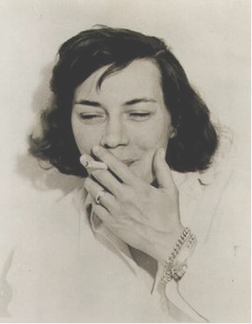 Patricia Highsmith This is dark but humorous stuff. You suspend any feelings of disbelief and go along with these miscreants for the ride, which takes us across Europe. Rydal works out his latent hatred and resentment of his father on Chester, who has assumed the role of his substitute father. It is a poisonous relationship reminiscent of that between Guy and Bruno in Highsmith's 'Strangers on a Train', except here both parties are as cracked as each other. Who will come out on top? The drink-addled con artist or the hate-filled chancer? And what sort of game is Rydal playing by the time the players get to Paris? Each chapter leaves you eager for the next and every time I picked up the story again I was excited to be reacquainting myself with these rather nasty people. Highsmith conjures a strange yet satisfying ending that tidies up some unfinished business, completing a transition of sorts. I look forward to reading more of her novels someday soon. Thank you, Michael! Thanks to Michael for a very thorough and informative book review.
A rather curious title...
Patricia Highsmith was the finest exponent of the psychological thriller. Her most famous works - 'Strangers on a Train' and the Tom Ripley cycle of novels - are some of the most enjoyable reads of my life. And now I must add the recently filmed 'The Two Faces of January', her ninth novel, first published in 1964, as one that I can thoroughly recommend. The rather curious title refers to the connection between the month of January, in which the story unfolds, and the Roman god Janus, in whose honour the Romans named the month. Janus is usually depicted as having two faces, as he looks both to the future and to the past. To the ancient Romans, Janus was the god of beginnings and transitions, and thereby associated with gates, doors, and passageways, as well as endings and time. You can find these themes appearing throughout the novel. The story begins with a passenger ship slipping through the Corinth Canal at night. On board are an American couple - Chester MacFarland and his young wife Colette - taking a vacation in Europe and arriving now in Greece. The opening descriptions are of a passage from one world to another, a transition between countries, but also an image that evokes birth, a new beginning. We soon learn that the man is a shyster on the run from the American authorities, trying to escape his past. Locked in an unspoken pact of murder
Oscar Isaac (Rydal Keener) They are observed by a slack young American, Rydal Keener, who is struck by Chester's resemblance to his recently deceased father (whose funeral he chose to miss), while Colette reminds Rydal a little of his cousin Agnes, his first, ill-fated love from some ten years ago.Rydal is using an inheritance to fund a couple of years away in Europe writing poetry and avoiding a planned career in law back in the States. He amuses himself by playing games of chance, and starts to include the American couple, so uncannily reminiscent of those people from his past, in his latest scheme even if he is unsure quite what it might be yet.
Rydal is a particularly Janus-like character, looking both to the past and to the future. He carries the psychological scars of his relationship with his late father and his cousin Agnes, and this unfinished business in his past keeps drifting into the present and casting a fog over his future. Unwittingly, Chester and Colette drift onto his radar. By chapter three their worlds have collided - or dovetailed, it would be more accurate to say, as Chester and Colette find themselves locked in an unspoken pact with Rydal over an incidental murder. A tale of two Ripleys
Viggo Mortensen (Chester MacFarland) It is typical of Highsmith that these are deeply flawed characters, psychotic anti-heroes whose appearance of normality hides psychopathic personalities and murderous tendencies. As in her 'Talented Mr Ripley', she describes a world of European exoticism, as her characters tour the sun-drenched Mediterranean; the novel was published a year after its American author had permanently relocated to Europe. Highsmith keeps the reader guessing about the games these three con artists might be playing. It is a tale of two Ripleys, as Chester and Rydal manoeuvre warily around each other, with a devious woman thrown into the mix for good measure. Gradually, insidiously, Chester becomes increasingly dependent on Rydal as the trio go on the run to Crete, while taking in a spot of tourism along the way as they travel the island. And all the while Colette seems to be taking a seductive interest in Rydal... You know that things can only go badly for these people, and it is not long before the body count rises and events take on their own crooked logic. Highsmith is always adept at pulling off a surprise, taking the story in an entirely different direction from where you thought it was heading. Like a card sharp flicking an ace from the palm of her hand, she throws in a key scene set in the deserted Temple of Knossos that causes the narrative to lurch into a crazy, unexpected turn, tying the two male characters to each other in a mutually destructive relationship. Rydal now plays a dangerous game with Chester, who finds himself unable to free himself from the deadly grasp the other has on him. Dark but humorous stuff...
Patricia Highsmith This is dark but humorous stuff. You suspend any feelings of disbelief and go along with these miscreants for the ride, which takes us across Europe. Rydal works out his latent hatred and resentment of his father on Chester, who has assumed the role of his substitute father. It is a poisonous relationship reminiscent of that between Guy and Bruno in Highsmith's 'Strangers on a Train', except here both parties are as cracked as each other. Who will come out on top? The drink-addled con artist or the hate-filled chancer? And what sort of game is Rydal playing by the time the players get to Paris? Each chapter leaves you eager for the next and every time I picked up the story again I was excited to be reacquainting myself with these rather nasty people. Highsmith conjures a strange yet satisfying ending that tidies up some unfinished business, completing a transition of sorts. I look forward to reading more of her novels someday soon. Thank you, Michael! Thanks to Michael for a very thorough and informative book review.April 9, 2019
Interview with Crime Novelist Tony Forder
I'm delighted to welcome bestselling crime novelist Tony Forder to my blog this week! Thank you for letting me interview you, Tony. Let's get going with the questions! I’d like to know more about your latest novel, the fourth in a crime series featuring DI Bliss and DC Chandler, called The Reach of Shadows. What can readers expect to encounter in its pages? 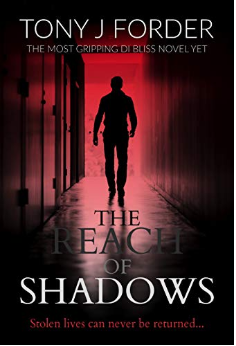 What readers will find is a Bliss under pressure physically, professionally and personally, with each of these looking to consume him. In fighting to solve a possible stalker-murder case whilst recovering from being mown down by a car, Bliss also has to ward off an IOPC investigation which focuses on the murder of his wife many years earlier. With help from a loyal team, Bliss resolves the murder in a way he might not have envisioned, and puts to the sword all of the questions asked about his involvement in his wife’s murder. Here's a taster:
Recovering from injuries sustained in a road collision, DI Bliss is taken directly from hospital to a fresh crime scene and ordered to investigate the vicious stabbing and murder of Jade Coleman.
When Bliss realises the victim had reported being stalked, and that two of his own team had been drafted in to take her statement, he is given the unenviable task of interviewing both of his detectives.
Increasingly it appears that the stalker may be her killer. However, several other people soon become part of the team’s suspect list. Bliss also finds himself being questioned about his own past and has to battle to defend himself whilst continuing to investigate the murder. Soon more questions arise. Why would anybody target Jade Coleman? Why are the team unable to identify the victim’s close female friend? And why did Jade recently leave her job without any explanation?
With his work cut out, and his team under pressure, can Bliss solve the case before more victims show up? Or will the shadows of his own past reach out and drag him under before he can succeed?
What about your second Mike Lynch crime thriller, Cold Winter Sun, published in November 2018?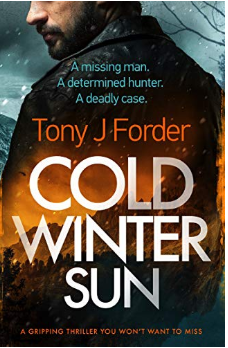 Mike, who in the previous book started out as a character worn down by life and striving to avoid hitting the bottle again, became the man he had once been across the course of that novel. In his second outing, he and his friend and comrade in arms, Terry, fly out to New Mexico to find someone important in his ex-wife’s new life. Hunted and plagued by people who appear to be seeking the same individual, Mike and Terry use their military skills to extricate both themselves and their target from harm’s way. Here's another taster:
A missing man. A determined hunter. A deadly case.
When Mike Lynch is contacted by his ex-wife about the missing nephew of her new husband, he offers to help find the young man with the help of his friend Terry Cochran.
Arriving in LA to try and track down the young man, the pair are immediately torn away when the missing man’s car shows up, abandoned on the side of a deserted road in New Mexico.
When two fake police officers cross their path, Terry and Mike know there is more to the case than meets the eye, and soon they find themselves asking exactly who it is they are really looking for…
Tell us about yourself and what you get up to when you're not writing. I read, though not as much as I would like. I’ve played guitar since I was ten or twelve, and still practice most days – though I no longer have my fleet of guitars and equipment. I love music and listen as often as I can. I enjoy many sports, and follow Chelsea and the England rugby union team. I am now 61, live with my long-suffering wife in Peterborough, and I write full time. I love well-made films and TV, especially oddball stuff like Boston Legal, Fargo, Breaking Bad, Killing Eve, etc. What is your all-time favourite novel? The Silence of the Lambs. Thomas Harris recognised in Red Dragon the impact a villain like Lecter might make, and then added a beautifully observed character in Clarice Starling. Add suspense and tension in just about every scene, plus razor-sharp prose and dialogue, and you have a piece of magic. I loved Red Dragon as well, but for me Lambs just takes the prize.
What are you working on at present? I wish I knew. I’m close to finishing my final edits for the next DI Bliss, and also working on a brand new story and character – my first female lead – but only recently had an idea for another Bliss book which I cannot stop thinking about and had to start writing immediately. I always have plans for 2-3 books ahead, and I always change them. I need there to be 48 hours in a day or for someone to clone me.
Do you work to an outline or plot or do you prefer to see where an idea takes you? It entirely depends on the book at the time. My most recent release, The Reach of Shadows, began with two ideas: a possible stalker murder and an internal investigation against DI Bliss. It really was no more than that when I started, but it ended up being what I consider to be my best book so far. Conversely, with the book I am editing, slated to be the next Bliss, the entire story was pretty much in my head and significant incidents noted before I wrote a single word. It all came to me within about fifteen minutes, shortly after reading an article about a bizarre true-life murder in the US. I didn’t so much write about the murder itself, but instead used a similar incident here in the UK as the reason other murders take place.
Do you think the cover plays an important part of the buying process?
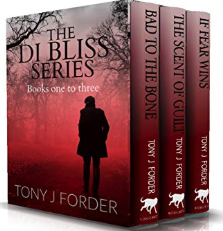 From what I’ve read, most people claim not to be influenced by covers. However, even with those who say it means nothing to them, I do believe they may be subliminally drawn to certain colours, fonts, and images. It may catch their eye without them even realising it, but there’s no doubt in my mind that readers can be drawn to a book by a cover.
I don’t, however, believe they buy a book because of the cover. But being drawn to it can be enough, because that may then lead them to read the blurb and go on to buy it. What kind of research do you do? I actually enjoy research, and the volume and kind entirely depends on what sort of book I am writing. For Degrees of Darkness I had to interview a taxidermist, for my current DI Bliss book it I needed advice from an embalmer; prior to that, I’ve used a solicitor, a paramedic, and a variety of police organisation units. The Met, NCA and RAF have been extremely useful. Then there’s good old Google and Google Maps. I almost got caught out by the maps, though. In If Fear Wins I have DI Bliss visit a police station in Essex. I wrote a whole scene, part of which described the exterior which I studied in street view online. A week or so afterwards I read a piece that said the station had been closed down and the whole lot moved elsewhere – you forget how out of date those maps and views can be.
How long do you spend on research before starting your book? I try not to write about anything about which I have a complete lack of knowledge, so I’d say I write the book with a general awareness and minimal research behind me, fill in some specifics during the first draft, but mainly add my research material via the edits. In full flow at the keyboard I leave notations inside square brackets where something needs checking or adding.
What advice would you give to would-be novelists? Persevere. If you have imagination then you can pluck an idea out of thin air and turn it into a story, which means you must write as often as possible. Learn as you go, but produce. Nothing need be wasted, as it can all be revisited later, after which you can polish your work. I’m not sure everybody gets the fact that, as with most creative things, you have to actually learn your craft. You do that by writing, and although some writers claim not to read, I do think you also learn by reading. Certainly you can learn about structure and pace from reading. Finally, grow a thick skin, because when you present your work you must be prepared to be criticised.
Thank you, Tony! Here's more information about Tony and his books: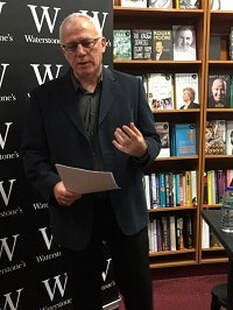 Tony J Forder is the author of the critically acclaimed, international best-selling crime thriller series featuring detectives Jimmy Bliss and Penny Chandler. The first three books, Bad to the Bone, The Scent of Guilt, and If Fear Wins, are now joined by The Reach of Shadows, published in January 2019.
Tony’s dark, psychological crime thriller, Degrees of Darkness, featuring ex-detective Frank Rogers, was also published by Bloodhound Books. This is a stand-alone novel. Another book that was written as a stand-alone was Scream Blue Murder. This was published in November 2017, and received praise from many, including fellow authors Mason Cross, Matt Hilton and Anita Waller. Before it had even been published, Tony had decided to write a sequel, and Cold Winter Sun was published in November 2018.
Tony lives with his wife in Peterborough, UK, and is now a full-time author. You can find out more from his website, https://www.tonyjforder.com/
Facebook: https://www.facebook.com/tonyjforder/
Twitter: https://twitter.com/TonyJForder @TonyJForder
Amazon Author: https://www.amazon.co.uk/l/B01N4BPT65
Goodreads: https://www.goodreads.com/author/show/16166122.Tony_J_Forder
Barnes & Noble: https://www.barnesandnoble.com/s/tony+j+forder?_requestid=248936
Bloodhound Books: http://www.bloodhoundbooks.com/tony-forder
What readers will find is a Bliss under pressure physically, professionally and personally, with each of these looking to consume him. In fighting to solve a possible stalker-murder case whilst recovering from being mown down by a car, Bliss also has to ward off an IOPC investigation which focuses on the murder of his wife many years earlier. With help from a loyal team, Bliss resolves the murder in a way he might not have envisioned, and puts to the sword all of the questions asked about his involvement in his wife’s murder. Here's a taster:Recovering from injuries sustained in a road collision, DI Bliss is taken directly from hospital to a fresh crime scene and ordered to investigate the vicious stabbing and murder of Jade Coleman.
When Bliss realises the victim had reported being stalked, and that two of his own team had been drafted in to take her statement, he is given the unenviable task of interviewing both of his detectives.
Increasingly it appears that the stalker may be her killer. However, several other people soon become part of the team’s suspect list. Bliss also finds himself being questioned about his own past and has to battle to defend himself whilst continuing to investigate the murder. Soon more questions arise. Why would anybody target Jade Coleman? Why are the team unable to identify the victim’s close female friend? And why did Jade recently leave her job without any explanation?
With his work cut out, and his team under pressure, can Bliss solve the case before more victims show up? Or will the shadows of his own past reach out and drag him under before he can succeed?
What about your second Mike Lynch crime thriller, Cold Winter Sun, published in November 2018?
Mike, who in the previous book started out as a character worn down by life and striving to avoid hitting the bottle again, became the man he had once been across the course of that novel. In his second outing, he and his friend and comrade in arms, Terry, fly out to New Mexico to find someone important in his ex-wife’s new life. Hunted and plagued by people who appear to be seeking the same individual, Mike and Terry use their military skills to extricate both themselves and their target from harm’s way. Here's another taster:A missing man. A determined hunter. A deadly case.
When Mike Lynch is contacted by his ex-wife about the missing nephew of her new husband, he offers to help find the young man with the help of his friend Terry Cochran.
Arriving in LA to try and track down the young man, the pair are immediately torn away when the missing man’s car shows up, abandoned on the side of a deserted road in New Mexico.
When two fake police officers cross their path, Terry and Mike know there is more to the case than meets the eye, and soon they find themselves asking exactly who it is they are really looking for…
Tell us about yourself and what you get up to when you're not writing. I read, though not as much as I would like. I’ve played guitar since I was ten or twelve, and still practice most days – though I no longer have my fleet of guitars and equipment. I love music and listen as often as I can. I enjoy many sports, and follow Chelsea and the England rugby union team. I am now 61, live with my long-suffering wife in Peterborough, and I write full time. I love well-made films and TV, especially oddball stuff like Boston Legal, Fargo, Breaking Bad, Killing Eve, etc. What is your all-time favourite novel? The Silence of the Lambs. Thomas Harris recognised in Red Dragon the impact a villain like Lecter might make, and then added a beautifully observed character in Clarice Starling. Add suspense and tension in just about every scene, plus razor-sharp prose and dialogue, and you have a piece of magic. I loved Red Dragon as well, but for me Lambs just takes the prize.
What are you working on at present? I wish I knew. I’m close to finishing my final edits for the next DI Bliss, and also working on a brand new story and character – my first female lead – but only recently had an idea for another Bliss book which I cannot stop thinking about and had to start writing immediately. I always have plans for 2-3 books ahead, and I always change them. I need there to be 48 hours in a day or for someone to clone me.
Do you work to an outline or plot or do you prefer to see where an idea takes you? It entirely depends on the book at the time. My most recent release, The Reach of Shadows, began with two ideas: a possible stalker murder and an internal investigation against DI Bliss. It really was no more than that when I started, but it ended up being what I consider to be my best book so far. Conversely, with the book I am editing, slated to be the next Bliss, the entire story was pretty much in my head and significant incidents noted before I wrote a single word. It all came to me within about fifteen minutes, shortly after reading an article about a bizarre true-life murder in the US. I didn’t so much write about the murder itself, but instead used a similar incident here in the UK as the reason other murders take place.
Do you think the cover plays an important part of the buying process?
From what I’ve read, most people claim not to be influenced by covers. However, even with those who say it means nothing to them, I do believe they may be subliminally drawn to certain colours, fonts, and images. It may catch their eye without them even realising it, but there’s no doubt in my mind that readers can be drawn to a book by a cover.I don’t, however, believe they buy a book because of the cover. But being drawn to it can be enough, because that may then lead them to read the blurb and go on to buy it. What kind of research do you do? I actually enjoy research, and the volume and kind entirely depends on what sort of book I am writing. For Degrees of Darkness I had to interview a taxidermist, for my current DI Bliss book it I needed advice from an embalmer; prior to that, I’ve used a solicitor, a paramedic, and a variety of police organisation units. The Met, NCA and RAF have been extremely useful. Then there’s good old Google and Google Maps. I almost got caught out by the maps, though. In If Fear Wins I have DI Bliss visit a police station in Essex. I wrote a whole scene, part of which described the exterior which I studied in street view online. A week or so afterwards I read a piece that said the station had been closed down and the whole lot moved elsewhere – you forget how out of date those maps and views can be.
How long do you spend on research before starting your book? I try not to write about anything about which I have a complete lack of knowledge, so I’d say I write the book with a general awareness and minimal research behind me, fill in some specifics during the first draft, but mainly add my research material via the edits. In full flow at the keyboard I leave notations inside square brackets where something needs checking or adding.
What advice would you give to would-be novelists? Persevere. If you have imagination then you can pluck an idea out of thin air and turn it into a story, which means you must write as often as possible. Learn as you go, but produce. Nothing need be wasted, as it can all be revisited later, after which you can polish your work. I’m not sure everybody gets the fact that, as with most creative things, you have to actually learn your craft. You do that by writing, and although some writers claim not to read, I do think you also learn by reading. Certainly you can learn about structure and pace from reading. Finally, grow a thick skin, because when you present your work you must be prepared to be criticised.
Thank you, Tony! Here's more information about Tony and his books:
Tony J Forder is the author of the critically acclaimed, international best-selling crime thriller series featuring detectives Jimmy Bliss and Penny Chandler. The first three books, Bad to the Bone, The Scent of Guilt, and If Fear Wins, are now joined by The Reach of Shadows, published in January 2019.Tony’s dark, psychological crime thriller, Degrees of Darkness, featuring ex-detective Frank Rogers, was also published by Bloodhound Books. This is a stand-alone novel. Another book that was written as a stand-alone was Scream Blue Murder. This was published in November 2017, and received praise from many, including fellow authors Mason Cross, Matt Hilton and Anita Waller. Before it had even been published, Tony had decided to write a sequel, and Cold Winter Sun was published in November 2018.
Tony lives with his wife in Peterborough, UK, and is now a full-time author. You can find out more from his website, https://www.tonyjforder.com/
Facebook: https://www.facebook.com/tonyjforder/
Twitter: https://twitter.com/TonyJForder @TonyJForder
Amazon Author: https://www.amazon.co.uk/l/B01N4BPT65
Goodreads: https://www.goodreads.com/author/show/16166122.Tony_J_Forder
Barnes & Noble: https://www.barnesandnoble.com/s/tony+j+forder?_requestid=248936
Bloodhound Books: http://www.bloodhoundbooks.com/tony-forder
April 2, 2019
Do You Prefer Novels With Happy Endings?
How do you define a happy ending? 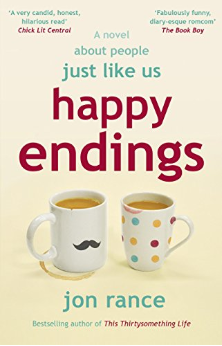 ''I won't read a book with an unhappy ending,' a friend once told me.
'So how do you define a happy ending?' I asked.
'Well,' she replied, 'I guess it's a broader issue than everyone living happily ever after, like in a romance novel. For me, in order to have a happy ending, good has to triumph over evil.'
This got me thinking. Is it really necessary for every novel to serve up a morally nutritious dessert at the end of the fictional feast? Must good always emerge the victor? Real life, as we're all painfully aware, isn't like that. So why should we expect fiction to paint an unrealistic picture of the world we live in?
A place for unhappy endings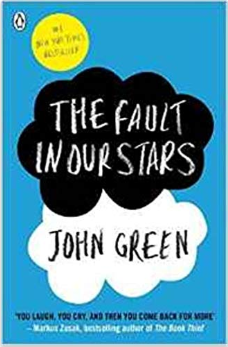 Genre is important here, of course. I'd bet that most romance readers prefer happy endings for their novels. After all, isn't that the point? Character A meets Character B, they're attracted, but obstacles abound along the path of true love. Eventually A and B conquer their issues, declare their love and live happily ever after. Death, unpleasant divorce statistics and marital disharmony would be unwelcome guests in the soft-edged and fluffy world of romantic fiction.
'I remember reading a romance book back when I was a teenager and it had the heroine dying at the end in childbirth and the hero being sad and never finding someone again. What the hell kinda ending is that!?' A comment made in response to me posing the question about happy endings in a Goodreads group. Hard not to see her point, really! In the same group, someone mentioned a romance in which the hero gets shot two chapters from the end, totally ruining the reading experience. For romance novels, a stereotypical 'happy ever after' ending is almost implicit.
Not always, of course. Shakespeare's 'Romeo and Juliet' is the obvious example of a doomed romance, but there are plenty more. Take 'The Fault in Our Stars', a novel by John Green. No happy endings here, not given the death of Augustus Waters from cancer. But then, with this novel, the reader is primed from the start to wonder whether a feel-good conclusion is in the stars. After all, the protagonists meet at a support group for cancer patients. And let's not forget many readers enjoy a good weepie. There's definitely a place for unhappy endings, even within the romance genre, provided they're done sensitively and don't come as a shock to the reader. A world without hope, an unthinkable future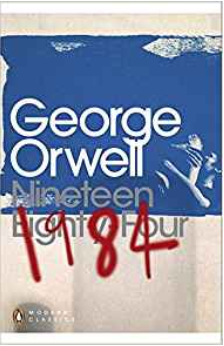 Let's stick with the issue of genre. If happy endings are the norm for romance novels. the opposite is often true for dystopian ones. Dystopian novels are, by their definition, about unhappiness, with the protagonist primed to fail in a world without hope. The point of such a novel is to portray a an unthinkable future, one that can serve as a warning.
In his dystopian epic 'Nineteen Eighty-Four', George Orwell allows us to glimpse the horrors of a totalitarian world. I've written in a previous blog post about how affected I was by reading the novel with the expectation that good would triumph and that Winston would eventually defeat Big Brother and the Party. I was a teenager at the time and the final chapter came as a huge shock to me, destroying my adolescent expectations for a different, less bleak, ending. I've sometimes wondered what kind of novel it would have been had Orwell delivered the ending my teenage self expected. Personally, I found the long, boring passages about Ingsoc a chore to read. What if they had been replaced by Winston and Julia fighting the good fight and overthrowing the Party? In the hands of a master like Orwell, the reader would still have been assured of a great read. Would it have been a better novel? Impossible to say, of course. Life isn't all roses and honey Reader requirements are important too, of course. In a world where there's hunger, poverty and cruelty, many people employ fiction as an escape mechanism. For a few short hours, they can forget the awfulness portrayed on the nightly news as they lose themselves in a happier world between the covers of a book.
Other readers may disagree. After all, real life isn't all roses and honey. Not everyone wants to read books that deliver a moral message, preferring to escape the pervading political correctness of our times with a book that doesn't attempt to sugar-coat life. Novels that reflect the myriad problems affecting our world can reach out to readers more authentically, because they enable them to identify more strongly with the plot-line.
An unhappy ending also avoids clichés. We're almost conditioned to expect a neat, happy wrap-up at the conclusion of a novel, so when the author delivers something quite different, it can come as a refreshing change.
Unexpected endings can jar the reader Not always, though. Sometimes endings can jar the reader. I suspect this is often because they don't deliver what my friend requires - the triumph of good over bad. Perhaps that's why the end of Gillian Flynn's novel 'Gone Girl' (review here) has attracted so much criticism, with many readers hating it. Without wishing to give spoilers, Flynn doesn't provide a neat wrap-up in which the novel's resident psychopath meets a well-deserved comeuppance. Her finale is refreshing for that very reason, although I confess I also found it somewhat unsatisfying.
Let's look at another example. Take how Thomas Harris concludes 'Hannibal'. OK, so the final chapters of this book have been derided as being totally unrealistic - 'that would NEVER happen!' is a typical response - but like with 'Gone Girl', I suspect some of this is because the ending offends many people's sense of morality. Where is Lecter's punishment for his terrible crimes? What's more, not only does evil come out on top, the closing events portray the corruption of Clarice Starling, a former federal agent, someone supposed to defend right versus wrong. Lecter perverts whatever's decent in Clarice by leading her to share his cannibalistic depravity as well as making her his lover. End result - evil triumphs over good. Unacceptable to many people, I suspect; hence the criticism. The fun that a good villain provides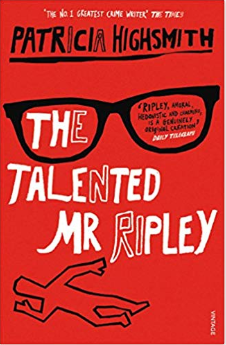 For some readers, it's easy to set aside questions of good versus evil, of course. Many people adore a villain. There's something about the bad guys and girls of fiction that's oddly compelling. Take the popularity of Patricia Highsmith's series of Ripley novels. Tom Ripley is a psychopath who kills as and when it suits him, but he's also a charming and engaging individual. Polite, cultured, moving in a glamorous world of travel and luxury, he delights the reader with his total lack of a moral compass. When he fails to get his due desserts at the end of Highsmith's novels, we don't mind, because Ripley has entertained us so much along the way.
Perhaps that's why we also love Hannibal Lecter. He's a depraved cannibal, sure, but he's also intelligent, witty and cultured, a dichotomy that intrigues us and draws us in, as we endeavour to understand what drives such a man. We're revolted by the idea of him eating Krendler's brain, but also filled with admiration for his brilliant mind and ruthless cunning. Ah, the contradictions of human nature! Aren't they fascinating?
Do you prefer a happy ending? Let's hear from you! What do you require in order to be satisfied with a novel's ending? If you're a romance reader, do you need A and B to live happily ever after, or are lots of tears and a death or two OK? If you're into dystopia, do you believe a happy ending runs contrary to what the genre should deliver?
Are there any novels that ended in a totally different way to what you'd expected, and if so, were you pleased or disgruntled? Do you read to escape real life, or are you somebody who prefers novels to deliver a social commentary in line with the world's issues? Leave a reply and let me know!
''I won't read a book with an unhappy ending,' a friend once told me.'So how do you define a happy ending?' I asked.
'Well,' she replied, 'I guess it's a broader issue than everyone living happily ever after, like in a romance novel. For me, in order to have a happy ending, good has to triumph over evil.'
This got me thinking. Is it really necessary for every novel to serve up a morally nutritious dessert at the end of the fictional feast? Must good always emerge the victor? Real life, as we're all painfully aware, isn't like that. So why should we expect fiction to paint an unrealistic picture of the world we live in?
A place for unhappy endings
Genre is important here, of course. I'd bet that most romance readers prefer happy endings for their novels. After all, isn't that the point? Character A meets Character B, they're attracted, but obstacles abound along the path of true love. Eventually A and B conquer their issues, declare their love and live happily ever after. Death, unpleasant divorce statistics and marital disharmony would be unwelcome guests in the soft-edged and fluffy world of romantic fiction.'I remember reading a romance book back when I was a teenager and it had the heroine dying at the end in childbirth and the hero being sad and never finding someone again. What the hell kinda ending is that!?' A comment made in response to me posing the question about happy endings in a Goodreads group. Hard not to see her point, really! In the same group, someone mentioned a romance in which the hero gets shot two chapters from the end, totally ruining the reading experience. For romance novels, a stereotypical 'happy ever after' ending is almost implicit.
Not always, of course. Shakespeare's 'Romeo and Juliet' is the obvious example of a doomed romance, but there are plenty more. Take 'The Fault in Our Stars', a novel by John Green. No happy endings here, not given the death of Augustus Waters from cancer. But then, with this novel, the reader is primed from the start to wonder whether a feel-good conclusion is in the stars. After all, the protagonists meet at a support group for cancer patients. And let's not forget many readers enjoy a good weepie. There's definitely a place for unhappy endings, even within the romance genre, provided they're done sensitively and don't come as a shock to the reader. A world without hope, an unthinkable future
Let's stick with the issue of genre. If happy endings are the norm for romance novels. the opposite is often true for dystopian ones. Dystopian novels are, by their definition, about unhappiness, with the protagonist primed to fail in a world without hope. The point of such a novel is to portray a an unthinkable future, one that can serve as a warning.
In his dystopian epic 'Nineteen Eighty-Four', George Orwell allows us to glimpse the horrors of a totalitarian world. I've written in a previous blog post about how affected I was by reading the novel with the expectation that good would triumph and that Winston would eventually defeat Big Brother and the Party. I was a teenager at the time and the final chapter came as a huge shock to me, destroying my adolescent expectations for a different, less bleak, ending. I've sometimes wondered what kind of novel it would have been had Orwell delivered the ending my teenage self expected. Personally, I found the long, boring passages about Ingsoc a chore to read. What if they had been replaced by Winston and Julia fighting the good fight and overthrowing the Party? In the hands of a master like Orwell, the reader would still have been assured of a great read. Would it have been a better novel? Impossible to say, of course. Life isn't all roses and honey
Reader requirements are important too, of course. In a world where there's hunger, poverty and cruelty, many people employ fiction as an escape mechanism. For a few short hours, they can forget the awfulness portrayed on the nightly news as they lose themselves in a happier world between the covers of a book.Other readers may disagree. After all, real life isn't all roses and honey. Not everyone wants to read books that deliver a moral message, preferring to escape the pervading political correctness of our times with a book that doesn't attempt to sugar-coat life. Novels that reflect the myriad problems affecting our world can reach out to readers more authentically, because they enable them to identify more strongly with the plot-line.
An unhappy ending also avoids clichés. We're almost conditioned to expect a neat, happy wrap-up at the conclusion of a novel, so when the author delivers something quite different, it can come as a refreshing change.
Unexpected endings can jar the reader
Not always, though. Sometimes endings can jar the reader. I suspect this is often because they don't deliver what my friend requires - the triumph of good over bad. Perhaps that's why the end of Gillian Flynn's novel 'Gone Girl' (review here) has attracted so much criticism, with many readers hating it. Without wishing to give spoilers, Flynn doesn't provide a neat wrap-up in which the novel's resident psychopath meets a well-deserved comeuppance. Her finale is refreshing for that very reason, although I confess I also found it somewhat unsatisfying.Let's look at another example. Take how Thomas Harris concludes 'Hannibal'. OK, so the final chapters of this book have been derided as being totally unrealistic - 'that would NEVER happen!' is a typical response - but like with 'Gone Girl', I suspect some of this is because the ending offends many people's sense of morality. Where is Lecter's punishment for his terrible crimes? What's more, not only does evil come out on top, the closing events portray the corruption of Clarice Starling, a former federal agent, someone supposed to defend right versus wrong. Lecter perverts whatever's decent in Clarice by leading her to share his cannibalistic depravity as well as making her his lover. End result - evil triumphs over good. Unacceptable to many people, I suspect; hence the criticism. The fun that a good villain provides
For some readers, it's easy to set aside questions of good versus evil, of course. Many people adore a villain. There's something about the bad guys and girls of fiction that's oddly compelling. Take the popularity of Patricia Highsmith's series of Ripley novels. Tom Ripley is a psychopath who kills as and when it suits him, but he's also a charming and engaging individual. Polite, cultured, moving in a glamorous world of travel and luxury, he delights the reader with his total lack of a moral compass. When he fails to get his due desserts at the end of Highsmith's novels, we don't mind, because Ripley has entertained us so much along the way.Perhaps that's why we also love Hannibal Lecter. He's a depraved cannibal, sure, but he's also intelligent, witty and cultured, a dichotomy that intrigues us and draws us in, as we endeavour to understand what drives such a man. We're revolted by the idea of him eating Krendler's brain, but also filled with admiration for his brilliant mind and ruthless cunning. Ah, the contradictions of human nature! Aren't they fascinating?
Do you prefer a happy ending? Let's hear from you! What do you require in order to be satisfied with a novel's ending? If you're a romance reader, do you need A and B to live happily ever after, or are lots of tears and a death or two OK? If you're into dystopia, do you believe a happy ending runs contrary to what the genre should deliver?
Are there any novels that ended in a totally different way to what you'd expected, and if so, were you pleased or disgruntled? Do you read to escape real life, or are you somebody who prefers novels to deliver a social commentary in line with the world's issues? Leave a reply and let me know!
February 26, 2019
Author Interview - Robert Bidinotto
 I'm delighted to welcome to my blog today Robert Bidinotto, author of the bestselling novel Hunter. Set in Washington, D.C. during a wave of vigilante killings, it’s the tale of two strong, idealistic loners. Dylan Hunter is a crusading journalist with a mysterious past, working to expose outrageous leniency in the criminal justice system. Annie Woods is a beautiful security officer at the CIA, sworn to track down the unknown assassin of an Agency employee. They meet after a brutal criminal act of violence against mutual friends.
 As the parallel investigations by the CIA and the police begin to intersect in surprising ways, Dylan and Annie fall passionately in love. But they don’t realize that the shocking secrets they’re hiding from each other are propelling them headlong toward shattering personal conflicts—or that a terrifying predator is targeting them both.
I can vouch for the fact it's a great novel. Now, on with the interview...
You say that the failings of the US legal system formed the basis for Hunter's plot. Will future novels incorporate other areas of interest to you, such as environmental issues?
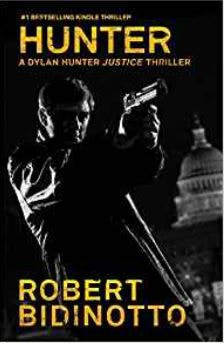 Maggie, my nonfiction background was writing serious journalism and commentary about current events and controversial topics. Now that I’ve turned to fiction, I find that I’m incapable of writing stories that do not have serious themes. Because I write thrillers, readers have every right to expect, above all, entertainment—colorful characters in fast-paced plots with lots of action, romance, and suspense. But in a Bidinotto thriller they also will find provocative perspectives on important topics. My goal is not only to keep readers turning pages late into the night, but also to encourage them to rethink the conventional “wisdom” on various topics. So, call these “thrillers for thinking people.”
Let me stress that, in my stories, the action doesn’t grind to a halt while characters just sit around pontificating at each other. That’s boring. Instead, I weave important themes into the very fabric of the characters and plot. The conflicts, confrontations, suspense, and story resolution all revolve around the characters’ values and viewpoints. So, the reader’s emotional investments in the characters and their fates become part and parcel of the ideas.
That was my approach in Hunter: it dramatizes corruption and leniency in the criminal justice system. But readers will find even more controversial themes in Bad Deeds. It’s set in the environmentalist movement—another long-time interest of mine. But let me assure you, my perspective is not “politically correct.” And the third novel in the series, Winner Takes All, tackles just about every political controversy that has emerged since the 2016 presidential election. It is the most complex story yet—and many readers think it’s the best.
Let’s imagine a showdown between Lee Child’s Jack Reacher and your Dylan Hunter. Reacher has the brawn, but can he compete against Dylan Hunter’s brain? Tell us how Dylan Hunter would win!
Ouch. First of all, I love the Jack Reacher character and have enjoyed most of Lee Child’s thrillers. Second, fictional characters—whether Lee’s or mine—can do pretty much anything the author wants them to; so Lee and I can always imagine and invent ways in which Dylan Hunter could defeat Jack, or vice versa. Now, if you’re asking about a physical confrontation between the very smart, very ruthless, and very large Jack Reacher, vs. the very smart, very ruthless, and considerably smaller Dylan Hunter—well, I don’t think the boxing commissioner would allow such a match.
Both guys also fight dirty, however, and maybe Dylan would have a few tricks up his sleeve that Jack wouldn’t expect. Who knows? Either way, things would get bloody. If your question is about something more than a physical fight—well, I’m sure that Dylan, with his money and background, could come up with a lot of high-tech spy gadgets to even the odds.
With its passionate love affair between Dylan and Annie, Hunter marries crime fiction with romance. Do you see yourself ever joining the growing ranks of male romantic novelists? Or perhaps exploring other genres besides crime/thrillers?
Pure romance novels? Probably not. However, after I’ve given Dylan a good run, I do have ideas for novels outside the thriller genre. Stay tuned. To what extent has your interest in philosophy, in particular the Objectivist movement of Ayn Rand, influenced the character of Dylan Hunter?
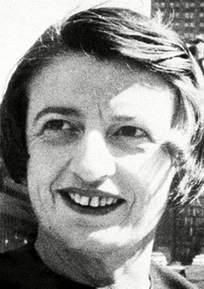 All writers are products of past influences. From Ayn Rand’s writings, I’ve certainly drawn a romanticized outlook on life. I’m not a literary naturalist or so-called realist, in the sense of dramatizing a cynical, downbeat, or defeatist outlook. My heroes and heroines have moral codes and values; they are strong protagonists, not playthings of fate and circumstances; they make hard choices and pursue their values relentlessly, and with integrity; and most of the time they are victorious. So, that’s one way Rand has influenced me.
Another is Rand’s focus on justice. Dylan Hunter’s view of justice, and commitment to it, is unconventional and quite “Randian.” The justice theme was explicit in Hunter, which dealt with the criminal justice system. But that same theme will be explored, in its many facets, in all the subsequent books, too. Justice is the philosophical thread that will tie them all together. Stylistically, I think I owe some things to Rand, but to others, too. I’ll let readers draw their own comparisons and conclusions.
Does your interest in philosophy extend to spiritual and religious issues and if so, do you ever envisage writing fiction around those areas? Yes, and yes. Although, given what I just said about Randian influences, some people might expect to be able to predict how I’ll approach these issues. They’re likely to be surprised. What fiction authors and books have influenced your writing the most?
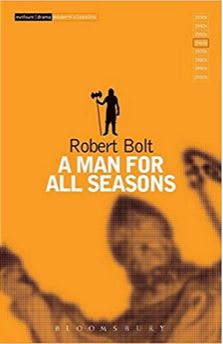 I hope nobody presumes that, in mentioning the following names, I’m suggesting that I write like any of these amazing authors. For their influence on me in how to write stories built on substantive philosophical, psychological, and political themes, I’d say that, in addition to Rand, there is Shakespeare, Hugo, Dostoyevsky, Ibsen, Edmond Rostand, and George Orwell. I also love Robert Bolt’s A Man for All Seasons—a dazzling play about intellectual independence and personal integrity. All these great writers demonstrated that you can entertain readers and say something important at the same time. Two of my favorite thriller authors—Brad Thor and the late Vince Flynn—showed that you could also build nail-biting thrillers on serious political themes.
Many other thriller authors have influenced me in terms of how to craft a gripping action tale and create memorable heroes. Besides Brad and Vince, I would add Lee Child, Stephen Hunter, and Daniel Silva to the contemporary top rank. I love the earlier novels of Jack Higgins, Nelson DeMille’s “John Corey” thrillers, the “Spenser” series by the late Robert B. Parker, the mysteries of Robert Crais (especially his Elvis Cole and Joe Pike novels), and the old classic thrillers and mysteries by Alistair MacLean, Donald Hamilton, and Mickey Spillane. Of course, many, many other writers outside the thriller genre have influenced me over the years, from Charlotte Bronte to J.K. Rowling to Robert Heinlein to J.R.R. Tolkien.
Would you ever accept a traditional publishing deal or will you stick with self-publishing? How do you see the future for self-published authors? I have traditional publishers for some foreign editions of Hunter, because I don’t have easy access to foreign markets. After self-publishing the audiobook edition of Hunter, I also accepted a publishing offer from Audible for the audio editions of Bad Deeds and Winner Takes All. That was mainly because it’s costly and time-consuming to publish audiobooks—even though I’d probably make more money in the long run by publishing them myself.
But as for my future English-language print and audiobook editions, I plan to stick to self-publishing for a host of reasons. Today, an author will probably do far better by self-publishing. A publisher will take most of your rights and royalties, usually in exchange for a tiny advance. By self-publishing, you won’t surrender or share those rights and royalties with anyone. You also keep total control over every aspect of your book: its content, cover, pricing, and marketing. A publisher’s unilateral decisions about those elements can kill your book’s commercial prospects, which happens frequently.
Many writers think that a publisher will take the burden of marketing off their backs. Not true—unless your name is Grisham or Child or King. You’ll still have to do the promotion yourself. All that a publisher can do for you--maybe—is get your book into some bookstores for a couple of months, before it is remaindered and/or goes “out of print.” At a time when more and more bookstores are disappearing, and more and more book buying is moving online and toward ebooks rather than print, it makes less and less sense to hand over your precious manuscript to a publisher—then let them reap the lion’s share of the rewards forever.
The future for self-publishing authors is bright. Never has there been a better time to be a writer. No “gatekeepers” can keep you from being published anymore. You can publish as much as you want, as fast or slow as you wish, at whatever length, in whatever genre—or none. You have complete freedom now. That said, competition for reader eyeballs is ferocious. Competing with millions of other titles, your book had better be good, and you had better learn how to market it.
Tell us more about your second book, Bad Deeds.
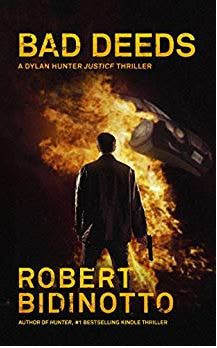 Bad Deeds is another vigilante thriller, the sequel to Hunter. It features the same hero and heroine—Dylan Hunter and Annie Woods—and many of the same supporting characters. Here’s the basic story premise:
At a cabin in Pennsylvania’s Allegheny National Forest, Dylan and Annie seek to heal the wounds from their ordeal at the hands of Adrian Wulfe, the twisted psychopath featured in Hunter. To build a life together, Dylan promises Annie that he’ll abandon his violent ways. But ideological zealots and Washington’s political elites have conspired to terrorize and plunder the hard-working locals. These victims have no protector against the bad deeds of the powerful and privileged . . . . . . except for one man. A man as ruthless and violent as they. Because in the face of injustice, Dylan Hunter cannot walk away—even if it costs him the woman he loves.
And book three in the series, Winner Takes All?
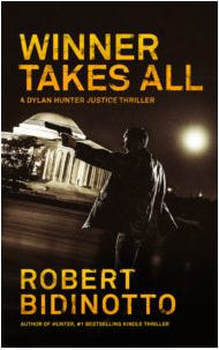 Here's the storyline of Winner Takes All:
Engaged to be married, mysterious journalist Dylan Hunter and CIA officer Annie Woods are eager to put their violent past behind them, for good.
But then an investigative reporter is found mysteriously murdered. An idealistic presidential candidate is targeted for destruction. And a horrific day of unspeakable terrorism rocks Washington, D.C.
Soon, Dylan’s investigation puts him in the cross hairs of a power-hungry billionaire and a cold-blooded assassin. A deadly conspiracy of dangerous men aims to install their puppet in the White House. And these predators are willing to do the unthinkable to bring America under their total control.
The stakes—political and personal—couldn’t be higher. Because to stop them, Dylan Hunter must make an irrevocable choice. It’s a decision that will, finally and forever, seal his fate . . . including his future with the woman he adores.
Finally, I was very taken with the photo of your cat, Luna, who appeared as a character in Hunter. Can we expect her to reappear in Bad Deeds? Does she, with typical feline arrogance, consider herself your muse?
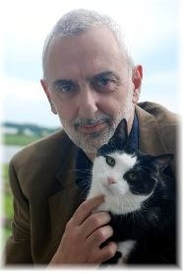 Luna is the only real-life character I’ve imported into my stories. She not only appears in Bad Deeds; she actually plays a pivotal role in the story. Really! If you want to see how a pet cat can help create serious, nerve-wracking suspense in a thriller, well, you’re just going to have to read the book. Luna also graced the pages of Winner Takes All, and she will continue to appear in future Dylan Hunter stories, too.
As I wrote the novels, the real-life Luna did decide she was my muse. She often lounged on a blanket at my office window, sunning herself, interrogating passing birds and squirrels, and voicing her literary advice while I wrote. It sometimes made me self-conscious, I tell you!
One wonderful thing about writing fiction is that the author gets to “play God.” You can make your Story World whatever you want it to be. That includes defying mortality. Whatever may happen to me or to the real-life Luna in the future, readers can rest assured that Luna, Dylan, Annie, and the other characters they enjoy and love in the Dylan Hunter Story World will live on forever in the novels.
(Isn't Luna gorgeous? I wish I had a literary muse as pretty as she is, but no doubt she'd insist on being inserted into my novels and dispensing writing advice as well! - Maggie)
Thank you, Robert, for letting me interview you!
It's been a pleasure talking with you, Maggie, thanks so much for your thoughtful questions and your generosity in letting me chat with your own fans here.
More about Robert Bidinotto...
You can find out more about Robert, read other interviews with him and check out his blog at www.bidinotto.com.
February 12, 2019
Review of 'The Lewis Man' - Peter May
Disturbing the past can destroy the present...
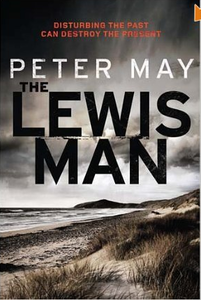 The Lewis Man is an excellent read. It's a murder mystery, centring on the death of a young man found buried in a peat bog on one of the Outer Hebridean islands. The only clue to the identity of the corpse is a D.N.A. sibling match to a local farmer, an elderly man suffering from dementia. A man who has always claimed to be an only child.
The novel is narrated through third person chapters spliced with those related by the dementia sufferer, Tormod MacDonald. These chapters are poignant, contrasting his present-day mental confusion with his clear memories of the events of fifty years ago. His story is moving, portraying the religious bigotry souring his childhood, his harsh teenage years at the Dean Orphanage, together with his determination to keep the promise he made to his dying mother.
When the story reverts to the present day, we meet Fin MacLeod, a former policeman battling to rebuild his life after his son’s death and his subsequent divorce. Will he find the resolution to his problems in his childhood home of the bleak Lewis landscape? And how does Marsaili, his former girlfriend and mother of his other son, fit into the picture?
Wild flowers, biting winds and peat bogs...
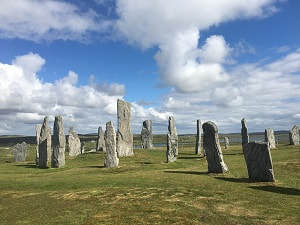 The Lewis Man is set against the backdrop of the unforgiving Hebridean weather and is richly evocative of the landscape, with May's descriptions of soft black peat, skin-scouring winds, wild flowers and bog cotton. Peter May also details the close Hebridean community of Lewis, strongly rooted in island culture, a way of life that draws Fin MacLeod back for good when his life reaches a crisis point.
The issue of Tormond's dementia is handled with sensitivity and the novel gives a touching portrayal of the effect this condition has on those who care for dementia sufferers. Tormond's childhood, and the cruel treatment of orphans by the Church and local authorities, is also handled well, although those parts require the reader to suspend belief, given that they are narrated by an elderly man with dementia. That doesn't detract from their poignancy, though.
The novel delivers an engaging read that never fails to entertain. The twist at the end is satisfying, and the last few paragraphs are truly moving. I'll definitely be reading more from this author. More about Peter May and his novels
 Courtesy of Peter May's website
The Lewis Man
is the second in the Lewis trilogy, all set on the Isle of Lewis in the Outer Hebrides, although the book works perfectly well as a standalone novel. The other titles are
The Blackhouse
and
The Chessmen
.
Courtesy of Peter May's website
The Lewis Man
is the second in the Lewis trilogy, all set on the Isle of Lewis in the Outer Hebrides, although the book works perfectly well as a standalone novel. The other titles are
The Blackhouse
and
The Chessmen
.
In The Blackhouse, a bloody murder on the island bears the hallmarks of a similar one in Edinburgh. Fin Macleod, still working at the time as a police detective, is sent to investigate.
The Chessmen sees Fin discovering the body of his friend, musician Roddy MacKenzie, who disappeared seventeen years previously, in the wreckage of a light aircraft. Roddy's corpse reveals that he was savagely murdered...
Peter May was born and raised in Scotland, and before turning to writing novels he enjoyed a successful career as a television writer and producer. He now lives in France. He has also penned the China Thrillers, featuring Beijing detective Li Yan and American forensic pathologist Margaret Campbell; the critically-acclaimed Enzo Files, set in France, featuring Scottish forensic scientist Enzo MacLeod; and several standalone books, the latest of which is I'll Keep You Safe. You can find out more about him and his novels via his website www.petermay.co.uk.
Affiliate links have been used in this blog post.
The Lewis Man is an excellent read. It's a murder mystery, centring on the death of a young man found buried in a peat bog on one of the Outer Hebridean islands. The only clue to the identity of the corpse is a D.N.A. sibling match to a local farmer, an elderly man suffering from dementia. A man who has always claimed to be an only child.The novel is narrated through third person chapters spliced with those related by the dementia sufferer, Tormod MacDonald. These chapters are poignant, contrasting his present-day mental confusion with his clear memories of the events of fifty years ago. His story is moving, portraying the religious bigotry souring his childhood, his harsh teenage years at the Dean Orphanage, together with his determination to keep the promise he made to his dying mother.
When the story reverts to the present day, we meet Fin MacLeod, a former policeman battling to rebuild his life after his son’s death and his subsequent divorce. Will he find the resolution to his problems in his childhood home of the bleak Lewis landscape? And how does Marsaili, his former girlfriend and mother of his other son, fit into the picture?
Wild flowers, biting winds and peat bogs...
The Lewis Man is set against the backdrop of the unforgiving Hebridean weather and is richly evocative of the landscape, with May's descriptions of soft black peat, skin-scouring winds, wild flowers and bog cotton. Peter May also details the close Hebridean community of Lewis, strongly rooted in island culture, a way of life that draws Fin MacLeod back for good when his life reaches a crisis point.The issue of Tormond's dementia is handled with sensitivity and the novel gives a touching portrayal of the effect this condition has on those who care for dementia sufferers. Tormond's childhood, and the cruel treatment of orphans by the Church and local authorities, is also handled well, although those parts require the reader to suspend belief, given that they are narrated by an elderly man with dementia. That doesn't detract from their poignancy, though.
The novel delivers an engaging read that never fails to entertain. The twist at the end is satisfying, and the last few paragraphs are truly moving. I'll definitely be reading more from this author. More about Peter May and his novels
Courtesy of Peter May's website
The Lewis Man
is the second in the Lewis trilogy, all set on the Isle of Lewis in the Outer Hebrides, although the book works perfectly well as a standalone novel. The other titles are
The Blackhouse
and
The Chessmen
. In The Blackhouse, a bloody murder on the island bears the hallmarks of a similar one in Edinburgh. Fin Macleod, still working at the time as a police detective, is sent to investigate.
The Chessmen sees Fin discovering the body of his friend, musician Roddy MacKenzie, who disappeared seventeen years previously, in the wreckage of a light aircraft. Roddy's corpse reveals that he was savagely murdered...
Peter May was born and raised in Scotland, and before turning to writing novels he enjoyed a successful career as a television writer and producer. He now lives in France. He has also penned the China Thrillers, featuring Beijing detective Li Yan and American forensic pathologist Margaret Campbell; the critically-acclaimed Enzo Files, set in France, featuring Scottish forensic scientist Enzo MacLeod; and several standalone books, the latest of which is I'll Keep You Safe. You can find out more about him and his novels via his website www.petermay.co.uk.
Affiliate links have been used in this blog post.
February 5, 2019
Reading For Solace
I'm delighted to welcome novelist Susanna Bavin to my blog this week as a guest blogger. She's going to share her thoughts on the subject of reading as solace. Take it away, Susanna!
How myths, legends and folk tales helped one young girl...
 Image courtesy of Easa Shamih A while back, Maggie wrote a blog post covering the various reasons why people choose to read fiction. It was a lively and interesting post, but I felt there was one reason missing: reading for solace.
So what does that mean? Obviously, it is closely linked to reading for escapism, but it is a specific type of escapist reading. According to the Concise OED my parents gave me one Christmas years ago, and which remains my favourite dictionary no matter how many more modern dictionaries have climbed onto the bookcase since, solace is: comfort in distress or discomfort or tedium. Now I must confess I didn't have tedium in mind when I read Maggie's blog. It was distress I was thinking of. So what is reading for solace?
The best way to explain it is to give you an example. My dad died in his 60s, which came as a brutal shock to the family. Through that first week, I stayed with my mum. Understandably, she had trouble sleeping, but after the first couple of nights, she came downstairs in the morning and showed me a book. “This stopped me going mad,” she said. Was it a self-help book? A discussion of grief or widowhood? No, it was a novel. The book that had got my mum through the first endless nights was a story.
I wish I could tell you what it was, but I can't. All I can tell you, based on my mum's reading habits, is that it was written by a woman (or by a man using a woman's name) and the plot was set at some point after the building of the railways. I seem to recall it was a contemporary novel, but I couldn't swear to it.
Books can provide comfort in times of distress
 I remember years ago reading an interview with Dick Francis, who described receiving a letter from a man who had lost a companion in a car accident. The accident happened in the middle of nowhere; no other vehicle was involved. The man walked until he found a phone box, then he returned to the car to await help, knowing his companion was dead. Assistance took a couple of hours to arrive and the man started to read a book that had belonged to his late companion – a Dick Francis novel. In the letter he subsequently wrote, he thanked Dick Francis for keeping his mind off a tragic situation.
Another example that comes to mind is linked to the person who introduced me to the phrase reading for solace – a former boss of mine, the late Wendy Drewett, who for many years was the head of library services for children and schools in Buckinghamshire. There was nothing Mrs Drewett didn't know about children's and teenagers' books. She knew about authors, reading development, dyslexia, avid readers, reluctant readers... you name it. Above all, she knew about getting the right book to the right child at the right time. In the course of her career, she worked alongside many families, teachers and schools and it was from her that I first heard the words reading for solace in connection with children who live with a chronic condition that means they cannot lead an ordinary physical life. (Maybe there is an element of comfort in tedium here?)
An example of this is the wonderful Rosemary Sutcliff, who suffered from juvenile arthritis from the age of two, which left her wheelchair-bound for the rest of her life. Although she famously didn't learn to read until she was nine (why bother when she had such a gifted storyteller for a mother?), she grew up on a diet of legends, myths and folk tales; and it was these, together with her ability to examine things close to her in minute detail, that occupied her mind and her imagination. Reading for solace? I don't imagine for one moment that Rosemary Sutcliff thought of it that way, any more than the reader of the Dick Francis novel did at the time – any more than my mother did at the time. I don't think it's something you do consciously. I think it's something that, in certain circumstances, simply happens; and you don't realise until afterwards.
What do you think? And if the author of the book my mum read is reading this blog – thank you.
Thank you, Susanna!
 Susanna Bavin Many thanks to Susanna for a wonderful post. Susanna Bavin lives in North Wales and is an author of historical sagas. She also blogs fortnightly about books and writing. To relax she enjoys her garden, needlework and exploring the beauty of Llandudno.
Susanna's latest, novel, The Sewing Room Girl , was published in November 2018. You can find out more from her website, www.susannabavin.co.uk, or connect with her on Twitter.
Let us know what you think!
Are there any books that have provided solace for you? Do you find comfort in reading when life gets tough? Leave a comment for us, and thank you!
How myths, legends and folk tales helped one young girl...
Image courtesy of Easa Shamih A while back, Maggie wrote a blog post covering the various reasons why people choose to read fiction. It was a lively and interesting post, but I felt there was one reason missing: reading for solace.So what does that mean? Obviously, it is closely linked to reading for escapism, but it is a specific type of escapist reading. According to the Concise OED my parents gave me one Christmas years ago, and which remains my favourite dictionary no matter how many more modern dictionaries have climbed onto the bookcase since, solace is: comfort in distress or discomfort or tedium. Now I must confess I didn't have tedium in mind when I read Maggie's blog. It was distress I was thinking of. So what is reading for solace?
The best way to explain it is to give you an example. My dad died in his 60s, which came as a brutal shock to the family. Through that first week, I stayed with my mum. Understandably, she had trouble sleeping, but after the first couple of nights, she came downstairs in the morning and showed me a book. “This stopped me going mad,” she said. Was it a self-help book? A discussion of grief or widowhood? No, it was a novel. The book that had got my mum through the first endless nights was a story.
I wish I could tell you what it was, but I can't. All I can tell you, based on my mum's reading habits, is that it was written by a woman (or by a man using a woman's name) and the plot was set at some point after the building of the railways. I seem to recall it was a contemporary novel, but I couldn't swear to it.
Books can provide comfort in times of distress
I remember years ago reading an interview with Dick Francis, who described receiving a letter from a man who had lost a companion in a car accident. The accident happened in the middle of nowhere; no other vehicle was involved. The man walked until he found a phone box, then he returned to the car to await help, knowing his companion was dead. Assistance took a couple of hours to arrive and the man started to read a book that had belonged to his late companion – a Dick Francis novel. In the letter he subsequently wrote, he thanked Dick Francis for keeping his mind off a tragic situation.Another example that comes to mind is linked to the person who introduced me to the phrase reading for solace – a former boss of mine, the late Wendy Drewett, who for many years was the head of library services for children and schools in Buckinghamshire. There was nothing Mrs Drewett didn't know about children's and teenagers' books. She knew about authors, reading development, dyslexia, avid readers, reluctant readers... you name it. Above all, she knew about getting the right book to the right child at the right time. In the course of her career, she worked alongside many families, teachers and schools and it was from her that I first heard the words reading for solace in connection with children who live with a chronic condition that means they cannot lead an ordinary physical life. (Maybe there is an element of comfort in tedium here?)
An example of this is the wonderful Rosemary Sutcliff, who suffered from juvenile arthritis from the age of two, which left her wheelchair-bound for the rest of her life. Although she famously didn't learn to read until she was nine (why bother when she had such a gifted storyteller for a mother?), she grew up on a diet of legends, myths and folk tales; and it was these, together with her ability to examine things close to her in minute detail, that occupied her mind and her imagination. Reading for solace? I don't imagine for one moment that Rosemary Sutcliff thought of it that way, any more than the reader of the Dick Francis novel did at the time – any more than my mother did at the time. I don't think it's something you do consciously. I think it's something that, in certain circumstances, simply happens; and you don't realise until afterwards.
What do you think? And if the author of the book my mum read is reading this blog – thank you.
Thank you, Susanna!
Susanna Bavin Many thanks to Susanna for a wonderful post. Susanna Bavin lives in North Wales and is an author of historical sagas. She also blogs fortnightly about books and writing. To relax she enjoys her garden, needlework and exploring the beauty of Llandudno.Susanna's latest, novel, The Sewing Room Girl , was published in November 2018. You can find out more from her website, www.susannabavin.co.uk, or connect with her on Twitter.
Let us know what you think!
Are there any books that have provided solace for you? Do you find comfort in reading when life gets tough? Leave a comment for us, and thank you!
January 29, 2019
Interview With Craig Robertson
From Oprah Winfrey and the backstreets of India...
 I'm delighted to be interviewing bestselling Scottish novelist Craig Robertson for my blog today. A former journalist, Craig Robertson had a 20-year career with a Scottish Sunday newspaper before becoming a full-time author. He interviewed three Prime Ministers, reported on major stories including 9/11, Dunblane, the Omagh bombing and the disappearance of Madeleine McCann. He was pilloried on breakfast television, beat Oprah Winfrey to a major scoop, spent time on Death Row in the USA and dispensed polio drops in the backstreets of India.
His gritty crime novels are set on the mean streets of contemporary Glasgow. His first novel, Random, was shortlisted for the 2010 CWA New Blood Dagger, longlisted for the 2011 Crime Novel of the Year and was a Sunday Times bestseller. He is also the author of a series of novels featuring crime scene photographer Tony Winter and Detective Sergeant Rachel Narey: Snapshot, Cold Grave and Witness the Dead. I reviewed Witness The Dead for my blog a while ago. You can read what I had to say about it here. Let's get on with the questions for Craig...
How difficult are you to live with when writing a novel? Tiger or pussy cat? Hmm, let me ask those who have to live with me… Okay, the answer seemingly is tiger. Bad tempered, grouchy, particularly in the morning, tiger. And apparently only tiger because there wasn’t an option for Tyrannosaurus Rex. I think this is unfair and possibly slanderous but fully accept that I’m rarely a pussy cat.
It’s clear from your tweets you’re a footie fan. Any plans to draw football into future novels?
None at the moment. I’m not sure that sport translates very well into fiction, particularly crime fiction. I now realise I’ve probably just insulted a few friends so they’re the exception to this. There was quite a bit of footie tweeting recently as we had a Scottish Crime Writers v English Crime Writers match at Bloody Scotland. It would be unfair to quote the result (*cough* 13-1) but it’s fair to say that the English guys were unlucky. A lot. And often.
Do you see yourself branching into different genres? If so, which ones, and what do you find compelling about them?
I’m quite happy trying to get the hang of crime fiction at the moment without making things any more difficult for myself. Also, I’m not quite sure where I’d go if I did change tack as there’s a few that are no-go areas for me because I’m incredibly narrow-minded and petty. So no sci-fi, no horror, no supernatural, no zombies, no elves, no chick-lit, no cat mysteries. There I go insulting friends again. What does that leave? Children’s books possibly or maybe some as yet undiscovered genre, like food mysteries or architectural symbolism.
What’s been the most satisfying scene for you to write in any of your novels? That’s a toughie. Ask me again in five minutes and I’ll probably give you a different answer but… maybe the opening scene of The Last Refuge. The scene itself happens around a third of the way into the book so I had to wrestle with that plus create an opening that would grab people right off the blocks. I also had to take the reader and immediately transport them to a very different location, the Faroe Islands, giving them the feel of the place without introduction. I made it difficult for myself, which thankfully I like doing, but I’m hopeful that I pulled it off and that’s pretty satisfying.
 And the most difficult? The most difficult is often the most satisfying but if I had to pick another then… maybe a scene from my first novel Random. The protagonist is a serial killer and the book is written first person from his point of view, meaning we are in his crazy head for the entire journey. There’s a scene where he begins to reveal the reason for his rampage and the hurt that he suffered to get him to that place. It’s all pretty raw and I wrote from hurt of my own (hurt that didn’t lead to an outpouring of murder thankfully) and that was pretty difficult to let loose. But, as above, ultimately satisfying.
If you could take any of your characters for a drink, who would it be, and what advice would you give him or her? Probably Tony Winter, my police photographer. My advice would be threefold. Firstly, just relax a bit and stop being so obsessed with all those photographs that you take of dead people. It’s becoming a bit creepy, dude. Secondly, up your game a bit with Rachel Winter. You’re onto a good thing there so try not to blow it. If you do, I might ask her for a drink instead. Thirdly, if you get invited to an abandoned biscuit factory anytime soon, be very careful. That’s all I’m saying.
Have you used any of the situations you’ve been in as a journalist as material for any of your books? If so, tell us more.
I think writers use everything around them so yes, I’ve taken things from my journalism days. Not situations so much as people and their reactions to adversity. I interviewed a lot of people at their most vulnerable, often in bereavement after incidents such as 9/11, Dunblane and the Omagh bombing. That gave me insights that I’ve been able to use in my books. Some of those people have remained friends though so I make sure I do my best to respect the things that I’ve learned rather than exploit them. On a more practical, day-to-day level, I’ve been able to use my experience of dealing with some very bad people. And also some who weren’t journalists.
Why do you think crime fiction is so popular? Because it’s the best genre in the world. I think there are a number of reasons for this. In no particular order… People liked to be scared a little and this is a way of doing it while remaining safe. It’s a vicarious thrill. Crime fiction, more than any other genre, allows us to examine society, to prod and probe it while being entertained. We see people at their most vulnerable and therefore often their most genuine and can learn much from that. Readers like a mystery, a puzzle, and it can put them at the heart of the book, in locus detectus if you like. We all have our lines; it's up to us whether we cross them.
 Are there any topics or situations you wouldn’t tackle in your novels? I don’t think so. Or maybe I should say that I haven’t thought of one that I’d shy away from. That being said, there’s a long way from saying I wouldn’t rule out writing about say the Holocaust or incest to actually wanting to do it. But I’m not much in favour of censorship so I’m not keen to start by censoring myself. We all have our lines and it’s up to us whether we venture to cross them.
To what extent do you plot your novels before starting writing? Do you begin with a solid plan, or do you allow the book to evolve at its own pace? It has probably changed from book to book. I’ve done it both ways and now plot much more than I used to before. I use the whiteboard and post-its and do a whole lot of thinking before I ever type that first sentence. There’s still plenty of scope for it to change – I’m never going to get all my best ideas at the start – but I like a solid roadmap of where I’m going. Clearly there’s no right and wrong here, it’s just whatever works best for you.
Thank you, Craig!
A huge thank you to Craig Robertson for agreeing to be interviewed for my blog. You can find out more about Craig and his books via his website, www.craigrobertsonbooks.co.uk, and you can follow his footie tweets via @CraigRobertson_.
I'm delighted to be interviewing bestselling Scottish novelist Craig Robertson for my blog today. A former journalist, Craig Robertson had a 20-year career with a Scottish Sunday newspaper before becoming a full-time author. He interviewed three Prime Ministers, reported on major stories including 9/11, Dunblane, the Omagh bombing and the disappearance of Madeleine McCann. He was pilloried on breakfast television, beat Oprah Winfrey to a major scoop, spent time on Death Row in the USA and dispensed polio drops in the backstreets of India. His gritty crime novels are set on the mean streets of contemporary Glasgow. His first novel, Random, was shortlisted for the 2010 CWA New Blood Dagger, longlisted for the 2011 Crime Novel of the Year and was a Sunday Times bestseller. He is also the author of a series of novels featuring crime scene photographer Tony Winter and Detective Sergeant Rachel Narey: Snapshot, Cold Grave and Witness the Dead. I reviewed Witness The Dead for my blog a while ago. You can read what I had to say about it here. Let's get on with the questions for Craig...
How difficult are you to live with when writing a novel? Tiger or pussy cat? Hmm, let me ask those who have to live with me… Okay, the answer seemingly is tiger. Bad tempered, grouchy, particularly in the morning, tiger. And apparently only tiger because there wasn’t an option for Tyrannosaurus Rex. I think this is unfair and possibly slanderous but fully accept that I’m rarely a pussy cat.
It’s clear from your tweets you’re a footie fan. Any plans to draw football into future novels?
None at the moment. I’m not sure that sport translates very well into fiction, particularly crime fiction. I now realise I’ve probably just insulted a few friends so they’re the exception to this. There was quite a bit of footie tweeting recently as we had a Scottish Crime Writers v English Crime Writers match at Bloody Scotland. It would be unfair to quote the result (*cough* 13-1) but it’s fair to say that the English guys were unlucky. A lot. And often.
Do you see yourself branching into different genres? If so, which ones, and what do you find compelling about them?
I’m quite happy trying to get the hang of crime fiction at the moment without making things any more difficult for myself. Also, I’m not quite sure where I’d go if I did change tack as there’s a few that are no-go areas for me because I’m incredibly narrow-minded and petty. So no sci-fi, no horror, no supernatural, no zombies, no elves, no chick-lit, no cat mysteries. There I go insulting friends again. What does that leave? Children’s books possibly or maybe some as yet undiscovered genre, like food mysteries or architectural symbolism.
What’s been the most satisfying scene for you to write in any of your novels? That’s a toughie. Ask me again in five minutes and I’ll probably give you a different answer but… maybe the opening scene of The Last Refuge. The scene itself happens around a third of the way into the book so I had to wrestle with that plus create an opening that would grab people right off the blocks. I also had to take the reader and immediately transport them to a very different location, the Faroe Islands, giving them the feel of the place without introduction. I made it difficult for myself, which thankfully I like doing, but I’m hopeful that I pulled it off and that’s pretty satisfying.
And the most difficult? The most difficult is often the most satisfying but if I had to pick another then… maybe a scene from my first novel Random. The protagonist is a serial killer and the book is written first person from his point of view, meaning we are in his crazy head for the entire journey. There’s a scene where he begins to reveal the reason for his rampage and the hurt that he suffered to get him to that place. It’s all pretty raw and I wrote from hurt of my own (hurt that didn’t lead to an outpouring of murder thankfully) and that was pretty difficult to let loose. But, as above, ultimately satisfying.If you could take any of your characters for a drink, who would it be, and what advice would you give him or her? Probably Tony Winter, my police photographer. My advice would be threefold. Firstly, just relax a bit and stop being so obsessed with all those photographs that you take of dead people. It’s becoming a bit creepy, dude. Secondly, up your game a bit with Rachel Winter. You’re onto a good thing there so try not to blow it. If you do, I might ask her for a drink instead. Thirdly, if you get invited to an abandoned biscuit factory anytime soon, be very careful. That’s all I’m saying.
Have you used any of the situations you’ve been in as a journalist as material for any of your books? If so, tell us more.
I think writers use everything around them so yes, I’ve taken things from my journalism days. Not situations so much as people and their reactions to adversity. I interviewed a lot of people at their most vulnerable, often in bereavement after incidents such as 9/11, Dunblane and the Omagh bombing. That gave me insights that I’ve been able to use in my books. Some of those people have remained friends though so I make sure I do my best to respect the things that I’ve learned rather than exploit them. On a more practical, day-to-day level, I’ve been able to use my experience of dealing with some very bad people. And also some who weren’t journalists.
Why do you think crime fiction is so popular? Because it’s the best genre in the world. I think there are a number of reasons for this. In no particular order… People liked to be scared a little and this is a way of doing it while remaining safe. It’s a vicarious thrill. Crime fiction, more than any other genre, allows us to examine society, to prod and probe it while being entertained. We see people at their most vulnerable and therefore often their most genuine and can learn much from that. Readers like a mystery, a puzzle, and it can put them at the heart of the book, in locus detectus if you like. We all have our lines; it's up to us whether we cross them.
Are there any topics or situations you wouldn’t tackle in your novels? I don’t think so. Or maybe I should say that I haven’t thought of one that I’d shy away from. That being said, there’s a long way from saying I wouldn’t rule out writing about say the Holocaust or incest to actually wanting to do it. But I’m not much in favour of censorship so I’m not keen to start by censoring myself. We all have our lines and it’s up to us whether we venture to cross them.To what extent do you plot your novels before starting writing? Do you begin with a solid plan, or do you allow the book to evolve at its own pace? It has probably changed from book to book. I’ve done it both ways and now plot much more than I used to before. I use the whiteboard and post-its and do a whole lot of thinking before I ever type that first sentence. There’s still plenty of scope for it to change – I’m never going to get all my best ideas at the start – but I like a solid roadmap of where I’m going. Clearly there’s no right and wrong here, it’s just whatever works best for you.
Thank you, Craig!
A huge thank you to Craig Robertson for agreeing to be interviewed for my blog. You can find out more about Craig and his books via his website, www.craigrobertsonbooks.co.uk, and you can follow his footie tweets via @CraigRobertson_.
January 22, 2019
Don't Judge a Book by its Movie
I'd like to give a warm welcome to Amy Morse, author of the Sheridan and Blake four-book thriller series. who has written this blog post about why you shouldn't judge a book by its movie. Take it away, Amy!
A book is more intimate...
It has often been said that the book is always better than the movie - I saw a quote recently that said 'don't judge a book by its movie'. But why is that? A book is more intimate. When you read a book you are experiencing your own private screening of a movie being beamed directly into your brain.
A unique experience for every reader...
 Everyone experiences a book differently. We build up a picture in our heads of the characters based on the information the author gives us and on our own experiences and perceptions - it's a unique experience for every reader. The average book would take the average reader 9-12 hours to read cover to cover non-stop. The average movie is between 2 and 3 hours long. That's a big difference. When a book is adapted for the screen it goes through a major rewrite. A skilled screenwriter can do a reasonable job of keeping the essence of the book, but it'll never be quite the same. At worse, the book is changed so radically for the screen that it becomes unrecognisable.
Movies are a visual feast...
The actors cast in the roles of the characters can also alter the feel of the story. Take 'Interview with a Vampire', for example. I must admit, I did love the film, but predictably I enjoyed the book more and was a big Anne Rice fan as a consequence. Never in a million years did I picture Brad Pitt and Tom Cruise as Louis and Lestat. Both actors were brilliant, but it tarnished the sheen the book had left me with and altered my perception of the original story. Movies are a visual and auditory feast and a shared experience. You can talk about a movie and adopt catch phases with your peers in a way that you rarely can with books. After a few of us at work went to see 'American Hustle', the office microwave is now forever known as the science oven!
Imitation is the highest form of flattery
My ultimate dream is to have the Sheridan and Blake series made into movies, and in my head my hero Tom Sheridan would be played by Clive Owen and my heroine, Sasha Blake, by Kate Winslet. Imitation is the highest form of flattery. I love movies, I really do. It's difficult to eat popcorn when you're reading a book! My advice? Read the book first, and when the movie comes out, try to think of them as two different stories that happen to have the same title.
More about Amy Morse
 Amy Morse, writing as Amy C. Fitzjohn, is a writer, enterprise coach and entrepreneur. She is a business trainer by day and performer of random acts of creativity by night. She describes herself as 'finding inspiration in the everyday, creating something from nothing and enabling others to do the same'.
Amy has always had a passion for stories. She is the author of the Sheridan and Blake series, and you can find out more via Amy's website, which is www.amycfitzjohn.co.uk, or via the image links below.
More about the Sheridan and Blake Series
Bristol-based archaeologist, Dr Sasha Blake, is recruited by a covert organisation specialising in the repatriation of stolen antiquities from the black market - The Agency.
Partnered with Tom Sheridan, a man from her past, they must deal with their tumultuous relationship and learn to trust each other.
Together, Sheridan and Blake embark on an increasingly hostile mission to locate a stolen artefact - a mysterious bronze box, the keys to the box and an ancient manuscript needed to open it.
In this international conspiracy that spans the ages, told over four books, they must find the artefacts before a ruthless criminal, known only as The Libyan. Click or tap the images for more information (affiliate links):
 Thank you, Amy!
Thank you, Amy! I couldn't agree more that a miscast actor can ruin a film. There can be exceptions, though. For instance, I found it hard to believe that Tom Cruise, not the tallest actor around, was cast as 6' 5" Jack Reacher in the film of the same title. Somehow, it worked for me, but I suspect only because at the time when I saw the film, I'd not yet read any of Lee Child's Reacher novels. And Tom Cruise is a good actor, in my opinion.
What do YOU think?
Have there been any books that have been spoiled for you by the movie version? Or vice versa? Leave a comment and let me know!
A book is more intimate...
It has often been said that the book is always better than the movie - I saw a quote recently that said 'don't judge a book by its movie'. But why is that? A book is more intimate. When you read a book you are experiencing your own private screening of a movie being beamed directly into your brain.
A unique experience for every reader...
Everyone experiences a book differently. We build up a picture in our heads of the characters based on the information the author gives us and on our own experiences and perceptions - it's a unique experience for every reader. The average book would take the average reader 9-12 hours to read cover to cover non-stop. The average movie is between 2 and 3 hours long. That's a big difference. When a book is adapted for the screen it goes through a major rewrite. A skilled screenwriter can do a reasonable job of keeping the essence of the book, but it'll never be quite the same. At worse, the book is changed so radically for the screen that it becomes unrecognisable. Movies are a visual feast...
The actors cast in the roles of the characters can also alter the feel of the story. Take 'Interview with a Vampire', for example. I must admit, I did love the film, but predictably I enjoyed the book more and was a big Anne Rice fan as a consequence. Never in a million years did I picture Brad Pitt and Tom Cruise as Louis and Lestat. Both actors were brilliant, but it tarnished the sheen the book had left me with and altered my perception of the original story. Movies are a visual and auditory feast and a shared experience. You can talk about a movie and adopt catch phases with your peers in a way that you rarely can with books. After a few of us at work went to see 'American Hustle', the office microwave is now forever known as the science oven!
Imitation is the highest form of flattery
My ultimate dream is to have the Sheridan and Blake series made into movies, and in my head my hero Tom Sheridan would be played by Clive Owen and my heroine, Sasha Blake, by Kate Winslet. Imitation is the highest form of flattery. I love movies, I really do. It's difficult to eat popcorn when you're reading a book! My advice? Read the book first, and when the movie comes out, try to think of them as two different stories that happen to have the same title.
More about Amy Morse
Amy Morse, writing as Amy C. Fitzjohn, is a writer, enterprise coach and entrepreneur. She is a business trainer by day and performer of random acts of creativity by night. She describes herself as 'finding inspiration in the everyday, creating something from nothing and enabling others to do the same'.Amy has always had a passion for stories. She is the author of the Sheridan and Blake series, and you can find out more via Amy's website, which is www.amycfitzjohn.co.uk, or via the image links below.
More about the Sheridan and Blake Series
Bristol-based archaeologist, Dr Sasha Blake, is recruited by a covert organisation specialising in the repatriation of stolen antiquities from the black market - The Agency.
Partnered with Tom Sheridan, a man from her past, they must deal with their tumultuous relationship and learn to trust each other.
Together, Sheridan and Blake embark on an increasingly hostile mission to locate a stolen artefact - a mysterious bronze box, the keys to the box and an ancient manuscript needed to open it.
In this international conspiracy that spans the ages, told over four books, they must find the artefacts before a ruthless criminal, known only as The Libyan. Click or tap the images for more information (affiliate links):
Thank you, Amy!Thank you, Amy! I couldn't agree more that a miscast actor can ruin a film. There can be exceptions, though. For instance, I found it hard to believe that Tom Cruise, not the tallest actor around, was cast as 6' 5" Jack Reacher in the film of the same title. Somehow, it worked for me, but I suspect only because at the time when I saw the film, I'd not yet read any of Lee Child's Reacher novels. And Tom Cruise is a good actor, in my opinion.
What do YOU think?
Have there been any books that have been spoiled for you by the movie version? Or vice versa? Leave a comment and let me know!
January 15, 2019
Review of 'Apple Tree Yard' by Louise Doughty
High suspense meets the legal thriller
 Apple Tree Yard is a superb novel, where high suspense meets the legal thriller and combines them into an excellent read. Here's the summary from the back cover:
'Yvonne Carmichael has worked hard to achieve the life she always wanted: a high-flying career in genetics, a beautiful home, a good relationship with her husband and their two grown-up children.
Then one day she meets a stranger at the Houses of Parliament and, on impulse, begins a passionate affair with him - a decision that will put everything she values at risk. At first she believes she can keep the relationship separate from the rest of her life, but she can't control what happens next. All of her careful plans spiral into greater deceit and, eventually, a life-changing act of violence.
Apple Tree Yard is a psychological thriller about one woman's adultery and an insightful examination of the values we live by and the choices we make, from an acclaimed writer at the height of her powers.'
The novel is written in the first person, present tense, which I find always adds a certain punch to the prose. Doughty presents the story through an internal conversation between Yvonne and her unknown lover, who she believes to be a government spook unable to reveal details of his work. Although an intelligent woman, a respected scientist and married, she’s naive around this man, believing herself in love. The thrill of this illicit relationship, combined with risky sex, whisks her away from a life that’s become predictable and dull towards events that almost destroy her.
Excellent courtroom drama
 It quickly becomes obvious to the reader that Yvonne's mystery lover doesn't reciprocate her feelings to the same extent. Yvonne rationalises his behaviour by believing wholeheartedly in his alleged covert occupation, and excuses his inattentiveness by the fact he's married. Her lover is a fantasist, but then so is she to a large extent. Even at the end of the novel, she’s still partly deluded, calling him ‘my love’ and wondering if they’ll meet again.
The courtroom scenes at The Old Bailey are excellent, the tense back and forth between the lawyers and witnesses really ratcheting up the tension. The reader already knows from the terse prologue that Yvonne cracks under pressure whilst on the stand. How, the reader asks, has a woman who has so much going for here arrived at such a low point?
Genetics versus gender issues...
Here comes the science bit! Louise Doughty weaves elements of genetics into the novel, playing on the fact that her protagonist is a geneticist. Yvonne refers to her unnamed lover as X, focusing on how they've reversed roles, he being an X and she a Y. Furthermore, her family have names or nicknames that begin with the letters A T G & C, another nod towards the field of genetics in which she works.
Doughty also examines issues of women's place in society. Yvonne has struggled to balance her career with motherhood, reflecting with some resentment how her husband's role in child-rearing appears to be an opt-in one, whereas hers has defaulted to an opt-out one. Although her marriage is good, the cracks exist, fissures that eventually lead to her susceptibility to a passionate affair with a stranger.
Wrong place, wrong time, wrong man
Louise Doughty also touches on the vulnerability of women. Yvonne is a woman who ends up in the wrong place at the wrong time with the wrong man, and the results are catastrophic for all concerned. Women can have careers, children, successful marriages, and yet they are ultimately vulnerable to overheated testosterone, and it can be the seemingly nice guy next door who poses the danger.
Moving on from this, Doughty looks at how the legal system can be skewed against women, illustrating her point by citing the case of a fifteen-year-old girl, not very bright, who suffers a gang rape by five men. She then has to face not one but five defence lawyers, all insinuating she was a drunken slut who asked for what she got. If a highly intelligent woman like Yvonne Carmichael can be broken in the witness box, what chance do any of us have?
Self-preservation versus a loved one...
Doughty examines the question of how far each of us would go to protect a loved one, or whether self-preservation will always win out in the end. She cites some distinctly unpleasant animal experiments that demonstrate that even maternal love can't compete with the innate urge in all of us to save our own skins if push comes to shove. Altruism will only stretch so far, a principle that will eventually lead to Yvonne's meltdown on the witness stand.
George Orwell examines the same topic in his novel '1984'. The way Yvonne's lover behaves is no different to the way Winston Smith eventually breaks down in front of his tormentor O'Brien. In screaming the words 'Do it to Julia! Do it to her, not me!', he cements his own brainwashing. The ultimate betrayal. So too with Yvonne's mystery lover, as he turns traitor on her in court, leaving her vulnerable to a sharp defence lawyer as the truth about Apple Tree Yard is revealed.
More about Louise Doughty
 Louise Doughty is the author of eight novels, including Apple Tree Yard. Her novels have been shortlisted for various awards and she has also won awards for her radio drama and short stories. She is a critic and cultural commentator for UK and international newspapers and broadcasts regularly for the BBC.
In 2007, she published her first work of non-fiction, A Novel in a Year, based on her newspaper column of the same name. She has written major features, columns and cover articles for a wide variety of newspapers and magazines including The Guardian, The Independent, the Daily Telegraph, the Mail on Sunday. Her broadcasting career includes presenting radio series such as BBC R4′s A Good Read and Writers’ Workshop. She is a regular guest on the radio arts programme Saturday Review.
Doughty was born in the East Midlands and grew up in Rutland, in a rural area that later provided the setting for her third novel, 'Honey-Dew'. She now lives in London.
You can find out more about Louise and her books at www.louisedoughty.com. To view Apple Tree Yard on Amazon, click or tap the book cover image at the start of this post (affiliate link).
Have you read Apple Tree Yard?
If so, what did you think? Leave a comment and let me know!
Apple Tree Yard is a superb novel, where high suspense meets the legal thriller and combines them into an excellent read. Here's the summary from the back cover:'Yvonne Carmichael has worked hard to achieve the life she always wanted: a high-flying career in genetics, a beautiful home, a good relationship with her husband and their two grown-up children.
Then one day she meets a stranger at the Houses of Parliament and, on impulse, begins a passionate affair with him - a decision that will put everything she values at risk. At first she believes she can keep the relationship separate from the rest of her life, but she can't control what happens next. All of her careful plans spiral into greater deceit and, eventually, a life-changing act of violence.
Apple Tree Yard is a psychological thriller about one woman's adultery and an insightful examination of the values we live by and the choices we make, from an acclaimed writer at the height of her powers.'
The novel is written in the first person, present tense, which I find always adds a certain punch to the prose. Doughty presents the story through an internal conversation between Yvonne and her unknown lover, who she believes to be a government spook unable to reveal details of his work. Although an intelligent woman, a respected scientist and married, she’s naive around this man, believing herself in love. The thrill of this illicit relationship, combined with risky sex, whisks her away from a life that’s become predictable and dull towards events that almost destroy her.
Excellent courtroom drama
It quickly becomes obvious to the reader that Yvonne's mystery lover doesn't reciprocate her feelings to the same extent. Yvonne rationalises his behaviour by believing wholeheartedly in his alleged covert occupation, and excuses his inattentiveness by the fact he's married. Her lover is a fantasist, but then so is she to a large extent. Even at the end of the novel, she’s still partly deluded, calling him ‘my love’ and wondering if they’ll meet again. The courtroom scenes at The Old Bailey are excellent, the tense back and forth between the lawyers and witnesses really ratcheting up the tension. The reader already knows from the terse prologue that Yvonne cracks under pressure whilst on the stand. How, the reader asks, has a woman who has so much going for here arrived at such a low point?
Genetics versus gender issues...
Here comes the science bit! Louise Doughty weaves elements of genetics into the novel, playing on the fact that her protagonist is a geneticist. Yvonne refers to her unnamed lover as X, focusing on how they've reversed roles, he being an X and she a Y. Furthermore, her family have names or nicknames that begin with the letters A T G & C, another nod towards the field of genetics in which she works.
Doughty also examines issues of women's place in society. Yvonne has struggled to balance her career with motherhood, reflecting with some resentment how her husband's role in child-rearing appears to be an opt-in one, whereas hers has defaulted to an opt-out one. Although her marriage is good, the cracks exist, fissures that eventually lead to her susceptibility to a passionate affair with a stranger.
Wrong place, wrong time, wrong man
Louise Doughty also touches on the vulnerability of women. Yvonne is a woman who ends up in the wrong place at the wrong time with the wrong man, and the results are catastrophic for all concerned. Women can have careers, children, successful marriages, and yet they are ultimately vulnerable to overheated testosterone, and it can be the seemingly nice guy next door who poses the danger.
Moving on from this, Doughty looks at how the legal system can be skewed against women, illustrating her point by citing the case of a fifteen-year-old girl, not very bright, who suffers a gang rape by five men. She then has to face not one but five defence lawyers, all insinuating she was a drunken slut who asked for what she got. If a highly intelligent woman like Yvonne Carmichael can be broken in the witness box, what chance do any of us have?
Self-preservation versus a loved one...
Doughty examines the question of how far each of us would go to protect a loved one, or whether self-preservation will always win out in the end. She cites some distinctly unpleasant animal experiments that demonstrate that even maternal love can't compete with the innate urge in all of us to save our own skins if push comes to shove. Altruism will only stretch so far, a principle that will eventually lead to Yvonne's meltdown on the witness stand.
George Orwell examines the same topic in his novel '1984'. The way Yvonne's lover behaves is no different to the way Winston Smith eventually breaks down in front of his tormentor O'Brien. In screaming the words 'Do it to Julia! Do it to her, not me!', he cements his own brainwashing. The ultimate betrayal. So too with Yvonne's mystery lover, as he turns traitor on her in court, leaving her vulnerable to a sharp defence lawyer as the truth about Apple Tree Yard is revealed.
More about Louise Doughty
Louise Doughty is the author of eight novels, including Apple Tree Yard. Her novels have been shortlisted for various awards and she has also won awards for her radio drama and short stories. She is a critic and cultural commentator for UK and international newspapers and broadcasts regularly for the BBC. In 2007, she published her first work of non-fiction, A Novel in a Year, based on her newspaper column of the same name. She has written major features, columns and cover articles for a wide variety of newspapers and magazines including The Guardian, The Independent, the Daily Telegraph, the Mail on Sunday. Her broadcasting career includes presenting radio series such as BBC R4′s A Good Read and Writers’ Workshop. She is a regular guest on the radio arts programme Saturday Review.
Doughty was born in the East Midlands and grew up in Rutland, in a rural area that later provided the setting for her third novel, 'Honey-Dew'. She now lives in London.
You can find out more about Louise and her books at www.louisedoughty.com. To view Apple Tree Yard on Amazon, click or tap the book cover image at the start of this post (affiliate link).
Have you read Apple Tree Yard?
If so, what did you think? Leave a comment and let me know!


