
Maggie James's Blog, page 6
December 10, 2019
Five reasons to quit reading
What makes a reader ditch a novel?
It's rare for me not to read all the way to the end of a novel. I choose my fiction carefully, avoiding genres that I don't enjoy, such as romances. After a lifetime of reading, I know what appeals to me and what doesn't. (Not always, as you'll discover below - sometimes I get it wrong). The other night, though, I gave up on a book after finding some of the content offensive. It got me thinking. What might make a reader ditch a novel? As part of my 'Five' series, I'll be discussing some possible reasons. Let's go! 1. It's badly written
 Some novels, whether traditionally or indie published, simply aren't well-written. Poor character development, a failure to round off the narrative properly, plot threads left hanging... the list goes on. Nobody wants to read such books.
Dialogue is a common problem. Some authors struggle with getting it right; their characters' conversations fall flat. Not to mention my favourite bugbear - inappropriate and excessive speech tags. I gave up on one novel partly because the main character rarely said anything. Instead, she chirped and mumbled her sentences, reminding me by turns of a songbird or a sulky teenager. As she was supposed to be a feisty, kick-ass kind of gal, this irritated me. There were other reasons I abandoned the book, but when I read one chirp too many, it was game over.
Speech tags are often unnecessary anyway; if an author has given his/her characters strong enough voices and the dialogue flows well, it should be obvious who's speaking. 2. Bad grammar, spelling and punctuation
 A criticism often aimed at self-published novels is that they're full of typos and poor grammar. Not always, of course, but there's some truth in the allegation. Whilst I love what self-publishing has done for the industry, I agree that too many novelists present their work with a disregard for the English language. However, it's also a trend I'm noticing with traditionally published books. It's not unusual nowadays to find typos and even plot errors in novels from big-name publishers. I'm told it's because many publishing houses are axing editors and proof-readers in a bid to cut costs. Whether that's true, I can't say, but it's no longer just self-published authors who have to defend themselves from criticism on this score.
Some people, of course, believe it's not important. They say that as long as the plot flows well and the characters engage the reader, then typos and poor grammar don't matter. I say they do. Language is the medium through which writers create their work; shouldn't they be able to employ it correctly? If a musician plays a wrong note, it grates on the ear. The principle's no different with books. Typos jar on the reader, distracting from the narrative - hardly what the author intended. Would you rather be kissed or pissed?
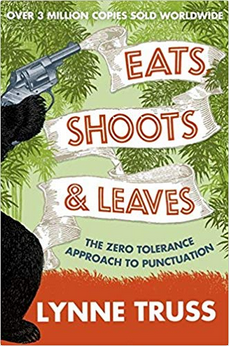
As for punctuation errors, as Lynne Truss so ably demonstrates in 'Eats, Shoots and Leaves', they can alter the entire meaning of a sentence. Correct punctuation can save lives. Take the following example: 'Let's eat, grandpa.' Miss out the comma, and cannibalism enters the picture - not a happy scenario for our aged relative: 'Let's eat grandpa.' Call the cops, someone! 3. The terrible trio - sex, swearing and violence
I've lumped these together because they all turn off any reader who's sensitive to such issues. Some people don't care for brutality, profanity or sex scenes in novels. As I'll explain later, I ditched one book partly because of its violence. I'm not unduly squeamish, but what I was reading was a step too far for me. When it comes to swearing, I've been told the use of the F-word in my novels has upset some people, and I understand that. I rarely, if ever, swear. Often, though, profanity is necessary in fiction. It would be inauthentic for me to create a character like Adam Campbell in 'Guilty Innocence', and for him not to curse. He's a murderous psychopath - bad language goes with the territory. In contrast, my fourth novel, 'The Second Captive', contains little profanity. It simply wouldn't be right for the characters.
As for sexual content, I love a good bit of smut! I may well write erotica one day. Some people cringe when fictional characters get down and dirty, however, and that's their preference. Each to their own.
4. The novel doesn't get with the reader
Sometimes a novel can be well-written, a popular success, and yet something about it doesn't sit well with the reader. I experienced this with a certain novel, which I won't name as I dislike posting negatively about books or their authors. The book has 53 five-star and 18 four-star reviews on Amazon UK, and has clearly been well received. But I simply couldn't get into it, failing to engage with the characters or the storyline. The author's writing style didn't appeal, either. I read some reviews of the book after I abandoned it, and I'm glad I didn't continue. The book contains scenes of sexual torture along with animal abuse - definitely not my thing. By all accounts, the novel is very well written and has garnered critical acclaim, but for me it wasn't a good fit. My fault - I should have read the back blurb more carefully.
5. When an author promotes his/her own agenda
Sometimes when I read a novel, I sense a personal agenda on the part of the author. This sometimes happens with political or religious issues, and I find it off-putting. As the novelist Iain Rob Wright mentioned in a blog post: 'I would never make my own views entirely obvious through my work, because then I am not creating fiction, I am writing propaganda.' I agree. It's usually easy to spot this one. Typically, a character will espouse a viewpoint that has no bearing on the plot, expanding at length via unnecessary dialogue or narrative. If axing such material wouldn't affect the storyline, then it's likely a spot of personal propaganda on behalf of the author is being deployed. Like many people, I resent being preached at. It may not mean I ditch the book altogether, but it does colour my view of it.
What about you? What would make you ditch a novel?
Apart from the five reasons above, are there any reasons you'd abandon a novel? Does sex, swearing or violence put you off a book? Do typos bother you? Leave me a comment and let me know!
It's rare for me not to read all the way to the end of a novel. I choose my fiction carefully, avoiding genres that I don't enjoy, such as romances. After a lifetime of reading, I know what appeals to me and what doesn't. (Not always, as you'll discover below - sometimes I get it wrong). The other night, though, I gave up on a book after finding some of the content offensive. It got me thinking. What might make a reader ditch a novel? As part of my 'Five' series, I'll be discussing some possible reasons. Let's go! 1. It's badly written
Some novels, whether traditionally or indie published, simply aren't well-written. Poor character development, a failure to round off the narrative properly, plot threads left hanging... the list goes on. Nobody wants to read such books.Dialogue is a common problem. Some authors struggle with getting it right; their characters' conversations fall flat. Not to mention my favourite bugbear - inappropriate and excessive speech tags. I gave up on one novel partly because the main character rarely said anything. Instead, she chirped and mumbled her sentences, reminding me by turns of a songbird or a sulky teenager. As she was supposed to be a feisty, kick-ass kind of gal, this irritated me. There were other reasons I abandoned the book, but when I read one chirp too many, it was game over.
Speech tags are often unnecessary anyway; if an author has given his/her characters strong enough voices and the dialogue flows well, it should be obvious who's speaking. 2. Bad grammar, spelling and punctuation
A criticism often aimed at self-published novels is that they're full of typos and poor grammar. Not always, of course, but there's some truth in the allegation. Whilst I love what self-publishing has done for the industry, I agree that too many novelists present their work with a disregard for the English language. However, it's also a trend I'm noticing with traditionally published books. It's not unusual nowadays to find typos and even plot errors in novels from big-name publishers. I'm told it's because many publishing houses are axing editors and proof-readers in a bid to cut costs. Whether that's true, I can't say, but it's no longer just self-published authors who have to defend themselves from criticism on this score.Some people, of course, believe it's not important. They say that as long as the plot flows well and the characters engage the reader, then typos and poor grammar don't matter. I say they do. Language is the medium through which writers create their work; shouldn't they be able to employ it correctly? If a musician plays a wrong note, it grates on the ear. The principle's no different with books. Typos jar on the reader, distracting from the narrative - hardly what the author intended. Would you rather be kissed or pissed?
As for punctuation errors, as Lynne Truss so ably demonstrates in 'Eats, Shoots and Leaves', they can alter the entire meaning of a sentence. Correct punctuation can save lives. Take the following example: 'Let's eat, grandpa.' Miss out the comma, and cannibalism enters the picture - not a happy scenario for our aged relative: 'Let's eat grandpa.' Call the cops, someone! 3. The terrible trio - sex, swearing and violence
I've lumped these together because they all turn off any reader who's sensitive to such issues. Some people don't care for brutality, profanity or sex scenes in novels. As I'll explain later, I ditched one book partly because of its violence. I'm not unduly squeamish, but what I was reading was a step too far for me. When it comes to swearing, I've been told the use of the F-word in my novels has upset some people, and I understand that. I rarely, if ever, swear. Often, though, profanity is necessary in fiction. It would be inauthentic for me to create a character like Adam Campbell in 'Guilty Innocence', and for him not to curse. He's a murderous psychopath - bad language goes with the territory. In contrast, my fourth novel, 'The Second Captive', contains little profanity. It simply wouldn't be right for the characters.
As for sexual content, I love a good bit of smut! I may well write erotica one day. Some people cringe when fictional characters get down and dirty, however, and that's their preference. Each to their own.
4. The novel doesn't get with the reader
Sometimes a novel can be well-written, a popular success, and yet something about it doesn't sit well with the reader. I experienced this with a certain novel, which I won't name as I dislike posting negatively about books or their authors. The book has 53 five-star and 18 four-star reviews on Amazon UK, and has clearly been well received. But I simply couldn't get into it, failing to engage with the characters or the storyline. The author's writing style didn't appeal, either. I read some reviews of the book after I abandoned it, and I'm glad I didn't continue. The book contains scenes of sexual torture along with animal abuse - definitely not my thing. By all accounts, the novel is very well written and has garnered critical acclaim, but for me it wasn't a good fit. My fault - I should have read the back blurb more carefully.
5. When an author promotes his/her own agenda
Sometimes when I read a novel, I sense a personal agenda on the part of the author. This sometimes happens with political or religious issues, and I find it off-putting. As the novelist Iain Rob Wright mentioned in a blog post: 'I would never make my own views entirely obvious through my work, because then I am not creating fiction, I am writing propaganda.' I agree. It's usually easy to spot this one. Typically, a character will espouse a viewpoint that has no bearing on the plot, expanding at length via unnecessary dialogue or narrative. If axing such material wouldn't affect the storyline, then it's likely a spot of personal propaganda on behalf of the author is being deployed. Like many people, I resent being preached at. It may not mean I ditch the book altogether, but it does colour my view of it.
What about you? What would make you ditch a novel?
Apart from the five reasons above, are there any reasons you'd abandon a novel? Does sex, swearing or violence put you off a book? Do typos bother you? Leave me a comment and let me know!


December 4, 2019
'Silent Winter' has now been published!
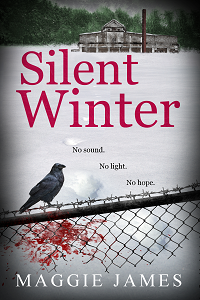 Today marks the release of my seventh novel, 'Silent Winter', which makes me very happy! For the first week of publication, 'Silent Winter' is available for just 99c/p in the US/UK (Kindle version). Either click/tap the image or this link: Silent Winter.
'Silent Winter' is currently available as an e-book from Amazon, and the paperback version should be published within a day. I'm also working on an audio version, but that's a project for 2020. In the meantime, here's a taster of 'Silent Winter' is about:
On an icy November night, Drew Blackmore is beaten unconscious, then abducted. He awakes to find himself in total darkness, naked and chained to the floor. Fed just enough to keep him alive, Drew is unable to identify his captor, or the reason for his incarceration. As reality fades, hallucinations take over. Can Drew escape his prison before madness claims him?
Meanwhile Drew's wife, Holly, despairing of ever seeing him again, turns to his brother for comfort. As the worst winter in decades sweeps the UK, she learns of Drew's tragic past. Could his disappearance be connected with that of a prostitute years before?
A story of how the mind responds to solitary confinement, 'Silent Winter' examines one man's desperate attempt to survive the unthinkable.
A selection of comments from my ARC readers and from Goodreads reviews:
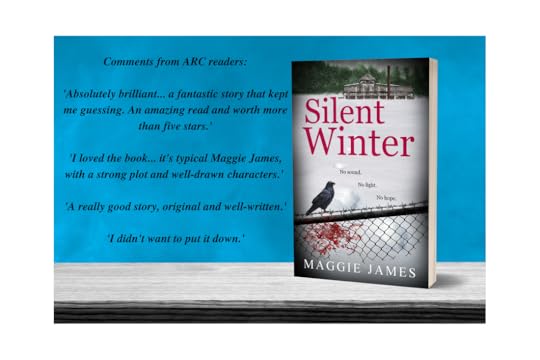 'Excellent storytelling from Maggie James.'
'Blew my mind away… the story kept me at the edge of my seat.'
'Great characters in a complex plot… an amazing read.'
You can watch the video trailer here:
 Either click/tap the image or this link: Silent Winter.
Buy your copy from Amazon via this link! Silent Winter
November 27, 2019
Interview with Peter James
I'm delighted to welcome novelist Peter James to my blog today! Peter is the author of the best-selling crime thrillers featuring Brighton-based Detective Superintendent Roy Grace, which have sold 18 million copies worldwide. Peter also writes supernatural fiction, such as 'The House on Cold Hill', a book I enjoyed very much. Welcome to my blog, Peter! With no further ado, let's proceed with the interview.
To what extent does DS Roy Grace reflect aspects of your own personality?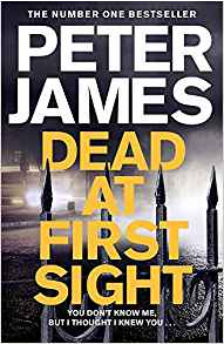 Roy Grace is based very loosely on former Chief Superintendent David Gaylor of Sussex CID. I was lucky enough to shadow David for many weeks over several years, during which he rose from Detective Inspector to Detective Superintendent. His office is Roy Grace’s office, and one of his areas of specialization was cold cases – also shared by Grace. But there the similarity ends – David is happily married and has no particular interest in the occult – although he is very open minded. I like Roy Grace the most of any character I have created, and there is a lot of myself in him. I’m in some ways quite a loner, too. I have a fascination for the paranormal. I share his views when he attacks bigots, when he attacks horrible architecture, or when, in ‘Not Dead Enough’, he launches into a tirade at the terrible state of our hospital in Brighton, the Sussex County. Roy Grace is a man who believes that we all have an obligation, with our lives, to try to leave the world a slightly better place than when we first came into it. That’s my view and it is partly why I write, to examine and try to understand better the world we live in and why people do the things they go. But I do also love the terrible Norman Potting. He is able to say all kinds of politically incorrect things that can no longer be said!
Out of all your antagonists, who’s been the most fun for you to create, and why? Jodie in ‘Love You Dead’, and Dr Crisp in ‘You Are Dead’. Jodie is inspired by a woman I met in a prison, who murdered her husband and mother-in-law; she is so evil she makes you smile at her audacity. Similarly, I like Doctor Edward Crisp’s combination of charm, quirkiness and utter evil – modelled on someone I know who is in a different profession.
What’s been your most challenging novel when it comes to plotting, and why? ‘Dead Like You’ because it took place in two different time periods which was very complicated.
How does your writing day shape up? Lark or Owl? Plotter or Pantser?
My whole writing day is back to front… It is from the time when I was writing novels whilst working full time in film and television as a screen writer and producer, so I had to make my “Me time” to write. My writing day starts at 6pm in the evening, when I mix a large vodka martini, with four olives, put on some music, light up a cigar and get into a zone. I try to ensure that whatever I’m doing I leave myself time to write 1,000 words 6 days a week. In terms of research – a lot I do before, but then as I progress I realise there is more I need to learn, and I’m an absolute stickler for research.
In the past, you’ve been very involved in film production. Do you see yourself returning to working in the film industry in the future? Novelist Peter James I was a film producer for many years but I realized in 2005, shortly after making the film I'm most proud of, Merchant Of Venice with Al Pacino and Jeremy Irons, that actually, I much prefer writing novels. The problem with films is that they are such a collaborative process; it becomes almost like a committee, but up to 20 people who each believe it is their film! For example you have the screenwriter, and very often a second screen writer or “polisher”, the producer – sometimes two or even more. The executive producers, again sometimes two or more, the director, the principal actors, the director of photography, the set designer, the editor, the composer, the distributor and so on. Each and every one of these has influence on the end product. And most normally have egos the size of aircraft carriers.
With a book the creative process is utterly pure. There is just myself and my agent and my editor. If I don’t want to change one single word I have written I don’t have to. I love that freedom from the “committee” process of film-making. I’d be very happy never to be involved in that industry again!
Have you always been interested in the paranormal, or does your curiosity stem from your haunted house in Ditchling? Yes, I’ve always had an open on mind on the supernatural and I’ve met countless normal, rational people who have had something happen, at some point in their lives, for which they have no rational explanation. 'The House On Cold Hill' is very much inspired by – and modelled on – the isolated historic house in Sussex that my former wife and I bought in 1989 that you refer to, and I lived in for a decade – which turned out to be very seriously haunted. Whilst I have never actually seen a ghost, there were things that happened at that house I really couldn’t explain. I saw on many occasions, tiny pinpricks of white light floating in the air. A medium who I used a lot during my writing of 'Possession', visited my house and she told me I was slightly psychic, and that is why I saw these pinpricks, and that while I was not actually seeing the entire apparition, I was picking up on some of its energy.
Tell us about the work you do with the charity The Reading Agency. I hugely support the Reading Agency, which tries to raise the standard of literacy in our nation. It’s a terribly sad statistic that the average reading age in a UK prison is currently equivalent to that of a nine-year-old child. I give talks to help people with reading difficulties and I also give talks in prisons every year to try to encourage literacy among prisoners.
Like me, you’re passionately fond of animals. Tell us about your new venture into keeping alpacas! My wife and I spent time with my publicist, Tony Mulliken, and his wife Pam at their home and they keep 6 alpacas. We saw what lovely creatures they are and we have a paddock at our Sussex home that was empty, so we decided to look into getting some of our own. We researched far and wide, and found an amazing local breeder, Spring Farm Alpacas, in Fletching, who care so well for their herd. They are hugely passionate about all the animals and know them all by name. Our 5 boys arrived a while ago and we just love them! They are very inquisitive creatures and full of character, they make us laugh every day!
Also like me, you’re a foodie. What’s your favourite savoury food? Favourite sweet dish?
Savoury: oysters and anchovy olives. Sweet: peanut M & Ms!
You love cars. Are there any racing or driving ambitions you’ve yet to achieve? I love cars and in particular, historic motor racing, so my dream is to win the Saint Mary’s Trophy at the Goodwood Revival!
Thank you, Peter, for a great interview! It's been a pleasure talking to you.
You can find and follow Peter on :
Website: www.peterjames.com
Facebook: http://www.facebook.com/peterjames.roygrace
Twitter: http://twitter.com/peterjamesuk
Instagram: https://instagram.com/peterjamesuk
YouTube channel: www.peterjames.com/YouTube
To what extent does DS Roy Grace reflect aspects of your own personality?
Roy Grace is based very loosely on former Chief Superintendent David Gaylor of Sussex CID. I was lucky enough to shadow David for many weeks over several years, during which he rose from Detective Inspector to Detective Superintendent. His office is Roy Grace’s office, and one of his areas of specialization was cold cases – also shared by Grace. But there the similarity ends – David is happily married and has no particular interest in the occult – although he is very open minded. I like Roy Grace the most of any character I have created, and there is a lot of myself in him. I’m in some ways quite a loner, too. I have a fascination for the paranormal. I share his views when he attacks bigots, when he attacks horrible architecture, or when, in ‘Not Dead Enough’, he launches into a tirade at the terrible state of our hospital in Brighton, the Sussex County. Roy Grace is a man who believes that we all have an obligation, with our lives, to try to leave the world a slightly better place than when we first came into it. That’s my view and it is partly why I write, to examine and try to understand better the world we live in and why people do the things they go. But I do also love the terrible Norman Potting. He is able to say all kinds of politically incorrect things that can no longer be said!Out of all your antagonists, who’s been the most fun for you to create, and why? Jodie in ‘Love You Dead’, and Dr Crisp in ‘You Are Dead’. Jodie is inspired by a woman I met in a prison, who murdered her husband and mother-in-law; she is so evil she makes you smile at her audacity. Similarly, I like Doctor Edward Crisp’s combination of charm, quirkiness and utter evil – modelled on someone I know who is in a different profession.
What’s been your most challenging novel when it comes to plotting, and why? ‘Dead Like You’ because it took place in two different time periods which was very complicated.
How does your writing day shape up? Lark or Owl? Plotter or Pantser?
My whole writing day is back to front… It is from the time when I was writing novels whilst working full time in film and television as a screen writer and producer, so I had to make my “Me time” to write. My writing day starts at 6pm in the evening, when I mix a large vodka martini, with four olives, put on some music, light up a cigar and get into a zone. I try to ensure that whatever I’m doing I leave myself time to write 1,000 words 6 days a week. In terms of research – a lot I do before, but then as I progress I realise there is more I need to learn, and I’m an absolute stickler for research.
In the past, you’ve been very involved in film production. Do you see yourself returning to working in the film industry in the future?
Novelist Peter James I was a film producer for many years but I realized in 2005, shortly after making the film I'm most proud of, Merchant Of Venice with Al Pacino and Jeremy Irons, that actually, I much prefer writing novels. The problem with films is that they are such a collaborative process; it becomes almost like a committee, but up to 20 people who each believe it is their film! For example you have the screenwriter, and very often a second screen writer or “polisher”, the producer – sometimes two or even more. The executive producers, again sometimes two or more, the director, the principal actors, the director of photography, the set designer, the editor, the composer, the distributor and so on. Each and every one of these has influence on the end product. And most normally have egos the size of aircraft carriers. With a book the creative process is utterly pure. There is just myself and my agent and my editor. If I don’t want to change one single word I have written I don’t have to. I love that freedom from the “committee” process of film-making. I’d be very happy never to be involved in that industry again!
Have you always been interested in the paranormal, or does your curiosity stem from your haunted house in Ditchling? Yes, I’ve always had an open on mind on the supernatural and I’ve met countless normal, rational people who have had something happen, at some point in their lives, for which they have no rational explanation. 'The House On Cold Hill' is very much inspired by – and modelled on – the isolated historic house in Sussex that my former wife and I bought in 1989 that you refer to, and I lived in for a decade – which turned out to be very seriously haunted. Whilst I have never actually seen a ghost, there were things that happened at that house I really couldn’t explain. I saw on many occasions, tiny pinpricks of white light floating in the air. A medium who I used a lot during my writing of 'Possession', visited my house and she told me I was slightly psychic, and that is why I saw these pinpricks, and that while I was not actually seeing the entire apparition, I was picking up on some of its energy.
Tell us about the work you do with the charity The Reading Agency. I hugely support the Reading Agency, which tries to raise the standard of literacy in our nation. It’s a terribly sad statistic that the average reading age in a UK prison is currently equivalent to that of a nine-year-old child. I give talks to help people with reading difficulties and I also give talks in prisons every year to try to encourage literacy among prisoners.
Like me, you’re passionately fond of animals. Tell us about your new venture into keeping alpacas! My wife and I spent time with my publicist, Tony Mulliken, and his wife Pam at their home and they keep 6 alpacas. We saw what lovely creatures they are and we have a paddock at our Sussex home that was empty, so we decided to look into getting some of our own. We researched far and wide, and found an amazing local breeder, Spring Farm Alpacas, in Fletching, who care so well for their herd. They are hugely passionate about all the animals and know them all by name. Our 5 boys arrived a while ago and we just love them! They are very inquisitive creatures and full of character, they make us laugh every day!
Also like me, you’re a foodie. What’s your favourite savoury food? Favourite sweet dish?
Savoury: oysters and anchovy olives. Sweet: peanut M & Ms!
You love cars. Are there any racing or driving ambitions you’ve yet to achieve? I love cars and in particular, historic motor racing, so my dream is to win the Saint Mary’s Trophy at the Goodwood Revival!
Thank you, Peter, for a great interview! It's been a pleasure talking to you.
You can find and follow Peter on :
Website: www.peterjames.com
Facebook: http://www.facebook.com/peterjames.roygrace
Twitter: http://twitter.com/peterjamesuk
Instagram: https://instagram.com/peterjamesuk
YouTube channel: www.peterjames.com/YouTube
November 19, 2019
Book review - 'Personal' by Lee Child
The Jack Reacher series - classy, page-turning thrillers
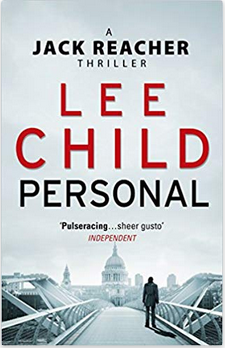 I've been a fan of Lee Child's Jack Reacher titles from the first one I read. Hats off to Mr Child (real name Jim Grant), who has mastered writing bestselling American thrillers, despite being British. He pens classy novels with a twist and a turn in every chapter, books that make me eager to turn to the next page. This week I'll be reviewing his novel 'Personal', published in 2014.
First, however, a little about the Reacher series in general. Jack Reacher is an iconic character; tall, tough, an expert fighter, he wanders his home country of America with only a toothbrush and wallet in his pocket. He even spurns carrying a change of clothes, preferring to buy fresh attire as and when he needs it. He has no home, no car, no friends, no significant other, just a desire to live life off the grid and on his own terms. Reacher explores his homeland without so much as a holdall, claiming that if he were to allow possessions into his life, it would open the door to more... and more... and more. Which might lead to acquiring a house for all those possessions, and being settled is exactly what Reacher seeks to avoid.
The girls, the gadgets, the witty one-liners.... In terms of plot, the Reacher books are virtually identical. The novels are, as Child has remarked, essentially revenge stories – somebody does something bad, and Reacher exacts retribution. The plotline and location varies from title to title, but certain elements stay the same. That's not necessarily a bad thing, and I suspect Child employs this strategy for commercial reasons. Why? Because such tactics work. Take the James Bond movies. No matter who the latest Bond actor is, cinema goers know exactly what they'll get for their money. The girls, the gadgets, the witty one-liners... the basic plotline may vary, but the action and adventure remain constant. Guaranteed entertainment. It's no different with Lee Child's novels.
In many ways, I see similarities between James Bond and Jack Reacher. Reacher's as tough as Bond, if not more so. A towering six feet five inches of fighting prowess, he tends to tackle the bad guys in multiples, often taking on five or six men at once and leaving them dead or hospital cases. All the while offloading witty wisecracks - our man's verbally every bit as cool as James Bond. We all love Bond's laconic one-liners, but Reacher can come out with some gems of his own as he bats his ripostes across the conversational table. Take this example of his dry humour:
'I have no desire to go to Buckingham Palace anyway.'
'Wouldn't you like to meet the Queen?'
'Not really. She's just a person. We're all equal. Has she expressed any interest in meeting me?'
Entertainment, pure and simple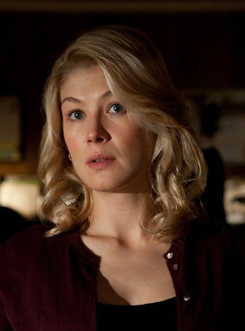 Helen Rodin, one of Reacher's conquests In addition, similar to Bond, Reacher always hooks up with a beautiful, beguiling female; Child's subplots are often concerned with the sexual tension that develops between the two. The epitome of machismo, Reacher is nevertheless portrayed as respectful towards women, despite his 'love 'em and leave 'em' attitude. Not that the latter matters. His cohorts aren't, on the whole, looking for a white picket fence; they're equally happy to enjoy some uncomplicated pleasure. Entertainment, pure and simple, for Jack, his women, and the reader.
Let's turn now to gadgets. Our hero has an encyclopaedic knowledge of weaponry, although he's a dinosaur when it comes to technology. Despite lacking Bond's fancy gizmos, Reacher employs any guns he comes across to great effect. He knows all about ballistics and firing strategies, facts ground hard into him during his years as a military policeman, and he uses his knowledge well, explaining it to the reader in a way that's never dull. And he's also a mean opponent with his fists and feet. You wouldn't want to piss off this guy, believe me. What about his morality? Like Bond, Jack has no compunction about killing another human should the circumstances warrant it. I've read criticism of Lee Child for this, along the lines of how a cold-blooded murderer can't be a hero. I believe that's over-thinking the issue. Child's books are written to entertain, and I doubt anyone would level the same comment at James Bond, simply because he holds a licence to kill and Reacher doesn't. We're not meant to go all moralistic about Child's protagonist. Besides, Reacher has no trouble justifying his actions, either to himself or to others. Take this excerpt from 'Personal', in which he explains his attitude to killing one of the guys sent to apprehend him: 'He had a choice... he could have spent his days helping old ladies across the street. He could have volunteered in the library. I expect they have a library here. He could have raised funds for Africa, or wherever they need funds these days. He could have done a whole lot of good things. But he didn't. He chose not to. He chose to spend his days extorting money and hurting people. Then finally he opened the wrong door, and what came out at him was his problem, not mine. Plus he was useless. A waste of good food. Too stupid to live.'
'The stakes have never been higher...because this time, it's personal.' 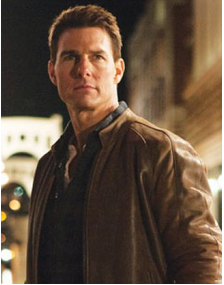 Tom Cruise as Jack Reacher On to the book review itself. Here's what Amazon says: 'Jack Reacher walks alone. Once a go-to hard man in the US military police, now he’s a drifter of no fixed abode. But the army tracks him down. Because someone has taken a long-range shot at the French president. Only one man could have done it. And Reacher is the one man who can find him. This new heart stopping, nail biting book in Lee Child’s number-one bestselling series takes Reacher across the Atlantic to Paris – and then to London. The stakes have never been higher - because this time, it’s personal.'
Number 19 in the series is one of the most entertaining Reacher novels that I've read. Whether that's because I'm British and the book is largely set in the UK, I'm not sure. It's certainly interesting to experience Lee Child, a fellow Brit, exploring our way of life through the eyes of an American, and not always reverently, which adds to the fun. Reacher doesn't hesitate to crack amusing references to the Queen, the London transport system and our police force, amongst other things, and it's hard not to smile at some of the absurdities he reveals. The novel moves along at a frantic speed, with hooks at the end of each chapter that drag the reader, metaphorically breathless, towards the next. Lines like: 'I headed towards the sound of her voice, and stepped into a room, and came face to face with myself.' Or: 'He had a gun in his hand, yet another Browning High Power, and he was pointing it straight at my head.' Who could resist turning the page after such a cliff-hanger?
A riveting read and a quality thriller Unusually for a Reacher novel, the relationship between our protagonist and his female sidekick has a different flavour to the other Lee Child titles I've read. Reacher is more interested in helping rookie CIA agent Casey Nice with her personal issues than rolling her into bed, perhaps because there's a large age gap between them. It's plain he's attracted to her, though. Take this excerpt: 'She knocked on my door, and I opened up and found her in a ponytail and a version of her Arkansas outfit. The same brown leather jacket, over a white T-shirt, with different jeans. Same colour, but lower cut. And all scraped and sanded and beat up. Distressed, I believed they called it, which to me meant upset, which just didn't compute. Was there a finer place to be, than where those jeans were?'
'Personal' is a riveting read in my opinion, a great example of the Jack Reacher series. My view isn't shared by many on Amazon, however; the book has attracted a fair number of one-star reviews, many complaining that the plot is tedious and dumbed-down, and that Lee Child has run out of juice with the Reacher character. I disagree, and as long as Reacher's capable of kicking the butts of multiple antagonists in a fight, I'll keep reading his adventures. Enough from me - over to you! What do you think? Have you read 'Personal'? Do you enjoy Lee Child's Reacher novels? Or do you think the character has grown stale with repetition? Do you consider that Tom Cruise, at 5' 7", was miscast as 6' 5" Reacher in the movie? Whatever your thoughts, leave a comment and let me know!
I've been a fan of Lee Child's Jack Reacher titles from the first one I read. Hats off to Mr Child (real name Jim Grant), who has mastered writing bestselling American thrillers, despite being British. He pens classy novels with a twist and a turn in every chapter, books that make me eager to turn to the next page. This week I'll be reviewing his novel 'Personal', published in 2014.First, however, a little about the Reacher series in general. Jack Reacher is an iconic character; tall, tough, an expert fighter, he wanders his home country of America with only a toothbrush and wallet in his pocket. He even spurns carrying a change of clothes, preferring to buy fresh attire as and when he needs it. He has no home, no car, no friends, no significant other, just a desire to live life off the grid and on his own terms. Reacher explores his homeland without so much as a holdall, claiming that if he were to allow possessions into his life, it would open the door to more... and more... and more. Which might lead to acquiring a house for all those possessions, and being settled is exactly what Reacher seeks to avoid.
The girls, the gadgets, the witty one-liners.... In terms of plot, the Reacher books are virtually identical. The novels are, as Child has remarked, essentially revenge stories – somebody does something bad, and Reacher exacts retribution. The plotline and location varies from title to title, but certain elements stay the same. That's not necessarily a bad thing, and I suspect Child employs this strategy for commercial reasons. Why? Because such tactics work. Take the James Bond movies. No matter who the latest Bond actor is, cinema goers know exactly what they'll get for their money. The girls, the gadgets, the witty one-liners... the basic plotline may vary, but the action and adventure remain constant. Guaranteed entertainment. It's no different with Lee Child's novels.
In many ways, I see similarities between James Bond and Jack Reacher. Reacher's as tough as Bond, if not more so. A towering six feet five inches of fighting prowess, he tends to tackle the bad guys in multiples, often taking on five or six men at once and leaving them dead or hospital cases. All the while offloading witty wisecracks - our man's verbally every bit as cool as James Bond. We all love Bond's laconic one-liners, but Reacher can come out with some gems of his own as he bats his ripostes across the conversational table. Take this example of his dry humour:
'I have no desire to go to Buckingham Palace anyway.'
'Wouldn't you like to meet the Queen?'
'Not really. She's just a person. We're all equal. Has she expressed any interest in meeting me?'
Entertainment, pure and simple
Helen Rodin, one of Reacher's conquests In addition, similar to Bond, Reacher always hooks up with a beautiful, beguiling female; Child's subplots are often concerned with the sexual tension that develops between the two. The epitome of machismo, Reacher is nevertheless portrayed as respectful towards women, despite his 'love 'em and leave 'em' attitude. Not that the latter matters. His cohorts aren't, on the whole, looking for a white picket fence; they're equally happy to enjoy some uncomplicated pleasure. Entertainment, pure and simple, for Jack, his women, and the reader.Let's turn now to gadgets. Our hero has an encyclopaedic knowledge of weaponry, although he's a dinosaur when it comes to technology. Despite lacking Bond's fancy gizmos, Reacher employs any guns he comes across to great effect. He knows all about ballistics and firing strategies, facts ground hard into him during his years as a military policeman, and he uses his knowledge well, explaining it to the reader in a way that's never dull. And he's also a mean opponent with his fists and feet. You wouldn't want to piss off this guy, believe me. What about his morality? Like Bond, Jack has no compunction about killing another human should the circumstances warrant it. I've read criticism of Lee Child for this, along the lines of how a cold-blooded murderer can't be a hero. I believe that's over-thinking the issue. Child's books are written to entertain, and I doubt anyone would level the same comment at James Bond, simply because he holds a licence to kill and Reacher doesn't. We're not meant to go all moralistic about Child's protagonist. Besides, Reacher has no trouble justifying his actions, either to himself or to others. Take this excerpt from 'Personal', in which he explains his attitude to killing one of the guys sent to apprehend him: 'He had a choice... he could have spent his days helping old ladies across the street. He could have volunteered in the library. I expect they have a library here. He could have raised funds for Africa, or wherever they need funds these days. He could have done a whole lot of good things. But he didn't. He chose not to. He chose to spend his days extorting money and hurting people. Then finally he opened the wrong door, and what came out at him was his problem, not mine. Plus he was useless. A waste of good food. Too stupid to live.'
'The stakes have never been higher...because this time, it's personal.'
Tom Cruise as Jack Reacher On to the book review itself. Here's what Amazon says: 'Jack Reacher walks alone. Once a go-to hard man in the US military police, now he’s a drifter of no fixed abode. But the army tracks him down. Because someone has taken a long-range shot at the French president. Only one man could have done it. And Reacher is the one man who can find him. This new heart stopping, nail biting book in Lee Child’s number-one bestselling series takes Reacher across the Atlantic to Paris – and then to London. The stakes have never been higher - because this time, it’s personal.' Number 19 in the series is one of the most entertaining Reacher novels that I've read. Whether that's because I'm British and the book is largely set in the UK, I'm not sure. It's certainly interesting to experience Lee Child, a fellow Brit, exploring our way of life through the eyes of an American, and not always reverently, which adds to the fun. Reacher doesn't hesitate to crack amusing references to the Queen, the London transport system and our police force, amongst other things, and it's hard not to smile at some of the absurdities he reveals. The novel moves along at a frantic speed, with hooks at the end of each chapter that drag the reader, metaphorically breathless, towards the next. Lines like: 'I headed towards the sound of her voice, and stepped into a room, and came face to face with myself.' Or: 'He had a gun in his hand, yet another Browning High Power, and he was pointing it straight at my head.' Who could resist turning the page after such a cliff-hanger?
A riveting read and a quality thriller Unusually for a Reacher novel, the relationship between our protagonist and his female sidekick has a different flavour to the other Lee Child titles I've read. Reacher is more interested in helping rookie CIA agent Casey Nice with her personal issues than rolling her into bed, perhaps because there's a large age gap between them. It's plain he's attracted to her, though. Take this excerpt: 'She knocked on my door, and I opened up and found her in a ponytail and a version of her Arkansas outfit. The same brown leather jacket, over a white T-shirt, with different jeans. Same colour, but lower cut. And all scraped and sanded and beat up. Distressed, I believed they called it, which to me meant upset, which just didn't compute. Was there a finer place to be, than where those jeans were?'
'Personal' is a riveting read in my opinion, a great example of the Jack Reacher series. My view isn't shared by many on Amazon, however; the book has attracted a fair number of one-star reviews, many complaining that the plot is tedious and dumbed-down, and that Lee Child has run out of juice with the Reacher character. I disagree, and as long as Reacher's capable of kicking the butts of multiple antagonists in a fight, I'll keep reading his adventures. Enough from me - over to you! What do you think? Have you read 'Personal'? Do you enjoy Lee Child's Reacher novels? Or do you think the character has grown stale with repetition? Do you consider that Tom Cruise, at 5' 7", was miscast as 6' 5" Reacher in the movie? Whatever your thoughts, leave a comment and let me know!
November 12, 2019
The story behind 'Silent Winter'
It's been a long haul so far...
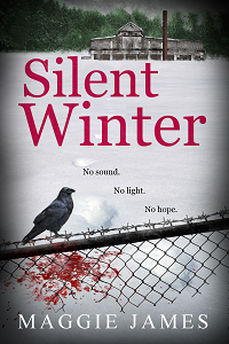 My forthcoming novel, 'Silent Winter', has enjoyed something of a tortuous journey to publication, and in many ways it's proved one of the more difficult of my books to bring to completion. I almost didn't write the story at all. The idea came from something I read about a medieval punishment, which was to incarcerate the wrongdoer in a sound-proofed, pitch-black room in solitary confinement. The prisoners were fed and given water, but denied all human contact. Sensory deprivation is harmful in prolonged doses and results in hallucinations and other unpleasant symptoms. Under such circumstances these individuals quickly lost their sanity, and from the research I did for 'Silent Winter', I'm not surprised. We are social creatures; even the most introverted people don't fare well in solitary confinement, and its use in prisons has been widely condemned. I wasn't sure whether I could handle such a distressing subject but the idea continued to intrigue me. I eventually decided to write a story based around the premise, but to keep it at novella length and offer the book as an opt-in incentive for my newsletter list.
Lots of chopping and changing has been involved!
I started to flesh out the plot in late 2017, so you can see how long the project has taken me! At first I planned to start the story with Drew released from his captivity, and to examine the complex emotions he would face as he tried to resume some kind of normality. I quickly realised that wouldn't work. For readers to empathise with Drew and the horrors he suffers, they have to endure them alongside him, albeit in written form (thank goodness!). That entailed adding a new front part to the book, which would bring it closer to novel length rather than a novella. With that in mind, I decided to write a full-length novel, still with the idea of offering it as an exclusive opt-in offer for my newsletter.
And so I began. The plot posed problems, however. How was Drew going to escape incarceration? What would his former captor do to snatch him back? How would Drew overcome his nemesis? I wasn't happy with the first draft. The resolution of these issues relied too much on coincidence, and I shelved the book, frustrated at my lack of progress.
However, I loathe wasting writing effort. There I was, with 70,000 words written of a project, and the subject matter still intrigued me. After a long break, I took another look at 'Silent Winter'. I stripped out everything that didn't work, axing tens of thousands of words in the process, and thought hard about what changes to make. From somewhere inside my head came the answers, along with ideas of how to forge some neat twists in the plot. I also decided to make 'Blackwater Lake' my opt-in offer, and that 'Silent Winter' would be available for sale alongside my other standalone novels. With that settled, I got to work.
It took a lot of effort. I was revising the book amid moving home, and along the way I suffered a broken elbow, which put paid to any writing for a while. Gradually, out of the mess there'd once been, a new story took shape. Keen to get it published after so many false starts, I sent the manuscript to my long-suffering editor, who pointed out what still wasn't working and offered helpful suggestions. Back to the drawing board or, more accurately, my laptop...
Eventually, at the end of August 2019, I felt confident enough to set a publication date of December 5, and for the book to be sent to my lovely beta readers at the end of September. The ARC version for bloggers and reviewers followed one month later. It's been a long haul getting to this stage, but I'm very pleased with how the novel has turned out, and so relieved that I didn't ditch it. Here are some of the lovely comments I've received from my ARC readers:
Now available for pre-order at just 99c/p!
'Silent Winter' will be priced at 99c/p in the US/UK for the first week of sale, and if you pre-order the kindle version now you can lock in that bargain price. The paperback and audio versions will follow in due course. You can pre-order by clicking/tapping any of the graphics or via this link: Silent Winter. Thank you! In the meantime, here's a reminder of the story:
On an icy November night, Drew Blackmore is beaten unconscious, then abducted. He awakes to find himself in total darkness, naked and chained to the floor. Fed just enough to keep him alive, Drew is unable to identify his captor, or the reason for his incarceration. As reality fades, hallucinations take over. Can Drew escape his prison before madness claims him?
Meanwhile Drew's wife, Holly, despairing of ever seeing him again, turns to his brother for comfort. As the worst winter in decades sweeps the UK, she learns of Drew's tragic past. Could his disappearance be connected with that of a prostitute years before?
A story of how the mind responds to solitary confinement, 'Silent Winter' examines one man's desperate attempt to survive the unthinkable.
My forthcoming novel, 'Silent Winter', has enjoyed something of a tortuous journey to publication, and in many ways it's proved one of the more difficult of my books to bring to completion. I almost didn't write the story at all. The idea came from something I read about a medieval punishment, which was to incarcerate the wrongdoer in a sound-proofed, pitch-black room in solitary confinement. The prisoners were fed and given water, but denied all human contact. Sensory deprivation is harmful in prolonged doses and results in hallucinations and other unpleasant symptoms. Under such circumstances these individuals quickly lost their sanity, and from the research I did for 'Silent Winter', I'm not surprised. We are social creatures; even the most introverted people don't fare well in solitary confinement, and its use in prisons has been widely condemned. I wasn't sure whether I could handle such a distressing subject but the idea continued to intrigue me. I eventually decided to write a story based around the premise, but to keep it at novella length and offer the book as an opt-in incentive for my newsletter list. Lots of chopping and changing has been involved!
I started to flesh out the plot in late 2017, so you can see how long the project has taken me! At first I planned to start the story with Drew released from his captivity, and to examine the complex emotions he would face as he tried to resume some kind of normality. I quickly realised that wouldn't work. For readers to empathise with Drew and the horrors he suffers, they have to endure them alongside him, albeit in written form (thank goodness!). That entailed adding a new front part to the book, which would bring it closer to novel length rather than a novella. With that in mind, I decided to write a full-length novel, still with the idea of offering it as an exclusive opt-in offer for my newsletter.
And so I began. The plot posed problems, however. How was Drew going to escape incarceration? What would his former captor do to snatch him back? How would Drew overcome his nemesis? I wasn't happy with the first draft. The resolution of these issues relied too much on coincidence, and I shelved the book, frustrated at my lack of progress.
However, I loathe wasting writing effort. There I was, with 70,000 words written of a project, and the subject matter still intrigued me. After a long break, I took another look at 'Silent Winter'. I stripped out everything that didn't work, axing tens of thousands of words in the process, and thought hard about what changes to make. From somewhere inside my head came the answers, along with ideas of how to forge some neat twists in the plot. I also decided to make 'Blackwater Lake' my opt-in offer, and that 'Silent Winter' would be available for sale alongside my other standalone novels. With that settled, I got to work.
It took a lot of effort. I was revising the book amid moving home, and along the way I suffered a broken elbow, which put paid to any writing for a while. Gradually, out of the mess there'd once been, a new story took shape. Keen to get it published after so many false starts, I sent the manuscript to my long-suffering editor, who pointed out what still wasn't working and offered helpful suggestions. Back to the drawing board or, more accurately, my laptop...
Eventually, at the end of August 2019, I felt confident enough to set a publication date of December 5, and for the book to be sent to my lovely beta readers at the end of September. The ARC version for bloggers and reviewers followed one month later. It's been a long haul getting to this stage, but I'm very pleased with how the novel has turned out, and so relieved that I didn't ditch it. Here are some of the lovely comments I've received from my ARC readers:
Now available for pre-order at just 99c/p!'Silent Winter' will be priced at 99c/p in the US/UK for the first week of sale, and if you pre-order the kindle version now you can lock in that bargain price. The paperback and audio versions will follow in due course. You can pre-order by clicking/tapping any of the graphics or via this link: Silent Winter. Thank you! In the meantime, here's a reminder of the story:
On an icy November night, Drew Blackmore is beaten unconscious, then abducted. He awakes to find himself in total darkness, naked and chained to the floor. Fed just enough to keep him alive, Drew is unable to identify his captor, or the reason for his incarceration. As reality fades, hallucinations take over. Can Drew escape his prison before madness claims him?
Meanwhile Drew's wife, Holly, despairing of ever seeing him again, turns to his brother for comfort. As the worst winter in decades sweeps the UK, she learns of Drew's tragic past. Could his disappearance be connected with that of a prostitute years before?
A story of how the mind responds to solitary confinement, 'Silent Winter' examines one man's desperate attempt to survive the unthinkable.
November 4, 2019
Publication date for Silent Winter is December 5!
 Just over four weeks until 'Silent Winter' is published - woo hoo! The novel is already available for pre-order in kindle format from Amazon, and I'm working on getting the paperback and audio versions ready. Meanwhile, I've had a short trailer made for the book, which you can watch here: Silent Winter trailer. Here's a taster of what the book is about:
On an icy November night, Drew Blackmore is beaten unconscious, then abducted. He awakes to find himself in total darkness, naked and chained to the floor. Fed just enough to keep him alive, Drew is unable to identify his captor, or the reason for his incarceration. As reality fades, hallucinations take over. Can Drew escape his prison before madness claims him?
Meanwhile Drew's wife, Holly, despairing of ever seeing him again, turns to his brother for comfort. As the worst winter in decades sweeps the UK, she learns of Drew's tragic past. Could his disappearance be connected with that of a prostitute years before?
A story of how the mind responds to solitary confinement, 'Silent Winter' examines one man's desperate attempt to survive the unthinkable. You can pre-order the book here: Silent Winter pre-order. By pre-ordering, you lock in the introductory bargain price, which is 99c/99p for the kindle version. That's the price for the first week of publication, after which date the price will rise to $3.99/£2.99. The book will be delivered automatically to your kindle on December 5. Thank you!
Watch the video trailer here!
October 30, 2019
Comfortable ruts - why they are so insidious
 'You're so brave,' someone said to me recently. 'After all, you gave up financial security to follow your dreams.' For those of you who don't know my story, I used to be an accountant, in a secure and well-paid job. I ditched all that to pursue my ambition of becoming a novelist, a profession that many regard (wrongly, in my view) as being badly remunerated. That's a topic for another post!
This time around I'd like to focus on the notion of comfortable ruts, and the insidious effect they have on people's lives. Years ago I read something that's always stayed with me: how sad it must be to die with regrets. This notion was reinforced as I watched my mother descend into dementia and my elderly father express regret about things he'd not achieved. The lure of the comfortable rut is a powerful one, though. Despite the lessons unfolding before my eyes, I remained an accountant. Why? Because it was the easy option. I earned a decent salary, didn't work overtime and had congenial colleagues and clients. I owned my home, was debt-free and indulged my love of travel frequently. A good lifestyle, most people would say, and yes, it was. I wasn't unhappy, not at all. Underneath, though, the itch to write novels nagged away at me. Had I hated my job, perhaps I'd have jumped ship earlier. I was in a comfortable rut, though, coupled with a strong need for financial security. Once you slip into a rut, it grows deeper, the danger being that it can engulf you, given time.
Eventually, things turned sour at work. It wasn't bravery that led to my career as a novelist but the fire under my butt, sparking by the epiphany I had; the thought of staying put became unbearable. To my surprise, confronting my need for financial security proved far easier than I'd imagined. Once I ditched the regular salary, I found I managed fine without it, replacing the money from my writing income. I've been a full-time novelist for nearly five years now, and everything's going great!
Why am I writing this post? To encourage anyone with unfulfilled dreams to pursue them. My friend who called me brave harbours some of her own, yet I'm not sure she'll ever achieve them. She could, though, if she chose. I suspect she's doing what many people do; they defer their lives. People tell themselves they'll travel the world, write a book, whatever, once they retire or the children leave home. Most don't, lulled into their comfortable ruts by the passing of time. None of us know how long we have on this planet, though. It makes sense to pursue dreams sooner rather than later, but for many, the thought becomes scarier the longer they fail to act. Once you make the decision, though, it's not that frightening!
What's more, the rewards are incredible. I shudder to think about my life had I not given up accountancy. More than likely, I'd be living in the same house, working with the same clients, travelling whenever I got the chance but otherwise no further forward in becoming a novelist. Since jumping ship, I've written nine books, enjoyed an interim career as a dog walker, sold my house, moved to Northumbria, established a regular yoga and Pilates practice, brushed up my Spanish and travelled for several months in Canada, the USA, Asia and Latin America. I doubt I'd have done any of that had I remained in my rut, except for some of the travelling. I have some huge ambitions yet to accomplish, but after having taken a leap of faith once, doing so again doesn't seem daunting. Quite the opposite!
Are you in a comfortable rut? Are there places you'd like to visit, books you'd like to write, relationships you'd like to forge? If so, I urge you to follow your dreams as soon as possible. If you want something badly enough, you'll find a way. Don't let fear rule your life, or be someone who dies with regrets. To me, that's incredibly sad.
October 23, 2019
Maggots, spider bites and other fun research topics
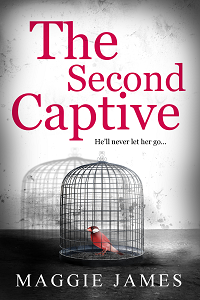 As a novelist, I often joke that my internet browsing history wouldn't stand up to police scrutiny. I frequently research unsavoury topics, along with some fascinating ones. The most interesting so far has been Stockholm syndrome, which I examined in 'The Second Captive'. For many people, the notion that a hostage can develop a strong attachment to, or even love, their abusers/kidnappers is hard to comprehend. It certainly made for an absorbing research topic!
Not all things I've checked out have been such fun. For my fifth novel, 'After She's Gone', I looked into compulsive fire-setting, which brought me to the distinction between arson, pyromania and pyrophilia. Arson is the criminal act of deliberately setting light to property, often done for kicks or financial gain. Pyromania is different, as it involves an obsession with fire, resulting in anything being a target for burning, not just buildings. It was when I checked into pyrophilia that my research took a distinctly unsavoury turn. Pyrophiliacs are sexually aroused by fire, a fact I gleaned from a website devoted to unusual fetishes. I dislike sexual prudishness and don't care what capers consenting adults get up. However, some of the contributors to this website weren't concerned whether their sexual partner was consenting, an adult, or even human. The descriptions of torture turned my stomach. If I could scrub the mental images from my brain with bleach, I would, so enough on that topic.
Here come the maggots and spider bites...!
What else have I needed to research? Here's a rundown:
His Kidnapper's Shoes - genetics concerning eye colour/the onset of childhood memories
Sister, Psychopath - head trauma/babies being suffocated by cats
Guilty Innocence - anonymity orders
Blackwater Lake - hoarding disorder/decomposition rates of bodies in cold water
After She's Gone - ketamine abuse and the hallucinations known as the k-hole
Deception Wears Many Faces - con artists and love scams
Silent Winter (my current work-in-progress) - the effects of solitary confinement and sensory deprivation on the brain
For fun, I posed the question in a Facebook group, asking fellow authors about the worst thing they've ever had to research. Some, like me, reported having to check out ghastly sexual exploits. Here are some of the responses:
'The effects of a dangerous spider bite.'
'I researched how the KGB used to trial poisons on prisoners.'
'The effects of decomposition in water . . . how difficult is it to lop a head off with a sword . . . how far can a knife penetrate a chest and NOT kill the 13-yr-old victim instantly . . . home-made bombs. The list goes on!!'
'Civil War amputations and battlefield treatments.'
'Human trafficking and buried bodies.'
'Medieval torture - those guys were nuts!!!'
'Live maggots... too gross to write about. Give me a body any day...'
'How blue bottles lay eggs in dead bodies, and how that helps date the death. Left it out in the end!'
'A scene where a character has a needle plunged into her heart to revive her.'
What about you?
Wow, that's a fun list! I don't doubt I'll have lots more unsavoury topics to delve into as I develop my writing career - it's just a question of what. Research isn't something I especially enjoy, but I'm keen to make my novels accurate. I still blush with embarrassment at the email I received that pointed out Scotch is a whisky, not a pine tree, and that my reference to Scotch pines in 'Blackwater Lake' needed amending. Oops!
How about you? Have you ever read something ghastly in a novel and wondered, 'how the hell could the author investigate something so awful?' Authors, what about you? Have you ever researched anything stomach-churning? Would your internet browsing history stand up to inspection by the police?! Leave a comment and let me know!
October 16, 2019
Five great opening lines from novels
Novelists are often advised to write a killer first line, a hook so powerful it'll drag the reader by the throat into the rest of the book. It's the old adage of making a good first impression, this time in literary form. Here's Stephen King's opinion on the subject: 'An opening line should invite the reader to begin the story. It should say: Listen. Come in here. You want to know about this.' Hard to argue with that! As part of the 'Five' series, in this week's post I'm examining five great opening sentences from novels.
1. The Crow Road - Ian Banks (1992)
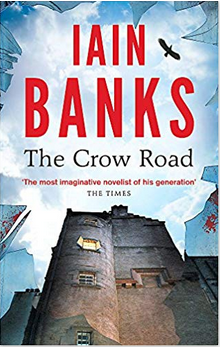 'It was the day my grandmother exploded.' Wow, what a kicker first line! Followed by: 'I sat in the crematorium, listening to my Uncle Hamish quietly snoring in harmony to Bach's Mass in B Minor, and I reflected that it always seemed to be death that drew me back to Gallanach.' Not bad for a second line, either!
The rest of the book doesn't disappoint. I have a love/hate relationship with Iain Banks's novels, having loathed 'The Wasp Factory', been ambivalent about 'Stonemouth', and awed by 'The Crow Road'. The latter is the story of Prentice McHoan, who seeks answers about the disappearance of his uncle eight years ago.
The Crow Road is the name of the book Prentice's uncle, Rory, was writing when he vanished, and is also a metaphor for death. Along the way Prentice questions the existence of God and the afterlife, fuelled by sex, drink, and illegal substances. It's a great read! 2. Middlesex - Jeffrey Eugenides (2002)
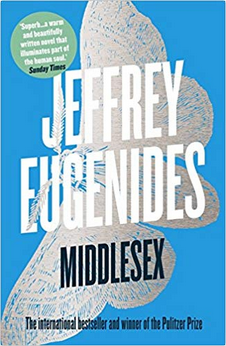 'I was born twice: first, as a baby girl, on a remarkably smogless Detroit day in January of 1960; and then again, as a teenage boy, in an emergency room near Petoskey, Michigan, in August of 1974.' Well, that's intriguing! Right from the start, we're made aware that 'Middlesex' is a story of intergender life, if the title didn't make it obvious. But why did the protagonist's second birth take place in an emergency room? Jeffrey Eugenides's clever opening salvo makes me keen to discover more....
'Middlesex' is the story of Calliope Stephanides and her strange family secret. Calliope later becomes Cal, the narrator of the novel. He/she is an intersex individual raised as a girl, but who, hormonally speaking, is male. Growing up in 1970s Michigan, Cal/Calliope's story is set against a background detailing the experiences of Greek immigrants in the United States, and the fortunes of Detroit. 'Middlesex' won the 2003 Pulitzer Prize for Fiction. The book was also shortlisted for the National Book Critics Circle Award and the International Dublin Literary Award. 3. Nineteen Eighty-Four - George Orwell (1949)
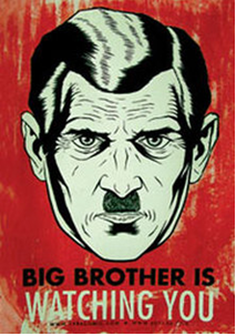 'It was a bright cold day in April, and the clocks were striking thirteen.' Regular readers of my blog will already know the high regard in which I hold this novel, ever since its story of dystopian tyranny stunned me when I read it as a teenager. And what a great opening line! Who wouldn't read that last word and think 'huh?'
From the start, Orwell makes us aware we're entering a strange and disturbing world, one that's familiar and at the same time different. A world in which the calendar months haven't changed, but the way we tell time has. We're all conversant with the twenty-four hour clock, yet the way Orwell uses it grabs our attention. By a simple word trick, he sets the scene for life on Airstrip One, formerly Great Britain. A world in which, to quote from the book, 'who controls the past controls the future: who controls the present controls the past'. Enter Winston Smith, whose job it is to rewrite the past, despite inwardly rebelling against life in totalitarian Britain.'1984' is a grim read in places, especially the interrogation scenes, but it's deservedly a classic. 4. The Bell Jar - Sylvia Plath (1963)
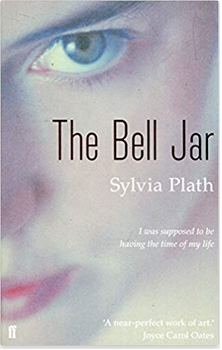 'It was a queer, sultry summer, the summer they electrocuted the Rosenbergs, and I didn't know what I was doing in New York.' In one sentence, Plath sets the scene: it's summer, it's 1953, our protagonist is in New York, and we already know she's confused.
'The Bell Jar' is not an easy read, being partly based on Plath's own experiences with mental illness. It's the story of Esther Greenwood, a young woman who wins an internship on a New York fashion magazine. At first, she's delighted, believing she'll finally achieve her dream of becoming a writer. The fast pace of New York only serves to frighten her, though, and she has no idea what to do with her life. The only alternatives appear to be motherhood or a job as a stenographer, neither of which appeal. Gradually, Esther's life slides out of control. She spirals into depression, the bell jar of the book's title being a metaphor for her mental prison.
'The Bell Jar', Sylvia Plath's only novel, was originally published in 1963 under the pseudonym Victoria Lucas. Plath committed suicide shortly after the book's UK publication.
5. Earthly Powers - Anthony Burgess (1980)
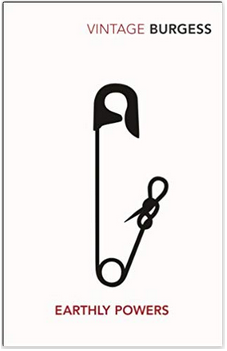 'It was the afternoon of my eighty-first birthday, and I was in bed with my catamite when Ali announced that the archbishop had come to see me.' So much information wrapped up in one sentence! What strikes me the most is the word 'catamite', a word we seldom hear nowadays, meaning it's immediately attention grabbing. Then there's the fact our protagonist tells us he's eighty-one. Ageism is alive and well in our society; many people write off the elderly as being past sex, but this one clearly isn't. Throw religion into the mix in the shape of the visiting archbishop, and Burgess gives us a masterly opening to his novel.
'Earthly Powers' tells the story of Kenneth Toomey, a novelist who embarks on writing his memoirs. Toomey is also asked by the Archbishop of Malta to help with the canonisation of Carlo Campanati. Campanati uses his guile to rise through the ranks of the Catholic Church; Burgess uses him to illustrate the lust for power and what men will do to attain it. Power, sex and religion - the stage is set for a great read! Do you have any favourite opening lines from novels?
Leave a comment and let me know!
1. The Crow Road - Ian Banks (1992)
'It was the day my grandmother exploded.' Wow, what a kicker first line! Followed by: 'I sat in the crematorium, listening to my Uncle Hamish quietly snoring in harmony to Bach's Mass in B Minor, and I reflected that it always seemed to be death that drew me back to Gallanach.' Not bad for a second line, either!The rest of the book doesn't disappoint. I have a love/hate relationship with Iain Banks's novels, having loathed 'The Wasp Factory', been ambivalent about 'Stonemouth', and awed by 'The Crow Road'. The latter is the story of Prentice McHoan, who seeks answers about the disappearance of his uncle eight years ago.
The Crow Road is the name of the book Prentice's uncle, Rory, was writing when he vanished, and is also a metaphor for death. Along the way Prentice questions the existence of God and the afterlife, fuelled by sex, drink, and illegal substances. It's a great read! 2. Middlesex - Jeffrey Eugenides (2002)
'I was born twice: first, as a baby girl, on a remarkably smogless Detroit day in January of 1960; and then again, as a teenage boy, in an emergency room near Petoskey, Michigan, in August of 1974.' Well, that's intriguing! Right from the start, we're made aware that 'Middlesex' is a story of intergender life, if the title didn't make it obvious. But why did the protagonist's second birth take place in an emergency room? Jeffrey Eugenides's clever opening salvo makes me keen to discover more....'Middlesex' is the story of Calliope Stephanides and her strange family secret. Calliope later becomes Cal, the narrator of the novel. He/she is an intersex individual raised as a girl, but who, hormonally speaking, is male. Growing up in 1970s Michigan, Cal/Calliope's story is set against a background detailing the experiences of Greek immigrants in the United States, and the fortunes of Detroit. 'Middlesex' won the 2003 Pulitzer Prize for Fiction. The book was also shortlisted for the National Book Critics Circle Award and the International Dublin Literary Award. 3. Nineteen Eighty-Four - George Orwell (1949)
'It was a bright cold day in April, and the clocks were striking thirteen.' Regular readers of my blog will already know the high regard in which I hold this novel, ever since its story of dystopian tyranny stunned me when I read it as a teenager. And what a great opening line! Who wouldn't read that last word and think 'huh?'From the start, Orwell makes us aware we're entering a strange and disturbing world, one that's familiar and at the same time different. A world in which the calendar months haven't changed, but the way we tell time has. We're all conversant with the twenty-four hour clock, yet the way Orwell uses it grabs our attention. By a simple word trick, he sets the scene for life on Airstrip One, formerly Great Britain. A world in which, to quote from the book, 'who controls the past controls the future: who controls the present controls the past'. Enter Winston Smith, whose job it is to rewrite the past, despite inwardly rebelling against life in totalitarian Britain.'1984' is a grim read in places, especially the interrogation scenes, but it's deservedly a classic. 4. The Bell Jar - Sylvia Plath (1963)
'It was a queer, sultry summer, the summer they electrocuted the Rosenbergs, and I didn't know what I was doing in New York.' In one sentence, Plath sets the scene: it's summer, it's 1953, our protagonist is in New York, and we already know she's confused.'The Bell Jar' is not an easy read, being partly based on Plath's own experiences with mental illness. It's the story of Esther Greenwood, a young woman who wins an internship on a New York fashion magazine. At first, she's delighted, believing she'll finally achieve her dream of becoming a writer. The fast pace of New York only serves to frighten her, though, and she has no idea what to do with her life. The only alternatives appear to be motherhood or a job as a stenographer, neither of which appeal. Gradually, Esther's life slides out of control. She spirals into depression, the bell jar of the book's title being a metaphor for her mental prison.
'The Bell Jar', Sylvia Plath's only novel, was originally published in 1963 under the pseudonym Victoria Lucas. Plath committed suicide shortly after the book's UK publication.
5. Earthly Powers - Anthony Burgess (1980)
'It was the afternoon of my eighty-first birthday, and I was in bed with my catamite when Ali announced that the archbishop had come to see me.' So much information wrapped up in one sentence! What strikes me the most is the word 'catamite', a word we seldom hear nowadays, meaning it's immediately attention grabbing. Then there's the fact our protagonist tells us he's eighty-one. Ageism is alive and well in our society; many people write off the elderly as being past sex, but this one clearly isn't. Throw religion into the mix in the shape of the visiting archbishop, and Burgess gives us a masterly opening to his novel.'Earthly Powers' tells the story of Kenneth Toomey, a novelist who embarks on writing his memoirs. Toomey is also asked by the Archbishop of Malta to help with the canonisation of Carlo Campanati. Campanati uses his guile to rise through the ranks of the Catholic Church; Burgess uses him to illustrate the lust for power and what men will do to attain it. Power, sex and religion - the stage is set for a great read! Do you have any favourite opening lines from novels?
Leave a comment and let me know!
October 9, 2019
Review of 'Lisey's Story' by Stephen King
Three stories woven into one
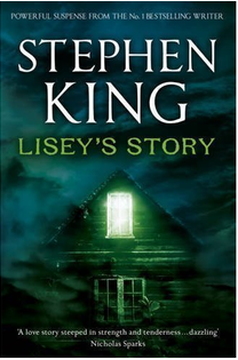 Nobody tells a story quite like Stephen King, who has rated 'Lisey's Story' (2006) his favourite novel that he's written. Before I discovered it on the library shelves, however, I'd not heard of it. No-one has yet made it into a film, and it doesn't seem as well known as other King novels such as 'Carrie', 'The Shining', etc. The novel delivers a powerful and engaging read, however, and is a typical Stephen King page-turner (all 664 of them - it's a long novel!) The plot involves three stories. One is that of Lisey herself, told in the present, interwoven with a second one, revealing her dead husband's life, as recalled by her. The third story is the one from the title, written by Scott for his wife. More about that later. Here's a brief plot summary.
Lisey Landon has been widowed for two years, following the sudden death of her husband, hugely successful Maine novelist Scott Landon. Although a devoted husband, Scott was a troubled man during his life, emotionally wrecked by his childhood and prone to drinking bouts. Despite the passing of time, Lisey is still unable to deal with his loss, as evidenced by her inability to clear out his study. Then an insane fan of Scott's begins to stalk her, demanding she hand over her dead husband's papers; in order to survive, Lisey has to follow the trail of clues left by her husband, who assists her in spirit form. Through Scott and Lisey we explore the fantastical world known as Boo'ya Moon, where Scott retreats during times of mental crisis. Boo'ya Moon is a magical realm of warmth, filled with hazy red light, birdsong and the scent of tropical flowers. Dangers lurk amongst the lush vegetation and bright colours, however. Monsters such as Scott's nemesis, the terrible piebald creature he dubs his 'long boy'. This 'long boy' appears to represent total insanity, something desperately feared by Scott, given his family history of mental illness. Despite its perils, however, it is Boo'ya Moon that eventually provides solutions to Lisey, in respect of her insane stalker and her grief over her husband's death. A novel of contrasts and dualities
 Stephen King For me, the novel is one laden with dualities. The plot portrays many contrasts; good and evil, dark and light, night and day, safe and dangerous, madness and sanity. As for night and day, the difference between them plays an important role in Scott and Lisey's visits to Boo'ya Moon, a place that's safe during daylight hours, but in which unspeakable terrors lurk in the Fairy Forest at night. King stresses that Boo'ya Moon is not a place in which to linger too long; its beauty can be seductive and once enticed into its magic, its guests may lose all desire to leave, despite its perils. Another duality illustrated here; that of danger and safety.
Good and evil are demonstrated in Sparky Landon, Scott's father, a man tormented by what Scott terms 'bad-gunky', yet who, in his lucid moments, loves his two sons and endeavours to protect them during their childhood from the rampant family insanity. He doesn't entirely succeed; nobody could endure what Scott did and emerge mentally unscathed. Scott Landon comes from a family blighted by mental illness, which manifests itself as either the 'bad-gunky' of homicidal mania (Scott's brother and father) or as catatonia (Scott himself). Although a loving husband, the man is a dark, haunted individual in comparison with Lisey, who exudes strength and stability. Normally loquacious, Scott suffers bouts of catatonia, as does Lisey's sister, Amanda. The theme of family presents another duality, with Lisey's chaotic yet loving childhood, mostly female, a contrast to Scott's male-dominated and terror-filled one.
What does it mean to be a novelist? 'Lisey's Story' as metafiction
Let's turn now to another theme that's prevalent in the novel. 'Lisey's Story' is partly an examination of the craft of writing and what it means to be a author. King achieves some of this on a very practical level. Through Lisey and the descriptions of Scott's life, we get to see how a successful novelist works his craft, from the way his study is set up to the descriptions of his public speaking events. On a different level, King also offers one possible answer to the question all novelists get asked - 'where do you get your ideas from?' Scott Landon compares the mythical pool in Boo'ya Moon to a 'word pool' and credits it as the source of his creativity. Interesting, as the pool also has magical healing qualities. Does King mean that writing can be cathartic, a balm to minds in crisis? Possibly.
Then there's Boo'ya Moon itself. I interpret this magical realm as representing Scott's mental illness, or to be specific, the state of catatonia. Scott and Amanda are both catatonics who flee to Boo'ya Moon during mental breakdowns; both find peace and healing in this magical world. Is King saying that the source of creativity lies in madness? Or in a retreat from the realities of everyday life? Perhaps. Writing can spring from madness, but it can also present a catharsis for insanity. Another interesting duality!
Is the title of 'Lisey's Story' a misnomer?
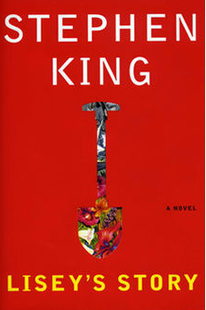 A minor quibble now. For me, the title of the novel is something of a misnomer. The novel is far more concerned about Scott Landon's life rather than Lisey's; she plays a supporting role in her own story. Although we are given details of Lisey's life, throughout the book we discover much more about her husband's. Even when we finally read the story that Scott wrote for Lisey and hid for her in Boo'ya Moon, the 'Lisey's Story' of the title, we learn far more about him than we do his wife, as the missing pieces of his life slot into place. That aside, 'Lisey's Story' is a terrific fairground ride of a novel, told as only Stephen King can. Like many King offerings, it's densely plotted and, although long, it's never dull. From the stunning descriptions of Boo'ya Moon to those of Scott and Lisey's marriage, through the sub-plots of Amanda's mental illness and Lisey's stalking by the insane Jim Dooley, King sweeps us along in a epic story that enchants and intrigues. I heartily recommend this book. Have you read 'Lisey's story'?
Did you love it or loathe it? What elements did you enjoy and why? Leave me a comment and let me know.
Nobody tells a story quite like Stephen King, who has rated 'Lisey's Story' (2006) his favourite novel that he's written. Before I discovered it on the library shelves, however, I'd not heard of it. No-one has yet made it into a film, and it doesn't seem as well known as other King novels such as 'Carrie', 'The Shining', etc. The novel delivers a powerful and engaging read, however, and is a typical Stephen King page-turner (all 664 of them - it's a long novel!) The plot involves three stories. One is that of Lisey herself, told in the present, interwoven with a second one, revealing her dead husband's life, as recalled by her. The third story is the one from the title, written by Scott for his wife. More about that later. Here's a brief plot summary.Lisey Landon has been widowed for two years, following the sudden death of her husband, hugely successful Maine novelist Scott Landon. Although a devoted husband, Scott was a troubled man during his life, emotionally wrecked by his childhood and prone to drinking bouts. Despite the passing of time, Lisey is still unable to deal with his loss, as evidenced by her inability to clear out his study. Then an insane fan of Scott's begins to stalk her, demanding she hand over her dead husband's papers; in order to survive, Lisey has to follow the trail of clues left by her husband, who assists her in spirit form. Through Scott and Lisey we explore the fantastical world known as Boo'ya Moon, where Scott retreats during times of mental crisis. Boo'ya Moon is a magical realm of warmth, filled with hazy red light, birdsong and the scent of tropical flowers. Dangers lurk amongst the lush vegetation and bright colours, however. Monsters such as Scott's nemesis, the terrible piebald creature he dubs his 'long boy'. This 'long boy' appears to represent total insanity, something desperately feared by Scott, given his family history of mental illness. Despite its perils, however, it is Boo'ya Moon that eventually provides solutions to Lisey, in respect of her insane stalker and her grief over her husband's death. A novel of contrasts and dualities
Stephen King For me, the novel is one laden with dualities. The plot portrays many contrasts; good and evil, dark and light, night and day, safe and dangerous, madness and sanity. As for night and day, the difference between them plays an important role in Scott and Lisey's visits to Boo'ya Moon, a place that's safe during daylight hours, but in which unspeakable terrors lurk in the Fairy Forest at night. King stresses that Boo'ya Moon is not a place in which to linger too long; its beauty can be seductive and once enticed into its magic, its guests may lose all desire to leave, despite its perils. Another duality illustrated here; that of danger and safety. Good and evil are demonstrated in Sparky Landon, Scott's father, a man tormented by what Scott terms 'bad-gunky', yet who, in his lucid moments, loves his two sons and endeavours to protect them during their childhood from the rampant family insanity. He doesn't entirely succeed; nobody could endure what Scott did and emerge mentally unscathed. Scott Landon comes from a family blighted by mental illness, which manifests itself as either the 'bad-gunky' of homicidal mania (Scott's brother and father) or as catatonia (Scott himself). Although a loving husband, the man is a dark, haunted individual in comparison with Lisey, who exudes strength and stability. Normally loquacious, Scott suffers bouts of catatonia, as does Lisey's sister, Amanda. The theme of family presents another duality, with Lisey's chaotic yet loving childhood, mostly female, a contrast to Scott's male-dominated and terror-filled one.
What does it mean to be a novelist? 'Lisey's Story' as metafiction
Let's turn now to another theme that's prevalent in the novel. 'Lisey's Story' is partly an examination of the craft of writing and what it means to be a author. King achieves some of this on a very practical level. Through Lisey and the descriptions of Scott's life, we get to see how a successful novelist works his craft, from the way his study is set up to the descriptions of his public speaking events. On a different level, King also offers one possible answer to the question all novelists get asked - 'where do you get your ideas from?' Scott Landon compares the mythical pool in Boo'ya Moon to a 'word pool' and credits it as the source of his creativity. Interesting, as the pool also has magical healing qualities. Does King mean that writing can be cathartic, a balm to minds in crisis? Possibly.
Then there's Boo'ya Moon itself. I interpret this magical realm as representing Scott's mental illness, or to be specific, the state of catatonia. Scott and Amanda are both catatonics who flee to Boo'ya Moon during mental breakdowns; both find peace and healing in this magical world. Is King saying that the source of creativity lies in madness? Or in a retreat from the realities of everyday life? Perhaps. Writing can spring from madness, but it can also present a catharsis for insanity. Another interesting duality!
Is the title of 'Lisey's Story' a misnomer?
A minor quibble now. For me, the title of the novel is something of a misnomer. The novel is far more concerned about Scott Landon's life rather than Lisey's; she plays a supporting role in her own story. Although we are given details of Lisey's life, throughout the book we discover much more about her husband's. Even when we finally read the story that Scott wrote for Lisey and hid for her in Boo'ya Moon, the 'Lisey's Story' of the title, we learn far more about him than we do his wife, as the missing pieces of his life slot into place. That aside, 'Lisey's Story' is a terrific fairground ride of a novel, told as only Stephen King can. Like many King offerings, it's densely plotted and, although long, it's never dull. From the stunning descriptions of Boo'ya Moon to those of Scott and Lisey's marriage, through the sub-plots of Amanda's mental illness and Lisey's stalking by the insane Jim Dooley, King sweeps us along in a epic story that enchants and intrigues. I heartily recommend this book. Have you read 'Lisey's story'?Did you love it or loathe it? What elements did you enjoy and why? Leave me a comment and let me know.


