
Maggie James's Blog, page 4
May 12, 2020
Interview with Karen Long
This week I'm delighted to welcome novelist Karen Long to my blog. Karen Long is a Midlander by birth and now lives in Shropshire. She took up full-time writing many years ago and dedicates her days to writing crime fiction and observing nature. Her first novel, 'The Safe Word', reached the Amazon bestsellers' list and has now been followed by the second and third in the Eleanor Raven series, 'The Vault' and 'The Cold Room'.
It's great to have you here, Karen, so let's get started! Here's my first question:
 The Eleanor Raven trilogy
  Novelist Karen Long Will there be a set number of books in the Eleanor Raven series? If so, how many? It was always my intention to create a series of three novels that were linked thematically. The series takes place over the span of eighteen months and shares the same cast of characters and place but deals with a separate central story. All three books have now been published. I don’t intend to drop the Eleanor Raven character but have no plans for book four any time soon.
Do you share any character traits with DI Eleanor Raven? Ah, that’s difficult. It would be disingenuous to suggest that there aren’t some aspects of the characters I create buried within my psyche. I don’t think I feel the anger, or the self-loathing that Eleanor Raven does but I like my independence and feel more comfortable alone than in company. Like Eleanor I am not religious but have an innate need for redemption. I believe most writers amplify their own characteristics when creating; how else can you achieve authenticity?
Do you see yourself writing in other genres besides crime fiction? If so, which ones, and what attracts you to them? I like historical fiction and would love to write one but feel a little overawed by the amount of research I’d need to do. I suspect any story would have to be combined with a good murder plot, as I have little leaning towards romance. I have copy of a YA fantasy novel set in Victorian London, which is tucked away in my desk drawer. Every now and then I pull it out with the intention of self- publishing but never quite commit.
What’s a typical writing day like for you? Routines, that kind of thing? I am not, in any way, organised as to a writing routine. I harbour a deep sense of guilt regarding my glacial output but have to be completely distraction free. I have an office but like to write in the conservatory, which has a great view of the numerous birdfeeders. Generally, I do write every day and it tends to be late morning into afternoon.
How long does it take you to write the first draft of a novel? Are you a plotter, a pantser or somewhere in between?
It takes me about seven months to get a first draft completed, and then another couple to complete the second and third drafts. I am not a deadline sort of person, I’m way too vague and unfocussed. I used to write copious notes but found they didn’t really help with plotting. Now I just keep mental images of actions and storylines.
What issues have you faced with research and accuracy with setting your books in a different country? It’s very liberating to set your novels in a different environment because it can be moulded into the vision of a cityscape that responds to your plot. That’s not to say that I am lazy with place or time. I always check distances and environments with virtual maps, and read about places from as many sources as possible. I do have a working knowledge of the detailed landscapes and buildings that feature in the novels. However, it is because I am not native to Toronto that I have been able to create a vision from the flavours I experienced. It’s not accurate but then I’m writing fiction, not a travel guide.
What do you do to relax after a hard day’s writing? Running, reading and a couple of glasses of wine.
Tell us about the rescue work you do with injured and distressed birds. I’m a huge bird fan, particularly of the crow family. I used to have an aviary filled with rooks, magpies, crows and jackdaws, all in various stages of decrepitude but sadly we no longer have any left. Every spring I manage to look after and release a few babies that didn’t quite make their first flight a success. I’ve kept ravens, which are wonderful. All have deliciously dangerous and cantankerous personalities but the mayhem and home destruction can be very alarming and expensive. There are few things more delightful than having a clever wild bird sit on your shoulder and share a biscuit.
Thank you, Karen! It's been great talking to you.
You can find out more about Karen and her novels via these links:
Amazon UK author page: Karen Long
Twitter: @KarenLongWriter
It's great to have you here, Karen, so let's get started! Here's my first question:
The Eleanor Raven trilogy Novelist Karen Long Will there be a set number of books in the Eleanor Raven series? If so, how many? It was always my intention to create a series of three novels that were linked thematically. The series takes place over the span of eighteen months and shares the same cast of characters and place but deals with a separate central story. All three books have now been published. I don’t intend to drop the Eleanor Raven character but have no plans for book four any time soon.Do you share any character traits with DI Eleanor Raven? Ah, that’s difficult. It would be disingenuous to suggest that there aren’t some aspects of the characters I create buried within my psyche. I don’t think I feel the anger, or the self-loathing that Eleanor Raven does but I like my independence and feel more comfortable alone than in company. Like Eleanor I am not religious but have an innate need for redemption. I believe most writers amplify their own characteristics when creating; how else can you achieve authenticity?
Do you see yourself writing in other genres besides crime fiction? If so, which ones, and what attracts you to them? I like historical fiction and would love to write one but feel a little overawed by the amount of research I’d need to do. I suspect any story would have to be combined with a good murder plot, as I have little leaning towards romance. I have copy of a YA fantasy novel set in Victorian London, which is tucked away in my desk drawer. Every now and then I pull it out with the intention of self- publishing but never quite commit.
What’s a typical writing day like for you? Routines, that kind of thing? I am not, in any way, organised as to a writing routine. I harbour a deep sense of guilt regarding my glacial output but have to be completely distraction free. I have an office but like to write in the conservatory, which has a great view of the numerous birdfeeders. Generally, I do write every day and it tends to be late morning into afternoon.
How long does it take you to write the first draft of a novel? Are you a plotter, a pantser or somewhere in between?
It takes me about seven months to get a first draft completed, and then another couple to complete the second and third drafts. I am not a deadline sort of person, I’m way too vague and unfocussed. I used to write copious notes but found they didn’t really help with plotting. Now I just keep mental images of actions and storylines.
What issues have you faced with research and accuracy with setting your books in a different country? It’s very liberating to set your novels in a different environment because it can be moulded into the vision of a cityscape that responds to your plot. That’s not to say that I am lazy with place or time. I always check distances and environments with virtual maps, and read about places from as many sources as possible. I do have a working knowledge of the detailed landscapes and buildings that feature in the novels. However, it is because I am not native to Toronto that I have been able to create a vision from the flavours I experienced. It’s not accurate but then I’m writing fiction, not a travel guide.
What do you do to relax after a hard day’s writing? Running, reading and a couple of glasses of wine.
Tell us about the rescue work you do with injured and distressed birds. I’m a huge bird fan, particularly of the crow family. I used to have an aviary filled with rooks, magpies, crows and jackdaws, all in various stages of decrepitude but sadly we no longer have any left. Every spring I manage to look after and release a few babies that didn’t quite make their first flight a success. I’ve kept ravens, which are wonderful. All have deliciously dangerous and cantankerous personalities but the mayhem and home destruction can be very alarming and expensive. There are few things more delightful than having a clever wild bird sit on your shoulder and share a biscuit.
Thank you, Karen! It's been great talking to you.
You can find out more about Karen and her novels via these links:
Amazon UK author page: Karen Long
Twitter: @KarenLongWriter


May 4, 2020
Review of 'From a Buick 8' by Stephen King
 As many of you know, I love Stephen King's novels. I think he's a master of the writing craft, and I'm awed by his prolific output. I'm working my way through his books, a task that will keep me occupied for quite a while! On a recent trip to a charity shop, I bagged myself seven titles I'd not yet read. All were ones that aren't so well known, such as 'Desperation' and 'Just After Sunset'. I was curious about my purchases, wondering why they hadn't achieved the success of books such as 'Carrie' or 'The Shining'. The last one I finished was 'From a Buick 8', a novel about a supernatural car. The book gets very varied reviews on Amazon, and I can see why. For me, reading it proved a mixed experience.
First, let's deal with the good stuff. The prose is every bit as enthralling as King's other novels. I love the way he makes magic with words, and 'From a Buick 8' didn't disappoint in that respect. I read the book pretty much in one sitting, and was never bored. After all, diehard fans like me will enjoy whatever the man writes, even if it's his laundry list! So what was the issue? How come I could understand the scathing Amazon reviews, ones such as, 'It should have been titled "nothing happened"'? Or what about: 'A car that isn't really a car pitches up in a Pennsylvania backwater... and that's it. What we don't get is a story.' Less leaves, more action, please Whilst the words are wonderful, 'From a Buick 8' lacks a coherent plot or much tension. It's a shame because the potential's there, but King fails to develop it. One problem is that the story is largely revealed in hindsight, with the police officers of Troop D telling the story of the mysterious car they guard to a rookie recruit. Such a plot device lacks the immediacy present-day action offers, at least the way King does it. As those disgruntled reviewers pointed out, the plot is thin. The Buick could have been so much more menacing than it actually is. More victims should have succumbed to its power, thus upping the ante. Instead, Kind spends a lot of the book telling us how the car's trunk spawns all manner of weird things, most of which can't survive in our world. Instead of leaves that disintegrate minutes after they arrive on planet Earth, or dead flowers, how about giving the readers something truly scary? The one thing that does live is more ridiculous than frightening, and is soon killed anyway.
It would have been good to have a chapter or two in which the state troopers attempt to destroy the car, resulting in casualties as it fights back, but it didn't happen. Instead we're given a flimsy reason as to why they're content to leave it be. Even the Troop D members admit long stretches of time pass during which nothing happens with the Buick. Neither are we given any notion as to why the car ended up in this world, abandoned by its mysterious driver. Again, I feel the author missed a trick here. This is not the stuff great supernatural fiction is made of, in my opinion. King does provide a welcome boost to the tension towards the end, but then the plot goes flat again.
So there you have it. I'm still an avid fan of Stephen King's work, given his talent with words, but 'From a Buick 8' will most likely only appeal to readers who, like me, are already hooked.
Let's hear from you!
Have you read 'From a Buick 8'? What's your opinion of the book? Leave a comment and let me know!
April 28, 2020
Interview with Rachel Amphlett
Today I'd like to welcome novelist Rachel Amphlett to my blog. Originally from the UK, then based in Australia and now back on our shores, Rachel’s novels appeal to a worldwide audience, and have been compared to Robert Ludlum, Lee Child and Michael Crichton. Wow! Let's get going with the interview…

 Pick one of your novels in the Detective Kay Hunter series and tell us about it. Thanks for having me on your blog, Maggie. 'Will to Live' is the second in the series, and sees Kay Hunter pitted against a serial killer who’s been using a stretch of the local railway known as “Suicide Mile” to dispose of his victims – until a witness stumbles across one of his victims before the train strikes. Kay and her team then have to revisit a number of cold cases to try to establish a pattern, while the killer is still at large. On top of that, Kay’s investigation into who tried to destroy her career intensifies, with catastrophic consequences.
You also write espionage novels. Which do you find the most challenging to write: crime or spy fiction?
I enjoy writing the spy fiction, but crime thrillers are where my heart is at. It simply took a few books under my belt before I felt I had the confidence to give them a go. The response to one of my standalones, 'Look Closer', is what gave me the nudge I needed – that’s the closest I’d written to the crime fiction genre at that time, and it’s proven to be a great success. By the time I got to the beginning of 2016, I had the inkling of a new series featuring a female detective, and that’s how the Kay Hunter series evolved.
Would you consider writing in different genres and if so, which ones? I definitely want to write a historical/ crime fiction book – I’ve been researching in between writing the Kay Hunter series and have jotted down a few scenes and a rough outline. I’m hoping to spend some time on that later this year.
What draws you to your chosen genre(s)? It’s what I’ve been reading since I was a kid – I love mysteries, so like a lot of authors I started off reading Enid Blyton’s The Famous Five and went from there. I can’t recall a time I wasn’t reading crime fiction in some form! Do you work to an outline or plot or do you prefer to see where an idea takes you?
I usually have the opening scene in my head and the “lift” points sorted out, and then I’ll take those and develop a rough outline using a five act structure. Once I have that, I get stuck into the writing. I do like to leave a bit of wiggle room for characters to develop, because that makes it interesting for me as a writer – a character could say something that takes me down a different path to the ending I have in mind that’s a better way than I originally thought, so it’s important to allow that to happen.
How long does it take you to write a book to first draft stage? The first draft usually takes me no longer than 12 weeks – and it’s a hot mess, I can tell you! However, it’s important to me to get it written down as fast as possible because it reflects the pace of the story. The fastest I’ve ever written a first draft is 9 weeks.
What book are you reading at present? CJ Sansom’s 'Lamentation' – I’ve loved his whole Shardlake series of books, and I’ve finally found a bit of spare time to savour this one! Thank you, Rachel, for a great interview! Like to know more about Rachel and her books? See below:
Website: www.rachelamphlett.com
Facebook: https://www.facebook.com/rachelamphlett.author/
Twitter: https://twitter.com/rachelamphlett
Pick one of your novels in the Detective Kay Hunter series and tell us about it. Thanks for having me on your blog, Maggie. 'Will to Live' is the second in the series, and sees Kay Hunter pitted against a serial killer who’s been using a stretch of the local railway known as “Suicide Mile” to dispose of his victims – until a witness stumbles across one of his victims before the train strikes. Kay and her team then have to revisit a number of cold cases to try to establish a pattern, while the killer is still at large. On top of that, Kay’s investigation into who tried to destroy her career intensifies, with catastrophic consequences.You also write espionage novels. Which do you find the most challenging to write: crime or spy fiction?
I enjoy writing the spy fiction, but crime thrillers are where my heart is at. It simply took a few books under my belt before I felt I had the confidence to give them a go. The response to one of my standalones, 'Look Closer', is what gave me the nudge I needed – that’s the closest I’d written to the crime fiction genre at that time, and it’s proven to be a great success. By the time I got to the beginning of 2016, I had the inkling of a new series featuring a female detective, and that’s how the Kay Hunter series evolved.
Would you consider writing in different genres and if so, which ones? I definitely want to write a historical/ crime fiction book – I’ve been researching in between writing the Kay Hunter series and have jotted down a few scenes and a rough outline. I’m hoping to spend some time on that later this year.
What draws you to your chosen genre(s)? It’s what I’ve been reading since I was a kid – I love mysteries, so like a lot of authors I started off reading Enid Blyton’s The Famous Five and went from there. I can’t recall a time I wasn’t reading crime fiction in some form! Do you work to an outline or plot or do you prefer to see where an idea takes you?
I usually have the opening scene in my head and the “lift” points sorted out, and then I’ll take those and develop a rough outline using a five act structure. Once I have that, I get stuck into the writing. I do like to leave a bit of wiggle room for characters to develop, because that makes it interesting for me as a writer – a character could say something that takes me down a different path to the ending I have in mind that’s a better way than I originally thought, so it’s important to allow that to happen.
How long does it take you to write a book to first draft stage? The first draft usually takes me no longer than 12 weeks – and it’s a hot mess, I can tell you! However, it’s important to me to get it written down as fast as possible because it reflects the pace of the story. The fastest I’ve ever written a first draft is 9 weeks.
What book are you reading at present? CJ Sansom’s 'Lamentation' – I’ve loved his whole Shardlake series of books, and I’ve finally found a bit of spare time to savour this one! Thank you, Rachel, for a great interview! Like to know more about Rachel and her books? See below:
Website: www.rachelamphlett.com
Facebook: https://www.facebook.com/rachelamphlett.author/
Twitter: https://twitter.com/rachelamphlett
April 21, 2020
When characters go their own way
 Something I remember after I finished the first draft of my fifth novel, 'After She's Gone' - how, along the way, something odd occurred. Many, if not all, other fiction writers report it's happened to them too; it's a concept that sounds a little off the wall, a bit wacky, at first. Readers who are not also writers tell me it's hard to understand, and I can see why. I'm talking about the tendency of fictional characters to resist doing what the author wants. Instead, just like real people, they often refuse to do what they're told, developing minds of their own and behaving in very contrary ways! Fiction writers will know what I mean. For others, though, this is a weird notion. 'But you're the author!' they say. 'Aren't you in control? Why not just make the characters do what you'd planned for them?' The answer is, I can't, not always. Let me explain.
As a novelist, I’m an outliner, plotting my books in a fair amount of detail before I write them. As part of my planning, I prepare notes about each character - their motivations, their hopes, their issues, along with a physical description and a precis of their role in the plot. After I've done that, I tell myself I know them quite well, but the truth is, I don't. It's not until I start writing that they take on lives and minds of their own, and sometimes those minds decide to follow a different route through the novel. If this all sounds a bit woo-woo, it is and yet it isn't. In one way, there's nothing mystical about what I'm describing. However carefully an author plots in advance, it's impossible to foresee every eventuality, and it's not until the writing begins that a novelist finds out whether his/her story works. What may appear feasible at the planning stage can unravel once written; inconsistencies and contradictions appear or the plot simply doesn't feel right. The same happens with characters. I'll explain by using Jake Hamilton, a minor player in 'After She's Gone'.
When I plotted the novel, Jake was a poor father, a lousy partner and an all-round deadbeat. As I wrote one particular scene, however, something didn't sit well with me. The storyline would work better, I decided, if I portrayed Jake as flawed in many ways, yet ultimately a man trying to do his best. Someone who regretted his past mistakes. So that's what I did. Nothing woo-woo about that, simply an author recognising that a different approach would suit the novel better. On the other hand, though, Jake asserting his true character provided a magical moment. It was as if he was shouting at me, trying to get my attention, yelling, 'Hey! You behind the keyboard! You've got me all wrong - I'm more of a nice guy than you give me credit for!'
I hear you, Jake! And once I did, I changed my story accordingly. Characters don’t exist independently from an author's fiction, of course, however real they may become to a writer. The chances are, though, that if a character is pressing to go in a particular direction, then that's the best course for him/her to take. Here's novelist Dianne Doubtfire on the subject: 'Sometimes a character becomes so real that he refuses to do what you have planned for him. When this happens, don't coerce him; it means you have created a real person with a will of his own and this is a marvellous moment in any novelist's life. Hold him on a light rein, as it were, giving him his head to a certain degree but ensuring that he does not stampede you out of your story.' (Dianne Doubtfire, The Craft of Novel-Writing, published by Allison and Busby, 1978). Wise advice, Dianne - thank you! Oh, and a big thank you also to Jake Hamilton - I'm glad I listened to you! What do you think? Let's hear from you! Are you a fellow novelist who's had characters run out of control and do their own thing? Or are you a reader, someone who doesn't understand why authors can't exercise complete authority? Are there fictional characters who you think would have been more convincing if they'd been portrayed differently? Leave me a comment and let me know!
'After She's Gone' is available from Amazon in ebook, paperback and audio formats via this link: After She's Gone.
April 14, 2020
Review of 'End of Watch' by Stephen King
As readers of my blog will have gathered, I'm an avid Stephen King fan; I'm working my way through all his supernatural thrillers. Apart from 'Nightmares and Dreamscapes' and the rather flat 'From a Buick 8', I've not yet read anything from King I haven't liked. So when I spotted the hardcover copy of 'End of Watch' in the supermarket, I bought it straight away. The novel is the final book in the Bill Hodges trilogy, the other two being 'Mr Mercedes' and 'Finders Keepers'. Here's my review of 'Mr Mercedes'; I didn't post a review for 'Finders Keepers', but I loved that one as well.
'End of Watch', eh? An intriguing title
 The title, one that fits the story perfectly, comes from an American expression for police officers at the end of their working life. Those who retire permanently, or die. Which one will Bill Hodges do? He's certainly an engaging sleuth, although a somewhat stereotypical one: retired police officer, divorced, battling health problems and with a past drinking problem. He's teamed with Holly Gibney, a woman with multiple issues of her own, along with Jerome Robinson, a student and former lawn boy for Bill. Books one and three of the trilogy concentrate heavily on the evil Brady Hartsfield, a mass murderer who's also obsessed with suicide. The middle novel, 'Finders Keepers', diverts to explore one of King's favourite topics, the writing life, although it involves the Brady Hartsfield character as well. Here's the sales blurb for 'End of Watch':
'Retired Detective Bill Hodges now runs a two-person firm called Finders Keepers with his partner Holly Gibney. They met in the wake of the 'Mercedes Massacre' when a queue of people was run down by the diabolical killer Brady Hartsfield. Brady is now confined to Room 217 of the Lakes Region Traumatic Brain Injury Clinic, in an unresponsive state. But all is not what it seems: the evidence suggests that Brady is somehow awake, and in possession of deadly new powers that allow him to wreak unimaginable havoc without ever leaving his hospital room. When Bill and Holly are called to a suicide scene with ties to the Mercedes Massacre, they find themselves pulled into their most dangerous case yet, one that will put their lives at risk, as well as those of Bill's heroic young friend Jerome Robinson and his teenage sister, Barbara. Brady Hartsfield is back, and planning revenge not just on Hodges and his friends, but on an entire city. The clock is ticking in unexpected ways... Both a stand-alone novel of heart-pounding suspense and a sublimely terrifying final episode in the Hodges trilogy, 'End of Watch' takes the series into a powerful new dimension.' Absorbing characters, pink fish and a fast pace
Sounds great, doesn't it? And 'End of Watch' delivers the goods. Brady Hartsfield is a wonderfully warped villain, aided by his sidekicks Felix Babineau and Library Al, both of whom end up zombie-fied after Brady invades their minds. Intent on revenge on Bill Hodges, Brady will stop at nothing to achieve his goal, as well as drive thousands of young people to kill themselves.
Although his brain was seriously damaged by Holly Gibney, Brady avails himself of new powers, possibly resulting from Felix Babineau using him in unauthorised drug trials. King also hints that the savage head blow dealt by Holly may also have contributed, allowing Brady to access the 90% of his brain that lies dormant in all of us. As his extraordinary powers grow, the deaths begin…
Stephen King is a master at creating memorable characters (think Jack Torrance, Annie Wilkes, Jake Epping). 'End of Watch' also has an interesting cast list, one that develops both Bill Hodges and Holly Gibney, more so the latter. Whilst it's not specifically mentioned, Holly is either autistic or has Asperger's syndrome, and the book shows her shedding her coping mechanisms as the story progresses. It's Brady Hartsfield, though, who receives the full Stephen King treatment, morphing from a catatonic invalid to a mind in motion, capable of transferring into other bodies at will. His evil mission poses a huge problem for Bill and Holly in their race to stop him. They can hardly tell the police what they suspect Brady is up to, after all!
I found some aspects of the plot a little far-fetched - the use of obsolete games consoles to facilitate mind control, for example, and the numerical pink fish. Perhaps that's a little unfair, as Brady's opportunities for evil are limited initially, and the use of technology, albeit outdated, fits what we already know of him as a computer expert. Besides, this is Stephen King, creator of Pennywise the Dancing Clown, supernatural cars and telekinetic teenagers. Beside them, digital pink fish seem small fry!
King can be verbose at times, but his mastery of words transcends what might grate if coming from a lesser writer. 'End of Watch' rollicks along at a fast pace towards the satisfying, if sad, conclusion. It can be read either as the third book in the 'Mr Mercedes' trilogy, or would work equally well as a standalone novel. If you're a fan of his novels, I suspect you'll love this book.
What about you?
Have you read 'End of Watch', or any of the other books in the trilogy? What did you think? Leave a comment and let me know!
'End of Watch', eh? An intriguing title
The title, one that fits the story perfectly, comes from an American expression for police officers at the end of their working life. Those who retire permanently, or die. Which one will Bill Hodges do? He's certainly an engaging sleuth, although a somewhat stereotypical one: retired police officer, divorced, battling health problems and with a past drinking problem. He's teamed with Holly Gibney, a woman with multiple issues of her own, along with Jerome Robinson, a student and former lawn boy for Bill. Books one and three of the trilogy concentrate heavily on the evil Brady Hartsfield, a mass murderer who's also obsessed with suicide. The middle novel, 'Finders Keepers', diverts to explore one of King's favourite topics, the writing life, although it involves the Brady Hartsfield character as well. Here's the sales blurb for 'End of Watch': 'Retired Detective Bill Hodges now runs a two-person firm called Finders Keepers with his partner Holly Gibney. They met in the wake of the 'Mercedes Massacre' when a queue of people was run down by the diabolical killer Brady Hartsfield. Brady is now confined to Room 217 of the Lakes Region Traumatic Brain Injury Clinic, in an unresponsive state. But all is not what it seems: the evidence suggests that Brady is somehow awake, and in possession of deadly new powers that allow him to wreak unimaginable havoc without ever leaving his hospital room. When Bill and Holly are called to a suicide scene with ties to the Mercedes Massacre, they find themselves pulled into their most dangerous case yet, one that will put their lives at risk, as well as those of Bill's heroic young friend Jerome Robinson and his teenage sister, Barbara. Brady Hartsfield is back, and planning revenge not just on Hodges and his friends, but on an entire city. The clock is ticking in unexpected ways... Both a stand-alone novel of heart-pounding suspense and a sublimely terrifying final episode in the Hodges trilogy, 'End of Watch' takes the series into a powerful new dimension.' Absorbing characters, pink fish and a fast pace
Sounds great, doesn't it? And 'End of Watch' delivers the goods. Brady Hartsfield is a wonderfully warped villain, aided by his sidekicks Felix Babineau and Library Al, both of whom end up zombie-fied after Brady invades their minds. Intent on revenge on Bill Hodges, Brady will stop at nothing to achieve his goal, as well as drive thousands of young people to kill themselves.
Although his brain was seriously damaged by Holly Gibney, Brady avails himself of new powers, possibly resulting from Felix Babineau using him in unauthorised drug trials. King also hints that the savage head blow dealt by Holly may also have contributed, allowing Brady to access the 90% of his brain that lies dormant in all of us. As his extraordinary powers grow, the deaths begin…
Stephen King is a master at creating memorable characters (think Jack Torrance, Annie Wilkes, Jake Epping). 'End of Watch' also has an interesting cast list, one that develops both Bill Hodges and Holly Gibney, more so the latter. Whilst it's not specifically mentioned, Holly is either autistic or has Asperger's syndrome, and the book shows her shedding her coping mechanisms as the story progresses. It's Brady Hartsfield, though, who receives the full Stephen King treatment, morphing from a catatonic invalid to a mind in motion, capable of transferring into other bodies at will. His evil mission poses a huge problem for Bill and Holly in their race to stop him. They can hardly tell the police what they suspect Brady is up to, after all!
I found some aspects of the plot a little far-fetched - the use of obsolete games consoles to facilitate mind control, for example, and the numerical pink fish. Perhaps that's a little unfair, as Brady's opportunities for evil are limited initially, and the use of technology, albeit outdated, fits what we already know of him as a computer expert. Besides, this is Stephen King, creator of Pennywise the Dancing Clown, supernatural cars and telekinetic teenagers. Beside them, digital pink fish seem small fry!
King can be verbose at times, but his mastery of words transcends what might grate if coming from a lesser writer. 'End of Watch' rollicks along at a fast pace towards the satisfying, if sad, conclusion. It can be read either as the third book in the 'Mr Mercedes' trilogy, or would work equally well as a standalone novel. If you're a fan of his novels, I suspect you'll love this book.
What about you?
Have you read 'End of Watch', or any of the other books in the trilogy? What did you think? Leave a comment and let me know!
April 7, 2020
Interview with Andrew Barrett
This week I'm delighted to welcome crime novelist Andrew Barrett to my blog. Andrew has been writing best-selling thrillers since the mid-1990s, all set in northern England. He’s also written several short stories, and co-written a number of television scripts. His stories focus on the world of crime scene investigators, using his own expertise as a senior CSI to develop his fiction. I recently read the fourth book in his Eddie Collins series, 'Ledston Luck'. OK, let's get going with the questions! What inspired the plot for 'Ledston Luck'?
 Most writers tend to get going with their stories by asking the 'What If' question. I do too, but with most of my stories, and especially with 'Ledston Luck', first came a couple of scenes.
One scene I latched onto as I drove over a canal bridge, was the sight of a woman’s face just beneath the water’s surface. Of course there was no woman there, I’d imagined it, but it looked very real for a moment, and that stuck with me. I wrote a scene around Eddie pulling her from the water.
The next scene grew in my mind from a small kernel: I saw a naked woman sitting in a stout wooden chair in a dark farmhouse kitchen. The door opened and in stepped two burglars. The naked woman didn’t scream or run away, she reached for the shotgun next to her. Both of these scenes excited me enough to then ask the 'What If' question, and I slowly constructed a story around them. Tell us what demons drive the angst-ridden Eddie Collins.
Eddie Collins is seen by many as angry most or all of the time. But he’s not. He’s just as angry at the man standing next to you in the bus queue noisily chewing on a toffee. What makes Eddie different is that he’s not good at controlling his anger. He’d most likely step away from the toffee-chewer because, if he didn’t, he’d say something that everyone else in the queue would be thinking – and it probably wouldn’t be pleasant. Eddie is not only poor at controlling his feelings, he’s not exactly tactful. He’s an honest, down-to-earth man who really does speak as he sees, and it doesn’t matter if that guy at the bus queue is a street-sweeper, a copper, or Prince Philip, no one is exempt from a Collins tongue-lashing. Eddie is a cuddly bunny if he’s on your side. And all you need in order for him to be on your side is to experience injustice. He hates injustice, whether it’s a victim of murder or someone scratching your car for no good reason. These extremes, and all the other things in between infuriate him; that’s the root of his anger.
Tell us about the next book in Eddie's series. Next for Eddie is a novella called 'The Note'. As with all Eddie’s short stories, I write them in first person because I adore the immediacy of it, the relentless onslaught of thought and action. I don’t think I could sustain that through a full novel, but in short story form, it’s so exhilarating. I adore writing Eddie. And I think that’s because I can relate to him so much; he can say the things I feel and get away with them (I can’t, I’ve tried!), and that alone is a wonderfully refreshing experience, so I’ll definitely write more Eddie books. Do you work to an outline or plot or do you go wherever an idea takes you? I have tried to work to an outline. And failed miserably. I find the story tends to grow from an initial scene or two. Having said that, I can recollect two books that benefitted from a bit of planning. 'Stealing Elgar' and 'Ledston Luck' both stalled at around the 100k words and 50k words mark respectively. I could see where I wanted to be at the end, but I couldn’t figure out how to get there. So I made myself stop staring at the cursor, and took out a sheet of paper and a pencil. I managed to draw up a list of scenes that could take me there, and plotted from each scene a consequence, incorporating that consequence into the following scenes until I reached my goal. I finished those books remarkably quickly once I knew exactly what came next.
Of course you (I mean me) can’t plan for the unexpected happening while writing a scene, so it’s always good to have written the list in pencil! I wish I could plot a book from page one to page 400 but I can’t. I’ve tried. How long does it take you to write a book to first draft stage? It changes depending on my circumstances. I began 'The Third Rule' in 2004 and finished it in 2012. That was because I took a seven year break from it while I chased a dream of writing for television. I wrote and published 'Black by Rose' inside six months. I’m pretty sure I could never do that again though; it damned near killed me! I should say I can easily write a book and a short in a year, but I don’t think I’d want to do more than that because I’m working full-time (about 60 hours a week), and I’m trying to become more normal. By that I mean that I’m trying to be a good dad, and I’m trying to sample life outside in the real world. I quite like some of it, though if truth be told, I feel more at home inside my head where my characters and my story live.
How do you select the names of your characters? Great question. I put a lot of thought into names for central characters, but I usually end up just choosing something that sounds right for that person. I began the first crime book with a central character called Jonathan Benedict. I have no idea where that name came from. But after the first book I disliked it; it felt too wimpish, so I changed it to Roger Conniston, and that gave him (in my eyes) a far more purposeful stance; he had more verve. I got ‘Roger’ from Mr Taylor of Queen (I love Queen), and Conniston from the Lake District (with an extra ‘n’). I took ‘Collins’ from the dictionary at my side because it was nice and easy to say and rolled from the tongue pleasantly when combined with ‘Eddie’ – also chosen because it was short, and I think, because it’s a trustworthy name. In Black by Rose, the bad man was called Slade Crosby. I got ‘Slade’ from HMP Slade. Remember Porridge with Ronnie Barker? Yes, that’s where my Slade came from. And I took ‘Crosby’ from Bing; it’s also a friendly-sounding name that I used for a most evil man because ‘friendly’ and ‘evil’ co-habit often. Most of the other names I choose are simply because they sound right rather than coming from a specially selected source; they fir the character’s time-frame and their social standing. ‘Divine Wright’ from Ledston Luck has a certain religious connotation, and how could a woman who was called Divine turn out to be so evil? Her mother, Lisbeth, was a religious woman, and I figured her own parents would have been too, and whether it’s correct or not, I thought ‘Lisbeth’ sounded religious, and it also sounded Edwardian, which is the time frame they would have grown up in.
What kind of research do you do? Absolutely none. Well, no that’s not entirely true. I do research weapons; I had to for 'Stealing Elgar' and 'The Third Rule', and I did a little more in 'Ledston Luck' because I wanted to get a specific shotgun cartridge manufacturer and the details of their cartridge correct. What advice would you give to would-be novelists? If you don’t enjoy it, stop. If you do enjoy it, push everything else aside and do it until your eyes, fingers, and heart bleed. Then do it some more. Thank you, Andrew! Readers can find out more via these links: Website: http://andrewbarrett.co.uk
Twitter: https://twitter.com/AndrewBarrettUK
Facebook: https://www.facebook.com/AndrewBarrett.author
Instagram: https://www.instagram.com/andrewbarrettauthor
Amazon.co.uk: https://goo.gl/Hqps9K
Amazon.com: https://goo.gl/nHdV8c
Most writers tend to get going with their stories by asking the 'What If' question. I do too, but with most of my stories, and especially with 'Ledston Luck', first came a couple of scenes.One scene I latched onto as I drove over a canal bridge, was the sight of a woman’s face just beneath the water’s surface. Of course there was no woman there, I’d imagined it, but it looked very real for a moment, and that stuck with me. I wrote a scene around Eddie pulling her from the water.
The next scene grew in my mind from a small kernel: I saw a naked woman sitting in a stout wooden chair in a dark farmhouse kitchen. The door opened and in stepped two burglars. The naked woman didn’t scream or run away, she reached for the shotgun next to her. Both of these scenes excited me enough to then ask the 'What If' question, and I slowly constructed a story around them. Tell us what demons drive the angst-ridden Eddie Collins.
Eddie Collins is seen by many as angry most or all of the time. But he’s not. He’s just as angry at the man standing next to you in the bus queue noisily chewing on a toffee. What makes Eddie different is that he’s not good at controlling his anger. He’d most likely step away from the toffee-chewer because, if he didn’t, he’d say something that everyone else in the queue would be thinking – and it probably wouldn’t be pleasant. Eddie is not only poor at controlling his feelings, he’s not exactly tactful. He’s an honest, down-to-earth man who really does speak as he sees, and it doesn’t matter if that guy at the bus queue is a street-sweeper, a copper, or Prince Philip, no one is exempt from a Collins tongue-lashing. Eddie is a cuddly bunny if he’s on your side. And all you need in order for him to be on your side is to experience injustice. He hates injustice, whether it’s a victim of murder or someone scratching your car for no good reason. These extremes, and all the other things in between infuriate him; that’s the root of his anger.
Tell us about the next book in Eddie's series. Next for Eddie is a novella called 'The Note'. As with all Eddie’s short stories, I write them in first person because I adore the immediacy of it, the relentless onslaught of thought and action. I don’t think I could sustain that through a full novel, but in short story form, it’s so exhilarating. I adore writing Eddie. And I think that’s because I can relate to him so much; he can say the things I feel and get away with them (I can’t, I’ve tried!), and that alone is a wonderfully refreshing experience, so I’ll definitely write more Eddie books. Do you work to an outline or plot or do you go wherever an idea takes you?
I have tried to work to an outline. And failed miserably. I find the story tends to grow from an initial scene or two. Having said that, I can recollect two books that benefitted from a bit of planning. 'Stealing Elgar' and 'Ledston Luck' both stalled at around the 100k words and 50k words mark respectively. I could see where I wanted to be at the end, but I couldn’t figure out how to get there. So I made myself stop staring at the cursor, and took out a sheet of paper and a pencil. I managed to draw up a list of scenes that could take me there, and plotted from each scene a consequence, incorporating that consequence into the following scenes until I reached my goal. I finished those books remarkably quickly once I knew exactly what came next.Of course you (I mean me) can’t plan for the unexpected happening while writing a scene, so it’s always good to have written the list in pencil! I wish I could plot a book from page one to page 400 but I can’t. I’ve tried. How long does it take you to write a book to first draft stage? It changes depending on my circumstances. I began 'The Third Rule' in 2004 and finished it in 2012. That was because I took a seven year break from it while I chased a dream of writing for television. I wrote and published 'Black by Rose' inside six months. I’m pretty sure I could never do that again though; it damned near killed me! I should say I can easily write a book and a short in a year, but I don’t think I’d want to do more than that because I’m working full-time (about 60 hours a week), and I’m trying to become more normal. By that I mean that I’m trying to be a good dad, and I’m trying to sample life outside in the real world. I quite like some of it, though if truth be told, I feel more at home inside my head where my characters and my story live.
How do you select the names of your characters?
Great question. I put a lot of thought into names for central characters, but I usually end up just choosing something that sounds right for that person. I began the first crime book with a central character called Jonathan Benedict. I have no idea where that name came from. But after the first book I disliked it; it felt too wimpish, so I changed it to Roger Conniston, and that gave him (in my eyes) a far more purposeful stance; he had more verve. I got ‘Roger’ from Mr Taylor of Queen (I love Queen), and Conniston from the Lake District (with an extra ‘n’). I took ‘Collins’ from the dictionary at my side because it was nice and easy to say and rolled from the tongue pleasantly when combined with ‘Eddie’ – also chosen because it was short, and I think, because it’s a trustworthy name. In Black by Rose, the bad man was called Slade Crosby. I got ‘Slade’ from HMP Slade. Remember Porridge with Ronnie Barker? Yes, that’s where my Slade came from. And I took ‘Crosby’ from Bing; it’s also a friendly-sounding name that I used for a most evil man because ‘friendly’ and ‘evil’ co-habit often. Most of the other names I choose are simply because they sound right rather than coming from a specially selected source; they fir the character’s time-frame and their social standing. ‘Divine Wright’ from Ledston Luck has a certain religious connotation, and how could a woman who was called Divine turn out to be so evil? Her mother, Lisbeth, was a religious woman, and I figured her own parents would have been too, and whether it’s correct or not, I thought ‘Lisbeth’ sounded religious, and it also sounded Edwardian, which is the time frame they would have grown up in. What kind of research do you do? Absolutely none. Well, no that’s not entirely true. I do research weapons; I had to for 'Stealing Elgar' and 'The Third Rule', and I did a little more in 'Ledston Luck' because I wanted to get a specific shotgun cartridge manufacturer and the details of their cartridge correct. What advice would you give to would-be novelists? If you don’t enjoy it, stop. If you do enjoy it, push everything else aside and do it until your eyes, fingers, and heart bleed. Then do it some more. Thank you, Andrew! Readers can find out more via these links: Website: http://andrewbarrett.co.uk
Twitter: https://twitter.com/AndrewBarrettUK
Facebook: https://www.facebook.com/AndrewBarrett.author
Instagram: https://www.instagram.com/andrewbarrettauthor
Amazon.co.uk: https://goo.gl/Hqps9K
Amazon.com: https://goo.gl/nHdV8c
April 1, 2020
Five travelling novelists
Novel writing and the urge to travel
I have been passionate about foreign travel for as long as I can remember. During my twenties I did various solo trips within Europe, but yearned for more. My first big travel adventure started in 1989, when I embarked on a nine-month journey to Asia, Australia, New Zealand, the USA and Canada. Things were rough at first - nothing could have prepared me for India, my first stop. The noise, dirt, hustle and bustle almost proved overwhelming, especially when I was struck down by dysentery, a horror I hope never to experience again! Throughout the nine months, I grew more travel-hardy and overall had a fantastic trip. Over the ensuing decades I have carried on travelling, having written 'His Kidnapper's Shoes' on a year-long visit to Asia and South America. Since my return I have become a full-time novelist, and in the future I'd like to combine the two great passions of my life by becoming a nomadic novelist. After all, I can write my books anywhere in the world via my laptop. I'm currently planning my next adventure! As part of my 'Five' series, I though it would be fun to examine five other novelists who have been keen travellers, or whose trips have influenced their work. So, without further ado, let's pack our bags and journey to some amazing locations! 1. America's South-West - Vladimir Nabokov Vladimir Nabokov was a Russian-American novelist. His most famous novel, written in English, is 'Lolita' (1955), notorious thanks to its controversial examination of an affair between a young girl and an older man.
Nabokov had an avid interest in butterflies, which was what led to his exploration of the region, rather than a prurient interest in children (we hope!) The area is stunningly beautiful and includes Arizona, parts of New Mexico, Colorado, Utah, Texas, Nevada and California. As someone who has long wanted to drive across the southern USA, I'd love to follow in Nabokov's footsteps, although without the butterfly net! Monument Valley will be a 'must see' on my itinerary when I do so. Perhaps it's time to write a road trip novel?
2. The French Riviera - Scott Fitzgerald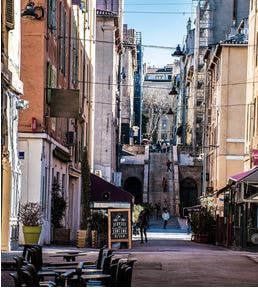 F. Scott Fitzgerald and his family once rented a seaside villa in Cap d'Antibes, where he wrote his most famous novel, The Great Gatsby. The French Riviera is located in the south-east of France on the Mediterranean, and became popular during the eighteenth century as a winter vacationing spot for the British upper class. It has also played host to other famous writers such as Aldous Huxley, Somerset Maugham and Edith Wharton. I've not visited the French Riviera for many years, but I well remember the fabulous wealth of Monaco and the beauty of the scenery. France isn't on my immediate list of countries to visit, but it would be good to return one day and explore further, following in the footsteps of the famous novelists I've mentioned. 3. The Florida Keys - Ernest Hemingway
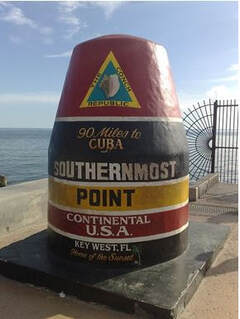 Ernest Hemingway is inextricably linked with the Florida Keys, in particular Key West, where he wrote To Have and Have Not. He also worked on the draft of A Farewell to Arms while living on the island.
The drive from Miami through the Florida Keys is spectacular, and one I remember well, my destination being Key West with its relaxed atmosphere. When I was there in 1994 I visited Hemingway's house where he lived for eight years. As an avid animal lover, I was entranced by the cats there, all descendants of Hemingway's own felines and sporting six or seven toes rather than the usual five. The house itself contains much of interest and was one of the first on the island to benefit from modern plumbing and a swimming pool.
4. Henry Miller - Paris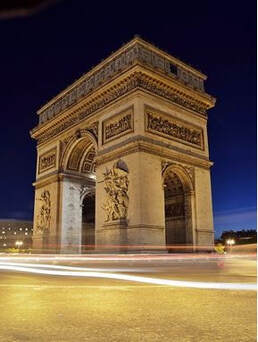 Henry Miller was an American author who developed a new form of writing novels, penning semi-autobiographical books involving social criticism, philosophy and explicit sexual references and language. His best know works include Tropic of Cancer, Tropic of Capricorn and Black Spring. He lived in Paris between 1930 and 1939, which is where he wrote Tropic of Cancer, telling a friend he'd write it as 'first person, uncensored, formless'. Whilst there he became friends with the British author Lawrence Durrell and began his affair with Anaïs Nin.
Paris is an easy trip for me, being a short hop on the Eurostar, and I was last there about twelve years ago. The city has been home to many famous writers, including Honoré de Balzac, Victor Hugo, George Sand, Marcel Proust, Simone de Beauvoir, and Jean-Paul Sartre.
5. Cornwall, UK - Virginia Woolf
 I've not visited Cornwall since my teens, but seeing the BBC's recent adaption of Poldark reminded me how beautiful that part of the UK is. I also read 'The Fire Child' by S K Tremayne recently, which features the old Cornish tin mines along with photographs of them.
The town's lovely coastal scenery, including Godrevy Lighthouse, may have been the inspiration behind Virginia Woolf's To the Lighthouse. Other authors, including Poldark's Winston Graham, have used Cornwall’s landmarks in their books. Mary Wesley's 'The Camomile Lawn' features Roseland House; the Headland was used in the film adaptation of Roald Dahl’s 'The Witches'. Daphne Du Maurier's books also rely heavily on Cornwall as their backdrop. Perhaps it's time I paid the county another visit - who knows, I might get inspired for a future novel!
I have been passionate about foreign travel for as long as I can remember. During my twenties I did various solo trips within Europe, but yearned for more. My first big travel adventure started in 1989, when I embarked on a nine-month journey to Asia, Australia, New Zealand, the USA and Canada. Things were rough at first - nothing could have prepared me for India, my first stop. The noise, dirt, hustle and bustle almost proved overwhelming, especially when I was struck down by dysentery, a horror I hope never to experience again! Throughout the nine months, I grew more travel-hardy and overall had a fantastic trip. Over the ensuing decades I have carried on travelling, having written 'His Kidnapper's Shoes' on a year-long visit to Asia and South America. Since my return I have become a full-time novelist, and in the future I'd like to combine the two great passions of my life by becoming a nomadic novelist. After all, I can write my books anywhere in the world via my laptop. I'm currently planning my next adventure! As part of my 'Five' series, I though it would be fun to examine five other novelists who have been keen travellers, or whose trips have influenced their work. So, without further ado, let's pack our bags and journey to some amazing locations! 1. America's South-West - Vladimir Nabokov
Vladimir Nabokov was a Russian-American novelist. His most famous novel, written in English, is 'Lolita' (1955), notorious thanks to its controversial examination of an affair between a young girl and an older man. Nabokov had an avid interest in butterflies, which was what led to his exploration of the region, rather than a prurient interest in children (we hope!) The area is stunningly beautiful and includes Arizona, parts of New Mexico, Colorado, Utah, Texas, Nevada and California. As someone who has long wanted to drive across the southern USA, I'd love to follow in Nabokov's footsteps, although without the butterfly net! Monument Valley will be a 'must see' on my itinerary when I do so. Perhaps it's time to write a road trip novel?
2. The French Riviera - Scott Fitzgerald
F. Scott Fitzgerald and his family once rented a seaside villa in Cap d'Antibes, where he wrote his most famous novel, The Great Gatsby. The French Riviera is located in the south-east of France on the Mediterranean, and became popular during the eighteenth century as a winter vacationing spot for the British upper class. It has also played host to other famous writers such as Aldous Huxley, Somerset Maugham and Edith Wharton. I've not visited the French Riviera for many years, but I well remember the fabulous wealth of Monaco and the beauty of the scenery. France isn't on my immediate list of countries to visit, but it would be good to return one day and explore further, following in the footsteps of the famous novelists I've mentioned. 3. The Florida Keys - Ernest Hemingway Ernest Hemingway is inextricably linked with the Florida Keys, in particular Key West, where he wrote To Have and Have Not. He also worked on the draft of A Farewell to Arms while living on the island. The drive from Miami through the Florida Keys is spectacular, and one I remember well, my destination being Key West with its relaxed atmosphere. When I was there in 1994 I visited Hemingway's house where he lived for eight years. As an avid animal lover, I was entranced by the cats there, all descendants of Hemingway's own felines and sporting six or seven toes rather than the usual five. The house itself contains much of interest and was one of the first on the island to benefit from modern plumbing and a swimming pool.
4. Henry Miller - Paris
Henry Miller was an American author who developed a new form of writing novels, penning semi-autobiographical books involving social criticism, philosophy and explicit sexual references and language. His best know works include Tropic of Cancer, Tropic of Capricorn and Black Spring. He lived in Paris between 1930 and 1939, which is where he wrote Tropic of Cancer, telling a friend he'd write it as 'first person, uncensored, formless'. Whilst there he became friends with the British author Lawrence Durrell and began his affair with Anaïs Nin. Paris is an easy trip for me, being a short hop on the Eurostar, and I was last there about twelve years ago. The city has been home to many famous writers, including Honoré de Balzac, Victor Hugo, George Sand, Marcel Proust, Simone de Beauvoir, and Jean-Paul Sartre.
5. Cornwall, UK - Virginia Woolf
I've not visited Cornwall since my teens, but seeing the BBC's recent adaption of Poldark reminded me how beautiful that part of the UK is. I also read 'The Fire Child' by S K Tremayne recently, which features the old Cornish tin mines along with photographs of them. The town's lovely coastal scenery, including Godrevy Lighthouse, may have been the inspiration behind Virginia Woolf's To the Lighthouse. Other authors, including Poldark's Winston Graham, have used Cornwall’s landmarks in their books. Mary Wesley's 'The Camomile Lawn' features Roseland House; the Headland was used in the film adaptation of Roald Dahl’s 'The Witches'. Daphne Du Maurier's books also rely heavily on Cornwall as their backdrop. Perhaps it's time I paid the county another visit - who knows, I might get inspired for a future novel!
March 17, 2020
Editing a novel - my process
How I edit my novels - from first draft to completed manuscript  I've blogged before about different aspects of the writing process, including plotting and how I organise my working day. This week I'd like to focus on the editing cycle. As part of my contract with Lake Union, my first novel, 'His Kidnapper's Shoes', underwent revision prior to being republished by Amazon, and that proved a fascinating, as well as novel, experience!
When I started my writing journey, I lacked the funds for a professional editor. (They don't come cheap!) Instead, I did the best I could myself. Now I'm with Lake Union, all that's changed, because Amazon pick up the costs. Until now, my editing process has gone as follows. First, I set the manuscript aside for at least a month, so that when I return to it, I do so with a fresh eye. My first drafts are rough, because I prefer to get the story out of my head first and worry about sorting the mess later. In the early stages, I spend a lot of time moving text around, deleting some parts and adding others. Once I have a coherent second draft, I check for correct spelling, punctuation, etc.; I'm a stickler for that sort of thing! I always run my books through Microsoft Word's spelling and grammar check as well, though.
Another tool I use, and love, is Pro Writing Aid. There's a free version, but I use the premium one for its extra features, and have a lifetime subscription. Pro Writing Aid will tell me when I've used the same word too often in close proximity, check for clichés and redundancies, perform a grammar check, and much more.
The next step is to tighten and prune my prose. It's scary how many unnecessary words I find! Often I shed several thousand during this stage. By the time I've done all this, the novel is, with any luck, slimmer and fitter. Scrivener helps every step of the way
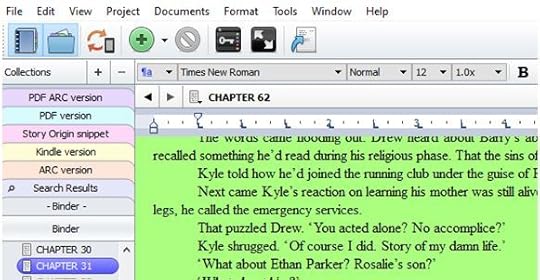 Part of the Scrivener project for my latest novel, 'Silent Winter' I also run each chapter through a checklist. Does it start with a bang? Will the ending lead the reader to the next chapter and create excitement? Have I included enough (but not too much) description and sensory details? Is the pacing right? I try to view it from a reader's point of view, which is hard for me, as I need to switch hats!
At the end of all this, I read the manuscript several times to make sure it's as good as I can make it. This is hard because I can waste lots of time tweaking tiny details - at some stage I need to release the book to my wonderful beta readers! I have several people who provide feedback on what they like and don't like, what works and what doesn't. I implement most of their advice; it's rare for me to reject anything they say. After all, they come to the novel with a fresh eye, whereas by this stage I'm usually jaded!
For me, editing is the longest part of the process, but unlike some writers, it's something I love doing. I find great satisfaction in polishing my first drafts (believe me, they really are rough!) into something better. I use Scrivener to organise every step of the way. Scrivener is software designed for writers, and has revolutionised my writing. If I could marry a piece of software, it would probably be this one!
My experience with a professional editor
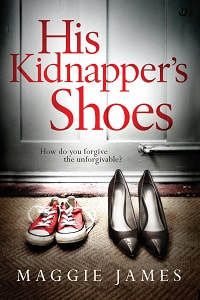 I'll continue to use this process I've outlined above, because it works well for me, but things worked differently for the two novels I've published with Lake Union. Here's how it's worked so far. Soon after I sent 'His Kidnapper's Shoes' to Sammia, my Amazon contact, she assigned Gillian Holmes as the book's editor. Gillian has over twenty years' experience in the industry and has worked with big names such as Kathy Reichs and Tony Parsons, so I was delighted!
First she emailed me her overall impressions of the book and her main recommendations, along with my manuscript containing her detailed notes. Next Sammia organised a conference call between the three of us. She wanted to ensure I understood the process before I got stuck in, and I appreciated her thoughtfulness. I did wonder what Gillian might want to see changed in the book, not because I'm arrogant and consider it perfect, but because I'm too close to it to be objective. All her recommendations made sense and echoed some of the less favourable reviews I've received. She asked me to tone down the sex and swearing, and make Daniel Bateman a more likeable character. With that in mind, I set to work.
I needed to learn Microsoft Word's 'track changes' feature but my inner geek enjoys stuff like that! It didn't take long to implement Gillian's recommendations. My experience of working with her has been very positive. Once I'd experienced the huge benefits of having a professional editor, I asked Gillian to edit my fiction titles that don't fall under my Amazon contract. I'm keen to make my novels as polished as possible, especially now I've joined the Alliance of Independent Authors, a professional writers' association.
Any questions?
I'm happy to answer any questions you have about how novelists (well, me - I can't answer for everyone) edit their books. Leave a comment and let me know!
I've blogged before about different aspects of the writing process, including plotting and how I organise my working day. This week I'd like to focus on the editing cycle. As part of my contract with Lake Union, my first novel, 'His Kidnapper's Shoes', underwent revision prior to being republished by Amazon, and that proved a fascinating, as well as novel, experience!When I started my writing journey, I lacked the funds for a professional editor. (They don't come cheap!) Instead, I did the best I could myself. Now I'm with Lake Union, all that's changed, because Amazon pick up the costs. Until now, my editing process has gone as follows. First, I set the manuscript aside for at least a month, so that when I return to it, I do so with a fresh eye. My first drafts are rough, because I prefer to get the story out of my head first and worry about sorting the mess later. In the early stages, I spend a lot of time moving text around, deleting some parts and adding others. Once I have a coherent second draft, I check for correct spelling, punctuation, etc.; I'm a stickler for that sort of thing! I always run my books through Microsoft Word's spelling and grammar check as well, though.
Another tool I use, and love, is Pro Writing Aid. There's a free version, but I use the premium one for its extra features, and have a lifetime subscription. Pro Writing Aid will tell me when I've used the same word too often in close proximity, check for clichés and redundancies, perform a grammar check, and much more.
The next step is to tighten and prune my prose. It's scary how many unnecessary words I find! Often I shed several thousand during this stage. By the time I've done all this, the novel is, with any luck, slimmer and fitter. Scrivener helps every step of the way
Part of the Scrivener project for my latest novel, 'Silent Winter' I also run each chapter through a checklist. Does it start with a bang? Will the ending lead the reader to the next chapter and create excitement? Have I included enough (but not too much) description and sensory details? Is the pacing right? I try to view it from a reader's point of view, which is hard for me, as I need to switch hats!At the end of all this, I read the manuscript several times to make sure it's as good as I can make it. This is hard because I can waste lots of time tweaking tiny details - at some stage I need to release the book to my wonderful beta readers! I have several people who provide feedback on what they like and don't like, what works and what doesn't. I implement most of their advice; it's rare for me to reject anything they say. After all, they come to the novel with a fresh eye, whereas by this stage I'm usually jaded!
For me, editing is the longest part of the process, but unlike some writers, it's something I love doing. I find great satisfaction in polishing my first drafts (believe me, they really are rough!) into something better. I use Scrivener to organise every step of the way. Scrivener is software designed for writers, and has revolutionised my writing. If I could marry a piece of software, it would probably be this one!
My experience with a professional editor
I'll continue to use this process I've outlined above, because it works well for me, but things worked differently for the two novels I've published with Lake Union. Here's how it's worked so far. Soon after I sent 'His Kidnapper's Shoes' to Sammia, my Amazon contact, she assigned Gillian Holmes as the book's editor. Gillian has over twenty years' experience in the industry and has worked with big names such as Kathy Reichs and Tony Parsons, so I was delighted!First she emailed me her overall impressions of the book and her main recommendations, along with my manuscript containing her detailed notes. Next Sammia organised a conference call between the three of us. She wanted to ensure I understood the process before I got stuck in, and I appreciated her thoughtfulness. I did wonder what Gillian might want to see changed in the book, not because I'm arrogant and consider it perfect, but because I'm too close to it to be objective. All her recommendations made sense and echoed some of the less favourable reviews I've received. She asked me to tone down the sex and swearing, and make Daniel Bateman a more likeable character. With that in mind, I set to work.
I needed to learn Microsoft Word's 'track changes' feature but my inner geek enjoys stuff like that! It didn't take long to implement Gillian's recommendations. My experience of working with her has been very positive. Once I'd experienced the huge benefits of having a professional editor, I asked Gillian to edit my fiction titles that don't fall under my Amazon contract. I'm keen to make my novels as polished as possible, especially now I've joined the Alliance of Independent Authors, a professional writers' association.
Any questions?
I'm happy to answer any questions you have about how novelists (well, me - I can't answer for everyone) edit their books. Leave a comment and let me know!
March 10, 2020
Five novels that have sparked controversy
In this week's post, I continue my 'Five' series, examining novels that proved highly controversial on their release. I'm a firm believer in adults being able to read whatever they choose. In my view, just because a book offends some people (usually because of sex or religion, those perennially divisive subjects!) it's no reason to deny it to others. The difficulty for this post was, of course, narrowing my selection down to five! Authors have frequently challenged prevailing social attitudes, giving me a deep pool from which to make my selection. Eventually I chose the following novels.
1. 'Brave New World' by Aldous Huxley
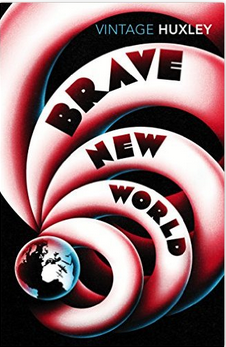 Aldous Huxley wrote 'Brave New World' in 1931, with publication taking place in 1932. From the start, the novel sparked controversy, being banned in Ireland on the grounds of offensive language and anti-religious themes. Not much has changed in the decades since, with the novel becoming one of the most hotly debated books in America. Readers have been infuriated by its sexually explicit scenes and bad language. It has also been banned in India due to its sexual content. As if that weren't enough, in 1982 Polish author Antoni Smuszkiewicz accused Huxley of plagiarism, citing two Polish novels written in the 1920s. According to him, their similarity to 'Brave New World' was so great that Huxley must have poached their plots. It's definitely a controversial book!
Here's a synopsis: Far in the future, the World Controllers have created the ideal society. Through clever use of genetic engineering, brainwashing and recreational sex and drugs all its members are happy consumers. Bernard Marx seems alone harbouring an ill-defined longing to break free. A visit to one of the few remaining Savage Reservations where the old, imperfect life still continues, may be the cure for his distress... Sounds fascinating! I can't believe I've not yet read this classic novel, so it's going on my list.
2. 'Ulysses' by James Joyce
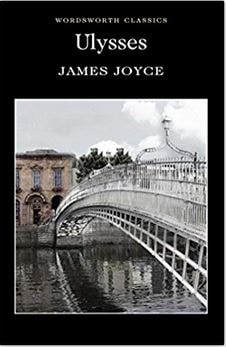 'Ulysses' first appeared in serial form and was then published as a novel in 1922 in Paris. Why France, when Joyce was Irish and the serialisation took place in an American journal? Controversial from the start, the book was banned in Ireland, the United States and Britain because it was considered obscene. As well as sexual imagery, 'Ulysses' includes detailed descriptions of bodily functions such as masturbation, menstruation and defecation. The Parisian publishing house clearly wasn't fazed by such matters. The book recounts the various events which befall Leopold Bloom and Stephen Dedalus in Dublin on 16 June 1904, including Bloom's wife, Molly, committing adultery. Hailed by critics such as T S Eliot yet reviled by others, e.g. Virginia Woolf, the serialised version was the subject of an obscenity trial in the US, leading to the novel being banned in that country. Copies were burned and incoming shipments were seized by customs officials. In the 1930s a US court ruling overturned the obscenity charge, making America the first English-speaking country to allow the book.
What fascinates me is the unusual structure. Joyce divided 'Ulysses' into eighteen chapters called episodes, saying he had "put in so many enigmas and puzzles that it will keep the professors busy for centuries arguing over what I meant". The characters and theme of each episode correspond to those in Homer's 'Odyssey'. Sounds intriguing - another one for my reading list!
3. 'Lady Chatterley's Lover' by D H Lawrence
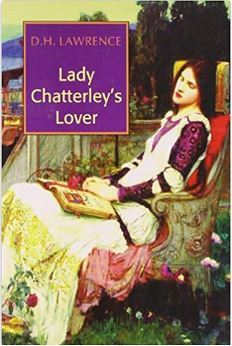 First published in Italy in 1928, the full version of 'Lady Chatterley's Lover' didn't appear in the UK until 1960. Upon its release, the publishers, Penguin Books, were tried under The Obscene Publications Act 1959, making this an important test case for the new law. The book had become notorious for its story of the relationship between two individuals from different social classes, explicit descriptions of sex and profanity. The verdict, a triumph for common sense and literary freedom in my opinion, was a 'not guilty' one. To twenty-first century readers, the book won't deliver the same kind of shock it did in the nineteen twenties. Back then, the sexual content and swearing held far more power to offend, but I suspect the main reason for the disapproval it generated was the story's crossing of class divisions. The book has also been banned and featured in obscenity trials in Australia, America, Japan, India and Canada.
Here's a synopsis: Constance Reid marries Sir Clifford Chatterley, who becomes paralysed from the waist down after the First World War. Desperate for an heir and embarrassed by his inability to satisfy his wife sexually, Clifford gives the go-ahead for her to have an affair, envisaging she will choose someone from their immediate social circle. Instead, Constance begins a passionate relationship with their married gamekeeper, Oliver Mellors, inciting Clifford's ingrained class prejudices. The story ends with Mellors working on a farm, waiting for his divorce, with Connie, now pregnant, living with her sister. The expectation is that, eventually, they will be together.
4. 'Tropic of Cancer' by Henry Miller
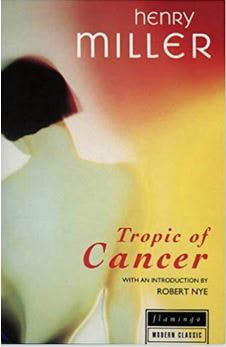 Henry Miller wrote 'Tropic of Cancer' in the early 1930s, and it was originally published in Paris in 1934. The book was banned in the US for more than thirty years because it was considered pornographic. Grove Press published it in America in 1961, leading to more than sixty obscenity trials until (finally!) the Supreme Court ruled it a work of literature in 1964. Other English-speaking countries, such as Canada and the UK, banned 'Tropic of Cancer'. Only smuggled copies of the book were available in the United Kingdom from 1934 onwards. Scotland Yard contemplated banning its publication in Britain in the 1960s, but decided against the move because people like T S Eliot were ready to defend the book publicly. Another victory for literary freedom!
So what was all the fuss about? Set in Paris in the 1930s, the book is largely autobiographical, featuring a starving American writer who lives a bohemian life among prostitutes, pimps, and artists. Meaning lots of sex - oh, the horror! Miller gave the following explanation of the book's unusual title. "To me cancer symbolises the disease of civilisation, the endpoint of the wrong path, the necessity to change course radically, to start completely over from scratch.” Yet another one to add to my reading list!
5. 'Lolita' by Vladimir Nabokov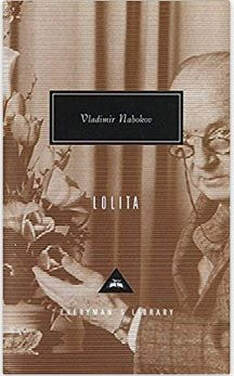 'Lolita' was written in English by its Russian author, Vladimir Nabokov, and first published in Paris in 1955. It seems French attitudes to controversial subjects are more relaxed than those of the US and UK. I can't help noticing how the books I'm featuring in this post often gained acceptance first in Paris. American and English versions followed in 1958 and 1959. The initial reaction was mixed. Graham Greene, in the Sunday Times, called it one of the three best books of 1955, whereas John Gordon, editor of the Sunday Express, dubbed it the filthiest book he had ever read. The Home Office promptly seized all copies entering the UK, and in 1956 France banned 'Lolita' for two years, thus blotting their liberal copybook. The US, however, reacted differently, and the book has never been banned there. A novel about a man who marries a woman so he can embark upon a relationship with her twelve-year-old daughter is bound to be controversial.
The furore rumbles on today; recent sex abuse cases coming to light have ensured the book remains a source of debate. Critics disagree as to whether Lolita was a victim or a willing participant in her sexual relationship with the protagonist Humbert Humbert. Some have interpreted their liaison not as the corruption of an innocent child by a cunning adult, but the exploitation of a weak adult by a corrupt child. Others have labelled Humbert a rapist and paedophile. The book's influence is such that the name Lolita has passed into common usage to describe a sexually provocative young girl.
Let's hear from you!
Have you read any of the books I've featured in this post? Do any of them offend you? Or perhaps you consider them victims of outmoded thinking? Leave a comment and let me know!
1. 'Brave New World' by Aldous Huxley
Aldous Huxley wrote 'Brave New World' in 1931, with publication taking place in 1932. From the start, the novel sparked controversy, being banned in Ireland on the grounds of offensive language and anti-religious themes. Not much has changed in the decades since, with the novel becoming one of the most hotly debated books in America. Readers have been infuriated by its sexually explicit scenes and bad language. It has also been banned in India due to its sexual content. As if that weren't enough, in 1982 Polish author Antoni Smuszkiewicz accused Huxley of plagiarism, citing two Polish novels written in the 1920s. According to him, their similarity to 'Brave New World' was so great that Huxley must have poached their plots. It's definitely a controversial book!Here's a synopsis: Far in the future, the World Controllers have created the ideal society. Through clever use of genetic engineering, brainwashing and recreational sex and drugs all its members are happy consumers. Bernard Marx seems alone harbouring an ill-defined longing to break free. A visit to one of the few remaining Savage Reservations where the old, imperfect life still continues, may be the cure for his distress... Sounds fascinating! I can't believe I've not yet read this classic novel, so it's going on my list.
2. 'Ulysses' by James Joyce
'Ulysses' first appeared in serial form and was then published as a novel in 1922 in Paris. Why France, when Joyce was Irish and the serialisation took place in an American journal? Controversial from the start, the book was banned in Ireland, the United States and Britain because it was considered obscene. As well as sexual imagery, 'Ulysses' includes detailed descriptions of bodily functions such as masturbation, menstruation and defecation. The Parisian publishing house clearly wasn't fazed by such matters. The book recounts the various events which befall Leopold Bloom and Stephen Dedalus in Dublin on 16 June 1904, including Bloom's wife, Molly, committing adultery. Hailed by critics such as T S Eliot yet reviled by others, e.g. Virginia Woolf, the serialised version was the subject of an obscenity trial in the US, leading to the novel being banned in that country. Copies were burned and incoming shipments were seized by customs officials. In the 1930s a US court ruling overturned the obscenity charge, making America the first English-speaking country to allow the book. What fascinates me is the unusual structure. Joyce divided 'Ulysses' into eighteen chapters called episodes, saying he had "put in so many enigmas and puzzles that it will keep the professors busy for centuries arguing over what I meant". The characters and theme of each episode correspond to those in Homer's 'Odyssey'. Sounds intriguing - another one for my reading list!
3. 'Lady Chatterley's Lover' by D H Lawrence
First published in Italy in 1928, the full version of 'Lady Chatterley's Lover' didn't appear in the UK until 1960. Upon its release, the publishers, Penguin Books, were tried under The Obscene Publications Act 1959, making this an important test case for the new law. The book had become notorious for its story of the relationship between two individuals from different social classes, explicit descriptions of sex and profanity. The verdict, a triumph for common sense and literary freedom in my opinion, was a 'not guilty' one. To twenty-first century readers, the book won't deliver the same kind of shock it did in the nineteen twenties. Back then, the sexual content and swearing held far more power to offend, but I suspect the main reason for the disapproval it generated was the story's crossing of class divisions. The book has also been banned and featured in obscenity trials in Australia, America, Japan, India and Canada. Here's a synopsis: Constance Reid marries Sir Clifford Chatterley, who becomes paralysed from the waist down after the First World War. Desperate for an heir and embarrassed by his inability to satisfy his wife sexually, Clifford gives the go-ahead for her to have an affair, envisaging she will choose someone from their immediate social circle. Instead, Constance begins a passionate relationship with their married gamekeeper, Oliver Mellors, inciting Clifford's ingrained class prejudices. The story ends with Mellors working on a farm, waiting for his divorce, with Connie, now pregnant, living with her sister. The expectation is that, eventually, they will be together.
4. 'Tropic of Cancer' by Henry Miller
Henry Miller wrote 'Tropic of Cancer' in the early 1930s, and it was originally published in Paris in 1934. The book was banned in the US for more than thirty years because it was considered pornographic. Grove Press published it in America in 1961, leading to more than sixty obscenity trials until (finally!) the Supreme Court ruled it a work of literature in 1964. Other English-speaking countries, such as Canada and the UK, banned 'Tropic of Cancer'. Only smuggled copies of the book were available in the United Kingdom from 1934 onwards. Scotland Yard contemplated banning its publication in Britain in the 1960s, but decided against the move because people like T S Eliot were ready to defend the book publicly. Another victory for literary freedom! So what was all the fuss about? Set in Paris in the 1930s, the book is largely autobiographical, featuring a starving American writer who lives a bohemian life among prostitutes, pimps, and artists. Meaning lots of sex - oh, the horror! Miller gave the following explanation of the book's unusual title. "To me cancer symbolises the disease of civilisation, the endpoint of the wrong path, the necessity to change course radically, to start completely over from scratch.” Yet another one to add to my reading list!
5. 'Lolita' by Vladimir Nabokov
'Lolita' was written in English by its Russian author, Vladimir Nabokov, and first published in Paris in 1955. It seems French attitudes to controversial subjects are more relaxed than those of the US and UK. I can't help noticing how the books I'm featuring in this post often gained acceptance first in Paris. American and English versions followed in 1958 and 1959. The initial reaction was mixed. Graham Greene, in the Sunday Times, called it one of the three best books of 1955, whereas John Gordon, editor of the Sunday Express, dubbed it the filthiest book he had ever read. The Home Office promptly seized all copies entering the UK, and in 1956 France banned 'Lolita' for two years, thus blotting their liberal copybook. The US, however, reacted differently, and the book has never been banned there. A novel about a man who marries a woman so he can embark upon a relationship with her twelve-year-old daughter is bound to be controversial. The furore rumbles on today; recent sex abuse cases coming to light have ensured the book remains a source of debate. Critics disagree as to whether Lolita was a victim or a willing participant in her sexual relationship with the protagonist Humbert Humbert. Some have interpreted their liaison not as the corruption of an innocent child by a cunning adult, but the exploitation of a weak adult by a corrupt child. Others have labelled Humbert a rapist and paedophile. The book's influence is such that the name Lolita has passed into common usage to describe a sexually provocative young girl.
Let's hear from you!
Have you read any of the books I've featured in this post? Do any of them offend you? Or perhaps you consider them victims of outmoded thinking? Leave a comment and let me know!
March 3, 2020
Writers as tortured geniuses
 In this week's post I'd like to examine the stereotype of writers as tortured geniuses. It's a cliché, but one backed up by life. Examples of tormented authors abound; take Sylvia Plath, author of 'The Bell Jar', who was clinically depressed for most of her adult life and committed suicide in 1963. Or Ernest Hemingway, renowned for his hard drinking and womanising, who shot and killed himself. Jack London, Kurt Vonnegut, George Orwell - the list goes on, and it's a long and unhappy one.
A recent study found that, with the exception of bipolar disorder, creative types are no more likely to suffer psychiatric problems than anyone else. Apart from writers, that is. We're more disposed, it seems, towards depression and schizophrenia. More prone to committing suicide, too. Here's the link to an NHS report on the study: Study looks at creativity link with mental illness.
As someone interested in the workings of the brain, I find this fascinating, and frustrating that the study didn't identify possible reasons. I'm fortunate in that I've always enjoyed good mental health; I've blogged before about how I don't use my fiction as a catharsis for my demons, because those pesky little devils are few and far between. I'm aware, though, that other authors are different. Take my writing idol, Stephen King. I can't find the link, but I remember reading that he uses his fiction, especially his earlier works, to resolve childhood issues. He's also a writer who has battled alcoholism and drug addiction. In addition, at least one writer friend uses her books to resolve personal angst.
I suspect certain genres lend themselves as avenues for exploring one's malaise. It's no coincidence that not many emotionally tortured writers have penned light romances or children's books. King's preference for writing horror and supernatural fiction is a great example. My own genre, psychological suspense, certainly lends itself to examining the darker side of life, but (thank God!) the events in my books have never featured in my own experience. If writing is cathartic, though, shouldn't authors be less, not more, prone to mental health issues? Or perhaps, for some people, it helps a little but their issues run deeper than fiction can heal. Who knows?
My conviction is that our minds are far more complex than we can understand, at present anyway. And other creative professions, such as art and music, are by no means exempt - Van Gogh and Nick Drake, anyone? Take a recent study conducted by Help Musicians UK, which found that over 60% of musicians suffer some form of mental health issue. Such problems can affect anyone, at any age, whatever their profession. Despite what the survey found, I'm not sure they're linked to creativity.
What do you think? Leave a comment and let me know!


