
Maggie James's Blog, page 23
February 24, 2014
'The Lewis Man' by Peter May - Book Review
By Maggie James
 Cover of Amazon U.K. edition
Disturbing the past can destroy the present...
Cover of Amazon U.K. edition
Disturbing the past can destroy the present...
'The Lewis Man' is an excellent read. It's a murder mystery, centring on the death of a young man found buried in a peat bog on one of the Outer Hebridean islands. The only clue to the identity of the corpse is a D.N.A. sibling match to a local farmer, an elderly man suffering from dementia. A man who has always claimed to be an only child.
The novel is narrated through third person chapters spliced with those related by the dementia sufferer, Tormod MacDonald. These chapters are poignant, contrasting his present-day mental confusion with his clear memories of the events of fifty years ago. His story is moving, portraying the religious bigotry souring his childhood, his harsh teenage years at the Dean Orphanage, together with his determination to keep the promise he made to his dying mother.
When the story reverts to the present day, we meet Fin MacLeod, a former policeman battling to rebuild his life after his son’s death and his subsequent divorce. Will he find the resolution to his problems in his childhood home of the bleak Lewis landscape? And how does Marsaili, his former girlfriend and mother of his other son, fit into the picture?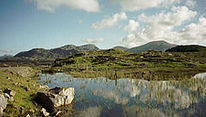 Photo courtesy of Wikipedia
Wild flowers, biting winds and peat bogs...
Photo courtesy of Wikipedia
Wild flowers, biting winds and peat bogs...
‘The Lewis Man’ is set against the backdrop of the unforgiving Hebridean weather and is richly evocative of the landscape, with May's descriptions of soft black peat, skin-scouring winds, wild flowers and bog cotton. Peter May also details the close Hebridean community of Lewis, strongly rooted in island culture, a way of life that draws Fin MacLeod back for good when his life reaches a crisis point.
The novel delivers an engaging read that never fails to entertain. The twist at the end is satisfying, and the last few paragraphs are truly moving. I'll definitely be reading more from this author.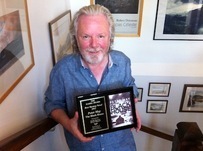 Photo courtesy of Peter May's website
More about Peter May and his novels
Photo courtesy of Peter May's website
More about Peter May and his novels
‘The Lewis Man’ is the second in the Lewis trilogy, all set on the Isle of Lewis in the Outer Hebrides, although the book works perfectly well as a standalone novel. The other titles are 'The Blackhouse' and 'The Chessmen'. In 'The Blackhouse', a bloody murder on the island bears the hallmarks of a similar one in Edinburgh. Fin Macleod, still working at the time as a police detective, is sent to investigate. 'The Chessmen' sees Fin discovering the body of his friend, musician Roddy MacKenzie, who disappeared seventeen years previously, in the wreckage of a light aircraft. Roddy's corpse reveals that he was savagely murdered...
Peter May was born and raised in Scotland, and before turning to writing novels he enjoyed a successful career as a television writer and producer. He now lives in France.
He has also penned the China Thrillers, featuring Beijing detective Li Yan and American forensic pathologist Margaret Campbell; the critically-acclaimed Enzo Files, set in France, featuring Scottish forensic scientist Enzo MacLeod; and several standalone books, the latest of which is 'Entry Island'. You can find out more about him and his novels via his website www.petermay.co.uk.
U.K. readers - buy the Lewis trilogy here:
Subscribe to my blog here!
If you enjoy my blog, you can subscribe via the RSS feeds in the sidebar.
And to my newsletter...
Or, if you'd like to be kept informed about my future novels, enter your email address in my newsletter sign-up box, also in the sidebar. Rest assured I'll never sell or share your email details.
G et a free Maggie James novel!
For the foreseeable future, I'm offering a free copy of one of my novels, in e-book format, for those of you who sign up for my newsletter. You can find further details here.
Cover of Amazon U.K. edition
Disturbing the past can destroy the present...
'The Lewis Man' is an excellent read. It's a murder mystery, centring on the death of a young man found buried in a peat bog on one of the Outer Hebridean islands. The only clue to the identity of the corpse is a D.N.A. sibling match to a local farmer, an elderly man suffering from dementia. A man who has always claimed to be an only child.
The novel is narrated through third person chapters spliced with those related by the dementia sufferer, Tormod MacDonald. These chapters are poignant, contrasting his present-day mental confusion with his clear memories of the events of fifty years ago. His story is moving, portraying the religious bigotry souring his childhood, his harsh teenage years at the Dean Orphanage, together with his determination to keep the promise he made to his dying mother.
When the story reverts to the present day, we meet Fin MacLeod, a former policeman battling to rebuild his life after his son’s death and his subsequent divorce. Will he find the resolution to his problems in his childhood home of the bleak Lewis landscape? And how does Marsaili, his former girlfriend and mother of his other son, fit into the picture?
Photo courtesy of Wikipedia
Wild flowers, biting winds and peat bogs...
‘The Lewis Man’ is set against the backdrop of the unforgiving Hebridean weather and is richly evocative of the landscape, with May's descriptions of soft black peat, skin-scouring winds, wild flowers and bog cotton. Peter May also details the close Hebridean community of Lewis, strongly rooted in island culture, a way of life that draws Fin MacLeod back for good when his life reaches a crisis point.
The novel delivers an engaging read that never fails to entertain. The twist at the end is satisfying, and the last few paragraphs are truly moving. I'll definitely be reading more from this author.
Photo courtesy of Peter May's website
More about Peter May and his novels
‘The Lewis Man’ is the second in the Lewis trilogy, all set on the Isle of Lewis in the Outer Hebrides, although the book works perfectly well as a standalone novel. The other titles are 'The Blackhouse' and 'The Chessmen'. In 'The Blackhouse', a bloody murder on the island bears the hallmarks of a similar one in Edinburgh. Fin Macleod, still working at the time as a police detective, is sent to investigate. 'The Chessmen' sees Fin discovering the body of his friend, musician Roddy MacKenzie, who disappeared seventeen years previously, in the wreckage of a light aircraft. Roddy's corpse reveals that he was savagely murdered...
Peter May was born and raised in Scotland, and before turning to writing novels he enjoyed a successful career as a television writer and producer. He now lives in France.
He has also penned the China Thrillers, featuring Beijing detective Li Yan and American forensic pathologist Margaret Campbell; the critically-acclaimed Enzo Files, set in France, featuring Scottish forensic scientist Enzo MacLeod; and several standalone books, the latest of which is 'Entry Island'. You can find out more about him and his novels via his website www.petermay.co.uk.
U.K. readers - buy the Lewis trilogy here:
Subscribe to my blog here!
If you enjoy my blog, you can subscribe via the RSS feeds in the sidebar.
And to my newsletter...
Or, if you'd like to be kept informed about my future novels, enter your email address in my newsletter sign-up box, also in the sidebar. Rest assured I'll never sell or share your email details.
G et a free Maggie James novel!
For the foreseeable future, I'm offering a free copy of one of my novels, in e-book format, for those of you who sign up for my newsletter. You can find further details here.


February 12, 2014
'Witness The Dead' by Craig Robertson - Book Review
By Maggie James
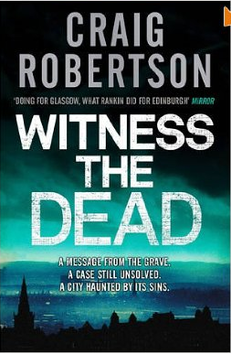 Cover of U.K. edition
A rollercoaster ride of a thriller
Cover of U.K. edition
A rollercoaster ride of a thriller
‘Witness The Dead’ is the first novel by Craig Robertson I've tried; based on my enjoyment of what I’ve read, it won't be the last. The novel delivers a rollercoaster ride of a thriller, dealing with the exploits of a serial killer in modern-day Glasgow.
Here's an extract from the back cover blurb:
‘Scotland 1972. Glasgow is haunted by a murderer nicknamed Red Silk - a feared serial killer who selects his victims in the city's nightclubs. The case remains unsolved but Archibald Atto, later imprisoned for other murders, is thought to be Red Silk.
In modern-day Glasgow, D.S. Rachel Narey is called to a gruesome crime scene at the city's Necropolis. The body of a young woman lies stretched out over a tomb, bearing a three-letter message from her killer - the word SIN scrawled in lipstick upon her body.
Now retired, former detective Danny Nielsen spots a link between the new murder and those investigated in 1972 - details that no copycat killer could have known about. But Archibald Atto is still behind bars…’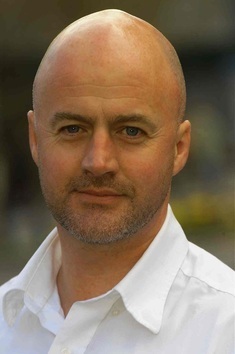 Craig Robertson, courtesy of Simon & Schuster
A novel laced with tension and intriguing subplots
Craig Robertson, courtesy of Simon & Schuster
A novel laced with tension and intriguing subplots
The tension in the novel ratchets skyward as more dead women are discovered, each one posed on a tomb in a different Necropolis. A race against time to prevent further deaths ensues, with the murders mirroring the 1972 Red Silk killings. The plot weaves through sharp twists and turns, as Archibald Atto dispenses information that may be accurate, or simply the warped machinations of a crazed mind.
‘Witness The Dead’ is an unusual novel in that it doesn’t have a protagonist as such. Danny Neilsen, his nephew Tony Winter and Detective Inspector Derek Addison are given equal prominence as the team intent on unearthing the link between Archibald Atto, the murders and the significance of the dumpsites at the city’s Necropoleis. Detective Sergeant Rachel Narey plays second fiddle to this trio in a side role as Tony Winter’s former love interest. Overarching the main players is the chilling character of Archibald Atto, a psychopath who revels in baiting Winter when he detects the guilty thrill the man gets from photographing dead bodies.
Robertson doesn’t flinch in portraying his characters with all their flaws. Danny Neilsen is haunted by a terrible mistake he made in 1972, one that has estranged him from his only daughter. Tony Winter struggles to accept his failed relationship with Narey, as well as his self-disgust at his enjoyment of what he sees as the beauty of death. In an amusing subplot, Addison is both taunted and attracted by a member of the forensic team on the case, whilst battling his hatred of his superior officer and struggling to hold the investigation together.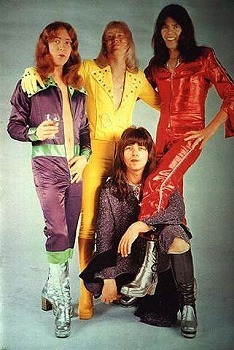 1970s glam rock band The Sweet
Hotpants, kipper ties
and Glaswegian slang
1970s glam rock band The Sweet
Hotpants, kipper ties
and Glaswegian slang
The backdrop to the narrative is the vibrant city of Glasgow, both in its modern-day incarnation and in 1972. The latter is played out in a nightclub called Klass, with its patrons sporting platform shoes, kipper ties and hotpants. They dance to music from The Sweet and Johnny Nash, richly evoking the zeitgeist of 1970s Glasgow, whilst defying the murderous danger posed by Red Silk. Robertson peppers his narrative with Scottish slang such as 'gallus', 'hen' and 'blootered', thus further immersing the reader in the spirit of the novel.
‘Witness The Dead’ is not without its flaws – some of the plot elements didn’t stack up for me, but that’s a minor criticism, given the overall thrill supplied by the narrative. Having started with 'Witness The Dead', I’ll be looking for more Craig Robertson novels to add to my reading list. And thanks to Craig, I now know that the plural of necropolis is necropoleis!
I'd be interested to hear from you. Have you read ‘Witness The Dead’? If so, what did you think of it? Or do you have any recommendations for other Craig Robertson novels? Leave a comment for me!
You can find out more about Craig Robertson and his novels via this link. U.K. readers: click the link below to purchase 'Witness The Dead' from Amazon: Subscribe to my blog and newsletter!
If you enjoy my blog, you can subscribe via the RSS feeds in the sidebar. Or, if you'd like to be kept informed about my future novels, enter your email address in the sign-up box, also in the sidebar. Rest assured I'll never sell or share your email details.
Get a free Maggie James novel!
For the foreseeable future, I'm offering a free copy of one of my novels, in e-book format, for those of you who sign up for my newsletter. You can find further details here.
Cover of U.K. edition
A rollercoaster ride of a thriller
‘Witness The Dead’ is the first novel by Craig Robertson I've tried; based on my enjoyment of what I’ve read, it won't be the last. The novel delivers a rollercoaster ride of a thriller, dealing with the exploits of a serial killer in modern-day Glasgow.
Here's an extract from the back cover blurb:
‘Scotland 1972. Glasgow is haunted by a murderer nicknamed Red Silk - a feared serial killer who selects his victims in the city's nightclubs. The case remains unsolved but Archibald Atto, later imprisoned for other murders, is thought to be Red Silk.
In modern-day Glasgow, D.S. Rachel Narey is called to a gruesome crime scene at the city's Necropolis. The body of a young woman lies stretched out over a tomb, bearing a three-letter message from her killer - the word SIN scrawled in lipstick upon her body.
Now retired, former detective Danny Nielsen spots a link between the new murder and those investigated in 1972 - details that no copycat killer could have known about. But Archibald Atto is still behind bars…’
Craig Robertson, courtesy of Simon & Schuster
A novel laced with tension and intriguing subplots
The tension in the novel ratchets skyward as more dead women are discovered, each one posed on a tomb in a different Necropolis. A race against time to prevent further deaths ensues, with the murders mirroring the 1972 Red Silk killings. The plot weaves through sharp twists and turns, as Archibald Atto dispenses information that may be accurate, or simply the warped machinations of a crazed mind.
‘Witness The Dead’ is an unusual novel in that it doesn’t have a protagonist as such. Danny Neilsen, his nephew Tony Winter and Detective Inspector Derek Addison are given equal prominence as the team intent on unearthing the link between Archibald Atto, the murders and the significance of the dumpsites at the city’s Necropoleis. Detective Sergeant Rachel Narey plays second fiddle to this trio in a side role as Tony Winter’s former love interest. Overarching the main players is the chilling character of Archibald Atto, a psychopath who revels in baiting Winter when he detects the guilty thrill the man gets from photographing dead bodies.
Robertson doesn’t flinch in portraying his characters with all their flaws. Danny Neilsen is haunted by a terrible mistake he made in 1972, one that has estranged him from his only daughter. Tony Winter struggles to accept his failed relationship with Narey, as well as his self-disgust at his enjoyment of what he sees as the beauty of death. In an amusing subplot, Addison is both taunted and attracted by a member of the forensic team on the case, whilst battling his hatred of his superior officer and struggling to hold the investigation together.
1970s glam rock band The Sweet
Hotpants, kipper ties
and Glaswegian slang
The backdrop to the narrative is the vibrant city of Glasgow, both in its modern-day incarnation and in 1972. The latter is played out in a nightclub called Klass, with its patrons sporting platform shoes, kipper ties and hotpants. They dance to music from The Sweet and Johnny Nash, richly evoking the zeitgeist of 1970s Glasgow, whilst defying the murderous danger posed by Red Silk. Robertson peppers his narrative with Scottish slang such as 'gallus', 'hen' and 'blootered', thus further immersing the reader in the spirit of the novel.
‘Witness The Dead’ is not without its flaws – some of the plot elements didn’t stack up for me, but that’s a minor criticism, given the overall thrill supplied by the narrative. Having started with 'Witness The Dead', I’ll be looking for more Craig Robertson novels to add to my reading list. And thanks to Craig, I now know that the plural of necropolis is necropoleis!
I'd be interested to hear from you. Have you read ‘Witness The Dead’? If so, what did you think of it? Or do you have any recommendations for other Craig Robertson novels? Leave a comment for me!
You can find out more about Craig Robertson and his novels via this link. U.K. readers: click the link below to purchase 'Witness The Dead' from Amazon: Subscribe to my blog and newsletter!
If you enjoy my blog, you can subscribe via the RSS feeds in the sidebar. Or, if you'd like to be kept informed about my future novels, enter your email address in the sign-up box, also in the sidebar. Rest assured I'll never sell or share your email details.
Get a free Maggie James novel!
For the foreseeable future, I'm offering a free copy of one of my novels, in e-book format, for those of you who sign up for my newsletter. You can find further details here.
February 5, 2014
Goodreads - A Great Website for Book Lovers
By Maggie James
 Goodreads logos The wonderful world of Goodreads
As somebody who has always been a prolific reader, I can't believe it's only been a year or so since I first discovered Goodreads (www.goodreads.com). Goodreads is now owned by Amazon, and I'm hopeful that in due course this will mean some changes will be made, as the user interface is clunky and old-fashioned. However, that is the only downside for me.
For anyone who loves books, both fiction and non-fiction, this website is truly amazing, and the largest of its kind. It is enormous – it took me a long (but enjoyable!) time to check out all the options available. Don't worry, you probably won't need most of them and of course everyone will use the site differently. I never bother with the quizzes and polls, but explore the virtual bookshelves and the groups all the time. My shelf cloud So what exactly can you find on the Goodreads site?
Well, once you've joined up and created your user profile, perhaps the best way to get started is to create some bookshelves. The you can add some books to them. Yes, that's right – instead of physical bookshelves, Goodreads uses virtual ones so you can organise your books. You can have as many shelves as you like, and name them in any way you want.
I arrange my shelves by genre, although Goodreads gives everyone shelves for 'currently reading', 'to read' and 'read. When I'm browsing the site and notice a book that I'd like to read, I simply click on the green 'want to read' button and Goodreads automatically adds the book to my 'to read' shelf. This means I don't have to remember all the wonderful books that I find, as Goodreads automatically lists them for me. Simple! It's quick and easy to move books between shelves, too.
Want to add in books you've already read? No problem! Simply use Goodreads' search function to find them. Then, if you wish, you can rate them using Goodreads' five-star system, and write a review of the book as well. Want to find new books to read? Again, no problem - Goodreads has several ways of presenting you with possibilities, once it's learned about your taste in books. Get book recommendations from Goodreads Widgets and other fun things
On the home page, Goodreads provides me with a section for the book I'm currently reading, where I can update my reading status and make comments. All such updates appear in the feed that streams on the home page, so other Goodreads members who are my friends on the site can see what I'm reading and whether I'm enjoying it.
There are also some fun things for Goodreads readers to do with their shelves, such as prepare a shelf cloud (see mine in the picture above), view their reading statistics, and use widgets such as the Amazon bookmark. This is a toolbar add-on that allows readers to add books to their Goodreads shelves whilst surfing Amazon - very convenient! You can also connect your Goodreads profile with Facebook if you wish, so that book reviews appear on your Facebook feed. Find and make friends on Goodreads Liaise with other readers
I mentioned that other people can see what I'm reading – Goodreads is also a very sociable site, although you don't have to connect with other members if you don't wish to. Adding a friend is as easy as clicking on their profile and then the 'add friend' button. As with any other social media site, you can either approve or ignore friendship requests, and send messages to other members.
Another fun option is comparing what books you and your friends have on your shelves, with Goodreads delivering a Venn diagram to show how similar (or not) your tastes are. Send a book recommendation to your friends if you discover a title you think they'd love, and you'll doubtless receive lots in return. An excellent way to discover new books and authors! I have found many great titles from the recommendations sent to me by my Goodreads friends. And I love meeting new people on the site - if you'd like to connect with me on Goodreads, here is the link to my profile.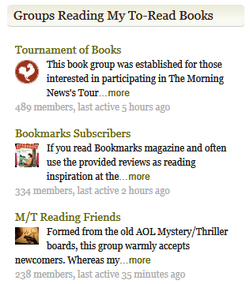 Goodreads groups
Now let's look at the Goodreads groups. There appear to be in the region of 90,000 groups on Goodreads, split into just about every possible category. Many groups are defined by genre, so whatever your reading taste you'll find like-minded people with whom to share books. There are also groups split geographically - I'm in one of the U.K. book groups - as well as ones for parents, ones devoted to specific authors, and groups that exist just for fun. Others are very specialised - check out the 'Tournament of Books' and 'Bookmarks Subscribers' ones in the picture. With 90, 000 groups on offer, you're sure to find some that suit you.
What happens when you join a group? Well, you can find and review books, browse the myriad of topics being talked about, join in the 'book of the month' reading discussions, and liaise with other people in the group on just about anything.
Groups are also a good way of exploring new genres. For example, I decided recently that I'd like to read more science fiction novels. I've been put off by some of the dry, dull ones that I've read in the past, so I joined one of the science fiction groups and asked for recommendations. I now have several possibilities on my 'to read' shelf, and so far they have been excellent. Newsletter, blogs, lists and other stuff
What else? Well, the Goodreads site has its own blog and email newsletter, two more excellent ways to discover new authors and books. Members can also set up their own blog on the site. This can be useful if someone doesn't want to maintain a Blogger or WordPress site, but just wants to post now and again about anything related to books. If you do have your own blog elsewhere, it's possible to sync it via RSS feed to your Goodreads one, so that posts appear automatically (there is a time delay of a day or so, though).
You can see from the picture of the Explore section that there's a host of other things you can do on Goodreads, although I've shown only a small selection of what's available there. For example, members can post events, such as book swaps and book club meetings, take part in quizzes and create lists in Listopia. These can be about absolutely anything; for example, when I was on Goodreads this morning, the site was featuring a list about the best books written about dragons. Not my sort of thing, but hey, somebody on Goodreads will no doubt love it! Really, the best way to see what's on offer is to dive in and explore the site - but allow yourself plenty of time! Be aware - it can become addictive. Goodreads Giveaways
Another great thing about Goodreads is the Giveaways. This is when an author makes available as a Giveaway hard copies of their books (sadly, not e-books, although it's rumoured this will soon change). There are hundreds of Giveaways available at any time, as Goodreads also has a thriving author community, of which I'm a member. You can search by popular authors, recently listed, Giveaways about to end, and so on.
Once you find a book you'd like to win, simply click to enter the competition, and at the end of the stipulated period, Goodreads randomly picks a winner.
I've now done several of these, and I've found them great for connecting to my readers. To sum up...
If you're not already a Goodreads member, I heartily encourage you to join so you can explore the wonderful world of books on the site. if you're already a member, hopefully I've been able to point out some features of which you might not have been aware. I look forward to connecting with you on Goodreads!
Subscribe to my blog and newsletter! And get a free Maggie James novel!
If you enjoy my blog, you can subscribe via the RSS feeds in the sidebar. Or, if you'd like to be kept informed about my future novels, enter your email address in the sign-up box, also in the sidebar.
For the foreseeable future, I'm offering a free copy of one of my novels, in e-book format, for those of you who sign up for my newsletter. You can find further details here.
Goodreads logos The wonderful world of GoodreadsAs somebody who has always been a prolific reader, I can't believe it's only been a year or so since I first discovered Goodreads (www.goodreads.com). Goodreads is now owned by Amazon, and I'm hopeful that in due course this will mean some changes will be made, as the user interface is clunky and old-fashioned. However, that is the only downside for me.
For anyone who loves books, both fiction and non-fiction, this website is truly amazing, and the largest of its kind. It is enormous – it took me a long (but enjoyable!) time to check out all the options available. Don't worry, you probably won't need most of them and of course everyone will use the site differently. I never bother with the quizzes and polls, but explore the virtual bookshelves and the groups all the time.
My shelf cloud So what exactly can you find on the Goodreads site?Well, once you've joined up and created your user profile, perhaps the best way to get started is to create some bookshelves. The you can add some books to them. Yes, that's right – instead of physical bookshelves, Goodreads uses virtual ones so you can organise your books. You can have as many shelves as you like, and name them in any way you want.
I arrange my shelves by genre, although Goodreads gives everyone shelves for 'currently reading', 'to read' and 'read. When I'm browsing the site and notice a book that I'd like to read, I simply click on the green 'want to read' button and Goodreads automatically adds the book to my 'to read' shelf. This means I don't have to remember all the wonderful books that I find, as Goodreads automatically lists them for me. Simple! It's quick and easy to move books between shelves, too.
Want to add in books you've already read? No problem! Simply use Goodreads' search function to find them. Then, if you wish, you can rate them using Goodreads' five-star system, and write a review of the book as well. Want to find new books to read? Again, no problem - Goodreads has several ways of presenting you with possibilities, once it's learned about your taste in books.
Get book recommendations from Goodreads Widgets and other fun thingsOn the home page, Goodreads provides me with a section for the book I'm currently reading, where I can update my reading status and make comments. All such updates appear in the feed that streams on the home page, so other Goodreads members who are my friends on the site can see what I'm reading and whether I'm enjoying it.
There are also some fun things for Goodreads readers to do with their shelves, such as prepare a shelf cloud (see mine in the picture above), view their reading statistics, and use widgets such as the Amazon bookmark. This is a toolbar add-on that allows readers to add books to their Goodreads shelves whilst surfing Amazon - very convenient! You can also connect your Goodreads profile with Facebook if you wish, so that book reviews appear on your Facebook feed.
Find and make friends on Goodreads Liaise with other readersI mentioned that other people can see what I'm reading – Goodreads is also a very sociable site, although you don't have to connect with other members if you don't wish to. Adding a friend is as easy as clicking on their profile and then the 'add friend' button. As with any other social media site, you can either approve or ignore friendship requests, and send messages to other members.
Another fun option is comparing what books you and your friends have on your shelves, with Goodreads delivering a Venn diagram to show how similar (or not) your tastes are. Send a book recommendation to your friends if you discover a title you think they'd love, and you'll doubtless receive lots in return. An excellent way to discover new books and authors! I have found many great titles from the recommendations sent to me by my Goodreads friends. And I love meeting new people on the site - if you'd like to connect with me on Goodreads, here is the link to my profile.
Goodreads groupsNow let's look at the Goodreads groups. There appear to be in the region of 90,000 groups on Goodreads, split into just about every possible category. Many groups are defined by genre, so whatever your reading taste you'll find like-minded people with whom to share books. There are also groups split geographically - I'm in one of the U.K. book groups - as well as ones for parents, ones devoted to specific authors, and groups that exist just for fun. Others are very specialised - check out the 'Tournament of Books' and 'Bookmarks Subscribers' ones in the picture. With 90, 000 groups on offer, you're sure to find some that suit you.
What happens when you join a group? Well, you can find and review books, browse the myriad of topics being talked about, join in the 'book of the month' reading discussions, and liaise with other people in the group on just about anything.
Groups are also a good way of exploring new genres. For example, I decided recently that I'd like to read more science fiction novels. I've been put off by some of the dry, dull ones that I've read in the past, so I joined one of the science fiction groups and asked for recommendations. I now have several possibilities on my 'to read' shelf, and so far they have been excellent.
Newsletter, blogs, lists and other stuffWhat else? Well, the Goodreads site has its own blog and email newsletter, two more excellent ways to discover new authors and books. Members can also set up their own blog on the site. This can be useful if someone doesn't want to maintain a Blogger or WordPress site, but just wants to post now and again about anything related to books. If you do have your own blog elsewhere, it's possible to sync it via RSS feed to your Goodreads one, so that posts appear automatically (there is a time delay of a day or so, though).
You can see from the picture of the Explore section that there's a host of other things you can do on Goodreads, although I've shown only a small selection of what's available there. For example, members can post events, such as book swaps and book club meetings, take part in quizzes and create lists in Listopia. These can be about absolutely anything; for example, when I was on Goodreads this morning, the site was featuring a list about the best books written about dragons. Not my sort of thing, but hey, somebody on Goodreads will no doubt love it! Really, the best way to see what's on offer is to dive in and explore the site - but allow yourself plenty of time! Be aware - it can become addictive.
Goodreads GiveawaysAnother great thing about Goodreads is the Giveaways. This is when an author makes available as a Giveaway hard copies of their books (sadly, not e-books, although it's rumoured this will soon change). There are hundreds of Giveaways available at any time, as Goodreads also has a thriving author community, of which I'm a member. You can search by popular authors, recently listed, Giveaways about to end, and so on.
Once you find a book you'd like to win, simply click to enter the competition, and at the end of the stipulated period, Goodreads randomly picks a winner.
I've now done several of these, and I've found them great for connecting to my readers. To sum up...
If you're not already a Goodreads member, I heartily encourage you to join so you can explore the wonderful world of books on the site. if you're already a member, hopefully I've been able to point out some features of which you might not have been aware. I look forward to connecting with you on Goodreads!
Subscribe to my blog and newsletter! And get a free Maggie James novel!
If you enjoy my blog, you can subscribe via the RSS feeds in the sidebar. Or, if you'd like to be kept informed about my future novels, enter your email address in the sign-up box, also in the sidebar.
For the foreseeable future, I'm offering a free copy of one of my novels, in e-book format, for those of you who sign up for my newsletter. You can find further details here.
January 17, 2014
Review of '11.22.63' by Stephen King
By Maggie James
 Cover of '11.22.63', U.K. edition Overview of 11.22.63
Stephen King is often referred to as "the master storyteller" and for me this is never been more evident than in his epic novel 11.22.63. An lengthy 734 pages long, the book examines the "butterfly effect” that results when one man tries to change the past.
To quote from the back narrative:
‘In 2011, Jake Epping, an English teacher from Lisbon Falls, Maine, sets out on an insane – and insanely possible – mission to prevent the Kennedy assassination. Leaving behind a world of computers and mobile phones, he goes back to a time of big American cars and diners, of Lindy Hopping, the sound of Elvis and the taste of root beer. In this haunting world, Jake falls in love with Sadie, a beautiful high school librarian. And, as the ominous date 11.22.63 approaches, he encounters a troubled loner named Lee Harvey Oswald.’
Into his portrait of the Kennedy era, King weaves the love story of Jake, now known as George, and Sadie, one that never becomes overly treacly but instead is detailed with humour and realism. In 11.22.63, Jake travels the classic hero’s journey, from a jaded high school teacher, bruised from his divorce from his alcoholic wife, to a man who discovers the love of his life and the courage to do what hurts in order to put right the problems he’s caused.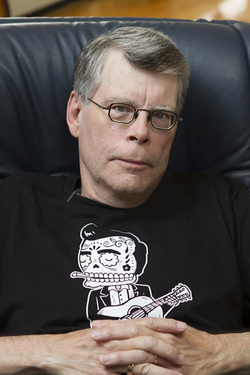 Author Stephen King
Rich details of 1950s and 60s American life
Author Stephen King
Rich details of 1950s and 60s American life
King is a master at evoking small-town America from the 50s and 60s. We are treated to a rich portrayal of a past life; from Jake's first taste of homemade root beer, through the music and dances of the era (Glenn Miller’s ‘In The Mood’, Lindy hopping), to the cars (Jake's beloved Sunliner). In contrast to this nostalgic idyll, King also gives us the downside - prevalent domestic violence, racial prejudice, the fug of ever-present cigarette smoke. Idyll and anti-idyll are set against the backdrop of the Cold War and the bogeyman figure of Nikita Khrushchev. Besides the darkness, King provides plenty of lighter moments in the book – absurdly quaint slogans (Drink Cheer-Up Coffee!) and sidesteps such as the fun of George teaching Ritchie and Bevvie how to Lindy Hop. The humour is more evident in the first half of the novel, before the narrative takes a dark downward twist in the months leading up to Lee Harvey Oswald's attack on Kennedy.
The richness of detail is amazing, like tracing the path of a fractal. The blood and sweat of King’s depiction of the prize fight between Case and Tiger. The shat-HOOSH sound of the machines at Worumbo Mills and Weaving. The taste of the root beer and ribs. At times, the narrative is so evocative I felt I was deep inside the novel, embedded in the heart of 1960s America.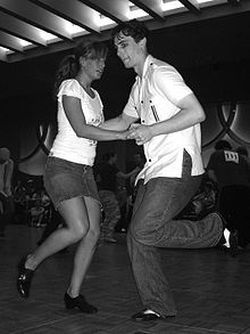 Doing the Lindy Hop Remember the butterfly effect...
Ah, let's not forget we're not supposed to tinker with time. What about the butterfly effect? King provides plenty of hints about the impact George's presence in the past is having, and it's not always a beneficial one. Take what happens to Vince Knowles; the changing colour of the Yellow Card Man's card; the subtle differences in the conversations George has every time he returns to September 9, 1958. This is no Groundhog Day – instead of opportunities to improve his situation, King provides George with more and more chances to screw up the future by messing with the past.
As Al Templeton tells him: "The past is obdurate. Doesn't want to be changed". It’s no coincidence that the entrance to the rabbit hole into 1950s Lisbon Falls is chained off, posing as a broken sewer pipe. A metaphor for George’s sullying of the world’s future by meddling with forces he doesn’t understand.
A salutary lesson for all of us (not that any of us are likely to go time travelling any time soon). An example of George's beloved Sunliner High tension, moving towards a perfect ending
Throughout the narrative, the foreboding figure of the Yellow Card Man, a foul-mouthed wino, stands guard over the mysterious portal from Jake’s present day life into 1950s America. It is late in the novel before the Yellow Card Man’s secret is revealed, along with his instrumental role in safeguarding the future of the world.
The tension mounts as the past becomes ever more obdurate in its attempts to thwart George’s interference in the Kennedy assassination. Will he succeed or won’t he?
As we discover the answer, King sweeps us along to the novel’s ending, which for me was perfect. Very moving.
Why genre fiction is overlooked when it comes to the major literary prizes, when it can produce novels of this calibre, is beyond me. (More of that in a future blog post). I highly recommend this book. Find out more about Stephen King
The official website for Stephen King is www.stephenking.com.
Purchase 11.22.63 here
U.K. readers can purchase 11.22.63 from Amazon by clicking the link on the left.
Subscribe to my blog and newsletter!
If you enjoy my blog, you can subscribe via the RSS feeds in the sidebar. Or, if you'd like to be kept informed about my future novels, enter your email address in the sign-up box, also in the sidebar.
Cover of '11.22.63', U.K. edition Overview of 11.22.63Stephen King is often referred to as "the master storyteller" and for me this is never been more evident than in his epic novel 11.22.63. An lengthy 734 pages long, the book examines the "butterfly effect” that results when one man tries to change the past.
To quote from the back narrative:
‘In 2011, Jake Epping, an English teacher from Lisbon Falls, Maine, sets out on an insane – and insanely possible – mission to prevent the Kennedy assassination. Leaving behind a world of computers and mobile phones, he goes back to a time of big American cars and diners, of Lindy Hopping, the sound of Elvis and the taste of root beer. In this haunting world, Jake falls in love with Sadie, a beautiful high school librarian. And, as the ominous date 11.22.63 approaches, he encounters a troubled loner named Lee Harvey Oswald.’
Into his portrait of the Kennedy era, King weaves the love story of Jake, now known as George, and Sadie, one that never becomes overly treacly but instead is detailed with humour and realism. In 11.22.63, Jake travels the classic hero’s journey, from a jaded high school teacher, bruised from his divorce from his alcoholic wife, to a man who discovers the love of his life and the courage to do what hurts in order to put right the problems he’s caused.
Author Stephen King
Rich details of 1950s and 60s American life
King is a master at evoking small-town America from the 50s and 60s. We are treated to a rich portrayal of a past life; from Jake's first taste of homemade root beer, through the music and dances of the era (Glenn Miller’s ‘In The Mood’, Lindy hopping), to the cars (Jake's beloved Sunliner). In contrast to this nostalgic idyll, King also gives us the downside - prevalent domestic violence, racial prejudice, the fug of ever-present cigarette smoke. Idyll and anti-idyll are set against the backdrop of the Cold War and the bogeyman figure of Nikita Khrushchev. Besides the darkness, King provides plenty of lighter moments in the book – absurdly quaint slogans (Drink Cheer-Up Coffee!) and sidesteps such as the fun of George teaching Ritchie and Bevvie how to Lindy Hop. The humour is more evident in the first half of the novel, before the narrative takes a dark downward twist in the months leading up to Lee Harvey Oswald's attack on Kennedy.
The richness of detail is amazing, like tracing the path of a fractal. The blood and sweat of King’s depiction of the prize fight between Case and Tiger. The shat-HOOSH sound of the machines at Worumbo Mills and Weaving. The taste of the root beer and ribs. At times, the narrative is so evocative I felt I was deep inside the novel, embedded in the heart of 1960s America.
Doing the Lindy Hop Remember the butterfly effect...Ah, let's not forget we're not supposed to tinker with time. What about the butterfly effect? King provides plenty of hints about the impact George's presence in the past is having, and it's not always a beneficial one. Take what happens to Vince Knowles; the changing colour of the Yellow Card Man's card; the subtle differences in the conversations George has every time he returns to September 9, 1958. This is no Groundhog Day – instead of opportunities to improve his situation, King provides George with more and more chances to screw up the future by messing with the past.
As Al Templeton tells him: "The past is obdurate. Doesn't want to be changed". It’s no coincidence that the entrance to the rabbit hole into 1950s Lisbon Falls is chained off, posing as a broken sewer pipe. A metaphor for George’s sullying of the world’s future by meddling with forces he doesn’t understand.
A salutary lesson for all of us (not that any of us are likely to go time travelling any time soon).
An example of George's beloved Sunliner High tension, moving towards a perfect endingThroughout the narrative, the foreboding figure of the Yellow Card Man, a foul-mouthed wino, stands guard over the mysterious portal from Jake’s present day life into 1950s America. It is late in the novel before the Yellow Card Man’s secret is revealed, along with his instrumental role in safeguarding the future of the world.
The tension mounts as the past becomes ever more obdurate in its attempts to thwart George’s interference in the Kennedy assassination. Will he succeed or won’t he?
As we discover the answer, King sweeps us along to the novel’s ending, which for me was perfect. Very moving.
Why genre fiction is overlooked when it comes to the major literary prizes, when it can produce novels of this calibre, is beyond me. (More of that in a future blog post). I highly recommend this book. Find out more about Stephen King
The official website for Stephen King is www.stephenking.com.
Purchase 11.22.63 here
U.K. readers can purchase 11.22.63 from Amazon by clicking the link on the left.
Subscribe to my blog and newsletter!
If you enjoy my blog, you can subscribe via the RSS feeds in the sidebar. Or, if you'd like to be kept informed about my future novels, enter your email address in the sign-up box, also in the sidebar.
January 14, 2014
Taste the Sugar Cane - Interview with E.E.Fry
By Maggie James
 The beautiful cover of 'Sugar Cane' In the second of my series of author interviews, I talk with author E.E. Fry, who wrote the wonderful novel Sugar Cane, set in the beautiful island of Mauritius. Sugar Cane has been described as a thriller, a murder mystery, a love story and a travelogue.
To quote Benjamin Zephaniah, an English poet included in The Times list of Britain's top 50 post-war writers:
"I read this book in one sitting, something I haven't done since I fell in love with the girl in the sweet shop. This is a page-turner... I loved the mystery, I loved the characters, I loved the setting, I loved the writing, I loved the sugar cane."
A ringing endorsement from a man who knows something about writing!
So what is Sugar Cane about? It starts when Beth Stephens's life is turned upside down after her father, George Labelle, passes away, leading her to travel to Mauritius to spread his ashes. Set between England and Mauritius during the sixties to the present day, Sugar Cane follows the stories of Beth and George, with father and daughter discovering more than they bargained for. The book takes you on a journey to a faraway place, examining the effects of slavery, Empire and indentured labour.
So who is E.E. Fry?
E. E. Fry grew up in Hampshire, the daughter of an English policeman and a Mauritian nurse. She wrote Sugar Cane while working in a bed shop that had no customers. She lives in Bristol and walks a lot with her husband and dog.
I spend an evening talking with her about her writing and how Sugar Cane came into being.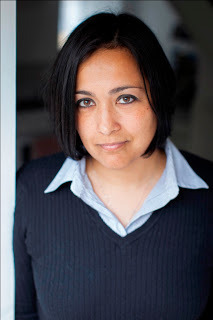 Author E.E.Fry
Tell me about the importance of writing to you.
Author E.E.Fry
Tell me about the importance of writing to you.
With writing, when you discover you have a talent, you're bound to feel at your happiest when you use it. With me, any form of writing is good, whether it's poetry, writing letters, whatever.
And reading? Surely fiction writers are also keen readers.
My mother was an avid reader and I've followed in her footsteps. She was Mauritian and reading was deeming socially unacceptable in her culture when she was growing up. She'd hide in a wardrobe with a book in order to read, can you believe that? As a result, she decided her children would read as much and as widely as possible, without censorship.
When did you start writing?
Writing has been important in my life from a very young age. I was a precocious child, starting a school newsletter when aged seven. I wrote short stories and always had a notebook at the ready.
How did the idea for Sugar Cane come about?
I had the idea in my head for years before I actually wrote the book. Through my mother, I have a strong connection with Mauritius. I go there every three to four years with my husband. All my novels will be based there; I can't conceive of anything else. Mauritius, such a beautiful island
When did you write the novel?
Mauritius, such a beautiful island
When did you write the novel?
I finished writing Sugar Cane in 2006. I sent it off to an agent in London, who wanted to see a second book, which I didn't have, so that fizzled out. Things remained dormant with the novel for a while, although I continued to write short stories in the meantime. In 2011, I sent it out to some more agents and ended up securing a publishing deal. I wasn't happy with the terms, though, so I turned it down and decided to self-publish Sugar Cane.
It seems more and more authors are spurning traditional publishing.
I see self-publishing as a tool. With Internet use now everywhere, and with Amazon and print-on-demand books now commonplace, everything is far more accessible than it ever was. With traditional publishing, you surrender control over your books and receive very little percentage-wise in terms of royalties, whilst still having to do a lot of your own promotion. Not so with the self-published model. Amazon pay 70% royalties, the author retains full control over their work, and the time to get a book into the marketplace is hours, rather than months or years.
I can't disagree with you there! Self-publishing has clearly worked well for you.
Yes. It's not necessarily about being famous or selling a million copies; it's about doing what pleases you.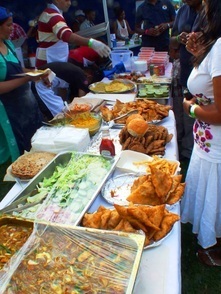 Mauritian street food - delicious! When I read Sugar Cane, I could almost taste and smell the rich Mauritian life you invoke. Especially the street food!
Everyone loves food in Mauritius. It's a cultural thing; it's how Mauritians define themselves. Including me - I'm a total foodie!
The novel uses Creole in parts of the narrative. Are you a Creole speaker?
I can't speak Creole, but I can understand it perfectly. I needed to comprehend what my mother was saying when she was annoyed with me! I was brought up bilingual, speaking French and English. Everyone who's educated in Mauritius speaks French.
Tell us about your second novel, The Earring Tree. I gather it's not about jewellery?
Trochetia boutoniana (known as boucle d'oreille - the Earring Tree), is a flower so rare that it can only be found on the very top of one mountain on Mauritius, the same one that witnessed a terrible tragedy in the history of the British Empire and slavery. Now the trochetia boutoniana wants to tell that story... Trochetia Boutoniana
Going to give us any hints?
Trochetia Boutoniana
Going to give us any hints?
The Earring Tree is a courtroom drama based in Mauritius during the years 1830-1835. It centres around a real case when a freed slave's children were stolen back into plantation slavery when their parent suddenly died. It's hard to say more without spoiling the plot!
Lastly, please introduce us to your muse!
Of course! (At this point in our interview, a large yellow Labrador thumps his tail enthusiastically on the floor). Meet Sandy! He likes to think he's the muse for my writing, and who am I to disagree?
I wouldn't either - he's a gorgeous boy! Thank you for letting me interview you. Purchase Sugar Cane!
U.K. readers can buy Sugar Cane from Amazon by clicking the link to the left.
Find out more about E.E. Fry...
The website for E.E. Fry can be found here. You can discover more about Mauritius, read reviews of the novel, and find out more about Sandy. He has his own blog!
Subscribe to my blog and newsletter!
If you enjoy my blog, you can subscribe via the RSS feeds in the sidebar. Or, if you'd like to be kept informed about my future novels, enter your email address in the sign-up box, also in the sidebar.
The beautiful cover of 'Sugar Cane' In the second of my series of author interviews, I talk with author E.E. Fry, who wrote the wonderful novel Sugar Cane, set in the beautiful island of Mauritius. Sugar Cane has been described as a thriller, a murder mystery, a love story and a travelogue. To quote Benjamin Zephaniah, an English poet included in The Times list of Britain's top 50 post-war writers:
"I read this book in one sitting, something I haven't done since I fell in love with the girl in the sweet shop. This is a page-turner... I loved the mystery, I loved the characters, I loved the setting, I loved the writing, I loved the sugar cane."
A ringing endorsement from a man who knows something about writing!
So what is Sugar Cane about? It starts when Beth Stephens's life is turned upside down after her father, George Labelle, passes away, leading her to travel to Mauritius to spread his ashes. Set between England and Mauritius during the sixties to the present day, Sugar Cane follows the stories of Beth and George, with father and daughter discovering more than they bargained for. The book takes you on a journey to a faraway place, examining the effects of slavery, Empire and indentured labour.
So who is E.E. Fry?
E. E. Fry grew up in Hampshire, the daughter of an English policeman and a Mauritian nurse. She wrote Sugar Cane while working in a bed shop that had no customers. She lives in Bristol and walks a lot with her husband and dog.
I spend an evening talking with her about her writing and how Sugar Cane came into being.
Author E.E.Fry
Tell me about the importance of writing to you.
With writing, when you discover you have a talent, you're bound to feel at your happiest when you use it. With me, any form of writing is good, whether it's poetry, writing letters, whatever.
And reading? Surely fiction writers are also keen readers.
My mother was an avid reader and I've followed in her footsteps. She was Mauritian and reading was deeming socially unacceptable in her culture when she was growing up. She'd hide in a wardrobe with a book in order to read, can you believe that? As a result, she decided her children would read as much and as widely as possible, without censorship.
When did you start writing?
Writing has been important in my life from a very young age. I was a precocious child, starting a school newsletter when aged seven. I wrote short stories and always had a notebook at the ready.
How did the idea for Sugar Cane come about?
I had the idea in my head for years before I actually wrote the book. Through my mother, I have a strong connection with Mauritius. I go there every three to four years with my husband. All my novels will be based there; I can't conceive of anything else.
Mauritius, such a beautiful island
When did you write the novel?
I finished writing Sugar Cane in 2006. I sent it off to an agent in London, who wanted to see a second book, which I didn't have, so that fizzled out. Things remained dormant with the novel for a while, although I continued to write short stories in the meantime. In 2011, I sent it out to some more agents and ended up securing a publishing deal. I wasn't happy with the terms, though, so I turned it down and decided to self-publish Sugar Cane.
It seems more and more authors are spurning traditional publishing.
I see self-publishing as a tool. With Internet use now everywhere, and with Amazon and print-on-demand books now commonplace, everything is far more accessible than it ever was. With traditional publishing, you surrender control over your books and receive very little percentage-wise in terms of royalties, whilst still having to do a lot of your own promotion. Not so with the self-published model. Amazon pay 70% royalties, the author retains full control over their work, and the time to get a book into the marketplace is hours, rather than months or years.
I can't disagree with you there! Self-publishing has clearly worked well for you.
Yes. It's not necessarily about being famous or selling a million copies; it's about doing what pleases you.
Mauritian street food - delicious! When I read Sugar Cane, I could almost taste and smell the rich Mauritian life you invoke. Especially the street food!Everyone loves food in Mauritius. It's a cultural thing; it's how Mauritians define themselves. Including me - I'm a total foodie!
The novel uses Creole in parts of the narrative. Are you a Creole speaker?
I can't speak Creole, but I can understand it perfectly. I needed to comprehend what my mother was saying when she was annoyed with me! I was brought up bilingual, speaking French and English. Everyone who's educated in Mauritius speaks French.
Tell us about your second novel, The Earring Tree. I gather it's not about jewellery?
Trochetia boutoniana (known as boucle d'oreille - the Earring Tree), is a flower so rare that it can only be found on the very top of one mountain on Mauritius, the same one that witnessed a terrible tragedy in the history of the British Empire and slavery. Now the trochetia boutoniana wants to tell that story...
Trochetia Boutoniana
Going to give us any hints?
The Earring Tree is a courtroom drama based in Mauritius during the years 1830-1835. It centres around a real case when a freed slave's children were stolen back into plantation slavery when their parent suddenly died. It's hard to say more without spoiling the plot!
Lastly, please introduce us to your muse!
Of course! (At this point in our interview, a large yellow Labrador thumps his tail enthusiastically on the floor). Meet Sandy! He likes to think he's the muse for my writing, and who am I to disagree?
I wouldn't either - he's a gorgeous boy! Thank you for letting me interview you. Purchase Sugar Cane!
U.K. readers can buy Sugar Cane from Amazon by clicking the link to the left.
Find out more about E.E. Fry...
The website for E.E. Fry can be found here. You can discover more about Mauritius, read reviews of the novel, and find out more about Sandy. He has his own blog!
Subscribe to my blog and newsletter!
If you enjoy my blog, you can subscribe via the RSS feeds in the sidebar. Or, if you'd like to be kept informed about my future novels, enter your email address in the sign-up box, also in the sidebar.
January 9, 2014
'The White Room' - A Dark, Gritty, Yet Redemptive Novel
By Maggie James
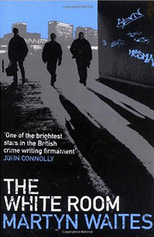 A novel of violence and suffering...
The White Room by Martyn Waites is one of the best, as well as one of the grittiest, novels I've read in a long time. In it, Waites fuses a fictional account of life in Newcastle with the real-life case of child-killer Mary Bell. Be warned – this novel is not for the fainthearted. From its first chapter, set in a slaughterhouse, the narrative examines child abuse, prostitution, brutal anal sex, gang violence and murder, with a few psychopaths thrown in for good measure. Throughout the bulk of the novel, the characters endure a relentless cycle of damage, often perpetuated from generation to generation, as in the case of Monica and Mae Blacklock. Furthermore, Martyn Waites avoids the fairy tale scenario of only making his bad characters – and there are plenty of those - suffer. In The White Room, nobody is exempt from the torment that Waites inflicts on them; the characters who are essentially decent people – Sharon, Jack, Bert, Joanne – also endure more than their fair share of death and sorrow. But also one of redemption.
The ending, therefore, impacts like a bolt out of the slaughterhouse stun gun from the first chapter. Initially, it seems a little unreal – the soft-focus emphasis on what the future holds for Mae Blacklock, the character based on Mary Bell. After so much suffering and violence, one way to end the novel would have been to abandon all idea of hope, as George Orwell did in ‘1984’. However, Martyn Waites doesn't take this approach. Instead, he offers us a more optimistic alternative. Hence the title of the novel - The White Room. An echo from Mae Blacklock’s childhood, a white room complete with an image of Jesus on the cross, simultaneously portraying hope and suffering. One that offers the reader more optimistic possibilities after the raw brutality of the rest of the novel. After all, if a character as fundamentally damaged as Mae Blacklock can aspire to a better future, so can we all. Martyn Waites himself says ‘It's a dark book but, I think, not without a redemptive ending. Because there has to be redemption. Otherwise, what's the point?’
The White Room may shock you. It may horrify you. Or its implicit message may inspire you. Whatever your reaction, I'd be interested to hear your views. Post a comment for me! More about the author...
Martyn is also the author of 'The Woman in Black: Angel of Death' as well as the Joe Donovan and Stephen Larkin series of novels. You can find out more at www.martynwaites.com.
To purchase 'The White Room':
Click on the Amazon link on the left (for Amazon UK users).
Subscribe to my blog and newsletter!
If you enjoy my blog, you can subscribe via the RSS feeds in the sidebar. Or, if you'd like to be kept informed about my future novels, enter your email address in the sign-up box, also in the sidebar.
A novel of violence and suffering...The White Room by Martyn Waites is one of the best, as well as one of the grittiest, novels I've read in a long time. In it, Waites fuses a fictional account of life in Newcastle with the real-life case of child-killer Mary Bell. Be warned – this novel is not for the fainthearted. From its first chapter, set in a slaughterhouse, the narrative examines child abuse, prostitution, brutal anal sex, gang violence and murder, with a few psychopaths thrown in for good measure. Throughout the bulk of the novel, the characters endure a relentless cycle of damage, often perpetuated from generation to generation, as in the case of Monica and Mae Blacklock. Furthermore, Martyn Waites avoids the fairy tale scenario of only making his bad characters – and there are plenty of those - suffer. In The White Room, nobody is exempt from the torment that Waites inflicts on them; the characters who are essentially decent people – Sharon, Jack, Bert, Joanne – also endure more than their fair share of death and sorrow.
But also one of redemption.The ending, therefore, impacts like a bolt out of the slaughterhouse stun gun from the first chapter. Initially, it seems a little unreal – the soft-focus emphasis on what the future holds for Mae Blacklock, the character based on Mary Bell. After so much suffering and violence, one way to end the novel would have been to abandon all idea of hope, as George Orwell did in ‘1984’. However, Martyn Waites doesn't take this approach. Instead, he offers us a more optimistic alternative. Hence the title of the novel - The White Room. An echo from Mae Blacklock’s childhood, a white room complete with an image of Jesus on the cross, simultaneously portraying hope and suffering. One that offers the reader more optimistic possibilities after the raw brutality of the rest of the novel. After all, if a character as fundamentally damaged as Mae Blacklock can aspire to a better future, so can we all. Martyn Waites himself says ‘It's a dark book but, I think, not without a redemptive ending. Because there has to be redemption. Otherwise, what's the point?’
The White Room may shock you. It may horrify you. Or its implicit message may inspire you. Whatever your reaction, I'd be interested to hear your views. Post a comment for me! More about the author...
Martyn is also the author of 'The Woman in Black: Angel of Death' as well as the Joe Donovan and Stephen Larkin series of novels. You can find out more at www.martynwaites.com.
To purchase 'The White Room':
Click on the Amazon link on the left (for Amazon UK users).
Subscribe to my blog and newsletter!
If you enjoy my blog, you can subscribe via the RSS feeds in the sidebar. Or, if you'd like to be kept informed about my future novels, enter your email address in the sign-up box, also in the sidebar.
December 30, 2013
Interview with Iain Rob Wright
By Maggie James
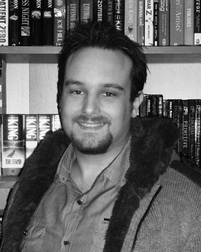 In this blog, I’ll be doing regular interviews with authors and other people involved in the wonderful world of fiction. I’m delighted to start with the horror and thriller author Iain Rob Wright. Iain was born in 1984 and lives in Redditch, a small town in the West Midlands, UK. He is the author of several novels, including the apocalyptic, critically acclaimed The Final Winter and the deeply disturbing thriller ASBO. Iain is also a member of The Horror Writers Association.
So let's start! Ian, tell us a little about yourself.
Two and a half years ago, I was a phones salesman. Due to being a bit of an emotional wreck during my teen and young adult years, I had dropped out of the Army, University, and pretty much out of life. The one thing and only thing I had going for me was the woman who is now my wife. Her support and belief in me led to her pushing me into doing what I’d always dreamed of. She made me start writing in my spare time more and more, and most importantly she made me stay the course and actually finish a novel in full instead of constantly giving up halfway.
Now, two and a bit years later, I have six novels out and am earning more than twice what I did working nine to five in a job I hated. Self-publishing very literally changed my life – it made me richer, happier, and less stressed (when considering how working in sales used to make me feel).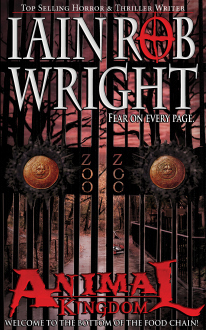 Have you always wanted to be an author? How did your interest in writing originate?
I would write awful stories as a kid that were pretty much just blatant rip offs of movies, but I enjoyed the act of writing and moved on to poetry as a teen. I’ve been an avid reader and movie watcher my entire life and really wanted to tell stories that moved people the way I had been moved.
What have been the greatest problems you've faced in gaining your success?
It’s difficult riding on the high that I am right now, because I want to plan ahead based on my current fortunes, but the way this business is, next year I could be a failure and having to go get a job. The hardest part of this job is not knowing what the future holds. There’s no contract of employment.
 Who or what has helped you the most on your writing journey?
The author Joe Konrath has been instrumental in my success. When I started out, I followed the publishing/writing advice on his blog about pretty much everything. Everything he advised worked for me and I have now reached a point where I am trying new things out for myself and passing on that advice to the new guys coming up.
I agree. I’ve found his blog immensely helpful and inspirational too.
I think if established guys all do their bit to help the newer guys get better then everyone benefits; and Joe Konrath is the absolute embodiment of that philosophy.
Who's your favourite author and what is it that resonates with you about their work?
I don’t really have one as it changes so much. I’m currently enjoying Matthew O’Reilly’s work, but in the past, my favourite authors have been Jeff Strand, Jack Kilborn, Brian Keene, Stephen King, James Herbert, Richard Laymon, J F Gonzalez, Kim Paffenroth, Scott Sigler, Max Brooks, Blake Crouch, Terry Pratchett… The list goes on and on. Tell us more about your collaboration with Joe Konrath on the novel ‘Straight Up’. How did that come about?
Joe publicly announced that he was looking for collaborators and wanted short stories to be the test for authors to pass in order to work with him on longer projects.
I wrote STRAIGHT UP specifically to work with him but also used it as an introduction for one of my own upcoming characters, Sarah Stone. I will be writing a full length novel featuring her next year. Think 24 meets House.
I have also just finished a full length novel that Joe and I have been working on, which is a sequel to both Joe’s ORIGIN and my own FINAL WINTER. It’s loads of fun.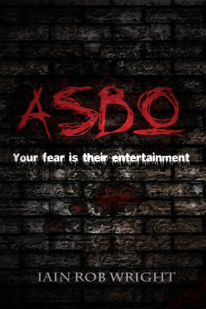 Will you write in other genres besides horror/thriller in the future?
Yes, I am about to switch over to techno-thrillers/terrorism books (featuring Sarah Stone) just for a short while, but I imagine horror is where my career will lie for the most part.
Tell us more about the thriller series you have planned, featuring your character Sarah Stone.
She is a broken woman with a painful background. She is also an expert on Middle Eastern terrorist cells, which is why the Major Crimes Unit tracks her down and asks for her help. The only problem is that she’s a complete asshole and doesn’t want to help anybody. Eventually she gets roped in and starts kicking butts and taking names. She is a lot like Jack Bauer but with a very wobbly moral compass. She won’t think twice about killing a bad guy. Eventually all of the hate and hostility inside her will begin to take its toll.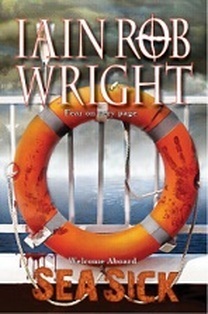 Sounds great! While you are writing, do you ever feel as if you are one of the characters?
Not really, but sometimes I do act out scenes at my desk to get the emotion right.
What inspired you to write your first book?
Not wanting to work in a phone shop anymore!
How do you come up with the titles for your books?
Through hours of sitting there trying to think of one. I find naming books really hard.
I sympathise with you on that one! Not easy, is it?
Sometimes I have the title before I even start, but sometimes I am wracking my brains right up to the day it goes live.
What books have most influenced your life most?
Erm…The Rising, World War Z, The Rats, Under The Dome, Contagion. Only in that they made me want to write horror.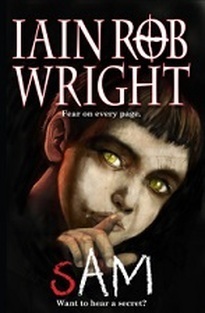 And which person?
Joe Konrath, Stephen King, and Joss Whedon.
If you had to choose, which writer would you consider a mentor?
Need you ask? Joe Konrath.
Is there anything you find particularly challenging in your writing?
Just trying to improve with every book. I know I’m not perfect, but I’m trying really hard to be.
Lastly, how do you see the future for self-published authors?
Bright! What still makes me sad, though, is that there are many decent, talented authors out there who have not had the same success. I want to see more of them stuff their unfulfilling day jobs and live their own dreams – because, right now, it is more possible than ever.
Thank you, Iain, for agreeing to appear in my blog.
You can find out more about Iain and his novels from his website, www.iainrobwright.com; on Facebook or on Twitter: @iainrobwright. Iain's novels are all available from Amazon.
Joe Konrath's blog can be found here.
Coming next in my series of author interviews...
I'll be talking to Emma Fry, author of the Mauritian mystery novel Sugar Cane.
In this blog, I’ll be doing regular interviews with authors and other people involved in the wonderful world of fiction. I’m delighted to start with the horror and thriller author Iain Rob Wright. Iain was born in 1984 and lives in Redditch, a small town in the West Midlands, UK. He is the author of several novels, including the apocalyptic, critically acclaimed The Final Winter and the deeply disturbing thriller ASBO. Iain is also a member of The Horror Writers Association.So let's start! Ian, tell us a little about yourself.
Two and a half years ago, I was a phones salesman. Due to being a bit of an emotional wreck during my teen and young adult years, I had dropped out of the Army, University, and pretty much out of life. The one thing and only thing I had going for me was the woman who is now my wife. Her support and belief in me led to her pushing me into doing what I’d always dreamed of. She made me start writing in my spare time more and more, and most importantly she made me stay the course and actually finish a novel in full instead of constantly giving up halfway.
Now, two and a bit years later, I have six novels out and am earning more than twice what I did working nine to five in a job I hated. Self-publishing very literally changed my life – it made me richer, happier, and less stressed (when considering how working in sales used to make me feel).
Have you always wanted to be an author? How did your interest in writing originate?
I would write awful stories as a kid that were pretty much just blatant rip offs of movies, but I enjoyed the act of writing and moved on to poetry as a teen. I’ve been an avid reader and movie watcher my entire life and really wanted to tell stories that moved people the way I had been moved.
What have been the greatest problems you've faced in gaining your success?
It’s difficult riding on the high that I am right now, because I want to plan ahead based on my current fortunes, but the way this business is, next year I could be a failure and having to go get a job. The hardest part of this job is not knowing what the future holds. There’s no contract of employment.
Who or what has helped you the most on your writing journey?The author Joe Konrath has been instrumental in my success. When I started out, I followed the publishing/writing advice on his blog about pretty much everything. Everything he advised worked for me and I have now reached a point where I am trying new things out for myself and passing on that advice to the new guys coming up.
I agree. I’ve found his blog immensely helpful and inspirational too.
I think if established guys all do their bit to help the newer guys get better then everyone benefits; and Joe Konrath is the absolute embodiment of that philosophy.
Who's your favourite author and what is it that resonates with you about their work?
I don’t really have one as it changes so much. I’m currently enjoying Matthew O’Reilly’s work, but in the past, my favourite authors have been Jeff Strand, Jack Kilborn, Brian Keene, Stephen King, James Herbert, Richard Laymon, J F Gonzalez, Kim Paffenroth, Scott Sigler, Max Brooks, Blake Crouch, Terry Pratchett… The list goes on and on.
Tell us more about your collaboration with Joe Konrath on the novel ‘Straight Up’. How did that come about?Joe publicly announced that he was looking for collaborators and wanted short stories to be the test for authors to pass in order to work with him on longer projects.
I wrote STRAIGHT UP specifically to work with him but also used it as an introduction for one of my own upcoming characters, Sarah Stone. I will be writing a full length novel featuring her next year. Think 24 meets House.
I have also just finished a full length novel that Joe and I have been working on, which is a sequel to both Joe’s ORIGIN and my own FINAL WINTER. It’s loads of fun.
Will you write in other genres besides horror/thriller in the future?Yes, I am about to switch over to techno-thrillers/terrorism books (featuring Sarah Stone) just for a short while, but I imagine horror is where my career will lie for the most part.
Tell us more about the thriller series you have planned, featuring your character Sarah Stone.
She is a broken woman with a painful background. She is also an expert on Middle Eastern terrorist cells, which is why the Major Crimes Unit tracks her down and asks for her help. The only problem is that she’s a complete asshole and doesn’t want to help anybody. Eventually she gets roped in and starts kicking butts and taking names. She is a lot like Jack Bauer but with a very wobbly moral compass. She won’t think twice about killing a bad guy. Eventually all of the hate and hostility inside her will begin to take its toll.
Sounds great! While you are writing, do you ever feel as if you are one of the characters?Not really, but sometimes I do act out scenes at my desk to get the emotion right.
What inspired you to write your first book?
Not wanting to work in a phone shop anymore!
How do you come up with the titles for your books?
Through hours of sitting there trying to think of one. I find naming books really hard.
I sympathise with you on that one! Not easy, is it?
Sometimes I have the title before I even start, but sometimes I am wracking my brains right up to the day it goes live.
What books have most influenced your life most?
Erm…The Rising, World War Z, The Rats, Under The Dome, Contagion. Only in that they made me want to write horror.
And which person?Joe Konrath, Stephen King, and Joss Whedon.
If you had to choose, which writer would you consider a mentor?
Need you ask? Joe Konrath.
Is there anything you find particularly challenging in your writing?
Just trying to improve with every book. I know I’m not perfect, but I’m trying really hard to be.
Lastly, how do you see the future for self-published authors?
Bright! What still makes me sad, though, is that there are many decent, talented authors out there who have not had the same success. I want to see more of them stuff their unfulfilling day jobs and live their own dreams – because, right now, it is more possible than ever.
Thank you, Iain, for agreeing to appear in my blog.
You can find out more about Iain and his novels from his website, www.iainrobwright.com; on Facebook or on Twitter: @iainrobwright. Iain's novels are all available from Amazon.
Joe Konrath's blog can be found here.
Coming next in my series of author interviews...
I'll be talking to Emma Fry, author of the Mauritian mystery novel Sugar Cane.
December 26, 2013
Welcome to my blog!
By Maggie James
Welcome to the Maggie James Fiction blog! In this blog, I'll be writing about all things book-related, including author interviews, book reviews and progress on my forthcoming novels. If there are any topics you'd like to see covered, just let me know via the contact form. You can subscribe to this blog via the RSS links in the sidebar.
The blog will commence in January 2014 with an author interview. I'll be talking to horror/thriller writer Iain Rob Wright. We'll discuss what and who motivates him, his novels and his recent collaboration with the best-selling novelist Joe Konrath. Watch this space!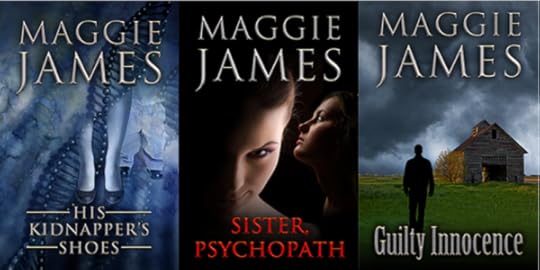
Welcome to the Maggie James Fiction blog! In this blog, I'll be writing about all things book-related, including author interviews, book reviews and progress on my forthcoming novels. If there are any topics you'd like to see covered, just let me know via the contact form. You can subscribe to this blog via the RSS links in the sidebar.
The blog will commence in January 2014 with an author interview. I'll be talking to horror/thriller writer Iain Rob Wright. We'll discuss what and who motivates him, his novels and his recent collaboration with the best-selling novelist Joe Konrath. Watch this space!


