J.B. Garner's Blog, page 3
February 20, 2017
Novel Review: Incorruptible by J. B. Garner
And a review of Incorruptible to make for a full set of reviews from Jaffa! Great stuff as always!

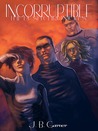 Incorruptible by J.B. Garner
My rating: 4 of 5 stars
The urban fantasy series with the heart, soul and humor of a self-aware comic book concludes appropriately and true to itself. Wishes became reality under the warped plan of an unsure, mad scientist in the series opener. At his mind’s bidding, superheroes and supervillians [“Pushed” and “Pushcrooks”] burst onto the scene. The eternal battle between good and evil was to be led unquestionably by neo-God, Epic–the former professor/mad scientist. Protagonist, ex-girlfriend Dr. Irene Roman [aka “Indy”] leads the charge in countering the comic-inspired madness. She’s one of the few [“Naturals”] that can see through the new reality to the old one.
This final installment sees factions of Pushed each battling to define what the new relationship between Pushed and non-Pushed will look like. The Pushed all too often ignore that the non-Pushed might have their own thoughts in this matter…
View original post 100 more words



February 16, 2017
Book News: Rune Service Is Now Available!
Finally, FINALLY, it’s here! Rune Service, the light-hearted urban fantasy and my … what? … 11th book?! is now available on Amazon as an e-book, with physical copies to be available soon! Check out the blurb and cover below!
[image error]
A prince in danger, an epic quest, and a cup of coffee, all at your local Easy-E-Mart!
Follow the misadventures of four-foot tall convenience store clerk Mary Stone and her luxurious beard as she finds out that life is even stranger than it already was when a literal Elf stumbles into the Easy-E-Mart after midnight. Within an hour, Mary finds out that magic is real, dragons are real, and she is a Dwarf instead of a short, bearded lady. Oh, also that her new friend is on the run from thugs, a wererabbit bounty hunter, and a reptilian businessman.
It might have been safe if she’d just stayed in the store that night!


February 10, 2017
Book News: A Wild Cover Has Appeared! a.k.a. Cover Reveal for Rune Service!
It’s been too long, I know. Two months off my initial ETA but Rune Service is imminent. Ah, the travails of an indie author, eh?
To show how close things are, here is the cover (after the bump), crafted by the talented Kayla Suppapong of Suppapong Studios!
[image error]


Starving Interview: Ash Gray, Author of The Thieves of Nottica
With a fresh review, we also serve up a fresh Starving Interview today! New to the Starving Author Kitchen is Ash Gray, the chef behind The Thieves of Nottica! Enjoy!
Please introduce yourself to my literary foodies!
Hello, literary foodies. I’m Ash the dragon, speaking to you through a tin can on a wire directly linked from my cave. Please keep in mind that the tin can doubles as a donation can. Feel free to drop in coins on the other end. Can never have enough coins in my hoard of treasures.
Do you do any work outside of the writing kitchen? Any non-work interests?
I’m a wanna be artist. I’ve been drawing and painting for years, mostly digital, but I’ve never quite gotten good at it. I plan to publish print versions of my books one day with my own horrid paintings inside. I kinda like my work, even if it’s bad. I also want to take a crack at illustrating my own children’s books . . . but just the covers.
What is your latest dish to be served up? Are there any past pieces of literary cuisine you think we should take a bite out of?
The Seaglass Stair is a fantasy novel I put out recently (more coming, stay tuned!). Whenever people ask me to describe it, I kind of stumble because it’s so cliché on the surface. I originally wrote it about ten years ago when I was still finding my own voice as a writer, so it very much follows the Hero’s Journey: girl discovers she’s magic, girl’s learns to use magic, girl’s mentor dies, girl saves world. Oh, yes. Very cliché. But still an amusing read regardless (I hope). After all, many stories follow a formula and still manage to amass a huge following.
What made you want to put on the chef’s hat and whip up your own books?
I’ve always loved stories: books, tv, movies. Just loved, loved, loved them even before I could talk. I started writing when I twelve. My aunt had passed away, and because I was always a very quiet person, I was going to talk about it. My mother handed me a journal and told me to write about it. I did. And I didn’t stop.
I’ve been trying to break into the publishing world for many years. When I first started, I’ll admit I wasn’t ready to be published. Like all writers, all my early writing was crap. I needed to take time to get better. But even after I took that time and got better, I still had to keep shopping around a book that no one seemed to want. That book was The Thieves of Nottica. I know it’s a tough world and the publishing business is hard, etc. But it got really difficult hearing over and over that there wasn’t an audience for my book, people couldn’t connect to the characters, the story was too bizarre to have a place in their agency, etc. I realized it was depressing me and that I was wasting time trying to convince someone my book was worth reading when I could be spending that time writing more books (of which I have a lot to edit, format, and publish)!!! On top of that, I realized these agents and publishers only cared about money and that I did not. I don’t care about money. I care about writing stories and having someone read them. There is nothing else that makes me happy, so I gave the finger to the Hand (ha ha . . . little inside joke for us) and decided to find readers for my book myself. And I don’t regret it at all. It’s put me in touch with other readers and writers and a whole world of indie publishing I didn’t even know existed. I really love being on Goodreads and talking to people, as shy as I am (talking to people actually makes me really nervous so approach with cookies and milk or I may hiccough fire out of sheer nerves). Goodreads is the only place on the internet where I’ve ever felt safe (ha ha) or comfortable talking about books. If I knew self-publishing on Kindle could be this fun, I would have done it years ago.
Do you have a genre of specialty or do you dabble? Why?
My favorite genre is fantasy fiction, the sort with dragons and fairies and magic, magic, magic. I love it because I am a shameless escapist. I think a lot of people who read to escape have crappy lives, and I did. As a child, I had one of those cliché lives you might read about in a Roald Dahl book, where I was a child who everyone hated and treated like crap, even adults plus other kids, emotional abuse galore. I was very sad and very alone and books were my friends. I spent long hours each day reading about distant fantasy worlds and the more the better. My Goodreads profile says I’ve read 62 books but I’ve actually read much more. As a child and an adolescent, I spent my life in dreams because I was helpless to escape the nightmare of my reality. As an adult, I spend my life in dreams to help other people escape the nightmare of their reality.
Style! Every literary chef aspires to have their own unique one! What do you think sets yours apart and why?
I don’t feel like I have a distinct voice or style, which could be a legitimate reason why so many agents have rejected my work over the years. It’s like I have split personalities. Each one of my books has a different voice depending on what I was trying to accomplish or say. The Thieves of Nottica was something I pulled out of a dark, dusty corner of my computer when I was sad and depressed and needed to cheer myself up. I wrote the whole thing to be a laugh, to work out my anger at the world, and that’s exactly what it did for me. I haven’t been really depressed since I wrote it. A person who goes immediately from reading The Thieves of Nottica to The Seaglass Stair will notice the immediate shift in style and tone. The Thieves of Nottica is written like a lark, while The Seaglass Stair is written with more of a “classical” fairy tale type voice, almost as if you could sit down and say, “Once upon a time, there was a girl named Wareska, and she was an utterly selfless fool.” Which she was, but that’s beside the point.
Even the best of us find inspiration is the dishes of others. Do you have any literary inspirations, heroes, and influences?
Well, given the fact that I practically own my own personal library, I would have to say yes. Yes a thousand times. When I was an adolescent, my favorite writer in the world was Anne Rice. I devoured her vampire chronicles. She had a magnetic narrative voice that pulls you into her worlds. The really wonderful thing about her books? She made the real world an utterly fascinating, beautiful, all-consuming place to be. That’s a big deal for an escapist like me. The world is a savage garden indeed. What’s really ironic, though? She’s my favorite author and yet I don’t write horror or vampires (I would like to try one day, I’m just not that good at it, though). My other large influences include Mercedes Lackey, Storm Constantine, and Frank L. Baum. (Yeah, the guy who wrote The Wonderful Wizard of Oz.) I also love Ursula K. Le Guinn and Daphne du Maurier.
Let’s get into the meat and potatoes: the art and craft of writing itself! Do you have a preference of points-of-view when you write?
Well, because my narrative style is all over the friggin place, so is my point of view. I love playing with different methods, though. In some books, I am the narrator. In other books, the character is the narrator (which limits your ability to really tell a story – one of the reasons many authors have to change point of view at some point if they’re writing a series). I love writing point of view chapters, where I get to put on the mask of each character and tell the readers about the world through their eyes and their voice. Originally, The Thieves of Nottica was a point of view story, with chapters being split between Rigg, Morganith, and Hari. Then I realized that would actually blow the story, as part of the story depended on Rigg being ignorant about what was going through the minds of her friends (thus the revelations toward the end regarding Arda). It’s really fun to do point of view chapters that way, though, and not unlike acting in a sense. One novel that I’m working on right now, called Dreamweaver, is a point of view novel divided into three parts. Two parts are from the perspective of the main character, while a third part is from the perspective of her lover.
Tl;dr point of view writing is hella fun.
Sparse or wordy, how do you like your descriptions served up? Are you a Hemmingway man or do you like some saucy adjectives with your nouns?
I can be a bit long-winded. Because I am a wannabe artist on top of being a writer, I love aesthetics, so I stop and take my time trying to paint the world with my words (in the hope that it doesn’t come across as flowery purple prose). In Thieves of Nottica, for instance, I would sometimes stop to describe the characters at length — even characters who aren’t that friggin important, such as the “tax collector” in Coghurst — because painting with words is important to me. I believe Brian Jacques said something once about the beauty of painting with words. I took his advice and ran with it because I agree wholeheartedly. It’s good to let readers imagine, of course. The hard part is finding the balance between describing things for them and letting them fill in the blanks. There’s the rub.
Picking off the menu of base literary conflicts, what’s your favorite and why?
Alright, here’s hoping I didn’t totally misread this question. My favorite conflicts in stories are those that explore what it means to be human and what it means to be alive, beyond simple black and white, good and evil (not because I think gray morality is “edgy” but simply because I enjoy the pondering that comes with it – black and white is so simplistic and people are rarely simple). Every person’s journey toward purpose and meaning, this is what interests me. So I love robots for this reason and I love writing about robots (I actually have another steampunk novel planned, but I see it being published in the distant future). Lisa (or Nanny Mech No. 916) goes through a slow transition throughout The Thieves of Nottica. She goes from sadly accepting her fate as a subjugated slave to angrily defying it. She follows Rigg’s example, for being a Keymaster is all about living in defiance of subjugation. The Hand would have Rigg slave under the city in boilers the rest of her life, but she does exactly what she wants to do instead, because freedom is worth the risk of her own life. Lisa admires this and views it as incredibly brave, and through knowing Rigg and her friends, she begins to understand what it means to be alive. Submission is death, defiance is life. People who submit to oppression do not really get to live, they get to exist (usually for the benefit of a higher class), and as Lisa takes hold of her existence and starts living, instead of existing, we see emotion come into her voice. She starts shouting and using contractions, she wants to pick her own clothing to express herself, she wants to live. She runs away from Evrard, her tormentor, in the first place because meeting Rigg in the first chapter of the novel is what wakes her up and makes her want to be alive. So . . . long story short, my love of philosophy leads me to explore the nature of existence in almost everything I write, and I love trying to create conflict around it: if the Keymasters were not struggling to have their own freedom, none of the conflict with Evrard and Pirayo would have happened.
What do you think is more important to your recipes, plot or characterization? Why?
About five or six years ago, I shared this story I’d written with some internet writing buddies of mine. I was worried that the plot was bad (and it was. It was utter garbage) and this one friend of mine gave me some really great advice. She told me not to worry about the plot and instead focus on developing my characters, because the plot would be driven by every decision that sprung from their personalities. She and I have since lost touch, but I always kept her advice in mind because she was right. When I focused on developing Rigg as a character, for instance, it drove the entire plot. Rigg is a brave, compassionate, and forgiving person. If Rigg hadn’t been compassionate, it would have drastically changed the end of the story regarding a certain scene on a rooftop with a lockbox, and the conflict with Governor Evrard would probably have continued, culminating in another scene with him. . . . and probably a longer story. So what’s more important to me? Building my characters first. Characters are what make the plot happen.
We all know that the first taste means the most! What do you do to get that first bite hook with your readers?
I am very sad to admit this (but hey, I don’t mind laughing at myself) but The Thieves of Nottica originally had a really, really bad opening. My first mistake? I opened the story with a prologue /hears the collective groan of readers everywhere/ My second mistake? The opening line was kinda crass. The original opening was about Arda (the missing Keymaster the others keep talking about) and how she died at the hands of Crows. The first line was something about Morganith slapping Arda’s ass and telling her to come on, unaware that she was injured and dying . . . Yeah, let’s just say that my hooks are really bad. I still don’t quite have a hold on how to snag a reader’s interest. As I was shopping Thieves of Nottica to agents, I wound up changing the beginning entirely to be a description of how Morganith was drunkenly slouched at the kitchen table. If the reader keeps reading, they learn why and it stops being funny. This snagged the interest of a few agents, who . . . turned the book down regardless because they /sigh/ still couldn’t connect with the characters.
The most important of questions: Cake or pie?
Cake. Definitely cake. I’m not that crazy. Unless this is some sort of euphemism, in which case I will have to say pie.
Finally, if you could give one piece of advice to aspiring literary chefs out there, what would it be?
Do what you think is right for your book. If you think it should be traditionally published, do it, and don’t let anyone stop you. If you think indie is the way to go, do it, and don’t let naysayers stop you. You can do whatever the hell you want to do, so long as the egg timer is on your side (but unfortunately, time is on no one’s side). Also, be sure to always, always give the finger to the Hand.


Starving Review: The Thieves of Nottica by Ash Gray
[image error]
The Thieves of Nottica by Ash Gray (Amazon)
Good Friday, my literary foodies, it is time once again to throw open the pantries and pick up a (hopefully) delightful meal to read through! This week, I have an intriguing steampunk fantasy meal on my plate, distinctive at the very least for the unique cover. The Thieves of Nottica has a notable subtitle as ‘A Humorous Steampunk Adventure’, so without further ado, let’s grab our forks and knives to get started carving down to the truth!
Before we gather our tools, let us put our hands over our hearts and recite the Starving Review oath:
I attempt to rate every book from the perspective of a fan of the genre
I attempt to make every review as spoiler-free as possible
Have you ever taken the first bite out of the first course of a meal with a certain hesitancy, only to be overtaken by the need to devour the thing as soon as possible? That is how Thieves turned out for me. Yes, perhaps I am spoiling my own review yet I know of no other way to really start this off. With that out of the way, let’s take it by the courses, shall we?
First up, the base of any literary meal: the characters and, as with any fantasy world, the worldbuilding. In many recipes, I’d tackle these as two separate ingredients but in this case, they are closely intertwined. With a fully whole-cloth world as this, the way the chef mixes up the world forms the spongy layer cake for the flavorful layer of the characters. We need the world to help frame the characters and their relationships is what I’m saying.
In this endeavor, our chef performs excellently. The world we are given is one both wholly alien yet strangely relatable and populated by native demons, invading humans, and strangely human robots. It forms a framework where, in the midst of a rousing fantasy, we can dive into themes of prejudice, culture, race, sex, and gender issues without any of that feeling like a burden on the tale.The fully-rounded and ‘breathing’ characters magnify this feeling. Our main crew of demonic thieves and agitators, despite how it may sound, are imminently understandable with thoughts, feelings, motivations, and wants that make perfect sense for all the alienness of their origins and world.
The fully-rounded and ‘breathing’ characters magnify this feeling. Our main crew of demonic thieves and agitators, despite how it may sound, are imminently understandable with thoughts, feelings, motivations, and wants that make perfect sense for all the alienness of their origins and world. To put it mildly, I was fully invested in eating every bite of this meal after meeting these dinner companions for merely a few moments.
The plot isn’t stifled or overwhelmed by this, though. The courses of the meal move in a clean, swift fashion. It relies, which works best considering the strength of our characters, on a character-driven plot, focusing on the interactions of our cast. Still, Thieves doesn’t shy away from some explosive action moments and bits of strange arcana and steampunk technology to add flash to the fantasy.
If I have any minor quibbles over the meal, there are the occasional choke points that a meal with so much necessary exposition can have. While most of the needed information is worked through at a natural pace, there are the rare moments when it tarries overlong and the problem is more often from the occasional repetitive wordsmithing in such passages. To be fair, these points are barely noticeable and did little to detract from the read, smoothing out entirely by the halfway point to nothingness.
To sum it all up … which I somewhat did at the very start, The Thieves of Nottica is a fantastic, fun, and surprisingly moving steampunk treat! If you have any love of steampunk, romantic fantasy, or fascinating new worlds, I’d strongly suggest picking this one up. However, I would not suggest this one to the less mature set, as there are some frank moments of violence, sex, and talking about such topics over the course of the meal.
FINAL VERDICT: ***** (A fantastic, fun, and surprisingly moving steampunk treat!)


February 8, 2017
Book News: To Keep Her On The Straight and Narrow a.k.a. A Fresh Review for The Songstress Murders
Quick update before I get back to making the words happen!
Here’s a fresh review for The Songstress Murders! Enjoy!


February 6, 2017
Novel Review: Indefatigable by J. B. Garner
They don’t come as quickly right now but it’s always good to see a fresh review crop up! Enjoy!
 Indefatigable by J.B. Garner
My rating: 3 of 5 stars
The urban fantasy series with the heart, soul and humor of a self-aware comic book continues here after its impressive start with Indomitable. Wishes became reality under the warped plan of an unsure, mad scientist in the series opener. At his mind’s bidding, superheroes and supervillians burst onto the scene. The eternal battle between good and evil was to be led unquestionably by neo-God, Epic–the former professor/mad scientist. Protagonist, ex-girlfriend Dr. Irene Roman leads the charge in countering the comic-inspired madness. She’s one of the few that can see through the new reality to the old one. She’s accompanied by a ragtag band of loyal new superheroes that don’t necessarily agree that everything new, including their powers, is bad.
Another unaffected person takes center stage here, but his methods are too extreme for Irene and he either wants her…
View original post 82 more words


February 3, 2017
General News: Hard At Work! a.k.a. An Updates About Updates?!
Another layer and we’d be at Update Inception.
I’m in the midst of:
Getting final bits done and the art in for Rune Service. Yes, it is still coming.
Working on a new collaboration of J. A. Cipriano which should come to fruition sometime in March
Getting prepped for Pensacon in just a few weeks!
Reading two books at once for reviews and such.
So yes, much going on, much knees-bent-advancing behavior. Expect reviews to be posted soon and plenty of up-to-the minute news once Pensacon starts!


January 27, 2017
Starving Interview: Viv Doyle, author of The Treason Game
To cap off our busy Friday, we invite Viv Doyle, the latest chef to enter the Starving Kitchen with her book, The Treason Game, and have a chat about literary cuisine and her own style in the kitchen. Enjoy!
Please introduce yourself to my literary foodies!
Hi! I’m Viv Doyle but I’ve also written under several pen-names. I live in England, not far from the city of Manchester where my latest novel, The Treason Game, is based.
Do you do any work outside of the writing kitchen? Any non-work interests?
As a working writer, I’m hungry for knowledge about everything. From my POV there are no ‘non-work interests’ because you never know when something will tempt you into concocting a new story. Science, the Arts, Nature, Human Nature . . . it all goes into the melting pot. But I do also enjoy singing and playing music, going for long walks, travelling and speaking other languages, making videos. You can see my Treason Game video here: https://www.youtube.com/watch?v=VCx2wpvlGAQ
What is your latest dish to be served up? Are there any past pieces of literary cuisine you think we should take a bite out of?
My latest piece-de-resistance, The Treason Game, is a new type of literary cuisine for me and also, I think, for my readers, because it’s set in the high calorie world of video games design. I’ve not found any other novel set in this context, so could this be the start of a new genre?
I’ve previously self-published a couple of books that were also different from my usual fare: a collection of mashups called Literary Mysteries Solved, and a vampire novel called Lusting (published under the name of Vivienne LaFay)
What made you want to put on the chef’s hat and whip up your own books?
Guess it was a spicy mixture of ‘Oh, I wish I could produce fabulous books like his/hers!’ and ‘Why on earth have they dished up this unpalatable nonsense for public consumption? Surely I can do better than that!’
I used to teach English Literature, helping my students digest other masterpieces whilst writing in my spare time. But one day I decided I wanted to write full time. I still did some tutoring of would-be writers, but mainly I wrote for any market I could find that would buy my delicacies. Lots of appetising short stories, then whole tasty novels, and eventually I found a few outlets prepared to buy anything I cooked up – yum yum! More recently, I’ve enjoyed self-publishing eBooks.
Do you have a genre of specialty or do you dabble? Why?
When I started out I wanted to write for children. Sadly, none of my kids’ books found a publisher, despite the fact that I had an agent. My literary success came when erotica became the main dish on the menu of certain publishers, and I found I could whet readers’ appetites with my saucy prose!
Style! Every literary chef aspires to have their own unique one! What do you think sets yours apart and why?
My favourite literary ingredient is a touch of humour. I think it’s there in all my work. But I’m not one for putting too much fancy icing on the narrative cake.
Even the best of us find inspiration is the dishes of others. Do you have any literary inspirations, heroes, and influences?
Loved reading the classics while I was writing my Literary Mysteries book. Every parody was an admiring tribute to the original, and I hope readers take it that way.
I’ve also enjoyed works by contemporary authors Philip Pullman and Sarah Waters.
Let’s get into the meat and potatoes: the art and craft of writing itself! Do you have a preference of points-of-view when you write?
The Treason Game was transformed when I changed from third to first person narrative. If it’s multiple viewpoint, though, I’d choose third person.
Sparse or wordy, how do you like your descriptions served up? Are you a Hemmingway man or do you like some saucy adjectives with your nouns?
I’ve no taste for densely spiced and decorated fare, preferring just enough flavour to enhance the meaning and bring the scenes and characters to life. If I have to chew over every sentence to get the essence of it I probably won’t continue reading.
Picking off the menu of base literary conflicts, what’s your favorite and why?
For me, the conflict within one’s character is the one that really matters, and every other conflict is an extension of that.
What do you think is more important to your recipes, plot or characterization? Why?
I do like to cook up a good plot, but the skill lies in making the characters drive it.
We all know that the first taste means the most! What do you do to get that first bite hook with your readers?
An ‘amuse-bouche’ is a good opening, some curiously tasty little trifle, with an unusual combination of ingredients, to stimulate the appetite. In The Treason Game I decided to start with the video game itself, and the story proper begins when the main character is caught playing it at work.
The most important of questions: Cake or pie?
Pies can be stodgy, and once you’ve had a bite it’s much the same all the way through. A cake, on the other hand, can have so many layers of different flavours, sandwiched together with yet more flavour. It might seem deceptively light and airy, but by the time you’ve tasted it all you realise there was a lot more to it than you thought there was at first bite.
Finally, if you could give one piece of advice to aspiring literary chefs out there, what would it be?
Refine your taste for language, so that your words make music and paint pic


Starving Review: The Treason Game by Viv Doyle
[image error]
The Treason Game by Viv Doyle (Amazon)
It’s time to sink our teeth into some fresh meat after our brief hiatus! Let’s get back into the saddle with a classic coming-of-age recipe mixed with a fresh coat of contemporary paint. Following a young British woman as she tries to find her way in the world and find a career in the video gaming industry, will this mix of classic storytelling and modern ingredients pay off with a tasty meal or sludgy quagmire?
Before we start the download, let’s check the Starving Review Rules FAQ:
I attempt to rate every book from the perspective of a fan of the genre
I attempt to make every review as spoiler-free as possible
One might think from the subtitle on the cover (Ever Fallen In Love With An Avatar?) that Treason must be a romance novel or perhaps be a cousin of the nascent LitRPG genre, but that would not be the case. Not that there aren’t romantic elements or computer gaming elements, not at all, but this meal is solidly grounded into the venerable ingredients of the coming-of-age tale. With that being said, let’s focus on that genre and its elements to get to our final verdict.
The core of this sort of story is its characters. Without an engaging protagonist and a solid arc of growth and maturation, it’s really not a coming of age meal, is it? Fortunately, Treason‘s characters are its strength. There is a deep nuance throughout the entire cast and even the most cardboard secondary characters tend to show a depth that isn’t immediately obvious. The arc of growth and the fleshing out of the characters over the course of the meal makes a solid throughline. Essentially a full-on success.
Likewise, the elements of the story that look at the video game industry and our protagonist’s journey into it are also well-researched and written. We never delve into boring minutiae but there is sufficient detail that we aren’t lost in the plots that revolve around the business. It all holds together and most of all is imminently believable.
The only parts that don’t ring one-hundred percent good are the elements directly in the titular Treason Game itself. These sequences aren’t bad per se but as a consumer of much video gaming and MMOs in particular, it feels like something of a previous gaming age or a strange niche title, not the massively popular MMO it is touted to be. It’s not an execution or wordsmithing issue; it’s one of suspension of disbelief as an avid gamer. This is just a minor quibble in the main, just enough to prevent a series of perfect marks for this cuisine.
To bring it all together, The Treason Game is a tasty coming-of-age tale told through the modern video game industry, smooth with only a few sour notes! If you enjoy coming-of-age stories or have an interest in reading about the video game industry (bonus points if you’re either British or an Anglophile), I’d suggest picking this one up. If you are looking for a more pure video game experience or an action-fest, this probably isn’t the meal for you.
FINAL VERDICT: **** (A tasty coming-of-age tale told through the video game industry, smooth with only a few sour notes!)