J.B. Garner's Blog, page 13
March 25, 2016
Writing Is A Bad Habit In The World Of … : ‘Strong’ Protagonists! It’s More Than Coolness, Yo!
So demands for planing for Mobicon, work for editing clients, and other shenanigans, I regretfully inform you that I won’t have a Starving Review served up today.
However, I present as a substitute some extended thoughts on the ‘strong’ protagonist, male or female, and how to create and think about your creations, alongside examples culled from my own writing. An extension of this Wednesday’s Writing Is A Bad Habit, the audio log takes things deeper than before.
If you enjoy this, please let me know so I can plan to do more of these podcast-style articles in the future!



March 23, 2016
Writing Is A Bad Habit: Action Girl … Or Not? a.k.a. The Action Girl and the Faux Action Girl
We bandy around the phrase ‘strong female protagonist’ (SFP for short) quite a bit. Now, this phrase has a lot of meaning to it and is often taken at literal face value, focusing on physical prowess (literal physical strength in one way or the other) instead of the truer, broader meaning. This isn’t necessarily bad, not at all as long as it is handled well (though I prefer the deeper interpretation of strength myself). I bring this thought of physical strength up, though, because it lets us talk about a pair of character tropes closely connected to that and the overall ‘SFP’ discussion: the Action Girl and the Faux Action Girl.
The Action Girl is pretty much what it sounds like: a female character who shows strengths in all the action-hero realms that are usually attributed to male protagonists. The action-heroine in every way, the Action Girl is often used as a trope/archetype to quickly establish a woman as a SFP. At first blush, it’s as simple of a trope to use as can be. You create a female character, show her as top-notch in action scenes, and keep that competent demeanor in non-action scenes. Easy as pie!
The biggest pitfall, of course, is one common with male action heroes as well: weak characterization. In an effort to establish those action credentials, there is the chance of missing out on the actual person behind the trope. While this can happen when you utilize any archetype, it tends to happen more when using action-oriented ones such as this. It’s easy to loose the character behind the scenes of butt-kicking and tense drama. The answer is simple: Focus on the character, dammit!
The other big pitfall is the opposite of the Action Girl, the Faux Action Girl. You see, the Faux Action Girl is a female character who has gotten a nice big dose of Informed Ability, someone who gets plenty of exposition and talk about their abilities but who never matches up in an actual action scene. While this is a general problem for any character, it can be especially problematic to have an Action Girl in a story that never succeeds at the actual action.
Let’s not mince words. The Faux Action Girl is a hold-over (USUALLY) from the last century, an effort to nod towards the growing need for equality in media while still holding back enough to soothe damaged male sensibilities. It’s a dying trope, to be honest, but it’s still possible to fall into it accidentially by creating an action heroine then constantly having them set back for reasons that might seem logical to you, the author, but may not seem so cut and dry to your readers. Think of this as Informaed Ability made even more problematic by the possibly toxic social implications.
Now, oddly enough, you can use a Faux Action Girl as a useful trope, simply by making that false front of competence the actual story to explore. Much like a false Ace or an ‘Invincible Hero’ whose story is all talk, an action heroine whose legend is not the truth and the implications there of could make for a fascinating story. However, as you can tell, this is an intentional move, a way to create drama and a character arc. It’s something much different than the pitfalls and missteps we’ve discussed above.
So if you want to make your next action hero a woman, go for it! Just don’t lose sight of the need for characterization and avoid the stumble of the Faux Action Girl!


March 21, 2016


Monday Musings: You Can Get Your Book Reviewed Faster! a.k.a. Here’s How!
It’s pretty obvious what this is going to be about. But we’re going to do it with vocals today! This is a serious issue so hearing it straight from the messenger’s mouth. Here we go!


March 18, 2016
Starving Review: The Left-Hand Path: Mentor by T. S. Barnett
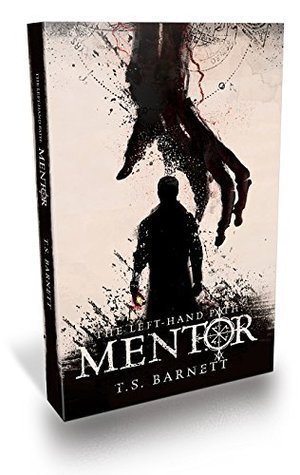
The Left-Hand Path: Mentor by T. S. Barnett (Amazon, Goodreads)
Welcome to another installment of the Local Author Smorgasbord (yes, I never remember the previous term and change it), where we cut through the offerings of the Gulf Coast’s chefs! This week a course of urban fantasy/horror is ready to be eaten as we tuck into The Left-Handed Path: Mentor. Promising witches, magic, scares, and surprises, will Mentor teach us a new lesson or will it be the same things we learned last year?
Before we enter the classroom, let us finish our punishment by writing down the Starving Review rules one-hundred times:
I attempt to rate every book from the perspective of a fan of the genre
I attempt to make every review as spoiler-free as possible
Mentor is one of those interesting meals that twists on the plate, like a plate of live octopus. The chef isn’t content with traditional plating, so things work their best to put the traditional rules and tropes on their head. That isn’t to say that there isn’t a grounding in the basics, the core recipe rules of fiction that make for a good story. No, it’s more that Mentor gleefully plays with your expectations, just as it plays with the expectations of its cast of characters.
At its heart, Mentor is a recipe that puts the antagonist among the protagonists. This isn’t quite the traditional type of ‘the bad guy is the good guy’ scenario. No, this is something just a bit different, and it is exciting in that regard. It’s a distinctly different structure than I’ve seen in quite some time, like some mutant ‘tri-protagonist-antagonist-mudslide’ affair. One might flip pages, expecting for that big redemption moment in the end (or the big fall-from-grace moment), and yet … well … to say more other than this vague implication would be SPOILERS. Needless to say, it’s an intriguing element and one that the chef handles with aplomb.
What about the other core elements? World-building is handled through the titular Mentoring of one of our merry band, providing a conduit for exposition that isn’t heavy-handed or info-dump-y. As something that is most definitely character-driven, Barnett took the time to fully bake her cast, letting them rise in the oven before putting them in scene. Even most of the secondary characters have a fair bit of heft to them.
If there’s any quibble at first bite, it would be the eventual conclusion of the arc involving another antagonist. However, the truth is that this isn’t a mistake or a rushed arc. No, after eating the final bite and letting it settle, I realized what seems to be the ‘real’ antagonist is, in fact, just a smaller threat, a mere catalyst for the story, with the real antagonist (which might be considered one of two people, depending on your viewpoint and beliefs) has always been sitting in our circle of pro-antaga-trioists.
So, to close this up, The Left-Hand Path: Mentor is a twisty-turny fantasy/horror sweet roll that is good to the last bite! If you are a fan of darker fantasy tales, interesting character dramas, and stories with a touch of horror to them, I’d suggest you put this in your pantry right away. If you just can’t stand horror or prefer simple, straight-forward tales, you might want to look for another meal.
FINAL VERDICT: ***** (A twisty-turny fantasy/horror sweet roll that is good to the last bite!)


Starving Interview: T. S. Barnett, author of The Left-Hand Path: Mentor
This week, we deliver seconds on our big first from last week! That’s right, our second live interview is now done, as we break bread with T. S. Barnett, the chef who whipped up this week’s Local Author Blitz subject, The Left-Hand Path: Mentor. Listen and enjoy.


March 16, 2016
The World Of … The Opening Bell: Kayfabe, Backstage Politics, and the Martial Arts Drama
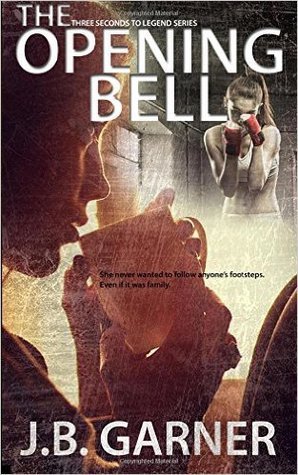
Kayfabe is a term used in the professional wrestling business to describe the keeping of appearances to create the illusion of hyper-reality of the sport/entertainment. We all know that the actual matches in modern pro wrestling is choreographed – I hesitate to use the word ‘fake’, simply because of the athleticism and inherent danger involved; it would be like calling stuntwork ‘fake’. – but the efforts of kayfabe are to create that same suspension of disbelief an author uses to engage a reader.
Meanwhile, most of the actual events are determined by the writers and ‘bookers’, the men and women who decide on the match cards, the storylines, and so on. They would be the reality behind the scenes, the wizard behind the curtain. Though the wrestlers and other performers have input, sometimes significant, it usually comes down to the Powers That Be to make the final decisions.
How does that all come together in The Opening Bell?
Well, as I have taken to saying in interviews, the story told in Bell has a lot in common to a serious martial arts drama. To keep that sense of drama and tension yet still have a connection of reality to what professional wrestling is in our world, I took inspiration from both kayfabe and the reality behind the scenes.
It comes down to subtle blends of fantasy and reality. The matches in the world of The Opening Bell are much closer to modern MMA or the wrestling of the late 19th and early 20th century in terms of ‘reality’. They are depicted as real athletic confrontations, with deeper consequences and injury, and a strong competitive spirit. In that way, they take the place of the conflicts one might find in a martial arts book or movie. Combining the natural storytelling involved in the modern pro wrestling match with the stakes of an actual combat serve to up the overall drama of the entire story, hopefully pulling the reader deeper down the rabbit hole of investment. This is the kayfabe of The Opening Bell at work.
In counterpoint, behind the curtain of the wrestling organizations depicted in Bell, things turn into a dramatic interpretation of the modern wrestling business. The promoters and bookers may not decide the outcome of matches, but they do set them. Likewise, capturing the inherited carnival spirit of the locker rooms, even rivals in the ring are depicted as being expected to show loyalty to the organization they belong to as a whole. Paying one’s dues is an important aspect of this, as well as the idea of an insular system of seniority and self-policing for infractions against the league and its talent. This not only serves to connect the more ‘action-movie’ elements of The Opening Bell to reality, but it also provides another tie to the martial arts inspirations, serving as stand-ins for tropes like the Rival School.
Where these world elements of fantasy and reality truly blend is in the characters themselves. Kayfabe not only affects the ‘reality’ of the matches themselves; it spills over into the public face of each wrestler. For some, that public face is simply a more exaggerated version of their own. For others, that persona can be wild and fantastical. Viking warriors, wrestling dentists, and demons from Hell are just a few of the wildest ‘gimmicks’ a wrestler in our own world has depicted. At it’s strongest, kayfabe would dictate that a wrestler keep up their gimmick at all times in public, which has lead to some bizarre situations in history.
This element of kayfabe runs a range in The Opening Bell and the overall series, allowing for the exploration of truth, trust, falls from grace, and redemption. Each person our protagonists encounter could be exactly what they seem to be or they could have hidden depths (or darkness). For some, the kayfabe face they put on is a mask of what they think they are (or what they want others to believe), one they can embrace or toss aside, for good or for ill.
So it is a combination of kayfabe (illusions and acting) with the realities of the wrestling business that create the hyper-real world of action and drama that is The Opening Bell. This kind of combination isn’t something that is just suited for a wrestling novel, though! Most action-adventure tales use this same artful mix of the fantastic and the real to create a sense of plausibility and wonder to draw readers in. Think about it the next time you weave a tale. You might be surprised how much, say, an urban fantasy might draw from the same well as a pro-wrestling drama!


March 14, 2016
Monday Musings: Always Going Forward, Always Looking Back a.k.a. Progress, But Don’t Forget
I am sitting here, planning for the changes to the blog and my own work habits in the weeks ahead, and I have come to the realization that there is an important balance to walk here. How much should I change from my old course? How far should I go and how much should I keep?
The answer is, of course, obvious. As in most things, balance is called for. You can’t forget your past, but you can’t stand still either. I need to keep the things that are vital to me, while pushing past my limitations to move ahead in the places I’m deficient. I need to hold on to my humility while being confident enough to push myself forward. I need to be supportive of my colleagues while never forgetting to worry about my own well-being. It’s the classic ‘you can’t help others until you help yourself first’.
So I guess that’s something we can all remember. Always go forward but never forget your history!


March 13, 2016
Convention News: A Longbox Interview from Penascon! a.k.a. Well, Yeah, Another Interview!
Take a listen to both a great comic book podcast with an interview with yours truly! Check it out through their website (http://comichistorians.webs.com/) or directly through this link: http://longbox.podbean.com/e/longbox-episode-12-heralds-of-galactus/
Enjoy!


March 12, 2016
Weekend Update: Fun With Podcasts And A New Schedule! a.k.a. Uh, Just That?
A few bits of business to wrap up the week!
First, a shout-out to the team at http://comichistorians.webs.com/, great comic book guys who dig deeper into the medium, examining the histories and the social commentary that winds into the heart of the stories. Listen to their podcast, Thinking Outside The Longbox; it’s great stuff! Plus I have an interview with them coming up!
Second, you may have noticed that I didn’t get a Writing Is A Bad Habit out this week. This was because I have spent a bit of time rethinking my format and how I can better incorporate my own works into my articles. So, starting next week, Wednesdays will alternate between Writing Is A Bad Habit, a straight-forward writing article as always, and The World Of …, a new series combining writing techniques with my own writing, using the characters, settings, and themes of my books to highlight some do’s, don’t’s, and analysis of the writing art.
Hope to see you there!