
Luccia Gray's Blog, page 109
May 24, 2014
Rereading Rebecca by Daphne du Maurier


Another 5 Star Review!

May 22, 2014
Atlantic Sunrise. Theme: Early Morning

May 21, 2014
Creative Altruism

May 15, 2014
Jenny, Lady Lilith and Celine Varens: Artistic Representation of Prostitution in Victorian England in Dante Gabriel Rossetti and Charlotte Bronte’s Jane Eyre.

The first manuscript of Dante Gabriel Rossetti’s poem Jenny was buried with his wife, Elizabeth Eleanor Siddal , in Highgate Cemetery, in London, and remained in her grave, reportedly in Siddal’s red hair, until it was exhumed six years later and redrafted several times, before it was finally published in 1869. The poem is a first person narration, or monologue, of a writer, who some critics have identified as Rossetti himself, describing the beautiful woman who is lying across his knees, while he gradually unfolds the reasons for the end of their relationship. It is and frank and sympathetic, albeit condescending and biased, account of Jenny, a prostitute in Victorian England.
Rossetti, the poet and the painter, was obsessed with the portrayal of stunning women. He searched for beautiful muses whom he painted, wrote about, married, and befriended, throughout his life. He was particularly infatuated by the biblical myth of Lilith, Adam’s first insubordinate wife. Shelley’s translation of Goethe’s Faust (lines 351-353) inspired both the portrait, Lady Lilith, and his long poem, Jenny.
FAUST: What is that yonder?
MEPHISTOPHELES: Mark her well. It is Lilith.
FAUST: Who?
MEPHISTOPHELES: Lilith, the first wife of Adam.
Beware of her fair hair, for she excels
All women in the magic of her locks;
And when she winds them round a young man’s neck,
She will not ever set him free again.
Rossetti’s Jenny and Lady Lilith are both portrayed as blue eyed and golden haired beauties. Both wear languid and lazy expressions on their perfect faces, and both were wicked women; Lilith was Adam’s headstrong first wife who left him rather than lie beneath him, before being replaced by meek, albeit naïve, Eve; Jenny is a prostitute whose main objective is emptying men’s pockets, and having fun.
The artistic representation of women in Victorian times, depicted them either as the ‘angel of the house’ or the ‘prostitute’. Prostitution was not illegal in Victorian England, but it was a social problem, as most prostitutes were orphans or underprivileged women, who could not live on the meagre wages earned. Prostitution was also a health problem, due to the venereal diseases which abounded. According to the controversial Contagious Diseases Acts passed in 1864, 1866 and 1869, all prostitutes within a radius of army and military bases were required to register with the police and to monthly submit to an internal examination to verify whether or not they were diseased. If they were, they would be incarcerated in lock hospitals for up to nine months. Although the act was finally revoked in 1882, it was heavily contested, and many Victorian writers, such as Charles Dickens and Mrs. Gaskell were socially aware and active on this account.
According to critics, Rossetti’s poem was of the “fleshly school of poetry,” and much stigma came to be attached to Rossetti’s name as a result. Rossetti’s account is innovative in the sense that he represents the ‘fallen woman’ as a real and contented person, who is treated with caring and respect by the writer while they are together, although he finally abandons her in favour if the respectability and stability his conventional cousin represents.
Jenny contains representations of both extremes. Jenny herself represents the fallen woman, and the narrator’s cousin Nell, represents the angel. Jenny dreams of the money earned by her profession:
Poor shameful Jenny, full of grace
Thus with your head upon my knee;—
Whose person or whose purse may be
The lodestar of your reverie?
On the other hand, his cousin represents honesty and love:
My cousin Nell is fond of fun,
And fond of dress, and change, and praise,
So mere a woman in her ways:
And if her sweet eyes rich in youth
Are like her lips that tell the truth,
My cousin Nell is fond of love.
And she’s the girl I’m proudest of.
The narrator finally decides he must leave Jenny in order to consolidate his relationship with his cousin:
By a far gleam which I may near,
A dark path I can strive to clear.
Only one kiss. Good-bye, my dear.
Although Jenny is the subject of the poem, Jenny herself is silent throughout. In fact she is asleep, and therefore a passive agent, within the narrative. We are informed of her supposed feelings and opinions by the writer, who is clearly trying to justify his callous use and abuse of the compliant girl. Lady Lilith is equally absent, daydreaming into her mirror, perhaps imagining a future in which women are allowed a voice and a more active participation in society.
A contemporary reinterpretation of both Jenny and Lilith should take into account the following considerations. Both women are silenced by patriarchal conventions, and absent from any kind of explicit power. Lilith is lost in thoughts, staring into her own reflection, while Jenny is asleep, lost in her subconscious world. Yet both women fend for themselves, refusing to be a conventional wife and mother. Lilith’s refusal to lie beneath Adam, has become a symbol of resistance to patriarchal authority, and female independence, while Jenny is a survivor and determined to look after herself, on her own, in a man’s world.
Jane Eyre contains no mention directly to prostitutes or prostitution, although there are some allegedly ‘wicked’ or ‘undesirable’ women mentioned during Rochester’s stay abroad in France and Italy, including a reference to Adele’s mother, Celine Varens. Mlle Varens is also voiceless in Charlotte Bronte’s novel. It is Rochester who describes her behaviour and justifies his womanising by telling Jane how he was ‘innocently’ led and fooled by her:
“I installed her in an hotel; gave her a complete establishment of servants, a carriage, cashmeres, diamonds, dentelles, etc. In short, I began the process of ruining myself in the received style, like any other spoony.”
Following the conventions of the time, after Rochester’s marriage proposal, Jane Eyre makes it clear to Rochester that she is prepared to be his wife, but not his prostitute:
“I only want an easy mind, sir; not crushed by crowded obligations. Do you remember what you said of Celine Varens?— of the diamonds, the cashmeres you gave her? I will not be your English Celine Varens. I shall continue to act as Adele’s governess; by that I shall earn my board and lodging, and thirty pounds a year besides. I’ll furnish my own wardrobe out of that money, and you shall give me nothing but—”
“Well, but what?”
“Your regard; and if I give you mine in return, that debt will be quit.”
Jane is proposing another alternative to the ‘angel’ or ‘fallen woman’ dichotomy. She is proposing the ‘working wife’ who is her husband’s equal regardless of her financial capacity. Jane wants to be Rochester’s wife and his equal, as she claims throughout the novel, not his submissive or inferior. The novel does indeed end on this note of equality. Jane inherits a plentiful sum from her uncle, which will allow her to have financial independence from in her husband, leading to equality in their marriage.
‘All Hallows at Eyre Hall’, on the other hand, does directly approach the topic of prostitution with reference to various characters in the novel, including Mr. Rochester. One of the narrators, Jenny Rosset, who is based on Rossetti’s Jenny/Lilith, is, in fact, a prostitute, who is directly related to two of the main characters in the novel; Michael and Mr. Mason. Jenny, is a character to look out for. She is far more important than she appears. Both Jenny and her offspring will have an even greater part in books 2 and 3 of the Eyre Hall Trilogy. On the other hand, Celine Varens, Adele’s mother, who is living in Venice with her latest lover, is referred to in the first volume, and she will reappear physically in book 2, when Adele travels to Italy to meet her mother, whom she believed dead, one last time. Jenny Rosset and Celine Varens represent two different types of Victorian ‘fallen woman’, whose intentions, feelings, needs and desires will be reappraised throughout the trilogy from a contemporary perspective. Jane Eyre herself, as I would have expected, is actively involved in improving the lives of her contemporaries.
More information on the Dante Gabriel Rossetti Archive and Rossetti’s paintings worldwide


May 8, 2014
My First 5***** Review of All Hallows at Eyre Hall (Eyre Hall Trilogy, #1)

All Hallows at Eyre Hall (Eyre Hall Trilogy, #1)
Check out this book on Goodreads: All Hallows at Eyre Hall (Eyre Hall Trilogy, #1) http://www.goodreads.com/book/show/22035815-all-hallows-at-eyre-hall
My first review on Goodreads! 5★★★★★!

May 5, 2014
Hit Publish!
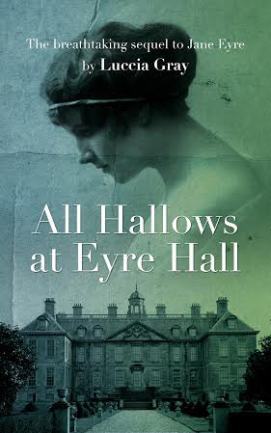
All Hallows at Eyre Hall is now live on Amazon worldwide. Check it out. Read the blurb/description. Look inside and read the first chapter. If you’d like to read the rest of the novel, let me know, there are five complimentary copies available! I’d love to hear from you! Contact me on Goodreads, or Facebook.


April 28, 2014
Passing On The Baton!
Passing The Baton
I’ve been fortunate enough to receive the Baton for this incredible Blog Hop from the gifted author Elizabeth Hein. Thank you so much for tagging me on! I’m thrilled to be part of this exciting virtual and literary event, carry this Baton, and pass it on to three other fellow authors.
I read Elizabeth’s first novel Overlook which I highly recommend, especially if you enjoy well-written and inspiring contemporary women’s fiction, when it was published last year (see my Goodreads review). Elizabeth is now working on her third novel, The House (this is still a working title), because her second novel How To Climb the Eifel Tower, which I can’t wait to read, is about to be published very soon. Please check out her Blog and find her on Facebook and Goodreads.

***********************************************************************************************************************************
Here are my answers to the five questions all the participants have answered:
What am I working on? – I’m working on The Eyre Hall Trilogy. The first novel in the Trilogy, All Hallows at Eyre Hall will be available on Amazon, very soon. I’m also finishing the second installment, Twelfth Night at Eyre Hall, which will be published this autumn. The final volume, May Moon at Eyre Hall will be out in spring, 2015.

How does my work differ from others in this genre? – All Hallows is a neo-Victorian Gothic Romance. It has all the classic elements in this kind of story: Eyre Hall itself is one of the characters in the novel, breathing life into the characters and events; it has a nasty villain; a helpless young girl; a young and impulsive hero; and there are supernatural elements, too. However, the novel will appeal to contemporary readers because it is fast paced, taking place over a ten-day period, and it is presented as a fragmented narrative driven by first person narration of the characters who are absorbed within the walls of Eyre Hall, which is an extension of Thornfield Hall. The heroine is not a young innocent girl, and the hero is not a powerful and rich Gothic hero. The character which brings the events together is the mature Jane Eyre Rochester, and the hero is a young and tormented valet. I have incorporated elements of the 20th century novel, Wide Sargasso Sea, which recreates the previously untold story of Bertha Mason, the madwoman in the attic. Bertha is, once more, one of the main characters in my novel, thanks to her daughter, Annette Mason.
Why do I write what I write? –
I write, and I’ve been writing since I was a teenager, because I need to express myself creatively. I love reading, and I can’t sing or paint or dance, so I write, mostly prose, but also poetry, mostly in English, but sometimes in Spanish.
I have loved Victorian literature since I was a young teenager and our English teacher, Sister Catherine, used to read to us on Friday afternoons. It was my favourite time of the week. I’ll never forget The Moonstone and The Lady in White. Then I read the novels by Jane Austen, the Bronte sisters, Mary Shelley, Charles Dickens, George Elliot, and Thomas Hardy, etc. I now spend a great deal of time rediscovering and rereading these great works, which have haunted my imagination since I was practically a child.
I enjoy writing about Victorian times. I appreciate the distance these novels allow me to place between myself and my writing. I abandon myself completely and enter another world when I write historical fiction. I find it almost as enjoyable as reading Victorian literature!
How does your writing process work? I honestly can’t pin-point where the initial idea for my novels springs from, but I’d say it’s a very complex creative process, in which what I’ve read, experienced, thought about, and felt, mingles and grows into an original entity of its own, which is usually an idea I need to express, or an argument I need to make. In this case, I wanted to surface the story between the lines in Jane Eyre, relying heavily on Jean Rhys’s recreation of Bertha Mason Rochester’s life in Wide Sargasso Sea. I wanted both women to meet and work together. As Bertha was dead, I created her daughter, Annette, whose life will be inexorably bound to Jane’s, in a surprising symbiosis.
When I write, I ‘see’ the characters and events in spurts and jot them down. Sometimes it’s just a conversation, or a short episode, which I elaborate on later. I prefer using my laptop because I write faster, and I can insert and delete more quickly and less messily. I go with the flow, and let the characters speak and act freely, and I think about them a lot. I go for long walks, or sit in the garden and think, and write without a specific plan. I often become so obsessed I dream about my characters. Gradually the novel begins to take shape, and the whole novel flashes through my mind. Then I plan, making careful hand-written notes. My plan is a guideline and changes often, but having one keeps me focused and working.
For this particular trilogy I’ve had to do a lot of groundwork and research before and while I was writing. As well as carefully rereading Jane Eyre and Wide Saggasso Sea, I’ve also gained general inspiration from Wuthering Heights, Hard Times, Oliver Twist, The Haunted Hotel, and Persuasion. I’ve enjoyed reading letters by the Bronte’s and Charles Dickens, and poems by the Brownings, and Tennyson. I wanted to write about the uses and effects of laudanum, so I read The Confessions of an English Opium Eater, which is invaluable first-hand experience of this popular 19th century drug. The long poem, Jenny, by Dante Gabriel Rossetti, was my inspiration for the character, Jenny Rosset. I also had to research practical daily matters such as Victorian funeral customs, cooking, clothes, and furniture, etc. I used Victorian books such as: Mrs. Beaton’s Housekeeping Book, and contemporary accounts such as, What Jane Austen Ate and Charles Dickens Knew.
***********************************************************************************************************************************
The next stage in this relay is to pass the baton on to the next authors. I’d like to introduce you to Roberta Pearce, Katerina Baker, and Fran Clark, who will be posting their answers next week and passing on the Baton, too. These three authors have very different themes and styles, but they have produced enjoyable and well written novels. Roberta’s prose is precise and concise. She writes romantic novels with strong heroines. Here’s my review of A Bird Without Wings, while Katerina weaves intricate and contemporary plots into her romanticnarrative. Here’s my review of How I Became a $py. Fran is a fresh new literary voice, who has written a first inspiring novel on the immigrant experience, and interpersonal and family relations, Holding Paradise, which I’m reading at the moment. It is the fragmented story of mother and daughter, masterfully handled with flashbacks between London and the Caribbean. It’s a flowing and beautiful read so far, look out for the review I’ll be posting as soon as I finish reading. Please check out their blogs and keep your eyes open for their books.
_______________________________________________________________________________________________
Katerina Baker has always loved romance. Even before that story that flashed in front of her eyes on an empty trading floor, she’s been a believer that written words can move mountains. Her first novel, The Day I Became a $py, was born on the trading floor. She saw a flash of something . . . maybe a woman’s heel? A secret meeting being held on the staircase? An FBI agent posing as a mailman? Whatever it was, her mind was already busy forming an intricate explanation. She started writing, and her life would never be the same. For information on Katerina’s work, please visit her website: KaterinaBaker.com and her blog http://katerinabaker1.blogspot.com.es/

________________________________________________________________________________________________
About Roberta Pearce
Roberta’s last novel, A Bird Without Wings, is enjoying glowing reviews while she procrastinates over final edits for her next novel, The Value of Vulnerability – a tale of a nice girl who makes the mistake of falling for a sociopath [that’s sociopath, not psychopath!]. In her spare time, she blogs about writing; her pedantry over formal style; and sometimes her own books. Her ebooks are available at online retailers, including Smashwords, Amazon, and Barnes & Noble. Find her on Goodreads, follow her on Twitter, and friend her on Facebook!
Roberta blogs about writing; her pedantry over formal style; and sometimes her own books. Her ebooks are available at online retailers, including Smashwords, Amazon, and Barnes & Noble.
Find her on Goodreads, follow her on Twitter, and friend her on Facebook!

________________________________________________________________________________________________
Fran Clark was born and currently lives in West London. Her first novel, Holding Paradise, is published in 2014 by Indigo Dreams Publishing. Fran is studying for a Creative Writing MA at Brunel University. A professional-singer songwriter and vocal coach, she recently released her second album of original songs. She is now working towards the completion of her second novel. Find out more about her on her webpage: www.franclark.co.uk and her Blog: http://franclark.blogspot.com.es/


April 20, 2014
The Moon In Jane Eyre. Part I: At Gateshead And Lowood
Moon Image by Luc Viatour / http://www.Lucnix.be.
The moon is full this winter night; 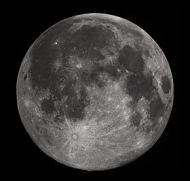
The stars are clear, though few;
And every window glistens bright,
With leaves of frozen dew.
The sweet moon through your lattice gleams
And lights your room like day;
And there you pass, in happy dreams,
The peaceful hours away!
From Honour’s Martyr by Anne Bronte
The following article will reflect upon the symbolic representations of the moon in Jane Eyre. For Victorians, the moon was a magical, mystical, and mysterious, celestial entity. Full moons especially were highly valued as useful providers of light in the long, winter darkness, and facilitators of enjoyment in the warm, winter nights. There were also many superstitious beliefs surrounding the moon, such as the belief that during a full moon, a normal human being could transform into a big beastly wolf-like creature, the werewolf. Some also believed that acts of lunacy were favoured on such nights. Jane Eyre has no such superstitious exaggerations, however, as we are about to explore, the moon is present throughout Jane’s life, representing love, or absence of love, announcing significant events, or the arrival of important characters, and bringing light and insight in crucial moments throughout the narrative.
Throughout Jane Eyre: An Autobiography, Jane lives in five different dwellings: Gateshead, Lowood, Thornfield, Moor House, and finally, Ferndean. Many authors have considered each abode as a stage representing a new phase in Jane’s experience and development. Her early years as an orphan were spent at Gateshead Hall, where she was emotionally and physically abused by her uncaring aunt and cruel cousins. Her aunt sends her to Lowood School, a harsh Institution for poor and orphaned girls, where she develops a resilient, disciplined character, as well as intellectual and creative skills. The third stage is as governess at Thornfield Hall, where she meets and falls in love with Edward Rochester, thereby developing her emotional and affective persona. The fourth stage occurs after leaving Thornfield, following her thwarted wedding to the bigamous Mr. Rochester. Jane is taken in by the Rivers siblings, Mary, Diana and St. John, at Moor House. Jane discovers a real, caring family in the Rivers, who were, in fact, her cousins. After Thornfield was burnt down and Bertha died, Jane returns to the widowed Mr. Rochester, who is now living at his Manor House, Ferndean. Finally Jane has gained the financial security, family, and emotional stability, she did not have when she first arrived at Thornfield Hall.
The moon, which is a major symbol in Jane Eyre, is the largest and brightest object in the night sky, radiating mystery and magic and inspiring writers and artists. It has fascinated humankind since time immemorial due to its constantly changing cycle during which it grows, wanes, and vanishes every month. Consequently, it has become a symbol of time, change, and the unending cycle of life; birth and death, creation and destruction. Before any scientific knowledge of its origins, composition or function were available, it was venerated as a Goddess, and for centuries artists have drawn on her symbolism to convey numerous emotions from love to lunacy.
When Charlotte Bronte published Jane Eyre, Beer and Mädler had just printed a map of the moon, which was the first trigonometrically accurate study of lunar features, including the heights of more than a thousand mountains. Although scientific knowledge of the moon was not widespread during the 19th century, awareness of lunar phases was not only inevitable, it was also necessary. For the Victorians, the moon had three main practical uses: to tell the time, to establish location guiding people on their way, and most importantly, to provide light. The full moon is the most useful and fascinating of all the lunar phases because it radiates the strongest rays, and because it causes the highest tides, and therefore exerts the strongest influence on our planet and its inhabitants.
Darkness has always been a drawback for mankind. It has seriously limited activities, increasing the risk of accidents and leads to many hours of boredom. The full moon, providing the sky is cloudless, allows many activities to be carried out. Before electric lighting was installed in streets and houses, full-moon nights were important and welcome occasions for both work and play. Farmers depended on bright moonlight to extend the workday beyond sunset, especially when crops had to be harvested. The full moon closest to the autumnal equinox became the Harvest Moon, and it was always welcome. On the other hand, the full moon was a time of joy, especially in summer. One of the major events in upper class society was the dance. Dances were usually scheduled to correspond with the full moon, as most balls were held outdoors.
In Jane Eyre, from a practical standpoint, the moon is an indicator of the time of day, and a giver of light. The moon is mostly a positive omen, and the lack of moon, leading to darkness is a negative omen. Symbolically, it announces positive events for Jane, and it guides her path, and helps her make important decisions. Part I of this article will discuss the symbolism of the moon in Jane Eyre during Jane’s early years and her stay in Gateshead and Lowood.
The first time the moon appears in the novel is on the fourth page. On a cold and rainy November night, while Jane is reading a vignette in Bewick’s History of British Birds in the breakfast room, after her aunt, the severe Mrs. Reed, had “excluded her from the privileges intended only for contented, happy little children,” because she had supposedly misbehaved. In the vignette she saw a “cold and ghastly moon glancing through bars of cloud at a wreck just sinking.” This is the only negative appearance of the moon as Jane views it. The moon in the picture overviews a disaster, as a dark omen, in spite of its apparent brightness. The shipwreck is a metaphor for her own unhappy, friendless life at Gateshead, and the ghastly moon indicates the lack of love.
The second time she mentions the moon is while she was convalescing in bed after having been locked in the ominous red-room, for defending herself from abuse and bullying from her cousin John Reed. She imagined she had seen her deceased uncle’s ghost. Jane had a fit, fainted and woke up in her bed. Bessie, her aunt’s maid, sang a sad ballad, “Soon will the twilight close moonless and dreary”, which saddened Jane. There was no moon at Gateshead where she was so unhappy. Lack of moon is once more a negative omen.
The morning she left her aunt’s house to go to Lowood, Jane had washed her face, and dressed “by the light of a half-moon just setting, whose rays streamed through the narrow window,” Later as she left Gateshead, “The moon was set, and it was very dark” so Bessie had to carry a lantern. Although the moonlight allowed her to wash and dress, as she left the house, there was no moon. Gateshead was dark once more denoting an absence of love, as she leaves the house for a new destination.
The first positive event in the novel occurs in Lowood after Jane is accused by Mr. Brocklehurst, the director, of being an evil liar, who should be shunned and avoided by the other residents. Her friend, Helen, consoled her. Then, while the two girls were embraced, the moon makes its first positive appearance announcing Miss Temple’s visit. “Some heavy clouds, swept from the sky by a rising wind, had left the moon bare; and her light, streaming in through a window near, shone full both on us and on the approaching figure, which we at once recognised as Miss Temple.” Miss Temple is the kind superintendent of Lowood School, who treats her students with respect and compassion. She gave Jane the chance to explain herself, and helps clear Jane of Mr. Brocklehurst’s false accusation of deceit. The moon announced Miss Temple’s visit which brought protection and honesty to Jane’s life. Miss Temple encouraged Jane to apply herself to her education and was an important role-model for the young Jane.
Some time later, while Jane’s friend Helen was sick in bed, Jane had gone out for a walk, and returned after moonrise. On hearing that Helen was poorly, she decided to visit her in Miss Temple’s room, where she was being looked after. The moon led the way to her friend’s bedside. Jane crept from her apartment, “and set off in quest of Miss Temple’s room. It was quite at the other end of the house; but I knew my way; and the light of the unclouded summer moon, entering here and there at passage windows, enabled me to find it without difficulty.” The moon led her to her ailing friend, thereby lighting the way to love and friendship. Unfortunately, it also heralded Helen’s death. She died that very moonlit night in Jane’s arms.
In this first part, we have witnessed how the moon has evolved from being a “ghastly” onlooker of Jane’s unhappiness, to announcing the arrival of the first positive influence in her life, Miss Temple, and allowing her to assist her best friend, Helen, in her final moments. The moon will continue to be a key symbol during her stay at Thornfield Hall, which will be addressed in Part II.


