Jake Desyllas's Blog, page 19
February 16, 2017
280 How To Disagree
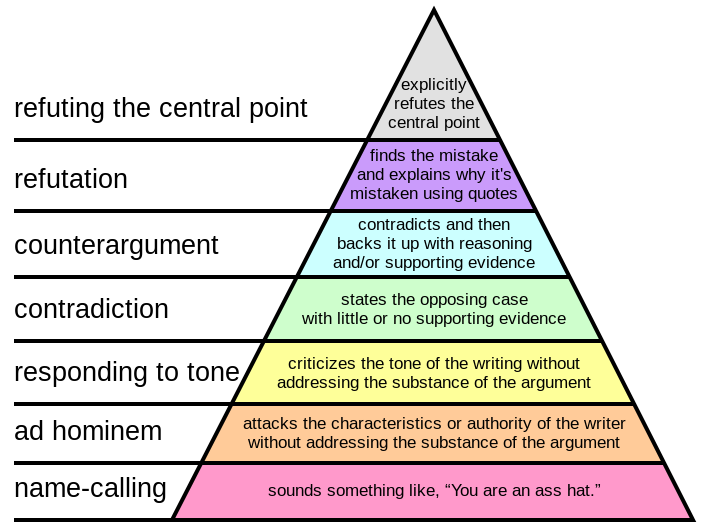
Although it might not seem like it, disagreeing is a skill. To disagree well is not only an important skill, but also a learnable one. Most people disagree so poorly that they fail to even make an argument. This podcast episode presents Paul Graham's excellent article "How To Disagree" and discusses the concept of a hierarchy of disagreement.
Show Notes:
How To Disagree by Paul GrahamGraham's Hierarchy Of DisagreementListen to Episode 280


February 6, 2017
279 Designing A Life Without Regrets (Featuring Hannah Braime)
This week Hannah and I discuss ways to design a life without regrets. Hannah talks about how to use journaling to stay conscious of what really matters to you.. I explain my own journaling practice inspired by her approach- Each week I complete the following sentence stems:
The most courageous expression of my feelings at the moment would be…The best opportunity for quality time this week is …If I were to let myself be happier, I would …The most extraordinary thing that I can work on these days is …The best thing I can do to get more transparency in what I do these days is …The best opportunity for automation in what I do these days is …The thing am I doing regularly that I least inspired by is …We are at our best these days when …The thing I am most concerned about going wrong this week is …The way I would handle that is …The thing I am most resisting at the moment is …The most audacious goal that haven't fully admitted to myself is …Listen to the episode to find out more!
Show Notes:
Regrets of the Dying by Bronnie WareJournaling for a Life of No Regrets by Hannah BraimePaul Graham's Todo Items (in response to Bronnie Ware's article).Episode 269: Review of A Guide to the Good Life by William B. IrvineThe Crossroads of Should and Must: Find and Follow Your Passion by Elle LunaListen to Episode 279


January 31, 2017
278 Three Principles Of Philosophy Applied To Parenting
This episode is about three principles of philosophy applied to parenting:
Children own themselves (all people are self-owners).Parents have positive obligations towards their children (all individuals are responsible for their own actions).It is wrong to initiate aggression against children (initiating aggression against anyone is unjustifiable).Philosophical principles don't provide detailed prescriptions for parenting, but they do give a framework for understanding which parenting practices are ethical.
If a principle is valid, then all its logical implications are valid too, even if those implications challenge widely-accepted practices. In the episode, I show how these principles can be applied to reevaluate many common parenting practices.
Show Notes:
TVL Episode 272 Why I Choose Peaceful Parenting
Listen to Episode 278


January 22, 2017
277 Why It Is Worth Striving To Achieve A Job Free Life
What will you do when you reach financial independence and job freedom? In this episode, I suggest some of the major opportunities that make this lifestyle worth striving to achieve, based on my own experience. Good luck on your journey, and let me know what you think!
Show Notes:
Job Free by Jake DesyllasBecoming An Entrepreneur by Jake DesyllasEpisode 254 Perpetual Travel With Kids Part 1: Interview With Go Curry CrackerListen To Episode 277


January 9, 2017
276 Society Is Your Relationships
Paul Johnson's book, Intellectuals, provides many examples of the disastrous personal lives of intellectuals like Jean Jaques Rousseau, Karl Marx, Jean Paul Sartre and Simone de Beauvoir. Why do so many intellectuals—who famously argue for a better society— behave so badly in their personal relationships? Johnson suggests a few explanations, such as their need for attention and desire to post-rationalise bad decisions.
There is also something about the way that these intellectuals think that leads them to neglect the people close to them. They share a faulty view of society, from which it makes sense for them to care so little about their personal relationships. In this episode, I argue that a correct understanding of society leads to investing in your personal relationships, because your society is your relationships.
Show Notes:
Intellectuals by Paul JohnsonEpisode 244 Thinking Rationally Part 2: Imaginary Creatures and MachinesListen To Episode 276


December 27, 2016
275 The Best Books On Productivity
This week's episode is about the most helpful books I've read on productivity. During the episode, I explain why I recommend each book and what you can expect from them.
Show Notes:
Getting Things Done by David AllenMaking It All Work by David AllenReady For Anything By David AllenThe Power Of Less by Leo Babauta (Review in TVL Episode 253)Manage Your Day-to-Day edited by Jocelyn GleiThe Power of Habit by Charles Duhigg (Discussion in TVL Episode 178)The 7 Habits of Highly Effective People by Stephen CoveyThe Checklist Manifesto by Atul GawandeHow To Read A Book by Mortimer J. AdlerThe Pomodoro Technique by Francesco Cirillo (Discussion in TVL Episode 120)The 80/20 Principle By Richard Koch The 4 Hour Workweek By Tim FerrissDrive: The Surprising Truth About What Motivates Us by Dan PinkWillpower: Rediscovering the Greatest Human Strength by Roy F. BaumeisterThe Universe Doesn't Give a Flying Fuck About You by Johnny B. Truant (Discussion in TVL Episode 141)
Listen To Episode 275


December 19, 2016
274 Imaginary Teams
Personal freedom comes from individual choice and individual responsibility, as opposed to collective identity and collective responsibility. This week's episode is about an idea that I find helpful in achieving personal freedom: Don’t join imaginary teams. Listen to the episode to find out more!
Show Notes:
TVL 244 Thinking Rationally Part 2: Imaginary Creatures and MachinesTVL 245 Thinking Rationally Part 3: Anti-Rational IdeasListen To Episode 274


December 13, 2016
273 The Best Books On Entrepreneurship
This week's episode is about the most helpful books I've read on entrepreneurship. During the episode, I explain why I recommend each book and what you can expect from them. As mentioned in the episode, if you want to get a free copy of my book "Negotiate For Mutual Profit", sign up to my mailing list here.
Show Notes:
Becoming an Entrepreneur: How to Find Freedom and Fulfillment as a Business Owner by Jake DesyllasThe Lean Startup by Eric RiesThe Founder's Dilemmas by Noam WassermanThe Art of the Start by Guy KawasakiRework by Jason Fried and David Heinemeier HanssonThe E-Myth Revisited by Michael GerberThe Goal by Eliyahu M. by GoldrattCritical Chain by Eliyahu M. by GoldrattThe Personal MBA by Josh KaufmannGetting to Yes by Fischer and Ury Negotiate For Mutual Profit by Jake Desyllas (free when you sign up to TVL email list)How to Master the Art of Selling by Tom Hopkins Drive by Dan PinkDiscipline Without Punishment by Dick GroteGifts Differing: Understanding Personality Type by Isabel Briggs MyersBuilt to Sell by John WarrillowFinish Big by Bo BurlinghamAnything You Want by Derek SiversLosing My Virginity by Richard BransonHow To Get Rich By Felix Dennis
Listen To Episode 273


December 4, 2016
272 Why I Choose Peaceful Parenting
I choose to parent without violence or aggression. This means I eschew various actions that a lot of parents still consider acceptable- actions such as spanking, hitting, yelling, psychotropic drugs, circumcision, and so on. In this episode, I explain my own reasons for choosing to practice peaceful parenting.
Show Notes:
What Is Peaceful Parenting?Parent Effectiveness Training by Thomas GordonThe Milgram ExperimentTVL Series Your Own Moral Compass Part 1 (E151), Part 2 (E152), and Part 3 (E153)Listen To Episode 272


November 27, 2016
271 The Best Books To Start Learning About Financial Independence
Financial independence is one of the core topics of this podcast. I've covered it in many different ways, including a four part introductory series. This week's episode suggests a list of books that will give you an overview of the issues involved in pursuing financial independence.
I've tried to keep the list relatively short. Some of the books are must-reads, whereas others are suggested for specific purposes or additional information only. I've avoided country-specific books, so these books are relevant regardless of where you live. During the episode I explain why I recommend each book and what you can expect from them.
Show Notes:
Job Free by Jake DesyllasFinancial Independence Series: Part 1, Part 2, Part 3 and Part 4The Millionaire Next Door by Thomas StanleyStop Acting Rich by Thomas Stanley Rich Dad, Poor Dad by Robert Kiyosaki Your Money or Your Life by Joe Dominguez and Vicky RubinFail Safe Investing by Harry Browne (TVL Review)Why the Best-Laid Investment Plans Usually Go Wrong by Harry Browne The Permanent Portfolio by Craig Rowland and J.M. Lawson A Random Walk Down Wall Street by Burton Malkiel (TVL Review)The Little Book of Common Sense Investing by John BogleGuide to Investing In Gold and Silver by Michael MaloneyWhere Are the Customers' Yachts? by Fred Schwed The 4% Rule and Safe Withdrawal Rates In Retirement by Todd TressiderThe Global Expatriate's Guide to Investing by Andrew Hallam What Has Government Done to Our Money by Murray Rothbard
Listen To Episode 271