Heather Weidner's Blog, page 91
June 15, 2018
9 Writing Blogs You Should Check Out

I was going through my Twitter feed of writing/book promotion blogs that I read regularly and decided that I should share. Here are 9 that you should check out. They are great resources for information and ideas. In no particular order, here they are...
1. Morgan Wright's Literary Avenue
2. Rachel Thompson's Bad Redhead Media
6. Kris Spisak
7. Colleen M. Story's Writing and Wellness
What would you add to the list?



June 8, 2018
My TBR Pile and Other Bookish Things This Weekend
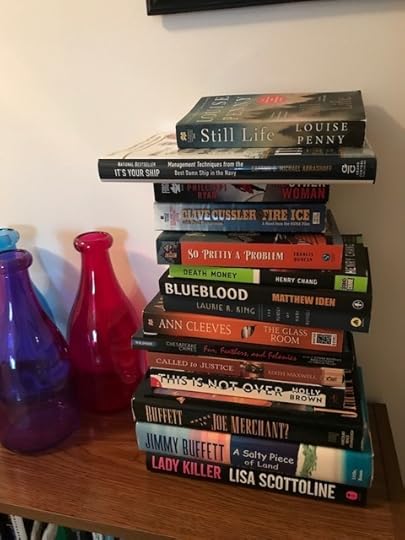
This is one of my TBR (to be read) piles. I did a good job of moving through it, and then I came back from several book festivals this spring with bags of new additions (and editions). But that's not going to stop me from heading over to the Chesterfield Countywide Friends of the Library Really Big Book Sale this afternoon. I'm looking forward to what I can find. (And I may have to start another TBR pile. What's one more.) And I'm still working on my Goodreads reading challenge. I hit the half-way point before June. Whooo hooo!
This is going to be a bookish weekend for me. I'm working on questions for our panel for the Suffolk Mystery Authors Festival in August. We're doing a presentation on the "Many Hats Authors Wear." If you haven't been to this festival, add it to your list. It's one of my favorites. There are so many mystery writers and fun events in one afternoon.
I'm wrapping up some programming details for our Sisters in Crime - Central Virginia chapter and polishing my short story submission for our next anthology. This one is southern themed, and it should be lots of fun.
My dog novella, "Moving on" is almost finished. I'm going to do one more read through and send it off for editing. It's going to be in To Fetch a Thief later this year with stories from three other talented writers.
And last, but not least, I'm wrapping up revisions to my new cozy mystery set outside of Charlottesville, Virginia.
I hope you've got big plans for the weekend that include books. Drop me a comment and let me know what's in your TBR pile.

June 2, 2018
ABCs for Writers
Here's my list of ABCs for Writers. What would you add?
Analytics - Use your web, blog, and social media analytics to help you see which of your marketing efforts are working.
Blog - Make sure your blog is on your website and use your posts to drive traffic to your website.
Critique Group - Find a group or a writing partner to help you refine your work. Honest feedback is priceless.
Due Dates - Make sure you adhere to deadlines. It's important for professional writers to meet their commitments.
Editors - You need an editor to polish your work and get it ready for publication. Don't scrimp on the editing.
Facebook Author Page - Create an author page to highlight your work and activities. A fan page has more analytics that will help you track your analytics.
Goodreads - Create a Goodreads author page. This site provides you access to a lot of readers, bloggers, and reviewers. Join interesting groups to interact with other readers.
Headshot - Make sure that you have a professional headshot that you can use on your book, website, and social media sites. This is a good investment for your writing career.
Imagination - Your imagination is your gift. Do activities to increase your creativity.
Judgmental - Don't be too hard on yourself. You are probably your worst critic. Set goals. Try your best. Learn from mistakes and move on.
Knuckle down - Stay focused. Keep your goals in mind. The only way to be a writer is to write. My friend Alan Orloff calls his process BICFOK - Butt in Chair; Fingers on Keyboard.
Learn - Stay curious and ask questions. Seek learning opportunities (There are tons of low cost/free courses online.)
Marketing Budget - Decide what you can spend to market your book. Create a plan and track your results. And keep a list of what works and what doesn't.
Networking - Writing is a solitary task. Make sure you have regular contact with other writers (in person or online) to share celebrations, ideas, and bumps in the road. We're all in this together.
Organization - Make sure you keep your workspace (physical and computer) organized. Delete what you don't need. You need to be able to find stuff.
Proofread - Proofread! Proofread! Proofread! I can't say it enough. And then find another set of eyes to read your manuscript.
Quality - People notice lack of quality (e.g. formatting issues, typos, grammatical errors). You'll lose readers. And once you've lost them, they rarely come back. Invest in an editor and a proofreader.
Reading - Make sure to read everything you can get your hands on. Plus, if you're a writer, you're doing research.
Social Media - Decide which social media platforms work for you AND your readers. Build your following on those sites.
Time - Guard your writing time. Life is busy, and you have lots of commitments, but you have to make time if you want to be a writer. Try to write something every day.
Updates - Make sure that your computer is updated/patched regularly to protect your system AND your work. Make sure that you backup your work.
Visit - Visit lots of places and try new things. You'll never know where you'll get a story idea. And take pictures for your social media sites.
Writing - Work on your craft. Go to seminars and take online courses. Try some author workshops. Improve your craft any chance you get.
XOXO - Thank your readers and fans. Appreciate those who buy your books or help you. Show some love on your social media sites.
Yum! - Take a break once in a while and celebrate. Treat yourself to your favorite thing. (Mine is dark chocolate.)
Zzzzz - Make sure you get enough rest. If you burn out, you can't be effective.

May 25, 2018
"Just So Crazy" - What Words Do You Overuse?
I recently took a story to critique group, and after the discussion, I realized I had used certain words like "just" and "little dog" way too many times. I can't tell you how many times I read through my work. I didn't catch them. My fellow writers used "just," "so," and "crazy" so many times that became the meeting mantra.
Create a list of your overused words and phrases and use your search feature to find them. Most of the time, they can be eliminated or changed to another word that improves your writing. Also search for "was/were" and other "be" verbs. Many of these sentences can be restructured with stronger, action verbs. Look at all of your adverbs ("-ly" words). Most of these can be cut.
I'm southern, and I do this a lot. Remove prepositions after verbs (e.g. jump up, click on, or open up). It should be jump, click, or open.
Here's my list. What would you add to it?
AbsolutelyCompletelyEtc.FinallyGetGotJustLiterallyReallySoSomeThatThereTotallyVery
May 19, 2018
Computer and Data Security for Authors
I returned from a rainy week in Orlando to buckets of rain in Central Virginia. I went to an IT conference and heard about all kinds of new technology. One of the highlights was when I had liquid nitrogen ice cream. Literally, too cool. The smoky fog (and probably all the rain outside) gave me flashbacks to the "Creature from the Black Lagoon" and "Swamp Thing."
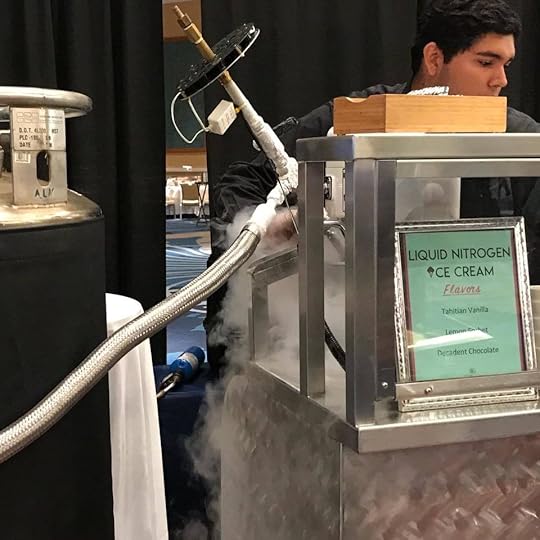
While I was there, I had the pleasure of attending Dr. Eric Cole's keynote presentation on IT Security. Many of the key points relate to authors. It's important to protect your data and your devices.
He reminded the audience that most people buy security/alarm systems AFTER a break in. Security should be a constant thought in order to defend against hacks and attacks. You need to be prepared.
As a user, you need to be aware of passwords. Don't use the same one for everything. You're giving a hacker the keys to the kingdom. Be careful what you click on and what attachments you open. You are one click away from being compromised.
The risks of compromise will always be there. You need to minimize or mitigate these risks. Don't click on strange links. Make sure that your security settings on your device are set.
Regular patching is important to ensure that known vulnerabilities are corrected. Make sure that your PC/laptop gets its regular updates.
Know the value of your data. And know where your critical files are. He talked about his million dollar laptop. He has files and client work on his device. Add up the value of what you've stored. Data is king. What would it cost you if you lost that document. Regular backups are important.
Also, free doesn't always mean "free." Games, apps, and services that are free are often mining or monitoring your data. Read the user agreements before you access them. And watch your children's free games. Many of them monitor or share your location.
If you're traveling to parts of the world where hacking is rampant, he suggested taking a "throw-away" device for use there. Don't access your critical information (e.g. banking, etc.). Don't use the device when you return.
Security often becomes an after-thought in today's busy world. Be careful. The chances of being hacked are high. Be prepared and do what you can to mitigate the risks.
May 11, 2018
My Best Plotting Happens While Driving...

I do a lot of presentations and workshops about mysteries and writing, and one of the most frequently asked questions is, "Where do you get your ideas from?"
And my answer is always, "Everywhere." I'll read something or see a TV show that sparks an idea. (I record a lot of history, science, and home renovation show. Mythbusters is a wealth of information for mystery/thriller writers.) I've keep a notebook with me. I am always jotting down snippets of conversations, a cool name, or something unusual. I used to save newspaper clippings and magazine articles. Now, I add interesting pictures and links to my Pinterest boards.
Sometimes, a story or a plot line starts with an interesting location or event. I noodle on it for a while and come up with a plotline for a novel or a short story. When I visit places, I take pictures, so I can describe it later.
I usually outline my writing. I color code areas where humor, romance, and mysteries appear, so I can see if I spread them out enough. I tend to do my best plotting while I'm driving. There is a fairly straight stretch of interstate on my way home from the city. I've plotted many a mystery or murder during that commute.
Google Maps is a great tool to find locations and to see what they look like. Is there a lake near that housing development? Does that road go through a specific town? Are their fields or mountains nearby? Where is a great place to hide a body?
The Internet can be a big distraction. I went online to check something and ended up watching cute puppy videos. But it is a FABULOUS reservoir of information. It makes getting in touch with SMEs (Subject Matter Experts) so much easier. Twitter is great for putting out ideas and receiving feedback from others. I've posted questions, and people in the know are always kind enough to respond.
I know that I'm going to have to explain my Google searches one day. Honestly, I was just checking on that kind of poison for a mystery that I'm writing.
Life is full of experiences that make their way into my writing. Be observant. You'll never know what you'll encounter.

May 5, 2018
Making the Most of Book/Writing Conferences
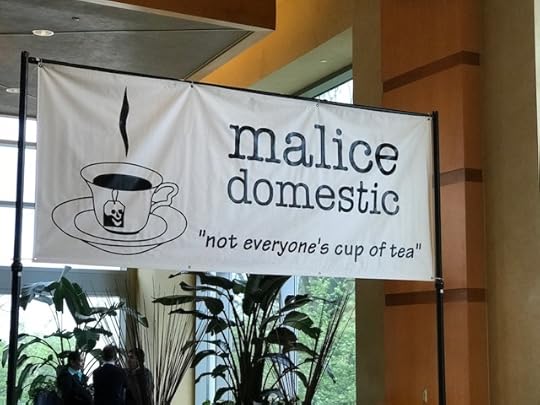
I just returned from Malice Domestic, a traditional mystery conference in Bethesda, Maryland for readers and writers. I had a fabulous time. I got to meet and mingle with so many talented writers and chat with mystery readers. Here are some things I've learned over the years...
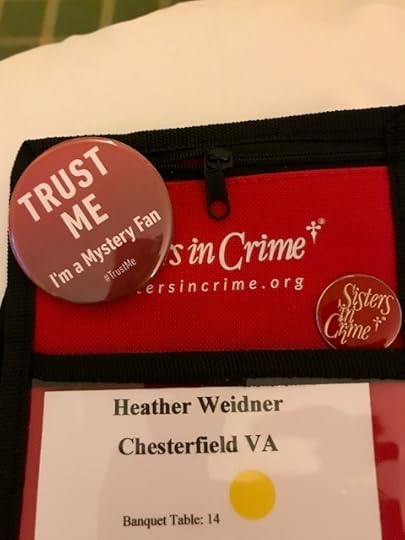
Before the Event
1. Decide if you want to attend an event that focuses on writing (e.g. the craft, mechanics, etc.) or readers (e.g. programming geared for readers and fans). Look over the conference materials. You probably won't find book marketing and writing tips at a fan-based conference, and you usually won't find too many readers at an author-focused event.
2. Decide if you want to participate in a panel. If so, make sure that you sign up early (it's usually part of the registration information).
3. Make sure to fill out all registration and applications ahead of the deadline. If you miss early bird deadlines, the prices go up.
4. Make sure to keep copies of all confirmation emails. I keep them in a folder, and I print them for the trip.
5. Many conferences sponsor an anthology of selected authors' short stories. If you're interested, make sure you're aware of the requirements and deadlines.
6. Many conferences have special events (e.g. banquets, luncheons, breakfasts, and other meet ups). Make sure you're aware of all the registration requirements, so you don't miss out.
7. Check out the website for the dress code for special events.
8. You're going to do a lot of walking. Make sure you have comfortable shoes.
9. If there is a book dealer, make sure that you contact him/her before the event to find out if your books will be there. Some do consignments with authors. Make sure you have all the details and know whether or not to bring books.
10. Always bring plenty of pens, bookmarks, and business cards. You'll never know who you'll meet.
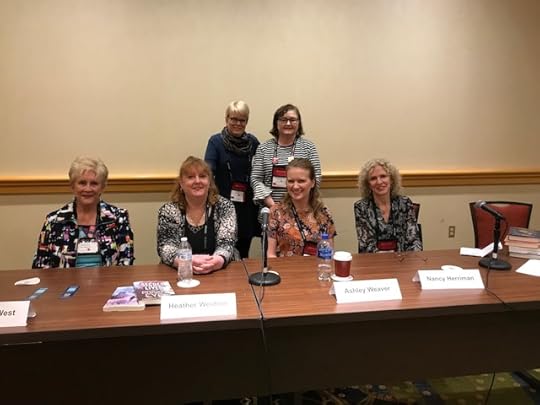
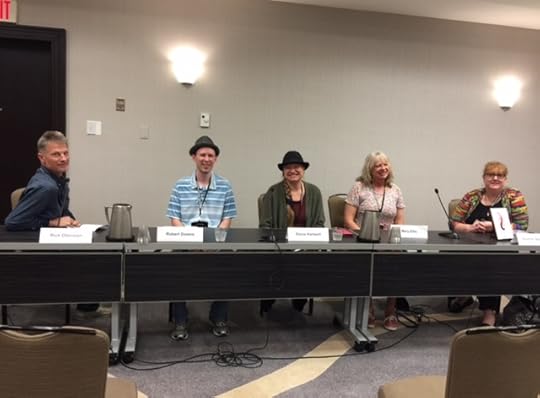
During the Event
1. Get a copy of the schedule of events and plan your time. I attended one conference where the panels and book signings were in different hotels. I had to make sure I had enough time to get to the locations.
2. If you're on panels or have book signings, make sure you know when and where you're supposed to be. Most panel moderators contact you before the event to review logistics and discussion topics.
3. If you flew to the conference, most hotels have a business area where you can ship things back home. Many conferences provide give-aways (and lots of books). Some conferences have hospitality rooms where you can donate books that you don't want to travel with.
4. Find the "meet up" places (e.g. lobby, bar, and entry ways). These are usually great places to find old friends and meet new ones.
Best wishes with your next conference. I always have a great time at these events. And there are lots of choices out there, depending on your interests and genre. What else would you add to my list?
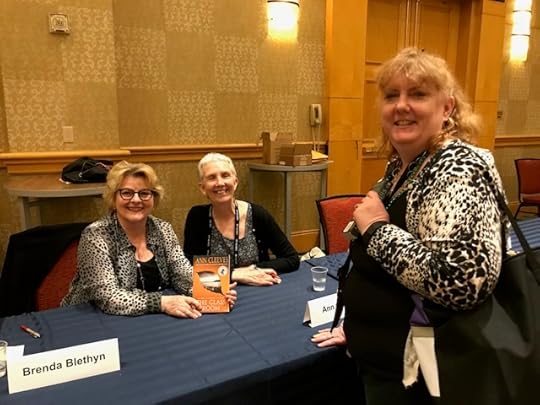
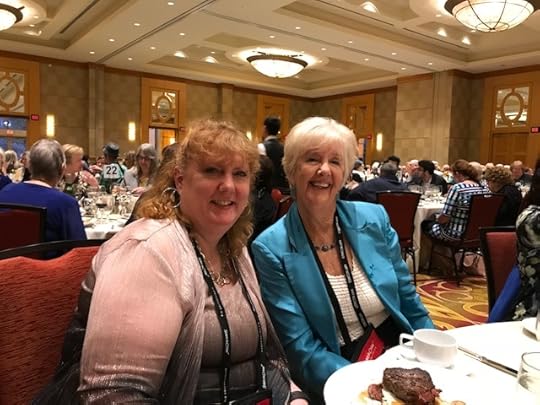
And you'll never know who you'll meet...
April 20, 2018
Pet Sidekicks
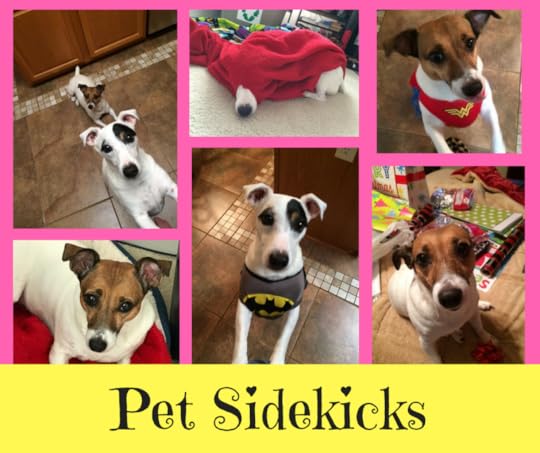
I love pets, and I'm drawn to mysteries and thrillers that have pet characters. My sidekicks are are two crazy Jack Russell Terriers, Disney and Riley. Disney's been the model for Darby in my story, "Moving On," and Bijou in a cozy mystery that I'm working on. I started listing authors who have pets in their mysteries. I found lots with cats and dogs. And only one with a hamster. And I found lots to add to my TBR (To Be Read) piles.
Dogs
Robert B. Parker's Sunny Randall and Rosie the miniature American Bull TerrierEllery Adams' Olivia Limoges and Captain Haviland the Standard PoodleRobert B. Parker's Spenser and Pearl the Wonder DogRita Mae Brown's Mrs. Murphy and Tee Tucker, a CorgiSpencer Quinn's Chet and Bernie Mystery SeriesDashiell Hammett's Nick and Nora Charles and Asta the TerrierJudith Lucci's Michaela McPherson's Angel the German ShepherdWaverly Curtis' The Barking Detective Series with Pepe the ChihuahuaMy Delanie Fitzgerald Series with Margaret the English Bull DogCats
David Baldacci's John Puller and AWOL the catLorna Barrett's Tricia Miles and Miss MarpleLilian Jackson Braun's Jim Qwilleran's Koko and Yum YumRita Mae Brown's Mrs. Murphy and Sneaky Pie BrownLots of Pets
Krista Davis' Pens and Paws Mystery SeriesSparkle Abbey's Pampered Pets Mystery Series (Their pen name came from their pets.)Bethany Blake's Lucky Paws Petsitting MysteriesAnnie Knox's Pet Boutique MurdersHamster
Janet Evanovich's Stephanie Plum and Rex the HamsterWho else would you add to the list?
April 13, 2018
What's Your Favorite Type of Sleuth?
There are so many sleuths out there: professional, amateur, female, and the list goes on and on. Do you have a preference? I've grouped some of my favorites by type, but they're in no particular order. What other authors and sleuths would you add to the list?
Hard-boiled Detectives - This character type is usually male and tough. He can survive in the gritty world, and he often works in a big city. This type solves mysteries by stick-to-itiveness and street smarts. He usually is a private detective or some sort of fringe law enforcement who solves crimes because the police are ineffective. This subgenre came from the pulp fiction magazines in the early 1900s.
Dashiell Hammett's Sam SpadeRaymond Chandler's Philip MarlowRobert B. Parker's SpenserCozy Amateur Detectives - The Cozy subgenre derived from the British mystery traditions. Originally, they were set in pastoral or smaller settings. There was an amateur sleuth who solved the crime because law enforcement was bumbling. There was a small circle of suspects, and violence and sex happened outside of the plot and not in full view of the reader. This subgenre was often called soft-boiled, and it has evolved into all kinds of themed mysteries. Many of the sleuths have interesting jobs or hobbies.
Agatha Christie's Miss MarpleDiane Mott Davidson's Goldy BearEllery Adams' Molly ApplebyDonna Andrews' Meg LangslowSherry Harris' Sarah WinstonMaya Corrigan's Val DenistonRhys Bowen's Lady GeorgianaPrivate Eyes/Bail Bondspersons - This subgenre has a sleuth who has some training in law enforcement, but he or she is not with the police. The stories can be hard-boiled or softer.
Janet Evanovich's Stephanie PlumArthur Conan Doyle's Sherlock HolmesMichael Crais' Elvis Cole/Joe PikeP. D. James' Cordelia GrayRhys Bowen's Molly MurphyAgatha Christie's Hercule PoirotCarolyn D. Hart's Max DarlingEdgar Allan Poe's C. Auguste DupinSpencer Quinn's Chet the DogMy Delanie FitzgeraldPolice/Military/Federal Law Enforcement - There are mysteries or thrillers with law enforcement and/or retired officers as the sleuth. Some have a military or federal investigative jobs.
John J. Lamb's Brad LyonBill Crider's Dan RhodesMichael Connelly's Harry BoschP. D. James' Adam DalgleishCraig Johnson's Walt LongmireDavid Baldacci's John Puller, Michelle Maxwell, and Sean KingLee Child's Jack ReacherLawyers - I like legal mysteries and thrillers. These sleuths are either lawyers or investigators in law offices.
Michael Connelly's Mickey HallerLisa Scottoline's Roato and AssociatesJohn Grisham's Many Stand-alone ThrillersWhat other types of sleuths would you add to my list?
April 6, 2018
How Do You Eat Your M&Ms®?

We decided in an unofficial work poll this week that you can tell a lot about how someone's personality by how he/she eats their M&Ms®. One of my co-workers has an old fashioned gumball machine, and he keeps it stocked with M&Ms®. Several folks had stopped by his office before our meeting, and everyone showed up with handfuls of the coated candy. Here are the results of our "experiment."
1. The majority of people in the room ate their candies in color order. They finished one color before moving on to the next. I'm in this camp. When I was kid, and the dyes were different in the 1970s, I could tell the color by the taste (especially the red ones).
2. Several of the folks always ate two M&Ms® at a time.
3. One person arranged the candies by color in rows, and she ate one from each row to keep the rows even . Her preference was an orderly presentation over the color sorting.
4. One person ate them by the handful. He liked the candy and didn't waste time arranging them.
5. One person arranged them into shapes or pictures before eating. He liked to make art before snacking.
When I Googled it, I was surprised that we're not alone. Check it out. There are lots of opinions on the best way to eat the candies. What's your preference and which color is best? (Blue!)