Heather Weidner's Blog, page 88
January 11, 2019
Share the Love and Pay it Forward

I owe a HUGE debt of gratitude to my fellow Sisters in Crime authors who are so generous with their time and advice. This is an incredible gift (especially when I first started my writing journey). They offered great advice on anything from where to get a great headshot to which book events were best for mystery authors.
Here are some thoughts on how you can give or receive help from other authors.
If you read someone’s book, leave a review. It doesn’t have to be a dissertation. You can just say something brief like, “I liked this book.” Review numbers do matter in marketing.
Recommend your favorite author to your library. Many take book suggestions and add new books to their collection.
Like, share, or comment on authors’ social media posts. This helps with marketing and search results.
If you’re an author, look for other authors or bloggers who will let you be a guest in their newsletter or on their blog. This spreads your information to a whole new group of readers.
I have a blog, Pens, Paws, and Claws, and I do #WriterWednesday author interviews about writers and their pets. If you’re interested in a slot, message me.
Buy a book for yourself or as a gift. One of my author friends goes to book signings, and she gives the signed book away on her site. There’s a sale involved and some social media publicity. When I buy a book, I usually take a picture of it and post it on social media and tag the author and/or the book store. Indie bookstores need your love and support too!
Tell your friends and family about books and authors you like. Word of mouth recommendations are great.
Recommend an author’s book to your book club. Many authors will visit or Skype if you ask. I love talking to book groups.
Start a “what are you reading today” post on Facebook or Twitter. Tag the author. You’ll be surprised how many people will comment. You’ll get good recommendations, and a lot of social media action.
What else would you add to my list? Happy reading (and don’t forget to leave a review).


January 4, 2019
Getting Yourself Out There - Where Do I Start?
Not only do you write, but you have a lot to say. How do you find opportunities for author panels, workshops, and other speaking engagements? Note these are often an investment of your time, energy, and money, and you may not get to sell books at every event. But you are meeting people and talking about your work. A lot of times, I see my ebook sales spike after an event. People may not have bought a book at the event, but they did later. Here is what has worked for me.
Join a writers’ group. I’m a member of two groups that keep a database of volunteers who will speak to schools, colleges, libraries, and other groups.
Offer to speak at book clubs. Get the word out on your website and newsletter that you’ll visit or Skype with book groups. Tell all your reader friends. Contact your library and local book stores to see if they have book groups that would be interested in writer visits.
Get to know your librarians. Many are looking for programming ideas, and they need speakers or people to lead workshops. Our mystery group writes a murder script each year for our local library’s fundraiser. They have an event where the audience tries to solve the mystery, and the authors discuss and sign their books.
I speak to school groups and English classes because I want to encourage young writers. Usually, this isn’t an opportunity to sell books, but I always have bookmarks, pencils, or swag for each kid.
Connect with other writers in your area to see where they do appearances. See what they recommend. This gives you insight into venues, how the events do publicity, and the audience that you can expect.
Connect with other writing groups. They often need speakers or instructors for workshops and conferences.
If you attend a conference that has panelist opportunities, sign up. I love meeting fellow authors and talking about books. These usually have book signing opportunities too.
Google writing events or conferences to see what is offered in your area.
Be creative. I’m in several themed anthologies, and we did signings at wineries and wine shows or the book that was wine-themed. We have some pet expo signings lined up for our dog-themed anthology this year.
Talk to your friends who are in clubs and organizations. Many of these are looking for speakers for their monthly programming.
If there is a fee to register or a cost to rent a table, you need to weigh the cost and your investment of time. Think about sharing a table with another author to keep the cost down. Also, when I do handouts for workshops and speaking engagements, I always make sure my website, newsletter, and social media links are listed.
December 28, 2018
Reading is Research
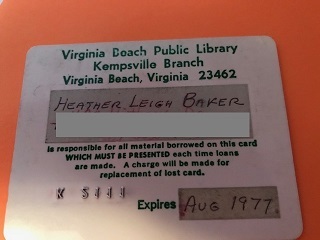
I have always loved books and reading. Yes, this is my first library card from 1972. It opened hundreds of worlds to me. I’m always sad when people say that they don’t like to read. Reading is entertainment, an escape, a journey to new places, a portal to new worlds, and research. Writers must read.
Stephen King said it best, “If you don’t have time to read, you don’t have the time (or the tools) to write.” By reading other authors, you learn vocabulary, literary techniques, and genre conventions. Look at the way the words flow in a work that you like. The author creates the story and moves the plot along. It’s not a play-by-play of every detail that happened in someone’s ordinary day. Look at the dialogue. It’s not mundane chitchat. Good authors don’t tell their readers things. They show them. They are artists who paint a verbal picture.
Stephen King’s On Writing is one of the best “how to” books for writers. When I started writing, I read every book about writing that I could get my hands on. I spent more time reading those than I did writing. Over the years, I kept a few. On Writing is one of those. It’s good to learn new things about mechanics, but I think reading books in your genre teaches you more about the conventions (e.g. cozy mysteries don’t usually have graphic scenes or language; mysteries usually have a dead body in the first chapter). You learn how to use language, describe things, and which point of view to write from.

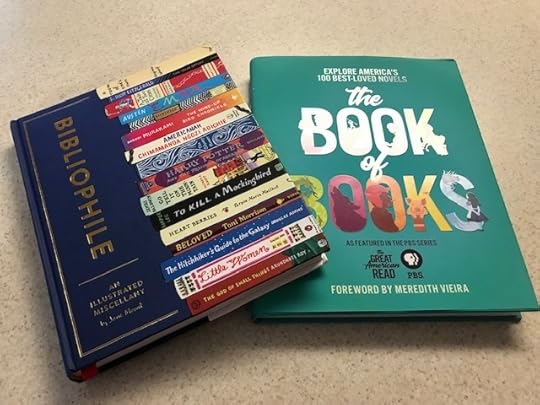
I love receiving books as gifts. This year for Christmas, I received two books about books, and I can’t wait to read them. I still have gift cards left, so I’m not done with the book shopping.
Are you on Goodreads? I like the annual book challenge. I need to think about my goal for 2019. I usually go with 26 (one for every two weeks of the year), but maybe this year, I’ll set a stretch goal. I like how the site keeps track of my totals for me and helps me to remember to leave a review. Plus, at the end of the year, I liked seeing all the year’s books.
What are you reading right now?
December 21, 2018
What's in a Name?

A lot goes into naming a character, especially for one in a series who will be around for several books. The name has to fit the character.
It should also be pronounceable. Or if you think it’s a difficult name, give the reader a hint of how you want it pronounced. I named a character “Roni” (short for Veronica) once. In my head, she was Roni (Rah-knee). Some of my beta readers called her “Rhoney” like “Rice-a-roni.”
Avoid naming multiple characters with similar names. It makes it hard for readers to keep them separate (e.g. Kris, Chris, Christian, Kristen, Christie).
My friend, the late Kathleen Mix, had a trick for naming characters in her books. She made a character list, and only one character per book could have a name with the same letter. She could have an Anastasi, Brooke, and Caitlyn, but not an Alfred and an Annie.
When I hear an interesting name, I jot it down and add it to my working ideas list.
You can Google the social security baby name lists by year. This helps if you want to know what names were popular in a particular year.
When I’m watching sporting events, I look at the rosters for interesting names (first and last).
Keep a character list for each book. This helps me from repeating names. I tend to name a lot of minor characters Bob and Joe for some reason. I also record character traits in my chart, so I can keep them consistent book to book.
I will often pay homage to pop culture in some of my character names. There are references to Van Halen and Wham! in Secret Lives and Private Eyes. In “Diggin’ up Dirt” in To Fetch A Thief, the nosy neighbors are named in honor of a namesake from the TV show “Bewitched.” My PI, Delanie Fitzgerald gets her last name from my favorite American author, F. Scott Fitzgerald, and her agency is named for Dashiell Hammett’s The Maltese Falcon.
What else would you add to my list about naming characters?
December 15, 2018
My Proofreading Tasks
I appreciate my beta readers, critique group, editors, and proofreaders. They help me spot things that are hiding in plain sight in my manuscripts. I can read and reread chapters and miss mistakes. Here are some steps I use when I’m self-editing to make sure that I catch as many of these little gremlins as possible.
Always run a spell check after any edits are done. This gets rid of most of the run of the mill typos.
I keep a list of words that I overuse (e.g. was, were, that, just). I do a search and destroy for these.
Every time there are major edits, I print out a copy of the WIP. I find more errors when I proofread on paper than when I do reading the on-screen version.
Sometimes, I’ll use a particular character’s name or the corresponding pronoun too many times (especially in the same paragraph). When I print the WIP, it’s easier to spot repetitive words.
I check character names (especially if I changed a name during the editing). Look for alternative spellings of names too (e.g. Marcia/Marsha; Steven/Stephen). I write two series with female sleuths, and I’ve been known to use the wrong character name in the WIP. I do a quick search to make sure I didn’t make that mistake again.
Create a chart of all your character names and locations. This helps me keep names straight, so I don’t have three Bob’s in the same book. It also helps me keep details like eye and hair color straight.
I reduce the page view to 25% on my document and check chapter lengths. In the early stages, I’ll end up with a four page chapter and one with twenty page. This helps to keep them about the same length.
During major edits, I reread the first and last paragraph in each chapter to make sure that it grabs the reader. At the end of chapters, you don’t want the reader to decide that it’s a good stopping point. Make them read past their bedtimes.
Go through your WIP and look for mundane dialogue. It’s hard, but you need to cut it. It doesn’t move your story along.
What works for you when you’re proofreading? What would you add to my list?
December 7, 2018
13 Things You Should (or Shouldn't) Do on Social Media

I’m doing a workshop next spring on social media, and I’ve been thinking about things that authors should and shouldn’t do on the different platforms. Here’s my list so far.
It is a great time saver to link your social media accounts, so that you only have to post once. However, the audiences and their interactions are different on Twitter, Facebook, and Instagram. For example, some encourage lots of hashtags. If you post a meme to Facebook and it autoposts to Twitter, it shows your comment and a link. Your Twitter followers have no idea what it is unless the open the link. If possible, I think you should tailor the post to the social media platform.
Unless you have a REALLY good reason to do so, don’t use the automated direct messaging on social media sites. It’s a quick way to annoy followers. I can’t tell you how many automated DMs I get a week with a link to buy someone’s book.
If you’re an author, make sure you follow the 80/20 rule. No more than 20% of your posts (maybe less) should be “buy my book.” People are interested in conversations, building relationships, and interesting content. They’ll tune you out if you blast buy my book messages constantly.
Try to be timely with your social media responses. It’s odd when someone responds to a post or comment from months ago.
Avoid posting things that aren’t meaningful or interesting. Some cleanup applications will post after you clean up non-followers. The post will read something like, “I deleted 115 followers and added 38 today.” These are only advertisements for the cleanup app.
Do not respond to negative reviews. Don’t get into a social media battle. It’s public, and once it’s out there, it’s hard to clean up. You are your brand. Be careful not to damage it.
Think before you post something. Don’t respond to someone in anger. You can delete it, but it may not be gone forever. Old tweets and posts can come back to haunt you.
If someone posts something negative on your site, you need to monitor it and decide whether to delete it. I facilitate several group sites, and we have to review posts from time to time to make sure they represent the views of the group.
Don’t be a leech. Authors will often post something about their book on their sites or blog, and another author will comment with links to his/her book. Only include your information if there is an invitation to share links. Don’t hijack someone else’s post.
Help others celebrate. If there is a cover reveal or a new book, share it.
If you’re struggling to find things to share, post a picture or information about interesting places or events you’ve attended. If you’re at another author’s event, post a picture of him/her and the book. Make sure to tag others. If you have pets, include them.
People love to see that you’ve tagged them, and often they will comment or share the post. This helps both of you with your social media reach.
If you’re using a picture of others, make sure that it’s flattering. I have one friend who never looks at the picture closely. No one wants to be the one with his/her eyes closed in the group picture.
What else would you add to my list? Any social media pet peeves?
November 30, 2018
All in the Name of Research...

Surprisingly, fiction writers do a lot of research to ensure that the details in their writing are as accurate as possible. When you’re a mystery writer, some of this research can put you in sticky situations (e.g. You may not want to Google the best ways to a dispose of a body.)
I’m fortunate that my dad is a retired police captain, and I have other family and friends in law enforcement who are always willing to answer my procedural or odd questions. I can’t tell you how many times, I’ve had questions like, “What does a meth lab smell like” or “what size of a hole would this bullet make.” People are always willing to help and are very generous with their time.
I am also thrilled to be a part of Sisters in Crime. Our local chapter has great programming. We bring in experts to answer questions and explain procedures. I now have two awesome bail bondsmen in my contact list (or in case I need them). We’ve also had an arson investigator, medical examiner, FBI agent, ABC officer, Railroad Enforcement Officer, an expert in human trafficking, and a state conservation officer talk to our group.
I’ve also found that Twitter is a solid resource for finding experts and people who know things. I’ve put out questions before and received good information quickly. Social media sites are great for research, finding contacts, and networking. I’ve received several referrals that were quite helpful in my research.
My Private Investigator, Delanie Fitzgerald, is always getting herself in and out of humorous situations. In book three, she gets a gig to go undercover at a drag show to find out who is stealing from the talent. I’d never been to a drag so, so my writer friend, Rosemary Shomaker, arranged a research trip for brunch. (The bananas foster French toast was wonderful!) We had so much fun, and I ended up with a lot of details to add to my story, and a subject matter expert to answer my questions.
I always keep a list of folks who help me with ideas and answer questions for the book’s acknowledgments page.
Okay writers, what adventures have you had in the name of research?
November 23, 2018
My Latest Cooking Adventures...
It’s the holiday season, and the baking and cooking frenzy has begun. Cooking is not my thing. I tend to swear a lot when I have to prepare large meals. My Italian friend keeps telling me that cooking is relaxing. I haven’t experienced that yet. I used to dust my stove. I’m trying new recipes lately, so that’s progress.

I do have history of bad kitchen experiences…I had to go to the hospital once for stitches because of a cooking accident. I dropped a glass mixing bowl on my foot. Another time, I put a glass container with au gratin potatoes on the stove top. It exploded, and we found shards of glass and cheesy potatoes in the strangest places. I spilled beef broth from the crock pot down my front, and got a nice burn. In the early years, the smoke detector served as our dinner bell.
I can’t tell you how many things I burned, charred, or set fire to. And yes, it is possible to set fire to a no-bake recipe. I was making an éclair pie, and the last step is to ice the graham crackers with chocolate frosting. It makes a big mess if the icing in solid, so I put the container in the microwave for a few minutes to melt it. I put a paper towel over it to prevent any spatter. Well, this time, the canister turned into a volcano, spewing chocolate lava down the sides. The next thing I knew, the paper towel caught fire. What a mess.
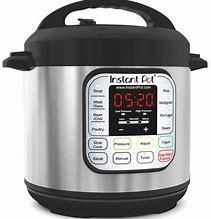
We acquired an InstantPot recently. (It didn’t fall off of a truck. My husband went to an unclaimed freight auction, and it was in one of the boxes.) We made baked potatoes in it in 15 minutes. Awesome! It’s my new, favorite thing. I have to admit that I was a little leery at first. My grandmother had a 1970s pressure cooker, and the release valve blew off and hit the ceiling once. But there was nothing to fear with the InstantPot. It worked as advertised.
Now I’m looking for good recipes to try in it. Let me know if you have any good suggestions. Kelly Justice, from Fountain Books, sent me two good cookbook suggestions to try. What are some of your favorites?
November 16, 2018
How Productive Are You with Your Writing?

With work and life’s distractions, I don’t have a lot of writing time. I admire writers who can create multiple novels a year and stick to a daily writing schedule. I’m a binge writer. I write when I have blocks of time, and I don’t always keep to a set schedule.
But I did an experiment this year to see what was possible, and I had one of my most productive years to date. This year, I completed a cozy mystery, and I have a sloppy draft of my third Delanie Fitzgerald novel. I wrote a dog-themed mystery novella that was published in November in To Fetch a Thief. I wrote a short story, “Art Attack” that will be published next May, and I wrote a nonfiction piece that will be published next year too. And before December, I hope to start on another novella for the Mutt Mysteries collection.
It is possible to increase your writing output. Here’s what I did:
I cut out a lot of TV time.
I edited, proofread, and did rework during times that I normally didn’t write. I would print out chapters and put them in my purse for wait times like in the doctor's office or at the DMV.
I started tracking my word count for the week. This helped me stay on track. It also gave me a visual of what I had accomplished.
I tried to find some writing/editing/blogging time each day. It didn’t always work, but I made the effort.
I was a little more choosy and protective of my writing time. I learned how to say no politely.
I used my critique group to keep a monthly deadline. We submit 50 pages for review each month. I didn’t skip months this year. I had something to review each month.
Best wishes with your writing projects. What else would you add to my list?
November 9, 2018
Writing Advice from the To Fetch a Thief Authors
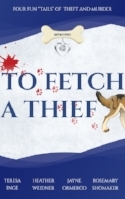
I’m excited to be one of the four authors in the dog-themed mystery, To Fetch a Thief. I asked my three partners to offer some writing advice, and here’s what we came up with:
What is the one thing about the writing life that you didn’t know until you were published?Jayne: How difficult the marketing phase of things would be. I guess I thought these books would just sell themselves!
Heather: I didn’t realize how much marketing went into the book business. It takes a great deal of time to promote your work. You need to balance the writing/editing time with your promotions.
Rosemary: Until I was published I didn’t understand the role of an editor and that the role may be different from story to story or book to book. Some editors require you accept their suggestions and changes unless you have some compelling reason to not accept them. Luckily, my first editor was a mentor and taught me what was expected and how much to discuss or argue or disagree with an editor. Other editors were unclear on the editing process logistics—the how to indicate changes or indicate non-acceptance of editing. I’ve had some snafus where edits, both mine and the editor’s, were not properly reflected in a story, and that’s frustrating.
Teresa: That I have to market, promote, and sell my books. I’ve learned a lot about promotion and scheduling book signings.
How long did it take you to get your first work published (from creation to actual book)? What was your first published work?Jayne: I wear the “100-rejection” badge of honor. It took me almost six years to get The Blond Leading the Blond published by Avalon Books. I finally got noticed because my first chapter was a finalist in a mystery writing contest in which the final judge was the publisher.
Heather: My first mystery to be published was a short story, “Washed up” in Virginia is for Mysteries, a Sisters in Crime anthology. It took about six months to write and polish. Then the book editing/proofreading/formatting process took probably another eight months or so. My first mystery novel, Secret Lives and Private Eyes took me about five years to write and rewrite and rewrite. When it was finally accepted for publication, it took another seven months to become a book.
Rosemary: The first item I had published for pay was a short story I’d written during a long weekend. Once I submitted the story, the gentle editing needed from my end took only an afternoon. “A Fish By Any Other Name” was included in A Shaker of Margaritas: Hot Flash Mommas, the first of the Shaker of Margaritas series, in 2010.
Teresa: I was part of a creative writing group at a community college and my first story was published in a book with that group. It was around six months after my story was accepted.
Plotter (one who plans or plots out every detail of her writing) or Pantser (one who writes by the seat of her pants)?Jayne: Plotter. You should see my story board!
Heather: I’m a hybrid. I start out as a detailed plotter, and then I write. The story and the characters always go where they want to go.
Rosemary: I’m a pantser—autocorrect keeps changing this to “panther,” and that’s funny to me because if I were an animal, I most certainly would not be a panther. I’d be a duck or some other bird, I think. But I digress. So, I am a seat-of-the-pants writer with plotter tendencies. Being a pantser is much more fun, if you ask me. Early on I thought I was a plotter because I’m very analytical. I was highly organized for the first part of my life. When I became a parent, all that flew out the window. The first story I consciously totally plotted revealed I was a pantser. By the time I finished plotting that story to the nth degree, I was so sick of the story that I didn’t want to write it. The beauty of a pantser is the creative flow. The raw material for the story emerges organically—“pantsing”—and the rewrite and editing phases allow me to be as analytical as I want to be on a project. That’s a good mix for me.
Teresa: Both. I like to plot and be creative so I can follow where the character takes me.
What advice would you have for a new writer?Jayne: Don’t ever, ever give up. It’s a long, long road to publication, but it’s worth it!
Heather: Be persistent. If you want to be published, keep at it. Keep writing. Keep learning, and don’t give up.
Rosemary: My advice to a new writer is two-fold. First, pick a genre. Second, join a writing group dedicated to that genre. Many new writers I meet dabble in several genres, and this wastes a lot of time, in my opinion. Much learning about professional fiction writing is transferable among genres, but one must commit to only one in order to show his or her serious intent and gain the trust of that selected genre’s writing community. For me, meeting mystery writers and hearing their explanations of “this is how mystery writers do it” was the beginning of fruitful learning.
This advice has been rejected by a few new writers who don’t see why they have to limit themselves. I’m not talking about limits. I’m suggesting concentration. I advise new writers to immerse themselves in maybe one or two genres at a time, if they really won’t choose one only. I also suggest that they not share about their dual commitments in either writing community and just focus on whatever genre project or group they attend or work with, independent of the other group. In my mind, a new writer (with a day job) could immerse himself or herself in one genre and one genre community for two years and learn enough to know if it’s his or her writing “home” for the foreseeable future.
Teresa: Go to conferences and workshops. And write. These will help develop your craft.
To Fetch a Thief is the first in the Mutt Mysteries collection. Tell us about your real dogs and what they do while you write.Jayne: We have two rescues, Tiller and Scout. They are still puppies. I can only write while they are napping. The little one likes to curl up next to me on the sofa and rest his head on my keyboard. That is a challenge! And a distraction! But giving me lots of fodder for future cozies featuring dogs! Already working on my second Mutt Mystery.
Heather: My two Jack Russell Terriers (Disney and Riley) have beds in my office on either side of my desk. Sometimes, they help me plot or listen as I talk through dialogue. Most of the time, they snooze.
Rosemary: My dog is my comfort animal. As I raised my children, our first family dog, Mabel, and our second family dog, Current, were the loving beings in my home with the least needs. And bless their hearts, after home, house, and family needs were met, these dogs were there to provide me with easy, nonjudgmental companionship. I am not a nurturer, so family nurturing took a lot out of me. When I was exhausted and crabby, my dogs nurtured me. Now my kids are grown and my current pooch, our second family dog, “Current,” has a new role. He tears me away from my obsessing about writing and other projects and reminds me to go outside for a walk or to work in the yard with him for company. He seems to know when I really need a break. He reminds me to give him food and water, and thusly to meet my human needs to eat and drink and to step away from too much concentration and relax. He’s usually in the dog bed in my son’s old room while I write in another room nearby. He’ll walk in and interrupt me when it’s time he and I do something else.
Teresa: My dogs are Luke and Lena, both shepherd mixed. They are named after my husband’s grandparents and love to sit by me when I write.
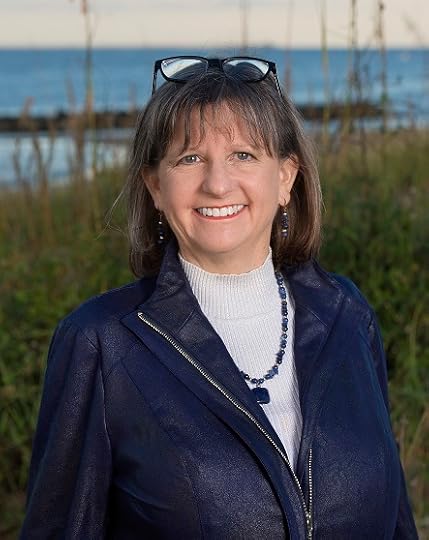
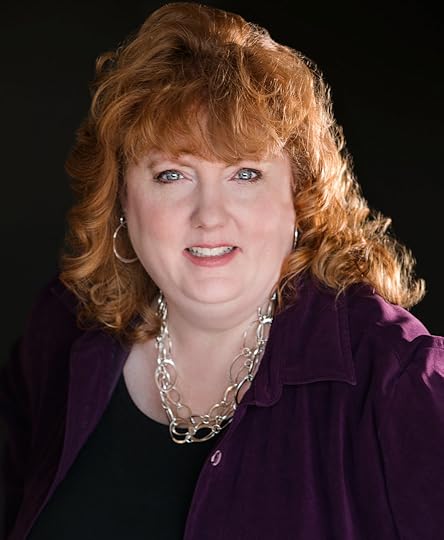
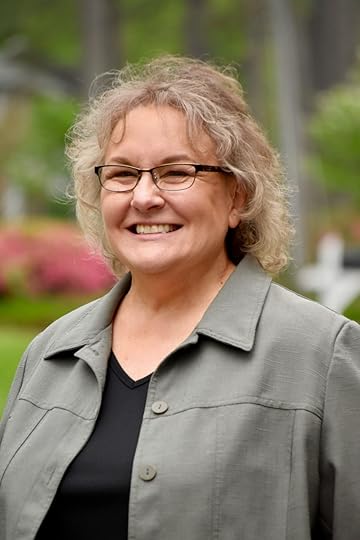
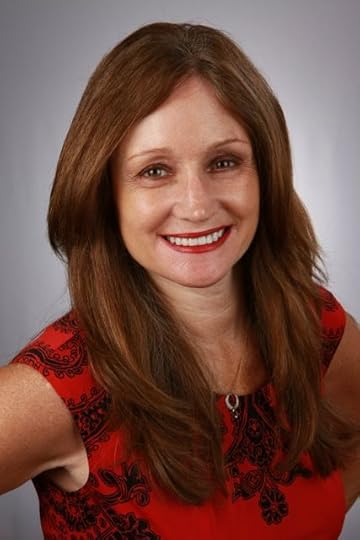
l-r: Jayne Ormerod, Heather Weidner, Rosemary Shomaker, Teresa Inge
To Fetch a Thief
To Fetch a Thief, the first Mutt Mysteries collection, features four novellas that have gone to the dogs. In this howlingly good read, canine companions help their owners solve crimes and right wrongs. These sleuths may be furry and low to the ground, but their keen senses are on high alert when it comes to sniffing out clues and digging up the truth. Make no bones about it, these pup heroes will steal your heart as they conquer ruff villains.
The Stories
“Hounding the Pavement”
by Teresa Inge
Catt Ramsey has three things on her mind: grow her dog walking service in Virginia Beach, solve the theft of a client's vintage necklace, and hire her sister Emma as a dog walker. But when Catt finds her model client dead after walking her precious dogs Bella and Beau, she and her own dogs Cagney and Lacey are hot on the trail to clear her name after being accused of murder.
“Diggin’ up Dirt”
by Heather Weidner
Amy Reynolds and her Jack Russell Terrier Darby find some strange things in her new house. Normally, she would have trashed the forgotten junk, but Amy’s imagination kicks into high gear when her nosy neighbors dish the dirt about the previous owners who disappeared, letting the house fall into foreclosure. Convinced that something nefarious happened, Amy and her canine sidekick uncover more abandoned clues in their search for the previous owners.
“Dog Gone it All”
by Jayne Ormerod
Meg Gordon and her tawny terrier Cannoli are hot on the trail of a thief, a heartless one who steals rocks commemorating neighborhood dogs who have crossed the Rainbow Bridge. But sniffing out clues leads them to something even more merciless…a dead body! There’s danger afoot as the two become entangled in the criminality infesting their small bayside community. And, dog gone it all, Meg is determined to get to the bottom of things.
“This is Not a Dog Park”
by Rosemary Shomaker
“Coyotes and burglaries? That’s an odd pairing of troubles.” Such are Adam Moreland’s reactions to a subdivision’s meeting announcement. He has no idea. Trouble comes his way in spades, featuring a coyote . . . burglaries . . . and a dead body! A dog, death investigation, and new female acquaintance kick start Adam’s listless life frozen by a failed relationship, an unfulfilling job, and a judgmental mother. Events shift Adam’s perspective and push him to act.
Book Links: