Heather Weidner's Blog, page 86
June 7, 2019
Need Something? Make It Easy...

My boss at my day situation loves his “Easy” button. There’s something to that. People are bombarded with things, and life is crazy. Recently, I was on a team reading and ranking submissions that were applications to do something for us. Some were a joy to read; all the information was organized and ordered. But there were others that we really had to dig to find the information or the proposal was incomplete.
I heard the fabulous Jane Friedman talk about this. If you want someone to help you with a writing or marketing task, make it easy for them. She’s right. Always provide the person with context and enough information to complete the task.
Blurbs - If you’re asking for a blurb, send the person a synopsis of your book and your biography.
References - When you ask for a reference or a nomination, send them a SHORT copy of your biography and other pertinent information.
Time - Give the person as much time as possible. I had a publisher once who sent out book blurb requests with a short deadline. It didn’t give busy people enough time to read enough of the book.
Pay it Forward - Make sure you’re willing to help others too. You can’t always be on the asking end.
Give Them an Off Ramp - Give the person an exit that doesn’t cause hard feelings. Everyone is busy, and your timing may not be right. When you call or write your introductory email request, acknowledge that they’re busy and that you understand if they’re unable to help right now.
By providing enough information and time, usually people are more than wiling to help.
What would you add to my list?



May 31, 2019
Do You Treat Your Writing as a Business?
For many years, my writing was a hobby for me. I did it for fun and without much thought as to what I would do with the end product once it was finished. I had no deadlines, and I could work on projects at my leisure.
When I decided I wanted to a published author, I realized that it was a business and that I needed to treat it that way. That meant being more organized and structured.
Writing Time/Scheduling - I don’t write every day. Life gets in the way some times. But I do try to write or edit regularly, and I track my word count to see progress.
Try to protect your writing time. It’s so easy to get distracted or involved in other activities. I try to honor the time I reserved for writing. And I do make much more progress when I keep to my schedule (and track my word count progress).
The Business Part - Talk with your legal and/or tax advisors to make sure that you’re compliant with the laws, regulations, and rules in your area. Do you need a tax ID number, what can you claim on your taxes, do you need to collect sales tax, and do you need a business license? I now have a new drawer in my office filing cabinet for book-related documents.
If you’re required to keep receipts, work out a system to collect/organize them for your taxes. Some use a file folder and spreadsheet, and others use an app for tracking expenses and deductions. You’ll need to figure out what works with your style and what provides you the right information when you have to file documents.
If you sell books, you’ll need to decide what you’ll accept (e.g. cash, credit card, debit card, check). I accept all, and I use a Square for the credit/debit cards.
I have to track mileage, sales, and expenditures. I do this faithfully after an event to ensure that it’s current. It is too hard to remember or recreate what I did at an event three months ago. Figure out what works best for you (e.g. file folders, spreadsheets, mobile app, accounting software packages, a personal assistant).
Events - I like to go places and talk with readers, so I like to do a lot of events. I tend to attend the ones where I can talk to readers and do presentations (and have books available for sale). I don’t base my decisions on book sales alone. Sometimes, you make contacts or build relationships that could be worth more in the long run than a sale. Networking is an important component of the writing life.
Your time is valuable, so you need to make sure that book marketing and events don’t overwhelm your writing time.
Your Time - Your time is limited and valuable. Figure out what tasks you can do yourself and what others your budget will allow you to outsource.
I like to do my blog, websites, and social media work. In the past, I have hired a line editor and someone to do specialized graphics for me. I know several authors who have hired digital or personal assistants to do administrative tasks. I also have friends who have hired folks to manage their social media accounts and publicists to coordinate marketing campaigns. Figure out what you do best and focus on those items. One of my author friends hired her granddaughter to help her with her social media. She gets the tasks done, and her granddaughter get spending money and work to show on her resume.
Your Investments - You need to decide what you can budget in terms of your time and money for your writing projects. It can be time consuming and costly if you don’t monitor where you’re spending your resources. I track this and compare it to my sales.
Writing is a business. It’s filled with contract, invoices, sales tax, and tax forms. But the writing is fun, and there is no feeling like opening that box of books and seeing your name on the cover. What else have you encountered in the business world of writing?
Happy writing!

May 24, 2019
Be Creative When Planning Author Events
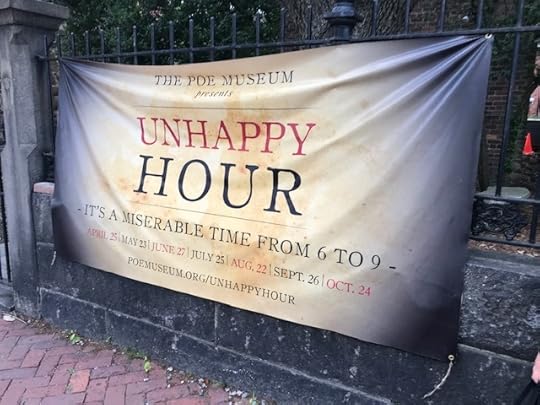
The Unhappy Hour at the Poe Museum in Richmond, VA
Writing events aren’t just a writer at a table in a book store. Be creative when you plan and accept invitations to appear. I have had so much fun at our events.
Poe Birthday Bash - Poe Museum’s Unhappy Hour - We are so fortunate to have the Poe Museum in downtown Richmond. It’s one of my favorite museums. They have lots of events and special programs. We’ve done signings, panels, and readings at their annual Poe Birthday Bash and their summer Unhappy Hours.
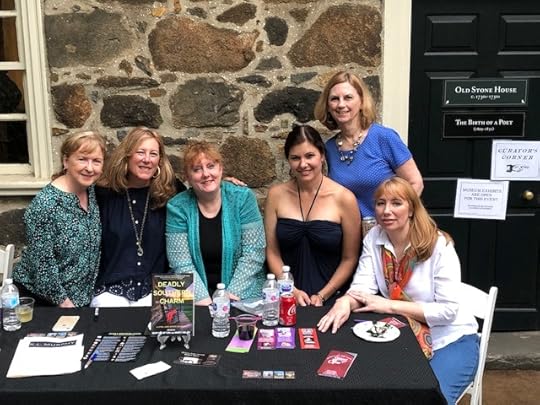
MOCA - Our short story authors participated in a reading at the Virginia Museum of Contemporary Art in Virginia Beach. A lot of museums and botanical gardens have special events or themed events that will fit with your book/genre.
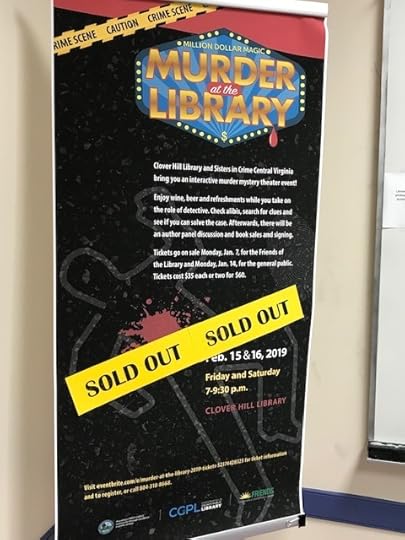
Murder at the Library - For the past four years, we have partnered with the Friends of the Chesterfield County Library and the Chesterfield Libraries to create a “whodunnit” play. Members of my Sisters in Crime chapter write the script for the library staff to act out. They sell tickets for the after-hours event, and we provide authors for a panel discussion and book signing. The event has sold out each year.
Rosemont Winery - For our wine-themed mystery anthology, our authors staff a table at the Rosemont Winery’s Arts and Crafts Festival. The day-long event is held at the beautiful winery with food, drinks, pets, and lots of fun readers who are very supportive of local authors.
Book Launch in a Winery - For 50 Shades of Cabernet, we held the book launch at the Mermaid Winery in Norfolk. The location and food were great, and we had fun talking with so many mystery readers.
Book Launch in a Bowling Alley - I had my launch for Secret Lives and Private Eyes at Uptown Alley, a bowling alley with restaurants, bars, games, and a night club. My character, Delanie Fitzgerald, visits the location in the book, so I thought it was a perfect place to launch the series. My event was held upstairs in the bar/club area with lots of lounge seating and an outdoor patio.
Book Launch in a Café - Our book launch for Virginia is for Mysteries was at the East Beach Sandwich Shop in Ocean View (Norfolk, VA). They offered drinks and great food. We signed books and enjoyed the music of the local band. This artistic community was so supportive of local writers.
Also, don’t forget workshops, libraries, school groups, and book clubs when you’re planning your events. Tell everyone that you know about your book. You’ll be surprised at the interesting invitations you’ll receive to visit and speak.
May 10, 2019
What I Learned about Navigating Writing (or Fan) Conferences
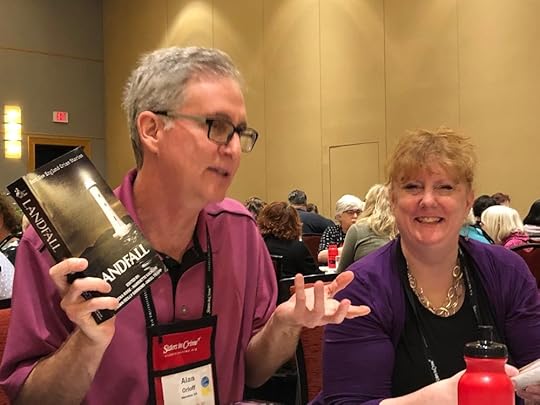
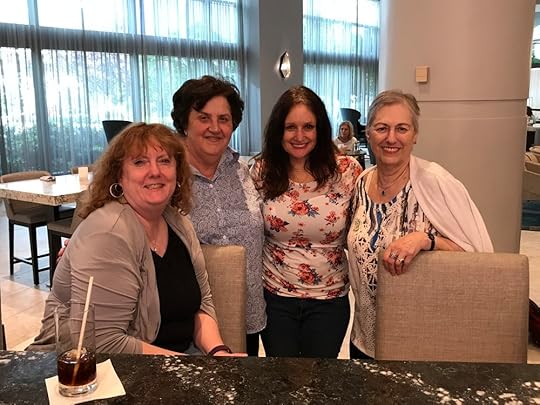
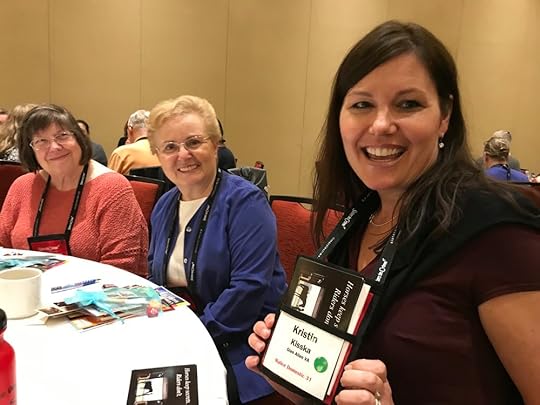
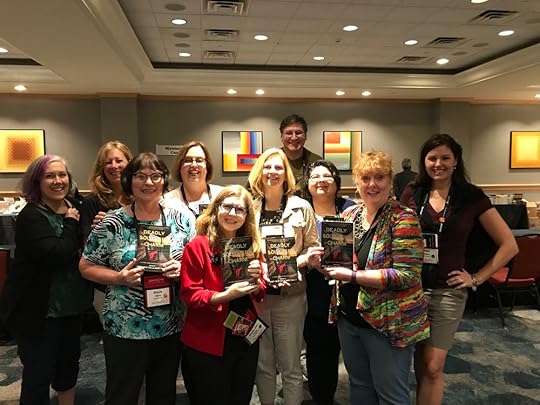
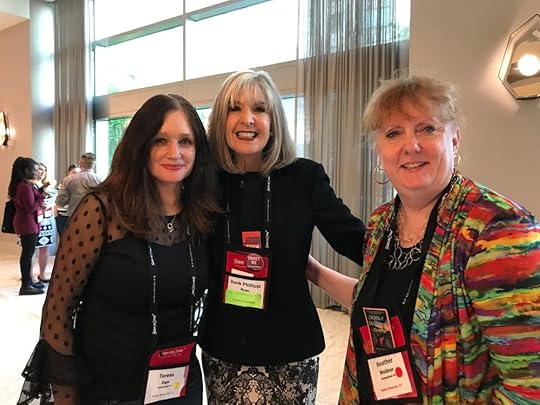
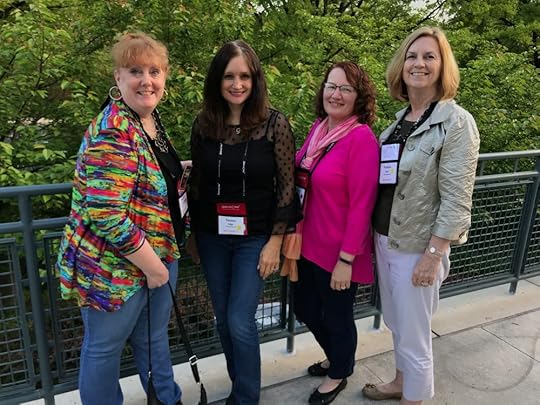
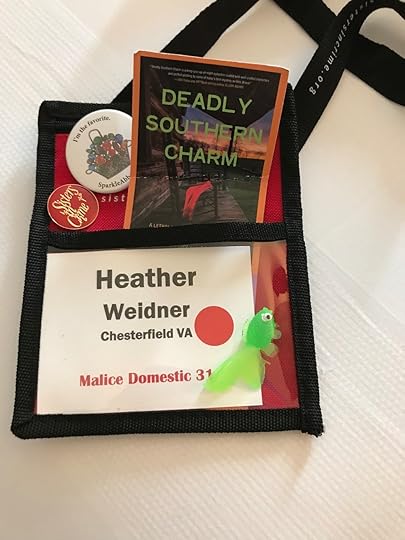
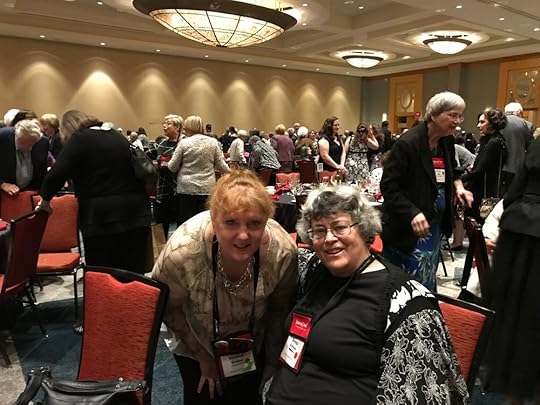
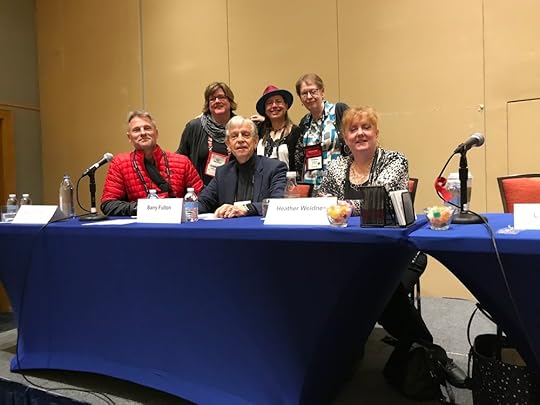
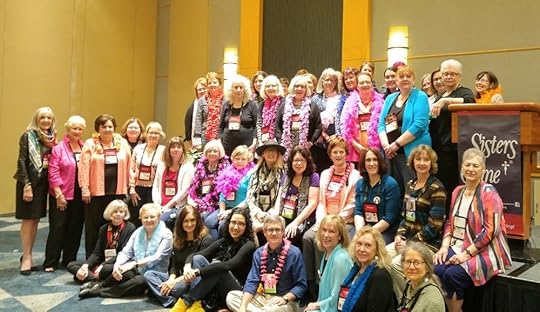
I returned from a fabulous weekend at Malice Domestic. I had so much fun networking, seeing friends, meeting readers, and being a fan girl. (I got to meet Anne Hillerman and Chris Grabenstein this year.)
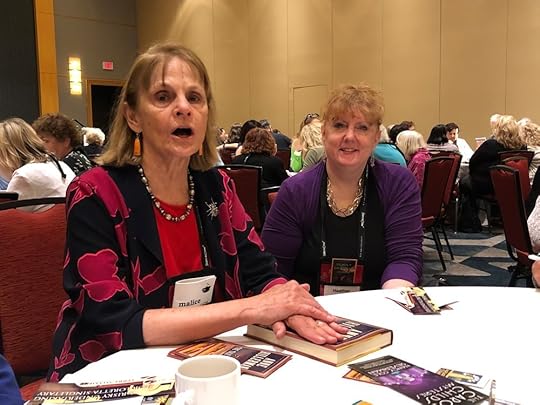
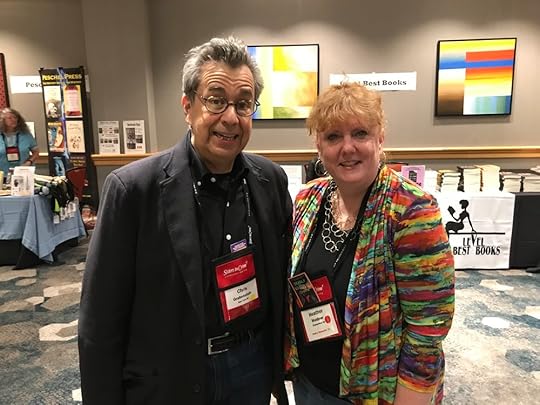
Here are some things I’ve learned to help navigate these events — whether your a writer or a fan.
Comfort
You are going to do a lot of walking. Wear comfortable shoes.
Dress in layers. Conference rooms are notorious for being frigid.
Be Prepared
Make sure you have a bag for things you’ll need: bookmarks, business cards, promo materials, a notebook, and something to write (or sign books) with.
Have your elevator speech (1-2 sentences) ready about your book in case you’re asked.
Print a copy of all your registration confirmations and take them with you to make sure there’s no confusion.
Keep all of your receipts for meals/expenses for your taxes.
Read the conference agenda and plan what you want to attend. Some provide “conference at a glance” booklets to help you navigate, and others have an app for your phone.
Swag
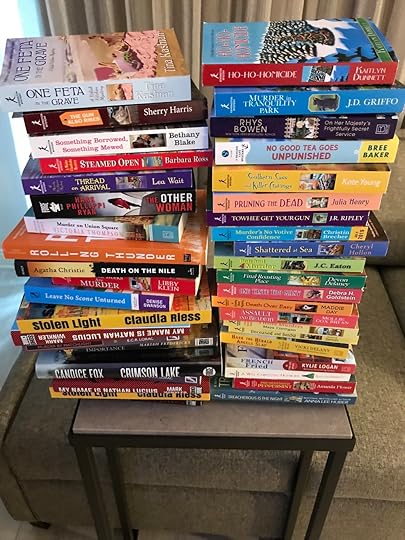
Bring an extra bag or leave room in your suitcase for all the swag and books that you’ll collect. I went to the Kensington Books give-away and signing. They were so generous. My TBR stack tripled.
Many conferences have shipping centers, so you can send it all home if you need to.
Etiquette
Be professional always! You never know who is sitting next to you.
Check out the conference’s website for past pictures to get an idea of the dress code for the events. Some are casual, and some dinners are black tie.
Don’t start every conversation about your book. Be genuine. Be part of conversations. They’ll be plenty of time to talk about your book.
April 28, 2019
20 Things I Learned from JRW's "How to Sell the Heck out of Your Book"
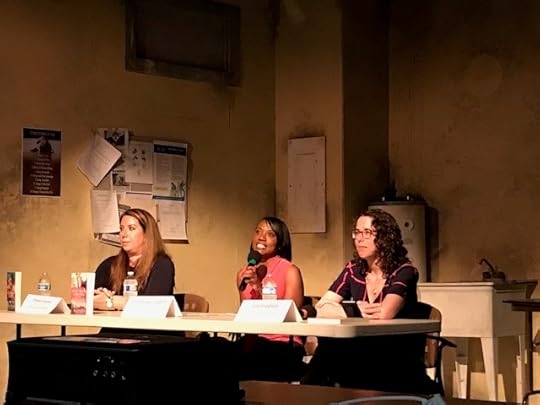
l-r: Chanel Cleeton, Stacy Hawkins Adams, and Jane Friedman at the JRW Writing Show
I had the pleasure recently of attending James River Writers’ “The Writing Show.” The topic was “How to Sell the Heck out of Your Book” with Chanel Cleeton, Stacy Hawkins Adams, and Jane Friedman. Here’s what I learned:
Write a fabulous book. Focus your energy on your writing.
Readers and word of mouth sell books.
Authors have an advantage when they write a series. It keeps readers coming back for more.
Authors need to read a lot and know their genre.
Books with good covers sell.
Make sure that you keep an email list and create a newsletter. You own this list. Make sure you maintain it.
Be active on social media.
Make sure you have an author website. Keep it current. Your website is your business card.
Jane Friedman said that you need an email list, website, and social media platform, and you need to maintain all three.
Build relationships with your readers.
Be creative when you plan events and launches. Who can you partner with?
Look at where you spend your advertising and marketing dollars. Data is your friend. It can help you set your goals.
You should start your marketing plan for a new book four months before it launches.
Networking is important. Build relationships with readers, authors, booksellers, and others.
If you ask people to do something for you (e.g. post a review, blurb your book), make it easy for them. Send them a summary and an information/press sheet.
Time management is an issue for authors. There is a lot to juggle. You need to find balance.
Hope is not a strategy for book marketing. You need a plan.
Don’t get in panic mode over book marketing. You need to be in it for the long-term.
Always be professional.
Know where your readers get their information or hang out. Figure out ways to reach them there.
April 26, 2019
Writing Advice from the DEADLY SOUTHERN CHARM Authors
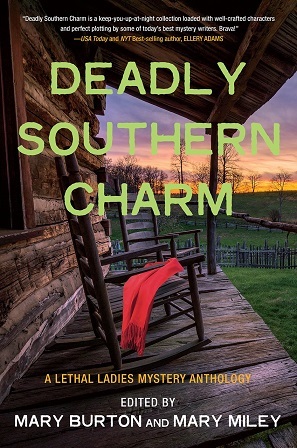
I’m very excited to be a part of DEADLY SOUTHERN CHARM anthology, and I’m thrilled to have my writer friends as guests on the blog to share their advice on writing and book marketing.What is the one thing about the writing life that you didn’t know until you were published? Mollie: I didn’t realize that you don’t make much money. Of course, I didn’t start writing to make money. I absolutely LOVE what I do. And the further I get into my career, the more I see that loving it the ONLY reason to do it. If you don’t love the thrill of a perfect sentence, or the way a story moves you, you won’t find the business gratifying. Heather: I didn’t realize how much marketing was involved with the book business. It takes a great deal of time to promote your work. You need to balance your writing tasks with your promotional ones. Lynn: I didn’t realize that the moment I turned it into my publisher it wasn’t MY book anymore. It was OUR book. People kept messing with my book. Now, they were all good things and comments, but I didn’t know how collaborative book publishing really is. Even for my self- published books. Best advice? Make sure you agree with and trust the people working with you. Kristin: Authors write their first draft for themselves, but revise-revise-revise for their readers. Maggie: There’s a lot to do in the way of marketing, promotion, etc. My advice is to know your personal goals for your work: is it money (good luck!), love of writing, posterity? Perhaps publishing a book is a bucket list item, and multi-publishing isn’t your goal. It’s great to share inspiration and support with fellow authors, but avoid the keeping up the Joneses syndrome. Genilee: How important it is to force yourself to set aside time every day to write and how hard marketing a book can be in today’s complicated world of publishing. J.A.: How much work is involved that doesn’t involve writing. Marketing is a big part of the job and can be very time consuming. How long did it take you to get your first work published (from creation to actual book)? What was your first published work? Mollie: For fiction, it was probably 6 months. I had already been a published nonfiction author for years and agent said if I wanted to write fiction, they’d love to see it. I’d been write fiction for years and had an idea brewing, so I wrote the first draft of “Scrapbook of Secrets” during National Novel Writing Month and after several drafts, sent it on to my agent. Heather: My first mystery was a short story, “Washed up” in Virginia is for Mysteries, a Sister in Crime anthology. It took about six months to write and polish. The book process probably took another eight months or so. My first mystery novel, Secret Lives and Private Eyes took me about five years to write and rewrite (and rewrite). When it was finally accepted for publication, it took another seven months to become a book. Lynn: My first published work was a couple of essays I wrote and got published during the year of cancer (2007). A few years after that I wrote for the Trues market – short emotional stories with a twist. (I fell in Love with a Carney was my first credit with them.) Then in 2012, I got back a book that had been rejected by a large romance publisher after two years of back and forth consideration. I sent it to a soon to open digital first imprint. It sold in a week. In total, the process took from creation to sale, about three years. My first mystery sold the next year in a three-book deal to Kensington. Kristin: I’d been writing fiction for about 6 years before I had anything published. My first published work was a short historical mystery, “The Sevens” which was selected from a blind pool of submissions to be included in Bouchercon’s anthology, MURDER UNDER THE OAKS. From the first moment I typed a word to the release date was ten months. Maggie: “A Not So Genteel Murder,” a short story featured in the Virginia is for Mysteries anthology, was my first published work (2014). Writing and polishing the story took about six months, and the publishing process another six to eight months. Later in 2014, I published my first novel, Murder at the Book Group. That took me forever to write—ten years!—and another 18 months from contract signing to release day. Genilee: It took my mother four months to write the first book (Twist of Fate) in our five-book The Fate Series. It then took me six months to rewrite, edit and find a publisher. It took the publisher about four months to get it in print and formatted as an ebook. J.A.: My first published story was, Bikes, Books and Berries. It was part of the Virginia is for Mysteries Vol II mystery anthology. It took about six months to write and rewrite before submission. Plotter (one who plans or plots out every detail of the writing process) or Pantser (one who writes by the seat of his/her pants)? Mollie: Definitely a pantser—which I why the synopsis is so hard for me. I like the idea of a story unfolding organically and, in truth, it’s made some of the best stories in my career. Heather: I’m a combination of the two. I start out as a detailed plotter. I even bought a huge whiteboard for my writing room. And then I write. The story and the characters always go where they want to do. Lynn: I’m definitely a pantser. I do an outline chart with all the chapters listed to keep my timelines straight. It also helps me keep my chapters about even. And I break out the story structure on that. Red Herring #1, Red Herring #2, Big Black Moment, Happy Ever After... It gives me something to write toward, but the story and character take over. Kristin: I’m a relaxed plotter. I can’t start writing a story (novel or short) until I know the final scene or the twist. I’ve stopped creating outlines, though. Now I just jot down the major scene points and let my characters take the scenic route from stop to stop. I love when they surprise me! Maggie: Like Heather, I’m a plotser (combo of plotter and pantser). I have a general outline, but I “listen” to the characters as I write. They have their own ideas. Genilee: I think we’ve created a new term: plotser! I sit down to write with no particular direction in mind, but I’m outlining and redoing everything as I go to make it all make sense and flow. J.A.: Short stories I usually panster. Novels I’m a plotter. I like outlines, and I need them to make sure I don’t skip any necessary details. What is the easiest part of the writing process for you? Mollie: Coming with ideas is very easy. Making them work, not so easy. Heather: I love to write. I just tend to get bogged down in the editing and rewrites. Lynn: There’s supposed to be an easy part? I worry that I’m taking too long to write. I worry that I’m too fast. I worry I didn’t do enough to launch the book... it goes on and on. The best part for me is the planning or scheduling. What am I writing this month, promotions, edits, releasing or travel, it all goes in a word document as well as on my on-line calendar. I love planning and can get lost in the process without writing if I’m not careful. Kristin: I love drafting. I don’t let myself edit as I write my way through the first draft, so I feel like I’m merely transcribing a movie that’s scrolling in my mind. That said, all the magic happens in the revising stage. Maggie: Idea generation. I love the ideas I come up with on my daily walks. Developing them on the page? Not so easy. Genilee: Putting words together the right way. I do it for a living through different channels (magazines, newsletters and articles). J.A.: I enjoy writing dialogue. If a scene is working the dialogue comes easy. When the dialogue is off, I know I need to rewrite. What advice do you have for a new writer? Mollie: Be patient with yourself. Learn the craft. Practice. Take classes. Write and rewrite. I don’t care how good your agent is or how much money you have to promote something—it’s your writing that will ultimately set you apart. Heather: Be persistent. If you want to be published, keep at it. Keep writing. Keep learning. Writing is a business. Lynn: Writing is a business is a big one for me. Since I started with smaller publishers, I was around a lot of writers who were dabbling in the business without committing. You have to commit. You don’t have to write. It’s like giving yourself homework every night. But don’t tell me you WANT to be an author. Write or don’t, there is no try to paraphrase Yoda. And don’t get lost in the internet talk about the latest scandal (because there’s always a new one.) If it doesn’t affect your career, don’t let it steal your writing time. Kristin: There’s only one rule for writers: Keep your butt in the chair. Progress, even just a few paragraphs at a time, is still progress. Maggie: Carve out time for writing every day (or most days), even if it’s just fifteen minutes. Use a notebook or recording method to keep track of ideas, to-do items, etc. Find systems that work for you. Read the best writers in your genre. Bottom line: write. Genilee: Don’t go into this field thinking you’ll be rich and famous. Do it because you love writing. It’s extremely rewarding to get published, but getting to point of making money is a constant process that takes many years (unless you are lucky of course!). J.A.: Social media is a time killer. You need an online presence if you want to be a commercial writer, but it’s easy to fall down the rabbit hole. A few minutes turns into several wasted hours that could have been spent writing. The same for research. Use both with restraint. Many thanks to Mollie Cox Bryan, Lynn Cahoon, Kristin Kisska, Maggie King, Genilee Swope Parente, and JA Chalkley for the interview!
AUTHORSMollie Cox Bryan is the author of cookbooks, articles, essays, poetry, and fiction. An Agatha Award nominee, she lives in Central Virginia. www.molliecoxbryan.com Lynn Cahoon is the NYT and USA Today author of the best-selling Tourist Trap, Cat Latimer and Farm-to-Fork mystery series. www.lynncahoon.com J. A. Chalkley is a native Virginian. She is a writer, retired public safety communications officer, and a member of Sisters in Crime. Maggie King penned the Hazel Rose Book Group mysteries. Her short stories appear in the Virginia is for Mysteries and 50 Shades of Cabernet anthologies. www.maggieking.com Kristin Kisska is a member of International Thriller Writers and Sisters in Crime, and programs chair of the Sisters in Crime – Central Virginia chapter. www.kristinkisska.com Genilee Swope Parente has written the romantic mystery The Fate Series with her mother F. Sharon Swope. The two also have several collections of short stories. www.swopeparente.com Heather Weidner is the author of the Delanie Fitzgerald Mysteries. She has short stories in the Virginia is for Mysteries series, 50 SHADES OF CABERNET and TO FETCH A THIEF. She lives in Central Virginia with her husband and Jack Russell terriers. www.heatherweidner.comBOOK LINKS Wildside Wildside eBook Amazon
April 19, 2019
16 Things I Learned about Writing from the Fabulous Elaine Viets
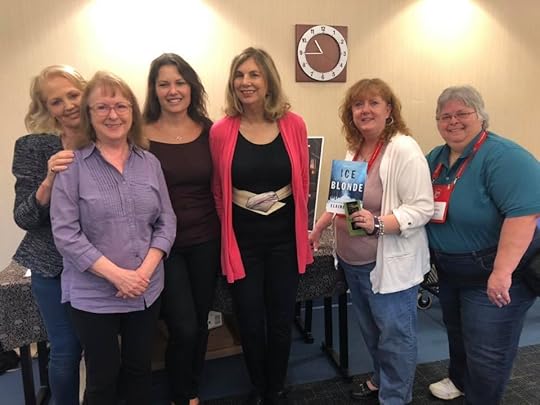
l-r: Mary Burton, Maggie King, Kristin Kisska, Elaine Viets, Me, J. A. Chalkley
I had the pleasure of attending a presentation on forensics and plotting for writers by Elaine Viets recently. Here’s what I learned from her:
Writing is a business.
Know your competition. Read others’ works.
Know your genre/subgenre. Do you write thrillers, cozies, police procedurals, etc.? Know where your book fits.
Look at the major mystery awards and see who is nominated in “Best New First Novel.” Read them.
Make sure that you do your research first before you start writing. Facts do matter.
Decide up front on what point of view you’re going to use (e.g. first, third, omniscient). Third person tends to be more popular in mysteries.
Avoid writing in multiple point of views.
Decide if you’re writing a stand-alone or a series. If you’re doing a series, don’t kill off characters that you’ll need later.
Everything in your novel should move the plot forward. If it doesn’t, cut it.
Proofread your work. Don’t submit anything with grammatical errors or typos.
If you write about an amateur sleuth, make sure that she has a solid reason for solving the crime. It shouldn’t be because the police are bumbling.
You need to think about what makes your book different from all the others out there.
Something has to happen in the first chapter. You need action. Don’t talk about the setting or the weather.
Make sure that your plot keeps moving in the middle of the book. You don’t want a saggy middle.
Readers like plot twists and surprises.
Don’t include a scene unless it tells the reader about the character or moves the story forward.
April 12, 2019
How Much of You is in Your Writing?
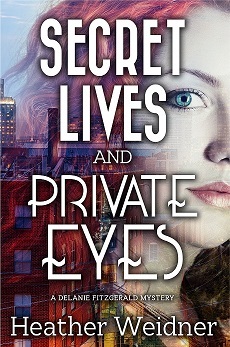
I’m asked a lot if my sleuth, Delanie Fitzgerald, is me. I wish. She’s my alter-ego. She runs toward dead bodies, and I run away from them. She’s a redhead who drives a Mustang and gets into way more trouble than I do. (I’ve had two or three Mustangs through the years.) We like a lot of the same things, but she’s not me. However, there is a lot of me in my novels and stories.
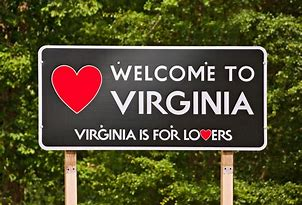
I set all of my books/short stories in Virginia. I write where I know. I’ve lived in the Commonwealth all my life, and I want everyone to know about all the great places, history, and culture of the area. I grew up in Virginia Beach as a CK (Cop’s Kid). It was the best place to be a teenager. We live in Central Virginia now outside of Richmond. And there are so many local attractions, festivals, and restaurants that are fun to include in stories.

A lot of my interests (e.g. reading, traveling, history, and pop culture) end up in my work. I am an 80s girl, so you’ll often find a lot of references sprinkled in.
I have always loved to people watch when I’m out and about. Snippets of conversation and descriptions often end up in my work. My family and coworkers aren’t safe. Stuff they say appears all the time. You’ll never know who or what will end up in the next book. I keep a notebook with me, and I jot down quirky things all the time.
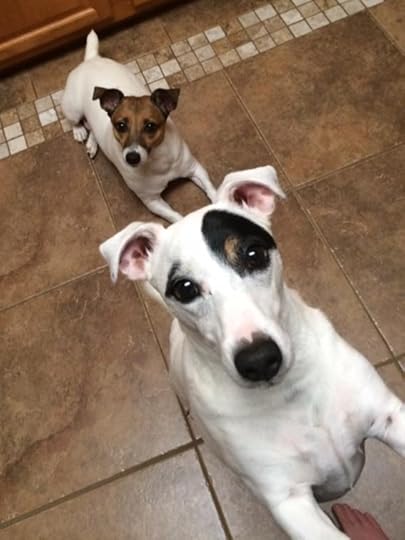
I have two crazy Jack Russell terriers (terrors). The female, Disney (the brunette), has had two dog characters based on her — Darby in “Diggin’ up Dirt” in To Fetch a Thief and Bijou in a cozy that I’m working on. Her brother Riley was the model for the JRT in Secret Lives and Private Eyes. My Uncle’s Rottie is the model for the dog in “The Fast and the Furriest” in the next Mutt Mystery.
So while my characters aren’t me, there are a lot of my interests (or things I want to try) in my writing. In the latest Delanie mystery (that I’m still working on), she gets involved with some drag queens, contraband pet dealers, and historic artifact thieves.
April 5, 2019
Spring Cleaning! Tips for Authors

We’re having our upstairs painted this week, and we spent a lot of time moving things, pulling down pictures, and getting rid of stuff we don’t use any more. Since it’s that time of year, we may need to do some spring cleaning or purging in our offices and files. Here are some places to start…

Clean your work space on your desk. I found so much junk that was no longer needed (and about 50 sticky notes that were outdated).
Look at your bookcases. I cleaned out two shelves of old style guides and dictionaries. I sent a bunch of writing prompt books to the Friends of the Library.
Make sure that you’re backing up your files regularly. Your work is too valuable to lose.
Go through your graphics, pictures, and videos. Archive or delete what’s no longer needed. These take up a lot of storage space.
Remove duplicate files.
Go through your email contacts and purge any you don’t need.
Look through your favorites on your web browser and delete outdated ones or broken links.
Read through your author biography and update it.
Then check your website and social media sites. Update your photo and biography.
March 29, 2019
How Do You Decide What Author Events to Attend?

There are so many events and writer functions to choose from. It’s often a tough decision to make on whether to go or pass. I have several author friends who weigh their decision based on how many books they think they’ll sell.
Your writing is your business, and you do need to make sure that you have time to write and market your work. You, as a professional, also need opportunities to sell your books. And your time is valuable.
That being said, there are times when I’ll do a volunteer event or a workshop where I don’t have an expectation for book sales, but there are often benefits or surprises that go along with these.
Every event is an opportunity to talk to readers. Because I’ve attended an event, I have been invited to a radio interview, podcast interviews, marketing opportunities, book clubs, and other speaking engagements.
I love libraries and writing programs for new writers (especially kids), and I try to make time to do these kinds of events. I spoke to an English class recently about the mystery genre, and I was floored that multiple students had brought copies of my books for me to sign.
I did a group event at a wine festival once. It was hot. We were outside, and book sales were slow. But we did have an opportunity to talk to hundreds of people. I gave out bookmarks, pencils, and pens. I was also pleasantly surprised that my ebook numbers jumped the next week. People who were not ready to buy a book at the wine festival bought one later online.
Once, I did a book club presentation at a senior facility for a friend who was a program director. After a wonderful discussion, all the participants asked me to come back for a book signing.
So, yes, as an author you need to make sure that you divide your time. If you’re on the road constantly, you’re not writing your next book. But, if you don’t go out, you don’t have opportunities to talk to readers. I think it’s a balancing act.