
Sandy Brehl's Blog, page 7
November 26, 2014
Bayard Rustin: Interview with Co-Author Jacqueline Houtman
Several years ago I launched a blog about unpacking the power of picture books for any age. I’ve featured an extensive array of titles, but a frequently-viewed post addresses Martin Luther King, Jr. and explains why he is a personal hero of mine. That post, and another about “themed” months” (Black History Month, Hispanic Heritage Month, etc.) explain in detail why I feel so strongly about presenting young readers with a truthful and balanced picture of the past in ways that are both age-appropriate and “whole grain”. That’s my way of saying they have not been sanitized or retro-fitted to wrap the realities of the past in modern day sensibilities. I advocate for sharing these topics with ALL children, ALL year long.
My decades-old stance on this matter feels right at home in the current discussions of the need for diversity within the content and creation of literature for young people.
 With MLK, Jr. as a personal hero, I sought out readings about him and the Civil Rights movement throughout my life. As a result, I actually knew the name Bayard (rhymes with “fired”) Rustin for many years. Only recently did I become aware of how pivotal his role in the well-known March on Washington actually was. An internet search of his name reveals many titles by him and about him. But the first time I read about Rustin in a book for young readers was when TopShelf Productions released a graphic history by Congressman John Lewis last year: MARCH: Book One. Lewis knew and worked directly with him, so the truth surrounding Rustin’s place in history was described honestly, if briefly.
 Now, I’m excited to celebrate the launch of a book that is decades overdue but seems to have arrived at exactly the right time in our cultural evolution. BAYARD RUSTIN: THE INVISIBLE ACTIVIST released at the end of this November. It is co-authored by Wisconsin writer Jacqueline Houtman, historian Michael G. Long, and Rustin’s partner and archivist, Walter Naegle. Jacqueline agreed to answer some questions about this book and how it came to be:
Jacqueline, thank you for your important part in creating this book for today’s readers. Let’s start by finding out more about how that happened. How is it that you became a part of this impressive collaboration?
 My two coauthors, Walter Naegle and Michael J. Long, had worked together on another project. Mike is
an associate professor of religious studies and peace and conflict studies at Elizabethtown College. Walter was Bayard’s partner for the last ten years of Bayard’s life and he’s the archivist of the Rustin estate. Walter provided a lot of the material for a book of Bayard’s letters that Mike edited called I Must Resist. They decided to write a children’s biography together and submitted it to Quaker Press. The folks at Quaker Press thought it needed some work to make it appropriate and engaging for a fifth grade audience so they contacted me and took me on as a coauthor. They knew about me because my novel, The Reinvention of Edison Thomas, is in the QuakerBooks catalog and I gave a talk about it at a national Quaker gathering a few years ago.
My two coauthors, Walter Naegle and Michael J. Long, had worked together on another project. Mike is
an associate professor of religious studies and peace and conflict studies at Elizabethtown College. Walter was Bayard’s partner for the last ten years of Bayard’s life and he’s the archivist of the Rustin estate. Walter provided a lot of the material for a book of Bayard’s letters that Mike edited called I Must Resist. They decided to write a children’s biography together and submitted it to Quaker Press. The folks at Quaker Press thought it needed some work to make it appropriate and engaging for a fifth grade audience so they contacted me and took me on as a coauthor. They knew about me because my novel, The Reinvention of Edison Thomas, is in the QuakerBooks catalog and I gave a talk about it at a national Quaker gathering a few years ago.
 After reading this biography of Rustin I’m astonished at the impressive accomplishments of a man whose name is virtually unknown. Even though I had made it a point to learn about him, I didn’t realize he was a Quaker. How familiar were you with Bayard Rustin before you began to work on the project?
As a Quaker, I knew of him by reputation, but I didn’t know many of the fascinating details of his life. He is much admired among Quakers, and his Quaker beliefs were the basis for his activism. When I was asked to work on the book, I jumped on the opportunity. For me, it was what Quakers call a leading—something I just had to do. I was led by the Spirit, not by reason. It was such an honor to be asked, but I was also afraid I wouldn’t be able to do the subject justice. I set aside all the other projects that weren’t under contract to make time for it.
I’m aware of your science and technical writing backgrounds, but you also write novels, in a style you’ve called “sciency fiction”. How much of the content was based on your own research and how much of the content had been “gathered” before you embarked on the actual writing ?
The manuscript Walter and Mike submitted was about 30,000 words, so there was a lot of great content there to begin with. Part of what I did was cutting out details that weren’t part of the heart of the story—what drove him and what got in his way? The point was to make it engaging, rather than exhaustive. If readers want to find out more, there are resources listed in the back of the book (and I’ve added additional resources to my website, www.jhoutman.com)
I did add material that I thought young readers would connect with. I beefed up the sections on his childhood, for example. It was wonderful to have Walter and Mike as resources. For example, when I was looking for more information on Bayard’s childhood, Walter sent me a two-hour tape recording of an interview with Bayard about his childhood.
I used sidebars to give historical context without interrupting the narrative and to break up the big blocks of text. Some of the material was pulled from the original text, and some of it was added.
I also added a chapter at the end. The original manuscript ended with his funeral. While we were negotiating about my role in the project, President Obama awarded the Medal of Freedom posthumously to Bayard. Walter accepted it. He and Sally Ride’s partner Tam O’Shaughnessy were the first same-sex partners to accept this award. That was a perfect ending, and one that wouldn’t be part of the book if it had been published in its original form.
What specifically in Bayard’s long life of commitment to equality and freedom did you find most surprising and/or impressive?
I was impressed by his resilience and his determination. When he was prevented from working toward justice in one arena, he turned to another. I was also surprised that he had such a beautiful singing voice. I purchased two CDs of his singing and listened to them frequently as I was writing.
What do you hope for this book to accomplish, what impact and sustained life do you see it having in the future?
When I mention Bayard’s name, most people have no idea who he was. I would like that to change. I would also like young people to realize that the Civil Rights Movement was made possible by a lot of people who will not be named in history books. Each person has the power to work toward equal rights for everyone.
That last comment touches my heart, especially when pop culture seems to be driving people (not just youth) to validate their lives through fame rather than through the good they can do for others. I’m also excited that this title will release as soon as it’s ready. I’m sure it will find attention during “Black History Month”, but history happens every day, and the stories of history-makers should fill our daily lives.
Will you be launching the book at any upcoming events?
I’m doing a reading at A Room of One’s Own in Madison, WI on December 5 and a Goodreads giveaway. That’s all I’ve got lined up for now. I’m sure there will be more. I think this is the kind of book that builds its audience slowly.
Thank you, Jacqueline, for following your leading and allowing young readers to meet this amazing American as he takes his rightful place in their classrooms and lives. I’ve read it twice so far, and I feel confident Rustin himself would say you did his story justice, in every sense of the word.
This quote by Rustin convinces me he would appreciate having his story told by someone who shares his Quaker values:
“My activism did not spring from my being gay, or, for that matter, from my being black. Rather, it is rooted fundamentally in my Quaker upbringing and the values that were instilled in me by my grandparents who reared me. Those values are based on the concept of a single human family and the belief that all members of that family are equal.”


October 15, 2014
A Noble NOBEL Award: Book Recommendation

Malala Youzafsay
The 2014 NOBEL PEACE PRIZE (2014) -details here- was recently awarded to co-recients, Malala Youzafsay and Kailash Satyarthi. Pakistani Malala’s identity has been well-known since her name, face, and story hit world news two years ago. Instead of allowing the attack on her by the Taliban to make her a victim, she has used her public platform to advocate for a cause, the one and only, non-political cause she addresses so effectively: The right of every child (girls AND boys) to an education.
 By contrast, Kailash Satyarthi of India has lived a much longer life, dedicating his efforts to ending child abduction and child labor by following in the footsteps of Mahatma Ghandi’s non-violent protests. In many parts of the world he is well known and revered, but his efforts are followed world-wide far less often than are Malala’s. To gain a greater understanding of his commitment to this cause, listen to this interview with his son, Bhuwan Ribhu on LAKE EFFECT, (Milwaukee’s public radio station WUWM).
Both causes defy argument by any reasonable human. Both causes can feel “too big to get our arms around” to the extent that we question the effectiveness of any actions on our part as members of a privileged, first world community. The very least we can do is to actively work to become better informed.
Several books about Malala and her cause have already been published and others are underway.
Boys Without Names, Balzer and Bray, 2010
Books about child abduction and child labor are not as prominent in the media. Whether you are concerned about the cause of child abduction and child labor or not (Seriously? Could anyone not care?) I recommend reading one of the most powerful books I’ve ever encountered. BOYS WITHOUT NAMES is contemporary fiction, set in India, and written by Wisconsin’s/India’s remarkable author, KASHMIRA SHETH. As is the case with the very best of middle grade novels, it offers readers of all ages a window into overwhelmingly important and complex topics through the lives of characters we care about and deeply respect.
This contemporary story set in India reveals insights and details of the ways in which child labor/slavery/abduction can occur and be perpetuated despite laws against it. Author Kashmira Sheth writes with sensitivity, credibility, and authentic details. Her characters reveal the universality of human nature and yet are each so fully developed that they are unforgettable individuals, not faceless statistics.
The setting and conversations in this story feel permanently ingrained in my memory and I’m willing to bet the same will be true for every reader. It is a testament to the power of story to save lives.
BOYS WITHOUT NAMES is a book I’ve recommended often since its release four years ago. Kailash Satyarthi’s NOBEL PEACE PRIZE provides an excellent reminder to recommend it again. DO yourself a favor and read it. If nothing else you’ll be able to engage others in more informed conversations, because you will WANT to talk about BOYS WITHOUT NAMES.
October 8, 2014
A Day Filled With Stories: Scandinavian Festival
Saturday I was delighted to take part in a long-established tradition in this area, the annual Nordik Council Scandinavian Festival. This coalition of Nordik organizations has been sponsoring this event for twenty-three years, but it was my first opportunity to participate. I expected an eager and interested crowd, which was the case. I planned to do some holiday shopping, and succeeded on that count quite nicely. I chatted about my book and sold many copies, which was delightful!


Throughout the day I enjoyed the continuous stream of instrumental and vocal music along with folk dance demonstrations. The aroma of authentic foods being served in a nearby room offered temptations, too.
The unexpected bonus beyond these entertaining experiences was how many people spontaneously offered personal or family stories about the effects of the German occupation and other war-years anecdotes.
One young visitor reported seeing a poem while visiting the Resistance Museum in Oslo. It struck her as quite beautiful and she offered to send it to me. I’m delighted to provide it here, with tusen takk to Megan for her willingness to share:
The First Song
By Per Sivle
The first song I ever heard
when in my cradle lying
was mother’s heartfelt lullaby
which ended all my crying.
It gently lulled me into sleep
her words could soothe me only.
They pointed out a way so grand
far from our cottage lonely.
Oft when I rest my weary eyes
I see that road so clearly
A smiling angel standing there
and none can smile so dearly.
When I am worn by pain and strife,
and dark seem my tomorrows,
I hear faint sounds from Mother’s grave
the song that heals my sorrows.
This was just one of many anecdotes and experiences that visitors shared. All were as engaging as the people who told them, and many were so unique and intriguing that they may well find their way into the sequel I’m attempting. Each had that distinctive blend of strength, humor, and national pride that I have come to expect from the people of that period in Norway’s history.
This may have been my first time at the Scandinavian Festival, but it certainly won’t be the last!
September 24, 2014
Banned Books: Steps Away from Book Burning
Each fall the American Library Association celebrates Banned Books and advocates for literacy freedom. This year September 22-28 (this week) the focus is on graphic novels. Please check out their site (here) which includes links to frequently challenged books.

When THE DIRTY COWBOY (written by Amy Timberlake and illustrated by Adam Rex) released in 2012 I wrote a post about it, which included this:
This is a cleverly written and illustrated story about a cowboy whose filth level eventually triggers the need for a bath. He instructs his faithful dog to guard his clothes while he bathes in the river, but when he returns for them the dog doesn’t recognize him- no trail smells! The ensuing battle for the clothes restores sufficient natural odors to allow recognition, but by then the clothes are ripped to shreds. Boots and hat are his only garb on the trip home.
The intricate language and visual detail combined with the remarkable “fig leaf” artistic strategies to engage and entertain readers of any age.
For a taste of the lively online debate that raged last spring about this title, search “censor Dirty Cowboy”. One article is here.
During this release-timed debate I checked it out of the local public library. I found it to be witty, hilarious, and entirely suited to even the youngest readers. The shocking surprise in this book was not the content, but the fact that someone had managed to check this book out of the library in the first days of circulation and carefully razor-cut-out one of its pages.
Care to guess what I did?
I went out to a bookstore and checked to see what the “offensive” page really looked like. To this day I can’t figure out how it was any different from the others. The issue is that it was in the final pages and the missing page rendered the conclusion confusing.
When I returned the book to the library I pointed out the damage. I urged them to find the prior user, charge them the full price, and replace the book with an undamaged copy.

So why do I feel the need to discuss THE DIRTY COWBOY here, on a site intended for older readers? Because my ongoing research about the German occupation of Norway deals with censorship. Most are aware that the Nazis practiced book burning on a massive scale. If you haven’t read THE BOOK THIEF (or seen the movie, which I’ve been told does the book justice), please do one or the other IMMEDIATELY! You can come back and finish reading this post later.
After the first year of Norway’s occupation, German forces realized that very few Norsemen were buying their false claim of brotherhood and kinship. Many more direct and extreme steps were instituted to remove any evidence of “Norway”, its history and heritage, replacing it with the Nazi version of “NEW NORWAY”. A major step in that process was to remove historically- and culturally-referenced books from schools, libraries, and homes.
Where “persuasion”, even coercion, had failed, the “THOUGHT POLICE” took over.
When someone in the public attempts to have books banned, they’ve already moved into the “THOUGHT POLICE” mode. The next step (a very short one) is actually destroying public property, whether with a razor cut or a bonfire.
The typical chant/rant is “This is not a good book for children.”
Inserting a single word in that thesis makes it legitimate and defensible claim:
“This is not a good book for MY children.”

Let’s all make decisions for ourselves and those for whom we have the authority to do so. Beyond that, we can agree to disagree, not strap on our THOUGHT POLICE badges.
‘Nuff said.
August 29, 2014
A Virtual Trip to Seattle: The NORDIC HERITAGE MUSEUM
It’s been more than thrilling to see ODIN’S PROMISE in print and share it with the world. I’ve been equally excited to meet so many new people in the process. Often those meetings take place in person, at locations near and far. In addition I’ve “met” wonderful people and visited delightful locations through digital connections. Those have included readers with special interests in Norway, in Norwegian Elkhounds, in young readers, and in the culture of Norway. My hope is to someday visit those locations and meet those people in person.
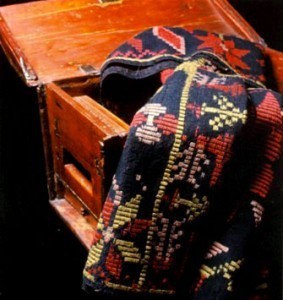
Image from Nordic Heritage Museum website
High on my list of future travels is the NORDIC HERITAGE MUSEUM in Seattle, Washington. Its representation of the history, culture, and experiences of Nordic countries and their immigrants has been more than successful in the past, with a brilliant future ahead. The museum shares the stories of Iceland, Norway, Sweden, Denmark, and Finland with the public far beyond the Pacific Northwest region.
In their own words:
“Mission: The Nordic Heritage Museum shares Nordic culture with people of all ages and backgrounds by exhibiting art and objects, preserving collections, providing educational and cultural experiences, and serving as a community gathering place.
Vision:The Nordic Heritage Museum is an internationally recognized museum and cultural center where people of all backgrounds are welcomed to be inspired by the values, traditions, art, and spirit of the Nordic peoples.”
This is more than enough to make me eager to visit. Until that time I can satisfy my curiosity using their website which provides a wealth of information. I urge readers to explore it. Perhaps because I’ve been in research mode most of the summer, I really wanted to know more, in part to share their story here. I’m impressed by and indebted to Deputy Director of Operations, Sandra Nestorovic, for her generosity of time and willingness to respond to my questions about the museum. She also sent a document containing the full history of their institution. That history and evolution makes it clear that Nordic roots run deep in that part of the country and supporters are as hardworking and determined as their ancestors.
Here’s what I asked, with Ms. Nestorovic’s responses:
Sandra, I’ve enjoyed your website very much, and admire your extensive services, collections, exhibits, and facilities. How did all this get started?
The Nordic Heritage Museum was established in 1979 as the culmination of discussions held by Seattle-area Nordic organizations. I have attached here a more thorough documentation of the Museum’s history in an article written by the NHM’s founding Executive Director Marianne Forssblad. (After reading it’s extensive origins and development it’s no surprise that an attachment was needed. From the early years when a working budget was in the $500 range it has grown to include an extensive staff to curate and direct their impressive exhibits, programs, special events, and facility. A new and even more extensive facility is planned- explore details here.)
What do you find is the most appealing/popular aspect of your organization?
The Museum is an active place from morning until evening; our effort to provide a balance in program offerings has produced a distinctive array experiences for the visitor that are unique to the Museum. In addition to the Museum’s prodigious program and events schedule, we house an impressive body of collections artifacts, historical and contemporary art objects, which is a great draw for audiences. We also house a library, special collections archives, and music and film archive.
Your reach is broad (all Scandinavian countries) but also deep. Do you draw support (attendance, participation, and financial) from across the country or only from your region?
The Museum’s primary audience, based on visitor and membership statistics, comes from Seattle and King County although a large number of visitors come from other states and foreign countries. Approximately 55,000 people visit the Museum annually with nearly 6,000 children and adults participating in educational programs developed by the Nordic Heritage Museum. Over 400 volunteers dedicate 22,000 hours of service per year and more than 8,000 people use the Museum for private events. The Museum’s active membership consists of 2400 households. Approximately 80% of the members live within twenty miles of the Museum and over 300 reside outside the State of Washington. Visitors to the Museum originate from every state in the union and many foreign countries.
You seem to focus both on the immigrant story as well as the home countries and the heritage of each. Have any of your events ever focused on the war years? (WWII)
Over the years we have held a host of programs surrounding the WWII experience. Each year the Museum presents an Annual Wallenberg Dinner and companion lecture series to commemorate the heroic work of Swedish Diplomat and humanitarian Raoul Wallenberg. Wallenberg’s courageous efforts saved the lives of thousands of Jews in Nazi-occupied Hungary during the Holocaust.
The Nordic American Voices (NAV) project was formed in 2009 to invigorate the Museum’s oral history program; with a new state-of-the-art facility on the horizon the oral history project was seen as a potentially significant contributor to the content of exhibits for the new building by documenting the stories of first and second generation Nordic-Americans in the region. The program has taken great strides to document the personal narratives from those who experienced WWII, and in May 2011, a 40-minute video documentary was premiered entitled Under the Clouds of War: Growing Up in Occupied Denmark and Norway. NAV is presently producing a documentary on the Finnish World War II experience.
Your programs for younger members is very active and appealing. How did those begin and develop?
Educational experiences for children have always been an important part of Nordic Heritage Museum programming. Many of our most popular programs – the Pippi Longstocking Breakfast, Heritage Camp, Gingerbread House Program, and Children’s Christmas in Scandinavia – have been taking place for more than 15 years. Other programs have been added throughout the years after talking to families that visit the Museum and seeing what works around the community – for instance, our LEGO Workshop (we just celebrated our 5th year) and Nordic Stories, our monthly preschool and adult reading program.
Are further projects for younger participants planned?
Specific attention is given to the cultivation of K-12 audiences and school group visitors, and we are always looking for fun, new programs to enhance the experience for our younger visitors! Our Education Department works closely with Exhibits staff in the early planning process to coordinate unique programming that will complement our visiting exhibition schedule – sometimes even with the visiting artists. Activity guides are developed to take children through permanent and temporary exhibits, and there are special “kid interest” exhibit cases on the third floor of our Museum. We also endeavor to incorporate hands-on objects for kids (and adults!) wherever possible. Other efforts to promote youth involvement include an active outreach trunks program, and a speaker’s bureau program.
Finally, the Pacific northwest is well known as a base for many Scandinavian immigrants over many years. To what extent does the museum coordinate with other organizations in the area, like Sons of Norway?
Partnerships play a key role in helping the Museum fulfill its mission of sharing Nordic culture. The Nordic Heritage Museum works closely with other Nordic cultural institutions, both in the U.S. and the Nordic region.
My thanks to Ms. Nestorovic. I hope one day to meet her in person, even if that day comes after the new facility opens. I urge anyone who has the opportunity to visit before then to do so. If you’ve been there, chime in with comments about your visit(s).
August 17, 2014
The Story of a Story: History Finds a Home
You may have noticed that this website has undergone some redesign and updating. I’m working my way through the tabs and links, too. As a result, the FAQ page needed some links to various posts. Even though I linked to this WriteNowCoach guest post for Rochelle Melander in this post (here), I wanted to provide a direct link within my blog. It addresses a question I’m often asked, and this describes my writing journey to publication.
When it comes to the creation of Odin’s Promise, my debut middle grade novel, revision was not the key.
Before I’m cursed to a lifetime of writers’ block for such blasphemy, let me explain.
When I traveled to Norway with a friend almost thirty years ago we stayed with her relatives. I heard delightful family stories, viewed countless photos, and fell in love with that country and the warm-hearted people I met. One story that attached itself to my heart involved resistance to the Nazi occupation during World War II.
My writerly instincts envisioned that one particular event as a richly illustrated picture book.
For the next four years or so I used my limited writing time to research those war years and draft various texts. Unfortunately, the results were poorly suited for a picture book, even in those days. The text was too long, the characters and plot too “old”, and the story too history-laden for a picture book audience.
For the next decade or so I worked at other writing, pulling this story out and revising at least twice a year, never finding a way to solve those issues. For several more years I read, attended workshops, and networked to improve my skills at writing picture book text. All of which convinced me that this would never work as a picture book.
I was determined to share it in some way, though, so I sought advice from professional editors and formed a new plan. I would write it for a niche audience, readers with an interest in Norway history. It could be marketed in gift shops, museums, and online specialty companies.
What that plan produced was a novella-length light romance which focused on that particular resistance event and the fictional characters who carried it through. Beta readers strongly supported this manuscript and offered encouragement for the marketing plan.
Long story short, this approach led me repeatedly to self-publishing. I’d researched that process. It may have been well-suited to the project, but it was not a good match for me.
Eventually I discovered and joined SCBWI, the Society of Children’s Book Writers and Illustrators. Through my writing groups, workshops, and conference critiques I found encouragement for my writing and the historic elements, but the same advice came to me again and again: this would work better as a middle grade novel.
Did I listen? Not really.
My core story involved older characters and situations, and I clung to that relentlessly. I couldn’t “re-vision” this story unless they held center stage.
Other projects proceeded, but my research and reading continued. One search led me to a scholarly work on Norway’s street level resistance efforts, with included frequent quotations from journal entries by school age children.
Suddenly, pre-teen Mari spoke to me. She convinced me that she, too, had an important story to tell and would help me tell it.
Only then could I loosen my grip on my original characters, on their story. I dropped them into the scramble of ideas Mari had offered. With her voice to guide me I pulled out pieces to construct her story of fear and courage, love and loyalty. It just so happens that bits of my original story found a home within hers.
Once I gave up revision and sought an entirely new middle grade story, it went from draft to publication in less than two years.
After all those years of revisions.
All I had to do is listen.
August 13, 2014
Share Your Opinions: A Museum Survey
I’ve been communicating with Sandra Nestorovic, Deputy Director of Operations at the Nordic Heritage Museum in Seattle. I’ve never been there, but it appears to be an amazing place with remarkable collections, resources, and programs. I certainly hope to pay a visit myself, someday.
They are currently conducting a survey of those interested in Nordic history (encompassing all of Scandinavia) to help plan anticipated expansions and other improvements. I’m delighted to pass this on and invite you to take part. Here’s their request:

“The Nordic Heritage Museum is in the process of visioning for its future and would like your input. By participating in the following community survey, you will help shape the visitor experience for one of Seattle’s new museums set to open in late 2017.”
To take the survey, please click on the following link: https://www.surveymonkey.com/s/NordicHeritageMuseum
If you are in that part of the world, the NORDIC HERITAGE MUSEUM is located here:
3014 NW 67th Street, Seattle, WA 98117
| tel 206.789.5707×36 | fax 206.789.3271
And if you happen to be a runner and in the area, don’t miss this extra invitation:
Grab your helmets and hides! Join Us for Viking Days on August 16th & 17th
NEW THIS YEAR: The Run Like A Viking 5K | Register Here!
So if YOU have an interest in Scandinavian heritage, culture, arts, socializing, or history, take a few moments and share your thoughts in the survey.
August 3, 2014
Anne Frank: A Short Life, A Long Legacy

Today would have been the 85th birthday of Anne Frank, if she had survived the Nazi concentration camps. Anne’s diary, maintained throughout her years of hiding in the Netherlands, only came to the attention of the world after the war ended.
A diary is very personal, containing thoughts, feelings, dreams, and worries meant to be read only by the writer. I wonder what Anne would have thought about others reading her diary. If she had never been discovered and imprisoned, if she were alive today, would she have wanted anyone else to know what she was thinking, feeling during those years? I wonder what she would have written during her imprisonment if the diary had been with her. I wonder if her intent and the subjects of her writing might have changed if she had realized her words would become a record of that horrible time in history.
Journal and diary entries played an important role in my writing of Odin’s Promise. Despite hearing personal stories of the occupation years by those who lived them, despite culling through countless reports of those years in Norway’s history, I wasn’t able to find the characters and point of view to bring the story to life until I read about them through the words of young diarists of that time. They, too, kept their journals at great risk of discovery, and they, too, shared events, feelings, dreams, and worries.
I wrote Odin’s Promise as a stand-alone title, intending to share the stories and history I found both fascinating and important. The characters and experiences that emerged from my writing left me wondering “what next” for them, and also longing to share more of the additional stories and history I’d found in my research. To my great surprise (and with sincere appreciation) I’ve found that readers, too, are anxious to know “what next”.
 My current efforts to draft a sequel have left me with a dilemma. I’ve read many books with a diary structure. The Diary of Anne Frank was the first, and I’ve returned to it many times since that initial childhood reading. A part of me feels compelled to continue Mari’s story through this form But I never kept a diary of my own. I fear my attempts to provide Mari with such an intimate voice could fall far short of the authentic voices of Anne and those others discovered through research.
So far I’m relying on narrative to construct the story of Mari’s ensuing occupation years. As I do so, some glimmers of alternative style have occurred to me. However the eventual writing unfolds, I’ll try to honor the courage of Anne and the others who recorded their inner and outer lives under the worst possible circumstances. If they could find the words to share their voices, I’ll work to do the same through Mari’s fictional life. To do that, just as with a diary, I’ll take it one day at a time.
July 21, 2014
Making Research Come to Life: Drafting
Libraries, book stores, and publications in general tend to divide books into two broad categories; fiction and non-fiction. Research can play a role in the writing of both categories, but the categories themselves are not always as distinct as one would assume. One very clear example of that is historical fiction. Think Hattie Big Sky (Kirby Larson) , May B. (Caroline Rose), and Number the Stars (Lois Lowry) , or Ann Turner’s picture books: Nettie’s Trip South, Katie’s Trunk, and Abe Lincoln Remembers. In each case the authors weave fact and fiction seamlessly throughout compelling stories with rich characters true to their times and places in history.
 The blending of fact and fiction in historical fiction is not unlike a mobius strip. The two sides are not only inseparable, but interchange themselves while traveling along the path of the story. Similarly, it is nearly impossible to detect start- or end- points for the research and storytelling.
Historical fiction defies neat packaging. At its best, that ring of recognition resounds within the fictional lives of its characters, yet their journeys reveal specifics and complexities that can only be found through diligent research. Sorting out fact from fiction allows readers to explore a new purpose for research.
As I move along into the drafting process for a book that will take Mari, her family, and community through the continuing years of German occupation, my goal will be to find the magic of that mobius strip. It was necessary, first, to read enough reliable sources about those years to make the chronology and mounting pressures feel like second nature to me. Since I seem to have reached that point (and keep my resources at my fingertips for reference) I can now move back to the fictional side of my brain to seek out the personal stories my characters have to tell.
Wish me luck, I’m going in…
July 18, 2014
Recent Review: from Author Margo Dill
Margo L. Dill, YA & Kids’ Author, has read and offered an opinion about Odin’s Promise in this recent review. (Here)
Thanks, Margo, for your kind support of Mari, Odin, and their story.


