
Jonathan Chait's Blog, page 46
June 13, 2011
The Filibuster As Friend of Health Reform
The strengthened Independent Payment Advisory Board is a crucial part of the Affordable Care Act, which has naturally given it a prominent place in right-wing demonology. One underlying problem is that Medicare pays for all sorts of procedures of dubious value. IPAB is a board of experts who use medical research to propose cost savings. There have been previous attempts to rationalize what Medicare pays for, but they are usually overridden because Congress tends to be beholden to the narrow interests of medical device-makers and other providers. IPAB circumvents this dynamic by making its proposals automatic, and they can only be overruled by a vote of Congress.
George F. Will considers this a massive affront to democracy:
Each proposal automatically becomes law unless Congress passes — with a three-fifths supermajority required in the Senate — a measure cutting medical spending as much as the IPAB proposal would.
Supermajority? Did somebody say supermajority? That's funny. Will, of course, is a fervent champion of the filibuster. He considers the filibuster near-divine, and wraps it in the language of the Founding Fathers, even though the Constitution only authorized supermajorities for ratifying treaties, endorsing constitutional amendments, overriding vetoes, expelling members and impeachment convictions.
I am not such a champion. I say that if you worry about the possibility that a senate minority will block a needed action, we should reform Senate procedures to limit or abolish filibusters. Will disagrees. Could a minority block needed reforms? No, says Will circa last year:
[H]as a filibuster ever prevented eventual enactment of anything significant that an American majority has desired, strongly and protractedly?
So what are you griping about? If IPAB makes any decisions that the great and good American people oppose strongly and protractedly, they will simply muster a House majority, 60 Senators, and a presidential signature to impose their will. Sure, that could take a decade a decade or three. But if we had to wait that long for civil rights legislation or universal health insurance or other measures long blocked by filibuster, I don't see why ineffective government-financed medical care should be on a faster track.


Fox News And White Racial Paranoia
David Gelertner's unhinged rant in the Weekly Standard raises a lot of interesting questions, mostly centering around the apparent lack of editing at the magazine, but the most interesting of which involve race. The piece, which begins by accusing President Obama and his supporters of not loving America and ends with accusing liberals of "indescribably low and dirty attacks," makes a few telling observations about race. Gelertner celebrates "the all-but-eradication of race prejudice," which is a useful summary of conservative thought. Traditional white-on-black racism is virtually gone, confined to a few KKK whackos. But black-on-white racism, and the powerful use of unfounded accusations of anti-black racism to silence dissent, is a powerful and thriving force.
Meanwhile, this kind of thing can be found on Fox News:
Jeff Goldberg lends some context:
Let us put aside the fact that Common, the "hood" who was visiting Obama's "hizzhouse," is really not much of a hood, comparatively speaking. And let us put aside the fact that Gabon's president, while a disreputable person, was visiting the White House not only in his capacity as president of his country but because Gabon currently holds the rotating presidency of the U.N. Security Council. Bolling sees images of two black people who are entirely unrelated to each other and draws the conclusion that our black president adores all black people, in particular black people Bolling believes are miscreants.
Bolling, and his Fox supervisors, may not be aware of this, but there are many independent nations in Africa, and the United States has diplomatic relations with nearly all of them. Very often, the leaders of these independent nations will visit Washington in order to meet with our president. Ali Bongo's father, the late Omar Bongo, actually visited Washington and met with President Ronald Reagan, who had this to say after their bilateral meeting: "President El Hadj Omar Bongo has been a very welcome guest at the White House. This has been a long-awaited visit that has given us a chance to return the generous hospitality President Bongo personally accorded to so many representatives of this and earlier administrations."
Can Gelertner or any other conservative explain this video as the expression of anything other than race prejudice? And does the fact that it can be featured on a mainstream news network, passing muster among a host, a producer, and any other number of staffers responsible for approving it, without objection, tell us anything important about the acceptability of such prejudice?
Does Larry Summers make A Terrible Fundraiser?
Carol E. Lee and Jonathan Weisman have a story chronicling the gripes of various donors with President Obama's reelection effort. This seems like one of the less sympathetic but more avoidable complaints:
The overtures to donors have not always gone smoothly.
At a recent gathering of major donors here, former National Economic Council Director Larry Summers, who headlined a breakout session on the economy, got into an exchange with a donor that resulted in the man walking out of the session, according to people at the event.
The donor told Mr. Summers that he'd had trouble getting approved for a loan, according to people present. After the man repeatedly returned to his personal troubles, Mr. Summers said that no one at the conference—where attendees were asked to raise $350,000—was experiencing the kinds of financial difficulties faced by ordinary Americans. The man got frustrated and left the room, people at the event said.
I guess I understand the thinking behind having Larry Summers in this role: He's a Clinton-era moderate with credibility among the financial industry. I'm generally a Summers fan (his Washington Post op-ed today is good) and in this particular question he was probably correct. But putting him in a position to lecture to, and debate with, people you're trying to raise money from is an epically terrible idea:
If any audio of the event emerges, it will be interesting to see if the term "jackwagon" was used.
June 11, 2011
Taking Michelle Bachmann Seriously
[image error]
If you want to know why I take Michelle Bachmann seriously as a dark horse candidate, check out her lengthy interview with Stephen Moore of the Wall Street Journal editorial page. Bachmann may be a paranoid loony, but she does seem possessed of a level of political savvy that allows her to understand what challenges she faces and what steps she needs to take to address them.
For instance, she understands that she needs to distinguish her image from that of Sarah Palin, which means establishing her intellectual bona fides. Obviously, talking to Stephen Moore is an excellent way to come off smart, in the same way that if you worry that you look too fat, you should get your picture taken standing next to Bobby Bacala. Second, Bachmann needs to assure economic conservatives that she shares their agenda, and isn't just some religious nut. Here she goes:
Ms. Bachmann is best known for her conservative activism on issues like abortion, but what I want to talk about today is economics. When I ask who she reads on the subject, she responds that she admires the late Milton Friedman as well as Thomas Sowell and Walter Williams. "I'm also an Art Laffer fiend—we're very close," she adds. "And [Ludwig] von Mises. I love von Mises," getting excited and rattling off some of his classics like "Human Action" and "Bureaucracy." "When I go on vacation and I lay on the beach, I bring von Mises."...
If she were to take her shot, she'd run on an economic package reminiscent of Jack Kemp, the late congressman who championed supply-side economics and was the GOP vice presidential nominee in 1996. "In my perfect world," she explains, "we'd take the 35% corporate tax rate down to nine so that we're the most competitive in the industrialized world. Zero out capital gains. Zero out the alternative minimum tax. Zero out the death tax."
You've got some highbrow names to establish gravitas (Friedman, von Mises) along with some disciples of voodoo economics (Laffer, Kemp) to excite a supply-sider like Moore and his audience. That's pretty much a bullseye.
Bachmann also expresses her view that the Paul Ryan budget is very hard to sell to voters:
She voted for the Paul Ryan budget—but "with an asterisk." Why? "The asterisk is that we've got a huge messaging problem [on Medicare]. It needs to be called the 55-and-Under Plan. I can't tell you the number of 78-year-old women who think we're going to pull the rug out from under them."
Again, she may be crazy, but she does have a strong grasp of political reality. The problem with so many radical candidates is that they lack political sense as well. Bachmann is a potent combination of substantively radical and politically shrewd, much like Ryan. And if Ryan does not run, Bachmann could make some noise.
June 10, 2011
&c
-- Jon Cohn: there's little reason to believe Obama plans more stimulus.
-- Ron Brownstein: the class of 1967 vs. the class of 2011
-- Anthony Weiner has always been a shmuck
Newt Breakthrough Update

I have a contest to guess Newt's breakthrough idea, but this from the Washington Post seems to be real:
One example: Gingrich became convinced that one of the keys to his winning in Iowa was in targeting the Chinese community living in the state. Apparently, he had been told by a Chinese man at a campaign event that as many as 10,000 Chinese Americans lives in the state, one source explained.
I am trying to imagine the newspaper headlines the morning after Gingrich has improbably won the Iowa caucus by mobilizing a wave of Chinese-Americans. I mean, even if you take this number at face value, and even if they could be mobilized to attend the Iowa caucus that notoriously caters to a small cadre of motivated partisans, why would they be voting for Newt? Why not, I don't know, Mandarin Chinese-speaking Jon Huntsman?
Bill Kristol Sees Around Corners
[Guest post by Alex Klein]
In the wake of Bill Kristol’s bold declaration that “Rudy’s Running,” our friends over at The Atlantic have compiled a handy timeline of five of the pundit’s most hilariously wrong predictions. The problem is, we think they’re selling him a bit short: he’s about as accurate as a Ouija Board. Let’s peer back into our Kristol Ball for more examples of prophecies unfulfilled.
Our favorite political prognosticator makes his worst predictions during the campaign season:
In November 30, 2005, Kristol wrote “All this made me think the 2006 elections could result in a Speaker Pelosi. I now think that unlikely.” Bill should have stuck with his gut.
In September 2007, Kristol hinted that a Fred Thompson-David Petraeus ticket would bring it home for the GOP in the general election. Nobody else thought so — especially not Thompson and Petraeus.
In a column in July 2008, Kristol wrote “I expect that in the next couple of weeks we’ll learn that Murphy is coming on board [the McCain campaign] as chief strategist.” The next day, Murphy announced, “I do not expect to join the campaign.”
On August 13, 2008 Kristol predicted “Colin Powell will endorse Sen. Obama, and he may well give a speech at the Democratic convention explaining his endorsement of Obama.” Powell responded, “I do not have time to waste on Bill Kristol’s musings. I am not going to the convention. I have made this clear.”
Oh, and on election night, Kristol predicted McCain/Palin would win.
Kristol is too masterful a Nostradamus to limit himself to just one prediction, even if he ends up contradicting himself along the way. After Sarah Palin bailed on the governorship, Kristol argued that she was “all in” for a “high risk” presidential run. Bold analysis. Almost as bold as this recent prediction: “Can I go out on a limb, since everyone else is scared to say — actually make any predictions. I predict Palin will not run.”
After Arizona Governor Jan Brewer passed a draconian anti-immigration bill in 2010, most constitutional lawyers expected a quick judicial override. But on April 25, independent-minded Kristol predicted that it would survive the courts, claiming, “I doubt it violates the Constitution.” The day before the law was scheduled to go into effect, the US Department of Justice issued an injunction.
In addition to seer, Kristol is also a mercantilist. On January 19, Kristol wrote, “I predict we will see…a modernized international gold standard.” Now, to be fair, this one could come true, but barring apocalypse, most economists find Kristol’s forecast is ludicrous.
But beyond the fun and games of betting on political horses, we can’t forget the Kristol classics. Here are the wrongheaded predictions that made him most famous, before and during the invasion of Iraq. The top four, without comment:
February 7, 2002: American and alliance forces will be welcomed in Baghdad as liberators…We will be respected around the world for helping the people of Iraq to be liberated
March 28, 2003: Look, I would be shocked if we don't find weapons of mass destruction.
April 4, 2003: There's been a certain amount of pop sociology in America ... that the Shia can't get along with the Sunni and the Shia in Iraq just want to establish some kind of Islamic fundamentalist regime. There's almost no evidence of that at all. Iraq's always been very secular.
April 28, 2003: The battles of Afghanistan and Iraq have been won decisively and honorably.
Turns out when you make wild, ideological guesses from a high perch, people listen. And although a Hamilton study has confirmed that pundits are no better at predicting the future than a coin-flip, Kristol’s guesses are more like rolling a Dungeons & Dragons die. Take note GOP: As the primaries approach and Kristol foresees a resurgent Rudy and the repeal of Obamacare, the party might be better off with tealeaves.
JONATHAN CHAIT >>
Newtiny*: The Reader Contest
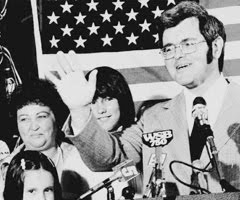 “I don’t know how other people work. To have a major breakthrough in policy, you have to be able to stop and think.” -- Newt Gingrich
Here's the contest: What policy breakthrough did Gingrich devise on his Greek island cruise? Submit your answers in the comments or via twitter with the hashtag #newtbreakthrough.
Special consideration will be given to ideas that incorporate classic Gingrich obsessions, including: alternative history, energy, outer space, dinosaurs, futurism, and distortions of the tax code. For instance, what about a tax credit for entrepreneurs to invent a time travel device that could let us go back in time and send dinosaurs to the moon, where their bodies could decompose into an abundant fuel source that we could use today?
*Credit for the term "Newtiny" goes to TNR Executive Editor Rachel Morris
The Doomed Elizabeth Warren-Scott Brown Deal
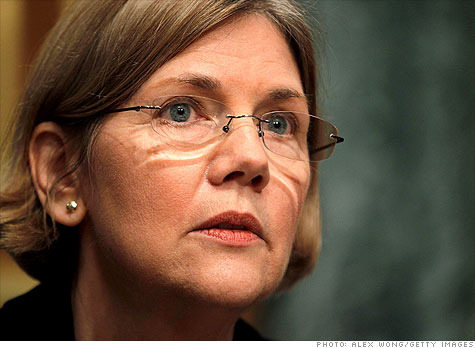
Ezra Klein has a clever point about Elizabeth Warren. Republicans are blocking Warren from heading the Consumer Financial Protection Bureau. But if Warren realizes she won't get the job, she may run for Senate in Massachusetts, where she would probably be the strongest possible challenger to Scott Brown. "The obvious deal seemed to go like this," writes Klein, "Brown convinces Mitch McConnell that it’s better to have Warren running the CFPB than replacing a Republican Senator with a Democratic one."
That's the kind of deal Senate Democrats would make in a heartbeat: give some ground on policy in order to save an incumbent Senator. But Republicans don't work like that. They'll almost always trade political risk for the policy win. It's not necessarily worse, it's not necessarily better -- it's just different.
Left Behind In Newt Campaign Rapture: Zell Miller
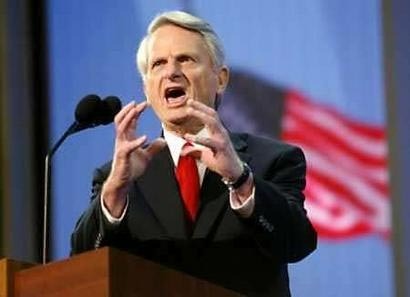
Remember Zell Miller? In 2003, he wrote a book, "A National Party No More," assailing Democrats for moving far to the left and eliminating any chance of capturing a national majority. He had a star turn delivering a high profile endorsement speech for George W. Bush at the 2004 Republican National Convention. Then things started to go sort of badly for Bush, and Miller has been laying pretty low.
Except that it turns out he's now one of the last holdouts at the Newt Gingrich presidential campaign. Here's the very last passage of an AP story about the Gingrich campaign implosion/exodus:
And not everyone was running for the hills.
"Of course I'm not leaving him," former Georgia Gov. Zell Miller, a maverick Democrat and national co-chairman of Gingrich's campaign, said in an interview. "I'm as strong for him as ever, and that's strong."
He still has his finger on the pulse of America.
Jonathan Chait's Blog

- Jonathan Chait's profile
- 35 followers


