
Jonathan Chait's Blog, page 40
June 23, 2011
The Key To the Debt Ceiling Deal
[image error]
Gaming out the debt ceiling talks, it seems to me that the most important power dynamic is whether the business community can and will pressure Republicans in Congress to cut a deal. Without business pressure, the GOP has zero incentive to agree. Agreeing means making substantive concessions that enrage the base and potentially end the career of anybody who votes for it. Not agreeing probably means precipitating some kind of financial crisis that harms the economy and thus improves the party's prospects in 2012. Hike taxes or beat Obama? That's a very easy call for Republicans.
The only thing that changes the calculation is if the business lobby, which would sustain enormous collateral damage in the default scenario, intervenes. The extent to which this occurs is far from certain. But we probably need to reach a point where default appears likely before business reacts and forces Republicans to bargain. Otherwise, the incentive isn't there.


Huntsman Death Wa--Oh, Why Bother?
[image error]
It's probably not worth my time to keep arguing about Jon Huntsman's political viability, but I notice that in New Hampshire, the state that's the cornerstone of his nomination strategy, he's got a favorability rating of 14%, with 36% unfavorable. That's abysmal. The problem isn't that it's low, per se, but that it's so lopsided against him.
Matt Bai thinks those of us dismissing Huntsman's odds bear some grudge against him. I certainly don't. I hope Huntsman wins the nomination. He might even be a good president. Conceivably, he could gain some Republican support for things like cap and trade that Republicans would never support if proposed by Obama. But the fact that he's attractive to non-conservative political reporters does not overcome the fact that he's ideologically marginal within his party.
Karl Rove's Super Genius Strikes Again
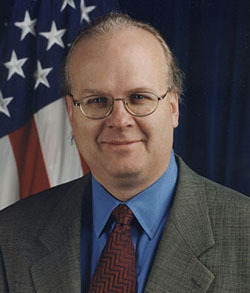 I don't understand the journalistic value of the Wall Street Journal providing a regular forum for Karl Rove to make bullish predictions for Republicans, because Rove is wrong a lot. But apparently the Journal thinks its readers need the comfort of constant reassurance in good times and bad.
Today's column provides a pretty good insight into Rove's analytic methods:
Mr. Obama's standing has declined among other, larger groups. Gallup reported his job approval rating Tuesday at 45%, down from 67% at his inaugural. Among the groups showing a larger-than-average decline since 2009 are whites (down 25 points); older voters (down 24); independents and college graduates (both down 23), those with a high-school education or less, men, and Southerners (all down 22); women (down 21 points); married couples and those making $2,000-$4,000 a month (down 20). This all points to severe trouble in suburbs and midsized cities in states likes Colorado, Indiana, Ohio, Pennsylvania and Nevada.
There's more. Approval among younger voters has dropped 22 points, and it's dropped 20 points among Latinos.
I really enjoy the use of statistics here. Rove begins by announcing that Obama's approval has dropped since his inauguration -- when it was an obviously unsustainable 67% -- to 45%. (Which puts Obama very close to an even proposition for reelection, not the likely loser Rove paints him as.) A drop from 67% to 45% is a decline of 22 percentage points. Rove adds more numbers as if these are additional revelations, each one a fresh nail in Obama's reelection coffin: He's dropped 25% among men! 24% among the elderly! 23% among independents!
Indeed, you could even say that a 22 percentage point among the electorate as a whole drop implies that each subgroup will see a drop of approximately 22 percentage points. It might be interesting if some subgroups were dropping more or less than that average amount. But no, Rove continues to pile on more ways to show various groups dropping by around 22 percentage points. College graduates! Non-college graduates! Men! Southerners! Women! And on and on! Rove fails to use his keen data analysis to demonstrate that Obama has fallen by around 22 percentage points among both left- and -right-handed voters.
JONATHAN CHAIT >>
June 22, 2011
&c
--Mitch McConnell concedes tax cuts didn't help economy, immediately retreats into word blizzard
--A better defense of Nozick then "Hey, look -- Ann Coulter!"
--Cutting domestic discretionary spending is the policy response to fiscal ignorance
--Matt Bai, citing one data point, says the media hates Jon Huntsman. Not me. I love Huntsman! I just agree with Huntsman circa 2009 that he can't win the nomination.
Alan "Grandpa" Simpson Still Angry At Everybody
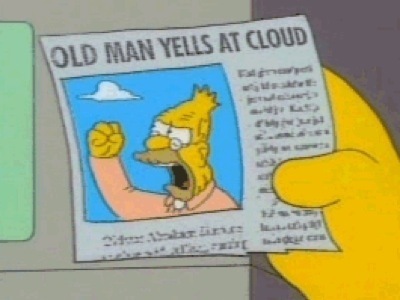
I always find interviews with Alan Simpson entertaining and this one is no exception:
In fact, the former senator questions the basic concept of the ATR Pledge, which lawmakers are encouraged to sign before they take office. It amounts to “bondage of the mind,” he says. “Who would sign anything before coming to office before reviewing the facts, conditions, and situation?” asks Simpson. “Why would anyone — on any hot issue you can imagine — lock themselves into a position?”
Then there is the AARP, an organization Simpson slams for rigidly opposing necessary changes to entitlements. “All they do is slap us around with a stick in their magazine,” he says. “If you can’t raise the retirement age to 68 by 2050 — for crying out loud — who are you? You must be a boob if you can’t figure out that life expectancy is 78.”
It is precisely this mentality that was responsible for the way House Budget Committee chairman Paul Ryan (R., Wis.) was “savaged” for his effort to substantially reform (and thereby save) Medicare, on which “everything depends” when it comes to the country’s long-term debt problem. In doing so, Simpson argues, Ryan set himself apart as a man among children on the field of fiscal seriousness. “If you’re going to attack the mastodon in the kitchen, that’s Medicare,” he says. “That’s exactly what he did, and they served him a rich ration of hell. In the years that go by, we’ll look back and see the only guy who had the guts to nail the mastodon was Paul Ryan.”
Certainly not President Obama, who decided to “nail Ryan to the post” in an April 13 speech at George Washington University to outline his own “framework” to address the deficit. “I don’t think that’s going to sell,” he says. “You don’t praise and talk about bipartisanship and then just hammer Republicans flat.”
In particular, Simpson did not care for the president’s sermonizing about the need to protect the “poor and vulnerable” members of society. “That made me blow my cork,” he says. “What do you think our plan did?”
The combination of sanctimony, crankiness and confusion is so compelling. There are lots of good reasons to bring Social Security into actuarial balance without raising the retirement age. And I don't really see why the fact that Simpson's plan protected the poor justifies his anger at Obama attacking Paul Ryan's plan for singling out the poor.
And then you have the mastodon metaphor. I bet Simpson as a young man once hunted mastodon. Bah, these young kids get medical care when they retire? You know what care you received back in his day when you got impaled by a mastodon tusk? Nothing!
More Adventures In Rationalization
Speaking of rationalizing self-interest, I've been wondering exactly what the black men who appeared in a wildly offensive right-wing political ad as stereotypical hoodlums thought about what they did. Stephen Spencer Davis interviewed them:
I spoke to Kue Dog and Uncle Head separately by phone yesterday, and each defended the commercial. When asked if he thought the ad was racist, Kue Dog said, “It’s not racist.” He did concede, though, “It might be sexist.”
But each rapper qualified that assessment. Uncle Head told me that language—and abusive words like “bitch”—is inherently neutral. “It depends on how you use it,” he said. “I don’t consider the word ‘bitch’ as sexist. They say it on TV now.” (When I spoke to Ehlingerearlier this week, he told me something similar, arguing that the ad “doesn’t show anything more or less than what you’d see on primetime television.”) How the presence of something on TV affects whether or not it’s offensive remains a mystery. But Uncle Head says he’s fine with people using the word “bitch” all they want—with one exception: “As long as nobody calls my daughter a bitch, I’m cool.”
Throughout our conversations, both men stressed that they were simply hired to do a job. Uncle Head used the word “business” repeatedly when we spoke: his involvement in the ad was business, Splack Pack’s relationship with Ehlinger was a business relationship, the woman portraying the stripper was just doing business with them.
I'm sure these men are more than capable of grasping the obvious ways in which this ad harms other African-Americans. But, as they say, it is impossible to make a man understand something when his livelihood depends upon not understanding it.
The Complex Psychology Of Economic Sabotage
 Republican opposition to a temporary payroll tax cut is spurring Democrats to accuse them of economic sabotage:
Would Republicans really oppose a tax cut for business that created jobs? This is sort of beyond the pale. So if they'd oppose even something so suited to their tastes ideologically, it shows that they're just opposing anything that would help create jobs. It almost makes you wonder if they aren't trying to slow down the economic recovery for political gain.
I'm generally uncomfortable with attacks on motive. For one thing, motive is hard to prove. For another, human psychology is such that people rarely act out of conscious venality. Instead they simply convince themselves that what they perceive to be in their best interest is also the right thing to do.
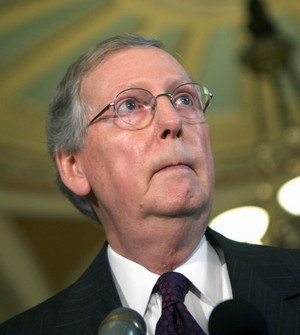
Consider this Mitch McConnell interview about 2012:
I think the President is in tough shape… the President is in a very weak position politically today. We don’t know what it’ll look like in the fall of 201 but today the President’s in a very weak position. And [former Massachusetts Governor Mitt] Romney, just by announcing and getting a wave of press, moved either even or ahead of the President. So I think the President can be defeated. If conditions of Nov. 2012 are anything like they are today, I think he’s got a really tough race on his hands. I’m confident that we’re going to nominate someone who’s going to be a credible, believable alternative. And I think our primaries are – I can’t think of a time when they haven’t nominated somebody who people didn’t feel could handle the job. As long as we do that, and I’m confident we will, then it’ll be a referendum on the President and his performance and if the presidential election were today I think our theme would be: he made it worse.
McConnell is obviously well aware that maintaining a poor economy is the key to his party's success next year. He's a very cynical man, but he's probably not cynical to wake up every day plotting ways to keep unemployment high.
Rather, the question of economic stimulus is always a long-term versus a short-term calculation. You take on more debt for the long term in order to alleviate today's economic emergency. The mainstream economic position has been, and to a somewhat lesser extent remains, very friendly to the view that the current emergency is dire enough to justify taking on more debt to alleviate. But when you change the question to, should we take on more debt to alleviate mass suffering and improve Obama's reelection prospects, then suddenly it's easy to understand why republicans would persuade themselves that no stimulus meets the test.
A Smart Deficit Reduction Idea That May Actually Happen
The Wall Street Journal has a nice little scoop about a potential deficit fix emerging out of the debt ceiling talks:
One idea floated in the talks is to curb the rise of federal benefits in a raft of programs by using a different measure of inflation to calculate annual cost-of-living adjustments. President Obama's deficit reduction commission recommended using a variation of the Labor Department's consumer-price index that tends to rise more slowly. Using the other measure also would raise revenues because it would slow the rise of tax brackets and deductions, which are adjusted according to increases in the CPI.
According to two congressional aides familiar with the Biden negotiations, use of the alternate measure is being ``seriously discussed.'' The measure, called the chain-weighted CPI, adjusts for the way consumers change their shopping habits as prices rise. For instance, motorists overall tend to drive less if gasoline prices jump dramatically.
The Committee for a Responsible Federal Budget, a nonpartisan group, estimates using the chained CPI would reduce the deficit by $300 billion over ten years. But that estimate assumed the proposal would curb the growth of Social Security benefits, and it's not clear that would be supported by Democratic negotiators who have pledged not to cut retirees benefits. It's also unclear whether Republicans would see the use of the chained CPI as an unacceptable tax increase, but when asked Tuesday about the idea, House Majority Leader Eric Cantor (R., Va.) did not rule it out.
The impact of such a move would depend on how broadly the change was applied to federal programs that are adjusted for inflation. The commission, for example, recommended switching from the CPI to the chained CPI to calculate certain Medicare payments to hospitals, which would reduce the growth of such spending.
Who's in favor of changing the CPI this way? Well, you have conservative Reihan Salam. Centrist deficit hawks like the Committee for a Responsible Federal Budget and the Washington Post editorial page. Then you have a bunch of center-left economists endorsing it. You can read any of those links if you want more explanation.
In general, the notion that "everybody knows" what to do about the deficit and we just need political willpower is wrong, but this seems to be one case where everybody really does know what to do.
The Hack Gap
Great point here by Adam Serwer:
[T]he press is turning a much more skeptical eye towards Obama’s dubious arguments than it ever did towards Bush’s arguments. Indeed, media outlets mostly acquiesced to Bush’s argument — recall the New York Times’ decision to deploy euphemisms for “torture” because Bush and his supporters had simply redefined the term. This is partly because the Obama administration never tried to bully the press into adopting its chosen terms the way the Bush administration did.
More to the point, though, is that President Obama faces what you might call a “hack deficit.” There simply aren’t many legal scholars on the left who are willing to give Obama a pass. Unlike right-wing legal writers, left-leaning ones are treating Obama and Bush equally. Bruce Ackerman, who called for the impeachment of torture memo author Jay Bybee, has now blasted the White House, claiming it “has shattered the traditional legal process the executive branch has developed to sustain the rule of law over the past 75 years.” His colleague Jack Balkin wrote: “If one is disturbed by Bush’s misuse of the process for vetting legal questions, one should be equally disturbed by Obama’s irregular procedures.” Liberal writers like Eugene Robinson and James Fallows have also rejected Obama’s attempt to redefine the term hostilities. Even in his own administration, State Department Legal Adviser Harold Koh was the only one of Obama’s top legal advisers who backed his interpretation of the War Powers Act while the OLC, Pentagon Counsel Jeh Johnson, and Attorney General Eric Holder all disagreed.
Unlike with Bush, Obama doesn’t have a large stable of liberal legal scholars and commenters who are willing to pretend they don’t speak English in order to defend his policies.
I think this phenomenon is best understood within a larger context. Conservatives have developed an ideological critique of a wide swath of elite institutions that serve a mediating role -- media, academia, even science. In the right wing view, all these institutions are bastions of liberalism hiding behind a facade of disinterestedness. Conservatives have developed their own alternative networks, whose members operate under a far more partisan and ideological ethos, on the view that they're merely offsetting the liberalism of their counterparts. Thus the political culture is tugged right by the asymmetry of liberal elites trying to act objectively and conservative counter-elites making no such attempt.
Post-Compassionate Conservatism
 Rich Lowry smartly holds up uncompassionate conservative Rick Perry as evidence of the Republican Party's rightward lurch post George W. Bush:
The backlash against Bush has long been brewing. Compassionate conservatism was a product of the moment when Bush began to run for president in the late 1990s. The congressional wing of the party had immolated itself in the government-shutdown fights and then the impeachment of Bill Clinton. A rebranding was in order, and Bush wanted to signal to general-election voters that they needn’t fear him.
Bush-style conservatism never really took with the broader party, although it gained acquiescence. The president usually gets his way with his congressional majority, so Bush could push through No Child Left Behind and the prescription-drug benefit. The war on terror and the Left’s hatred for him bonded conservatives to Bush whatever their misgivings. The nomination of John McCain — himself no down-the-line conservative — obscured the anti-Bush feeling.
Now, it’s in full flower and evident on all fronts, from spending and immigration to foreign policy, as Jonathan Martin and Alexander Burns point out in Politico. Running on his message circa 1999, George W. Bush would be hard-pressed to gain traction in the current Republican party. Running on his record circa 2008 — the spending programs, the bailouts, the attempted amnesty and the two ongoing “hearts and minds” wars of counterinsurgency — he’d be booed from the stage. If Michele Bachmann didn’t drop-kick him off it first.
The problem, of course, is that the conditions that required Bush to present himself as a moderate still largely hold true today. The GOP is discredited among swing voters, and not because they think Bush cared too much about poor people and minorities. Now, it's possible that the economy is bad enough that the party can overcome public distrust of its extremism. But it's also distinctly possible that the economy is bad enough that a moderate-seeming Republican would be likely to win, but a Republican running straight from the party id would lose. The party seems determined to test just how far it can ride the benefits of being the out party in a post-financial crisis economy.
Jonathan Chait's Blog

- Jonathan Chait's profile
- 35 followers

