Kory M. Shrum's Blog, page 39
March 6, 2014
Work It Baby: How to Make Your #Fantasy (#Novel) A Reality
Book marketing is a tricky biz. I can’t say I’ve mastered it, since I just launched my first book 2 days ago, but I’ve been at this for months, and I can say that so far a few things are working really well--while others aren't.
What Works
Giving Up The Goods
People like to know immediately what they are getting themselves into. This is why it is super important to provide samples up front. Here is an example of my synopsis and free first chapter. But your blog/website shouldn't be the only place to share. Also, make sure that your paperback/print version has a "Look Inside" feature and that your ebook is set up to provide a sample as well.
Amazon
Amazon has been great to work with so far. They did a good job of condensing the multiple versions of my book and giving it exposure. (It’s #55 on one list and #60 on another, which isn't bad for day 2). Amazon also made it easy to get my author page up and ready. Don't know how to create your author page? I just looked at other good examples and read a few posts. For more on that, read this and this.
Book Bloggers and other Indie Promoters
They are your friends. All you need is a few great reviewers to be as excited about your work as you are and they’ll be happy to shout from the mountain about it. My cheerleaders so far have been Cabin Goddess Kriss, Sharon of I Smell Sheep , A.B. Shepherdand RebeccaPoole, who’ve all had really encouraging things to say about the book.
This is good because people get tired of hearing YOU talk about how much you love yourself. Hearing it from someone else makes you seem less like that crazy cat lady who is always showing pictures of her Noodles and Mr. Cranks.
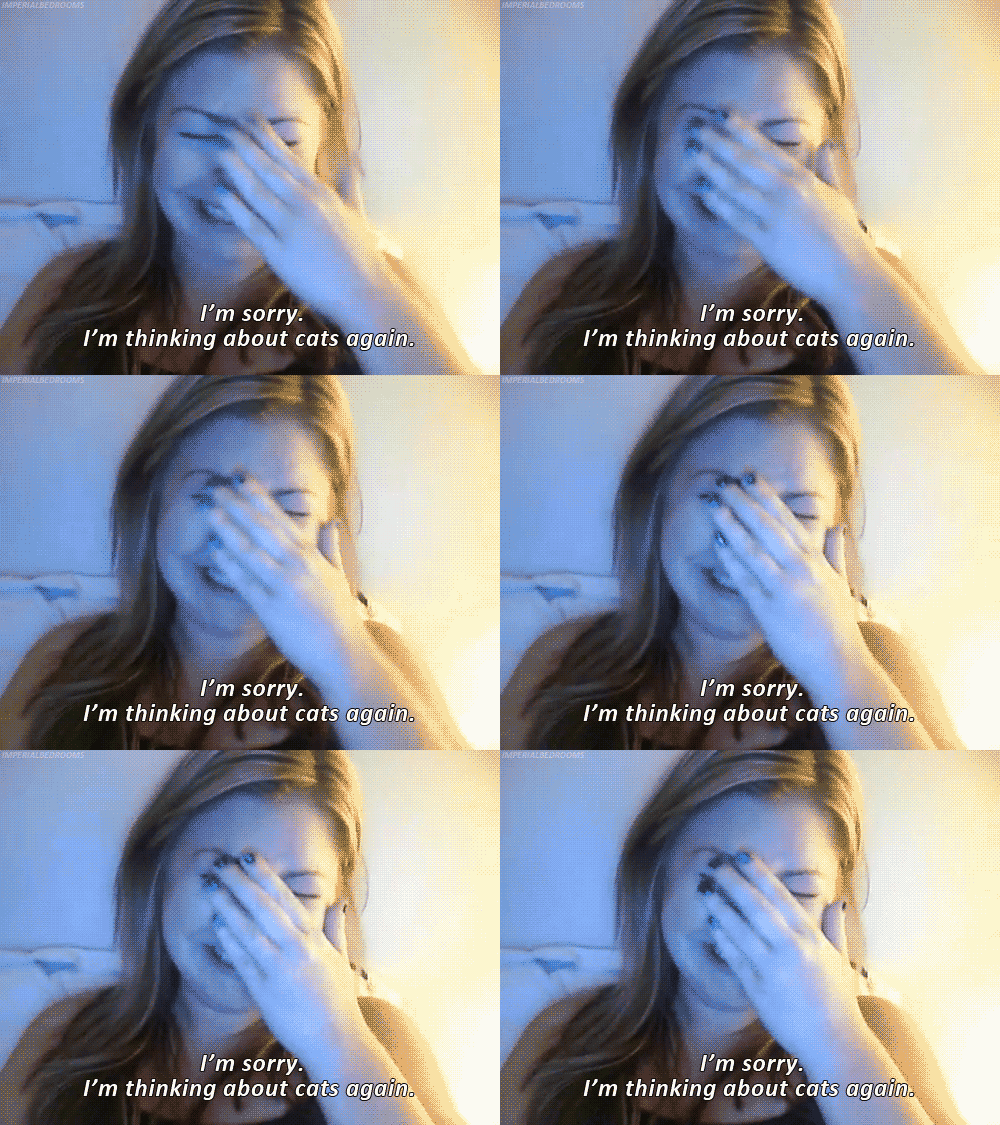 Yes, cats--not how much time I've spent formatting my book
So make friends with these fabulous people and remember—it is a two-way street. Don’t forget to show love to the people who showed it to you first.
Goodreads
Getting your Goodreads author page set up is important. Start early (months before the release!) and get your ARC (advance reader copies) out. Ask for reviews and then watch others add you to their TBR list!
I’m also going to try a Goodreads giveaway this weekend: 3 DAYS, 3 AUTOGRAPHED COPIES. I will write about it once it is over and let you know how it goes. I’m mostly following the advice given in this well-written article.
Twitter
If you aren’t on Twitter, make it so. It’s a great resource and I’ve met some wonderful people in the TwitSphere. If you are apprehensive about getting started, read this guide from book baby. It makes it easy. Also, once you may want to invest in a twitter managing service to help you grow and maintain your follower list. I use JustUnfollow to manage my 7500+ peeps.
What Doesn’t Work
Facebook
Paying to promote my posts or page on Facebook hasn’t garnered me much success. I easily wasted too much money that could have been used to better advertising ends. At first glance it looks like a good deal. It promises exposure. You are in control of your “daily budget”, etc. But really what you are paying for is “likes” not sales. And even when people are feeling generous, and give you a like, it doesn’t mean they will rush off to buy your book. Instead of paying for promotions, direct your twitter traffic to your FB page, and there are plenty of likes to be had. :)
Crappy Content
Writing a great book and cleaning it up is the first step, yet you’d be surprised how often this is overlooked. You don’t have to be rich to produce a good book—but you will have to take the time to do it right. Make sure your print book is well-edited with a nice cover—if you aren’t a good editor yourself, get one. Don’t have photoshop skills? Hire someone. Just do what you can to the best of your abilities. Look at good examples in your genre and aim high. You can use scrivener to produce a proper eBook complete with embedded links instead of just uploading a generic word doc.
Shooting in the Dark
Don’t try to sell your work to just anyone. Sell to your specific demographic. For example, my book is good for readers who love sci-fi, paranormal or urban fantasy. And people who are into quirky, sassy protagonists with attitude—added bonus. So it does me no good to twitter stalk someone who only reads children’s books or nonfiction. Get the idea?
SHORT RECAP
1) Make it good (clean up that book!)
2) Start early—(get those ARCs out, build those Goodreads/Twitter profiles)
3) Make friends (Indie’s unite!)
What Works
Giving Up The Goods
People like to know immediately what they are getting themselves into. This is why it is super important to provide samples up front. Here is an example of my synopsis and free first chapter. But your blog/website shouldn't be the only place to share. Also, make sure that your paperback/print version has a "Look Inside" feature and that your ebook is set up to provide a sample as well.
Amazon
Amazon has been great to work with so far. They did a good job of condensing the multiple versions of my book and giving it exposure. (It’s #55 on one list and #60 on another, which isn't bad for day 2). Amazon also made it easy to get my author page up and ready. Don't know how to create your author page? I just looked at other good examples and read a few posts. For more on that, read this and this.
Book Bloggers and other Indie Promoters
They are your friends. All you need is a few great reviewers to be as excited about your work as you are and they’ll be happy to shout from the mountain about it. My cheerleaders so far have been Cabin Goddess Kriss, Sharon of I Smell Sheep , A.B. Shepherdand RebeccaPoole, who’ve all had really encouraging things to say about the book.
This is good because people get tired of hearing YOU talk about how much you love yourself. Hearing it from someone else makes you seem less like that crazy cat lady who is always showing pictures of her Noodles and Mr. Cranks.
 Yes, cats--not how much time I've spent formatting my book
So make friends with these fabulous people and remember—it is a two-way street. Don’t forget to show love to the people who showed it to you first.
Goodreads
Getting your Goodreads author page set up is important. Start early (months before the release!) and get your ARC (advance reader copies) out. Ask for reviews and then watch others add you to their TBR list!
I’m also going to try a Goodreads giveaway this weekend: 3 DAYS, 3 AUTOGRAPHED COPIES. I will write about it once it is over and let you know how it goes. I’m mostly following the advice given in this well-written article.
If you aren’t on Twitter, make it so. It’s a great resource and I’ve met some wonderful people in the TwitSphere. If you are apprehensive about getting started, read this guide from book baby. It makes it easy. Also, once you may want to invest in a twitter managing service to help you grow and maintain your follower list. I use JustUnfollow to manage my 7500+ peeps.
What Doesn’t Work
Paying to promote my posts or page on Facebook hasn’t garnered me much success. I easily wasted too much money that could have been used to better advertising ends. At first glance it looks like a good deal. It promises exposure. You are in control of your “daily budget”, etc. But really what you are paying for is “likes” not sales. And even when people are feeling generous, and give you a like, it doesn’t mean they will rush off to buy your book. Instead of paying for promotions, direct your twitter traffic to your FB page, and there are plenty of likes to be had. :)
Crappy Content
Writing a great book and cleaning it up is the first step, yet you’d be surprised how often this is overlooked. You don’t have to be rich to produce a good book—but you will have to take the time to do it right. Make sure your print book is well-edited with a nice cover—if you aren’t a good editor yourself, get one. Don’t have photoshop skills? Hire someone. Just do what you can to the best of your abilities. Look at good examples in your genre and aim high. You can use scrivener to produce a proper eBook complete with embedded links instead of just uploading a generic word doc.
Shooting in the Dark
Don’t try to sell your work to just anyone. Sell to your specific demographic. For example, my book is good for readers who love sci-fi, paranormal or urban fantasy. And people who are into quirky, sassy protagonists with attitude—added bonus. So it does me no good to twitter stalk someone who only reads children’s books or nonfiction. Get the idea?
SHORT RECAP
1) Make it good (clean up that book!)
2) Start early—(get those ARCs out, build those Goodreads/Twitter profiles)
3) Make friends (Indie’s unite!)


March 1, 2014
“Her” : An Interview
Darling Rebecca Poole took a moment out of her insanely busy schedule to chat with me about her upcoming appearance in Rise of the Goddess.
You are about to debut for the first time. Fresh meat! How do you feel? To be perfectly honest, I’m terrified and excited. I’m unsure of what to expect. You never know what people are going to think of your work when you let it fly free. Your short story “Her” will be published on March 20 by Crushing Heart Black Butterfly Publishing. What can you tell us about the anthology and your story’s place in it? The anthology is called Rise of the Goddess. The theme is to pick a goddess or create one of our very own, but she needs to be strong and empowered, not a weak willed ninny. I created my own goddess for this anthology and I hope that readers find her interesting. “Her” focuses on one man’s devotion. What was your inspiration for “Her”? I was inspired by an image, actually: a winged woman metamorphosing from an empty husk. I wanted to write about who she was and how she came to existence.
You also work as a badass cover designer. What made you want to switch hats and get inside of a book for a change? I love reading. I find books magical places and I wanted to try to create magic myself with my words. Do you often draw your inspiration from images? As a visual artist that would make sense. I draw inspiration from everything. I’m a very visual person and sometimes I get very distracted with all of the pretty imagery surrounding us. When you write, do you have a process that helps get you “in the mood”? I do, actually. I make a playlist of songs that will set the mood for the particular piece I want to work on. I also need caffeine of some sort, preferably green tea. What are you working on now? And what can we expect to see from you in the future? I’m actually working on several ideas-one is a paranormal romance, another steampunk erotica, and a romantic comedy. I suppose I would get more written if I actually focused on one work at a time. I’m hoping to be involved in a few more anthologies. I love being a part of a group of authors writing about the same idea. It’s so interesting to see the different ideas that come to fruition.
OK, now for a few non-work-related questions:
If the world was burning and you could save but one book, which would it be? That’s so HARD to answer. Oh man…that’s like asking me to pick my favourite cat. Weaveworld by Clive Barker. It’s the one book I’ve had to replace a few times because of circumstances and it’s my favourite book from my childhood. What’s your go to snack food? Cheetos If you could have any (but only one) super power, what would you choose? Super speed. Maybe then I’d be able to get everything done. J If you could pick the brain of any famous person anywhere across time and space, who would it be and why? HP Lovecraft. His stories are so WEIRD and I really have so many questions to ask him about where his ideas came from.
If you could have live in any from any of the fictional universes, which would it be and why? Dragonlance. I grew up with Dungeons and Dragons, and that was my first series I’d ever really gotten into that was strictly fantasy. And my favourite character is from there. Raistlin Majere. What is your favorite word? Dude —I have another favourite word but it’s not really acceptable to say. ;) What is your least favorite word? No If Dante’s Nine Circles of Hell existed, which circle would you be trapped in and why? Limbo-from my understanding, it’s the circle that’s the least torturous. I’m sensitive…I don’t want to spend eternity suffering.
Rebecca Poole runs Dreams2Media, a full-service site for authors in need of graphic design, books covers, trailers, and more. Be sure to check out the debut of "Her" in Rise of the Goddess, available March 20.
You are about to debut for the first time. Fresh meat! How do you feel? To be perfectly honest, I’m terrified and excited. I’m unsure of what to expect. You never know what people are going to think of your work when you let it fly free. Your short story “Her” will be published on March 20 by Crushing Heart Black Butterfly Publishing. What can you tell us about the anthology and your story’s place in it? The anthology is called Rise of the Goddess. The theme is to pick a goddess or create one of our very own, but she needs to be strong and empowered, not a weak willed ninny. I created my own goddess for this anthology and I hope that readers find her interesting. “Her” focuses on one man’s devotion. What was your inspiration for “Her”? I was inspired by an image, actually: a winged woman metamorphosing from an empty husk. I wanted to write about who she was and how she came to existence.
You also work as a badass cover designer. What made you want to switch hats and get inside of a book for a change? I love reading. I find books magical places and I wanted to try to create magic myself with my words. Do you often draw your inspiration from images? As a visual artist that would make sense. I draw inspiration from everything. I’m a very visual person and sometimes I get very distracted with all of the pretty imagery surrounding us. When you write, do you have a process that helps get you “in the mood”? I do, actually. I make a playlist of songs that will set the mood for the particular piece I want to work on. I also need caffeine of some sort, preferably green tea. What are you working on now? And what can we expect to see from you in the future? I’m actually working on several ideas-one is a paranormal romance, another steampunk erotica, and a romantic comedy. I suppose I would get more written if I actually focused on one work at a time. I’m hoping to be involved in a few more anthologies. I love being a part of a group of authors writing about the same idea. It’s so interesting to see the different ideas that come to fruition.
OK, now for a few non-work-related questions:
If the world was burning and you could save but one book, which would it be? That’s so HARD to answer. Oh man…that’s like asking me to pick my favourite cat. Weaveworld by Clive Barker. It’s the one book I’ve had to replace a few times because of circumstances and it’s my favourite book from my childhood. What’s your go to snack food? Cheetos If you could have any (but only one) super power, what would you choose? Super speed. Maybe then I’d be able to get everything done. J If you could pick the brain of any famous person anywhere across time and space, who would it be and why? HP Lovecraft. His stories are so WEIRD and I really have so many questions to ask him about where his ideas came from.
If you could have live in any from any of the fictional universes, which would it be and why? Dragonlance. I grew up with Dungeons and Dragons, and that was my first series I’d ever really gotten into that was strictly fantasy. And my favourite character is from there. Raistlin Majere. What is your favorite word? Dude —I have another favourite word but it’s not really acceptable to say. ;) What is your least favorite word? No If Dante’s Nine Circles of Hell existed, which circle would you be trapped in and why? Limbo-from my understanding, it’s the circle that’s the least torturous. I’m sensitive…I don’t want to spend eternity suffering.
Rebecca Poole runs Dreams2Media, a full-service site for authors in need of graphic design, books covers, trailers, and more. Be sure to check out the debut of "Her" in Rise of the Goddess, available March 20.
February 26, 2014
They Are Listening
“Who are you talking to?” I ask a student who just analyzed how becoming a father has changed the way he is pursuing his college education.
He repeats the last line. “Being a father allows you a greater awareness of time and how to manage it.”“Not me,” I say. “I’m not a father, nor do I have children.”
And even though I know he won’t have an answer, I ask again. “Who are you talking to?”
And the issue of audience is further complicated in the digital age. Not only are we unsure of who we are talking to, we are also unsure of how to talk to them. Where are they? How do I even know if they are listening? We can approach this exploration from two angles:
Angle 1: You Have Content, But No Audience
You have something brilliant, marvelous, and stupendous! A video, an image, a piece of writing—who would you like to share it with? Even in the digital age, if your audience is like you, then your job is simple.
Where do you go? * other blogs? (Then volunteer to do guest posts) * chats/forums/boards? (Get engaged. Share your ideas, update your signature line, and direct traffic back to your content) * social networking? (Try to make the conversation a little less one-sided)
In my case, readers are not the same as writers. And each book blog also has its own particular flavor most of the time. You won’t find the urban fantasy lovers (okay, maybe some) on the bodice-bursting Harlequin sites. Readers also have sites like Goodreads, LibraryThing, and different chats/forums than their writing counterparts.
You have knowwho they are and what they like before you can get them to talk. Unlike in a bar, where a potential employer, client, or lover will force a smile and keep downing drinks while you talk incessantly about yourself, a digital audience will simply get up and leave. Or worse, you won’t even know they left! No learning experience available!
So figure out where people are going for their digital content, and be sure to show up there yourself with good content.
Angle 2: You Have an Audience, But No ContentPeople are listening. One way or another, you’ve generated traffic through your blog, through your Pinterest boards or Facebook page—or perhaps you’re numbers are not as high as you like. Or it is hit or miss in your content. Take my blog for example.I had people coming and going—cold, digital bodies in the room, so to speak—but I didn’t know what they wanted, what they liked. Sometimes they would slip in and out quietly and that isn’t enough for me. I want to engage them. So, taking my own advice, I started to think about how to accommodate my audience better.
After all, if they found what they were looking for, they might stick around.
In days past, research into your audience’s demographics and preferences would’ve involved a great deal of time—months, mostly likely—in the bottom of a creepy library basement where one is certain a ghost or at least an ancient graduate student resides amongst the dusty stacks. But now, in the digital age, all your resources are at your fingertips.
All I needed to do was scan my Twitter follower list, my Google+ circles, my Facebook fans—and learn a little more about the people I was connected to.
Turns out a great many of my people are writers like myself, in various stages of their career. So I wrote the “How I Got My Agent” five-part series and I did so because I know that a great many writers are also looking for agents. I combined the ideas of “what I have” and “what they need”. I had intimate knowledge of the agent process. I had a sample letter that got me my agent that they could see. I had resources! And they had a need.
This is how I reached out and made the connection. Instead of simply talking into the air, mostly for my own benefit, I reached out and tried to engage my audience and help my audience. Connection, the quintessence of communication.
And thatis what you must do. Give your readers what they need——in the format that they need.
FormattingSo you’ve found your audience and know what they need. Let’s move into the superficial and discuss packaging. New ways to deliver digital content are sprouting up every day, but let’s peek at just a few:
Instagram: Photographers and visual artists will benefit most from this platform, but anyone
who believes “a picture says a 1000 words” should consider it.
Pinterest: 70% of pinnersuse the site to inspire themselves on what to buy. If you have
content for sale, consider breaking out on this platform.
Amazon: We can talk about eBooks and self-publishing all day. Let’s just mention that a
great many are making their digital content available for little to no cost
through Amazon. Why not you?
TwitBook+: Facebook, Twitter, and Google+ are all good tools for sharing smaller bits of
content or for driving traffic back to a “home base” (i.e. blog). I think most people
supplement social media with other forms of content delivery, but I also know
those who operate solely on one platform. Again, where is your audience? You
want to be wherever they are.
Before deciding if any (or all) are right for you, also think about devices. How will your people be viewing this content: smartphone? Laptop? iPad? eReader?
While this may seem like a silly question, it is definitely relevant. Social media or image-based content like Instagram do great on smartphones, but your eBook will suffer formatting issues. So think about this as your tailor your content. Always be sure to adjust the formatting accordingly.
Regardless of how you go about acquiring your audience and getting the content from your mind, to their devices ---just remember it is all about connection. Think of all the ways others have reached out to you through their digital content. And ask yourself how you can do the same.
He repeats the last line. “Being a father allows you a greater awareness of time and how to manage it.”“Not me,” I say. “I’m not a father, nor do I have children.”
And even though I know he won’t have an answer, I ask again. “Who are you talking to?”
And the issue of audience is further complicated in the digital age. Not only are we unsure of who we are talking to, we are also unsure of how to talk to them. Where are they? How do I even know if they are listening? We can approach this exploration from two angles:
Angle 1: You Have Content, But No Audience
You have something brilliant, marvelous, and stupendous! A video, an image, a piece of writing—who would you like to share it with? Even in the digital age, if your audience is like you, then your job is simple.
Where do you go? * other blogs? (Then volunteer to do guest posts) * chats/forums/boards? (Get engaged. Share your ideas, update your signature line, and direct traffic back to your content) * social networking? (Try to make the conversation a little less one-sided)
In my case, readers are not the same as writers. And each book blog also has its own particular flavor most of the time. You won’t find the urban fantasy lovers (okay, maybe some) on the bodice-bursting Harlequin sites. Readers also have sites like Goodreads, LibraryThing, and different chats/forums than their writing counterparts.
You have knowwho they are and what they like before you can get them to talk. Unlike in a bar, where a potential employer, client, or lover will force a smile and keep downing drinks while you talk incessantly about yourself, a digital audience will simply get up and leave. Or worse, you won’t even know they left! No learning experience available!
So figure out where people are going for their digital content, and be sure to show up there yourself with good content.
Angle 2: You Have an Audience, But No ContentPeople are listening. One way or another, you’ve generated traffic through your blog, through your Pinterest boards or Facebook page—or perhaps you’re numbers are not as high as you like. Or it is hit or miss in your content. Take my blog for example.I had people coming and going—cold, digital bodies in the room, so to speak—but I didn’t know what they wanted, what they liked. Sometimes they would slip in and out quietly and that isn’t enough for me. I want to engage them. So, taking my own advice, I started to think about how to accommodate my audience better.
After all, if they found what they were looking for, they might stick around.
In days past, research into your audience’s demographics and preferences would’ve involved a great deal of time—months, mostly likely—in the bottom of a creepy library basement where one is certain a ghost or at least an ancient graduate student resides amongst the dusty stacks. But now, in the digital age, all your resources are at your fingertips.
All I needed to do was scan my Twitter follower list, my Google+ circles, my Facebook fans—and learn a little more about the people I was connected to.
Turns out a great many of my people are writers like myself, in various stages of their career. So I wrote the “How I Got My Agent” five-part series and I did so because I know that a great many writers are also looking for agents. I combined the ideas of “what I have” and “what they need”. I had intimate knowledge of the agent process. I had a sample letter that got me my agent that they could see. I had resources! And they had a need.
This is how I reached out and made the connection. Instead of simply talking into the air, mostly for my own benefit, I reached out and tried to engage my audience and help my audience. Connection, the quintessence of communication.
And thatis what you must do. Give your readers what they need——in the format that they need.
FormattingSo you’ve found your audience and know what they need. Let’s move into the superficial and discuss packaging. New ways to deliver digital content are sprouting up every day, but let’s peek at just a few:
Instagram: Photographers and visual artists will benefit most from this platform, but anyone
who believes “a picture says a 1000 words” should consider it.
Pinterest: 70% of pinnersuse the site to inspire themselves on what to buy. If you have
content for sale, consider breaking out on this platform.
Amazon: We can talk about eBooks and self-publishing all day. Let’s just mention that a
great many are making their digital content available for little to no cost
through Amazon. Why not you?
TwitBook+: Facebook, Twitter, and Google+ are all good tools for sharing smaller bits of
content or for driving traffic back to a “home base” (i.e. blog). I think most people
supplement social media with other forms of content delivery, but I also know
those who operate solely on one platform. Again, where is your audience? You
want to be wherever they are.
Before deciding if any (or all) are right for you, also think about devices. How will your people be viewing this content: smartphone? Laptop? iPad? eReader?
While this may seem like a silly question, it is definitely relevant. Social media or image-based content like Instagram do great on smartphones, but your eBook will suffer formatting issues. So think about this as your tailor your content. Always be sure to adjust the formatting accordingly.
Regardless of how you go about acquiring your audience and getting the content from your mind, to their devices ---just remember it is all about connection. Think of all the ways others have reached out to you through their digital content. And ask yourself how you can do the same.
February 24, 2014
The Process
Writing is a serious business and most of us have a certain way that we must work in order to make the magic happen. First, I’d like to thank Susan Fodor for inviting me to be the latest to talk about my writing process. You can check out her process hereFor those of your interested in my process, read on.
What am I working on?
After two months in Europe (Paris and then Florence), I’m heading home with a lot of raw poetry and a few fantasy/scifi short stories. I’ll need to wrestle the poetry into top form (hehh) and polish the shorts. I’m also spit-shining the yet-to-be-titled sequel to Dying for a Living , an urban fantasy novel that will be published next week! (Yikes!)
How does my work differ from others of its genre?
It is similar in that I draw a great deal of inspiration from other writers (King, Rice, Harris, Hamilton, Gaiman, Ozeki, etc.), but different because I never let myself write anything I’ve read before. For example, take Jesse Sullivan, the star of my Dying for a Livingseries. She is a death-replacement agent with a neurological disorder that allows her to die so others don’t have to. I’ve never read a story with a similar concept. Even though the themes are common staples in my genre—mystery, murder, sex, madness, etc.—Jesse, and by extension her story, is unique.
Why do I write what I do?
I’ve heard that writers gravitate toward the stories they love to read, and this is certainly true for me. I love stories with strong female characters who must come to terms with their own power and embrace it before it destroys them. I love that *&^%. So I have a tendency to write about women in that way. But the other part of the equation is the story itself and its own agency. I’ve had stories “tell” me which way they are going to go—whether or not they would have fantastical elements or be more realistic, if a character would or wouldn’t do something, etc—all, usually, against my initial plans. So it’s part personal interest, part—something else.
How does your writing process work?
Because I’m a relatively young writer and still have a lot to learn, I think my process is still evolving. Little things are changing every day. But so far, here are the consistencies. 1) I try to write in the morning. It is the best way to get the writing actually done. Even though I am more “creatively alive” around 11PM, sometimes if I wait that late, I can never bring myself to actually sit down and get the work done. 2) I aim for 2000 words a day. 3) It usually takes me 90mins to 2 hours to hit this number. 4) I blast through a first draft leaving a very, very messy trail of dead bodies—er, pages—behind me. 5) I revise said messy pages and then shelve it for a while to give it distance (this can be anywhere from a week for shorter pieces to a year for novels). 6) Once I pull it out of storage, I do another 2 or 3 rounds of edits, following my instincts as well of the advice of my beta readers.
Only after all of this, do I even consider publishing it.
Next week!
 Ashley Wakefield is a PhD candidate in poetry at Aberystwyth University, Wales, and works primarily with Anglo-Saxon poems in contemporary translation. Her current writing project examines the story of Judith as told in Anglo-Saxon, and aims to re-tell the tale in a book length series of poems that mimic the experience of oral storytelling and explore the multiple perspectives present in Judith. Check her out at A Thoroughly Dangerous Girl.
 Erin Leary has been a closeted writer for years, only recently daring to share some of that writing with others. After a year-long commitment to writing more, she now has a completed novel that is in the hands of an agent and is holding her breath--and working on another story. When not writing, Erin manages an International IT organization for a large company. With over 25 years of business and technology management experience and a degree in International Relations from Stanford University, she also completed a Certificate program in International Management from the Thunderbird School. You can visit her here.
 Dan is a budding high fantasy author with two successful NaNoWriMos under his belt. Somehow words manage to be written in between working as an IT guru, reviewing cars, and chasing after twins and an infant. He and his finished manuscript will be featured on Book Country in Early March. Be sure to check out his blog here.
February 21, 2014
I'll Show You Mine
Many writers consider the value of a promotional book trailer when marketing their books. Truthfully, I waited too long to effectively use a trailer for my first book, since the release is in a mere 11 days away! But my talented friend Rebecca at Dreams2Media was kind enough to make me a trailer on the fly anyway.
I quickly learned there is a wide range in the styles and approaches possible for book trailers--from what Rebecca did with Dying for a Living, to full cinematic experiences like Seth Grahame-Smith's Abraham Lincoln: Vampire Hunter--that most of us could never afford.
Apart from the fact that book trailers should probably be in circulation for at least a month before a book is released, what other considers should authors have? I've heard a great many fixed stories on book trailers. Some people say that book trailers are an essential marketing tool. I've heard others say they do not matter.
What are your thoughts? Experiences? I'd love to know more.
Kory
I quickly learned there is a wide range in the styles and approaches possible for book trailers--from what Rebecca did with Dying for a Living, to full cinematic experiences like Seth Grahame-Smith's Abraham Lincoln: Vampire Hunter--that most of us could never afford.
Apart from the fact that book trailers should probably be in circulation for at least a month before a book is released, what other considers should authors have? I've heard a great many fixed stories on book trailers. Some people say that book trailers are an essential marketing tool. I've heard others say they do not matter.
What are your thoughts? Experiences? I'd love to know more.
Kory
February 19, 2014
For the Time Being: A Review
Where to begin with this book? I could start somewhere easy, cliche, and say Some books change everything. Or I could be more realistic but still honest and say this book changed everything for me. And if you are a reader—especially a reader who is also an artist of some kind—this may be true for you also. But before I get ahead of myself, let’s talk technicalities.
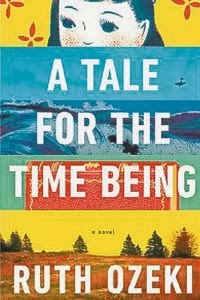
A Tale For the Time Being is a thick read not for its 432 pages but in its intricacies. The overlapping narratives of Nao and Ruth create a pleasing density that I found myself burrowing into rather than trying to escape. Nao, a Japanese teenager dealing with severe bullying and suicidal father is smart, charming and a total pleasure on the page. When dropping out of school to avoid the bullies, she is sent to her grandmother Jiko, a Buddhist nun, at a mountain monastery where everyone is forced to show undying gratitude for everything:
At first I was like, no way am I saying that, but when you hang out with people who are always being super grateful and appreciating things and saying thank you, in the end it kind of rubs off, and one day after I'd flushed, I turned to the toilet and said, "Thanks, toilet," and it felt pretty natural. I mean, it's the kind of thing that's okay to do if you're in a temple on the side of a mountain, but you'd better not try it in your junior high school washroom, because if your classmates catch you bowing and thanking the toilet they'll drown you in it. I explained this to Jiko, and she agreed it wasn't such a good idea, but that it was okay just to feel grateful sometimes, even if you don't say anything. Feeling is the important part. You don't have to make a big deal about it.
Nao's voice is compelling, pulling readers to the end where we hope to find out if Nao survived the tsunami that probably washed her journal and a few other clues up on Ruth's Canadian shore.
And while Nao is entertaining the hell out of you with her adorable--though truly sad at times--tale, you have Ruth in a full-blown existential crisis that can artist can immediately relate to. For example, when Nao's narrative takes on mystical qualities for Ruth, she laments:
"Am I crazy? I feel like I am sometimes."
"Maybe," he [her husband] said, rubbing her forehead. "But don't worry about
it. You need to be a little crazy. Crazy is the price you pay for having an
imagination. It's your superpower. Tapping into the dream. It's a good, not a
bad thing."
As she continues to investigate the journal that washed up on her shore, providing extensive footnotes for things that her readers may not understand about Nao's history, Japanese culture, and temple culture, she continues to explore her own difficulties in bringing her memoir to completion:
An unfinished book, left unattended, turns feral, and she would need all her focus, will, and ruthless determination to tame it again.
Ruth the character also explores common writer frustrations like the limitation of language:
That's what it feels like when I write, like I have this beautiful world in my head, but when I try to remember it in order to write it down, I change it, and I can't ever get it back.
And while the novel is peppered with sage and beautiful advice for us creative types, I was particularly moved by what Ruth (the character)'s husband had to say about art:
The work succeeds when all the cleverness and artifice have disappeared, after years of harvest and regrowth, when people begin to experience it as ambiance. Any residual aura of me as artist...will have faded. It will no longer matter. That is when the work gets interesting...it becomes more than 'art'. It becomes part of the optical subconscious. Change has occurred. It's the new normal, just the way things are.
The reason why this particular quote is so moving is because a lot of newbie authors like myself get real bent out of shape about our work and how it is received and perceived by others. But think about Harry Potter. Name a child today that doesn't have that world as part of their optical subconscious now? That is what so many of us aspire to, yet fail to realize how we must utterly and totally let go of our work in order to achieve it. The creator, like any parent, must step back and watch their creation grow--for better or worse. Yet many of an artist--definitely myself included, get very upset about this aspect of the process and feel nothing short of terror when our work is pulled from our hands.
And that is the essence of why I liked this book so much. It changed the way I saw myself and my work, unfolding these lessons gently in a beautiful, lyrical narrative that was truly exceptional. But a lot of it was about timing--as it always is for the Time Being--I read this just at just the right moment, and the magic happened.
Nao even says herself: And if you decide not to read anymore, hey, no problem, because you're not the one I was waiting for anyway. But if you decide to read on, then guess what? You're my kind of time being and together we'll make magic!
And it is magic, when you read just the right book at just the right time in your life. So maybe the time for you to read this book is right now. Or maybe it isn't.
You won't know until you try.
February 10, 2014
Isolation, Illusion, & Deception: An Interview
Recently, I had the pleasure of stumbling across the work of A.B. Shepherd, displaced Michigander who is now spending her days on the much warmer, much sunnier Australian coast. Both her novella “The Beacon” and her novel Lifeboat are good reads for anyone who is into science fiction/fantasy—which of course, I am. And I must say, she did a great job with the surprise ending, both times. Lucky for me, A.B. Shepherd is a patient woman and has agreed to let me pick her brain about both stories.Shepherd: Thanks for hosting me Kory. I have never had a twofer before - where I get to talk about both my books in an interview.
Me: My pleasure! Though very different, they have similar ideas. So it is fun to talk about them at the same time. :)Both your novella “The Beacon” and the novel Lifeboathave very different subject matters, yet both feature a protagonist who was isolated from her familiar environment and transported to an alien one. Were these themes of isolation and transportation intentional or accidental? Shepherd:I never realized that before, but it is true. It is entirely accidental. My protagonists tend to be, in some small way, autobiographical. Perhaps it is my own sense of isolation that I’ve always felt from the world. I grew up a loner in the midst of a family of six and often longed to be transported away. Or maybe it is the isolation I felt on moving to Australia four years ago, even though I have my husband and in-laws who are wonderful. Maybe I’m just never comfortable. Is that too deep and depressing?Me: Not at all. Apart from the autobiographical influence, what is the source of your inspiration for these stories?Shepherd: Lifeboatwas inspired by one of those UFO hunter/chaser reality TV shows. Cass was intended to be a UFO chaser who went off on adventures. At least that was what was supposed to happen, yet when I sat down to write that story, Cass took over and said, “Nuh uh. That’s not my story. Listen up woman. This is what really happened.” I felt like I was acting as a medium from that point on. She dictated and I typed.“The Beacon” was a bit different. I wasn’t quite sure where I was going when I sat down to write it, but I have a love of lighthouses, having grown up in Michigan surrounded by the Great Lakes. I always wanted to write a story set in a remote lighthouse. I guess you could say the lighthouse itself was the inspiration, but I love mysteries, and it seemed the ideal setting for one.Me: In “The Beacon” you didn’t give your protagonist a name. Why?Shepherd: That was a very deliberate move. It started because I couldn’t decide on a name for her, but after writing a few chapters I decided I wanted to see if I could pull off writing a book where the protagonist never revealed her name and the readers didn’t miss it. I think it was fairly successful. I had one reader tell me she never even noticed until I asked her if it impacted her enjoyment of the story. I haven’t had any negative feedback on that at all. How did you feel about it as a reader?Me: I absolutely agree with your readers. It doesn’t hamper the story at all.
Okay, next question: Lifeboat points out the human obsession with apocalyptic events. Why do you think we are so keen on seeing the destruction of our world?Shepherd: I don’t think most of us are hoping to see the destruction of our world, but I do think many people believe the world will end as we know it in our own lifetime. Just look at all the people obsessed with the biblical book of Revelation, Nostradamus, and the end of the Mayan Calendar. I personally know people who are “Preppers”. Our planet is screaming that something is coming. The extremely hot summer here in Australia while at the same time North American is experiencing record breaking cold weather and snow is just one indicator. The questions are: When? Are we listening? And can we survive it?Me: Both of your stories Lifeboat and “The Beacon” explore illusion and deception. What fascinates you about illusion and deception, especially considering that fiction itself is a sort of “sleight of hand”? Shepherd: Illusion and deception are all around us. Boy, I’m sounding like a bit of a nutcase in this interview! Lol. I love when I can’t figure out where an author is going with their story and they surprise me with the ending - as long as it makes sense. So often with mysteries or suspense stories I figure it out long before the end. That sometimes lessens my enjoyment. This is in direct contradiction to my real life where I tend to take people at face value and believe what they present to me as truth. Except for the obvious scammers of course!Me: Domestic violence is an issue for your characters in “The Beacon” and at the end of the story, you even provide contact information to domestic violence hotlines. Were you hoping readers from similar situations would be encouraged to seek help after reading your story? Shepherd: Not specifically. When I wrote “The Beacon” I didn’t feel like the story was about domestic violence, but when I finished it that turned out to be a key element. I felt that if someone read the story, and could relate to it somehow regarding the domestic violence aspect, whether for themselves or for a loved one, I wanted them to realize there is help out there. No one should have to live their lives walking on eggshells, wondering when the next violent act will occur. My grandmother was survivor of domestic violence and she divorced her abusive husband at a time in history when such a thing was unthinkable. I am so proud of her. I want others to know they can survive it too. Me: What are you working on now? And what can we expect to see from your soon?Shepherd: I have two works in progress at the moment, though I am still in fairly early stages of both. One is a sequel to Lifeboat, by popular demand. When I published Lifeboat I didn’t believe it was possible to write a sequel so when readers were asking for one I told them - sorry it was a one-off. I think I was grieving the ending of the story and I had to get through the mourning period before I could see that maybe there was room for a sequel. I’m very excited about it now. It will feature Cassie’s children. I’m also working on another psychological thriller. Lots of murder in this one and maybe a little bit of illusion and deception as well. I don’t have titles for either project yet, but hope to publish them both by the end of the year.Oh I can’t wait to read the sequel. Be sure to let us know when it comes out! :) Okay, now let’s wind-down with some non-work related questions:What is your favorite word? Periwinkle. Yes, I know it’s a color. I just love the way it sounds. What is your least favorite word? Impossible Who is your favorite author?Shepherd: You know, for me that is an impossible question. See? Impossible! Hah. There are just so many fabulous authors out there who are so incredibly talented. The list is far longer than my arm, but Kory M. Shrum has been added to the list recently.
Me : Woo!
Shepherd: Note the well-deserved sucking up.
Me: Noted!
Shepherd: But here are just a few who have rocked my world: Veronica Roth, John Marsden, Suzanne Collins, James Patterson, Janet Evanovich. *sigh* I could go on forever.What’s your go to snack food? Oh boy. I don’t allow myself much in the way of snacks, but I love dark chocolate, gummy snakes, most baked goods, chips, and all manner of things that are completely unhealthy. If you could have any (but only one) super power, what would it be? Flying - effortlessly like Superman. Oh yeah. Definitely. If you could pick the brain of any writer/poet/artist from anywhere across time and space, who would it be and why? This is completely geeky and off the wall, but I’d love the pick the brain of whoever it is who wrote the Voynich Manuscript. If you aren’t familiar with it, it is a handwritten book estimated to have been written between 1404-1438 and it was written in an unknown language with many illustrations. It has yet to be deciphered by anyone. There is speculation that it could be gibberish. I’d really love to know what it says and what its purpose was. If you could have any hottie supernatural boyfriend/partner/lover from any of the fictional universes, who/what would it be and why? This is where I get really, REALLY boring. I love a hottie fictional lover as much as the next gal, but there’s never been one that I’ve said, “Oh yeah baby - I want THAT one!” See, usually they are taken by their fictional partner and I’m no poacher - even in fantasy. I even tend to skim explicit sex scenes in novels - not because I’m a prude - but because they just don’t do much for me. Maybe I’ve been spoiled by my real life partner. See? I told you I was boring. What profession other than yours would you like to attempt? Singing. But not on stage. Maybe as a studio musician, singing back-up tracks or something. I love to sing, although I am not good enough to be professional. I do love my karaoke at home, when I’m alone. What profession would you not like to do? Plumbing. I’d never want to have to deal with other people’s waste products. Ick. *shudder* If Dante’s Nine Circles of Hell existed, which circle would you be trapped in and why?Okay, I’d be in the third circle - gluttony. For explanation see the snack food question. Yes, I love my junk food. I may only let myself have it generally on weekends, but still. *sigh* You are a cruel woman Kory. But I prefer to live in my own delusional world where there are no Nine Circles of Hell. Hell is right here on Earth. Just look around you. Too dark of a way to end this interview? Okay, then I will leave you with this quote from Lifeboat as you stride off into your future: “In a spirit of hope and new beginnings, we linked arms like a couple of kids. Pushing aside sad thoughts, we strode off into our future.” What can I say except that I’ll stop by and see you on my way to Greed. ;) To learn more about the fabulous A.B. Shepherd, you can visit her website. Both her novella “The Beacon” and her novel Lifeboat are available for your immediate enjoyment.
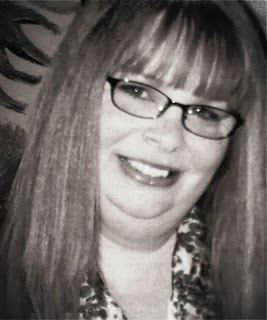
As a transplanted Michigander, Shepherd is now loving her time in the Limestone Coast region of Australia. Married, with two grown children (but no grandbabies), she's also a novice fiber crafter, with some experience in knitting and needle felting. One day she hopes to learn to spin wool into yarn. She loves to hear from readers and welcomes them to contact her on her blog, or at TheRealABShepherd@hotmail.com.
February 7, 2014
Press Releases and the Art of Beginning
So a debut novel is a lot of work. Yes, yes, I know that you know this. But as I struggle to do everything that I am "supposed to do"--I find that more and more items need to be done and as the list grows, I find myself more and more frustrated with the limitations of being a beginner. For example, I created this press release:
FOR IMMEDIATE RELEASE CONTACT: Kory M. Shrum
Email: kory.m.shrum@gmail.com
http://www.korymshrum.com
LOCAL TEACHER LAUNCHES DEBUT URBAN FANTASY NOVEL
 EAST LANSING, MI, Feb. 7—
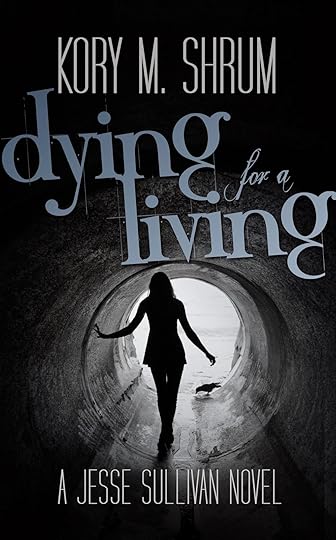
Local author and poet Kory M. Shrum of East Lansing, MI, will debut her urban fantasy novel Dying for a Living on March 4, 2014.Shrum, a writing instructor for Lansing Community College and Davenport University has been working with her agent Ginger Clark of Curtis Brown, LTD. and other professionals to bring this book to completion after four long years.Set in Nashville, TN the protagonist Jesse Sullivan dies for a living, literally. Serving as a death replacement agent, she can die so others don’t have to. Although each death is different, the result is the same: a life is saved, and Jesse resurrects days later with sore muscles, new scars, and another hole in her memory. But when Jesse is murdered and becomes the sole suspect in a federal investigation, more than her freedom and sanity are at stake. She must catch the killer herself—or die trying.
The novel has received positive pre-release praise, garnering a 4.83 out of 5 stars on the book-lovers site, Goodreads. Most reviewers comment on Dying for a Living’s examination of religious intolerance, discrimination, and the political power struggles caused by the darkest of human motivations—all through the eyes of a humorous and quirky protagonist.
Kory M. Shrum lives in Michigan with her partner and a ferocious guard pug. When not writing, she can be found teaching, traveling, and wearing a gi. Her poetry has appeared in North American Review, Bateau and elsewhere. Dying for a Living is her first fantasy novel. Read more at: www.korymshrum.com
To book the author for appearances, interviews, or signings, please contact the author at: kory.m.shrum@gmail.com----
First of all, it took me a long time to draft this. I had to read a lot of examples and peruse a lot of useless and confusing sites. I started to question (like usual) my ability to manage my resources (time, money, etc.) properly. And then I took a step back, ingested a great deal of sugar and caffeine and had a sort of epiphany.
You see, I want to stress the importance of embracing the learning curve. I can give you many examples of when I failed to do this (when I was learning to ski, when learning French, when learning anything really)--the impulse (at least for me) is to get really angry. And once you get angry a lot of negative self-talk starts to hamper which ruins productivity more than your lack of knowledge ever could.
As most of you know I'm in Italy right now. Every day I walk from the apartment I rent into the city. On the first day, I got lost and it took me 40 minutes to reach the city center. On the second day, it took me only 30. One the third, I found a street on the map that looked far more "direct" than the path I've been taking, and I arrived in a brisk 18 minutes in front of the Duomo's white-and-green marble facade.
Which is to say, this will get easier with practice. If I can just keep in mind that this is my first book, then perhaps I can be more patient with the learning process. And I think this is true for putting out your first book as well as any number of "firsts".
And I can imagine that there will never come a time when I feel that I've learned all there is to know--and if this is true--than it is better to get comfortable here in the role of beginner than to always be mad about the uncertainty and scariness of such a position. If I can just focus on all the fun and limitless possibility that a beginning offers--I might improve the quality of my life by 1000000%
FOR IMMEDIATE RELEASE CONTACT: Kory M. Shrum
Email: kory.m.shrum@gmail.com
http://www.korymshrum.com
LOCAL TEACHER LAUNCHES DEBUT URBAN FANTASY NOVEL
 EAST LANSING, MI, Feb. 7—
Local author and poet Kory M. Shrum of East Lansing, MI, will debut her urban fantasy novel Dying for a Living on March 4, 2014.Shrum, a writing instructor for Lansing Community College and Davenport University has been working with her agent Ginger Clark of Curtis Brown, LTD. and other professionals to bring this book to completion after four long years.Set in Nashville, TN the protagonist Jesse Sullivan dies for a living, literally. Serving as a death replacement agent, she can die so others don’t have to. Although each death is different, the result is the same: a life is saved, and Jesse resurrects days later with sore muscles, new scars, and another hole in her memory. But when Jesse is murdered and becomes the sole suspect in a federal investigation, more than her freedom and sanity are at stake. She must catch the killer herself—or die trying.

The novel has received positive pre-release praise, garnering a 4.83 out of 5 stars on the book-lovers site, Goodreads. Most reviewers comment on Dying for a Living’s examination of religious intolerance, discrimination, and the political power struggles caused by the darkest of human motivations—all through the eyes of a humorous and quirky protagonist.
Kory M. Shrum lives in Michigan with her partner and a ferocious guard pug. When not writing, she can be found teaching, traveling, and wearing a gi. Her poetry has appeared in North American Review, Bateau and elsewhere. Dying for a Living is her first fantasy novel. Read more at: www.korymshrum.com
To book the author for appearances, interviews, or signings, please contact the author at: kory.m.shrum@gmail.com----
First of all, it took me a long time to draft this. I had to read a lot of examples and peruse a lot of useless and confusing sites. I started to question (like usual) my ability to manage my resources (time, money, etc.) properly. And then I took a step back, ingested a great deal of sugar and caffeine and had a sort of epiphany.
You see, I want to stress the importance of embracing the learning curve. I can give you many examples of when I failed to do this (when I was learning to ski, when learning French, when learning anything really)--the impulse (at least for me) is to get really angry. And once you get angry a lot of negative self-talk starts to hamper which ruins productivity more than your lack of knowledge ever could.
As most of you know I'm in Italy right now. Every day I walk from the apartment I rent into the city. On the first day, I got lost and it took me 40 minutes to reach the city center. On the second day, it took me only 30. One the third, I found a street on the map that looked far more "direct" than the path I've been taking, and I arrived in a brisk 18 minutes in front of the Duomo's white-and-green marble facade.
Which is to say, this will get easier with practice. If I can just keep in mind that this is my first book, then perhaps I can be more patient with the learning process. And I think this is true for putting out your first book as well as any number of "firsts".
And I can imagine that there will never come a time when I feel that I've learned all there is to know--and if this is true--than it is better to get comfortable here in the role of beginner than to always be mad about the uncertainty and scariness of such a position. If I can just focus on all the fun and limitless possibility that a beginning offers--I might improve the quality of my life by 1000000%
January 28, 2014
La Douceur de Vivre
So after being notified that I have high-ish cholesterol (particularly high for someone who eats a plant-based diet and is active), what do I do? I fly to France, land of puff pastries and promptly eat my little heart out. Just this week, I’ve had the following:

This tropezienne is a delicious treat with whipped buttercream sandwiched between brioche cake, rock sugar sprinkled on top. YUM.

This is called a meringue. It is hard on the outside with a marshmallow-y center. It’s gooey and lovely, but there is something just a bit strange at the end. Not an aftertaste exactly, before that. Hard to describe.
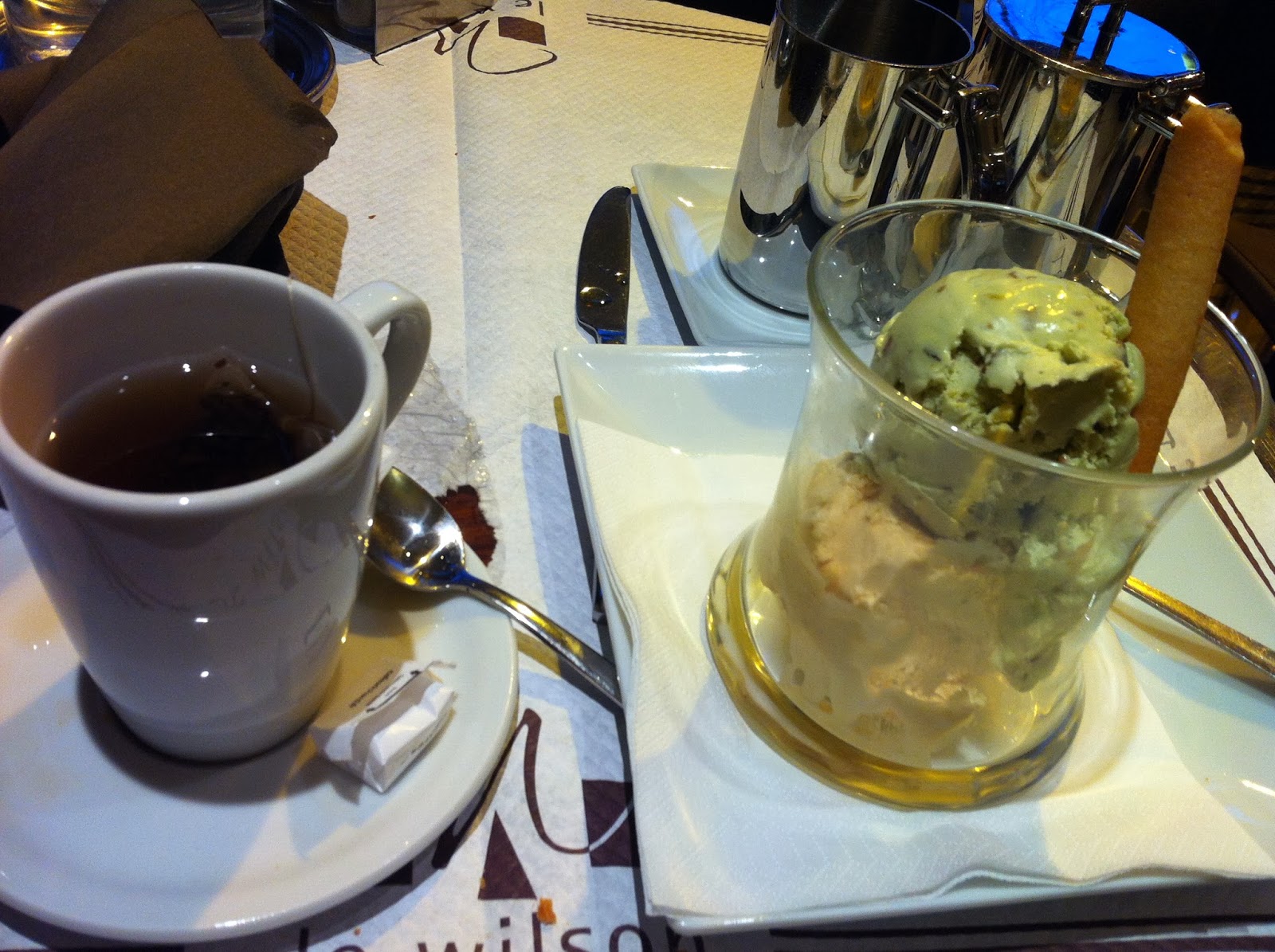
The caramel scoop on the bottom (which left oo sodelicious caramel bits stuck to my teeth) was better than the pistachio scoop on top.
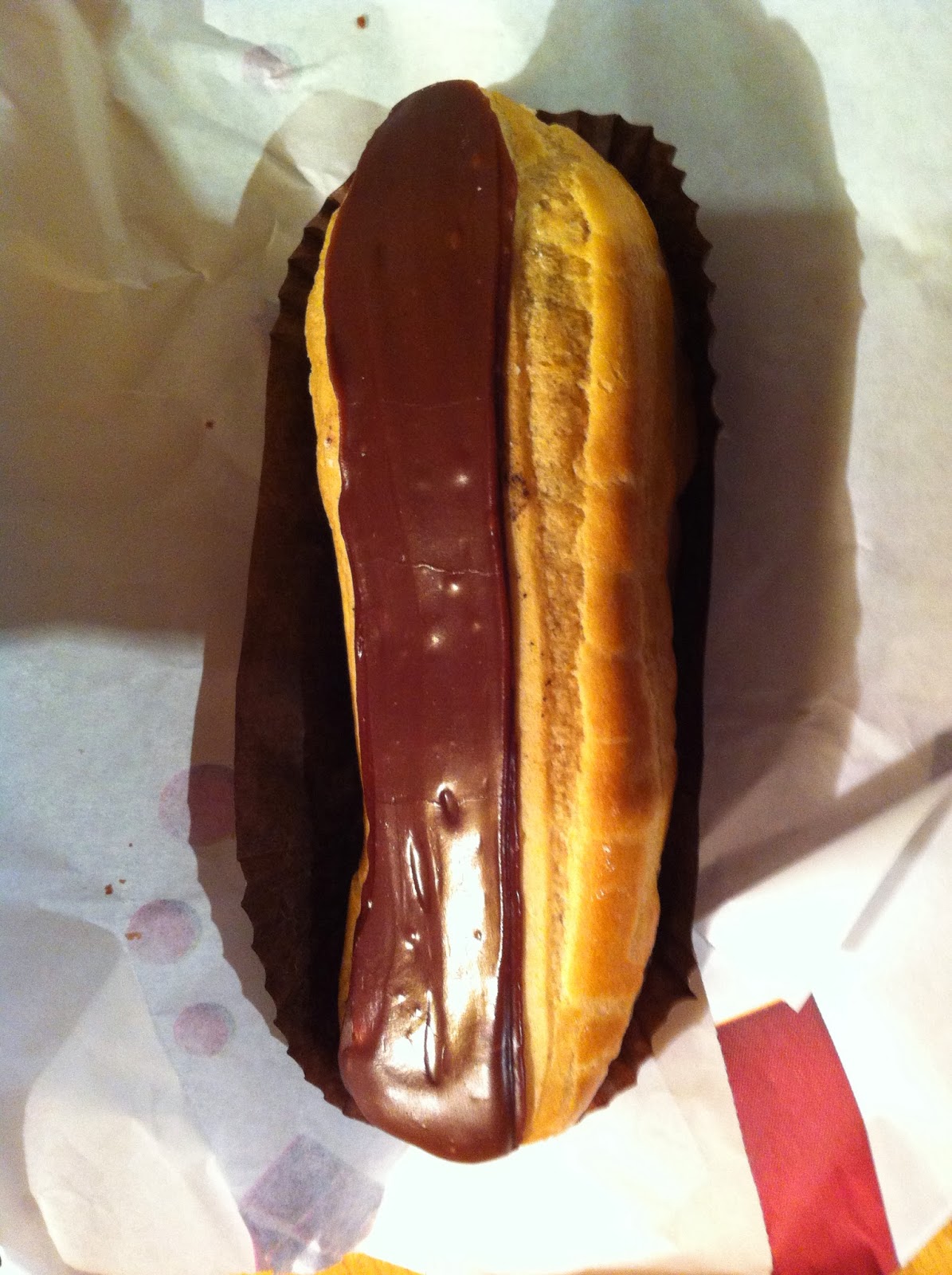
I was slightly disappointed with this éclair because it was full of something like chocolate pudding when I was expecting a decadent whipped buttercream. But the dark and swarthy man who sold it to me was charming, with the little children running in and out of his shop, calling his name, and catching the little chocolates he threw at them.
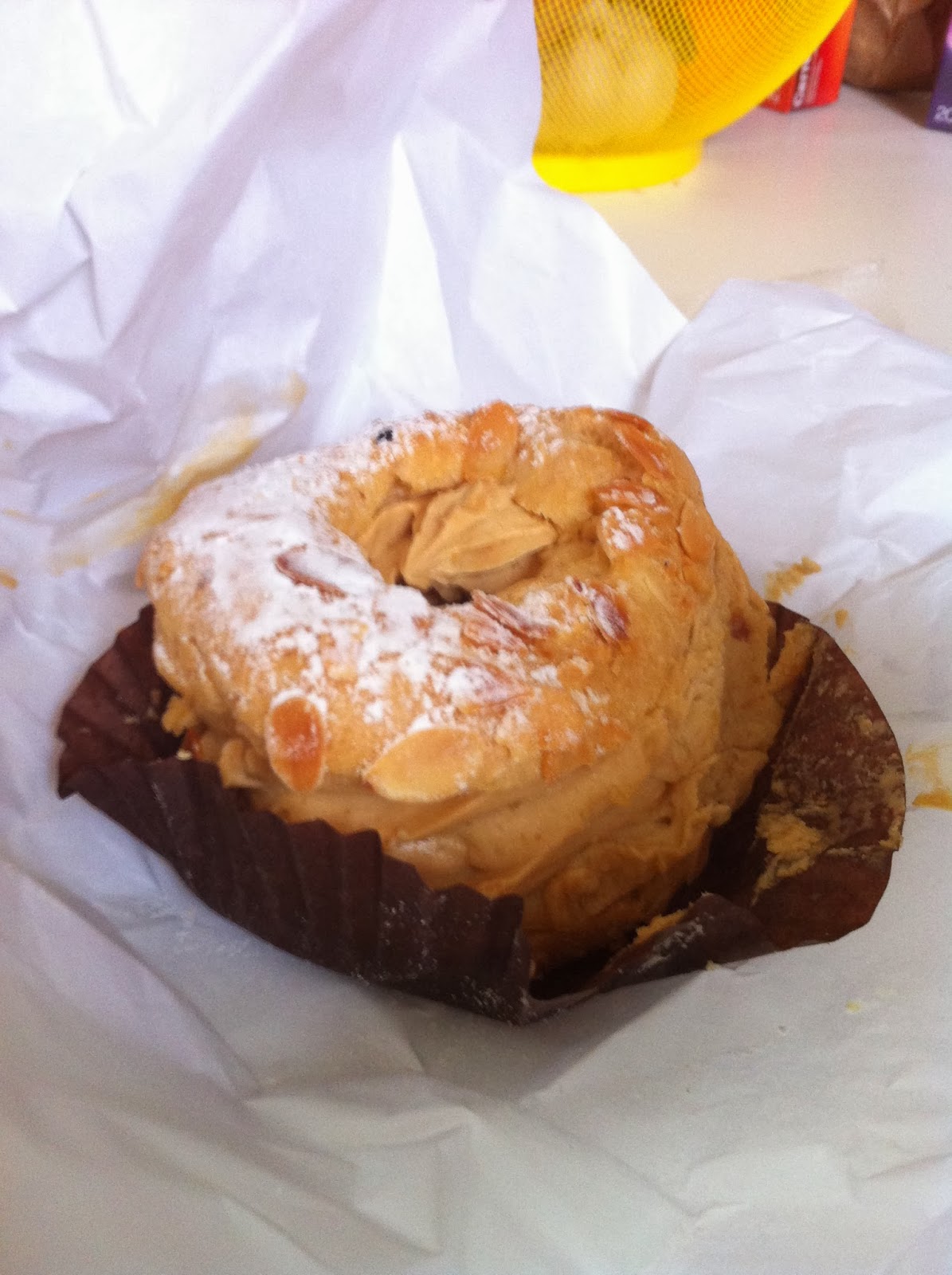
I’ve forgotten what this was called, but let’s call it AMAZING. The whipped middle is hazelnut and mind-blowing and the crust is a light, flaky pastry shell, made sweeter with sprinkled powdered sugar.
…and this does not include the croissants, chocolates, macrons or chocolate-covered tea biscuits that have also been happening in high frequency.
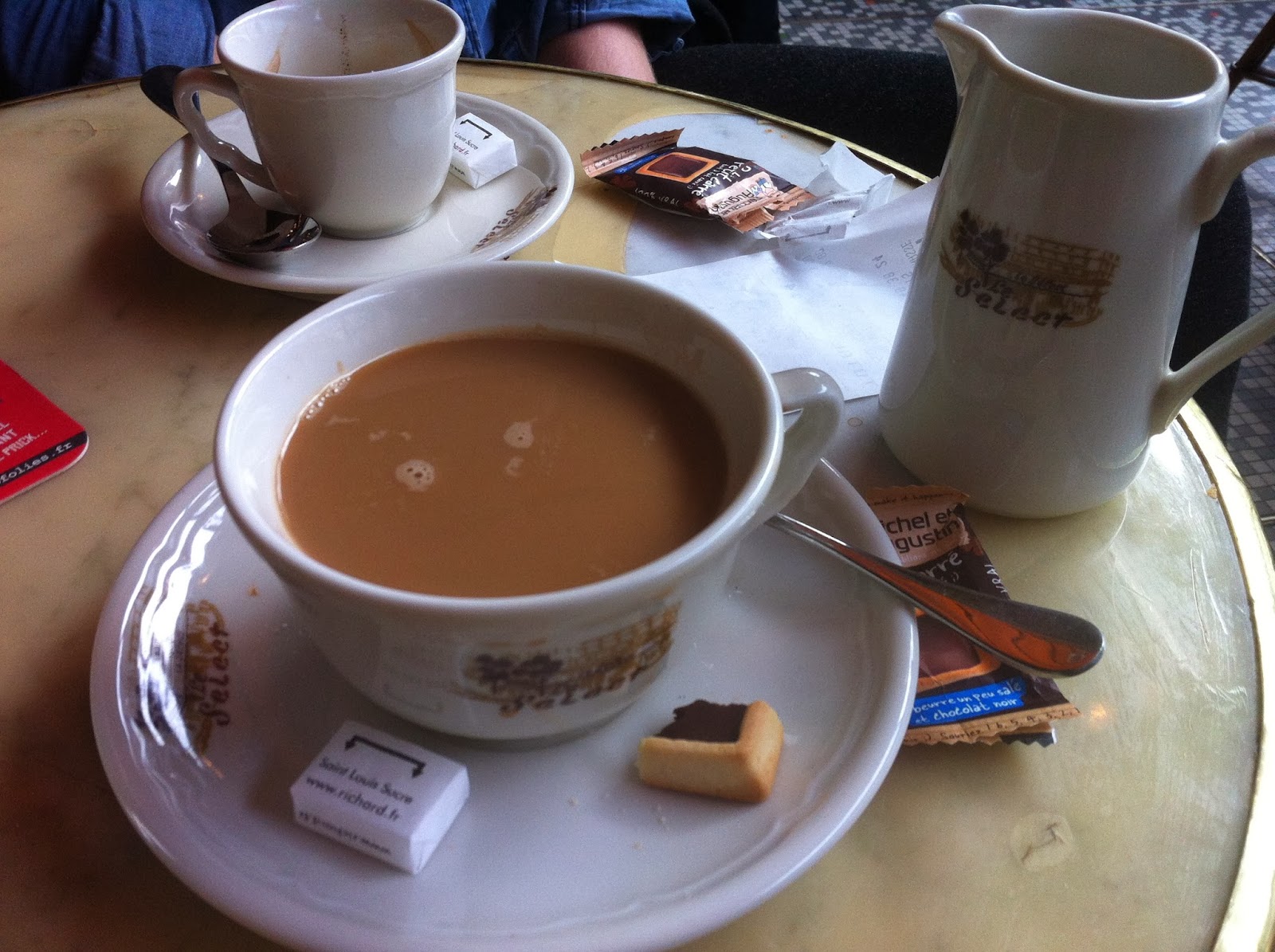
And should I feel bad about eating all of this? Maybe. Except I don’t. And I especially don’t after I just finished reading “Daily Rituals” by Mason Currey—which basically outlines how most artistic types are extremists of one kind or another, with poisons ranging from opium, to alcohol, to snails (did you know that Patricia Highsmith loved snails so much that she smuggled them into France, six under each breast?!?)
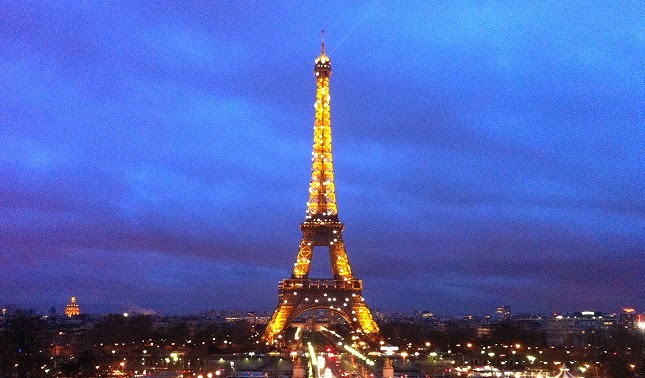
So the bottom line folks, is if the worst I can do is gorge myself on puffy pastries in one of the most beautiful cities in the world, so be it. I’m not sorry. And neither should you be, my weirdo-artsy-type friends. Embrace your strange and amazing gifts. The world will be sweeter for it.
January 20, 2014
Are There Really No Original Stories?
I’ve often heard the maximum that writers are simply telling the same old stories over and over again—that there is no such thing as “original” or “unique” anymore. And when I think of all the retellings in the world, all the stories featuring the same ideas or character archetypes as something that came before, this begins to feel especially true.
What makes a story original ?
Is it a never-before-seen world? I can think of many “worlds” that felt incredibly unique at the time of their creation—Harry Potter comes to mind. How many children began to wish they’d receive their letter from Hogwarts? But what about other aspects of that story—a boy facing adversity. Good versus evil. The importance of bravery in the face of opposition—
All of these “stories” have been told before from ancient mythology to biblical parables to modern retellings. And even the world of Harry Potter itself isn’t completely unique. The Ministry of Magic, private schools, etc., horrible aunts who blame us for everything, all bear resemblance to our world.
So if it isn’t the world, and it isn’t the plot/story itself—maybe it is the character?
To have a character that is unique and one of a kind would certainly feel fresh. After all, nothing makes a read more boring than a stock character which we can identify from a mile-away. Yet there are many kinds of characters that get reused as well, particularly in the genres that I love most: vampires, werewolves, fae, succubi/incubi—they are all regurgitated from lore.
So at face value, characters are not necessarily original. Even if they possess unique traits, a unique hubris that sets them apart from another icon, the flaw itself (pride, greed, vanity, etc.) is surely a trait that belonged to another character first. Would it be a combination then?
(i.e. Werewolf + Chaetophobia [fear of hair]= original?)
Or maybe it isn’t the trait itself, the “race” or even the description of the character that makes it unique but rather the character’s perspective. I think of Anne Rice’s The Vampire Chronicles particularly. The reason why her work became so wildly popular was because it took a well-known trope (the vampire) and gave it a fresh perspective—we were able to hear the vampire’s story instead of the victim's. After all, is it not true that if 4 people were involved in a single car accident, we would have four different perspectives of what happened. So maybe perspective IS the key to an original tale.
Then there is the problem of a human wanting to tell a nonhuman’s story. I’ve heard it argued that something is lost in such translations (in humanizing ‘beasts’). After all, for those who are hardcore fans of vampires as savage, blood-lusty creatures, then Anne Rice’s vampires are too romanticized and weepy. In this argument, we encounter the difficulty of describing the supernatural with human eyes and a human tongue—their experiences, motivations, and beliefs would not be as human as we often make them out to be. And maybe here lies the possibility for a truly original story.
I don’t know.
Are there really no original stories left? Or can a new story be invented at any time—and if yes, how?
Kory