Kory M. Shrum's Blog, page 13
February 22, 2016
#Mondayblogs: Cover Reveal #indiesbeseen
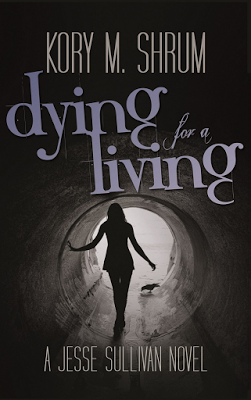 Original cover
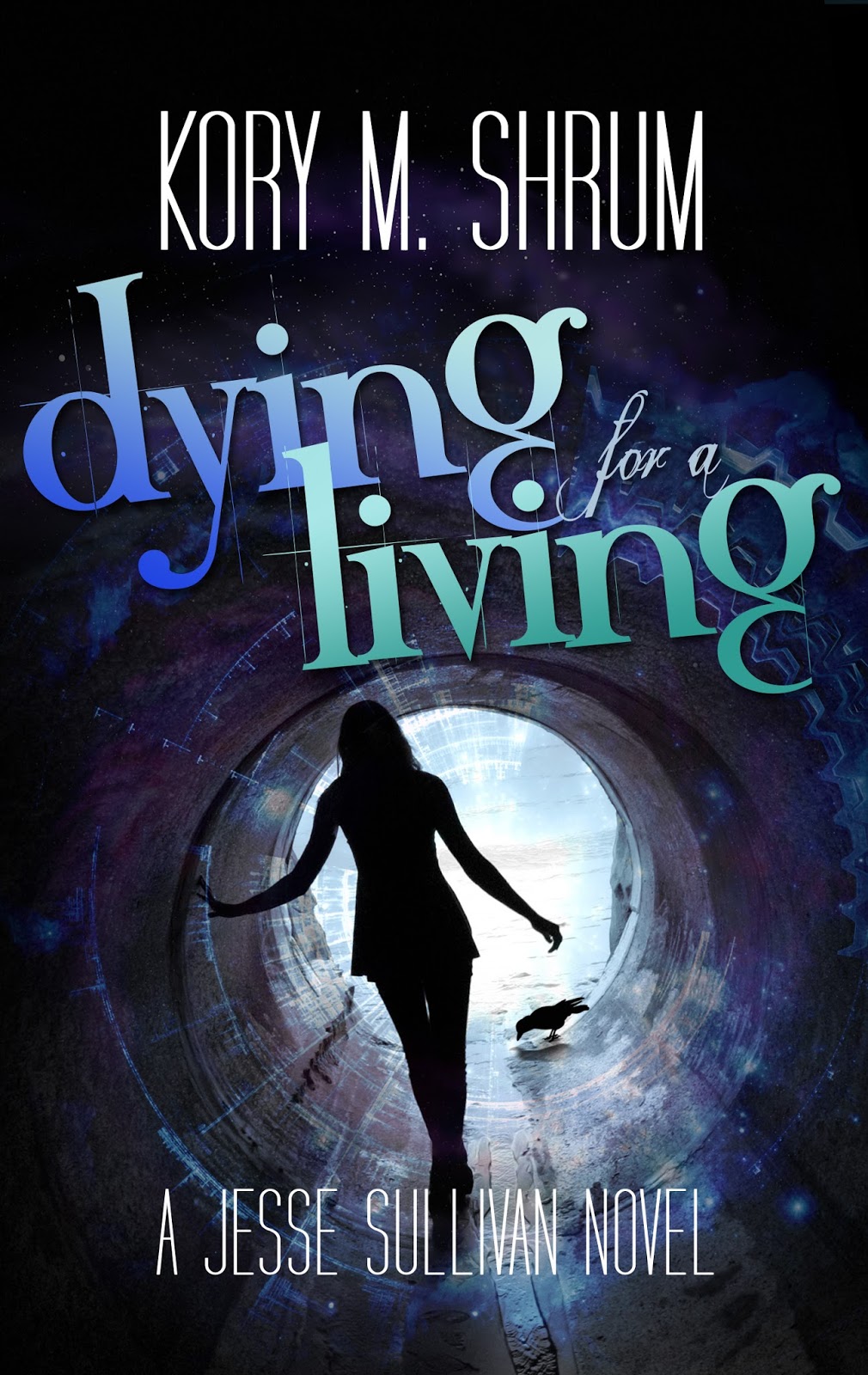 New cover
Behold! The prettiness!
As you can see, my awesome designer friend John K. Addis has given Dying for a Living a facelift. I love it. The colors are great and it adds a bit of pizzazz that the first cover was missing. I think it also jives better with the other covers in the series.

What do you think?


February 19, 2016
#Read a #poem Friday: Song of Myself
Song of Myself by Walt Whitman1
I celebrate myself, and sing myself,
And what I assume you shall assume,
For every atom belonging to me as good belongs to you.
I loafe and invite my soul,
I lean and loafe at my ease observing a spear of summer grass.
My tongue, every atom of my blood, form'd from this soil, this air,
Born here of parents born here from parents the same, and their
parents the same,
I, now thirty-seven years old in perfect health begin,
Hoping to cease not till death.
Creeds and schools in abeyance,
Retiring back a while sufficed at what they are, but never forgotten,
I harbor for good or bad, I permit to speak at every hazard,
Nature without check with original energy.
2
Houses and rooms are full of perfumes, the shelves are crowded with
perfumes,
I breathe the fragrance myself and know it and like it,
The distillation would intoxicate me also, but I shall not let it.
The atmosphere is not a perfume, it has no taste of the
distillation, it is odorless,
It is for my mouth forever, I am in love with it,
I will go to the bank by the wood and become undisguised and naked,
I am mad for it to be in contact with me.
The smoke of my own breath,
Echoes, ripples, buzz'd whispers, love-root, silk-thread, crotch and vine,
My respiration and inspiration, the beating of my heart, the passing
of blood and air through my lungs,
The sniff of green leaves and dry leaves, and of the shore and
dark-color'd sea-rocks, and of hay in the barn,
The sound of the belch'd words of my voice loos'd to the eddies of
the wind,
A few light kisses, a few embraces, a reaching around of arms,
The play of shine and shade on the trees as the supple boughs wag,
The delight alone or in the rush of the streets, or along the fields
and hill-sides,
The feeling of health, the full-noon trill, the song of me rising
from bed and meeting the sun.
Have you reckon'd a thousand acres much? have you reckon'd the earth much?
Have you practis'd so long to learn to read?
Have you felt so proud to get at the meaning of poems?
Stop this day and night with me and you shall possess the origin of
all poems,
You shall possess the good of the earth and sun, (there are millions
of suns left,)
You shall no longer take things at second or third hand, nor look through
the eyes of the dead, nor feed on the spectres in books,
You shall not look through my eyes either, nor take things from me,
You shall listen to all sides and filter them from your self.
...read the rest of this awesome poem here.
I celebrate myself, and sing myself,
And what I assume you shall assume,
For every atom belonging to me as good belongs to you.
I loafe and invite my soul,
I lean and loafe at my ease observing a spear of summer grass.
My tongue, every atom of my blood, form'd from this soil, this air,
Born here of parents born here from parents the same, and their
parents the same,
I, now thirty-seven years old in perfect health begin,
Hoping to cease not till death.
Creeds and schools in abeyance,
Retiring back a while sufficed at what they are, but never forgotten,
I harbor for good or bad, I permit to speak at every hazard,
Nature without check with original energy.
2
Houses and rooms are full of perfumes, the shelves are crowded with
perfumes,
I breathe the fragrance myself and know it and like it,
The distillation would intoxicate me also, but I shall not let it.
The atmosphere is not a perfume, it has no taste of the
distillation, it is odorless,
It is for my mouth forever, I am in love with it,
I will go to the bank by the wood and become undisguised and naked,
I am mad for it to be in contact with me.
The smoke of my own breath,
Echoes, ripples, buzz'd whispers, love-root, silk-thread, crotch and vine,
My respiration and inspiration, the beating of my heart, the passing
of blood and air through my lungs,
The sniff of green leaves and dry leaves, and of the shore and
dark-color'd sea-rocks, and of hay in the barn,
The sound of the belch'd words of my voice loos'd to the eddies of
the wind,
A few light kisses, a few embraces, a reaching around of arms,
The play of shine and shade on the trees as the supple boughs wag,
The delight alone or in the rush of the streets, or along the fields
and hill-sides,
The feeling of health, the full-noon trill, the song of me rising
from bed and meeting the sun.
Have you reckon'd a thousand acres much? have you reckon'd the earth much?
Have you practis'd so long to learn to read?
Have you felt so proud to get at the meaning of poems?
Stop this day and night with me and you shall possess the origin of
all poems,
You shall possess the good of the earth and sun, (there are millions
of suns left,)
You shall no longer take things at second or third hand, nor look through
the eyes of the dead, nor feed on the spectres in books,
You shall not look through my eyes either, nor take things from me,
You shall listen to all sides and filter them from your self.
...read the rest of this awesome poem here.
February 18, 2016
There's A Reason Why Elephants Have Big Ears
....you guessed it! Because they're great listeners. :D
Now, I know you're thinking: wait, Kory...I thought it was "an elephant never forgets" and you'd be right.
But you know who else doesn't forget? Good listeners.
If you want to make someone feel like you REALLY listened to them, then show off your awesome memory.
How special did you feel when you had a good conversation with a friend/partner/family member, and the next time you saw said person (s)he said, "Oh how is <insert important and specific thing we talked about last time>?" (i.e. How is that tough project at your work going? How's Abby's broken elbow?"
Follow up reestablishes the great connection made in a previous conversation and suggests that what they said previously mattered to you enough for further consideration.
How can you show someone you remember? Here's 3 ways:
*Follow up inquiries (mostly in the form of questions)
*relevant gifts (i.e. my fiancee lamented
over her deteriorating work bag and I got her a new
one for V-day)
*acts of service (i.e. I know you're on a deadline this week, so I was wondering if you wanted me to take your kids off your hands tomorrow--maybe dinner and a movie--so you can have uninterrupted work time)
How do you show off your good memory/listening?
Now, I know you're thinking: wait, Kory...I thought it was "an elephant never forgets" and you'd be right.
But you know who else doesn't forget? Good listeners.
If you want to make someone feel like you REALLY listened to them, then show off your awesome memory.
How special did you feel when you had a good conversation with a friend/partner/family member, and the next time you saw said person (s)he said, "Oh how is <insert important and specific thing we talked about last time>?" (i.e. How is that tough project at your work going? How's Abby's broken elbow?"
Follow up reestablishes the great connection made in a previous conversation and suggests that what they said previously mattered to you enough for further consideration.
How can you show someone you remember? Here's 3 ways:
*Follow up inquiries (mostly in the form of questions)
*relevant gifts (i.e. my fiancee lamented
over her deteriorating work bag and I got her a new
one for V-day)
*acts of service (i.e. I know you're on a deadline this week, so I was wondering if you wanted me to take your kids off your hands tomorrow--maybe dinner and a movie--so you can have uninterrupted work time)
How do you show off your good memory/listening?
February 17, 2016
3 Ways to Be More Attentive #BetheChange
There is a direct correlation between attentiveness and good listening. The more attentive you can be toward the person speaking to you, the better listener you will be.
But how exactly can one "be attentive"?
Physically
I've been going on and on about body language lately, so no surprise I start here, but the first way you can show your (listening) partner than you're attentive is with your body. Make eye contact, keep your posture open and inviting, use small movements like head nods or tilt to encourage them. Never turn your body (or even point your toes!) in a different direction. Don't look over your shoulder. Don't pull out the phone.
Be absolutely, 100% physically present with them in the moment. No darting off. No interruptions. Stay. Put.
Mentally
Since I've sprained the ankle, I haven't been to yoga in a few weeks. But I know when I finally do get to go back, one of the first things they'll say at the start of class will be "bring yourself to the mat; you've brought your body, now bring your mind".
Attentiveness is about being present. Having the correct intention. So when you start thinking about all the things you need to do (work, money, kids, chores, etc.) or other distractions tug at your mind, you have to let all that go and return your attention to the person speaking to you.
Remaining mentally focused on the speaker makes a difference between clear communication and missed important information. And if you've found that you've wandered, or missed something, politely ask them to repeat themselves: "Oh that is really interesting. Let me make sure I understand that..."
Emotionally
There is a difference between empathy and sympathy. Be an empathic listener (understanding). Not a sympathetic one (patronizing). Try to put yourself in the other person's shoes, adopting their stance and facial features to see how they feel. Don't superimpose your experience on them in any way. No "if I was them/if I was you..." Don't come to the conversation with an attitude like "whew as soon as she shuts up about her problems, I'm going to tell her all about mine." No topping. No advice giving. Just be present and feel what they feel, sharing the moment. Try to leave your own feelings and prejudices out of it.
Easier said than done, I know! :D
Kory
But how exactly can one "be attentive"?
Physically
I've been going on and on about body language lately, so no surprise I start here, but the first way you can show your (listening) partner than you're attentive is with your body. Make eye contact, keep your posture open and inviting, use small movements like head nods or tilt to encourage them. Never turn your body (or even point your toes!) in a different direction. Don't look over your shoulder. Don't pull out the phone.
Be absolutely, 100% physically present with them in the moment. No darting off. No interruptions. Stay. Put.
Mentally
Since I've sprained the ankle, I haven't been to yoga in a few weeks. But I know when I finally do get to go back, one of the first things they'll say at the start of class will be "bring yourself to the mat; you've brought your body, now bring your mind".
Attentiveness is about being present. Having the correct intention. So when you start thinking about all the things you need to do (work, money, kids, chores, etc.) or other distractions tug at your mind, you have to let all that go and return your attention to the person speaking to you.
Remaining mentally focused on the speaker makes a difference between clear communication and missed important information. And if you've found that you've wandered, or missed something, politely ask them to repeat themselves: "Oh that is really interesting. Let me make sure I understand that..."
Emotionally
There is a difference between empathy and sympathy. Be an empathic listener (understanding). Not a sympathetic one (patronizing). Try to put yourself in the other person's shoes, adopting their stance and facial features to see how they feel. Don't superimpose your experience on them in any way. No "if I was them/if I was you..." Don't come to the conversation with an attitude like "whew as soon as she shuts up about her problems, I'm going to tell her all about mine." No topping. No advice giving. Just be present and feel what they feel, sharing the moment. Try to leave your own feelings and prejudices out of it.
Easier said than done, I know! :D
Kory
February 16, 2016
Ask Don't Assume #BetheChange
So after I read all about listening with my ears, and watched all these TedTalks, I moved right into listening my eyes, or learning the subtle art of reading body language and emotions. Two books have been helping with that, Emotions Revealed by Paul Ekman and What Every Body is Saying by Joe Navarro.
Both of these authors/researchers believe that while NOTICING the emotion or the unconscious signs are essential to getting a good read on people, or "hearing" what they are "telling" you, it is even MORE important to do follow up.
So don't just see someone hunch their shoulders and assume, "they are feeling uncomfortable!" when it could be any number of things: a stomach ache, cold or other physical discomfort. They could feel threatened or vulnerable. Or sad. Or in a position of weakness, etc.
Back to Julian Treasure's RASA technique, this pertains to #3--S-- as in "So...."
Imagine that you are at a get together and you see your friend across the room. Her brow is furrowed, Her shoulders are almost up to her ears. You assume at first the she's stressed, and clearly not having a good time. So you go talk to her. After the initial pleasantries you get to the meat of the conversation and she admits...
A: "I feel so out of control. I just don't know what I'm doing with my life anymore."
B: "In what ways particulary do you feel out of control?"
A: "I don't know just everything. Like work. They ask way too much from me and I just can't work 100 hours a week! I barely have any time to sleep and eat and bathe."
B: "So...you need a different job that allows you more freedom to enjoy your life?"
A: "Yeah...or..."
and so on. If you hadn't talked to your friend at all, but saw the symptoms of stress you would ASSUME that she just hated the party, wanted to be somewhere else, was stressed but about home life, a fight with her sweetie, conflict with another friend...possibly even guessing correctly that it was work bringing her down. But you wouldn't know for sure unless you asked.
Listen. Ask. Listen. Repeat.
Both of these authors/researchers believe that while NOTICING the emotion or the unconscious signs are essential to getting a good read on people, or "hearing" what they are "telling" you, it is even MORE important to do follow up.
So don't just see someone hunch their shoulders and assume, "they are feeling uncomfortable!" when it could be any number of things: a stomach ache, cold or other physical discomfort. They could feel threatened or vulnerable. Or sad. Or in a position of weakness, etc.
Back to Julian Treasure's RASA technique, this pertains to #3--S-- as in "So...."
Imagine that you are at a get together and you see your friend across the room. Her brow is furrowed, Her shoulders are almost up to her ears. You assume at first the she's stressed, and clearly not having a good time. So you go talk to her. After the initial pleasantries you get to the meat of the conversation and she admits...
A: "I feel so out of control. I just don't know what I'm doing with my life anymore."
B: "In what ways particulary do you feel out of control?"
A: "I don't know just everything. Like work. They ask way too much from me and I just can't work 100 hours a week! I barely have any time to sleep and eat and bathe."
B: "So...you need a different job that allows you more freedom to enjoy your life?"
A: "Yeah...or..."
and so on. If you hadn't talked to your friend at all, but saw the symptoms of stress you would ASSUME that she just hated the party, wanted to be somewhere else, was stressed but about home life, a fight with her sweetie, conflict with another friend...possibly even guessing correctly that it was work bringing her down. But you wouldn't know for sure unless you asked.
Listen. Ask. Listen. Repeat.
February 15, 2016
#Mondayblogs: Learning How to Listen from the Deaf
So many of you know, that in addition to my exciting life as an author, I also teach writing to college students.
This semester I have a member of the deaf community in my classroom, and as is my college's policy, there are two interpreters in the room who assist him during our lessons.
Now this is not my first semester working with a deaf student, but I've got a lot to learn. (Interesting side note: One semester I had a deaf student and a blind student in the same class and that REALLY challenged my teaching techniques, let me tell you!)
So in the spirit of learning and with this month's theme of listening, I pay attention. I pay attention to my students when they speak to me, to each other and not at all--watching the way they speak with their bodies instead. But in particular, I've been paying attention with how my deaf student LISTENS to me, to his interpreters, and his classmates and it's teaching me a lot about how to be a good listener.
And here are a few things I've learned from my deaf student.
1) It's important to look at the person talking to you.
2) It's important to give the person talking to you, your undivided attention.
3) It's important not to interrupt.
4) It's important to know that "hearing" is an act of interpretation, and clarification is key.
Now all of these ideas are already touched upon "how to be a good listener" research for those with the priviledge of working ears. However, I found that it was true, even if you don't have the ability to hear someone! And furthermore, because of their constraints in the physical sense, the deaf community must FULLY engage, CONSCIOUSLY engage when they want to listen to someone.
And that is what I'm taking away from this. If I want to hear someone, to connect with them, I must fully and consciously engage--and what a challenge in our age of distractions!
This semester I have a member of the deaf community in my classroom, and as is my college's policy, there are two interpreters in the room who assist him during our lessons.
Now this is not my first semester working with a deaf student, but I've got a lot to learn. (Interesting side note: One semester I had a deaf student and a blind student in the same class and that REALLY challenged my teaching techniques, let me tell you!)
So in the spirit of learning and with this month's theme of listening, I pay attention. I pay attention to my students when they speak to me, to each other and not at all--watching the way they speak with their bodies instead. But in particular, I've been paying attention with how my deaf student LISTENS to me, to his interpreters, and his classmates and it's teaching me a lot about how to be a good listener.
And here are a few things I've learned from my deaf student.
1) It's important to look at the person talking to you.
2) It's important to give the person talking to you, your undivided attention.
3) It's important not to interrupt.
4) It's important to know that "hearing" is an act of interpretation, and clarification is key.
Now all of these ideas are already touched upon "how to be a good listener" research for those with the priviledge of working ears. However, I found that it was true, even if you don't have the ability to hear someone! And furthermore, because of their constraints in the physical sense, the deaf community must FULLY engage, CONSCIOUSLY engage when they want to listen to someone.
And that is what I'm taking away from this. If I want to hear someone, to connect with them, I must fully and consciously engage--and what a challenge in our age of distractions!
February 12, 2016
#Read a #poem #Friday
I knew something of conversation, or so I thought
until I listened to another.
Knew something of the talk, the sounds the chatter,
But to listen and to speak when moments call,
that is far greater.
Of conversations past, I no longer can remember,
Since the day I silent kept- and listened to another,
There opened up a life which had ‘til then
been merely shadow
At first the life it seemed another’s, but when I was caught
and by the mirror
The face had changed, it told me of another.
Since the day I silent kept- and listened to another.
by Jonathan Drane
until I listened to another.
Knew something of the talk, the sounds the chatter,
But to listen and to speak when moments call,
that is far greater.
Of conversations past, I no longer can remember,
Since the day I silent kept- and listened to another,
There opened up a life which had ‘til then
been merely shadow
At first the life it seemed another’s, but when I was caught
and by the mirror
The face had changed, it told me of another.
Since the day I silent kept- and listened to another.
by Jonathan Drane
February 11, 2016
Say It With Your Body #amlistening #bethechange
Because listening means keeping your mouth shut, you'll need to use your body to tell people that you're listening. I came across this acryomn for how to do just that:
SOLER
SOLER describes what you should be doing with your body to show that you're listening:
S-squarely face the speaker
O- open up the posture. Don't cross your arms or slump.
L- Lean toward the speaker to suggest engagement and attention.
E- Eye contact is important. Use it but don't abuse it. No stank eyes or evil eye curses, folks.
R- Relax. If you appear relaxed and comfortable with the conversation, your speaker will mirror that, also feeling relaxed and comfortable. This could increase the chances that they open up and share even more.
The article that I shared earlier this week also has this to say about receptive body language:
"Certain body postures and movements are culturally interpreted with specific meanings. The crossing of arms and legs is perceived to mean a closing of the mind and attention. The nodding of the head vertically is interpreted as agreement or assent. (It is worth noting that nonverbal clues such as these vary from culture to culture just as the spoken language does.) If seated, the leaning forward with the upper body communicates attention. Standing or seated, the maintenance of an appropriate distance is important. Too close and we appear to be pushy or aggressive and too far and we are seen as cold."
So the next time you find yourself in a conversation, remember, you can say a lot without saying anything at all! :)
Thanks for listening! :D
Kory
SOLER
SOLER describes what you should be doing with your body to show that you're listening:
S-squarely face the speaker
O- open up the posture. Don't cross your arms or slump.
L- Lean toward the speaker to suggest engagement and attention.
E- Eye contact is important. Use it but don't abuse it. No stank eyes or evil eye curses, folks.
R- Relax. If you appear relaxed and comfortable with the conversation, your speaker will mirror that, also feeling relaxed and comfortable. This could increase the chances that they open up and share even more.
The article that I shared earlier this week also has this to say about receptive body language:
"Certain body postures and movements are culturally interpreted with specific meanings. The crossing of arms and legs is perceived to mean a closing of the mind and attention. The nodding of the head vertically is interpreted as agreement or assent. (It is worth noting that nonverbal clues such as these vary from culture to culture just as the spoken language does.) If seated, the leaning forward with the upper body communicates attention. Standing or seated, the maintenance of an appropriate distance is important. Too close and we appear to be pushy or aggressive and too far and we are seen as cold."
So the next time you find yourself in a conversation, remember, you can say a lot without saying anything at all! :)
Thanks for listening! :D
Kory
February 10, 2016
7 Things NOT to do when #listening #bethechange
As I continue to explore what it means to be a good listener, I find as with most new endeavors, it's easier to identify what *NOT* to do than what to do. So here's some things NOT to do when trying to listen:
1) Search for the exit.
Sometimes listening is painful. You'd rather stick your finger up your nose, dig out a booger and flick it into the speaker's face than have them say another word. So you distract yourself. Either with technology (break out the phone or tablet!) or the picture show of your mind (this is the perfect time to rehash the intricacies of last night's episode of <insert fav TV show>. But resist this urge. If you are distracted, you aren't listening. Commit to the moment and give the person your full attention.
2) Make it about you.
No one likes a topper. I could make a joke about bottoms right now, but let's not get distracted (Rule #1!). When you trying to convey something awesome to a person, only to have them break in with their own experiences, interpretations, or god forbid, offer advice, it's clear that they think they are the most important part of the conversation. Reversely, (it's a word!), if you want the other person to feel like they are important, just listen without breaking in to superimpose yourself in the conversation. You're basically saying Me! Me! Me! which is pretty damn annoying...
3) Look for a problem.
People who listen only to find problems are half-listeners. They hear most of what you say, but they are really only searching for those triggers that suggest there is a problem they can solve. As with "make it about you", this is when the ego is active in the conversation. The person is trying to feel helpful and important but it's seriously limiting their listening skills.
Example,
S: "I've been searching for apartments and...
L: "Oh yeah, apartment searching is wretched. You know what you should do? Get on craigslist and..."
Or...
S: I keep getting these headaches. I think I'm drinking too much caffeine. Maybe I should cut back for a week and see if that helps. Have you ever done that? Did it work?
L: You know what you should do? Lavender oil! I love that shit. I rub it on everything. I bet it will help caffeine headaches too.
In both cases, the listener only took away a small portion what was said and in fact, were less helpful than if they had been actually listening.
4) Interrupt them while they're speaking.
Interrupting is another way of saying you couldn't care less and are definitely not listening. You might as well just say "so you're boring the hell out of me right now and I've just been thinking about other stuff to entertain myself and I want to talk about that stuff instead." K! Thanks!
Rude.
And definitely not listening.
5) Become defensive.
Sometimes in conversation, criticism happens. And while no one likes to be criticized, it's important to note that our default reaction is to become defensive and argue on our behalf. However, you can't listen AND defend. So if at all possible, try to detach emotionally and listen to the criticism. It helps me to pretend they are criticizing someone else--not me. That way, even if it is being poorly delivered, if there is something valuable and constructive in the remarks I can take that away from the conversation.
6) Listen--only to form counterarguments.
If we hear something we don't like or agree with, immediately want to refute the claim. This may not be about us (as in example 5) but about broader ideas, topics, events, etc. And so when people express opinions different than our own, we are very quick to try and prove why they are wrong to believe so. However, the moment you begin to reject their ideas and form your counterargument is the moment you stop listening. This means you might miss whole sections (very important sections of their argument) and launch a disagreement that wasn't even necessary.
7) Become a zealot.
I'm going to tell you straight up, I'm guilty of this. Every time I discover some awesome new thing, I tend to sing its praises from the mountain tops. Listening has been no different. Thankfully, I have not yet grabbed any of my friends, shaken them, and declared them to be bad listeners (yet), but the urge is strong!
The problem is that the more I study listening, the more I practice listening, the more I realize how absolutely terrible people are at it, which automatically provokes a strong reaction in certain contexts.
But hopefully, I'll *let go* (last month's power still hard at work! ;) of this impulse and see the value of observing rather than correcting.
1) Search for the exit.
Sometimes listening is painful. You'd rather stick your finger up your nose, dig out a booger and flick it into the speaker's face than have them say another word. So you distract yourself. Either with technology (break out the phone or tablet!) or the picture show of your mind (this is the perfect time to rehash the intricacies of last night's episode of <insert fav TV show>. But resist this urge. If you are distracted, you aren't listening. Commit to the moment and give the person your full attention.
2) Make it about you.
No one likes a topper. I could make a joke about bottoms right now, but let's not get distracted (Rule #1!). When you trying to convey something awesome to a person, only to have them break in with their own experiences, interpretations, or god forbid, offer advice, it's clear that they think they are the most important part of the conversation. Reversely, (it's a word!), if you want the other person to feel like they are important, just listen without breaking in to superimpose yourself in the conversation. You're basically saying Me! Me! Me! which is pretty damn annoying...
3) Look for a problem.
People who listen only to find problems are half-listeners. They hear most of what you say, but they are really only searching for those triggers that suggest there is a problem they can solve. As with "make it about you", this is when the ego is active in the conversation. The person is trying to feel helpful and important but it's seriously limiting their listening skills.
Example,
S: "I've been searching for apartments and...
L: "Oh yeah, apartment searching is wretched. You know what you should do? Get on craigslist and..."
Or...
S: I keep getting these headaches. I think I'm drinking too much caffeine. Maybe I should cut back for a week and see if that helps. Have you ever done that? Did it work?
L: You know what you should do? Lavender oil! I love that shit. I rub it on everything. I bet it will help caffeine headaches too.
In both cases, the listener only took away a small portion what was said and in fact, were less helpful than if they had been actually listening.
4) Interrupt them while they're speaking.
Interrupting is another way of saying you couldn't care less and are definitely not listening. You might as well just say "so you're boring the hell out of me right now and I've just been thinking about other stuff to entertain myself and I want to talk about that stuff instead." K! Thanks!
Rude.
And definitely not listening.
5) Become defensive.
Sometimes in conversation, criticism happens. And while no one likes to be criticized, it's important to note that our default reaction is to become defensive and argue on our behalf. However, you can't listen AND defend. So if at all possible, try to detach emotionally and listen to the criticism. It helps me to pretend they are criticizing someone else--not me. That way, even if it is being poorly delivered, if there is something valuable and constructive in the remarks I can take that away from the conversation.
6) Listen--only to form counterarguments.
If we hear something we don't like or agree with, immediately want to refute the claim. This may not be about us (as in example 5) but about broader ideas, topics, events, etc. And so when people express opinions different than our own, we are very quick to try and prove why they are wrong to believe so. However, the moment you begin to reject their ideas and form your counterargument is the moment you stop listening. This means you might miss whole sections (very important sections of their argument) and launch a disagreement that wasn't even necessary.
7) Become a zealot.
I'm going to tell you straight up, I'm guilty of this. Every time I discover some awesome new thing, I tend to sing its praises from the mountain tops. Listening has been no different. Thankfully, I have not yet grabbed any of my friends, shaken them, and declared them to be bad listeners (yet), but the urge is strong!
The problem is that the more I study listening, the more I practice listening, the more I realize how absolutely terrible people are at it, which automatically provokes a strong reaction in certain contexts.
But hopefully, I'll *let go* (last month's power still hard at work! ;) of this impulse and see the value of observing rather than correcting.
February 9, 2016
#Listening, #Leadership & #Success #BetheChange
A lot of the "how to be a good listener" reading that I'm coming across also seems to intersect with the idea of leadership. Now, like me, you may only be interested in one or the other (I don't have a particular interest in leading people, for example.) And while I do not want to lead people, I do want to be successful. And *people* for better or worse, seem to be part of my journey to success.
After all, no one I know is living in a bubble. Navigating the world with even the smallest amount of ambition requires a person to able to manuever others in order to reach their own objectives (and the objectives of others-- assume you're benevolent!). And if the late President Truman is to believed, then "In periods where there is no leadership, society stands still." No progress can be just as terrible for economies, societies, and individuals--(the whole power project is all about progress!)
But if your main objective in learning how to listen is to help you learn how to live more powerfully, it might be important to consider the following:
*You can't lead people if you don't know what they want
*You can't know what they want if you don't listen to them
It's that simple. And yet good leadership motivates, inspires, and directs others--all very active intentions. So it seems out of sync with something as seemingly passive as "listening". So for those of you out there that think there is little to no value in listening, that ain't nobody got time for that, the research suggests otherwise.
Listening is crucial to success.
Instead of doing more, being more, working harder, pushing yourself, and striving, maybe what you need to do is just shut up and listen.
After all, if you shut up and pay attention, aren't you more likely to hear about the opportunities around you? Won't you be in a better position to help those who can later help you?
Bet your bottom dollar.
For those of your particularly interested in the intersection of business, leadership, aid/service, success, and listening, you could watch this awesome Ted Talk:
http://www.ted.com/talks/ernesto_sirolli_want_to_help_someone_shut_up_and_listen
or if you prefer articles, or would like to supplement the video, you can read this :
http://web.missouri.edu/~campbellr/Leadership/chapter6.htm
After all, no one I know is living in a bubble. Navigating the world with even the smallest amount of ambition requires a person to able to manuever others in order to reach their own objectives (and the objectives of others-- assume you're benevolent!). And if the late President Truman is to believed, then "In periods where there is no leadership, society stands still." No progress can be just as terrible for economies, societies, and individuals--(the whole power project is all about progress!)
But if your main objective in learning how to listen is to help you learn how to live more powerfully, it might be important to consider the following:
*You can't lead people if you don't know what they want
*You can't know what they want if you don't listen to them
It's that simple. And yet good leadership motivates, inspires, and directs others--all very active intentions. So it seems out of sync with something as seemingly passive as "listening". So for those of you out there that think there is little to no value in listening, that ain't nobody got time for that, the research suggests otherwise.
Listening is crucial to success.
Instead of doing more, being more, working harder, pushing yourself, and striving, maybe what you need to do is just shut up and listen.
After all, if you shut up and pay attention, aren't you more likely to hear about the opportunities around you? Won't you be in a better position to help those who can later help you?
Bet your bottom dollar.
For those of your particularly interested in the intersection of business, leadership, aid/service, success, and listening, you could watch this awesome Ted Talk:
http://www.ted.com/talks/ernesto_sirolli_want_to_help_someone_shut_up_and_listen
or if you prefer articles, or would like to supplement the video, you can read this :
http://web.missouri.edu/~campbellr/Leadership/chapter6.htm