
Heather Osborne's Blog, page 22
March 4, 2015
Review: Hooked
As you all know, I review for Readers’ Favorite. Every once in a while, I come across a book that captivates me completely. I felt this one would be interesting to share as the author donates a portion of his proceeds to a human trafficking charity.
In my next novel, The Fairest of Them, I talk a bit about human trafficking. It is something that doesn’t just happen on an international level, but often times right in our own backyards.
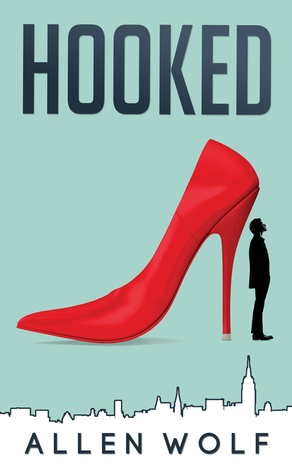 Cover for Hooked. Courtesy of Goodreads
I had the pleasure to read and review a book by Allen Wolf entitled Hooked.
The following is my synopsis and review:
Hooked by Allen Wolf is a contemporary novel about an autistic man struggling with finding love and happiness. Shawn desperately wants to find someone to spend the rest of his life with, but due to his autism, finds it difficult to even get past the first date. His family is encouraging and protective of Shawn’s heart after he lost his first girlfriend in college. Then, at a party for his work, a dating agency, Shawn meets Violet. He mistakes her for an “ordinary” girl and asks her out on a date. Unbeknownst to him, Violet is actually a prostitute with a difficult past. Still, she takes a sort of pity on Shawn and agrees to meet with him, their relationship growing. Shawn and Violet embark on a new kind of relationship, but can he accept her past and save her from a dangerous lifestyle?
Mr. Wolf’s novel is beautifully written. Rarely will I find myself captivated by a book that I cannot put it down for nearly two hours. I read this book from start to finish in one sitting. Shawn was so sweet and Mr. Wolf really strove to write him as believable as possible. My heart went out to his gentle nature and simple desire to be loved. After all, isn’t that what we all want in life? Violet was a very sympathetic character and I found myself hoping more than anything for a happy ending for the pair. I was also very pleased to see this author donates a portion of the proceeds from his sales to a human trafficking charity. I love that the author raised awareness of local trafficking as it doesn’t just happen to women from other countries. All I can say is, pick up this book and get lost in the beauty of their relationship. Hooked is simply remarkable and was a complete pleasure to review.
Not only did Mr. Wolf raise awareness of trafficking, but touched on the tender topic of autism. All I can say is, bravo. I was blown away! I hope Mr. Wolf manages to turn his novel into a feature film, as is his goal.
This is the link to the book on Goodreads: https://www.goodreads.com/book/show/24630124-hooked
If you have a couple hours, sit down and have a read. I promise, you won’t be disappointed!


March 1, 2015
Artillery During the American Civil War
 Me firing a .50 cal black powder rifle
Let’s talk about guns! I have been shooting since I was sixteen. I’ve participated in competitions and I am trained as an NRA rifle instructor. I love doing reenactments. For my high school graduation, I asked for a black powder rifle. Are we getting the picture? Haha!
In my latest novel, The Soldier’s Secret, my main character, Emma, enlists and is assigned to an artillery unit with the Union Army, specifically, the Army of the Potomac. I wanted to talk today about the different types of artillery used by the Union Army, specifically in the form of cannons and rifles.
First of all, let’s discuss the uniform worn by an enlisted man in an artillery unit:
[image error] Union enlisted man, Artillery uniform. Image courtesy of The Civil War Artillery Compendium
1. Model 1840 Artillery Sabre and Scabbard
4. Sky blue trousers
2. Mounted Services Jacket
5. Sword Belt
3. Forage Cap with crossed cannons
6. Canteen
The distinguishing factor of artillery uniforms were the red stripes, clearly seen above. Not all enlisted men were issued with swords, I should make that clear. This is the uniform for an enlisted corporal. Most often, enlisted men wore a type of shoe called a brogan. It was essential for men who were marching on a regular basis to have a comfortable shoe and dry socks. Towards the end of the war, many Confederate soldiers went without shoes and suffered greatly.
[image error] Springfield 1861. Photo Courtesy of relicman.com
Right, on to the firearms! The rifles typically issued to infantry men were the Springfield Model 1861. This was the most widely used rifle/musket during the war. It weighed approximately nine pounds and was favored for its accuracy, range, and reliability. It was the first rifle with iron sights and fired a .58 caliber lead ball. This particular rifle was fired using percussion caps, as opposed to the flintlock rifles of earlier times.
 Firing mechanism. Image courtesy of romanceuniversity.org
I want to explain a bit about the firing mechanism because it was unique for its time. Infantrymen were issued with ammunition in the form of paper capsules containing the ball and measured powder. This enabled quick loading and firing. A percussion cap was issued separately. The soldier would insert the ball/powder into the barrel of the rifle and tamp it down with a ramrod. A cap would be placed over the nipple and the hammer cocked. The trigger would be squeezed and the hammer would fall on the cap igniting a spark which traveled down the small hole in the nipple, igniting the powder and firing off the round. Following me so far?
This streamlined the process needed to fire a rifle. In early wars, the shooter would have to measure powder, pour it down the barrel, place a cloth patch and ball in the muzzle, tamp it down with the ramrod, cock the hammer and hope the flint ignited the powder.
 Napoleon Cannon. Image Courtesy of http://www.civilwarartillery.com
What about cannons? Both sides mainly used what is called a Model 1857 12-pounder Napoleon Field Gun. The Union Army produced approximately 1,156 of these cannons during the course of the war. Each cannon was run by a team of seven men who, when properly trained, could get off four, 12-pound ball shots in under a minute. The range of these cannons was approximately 1400 yards at 1440 feet per second! When fired all together, the impact of these weapons was completely devastating.
The cannons could fire a variety of projectiles, from the basic round cannonball to a canister shot that would break apart, sending shrapnel through the air and into the opposing side. The Napoleon was the last smooth bore cannon adopted by the U.S. military. After the Civil War, they opted to use rifled barrels for greater accuracy.
A cannon worked much the same as a black powder rifle, but in bigger form. Young boys called “powder monkeys” would run between the artillery lines, making sure there was enough powder to keep the cannon going. Although mainly stationed on ships, they were also in the field. It was a dangerous job as any spark could ignite the powder.
There were many more weapons used during the American Civil War, but all had the same goal: to cause the most damage to the opposing side. With the advances in artillery and firearm technology, it is no wonder that the Civil War was the bloodiest of all American wars.
I hope you enjoyed the brief lesson on artillery!
Kind thanks to the following sources:
The Civil War Artillery Compendium: http://artillery.onlineheadquarters.net/, including the uniform of an artillery enlisted man (http://artillery.onlineheadquarters.net/uniforms2.php?snum=)
The Military Factory, posts on the Springfield Model 1861 (http://www.militaryfactory.com/smallarms/detail.asp?smallarms_id=153) and the Model 1857 Napoleon Cannon (http://www.militaryfactory.com/armor/detail.asp?armor_id=609).


February 24, 2015
Meet Special Agent Rae Hatting!
 Many of you will remember Special Agent Rae Hatting from the short story, “Crushed Gardenias.” Response to this wee, stand-alone story was so great, I decided I couldn’t let her stay put! My latest work in progress brings Rae to the novel scene (yay!). The Fairest of Them will release later this year and I will keep you all posted about when that will be!
Special Agent Hatting finds her match in Detective Lucas Thompson, a transplanted Texan in California. The pair come together in a volatile match as Rae takes over an unsolved case involving strange circumstances. A serial killer is on the loose with a penchant for dressing up his victims as characters from fairy tales. Intrigued? Rae certainly is!
I thought I would offer a preview of the first chapter. This book will be comprised of three parts, the first being from Detective Thompson’s perspective (don’t worry, it will make sense when you read it!). I hope it will be the first of a series involving the pair, if I can keep thinking up creative crimes.
Excerpt from The Fairest of Them:
The trail led to a clearing surrounded by redwood trees. They provided shade from the harsh afternoon July sun, their shadows dancing on the ground. In the very center of the ring, a woman lay, her hands folded over her abdomen. Blonde ringlets framed her face and her vivid blue eyes were wide open, staring blankly into the abyss. The slender form was draped in a pink dress with lace accents at the sleeves. Over it, she wore a stark white pinafore. Hikers had stumbled on the eerily staged scene in the Snow Mountain Wilderness and called in the authorities.
Yellow crime tape was wound around the statuesque trees. It was as if they were standing guard, tall and silent. Upon closer investigation, a slim book was discovered, poking out of the pocket of the starched pinafore. It was quickly bagged and tagged as evidence before the body, carefully sealed in a black bag, was transported to the coroner’s office. I remember turning my face upwards, gazing at the majestic trees and wishing they could talk. If they could, my job would have been infinitely easier.
I had come to the small town in Mendocino County, California, early in 2003 with no intentions of taking up another job on the force. My legacy was safely tucked away in Dallas, Texas, after I solved a series of prostitute rapes and mutilations. The newspapers lauded me as a hero. The whole situation made me feel completely sick, not good for a detective. We were meant to be impartial and I found myself blaming the working girls I had so often warned about the dangers of street-walking.
The circumstances leading me to resuming a position as a detective were not something I wished to discuss with anyone. I would simply change the topic when brought up in conversation. I supposed that it was some sort of calling, unable to let me rest until I helped as many people as possible.
I drove back to the station in complete silence, the red-taped evidence bag taunting me on the passenger seat. I knew what it contained, but I was reluctant to confirm it. I turned the bag over to the technicians at the lab and returned to my office with an off-hand reminder to let me know what they found. The book would be swabbed, submitted to latent fingerprint testing, and returned to my desk with the same report as last time: no conclusive trace evidence found. As I predicted, it’s what happened. I retrieved the book, setting it down on my desk in the plastic covering.
Snapping on a pair of latex gloves, I ran my hand over the leather cover. It was a first edition, like the rest. I carefully cracked the cover and the black print stood out on the creamy ivory paper: Goldilocks and the Three Bears. Beneath it, penned in perfect cursive were the words: She should not have taken what did not belong to her. I slammed the book shut in frustration. The taunts were becoming more and more specific as time went on.
Throwing the gloves in my trashcan, I decided to take a walk and see if Doctor Grace Lawson had found anything on the body. The glimmer of hope had long since faded that she actually would. The curvy, African-American coroner was meticulous in her reports, so I doubted she would be even down to the woman’s breasts at this point. I had to do something to settle my nerves, though, or I would snap.
The squeak of the metal swinging doors signaled my entry into the disinfectant-scented room. I grinned at the sight of Grace in her element. She wore her hair in narrow braids, pulled back in a no-nonsense ponytail. Her skin was the color of coffee with cream. There were many days I lusted after Grace, but she made it clear to me from day one she was committed to her job. There was no room for “torrid affairs with wild cowboys,” as she put it.
“Whatcha got for me, Doc?” I went through the motions of putting on another pair of gloves to avoid Grace’s scowl.
“Nothing yet and you know it. You’re restless, cher.” The drawl of her New Orleans accent came out like liquid silk.
I leaned against the counter and watched her work. “Damn straight. I can’t wrap my head around this guy. He was sticking to the classics and now this jump. Why Goldilocks?”
Grace was used to listening to my ramblings and offering her interpretations. “Perhaps, she merely fit the profile of that character.”
“He’s not like that though. He plans this all to the letter. Every detail. Stalks these women for weeks!” I jiggled my leg anxiously. The change in the killer’s modus operandi rattled me more than it should.
Grace carefully made her opening incision in the abdomen of the victim and drew back the flesh. “Calm yourself.” She began to speak into a microphone positioned above her work station.
“Female victim appears roughly 20 to 25 years of age based on bone development and pelvic placement. She has never given birth. There are signs of sexual trauma, but no ligature marks on her wrists or ankles. A small needle mark indicates that the victim may have been drugged. Sending a sample of blood and urine to the lab for further analysis.”
I interrupted her. “No trace of semen, I take it?”
Grace frowned at me. “No, like the others.” She busied herself with the remainder of her work, and I knew I was dismissed without her saying so. Pinging the gloves into a bin by the door, I walked out.
 In the meantime, if you can’t wait, check out “Crushed Gardenias” to get a taster of Rae!


February 23, 2015
The Accidental Stalker series
 Last week, it was my pleasure to review for Readers’ Favorite a novel by Celia Kennedy entitled “Charlotte’s Restrained.” Find it here.
Although the review not live on the Readers’ Favorite website, here is a bit from my 5-star review:
“It was truly a pleasure to read Miss Kennedy’s novel. I will admit to laughing out loud at some of Charlotte’s adventures as well as more than a few of Liam’s jokes. There was a particular one about “hallway sex,” but I will not give away the details! The novel was a fun and relaxing read. I liked reading about different places and people. As well as Charlotte, I was introduced to a group of her friends, who I hope will be featured in books very soon, as they all sound like incredible characters. Miss Kennedy has an eye for detail, right down to the designer brands of clothing each person wore. I could imagine their light interactions and joking conversations with little effort.”
 The lovely Celia Kennedy has given me an ARC copy of her next book in the series, “Kathleen’s Undressed” (yay!) and some things to share with you! First, a little about this amazing author!
Author Biography: Celia Kennedy was born in Wurzburg, Germany on a military base. Her parent’s penchant for traveling has stuck with her, she’s lived in and traveled through several countries.
The imagined world has always fascinated Celia. She has studied Art History, Interior Design, Landscape Architecture, and Architecture. Her thirteen year career at UW in Seattle ended in 1996. Not wanting to be homeless, she left the academic world and worked as a Landscape Architect, married the love of her life, became a mom, has been PTA President, Girl Scout leader and Boy Scout leader.
The unimaginable wealth in her life is the most fascinating thing to her. Her love of travel, the designed and natural world, friendship, self-discovery, wine, chocolate, AND love are the foundation of her books.
Celia published her first book, Charlotte’s Restrained, The Accidental Stalker in December 2012, Venus Rising in August of 2013, Sugar It’s Cold Outside, Cupid on the Loose Anthology, April’s Fool, Fool’s Rush In Anthology, 2015 AND Kathleen’s Undressed, The Accidental Engima on February 23, 2015. Three other works are in progress.
 What you’ve all been waiting for…this is about her newest release, Kathleen’s Undressed! This is from the back of the book:
The ladies from Charlotte’s Restrained are back together! Joining Kathleen in Paris, France, for Fall Fashion Week, the ladies and their men mingle with celebrities, royalty, and the fashion elite.
Kathleen’s thrilled to have her friends in town, but what should be a week of camaraderie and fun is about to take a darker turn. Because Kathleen has secrets. Dark secrets her friends would be devastated to learn.
A special someone enters Kathleen’s life who urges her to reveal what she’s kept hidden. It becomes clear she will have to make a choice when the group reunites for an unexpected wedding.
Will Kathleen continue deceiving her friends at the risk of their friendship — or reveal the truth at the risk of herself?
To say I’m excited to read this is an understatement! Stay tuned for my review!
If you want to find out more about the awesome Celia Kennedy, you can find her on her social media sites listed below:
Website: www.celiakennedy.weebly.com
Blog: www.womanreinventsself.blogspot.com
Facebook: https://www.facebook.com/CMKAuthor
Twitter: https://twitter.com/KennedyCelia
Pinterest: https://www.pinterest.com/celiakennedy/
Google +: https://plus.google.com/u/0/106475224814075459757/posts


Historical novels, what’s the difference?

As an author, I know I will receive negative reviews from people who do not like what I put out there. It’s part of the business to develop a thick skin. What bothers me is when people criticize something that makes no sense. Bemoaning historical facts in an historical fiction novel is fine, but to a point. Let’s explore, shall we?
Historical fiction is defined loosely as:
“…a work of writing that reconstructs the past. Often inspired by history, writers of this genre will incorporate past events or people into their fictitious stories. In order to do this successfully, the story’s details need to feel authentic…” (“feel authentic,” did you catch that? Not BE authentic, but FEEL authentic…I digress…)
So, as a reminder to all, let’s define “fiction:”
“literature in the form of prose, especially novels, that describes imaginary events and people.”
What we are looking at is a genre that takes an historical time period and creates an imaginary story surrounding those details. When publishing “The Soldier’s Secret,” I went to great lengths to make sure my history was correct. I know as a reader and lover of history, it is crucial to get these details right. I went to such lengths as spending HOURS reading about battles, artillery, clothing, mannarisms, food…you name it, I read about it. I consulted a historian about the finer details as well.
Something that was pointed out was the possible lack of validity between a book on artillery between the War of 1812 and the American Civil War. As a personal note, I never said books given to my main character were even from this time period, but oh well, I’ll answer as if it were what I was implying… Many gunsmiths at the time would not have been privy to the new technology being developed, especially in small towns. It is possible that an apprentice would have read such books to gain an understanding of the mechanics of how a cannon or rifle fires. As a rifle instructor (I did say I was a woman of many talents), I can assure you that the basic mechanisms for igniting a charge have not changed much, but just been compacted (that’s a post for another time).
Historical non-fiction is defined as: “prose writing that is informative or factual rather than fictional.” If I wanted to write a history textbook, I would. If I wanted to tell the factual story of King Henry VIII’s wife, Anne Boleyn, I would be amiss as an non-fiction author to say she survived and went on to live a ripe old age. HOWEVER, there are historical fiction novels that may suppose she was not actually beheaded, but rescued at the last minute and a lookalike was put in her place. Highly unlikely, but it would make for an interesting story, if there were historical proof to this.
You may think I’m being childish by answering back, but when someone questions the validity of my work, I get angry (can you blame me?). I’ve had negative reviews before and took them in stride. There were no historical facts to contend with so I cannot begrudge a person their opinion.
Phew, I did say this page would be host to my ramblings? Saying that, why not see for yourself? :-)


February 22, 2015
Female Soldiers During the American Civil War
“I could only thank God that I was free and could go forward and work, and I was not obliged to stay at home and weep.” ~ Sarah Emma Edmonds
When commercials for the United States military branches flash onto our televisions, it is not uncommon to see female recruits and officers amongst their male counterparts. As of 2012, women make up a little over 14% of the U.S. military. However, it was not until 2013 that the ban on women serving in combat roles was lifted. It is no surprise to learn, though, that women have been serving in combat for as long as there have been wars on U.S. soil.
In my newly published novel, The Soldier’s Secret, I explore the roles of women fighting during the American Civil War. My main character, Emma Mansfield, chooses to dress as a man and go off to fight alongside other men (and women) in the Army of the Potomac, a branch of the Union army. There were many reasons women chose to break social norms and descend onto the dangerous battlefields of the time. In Emma’s case, she desires to seek out information about her missing brothers. For many women, the reasons were much simpler.
There are many documented cases of women participating both on and off the battlefield. The Confederate Army estimated that approximately 250 women served in their ranks, but modern historians suppose it was anywhere between 400 to 750 women total serving on both sides of the conflict. Women were needed as nurses, primarily as the modernization of weaponry inevitably lead to graver injuries. Both sides used women as spies, their gender allowing them to slip behind enemy lines and deliver crucial messages.  One of these women was Pauline Cushman. A former stage actress from New Orleans, Miss Cushman would travel around the states performing in the theatre. Dubbed a Confederate sympathizer, Cushman found herself out of work until a new opportunity presented itself in the form of Union spy. From that point, she posed as a “camp follower,” a woman of ill-repute who followed the regiments around providing comfort to the men. As if we need much imagination to know what that required! With her new role, Cushman was able to glean information and report it back to the Union commanding officers. A dangerous profession, Cushman faced hanging on several occasions. At the end of the war, she was awarded the rank of Brevet-Major by General Garfield as well as gaining commendation from President Lincoln.
But this is meant to be about women dressing as men and fighting, right? There are many notable examples of women serving in the ranks of the military during the Civil War. Countless others have probably gone unnoticed or undocumented.  Sarah Emma Edmonds, also known as Franklin Flint Thompson, enlisted as a male field nurse with the 2nd Michigan Infantry. She participated in several major battles, including Antietam, both battles of Manassas, and the Vicksburg Campaign. It is rumored she also served as a Union spy, but there is no conclusive record of this. When Edmonds developed malaria, it put an end to her military career. She went on to write about her experiences in a memoir entitled, Nurse and Spy in the Union Army. Edmonds’ reasons for fighting were to escape an abusive father and forced marriage, legitimate reasons to seek out a better life. She did go on to marry and have children. In addition, she was awarded an honorable discharge and government pension for her service, the only woman to gain such recognition from her service.
While Edmonds fought to escape abuse, many women entered the military ranks for excitement, adventure, money, or to follow loved ones (much like Emma). Jennie Hodgers, known for a majority of her life as Albert Cashier, enlisted in the 95th Illinois Infantry in 1862. Her regiment fought in over 40 engagements. What I find particularly fascinating about Jennie Hodgers is she continued to dress and act as a man long after the end of the war, even participating in elections at a time where women were not allowed to vote. It was not until November 1910 that her secret was uncovered. Having been hit by a car, Hodgers suffered a broken leg and was taken to a hospital. Although the doctors agreed not to reveal her gender, mental health issues forced Hodgers into an institution where they forced her to wear a dress. Although surprised, her former compatriots protested this outrageous treatment and when she passed away, was buried in full uniform with honors. The story is heartbreaking as well because Hodgers probably felt she was born in the wrong body. To be forced to live as a woman for the remainder of her life was most likely devastating.
How did women not get discovered unless they were injured? While many recruiters were meant to give thorough physical examinations, they often only looked for visible deformities or impediments to service. Once in enlisted, men rarely changed out of their uniforms for sleeping and bathed in their underwear. The loose fitting uniforms and long hair of the time made it easy for women to slip into the ranks unnoticed. Many learned to talk and walk like men. Latrines in camp were cesspools so a female soldier would not go amiss if she chose to attend to her needs in the woods or bathe in private. When it came to fighting skills, many voluntary recruits had never fired a gun before so the women learned right alongside the men.
Today, we can look back on these incredible women with awe and respect. Along with their predecessors, they paved the way for women’s rights across the United States, bravely defying all the cultural norms of the time.
 Be sure to check out my new book, “The Soldier’s Secret,” available now on all Amazon Marketplaces.
Kind thanks to the following sources:
Wood, Jennie. A History of Women in the U.S. Military. Retrieved February 22, 2015 from http://www.infoplease.com/us/military/women-history.html.
Blanton, DeAnne. Women Soldiers of the Civil War. Retrieved February 22, 2015 from http://www.archives.gov/publications/prologue/1993/spring/women-in-the-civil-war-1.html.
Civil War Trust. www.civilwar.org.


Introduction
Hello!
After much consideration, I have decided to start a blog chronicling my trials and tribulations as a self-published author. Watch this space for posts, articles, book releases, and anything else I deem interesting. To keep up with the posts, there is a sign-up to follow via email.
Happy reading!





![[image error]](https://heatherosborneauthor.files.wordpress.com/2015/03/uniform_layout_num.jpg)
![[image error]](https://heatherosborneauthor.files.wordpress.com/2015/03/w1231a.jpg)