
Lolly Daskal's Blog, page 88
October 8, 2018
How the Most Successful People Spend Their Mornings

I believe that morning habits are especially important. If you want to be successful, a set of good morning rituals that you follow faithfully can make a big difference. The probability of your success may well depend on the choices you make about how to spend those critical hours before your workday gets under way.
Here are some elements of the morning habits of some of the most successful leaders, that I coach, do on a daily bases. Implement them yourself and watch your effectiveness increase.
They start strong and start early. Successful people tend to be up and going strong while the rest of the world is still asleep. However you choose to use it, find some quiet time to prepare for the day—ideally before anyone else is up so there are no distractions. How well you start your day determines how well you live your day.
They carve out time for reflection. Set aside time for journaling, reflection, reading, or meditation. Time spent on reflection is never wasted time—we spend most of the day transfixed by all the ways we can reflect ourselves out to the world, and it feeds the spirit to spend some time looking back within ourselves.
They fire up their own motivation: Motivation doesn’t last forever, so plan to replenish yours regularly. Highly successful people spend time every day nurturing their motivation by listening to podcasts, watching videos, reading—anything that keeps them inspired. Motivation gets you started, and habit keeps you going.
They burn some calories. Morning exercise is among the favorite daily rituals of successful leaders. Whether you have time for just a quick stretch, 15 minutes of cardio, or something more substantial, exercise will keep your body and mind at their best to help keep you productive and effective in the long day ahead.
They plan. If you don’t take a few minutes of your morning to map out a direction for the day, how will you know if you’re headed in the right direction? Every successful leader I know takes at least 10 minutes of their morning to plan and strategize. They start with what they want to accomplish that day and they allocate their time according to the importance of each task. Having a plan helps make their day more manageable and less stressful.
They ask themselves a simple question. There are many ways to make an impact, but if you truly want to leave a mark, ask yourself this simple question every day: “If today were the last day of my life, would I want to do what I’m about to do today?” Everybody wants to feel that what they do has meaning. When you ask this one question on a daily basis, you’ll find yourself prioritizing your day. Asking yourself what matters most and what really needs to be done that day is a great technique for moving beyond the day-to-day to create a future.
Lead from within: A morning ritual can set the day, week, and month up for success. Don’t try to count how many habits you have; just make your habits matter.
N A T I O N A L B E S T S E L L E R
The Leadership Gap:
What Gets Between You and Your Greatness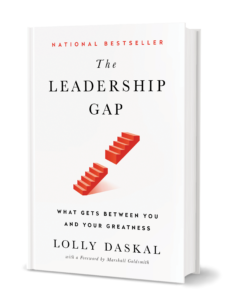
After decades of coaching powerful executives around the world, Lolly Daskal has observed that leaders rise to their positions relying on a specific set of values and traits. But in time, every executive reaches a point when their performance suffers and failure persists. Very few understand why or how to prevent it.
Additional Reading you might enjoy:
12 Successful Leadership Principles That Never Grow Old
A Leadership Manifesto: A Guide To Greatness
How to Succeed as A New Leader
12 of The Most Common Lies Leaders Tell Themselves
4 Proven Reasons Why Intuitive Leaders Make Great Leaders
The One Quality Every Leader Needs To Succeed
The Deception Trap of Leadership
Photo Credit: Getty Images
The post How the Most Successful People Spend Their Mornings appeared first on Lolly Daskal.


October 4, 2018
Successful People Do These 10 Things Best

The formula for achieving success can be complex, but when it comes down to it successful business people know where to focus their attention, what they need to do and how best to do it. Follow their lead and your own success won’t be far behind. Here are 10 of the top principles successful people follow:
They consistently and continually work on self-awareness. The simple act of knowing who you are can be difficult to maintain when you’re building a successful business. Without it, though, you end up not only making short-sighted decisions and chasing the wrong goals but also damaging a lot of relationships in the process.
They make things happen. There are people who make things happen, people who watch things happen, and people who wonder what happened. Successful people are a catalyst; they make things happen. Driven by passion and fueled by their dreams, they are determined to take action and make a difference.
They don’t allow themselves to become paralyzed by analysis. The degree of study depends on the risk associated with the decision to be made. Successful people don’t get caught up in the tools of analysis but use them appropriately to support important decisions.
They embrace change. Many people are fearful of change and the unknown, but successful people understand that as long as it’s heading in the right direction, change is a positive force.
They have a strategic plan and measurable goals. Successful businesspeople are guided by strategy, not tactics. They avoid chasing anything that isn’t tied directly to their strategy.
They focus 90 percent of their time on solutions and only 10 percent on problems. When you take charge of dealing with a problem, you can choose the best way to resolve it instead of stewing over it. This means you’re more likely to get the outcome you want as you influence events with your actions and choices.
They understand that failure is a big part of success. Successful people know that failure is the training grounds for success and that the fear of failure is the only thing that makes a dream impossible to achieve.
They work to build something they believe in. If you want to be a real success story, you have to build something you can put your heart and soul into. Any endeavor will have setbacks and mistakes, and it takes real commitment to fuel the stamina you need for the long haul.
They make success a choice. The average person wishes for success, but successful people choose to succeed. The choice to be successful and follow their heart is backed by a firm conviction that they can do it. The choice to believe in something bigger than yourself is the beginning of every transformation.
They go above and beyond. More than anyone else, successful people understand they can’t just wait around for opportunities to come their way. Instead, they create new opportunities by taking action, by pursuing excellence and refusing mediocrity. They stand out from the crowd because they refuse to be average and to simply go with the flow. They do more than expected and never make excuses. It’s as simple as that.
Lead from within: Success does not come to your life by chance; you have to take action every day to achieve the success you want.
N A T I O N A L B E S T S E L L E R
The Leadership Gap:
What Gets Between You and Your Greatness
After decades of coaching powerful executives around the world, Lolly Daskal has observed that leaders rise to their positions relying on a specific set of values and traits. But in time, every executive reaches a point when their performance suffers and failure persists. Very few understand why or how to prevent it.
Additional Reading you might enjoy:
12 Successful Leadership Principles That Never Grow Old
A Leadership Manifesto: A Guide To Greatness
How to Succeed as A New Leader
12 of The Most Common Lies Leaders Tell Themselves
4 Proven Reasons Why Intuitive Leaders Make Great Leaders
The One Quality Every Leader Needs To Succeed
The Deception Trap of Leadership
Photo Credit: iStockPhotos
The post Successful People Do These 10 Things Best appeared first on Lolly Daskal.
October 2, 2018
How the Best Leaders Build Trust

Trust is the foundation of leadership. Without trust, it’s nearly impossible to recruit and retain followers and to implement change. Trust affects a leader’s impact and the company’s bottom line more than any other factor.
But there’s no shortcut to building trust. It has to be earned, and that process takes time. The best leaders devote consistent effort to building and maintaining trust. Here are the principles they go by:
When people experience your character, they will trust you. When you consistently do the right thing whether you feel like it or not, when your actions match your words, when you stand behind your team in every situation, you give people evidence of your character. The task of a trusted leader is to create an environment where others can do great things in safety, and character makes that possible.
When people can count on you, they will trust you. Can people rely on you? Are you consistent and dependable? A trusted leader is one who can be counted on to keep their word and say what they mean, no matter the circumstances.
When people see you genuinely care, they will trust you. If you want to build trust, demonstrate care for others—not just with lip service or in a time of particular need, but with genuine heartfelt compassion every day. Trusted leaders love people; they value connection and seeing others succeed.
When people view you as competent, they will trust you. It’s important that you know what you’re doing—and when you don’t know something, that you have the fortitude to admit it. Trusted leaders work to keep advancing their skills and give others the resources to do the same.
When people encounter your courage, they will trust you. Building trust requires the willingness to take risks and make hard decisions. Trusted leaders are courageous, and they inspire others to be courageous as well.
When people know what you’re thinking, they will trust you. If you operate with transparency and full disclosure, no one has to rely on guesswork to know what’s happening, and there’s no room for a debilitating rumor mill to take hold. Trusted leaders communicate frequently, honestly and candidly, working to make sure their team stays informed.
When people see you act with consistency, they will trust you. If you’re consistent in everything you do, you show that you hold even the little things to be important. Consistency at every level makes for greater trust and better results. Great leaders are consistent in all that they do.
As a leader, you are trusted to exactly the degree that people believe in your character, competence, courage, candor, consistency and commitment. When people trust you, they’ll do almost anything under the sun not to disappoint you.
Lead from within: The best leaders know that trust cannot be built overnight but requires time, effort, diligence and genuine character.
N A T I O N A L B E S T S E L L E R
The Leadership Gap:
What Gets Between You and Your Greatness
After decades of coaching powerful executives around the world, Lolly Daskal has observed that leaders rise to their positions relying on a specific set of values and traits. But in time, every executive reaches a point when their performance suffers and failure persists. Very few understand why or how to prevent it.
Additional Reading you might enjoy:
12 Successful Leadership Principles That Never Grow Old
A Leadership Manifesto: A Guide To Greatness
How to Succeed as A New Leader
12 of The Most Common Lies Leaders Tell Themselves
4 Proven Reasons Why Intuitive Leaders Make Great Leaders
The One Quality Every Leader Needs To Succeed
The Deception Trap of Leadership
Photo Credit: IstockPhoto
The post How the Best Leaders Build Trust appeared first on Lolly Daskal.
October 1, 2018
This is How Successful Leaders Build Great Teams That Last

If you want to build a team that will last, you have to build a team in which each person works from their strengths.
Sadly, most people are not working in their areas of strength and therefore are not reaching their potential. The Gallup organization conducted research on 1.7 million people in the workplace. According to their findings, only 20 percent of employees feel that their strengths are in play every day in the work setting.
What this means to me as an executive leadership coach is a failure of leadership. The most basic test of leadership is whether it helps people excel at what they do best and make their skills an asset to the company.
It takes a special kind of leader, with unique competencies and skills, to successfully build great companies and teams. So how do successful leaders do it? Here are some pointers:
Assess yourself. Before you can build a great team, you must be aware of your own leadership style and techniques. Are as effective as you think? How accepting are people of your leadership? You must be able to evaluate yourself and be critical about where you can improve, especially in areas that will benefit your team.
Master the art of people. Make the time to get to know your team. You need to be able to answer the following questions: What are my people’s strengths and weaknesses? Are they growing? Do they have untapped potential? Is their attitude an asset or a liability? Do they love what they do, and are they doing it well?
Build on people’s strengths. You can study the strengths of your people, but it’s just as important to communicate your findings. Let them know what strengths you see in them and what value their contributions bring. Teach them how each member of the team complements the others, and help them learn to work together more effectively. The more that people understand how they fit on a team, the more invested they are in making it work.
Leverage their weaknesses. For team members to grow into their full potential, it’s important to address weaknesses as well as strengths. Empowering people to work on their weaknesses is one of the best things you can do for them. Show them that progress requires working on their whole selves, not just the things they’re good at.
Communicate through feedback. Feedback is simply the art of great communication. Ideally, it’s not a separate undertaking but part of a natural dialogue. Keep it flexible, proactive and constant—don’t wait for a problem to occur.
Celebrate the wins. Make sure your team feels encouraged and appreciated for what they accomplish by celebrating their achievements. In today’s fast-paced workplace, people rarely take the time to understand why they were successful and what it meant to those it affected.
At the end of the day, to build a great lasting team requires a leader who has the ability to master the art of people—one who knows how each person thinks and how to best fit together their unique set of abilities.
Lead from within: It takes great leadership to build great teams.
N A T I O N A L B E S T S E L L E R
The Leadership Gap:
What Gets Between You and Your Greatness
After decades of coaching powerful executives around the world, Lolly Daskal has observed that leaders rise to their positions relying on a specific set of values and traits. But in time, every executive reaches a point when their performance suffers and failure persists. Very few understand why or how to prevent it.
Additional Reading you might enjoy:
12 Successful Leadership Principles That Never Grow Old
A Leadership Manifesto: A Guide To Greatness
How to Succeed as A New Leader
12 of The Most Common Lies Leaders Tell Themselves
4 Proven Reasons Why Intuitive Leaders Make Great Leaders
The One Quality Every Leader Needs To Succeed
The Deception Trap of Leadership
Photo Credit: iStock Photos
The post This is How Successful Leaders Build Great Teams That Last appeared first on Lolly Daskal.
September 27, 2018
5 Important Leadership Rules You Can (And Should) Break

The greatest leaders in the world differ in many respects—different sexes, races, ages, and cultures, different styles, different goals—but among the things they all share is a willingness to break the rules.
In my work as an executive leadership coach, I encourage my clients to be great leaders, revolutionaries even. While few of them would describe themselves that way, the best are willing to break any rules that stand between them and their goals.
Here are some of the rules I most often encourage them to break:
Treating everyone the same. We all tend to believe that fairness means treating everyone the same. But people all have different strengths and weaknesses and challenges as individuals—we are all different. Of course, it’s important to avoid favoritism. But part of leadership is recognizing each person’s motivation, style, and way of thinking, then working to help them become the best possible version of who they already are.
Overpromoting people. If you have someone who’s great in sales, conventional wisdom will tell you to make them a manager. But no matter how well people perform in their current role, they won’t necessarily do a good job or be happy further up the ladder. Pay your people well for what they do and make their jobs rewarding in every way. But don’t promote them into leadership unless they have the aptitude and desire for it and they’re ready to make the move.
Believing “if it ain’t broke, don’t fix it.” If you want to maintain the status quo and keep plodding along the well-worn path, this rule belongs to you. Fixing things that aren’t broken is another way to say innovation, creativity, finding new solutions, always looking for a better way. Take Steve Jobs—he created products that we didn’t know we needed until they were in our hands. Technology wasn’t broken, but he fixed it anyway.
Thinking you have to be smartest in the room. Over the years of my work with leaders, I can’t even count how many have told me they were the only ones in the room who could make decisions, because they weren’t sure their team was smart or capable enough to get it right. Conventional wisdom agrees that the leader needs to be the smartest—but that prevents you from building a strong team. Surround yourself with the smartest people you can find, and you’ll become smarter in the process.
Trying to do everything alone. We all know the mythology of the lone wolf leader—the one who has all the answers, who never compromises, who doesn’t trust anyone else. In the real world, though, the best leaders know when to ask for help and make use of wise counsel. They know they can’t accomplish everything on their own and work instead to find the support system that will help them become the best leader they can be.
Lead from within. Learn the rules like a pro, so you can break them like a leader.
N A T I O N A L B E S T S E L L E R
The Leadership Gap:
What Gets Between You and Your Greatness
After decades of coaching powerful executives around the world, Lolly Daskal has observed that leaders rise to their positions relying on a specific set of values and traits. But in time, every executive reaches a point when their performance suffers and failure persists. Very few understand why or how to prevent it.
Additional Reading you might enjoy:
12 Successful Leadership Principles That Never Grow Old
A Leadership Manifesto: A Guide To Greatness
How to Succeed as A New Leader
12 of The Most Common Lies Leaders Tell Themselves
4 Proven Reasons Why Intuitive Leaders Make Great Leaders
The One Quality Every Leader Needs To Succeed
The Deception Trap of Leadership
Photo Credit: iStock Photo
The post 5 Important Leadership Rules You Can (And Should) Break appeared first on Lolly Daskal.
September 25, 2018
This is How Great Leaders Are Constantly Improving

You must have a level of discontent to feel the urge to want to improve.
Self-improvement is part of the human experience; we all have things we’d like to change about ourselves. And every leader knows you have to constantly adapt and improve if you want to achieve greatness.
Whatever you’re working toward, it’s important to constantly assess, evaluate and appraise where you are and where you want to be. It’s something you do because you want to be a better leader—a better person—not only for your own sake but also for the sake of those who are loyal to you and work hard to achieve the vision and goals you set.
Great leaders make self-improvement a daily practice. Here are some of the ways they go about it—see what makes sense for you and try incorporating it into your daily routine. Your leadership and your life will benefit.
They assess themselves honestly. In order to improve, you need to know what needs improvement. Notice how you behave in different situations. Look at your behavior and attitudes objectively and you’ll know what to keep and what to leave behind. You can’t be a better person if you don’t know what you need.
They educate themselves continually. Unsurprisingly, many leaders are avid readers. There is so much to learn and so much to understand, and reading a book is like having the best teachers and the smartest mentors from throughout history on demand.
They welcome feedback approvingly. The best leaders understand that feedback is a gift, and they seek critique from trusted people who are able to get straight to the point. Direct feedback is the quickest way to learn how to improve.
They embrace change repeatedly. Great leaders always want to improve themselves, so they remain open to change. They know it’s hard to move forward if you aren’t willing to change. Cultivate your own willingness to change with thought, effort and intentionality.
They work toward their goals daily. The best leaders understand the power of consistently working toward a goal. If you can commit to one daily practice, make it this: do one small thing every day that will get you a little bit closer to where you want to go. Every time you accomplish a goal, you’ll learn more about yourself and figure out more ways of self-improvement.
They ask for support frequently. Top leaders know the benefits of having good counsel and smart advocates, and even the best leaders may have a coach. I know one of the things my clients value most in my coaching is simply having an impartial sounding board, giving them a chance to sort things out before they present their ideas.
They express appreciation regularly. Great leaders understand that gratitude is the basis of self-improvement. They know that if you can be thankful and appreciate what you have instead of obsessing over what you wish you had, you can focus on making yourself better and expressing your thanks to the people around you.
Lead from within: In leadership it’s not as much about who you used to be as it is about who you choose to become.
N A T I O N A L B E S T S E L L E R
The Leadership Gap:
What Gets Between You and Your Greatness
After decades of coaching powerful executives around the world, Lolly Daskal has observed that leaders rise to their positions relying on a specific set of values and traits. But in time, every executive reaches a point when their performance suffers and failure persists. Very few understand why or how to prevent it.
Additional Reading you might enjoy:
12 Successful Leadership Principles That Never Grow Old
A Leadership Manifesto: A Guide To Greatness
How to Succeed as A New Leader
12 of The Most Common Lies Leaders Tell Themselves
4 Proven Reasons Why Intuitive Leaders Make Great Leaders
The One Quality Every Leader Needs To Succeed
The Deception Trap of Leadership
Photo Credit: iStock Photo
The post This is How Great Leaders Are Constantly Improving appeared first on Lolly Daskal.
September 24, 2018
How to Disagree with Your Boss—And Still Have a Good Relationship

How many times in your career have you totally and wholeheartedly disagreed with your boss? It’s a tricky situation. You don’t want to hurt the relationship, but you want to do right by the company, client or customer, and you’re compelled to say something.
So what’s the right approach? Here are some proven strategies I share with my coaching clients on how to disagree respectfully—and, in particular, how to disagree respectfully with someone who’s above you on the org chart.
Gather feedback. Before you approach your boss, get feedback from someone you trust about your idea and how you can be more persuasive. Encourage them to poke holes in your theory and ask questions like . . . well, like a boss.
Seek out expert opinions. Make sure you have advance contact with a subject-matter expert—someone recognized within your company or network for their knowledge of the topic. They’ll be able to provide you with a point of view you might not have thought of on your own.
Rehearse your ideas. Practice your pitch with a few people you trust. If you you can’t get them to see your point of view, either try a different approach or consider hanging it up for a while.
Be mindful. Once you’re ready to approach your boss, it’s important to be mindful. If the issue is something you feel strongly about, ask yourself whether it’s worth a fight if it comes to that. Remember, if you make everything combative you won’t have much to draw on when something truly important comes along. Make sure your opinions hold together logically; a clear-headed argument is almost always better than a passionate one.
Leave emotion out of it. Pull together data, charts, spreadsheets and any other hard evidence you can to support your point of view. Stick to the facts and don’t make it emotional.
Listen to learn. Make it a point to listen to your boss, which is only respectful after your boss has listened to you. Most situations have something to teach everyone involved—maybe it will be you, maybe your boss, maybe both. In any case, you want to come across as someone who isn’t afraid to speak their mind but who’s driven by commitment to the organization.
Evaluate to review. When it’s all over, review and evaluate how well things went. Ask yourself how your role in these conversations has grown through the years. And if it didn’t go well, ask yourself what can you do better next time.
Lead from within: Disagreeing with someone is not a bad thing. It’s how you disagree with that person, especially when it’s your boss, that matters.
standards for hard work and integrity.
Leadership may be hard to define and good leadership even harder, but if you can get people to follow you to the ends of the earth, rest assured—you are a great leader.
Lead from within: Before you become a leader success is all about growing yourself; after, it’s all about growing others.
N A T I O N A L B E S T S E L L E R
The Leadership Gap:
What Gets Between You and Your Greatness
After decades of coaching powerful executives around the world, Lolly Daskal has observed that leaders rise to their positions relying on a specific set of values and traits. But in time, every executive reaches a point when their performance suffers and failure persists. Very few understand why or how to prevent it.
Additional Reading you might enjoy:
12 Successful Leadership Principles That Never Grow Old
A Leadership Manifesto: A Guide To Greatness
How to Succeed as A New Leader
12 of The Most Common Lies Leaders Tell Themselves
4 Proven Reasons Why Intuitive Leaders Make Great Leaders
The One Quality Every Leader Needs To Succeed
The Deception Trap of Leadership
Photo Credit: Getty Images
The post How to Disagree with Your Boss—And Still Have a Good Relationship appeared first on Lolly Daskal.
September 20, 2018
How to Stop Thinking Like an Imposter

The imposter syndrome is real and relevant.
All of us at some point or another question our capabilities and competence. It’s easy to start down the path of wondering how you got hired or promoted over others and end up waiting for people to discover how little you know or how lacking your skills are.
It can happen to anyone—especially the smartest and most successful—but we live with our thoughts and have to be careful what we tell ourselves. And if you say too many self-effacing things out loud, you project a lack of confidence. Both the internal and external voices can do damage, and you need to shut them down.
Here are the most common forms of imposter thinking—see which are the most familiar to you and learn how to pivot your thinking.
“I’m not as capable as they think I am.” This thinking is damaging not only to your self-esteem but also to your professional relationships. Think back to the last time someone in your workplace made a mistake or didn’t know an answer. Unless it’s a truly toxic environment, it’s unlikely that they were shamed and made to feel inferior for it. Trust your abilities, understand your limits and work to always know more.
“I got this position because I was just in the right place at the right time. Someone else would do a better job.” Remind yourself how you got the job. If you were hired from outside, think about how hard you worked to prepare for the interview and how many people you beat out. If you were promoted, remember how hard you worked to earn it. Even if you were in the right place at the right time, don’t forget the unspoken part of that equation—you were there with the right preparation and the will to make it happen.
“I don’t really like talking about it when I get a promotion or receive some kind of recognition.” Discomfort with being recognized for your accomplishments can stem from a sense of unworthiness—it’s not about the recognition but how you feel about yourself. Instead of dwelling on what you do and don’t deserve, focus on accepting what you have to offer and finding ways to use it productively.
“I only got the assignment because everyone else was too busy.” Imposter syndrome can prevent you from seeing yourself as special in any way. You may be constantly telling yourself and others, “Oh, that was nothing. I’m sure anyone could have done it.” When this thinking strikes you, focus on doing your absolute best. Sure, lots of people can hit a baseball, but you’re the one who actually stepped up to the plate.
“My success is nothing but luck.” If you attribute your accomplishments to luck, you may fear that you won’t be able to continue your success, which ties in to the idea that your achievements have nothing to do with your competence or capabilities. Luck does play a role in every success story. If you’re reading this, for example, you’ve had access to education and technology—which puts you ahead of many people right out of the gate. Be grateful for your good fortune, but recognize too that what you’ve done with those gifts is equally important in your success.
“It’s all my fault this didn’t turn out right.” Perfectionism and impostor syndrome often go hand in hand. The only cure for perfectionism is to remind yourself—as often as it takes—that perfection is a myth. If you’re human, you’re imperfect. Give yourself a break, acknowledge your imperfections, celebrate your wins and work on the things that you want to improve.
“It’s all been a mistake.” The feeling that your success is in error is another way of discounting your own abilities and efforts. To help take ownership of your achievements, deconstruct them and think about all the learning and hard work that went into them. Those weren’t mistakes.
Lead from within: The imposter within you has to start believing in yourself and stop thinking about what others are achieving if you want to succeed.
N A T I O N A L B E S T S E L L E R
The Leadership Gap:
What Gets Between You and Your Greatness
After decades of coaching powerful executives around the world, Lolly Daskal has observed that leaders rise to their positions relying on a specific set of values and traits. But in time, every executive reaches a point when their performance suffers and failure persists. Very few understand why or how to prevent it.
Additional Reading you might enjoy:
12 Successful Leadership Principles That Never Grow Old
A Leadership Manifesto: A Guide To Greatness
How to Succeed as A New Leader
12 of The Most Common Lies Leaders Tell Themselves
4 Proven Reasons Why Intuitive Leaders Make Great Leaders
The One Quality Every Leader Needs To Succeed
The Deception Trap of Leadership
Photo Credit: iStock Photo
The post How to Stop Thinking Like an Imposter appeared first on Lolly Daskal.
September 18, 2018
10 Ways to Make Your Team Feel Appreciated and Important

Whatever we learned about leadership even a decade ago is outdated. Under the old model, leaders made all the decisions and the rest of the team went along.
Today the concept of employee empowerment is changing the game. Giving front-line employees the authority to make decisions once reserved only for managers and leaders brings them a sense of ownership and gives consumers the experience of a responsive, caring organization.
Here are some ways to make your team feel appreciated and important under the new model:
Offer them safety. People will entrust their future only to someone they consider reliable; they want to know they can count on someone trustworthy, someone who will have their back when things go wrong . if you want to empower your people make them feel safe.
Speak with kindness. It takes wisdom and determination to lead others not through power and authority but by inspiring and motivating them with words that are both truthful and kind. Kindness makes anyone feel valued and respected.
Accept them for who they are. We have an all-too-human inclination to judge others, and overcoming it can be difficult. But the best leaders are those who don’t judge but unconditionally accept others, with all their strengths and weaknesses. It’s an approach that raises people’s self-esteem, reinforces their self-image and makes them enthusiastic members of the team.
Demonstrate that you trust them. Let them make decisions that matter and can impact the company. Verbal appreciation is important, and bonuses and other perks are always welcome—but ultimately, showing someone that you trust their opinion and expertise is the most valuable form of appreciation you can give.
Be available and accessible. Adopting an open-door policy shows that you care about your team by being available and accessible enough that they can always come to you with their input and insights. Let them know their opinions are valued and appreciated. Whether you regularly walk around or simply leave your door open, show your team that you’re there for them.
Appreciate their efforts. Many leaders appreciate people for obtaining results, but the best kind of leader appreciates people for their effort. Letting your team know they’re doing a great job will not only ensure they continue to produce high-quality work but also increase their satisfaction.
If you want to speed processes and still produce quality materials and services, focus on making your team feel appreciated and important. In return, they will reward you with hard work and loyalty.
Lead from within: Leadership at its core can make or break teams. As a leader, you have the power to make people feel important and appreciated or overlooked and ungrateful. It’s your choice.
N A T I O N A L B E S T S E L L E R
The Leadership Gap:
What Gets Between You and Your Greatness
After decades of coaching powerful executives around the world, Lolly Daskal has observed that leaders rise to their positions relying on a specific set of values and traits. But in time, every executive reaches a point when their performance suffers and failure persists. Very few understand why or how to prevent it.
Additional Reading you might enjoy:
12 Successful Leadership Principles That Never Grow Old
A Leadership Manifesto: A Guide To Greatness
How to Succeed as A New Leader
12 of The Most Common Lies Leaders Tell Themselves
4 Proven Reasons Why Intuitive Leaders Make Great Leaders
The One Quality Every Leader Needs To Succeed
The Deception Trap of Leadership
Photo Credit: Getty Images
The post 10 Ways to Make Your Team Feel Appreciated and Important appeared first on Lolly Daskal.
September 17, 2018
How to Be Great at Managing Both Introverts and Extroverts
 As an executive leadership coach, my job often involves helping extroverts understand introverts and vice versa.
We tend to think of these categories in terms of whether people are outgoing or shy, but it’s more complex than that. Here are some of the basic differences:
Extraverts have a tendency towards external processing and outward expression.
Introverts have a tendency towards internal experiences and inward reflection.
Extraverts gain energy from being with others.
Introverts often feel drained when they spend too much time with others, particularly strangers.
Extraverts get bored and restless if they spend too much time alone.
Introverts look forward to time alone to recharge their batteries and restore their energy.
Extraverts tend to be very aware of what and who is around them.
Introverts often don’t pay much attention to their surroundings.
Extraverts figure things out best by talking them over with other people.
Introverts need time alone to think things through and get in touch with their inner selves.
Extraverts find it easy to get through a first draft when writing a report.
Introverts have a hard time getting started because they want their ideas to be well thought out before they commit to putting anything on paper.
Extraverts tend to speak first and think later, and are likely to put their foot in their mouth.
Introverts often walk away wondering, “Why didn’t I think to say that?”
To help extraverts excel, allow them to express themselves as they think things through. Be appreciative of their creative and innovative thinking, listen to their many ideas, let them multitask, and respect their independent nature. Make good use of their attentiveness and interpersonal skills.
To help introverts to excel, give them time—time to think, time to speak, time to make decisions. Respect their private nature and their need to work alone. Let them learn at their own pace and have time alone to process and think. Give them information in increments so they can digest and rework it in their heads. Make good use of their thorough, deliberative nature.
Of course, these categories are generalizations, and few people fit squarely into either. Leaving room for individual variation, it can be helpful to recognize the differences in the way extraverts and introverts think, work and achieve. Letting every member of your team find their own sweet spot allows everyone to excel on their own terms.
Lead from within: As a leader, you have to be able to get along with all kinds of people, bridging the gaps in personalities and relationships and connecting your team members with the work and environment that will help them excel.
N A T I O N A L B E S T S E L L E R
The Leadership Gap:
What Gets Between You and Your Greatness
After decades of coaching powerful executives around the world, Lolly Daskal has observed that leaders rise to their positions relying on a specific set of values and traits. But in time, every executive reaches a point when their performance suffers and failure persists. Very few understand why or how to prevent it.
Additional Reading you might enjoy:
12 Successful Leadership Principles That Never Grow Old
A Leadership Manifesto: A Guide To Greatness
How to Succeed as A New Leader
12 of The Most Common Lies Leaders Tell Themselves
4 Proven Reasons Why Intuitive Leaders Make Great Leaders
The One Quality Every Leader Needs To Succeed
The Deception Trap of Leadership
Art by: Lolly Daskal
The post How to Be Great at Managing Both Introverts and Extroverts appeared first on Lolly Daskal.


