Elizabeth Fitzgerald's Blog: Earl Grey Editing, page 41
December 20, 2015
Ancillary Justice by Ann Leckie
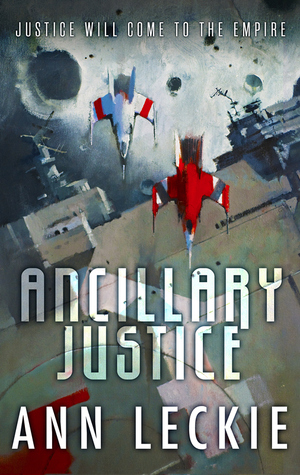
Published: October 2013 by Orbit
Format reviewed: Paperback, 386 pages
Series: Imperial Radch #1
Genres: Science Fiction
Source: Dymocks
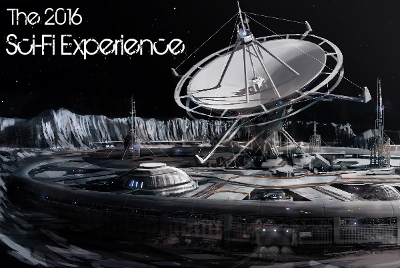
Reading Challenges: The 2016 Sci-fi Experience
Available: Abbey’s ~ Amazon ~ Barnes & Noble ~ Book Depository ~ Booktopia ~ Dymocks ~ Kobo
On a remote, icy planet, the soldier known as Breq is drawing closer to completing her quest.
Breq is both more than she seems and less than she was. Years ago, she was the Justice of Toren – a colossal starship and an artificial intelligence controlling thousands of soldiers in the service of the Radch, the empire that conquered the galaxy.
An act of treachery has ripped it all away, leaving her with only one fragile human body. But that might just be enough to take revenge against those who destroyed her.
There’s been a lot of hype about this book, and particularly around its use of gender, so I admit I was a bit sceptical when I first picked it up. However, I can now say it deserves the praise it has been getting.
Ancillary Justice does some fascinating things with its writing style. Part of that ties into gender. Breq belongs to a culture that does not use linguistic or visual cues to distinguish gender. Throughout the novel, the default pronoun is she. Occasionally, there will be some subtle indications that a character may be male, despite the pronoun. However, generally it remains ambiguous. I had expected this to be a twist that had already been spoiled, so I was surprised to discover the story is upfront about Breq’s difficulty in distinguishing gender. From time to time when in a culture not her own she struggles to correctly gender someone she’s interacting with, but as a reader I was never made to feel like it mattered and I loved that.
Style is also used effectively to convey Breq’s unusual point of view. Breq is an AI and, as such, sees the world very differently to the humans she interacts with. Much of the emotional language is stripped out; while it is clear Breq experiences emotions, she does not always recognise them. Nor does she always recognise them in others, leaving the reader to pick up the clues and piece them together.
As an AI, Breq experiences the world from multiple points of view. This has the curious effect of allowing the story to be told from both a limited first-person perspective as well as a omniscient third-person point-of-view, making the most of both. It also means that the reader has to pay attention, as occasionally two conversations are happening simultaneously on the page.
While I found Ancillary Justice fascinating on an intellectual level, it took me a long time to settle into it. I was halfway through before I found the emotional hook, but once it had me it refused to let me go until the end. It is definitely a book that rewards patience.
Gender is not the only issue the book deals with; it is equally preoccupied with matters of class, colonialism and race. But the heart of the story is about identity more broadly. It examines the fiction of identity as a unified state and the notion that identity can be changed without consent.
Ancillary Justice is a brilliant book and a fantastic way to round out my reviews for 2015.


December 17, 2015
Bout of Books, Round 15 sign-up
Back in August, I participated in my very first Bout of Books round. For those unfamiliar with the event, it’s a low pressure reading challenge that runs for one week. Participants select their own goals and can participate in give-aways and Twitter chats.
Bout of Books runs three times a year, with the first round for 2016 set to kick off on 4 January. The sign-up post is not up yet, but Earl Grey Editing will be shutting for a short time over the holidays. Since I need all the help I can get with Mt TBR (and Christmas is likely to exacerbate the situation), I will be signing up as soon as I can. I hope it will get my 2016 reading off to a good start.
I managed to read six books during Bout of Books 14. My goal this time around is to equal that. Here’s a peek at some of the books I’m hoping to tackle:

You’ll probably notice some overlap with my pile for the Sci-fi Experience reading challenge. And on the Kindle:
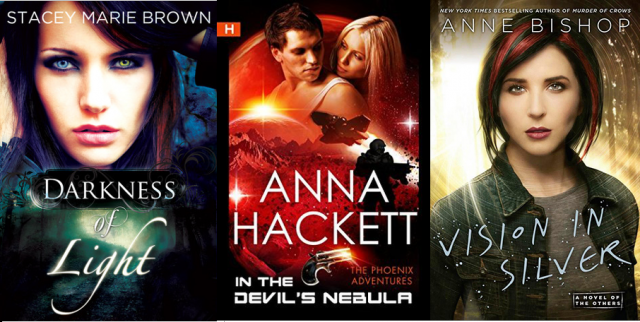
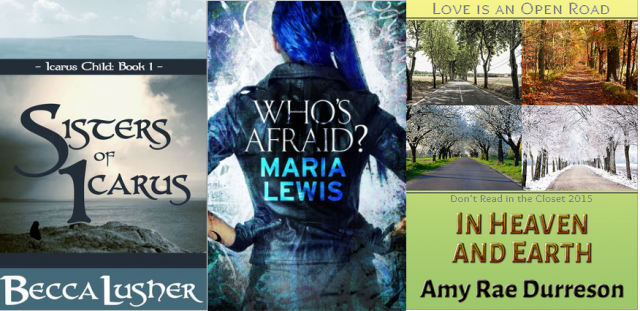
It looks ambitious, but I don’t plan to get through all of it–I just like to have some variety available.
If you’d like to join in, keep an eye on Bout of Books for the sign-up post or follow them on Twitter.
How do you plan to kick off your reading for 2016?


December 15, 2015
Hunter Deceived by Nancy Corrigan

Published: 29 December 2015 by Samhain Publishing
Format reviewed: E-book (mobi)
Series: Wild Hunt #1
Genres: Paranormal romance
Source: NetGalley
Available: Publisher (print and electronic) ~ Amazon ~ Barnes & Noble ~ Kobo
Disclaimer: I was provided with a free copy of this book in exchange for an honest review.
Every day, Harley fights the urge to embrace the dark heritage that could turn her Unseelie. Evil. “Bad.” A nightmarish monster like the ones that wiped out her family. The only thing keeping her on this side of Seelie is a promise made to the ghostly man who saved her that terrible night.
Whenever she’s tempted, she calls up a vision of his eyes. Hears his voice calling her back from the brink of madness. Years later, when she returns to the scene of her living hell, he’s her only hope for salvation.
Calan, the leader of the Wild Hunt, was created to protect mankind from the Unseelie Court, not love one of them. He never expected the rightness he felt with her all those years ago would explode into desire.
But saving her from a fate she can’t escape could damn them both…and leave the world open for destruction.
Hunter Deceived is a steamy paranormal romance but not one that worked for me. It is set in this world but the supernatural elements are a strange mishmash of a number of different mythologies–at a glance I can see Celtic, Norse, Christian and Roman. There didn’t seem to be any logic in the way parts of these mythologies were selected or brought together; it was more as if the author snagged whatever she thought sounded cool and ignored the rest. I wasn’t sold on the result, though I did enjoy her modern interpretation of redcaps. They definitely had the right levels of menacing while fitting in well with current society.
There were also a number of other tropes I’m not really fond of. Calan is an alpha male type. He’s happy to order Harley around without giving her enough information to make a proper decision but when his father does the same to him he gets rather stroppy. It’s a good thing he’s such an amazing lover, or else I’d have no idea why Harley kept him around.
Except they’re in love. The insta-love trope is also one I’m not fond of–especially when love and lust are confused, as they seem to be here. The very first time they meet, Calan is invisible (except for his eyes) and manages to grope Harley within the first five minutes. Of course it must be a match made in heaven (or something) and the memory haunts them both for the next nine years.
I enjoyed that Harley showed a modicum of caution about their reunion. Not only does it take her nine years to return to the scene of her family’s slaughter, she doesn’t rush to Calan’s side the minute she knows where to find him. She was a bit too willing to swoon over him after that, so I was glad to see her make up her own mind in the end.
The sex was steamy and plentiful, especially in the first half of the book. However, overall Hunter Deceived was not my cup of tea.


December 13, 2015
Brewing Community with Maureen Flynn

Photo by Chris Fitzgerald. Used with permission.
Brewing Community is a series of guest posts in which readers, writers, artists and fans are invited to share their experiences of community. Whether online or in person, these groups bring a great deal of support and sometimes stress to their members. The aim of this series is to share the joy and find ways to brew stronger communities. If you have some experiences you’d like to share, please let me know.
Today’s guest is Maureen Flynn: poet, author and fan. I had the great pleasure of catching up with Maureen at Conflux in October, where she spoke movingly on David McDonald’s Paying for Our Passion panel. Being a Doctor Who fan, she spent part of the convention cosplaying Missie and I always keep my eye out for her commentary on the latest episodes. Like me, she’s a candidate for the NAFF race this year (so if you enjoy her post here, please consider voting for her).
Why building community matters
When Elizabeth kindly asked me to guest post for this series, my head reeled. There are so many different places I could go with talking about my journey in being both separate and part of community. It started from my days as a young carer feeling like a fish out of water amongst other children, but there is also teenage days experimenting in online fandom and fan fiction during 2007-2011 as a form of escape and self-discovery. There is also discovering safe places to participate in community through blogging, involvement in local clubs and societies in the geek fandom space and, recently, cons and the speculative fiction community in Australia. Even, I now realise, organisations like my brother’s disability support provider, who I don’t need to justify myself to or explain myself to because they live and breathe not just disability every day, but also local relationships and the values that matter an awful lot to me. The truth is I can’t separate these disparate communities because they all provide me with the same thing. They keep me connected to people that I love and value and care about, and keep me connected to the people who love and value and care about me.
For me, sense of community starts with my carer role, with my experiences of isolation and difference because of that role, and my participation on the Helena Bonham Carter forum as a way to escape feeling different. I can tell you this without any shade of embarrassment: Helena Bonham Carter probably saved my life, helped me realise who I was at my heart’s core and helped me to be the writer I am now. Her fandom gave me permission to be weird and wonderful and to write like my life depended on it, no one judging my words. She was, and is, a wonderful role model: funny, smart, down to earth, and always honest about being herself. Her fans were creative, fierce, different, daring, pushing boundaries. They also told me I should never give up on my writing or apologise for who I or my family was. When I was part of that fandom, I made myself a promise: I would never be judgemental or unkind if I could help it, never exclude people because they are different, never worry about how others saw me or judged me, or do what people expected of me again. It set the tone for the range of communities I chose to be part of in later years.
Why does participation in my communities matter? There is an interesting discussion happening in the community care space as federal reform rocks the sector. That discussion is around two things that link back to community: inclusion and the concept of ‘the good life.’ What does meaningful inclusion look like for Australian citizens and what does a good life look like? Is it the same for all? And how do people, especially marginalised and/or disadvantaged people, achieve it? These discussions are complex and there are no easy answers, but there is basic consensus on some of it.
People who are connected to community are less isolated and less vulnerable
People who are connected to community have greater social opportunities
People who are connected to multiple communities are more likely to feel good about themselves and have greater resilience
It should be evident from both this post and my post for David McDonald that these statements hold true for me. Without the multiple communities I identify with I wouldn’t be the strong, resilient carer I am today. People in the speculative fiction community are sometimes surprised that I put so much effort into attending book launches, bringing along friends to events and participating in things like the Aurealis Awards, but for me it is a no-brainer because community works both ways. Let me give you two examples. In Melbourne, I met a bunch of Helena fans for the Tim Burton exhibition. One girl I met lived in the same LGA as me and we’d never known despite chatting on a forum. She didn’t have a big friendship network. I recognised that she’d fit right into mine. I invited her to a bunch of events and she’s now firmly ensconced in my friendship group. She paid it back by becoming my brother’s volunteer through his disability provider, enthusiastically supporting my brother to finish university and expand his social networks. Without Elise in my family’s life, I doubt my brother would be where he is today. I doubt I would have had half as much fun as I have had in the past few years at countless dress-up parties, movie nights, and this year, at a memorable ‘alternative valentine’s day’ and a charity ball.
I almost didn’t attend this year’s Aurealis. I was feeling down for a number of reasons, largely relating to the carer role. I felt like no one in the writer community could really understand what I felt. The effort of even thinking about going all the way to Canberra was exhausting. At the last minute, I went. I was shocked by the amount of people who came to speak with me, to ask me how I was doing, to offer writing advice and titbits of knowledge. I had been an idiot to try to shut myself away from community. The more I did, the less I wrote and the less resilient I felt, the more isolated I became.
It’s interesting to me that the values about community I learnt from my HBC years still hold true today. It’s interesting that again and again different communities I am involved with have halted hard falls, offered new horizons, supported me, offered friendship and advice. I am often asked to speak with carers about reform and about caring for themselves. I give them this advice: find your own passions, don’t be subsumed by the caring role. Get out there and find community, because it will be your opportunity and your salvation, and because if you never try to put yourself out there, you will never know what might have been. I am beginning to see more and more that this advice applies beyond carers because here’s the thing: if people put into the community, the community puts back into you. Building community matters because community connects us together, unites us, reminds us of human relationships and why they matter. Without them the daily grind wears us down, plunges us into tunnel vision, reduces opportunity, and decimates social capital, leads us to despair and isolation and danger as we fall off cliffs we never needed to fall from. That’s why I’ll fight hard to support my communities. All of them. Because belonging to them matters to me and to countless others. Because as long as I’m part of communities I’ve chosen, I don’t have to be the isolated and frightened and timid person I was all of those years ago.
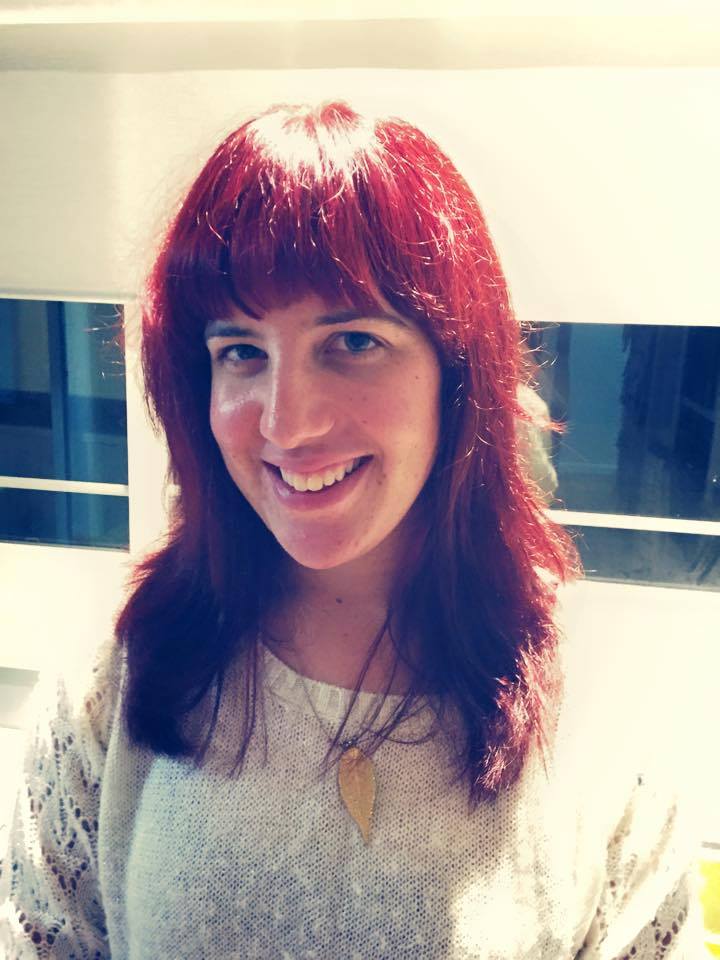
Maureen Flynn works with community care providers in disability and aged care as they navigate federal reform. In her spare time, she writes young adult speculative fiction novels and short stories, verse poetry and she has just ventured into writing crime. Currently, she is looking for a home for her YA fantasy manuscripts and is working on a crime novel and a verse novel about ‘the historical Merlin’. Maureen reviews speculative fiction novels at her WordPress blog, InkAshlings. Never one for saying no to a challenge, she also reviews genre books, films and TV shows and has interviewed authors for her blog. Her self-published verse novella, My Heart’s Choir Sings is available from Amazon and Smashwords. You can follow Maureen at her website, on Goodreads or Twitter.


December 10, 2015
The Hobbit: The Battle of Five Armies – Chronicles VI: The Art of War
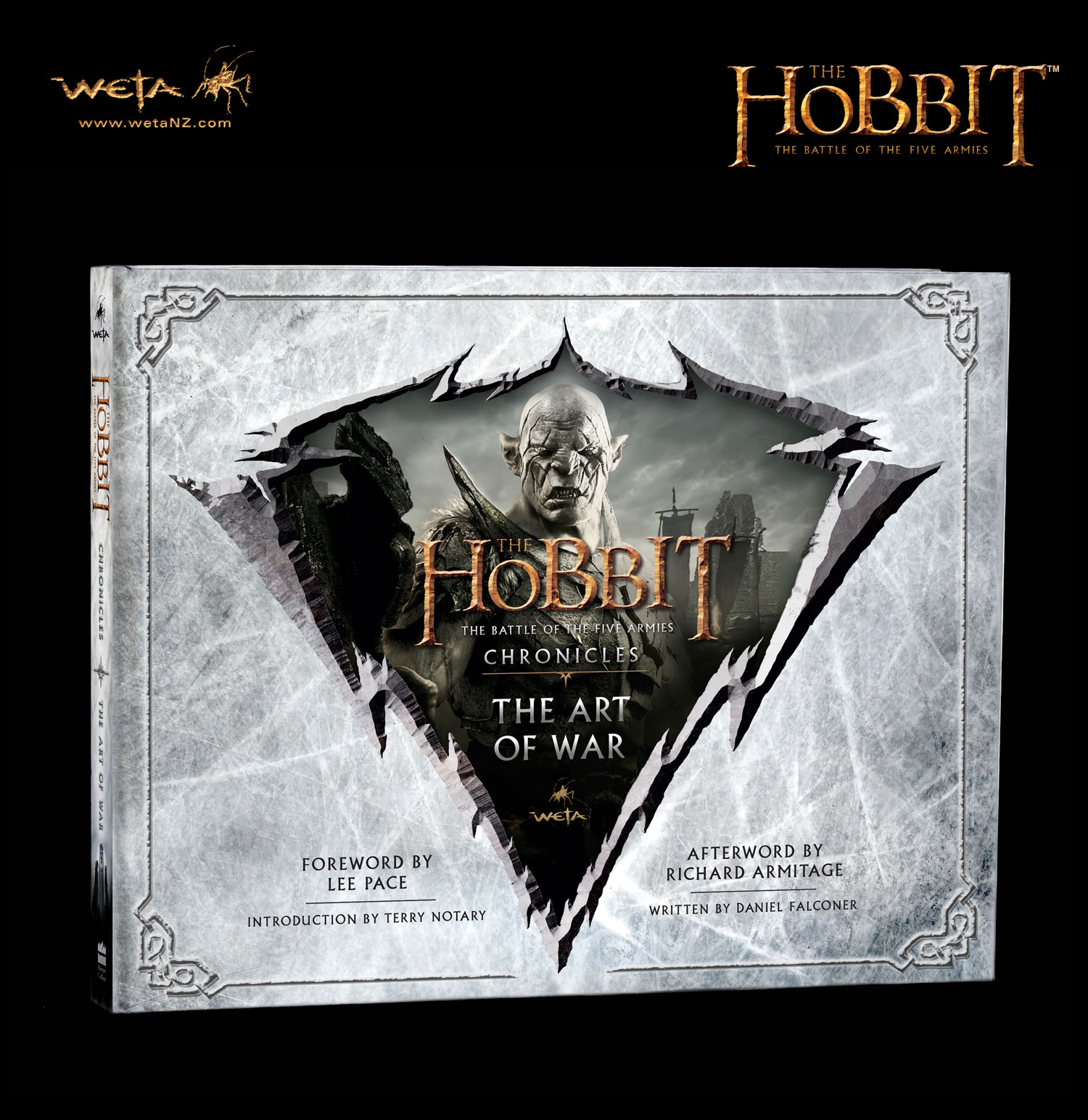
Published: November 2015 by HarperCollins
Format reviewed: Hardback, 256 pages
Series: The Hobbit Chronicles #6
Genres: Non-fiction
Source: Publisher
Available: Publisher (print) ~ Abbey’s ~ Amazon ~ Barnes & Noble ~ Book Depository ~ Booktopia
Disclaimer: I was provided with a free copy of this book in exchange for an honest review.
The ultimate celebration of the spectacular battle in the final Hobbit movie reveals in stunning detail the full creative vision of Peter Jackson and the filmmakers, together with extensive commentary from the director, cast, crew, and almost 2,000 exclusive photos, illustrations and visual effects imagery.
The Hobbit: The Battle of the Five Armies Chronicles – The Art of War goes behind the lines to explore how thousands of artisans brought the defining film of Peter Jackson’s adaptation of J.R.R. Tolkien’s The Hobbit to the screen. More than 1,000 intricate illustrations, stunning photographs and never-before-seen imagery illuminate fascinating insights shared by cast and crew, including exclusive content from the extended edition of the final film. Also included is an exclusive fold-out battle map illustrated by Weta Workshop Designer, Nick Keller!
Even though I didn’t agree with some of the story and directorial choices regarding The Hobbit movies, they were undeniably gorgeous movies. A lot of care and skill went into making them. This book unpacks just how much.
It is broken down into chapters that follow the plot of the movie, beginning with the destruction of Lake-town by Smaug, and moving on through the battle with the Necromancer at Dol Guldur, the fortification of Erabor and, of course, the Battle of Five Armies. Each double-page spread within the chapter focuses on one or two specific elements relating to that part of the story. For example, the chapter on Dol Guldur has sections that focus on the costumes of each of the characters involved in the sequence, the design of the elven rings of power, and the use of dummies within the movie. This provided a great structure to the book, giving it a focus and making it easy to follow.
Creators from across many departments share their stories in the text. This is generally kept to a couple of paragraphs, making it a good book to dip in and out of. One thing I loved about it was the sheer number of departments covered. Any given page may feature a costume jeweller, a digital effects supervisor, a stunt co-ordinator and an actor, or some other combination. Not only does this provide a variety of perspectives on the same scene, but it also highlights how closely the departments were working with each other.
The book makes plain the level of thought that went into every aspect of the movie, and touched on details I hadn’t noticed when watching the film, but delighted the geek in me. For example, Gloin’s full battle armour features the same helmet that his son Gimili would be shown wearing in The Lord of the Rings.
From a design perspective, the book itself isn’t perfect. It had a few typos scattered through it, some of the stills from the movie are quite fuzzy, and some of the imagery is not presented in the best possible way; I found it hard to make out the Nazgul’s dark outfits against the black background. It’s also a giant coffee-table book, so it’s not the easiest to handle, especially if you have bad wrists. However, these were small flaws in what is largely a gorgeous book.
If you are in any way a fan of the movies and you love to peek behind the scenes, this book is definitely worth getting.


December 6, 2015
2016 NAFF race
 Recently, I wrote a little about stepping outside my comfort zone and my plans to do more of that in the coming year. The 2016 NAFF race is part of that.
NAFF is the National Australian Fan Fund. It was set up to send one Australian fan to the National Science Fiction Convention each year. This year the national convention is Contact 2016 in Brisbane, which will take place on 25-28 March. NAFF will pay the airfares and accommodation for the winner of the race. Contact will also donate a ticket.
This year I have put my name forward. I’ve attended Conflux fairly regularly over the years, but the only other convention I’ve ever managed to attend was the 2010 Worldcon in Melbourne. That was also mostly work-related for me, as I was there to assist the now defunct Eneit Press with the launch of Baggage. I love Conflux (and already have my ticket for the next one) but I am keen to attend a convention with a stronger focus on fans and to meet a broader spectrum of the community. In particular, I’m looking forward to meeting the GUFF delegate from Finland, Jukka Halme, having heard so many lovely things about him.
However, I am not the only one who has put my name forward. I’ll be competing against Maureen Flynn and Liz Barr for the honour. Honestly, I’m a little intimidated because they are both amazing women who have contributed a lot to the community. In fact, regular readers will get to see Maureen’s awesomeness for themselves in her Brewing Community guest post next week. You can also see pitches from Maureen and Liz on Tehani Wessely’s blog (Tehani being the 2015 NAFF delegate).
NAFF winners are decided by vote. All Australian fans are eligible to vote, though it costs $5 as a way of raising money for the fund. Voting will be open until 23 December. Votes are being collected by Tehani Wessely and the candidates. For more information please contact Tehani at editormum75 [at] gmail.com.
So, if you’re an Australian fan, please consider voting below. It’s a wonderful way to support the community and foster connections. And if you’re not an Australian fan, signal boosts are much appreciated.
Choose your preferred candidate!
Elizabeth Fitzgerald $5.00 AUDLiz Barr $5.00 AUDMaureen Flynn $5.00 AUD


December 3, 2015
Mt TBR report: November 2015

Um. It’s amazing the damage a single Amazon gift card can do (though I am very pleased to have won it as part of Dewey’s read-a-thon and grateful to Rachel Noel of Purple Owl Reviews for donating it in the first place). Reading was also a bit slower this month, thanks to work chewing up more of my energy. With such a large deficit and with Christmas approaching, there’s not much hope of breaking even on Mt TBR this year. Next year, I may need to sign up for the Reading My Own Damn Books challenge from Andi at Estella’s Revenge.
Mt TBR Status
Mt TBR @ 1 January 2015: 202
Mt TBR @ 31 October 2015: 227
Mt TBR @ 30 November 2015: 235
Books Read
73. Flight of Magpies by KJ Charles. This Victorian m/m romance has its characters wrestling with work/life balance while attempting to solve the theft of a magical item that could destroy them. I seriously love this series so much. The pacing is excellent and the relationship between the characters is pitch-perfect.
74. Game Theory by Pia Foxhall. Set prior to The Court of Five Thrones, this fantasy m/m romance starts out even darker than its successor. Augus Each Uisge may be the prisoner of the Seelie King but eventually comes to realise Gwyn is just as trapped as he is. The moments of tenderness and healing in this story are all the more exquisite for the trauma from which they arise. A beautiful tale, but not for younger readers or the faint of heart.
75. Attack of the Clockwork Army by Felicity Banks. Reviewed here.
76 & 77. Deadline and Blackout by Mira Grant. The last two of the Newsflesh trilogy. As with Feed, they are set after the zombie apocalypse, but are really more sci-fi suspense than horror. It was strongly recommended I read these back to back and I’m certainly glad I had them on hand–I would not have wanted to wait after that cliffhanger in the middle. A gripping read that I binged in about three days. A big thank you to Ysabet McFarlane for the recommendation.
78. Skyborn by David Dalglish. Reviewed here.
79. Letters to Tiptree edited by Alexandra Pierce and Alisa Krasnostein. Reviewed here.
Books Acquired
Widdershins by Jordan L. Hawk
Threshold by Jordan L. Hawk
Flight of Magpies by KJ Charles
The Seduction of Lord Stone by Anna Campbell
Knight Errant by KD Sarge
Chasing Death Metal Dreams by KD Sarge
Ember by Bettie Sharp
The Bone Knife by Intisar Khanini
Deadline by Mira Grant
Blackout by Mira Grant
The Hobbit Chronicles: The Art of War by Daniel Falconer
Black Wolves by Kate Elliott
Sisters of Icarus by Becca Lusher
The Crying Child by Becca Lusher
Who’s Afraid? by Maria Lewis
Online Reading
Despite the backlog, I didn’t do any online reading other than Game Theory, reviewed above.
What have you read this month?


December 1, 2015
The 2016 Sci-fi Experience reading challenge
Art by Chris Goff. Used with permission.
I’ve always read more fantasy than sci-fi. My stats for the year so far tell me the number of fantasy books I’ve read outweighs the sci-fi by nearly three to one. So I thought I’d take the opportunity to even the odds a little bit.
Carl of Stainless Steel Droppings runs some fantastic reading challenges throughout the year. Among them is the Sci-fi Experience, which invites readers to:
a) Continue their love affair with science fiction
b) Return to science fiction after an absence, or
c) Experience for the first time just how exhilarating science fiction can be.
It’s less of a challenge than a chance for SF book geeks to share their reading experiences: something I am always delighted to do.
The challenge began on 1 December 2015 (yesterday!) and will run until 31 January 2016, perfectly timed for holiday reading. If you’d like to join in, it’s not too late! You can still sign up.
During the challenge, I hope to finally get around to reading Ancillary Justice by Ann Leckie. I also have a gorgeous copy of William Gibson’s Neuromancer which was given to me as a birthday gift. And there’s plenty more sci-fi languishing on the slopes of Mt TBR, as you can see:
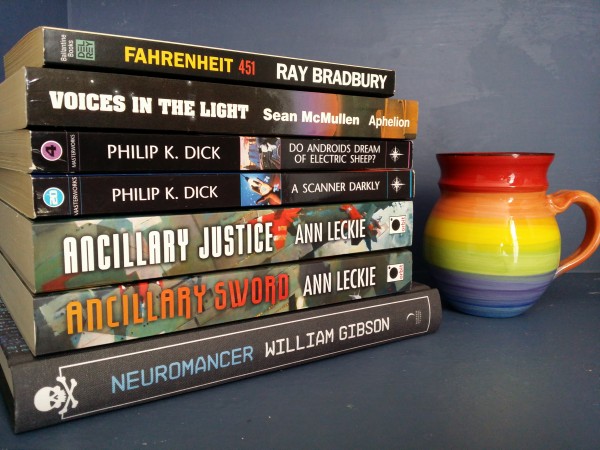
After reading Letters to Tiptree, I’m also tempted to drag out the Ursula LeGuin collection I haven’t touched yet.
What sci-fi is on your Mt TBR?


November 29, 2015
Letters to Tiptree edited by Alexandra Pierce and Alisa Krasnostein

Published: August 2015 by Twelfth Planet Press
Format reviewed: E-book (mobi)
Genres: Non-fiction
Source: Publisher
Reading Challenges: Australian Women Writers Challenge 2015
Available: Twelfth Planet Press (print and electronic) ~ Amazon ~ Barnes & Noble ~ Book Depository ~ Booktopia ~ Kobo
Disclaimer: I was provided with a free copy of this book in exchange for an honest review.
For nearly a decade, a middle-aged woman in Virginia (her own words) had much of the science fiction community in thrall. Her short stories were awarded, lauded and extremely well-reviewed. They were also regarded as “ineluctably masculine,” because Alice Sheldon was writing as James Tiptree Jr.
In celebration of Alice Sheldon’s centenary, Letters to Tiptree presents a selection of thoughtful letters from thirty-nine science fiction and fantasy writers, editors, critics, and fans address questions of gender, of sexuality, of the impossibility and joy of knowing someone only through their fiction and biography.
When Twelfth Planet Press sent me a review copy of Letters to Tiptree, I admit I was a little apprehensive. I’ve not read any of the stories Alice Sheldon published under the names of James Tiptree Jr. and Raccoona Sheldon. I’m not even especially interested in science fiction spanning the late 60s and 70s–though I have felt some pressure to become familiar with this era of canon, much as Renay has commented. So I was a little bit surprised by just how much I enjoyed this book.
Letters to Tiptree is divided into several sections. The first and largest consists of letters written for this collection by authors, academics and fans to Alice, Tiptree and/or Raccoona. There is an impressive diversity of voices here, containing writers of varying backgrounds, nationalities, races, generations, gender identities, sexualities and classes. This diversity serves to showcase the wide impact Tiptree’s work had–and continues to have–upon the speculative fiction community. But letter writing–even when the letters remain unanswered–is a two-way street. I found myself equally as fascinated by what the letters revealed about their writers as what they said about Tiptree. Some clearly had an eye towards their third-party audience, while others were more focussed on the person they were writing to. Some letters were restless and unhappy, while others were breathtaking in their sincere gratitude. Even the anger present in some merely added to the sense that this collection was a beautiful love letter.
Gender and identity are naturally one of the major preoccupations of these letters. It was interesting to see the different conclusions authors came to while pondering what ground–if any–feminism has gained since Tiptree’s death thirty years ago. However, this wasn’t the sole focus of these letters. They also dwelt on some of the other overarching themes of Tiptree’s work, such as class, colonialism, technology and time.
The second section is formed of a selection of letters exchanged between Alice Sheldon and her contemporaries–specifically Ursula LeGuin and Joanna Russ. Sheldon had been writing to these two women under the guise of Tiptree and had formed close friendships with them. When the death of Sheldon’s mother began to unravel the identity of James Tiptree Jr., she was quick to write to them and confess the truth. The letters included in this book centre around these confessions. After hearing so much about the influence of Tiptree on the writers of the first section, it was a delight to hear her speak in her own voice. At the same time, it was heartbreaking because her fear and unhappiness are very evident.
This is followed by a section with a more academic focus, containing a few anthology introductions and excerpts from more scholarly works. I’d been able to grasp much of the context of Tiptree’s work from the letters in the first section, though this did a good job of filling in some of the gaps and expanding the territory a little bit. I found Wendy Guy Pearson’s 1999 paper on Tiptree as a transgender writer to be particularly interesting.
The collection was rounded out with letters from the two editors addressed to Tiptree and reflecting on their experiences of putting the collection together. I liked the way this brought things back to the personal, completing the cycle.
If the aim of the book was to interest new readers in the life and work of Tiptree, it succeeded in my case.


November 26, 2015
Loose-leaf Links for November 2015
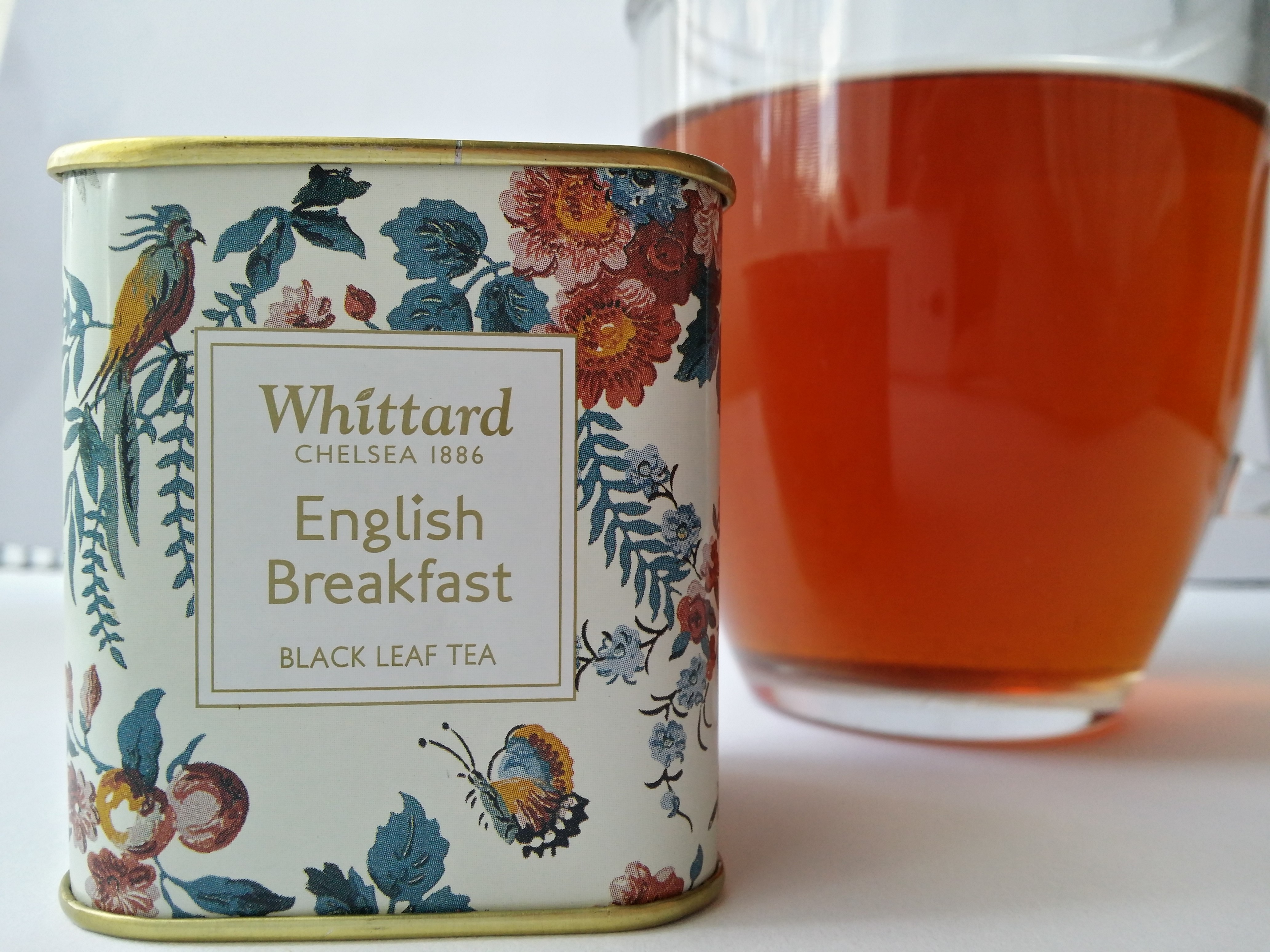 Loose-leaf Links is a feature where I gather together the interesting bits and pieces I’ve come across in the last month and share them with you over tea.
This month’s tea is a classic English Breakfast, the last of the Wittard’s tins brought back from England as a souvenir for me. A solid flavour without being harsh and it brews into such an amazing colour!
Awards News
The winners of the 2015 Tiptree Fellowships were announced this month. The Fellowships are designed to promote “…the development of new work, in any form or genre, that uses speculative narrative to expand or explore our understanding of gender, especially in its intersections with race, nationality, class, disability, sexuality, age, and other categories of identification and structures of power.”
Until 31 December, the Aurealis Awards are seeking submissions for the Convenor’s Award for Excellence.
The Convenors’ Award for Excellence is awarded at the discretion of the convenors for a particular achievement in speculative fiction or related areas in that year that cannot otherwise by judged for the Aurealis Awards.
This award can be given to a work of non-fiction, artwork, film, television, electronic or multimedia work, or one that brings credit or attention to the speculative fiction genres.
The 2016 Aurealis Awards will be taking place at Contact, the Natcon for the year.
Nominations are also open for the 2015 Nebula Awards. If you are an active member of SFWA, you have until 15 February to nominate. If you’re not sure what to nominate (or are just looking to do terrible things to Mt TBR), try this list of eligible work.
The Hugo Awards are holding a competition to design the base of the 2016 Hugo Award. The deadline closes 18 January.
The winners of the 2015 World Fantasy Awards were announced earlier this month. I was particularly pleased to see Australia represented by Angela Slatter who tied with Helen Marshall for Best Collection.
It has been revealed that the World Fantasy Awards are also undergoing a redesign and as of next year will no longer feature the bust of H.P Lovecraft. Lovecraft’s vehemently racist outlook has long made the design of the award a contentious one.
The WFA administration are taking applications from 3D artists interested in undertaking the redesign. The deadline closes 2 April.
On Diversity
N.K. Jemisin expresses her relief at news of the WFA redesign and touches on the racist legacy behind some of the most prominent SFF awards.
Kayla Whaley discusses the erasure of disability in diversity discussions.
The 2015 World Fantasy Convention did a very poor job of accommodating its disabled participants, as Mari Ness reports.
Mary Robinette Kowal shares some thoughts on accessibility at some of the recent conventions she has attended. It was nice to see her praise GenreCon, which took place in Brisbane at the end of last month. However, conventions still have a way to go towards being completely accessible, as Nalini at Dark Matter Zine reminds. To encourage improvements, Mary Robinette Kowal has created the SFF Convention Accessibility Pledge.
To return to GenreCon, all seven special guests were female. Organiser Peter Ball discusses his thoughts on GenreCon’s gender balance.
Over on Barnes and Noble, Kate Elliott shares 10 fantasy novels whose depictions of women didn’t make her want to smash things.
The Australian National University’s Gender Institute is funding two internships with the Stella Prize to conduct a quantitative analysis of the representation of women in Australian publications. If you are an ANU student, you have until 15 December to apply.
For Writers
I noted last month that there were a number of major publishers open for submission. Jason Nahrung has compiled a handy list which includes a few I missed.
Lightspeed Magazine are open to submissions for their People of Colour Destroy Science Fiction issue until 19 February.
Books of the Dead Press are also taking submissions for their anthology Suspended in Dusk 2.
As mentioned above, GenreCon took place at the end of last month. Peter Ball discusses the philosophy behind GenreCon: that good things happen when writers talk to each other and better things happen when writers help each other. As he puts it, “Networking is really just another name for helping out your peeps.”
This ties in with a post from KJ Charles on the myth that writers are not team players. No matter what publishing route authors take, they are supported by a lot of people… who get let down when an author doesn’t do the right thing. She discusses this in relation to Laura Harper, who plagiarised from a number of m/f romance writers by repackaging their work as m/m romances and self-publishing them.
National Novel Writing Month is underway throughout November. For those unfamiliar with the event, writers are challenged to produce 50,000 words in 30 days. There is frequent debate over whether 50,000 words constitutes a novel. Peter Ball weighs in with a reminder that the answer depends on the genre in which you are writing.
The structure of NaNoWriMo encourages writers to write every day. However, Alan Baxter offers some thoughts on the importance of self-care and time off.
Mary Robinette Kowal shares an insightful post on writers block and how sometimes it is really depression.
Kelly Sedinger discusses his thoughts on the value of fanfiction and writing as play.
For Readers
Tor.com has an excellent article on the line between grimdark and horror.
John Scalzi feels it’s perfectly acceptable each generation to have its own favourite SFF authors, rather than clinging to those of previous generations.
Orbit US is increasing the number of books it publishes annually to 90.
The Booksmugglers are taking subscriptions for their Spindle City Serial–a series where fairytale meets noir.
They’ve also announced they will be publishing a new short story from Kate Elliott in December.