Elizabeth Fitzgerald's Blog: Earl Grey Editing, page 26
April 20, 2017
Preparation for Dewey’s read-a-thon, April 2017
Dewey’sread-a-thon is my favourite reading challenge and runs twice a year–in April and October. It runs for 24 hours, but participation for the full length is optional. Which is a good thing, because this round will be kicking off at 10 PM on Saturday 29 April for the east coast of Australia. As usual, I plan to be going to bed around then, but will be up early to cram as much reading as possible into my waking hours.
When I signed up last round, my Mt TBR had just hit 300 books. It hasn’t been below that since. I’m hoping that this will be the push I need to help get it down again.
Of course, a read-a-thon requires books! Here’s a few things I’m thinking about tackling:
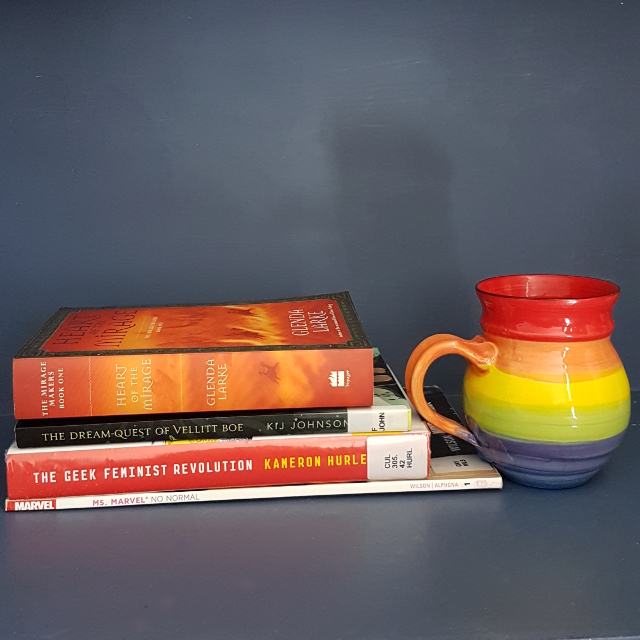
With the exception of Heart of the Mirage, these books are all on the Hugo Awards shortlists. I’m hoping to get through them before they’re due back at the library.
Each time I participate in Dewey’s I try to get a little more involved with volunteering. Last year, I hosted a mini-challenge for the first time.This year I’ll be one of the co-hosts, allowing the organisers to get some well-earned sleep. I’ll be hosting Hours 18-20, which correspond to 3-5 PM AEST.
If you need to tame your own Mt TBR or are looking to connect with a great community of book bloggers, I do hope you’ll join me. It’s not too late! You can sign up, follow on Twitter, join the Goodreads group or any combination of the three. If you’ve already signed up, I’d love to hear about what you’ll be reading.


April 16, 2017
2016 Aurealis Awards in Retrospect
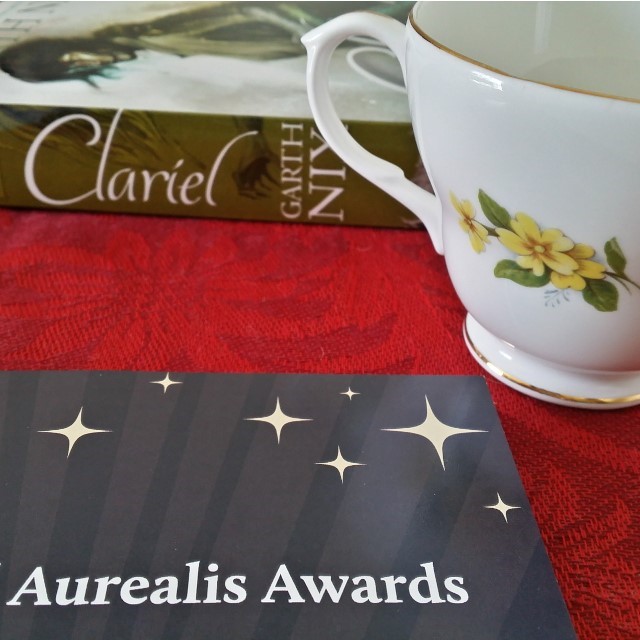
The 2016 Aurealis Awards were presented on Friday night. Congratulations to all the winners!
As most of you know, I had the great honour of being one of the judges on the panel for YA novels and YA short stories. Now that the results are out, I’d like to share a few thoughts on what it was like to be a judge.
I signed up for a few different reasons: because I love SFF reading challenges, because I wanted to learn more about Australian YA SFF, and because free books! I’d wanted to sign up for a few years, but hadn’t been confident my reading speed was up to par. However, I’d read 91 books in 2015, which was close to a personal best. I figured it would still be a bit of a struggle. After all, I still had to review one book a week here for the blog and it wouldn’t be appropriate to review the material I was judging. But I figured it was manageable. I also picked the YA categories because they were one of the smaller categories in 2015. As much as I’d dearly love to tackle the fantasy novel category, I’m not quite that masochistic (yet)
The problem with my reckoning was that there was an embedded assumption that the award books would arrive at a regular pace. I really should have known better. The award opened for entries mid June and books trickled in until the first small rush arrived at the end of September. However, most of the entries arrived en masse in December.
To complicate matters, I suffered a bout of eye strain in November and continued to struggle with it through December. In the end, I recovered thanks to some eye drops and the inclusion of frequent breaks in my schedule. I made up for lost time by averaging a book a day throughout January and February. I didn’t watch any TV or do much of anything other than read. Now, you know I love reading, but two months and more of that started to get a bit much, even for me.
It improved my reading skills, though. I got faster. I found that 20 pages was usually long enough to judge the quality of the writing. I did a lot of skimming. And I got more comfortable with not finishing books. Prior to being a judge, I could count the number of books I’d DNFed on one hand.
I got to know my postman and the delivery guys very well. Books would show up randomly on my doorstep. It was like Christmas. And then, when it was actually Christmas, all the Aurealis books made a good disguise. My sweetheart busted me with the copy of Ninefox Gambit I’d ordered as his Christmas present. So, I told him it was another book for judging and let him take a look at it before putting it in the pile of judging books. I quietly snuck it out a couple of weeks later and wrapped it up.
In the end, the YA panel received 53 novels and 55 short stories. Pretty much all of the short stories came in electronic format, whereas the novels were more of an even split. Publishers covered the full spectrum: self-published indie authors, small and big press. Reading through all of it highlighted for me the fact that YA is not a genre, but a target audience. I appreciated that because it meant I could change things up by switching genres rather than glutting myself on one.
Each of the judges came up with their own shortlists, one for each category. As soon as I handed mine in, I started second-guessing myself. But there was a consensus among the judges as to which pieces stood out, even if there was some negotiation around the exact order. The process was surprisingly quick, once we got down to it.
Amusingly enough, the first thing I did after the shortlist was finalised was buy more books. I’m told that’s pretty common among the judges and I guess it takes a certain kind of person to judge a book award.
Would I do it again? I think so. It was stressful at times. But it also taught me a lot: about reading, about the processes behind book awards, and about Australian YA SFF (as I’d hoped). I discovered new authors. So, yes, I would do it again. But first I need a year or two to recover.


April 13, 2017
Twist by Kylie Scott
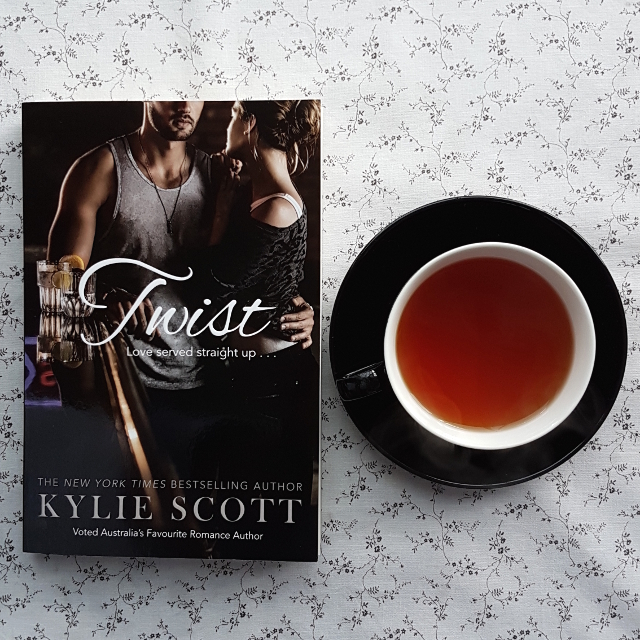
Published: April 2017 by Pan Macmillan
Format reviewed: Trade paperback, 273 pages
Series: Dive Bar #2
Genres: Contemporary romance
Source: Publisher
Reading Challenges: Australian Women Writers Challenge 2017
Available: Publisher (print and electronic) ~ Abbey’s ~ Amazon ~ Barnes & Noble ~ Book Depository ~ Booktopia ~ Dymocks ~ Kobo
Disclaimer: I was provided with a free copy of this book in exchange for an honest review.
When his younger brother loses interest in online dating, hot, bearded, bartender extraordinaire, Joe Collins, only intends to log into his brother’s account and shut it down. Until he reads about her – Alex.
Alex Parks is funny, friendly, and pretty much everything he’s been looking for in a woman. And in no time at all they’re emailing up a storm, telling each other their deepest darkest secrets . . . apart from the one that really matters.
And when it comes to love, serving it straight up works better than with a twist.
Kylie Scott shows why she’s one of Australia’s most beloved romance writers with her new book Twist. It’s the second book in the Dive Bar series but, as with most romance, it’s not necessary to have read the previous book to enjoy this one.
The start is compelling. Alex has flown into town and shows up at the Dive Bar in her little black dress and towering heels, looking to crash Joe’s birthday party. It’s an uncharacteristic move for her, but she was goaded into it by her best friend and she’s been trading emails with Joe for months via a dating site. Except Joe has been using his brother’s account. So, when Alex throws herself at Eric, thinking he’s the man she’s been emailing, chaos ensues. I have a bit of a humiliation squick, so the opening was hard going for me. It read like a nightmare that I kept expecting Alex to wake from. However, I thought she handled herself pretty well, and wanting to find out what happens to her helped me push through the discomfort.
Joe is used to women passing him by in favour of his brother. It’s not that he’s unattractive–being broad, bearded and blond–but women like their bad boys and that’s just not him. Joe’s family and friends mean a lot to him and he bends over backwards trying to please everyone. But although he loves them, his friends and family drive him nuts sometimes. His emails to Alex were a place he could safely vent. Joe treats everyone with painstaking respect, making the times he crosses boundaries all the more jarring. However, one of the things I enjoyed most about his character is that he readily admits when he’s done something wrong.
The story is told in first person solely from Alex’s perspective. Nevertheless, it manages to do an excellent job of conveying Joe’s feelings. This is partly helped by the inclusion of some of their emails at the start of each chapter, but mostly the result of Joe’s earnestness and some excellent storytelling.
A couple of the plot twists felt a little forced, but it is difficult to say more without spoilers. The ending also featured a cameo by characters from Scott’s previous series. As a new reader, I found this a bit disorientating and I briefly wondered whether I’d stumbled into a preview for another book.
However, despite these flaws, I found it to be an entertaining and down-to-earth read. Twist is my first foray into Scott’s work and I’ll definitely be seeking out more.


April 11, 2017
Loose-leaf Links #37

Loose-leaf Links is a feature where I gather together the interesting bits and pieces on sci-fi, fantasy and romance I’ve come across and share them with you over tea. Today’s tea is Neo Australia’s Chocolate Dream. It’s a sweet rooibos blend, with cinnamon, cardamom, ginger and cocoa nibs. Fans of chai are sure to enjoy it and it takes milk.
Follow Up
A reminder that voting for the Get Up-and-over Fan Fund closes on 17 April. GUFF will send one delegate to Worldcon in Helsinki in August. If you still haven’t voted and are having trouble deciding on a candidate, you can check out my series of interviews with them.
GUFF isn’t the only fan fund race wrapping up in the next week. Voting for the National Australian Fan Fund closes 16 April. NAFF will send one Australian fan to the Natcon, which will be Continuum held in Melbourne in June.
Awards News
The shortlists for the 2017 Hugo Awards were released last week. Congratulations to all the nominees! If, like me, you’re planning on consuming as much of the work on these lists as possible before voting, File 770 has a post on where you can find them online for free.
The African Speculative Fiction Society has released the shortlists for the inaugural Nommo Awards.
And, as mentioned briefly last week, the ballot for the Ditmar Awards was released. If you were a member of Contact last year or are a member of Continuum 13 this year, you can now go and vote.
Community and Conventions
Ann Leckie has donated an ARC of her forthcoming novel Provenance to Con or Bust, an organisation that helps PoC get to SFF conventions.
Niall Harrison has announced he’s stepping down as editor-in-chief of Strange Horizons.
On Equity
Fantasy Cafe is running their annual Women in SFF month, with some great guest posts from Renay of Lady Business and Rin Chupeco, author of The Bone Witch, among others.
For Writers
A reminder that Lightspeed Magazine is currently open for fantasy submissions.
Dave Versace discusses the importance of managing the rights to your stories.
KJ Charles talks about the suspension of disbelief, particularly in relation to animation and SFF.
Jim C. Hines takes a look at what lessons writers can learn from the recent kerfuffle surrounding the mass market paperback edition of Dave Freer’s book Changeling’s Island.
For Readers
The next Dewey’s Read-a-thon will take place on 29-30 April. If you’re interested in participating as a reader or a volunteer, you can sign up now!
Apex Magazine are currently holding a funding drive with some fantastic stretch goals.
Strange Horizons have just launched an imprint called Samovar, which will be a quarterly magazine of and about translated speculative fiction. As a dedicated tea drinker, I approve of the title.
Tsana Dolichva has a focus piece on horror over at the Australian Women Writers blog.
Ticonderoga Publications have released the contributors to their forthcoming Ecopunk! anthology.
Twelfth Planet Press have likewise released the contributors to their anthology Luminescent Threads: Connections to Octavia Butler.
It has been a busy week for TPP, who also announced their Year’s Best YA Speculative Fiction series is being discontinued. However, readers may be consoled by the news that they’re going to be launching Titania, a new imprint for readers aged 3-13.


April 9, 2017
Crossroads of Canopy by Thoraiya Dyer
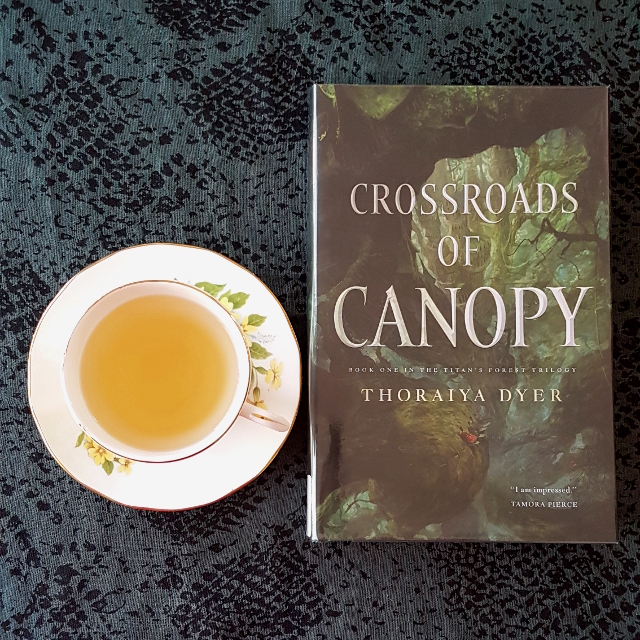
Published: January 2017 by Tor Books
Format reviewed: Hardback, 336 pages
Series: Titan’s Forest #1
Genres: Fantasy
Source: Library
Reading Challenges: Australian Women Writers Challenge 2017
Available: Publisher (print and electronic) ~ Abbey’s ~ Amazon ~ Barnes & Noble ~ Book Depository ~ Booktopia ~ Dymocks ~ Kobo
At the highest level of a giant forest, thirteen kingdoms fit seamlessly together to form the great city of Canopy. Thirteen goddesses and gods rule this realm and are continuously reincarnated into human bodies. Canopy’s position in the sun, however, is not without its dark side. The nations opulence comes from the labor of slaves, and below its fruitful boughs are two other realms: Understorey and Floor, whose deprived citizens yearn for Canopy’s splendor.
Unar, a determined but destitute young woman, escapes her parents’ plot to sell her into slavery by being selected to serve in the Garden under the goddess Audblayin, ruler of growth and fertility. As a Gardener, she yearns to become Audblayin’s next Bodyguard while also growing sympathetic towards Canopy’s slaves.
When Audblayin dies, Unar sees her opportunity for glory at the risk of descending into the unknown dangers of Understorey to look for a newborn god. In its depths, she discovers new forms of magic, lost family connections, and murmurs of a revolution that could cost Unar her chance or grant it by destroying the home she loves.
Crossroads of Canopy is a debut novel which has some amazing worldbuilding and explores a number of social issues.
Unar is a servant to one of Canopy’s thirteen deities, having come from poverty. Her escape from abuse and slavery had made her ambitious, helped by the fact she possesses a powerful potential for magic, and she firmly believes she’s destined to be the Bodyguard to the next incarnation of her deity. She’s not an entirely likeable character–she’s impulsive, occasionally selfish and lashes out at her loved ones. However, her strong desire for justice saves her from being unsympathetic. Despite being born to poverty, Unar grew up in Canopy–literally the highest stratum of the forest–and, as such, is privileged. Thus, it is unsurprising that she shows prejudice on occasion. However, unlike the other citizens of Canopy, she catches herself and constantly questions the injustice embedded in the status quo.
Although I felt some sympathy for Unar, I found the story held me at arm’s length and didn’t engage me on an emotional level as much as I would have liked. This may have been intentional, as one reoccurring theme of the story is unrequited feelings across many relationships, both romantic and otherwise.
However, there was plenty for me to engage with on an intellectual level, and it reminded me a little of Ann Leckie’s Ancillary Justice trilogy in that sense. There’s a common perception that fantasy doesn’t examine social issues in a way that science fiction does. Crossroads of Canopy dispels that notion by putting class and race at the heart of the story.
The world is separated into three different societies located at different levels of the forest. Canopy is the highest level with access to abundant sunshine and fresh water. Understorey lies below, receiving very little sunshine and dealing with the refuse that is tossed on their heads from Canopy. We see very little of Floor, but the story indicates its citizens are plagued by floodwater and monsters. These three societies combine to form a literal class strata, where the higher you are the better off you are. This class structure is also intrinsically tied to race. Canopians are dark-skinned, while the sunlight-deprived Understoreans are pale.
The story also deals with issues of ageism and ableism. This comes primarily through the Canopian society, where the citizens make offerings to one of their gods to protect their children from falling over the edge of the branches which form their home. However, the disabled and elderly too feeble to work are pushed to their doom. In this way, it highlights society’s cult of youth.
Another thing I particularly liked about the worldbuilding is that it doesn’t use the typical broadleaf forests found in the US or the UK. Instead, we have the kind of rainforest often seen in Australia or Southeast Asia–the kind that features an abundance of gum trees and parrots.
The story is a bit slow-paced with few action sequences. The writing style was also a bit difficult to get used to at first; there was a lot of terminology and names to wrap my head around, and I found the occasional use of alliteration distracting.
However, overall Crossroads of Canopy brings a fresh approach to fantasy, making it well worth reading.


April 8, 2017
Ditmar shortlists

The Australian SFF awards season has been very kind to me this year. The preliminary shortlists for the Ditmar Awards were released yesterday and I was delighted to discover I’d made the ballot. Twice over. In the same category. The blog here at Earl Grey Editing has been nominated for Best Fan Publication in Any Medium. I also earned a second nomination as part of the Australian SF Snapshot (you can see the interviews I conducted here).
Congratulations to all the nominees! It’s an interesting ballot this year with quite a few familiar faces. I’m hoping to see a few at the ceremony at Continuum in June.


April 6, 2017
Mt TBR report: March 2017
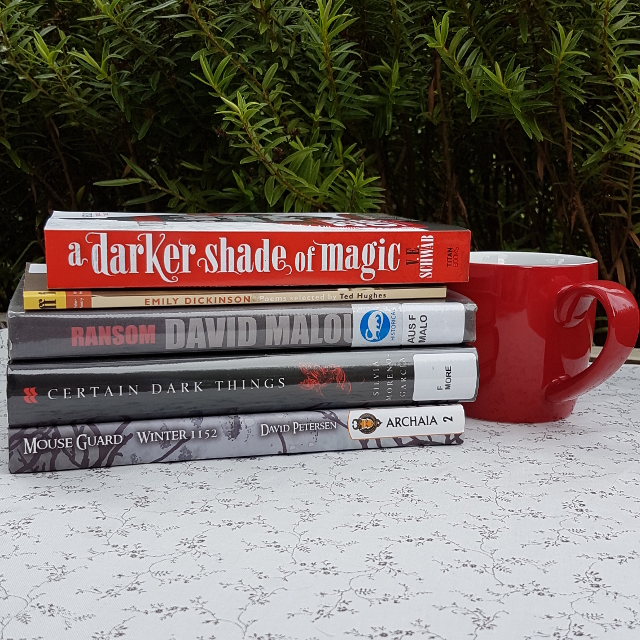
March was the first full calendar month where I didn’t have any reading to do for the Aurealis Awards. My reading rate subsequently took a plunge, but I remain happy, especially since there were a lot of good books this month. And things are likely to pick up again, now that the shortlists for the Hugo Awards have been released.
One of my personal reading challenges this year was to make at least one trip to the library per month. This month I managed two trips, picking up Not Your Sidekick by C.B. Lee, Crossroads of Canopy by Thoraiya Dyer, Certain Dark Things by Silvia Moreno-Garcia, and Chaos Choreography and Magic for Nothing by Seanan McGuire.
Mt TBR Status
Mt TBR @ 1 January 2016: 327
Mt TBR @ 28 February 2017: 309
Mt TBR @ 31 March 2017: 307
Books Read
56. Dances, Princes, Dance by Tansy Rayner Roberts. Listened to via the Sheep Might Fly podcast. Second in the Castle Charming series. The princes keep mysteriously vanishing from the castle and someone has run up an enormous bill for dancing shoes on the king’s account. The Hounds must get the bottom of what’s going on, but things are always more complicated when there are fairies involved. Sheer fun. I adore the various relationships between the characters.
57. Penric and the Shaman by Lois McMaster Bujold. Reviewed here.
58. Humanity for Beginners by Faith Mudge. Reviewed here.
59. Binti: Home by Nnedi Okorafor. Sci-fi novella sequel to Binti. Having completed her first year at university, Binti returns home to take a pilgrimage. I didn’t find it quite as gripping as the first, but it shows the fallout from the previous book quite well, particularly in terms of Binti’s mental health and the changes in her family’s dynamics.
60. When A Scott Ties the Knot by Tessa Dare. Historical romance. Read for Sisterhood of the Travelling Paperback podcast. A fairly standard sort of romance, though it does touch on a number of interesting issues.
61. Strange the Dreamer by Laini Taylor. Reviewed here.
62. Chaos Choreography by Seanan McGuire. The fifth book in the InCryptid series. Verity thought she was done with ballroom dancing and her life outside of cryptozoology. However, when she gets a chance to stage a comeback on a reality TV show, she can’t refuse. She also can’t help notice the way her fellow dancers are disappearing after they’re eliminated from the show. I found some of the mystery elements a bit weak but it does a great job of holding tension and I enjoyed it more than the previous book in the series.
63. Not Your Sidekick by C.B. Lee. Read for the Sisterhood of the Travelling Paperback podcast. Jess’s parents are minor league superheroes, her sister is in training with her superhero idol and her brother is a genius. At 16, Jess is rapidly giving up hope of manifesting powers and takes on an internship at a local tech company. Then she discovers it’s a front for her parents’ villainous rivals. This is a fantastic YA book with a diverse cast and a cute f/f romance at its heart. The ending wobbles a bit, but overall I really enjoyed it.
64. Mouse Guard: Winter 1152 by David Petersen. A graphic novel about anthropomorphic mice. The failed uprising has left the Mouse Guard’s stronghold in a vulnerable position. Several guard mice are forced to travel through the snow to distant communities for supplies. A dark story with exquisite artwork (and terrible poetry).
65. Beyond Temptation by Kit Rocha. Post-apocalyptic erotica. A short novella set between the third and fourth books of the Beyond series. More than anything, hacker Noah Lennox wants to know his childhood friend Emma is safe–no matter what the cost. However, Noah’s secrets put them both at risk. Both Emma and Noah have cropped up in other books, so it was nice to see their story get told. I particularly appreciated that, despite Noah’s efforts, Emma was more than capable of protecting herself.
66. Sharp Shooter by Marianne Delacourt. Reviewed here.
67. Beyond Jealousy by Kit Rocha. Post-apocalyptic erotica. Fourth book in the Beyond series. Rachel, Ace and Cruz have been circling each other for the last three books. Can they make their trio work? Or will someone get their heart broken? Meanwhile, could Rachel’s father be the one making life more difficult for the O’Kayne gang? So refreshing to see a love triangle be resolved with a positive portrayal of polyamory. I also appreciated that it wasn’t all about the sex (although there was plenty of that), but that the emotional component was given plenty of space.
68. Crossroads of Canopy by Thoraiya Dyer. Review forthcoming.
DNF The Dispossessed by Ursula Le Guin. Picked up to read along with the Sisterhood of the Travelling Paperback podcast. As usual, Le Guin explores some fascinating ideas. However, I just couldn’t find the emotional connection I needed to stick with it.
Books Acquired
Chaos Choreography by Seanan McGuire
Not Your Sidekick by C.B. Lee
Crossroads of Canopy by Thoraiya Dyer
Children of the Different by S.C. Flynn
Tremontaine, Episode One by Ellen Kushner
Uncanny Magazine, Issue 15
A Darker Shade of Magic by V.E. Schwab
Betrayed by Amanda Pillar
Certain Dark Things by Silvia Moreno-Garcia
Queens of Geek by Jen Wilde
Rift Riders by Becca Lusher
Magic for Nothing by Seanan McGuire
Ransom by David Malouf
Emily Dickinson by Emily Dickinson
Hunter’s Claim by S.E. Smith
Twist by Kylie Scott
Online Reading
If the Apocalypse Comes, Text Me by relenafanel. This Captain America/Buffy crossover came to me via Claire Rousseau. When Captain America miraculously comes back to life after being trapped in an iceburg, Bucky the Vampire Slayer is sure he knows what’s going on. Too bad Captain America has to be so hot. An entertaining crossover with some witty sections, but ultimately not enough emotional depth to satisfy.


April 2, 2017
Sharp Shooter by Marianne Delacourt
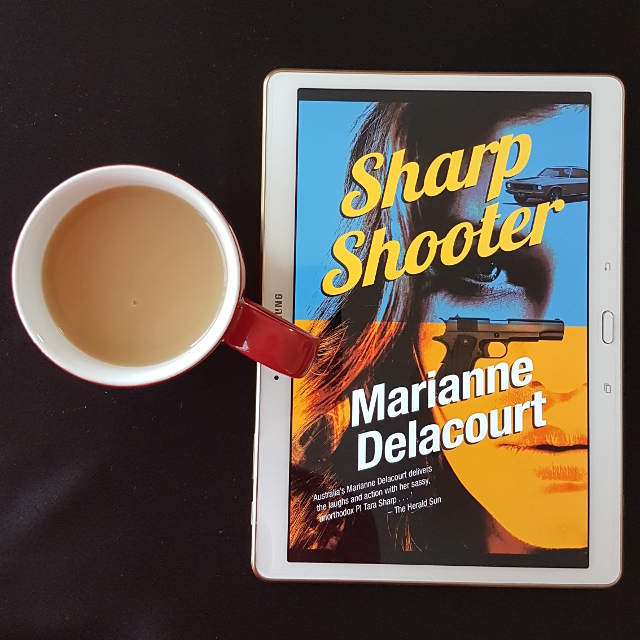
Published: May 2016 by Deadlines
Format reviewed: E-book (mobi)
Series: Tara Sharp #1
Genres: Crime, paranormal
Source: Publisher
Reading Challenges: Australian Women Writers Challenge 2017
Available: Publisher (print and electronic) ~ Abbey’s ~ Amazon ~ Barnes & Noble ~ Book Depository ~ Booktopia ~Kobo ~ Smashwords
Disclaimer: I was provided with a free copy of this book in exchange for an honest review.
Tara Sharp can see auras, and its ruining her life.
When she tries to turn her inconvenient secret into a paying gig, her first job lands her in the middle of a tug of war between the biggest, baddest crime lord in town and the hottest business man Tara has ever met.
With only a narcoleptic ex-roadie, her pet galah and a vanilla slice for back up, Tara is ready to take on trouble with a capital T.
WINNER of the Davitt Award 2010 Best Crime Novel and nominated for Ned Kelly Award 2010 Best First Crime Novel
Sharp Shooter is an action-packed crime novel with a dash of the paranormal. It’s a quick, fun read that will particularly appeal to Australian readers.
The paranormal elements are light, restricted to Tara’s ability to see auras. However, the book carries the feel of urban fantasy. Tara has all the necessary feistiness but is more scruffy than polished. In the beginning, she’s a bit of a mess. She recently lost her job, caught her boyfriend in an affair with her flatmate, and is now broke and living with her parents. She is also struggling with her psychic powers. It turns out that the ability to see auras doesn’t automatically come with the ability to interpret them. I loved that Tara still has to find a mentor and learn.
She’s also surprisingly bad at people. Even with her psychic abilities, she misreads intentions. Diplomacy is not her strong suit and she often makes bad decisions. However, while she’s not always the best at respecting other people’s boundaries, she is good at setting her own. This was something I appreciated, particularly during one scene in a limo.
Despite being a reasonably fast-paced book, the story doesn’t launch straight into the action. It takes time to establish Tara’s situation and put her through some training. The beginning feels like a bit of a disaster–appropriately so, as Tara reels from one disaster to the next. It verges on disjointed, but never quite crosses the line, and by the end everything has pulled together.
I was delighted to discover the story was set in Perth and is filled with Australian idioms and cultural references. For example, the story makes reference to the proper way to eat vanilla slice. I don’t think it would be inaccessible to international readers, but I’m not in a position to make a good judgement on that issue. Likewise, I couldn’t say how faithfully Perth was represented, even though it felt authentic to me. The story respected its setting, rather than using it as vague background colouring. I especially appreciated that, unlike some Australian urban fantasy, the story didn’t feature an overabundance of guns.
Readers may want to be warned that the story features a love triangle… and one that so far seems weighted in one direction. However, it was counterbalanced somewhat by Tara’s friendships. She has two childhood friends: one male, one female. It was nice to see a platonic friendship portrayed between the sexes. The female relationships in this book run the gamut from antagonistic to loyal friends, which was nice to see, though I was a little disappointed it tended more towards the former than the latter. Similarly, although the gender balance between the characters was reasonable, virtually none of the women in positions of command. While this may be somewhat reflective of Australian culture, it remains a little bit of a let-down.
However, these are mostly just nitpicks. Overall, I enjoyed Sharp Shooter and found it a refreshing piece of Australian crime.
In celebration of the launch of Too Sharp, the third book in the series, Sharp Shooter is available for free across most platforms until 11 April.


March 30, 2017
Loose-leaf Links #36
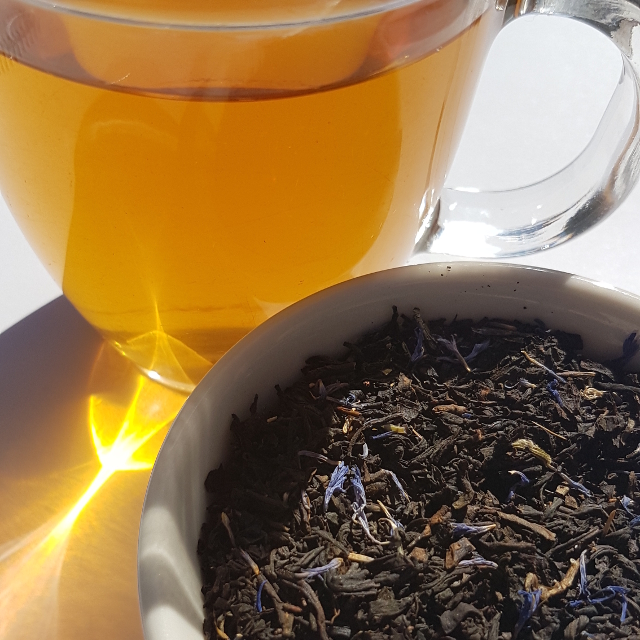
Loose-leaf Links is a feature where I gather together the interesting bits and pieces on sci-fi, fantasy and romance I’ve come across and share them with you over tea. Today’s tea is Arctic Fire from Adore Tea. The mint in this black blend is counterbalanced by a fruity flavour, making it a great afternoon pick-me-up.
Awards News
The winner of the 2016 Tiptree Award was announced, with the Honour list and a longlist also released. The Tiptree Award is given to a work of SFF which explores our understanding of gender. The award is now open for 2017 recommendations.
The Romance Writers of America have released their list of finalists for the RITA and Golden Heart Awards. The winners will be announced on 27 July.
Community and Conventions
Congratulations to Paul Weimer who has won the DUFF race! Paul will be coming to Australia from America to attend Continuum 13.
On Equity
Lots of statistical analysis to share with you this week. Over at Romance Novels for Feminists, Jackie C. Horne takes a brief look at the diversity of the RITA shortlists. The president of RWA responds.
Natalie Luhrs does likewise (albeit in more detail) for the Locus Recommended Reading List.
The 2016 Black SFF Writer Survey Report from FIYAH Magazine was released and is as discouraging as you’d imagine.
FIYAH Magazine was established in the wake of Fireside Fiction’s report on anti-Black racism in SFF. The statistical validity of that report recently came under challenge by a group of anonymous authors, as reported by File 770 (with appropriate side-eyeing).
Peter Ball discusses his experiences with depression and writing. The post includes links to several other posts on the topic from authors such as Scott Lynch and Kameron Hurley.
For Writers
A reminder to writers that Lightspeed Magazine is open for fantasy submissions from tomorrow until the end of April.
Continuum are running a short story competition for amateur writers. The word limit is 3000 words and the theme is “the fears we love”. The deadline is 30 April. Continuum are also running a 13 word story competition on Twitter. No theme, since meeting the word count is challenge enough!
Over at the Book Smugglers, Roshani Chockshi discusses the pressure of writing her second book and what helped inspire her to finish.
Ann Leckie shares some thoughts on rejection and submitting stories.
Writers who have a story accepted might find useful KJ Charles’ words of wisdom on contracts and the business of publishing.
Amanda Spedding discusses the art of a good cover. Thanks to Dave Versace for drawing it to my attention.
For Readers
The Book Smugglers have hosted a discussion on the state of short stories featuring Kij Johnson, Elizabeth Bear & Karin Tidbeck and moderated by Einar Leif Nielsen.
Book Riot has revealed the cover for Provenance, Ann Leckie’s forthcoming book. I really don’t know how I’m going to last out until October.
If you’re looking for more books to add to your Mt TBR (cue hysterical laughter), you might want to check out this joint project from Claire Rousseau, Renay of Lady Business, Chelsea from Outlaw Living and Gin Jenny from Reading the End. Each of these lovely ladies shares ten books they would keep on a To Lend shelf.


March 26, 2017
Strange the Dreamer by Laini Taylor
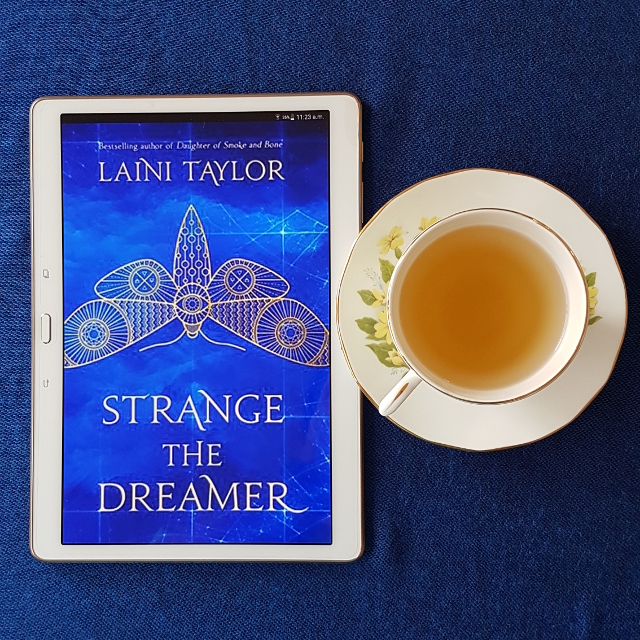
Published: March 2017 by Hodder & Stoughton
Format reviewed: E-book (mobi)
Series: Strange the Dreamer #1
Genres: Epic fantasy, YA romance
Source: NetGalley
Available: Publisher (print) ~ Abbey’s ~ Amazon ~ Barnes & Noble ~ Book Depository ~ Booktopia ~ Dymocks ~ Kobo
Disclaimer: I was provided with a free copy of this book in exchange for an honest review.
The dream chooses the dreamer, not the other way around – and Lazlo Strange, war orphan and junior librarian, has always feared that his dream chose poorly. Since he was five years old he’s been obsessed with the mythic lost city of Weep, but it would take someone bolder than he to cross half the world in search of it. Then a stunning opportunity presents itself, in the person of a hero called the Godslayer and a band of legendary warriors, and he has to seize his chance to lose his dream forever.
What happened in Weep two hundred years ago to cut it off from the rest of the world? What exactly did the Godslayer slay that went by the name of god? And what is the mysterious problem he now seeks help in solving?
The answers await in Weep, but so do more mysteries – including the blue-skinned goddess who appears in Lazlo’s dreams. How did he dream her before he knew she existed? And if all the gods are dead, why does she seem so real?
Strange the Dreamer is another of the gorgeously mythic fantasy romances that Laini Taylor excels at. However, while I enjoyed it thoroughly, it had a few flaws.
Lazlo Strange is a wonderful character likely to appeal to bookworms. He’s not your usual stunningly-attractive hero. Instead, he’s a bit rough around the edges and had his nose broken when a book of fairytales landed on his face–which tells you everything you need to know about Lazlo. He was a highly imaginative boy with a thirst for stories who grew into a librarian with his nose stuck in a book. Before he went adventuring, of course. He works hard and is the sort of person to offer help to his rival simply because it’s needed.
The book takes us all the way from Lazlo’s humble beginnings to his deeds in Weep. This allows readers to get to know Lazlo well, but makes for a slow-paced story. I usually don’t mind this approach, but even I felt it was starting to drag.
It’s a story full of whimsy and the mythic that Taylor does so well. She is brilliant at creating a mood and making the impossibly epic seem plausible. The descriptions were lovely with some gorgeous turns of phrase. However, a little goes a long way–another reason the pace dragged in places.
Despite its sense of whimsy, it is quite a dark story. Readers triggered by rape and forced pregnancy may want to tread cautiously. These incidents never happen onscreen, but their impact resonates throughout the book. It’s a story that deals with cycles of violence and the seeming impossibility of breaking them.
Strange the Dreamer felt like it trod a lot of the same ground as Daughter of Smoke and Bone. Some of it was the structure: the slow set-up, the gradual uncovering of the past and the late explosion into action. There were also some thematic elements that cropped up, such as the preoccupation with angels and demons (here flavoured with some Hindu-inspired elements such as the appearance and titles of the gods). The trajectory of Lazlo’s relationship with Sarai also felt very familiar and may be a bit too insta-love for some readers.
I was somewhat disappointed with the relationship between the female characters of this book. It’s a story that barely passes the Bechdel-Wallis test, with the female characters either isolated, preoccupied with the men in their life or at odds with each other.
It may sound as if I didn’t enjoy Strange the Dreamer when it actually swept me away (once it warmed up). I enjoyed the dark whimsy of it and the later stages of the book do a fantastic job of building tension. I’ll definitely be watching for the next book. However, this is definitely not going to be the book for everyone.