Elizabeth Fitzgerald's Blog: Earl Grey Editing, page 21
September 17, 2017
Fake Geek Girl by Tansy Rayner Roberts
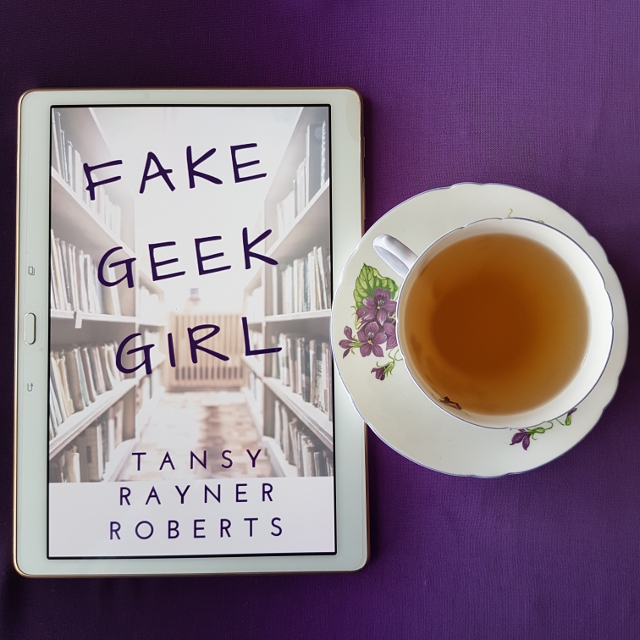
Published: March 2016 by Sheep Might Fly
Format reviewed: E-book (mobi)
Series: Belladonna University #1
Genres: Fantasy
Source: Author
Reading Challenges: Australian Women Writers Challenge 2017
Available: Author’s website (electronic, free) ~ Sheep Might Fly (audio, free) ~ Review of Australian Fiction
Meet Fake Geek Girl, the band that plays nerdy songs at the university bar every Friday night, to a mixture of magical and non-magical students: lead singer Holly writes songs based on her twin sister Hebe’s love of geek culture though she doesn’t really understand it; drummer Sage is an explosive sorcerous genius obsessing over whether Holly’s about to quit the band to go mainstream; shy Juniper only just worked up the nerve to sing her own song in public and keeps a Jane Austen themed diary chronicling the lives and loves of her friends. When the mysterious, privileged Ferd joins their share house, everything starts to unravel…
Fake Geek Girl is a fun short story that brings magic to an Australian university.
The world-building was one of my favourite parts of the story. It’s set in an alternate version of the present where magic (also referred to as the Real) and technology (the Unreal) exist uneasily alongside each other. Magic is very much the norm, with almost everyone having some degree of magic proficiency. Students have laptops and mobile phones they need to keep protected from magic radiation, and heaven help the student who tries to use magic Post-Its on his ordinary textbook. The university likewise reflects this dichotomy, with the more prestigious College of the Real teaching thaumaturgy and similar magic classes, while the College of the Unreal includes Gender Studies and Unreal Literature.
The characters were also wonderful. Each character is distinct, with their own personalities and quirks. Hebe is a sweet girl who cares about her friends and isn’t afraid to snark when she’s constantly mistaken for her rock-star twin sister. Sage is the glue that holds the band together… well, usually. And shy Juniper’s love affair with Jane Austen was gorgeous. I was actually a little disappointed we didn’t get to see more of her, but I’m hoping that may be rectified in a later story.
As you might gather, friendship is very much at the heart of the story. Changing circumstances threaten to steal away one friend, but has simultaneously delivered a new one. The characters don’t always face these changes with grace, making them very relatable. They also come with a side order of banter.
The story is written in first person with the author’s distinctive voice–sarcastic but fun and upbeat. The chapters alternate perspectives, with the heading title incorporating the perspective character’s name. Despite this, I didn’t immediately twig to the shift in perspective and it threw me off in the second chapter. However, the story was too much fun not to persist.
Overall, I really enjoyed Fake Geek Girl and the series has become my new favourite of the author’s work.


September 14, 2017
Guest Post: Ethical Tea Reviews
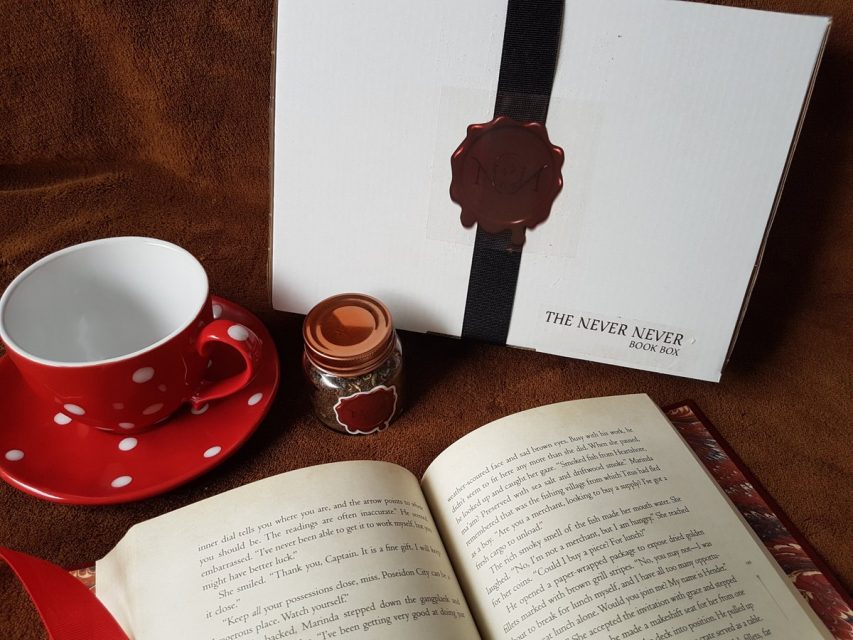
Photo by Lyss Wickramasinghe. Used with permission.
Despite rumours to the contrary, I am not a tea snob. While I drink plenty of loose-leaf tea, I also drink a ton of tea bags. So, I was delighted when Lyss took time out from the Never Never Book Box launch to pitch this to me.
Everyone loves a cup of tea! But more and more people are coming to care about where their tea comes from. Ethically sourced tea is a massively growing industry, with many ethical brands now being available at the local supermarket in Australia.
But are they any good?
This is the real question for tea connoisseurs. Is there any quality difference between the ethical brands and our old favourites? And just which ethical ratings can you trust?
Well don’t panic, we here at NeverNever HQ are going to figure all this out for you!
So what counts as ethical?
Ethically sourced tea is about how the tea is grown, the conditions workers face, and environmental impact. Brands that pay their farmers fairly, keep the conditions of all their workers to a high standard, and practice sustainable farming are classified as ethical. One might also consider the parent company of many tea brands, and their ethical standards outside of the tea industry.
If one doesn’t feel like googling every tea brand on your Woollies shelf, there are a few certification projects that can be trusted. Fair Trade Certificates and Rainforest Alliance Certification are some of the most well-known ethical projects, and they are still considered to be highly effective. The Ethical Tea Partnership is currently undergoing an investigation into its program after it was discovered that many brands failed to meet even the basic standards for worker rights and workplace safety. For this reason, we will be excluding products that only use this certification.
Teas that we’re not including:
Lipton: Whilst being Rainforest Alliance Certified, Lipton is owned by Unilever, which has an ethical rating of C on Shop Ethical!, with reports of worker exploitation, animal testing, and price fixing. Lipton themselves have breached advertising codes in Australia and were recently fined for a massive soda ash leak in 2016.
Tetley: As a member of ETP and is a Rainforest Alliance honouree, Tetley is still owned by Tata Global Beverages. Tata has been reported for workers’ rights violations in India and has ties to human trafficking.
Twinnings: Twinnings & Co is a GE-Free brand and has won the KEEP award in 2009; their parent company Associated British Foods has failed investigations into workers’ rights and animal welfare, and continued tax avoidance and use of tax havens in Zambia and Southern Africa.
Now that that’s out of the way.
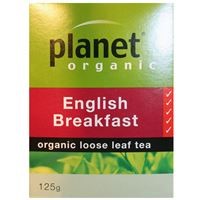 Planet Organic
Using exclusively organic and non-GMO products, they are certified as Fair Trade. Using organic, sustainable farming techniques, this Australian-owned and -operated company prepares all their products on the Sunshine Coast, minimising the carbon footprint generated by distribution. Their teabags are made from Manilla Hemp fibre, so it’s compostable and biodegradeable.
Method: Steeped for 3min in 65 ˚C water
Flavour: Smooth flavour, strong tannin aftertaste, bitter
Strength: 3/5
Worth the Price: $7.50 for 125g, not really worth it
Rating: 6/10
 Nerada
Nerada offers both standard and organic tea varieties, and grows all their tea right here in Australia, in Northern Queensland. Certified Fair Trade, they also support the WWF’s reforestation initiative and have signed the Australian Packaging Covenant, a voluntary program that promotes waste minimisation.
Method: Steeped for 2 min in 65˚C water
Flavour: mild flavour, mild tannin flavour, nutty
Strength: 2.5/5
Worth the Price: $3.00 for 250g, very cost effective
Rating: 8/10
 Madura
Madura is an award-winning tea brand that operates with high standards of sustainable farming and is a signatory of the Australian Packaging Covenant. They have positive workers’ rights reports from overseas and reportedly maintains a safe and healthy work environment–but this cannot be confirmed by a documented outside source.
Method: Steeped for 2 min in 75˚C water
Flavour: Strong bitter flavour, mildly caffeinated, low tannin
Strength: 4/5
Worth the Price: $5.30 for 200g
Rating: 6.5/10
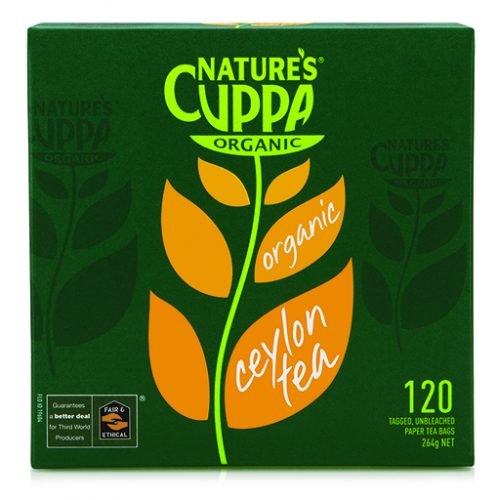 Nature’s Cuppa
Owned by EatRite Australasia, their tea is sourced from Certified organic products from Sri Lankan estates. Their claims of environmentally friendly farming are verified by the National Association of Sustainable Agriculture Australia and are completely carbon neutral.
Method: Steeped for 3min in 65 ˚C water
Flavour: Strong, smooth flavour, low tannin aftertaste, cozy
Strength: 3.5/5
Worth the Price: $14.30 for 120 teabags, expensive
Rating: 7.5/10
These are all my opinions on the flavour as I followed the steeping instructions provided. All of these teas were tasted black with no sugar, so this will of course change what suits best for you if you use milk and sugar. Personally, I loved the flavour of Nature’s Cuppa best. However, taking price into consideration, my choice would be Nerada.
All in all, I declare Nerada my favourite ethical tea available at the grocery store.

For now, the socially conscious can rest easy that there are many delicious options to sate their tea cravings. Guilt free indulgence is accessible for all.
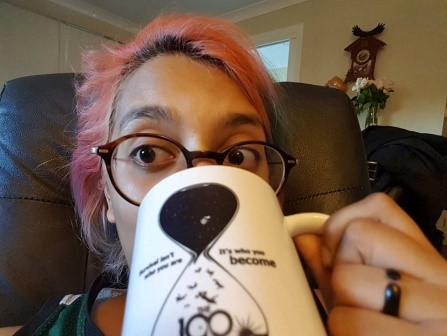 Lyss Wickramasinghe, reporting from the bottom of a teapot at Never Never HQ. She had to battle off a few hundred pirates and a couple of pesky Lost Boys, but can now enjoy her cuppa in peace.
To share her love for ethical and delicious tea, The Never Never Book Box has included a specially blended organic tea in their Upcoming Questing box.
Sign up to their mailing list for a chance to WIN a Free Box at http://the-never-never-book-box.launchrock.com/


September 10, 2017
Acadie by Dave Hutchinson
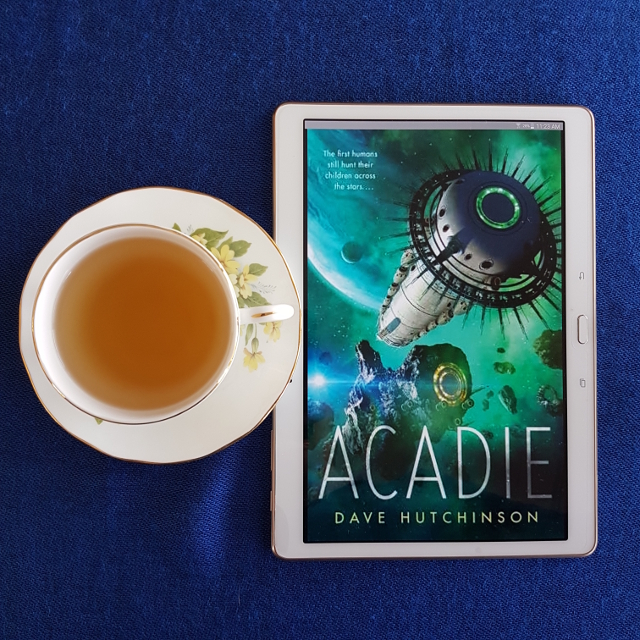
Published: September 2017 by Tor.com
Format reviewed: E-book (mobi)
Genres: Science fiction
Source: NetGalley
Available: Abbey’s ~ Amazon ~ Barnes & Noble ~ Book Depository ~ Booktopia ~ Dymocks ~ Kobo
Disclaimer: I was provided with a free copy of this book in exchange for an honest review.
The Colony left Earth to find their utopia–a home on a new planet where their leader could fully explore the colonists’ genetic potential, unfettered by their homeworld’s restrictions. They settled a new paradise, and have been evolving and adapting for centuries.
Earth has other plans.
The original humans have been tracking their descendants across the stars, bent on their annihilation. They won’t stop until the new humans have been destroyed, their experimentation wiped out of the human gene pool.
Can’t anyone let go of a grudge anymore?
Acadie is an entertaining sci-fi novella, but one that ultimately didn’t work for me.
The first line is a good hook, but the story gets off to a bit of a slow start as daily life is established. Although the low gravity makes it plain things are a bit unusual, there were some small details I really enjoyed. For example, low gravity still doesn’t stop cats from chasing each other around the house.
Its sense of humour is a strength of the story. John Wayne “Duke” Faraday might be the President of the Colony, but he’s a pretty ordinary guy just looking to enjoy a holiday. In fact, the only reason he’s president was because he was away during the elections. Unfortunately, it looks like the Bureau might have discovered the hidden Colony on his watch.
As you might have gathered, the story is full of pop culture references. Duke interacts with people who have genetically engineered themselves to look like the elves from Lord of the Rings or Klingons from Star Trek. The founder of the Colony is Isabel Potter. And Connie’s full name made me chuckle.
The author builds a fascinating world in a very short space. There were some great character interactions and enough detail to paint a vivid picture.
Unfortunately, the surprise twist at the end undermined the story for me. Although clever, it left me wondering what the point was supposed to be.


September 7, 2017
Loose-leaf Links #47
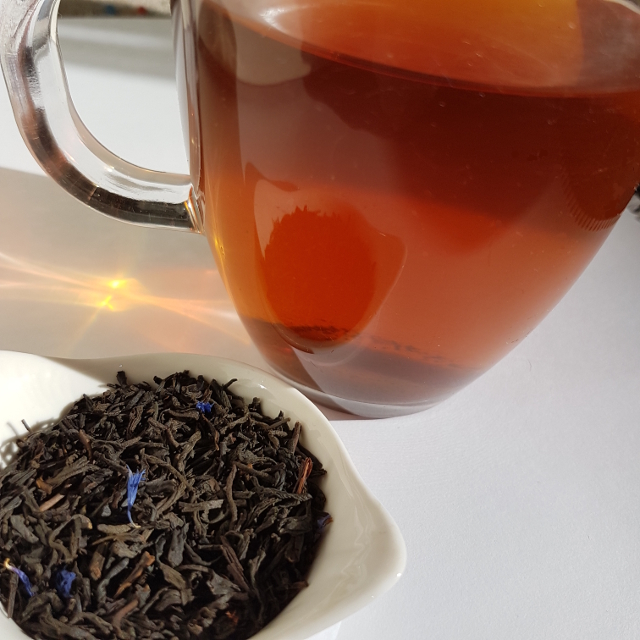
Loose-leaf Links is a feature where I gather together the interesting bits and pieces on sci-fi, fantasy and romance I’ve come across and share them with you over tea. Today’s tea is Miss Grey from Adore Tea. Although the stated ingredients appear to be the same as Earl Grey Blue Flower from The Tea Centre, there’s a muskiness that suggests the presence of lavender.
Awards News
The winners of the 2017 Dragon Awards have been announced
Over at Book Riot, Alex Acks gives a round-up of this year’s changes to the Hugo Award rules.
Community and Conventions
Speaking of the Hugos, Worldcon 75 has posted Henry Soderlund’s portraits of the finalists, as well as the con’s Guests of Honour.
Applications for the Tiptree Fellowships are currently open. These are $500 grants for emerging creators who are changing the way we think about gender through speculative narrative. The deadline is 15 September.
File 770 rounds up Delilah S. Dawson’s safety advice for those attending Dragon Con and follows on with the organisers’ response.
Paul Weimer discusses his experiences with the Down Under Fan Fund (DUFF) and talks with Mary Robinette Kowal about his favourite bit.
Back at Book Riot, Amanda Kay Oaks shares how you can support libraries damaged by Hurricane Harvey.
On Equity
Hoo boy. Okay, so if you haven’t heard about the controversy surrounding Lani Serem’s Handbook for Mortals, this article from Kayleigh Donaldson is a good place to start. It appears there was a shady attempt to get this book (which no one–especially in the YA community–appears to have heard of) to the top of the New York Times bestseller list. Its success was short-lived, with Angie Thomas’s The Hate You Give being quickly reinstated in top spot. Unsurprisingly, Sarem lashed out. Having the cover ripped off another artist (Gill Del-Mace), hasn’t helped her case. Del-Mace has responded via his agent. There were even accusations that the text was plagerised from a notorious piece of fanfic called My Immortal. This prompted the author of My Immortal to step forward and deny this, though there has since been doubt cast as to whether the statement is authentic.
Yoon Ha Lee discusses the drawbacks of the Own Voices movement.
Over at the Tor/Forge blog, two contributors to Iraq + 100 reflect on science fiction in Arabic literature.
For Writers
ChiZine Publications is currently open for submissions until 31 December, but only to creators who identify as the following:
Aboriginal Peoples
culturally diverse groups
people of colour
mixed race people
people who are Deaf or have disabilities
Canadas official language minority communities
non-binary/LGBTQIA+
people who identify as women
coeur de lion will be open from submissions during the month of October to stories 4.5K to 40K.
Peter Ball suggests networking is one of the most important activities for writers.
Over at the Book Smugglers, Barbara Morais talks about the necessity of being familiar with culturally different forms of narrative.
Erik Jensen ponders what makes a fantasy world feel European.
Meanwhile, Anise K. Strong feels that divorce should be an option in fantasy fiction.
For Readers
There are a ton of great Kickstarters underway at the moment. Augur Magazine is currently looking to fund their first two years of publication. The Book Smugglers are likewise Kickstarting their next season of publications, which will feature the theme Awakenings. And Ticonderoga Publications is Kickstarting their forthcoming anthology Ecopunk!.
The Australian Reading Hour takes place on 14 September.
The R.eaders I.mbibing P.eril reading challenge is currently underway and will run until 31 October. If you like horror, dark fantasy, mysteries or Gothic literature, it’s not too late to sign up.
The Australian Romance Readers Association is looking for Australian romance readers to fill in their survey.
Emily St John Mandel has written a follow-up to Station Eleven.
Jessica Pryde has some self-published romance recommendations.
Rachel Cordasco suggests some Chinese speculative fiction in translation to check out.
There has been much ado about fantasy maps recently. Paul Weimer rounds up a few of the articles and contributes his own thoughts.
And Kat Clay has six rules for giving away your books. I really need some of these. Especially #2.


September 3, 2017
A Voyage Through Air by Peter F. Hamilton
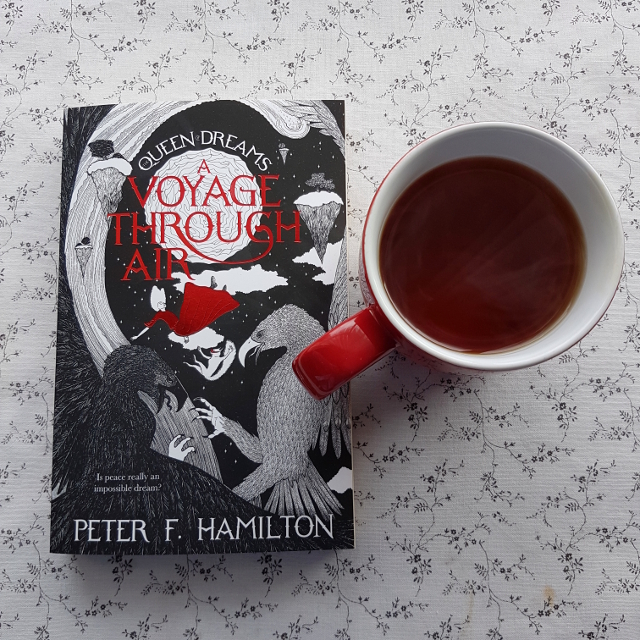
Published: July 2017 by Macmillan Children’s Books
Format reviewed: Paperback, 336 pages
Series: Queen of Dreams #3
Genres: Fantasy, Middle Grade
Source: Publisher
Available:Abbey’s ~ Amazon ~ Barnes & Noble ~ Book Depository ~ Booktopia ~ Dymocks ~ Kobo
Disclaimer: I was provided with a free copy of this book in exchange for an honest review.
This review contains spoilers for previous books.
War is coming–and every leader of every realm has sided with the War Emperor and pledged to fight the Karrak invaders–apart from Taggie, the teenage Queen of Dreams-to-be. Aided by an unusual band of allies, including a Karrak Lord, an elf and a feisty skyfolk captain, Taggie knows that the only way to stop the war is to find the long-lost gateway between our universe and the dark universe: the home of the Karrak people. But how much is Taggie willing to lose in her desperate quest for peace?
A Voyage Through Air is the final book in the Queen of Dreams series and is a suitably epic conclusion.
It’s not a book that stands on its own, particularly since it carries on more or less immediately after the previous book. There’s a bit of recap, but it’s hard to say how effective it is. By the time A Voyage Through Air starts, there’s a reasonably large cast, containing both ongoing characters and some new faces, and it could be a lot to process for younger readers. I’d definitely recommend starting from the beginning of the series and enjoying all the fun.
Taggie and Jemima, two sisters from the ordinary world, are in fact royalty in another realm. Upon taking up her rightful throne, Taggie faces an assassination attempt by a previously-unknown cousin. This was part of a large-scale plot to assassinate the princes and princesses of all the magical realms. The Kings and Queens blame the Karrak Lords, denizens of a dark universe who were trapped in our light universe a thousand years ago. They decide to go to war, but Taggie is determined to find a peaceful solution. A Voyage Through Air centres on her quest to accomplish this by locating the hidden gateway between the universes.
The worldbuilding is more whimsical than realistic. The First Realm, where Taggie rules as the Queen of Dreams, is an inverted sphere with land around the outside and the sun in the middle. While it’s nice to see an imaginative new take, sometimes I felt that differences existed just for the sake of being different. This was particularly the case with the elves and the dragons of the world. For example, the dragons found in the Realm of Air look significantly different to the popular conception of dragons (being described as more like giant manta rays with two tails) and refer to themselves by a completely different name. It therefore seems strange to tie them to dragons at all–which the narrative does by presenting them to the sisters as dragons and repeatedly affirming how much the creatures hate being called that.
The changes to the elves make a little more sense, pushing back at the traditional uptight, milk-white portrayals. However, this is undermined somewhat by a lack of diversity in the remainder of the cast. Captain Rebecca is introduced in A Voyage Through Air as a dark-skinned skymaiden–the first the reader has seen. In fact, she’s the first dark-skinned character at all, apart from the elves, making it feel tokenistic. It really is too little, too late.
The story itself is an epic adventure, as the sisters and their friends attempt to retrace the course their ancestors took a millenium ago. There are air ships, monsters and battles on the land and in the sky. The narrative occasionally gets bogged down in description, but the style is nicely visual and is aided by a few illustrations scattered throughout the book. The language may be a bit of a challenge to younger or more inexperienced readers, but I’m not a good judge of that.
It is a good book for readers who aren’t fond of romance. There’s some in the background for Taggie, but it’s generally downplayed. Instead, the focus is on friendship and adventure.
All in all, I found A Voyage Through Air a light and reasonably entertaining read.


August 31, 2017
Mt TBR Report: August 2017
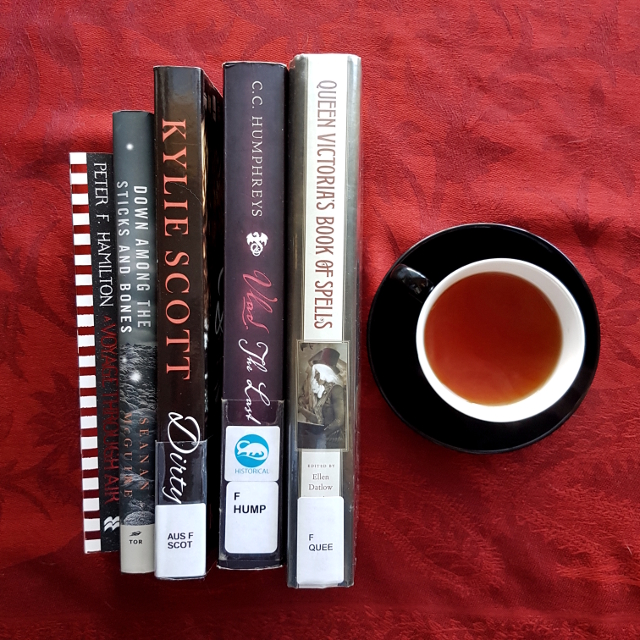
Although August got off to a good start, I had a bit of a reading slump that started about a week in. I’m only just pulling out of it now. Nevertheless, Mt TBR is still looking in good shape after I culled a few books. It brings me back below my starting figure for the year, which I’m very pleased by. Now it’s just a matter of seeing if I can maintain that until the end of the year–keeping in mind that Conflux, my birthday and Christmas all lie ahead.
Mt TBR Status
Mt TBR @ 1 January 2016: 327
Mt TBR @ 31 July 2017: 330
Mt TBR @ 31 August 2017: 320
Books Read
119. Off Campus by Amy Jo Cousins. First in the Bend or Break series. A contemporary m/m romance. A disgraced millionaire’s son is given a dorm room with a gay roommate who’s determined to get rid of him by having a series of loud one-night stands. However, it doesn’t quite go to plan. The book deals thoughtfully with issues of mental health–in particular agoraphobia and anxiety–as well as the process of coming out. I particularly loved the friendships and the way they buck against stereotypes.
120. The Secret Throne by Peter F. Hamilton. First in the Queen of Dreams series. A middle grade book about two sisters who discover they’re princesses of another realm when their father is kidnapped by evil forces.
121. One Last Drop by Nicole Field. Reviewed here.
122.The Starlit Wood edited by Dominik Parisien and Navah Wolfe. An anthology of fairytales that have been twisted and retold. There were some wonderfully original takes on fairytales–both commonly-known and more obscure–but I didn’t enjoy the anthology as much as I expected to. This is mostly a matter of taste: I’m not super keen on absurdism or drug use.
123. The Hunting of the Princes by Peter F. Hamilton. The second in the Queen of Dreams series. Taggie and Jemima meet with the rulers of the other realms when someone tries to assassinate them along with the princes of the other realms.
124. Grace and the Fever by Zan Romanoff. A contemporary New Adult book. Grace has been a fan of the band Fever Dream for years. Then, one night, she accidentally meets one of the band members and gets sucked into their orbit. An interesting meditation on fandom, celebrity and the intersection between the two. Thanks to the Demographically-Similar Jennys at Reading the End for this recommendation.
125. Down Among the Sticks and Bones by Seanan McGuire. Wayward Children #2. This book tells the story of Jack and Jill from Every Heart A Doorway, going back into their past to show how they arrived in their portal realm and what happened to them while they were there. A tightly-written and evocative story that pokes at the performance of gender that society–and parents, in particular–force on children.
126. Fake Geek Girl by Tansy Rayner Roberts. Review forthcoming.
127. Unmagical Boy Story by Tansy Rayner Roberts. Sequel to Fake Geek Girl. Listened to on audio via Tansy’s podcast, Sheep Might Fly.
128. Control by Cardeno C. and Mary Calmes. A contemporary fantasy m/m romance. A hawk shifter who is the ruler of his flock falls in love with a nomadic bear shifter who has been raised by humans. The characters were utterly adorable and I found the world intriguing. I’ll definitely be digging around to see if I can find any more.
129. A Voyage Through Air by Peter F. Hamilton. The third in the Queen of Dreams series. Review forthcoming.
130. Acadie by Dave Hutchinson. Review forthcoming.
Books Acquired
Please Look After this Angel by Tansy Rayner Roberts
Queen Victoria’s Book of Spells edited by Ellen Datlow and Terri Windling
Grace and the Fever by Zan Romanoff
A Courtship of Dragons by Becca Lusher
All the Lonely People by E.C. Myers
The Watchmaker’s Daughter by C.J. Archer
The Modern Woman’s Guide to Finding a Knight by Anna Klein
Acadie by Dave Hutchinson
Ashwin by Kit Rocha
Dirty by Kylie Scott
Vlad: The Last Confession by C.C. Humphreys
Online Reading
Bright Hair by Leife Shallcross. A twisted take on the Rapunzel fairytale. Short and snappy.
New Tricks by opalish. A short retelling of Yuri On Ice!!! from the perspective of the Russian coach, Yakov. I loved the wry voice.


August 29, 2017
Bout of Books #20
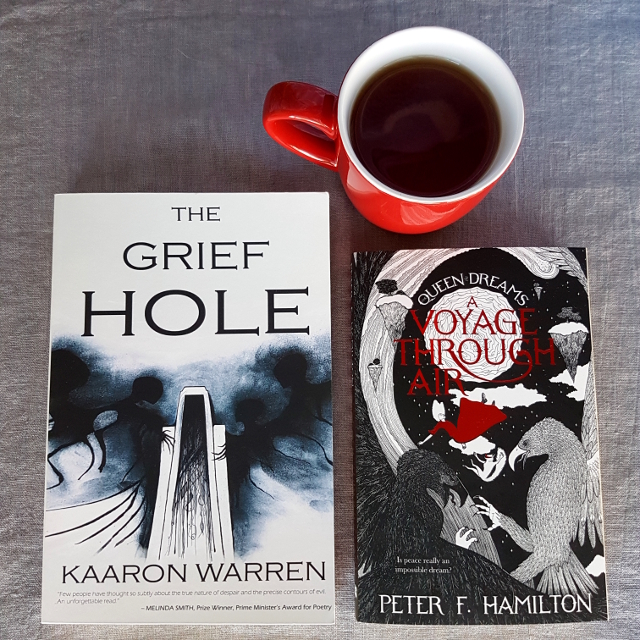
Round 20 of Bout of Books wrapped up yesterday, so it’s time for me to check in with my progress!
In my sign-up post, I mentioned my goal was to get through a minimum of three books. Sadly, I didn’t even make that many. I struggled with focus, partly distracted by my radio discussion of Kaaron Warren’s The Grief Hole. I spent some of the week skimming through that to refresh my memory, instead of picking up Glenda Larke’s Heart of the Mirage (which I am still determined to get to before the end of the year). I also read Tansy Rayner Roberts’ short story Fake Geek Girl which I will be reviewing here soon. I followed that up with the sequel Unmagical Boy Story, which I listened to on audio via Tansy’s podcast. And I made it most of the way through A Voyage Through Air, a middle-grade fantasy novel by Peter F. Hamilton.
So, all up, it wasn’t my finest week for reading. Perhaps I’ll have better luck (or focus) next time.
What about you? Did you join in Bout of Books last week? If so, how did you do? If not, what did you read over the week?
For those interested in the next Bout of Books, it will take place on 8-14 January 2018. For further details, keep an eye out here or head over to the Bout of Books blog.


August 27, 2017
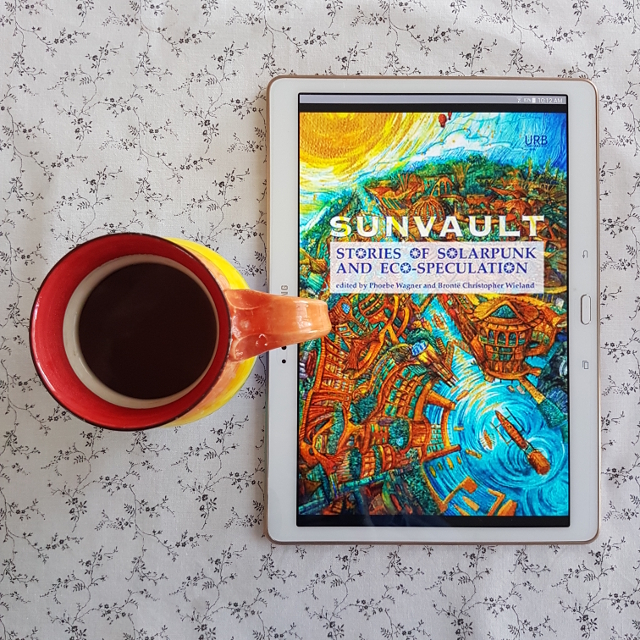
Sunvault edited by Phoebe Wagner and Bronte Christopher Wieland
Published: August 2017 by Upper Rubber Boot Books
Format reviewed: E-book (mobi)
Genres: Science fiction
Source: NetGalley
Available:Amazon ~ Barnes & Noble ~ Book Depository ~ Booktopia ~Kobo
Disclaimer: I was provided with a free copy of this book in exchange for an honest review.
Sunvault: Stories of Solarpunk and Eco-Speculation is the first anthology to broadly collect solarpunk short stories, artwork, and poetry. A new genre for the 21st Century, solarpunk is a revolution against despair. Focusing on solutions to environmental disasters, solarpunk envisions a future of green, sustainable energy used by societies that value inclusiveness, cooperation, and personal freedom.
Edited by Phoebe Wagner and Bront Christopher Wieland, Sunvault focuses on the stories of those inhabiting the crucial moments when great change can be made by people with the right tools; stories of people living during tipping points, and the spaces before and after them; and stories of those who fight to effect change and seek solutions to ecological disruption.
Contributors include Elgin Award nominee Kristine Ong Muslim, New York Times bestselling author Daniel Jos Older, James Tiptree, Jr. Award winner Nisi Shawl, World Fantasy Award winner Lavie Tidhar, and Lambda Literary Awards finalist A.C. Wise, as well as Jess Barber, Santiago Belluco, Lisa M. Bradley, Chloe N. Clark, Brandon Crilly, Yilun Fan and translator S. Qiouyi Lu, Jaymee Goh, Jos M. Jimenez, Maura Lydon, Camille Meyers, Lev Mirov, joel nathanael, Clara Ng, Sara Norja, Brandon OBrien, Jack Pevyhouse, Bethany Powell, C. Samuel Rees, Iona Sharma, Karyn L. Stecyk, Bogi Takcs, Aleksei Valentn, T.X. Watson, Nick Wood, and Tyler Young.
Sunvault is a robust and enjoyable anthology with strong ideas and a large dose of hope.
Variety is a key feature of this anthology and one that cropped up in a number of ways. The inclusion of poetry and artwork was a refreshing touch. It was nice to see these forms taken seriously in the anthology’s survey of solarpunk.
The works within the anthology come from an impressive range of cultures. There was a Chinese work in translation alongside stories from Jewish and African American creators, among others. There was also work that centred disabled characters in ways sometimes reminiscent of Defying Doomsday. All of this led to a wonderful plethora of visions of the future, as well as variety in the tone of the stories. That said, hope for the future is a key element of solarpunk. There are no stories here that are unremittingly bleak, even if hope remains slim in some–such as C. Samuel Rees’s Terratology. These works tend to celebrate the tenacity of humanity and our ability to come together and find solutions.
Naturally, there are stories in this anthology that are primarily focused on ideas, rather than characters and relationships. This is not generally my cup of tea, but I found the ideas interesting enough to keep me reading. Worldbuilding is a strength of most of the works in this collection, with some offering visions of the future that are more practical than others. Throughout, there is a nice balance with works that are more emotive.
Some highlights of the anthology for me were Daniel Jos Older’s Dust about a genderfluid protagonist with a special connection to an asteroid hurtling towards the Earth. It deftly blended ideas and character, with a wonderful emphasis on connection to place. Similarly, Lev Mirov’s The Desert, Blooming brought together religion and science in a beautiful combination, as the protagonist leaves the dome under which he has grown up for the first time to help plant trees to reclaim the desert.
All in all, Sunvault is an anthology that has been skilfully pieced together and I highly recommend it, particularly for those looking to get an overview of this subgenre.


August 24, 2017
Loose-leaf Links #46
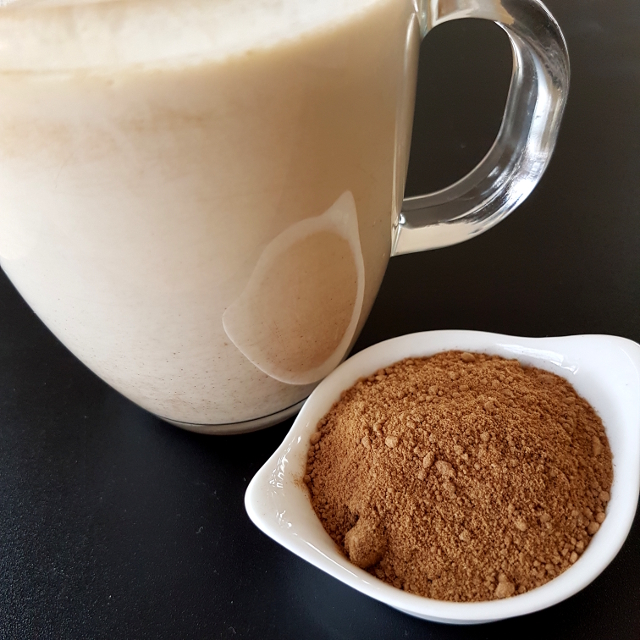
Loose-leaf Links is a feature where I gather together the interesting bits and pieces on sci-fi, fantasy and romance I’ve come across and share them with you over tea. Today’s tea is a bit of a cheat, not being actual loose-leaf tea at all. Despite rumours to the contrary, I’m not actually a tea snob EXCEPT when it comes to powdered chai lattes. I recently discovered this Organic Chai Latte powder from Real Chai and it’s now the only way I’ll drink this particular beverage.
Announcements
The giveaway for Earl Grey Editing’s third anniversary is now closed and a winner selected. Congratulations, Sabrina Rourke, and happy reading!
A quick note that this afternoon I’ll be appearing on ABC Radio to review Kaaron Warren’s award-winning horror novel The Grief Hole as part of Laura Tchilinguirian’s Big Book Club.
Awards News
File 770 continues to report on the mess surrounding the Dragon Awards. Administers were refusing to accept nominee withdrawals, but have since changed their mind. However, the damage has already been done. Their initial refusal set off warning bells for N.K. Jemisin, who has now also withdrawn her nomination.
The results of the Hugo Awards were announced. Congratulations to all the winners! Stats geeks can find voting and nominating numbers online (PDFs).
The shortlists for the 2017 Inky Awards have also been announced. The award recognises achievement in young adult literature, with nominees and winners selected by their intended demographic. Voting is currently open for the winners, so teenage readers are encouraged to check that out.
Community and Conventions
In the wake of WorldCon 75, Rivqa Rafael has a Storify of the panels she saw and live-tweeted. These include In Defence of the Unlikeable Heroine, Non-binary Representation in Fiction, Evolution of Feminism in Science Fiction and Fantasy World-building without Ableism as well as others.
Jaakko Stenros and Markus Montola discuss WorldCon’s decision to pull the contentious LARP A Home for the Old from the program.
Dublin is now officially holding WorldCon 77 in 2019 and have announced several Guests of Honour.
A new draft of the program for Conflux has been released.
Today is the deadline for fans of colour to request assistance from Cons or Bust to attend upcoming SFF conventions–including Conflux.
On Equity
Kat Rosenfield’s recent Vulture essay on The Toxic Drama of YA Twitter caused a few reactions. Foz Meadows analyses the situation. And over at Bustle, Sona Charaipotra and Zoraida Cordova push back at Rosenfield’s assertions in their essay How YA Twitter is Trying to Dismantle White Supremacy, One Book at a Time.
Victoria Schwab is furious after Russian publishers of her Shades of Magic series removed a queer plotline without permission and in contravention of their contract.
Nicolette Barischoff, Personal Essays Editor for Uncanny Magazine’s Disabled People Destroy Science Fiction, discusses representation of disability in science fiction in a guest post for the Book Smugglers.
Michael Meinberg has a thoughtful post on decolonising RPGs.
For Writers
A reminder that the forthcoming Mothers of Invention anthology, edited by Tansy Rayner Roberts and Rivqa Rafael, closes for submissions on 31 August. They’re accepting stories of 500-5000 words on gender as it relates to the creation of artificial intelligence.
The Magazine of Fantasy and Science Fiction (F&SF) are currently open for fiction submissions.
Glenda Larke discusses how to get rid of the boring bits in your story.
For Readers
KJ Charles discusses how the argument “you can’t judge it until you’ve tried it” doesn’t always hold true.
Over at (the now Hugo-Award-winning!) Lady Business, forestofglory has started a new column on short SFF fiction. Her first post looks at Animal Brides.
Ticonderoga Publications releases the cover for their forthcoming Ecopunk! anthology, edited by Liz Grzyb and Cat Sparks.
Hodderscape reveals the blurb to Becky Chambers’ forthcoming book Record of a Spaceborn Few.
Silvia Moreno-Garcia is crowdfunding her new sci-fi YA novella Prime Meridian.


August 20, 2017
One Last Drop by Nicole Field
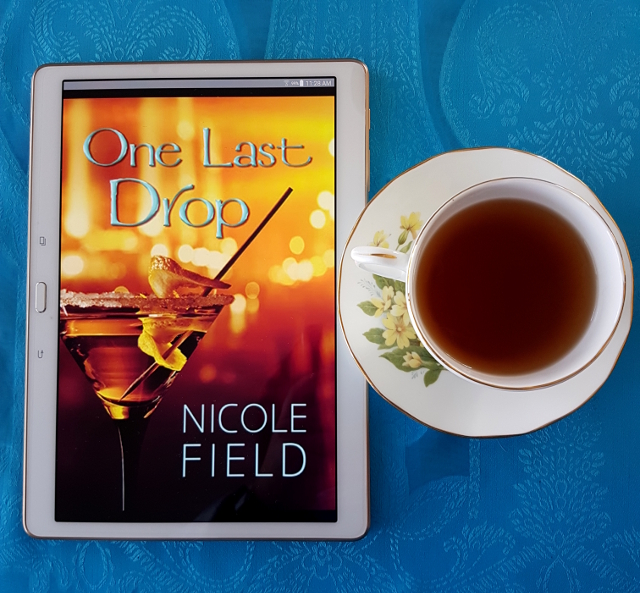
Published: August 2017 by Less Than Three Press
Format reviewed: E-book (mobi)
Genres: Romance, LGBTQIA
Source: NetGalley
Available: Publisher (electronic only)
Disclaimer: I was provided with a free copy of this book in exchange for an honest review.
Rory is a university student — and she’s just a little too fond of drinking and partying. But when she woke up with no memory of the evening, or the person beside her and what they did, that was the last straw.
Getting help seems the obvious first step, but it’s still hard to walk into the AA meeting, and harder still to stick to her goals.
But if she wants a chance to make things work with the beautiful Michelle, and further explore the submissive side she’s ignored, she’s going to have to commit to recovery and pull her life together, no matter how difficult that seems.
One Last Drop is a f/f romance that tackles some big issues but ultimately left me unsatisfied.
The primary focus of the story is Rory’s alcoholism and her ongoing recovery. It starts at Rory’s first AA meeting which gives a pretext for the skillful delivery of a traumatic backstory without making the reader experience it directly. As a teetotaler, I appreciated the way the story highlighted the alcoholic culture not only of university life but of society more generally. There were also some poignant moments examining shame and the way this manifests–particularly in Rory’s desire to keep her problem a secret and how this undermines her by depriving her of a support network.
However, the latter point was weakened somewhat by shallow characterisation. The close third-person perspective allows us to see what’s going on for Rory, but the characters around her felt flat. Michelle in particular came across as less of a character to connect to and more as a role: that of love interest and mature role-model for Rory to potentially grow into. When the trauma in Michelle’s background came up, it caught me by surprise, as there hadn’t been any foreshadowing. Perhaps this was by design–people don’t foreshadow their traumas in real life–but it left me feeling ambivalent.
The story takes a positive stance towards support groups and therapy, which I appreciated. I also liked the interplay between addiction and BDSM; Michelle is quite firm in not allowing Rory to avoid taking responsibility for her addiction by hiding in her new role as a submissive. Readers should not expect much in the way of onscreen sex. Instead, as is common for Field’s stories, the scene fades to black.
All in all, One Last Drop had some elements I liked, but I feel it ultimately failed to live up to its potential.