Elizabeth Fitzgerald's Blog: Earl Grey Editing, page 20
October 15, 2017
The Modern Woman’s Guide to Finding a Knight by Anna Klein
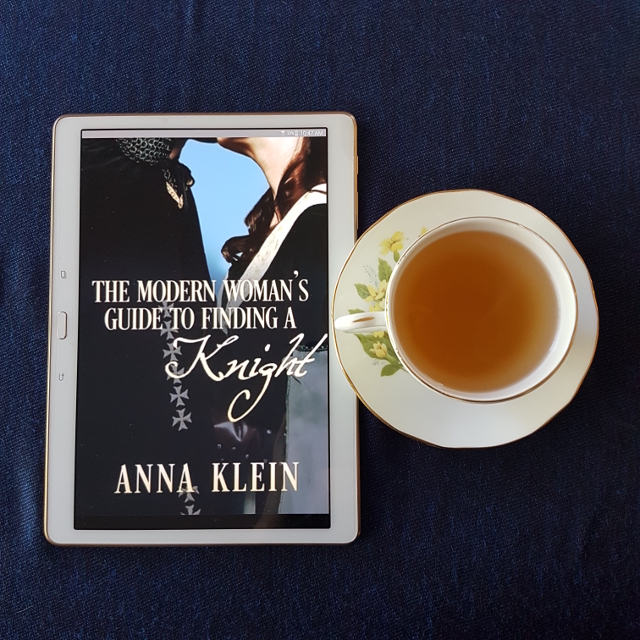
Published: October 2017 by Escape Publishing
Format reviewed: E-book (mobi)
Genres: Contemporary romance
Source: NetGalley
Available: Amazon ~ Barnes & Noble ~Booktopia ~Kobo
Disclaimer: I was provided with a free copy of this book in exchange for an honest review.
All’s Faire in love and war…
Connie leads a double life. During the week, she is an up-and-coming designer and dressmaker, creating sleek, elegant gowns for the wealthy elite. But come the weekend, Connie becomes Lady Constance, a member of the House Felicitous at the local Renaissance Faire, creating beautiful historical garments for herself and her friends and teaching dancing to fair attendees. Fearing loss of business should her stylish clientle discover her extracurricular activities, Connie keeps her professional life and her faire life carefully separate. However, everything changes when she’s saved from certain death by Sir Justin: a rising star in the joust and an actual knight in shining armour.
Behind his mask as Sir Justin, Dominic is confident and charismatic, but out of his armour, his courage fails him, and to his own horror he finds himself accidentally pretending to be his own best friend. Suddenly, he is in Connie’s life as two different men: the elusive Sir Justin who courts her over the internet and from behind a suit of armour and Justin’s best friend Dominic who hangs out at her apartment and helps her move. The lie only grows bigger and Sir Justin finds himself faced with the most frightening challenge he can imagine: extricating himself from his lie and winning Connie’s heart as his true self.
But there’s something rotten afoot at the Faire, something that threatens its future, the community that has grown there, and even Sir Justin’s life. Will Lady Constance find the courage to step up and risk everything to defend her friends, save the Faire, and rescue her knight?
The Modern Woman’s Guide to Finding a Knight is a fluffy contemporary romance that managed to be a little too contrived for my taste.
It’s a story that’s sweet more than substantial. The romance between Connie and Dominic is a chaste one, with very little heat and only a few modest kisses towards the end. Instead, they mostly admire each other from afar by chatting via email and IM or with Dominic’s suit of armour or his guise as Sir Justin’s best friend between them. I enjoyed the big romantic gestures, such as the exchange of tokens between the knight and the lady prior to the jousts. However, once the barriers between them have fallen away, I was left with the feeling their relationship didn’t have a lot of depth.
The characters also felt pretty shallow, with the villains seeming a bit moustache-twirly, literally looking to be kings of their own small kingdoms. It was nice to see a strong-minded older woman in Connie’s wealthy client Joanna, but her preoccupation with her philandering husband felt more contradictory than complex thanks to its lack of nuance.
Despite this lack of depth from the characters, the friendships were a highlight of the story for me. I particularly enjoyed Dominic’s friendship with Lucas. The banter between them felt natural and I enjoyed the way Lucas supported Dominic even while berating him for being an idiot. There was a similar dynamic between Connie and her friend Claire. A strong theme of the story was to do with not being ashamed about the things you love, so it was nice to see Claire calling out Connie on that issues.
There were some turns of phrase that made me cringe, such as when Connie describes a perfume she doesn’t like as ‘Oriental’. In that same scene, she imagines Joanna’s husband with “a hateful, deformed visage”, playing into some ableist stereotypes. Then, later, one of the characters is noted as being (temporarily) wheelchairbound. These faux pas did nothing to endear the story to me.
Overall, The Modern Woman’s Guide to Finding a Knight wasn’t my cup of tea, despite having some nice moments.


October 12, 2017
Friday 13th: Zombie Edition
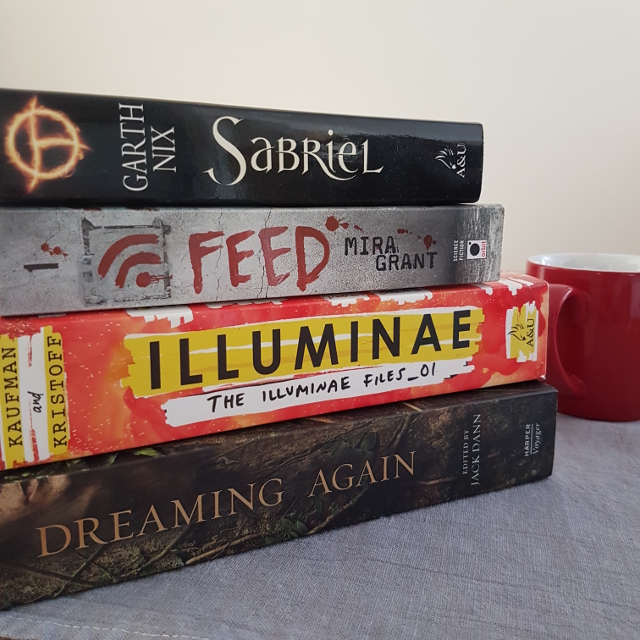
Today is Friday 13th, a time for superstition, witches and monsters. Since I’ve already covered witches, I thought this time around I’d celebrate this auspicious date (and its proximity to Halloween) with a few zombie stories.
Despite the fact I’m making this post, I’m not actually all that big on zombies. Feed by Mira Grant brought me around. Mostly because in many ways it’s really not a zombie book–it’s more a story that just happens to be set twenty years after the zombie apocalypse. Georgia and Shaun Mason are rising blog stars. With the US election campaign season underway, they’re given the opportunity to follow and report on the Republican candidate. Needless to say, things don’t exactly go to plan. The worldbuilding in this is excellent; Grant has given some careful thought to how her zombie apocalypse happened and what society might look like in the aftermath.
Australia has a strong record with zombie stories and the rest of this list is all by Australian authors. Garth Nix has fantasy zombies covered in his Old Kingdom trilogy, beginning with Sabriel. When a zombie invades Sabriel’s dorm room, she discovers he’s a messenger from her father who has passed through the Seventh Gate of Death. It is up to Sabriel to take up her father’s mantle and defeat the Free Magic necromancer who send him there. As zombie stories go, this is more my speed. The undead in Sabriel tend to be shadowy creatures of darkness (at least in the physical world), menacing, but not messy… or even really independent, since there’s usually a necromancer pulling the strings in the background. And speaking of which, I found it really refreshing to see a necromancer as the main character. Nix does a great job of showing that necromancy doesn’t have to be evil.
With fantasy covered, we now turn to zombies in space. How could I go past Illuminae by Amie Kaufman and Jay Kristoff? Kady and Ezra escape their planet after it is attacked by a corporate army. As they attempt to flee from pursuit, a mysterious virus breaks out among the refugees. The authors do such a wonderful job of blending horror and sci-fi, generating that special feeling of dread that comes with being trapped in an enclosed space with a horde of the undead. The sheer madness that ensues as order breaks down is chilling.
Since we’re in YA territory, I should mention A Town Called Dust by Justin Woolley. This is another post-apocalyptic tale, this time set in central Australia. After the zombie apocalypse struck, a wall was built to keep the undead from overrunning the north–the undead version of the Rabbit Proof Fence, if you will. When that wall is breached, teenagers Squid and Lynn are conscripted into the Diggers to help fend them off. I particularly enjoyed how the author played with the notion of the zombie craving for brains, tying it to water and the arid landscape of central Australia.
For the out-and-out horrifying, Undead Camels Ate Their Flesh by Justin Fisher remains seared into my memory. This short story appeared in Dreaming Again edited by Jack Dann. The premise is similar to A Town Called Dust, being set in central and northern Australia among walled towns and roving zombies. It tells the story of two inept criminals who get their comeuppance when they encounter a pack of zombie camels. It reads as a black comedy, but the final scene was so vivid I still remember it years later with a shudder.
I’m sure there are a ton of great zombie stories I’ve missed. What’s your favourite?


October 8, 2017
Midnight and Moonshine by Lisa Hannett and Angela Slatter
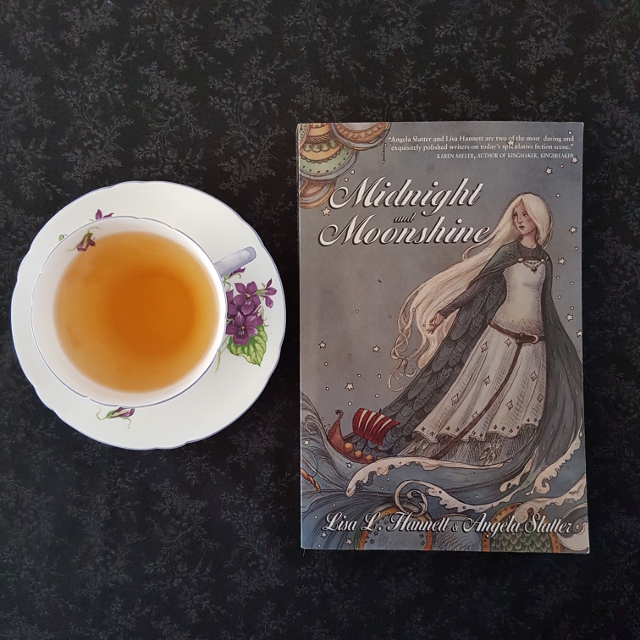
Published: 2012 by Ticonderoga Publications
Format reviewed: Paperback, 319 pages
Genres: Dark fantasy, horror, historical fantasy
Source: Bought from Ticonderoga
Reading Challenges: Australian Women Writers Challenge 2017
Available: Publisher (print only) ~ Amazon ~ Barnes & Noble ~ Book Depository ~ Booktopia ~ Kobo ~ Smashwords
The gods are dead, but will not be forgotten.
When Mymnir flees the devastation of Ragnarok, she hopes to escape all that bound her to Asgardr–a heedless pantheon, a domineering brother, and her neglectful father-master, Odinn. But the white raven, a being of memory and magic, should know that the past is not so easily left behind. No matter how far she flies, she cannot evade her family…
In planting seeds of the old world in the new, Mymnir becomes queen of a land with as many problems as the one she fled. Her long-lived Fae children ignite and fan feuds that span generations; lives are lost and loves won because of their tampering. Told in thirteen parts, Midnight and Moonshine follows the Beaufort and Laveaux families, part-human, part-Fae, as they battle, thrive and survive in Mymnir’s kingdom.
Midnight and Moonshine is a collection of interconnected tales with links between them as light and strong as spider-silk. From fire giants to whispering halls, disappearing children to evening-wolves, fairy hills to bewitched cypress trees, and talking heads to moonshiners of a special sort, Midnight and Moonshine takes readers on a journey from ninth century Vinland to America’s Deep South in the present day. Hannett and Slatter have created a mosaic novel of moments, story-tiles as strange as witchwood and withywindles.
Midnight and Moonshine is a rich tapestry of dark fantasy, fairy tale and speculation.
I don’t usually buy books simply for their covers, but I couldn’t resist Kathleen Jennings’s beautiful art. Fortunately, Kathleen is very discerning about who she works for. Lisa L. Hannett and Angela Slatter have written a gorgeously lyrical collection in Midnight and Moonshine.
The thirteen stories that make up the book weave Norse mythology with history, stitching it together with horror and fairytales. These are not light stories. Rather, as befits their influences, they are stories that dwell on grievances and vengeance. The characters destroy each others’ lives down through the ages. But the multi-generational aspect of the book gives it an edge of hope–there are always those that survive, fall in love, make a family.
This book wasn’t an easy read. The stories span a long stretch of time; it was often an effort to figure out roughly how much time had passed since the last story and what the current relationships were between the different parties. Physical characteristics help keep track of who belongs to which family, but I still found it confusing from time to time. I also found it difficult in the earlier stories to get a feel for the period of history in which they were supposed to be set. This isn’t a problem, per se, but after their feeling of fairytale timelessness, it was a jolt to reach the middle of the book and find a story grounded in a very specific time and place in the real world. I suspect there were historical clues I missed picking up in the earlier stories–history isn’t my forte.
The writing style is as beautiful as the cover. There’s a gorgeous lyricism to the stories that adds to the fairytale feel of the earlier tales. It changes somewhat in the later tales, morphing into language appropriate to the time and place. For example, Of the Demon and the Drum is told in Cajun dialect. I’m generally not a fan of stories told solely in dialect, so I was surprised the story ended up being one of my favourites of the collection.
Each of the stories stands reasonably well on its own. However, the interlinked aspects give additional context that enriches the stories. I liked the way the fates of previous characters were revealed in the following story by their children–or often their children’s rival or a completely unrelated character who becomes drawn into the web.
Overall, Midnight and Moonshine is a complex, layered work with interesting nuance and beautiful language. I’d definitely recommend it to lovers of dark fantasy.


October 5, 2017
Conflux 13
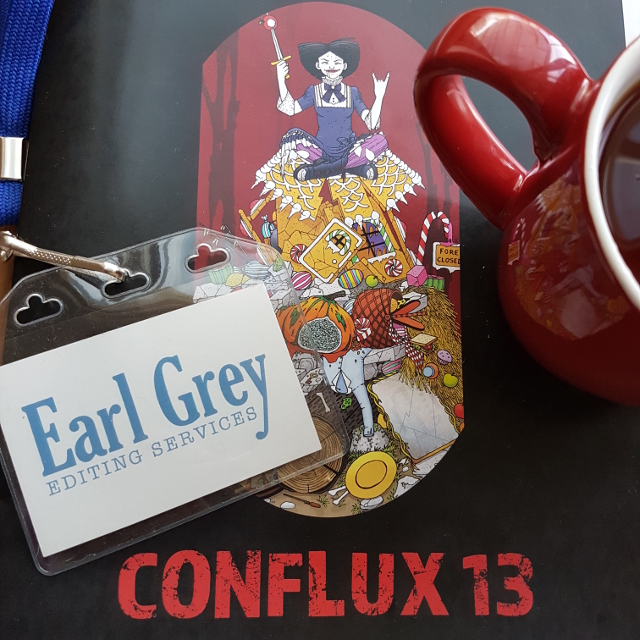
Last weekend I attended Conflux 13, Canberra’s speculative fiction convention. It ran from Friday 29 September until Monday 2 October. The Guests of Honour were Ellen Datlow and Angela Slatter.
I took a low-key approach to the convention this year, as I was already worn out from several other commitments throughout September. This meant that I missed some of the programming in the late afternoon and evening.
However, I still managed to catch a few panels and events, and live-tweeted most of what I attended. You can find those tweets on Storify. They cover:
Permanent Storms and Forests of Fungi, a panel on climate-change fiction with Shauna O’Meara, Jason Nahrung and Cat Sparks
WorldCon Wrap-up with Donna M. Hanson, Rob Porteous, Michael Sisley and Angela Slatter
Beastly Transformations with Claire Fitzpatrick, Leife Shallcross, Cat Sheely and Angela Slatter
Remembering Terry Pratchett with Imogen Cassidy, Alex Hardison and Alis Franklin
Diversity in Marvel & DC with Kellie Takenaka and Lyss Wickramasignhe
Ellen Datlow’s GoH interview with Kaaron Warren and Cat Sparks
Angela Slatter’s GoH interview with Liz Grzyb
and Tour of Book View Cafe with Gillian Polack and Irene Radford
The highlights for me included:
— the climate-change fiction panel. The panelists really knew the topic and Shauna asked some very insightful questions as the moderator.
— Beastly Transformations, mostly because I love the topic and the panel members approached in from a number of different angles.
— Remembering Terry Pratchett because (again) the panel members touched on some interesting issues and there was a great fondness for the author from everyone in the room.
— and Angela Slatter’s GoH interview. She and Liz are old friends and were clearly having an uproariously wonderful time.
I also ran a game of Monsterhearts 2 for Alex Hardison, Alis Franklin and Lyss Wickramasignhe, as is becoming our tradition. It gave me a chance to try a new approach to running the game, which seemed to work far better than my last one.
So, that’s it for another year! A big thank-you to the committee and volunteers, who were all very friendly and kept everything running smoothly. I look forward to seeing what’s in store for 2018.


October 3, 2017
Mt TBR Report: September 2017
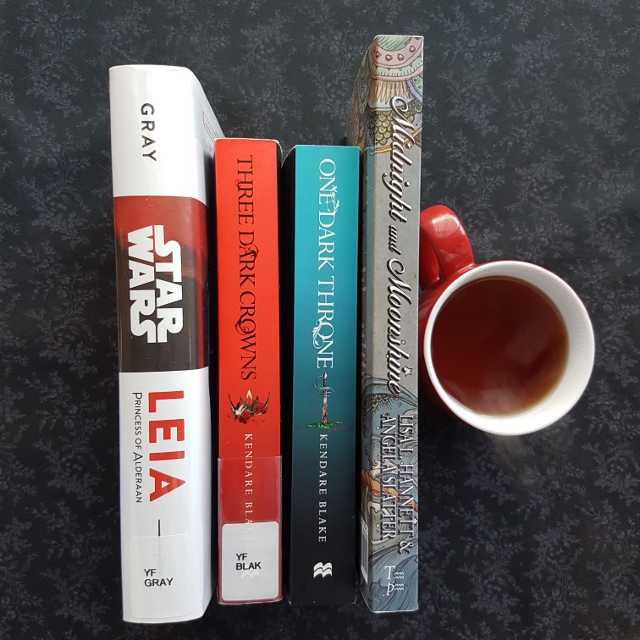
September is traditionally a difficult month for me due to the sheer number of personal and professional commitments I have. This year was certainly no exception, leading to my poorest month for reading so far this year. What reading I did tended towards light romances.
I managed to compound the situation by acquiring way too many books. A few were from Kickstarters and subscriptions, a few were online freebies and a few were from the library.
Speaking of which, my goals to borrow at least one book from the library and to read one piece of fanfiction each month continue to go well.
Mt TBR Status
Mt TBR @ 1 January 2016: 327
Mt TBR @ 31 August 2017: 320
Mt TBR @ 30 September: 337
Books Read
131. Dirty by Kylie Scott. The first in the Dive Bar series of m/f romance. When someone sends Lydia a video of her groom-to-be getting intimate with his best man, she hot-foots it out of the wedding and into the home of an unemployed musician. One thing I have to say about Scott is that she’d not afraid to put her heroines in humiliating positions. It was a good read, but the gay rep left me rather disappointed.
132. When Dimple Met Rishi by Sandhya Menon. Dimple and Rishi are two Indian-American teens who meet at a camp for aspiring tech developers. Their parents have arranged their marriage… but no one has told Dimple. Needless to say, Dimple isn’t impressed with Rishi introduces himself as her future husband. This is an adorable romantic comedy that I absolutely loved.
133. The Bromancers by Tansy Rayner Roberts. Third in the Belladonna University series, listened to via Sheep Might Fly. With exams done, the band head out to play at a local music festival. Body-snatchers and the unexpected arrival of the band’s significant others ensure shenanigans ensue. Although light-hearted, it touches on some serious issues. I particularly enjoyed the developments in the relationship between Sage, the band’s drummer, and Jules, snooty friend to the band’s roommate.
134. Naked City edited by Ellen Datlow. Reviewed here.
135. Hate to Want You by Alisha Rai. The first in the Forbidden Hearts series of m/f romance. A family feud destroyed the relationship between Livvy and Nicholas, but every year on Livvy’s birthday the pair have a one-night stand in a different city. Until last year. Now, Livvy has returned to their home town and the pair are drawn back to each other and into their families’ drama.
136. Lick by Kylie Scott. The first in the Stage Dive series of m/f romance. After getting roaring drunk in Vegas on her 21st birthday, Evelyn wakes up to discover she’s married the lead guitarist of a popular band. Fun, but not Scott’s best work.
137. Midnight and Moonshine by Lisa L. Hannett and Angela Slatter. Review forthcoming.
138. Playing by Her Rules by Amy Andrews. The first in the Sydney Smoke Rugby series of m/f romance. In order to get promoted to a feature writer, journalist Matilda is forced to conduct a series of interviews with her ex-boyfriend, the captain of the local rugby team. Again, entertaining but nothing brilliant.
139. Undiscovered by Anna Hackett. The first in the Treasure Hunter Security series of m/f romance. Dr Layne Rush has just made the discovery of a career… but it could also mean the end of her life when her dig site is raided by unscrupulous treasure hunters. Her bosses bring in Declan Ward and his team to run security on the site. Somewhat shallow in terms of characterisation, but fun, with several nods to Indiana Jones.
Books Acquired
When Dimple Met Rishi by Sandhya Menon
One Dark Throne by Kendare Blake
Uncanny Magazine, Issue 17
Uncanny Magazine, Issue 18
Naked City edited by Ellen Datlow
Unveiled by Courtney Milan
Storm Rising by Becca Lusher
Year’s Best Australian Fantasy and Horror 2011 edited by Liz Grzyb and Talie Helene
Year’s Best Australian Fantasy and Horror 2012 edited by Liz Grzyb and Talie Helene
Year’s Best Australian Fantasy and Horror 20113 edited by Liz Grzyb and Talie Helene
Year’s Best Australian Fantasy and Horror 2014 edited by Liz Grzyb and Talie Helene
Rose Tears by Amanda Pillar
On Wings of Thunder by M.D. Grimm
Lick by Kylie Scott
Hate to Want You by Alisha Rai
Undiscovered by Anna Hackett
All You Need is Kill by Hiroshi Sakurazaka
Three Dark Crowns by Kendare Blake
The Prince’s Boy Omnibus by Cecilia Tan
The Abyss Surrounds Us by Emily Skrutskie
Playing by Her Rules by Amy Andrews
Protection by Elle Thorne
Envy of Angels by Matt Wallace
Mischief by Tiffany Reisz
Leia: Princess of Alderaan by Claudia Gray
Daybreak Rising by Kiran Oliver
Online Reading
Check, Please by Ngozi Ukazu. I know, I’m late to the party on this one. It’s an adorable web comic about a former figure-skating champion who joins the ice-hockey team at his university in his freshman year and falls in love with the captain. If you like sweet romances and found-family feels, this is definitely something to check out.
Finest in Fairford by bluepeony. A coffee shop Harry Potter AU where Remus works quite happily in Lily Potter’s cafe until a mysterious stranger called Sirius starts leaving him notes on his receipts. This rec from Radio Free Fandom is short and sweet.


October 1, 2017
Naked City edited by Ellen Datlow

Published: July 2011 by St. Martin’s Griffin
Format reviewed: Paperback, 539 pages
Genres: Urban fantasy, horror
Source: Library
Available:Abbey’s ~ Amazon ~ Barnes & Noble ~ Book Depository ~ Booktopia ~ Dymocks ~ Kobo
In this thrilling collection of original stories, some of today’s hottest paranormal authors delight, thrill, and captivate readers with otherworldly tales of magic and mischief. In Jim Butcher‘s “Curses”, Harry Dresden investigates how to lift a curse laid by the Fair Folk on the Chicago Cubs. In Patricia Briggs’ “Fairy Gifts”, a vampire is called home by magic to save the Fae who freed him from a dark curse. In Melissa Marr‘s “Guns for the Dead”, the newly dead Frankie Lee seeks a job in the afterlife on the wrong side of the law. In Holly Black‘s “Noble Rot”, a dying rock star discovers that the young woman who brings him food every day has some strange appetites of her own.
Featuring original stories from 20 authors, this dark, captivating, fabulous, and fantastical collection is not to be missed!
Naked City is a decent anthology, but one I felt failed to live up to its potential.
I had two major criticisms of the anthology. The first was that some of the stories were merely set in a city, rather than engaging with the city as a character in its own right. While perfectly readable, and often decent stories, they do nothing to give the reader a sense of place.
The other criticism is the lack of diversity among the cities featured. Of twenty stories, twelve were set in the USA, with half of these being set in New York City. Of the remaining eight, half were set in secondary world cities. Leaving just four stories set in real cities outside of the US. This was particularly disappointing because these latter stories were often highlights of the anthology. Lavie Tidhar’s story The Projected Girl was a beautifully evocative story set in Haifa, Israel, in which a young teenage boy discovers a mystery that sends him delving into the past. Pat Cadagan’s story Picking Up the Pieces also sends the reader delving into the past, back to the fall of the Berlin Wall as a woman travels to the city to rescue her flighty sister.
Despite these criticisms, the stories remain reasonably solid. Being Ellen Datlow, the tone tends towards the dark, veering into outright horror in a few cases. However, there remains a decent balance. Following up Peter S. Beagle’s Underbridge (yet another tale from Beagle about a self-absorbed, middle-aged male academic who crosses ethical boundaries) with Naomi Novik’s somewhat manic Priced to Sell (a charming tale about selling real estate in Manhattan to supernatural clients) was an especially nice touch.
I also enjoyed the inclusion of a few stories that looked at cities from a slightly different angle. The Bricks of Gelecek by Matthew Kressel was an interesting meditation on creation and destruction through the viewpoint of a being whose nature is to annihilate cities. And Nathan Ballingrud pairs the concept of being haunted by a city with a poignant portrayal of post-Katrina New Orleans in The Way Station.
All in all, Naked City was a competent anthology but ultimately forgettable.


September 28, 2017
Five Favourite Fairytale Retellings
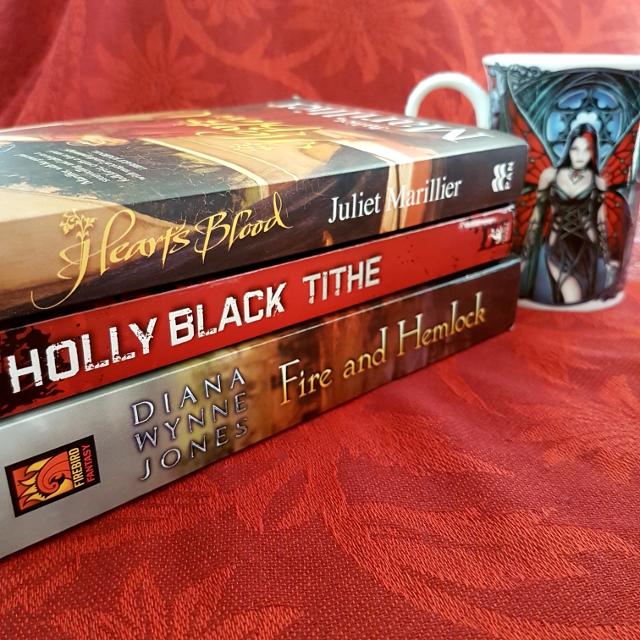
Conflux, Canberra’s speculative fiction convention, kicks off today. Panels start at 10 AM, so I was up bright and early to get registered and dive into the fun. The theme this year is Grimm Tales, so I thought I’d share with you five of my favourite fairytale retellings.
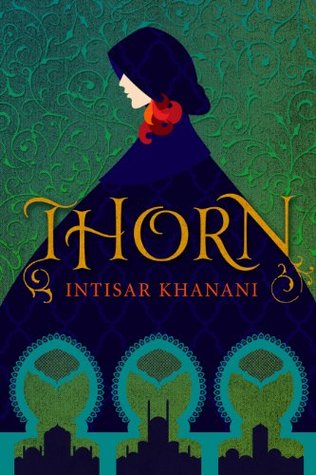 Thorn by Intisar Khanani
I’ve reviewed this book previously, so I won’t say too much. It’s a retelling of The Goose Girl, a fairytale I’m not especially familiar with. What I really enjoyed about this story is the way Alyrra makes a home for herself and cares deeply for the people around her, even though it’s a place where it’s often dangerous to be a woman.
Tithe by Holly Black.
This is a fairytale retelling of Tam Lin. It was my first introduction to urban fantasy for young adults and I found it electrifying. It mixes the predatory menace of the fae with a gritty, modern sensibility.
I’m going to cheat and also mention Black’s retelling of Beauty and the Beast, Valiant. The stories are set in the same universe and Valiant has a cameo or two from Tithe. However, it mostly stands alone.
Fire and Hemlock by Diana Wynne Jones
Much as I love Tithe, my all-time favourite riff on Tam Lin is Diana Wynne Jones’s Fire and Hemlock. I’d classify it as mythic fiction and it does a wonderful job of straddling the line between reality and fantasy. A significant age difference helps make the relationship between Polly and Tom feel taboo, and though that’s not for every reader, I felt DWJ did a good job of invoking it while avoiding ickiness.
Heart’s Blood by Juliet Marillier
I’m quite partial to retellings of Beauty and the Beast. In Heart’s Blood it has been taken and put in a historical context: medieval Ireland. However, the magic hasn’t been stripped away. It’s present, though subtle at first. However, as with any romance, it’s the relationship between Caitrin and Anluan that really makes the story. Have I mentioned I’m a sucker for slow-burn romance?
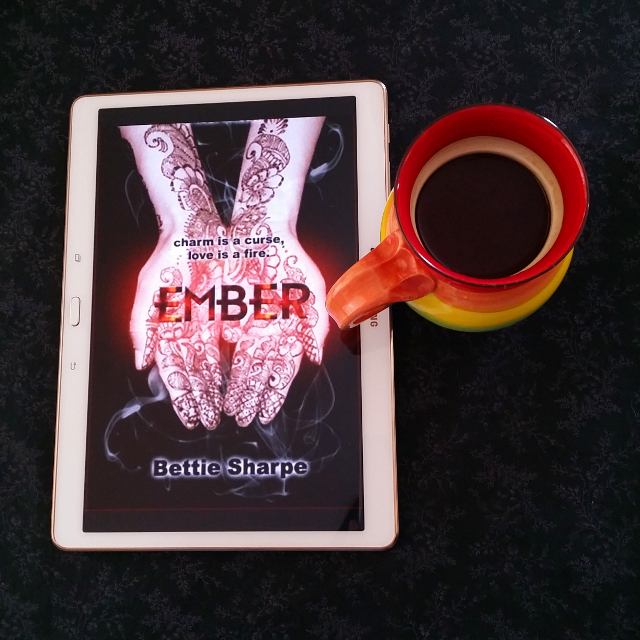 Ember by Betty Sharpe
This is another one I’ve reviewed previously. If you like your fairytale retellings twisted and with a bit of the erotic, this novella is definitely for you. As the name implies, it is a retelling of Cinderella, but grounded in a more feminist sensibility. The women in this version aren’t cruel rivals but become chosen family.
Of course, there are a ton of stories I love that are not so much fairytale retellings as fairytale borrowings. Some of these include:
Vigil by Angela Slatter
Valentine by Jodi McAlister
Uprooted by Naomi Novik
Glass Slipper Scandal by Tansy Rayner Roberts
There are probably a million others I haven’t thought of. What are your favourite fairytale retellings? I’m always on the hunt for more recommendations!


September 24, 2017
The Grief Hole by Kaaron Warren
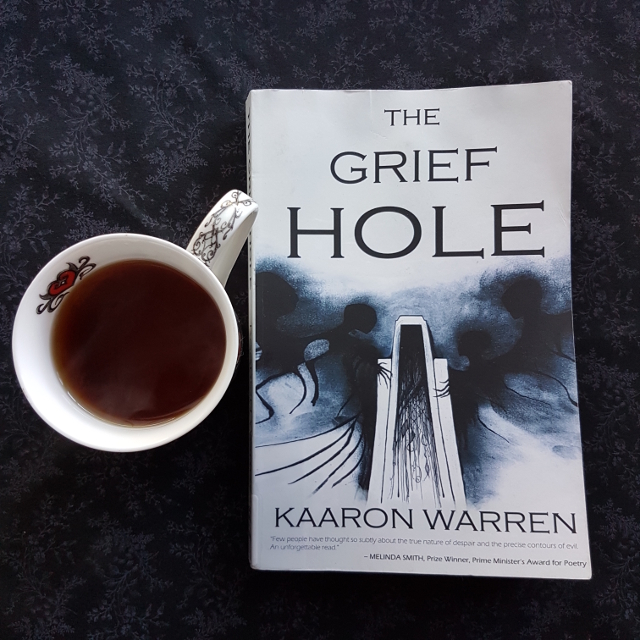
Published: July 2016 by IFWG Publishing
Format reviewed: Trade paperback, 336 pages
Genres: Supernatural, psychological horror
Source: Library
Reading Challenges: Australian Women Writers Challenge 2017
Available: Publisher (print) ~ Amazon ~ Barnes & Noble ~ Book Depository ~ Booktopia~ Kobo
There are many grief holes. There’s the grief hole you fall into when a loved one dies. There’s another grief hole in all of us; small or large, it determines how much we want to live. And there are the places, the physical grief holes, which attract suicides to their centre. Sol Evictus, a powerful, charismatic singer, sends a young artist into The Grief Hole to capture the faces of the teenagers dying there. When she inevitably dies herself, her cousin Theresa resolves to stop this man so many love. Theresa sees ghosts; she knows how you’ll die by the spirits haunting you. If you’ll drown, she’ll see drowned people. Most often she sees battered women, because she works to find emergency housing for abused women. She sees no ghosts around Sol Evictus but she doesn’t let that stop her. Her passion to help, to be a saint, drives her to find a way to destroy him.
Kaaron Warren is a multi-award-winning author and The Grief Hole shows why. I’ve held off reading her work for a while, since horror is really not my jam. However, when The Grief Hole was nominated for a Ditmar Award, I knew it was time for me to dive in.
At first glance, the book looks like supernatural horror. Theresa can, after all, see ghosts. These ghosts reflect the way a person is most likely to die.
However, the ghosts are not the scary part.
Although they’re keen to gather more of their number, they are ultimately powerless background noise. As the story progresses and Theresa comes to understand things better, they become somewhat more sympathetic.
Instead, what is clear from the start of the novel is that it’s about human monsters. The story is divided up into Interventions. These are times when the ghosts around someone are so numerous or otherwise strange that Theresa is prompted to act: to commit some deed that results in death or incarceration for the perpetrator. She’s very clear she acts out of a sense of justice, rather than revenge.
However, this doesn’t make Theresa a good person by any stretch of the imagination. Instead, we’re shown all the ways that Theresa herself is monstrous. She thrives on the suffering of others, often poking at emotional tender points and claiming it’s to help. She frames newspaper smeared with blood from her cousin’s suicide, looking on it as somehow inspirational. She keeps files of atrocities reported in the media. And she jumps to conclusions about what her ghosts are trying to tell her, acting on information that is sometimes incomplete or incorrect. She shows how good intentions are sometimes self-delusion.
While the ghosts aren’t exactly central to the story, I still refused to read this story after dark. The author does a fantastic job of creating an oppressive atmosphere that lingers over the reader as much as the characters. Towards the end, the story took on a dark fairytale resonance, somewhat reminiscent of the Brothers Grimm or the story of Bluebeard. This is enhanced by the characters, some of whom feel otherworldly. Theresa’s aunt Prudence is a prime example. Her association with the colour red and the way she always carries balloons with her gives her the feeling of a hallucination, only kept partially at bay by the fact she’s visible to people other than Theresa.
I can’t say I enjoyed The Grief Hole; it is not a book intended for comfort or enjoyment. However, it is a well-written and thoughtful examination of grief and altruism. It won three major Australian awards this year and most certainly deserves the accolades it has received.


September 20, 2017
Loose-leaf Links #48
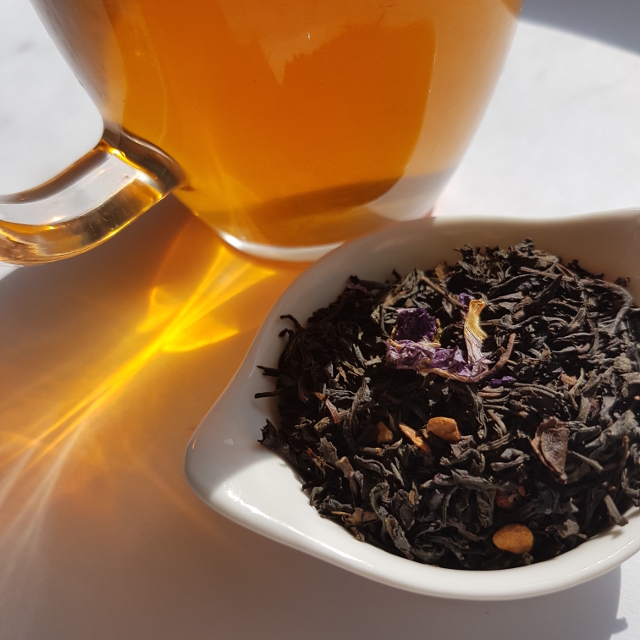
Loose-leaf Links is a feature where I gather together the interesting bits and pieces on sci-fi, fantasy and romance I’ve come across and share them with you over tea. Today’s tea is Plum and Cinnamon, a new blend from The Tea Centre. It’s a bit more cinnamon than plum for my liking, but makes a lovely afternoon tea.
Follow Up
The Handbook for Mortals saga continues, with Lani Sarem asserting the publishing business needs to learn from the music industry. Exactly what they’re supposed to be learning remains unclear. However, it seems Sarem is finally learning a thing or two about the publishing business, with Handbook for Mortals being listed on NetGalley… under New Adult, not Young Adult. Claribel Ortega livetweeted her reading of the book and includes excerpts of the text.
I previously mentioned Rose Christo, the author of notorious Harry Potter fanfic My Immortal, had stepped forward to deny writing Handbook for Mortals. However, it turns out she does have an autobiography coming out called Under the Same Stars. It will focus on her experiences in the New York foster home system and her quest to be reunited with her brother. Thanks to Gin Jenny at Reading the End for this tip.
On an unrelated topic, Russell Kirkpatrick joins in the debate on fantasy maps in a guest post on the Fablecroft blog.
Awards News
In case you’re looking to get an early start on your prep for the Hugos, File 770 are keeping a list of series believed eligible for next year’s award.
Community and Conventions
2017 Hugo Finalists, nerds of a feather have recorded a cover of Led Zeppelin’s When the Levee Breaks and are raising funds for the Houston Humane Society, and the Greater Houston Community Foundation Hurricane Harvey Relief Fund.
On Equity
Foz Meadows shares some thoughts on writing women characters.
In the wake of her cancer treatment, Tansy Rayner Roberts discusses portrayals of fictional mothers.
Over at John Scalzi’s blog, Susan Forest and Lucas K. Law talk about The Sum of Us, their forthcoming anthology about carers.
Stephanie Burgis writes about the onset of chronic illness and her new novel Snowspelled.
The Book Smugglers host Bogi Takacs’ essay on mutants, magic users and oppression.
Skiffy and Fanty have a new column on LGBT+ community in SFF fiction. One of their recent podcasts also discusses bisexuality in SFF in honour of Bisexual Visibility Week.
And they also host Joyce Chng’s reflection on the state of SFF YA in Southeast Asia.
For Writers
There are a heap of markets opening over the next few weeks. Fireside Fiction closes on 23 September, so get in quick! They’re looking for flash fiction up to 1K and short stories up to 4K. Uncanny Magazine opens for short stories and poetry from 2 October. Angry Robot will be open for novels from 1 November.
For local writers, the ACT Writers Centre have a number of publishing awards that will close on 6 October.
As previously reported, the Science Fiction Writers of America have reached an agreement with Hungarian science fiction magazine, Galaktika, over stories the latter republished without financial compensation to (or even the knowledge of) authors. A full list of those authors has now been published.
BadRedHead Media features an article on IndiePicks, a new review magazine focused on indie authors. It includes a few details on how authors can submit their books for review.
Peter Ball reminds writers that getting shit done is always subjective.
For Readers
Simon and Schuster are celebrating the tenth anniversary of Cassandra Clare’s City of Bones with a new edition featuring illustrations from the talented Kathleen Jennings.
Amanda Bridgeman has unveiled the cover of her forthcoming novel The Time of the Stripes. Stay tuned for a review in coming months.
Tor.com have likewise revealed the cover for another book on my review list: City of Lies by Sam Hawke. Sam was understandably thrilled with it.
David Steffen is currently running a Kickstarter for Long List Anthology, Volume 3, a book featuring stories from this year’s Hugo Awards long list.
The Kickstarter for Ticonderoga Publishing’s forthcoming anthology Ecopunk! closes in just a few hours. If you’re trying to decide if it’s for you, check out this series of mini interviews with some of the authors (just scroll past the submission guidelines).
Amie Kaufman and Meagan Spooner will be touring through several Australian capital cities in November to promote their forthcoming book Unearthed. I have already booked my ticket.
Tsana Dolichva at Tsana’s Reads and Reviews is running a 100 stories challenge, aiming to get through one short story every day until the end of the year. Check out the details if you’d like to join in.
SFF Reviews, a new site dedicated to reviewing short SFF fiction, has just opened and are looking for volunteers to join their reviewing team.
Lady Business hosts a fantastic interview with Kate Elliott, which includes an excerpt from her forthcoming sequel to Black Wolves.
And lastly, Christina at Books and Tea has a review of two tea-flavoured candies. Yum.


September 19, 2017
Conflux 13 Schedule
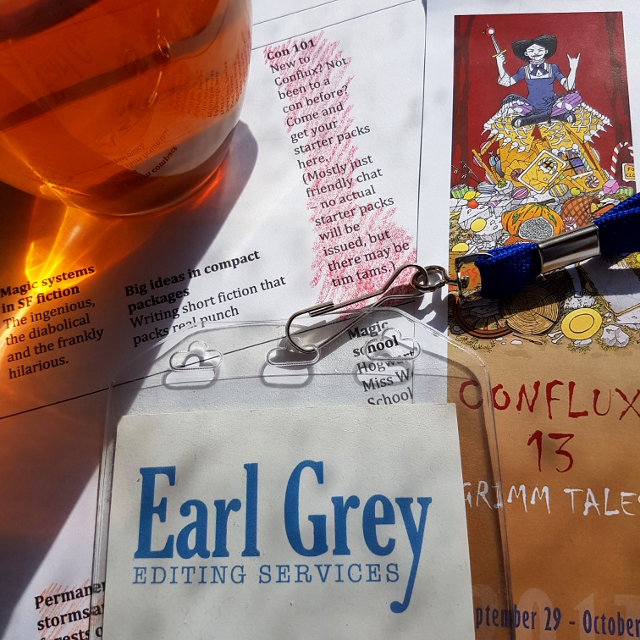
Conflux, Canberra’s annual convention for speculative fiction writers and fans, begins next week! This year it is taking place from Friday 29 September until Monday 2 October and the theme is Grimm Tales. Hugo-winning editor Ellen Datlow is the international Guest of Honour, and dark fantasy/horror author Angela Slatter is the Australian Guest of Honour. Kaaron Warren will be the MC. As usual, I will be attending and am very much looking forward to making some new friends as well as catching up with some old ones.
Where to find me
I will be sitting on four panels. Exact details are subject to change.
Con 101
When: Friday, 29 September 10:00 AM
Where: Program Room 3
Hotel Vibe
1 Rogan Street, Canberra
Panellists: Elizabeth Fitzgerald and Leife Shallcross
New to Conflux? Not been to a con before? Come and get your starter packs here. (Mostly just friendly chat–no actual starter packs will be issued, but there may be Tim Tams.)
Creating Story for Games
When: Friday, 29 September, 2:00 PM
Where: Program room 2
Panellists: Elizabeth Fitzgerald, Adam Hale (m), Rik Legarto, Alistair Ott, Maddy Piggott
Whether it’s roleplaying IRL or in a computer game.
Beyond the Hunger Games
When: Saturday, 30 September, 11: 00 AM
Where: Program room 1
Panellists: Felicity Banks, Elizabeth Fitzgerald, Adam Hale, Aiki Johnston (m)
The best YA books in the last 12 months
The Hugos are a Joke
When: Monday, 2 October, 11:30 AM
Where: Program room 1
Panellists: Alan Baxter, Ellen Datlow, Elizabeth Fitzgerald (m), Tim Napper
Or have they redeemed themselves? And what about the Nebulas? And how could we get better Aussie representation on the shortlists?
If you have an interest in speculative fiction and can make it along, please stop by and say hi! I love getting to know new people. However, if Canberra is a little too far away for you or attending conventions is not your sort of thing, there’s no need for you to miss out entirely. I shall be posting a convention report once the excitement is over (and I’ve had the chance for a few restorative cups of tea).