Elizabeth Fitzgerald's Blog: Earl Grey Editing, page 18
December 17, 2017
Girl Reporter by Tansy Rayner Roberts
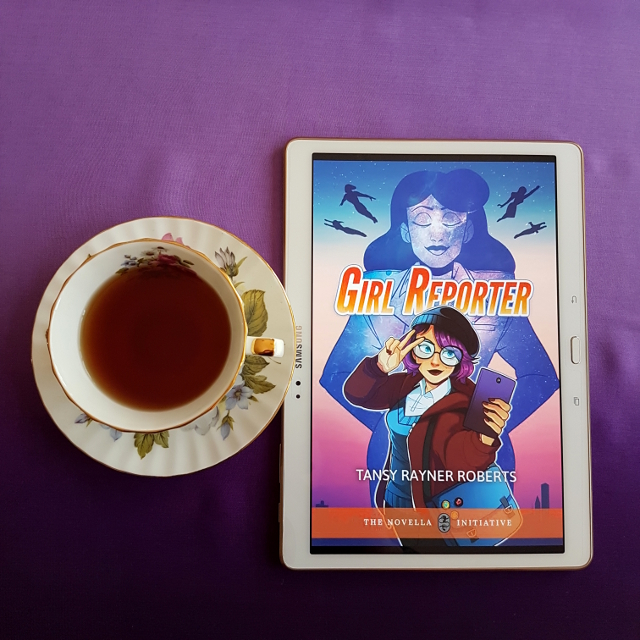
Published: December 2017 by The Book Smugglers
Format reviewed: E-book (mobi)
Series: Cookie Cutter Superhero-Verse #3
Genres: Science fiction, New Adult
Source: Author
Reading Challenges: Australian Women Writers Challenge 2017
Available: Publisher (print and electronic) ~ Amazon
Disclaimer: I was provided with a free copy of this book in exchange for an honest review.
From the award-winning author of Cookie Cutter Superhero and Kid Dark Against the Machine comes a brand new novella about girl reporters, superheroes, and interdimensional travel
In a world of superheroes, supervillains, and a machine that can create them all, millennial vlogger and girl reporter Friday Valentina has no shortage of material to cover. Every lottery cycle, a new superhero is created and quite literally steps into the shoes of the hero before them–displacing the previous hero. While Fri may not be super-powered herself, she understands the power of legacy: her mother is none other than the infamous reporter Tina Valentina, renowned worldwide for her legendary interviews with the True Blue Aussie Beaut Superheroes and her tendency to go to extraordinary lengths to get her story.
This time, Tina Valentina may have ventured too far.
Alongside Australias greatest superheroes–including the powerful Astra, dazzling Solar, and The Dark in his full brooding glory–Friday will go to another dimension in the hopes of finding her mother, saving the day, maybe even getting the story of a lifetime out of the adventure. (And possibly a new girlfriend, too.)
Girl Reporter is a delightful novella that has a serious side beneath the bright, spandex-covered fun.
Friday Valentina is a new media reporter with a successful YouTube channel focused on the antics of Australian superheroes. She follows in the footsteps of her mother, Tina Valentina, who was the first Australian reporter ever to gain an interview with a superhero. I loved the relationship between these two characters. There are problems between them: Tina is often absent for work and doesn’t always treat Friday’s vlog like real journalism. But there is genuine affection between them and I loved their frank conversations about sexuality and journalistic ethics.
Readers of the previous stories in the series will be delighted to know that Joey from Cookie Cutter Superhero and Griff from Kid Dark Against the Machine both make appearances. Seeing them create bonds with other characters was such a delight and plays into the theme of found family. However, it’s not necessary to have read the previous stories–the pertinent details are covered in a way that reads very naturally, particularly since time has passed between the previous stories and Girl Reporter.
It’s also a story with Australian fingerprints all over it. It’s in the names of the superheroes. For example, one of Australia’s earliest superheroes was called Redback (I kind of want that story now), and even Solar has an Australian ring to it. There’s tons of references to 80s Australian news outlets, especially current affairs TV shows and gossip magazines. There was also a description of a hippy-ish town that had me grinning in recognition and Tansy’s trademark snark kept me chuckling throughout (I may have startled my partner a few times while reading this).
But the story wasn’t all fun and games. It touches on Australian issues of race, in a way that is difficult to discuss without spoilers. I felt it was well handled and one of the most poignant moments of the story.
One of the key themes of the story was about handing down responsibility to the next generation and it was fun to see that play out a number of different ways.
Overall, I found Girl Reporter heartwarming and witty. I very much look forward to more set in this world.


December 14, 2017
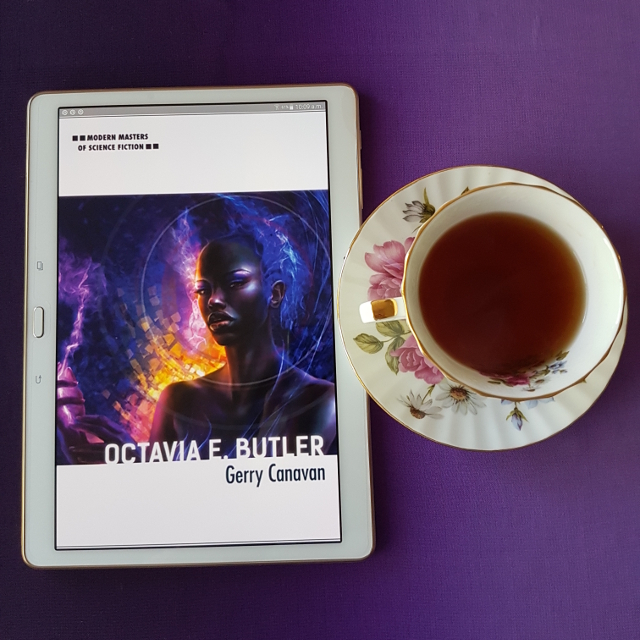
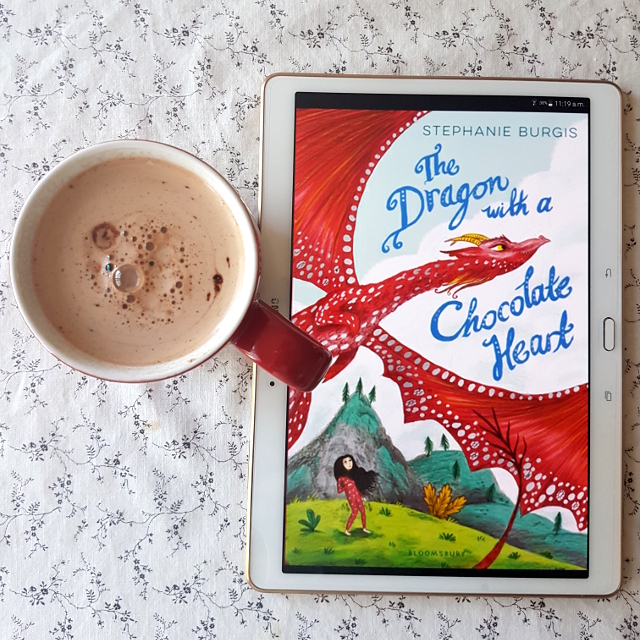
My Favourite Photos of 2017

Last year was the first time I pulled together a collection of my favourite photos I’d taken over the year. I enjoyed it so much that I thought I’d try it again this year. However, I have to say that I don’t think my game is quite up to last year’s standards.
Earl Grey Editing

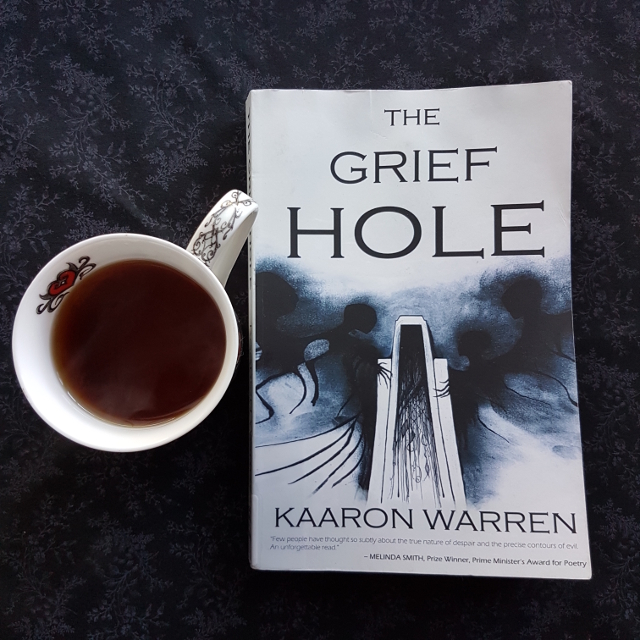
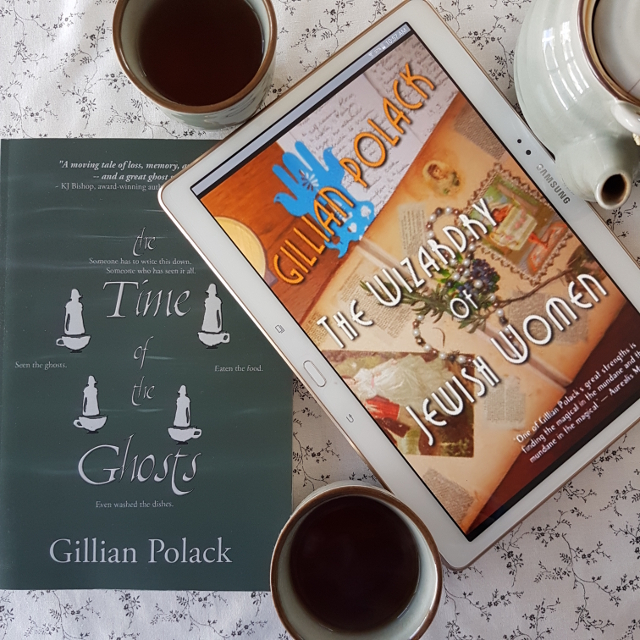
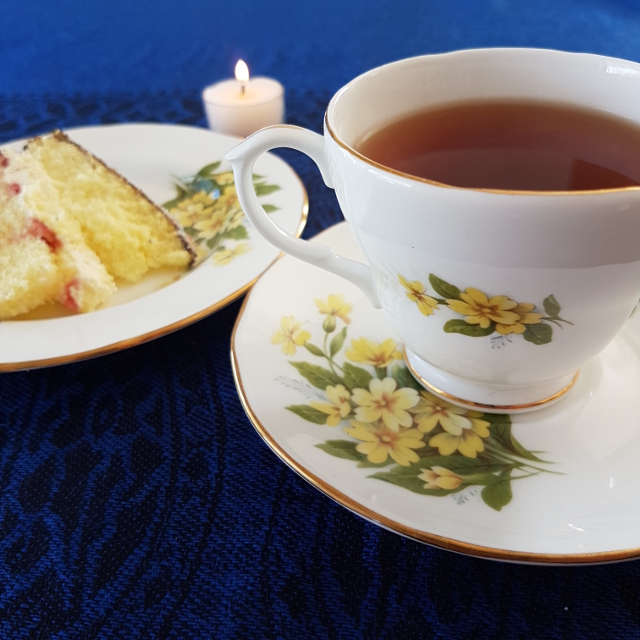
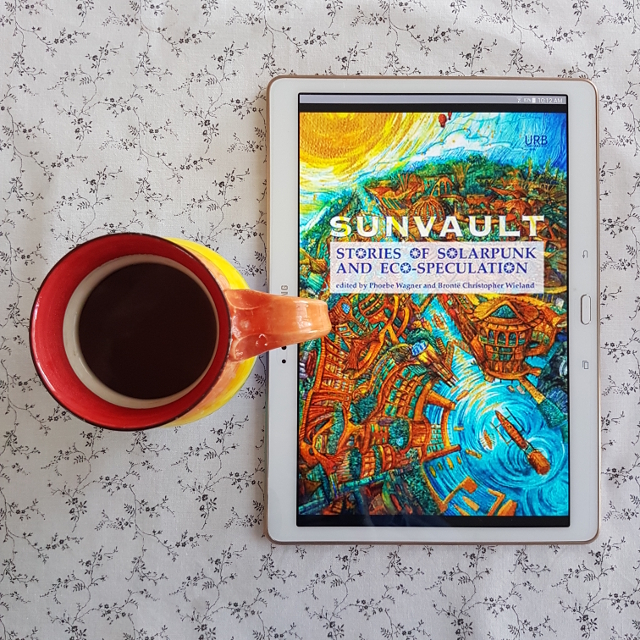
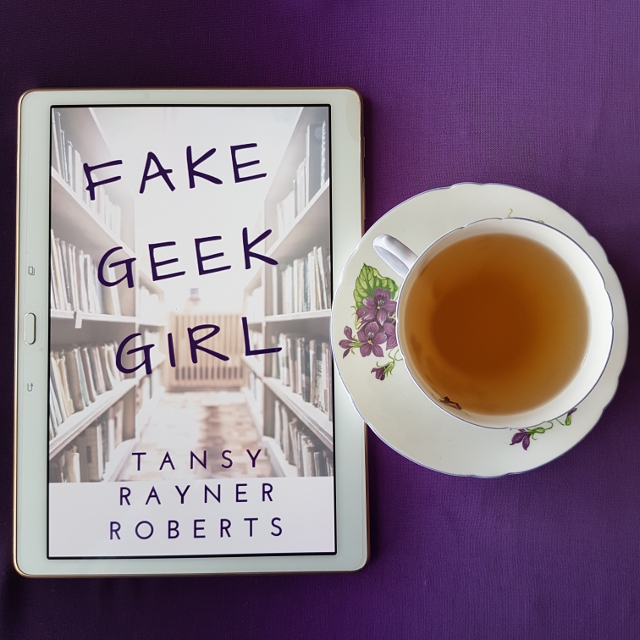
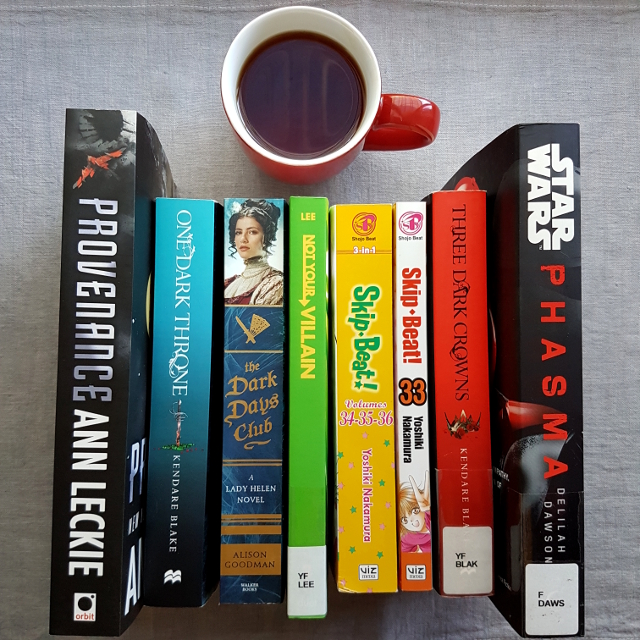
Personal
There were a few changes in my photographic habits this year. A burgeoning interest in nail art made a great focus. My sister also kindly donated me a DSLR camera, enabling me to pursue bird photography for the first time.


December 10, 2017
Under the Pendulum Sun by Jeannette Ng
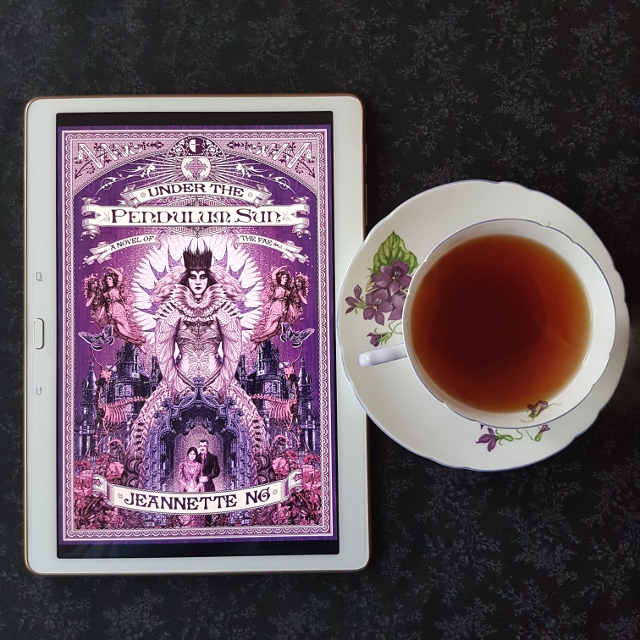
Published: October 2017 by Angry Robot Books
Format reviewed: E-book (mobi)
Genres: Historical fantasy, Gothic horror
Source: Publisher
Available: Publisher (electronic) ~ Abbey’s ~ Amazon ~ Barnes & Noble ~ Book Depository ~ Booktopia ~ Dymocks ~ Kobo
Catherine Helstone’s brother, Laon, has disappeared in Arcadia, legendary land of the magical fae. Desperate for news of him, she makes the perilous journey, but once there, she finds herself alone and isolated in the sinister house of Gethsemane. At last there comes news: her beloved brother is riding to be reunited with her soon – but the Queen of the Fae and her insane court are hard on his heels.
Under the Pendulum Sun is a Gothic-inspired novel that blends the fae with Christian theology while simultaneously undermining traditional narratives of colonialism.
The story is set in an alternate 19th Century, at the height of the British Empire. Captain Cook has discovered the fae world Arcadia, and Britain has sent in its first missionaries. Leon Helstone is the second missionary to serve at Gethsemane, an isolated castle in Arcadia. As his correspondence becomes increasingly terse, his sister Catherine grows worried and is persuaded to travel to Gethsemane to check on him. What she finds there is beyond her wildest imagination.
One of the things I loved about this book was the eerie whimsy of the setting. It’s clear that Arcadia is a world vastly different to our own. Not only is the sun a literal pendulum, but the moon is the light of a giant angler fish. Weather doesn’t just happen, it has to be bought from a Goblin Market. In order to arrive at your destination, you have to experience two uncomfortable memories and a daydream, or meet similar abstract requirements. These fairy tale elements tie in nicely to some of the more traditionally Gothic set pieces. Mysterious figures haunt the castle, which, like the landscape outside the walls, seems to change shape at whim. It is all too easy to get lost.
Although the missionaries seek to bring the Word of God to the fae, their task is a difficult one. Arcadia is an unconquered civilisation, still at the height of its power. The Pale Queen rules with an iron fist, and the missionaries are permitted within her borders solely because it amuses her. As such, the Helstones must rely on the persuasiveness of their arguments in a world where the natural order as they know it doesn’t exist. This introduces them to doubt and both Cathy and Leon wrestle with their faith, even as they attempt to provide guidance to their sole convert.
The story delves with surprising depth into Christian theology, particularly through the middle of the book. The many discussions make for a slow pace at times, and occasionally it feels like everyone is just waiting for time to pass. Which they are: it serves to show how thoroughly dependent they are on the Pale Queen. However, the slow pace and the subject matter mean it’s just not going to suit some readers–particularly those who expect the inclusion of fae signals a story in line with young adult and urban fantasy tropes.
As is sometimes the case in the latter subgenres, this story incorporates transgressive love. However, it takes its cues from Gothic traditions and doesn’t tame this into acceptability. I can’t say too much about this issue without spoilers, but it will certainly put off a number of readers, even as it deftly ties into the ending. (Readers who want to know more can feel free to comment below or ping me on Twitter).
Overall, Under the Pendulum Sun is a fascinating story, but is unlikely to be everyone’s cup of tea.


December 7, 2017
Loose-leaf Links #52
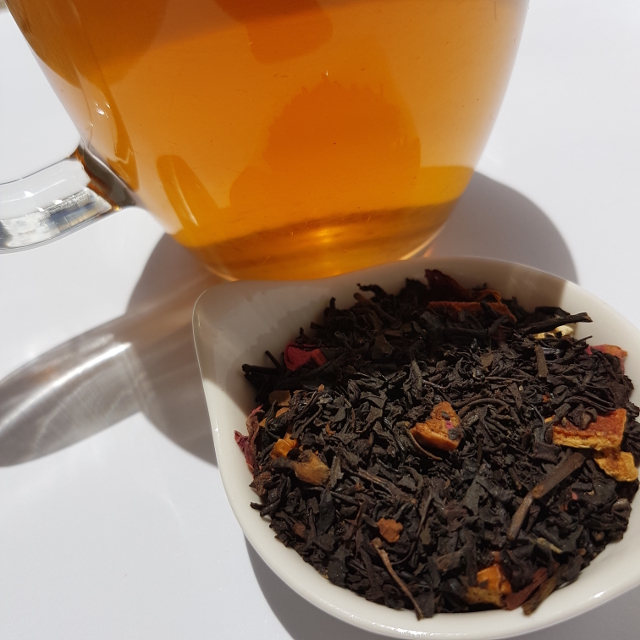
Loose-leaf Links is a feature where I gather together the interesting bits and pieces on sci-fi, fantasy and romance I’ve come across and share them with you over tea. The year is winding up and this will be the last Loose-leaf Links post for 2017. Earl Grey Editing will be taking a short hiatus between Christmas and New Year. So, it seems only appropriate that today’s tea is Christmas Tea from Glenbog Fine Teas. The tea includes lemon peel, apple, aniseed, cinnamon and rose petals, giving the impression of citrus and gingerbread.
Awards News
Awards season is well and truly gearing up. The Aurealis Convenor’s Award for Excellence is open for nominations until 31 December. It’s awarded for achievement in speculative fiction not otherwise covered by the Aurealis Awards, meaning non-fiction, artwork, film, television, electronic or multimedia work are all eligible. The Earl Grey Editing blog was a nominee earlier this year.
Nominations are also open for the 2018 Sir Julius Vogel Awards, recognising excellence in New Zealand speculative fiction.
Members of the British Science Fiction Association can make nominations for the British Science Fiction Awards until 31 December.
Recommendations are already open for the 2018 Tiptree Award. The Tiptree recognises works of science fiction or fantasy that expands or explores our understanding of gender.
The Australian equivalent of the Tiptree is the Norma K. Hemming Award. Organisers will be taking applications from potential jurors until 15 December. (That muttering in the background is me reminding myself I have enough reading commitments right now.)
The organisers of the Australian Shadow Awards (Australia’s premier horror awards) are also looking for judges. If you are an active (or lapsed) member of the Australasian Horror Writers Association (AHWA) email Joseph Ashley Smith at australianshadowsawards@gmail.com.
Congratulations to Kaaron Warren who has been named one of the judges for the 2018 World Fantasy Award.
The winners of the Goodreads Best Books of 2017 were announced. I can’t say I’m all that impressed at the results for the Science Fiction and Fantasy categories.
Community and Conventions
The Down Under Fan Fund is taking nominations for 2018 candidates until 31 January. One Australian or New Zealand candidate will be sent to the US to attend WorldCon 76 in August.
Congratulations to Laura E. Goodin, who is joining Fafnir (the Nordic Journal of Science Fiction and Fantasy Research) as their Editor-in-Chief.
Over at Book View Cafe, Gillian Polack writes about a recent trip we took out to the former space observatory at Honeysuckle Creek. We learned that the possums are not shy, particularly when it comes to honey cake.
On Equity
Buckle in, folks. The SFF short fiction review site Rocket Stack Rank and its creator Greg Hullender recently created controversy with its list of Best LGBT SFF from 2015 & 2016. Bogi Takacs took a very thorough look at RSR’s problematic history with non-binary, transgender and PoC characters and creators. Several authors came together with Bogi to write an open letter expressing concern over the patterns of behaviour and RSR’s influence on the industry. Over 100 others co-signed in the comments. Locus Magazine quickly responded by removing Hullender from involvement with their Recommended Reading list. RSR issued an apology, reported on by File 770, though it was undermined by its conter-arguments to the open letter.
A side issue that came up, mentioned by Bogi in eir tweets, was the inclusion of RSR in the sidebar of the official Hugo Award website as a “Third Party Recommendation” site. Renay of Lady Business pointed out the inequality with the way the Hugo admins have handled this part of the site. File 770 followed up with a response from one of the committee members who manages the website (see item 4), but Renay found the response disingenuous and out of touch.
In the wake of these controversies, Charles Peyseur of Quick Sip Reviews, another SFF short fiction review site, offers some advice on being a short fiction reviewer.
Moving on to other news, Jessi Cole Jackson discusses fat representation in SFF.
In a guest post for the Australian Women Writers blog, Anna Spargo-Ryan talks about writing with a mental illness.
Uncanny Magazine is offering an editorial intern position and is looking for PoC, Native and Indigenous applicants.
For Writers
Lackington’s are currently looking for works for their issue on the theme of Gothic. It looks like they’re taking a broad interpretation of the theme, but you’ll have to get in quick if you’re interested: the submissions window will close once they have enough acceptances. Word limit 5K.
Lightspeed Magazine have announced that they’ll be open to submissions 5-19 February, so start planning ahead! Word count 1.5-10K.
Goodreads have overhauled their giveaways. They will now cost a minimum of $120 USD for authors and publishers to run and they will be open to US residents only. Somehow this is going to “increase book discovery and reader reviews”. Perhaps Goodreads think international readers don’t exist.
Dahlia Adler tweets about the chilling effect this change by Goodreads will have on f/f romance, particularly in relation to YA.
KJ Charles discusses what editors owe authors (and vice versa).
Peter Ball examines what’s really going on at a successful book launch and the ways in which money messes with the writing process.
Over at Book Riot, Nicole Froio shares quotes about imposter syndrome from famous authors.
For Readers
The Canberra Speculative Fiction Guild is running a crowdfunding campaign for their forthcoming anthology A Hand of Knaves. While the anthology itself is already funded, the CSFG’s goal is to pay their contributors at a higher rate. Rewards include some lovely artwork from Shauna O’Meara.
Text has a special issue focusing on Australasian fairy tales. Found via Alex Pierce’s Aurora Australis column for Tor.com.
Quick Sip Reviews has released its 2017 Recommended Reading list. Nice to see Ian McHugh’s name up there.
Barnes and Noble have also released their list of Best Science Fiction and Fantasy of 2017.


December 5, 2017
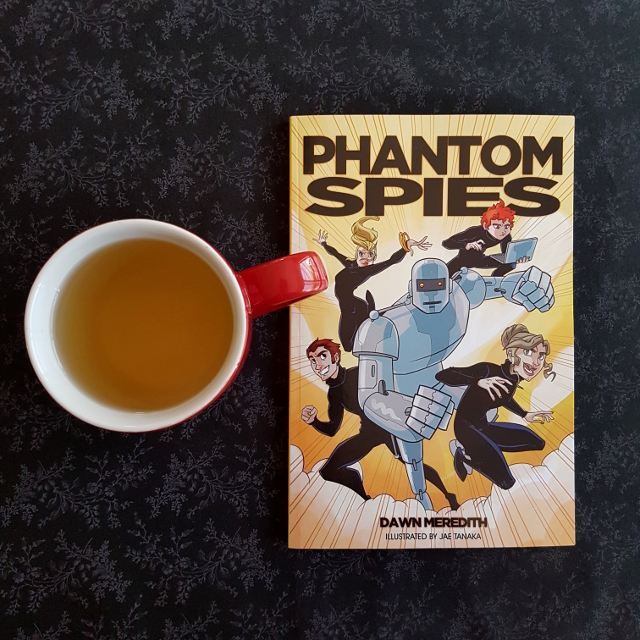
Phantom Spies by Dawn Meredith
Published: Self published in December 2017
Format reviewed: Paperback, 88 pages
Genres: Sci-fi, Middle Grade
Source: Author
Reading Challenges: Australian Women Writers Challenge 2017
Available: Amazon ~ Barnes & Noble ~ Book Depository
Disclaimer: I was provided with a free copy of this book in exchange for an honest review.
The author is a friend. I have done my best to give an unbiased review.
Oliver Snatcher’s family are weird. They sneak around at night dressed in black stealing things, including secret files. They’re professional cat burglars and they’re very, very good at it. The Government recruits them to work for its undercover spy agency PHANTOM. Only their six foot tall robot, Roger, knows the dangers of working for PHANTOM. He’s not just a friendly family robot bought at a science fair. When creepy Professor Withers gets his hands on Roger he implants an emotion chip — the very thing Roger does not want. Roger becomes unpredictable and dangerous. Has Oliver’s wise and amazing friend become a killer robot out of control? Who will protect the Snatcher family now?
Phantom Spies is a fun middle-grade novel with a cartoon-like style that put me a bit in mind of The Incredibles. However, there were a few flaws that let the book down.
Oliver was a great main character. He struggles to balance his family’s late-night heists with his school work, barely scraping by on his spelling tests. He also has to keep his family escapades a secret from his friends. And then there’s his anxiety about the inevitable capture of his family. This anxiety made Oliver particularly relatable. He is the only member of his family who displays any common sense. His family’s love of thrills and treasure means it’s up to him to be the responsible one. He does his best, but he’s still young.
Fortunately, he has a friend in Roger the robot. Roger is a steady influence, always calm and ready to listen to Oliver’s worries. For a robot who is supposed to be emotionless, he comes across as quite warm and compassionate. His name and his smooth, James Bond voice is a delightful nod to Roger Moore.
The story is reasonably well-paced, starting off with the Snatcher family in the middle of a heist. The short chapters keep the story brisk, though there’s a section detailing Oliver’s stay in foster care that, although charming, doesn’t add significantly to the plot.
Indeed, a weak theme let down the book. The first half focuses on the Snatcher family’s lack of responsibility, while the second focuses on the danger Roger presents as his emotion chip makes him dangerous and unpredictable. These two themes never quite seem to come together. Roger’s issues with emotion aren’t really a broader issue in the book, but remain focused on the robot. While this may allow it to sidestep the perpetuating of toxic masculinity, it also doesn’t allow for a coherent merging of themes.
Overall, Phantom Spies was a lot of fun, but didn’t quite hang together.


December 3, 2017
The Dark Days Club by Alison Goodman
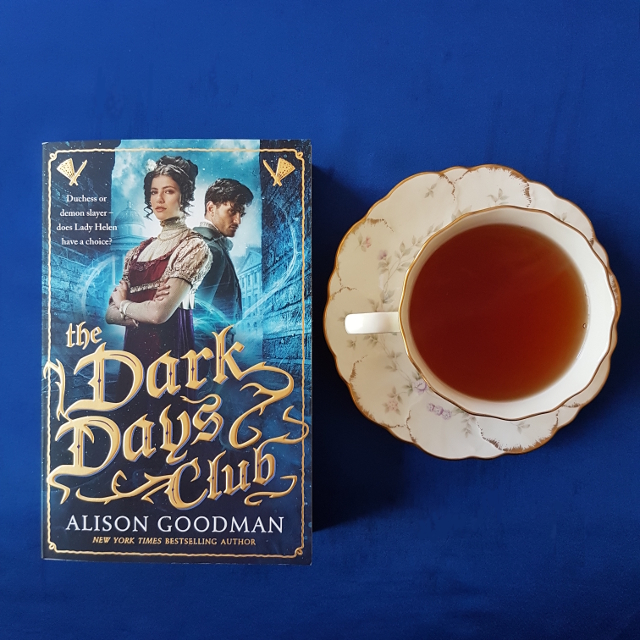
My very first review for The Skiffy and Fanty Show is up. The Dark Days Club (or Lady Helen and the Dark Days Club, if you’re looking for the Australian edition) by Alison Goodman is a story about demon hunting in Regency London. Head on over to hear my thoughts!


November 30, 2017
Mt TBR Report: November 2017
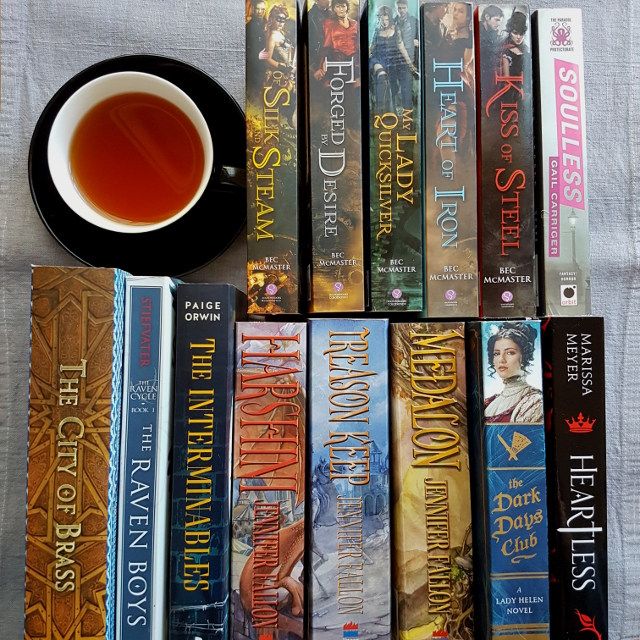
November found me a long way off my reading game. I had some time-consuming personal commitments which chewed into my reading time. And I DNFed two books this month. Combined, it makes for the worst reading month I’ve had all year.
Of course, acquisitions haven’t slowed down at all. I managed to pick up some exciting review books as well as some bargains on sale. And then there was that second-hand book-shopping trip I made with Elanor. Oops.
My other goals were a mixed bag. I’ve had no trouble making one trip to the library this month. However, for the first time this year, I’ve missed reading this month’s piece of fanfiction. I’m a little disappointed in myself, especially considering how close I am to the end of the year.
Mt TBR Status
Mt TBR @ 1 January 2017: 327
Mt TBR @ 31 October: 343
Mt TBR @ 30 November: 364
Books Read
160. The Iron King by Julie Kagawa. First in the Iron Fae series. When Meagan Turner’s brother is replaced by a changeling, she must go on a quest to rescue him. I usually love books about the fae, but I found this extremely derivative.
161. Paranoia: Players Handbook by James Wallis, Grant Howitt and Paul Dean. Pretty much as it says on the label. Paranoia is a game in which players are clones that live in Alpha Complex. The place is run by Friend Computer who has all of our best interests at heart. Friend Computer wants us all to be on the lookout for traitors, terrorists, secret society members and people with mutant powers. Happiness is mandatory. The manual is relatively concise, though the rules around combat could have used a little more clarity. I was also annoyed that the sample game given on the first page had just one female player in a group of six. *sigh*
162. Not Your Villain by C.B. Lee. Reviewed here.
163. The Time of the Stripes by Amanda Bridgeman. Reviewed here.
164. Lady Helen and the Dark Days Club by Alison Goodman. Review forthcoming.
165. An Extraordinary Union by Alyssa Cole. First in The Loyal League series. Historical m/f romance between a former slave and a Pinkerton detective, both working undercover to spy on a Confederate senator. It did an excellent job of balancing the romance with some crunchy issues. I’ll definitely be looking for the next in the series.
DNF. Star Wars: Phasma by Delilah S. Dawson.
DNF. Keeper by Kim Chance.
Books Acquired
Uncanny Magazine, Issue 19
Under the Pendulum Sun by Jeannette Ng
Nexus by Scott Westerfeld, Margo Lanagan and Deborah Biancotti
A Strange Scottish Shore by Juliana Gray
An Extraordinary Union by Alyssa Cole
A Soldier’s Scoundrel by Cat Sebastian
The Raven Boys by Maggie Stiefvater
Deep by Kylie Scott
Kiss of Steel by Bec McMaster
My Lady Quicksilver by Bec McMaster
Forged by Desire by Bec McMaster
The Interminables by Paige Orwin
Zeroes by Scott Westerfeld, Margo Lanagan and Deborah Biancotti
Unclaimed by Courtney Milan
Blood Binds the Pack by Alex Wells
Girl Reporter by Tansy Rayner Roberts
The City of Brass by S.A. Chakraborty
Soulless by Gail Carriger
Medalon by Jennifer Fallon
Treason Keep by Jennifer Fallon
Harshini by Jennifer Fallon
Heart of Iron by Bec McMaster
Of Silk and Steam by Bec McMaster
Heartless by Marissa Meyer
The Traveling Man by Jane Harvey-Berrick
Online Reading
None.


November 26, 2017
The Time of the Stripes by Amanda Bridgeman

Published: Self-published in November 2017
Format reviewed: E-book (mobi)
Genres: Science fiction
Source: Publisher
Reading Challenges: Australian Women Writers Challenge 2017
Available:Amazon ~ Barnes & Noble ~ Kobo
Disclaimer: I was provided with a free copy of this book in exchange for an honest review.
They survived the alien visitation. But can they survive each other?
No-one had heard of Victoryville before. But when an alien spaceship appears, hovering over the town, the whole world suddenly knows its name.
After twenty-four hours and a failed military assault, the ship disappears without a trace. When the outside world restores communication to the town, thousands are reported missing.
Those who remain in Victoryville are irreparably changed. However, only some have been left with strange red marks upon their skin.
Quarantined from the outside world and segregated within, alliances are made and relationships are shattered, as everyone fights for the truth – and for their own survival.
The Time of the Stripes uses the premise of first contact to tell a story about the human tendency to create divisions and persecutions.
The story features an ensemble cast with half a dozen point-of-view characters. It’s a lot to take in at first and I was a little bit worried I’d lose track. However, after the initial burst of introductions, the story focused on just a couple at a time and I had no trouble following along.
Having a large cast slowed the pace, especially when combined with the novel’s structure. The story is divided into chapters, with each one covering a single day. While it gives a sense of the timescale of events, there are points where things start to drag as everyone waits to see what the aliens’ agenda is. However, this uncertainty also serves to build the tension required for the explosive ending. It gives a good sense of the powder keg Victoryville has become and how quickly things can slide into outright violence.
Despite the slower pace, it is ultimately a plot-focused book. The large cast made it difficult to dig deeply into any one character, though each one had their own, varied motivation. I was ultimately left with the feeling of skating across the surface. Josh’s family particularly suffered: after a strong start, they devolved more or less into a mechanism to control Josh’s behaviour. That said, I liked the contrast between Josh and one of the other younger characters, Abbie. Where Josh is focused solely on his own survival and–at best–the survival of those closest to him, Abbie remains stubbornly true to her principles.
Although the characters may not have been as nuanced as I’d like, the author nevertheless did a good job of making me care about them (or some of them). The atmosphere of distrust and simmering violence had me concerned for their safety and expecting betrayal at any moment, creating suspense.
There was an attempt to do some interesting things with disability, but it ultimately left me feeling uneasy. One of the central antagonists of the story uses a wheelchair and has several disabilities. He also turns out to be a pretty reprehensible person. I have no problem with the disabled being assholes, however, Magnus carried the burden of representation for the severely and multiply disabled on his own. This was especially disappointing, since the story had space for more (and more positive) representations to balance out that character.
Unsurprisingly, the narrative is quite dark in places and shows humanity at its worst. The focus is very much on the humans of the story and the aliens never appear onscreen. I thought the ending was quite skillful in the way it offered hope without necessarily softening its views on the fearful divisiveness of humanity.
Those looking for a deep character study of human nature are likely to be disappointed, but The Time of the Stripes explores some interesting themes while remaining a suspenseful read.


November 23, 2017
Loose-leaf Links #51

Loose-leaf Links is a feature where I gather together the interesting bits and pieces on sci-fi, fantasy and romance I’ve come across and share them with you over tea. Today’s tea is Quince Tea from Mrs Oldbucks Pantry. As the name suggests, it has a sweet, fruity flavour, thanks to the mallow blossoms and cornflower petals.
Announcement
Those of you who follow me on social media will have already seen this, but I recently joined the Skiffy and Fanty Show. I’ll be working as their YA reviewer and my first post will go up in December. In the meantime, you can hear my first outing as co-host of one of their podcasts. Paul Weimer and I chatted with C.B. Lee, Cat Rambo and Nicky Drayden about participating in National Novel Writing Month.
Awards News
The inaugural Nommo Awards were presented on 16 November. The awards are voted on by members of the African Speculative Fiction Society.
The finals of Mark Lawrence’s 2017 Self-Published Fantasy Blog-off are currently underway.
Community and Conventions
The British Fantasy Society have welcomed two new editors for its fiction publication BFS Horizons.
Stephanie Lai reports on the Singapore Writers Festival.
On Equity
Rose Lemberg has a wonderful series on Writing While Autistic.
Books+Publishing is inviting anyone working in the Australian book industry to complete a survey on sexual harassment in the industry.
The Stella Prize team have curated Read Up, a series of book lists for YA readers looking to explore diversity in a number of different forms. While not necessarily SFF (although there are some great SFF recs), they are predominantly Australian.
For Writers
From 15 January, submissions will be open for Uncanny Magazine’s special issue Disabled People Destroy Science Fiction.
Augur Magazine is looking for a poetry editor.
The Kat Muscat Fellowship is open for applications from Australian women or non-binary writers aged between 16 and 30.
Over at Tor.com, Chris Lough and Leah Schnelbach remind us that your writing career isn’t over if you haven’t been published before age 30.
For Readers
All my wailing about it only being November hasn’t stopped Tor.com from releasing its reviewers’ Best Of list for 2017.
They’re also clearly gearing up for awards season and have thoughtfully offered this list containing all of Tor.com’s original short fiction for the year. Best get reading.
A.C. Wise is collecting eligible award nominees for the Hugos and the Nebulas.
She has also interviewed the editors of Sword and Sonnet, an anthology of stories about women and non-binary battle poets currently being Kickstarted.
Shaun Tan will be releasing a collection of illustrated short stories and a picture book next year.


November 19, 2017
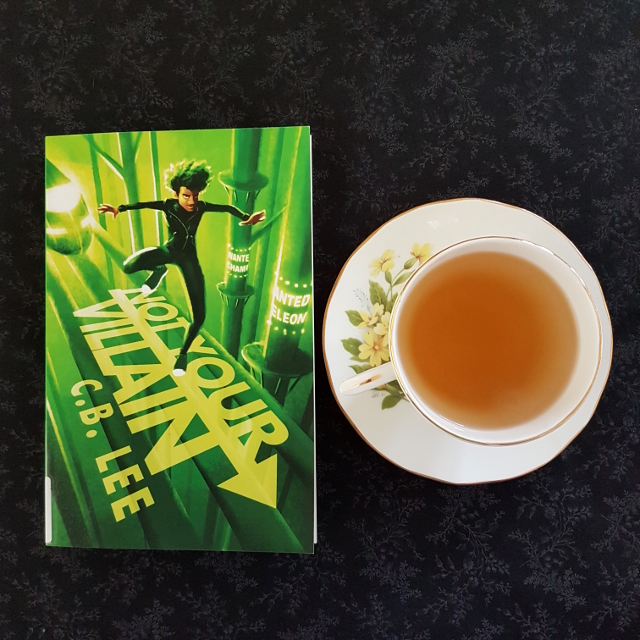
Not Your Villain by C.B. Lee
Published: October 2017 by Duet Books
Format reviewed: Paperback, 286 pages
Series: Sidekick Squad #2
Genres: Science fiction, YA
Source: Library
Available: Publisher (print and electronic) ~ Abbey’s ~ Amazon ~ Barnes & Noble ~ Book Depository ~ Booktopia~ Kobo ~ Smashwords
Disclaimer: This review contains spoilers for previous volumes/books.
Bells Broussard thought he had it made when his superpowers manifested early. Being a shapeshifter is awesome. He can change his hair whenever he wants, and if putting on a binder for the day is too much, he’s got it covered. But that was before he became the country’s most-wanted villain.
After discovering a massive cover-up by the Heroes’ League of Heroes, Bells and his friends Jess, Emma, and Abby set off on a secret mission to find the Resistance. Meanwhile, power-hungry former hero Captain Orion is on the loose with a dangerous serum that renders meta-humans powerless, and a new militarized robotic threat emerges. Everyone is in danger. Between college applications and crushing on his best friend, will Bells have time to take down a corrupt government?
Sometimes, to do a hero’s job, you need to be a villain.
Not Your Villain is a delightful superhero story that centres a transgender protagonist.
The fact that Bells is transgender is both important to the story and completely incidental at the same time. If you are unfamiliar with what binders and T-shots are, you might miss it entirely because it’s never made a big deal. However, as a transgender character, Bells has a really clear idea of who he is regardless of the shape of his body which serves him well as his powers develop and, conversely, are threatened.
I really enjoyed Bells as a character. He’s laidback, friendly and popular at school–the cool guy who sets hearts of all genders aflutter. It has taken him a while to grow this confidence, as demonstrated by the story of how he came to be called Bells. He also has a deep and abiding affection for his core group of friends (which is returned in full–one of the best parts of the book). And he believes in doing what is right, even when that conflicts with his career as a superhero.
The story is set in postapocalyptic America, where a massive solar flare triggered superpowers in the world’s population. The Heroes’ League of Heroes was formed and trains people who have manifested these powers, skimming off the best to join their ranks. They have a counterpart Villain’s League which has also been secretly set up by those in charge of the League of Heroes.
Unsurprisingly, one of the central themes of the story is about powerlessness and it manifests in a number of ways. Having lost her powers in the first book, Abbey struggles to come to terms with this. Emma–the only one in the friendship group without powers–pushes back at being excluded, even when the others feel it’s for her own safety. And the adults in the story repeatedly try to sideline the teenagers, despite the older generation’s lack of an effective plan. This last part particularly frustrated me and made the story very relatable.
The previous book’s theme of information manipulation and the way those in power rewrite history to further their agendas is also present in Not Your Villain. Sadly, it’s a timely topic. There is also a romance plot (which won’t surprise ongoing readers). However, it’s downplayed a little more than in Not Your Sidekick.
The first 100 pages of the story overlap with the previous book, telling things from Bells’ perspective. This means that in order to avoid repetition of certain scenes–such as an argument between Bells and Emma that took place in Not Your Sidekick–parts have been glossed over. I found this made it a little hard to settle into, though this feeling went away once we began to break new ground. Nevertheless, I found the story a little vague in places. There was a moment in the climactic sequence where some hand-waving is done to get Bells from one place to another. I realise this was done so as not to interrupt the drama of the moment, but it strained my suspension of disbelief and I feel a better solution could have been found.
Not Your Villain also suffers from middle-book syndrome, leaving me with the feeling that the plot hadn’t advanced much. It may have been setting up elements for the next book, but I found the overall arc a little unsatisfying.
Despite that, Not Your Villain was a wonderful read, full of affection and friendship. I’m looking forward to finding out how the series concludes.