Elizabeth Ellen Carter's Blog, page 26
October 11, 2014
Medieval Recipes – Game Pie
 Exclusive Warrior’s Surrender Extract:
Her reflection was broken by a demanding pounding on the table and Sebastian rose to his feet and tugged on her arm.
“What are you doing?” she hissed.
“Time to stand up, princess. Show people you’re home,” he said softly.
Frey reluctantly stood.
The hubbub of voices died down as Sebastian spoke.
“I present to you Lady Alfreya of Tyrswick, daughter of the late Earl. Alive, whole and now our guest.”
A murmur went through the crowd before a few isolated handclaps turned into an ovation.
Frey bowed her head in acknowledgement before sitting, somewhat embarrassed by the attention.
Sebastian spared her one last glance before turning his attention to assisting his sister with the second course—a pie of beef, rabbit, and pheasant. The hall thundered with the sound of a hundred fists banging their approval of the meal as it was served.
Pies are a wonderful way of showcasing seasonal fruit, vegetables and meat.
And in the case of meat, it is quite an effective (and tasty) way of dealing with left overs.
It also provided the opportunity for the chef to show off their skill in pastry work – And check out the pastry work on this recreation!
Here’s one of the more straightforward recipes, courtesy of the BBC.
Game Pie
Ingredients
675g/1½lb mixed game meat such as pheasant, partridge, hare and rabbit, boned
225g/8oz venison steak cut into 2.5cm/1in cubes
2 tbsp sunflower oil
2 red onions, peeled and sliced
120g/4oz smoked streaky bacon, derinded and chopped
120g/4oz chestnut mushrooms, cleaned and sliced
1 clove garlic, peeled and crushed
30g/1oz plain flour
1 bay leaf
1 orange, zest and juice
1 tbsp redcurrant jelly
300ml/½ pint chicken stock
300ml/½ pint red wine
340g/12oz puff pastry
Salt and pepper
beaten egg, for glazing
Preparation method
Heat a tablespoon of the oil and brown the game and venison in batches until well browned. Keep on one side.
Heat the rest of the oil and cook the onions for five minutes until starting to soften. Add the garlic, bacon and mushrooms and cook for another 2-3 minutes.
Stir in the flour and cook for two minutes. Season well and stir in the bay leaf, orange zest and juice, redcurrant jelly, stock and wine.
Technique: Zesting citrus fruit
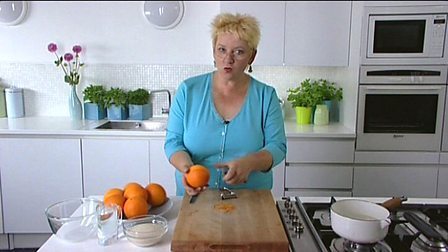 Watch technique1:02 mins
Bring to the boil, add the meat and simmer gently for 40-50 minutes until the meat is tender. Cool.
Heat the oven to 200C/400F/Gas 6.
Put the meat mixture in a pie dish. Roll out the pastry to make a lid and attach to the dish. Decorate with the pastry trimmings and cut a steam hole in the centre. Glaze with beaten egg.
Technique: Covering a pie with a pastry lid
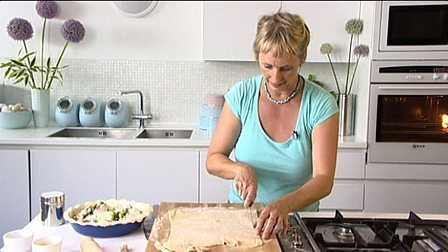 Watch technique2:11 mins
Bake for 20 minutes and then reduce the heat to 180C/350F/Gas 4 for 30 minutes until the pastry is golden and risen and the filling is piping hot.
Share!


The post Medieval Recipes – Game Pie appeared first on EE Carter.


October 10, 2014
Medieval Games – Discover the Original Game of Thrones!

Is it me or is it draughty in here?
Before there was The Game of Thrones there was… the game of thrones.
Games such as draughts/checkers and chess have their origins in ancient times.
When it was too hot, too cold, too rainy, too wintery or too dark to actually fight or train, then soldiers put their skills to the test strategically in the form of these board games.
A modern day observer would certainly understand the game play of 2000 BC even if the rules of the game were different to today’s codified versions.
What is the subject of much debate – including a doctoral thesis is whether draughts predates chess or vice versa. Stoep contends:
If it is true that the influence from draughts was responsible for the great reform of medieval chess, draughts must have been a popular game in Spain in the 15th c. A bold claim? By no means: in the 15th c. draughts was (also) popular in Spain’s neighbour France. This popularity was far from momentary, in France draughts seems to have been very popular since the 11th c. and may be earlier. However, all my claims can be refuted, it seems, by referring to the literature on board games: all experts are united in their supposition draughts was not described in the Middle Ages. It does not occur in the Alfonso manuscript (1283), a strong indication, perhaps a proof, that draughts did not exist in the 13th c. Certainly, this manuscript gives the rules of a board game with the leap capture called alquerque, but alquerque was not played with promotion, all surveys on board games assure us. My inquiries gave quite another result: alquerque was played with promotion. In other words, see chapter 6: Alquerque was draughts.
Another enthusiast points out that playing draughts with counters (most likely backgammon counters) was not seen before the 17th Century and the game of draughts was most likely played with chess pawn pieces.
Variations of board games were known right around the world and one of the most popular of these is a Norse game which translates as ‘King’s Table‘.
A Latin text written during the reign of the British Anglo-Saxon King Thelstan (AD 925-40) describes the Saxon form of hriefatafl, which was played in England at the time. It was most popular in Northern Europe, during the dark ages until chess started to take over during the 11th century; the last references to it being played are in Wales in 1587 and Lapland in 1723.
Exclusive Extract from Warrior’s Surrender
Larcwide and some of the older men watched as two others sat studiously at a table, contemplating their next move in a game of draughts. Every now and again heads would lift and the displeasure of other occupants of the Hall were made known when the sounds of wooden skittles being felled or the laughter at the antics in a play-acting game became too distracting.
Sebastian taught Frey the game of draughts and, despite a few initial missteps, she could now boast of being a worthy opponent. Her brother was a better one.
“Ah!” Brice announced triumphantly having landed his counter on the last row of the board.
“I should wonder what they do all day at St Cuthbert’s if you have time to become so expert,” she grumbled, then added cheerfully, “but now that you are living here you will have all the more time to teach me your skill.”
Brice looked uncomfortable. His head dropped and chin trembled.
“Frey, I wanted to wait until after Christmas but I ought to tell you something now,” he started, first tentatively and then with increased excitement as he shared his news.
Meet the characters of
Warrior’s Surrender
and WIN!
Visit my post on this page – http://eecarter.com/index.php/meet-the-characters-of-warriors-surrender-and-win/
And share my Warrior’s Surrender e-cards – or any of my Medieval-themed blog posts and you go in the running to win a certified organic Botanical perfume, Brave – the perfect scent for a heroine like Alfreya of Tyrswick.
Don’t forget to tag me, so I can track your entries!

Share!


The post Medieval Games – Discover the Original Game of Thrones! appeared first on EE Carter.
October 8, 2014
Hit & Myth 2 – Nicholai, The Medieval Science Guy

A March calendar, a time for plowing – with one of those new fangled heavy plows.
This is part two of our October Thursday series of Medieval Mythbusters. Check out last week’s ‘episode’ here!
This week we look at:
In Medieval times, all scientific advancement
came to a screaming halt
While it is true that the collapse of the Roman Empire brought to an end to structured society, it would be a mistake to believe that all scientific progress came to a halt.
Monasteries dotted around the Middle East and Europe preserved the light of scientific inquiry and, by the end of the 11th century, colleagial sharing of knowledge became more structured and the modern university was created. A degree in Bologna was the passport to being instantly accepted to teach at the University in Paris or accepted to Oxford – in fact any accredited university.
Many of the medieval universities in Western Europe were born under the aegis of the Catholic Church, usually as cathedral schools or by papal bull as Studia Generali. In the early medieval period, most new universities were founded from pre-existing schools, usually when these schools were deemed to have become primarily sites of higher education. Many historians state that universities and cathedral schools were a continuation of the interest in learning promoted by monasteries.
These religious houses took their science seriously. As Nicolai Copernicus, the man who should be truly credited with identifying heliocentrism, is quoted as saying, “O God, I am thinking Thy thoughts after Thee”.
In general, there was religious support for natural science by the late Middle Ages and a recognition that it was an important element of learning. The extent to which medieval science led directly to the new philosophy of the scientific revolution remains a subject for debate, but it certainly had a significant influence.

I think he went to Specsavers…
Discovery and exploration wasn’t just limited to the theoretical either, many inventions we use today have their origins in medieval times including, the wheelbarrow, the blast furnace, the heavy plow, the mirror, and spectacles!
Indeed young Brice, the brother to Lady Alfreya of Tyrswick shows his scholarly inclination in Warrior’s Surrender, taking advantage of the more structured learning that emerged at that time.
Over time, a standardized course of study was developed. Students studied, at length, seven specific disciplines. Arithmetic, geometry, grammar, rhetoric, logic, astronomy, and music were the seven basic disciplines in which successful students were expected to receive a well-rounded education. Those who displayed a particular proficiency for any particular discipline could continue their studies at university.
Excerpt Warrior’s Surrender:
“Frey, I wanted to wait until after Christmas but I ought to tell you something now,” he started, first tentatively and then with increased excitement as he shared his news.
“In summer, I might be going to a town in the south. It’s called Oxford and the church has started a school there. Brother Abbot Ranulf says I have a fine mind and if I keep up my studies he will recommend I study under Gerland who is the greatest mathematician and computist in all of England.”
While Brice spoke avidly of integers, modulos, and divisions, Frey swallowed past a lump in her throat and inwardly mourned while outwardly she managed a smile and told him with all sincerity that his mama would have been so proud of him.
So, science came to a screeching halt in Medieval Times?

It’s a bust
Share!


The post Hit & Myth 2 – Nicholai, The Medieval Science Guy appeared first on EE Carter.
October 7, 2014
Medieval Life – Holiday!

Holidays and Holy Days are synonymous – thank God for them!
If you’re reading this on holidays, then you have medieval forebears to thank.
The very word comes from a corruption of Holy Days and were tied into religious festivals where normal work was suspended for the day (or few days) – the good news was that there was a Holy Day every month in addition to the traditional Sunday, ‘day of rest’.
The rural population of the Middle Ages had their days of rest and amusement, Middle Ages holidays were then much more numerous than at present. At that period the festivals of the Church were frequent and rigidly kept, as each of them was the pretext for a forced holiday from manual labour.
The concept of the weekend – a Saturday and Sunday off is a relatively recent phenomenon – the very etymology of the word goes back to the 1870s. The reason why we have both of these days off, appears to be largely lost in time, but appears to have evolved in the UK and the US at roughly the same time to accommodate both Christian and Jewish rest days.
By the mid-20th century most of the Western world followed suit and in the past decade, the Arab world has synchronised its weekends to match the west.
The weekend was also popularised by Henry Ford who demonstrated that business could offer employees two full days off with pay (in fact, he increased wages) and still be very profitable:
The results were noticeable. The Ford Motor Company saw reduced turnover and was spending less money finding and hiring new employees. The company was also able to retain the best people for the jobs it had, thus making the operation more efficient. And perhaps the least discussed aspect of this policy was that Ford’s own employees were now able to afford the cars they themselves were building. This plowed money back into the company as Ford’s employees did just this very thing.
As much as we all complain that the weekends are too short, think of this:
If the ideals of the French Revolution had spread globally, as was their intent, we’d have ended up with a decimal calendar with a 10 day week!
Their desperation to purge anything of religious significance (after all, God rested on the seventh day), resulted in a convoluted calendar in which the State’s day of rest came by once only every 10 days and every single day had a different name!
But that’s a story I’ll bring when Moonstone Conspiracy comes out but in the meantime, enjoy some Madonna doing some 80s-style aerobics, or something.
Share!


The post Medieval Life – Holiday! appeared first on EE Carter.
A Season To Remember Preview – All The Glitters
Molly is a modern day Cinderella, second best to her half-sister Aimee and never measuring up to her step-mother’s expectations. Now Aimee has the chance to marry an elderly millionaire and Molly is expected to keep the man’s grandson, Connor Rathmore, from sabotaging the event. Handsome, charismatic and very, very sexy – how is she going to keep him from sabotaging her heart?

Excerpt
“Well, are you ready?” She sounded rude but it was all she could manage to say. On the way over to pick him up she’d been too preoccupied to consider him at all. Instead she replayed the conversation she’d had with her stepmother. After receiving a reprimand for arriving late, Maria had grilled her over Connor Rathmore and found her answers less than satisfactory. Then the lecture started on her appearance.
Where were the shoes? She’d kicked off those horrible expensive shoes at the airport and hadn’t given them another thought. An unforgivable act in her stepmother’s eyes. It was impressed upon her that she must try harder and remember her sister’s happiness. Of course.
Molly loved her half-sister, Aimee, despite the fact the girl was spoilt rotten. Underneath all the embellishments she really did have a good heart. It wasn’t Aimee’s fault she’d been raised to be a life-sized doll.
She appraised the man before her. She steeled herself not to react to him. When he’d opened the hotel room door, more primal male than any man she had ever encountered, something unexpected happened to her. Bam! Right to the heart. Very inconvenient and impossible, the idea could not be entertained. Not for a millisecond. The consequences would be devastating.
“Good evening to you too.” He bestowed what she assumed was his best killer smile. “Shall we go?”
He stepped through the door, so close the heat radiating off his body hit her like a furnace. Her natural reserve began to melt. The scent of him was so… masculine and her knees wobbled as she caught her breath. Moving away wasn’t an option, even if she tried.
He smiled as if aware of the effect he had on her. Without looking back he strode towards the elevator and pushed the button. They stood in silence side by side while they waited. The animal magnetism between them shimmered, increasing with every passing second.
Molly’s senses scrambled. She stumbled into the lift. This situation would need careful handling. The man beside her must not guess his presence caused a meltdown. Her attraction to him created a complication she did not need. Just one week. Please help me make it through this one week. If her stepmother suspected an attraction between Molly and Connor, all hell would break loose.
Share!


The post A Season To Remember Preview – All The Glitters appeared first on EE Carter.
October 5, 2014
Medieval Football Fever (or my great, great, great, great, great, great grandfather was a soccer hooligan)
Rugby League season has just finished for the year (a big congratulations to the South Sydney Rabbitohs!) and thus ends Australia’s football season.
So it seems appropriate to uncover the medieval roots of football. I used to be of the belief that football could only apply to soccer because it is the only ball game where the foot is exclusively used to propel the ball.
But it would seem that in medieval times players made no such distinction:
The first documented case of football was recorded by William FitzStephenin the year 1170. While he was visiting London he noticed that “after dinner all the youths of the city goes out into the fields for the very popular game of ball.” He also noted that every trade had its own football team.
It is thought that some of these popular games derived from the Roman game “harpastum,” even though the Romans were long gone from these lands (in 410)…
…The name “football” was referring to the game being played on foot and not because it was played by using your feet. Actually, all parts of the body were allowed to be used to propel the ball. The game was simply called “ball” or “gameball.”

Quite so
Football games took place between trade guilds, towns and often took place from town to town, through the streets and involving up to 300 people at a time!
Indeed, so violent was medieval football that the Lord Mayor of London actually banned the sport in 1314, claiming ‘there is great noise in the city caused by hustling over large footballs in the fields of the public’.
The extent of its popularity and rambunctiousness is reflected in the fact there were more than 30 royal and local laws which attempted to ban football between 1314 and 1667. However, by the end of the 14th century, the term ‘football’ was well established in England, with Chaucer even referencing it in his Canterbury Tales.
It was by no means solely confined to the lower orders either, as the Great Wardrobe of Henry VIII in 1526 recorded ‘one leather pair (of shoes) for football’, and decrees around 1555 were required to ban football at the colleges of Cambridge and Oxford University.
Not surprisingly fields were eventually given over to playing the game were preferable to the rolling melee of mob football.
Despite the ‘domestication’ of football (soccer, AFL, rugby league, rugby union, celtic football, gridiron etc, etc) the idea of the free-for-all mob football still resonates today – in fact two game designers have successfully completed a Kickstarter campaign for a medieval fantasy roll playing game called Guild Ball.
Which may or may not look like this:
Meet the characters of
Warrior’s Surrender
and WIN!
Visit my post on this page – http://eecarter.com/index.php/meet-the-characters-of-warriors-surrender-and-win/
And share my Warrior’s Surrender e-cards – or any of my Medieval-themed blog posts and you go in the running to win a certified organic Botanical perfume, Brave – the perfect scent for a heroine like Alfreya of Tyrswick.
Don’t forget to tag me, so I can track your entries!
Share!


The post Medieval Football Fever (or my great, great, great, great, great, great grandfather was a soccer hooligan) appeared first on EE Carter.
October 4, 2014
Try Medieval Cookery at Home – Sambocade Cheesecake

A medieval dessert you can make at home!
Medieval cooking was more than just roasting slabs of meat and eating gruel.
In fact cooking at that time was very sophisticated and sensitive – making the best use of seasonal produce and when possible using the best herbs and spices to make the most of these staple ingredients.
And who doesn’t love dessert?
In Warrior’s Surrender, a special treat atTyrswick Keep is Sambocade Cheesecake made from elderflowers.
The dance ended with the announcement that a course of sweets would soon be served.
“I’m going to check on William,” announced Rosalind. “Cook promised sambocade cheesecake as one of the dishes and I don’t want to miss out.”
“Go,” Sebastian smiled. “I’ll save you a slice.”
Rosalind walked off with a wave of a hand in acknowledgement.
“Perhaps half a slice!” Rosalind pulled a face at him and continued on her way.
****
I’ve found an amazing modern interpretation on Homemade for Elle, and this long weekend, I’m going to see if I can find elderflower cordial to give this a try. If this inspires you, let me know and post a picture and tag me in Facebook!
Sambocade Cheesecake
Ingredients
2 cups flour
1 cup butter, cubed
4 tbsp sugar
6 eggs, divided
1-2 tbsp milk
⅓ cup breadcrumbs
½ cup sugar
12 oz cream cheese
1 tbsp elderberry cordial
Instructions
Combine flour and sugar in a large bowl. Rub the butter into the flour with your fingertips until the mixture resembles fine breadcrumbs, working as quickly as possible to prevent the dough becoming warm.
Add two eggs to the mixture and stir until the dough binds together. Add milk, a teaspoon at a time, if the mixture is too dry.
Wrap the dough in Saran wrap and chill 15-30 minutes.
Meanwhile, preheat oven to 350 degrees and grease a deep pie dish or tart tin.
Using a rolling pin or a glass, roll the dough into a circle, about ¼” thick.
Transfer dough into the greased pie dish or tart tin.
In a bowl, cream together 4 egg yolks and sugar until almost white and shiny, then gradually add the cream cheese, beating well after each addition until well blended. Stir in the breadcrumbs and elderberry cordial.
In a separate bowl, whisk 4 egg whites until shiny and stiff, then fold these into the cheesy mixture. Spoon into the pre-baked crust. Bake in the oven for about 40-50 minutes or until golden brown.
Serve with whipped cream or creme fraiche
Meet the characters of
Warrior’s Surrender
and WIN!
Visit my post on this page – http://eecarter.com/index.php/meet-the-characters-of-warriors-surrender-and-win/
And share my Warrior’s Surrender e-cards – or any of my Medieval-themed blog posts and you go in the running to win a certified organic Botanical perfume, Brave – the perfect scent for a heroine like Alfreya of Tyrswick.
Don’t forget to tag me, so I can track your entries!
Share!


The post Try Medieval Cookery at Home – Sambocade Cheesecake appeared first on EE Carter.
October 3, 2014
Medieval Fun & Games – Skittles

Skittles, a fabulous old game popular in Medieval times
One of the most fun things I had when writing Warrior’s Surrender was discovering how much fun people had in Medieval England!
Games and sports were just as much a part of people’s lives as they are now and one which has endured is skittles – a very traditional pub game which has become the international favourite ten-pin bowling.
Certainly the sport is very similar:
The rules and methods of scoring varied from place to place, but the basic principle of bowling a wooden or rubber ball (weighing about 10 pounds [4.5 kilograms]) at nine large oval-headed pins, set in diamond formation 21 feet (about 6.5 metres) away, remained the same. The player who knocked down all the pins (scored as “chalks”) in the fewest throws was the winner.
There are a number of skittle games across England and there have been many more in the past. It could be that the game came from Germany as one of the earliest references is to from Germany, in the 3rd or 4th century monks played a game with a kegel which was a club carried for self defence. In the game, the kegel represented a sin or temptation and the monks would throw stones at it until they knocked it over. The modern German term for skittles is Kegelen.
In Warrior’s Surrender, my cast of characters spend winter evenings in the Great Hall, playing games of various sorts including skittles, drafts, engaging in sing-a-longs and play acting – all the fun things that many of us wiled away the day with before television and the internet consumed so much of our time and attention.
I know I’m a dreadful one to talk – I really have to schedule my time away from the computer…
Anyway, I’ve managed to find a video here of someone playing the traditional Medieval skittles!
Would you survive the Middle Ages?
Buzzfeed has a cute quiz right here – http://www.playbuzz.com/charlotteb11/would-you-survive-the-middle-ages
Share!


The post Medieval Fun & Games – Skittles appeared first on EE Carter.
Debut episode of Friday Nights @ The Big Cat Cafe
Hubby and I have joked for years and years and years about the fact that we needed our own talk show, well… we finally did it:
Share!


The post Debut episode of Friday Nights @ The Big Cat Cafe appeared first on EE Carter.