Sophfronia Scott's Blog: Sophfronia Scott, Author, page 29
March 19, 2015
Talking Frat Boys, Books, and Unbreakable Kimmy Schmidt

That’s Bruce Barber between me and Mark Oppenheimer, and Brian Slattery is on the right.
I recently had the pleasure of throwing in my two cents on cultural news of the week as a panelist for WNPR’s Colin McEnroe show. Mark Oppenheimer, a new friend and writer of a regular column in the New York Times, guest hosted the program from New Haven (it’s usually in Hartford) and invited me to join him. Hey, anytime I get to hang out with smart people and talk about the world, I’m all in. We covered those frat boys in Oklahoma (and the behavior of college students in general), and the marvelous new Netflix show created by Tina Fey, “Unbreakable Kimmy Schmidt,” which, surprisingly, I admire. Here’s the link to a recording so you can listen in. At the end you’ll hear me endorse new books by two Connecticut authors: The Listener, a novel by Rachel Basch, and The Politics of Promotion: How High-Achieving Women Get Ahead and Stay Ahead by Bonnie Marcus.
I’ve had a few people ask me about whether the show was rehearsed because, as you’ll hear, it runs quite smoothly. No “Um’s” or “Uh’s” to be found. But you can’t rehearse live radio. We knew the topics going in and that’s about it. You can’t really prepare exactly what to say beforehand because you have no idea how the conversation will flow. The best way for me to prepare is to know what I think about the topics so when I speak I can articulate a clear point of view. These were the 3 intentions I set for myself going into the studio:
1.) Be present and listen well so I can offer useful thoughts to the conversation.
2.) Support local women writers. (I knew I would have an opportunity to make endorsements.)
3.) Enjoy my time with my friends in the studio.
What difference would these intentions make? The first helps the host and the producers so they can do their job well of creating a good radio show. The second allows me to use this great opportunity to provide exposure for sister writers so more people can benefit from their excellent work. The third allows me to take care of myself and remember to have fun. I think I fulfilled all three intentions and I’m still buzzing with the good energy of having done so. I’m truly grateful. I’ll let you know when I have the chance to do the show again so you can tune in and even call in live.
Blessings and Best Wishes,


February 17, 2015
Writing to Reach a Broader Audience
 If you’re on Twitter and a lover of books you’ve probably come across #LitChat, the popular discussion about books and their authors that takes place twice a week. Recently LitChat’s founder, Carolyn Burns Bass, asked me to be a guest host on the chat discussing what I feel are some of the important issues facing writers of color today. I wrote a blog post for her on the topic, “Writing to Reach a Broader Audience.” You can read it on the LitChat website by clicking here and then join us for the discussion on Wednesday, February 18, 4-5pm ET. Just follow the hashtag #LitChat on Twitter or use #LitChat’s dedicated Twitter feed channel at www.nurph.com/litchat. Feel free to chime in with comments and questions, I’d love to hear your thoughts. The excellent David Hicks, co-director of Regis University’s Mile-High MFA will be in the stream as well. I hope you can be there, I’m looking forward to it!

February 6, 2015
Can Creative Writing Be Taught to You?
I allowed the little black arrow to hover over the big blue SEND button a moment or two longer before I finally clicked on it. I’d read my critique of the essay multiple times to ensure my points were clear and the overall tone was convivial and encouraging. I’d met the writer, a college student studying creative nonfiction, last summer and she recently reconnected with to me to ask if I would read an essay for her. Still, I hesitated to press down on the mouse. I knew my words would instigate one of two responses and I’m not casual about either of them. She would either “get it” and get to work, or she would run away aggrieved, crying indignant tears, and I would never hear from her again. It sounds melodramatic, to be sure, but trust me. One or the other does happen in some form—with guys too.
Some would say this is inevitable. Writers are sensitive souls and as such are more prone to take criticism personally and with great difficulty. True, many writers are emotionally engaged on a level beyond the normal populace, but I’m inclined to wonder—does a critique really have to hurt so much?
This is on my mind now as I join the faculty of Regis University’s Mile-High MFA, a new low-residency writing program based in Denver. Specifically, I’m pondering the question explored in the literary journal Boulevard in its Symposium, published in 2011, on “Can ‘Creative Writing’ Really Be Taught?” Obviously I think it can otherwise I wouldn’t be a teacher of writing, but I admit I also agree writing can’t be taught in the way we usually think about teaching—as a transfer of knowledge and skills. Here I’ll quote Jonathan Yardley of The Washington Post albeit reluctantly—this is from a 2005 book review in which he trashes beyond belief Before We Get Started, an essay collection on writing by one of the best teachers I’ve ever worked with, Bret Lott. But this part, which has nothing really to do with Bret’s book, rang true for me:
“Yes, people who aspire to be writers are like people who aspire to anything else: They need help. Over the years some exceptionally good books have been written about the art and craft of fiction — I think in particular of Flannery O’Connor’s Mystery and Manners and Eudora Welty’s One Writer’s Beginnings — but they deal with large issues rather than niggling details. They don’t say, implicitly or explicitly: Do as I advise and you can be just like me. They understand that serious writing done in the hopes of making literature is a mysterious process the precise nature of which is hidden within the individual writer’s heart and mind, and that this process cannot be transferred — least of all in a classroom or a writers’ colony — from one person to another.”
The key here is that process “hidden within the individual writer’s heart and mind.” This does exist, but I believe the problem is too many aspiring writers (and I mean beyond the undergraduate level) show up in the classroom with mounds of sensitivity and little or no awareness of his or her own process. Instead they look for someone to give it to them, which, really, can’t be done and sets them up for a bewildering experience. Which leads me to wonder: Are we asking the right question? Instead of having the MFA programs, workshops and writing conferences of the world work so hard to put forward a plausible response to “Can creative writing be taught?” perhaps more of the onus should be on the student to ask his or herself, “Can creative writing be taught to me?”

image by Chanell Marshall (4/17/10)
And this doesn’t mean you can sit through a critique without shedding a tear. This is about understanding your own creative process, and why you felt you needed to be in a room getting critiqued in the first place. Do you know your strengths and weaknesses as a writer? Are you in that place where you know you’ve taken the work as far as you can and now you need guidance to move beyond, to help you dare more on the page?
When you come to the classroom with all this in mind, you are ready to explore and what’s more, you’ll know when you’ve heard the critique that feels right because you know it will help. If you haven’t done any serious thinking about where you are with your writing, it will be like coming to the room with an empty heart and expecting your teacher to fill it. Of course such expectation would only lead to disappointment.
So what happened with the writer I mentioned above? She responded with excellent questions. For example, I’d pointed out how her essay had two narrative arcs, both disjointed and neither fulfilled for the reader. I also said if she wanted to, she could choose one and have the essay be only about that. She said she really wanted to keep both and asked me questions about structure and length that could help her accomplish it. I wrote back in full support of her choices and provided ideas to help her follow through. I also applauded her openness to allowing me into her process.
Everyone’s process is different. For many years I thought I wouldn’t get an MFA but there came a time when my writing and my life as an artist demanded this level of engagement. Perhaps I needed to come to this place where I was ready to learn. What about you? Where are you on this journey? Can creative writing be taught to you? If you ask the question and discover the answer is “Yes” then come find me at Regis. I would be honored to join you in your process, and eager to learn where you want to go with your writing.
Enjoy your work,
December 18, 2014
Creativity Playdate: City Island, New York City
This week: an unexpected creativity playdate. I drove a friend and her family to JFK International Airport and as we passed through the Bronx, I pointed out the signs to City Island, a tiny island neighborhood, 1.5 miles long, jutting out into the westernmost point of Long Island Sound. I said, “Have you ever been there? It’s really beautiful, like a New England fishing village hidden away in New York City.” On my way home when I came upon the signs again I realized I haven’t been to City Island in many years. When I lived in Manhattan I used to be a member of a cycling group that biked there on summer weekends. That’s why I knew of its beauty.

City Island panorama
I also realized I had the rest of my morning free. So I took the City Island exit and spent an hour walking around and taking pictures. I’m glad I did. It felt like a snippet of summer vacation. I could smell the salt in the air and a bit of winter sun shone through enough to feel the warmth on my skin. I don’t know where, I don’t know when, but I know something of this experience will find its way into my writing. I’m glad I took the time. Here are some of the photos—I especially loved the homes with patches of beach in their backyards. I hope you enjoy the pics and that you’ll have many impromptu creativity playdates in the new year.


December 5, 2014
A Grateful Writing Life
I am waiting. It’s a common activity for writers. You work on a piece of writing. You finish it. You send it somewhere. You send it to a reader for feedback, you send it to a literary journal for possible publication, or you send it to a literary agent for possible representation. And then you wait. Ideally you work on more writing while you wait.

photo by Melissa Fisher
But I’m learning my brain likes to use this waiting time to roll around in a lot of unhelpful, distracting thoughts. These thoughts mainly focus on what I haven’t done yet—goals still unattained, essays not written or revised, a short story not progressing quickly enough. I also think about what I’m missing. This week the “missing” thoughts center on missing my Vermont College of Fine Arts community and how, because of my graduation in July, this will be the first time in three years I won’t be traveling to snowy Montpelier for a 10-day residency. The same kind of thinking makes me downplay or give short shrift to my accomplishments. “Yes, getting that publication is great but I don’t know what’s happening with my novel.”
However a specific realization about VCFA and then an image I saw posted on Facebook coincided to disperse these thoughts by giving me a pretty good knock upside the head. First the realization: three years ago this month I began my pursuit of an MFA. Here’s where I was before I went to VCFA. My sister Theodora had passed away just four months before and in my shock and grief I’d made the decision that I wouldn’t waste any more time not practicing my art. I was writing, yes, but it was all writing connected to my business and none of it furthered my creative work. I was trying to write my second novel but had no time to get beyond the first two chapters. The literary community I craved seemed to be on another planet. I wanted to have a different life, a writing life, where I showed up in the world as an author and a literary writer.
This week Ruminate Magazine announced the publication of its winter issue and posted on Facebook an image revealing the cover that included the names of the writers featured in the issue. And there it was: my name on the cover of Ruminate. I knew my essay, “Why I Must Dance Like Tony Manero,” a finalist for Ruminate’s 2014 VanderMey Nonfiction Prize, would be in the issue but I didn’t know it would be highlighted on the cover.

This picture totally rang my bell. It seemed to say, “Silly girl! Look at how far you’ve come! See what you have and not what you lack!” When I did look I was so humbled I fell to my knees. It is three years later and I have:
• My MFA, and it’s even a dual-genre one (fiction and creative nonfiction)
• Completed my second novel including extensive revisions. It’s now with my literary agent.
• A new gig where I’ll teach fiction and creative nonfiction in a low-residency creative writing program, the Mile-High MFA, at Regis University in Denver.
• Had a number of essays and short stories published—and now I have my name on the cover of a gorgeously awesome literary journal.
• The joy of being surrounded by writers, truly great writers, and I’m inspired and supported by their examples and the feeling that we’re all in this together.
• The focus and drive to work on my own writing and reading every single day while still handling some client projects.
In other words, I have the writing life I sought three years ago. I don’t have to wait for my novel to sell or for some other huge validation that I’ve arrived. My writing life is here, it’s now, and I’m living it. This doesn’t mean I think I’m supposed to be woo-woo happy all the time. Writing is hard and the writing life is no cruise ship vacation. (Side note: One of my essays was just rejected by an editor I know well personally. None of this comes easily!) But it’s what I wanted and I have it. I will try to maintain this awareness as much as I can. Hopefully from now on, or at least every time I sit down to write, I’ll better appreciate how much I am truly in my gratitude.
November 24, 2014
Toni Morrison and Me
 I tend to talk about Toni Morrison with a cautious blitheness. I mention how we share the same hometown, Lorain, Ohio, but even that’s a scary thing to do. Why would I want to invite comparisons to a Nobel and Pulitzer prizewinning author? Such a thought would send most writers under their desks, possibly holding a thick reference book over their heads, like we used to do for tornado drills in my old elementary school, as protection from the debris surely to fly around them. However when I saw the video of Ms. Morrison’s interview with Stephen Colbert, I realized it’s time for me to talk seriously about what binds me to this important author and how she taught me something about myself that makes me confident, not fearful, in my work.
When Colbert asked how Ms. Morrison wanted to be “pigeon-holed” if not as an African-American writer, she said she wanted to be known “as an American writer.” She went on to say, “There is no such thing as race. None. There’s just the human race. Racism is a construct, a social construct…” I agreed and knew what she meant from the fiber of my being. I too think of myself as simply “a writer” working from the imagination and experience of being a human who happens to be named Sophfronia Scott. I have always felt this way but up until about ten years ago I couldn’t “own” it because I didn’t understand it. I only knew from a very young age I didn’t see the world along racial lines and thought this was an awareness I somehow missed out on. When I was in high school I often heard whispers that I wasn’t “black enough” or that I didn’t “sound black.” This led me to wonder if I was lacking in a way I could never figure out how to fix.
 But then I happened upon Hinton Als’s 2003 profile of Toni Morrison in The New Yorker. I discovered she and I, despite our age difference, have a lot more in common than I knew, and these similarities were most likely what had shaped my worldview. It began with the most basic of shared characteristics—our fathers both worked at U.S. Steel, and she and I both grew up hanging clothes to dry outside, doing it very badly at times, and coming to a realization early on that we would not have the same existence as our mothers and aunts.
“I developed a kind of individualism—apart from the family—that was very much involved in my own daydreaming, my own creativity, and my own reading. But primarily—and this has been true all my life—not really minding what other people said, just not minding.”
But the big thing she pointed out to me in this article was how our community in Lorain was so integrated. Morrison always lived, she said, “below or next to white people,” and the schools were integrated—stratification in Lorain was more economic than racial. The piece also noted the work at U.S. Steel attracted not only American blacks from the south (my father was from Mississippi) but also displaced Europeans: Poles, Greeks, and Italians. The city has a large Hispanic population as well. This made me think of my father’s Polish friends we used to visit and of Lorain’s annual International Day Festival. To me this was just the way I grew up—I didn’t know I was living an integrated existence, or even what it meant .
 Then, to match our outer experience, it seems Morrison and I fed our minds a creative diet that turned out to be just as integrated. As a child, Morrison read virtually everything, from drawing-room comedies to Theodore Dreiser, from Jane Austen to Richard Wright. I had done the same, thoroughly steeping myself in the work of Bronte (Charlotte and Emily), Austen, Dickens, Tolstoy, Flaubert, Wright, Ellison, and, yes, Morrison. My influences cover the globe.
I realized I come by honestly my inclination to write from views and voices not my own. The characters in my fiction are white and black, gay and straight, of various religions and nationalities. I used to worry about being taken to task for this and that I wouldn't have the confidence to back up this tendency because I didn't understand it myself. But Morrison helped me to see this inclination is truly my own. I have been nurtured by my inner and outer environments to write this way and once I knew this I could write with confidence and without apology. And in all this writing I know I am seeking to tell one humanistic story and it is and will always be, I think, a love story. Morrison’s stories also seek such basic humanistic elements: love, mercy, forgiveness.
 So if you ask me whether I aspire to be like Toni Morrison, I would say this: I don’t aspire to her lyricism or style, which are very much her own, but I do have this simple ambition—to tell a good story and tell it well. This aspect, I think, is where she and I both come from, the true hometown we share.
November 21, 2014
Toni Morrison and Me
I tend to talk about Toni Morrison with a cautious blitheness. I mention how we share the same hometown, Lorain, Ohio, but even that’s a scary thing to do. Why would I want to invite comparisons to a Nobel and Pulitzer prizewinning author? Such a thought would send most writers under their desks, possibly holding a thick reference book over their heads, like we used to do for tornado drills in my old elementary school, as protection from the debris surely to fly around them. However when I saw the video of Ms. Morrison’s interview with Stephen Colbert, I realized it’s time for me to talk seriously about what binds me to this important author and how she taught me something about myself that makes me confident, not fearful, in my work.
When Colbert asked how Ms. Morrison wanted to be “pigeon-holed” if not as an African-American writer, she said she wanted to be known “as an American writer.” She went on to say, “There is no such thing as race. None. There’s just the human race. Racism is a construct, a social construct…” I agreed and knew what she meant from the fiber of my being. I too think of myself as simply “a writer” working from the imagination and experience of being a human who happens to be named Sophfronia Scott. I have always felt this way but up until about ten years ago I couldn’t “own” it because I didn’t understand it. I only knew from a very young age I didn’t see the world along racial lines and thought this was an awareness I somehow missed out on. When I was in high school I often heard whispers that I wasn’t “black enough” or that I didn’t “sound black.” This led me to wonder if I was lacking in a way I could never figure out how to fix.
But then I happened upon Hinton Als’s 2003 profile of Toni Morrison in The New Yorker. I discovered she and I, despite our age difference, have a lot more in common than I knew, and these similarities were most likely what had shaped my worldview. It began with the most basic of shared characteristics—our fathers both worked at U.S. Steel, and she and I both grew up hanging clothes to dry outside, doing it very badly at times, and coming to a realization early on that we would not have the same existence as our mothers and aunts.
“I developed a kind of individualism—apart from the family—that was very much involved in my own daydreaming, my own creativity, and my own reading. But primarily—and this has been true all my life—not really minding what other people said, just not minding.”
But the big thing she pointed out to me in this article was how our community in Lorain was so integrated. Morrison always lived, she said, “below or next to white people,” and the schools were integrated—stratification in Lorain was more economic than racial. The piece also noted the work at U.S. Steel attracted not only American blacks from the south (my father was from Mississippi) but also displaced Europeans: Poles, Greeks, and Italians. The city has a large Hispanic population as well. This made me think of my father’s Polish friends we used to visit and of Lorain’s annual International Day Festival. To me this was just the way I grew up—I didn’t know I was living an integrated existence, or even what it meant .
Then, to match our outer experience, it seems Morrison and I fed our minds a creative diet that turned out to be just as integrated. As a child, Morrison read virtually everything, from drawing-room comedies to Theodore Dreiser, from Jane Austen to Richard Wright. I had done the same, thoroughly steeping myself in the work of Bronte (Charlotte and Emily), Austen, Dickens, Tolstoy, Flaubert, Wright, Ellison, and, yes, Morrison. My influences cover the globe.
I realized I come by honestly my inclination to write from views and voices not my own. The characters in my fiction are white and black, gay and straight, of various religions and nationalities. I used to worry about being taken to task for this and that I wouldn’t have the confidence to back up this tendency because I didn’t understand it myself. But Morrison helped me to see this inclination is truly my own. I have been nurtured by my inner and outer environments to write this way and once I knew this I could write with confidence and without apology. And in all this writing I know I am seeking to tell one humanistic story and it is and will always be, I think, a love story. Morrison’s stories also seek such basic humanistic elements: love, mercy, forgiveness.
So if you ask me whether I aspire to be like Toni Morrison, I would say this: I don’t aspire to her lyricism or style, which are very much her own, but I do have this simple ambition—to tell a good story and tell it well. This aspect, I think, is where she and I both come from, the true hometown we share.
November 14, 2014
What’s Literary Citizenship?
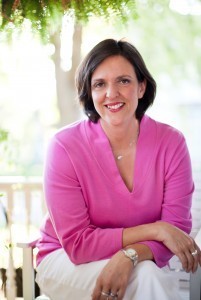 What does it mean to be a literary citizen? The word “citizen” implies living somewhere and in this case we’re talking about taking up residence in the literary world. I like Cathy Day’s answer. She’s the author of two books: Comeback Season: How I Learned to Play the Game of Love (Free Press, 2008) and The Circus in Winter (Harcourt, 2004). Cathy also teaches creative writing at Ball State University. I’m sharing this post of hers because I believe deeply in literary citizenship. If you are an artist, you must study and live your craft. This goes for writers, actors, comedians, musicians, sculptors, painters–all artists. You’ll see me often post here and on my new Facebook author page (you can click here to read and “like” it–please do!) about attending book readings and writer events and reviewing books and literary journals I’ve read. Getting out to these events isn’t easy–I’m a mom and I have to juggle my schedule with the schedules of my husband and son. But I do it because the effort is so worth it. And, simply put, it makes me happy.
  Here’s a photo from a trip I took into New York City this week. I’m with the author Martha Southgate and we met to attend a talk at The New School called “The Art of Eroticism (The Eroticism of Art): How Passion Drives Creativity” by Esther Perel and Joshua Wolf Shenk. The topic was powerful and inspiring for my own creative process but just being in the room with Martha and meeting the speakers in person was also key–my knowledge of the literary world is a bit broader now. This is important, as important as knowing my own neighborhood. If I am to thrive in this world I must live in it and know it. It’s the only way to be at home here.
Even if you’re not a writer I hope you’ll get some ideas from Cathy’s post that will help you more strongly engage in a pursuit you care about.
Cathy Day’s Principles of Literary Citizenship
Cross Post Alert from Cathy: I published some initial thoughts and principles about literary citizenship, in March 2011 over at The Bird Sisters, writer Rebecca Rasmussen’s blog dedicated to artists and writers. I got a lot of my ideas from this post on the Brevity blog.
Literary Citizenship
 I’ve been teaching creative writing for almost twenty years now, and here’s something I’ve observed: what brings most people to the creative writing classroom or the writing conference isn’t simply the desire to “be a writer,” but rather (or also) the desire to be a part of a literary community. Deep down, we know that not everyone who signs up for the class or the conference will become a traditionally published writer. Well, so what? What if they become agents, editors, publishers, book reviewers, book club members, teachers, librarians, readers, or parents of all of the above?
My students attend MFA programs, yes, and they publish, yes, but they aren’t my only “success stories.” Some are literary agents; in fact, Rebecca’s agent, Michelle Brower, is a former student of mine. They subscribe to lots of literary magazines. They have founded and edit magazines, too. They’re editors. They write for newspapers and work in arts administration. They maintain blogs. They review books. They volunteer at literary festivals. They participate in community theatre. They become teachers who teach creative writing. Most importantly, they are lifelong readers. How do I know all this? Well, there’s this thing called Facebook…
Lately, I’ve started thinking that maybe the reason I teach creative writing isn’t just to create writers, but also to create a populace that cares about reading. There are many ways to lead a literary life, and I try to show my students simple ways that they can practice what I call “literary citizenship.” I wish more aspiring writers would contribute to, not just expect things from, that world they want so much to be a part of.
Here are a few of my working principles of Literary Citizenship:
1.) Write “charming notes” to writers. (I got this phrase from Carolyn See.) Anytime you read something you like, tell the author. Send them an email. Friend them on Facebook or follow them on Twitter. Not all writers are reachable, so you might have to write an old-fashioned letter and send it to the publisher or, if they teach somewhere, to their university address. You don’t have to gush or say something super smart. Just tell them you read something, you liked it. They may not respond, but believe me, they will read it.
2.) Interview writers. Take charming notes a step farther and ask the writer if you can do an interview. These days, they’re usually done via email. Approach this professionally, even if you are a fan. Write up questions (I prefer getting one question at a time, but some prefer getting them all at once). Let the writer talk. Writers love to talk. Submit the interview to an appropriate print or online magazine. Spread the word. There are many, many outlets, some paying. I really like the interviews published by Fiction Writer’s Review, like this one.
3.) Talk up (informally) or review (formally) books you like. Start with your personal network. Then say something on Goodreads. Then Amazon.com or B&N. Then try starting a book review blog. Or a book review radio show, like a former student of mine, Sarah Blake. Submit your reviews to newspapers and magazines, print or online. God knows, the world needs more book reviewers. Robin Becker at Penn State and Irina Reyn at Pitt are just two writer/teacher/reviewers I know of who actively teach their students how to write and publish book reviews. Remember: no matter what happens to traditional publishing, readers will always need trusted filters to help them know what is worth paying attention to and what’s not. Become that trusted filter.
4.) If you want to be published in journals, you must read and support them. Period. If it’s a print journal, subscribe. If it’s an online journal, talk them up, maybe even volunteer to read. One of my favorite writers, Dan Chaon, had this to say about journals: The writing community is full of lame-o people who want to be published in journals even though they don’t read the magazines that they want to be published in. These people deserve the rejections that they will undoubtedly receive, and no one should feel sorry for them when they cry about how they can’t get anyone to accept their stories. You can read his incredibly practical advice here.
5.) If you want to publish books, buy books. I don’t want to fight about big-box stores (evil!) vs. indie bookstores (good!) or about libraries (great!) or how truly broke you are (I know! I’ve been there, too!) or which e-reader is “better” for the writer or the independent book seller (argh!). I just want you to buy books. Period. It makes me angry to see the lengths relatively well-off people will go to avoid buying a book. Especially considering how much they are willing to spend on entertainment, education, or business-related expenses. If you’re a writer, you can file a Schedule C: Profit or Loss from a Business, and books and magazine subscriptions are tax-deductible.
6.) Be passionate about books and writing, because passion is infectious. When I moved back home again to Indiana this past summer, my husband and I set out to buy bookshelves. The first furniture store we entered didn’t even carry bookshelves, the second carried only a single type, and the third (which we bought, because they were on sale) were really intended to be decorative shelves, not book shelves. Mind you, I wasn’t really surprised by this. I grew up here, after all. If you find yourself in a literary desert, rather than fuss and complain about it, create an oasis. Maintain a library in your home. Share books with your friends, co-workers, children, and community. Start a book club. Start a writing group. Volunteer to run a reading series at your local library. Take a picture of your bookshelves and put them on Facebook. Commit to buying 20 books a year for the rest of your life.
Question: What is the secret to getting published?
Answer: Learn your craft, yes. But also, work to create a world in which literature can thrive and is valued.
November 7, 2014
Loving What You Write
 I was walking around my yard in a bit of a daze. The day before I had finished the novel revision I’d been working on for months. Like the crazy woman I am, instead of resting I was trying to organize my thoughts for the next novel. But I felt like I didn’t know how to steady myself in the real world after being in my previous novel’s world almost nonstop for so long.
I decided to go for a walk in the woods at Fairfield Hills, a campus-like park near my home. As I headed for the hiking trail I saw a friend from my church—he’s my co-teacher, in fact, for the 8th and 9th grade Sunday school class I’m teaching this year at Trinity Episcopal. He was there to go jogging and he stopped to tease me, saying he almost didn’t recognize my face because I wasn’t smiling. I said, “This is my thinking face. This is a thinking walk.” Then I told him I’d just finished my novel.
“Oh!” he said. “Then you’ve just lost a lover.”
 I totally didn’t expect such words from him: he’s a retired Marine, a guy who’s as button down, spit and polish as you can get. But there was an odd truth to what he said. It made me think of the monk and writer Thomas Merton—I’m in the process of reading all of his journals—and at one point, before he entered the monastery when he was a young man in New York City writing and teaching, he wrote that he was missing his novel. Of course those were the days when a writer only had one or two precious hard copies of a manuscript and once you sent it out it was gone until the publisher returned it. He said he missed his book; he wanted it back. He spoke of it like it was an old friend. I didn’t think of myself as attached to my book in this way but I began to wonder about it as I continued my walk.
Then a phone call on my cell—it was a new Vermont College of Fine Arts student, about to embark on his first residency in the MFA in writing program coming up in December. He wanted advice from me, a recent graduate, about how to get the most out of the program. I asked him about his aspirations, how he saw himself as a writer, what he wanted to write. He told me he’d written short pieces but wanted to develop the skill of writing longer work. He’d started novels but had never been able to finish them. He said he often lost interest in the story and wasn’t sure if it would be interesting to anyone else.
I spoke and I realized what I was saying to him was the answer to where we both were—he starting to write and me having completed a big project.
I said, “You’ve got to love what you’re writing.”
 This is so true. A novel takes such a long time—months and years. How else can you stick with it unless you truly loved your story and loved your characters? Where is the fun and energy to keep you going if you don’t love what you’re writing? I know it’s tempting to want to follow publishing trends and write in whatever genre happens to be hot at the moment. But if you don’t love the work it will be a punishing exercise and the results will show it. The reader can tell. If there’s no affection a reader can put a book down and forget about it as easily as you might during the writing process. But if a reader can sense love it will feel as though they’ve stumbled on a secret, and he or she will feel closer to you and your work because of it. One of the best critiques I received on my novel manuscript—and believe me, it kept me going when the revision process got tough—came from a reader who said, “I can tell you love these characters.”
Interesting side note: This same reader also said, “I could feel your love of baseball.” I smiled at that because while I watch the World Series every year, I don’t have a particular love of baseball. However I have a dear friend who does, and I wrote the baseball parts of my book with him in mind thinking I wanted him to enjoy it whenever he read it. So I was channeling someone else’s love, but the love was still there.
That day I stood there in the woods with my phone to my ear watching the truth of what my church friend had said unfold before me. I thought I was walking around out there because I was trying to think through the start of my next book, but what I was really trying to figure out was this: how do I fall in love again? It almost seems impossible to do but I know it must be possible. I suppose I have to be patient with myself, and patient with my heart. I’m thinking now if I court the new novel gently, putting in the time I know it requires, the love will manifest. This is my hope.
What will you do to find the love in your next piece of writing?
Yours,
November 6, 2014
Loving What You Write
I was walking around my yard in a bit of a daze. The day before I had finished the novel revision I’d been working on for months. Like the crazy woman I am, instead of resting I was trying to organize my thoughts for the next novel. But I felt like I didn’t know how to steady myself in the real world after being in my previous novel’s world almost nonstop for so long.
I decided to go for a walk in the woods at Fairfield Hills, a campus-like park near my home. As I headed for the hiking trail I saw a friend from my church—he’s my co-teacher, in fact, for the 8th and 9th grade Sunday school class I’m teaching this year at Trinity Episcopal. He was there to go jogging and he stopped to tease me, saying he almost didn’t recognize my face because I wasn’t smiling. I said, “This is my thinking face. This is a thinking walk.” Then I told him I’d just finished my novel.
“Oh!” he said. “Then you’ve just lost a lover.”
I totally didn’t expect such words from him: he’s a retired Marine, a guy who’s as button down, spit and polish as you can get. But there was an odd truth to what he said. It made me think of the monk and writer Thomas Merton—I’m in the process of reading all of his journals—and at one point, before he entered the monastery when he was a young man in New York City writing and teaching, he wrote that he was missing his novel. Of course those were the days when a writer only had one or two precious hard copies of a manuscript and once you sent it out it was gone until the publisher returned it. He said he missed his book; he wanted it back. He spoke of it like it was an old friend. I didn’t think of myself as attached to my book in this way but I began to wonder about it as I continued my walk.
Then a phone call on my cell—it was a new Vermont College of Fine Arts student, about to embark on his first residency in the MFA in writing program coming up in December. He wanted advice from me, a recent graduate, about how to get the most out of the program. I asked him about his aspirations, how he saw himself as a writer, what he wanted to write. He told me he’d written short pieces but wanted to develop the skill of writing longer work. He’d started novels but had never been able to finish them. He said he often lost interest in the story and wasn’t sure if it would be interesting to anyone else.
I spoke and I realized what I was saying to him was the answer to where we both were—he starting to write and me having completed a big project.
I said, “You’ve got to love what you’re writing.”
This is so true. A novel takes such a long time—months and years. How else can you stick with it unless you truly loved your story and loved your characters? Where is the fun and energy to keep you going if you don’t love what you’re writing? I know it’s tempting to want to follow publishing trends and write in whatever genre happens to be hot at the moment. But if you don’t love the work it will be a punishing exercise and the results will show it. The reader can tell. If there’s no affection a reader can put a book down and forget about it as easily as you might during the writing process. But if a reader can sense love it will feel as though they’ve stumbled on a secret, and he or she will feel closer to you and your work because of it. One of the best critiques I received on my novel manuscript—and believe me, it kept me going when the revision process got tough—came from a reader who said, “I can tell you love these characters.”
Interesting side note: This same reader also said, “I could feel your love of baseball.” I smiled at that because while I watch the World Series every year, I don’t have a particular love of baseball. However I have a dear friend who does, and I wrote the baseball parts of my book with him in mind thinking I wanted him to enjoy it whenever he read it. So I was channeling someone else’s love, but the love was still there.
That day I stood there in the woods with my phone to my ear watching the truth of what my church friend had said unfold before me. I thought I was walking around out there because I was trying to think through the start of my next book, but what I was really trying to figure out was this: how do I fall in love again? It almost seems impossible to do but I know it must be possible. I suppose I have to be patient with myself, and patient with my heart. I’m thinking now if I court the new novel gently, putting in the time I know it requires, the love will manifest. This is my hope.
What will you do to find the love in your next piece of writing?
Yours,