
Kelly Steel's Blog, page 4
November 13, 2018
Writing to Your Market by Dani Collins
This week we have author Dani Collins talking about 'Writing to Your Market'. She has a new Christmas book out this month, Wedding at Mistletoe Chalet.

Award-winning and USA Today Bestselling author Dani Collins thrives on giving readers emotional, compelling, heart-soaring romance with some laughter and heat thrown in, just like real life. Mostly she writes contemporary romance for Harlequin Presents and Tule’s Montana Born, but her backlist of forty books also includes self-published erotic romance, romantic comedy, and even an epic medieval fantasy. When she’s not writing—just kidding, she’s always writing. She lives in Christina Lake, BC with her high school sweetheart husband who occasionally coaxes her out of her attic office to visit their grown children—or travel.
Website Blog Facebook
Twitter Pinterest Goodreads
One of the biggest mistakes I’ve made as a writer (and trust me, I’ve made pretty much all of them) was not understanding early enough how important it is to write to market—if you want to publish.
First, it’s important you understand that writing is yours and no one can take it from you or tell you how to do it. You can write what you want and share it or not, that’s your decision.
However, if you want to sell your stories, you have to be more strategic than simply following your bliss.
Before I published, I did follow my bliss. I wrote many different types of books: Harlequin Presents, romcom, erotic romance, medieval fantasy romance, Harlequin Presents… I won’t say I regret those books. They were learning ground and I’ve since indie published some of them with mixed success in terms of sales.
I had always read widely in romance subgenres so I didn’t see a problem in writing many types of romance. I made it my goal to write aspirational characters. I kept my prose clean even if my language wasn’t. I wrote the kind of book I wanted to write at the time, not realizing that a career is not built on one romcom or one medieval fantasy. Readers who love an author in one genre may not follow to another.
For instance, I might love Nalini Singh’s shape-shifters, but I wouldn’t necessarily pick up an Amish Christmas story if she put one out. While some readers pick up both my Montana Born stories and my Harlequin Presents, many stick to reading one or the other. Readers have preferences. They’re like humans that way!
Which doesn’t mean you can’t take chances. Just be strategic. For instance, this year, I’ve dipped my toe into sweet and wholesome (no sex, no swearing) with Wedding at Mistletoe Chalet.
It’s a standalone book, which is always a risk, but in this case I don’t think I’ll have to start at zero with finding a reader base. It’s enough like my Montana Born books to appeal to those lovers of small town romance.
I also think readers who enjoy sexy books can be coaxed to try a sweet romance, especially if it’s a Christmas story. If I had a dozen wholesome books under my belt and suddenly put out a story with hot love scenes using saucy language, I think it would be a much tougher sell.
Have you found your lane? Or are you still figuring out where your place in the market is likely to be?
New Book from Dani Collins!
Wedding at Mistletoe Chalet
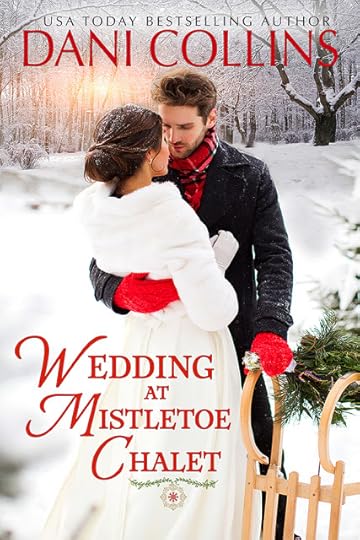
Eager for a home-style Christmas while she considers a career shift, Kristen Benz leaps on the temporary job at Mistletoe Chalet. Soon she’s wrapping presents, trimming the tree, and helping her new boss’s tween daughter plan a Christmas Eve vow renewal for her parents. The holiday is imbued with a magical glow—especially when Kristen’s high school sweetheart appears on the doorstep.
After years of medical school, Finn Garrett has promised his parents he’ll be home for the holidays. His detour to see his first love is supposed to provide closure, not rekindle their long-ago romance.
Can a matchmaking tween and the magic of Mistletoe Chalet spark the happily ever after that eluded them in the past?
Buy on:
Amazon Kindle
Amazon UK
Amazon Aust

Award-winning and USA Today Bestselling author Dani Collins thrives on giving readers emotional, compelling, heart-soaring romance with some laughter and heat thrown in, just like real life. Mostly she writes contemporary romance for Harlequin Presents and Tule’s Montana Born, but her backlist of forty books also includes self-published erotic romance, romantic comedy, and even an epic medieval fantasy. When she’s not writing—just kidding, she’s always writing. She lives in Christina Lake, BC with her high school sweetheart husband who occasionally coaxes her out of her attic office to visit their grown children—or travel.
Website Blog Facebook
Twitter Pinterest Goodreads
One of the biggest mistakes I’ve made as a writer (and trust me, I’ve made pretty much all of them) was not understanding early enough how important it is to write to market—if you want to publish.
First, it’s important you understand that writing is yours and no one can take it from you or tell you how to do it. You can write what you want and share it or not, that’s your decision.
However, if you want to sell your stories, you have to be more strategic than simply following your bliss.
Before I published, I did follow my bliss. I wrote many different types of books: Harlequin Presents, romcom, erotic romance, medieval fantasy romance, Harlequin Presents… I won’t say I regret those books. They were learning ground and I’ve since indie published some of them with mixed success in terms of sales.
I had always read widely in romance subgenres so I didn’t see a problem in writing many types of romance. I made it my goal to write aspirational characters. I kept my prose clean even if my language wasn’t. I wrote the kind of book I wanted to write at the time, not realizing that a career is not built on one romcom or one medieval fantasy. Readers who love an author in one genre may not follow to another.
For instance, I might love Nalini Singh’s shape-shifters, but I wouldn’t necessarily pick up an Amish Christmas story if she put one out. While some readers pick up both my Montana Born stories and my Harlequin Presents, many stick to reading one or the other. Readers have preferences. They’re like humans that way!
Which doesn’t mean you can’t take chances. Just be strategic. For instance, this year, I’ve dipped my toe into sweet and wholesome (no sex, no swearing) with Wedding at Mistletoe Chalet.
It’s a standalone book, which is always a risk, but in this case I don’t think I’ll have to start at zero with finding a reader base. It’s enough like my Montana Born books to appeal to those lovers of small town romance.
I also think readers who enjoy sexy books can be coaxed to try a sweet romance, especially if it’s a Christmas story. If I had a dozen wholesome books under my belt and suddenly put out a story with hot love scenes using saucy language, I think it would be a much tougher sell.
Have you found your lane? Or are you still figuring out where your place in the market is likely to be?
New Book from Dani Collins!
Wedding at Mistletoe Chalet

Eager for a home-style Christmas while she considers a career shift, Kristen Benz leaps on the temporary job at Mistletoe Chalet. Soon she’s wrapping presents, trimming the tree, and helping her new boss’s tween daughter plan a Christmas Eve vow renewal for her parents. The holiday is imbued with a magical glow—especially when Kristen’s high school sweetheart appears on the doorstep.
After years of medical school, Finn Garrett has promised his parents he’ll be home for the holidays. His detour to see his first love is supposed to provide closure, not rekindle their long-ago romance.
Can a matchmaking tween and the magic of Mistletoe Chalet spark the happily ever after that eluded them in the past?
Buy on:
Amazon Kindle
Amazon UK
Amazon Aust


September 3, 2018
Learning to Write with Pippa Roscoe!
This week we have author Pippa Roscoe talking about writing. She has a new book out, A Ring to Take His Revenge (The Winner's Circle).

Mills & Boon author Pippa Roscoe lives in Norfolk near her family and makes daily promises that this will be the day she will leave the computer and take a long walk in the countryside. She can’t remember a time when she wasn’t dreaming of gorgeous alpha males and misunderstood heroines. Totally her mother’s fault of course—she gave Pippa her first romance to read at the age of seven! She is inconceivably happy that she gets to share those daydreams with her readers.
Pippa Roscoe on the web:
Website Facebook Twitter
Keeping your characters on the page together
Ever get that moment when your hero wants to stalk off the page and brood all over his thoughts? Or when your heroine just doesn’t want to play ball because she’s had enough of the outrageously demanding hero? Or when there is an absolutely vital plot point that requires one character to spend at least a chapter with a secondary character? You know, you know, that your hero and heroine should be together, but… but! For my debut book, Conquering His Virgin Queen, keeping the Odir and Eloise on the page was easy – the entire story took place in twelve hours and there wasn’t a minute or word to waste in plot points or secondary characters. But A Ring to Take His Revenge was slightly different. It was the first in a trilogy about three powerful heroes and there was so much brooding fun male bonding I wanted to get onto the page, I found the heroes-in-waiting nudging my heroine out of focus.
What you want to show and what the readers needyou to show can be different things:
In A Ring to Take His Revenge, I had a perfect prologue that set up the whole trilogy. All three heroes were there, and even a heroine-in-waiting. There was fun, banter, back and forth and intrigue… just not Emma, my heroine for this book! I was adamant that it couldn’t be changed. That all the information there was vital for the entire series. But my editor was right. I needed to bring Emma and Antonio together, because they and not the other characters were what was important there and then. I found a way to still hold on to some of the key things I loved so much about it, and chose to start the scene earlier – thus allowing Emma to make her fabulous entrance on to the page and I now love the prologue even more than the original. Explore ways to make your hero and heroine interdependent:
The hero needs a marriage of convenience, fine. Your heroine can take the ring and go off around the world on an all inclusive tour! Your heroine is pregnant, fine. Child support could easily help her become a single mother! Often the very thing that could force these two characters together, doesn’t necessarily mean they have to be together. But we do want that, so why? Why does the hero/heroine have to stay with the other? Is it social pressure – the public need the marriage to seem real? Or personal pressure – the hero will be a part of his child’s life? In A Ring to Take His Revenge, Antonio knows that Emma is the only person who will understand his need for a very public fiancé, who won’t make ‘emotional’ demands on him, who – he thinks – will treat it like a business proposition. Ultimately Emma becomes both the key to his revenge and the one thing that prevents him from reaching it. Exploring the tension between these two aspects was huge fun and hopefully deeply satisfying!
Find a situation that they can’t easily walk away from:
Some of my favourite Presents books are the ones that force the hero and heroine together, alone, for a period of time. Do they get stranded on an island, with no immediate hope of escape? Is there a snowstorm that locks them in a idyllic country cottage? Are they stuck on a boat at sea? Is the heroine stranded in a desert kingdom where the Sheikh is the only person who can save her? These moments not only allow the hero and heroine to be alone together, but also force them to confront some of the meaty emotional issues that are keeping them apart. Neither can simply walk away – they’re stuck together, even when things get tough… or hot and heavy! I hope that you have found this helpful, but I’m curious… how did your favourite book keep your hero and heroine on the page together?
A Ring to Take His Revenge (The Winners' Circle)
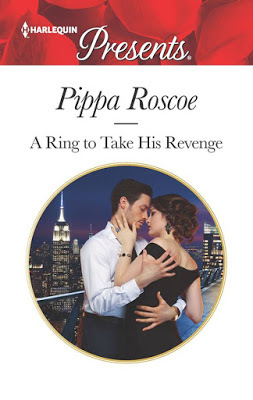
He’ll do anything to settle the score…
…even fake an engagement!
To secure his revenge against his cruel father, billionaire Antonio Arcuri needs a fake fiancée—fast! He demands his shy PA, Emma Guilham, wear his diamond. In return, he’ll help fulfill her dreams—starting with a jet-set trip to Buenos Aires! It’s a simple charade, until the burning tension between them erupts into irresistible desire. Now Antonio must decide between vengeance and Emma…
A powerfully intense revenge romance!.
Buy on:
Amazon Kindle Amazon Paperback
Amazon UK Amazon Aust
Book Depository iBooks
Nook Kobo
Harlequin US

Mills & Boon author Pippa Roscoe lives in Norfolk near her family and makes daily promises that this will be the day she will leave the computer and take a long walk in the countryside. She can’t remember a time when she wasn’t dreaming of gorgeous alpha males and misunderstood heroines. Totally her mother’s fault of course—she gave Pippa her first romance to read at the age of seven! She is inconceivably happy that she gets to share those daydreams with her readers.
Pippa Roscoe on the web:
Website Facebook Twitter
Keeping your characters on the page together
Ever get that moment when your hero wants to stalk off the page and brood all over his thoughts? Or when your heroine just doesn’t want to play ball because she’s had enough of the outrageously demanding hero? Or when there is an absolutely vital plot point that requires one character to spend at least a chapter with a secondary character? You know, you know, that your hero and heroine should be together, but… but! For my debut book, Conquering His Virgin Queen, keeping the Odir and Eloise on the page was easy – the entire story took place in twelve hours and there wasn’t a minute or word to waste in plot points or secondary characters. But A Ring to Take His Revenge was slightly different. It was the first in a trilogy about three powerful heroes and there was so much brooding fun male bonding I wanted to get onto the page, I found the heroes-in-waiting nudging my heroine out of focus.
What you want to show and what the readers needyou to show can be different things:
In A Ring to Take His Revenge, I had a perfect prologue that set up the whole trilogy. All three heroes were there, and even a heroine-in-waiting. There was fun, banter, back and forth and intrigue… just not Emma, my heroine for this book! I was adamant that it couldn’t be changed. That all the information there was vital for the entire series. But my editor was right. I needed to bring Emma and Antonio together, because they and not the other characters were what was important there and then. I found a way to still hold on to some of the key things I loved so much about it, and chose to start the scene earlier – thus allowing Emma to make her fabulous entrance on to the page and I now love the prologue even more than the original. Explore ways to make your hero and heroine interdependent:
The hero needs a marriage of convenience, fine. Your heroine can take the ring and go off around the world on an all inclusive tour! Your heroine is pregnant, fine. Child support could easily help her become a single mother! Often the very thing that could force these two characters together, doesn’t necessarily mean they have to be together. But we do want that, so why? Why does the hero/heroine have to stay with the other? Is it social pressure – the public need the marriage to seem real? Or personal pressure – the hero will be a part of his child’s life? In A Ring to Take His Revenge, Antonio knows that Emma is the only person who will understand his need for a very public fiancé, who won’t make ‘emotional’ demands on him, who – he thinks – will treat it like a business proposition. Ultimately Emma becomes both the key to his revenge and the one thing that prevents him from reaching it. Exploring the tension between these two aspects was huge fun and hopefully deeply satisfying!
Find a situation that they can’t easily walk away from:
Some of my favourite Presents books are the ones that force the hero and heroine together, alone, for a period of time. Do they get stranded on an island, with no immediate hope of escape? Is there a snowstorm that locks them in a idyllic country cottage? Are they stuck on a boat at sea? Is the heroine stranded in a desert kingdom where the Sheikh is the only person who can save her? These moments not only allow the hero and heroine to be alone together, but also force them to confront some of the meaty emotional issues that are keeping them apart. Neither can simply walk away – they’re stuck together, even when things get tough… or hot and heavy! I hope that you have found this helpful, but I’m curious… how did your favourite book keep your hero and heroine on the page together?
A Ring to Take His Revenge (The Winners' Circle)
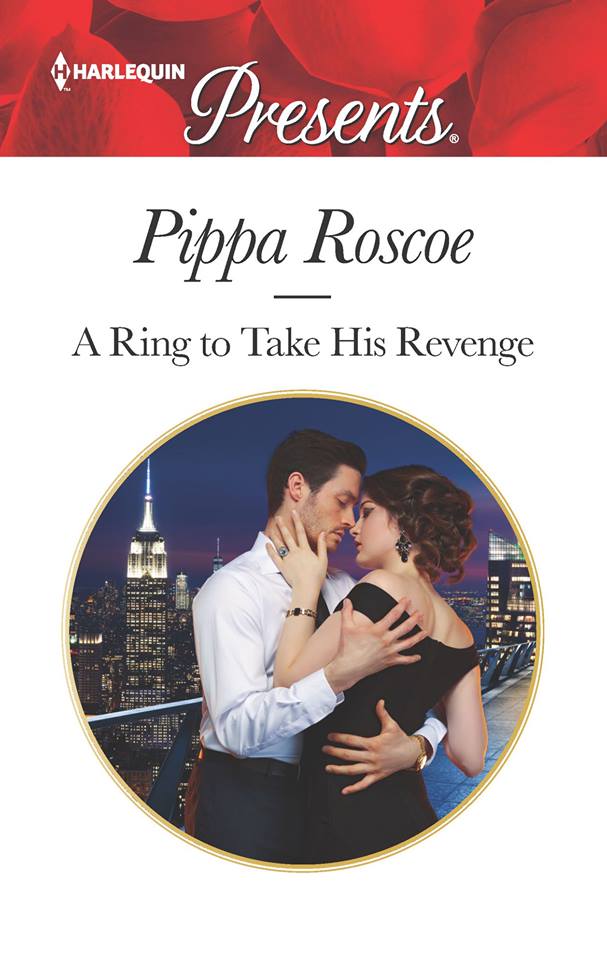
He’ll do anything to settle the score…
…even fake an engagement!
To secure his revenge against his cruel father, billionaire Antonio Arcuri needs a fake fiancée—fast! He demands his shy PA, Emma Guilham, wear his diamond. In return, he’ll help fulfill her dreams—starting with a jet-set trip to Buenos Aires! It’s a simple charade, until the burning tension between them erupts into irresistible desire. Now Antonio must decide between vengeance and Emma…
A powerfully intense revenge romance!.
Buy on:
Amazon Kindle Amazon Paperback
Amazon UK Amazon Aust
Book Depository iBooks
Nook Kobo
Harlequin US
August 27, 2018
What Makes a Great Short Story? by K A Servian
This week we have NZ author K A Servian visiting with us. She has a new book, A Pivotal Right ~Book 2 in Shaking the Tree series. Here she talks about 'Short Stories'.

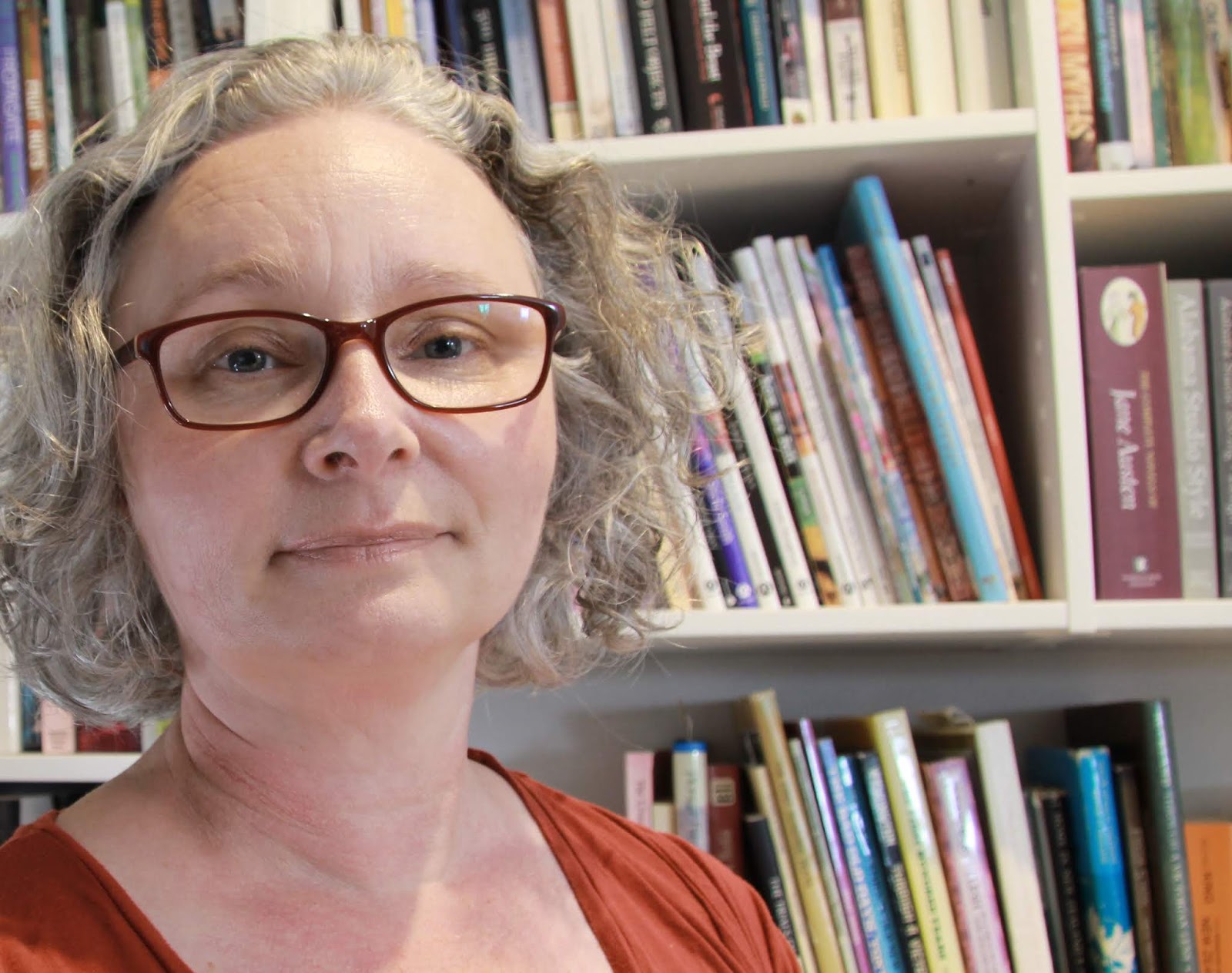
An overwhelming urge to create led Kathy to pursue qualifications in both fashion design and screen-printing which were followed by a twenty-year career in the fashion and applied arts industries. She then discovered a love of teaching and began passing on the skills she'd accumulated over the years—design, pattern-making, sewing, Art Clay Silver, screen-printing and machine embroidery to name a few. Kathy’s first novel, Peak Hill, was a finalist in the Romance Writers of New Zealand Pacific Hearts Full Manuscript contest in 2016. Her second novel, Throwing Light, was published in February 2017.The Moral Compass is her third novel and the first in a historical series set predominantly in colonial New Zealand. Having recently completed a diploma in advanced creative writing, Kathy fits writing around teaching sewing and being a wife and mother.
K. A. Servian on the web:
Website Facebook Twitter Instagram Author Page
I recently won my first short story competition (Romance Writers of NZ Chapter Short Story Contest) with a story called Seeing Him Again for the First Time. I’ve written a few short stories in my time and they are difficult to write well. Therefore, to have one recognised as being worthy of a win is something I’m very proud of. Maybe it means I’ve finally worked out that elusive something that makes a good short story—or maybe I was just lucky.Short stories are divisive. Some people love them, and others either hate or just don’t ‘get’ the purpose of them. I fall into the former camp—there is nothing I love more than a great short story. It drags you in, makes you think, and stays with you afterwards. Of the hundreds I have read only a dozen or so stick in my mind as being ‘perfect.’
For me, a good short story has a great opening line, a strong theme, a beginning, a middle, and an end (as opposed to being simply a ‘slice of life’ that goes nowhere). The story must be intriguing preferably include a twist and/or revelation that makes me go ‘wow, I didn’t see that coming.’
Roald Dahl is a master of the short story. I grew up reading his kids’ books before graduating onto his short story collections such as Kiss, Kiss and Switch Bitch after being intrigued by the 1970s TV series Tales of the Unexpected (yes, I am that old). Dahl’s stories are a little bit twisted and always have a sting in their tail and that, I believe, is the main key to a successful short story—the ending must be unexpected.
Because of their length, short stories are the perfect medium to experiment with genre, setting, style, character and theme. You can try all sorts of ideas without having to invest too much time into something that may or may not work. They can also be a great way to stimulate ideas that may (or may not) lead to a longer work.
If you’re new to short story writing and don’t know where to start, I’d recommend reading as many short stories as you can get your hands on. Save the ones you like. Read them again and have a good think about what draws you to them.
Fortunately, there are lots of places online where you can read short stories for free. One of the best sites is East of the Web: http://www.eastoftheweb.com/short-sto.... This site has hundreds of contemporary stories in all genres and also includes classic tales by authors such as O Henry, Edith Wharton, Henry James, and Arthur Conan Doyle. One of my favourite short stories is on this site. It’s written by Henry Fish and is titled Death by Scrabble. It’s the tale of a husband and wife playing scrabble and opens with the line “It is a hot day and I hate my wife.” This fantastic first line leads to a story with a great twist. You can read it here: http://www.eastoftheweb.com/short-sto...
Other stories that have spoken to me are The Silk by Joy Cowley (subtle, sad and achingly beautiful), Pawn Brokenby Eleanor Catton (has elements of her Booker prize winner The Luminaries) http://www.nzherald.co.nz/entertainment/news/article.cfm?c_id=1501119&objectid=10620511
A Fool about Money by Ngaio Marsh (Clever, funny and has a great twist), and Royal Jelly (so creepy) by Roald Dahl
You can also check out a couple of my short stories here: https://kaservian.com/short-stories/
What are your favorite short stories ad why do you love them?
A Pivotal Right: (Shaking the Tree Book 2)
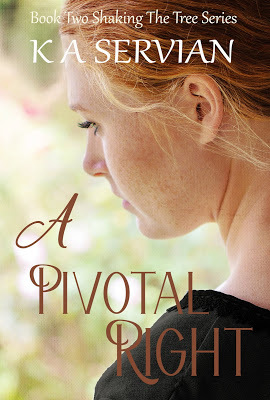
Florence struggled for breath as she stared in the face of a ghost. "Jack?"
Twenty years after being forced apart Jack and Florence have been offered a second chance at love. But can they find their way back to each other through all the misunderstandings, guilt and pain?
And what of their daughter, Viola? Her plan to become a doctor is based on the belief she has inherited her gift for medicine from Emile, the man she believed was her father. How will she reconcile her future with the discovery that she is Jack's child?
A Pivotal Right is the second book in the Shaking the Tree series set in colonial New Zealand. It continues the story of Jack and Florence begun in The Moral Compass.
Buy on:
Amazon Kindle Amazon Paperback
Amazon UK Amazon Aust
An overwhelming urge to create led Kathy to pursue qualifications in both fashion design and screen-printing which were followed by a twenty-year career in the fashion and applied arts industries. She then discovered a love of teaching and began passing on the skills she'd accumulated over the years—design, pattern-making, sewing, Art Clay Silver, screen-printing and machine embroidery to name a few. Kathy’s first novel, Peak Hill, was a finalist in the Romance Writers of New Zealand Pacific Hearts Full Manuscript contest in 2016. Her second novel, Throwing Light, was published in February 2017.The Moral Compass is her third novel and the first in a historical series set predominantly in colonial New Zealand. Having recently completed a diploma in advanced creative writing, Kathy fits writing around teaching sewing and being a wife and mother.
K. A. Servian on the web:
Website Facebook Twitter Instagram Author Page
I recently won my first short story competition (Romance Writers of NZ Chapter Short Story Contest) with a story called Seeing Him Again for the First Time. I’ve written a few short stories in my time and they are difficult to write well. Therefore, to have one recognised as being worthy of a win is something I’m very proud of. Maybe it means I’ve finally worked out that elusive something that makes a good short story—or maybe I was just lucky.Short stories are divisive. Some people love them, and others either hate or just don’t ‘get’ the purpose of them. I fall into the former camp—there is nothing I love more than a great short story. It drags you in, makes you think, and stays with you afterwards. Of the hundreds I have read only a dozen or so stick in my mind as being ‘perfect.’
For me, a good short story has a great opening line, a strong theme, a beginning, a middle, and an end (as opposed to being simply a ‘slice of life’ that goes nowhere). The story must be intriguing preferably include a twist and/or revelation that makes me go ‘wow, I didn’t see that coming.’
Roald Dahl is a master of the short story. I grew up reading his kids’ books before graduating onto his short story collections such as Kiss, Kiss and Switch Bitch after being intrigued by the 1970s TV series Tales of the Unexpected (yes, I am that old). Dahl’s stories are a little bit twisted and always have a sting in their tail and that, I believe, is the main key to a successful short story—the ending must be unexpected.
Because of their length, short stories are the perfect medium to experiment with genre, setting, style, character and theme. You can try all sorts of ideas without having to invest too much time into something that may or may not work. They can also be a great way to stimulate ideas that may (or may not) lead to a longer work.
If you’re new to short story writing and don’t know where to start, I’d recommend reading as many short stories as you can get your hands on. Save the ones you like. Read them again and have a good think about what draws you to them.
Fortunately, there are lots of places online where you can read short stories for free. One of the best sites is East of the Web: http://www.eastoftheweb.com/short-sto.... This site has hundreds of contemporary stories in all genres and also includes classic tales by authors such as O Henry, Edith Wharton, Henry James, and Arthur Conan Doyle. One of my favourite short stories is on this site. It’s written by Henry Fish and is titled Death by Scrabble. It’s the tale of a husband and wife playing scrabble and opens with the line “It is a hot day and I hate my wife.” This fantastic first line leads to a story with a great twist. You can read it here: http://www.eastoftheweb.com/short-sto...
Other stories that have spoken to me are The Silk by Joy Cowley (subtle, sad and achingly beautiful), Pawn Brokenby Eleanor Catton (has elements of her Booker prize winner The Luminaries) http://www.nzherald.co.nz/entertainment/news/article.cfm?c_id=1501119&objectid=10620511
A Fool about Money by Ngaio Marsh (Clever, funny and has a great twist), and Royal Jelly (so creepy) by Roald Dahl
You can also check out a couple of my short stories here: https://kaservian.com/short-stories/
What are your favorite short stories ad why do you love them?
A Pivotal Right: (Shaking the Tree Book 2)

Florence struggled for breath as she stared in the face of a ghost. "Jack?"
Twenty years after being forced apart Jack and Florence have been offered a second chance at love. But can they find their way back to each other through all the misunderstandings, guilt and pain?
And what of their daughter, Viola? Her plan to become a doctor is based on the belief she has inherited her gift for medicine from Emile, the man she believed was her father. How will she reconcile her future with the discovery that she is Jack's child?
A Pivotal Right is the second book in the Shaking the Tree series set in colonial New Zealand. It continues the story of Jack and Florence begun in The Moral Compass.
Buy on:
Amazon Kindle Amazon Paperback
Amazon UK Amazon Aust
August 7, 2018
Targeting & Marketing Books with Kate Walker
This week author Kate Walker discusses Targeting and Marketing and talks about her revised edition of 12 Point Guide to Writing Romance: An Emerald Guide.
As Kate Walker is doing a series of posts on writing craft and this Guide, do check her other posts:
Romance Book Haven
Revisions & Editions
Romance Book Paradise

Kate Walker on the Web:
Facebook Website Blog
WHY TARGET?
Publishing is in the hands of MARKETING.
Many ‘how to’ books talk about targeting a particular publisher or a specific line within that publisher’s output – Harlequin is particularly relevant here. But I’ve often been asked, ‘Won’t this destroy my originality?’ ‘Wouldn’t it be better just to write the book of my heart and then find a publisher for it?’
Well, yes. This is one approach. But the world of publishing – and particularly that of publishing romance – is so competitive and crowded these days, that a little forward planning can hopefully speed up the process and increase your chances of success.
It's precisely because the differences between some lines can seem so slight that you need to consider exactly which line you're writing for when you are working - or the book of your heart (which might very well be a perfectly fine book) can end up being severely messed about - and not to its good.
Look at it this way. If you simply set out to write the book of your heart, without even at least having thought about which line you're aiming for you can waste an awful amount of time. Say you write the book and send it to line A. Editor A thinks it has too many sensual scenes for her line - she sends it back to you.
If you're really lucky - and believe me, it's rare- she'll: (1) Tell you why she sent it back. More likely it will be(2) Just sent with a form letter - these are the usual reasons why we return mss. If it's (1) You could get to work on it, cut all the sensual scenes, and then find that she still rejects it. And you might have cut the heart out of your book because the book of your heart might be a Presents/Modern or a BlazeIf it's (2) Then you could send it to another line - having no idea really why it came back - and so not knowing which one to try for the best - and you could be trying and trying again for years - because we all know how long it can take an editor to get to read a book! Okay, so targeting will save you time at the submitting stage. It will also save you time and energy at the writing stage. Say you happily write your novel putting in plenty of mystery, intrigue, lots of secondary characters, some highly passionate scenes. Then you think about where to submit it - and you'll find that you'll come up against a 'pruning' problem. Send it to one line and they could say :"Good book - but you need to cut the secondary characters.'OR'Good book but you need to cut out the intrigue'OR'Good book but you need to cut the sex'And that's only if they bother to say anything!So now you are faced with the fact that you have to cut X thousand of your precious words - which is hard enough. It's like a cutting off part of your baby! But equally you have to think of something else to put in its place. Which can be even harder. And all the while, time is passing. You're editing the book again - and if you're not careful you can edit the life out of it. The more times you rework a novel, the less of the spontaneous, passionate, from the heart stuff you leave in. And what started off as something with a heart and soul and guts can end up as a pale shadow of itself. And I should know I've been there. I once rewrote a book five times - each time according to what an editor wanted - and killed it stone dead.But all this can be avoided if you do a little thinking beforehand. I'm not saying that you should work on your novel with the demands of the line and nothing else in mind.Nor am I saying that you should focus so intently and twist it and torture it into a shape it wasn't meant to have in the first place - but I am saying that you should know whether you're aiming at a line that has secondary characters and subplots, or focuses fiercely on the main romance. Or one that has mystery and intrigue - or not.Or one that has strongly passionate scenes and fairly explicit ones or prefers to have a more gentle, restrained approach. Because if you don't you could waste a lot of precious writing time writing scenes/characters that could just end up filed in the recycle bin. This is part one! The other questions - like when is a book a DARE and when is it a Romantic Suspense - is a different matter . So you need to consider the individual 'characteristics' of the different lines.
EMPHASIS - how much is given to which aspects of the story. So with the question of whether a book is a Blaze or an Intrigue, it's whether the emphasis is on the sexual relationship (Blaze) or solving the mystery (Intrigue)
INTENSITY - an example would be Presents/Modern versus Romance (M&B True Love) . In a Romance it's perfectly possible to have your H&h actually like each other all the way through - in a Presents that would be rare. Though Michelle Reid writes wonderful books where the H&h are so obviously in love all the way through - and even admit it - but they still tear each other to pieces because of other circumstances.
CHARACTERS - in a Presents too many other characters would diffuse the intensity. In a Superromance more characters would be an asset.
SEX - yes, this has to be considered, but as I said it's not that in one line it's not allowed and in another it is - you can have a book where there is just one major passionate scene but it is a Presents/Modern because of the - that word again - intensity - of the rest of the relationship. Or one where they make love openly and clearly on the page but because the atmosphere is very different it is a gentler Romance. I always have to go along with my characters on this. In Bedded by the Greek Billionaire, my characters don't make love until very close to the end of the book, and with A Proposal To Secure HIs Vengeance there is a lot of conflict that they need to get out of the way before they do fall into bed with each other.
CONFLICT - this is a major point in deciding which line you're aiming for. Obviously, from what I've been saying, a line like Presents/Modern has greater scope for a stronger conflict (But make sure you don't confuse 'conflict' with simply 'argument') And in Romantic Suspense then the conflict needs to be based around the mystery element.
SUBPLOTS - does the line have room and word count enough for them or not - once again it's the emphasis that makes the difference. And once you've considered these for the lines, you need to consider them for your own work - and of course your own reading.
Which do you prefer?Why?
I started writing before there was a split between Romance and Presents/Modern here in the UK - but if there had been that split, I know which line I would have wanted to read most - which one I would have enjoyed most. And so if I'd known there had to be a choice - and there has to be a choice because you have to send your ms to a particular editor on a particular line - I know I'd have chosen Presents/Modern and I'd have slanted my ms that way. I've written both in my time and I know that the differences between them can be subtle and perhaps difficult to see - but they are there. Ask anyone who loves a particular line and they'll tell you.
That way you can still write the book of your heart, but if you put something in - or leave something out - you'll have a better idea of which line editor is likely to be most interested in it.
Kate Walker's 12 Point Guide to Writing Romance: An Emerald Guide
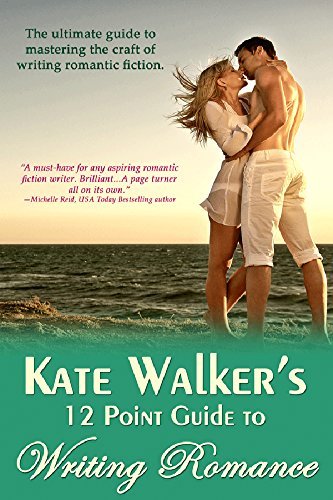
In this comprehensive guide, Kate Walker, an established author within the Romantic Fiction genre, covers all aspects of writing Romantic Fiction, offering budding authors invaluable tips on producing saleable works of fiction, following her 12 point guide.
Buy on:
Amazon Kindle Book Depository
Amazon Paperback
Amazon UK
Amazon Aust
As Kate Walker is doing a series of posts on writing craft and this Guide, do check her other posts:
Romance Book Haven
Revisions & Editions
Romance Book Paradise

Kate Walker on the Web:
Facebook Website Blog
WHY TARGET?
Publishing is in the hands of MARKETING.
Many ‘how to’ books talk about targeting a particular publisher or a specific line within that publisher’s output – Harlequin is particularly relevant here. But I’ve often been asked, ‘Won’t this destroy my originality?’ ‘Wouldn’t it be better just to write the book of my heart and then find a publisher for it?’
Well, yes. This is one approach. But the world of publishing – and particularly that of publishing romance – is so competitive and crowded these days, that a little forward planning can hopefully speed up the process and increase your chances of success.
It's precisely because the differences between some lines can seem so slight that you need to consider exactly which line you're writing for when you are working - or the book of your heart (which might very well be a perfectly fine book) can end up being severely messed about - and not to its good.
Look at it this way. If you simply set out to write the book of your heart, without even at least having thought about which line you're aiming for you can waste an awful amount of time. Say you write the book and send it to line A. Editor A thinks it has too many sensual scenes for her line - she sends it back to you.
If you're really lucky - and believe me, it's rare- she'll: (1) Tell you why she sent it back. More likely it will be(2) Just sent with a form letter - these are the usual reasons why we return mss. If it's (1) You could get to work on it, cut all the sensual scenes, and then find that she still rejects it. And you might have cut the heart out of your book because the book of your heart might be a Presents/Modern or a BlazeIf it's (2) Then you could send it to another line - having no idea really why it came back - and so not knowing which one to try for the best - and you could be trying and trying again for years - because we all know how long it can take an editor to get to read a book! Okay, so targeting will save you time at the submitting stage. It will also save you time and energy at the writing stage. Say you happily write your novel putting in plenty of mystery, intrigue, lots of secondary characters, some highly passionate scenes. Then you think about where to submit it - and you'll find that you'll come up against a 'pruning' problem. Send it to one line and they could say :"Good book - but you need to cut the secondary characters.'OR'Good book but you need to cut out the intrigue'OR'Good book but you need to cut the sex'And that's only if they bother to say anything!So now you are faced with the fact that you have to cut X thousand of your precious words - which is hard enough. It's like a cutting off part of your baby! But equally you have to think of something else to put in its place. Which can be even harder. And all the while, time is passing. You're editing the book again - and if you're not careful you can edit the life out of it. The more times you rework a novel, the less of the spontaneous, passionate, from the heart stuff you leave in. And what started off as something with a heart and soul and guts can end up as a pale shadow of itself. And I should know I've been there. I once rewrote a book five times - each time according to what an editor wanted - and killed it stone dead.But all this can be avoided if you do a little thinking beforehand. I'm not saying that you should work on your novel with the demands of the line and nothing else in mind.Nor am I saying that you should focus so intently and twist it and torture it into a shape it wasn't meant to have in the first place - but I am saying that you should know whether you're aiming at a line that has secondary characters and subplots, or focuses fiercely on the main romance. Or one that has mystery and intrigue - or not.Or one that has strongly passionate scenes and fairly explicit ones or prefers to have a more gentle, restrained approach. Because if you don't you could waste a lot of precious writing time writing scenes/characters that could just end up filed in the recycle bin. This is part one! The other questions - like when is a book a DARE and when is it a Romantic Suspense - is a different matter . So you need to consider the individual 'characteristics' of the different lines.
EMPHASIS - how much is given to which aspects of the story. So with the question of whether a book is a Blaze or an Intrigue, it's whether the emphasis is on the sexual relationship (Blaze) or solving the mystery (Intrigue)
INTENSITY - an example would be Presents/Modern versus Romance (M&B True Love) . In a Romance it's perfectly possible to have your H&h actually like each other all the way through - in a Presents that would be rare. Though Michelle Reid writes wonderful books where the H&h are so obviously in love all the way through - and even admit it - but they still tear each other to pieces because of other circumstances.
CHARACTERS - in a Presents too many other characters would diffuse the intensity. In a Superromance more characters would be an asset.
SEX - yes, this has to be considered, but as I said it's not that in one line it's not allowed and in another it is - you can have a book where there is just one major passionate scene but it is a Presents/Modern because of the - that word again - intensity - of the rest of the relationship. Or one where they make love openly and clearly on the page but because the atmosphere is very different it is a gentler Romance. I always have to go along with my characters on this. In Bedded by the Greek Billionaire, my characters don't make love until very close to the end of the book, and with A Proposal To Secure HIs Vengeance there is a lot of conflict that they need to get out of the way before they do fall into bed with each other.
CONFLICT - this is a major point in deciding which line you're aiming for. Obviously, from what I've been saying, a line like Presents/Modern has greater scope for a stronger conflict (But make sure you don't confuse 'conflict' with simply 'argument') And in Romantic Suspense then the conflict needs to be based around the mystery element.
SUBPLOTS - does the line have room and word count enough for them or not - once again it's the emphasis that makes the difference. And once you've considered these for the lines, you need to consider them for your own work - and of course your own reading.
Which do you prefer?Why?
I started writing before there was a split between Romance and Presents/Modern here in the UK - but if there had been that split, I know which line I would have wanted to read most - which one I would have enjoyed most. And so if I'd known there had to be a choice - and there has to be a choice because you have to send your ms to a particular editor on a particular line - I know I'd have chosen Presents/Modern and I'd have slanted my ms that way. I've written both in my time and I know that the differences between them can be subtle and perhaps difficult to see - but they are there. Ask anyone who loves a particular line and they'll tell you.
That way you can still write the book of your heart, but if you put something in - or leave something out - you'll have a better idea of which line editor is likely to be most interested in it.
Kate Walker's 12 Point Guide to Writing Romance: An Emerald Guide

In this comprehensive guide, Kate Walker, an established author within the Romantic Fiction genre, covers all aspects of writing Romantic Fiction, offering budding authors invaluable tips on producing saleable works of fiction, following her 12 point guide.
Buy on:
Amazon Kindle Book Depository
Amazon Paperback
Amazon UK
Amazon Aust
Marketing Books with Kate Walker
This week author Kate Walker discusses Targeting and Marketing and talks about her revised edition of 12 Point Guide to Writing Romance: An Emerald Guide.
As Kate Walker is doing a series of posts on writing craft and this Guide, do check her other posts:
Romance Book Haven
Revisions & Editions
Romance Book Paradise
Kate Walker on the Web:
Facebook Website Blog
WHY TARGET?
Publishing is in the hands of MARKETING.
Many ‘how to’ books talk about targeting a particular publisher or a specific line within that publisher’s output – Harlequin is particularly relevant here. But I’ve often been asked, ‘Won’t this destroy my originality?’ ‘Wouldn’t it be better just to write the book of my heart and then find a publisher for it?’
Well, yes. This is one approach. But the world of publishing – and particularly that of publishing romance – is so competitive and crowded these days, that a little forward planning can hopefully speed up the process and increase your chances of success.
It's precisely because the differences between some lines can seem so slight that you need to consider exactly which line you're writing for when you are working - or the book of your heart (which might very well be a perfectly fine book) can end up being severely messed about - and not to its good.
Look at it this way. If you simply set out to write the book of your heart, without even at least having thought about which line you're aiming for you can waste an awful amount of time. Say you write the book and send it to line A. Editor A thinks it has too many sensual scenes for her line - she sends it back to you. If you're really lucky - and believe me, it's rare- she'll: (1) Tell you why she sent it back. More likely it will be(2) Just sent with a form letter - these are the usual reasons why we return mss. If it's (1) You could get to work on it, cut all the sensual scenes, and then find that she still rejects it. And you might have cut the heart out of your book because the book of your heart might be a Presents/Modern or a BlazeIf it's (2) Then you could send it to another line - having no idea really why it came back - and so not knowing which one to try for the best - and you could be trying and trying again for years - because we all know how long it can take an editor to get to read a book! Okay, so targeting will save you time at the submitting stage. It will also save you time and energy at the writing stage. Say you happily write your novel putting in plenty of mystery, intrigue, lots of secondary characters, some highly passionate scenes. Then you think about where to submit it - and you'll find that you'll come up against a 'pruning' problem. Send it to one line and they could say :"Good book - but you need to cut the secondary characters.'OR'Good book but you need to cut out the intrigue'OR'Good book but you need to cut the sex'And that's only if they bother to say anything!So now you are faced with the fact that you have to cut X thousand of your precious words - which is hard enough. It's like a cutting off part of your baby! But equally you have to think of something else to put in its place. Which can be even harder. And all the while, time is passing. You're editing the book again - and if you're not careful you can edit the life out of it. The more times you rework a novel, the less of the spontaneous, passionate, from the heart stuff you leave in. And what started off as something with a heart and soul and guts can end up as a pale shadow of itself. And I should know I've been there. I once rewrote a book five times - each time according to what an editor wanted - and killed it stone dead.But all this can be avoided if you do a little thinking beforehand. I'm not saying that you should work on your novel with the demands of the line and nothing else in mind.Nor am I saying that you should focus so intently and twist it and torture it into a shape it wasn't meant to have in the first place - but I am saying that you should know whether you're aiming at a line that has secondary characters and subplots, or focuses fiercely on the main romance. Or one that has mystery and intrigue - or not.Or one that has strongly passionate scenes and fairly explicit ones or prefers to have a more gentle, restrained approach. Because if you don't you could waste a lot of precious writing time writing scenes/characters that could just end up filed in the recycle bin. This is part one! The other questions - like when is a book a DARE and when is it an Romantic Suspense - is a different matter . So you need to consider the individual 'characteristics' of the different lines.
EMPHASIS - how much is given to which aspects of the story. So with the question of whether a book is a Blaze or an Intrigue, it's whether the emphasis is on the sexual relationship (Blaze) or solving the mystery (Intrigue)
INTENSITY - an example would be Presents/Modern versus Romance (M&B True Love) . In a Romance it's perfectly possible to have your H&h actually like each other all the way through - in a Presents that would be rare. Though Michelle Reid writes wonderful books where the H&h are so obviously in love all the way through - and even admit it - but they still tear each other to pieces because of other circumstances.
CHARACTERS - in a Presents too many other characters would diffuse the intensity. In a Superromance more characters would be an asset.
SEX - yes, this has to be considered, but as I said it's not that in one line it's not allowed and in another it is - you can have a book where there is just one major passionate scene but it is a Presents/Modern because of the - that word again - intensity - of the rest of the relationship. Or one where they make love openly and clearly on the page but because the atmosphere is very different it is a gentler Romance. I always have to go along with my characters on this. In Bedded by the Greek Billionaire, my characters don't make love until very close to the end of the book, and with A Proposal To Secure HIs Vengeance there is a lot of conflict that they need to get out of the way before they do fall into bed with each other.
CONFLICT - this is a major point in deciding which line you're aiming for. Obviously, from what I've been saying, a line like Presents/Modern has greater scope for a stronger conflict (But make sure you don't confuse 'conflict' with simply 'argument') And in Romantic Suspense then the conflict needs to be based around the mystery element.
SUBPLOTS - does the line have room and word count enough for them or not - once again it's the emphasis that makes the difference. And once you've considered these for the lines, you need to consider them for your own work - and of course your own reading.
Which do you prefer?Why?
I started writing before there was a split between Romance and Presents/Modern here in the UK - but if there had been that split, I know which line I would have wanted to read most - which one I would have enjoyed most. And so if I'd known there had to be a choice - and there has to be a choice because you have to send your ms to a particular editor on a particular line - I know I'd have chosen Presents/Modern and I'd have slanted my ms that way. I've written both in my time and I know that the differences between them can be subtle and perhaps difficult to see - but they are there. Ask anyone who loves a particular line and they'll tell you.
That way you can still write the book of your heart, but if you put something in - or leave something out - you'll have a better idea of which line editor is likely to be most interested in it.
Kate Walker's 12 Point Guide to Writing Romance: An Emerald Guide
In this comprehensive guide, Kate Walker, an established author within the Romantic Fiction genre, covers all aspects of writing Romantic Fiction, offering budding authors invaluable tips on producing saleable works of fiction, following her 12 point guide.
Buy on:
Amazon Kindle Book Depository
Amazon Paperback
Amazon UK
Amazon Aust
As Kate Walker is doing a series of posts on writing craft and this Guide, do check her other posts:
Romance Book Haven
Revisions & Editions
Romance Book Paradise
Kate Walker on the Web:
Facebook Website Blog
WHY TARGET?
Publishing is in the hands of MARKETING.
Many ‘how to’ books talk about targeting a particular publisher or a specific line within that publisher’s output – Harlequin is particularly relevant here. But I’ve often been asked, ‘Won’t this destroy my originality?’ ‘Wouldn’t it be better just to write the book of my heart and then find a publisher for it?’
Well, yes. This is one approach. But the world of publishing – and particularly that of publishing romance – is so competitive and crowded these days, that a little forward planning can hopefully speed up the process and increase your chances of success.
It's precisely because the differences between some lines can seem so slight that you need to consider exactly which line you're writing for when you are working - or the book of your heart (which might very well be a perfectly fine book) can end up being severely messed about - and not to its good.
Look at it this way. If you simply set out to write the book of your heart, without even at least having thought about which line you're aiming for you can waste an awful amount of time. Say you write the book and send it to line A. Editor A thinks it has too many sensual scenes for her line - she sends it back to you. If you're really lucky - and believe me, it's rare- she'll: (1) Tell you why she sent it back. More likely it will be(2) Just sent with a form letter - these are the usual reasons why we return mss. If it's (1) You could get to work on it, cut all the sensual scenes, and then find that she still rejects it. And you might have cut the heart out of your book because the book of your heart might be a Presents/Modern or a BlazeIf it's (2) Then you could send it to another line - having no idea really why it came back - and so not knowing which one to try for the best - and you could be trying and trying again for years - because we all know how long it can take an editor to get to read a book! Okay, so targeting will save you time at the submitting stage. It will also save you time and energy at the writing stage. Say you happily write your novel putting in plenty of mystery, intrigue, lots of secondary characters, some highly passionate scenes. Then you think about where to submit it - and you'll find that you'll come up against a 'pruning' problem. Send it to one line and they could say :"Good book - but you need to cut the secondary characters.'OR'Good book but you need to cut out the intrigue'OR'Good book but you need to cut the sex'And that's only if they bother to say anything!So now you are faced with the fact that you have to cut X thousand of your precious words - which is hard enough. It's like a cutting off part of your baby! But equally you have to think of something else to put in its place. Which can be even harder. And all the while, time is passing. You're editing the book again - and if you're not careful you can edit the life out of it. The more times you rework a novel, the less of the spontaneous, passionate, from the heart stuff you leave in. And what started off as something with a heart and soul and guts can end up as a pale shadow of itself. And I should know I've been there. I once rewrote a book five times - each time according to what an editor wanted - and killed it stone dead.But all this can be avoided if you do a little thinking beforehand. I'm not saying that you should work on your novel with the demands of the line and nothing else in mind.Nor am I saying that you should focus so intently and twist it and torture it into a shape it wasn't meant to have in the first place - but I am saying that you should know whether you're aiming at a line that has secondary characters and subplots, or focuses fiercely on the main romance. Or one that has mystery and intrigue - or not.Or one that has strongly passionate scenes and fairly explicit ones or prefers to have a more gentle, restrained approach. Because if you don't you could waste a lot of precious writing time writing scenes/characters that could just end up filed in the recycle bin. This is part one! The other questions - like when is a book a DARE and when is it an Romantic Suspense - is a different matter . So you need to consider the individual 'characteristics' of the different lines.
EMPHASIS - how much is given to which aspects of the story. So with the question of whether a book is a Blaze or an Intrigue, it's whether the emphasis is on the sexual relationship (Blaze) or solving the mystery (Intrigue)
INTENSITY - an example would be Presents/Modern versus Romance (M&B True Love) . In a Romance it's perfectly possible to have your H&h actually like each other all the way through - in a Presents that would be rare. Though Michelle Reid writes wonderful books where the H&h are so obviously in love all the way through - and even admit it - but they still tear each other to pieces because of other circumstances.
CHARACTERS - in a Presents too many other characters would diffuse the intensity. In a Superromance more characters would be an asset.
SEX - yes, this has to be considered, but as I said it's not that in one line it's not allowed and in another it is - you can have a book where there is just one major passionate scene but it is a Presents/Modern because of the - that word again - intensity - of the rest of the relationship. Or one where they make love openly and clearly on the page but because the atmosphere is very different it is a gentler Romance. I always have to go along with my characters on this. In Bedded by the Greek Billionaire, my characters don't make love until very close to the end of the book, and with A Proposal To Secure HIs Vengeance there is a lot of conflict that they need to get out of the way before they do fall into bed with each other.
CONFLICT - this is a major point in deciding which line you're aiming for. Obviously, from what I've been saying, a line like Presents/Modern has greater scope for a stronger conflict (But make sure you don't confuse 'conflict' with simply 'argument') And in Romantic Suspense then the conflict needs to be based around the mystery element.
SUBPLOTS - does the line have room and word count enough for them or not - once again it's the emphasis that makes the difference. And once you've considered these for the lines, you need to consider them for your own work - and of course your own reading.
Which do you prefer?Why?
I started writing before there was a split between Romance and Presents/Modern here in the UK - but if there had been that split, I know which line I would have wanted to read most - which one I would have enjoyed most. And so if I'd known there had to be a choice - and there has to be a choice because you have to send your ms to a particular editor on a particular line - I know I'd have chosen Presents/Modern and I'd have slanted my ms that way. I've written both in my time and I know that the differences between them can be subtle and perhaps difficult to see - but they are there. Ask anyone who loves a particular line and they'll tell you.
That way you can still write the book of your heart, but if you put something in - or leave something out - you'll have a better idea of which line editor is likely to be most interested in it.
Kate Walker's 12 Point Guide to Writing Romance: An Emerald Guide
In this comprehensive guide, Kate Walker, an established author within the Romantic Fiction genre, covers all aspects of writing Romantic Fiction, offering budding authors invaluable tips on producing saleable works of fiction, following her 12 point guide.
Buy on:
Amazon Kindle Book Depository
Amazon Paperback
Amazon UK
Amazon Aust
July 16, 2018
On Writing with Wendy Lee Davies!
Australian author Wendy Lee Davies shares with us what she wished she knew before she started writing. Her debut book: Good Enough for Love is out this month.
 Australian, Wendy Lee Davies began writing romances as a lark after leaving her communications and editing job of many years.Wendy enjoys cycling, especially cycle touring which she did a lot of in her younger, some say more foolish, years. Now that she’s older and wiser, Wendy is wearing out the bike paths around her home town, making good use of her amazing pedal-assist electric bike. She's also traversed most of the incredible rail trails available in Victoria, and one in New Zealand as well.If she's not writing or riding her bike, Wendy can be found enjoying a coffee in some cafe. Or taking landscape photographs. Sometimes she makes cookies or muffins. She’s even been known, on occasion, to annoy her writing friends with long, detailed editorial comments on their latest writing endeavour. But don't worry. They get her back, tenfold, when it comes to critiquing her latest romance-in-progress.You can catch up on her latest news via her website ( www.wendyleedavies.com ). She loves hearing from readers, so don’t be shy about dropping her a line.
Wendy Davies on the web:
Website Facebook Twitter
Blog Instagram
Three things I wish I’d known before writing a romance novel1. Know your main characters (including their greatest fear, what they really want, and what’s motivating them) better than you know yourself.I would highly recommend spending time getting to know your characters beforeyou start writing that novel. Unfortunately, it took me far too long to know Amber and Zach well, to know what they wanted and what was holding them back from grabbing their chance at love. Yes, I know. Sometimes, I’m a bit slow on the uptake. But turning Amber and Zach into people with hang ups, secrets and hopes that were theirs alone was dead easy once I’d gotten to know them almost better than I knew myself. You know, I could have saved so much time, and uncertainty, if I’d only sat down and thought about my characters before heading straight to the keyboard and started writing.2. Understand that showing emotion improves your story.Writing emotion, whether your character is scared silly or falling in love, is not easy. Emotion, any emotion, involves the way you feel inside as well as what you’re doing on the outside (and sometimes these are completely opposite), even if you’re unaware of them. And don’t forget your inner thoughts, those feelings and desires that no-one but you can feel or know or experience. Expressing your character’s emotion in a way that makes it real and authentic means you, the writer, must become the character. Be them as you are writing their scenes. Sounds crazy, but believe me, it helps. 3. Persistence is necessary.It took me something like four years to write Good Enough For Love. It was sometimes frustrating, sometimes depressing, trying to write a book that will set the world on fire. It also took a lot of dedication and belief in the story to finish my novel to publication standard. And after all that, there’s still no guarantees, especially when it comes to the “setting the world on fire” bit. But when I began, I had no idea how long it was going to take. Or even if I wouldfinish writing the story at all. I don’t regret the time it’s taken me. I learned a lot. About writing romances, and about myself. Of course, I want my book to do well, to have others read my story and love it. That would be hugely satisfying and make all that effort worthwhile. And all those things I’ve learnt will hopefully make writing my next romance story that much easier. And faster.
Good Enough For Love: Willow's Bend Series, Book 1
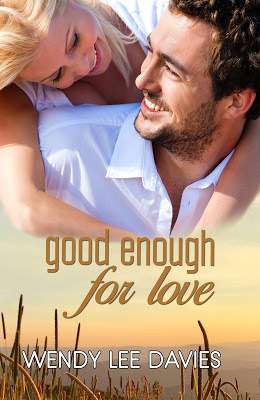
Renovating a country hotel challenges everything Amber knows … about family and about love.
When Amber Hutchinson inherits a country hotel, she wants to sell it and move on. The money she’ll earn will secure her future, even if living in the country while renovating a hotel never featured in her plans.
Zach Wentworth, a local sheep farmer, wants to do the right thing. When he comes across a woman stuck in the hotel window, he naturally tries to help.
Sure, Amber knows their sizzling attraction won’t last. It never does, because she’s never been good enough for anyone to love.
Without the hotel, Willow’s Bend is likely to die a slow death, so Zach does whatever he can to secure his town's future. But doing the right thing might mean risking his heart.
With the town eagerly watching their every move, Amber and Zach must choose between protecting their hearts and taking a chance on love.
Buy on:
Amazon Kindle
Amazon UK
Amazon Aust
 Australian, Wendy Lee Davies began writing romances as a lark after leaving her communications and editing job of many years.Wendy enjoys cycling, especially cycle touring which she did a lot of in her younger, some say more foolish, years. Now that she’s older and wiser, Wendy is wearing out the bike paths around her home town, making good use of her amazing pedal-assist electric bike. She's also traversed most of the incredible rail trails available in Victoria, and one in New Zealand as well.If she's not writing or riding her bike, Wendy can be found enjoying a coffee in some cafe. Or taking landscape photographs. Sometimes she makes cookies or muffins. She’s even been known, on occasion, to annoy her writing friends with long, detailed editorial comments on their latest writing endeavour. But don't worry. They get her back, tenfold, when it comes to critiquing her latest romance-in-progress.You can catch up on her latest news via her website ( www.wendyleedavies.com ). She loves hearing from readers, so don’t be shy about dropping her a line.
Wendy Davies on the web:
Website Facebook Twitter
Blog Instagram
Three things I wish I’d known before writing a romance novel1. Know your main characters (including their greatest fear, what they really want, and what’s motivating them) better than you know yourself.I would highly recommend spending time getting to know your characters beforeyou start writing that novel. Unfortunately, it took me far too long to know Amber and Zach well, to know what they wanted and what was holding them back from grabbing their chance at love. Yes, I know. Sometimes, I’m a bit slow on the uptake. But turning Amber and Zach into people with hang ups, secrets and hopes that were theirs alone was dead easy once I’d gotten to know them almost better than I knew myself. You know, I could have saved so much time, and uncertainty, if I’d only sat down and thought about my characters before heading straight to the keyboard and started writing.2. Understand that showing emotion improves your story.Writing emotion, whether your character is scared silly or falling in love, is not easy. Emotion, any emotion, involves the way you feel inside as well as what you’re doing on the outside (and sometimes these are completely opposite), even if you’re unaware of them. And don’t forget your inner thoughts, those feelings and desires that no-one but you can feel or know or experience. Expressing your character’s emotion in a way that makes it real and authentic means you, the writer, must become the character. Be them as you are writing their scenes. Sounds crazy, but believe me, it helps. 3. Persistence is necessary.It took me something like four years to write Good Enough For Love. It was sometimes frustrating, sometimes depressing, trying to write a book that will set the world on fire. It also took a lot of dedication and belief in the story to finish my novel to publication standard. And after all that, there’s still no guarantees, especially when it comes to the “setting the world on fire” bit. But when I began, I had no idea how long it was going to take. Or even if I wouldfinish writing the story at all. I don’t regret the time it’s taken me. I learned a lot. About writing romances, and about myself. Of course, I want my book to do well, to have others read my story and love it. That would be hugely satisfying and make all that effort worthwhile. And all those things I’ve learnt will hopefully make writing my next romance story that much easier. And faster.
Good Enough For Love: Willow's Bend Series, Book 1

Renovating a country hotel challenges everything Amber knows … about family and about love.
When Amber Hutchinson inherits a country hotel, she wants to sell it and move on. The money she’ll earn will secure her future, even if living in the country while renovating a hotel never featured in her plans.
Zach Wentworth, a local sheep farmer, wants to do the right thing. When he comes across a woman stuck in the hotel window, he naturally tries to help.
Sure, Amber knows their sizzling attraction won’t last. It never does, because she’s never been good enough for anyone to love.
Without the hotel, Willow’s Bend is likely to die a slow death, so Zach does whatever he can to secure his town's future. But doing the right thing might mean risking his heart.
With the town eagerly watching their every move, Amber and Zach must choose between protecting their hearts and taking a chance on love.
Buy on:
Amazon Kindle
Amazon UK
Amazon Aust
June 11, 2018
Steps of Intimacy with Marie Dry!
This week we have author Marie Dry talking about Steps of Intimacy. She has a new book out, Alien Captured (Zyrgin Warriors Book 5).

Ever since she can remember Marie Dry wanted to travel. She had had the privilege of living in Zambia, Morocco, and Spain and sees herself as a bit of a gypsy. Every few years she gets restless and has to be some place new.
She read romances since she was nine and was fairly young when she decided she would write the perfect story that had all the elements she looked for in a romance. In 1997 she decided to go all out with her writing and to get published. Being published by Black Opal Books is a dream come true for her.
There are several wonderful moments in her life that she would never trade for anything. One of them is meeting President Nelson Mandela and the second being published.Connect with Marie Dry:
Website Facebook Twitter
Years ago when I still lived in Spain I bought a recording from the RWA. It was the talk Linda Howard gave each year at the conference on the twelve steps to intimacy. She also announced on that recording that it would be her last year that she did this speech. I was so disappointed because I would’ve loved to hear her speak when I managed to get to the conference eventually.
She based her speech on Desmond Morris’ book, The Naked Ape. Here is a link to an article about him. https://www.theguardian.com/science/2017/sep/24/the-naked-ape-at-50-desmond-morris-four-experts-assess-impactI would recommend reading his book.Based on his book and the steps to intimacy he mentioned, Linda Howard crafted the twelve steps to intimacy. Anyone who read romance will remember not being able to put down her books and the amazing sexual tension of her earlier books. She has a lovely accent and I listened to the whole presentation in one sitting.It is important to linger on these twelve steps and remember they don’t have to be in sequence, but they should be there. Anyone thinking back on their own courtship will recognise all these steps. Mary Buckham did an excellent course on the twelve steps to intimacy and I was lucky enough to be able to do it online. If she ever presents that course again jump on it. I am crossing fingers she decide to do a craft book on the subject. Her notes on this is one of my most precious posessions.The first step is eye to body. That once over men and women or men and men or women and women give each other at first meeting. Take your time and linger at this stage and also remember to notice the kind of details that the POV character would. A poor farmer will not recognise Gucci shoes etc.Second is eye to eye. That spark of interest in between the protagonists should be seen here. This is also an opportunity to subtly show details about the characters. Do they have eyes that sparkle with laughter, is there an underlying sadness? Voice to voice is an incredibly powerful tool to show your characters, how they speak how they react to each other’s voices, how it sounds when the character is emotional or cold.Hand to hand, step four is much more important than we realize. Men transmit pheromones with touch while women transmit it through the air. By the time your characters reach the stage of holding hands a lot of trust has been established.Hand to shoulder is a public declaration that the relationship is progressing towards intimacy. At what stage do you allow your partner to put his arm around your shoulder?Six is hand to waist and now your characters, trust and know each other and is ready for deeper intimacy. Don’t forget to linger at this stage and use it to express the character’s emotion about where the relationship is going.Step six is face to face, in other words the kiss. Linger on the first kiss and describe the characters actions and feelings and the impact this has on the relationship and let it set the tone for what is to come.Step eight hand to head shows an incredible amount of trust. The characters might run their hands through each other’s hair, touch their faces or even the back of the neck. Think about how safe you’d feel if a stranger should put his hand on the back of your neck. The last steps are hand to body, mouth to body, hand to genitals and genitals to genitals and when the characters reach these steps they have progressed to the point where both agreed on intimacy. This intimacy has been established by the previous steps and if each step is present in a book the chemistry and attraction between the characters will sparkle.
The recording of Linda Howards talk? My computer crashed and I lost it and I’ve never been able to find it for sale again.
Alien Captured (Zyrgin Warriors Book 5)
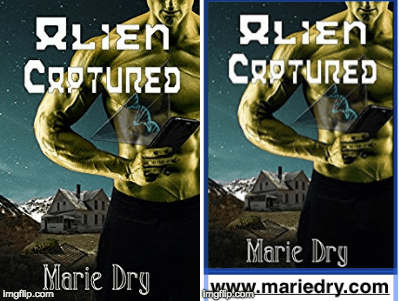 In a bleak future, where government systems are breaking down and poverty and violence reign, on an abandoned farm in Montana, Susannah had a simple plan. She’d capture an alien, sell him to the resistance, and use the money to save her son.
Instead, Susannah had an arrogant alien trapped in a pit who acted as if she was the prisoner. He wanted to kill her dog and insisted she should care for the wound he sustained when he fell into the pit she dug to trap him. On top of that, she had no way to know if the resistance got her message. Every day that passed, she doubted her decision to hand Azagor over to the resistance.
But her son, her baby, was being held by people who considered him unclean because he was conceived out of wedlock—and time was running out.
Buy on:
Amazon Kindle
Amazon UK
Amazon Aust

Ever since she can remember Marie Dry wanted to travel. She had had the privilege of living in Zambia, Morocco, and Spain and sees herself as a bit of a gypsy. Every few years she gets restless and has to be some place new.
She read romances since she was nine and was fairly young when she decided she would write the perfect story that had all the elements she looked for in a romance. In 1997 she decided to go all out with her writing and to get published. Being published by Black Opal Books is a dream come true for her.
There are several wonderful moments in her life that she would never trade for anything. One of them is meeting President Nelson Mandela and the second being published.Connect with Marie Dry:
Website Facebook Twitter
Years ago when I still lived in Spain I bought a recording from the RWA. It was the talk Linda Howard gave each year at the conference on the twelve steps to intimacy. She also announced on that recording that it would be her last year that she did this speech. I was so disappointed because I would’ve loved to hear her speak when I managed to get to the conference eventually.
She based her speech on Desmond Morris’ book, The Naked Ape. Here is a link to an article about him. https://www.theguardian.com/science/2017/sep/24/the-naked-ape-at-50-desmond-morris-four-experts-assess-impactI would recommend reading his book.Based on his book and the steps to intimacy he mentioned, Linda Howard crafted the twelve steps to intimacy. Anyone who read romance will remember not being able to put down her books and the amazing sexual tension of her earlier books. She has a lovely accent and I listened to the whole presentation in one sitting.It is important to linger on these twelve steps and remember they don’t have to be in sequence, but they should be there. Anyone thinking back on their own courtship will recognise all these steps. Mary Buckham did an excellent course on the twelve steps to intimacy and I was lucky enough to be able to do it online. If she ever presents that course again jump on it. I am crossing fingers she decide to do a craft book on the subject. Her notes on this is one of my most precious posessions.The first step is eye to body. That once over men and women or men and men or women and women give each other at first meeting. Take your time and linger at this stage and also remember to notice the kind of details that the POV character would. A poor farmer will not recognise Gucci shoes etc.Second is eye to eye. That spark of interest in between the protagonists should be seen here. This is also an opportunity to subtly show details about the characters. Do they have eyes that sparkle with laughter, is there an underlying sadness? Voice to voice is an incredibly powerful tool to show your characters, how they speak how they react to each other’s voices, how it sounds when the character is emotional or cold.Hand to hand, step four is much more important than we realize. Men transmit pheromones with touch while women transmit it through the air. By the time your characters reach the stage of holding hands a lot of trust has been established.Hand to shoulder is a public declaration that the relationship is progressing towards intimacy. At what stage do you allow your partner to put his arm around your shoulder?Six is hand to waist and now your characters, trust and know each other and is ready for deeper intimacy. Don’t forget to linger at this stage and use it to express the character’s emotion about where the relationship is going.Step six is face to face, in other words the kiss. Linger on the first kiss and describe the characters actions and feelings and the impact this has on the relationship and let it set the tone for what is to come.Step eight hand to head shows an incredible amount of trust. The characters might run their hands through each other’s hair, touch their faces or even the back of the neck. Think about how safe you’d feel if a stranger should put his hand on the back of your neck. The last steps are hand to body, mouth to body, hand to genitals and genitals to genitals and when the characters reach these steps they have progressed to the point where both agreed on intimacy. This intimacy has been established by the previous steps and if each step is present in a book the chemistry and attraction between the characters will sparkle.
The recording of Linda Howards talk? My computer crashed and I lost it and I’ve never been able to find it for sale again.
Alien Captured (Zyrgin Warriors Book 5)
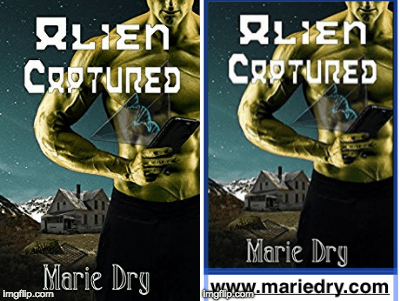 In a bleak future, where government systems are breaking down and poverty and violence reign, on an abandoned farm in Montana, Susannah had a simple plan. She’d capture an alien, sell him to the resistance, and use the money to save her son.
Instead, Susannah had an arrogant alien trapped in a pit who acted as if she was the prisoner. He wanted to kill her dog and insisted she should care for the wound he sustained when he fell into the pit she dug to trap him. On top of that, she had no way to know if the resistance got her message. Every day that passed, she doubted her decision to hand Azagor over to the resistance.
But her son, her baby, was being held by people who considered him unclean because he was conceived out of wedlock—and time was running out.
Buy on:
Amazon Kindle
Amazon UK
Amazon Aust
May 22, 2018
Revisions, Edits and Redo's... Oh My! With Robyn Rychards
This week Author Robyn Rychards talks to us about revisions and edits. Her new release is Cruising With Danger and she has a digital copy to giveaway for one commenter!

Connect with Robyn:
Website Facebook Twitter InstagramOver the years I've heard other writers say they are in revision hell, something I couldn't relate to because generally I don't mind the editing process. Until the book I'm working on now. Now I am in revision hell...
All my books have gone through various forms of editing and revising, and it's always been something I don't mind tackling. My latest release, Cruising With Danger, went through a lot of changes as, initially, I wrote it as a short medical romance, then later I decided to make it a full-length romantic suspense. This involved adding some things here and taking away some things there. One of the things I've learned over the years I've been published, as well as through the many books I've written, is that no story is set in stone until it's published. Take things out, put things in, move scenes around, do whatever needs to be done to get the story the best it can be.
Now, along the way, you'll get a lot of suggestions about what needs to go in, what needs to go out, etc., and not all of it is going to be good. Don't use every suggestion someone gives you, thinking that's what you need to do to make the story publishable. Not all input is the right input for your story, no matter how qualified the person giving it is. So my two cents worth there is, balance it out with what you know your story needs to say and go with your gut.
Never forget, it's your story and it needs to be told the way you want to tell it.
Author Robyn Rychard's new book:

After the stress in a busy Chicago ER, Sage Brady now enjoys working as a doctor on a cruise ship. Until she temporarily takes over the position of Chief Medical Officer and learns the previous doctor was murdered. Then she discovers narcotics being smuggled through the ship’s dispensary. But it’s the hot detective assigned to the case that threatens her peace of mind most of all.
Detective Dace Langdon hates his undercover assignment as a cruise ship security guard, but it’s better than the vacation his boss suggested. Being assigned to work with the sexy Chief Medical Officer is a complication he doesn’t need.
They could be trapped on the open sea with a murderer and drug smuggler. Can they figure out what's going on without Sage becoming the next target? Will their attraction to each other complicate the investigation or lead to something lasting?
Available at
Amazon
The Wild Rose Press
And all major eBook retailers

Connect with Robyn:
Website Facebook Twitter InstagramOver the years I've heard other writers say they are in revision hell, something I couldn't relate to because generally I don't mind the editing process. Until the book I'm working on now. Now I am in revision hell...
All my books have gone through various forms of editing and revising, and it's always been something I don't mind tackling. My latest release, Cruising With Danger, went through a lot of changes as, initially, I wrote it as a short medical romance, then later I decided to make it a full-length romantic suspense. This involved adding some things here and taking away some things there. One of the things I've learned over the years I've been published, as well as through the many books I've written, is that no story is set in stone until it's published. Take things out, put things in, move scenes around, do whatever needs to be done to get the story the best it can be.
Now, along the way, you'll get a lot of suggestions about what needs to go in, what needs to go out, etc., and not all of it is going to be good. Don't use every suggestion someone gives you, thinking that's what you need to do to make the story publishable. Not all input is the right input for your story, no matter how qualified the person giving it is. So my two cents worth there is, balance it out with what you know your story needs to say and go with your gut.
Never forget, it's your story and it needs to be told the way you want to tell it.
Author Robyn Rychard's new book:

After the stress in a busy Chicago ER, Sage Brady now enjoys working as a doctor on a cruise ship. Until she temporarily takes over the position of Chief Medical Officer and learns the previous doctor was murdered. Then she discovers narcotics being smuggled through the ship’s dispensary. But it’s the hot detective assigned to the case that threatens her peace of mind most of all.
Detective Dace Langdon hates his undercover assignment as a cruise ship security guard, but it’s better than the vacation his boss suggested. Being assigned to work with the sexy Chief Medical Officer is a complication he doesn’t need.
They could be trapped on the open sea with a murderer and drug smuggler. Can they figure out what's going on without Sage becoming the next target? Will their attraction to each other complicate the investigation or lead to something lasting?
Available at
Amazon
The Wild Rose Press
And all major eBook retailers
April 30, 2018
Writing Advice with Beth Prentice, Deadly Desire Book 3 (The Westpost Mysteries) Giveaway!
This week Author Beth Prentice talks to us about writing advice she follows. She has a new book, Deathly Desire: Lizzie ~ Book 3 (The Westport Mysteries). And she has a Kindle copy giveaway for one commenter!

Connect with Beth Prentice:
Website Facebook Twitter
Instagram Goodreads
Since becoming a writer I’ve been given lots of advice, some of it good and some not so good. Well, not good for me anyway. But we all write differently, so for you the advice may have been awesome! I’m certainly not going to say that I have very much good advice to give but I thought that it would be useful to pass along what I found valuable and what stuck with me.

Advice that I have loved:· Never stop reading! I mean, why would you want to?· Write your story until it’s the best it can be, then put it away for a month. When you come back to it you will see it with fresh eyes. · Once you’re happy with it, end it! Send it out to the world and be proud. You will always want to rewrite. But don’t. Be happy with what you have achieved and move on.· Write another book. Because really, you just can’t help yourself! J· If you can, chat regularly with other authors. This is one of my favorite parts of the job JI love chatting with my writer friends about promotions, plot points, characters and everything in between. And I love even more celebrating their achievements!· Be yourself. I mean who else can you be? Only you have your voice and it needs to be heard!· Write what you know. Now I’m using this one from the point of view of characters. I believe that if you write characters that you know then you can’t go wrong. I don’t mean write that character exactly like your great aunt Betty, but take some of Betty and some of her friend Sal and put them together until your character is perfectly imperfect. For example, in Deathly Desire Lizzie is part me, part some of my friends, and part the barista at my local coffee shop. She’s complex and real with many personality flaws that make her loveable. The reader can see themselves in her and that’s why they connect.· Love your editor! They only have your best interests at heart. · You may think it only takes one person to write a book, but it actually takes a village. Yes as the author you have the biggest part of the job, but it takes an editor, a cover designer, beta readers, a publisher, and readers to make it a book! · And last but certainly not least, be grateful. J
Author Beth Prentice's new book:
Deathly Desire: Lizzie ~ Book 3 (The Westport Mysteries)
When the past comes back to haunt you.
Lizzie is ready for a new adventure in her life, and it doesn’t take long for her to find it. After hitting the For Sale sign in to the ground of her house of mysteries, she is quickly charmed by another old house that is in desperate need of some love and attention. Only the house has a secret of its own. Who is its owner? Why is he so hard to find? And why does he own nine other deserted homes in Westport?
Keen to start this new chapter in her life, and with the help of her crazy family, her drop dead gorgeous boyfriend Riley, and the super sexy policeman that has just declared his undying love for her, Lizzie stumbles from one clue to the next. But when her past reappears and mixes with her future everything she has ever loved is at stake.
Can Lizzie solve the forty-year-old mystery so that she and Riley can begin their next chapter together? Is her past really back to get her, or is there a copycat in Westport? Or will the star of her nightmares destroy everything before it even begins?
Lizzie’s next adventure may not be as much fun as she had hoped.
Buy on:
Amazon Kindle Amazon UK

Connect with Beth Prentice:
Website Facebook Twitter
Instagram Goodreads
Since becoming a writer I’ve been given lots of advice, some of it good and some not so good. Well, not good for me anyway. But we all write differently, so for you the advice may have been awesome! I’m certainly not going to say that I have very much good advice to give but I thought that it would be useful to pass along what I found valuable and what stuck with me.

Advice that I have loved:· Never stop reading! I mean, why would you want to?· Write your story until it’s the best it can be, then put it away for a month. When you come back to it you will see it with fresh eyes. · Once you’re happy with it, end it! Send it out to the world and be proud. You will always want to rewrite. But don’t. Be happy with what you have achieved and move on.· Write another book. Because really, you just can’t help yourself! J· If you can, chat regularly with other authors. This is one of my favorite parts of the job JI love chatting with my writer friends about promotions, plot points, characters and everything in between. And I love even more celebrating their achievements!· Be yourself. I mean who else can you be? Only you have your voice and it needs to be heard!· Write what you know. Now I’m using this one from the point of view of characters. I believe that if you write characters that you know then you can’t go wrong. I don’t mean write that character exactly like your great aunt Betty, but take some of Betty and some of her friend Sal and put them together until your character is perfectly imperfect. For example, in Deathly Desire Lizzie is part me, part some of my friends, and part the barista at my local coffee shop. She’s complex and real with many personality flaws that make her loveable. The reader can see themselves in her and that’s why they connect.· Love your editor! They only have your best interests at heart. · You may think it only takes one person to write a book, but it actually takes a village. Yes as the author you have the biggest part of the job, but it takes an editor, a cover designer, beta readers, a publisher, and readers to make it a book! · And last but certainly not least, be grateful. J

Author Beth Prentice's new book:
Deathly Desire: Lizzie ~ Book 3 (The Westport Mysteries)

When the past comes back to haunt you.
Lizzie is ready for a new adventure in her life, and it doesn’t take long for her to find it. After hitting the For Sale sign in to the ground of her house of mysteries, she is quickly charmed by another old house that is in desperate need of some love and attention. Only the house has a secret of its own. Who is its owner? Why is he so hard to find? And why does he own nine other deserted homes in Westport?
Keen to start this new chapter in her life, and with the help of her crazy family, her drop dead gorgeous boyfriend Riley, and the super sexy policeman that has just declared his undying love for her, Lizzie stumbles from one clue to the next. But when her past reappears and mixes with her future everything she has ever loved is at stake.
Can Lizzie solve the forty-year-old mystery so that she and Riley can begin their next chapter together? Is her past really back to get her, or is there a copycat in Westport? Or will the star of her nightmares destroy everything before it even begins?
Lizzie’s next adventure may not be as much fun as she had hoped.
Buy on:
Amazon Kindle Amazon UK
April 23, 2018
Editing – The Pleasure and the Pain of Editing with Jane Godman
This week we have author Jane Godman sharing with us the pleasure and the pain of editing. Her new book out this month is, Colton and the Single Mom (The Coltons of Red Ridge).

Connect with Jane Godman on the web:
Website Facebook Twitter
Editing is the opposite of writing. When editing, you are forced to rein in your natural creativity and, instead, you become precise and analytical. For me, writing is the phase when I am in control. Editing can feel like something that is being done to me. It’s forced upon me. Like scrubbing the floor, or cleaning the oven, it’s one of those essential tasks. If I’m honest, I’d rather put it off for another day. My feelings when an email arrives from my editor are usually mixed. The closest description I can offer is a combination of trepidation and excitement. Because, no matter how much I dislike this stage, I know this is the point where my story becomes a book. Every story I write is an act of love. When I share it with an editor, I give that person permission to criticize my hopes and dreams for the characters and their journey. It’s a very personal relationship.The role of the editor is to be an advocate for future readers. They look critically at a book in order to find ways to improve the reading experience. I’ve worked with several editors, each with their own unique style. The best are masters of their craft, working with me to polish my story and make my voice shine. Those who are less effective rely too heavily on their own “rules”. What I’ve learned from those wonderful professionals is that editing is not an add-on that happens at the end of my writing. It is part of the process. To be a good writer, I have to learn to embrace the editing process. To put it simply, what happened before was for me. Now, I’m getting my writing ready to be seen by the world. Edits can be tiny fixes, or they can be huge problems that take days to solve. When I was editing The Soldier’s Seduction, the second of my Sons of Stillwater Harlequin Romantic Suspense stories, my editor noticed an issue with a cell phone that unraveled a big chunk of the story. If she hadn’t seen it, readers would have, and it would have spoiled their enjoyment of the book. Have I learned to love edits? I’m not sure I’d go that far. I think I’ve accepted that, with the pain, there can be some pleasure involved. One of the wisest things I heard recently was that editing takes a black-and-white manuscript and makes it technicolor. I try to keep that in mind as I’m grappling with a difficult editing problem.
Colton and the Single Mom (The Coltons of Red Ridge)
This Colton cop falls for a ready-made family A Coltons of Red Ridge story
A serial killer is on the loose, and true-crime filmmaker Esmée da Costa is on the case. K-9 cop Brayden Colton, the prime suspect’s half brother, works hard to stop her prying, but sparks fly as he falls for Esmée and her son. When Esmée and Brayden’s little family comes under siege, can they save all they love?
Read Reader Reviews
Buy on:
Amazon Kindle Amazon Paperback
Amazon UK Amazon Aust
Harlequin B&N
Kobo Book Depository iBooks

Connect with Jane Godman on the web:
Website Facebook Twitter
Editing is the opposite of writing. When editing, you are forced to rein in your natural creativity and, instead, you become precise and analytical. For me, writing is the phase when I am in control. Editing can feel like something that is being done to me. It’s forced upon me. Like scrubbing the floor, or cleaning the oven, it’s one of those essential tasks. If I’m honest, I’d rather put it off for another day. My feelings when an email arrives from my editor are usually mixed. The closest description I can offer is a combination of trepidation and excitement. Because, no matter how much I dislike this stage, I know this is the point where my story becomes a book. Every story I write is an act of love. When I share it with an editor, I give that person permission to criticize my hopes and dreams for the characters and their journey. It’s a very personal relationship.The role of the editor is to be an advocate for future readers. They look critically at a book in order to find ways to improve the reading experience. I’ve worked with several editors, each with their own unique style. The best are masters of their craft, working with me to polish my story and make my voice shine. Those who are less effective rely too heavily on their own “rules”. What I’ve learned from those wonderful professionals is that editing is not an add-on that happens at the end of my writing. It is part of the process. To be a good writer, I have to learn to embrace the editing process. To put it simply, what happened before was for me. Now, I’m getting my writing ready to be seen by the world. Edits can be tiny fixes, or they can be huge problems that take days to solve. When I was editing The Soldier’s Seduction, the second of my Sons of Stillwater Harlequin Romantic Suspense stories, my editor noticed an issue with a cell phone that unraveled a big chunk of the story. If she hadn’t seen it, readers would have, and it would have spoiled their enjoyment of the book. Have I learned to love edits? I’m not sure I’d go that far. I think I’ve accepted that, with the pain, there can be some pleasure involved. One of the wisest things I heard recently was that editing takes a black-and-white manuscript and makes it technicolor. I try to keep that in mind as I’m grappling with a difficult editing problem.
Colton and the Single Mom (The Coltons of Red Ridge)

This Colton cop falls for a ready-made family A Coltons of Red Ridge story
A serial killer is on the loose, and true-crime filmmaker Esmée da Costa is on the case. K-9 cop Brayden Colton, the prime suspect’s half brother, works hard to stop her prying, but sparks fly as he falls for Esmée and her son. When Esmée and Brayden’s little family comes under siege, can they save all they love?
Read Reader Reviews
Buy on:
Amazon Kindle Amazon Paperback
Amazon UK Amazon Aust
Harlequin B&N
Kobo Book Depository iBooks


