Michael May's Blog, page 35
December 19, 2020
“Another Idol Has Displaced Me” | George C Scott (1984)
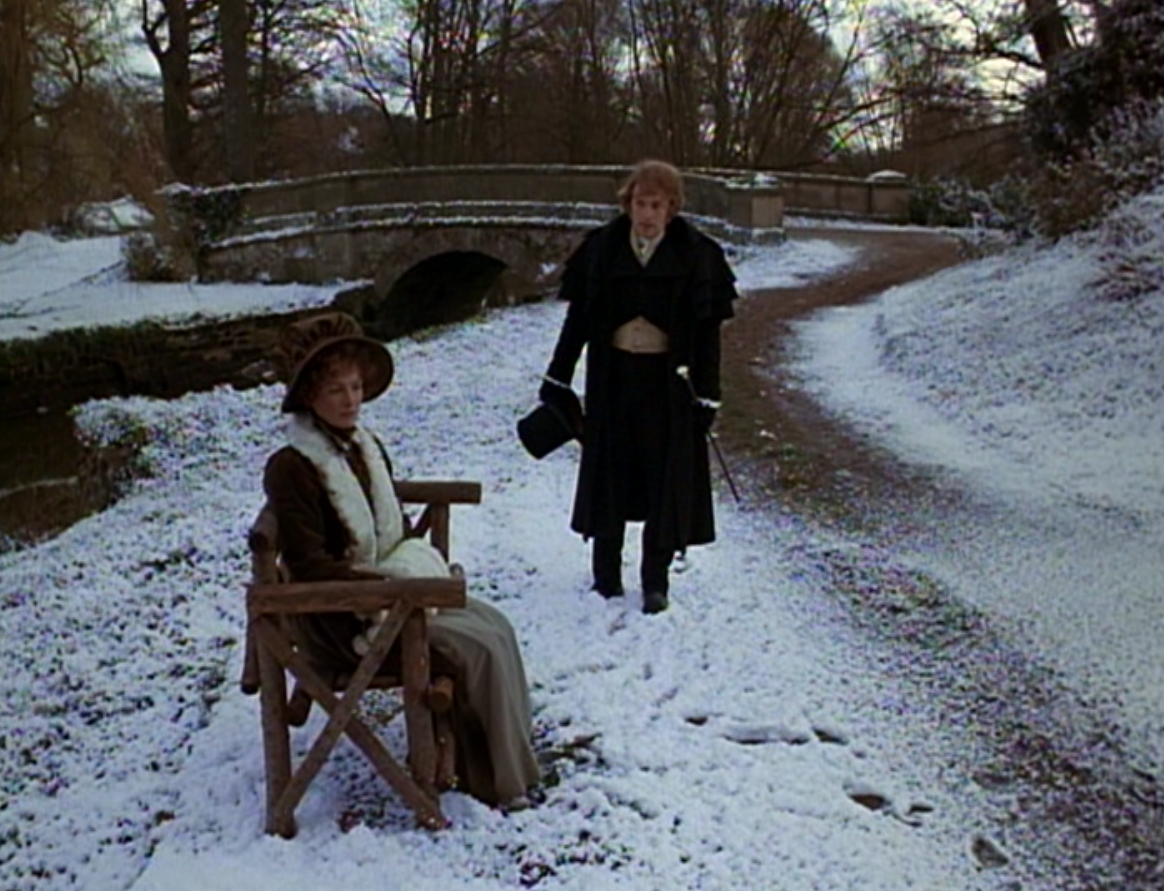 Clive Donner's version is another that places this scene outside in a park. It follows the end of the Fezziwig scene where Dick Wilkins and Young Scrooge mused that the party was a night "never to be forgotten." But, as the Spirit said, "You did forget. Often." And she shows him another Christmas Eve where he was "delayed by the pressures of business."
Young Scrooge is walking quickly through the park to meet Belle who's waiting for him on a bench. He apologizes for being late, but she's too upset to forgive him. "I thought you might not come," she says. "I know how busy you are."
He sits and agrees with her that he is very busy. She can't even look at him when she says, "Another idol has displaced me," and she comes across as jealous. When she talks about how money engrosses him, she's disgusted. He tries to blow it off. "Perhaps I've become wiser, but I have not changed towards you." And he seems to mean it. He doesn't deny what she's saying about his shifting priorities, but he wants her to be a part of them.
After a quick look at Old Scrooge watching sadly, we cut back to the couple who are now up and walking. She asks if he would still be interested in her if he was able to do it all over again. She's not wearing mourning clothes, but she refers to herself as "a dowerless girl with nothing but myself to bring to a marriage." She's sure she knows the answer and is angry with him for it.
He doesn't answer right away, but just looks ashamed. "You have no answer," she presses.
He thinks about it some more, but can't bring himself to protest. "You think I would not then?"
I love her disgusted response. "Oh, Ebenezer, what a safe and terrible answer!" And she breaks up with him and walks away.
He stands there and watches her go. He has a stunned look on his face and he plays with his cane as if he's about to follow her, but can't bring himself to do it. "I almost went after her," Old Scrooge confesses.
The Spirit acknowledges that Young Scrooge wasn't yet heartless at the time and she asks him why he didn't go after her. Old Scrooge explains that on his father's death, he was left a small inheritance that Scrooge and Belle apparently disagreed about how to spend. Belle wanted to get married right away and live on the inheritance, but Scrooge insisted on investing it. And, he points out, those investments paid off and he's become a wealthy man.
The Ghost sneers at this. "You have explained what you gained. Now I will show you what you have lost."
She doesn't have to forcibly restrain Scrooge to make him watch the vision of Belle's family. He doesn't seem to know what's coming, so he doesn't protest. In fact, he seems delighted at first by seeing all her kids.
It's another outdoor scene, this time with Belle and her children waiting in front of their house for Belle's husband to come home. Belle is holding a baby and there are a bunch of kids playing in the snowy yard. I count about ten with a couple of servants helping build a snowman or pull one of the children in a little sled. Even though there are a lot of kids though, they're well behaved and orderly; not nearly the chaotic herd that Dickens describes.
A carriage arrives and Father gets out. He's carrying presents, but leaves them in the carriage to greet his quietly gathering family. No one attacks him for gifts and the closest anyone comes is when one of the girls asks politely where her present is. Father kindly insists that she and all the rest will have to wait until that night "as usual."
Old Scrooge spells out the point of the scene. "Fancy, they might have been mine." It's an unnecessary observation, but at least it lets us know that he gets it. He doesn't seem upset about it though. It's the tradeoff the Ghost mentioned. This is what he lost to gain his financial success. He understands, but seems okay with the sacrifice.
His tune changes though when Belle's husband tells her about seeing Scrooge "quite alone in the world" with Marley's dying. Belle turns very sad. "Poor Ebenezer," she says. "Poor, wretched man."
"Spare me your pity!" Scrooge commands. "I have no need of it!"
The Ghost's tactics have backfired in this version, I think. This Spirit has been haughty and condescending with Scrooge and he hasn't reacted well. He enjoyed the party and he was reminded of his love for Belle, but he's also accepted that giving her up was a reasonable sacrifice. This Scrooge has always been presented as confident and comfortable with his stinginess, never miserable. He may have feared the world when he was younger, but he's taken control and conquered that fear. He doesn't yet see the need for love.
And he definitely doesn't want to be felt sorry for. He's too proud for that and has had enough of the Spirit. He demands that she leave him and haunt him no longer and when she just grins impudently at him, he grabs her cap and forces it down over her.
She doesn't resist, but simply says over and over again, "Truth lives!" There's a bright ring of light where the cap meets the floor, but even that goes out as Scrooge keeps pressing down. And then he's in his bedroom, on the floor, twisting and pressing a rug.


December 18, 2020
“Another Idol Has Displaced Me” | Albert Finney (1970)
 I cut off the Fezziwig scene a bit too early last year while talking about the musical Scrooge. Old Scrooge was sitting with the Ghost out of the way on a storage mezzanine, singing a melancholy ode to Isabelle as he watched his younger self dance with her. As the couple danced, the scene dissolved into a montage of other occasions during their courtship. They go boating on a little river, compete in an archery contest (she's better at it than he is), and go riding through the countryside in a little carriage (which is where Scrooge proposes to her).
 During all of this, Isabelle sings a song called "Happiness" in which she declares that the feeling isn't as intangible as people say, because it's incarnated itself in the young man she's with, Ebenezer Scrooge. Another constant during the montage is that Isabelle and Scrooge are always accompanied by her parents, Mr and Mrs Fezziwig.
Young Scrooge keeps looking at the older couple and it took me a while to figure out why that was. I finally decided that he wasn't irritated at their constant presence. They always maintain a discreet distance from the younger couple, for one thing, but also, Scrooge doesn't look irritated. Instead, I think he's captivated by the older couple's relationship. I think he's seeing it as something he wants for himself. It's easy to understand why considering his lonely childhood.
When the montage ends, it doesn't lead directly into the break-up scene. It goes back to Fezziwig's party where Old Scrooge and the Ghost are still sitting and watching the dance. The montage, it turns out, wasn't a move forward in time, but most likely a flashback to events before the party. It's hard to tell, but I believe I spot an engagement ring on Isabelle's finger during the party.
Isabelle's "Happiness" fades back into Old Scrooge's sad song that he was singing earlier:
You, you were good for me.You were my day.You did all you could for me.I let you go away.
"I did love her, you know," he tells the Ghost.
"Did you?" she wonders. "Then why did you let her go?"
He doesn't take his eyes off the dancers. "I've never been quite sure."
"Then let us go and see," she says.
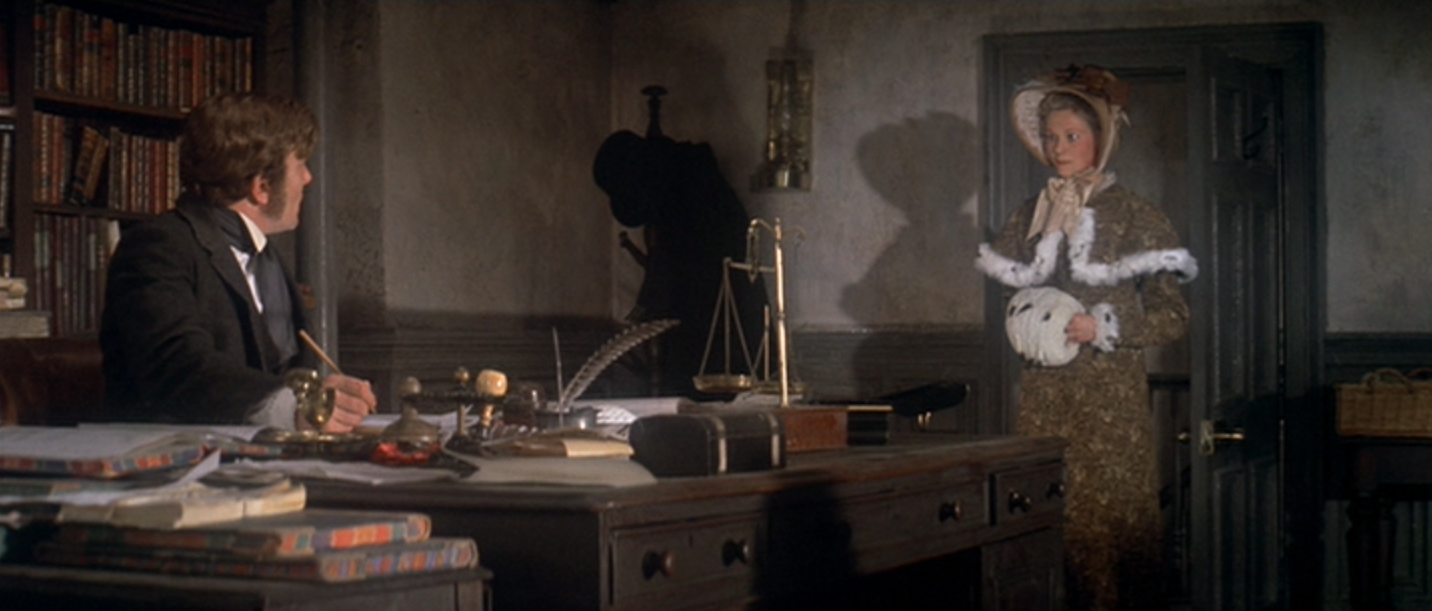
Now we're in Scrooge's office as Belle comes in. She's wearing a fancy, sort of copper-colored dress with white fur trim. Definitely not in mourning, but she announces that she's come to say, "Goodbye." "I'm going away, Ebenezer. You will not see me again."
She's calm and collected about it, but Young Scrooge is utterly confused. I like how she uses visual aides to explain. When she talks about the "lady" who's replaced her in his heart, she picks up some coins from a little chest on his desk and shows them to him. Later in the conversation, she'll put her engagement ring on a scale with a couple of coins and show them to weigh heavier in terms of material gain.
Scrooge is upset and launches into his "there is nothing on which the world is so hard as poverty" defense. The conversation goes for a while as Dickens scripted it, emphasizing Scrooge's fear of hardship and suffering. In all of this though, Scrooge is emphatic that he still loves and wants to marry Isabelle and I believe him. As with the moments at Fezziwig's dance, this is an especially heartbreaking version of this scene. Isabelle can't follow Scrooge down the path he's chosen, but he desperately wants her to.
Old Scrooge takes it particularly hard. Young Scrooge has gotten up from his desk and is moving around the office. I think he's partly just keeping busy and mellowing out the emotions of the conversation with at least the appearance of work. He throws Isabelle a glance every now and then, but mostly he just lets her talk. But at one point he says that he finds it impossible to talk about personal affairs during business hours, so maybe he just really is that distracted by the pressures of the workday and wants to take up this conversation with Isabelle later when he can focus on it.
Old Scrooge argues with her though, even if she can't hear him. He did love her, he insists. He still does. The Ghost shushes him though. "I'm trying to listen!" But Old Scrooge is very emotional. As his younger self sits back at the desk and listens to the rest of Isabelle's speech, Old Scrooge screams at him to say something. Young Scrooge is clearly hurt, he's even covering his mouth with a fist, holding back his emotions, but he remains silent. He wants to say something, but the only thing that will have an effect on her is for him to change something that has become fundamental to himself. And he's just too terrified to do that. He loves her, but his fear is stronger.
Old Scrooge pleads with Isabelle not to go. "It's a mistake!" But she leaves and only then does Young Scrooge call out her name. He even goes to the door to maybe try to catch her, but she's gone and he doesn't pursue any further. He sits back at the desk and looks thoughtfully at the door. He doesn't like what's happening, but he lets it happen. The alternative is too big a sacrifice.
"You fool!" Old Scrooge shouts at him. Then more quietly, "You fool." He walks over to the window and sees Isabelle walking alone through the snowy street. He picks up the sad song he was singing earlier.
I let you go awayAnd now I can see.Now you're a dream gone by.For how could there beSuch a fool as I?
I who must travel on,What hope for me?Dream where my past has gone;Live with the memory.
You, my only hope.You, my only love.You, you, you...
He is utterly wrecked, just staring out the window like he's in shock as he humbly requests, "Spirit, remove me from this place. I can bear it no more."
And mercifully, she does. He's immediately back in his bed, holding his pillow and weeping.

December 17, 2020
AfterLUNCH | Fantastic Four Films
 With Disney's recent announcement that there's a new Fantastic Four movie coming that will be part of the MCU, it's a great time to discover a lost podcast episode about the four FF films so far. From the no-longer-with-us Geek Fallout: The Comic Book Episodes, host Erik Johnson leads a discussion with Nerd Lunch/AfterLUNCH regulars Paxton Holley and Evan Hanson about Fantastic Four (2015), Fantastic Four (2005), Fantastic 4: Rise of the Silver Surfer (2007), and The Fantastic Four (1994).
Download or listen to the episode here.

“Another Idol Has Displaced Me” | Fredric March (1954)
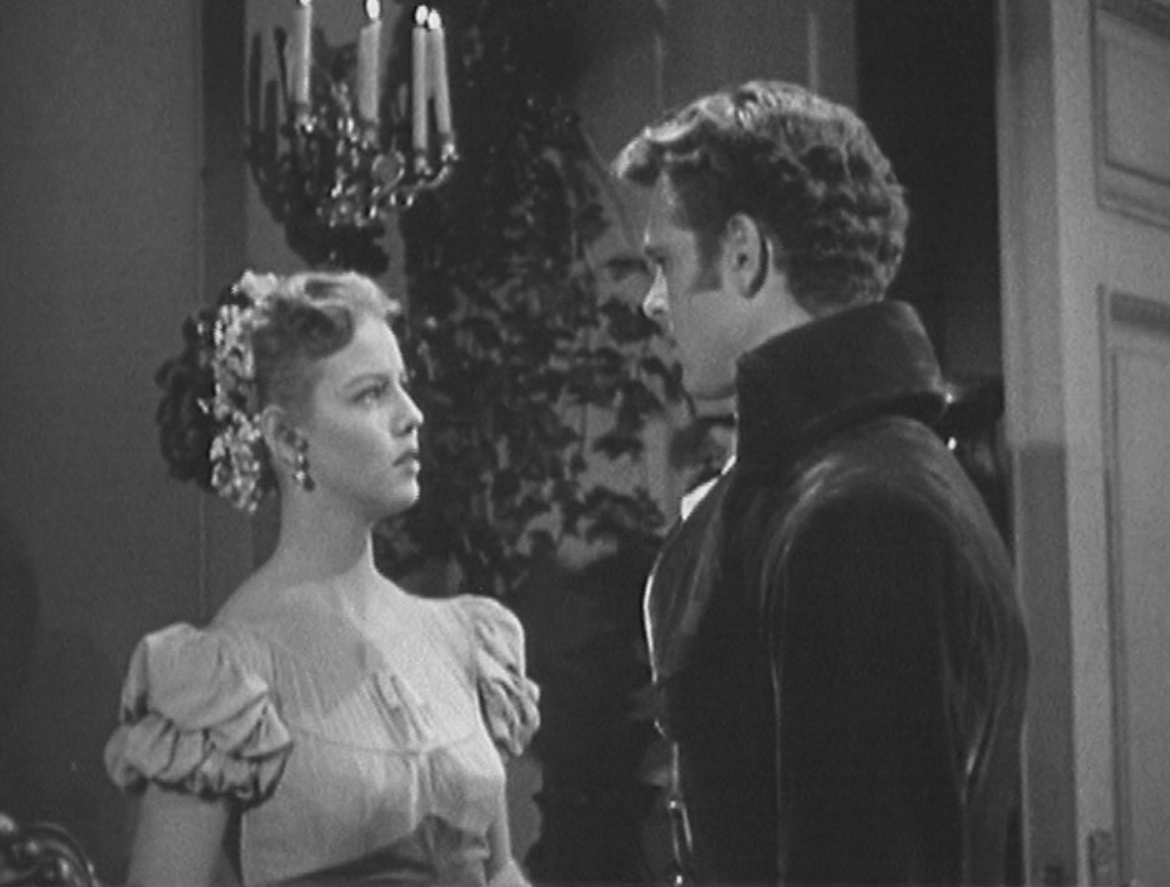 I forgot to mention something last year about the Shower of Stars adaptation that's pretty important. When Scrooge first met the Ghost of Christmas Past, he remarked that "You resemble her so much." When Belle is introduced at Fezziwig's party, it's confirmation that Scrooge was referring to her. Sally Fraser plays both roles and there's even a moment at the party where Old Scrooge looks at the vision of Belle, then stares closely at the Ghost to make sure he's not imagining it. Having the Ghost resemble someone from the Ghost's time period is a gimmick that this version will come back to, too.
As noted last year, this version takes big liberties with the Fezziwig scene, not only by introducing Belle during it (which a lot of adaptations do), but also by turning Fezziwig into a wealthy man with the ball taking place at his mansion. He's not snobbish about his guest list though and has invited his employee Scrooge as well as Belle, whom we learned last year is a clerk in a shop. I didn't think of it at the time, but maybe it's a shop that Fezziwig owns, making her another of his employees. That would explain her presence at the party. Though she could also be a family friend of some kind.
Anyway, this version continues the changes by setting the break-up scene at Fezziwig's party. Belle certainly isn't in mourning as we intrude mid-discussion on an argument she's having with Young Scrooge. "But that is not what I meant," he's saying, suggesting that their disagreement is over something that he thoughtlessly said.
She goes right into, "Oh, Ebenezer, I've seen your nobler aspirations fall off one by one." So apparently whatever he said betrayed some kind of greedy or miserly sentiment. They have an extremely abbreviated version of the traditional conversation, ending with her saying, "You'd never choose a dowerless girl. Perhaps you'll never choose any." That last observation of course turns out to be true, but I don't understand why she says it. And she runs off to another room before Scrooge can ask her any questions. He doesn't follow her, but just marches off to a different part of the house.
This is all even more awkward being set at Fezziwig's party. Earlier, Young Scrooge was looking forward to seeing Belle and dancing with her. And when she came in late, she also seemed happy and eager to see him. They smiled all through their song together. So it doesn't at all look like Scrooge's feelings toward her have grown cold. Instead, what it looks like is that she showed up at the party already feeling bad about their relationship, but was good at hiding it. Scrooge probably has become more greedy and clutching recently and it's made her unhappy, but she's put a brave face on it until he said whatever he said to set her off. That's a believable scenario to me and especially heartbreaking because it takes Scrooge by such surprise. I mean, seconds ago they were singing together about their dreams for the future and now... they have no future.
As Old Scrooge watches, the Ghost disappears from his side, which makes it weird that he waits until then to shout, "No more!" and back his way through the doors that he and Ghost had come through. This leads Scrooge into his apartment and we cut to the street below his window where a town crier is calling the two o'clock hour.

December 16, 2020
“Another Idol Has Displaced Me” | Alastair Sim (1951)
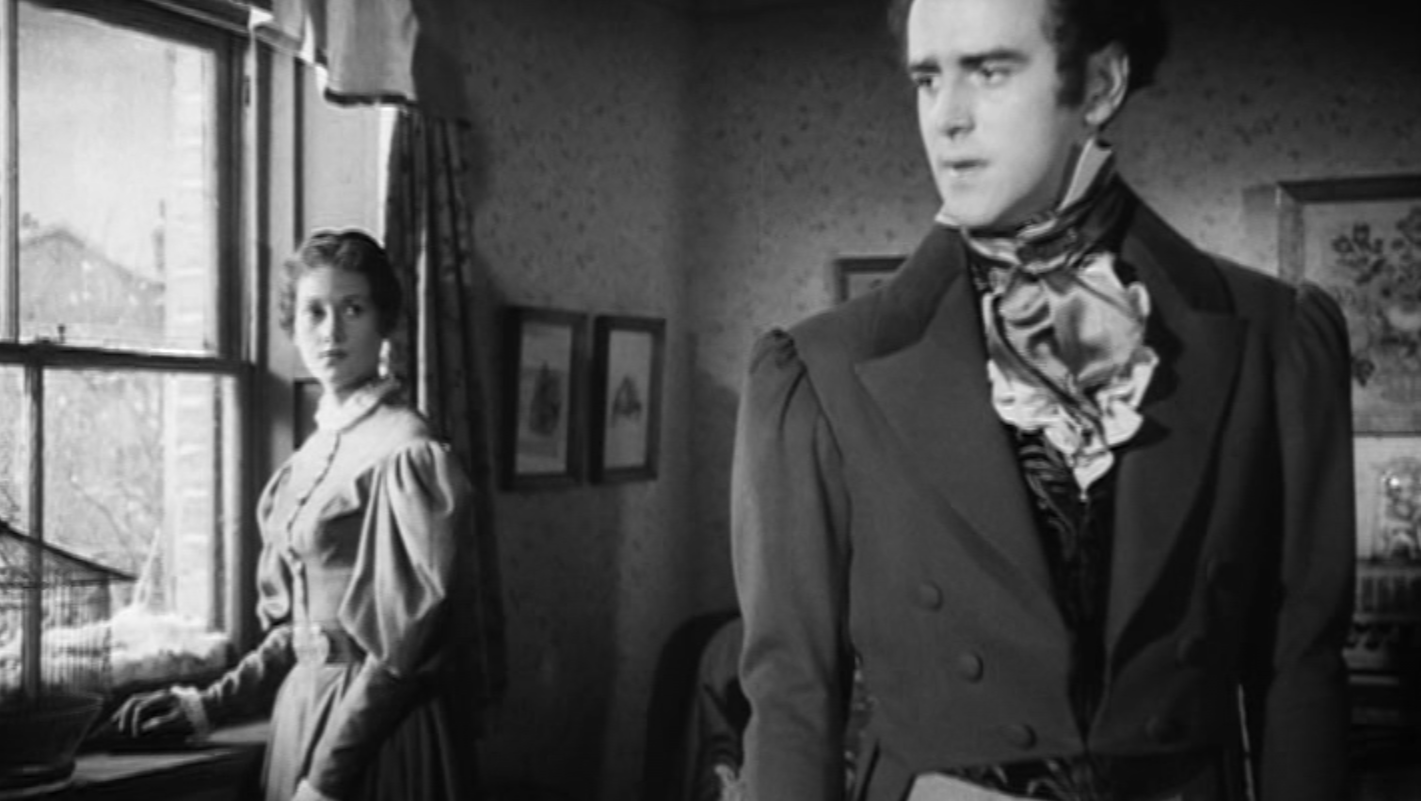 It's funny to me that after the Reginald Owen Christmas Carol skips this scene altogether, Alastair Sim's classic version more than compensates with a super extended look at not just Scrooge's fiancée, but a bunch of other stuff from Scrooge's past, none of which is in the book.
I remember the first time I watched this version. I was entranced by all of these apocryphal scenes. I'll run through them in a minute, but I loved the additional backstory and how it fleshed out Scrooge's descent into greed and misery. These days, having seen this version so many time, I get a little impatient with the extra material, but I'm still glad that someone decided to go there and fill all that in. (Although, like with the animated Sim version, it's hard to believe that all of these scenes take place at Christmas, so the Ghost feels out of bounds showing it.)
Before we get to the break-up scene, the Spirit shows Scrooge the following things:Fezziwig's refusing to sell his old-fashioned, family business to an industrialist named Mr Jorkin who wants to modernize it. Jorkin is understanding, but patronizing. And Fezziwig seems to know that his way of doing business is probably doomed, but he's ready to die on that hill as a matter of principle. Young Scrooge is in the office, too, and eavesdrops on the conversation with interest. He then has his own discussion with Jorkin when Fezziwig is called away to deal with something in the shop. Scrooge attempts to defend Fezziwig's ideals, but Jorkin tests him by offering him a job in a new factory that will offer much higher wages.Fan dies after giving birth to Fred. Scrooge is at her bedside and is furious at the baby (and Fan's husband) for killing her. He leaves when she goes unconscious and isn't there when she wakes up long enough to request deliriously that Scrooge take care of her boy. Old Scrooge hears her though, getting this information for the first time in his life, and he breaks down, begging her forgiveness. Scrooge starts work as an accountant with Jorkin's new factory and meets the other clerk, Jacob Marley. Scrooge confides to Marley that he thinks the world has become a hard and cruel place and that people must become hard to survive it. While he admired Fezziwig's philosophy, Scrooge also saw that it was leading his former employer to ruin.Jorkin's company has bought out Fezziwig's and the new management is moving in. Scrooge agrees to let one of Fezziwig's employees stay on at a reduced salary, but can't bring himself to talk with Fezziwig himself when he has the chance.Doing this project, I feel like I'm finally getting a handle on the Spirits' tactics and why they're effective on Scrooge. It has to do with his abandonment and neglect as a child and his fear of ending up like that again. His accumulation of wealth is all about control, which is why he's a miser with it (and also why you'll never catch Scrooge sliding on ice - voluntarily giving up control - the way other characters do in the various versions). Scrooge doesn't crave money so that he can spend it. He needs it so that he can feel secure. And he's instinctively suspicious (and I think, deep down, extremely jealous) of people like Fred who are willing to give up that safety net for love.
Dickens is pretty subtle with his clues though, so I understand the desire for a movie like this to try to spell things out a little more clearly. Instead of Scrooge's dislike of Fred being out of jealousy for Fred's loving marriage, it's because of a side plot about Fan's death. The stuff about Jorkin and Fezziwig stays on point though and I think gets across the idea that Scrooge is making these decisions out of fear.
At this point, we see Alice (this movie's version of Belle) break up with Scrooge. The vision opens with her staring out a window in a house as the Spirit declares that "she is not changed by the harshness of the world." She's chosen love over fear.
She's not wearing black and doesn't appear to be in mourning, but one of the nice things about this version is that we've actually got to see Scrooge's gradual change in his attitude towards the world. Their conversation makes even more sense in the context of the preceding scenes.
There's a big change in the dialogue that continues the adaptation's trend of humanizing Scrooge. When Alice asks if he'd still propose to her today if he hadn't already agreed to it in the past, he hesitates, but declares, "Of course I would." That's much different from his non-answer in the book where he puts it back on her with, "You think not."
She doesn't believe him though and releases him. He angrily snatches up her ring where she's left it on a table, saying that he must bow to her conviction. He's ticked at her for breaking up with him and I don't think it's just wounded pride. I think he still loves her and wants to make it work, but she's forcing the issue because he's going down a path she can't accompany him on. Some of the other versions suggest that she's presenting him with a choice: money or me. And he chooses money. This feels more real than that. She's not offering him a choice, she's just breaking it off and he can't do anything but accept it, which is super painful.
This is apparently her house, because he storms out and leaves her there by herself where she breaks down. This is another aftermath that Young Scrooge never witnessed, but Old Scrooge has to. Like in the book, he tries to get out of seeing any more, but the Ghost declares that they're not done yet. Instead of peeking in on what happened to Alice though, we have some more scenes from Scrooge's life:Jorkin is accused of embezzling company funds and is being threatened with criminal prosecution by his partners. Scrooge (played by Alastair Sim from this point on) and Marley offer to pay off the discrepancy and save the company, but under the condition that they be given enough shares to control the company when all is done. They're now shrewd, cold businessmen.Marley's housekeeper Mrs Dilber arrives at the office to let Cratchit know that Marley is on his deathbed. If Scrooge wants to say goodbye before Marley dies, he'd better get over there now. Cratchit delivers the message, but Scrooge refuses to leave until the office has officially closed in another couple of hours. Mrs Dilber, who is completely awesome in this version, says that she'll "try and get Mr Marley to hold out 'til then, I'm sure."Scrooge leaves at the close of business, as promised. Cratchit tries to offer condolences, but Scrooge is completely cold and not having it. They have the same conversation about Cratchit's wanting all of Christmas Day off work that they will seven years from now in the main story, implying that this is an annual discussion that gets no easier for either one of them. "Every Christmas you say the same thing," Scrooge says. "And every Christmas it's just as inconvenient as it was the Christmas before."Scrooge arrives at Marley's, which is the same house that Scrooge inhabits in the present day. Mrs Dilber and the undertaker are waiting for him at the top of the stairs. Scrooge mocks the undertaker for being there so promptly and the undertaker explains that his "is a highly competitive business." I like how that plays into the scene in Christmas Future where both he and Mrs Dilber will sell items to Old Joe that they've pilfered from the dead Scrooge. Scrooge goes into Marley's bedroom (same as Scrooge's bedroom later) and Marley is still barely alive. He can barely talk, but he looks miserable and desperate. "We were wrong," he manages to get out. "Save yourself." It's horrible and wonderful. Marley dies before he can explain further.Scrooge signs the death register at Marley's funeral as the Ghost explains that Scrooge also inherited Marley's wealth and house as well as his half of their business. The Ghost points out that Scrooge was emotionless during this scene, except for the greed he felt over Marley's possessions.With this last vision, the scene dissolves back to Scrooge's bed where Scrooge is now lying and moaning in his sleep, "No no no no no..."

December 15, 2020
Advent Calendar House | The Little Drummer Boy
 My friend Mike Westfall has an excellent podcast called Advent Calendar House that's all about TV Christmas specials. He was an inspiration for Sleigh Bell Cinema as well as the first guest on it. And he'll be a guest on it again before this year is done.
 Anyway, I've been thrilled to be on a few episodes of ACH and the most recent one releases today where Mike, Brandon Medley, and I talk about the Rankin-Bass special based on "The Little Drummer Boy." It's a weird adaptation with some lovely music and Mike leads a great discussion.

“Another Idol Has Displaced Me” | Reginald Owen (1938)
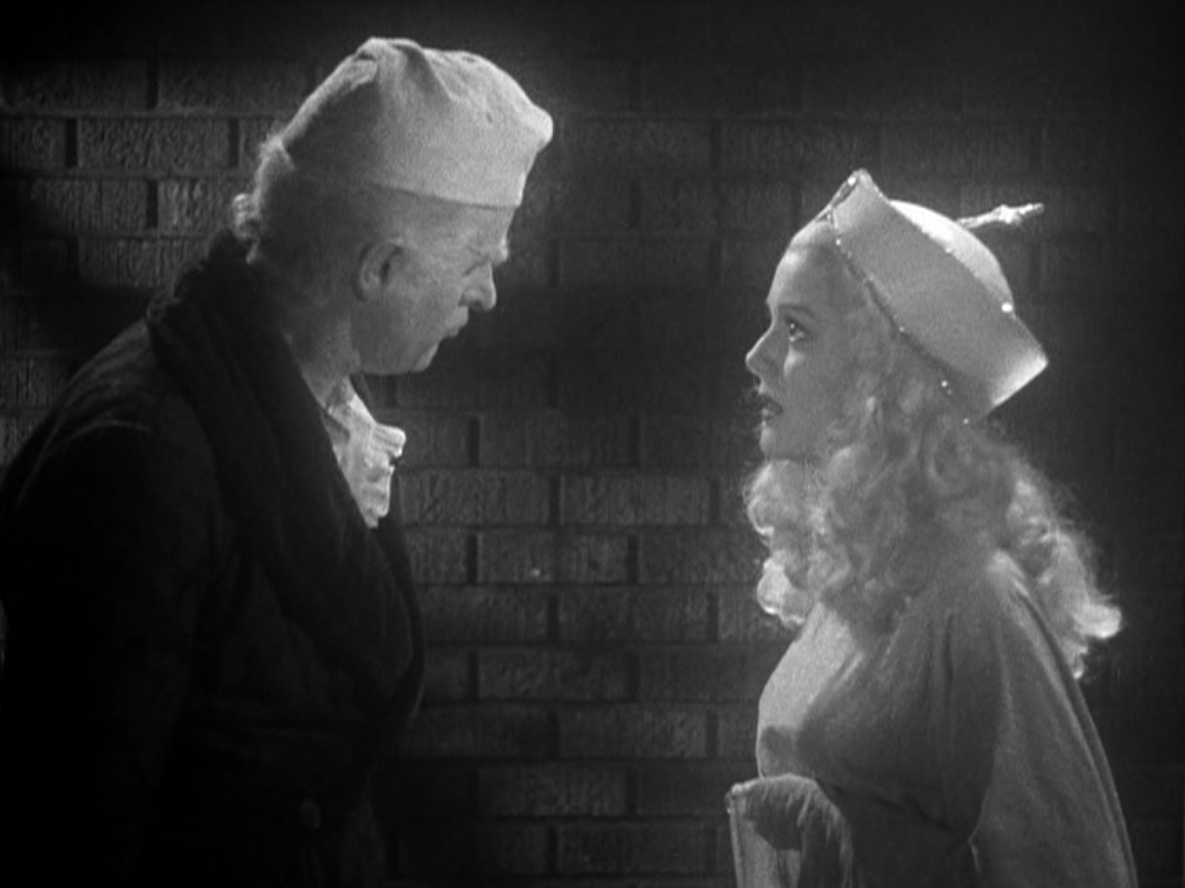 The 1938 Christmas Carol cuts Belle out of the story altogether. It also heavily modified the Fezziwig scene to eliminate the party while still showing Fezziwig's loving management of his employees. This version added some extra story at the beginning with Scrooge's nephew running into Bob Cratchit's kids and then having a visit with Bob, and eventually with Bob's getting fired for accidentally ruining Scrooge's hat with a snowball. We've apparently got to make that time up somewhere, so this is where the adaptation cuts a couple of corners. When the Ghost declares at the end of the Fezziwig scene that her time is running short, she's not kidding.
Scrooge was already cranky at the end of the Fezziwig conversation, regressing a little in the progress of his transformation and getting defensive about how he's a good business man. The Spirit loses patience with him about that and sums up the rest of what she was planning to show him: "I've yet to show you the black years of your life: your gradual enslavement to greed, your ruthlessness, your ingratitude, your wretched thirst for gold!"
Scrooge protests through all of this and shouts for her to leave him. He's been confronted - and I think convinced - that he needs to change, but this is a big step backward. The Ghost of Christmas Present in this version is going to have more work to do than his counterparts in other adaptations where Scrooge made more progress in the Past.
This Spirit of Christmas Past hasn't carried an extinguisher cap, but Scrooge is so angry and desperate that he grabs her skirt and throws it over her head. It's super awkward, but thankfully the camera stays on Scrooge and we don't actually see the Ghost as she's assaulted. Scrooge simply yells that he can't stand any more as the scene dissolves from his clutching the Ghost's clothing to him in his bed trying to strangle his own bedsheets.

December 14, 2020
“Another Idol Has Displaced Me” | Seymour Hicks (1935)
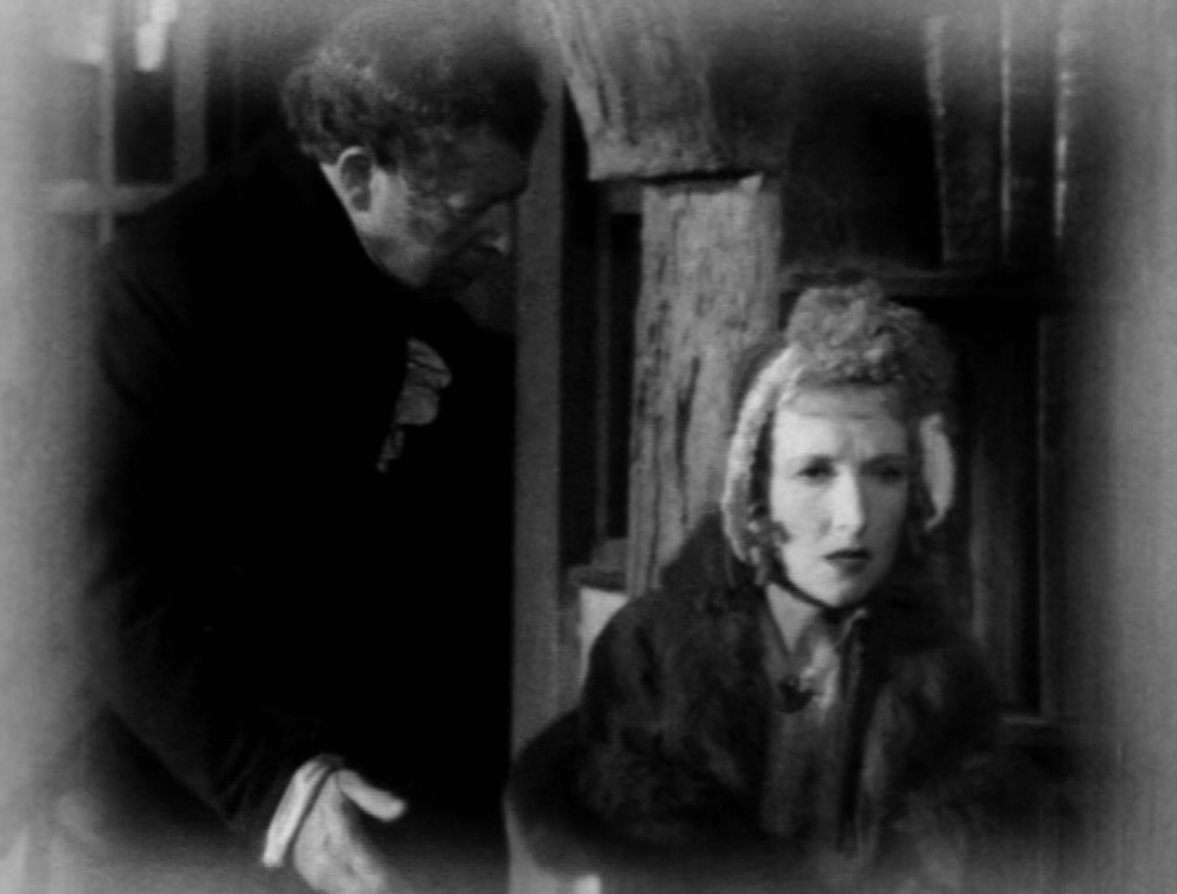 In Henry Edwards' Scrooge, Belle walks into Scrooge's office just as he's sending a couple to the workhouse for not paying their debt. The couple pleads, but Scrooge is resolute and Belle hears the whole thing.
 Once the couple leaves, Belle confronts Scrooge. "So it is true." She's been hearing rumors about Scrooge's ruthlessness, but has apparently resisted believing it. Rather than any recent bereavement of her own, this Belle is facing sudden, hard truth about the man she's engaged to. She's ticked off in the early part of the scene and can't even look at him for a good, long while.
He tries to explain himself and he's very logical about it. This is just the way he does business and he insists on leaving sentiment out of it. Belle points out the harshness of his refusal to offer the couple even "a little breathing space," but Scrooge puts his own foot down. He sees her compassion as feminine weakness and asks that she leave his business concerns alone. He says that he'll be even more insistent about it once they're married, but by this point she's already removed her engagement ring and set it on his fireplace mantle. Scrooge can't believe what's happening, but he still talks to her formally and with what he believes is authority. Belle softens, no longer angry, but she's resigned and sad.
She never mentions fear in the scene, but I think that element comes through in other parts of the dialogue and in Hicks' performance. He's struggling hard to conduct business in what he thinks is the smartest way while resisting the influence of Belle's merciful attitude. While he never lets up or changes his demeanor, he's clearly shaken by her and I believed frightened by the effect she could potentially have on him.
Looking on, Old Scrooge continues to be passive and weak. He doesn't argue with the Spirit or demand anything, he just looks defeated. But the Ghost isn't done with him and we do get to see the scene of Belle and her family.
It's a pretty great version of this scene. I tried to add up the number of children running around the parlor and counted almost 20. They're a big enough group to have formed two circles for running and singing "Here We Go Gathering Nuts in May." Belle leads seven kids around the Christmas tree and her oldest daughter leads five more near a table where another five kids are banging and playing musical instruments. It's the definition of large and boisterous, if slightly more organized than what Dickens described.
Dad comes in and he's alone in this version, instead of accompanied by a porter. That's because his presents for the kids are small and tucked into his coat pockets, but the children know what's what and rush him anyway to collect their gifts.
After that, Belle and her husband have their conversation as Dickens wrote it, but rather than cut immediately to Scrooge, the camera lingers on the couple long enough for Belle to kiss her husband and hug her children appreciatively. Dickens doesn't really say what her reaction is to the news that Scrooge is alone and about to lose his remaining friend, but I love seeing that it makes her even more grateful for the people in her own life.
Still passive, Old Scrooge looks exhausted as he asks the Ghost to haunt him no more. But when the Spirit declares that these visions are Scrooge's own fault, Scrooge is angry enough to raise a fist and shout something. I'd like to know what he shouts, but in my print of the film, it's cut off and the scene immediately cuts to Scrooge asleep in his bed. This Ghost carried no extinguisher cap, so we wouldn't have had that part of it at any rate. I bet the intention was always to smash cut from the vision to Scrooge's room. But I'd like to know what Scrooge was yelling and if it suggested that he was finally getting a backbone about what's happening to him. I want to put a pin in this and see if he's more engaged with the next Spirit.

December 13, 2020
Sleigh Bell Cinema | Santa Claus Conquers the Martians (1964)
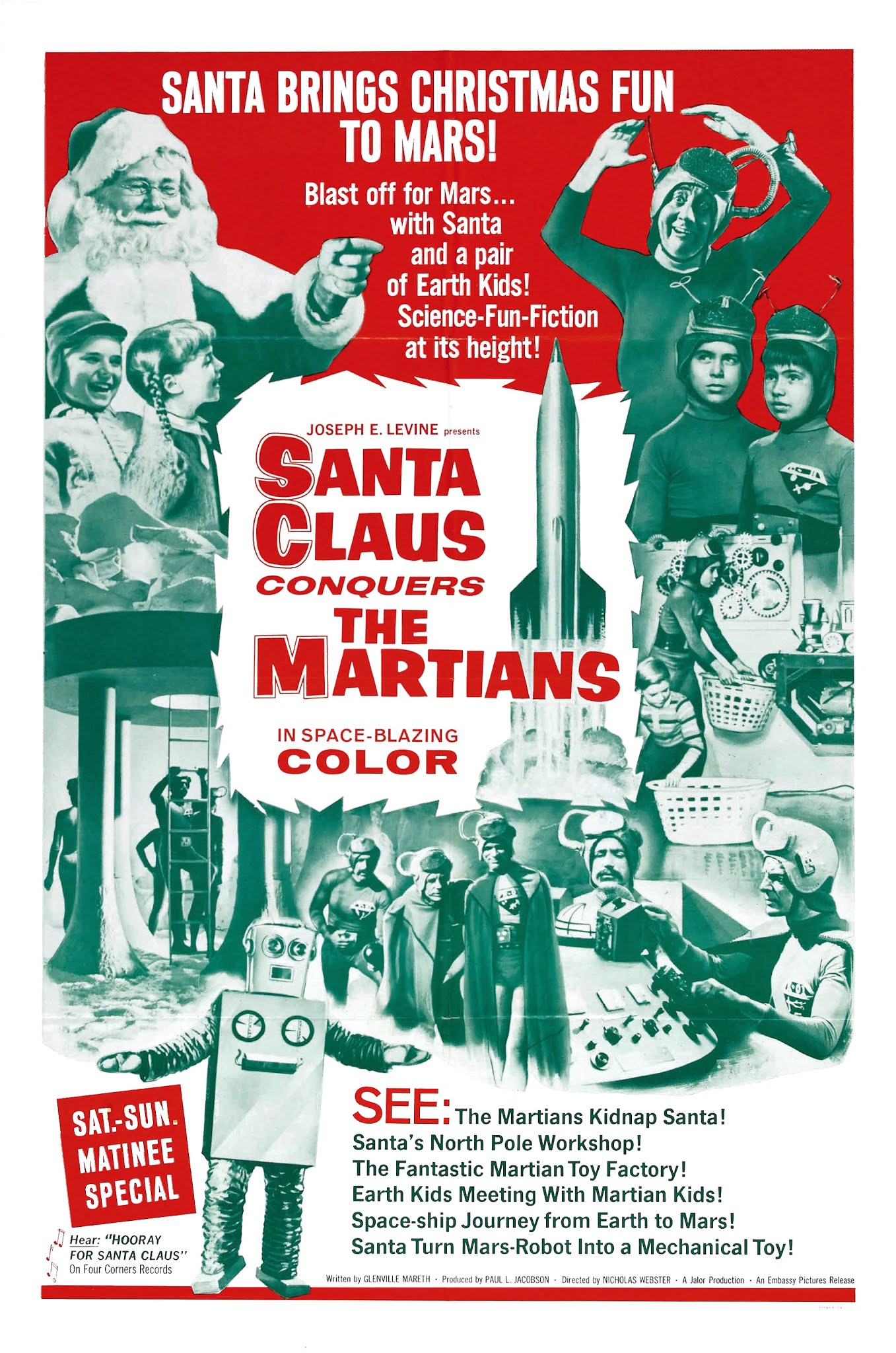 Dan Taylor joins me for a Christmas turkey of a movie featuring young Pia Zadora, a killer robot, and more stock footage than you can shake a fake polar bear at. But is Santa Claus Conquers the Martians as bad as its reputation? What would it take to fix it? Dan and I figure it out in the most serious discussion ever of the silliest Christmas film.
Download or listen to the episode here.

“Another Idol Has Displaced Me” | Mark McDermott (1910)
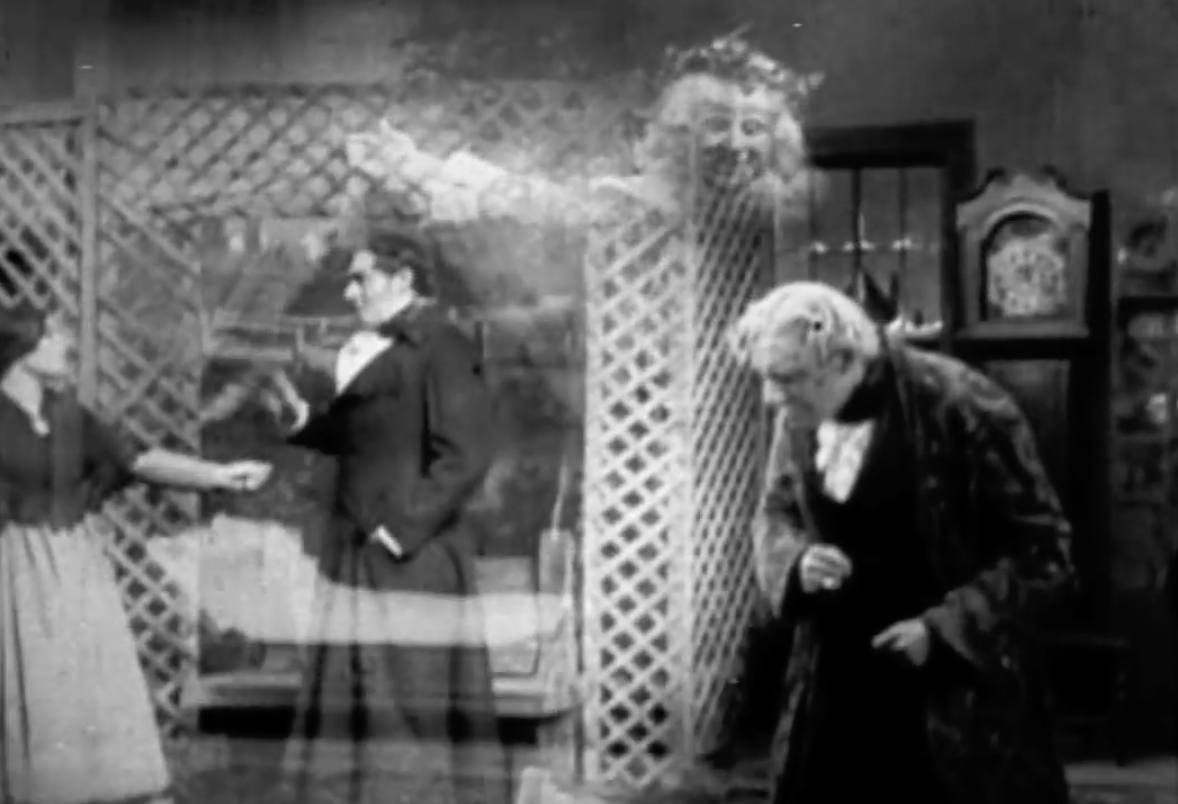 Thomas Edison's silent film puts this scene in with other "incidents of [Scrooge's] youth and early manhood" that it doesn't spend any time explaining or even providing context for. I'm pretty sure that Belle (unnamed in the film) is the same character that Scrooge kissed in the party vision, but it doesn't make much difference either way.
 There are no intertitle cards to explain even the broadest strokes of why the couple is breaking up, much less any specific details about mourning or something that Scrooge has done. Belle is wearing a darkly colored shaw, but that's not enough to suggest that she's a recent orphan.
Old Scrooge was dancing and enjoying the party scene, but after some unheard (by us) words from the Spirit, Scrooge is already depressed and not looking forward to whatever's coming next. He shakes his fist a little in defiance and tries to turn his back on the next scene, but the Ghost insists that he watch.
Belle and Young Scrooge appear just as she's trying to hand him something small, presumably a ring. He tries to refuse it by standing rigid and facing the other direction, but she slips it into his hand and slinks away. He looks at it and turns to reach out to her, but she's already gone. He puts the ring into a coat pocket and pretends not to be bothered, then he too fades from Old Scrooge's view.
Belle looked upset during the vision, so combined with Young Scrooge's haughty posture, it's clear that the break-up is his fault even though she's the one instigating and insisting on it. Like everything else in these Christmas Past incidents, it's a fair representation of what happens in the book, but I hate to think that this was ever anyone's first exposure to the story and their trying to figure out what's going on.
The scene ends with Old Scrooge being even more disturbed and angry as the Spirit raises it's arm to announce the next vision. In this version, there's only one Spirit of Christmas, showing Scrooge images from the Past, Present, and Future. Scrooge doesn't even get to go back to bed before the next section starts up. We just get a new intertitle card specifying that Scrooge is now going to see "visions of the present."