Michael May's Blog, page 34
December 29, 2020
AfterLUNCH | After Dinner Lounge - December 2020
Rob Graham, Evan Hanson, and I reconvene for another informal conversation about what we've been reading, watching, and thinking about lately.
Topics meander merrily, but start from:
Books like Treasure Island by Robert Louis Stevenson, Charles Dickens' Christmas Books, The Devil’s Due by Bonnie MacBird, The Dresden Files by Jim Butcher, and Becoming by Michelle Obama.Comics like Silver Spoon by Hiromu ArakawaMovies like the original Black Christmas, this year's Fatman, and the documentary Pilgrims.TV shows like Dicktown and Truth SeekersAnd real talk on Holiday Traditions, Movie Theaters, and This Podcast.Download or listen to the episode here.


December 27, 2020
Hellbent for Letterbox | Duel in the Sun (1946)
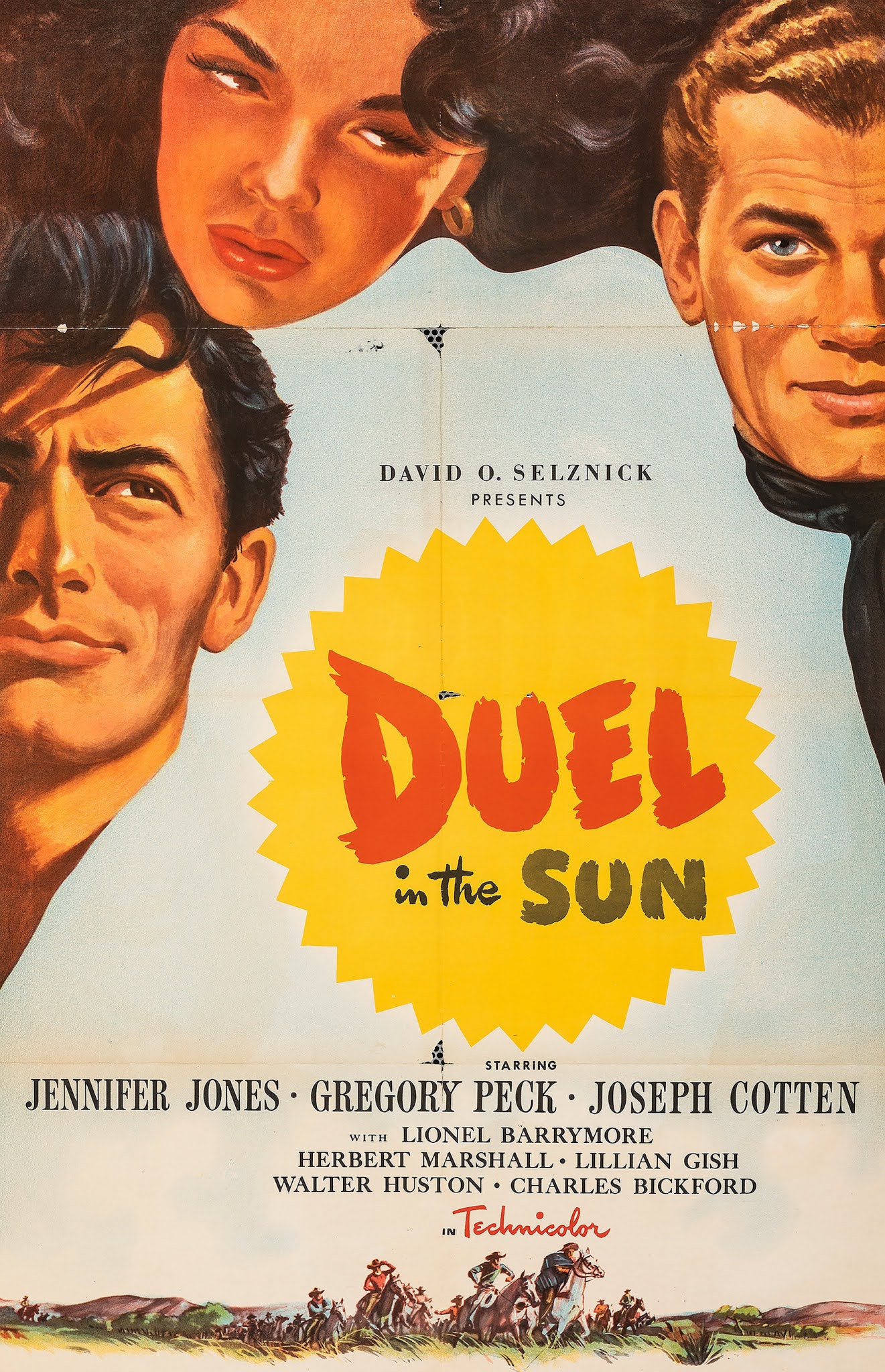 Shawn Robare returns to help Pax and I discuss the David O. Selznick mess, Duel in the Sun, featuring a legendary cast, but also six directors, a terrible script, and a central relationship that no one (including the movie) cares about. Happily, that makes for a great conversation anyway.
Download or listen to the episode here.

December 24, 2020
Sleigh Bell Cinema | Miracle on 34th Street (1947)
 Merry Christmas! Mike Westfall (
Advent Calendar House
) joins me to wrap up not only this season of Sleigh Bell Cinema, but the whole podcast. Stay tuned to the end of the episode for details about why I'm ending the show, but I'll still be talking Christmas movies next year. Just in a different place.
Merry Christmas! Mike Westfall (
Advent Calendar House
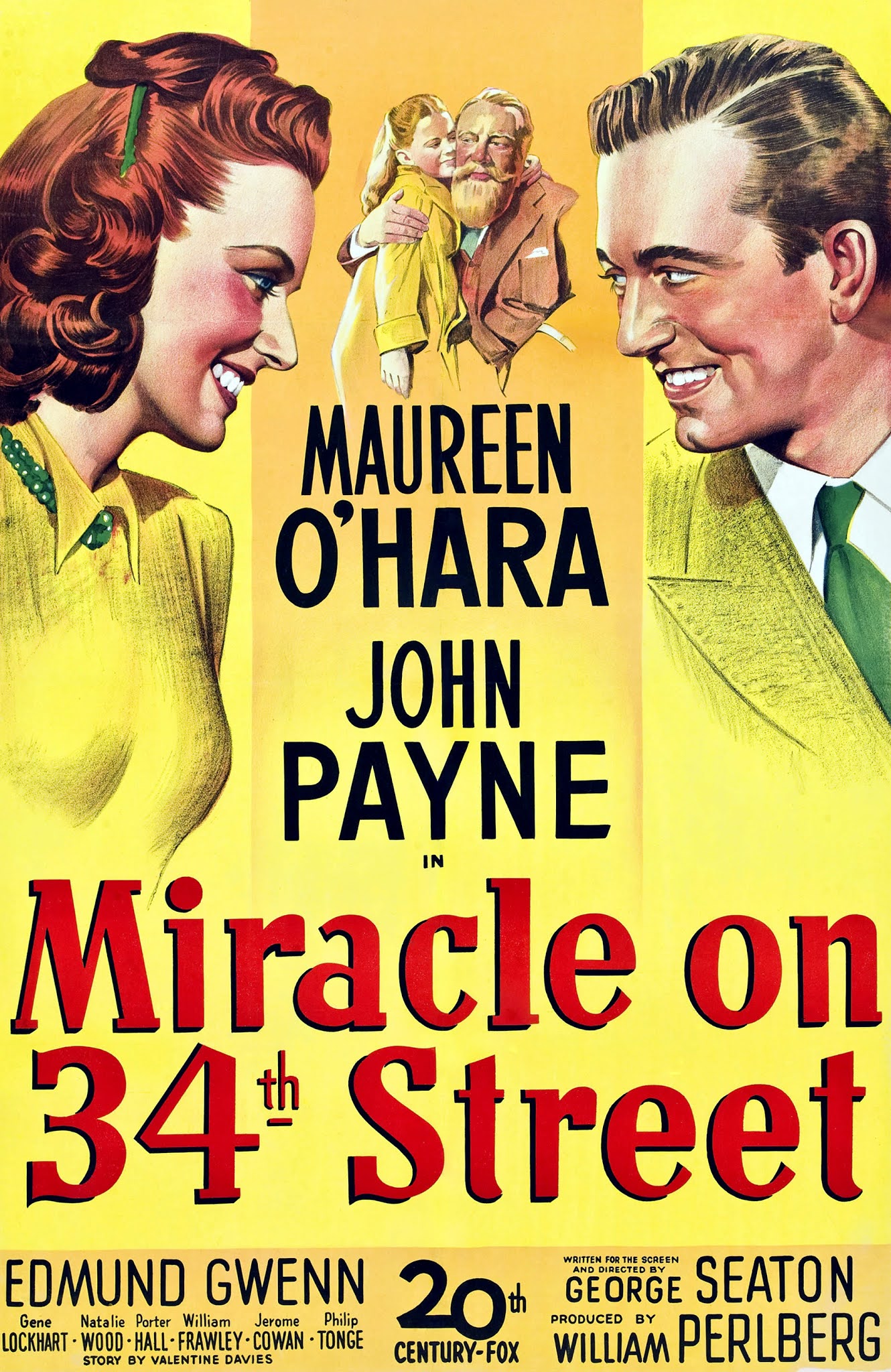
) joins me to wrap up not only this season of Sleigh Bell Cinema, but the whole podcast. Stay tuned to the end of the episode for details about why I'm ending the show, but I'll still be talking Christmas movies next year. Just in a different place.For this one though, Mike (who was also the first guest on SBC) and I talk about the classic Miracle on 34th Street starring Maureen O'Hara, Natalie Wood, Edmund Gwenn, and John Payne. It's a beautiful movie and a great way to finish the year and the show.
Download or listen to the episode here.

A Christmas Carol (2019), Chapter Three: A Bag of Gravel
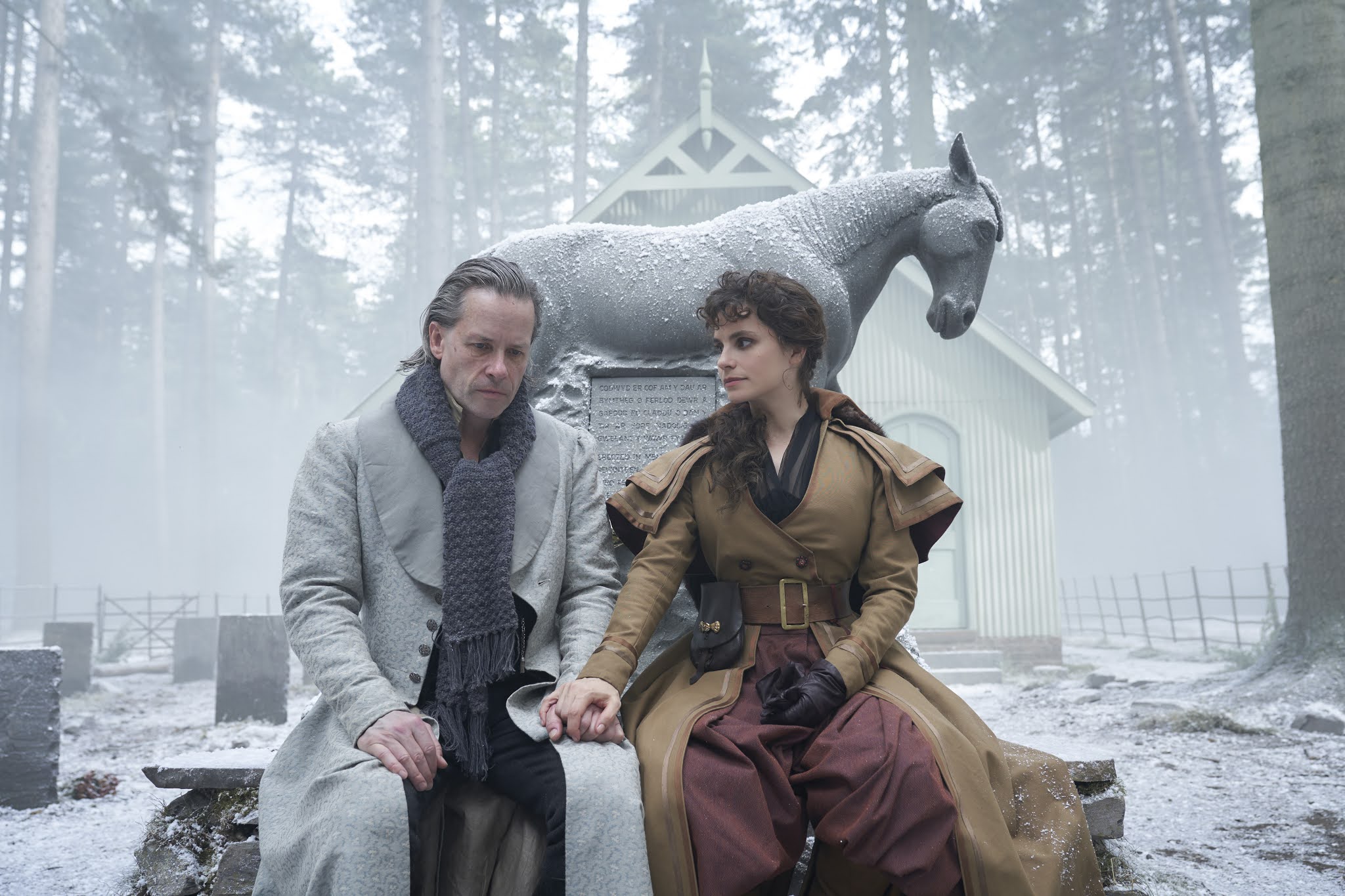 All three of these posts have been spoiler filled, but since this one covers the end of the story, here's a BIG OL' SPOILER WARNING for it if you haven't seen this version and would like to.
Part OnePart Two
Chapter Three opens where the previous episode left off. Bob Cratchit's wife Mary is walking through the streets of London on Christmas Morning to keep her appointment with Scrooge. She believes that she's going to have sex with him for the money she needs for Tiny Tim's operation, but that's not actually what Scrooge is interested in.
As he mentioned in Chapter Two, this is an experiment. He doesn't have to actually sleep with her to prove his point. He just wants to see if she'll go through with it. And he does, letting her get naked before explaining that he's only concerned with proving that his world view is correct: that money is in fact the most important thing in the world; more valuable than even the virtue of a good wife and mother.
But there's a flaw in his calculation. He acknowledges that she wants the money for altruistic purposes, but he also dismisses that fact as unimportant. He's so focused on money as a goal in itself that he never considers that it's a secondary concern to Mary, nothing but a means to save her son.
At the end of the scene, Mary is humiliated and suggests that she has the power to call forth spirits to hold a mirror up to Scrooge so that he might one day see himself as he really is. She describes her power as innately feminine and I wish the miniseries dug into that more, but I accept that she has the power, wherever it comes from. It's a cool twist that this whole story has been instigated by her. (And there's an awesome suggestion at the end that she's ready to do it again for other people who need it.)
This pretty much wraps up the Christmas Past section and the chapter moves quickly through Christmases Present and Future. Present is represented by an older version of Scrooge's sister Lottie and Future is a creepy undertaker whose mouth is sewn shut to represent/explain his silence. I really dig Present's characterization of Future as a dark, terrible spirit and the final judge of Scrooge's fate that Scrooge's defenses and explanations will not sway.
Both spirits take Scrooge to the Cratchit house as well as to see the survivors and family of the mine accident caused by his and Marley's negligent cost-cutting. Nephew Fred and his wife never appear again after the first chapter, which is too bad since they're a favorite part of Dickens' story for me, but this version is very honed in on the parts it's paying attention to.
Like with the previous chapters, everything is very explicit. Scrooge continues to actively resist the ghosts, which leads to a lot of conversations about the difference between him and the people he's observing. The ghosts also point out the exact moments when Scrooge makes steps towards feeling something for humanity.
But as obvious as this stuff is, I was surprised not to miss the subtlety of Dickens' version. I like the conversations between Scrooge and Christmas Present, for example, when they're watching the Cratchits and the Ghost explains the advantages of having love instead of money. This adaptation is not about Scrooge having a quiet, gradual change. it's about the power of the ideas themselves.
And that stays true through the end. At the end of Future's visit, when it's time for Scrooge to repent, he surprisingly refuses to, but not because he lacks remorse. His compassion has been awakened enough that he sees the value of love and wants to express it with other people. But he also stubbornly insists on not explaining or apologizing, because he doesn't want forgiveness. The things he's done are unforgivable. All he can do is try in the Present to be better in the Future.
All in all, I really liked this version. It has a brand new approach to interpreting the story and I very much appreciate that about it. That's also why it can never be a definitive version for me, but I like what it adds to the discussion of Dickens' story and it's one I'll want to revisit from time to time.

December 23, 2020
A Christmas Carol (2019), Chapter Two: The Human Heart
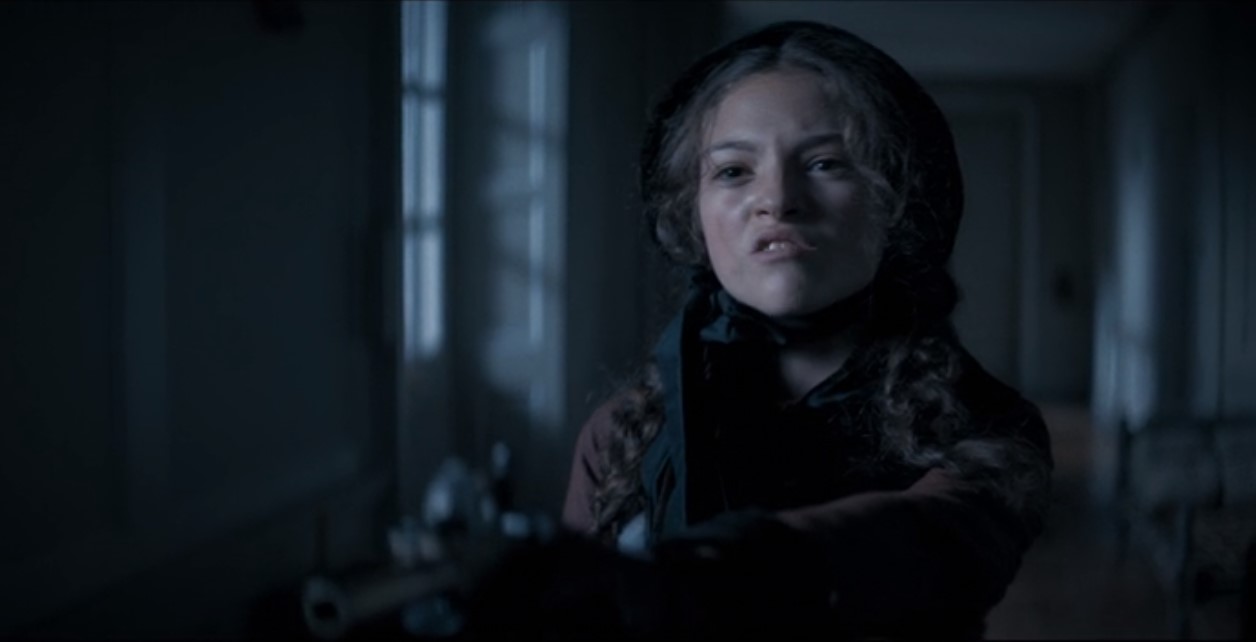 There are a couple of big changes in Chapter Two of the FX Christmas Carol, but before I get to those, the biggest surprise was that it only covers part of the Ghost of Christmas Past, leaving the rest of that Ghost and the other two Ghosts for the third chapter.
 I guess that makes sense with Chapter One's having Marley receive his orders from Christmas Past. That spirit seems to be running the show here. I'm curious how big a part the other two spirits will even play. All three are needed in Dickens' story, but this one seems to have Past doing the heaviest lifting.
And heavy lifting is needed. Scrooge is openly defiant of the spirits in this version, literally challenging them to change him as he actively resists. It's a little weird, but I don't hate it. His openness about what he's thinking and feeling should make it easy to see where the most powerful transitions come.
The huge change in the schoolhouse scene is that Scrooge's father hasn't just neglected his son, he's prostituted him to the schoolmaster in exchange for free tuition. Scrooge's dad has gone bankrupt and sounds like he was a pretty awful person even before the stress of losing all his money. Instead of allowing Scrooge to come home for the holidays, he has Scrooge stay at school where the schoolmaster can abuse him.
So when Scrooge's sister (renamed Lottie in this version for some reason) comes to bring Scrooge home, she comes with a gun. Dad isn't kinder than he used to be, he's dead, opening the door for Lottie to mount a literal, heroic rescue. Young Scrooge doesn't see all of this though. He knows about how evil his Dad was, but doesn't realize just how much risk his sister took because she loved him.
The lesson Young Scrooge took from this fits with what Belle tells him in Dickens' book. She says that he "fears the world too much" and here we see why. In the book, we see his loneliness and there's a light connection between that and poverty. Old Scrooge pursues wealth as a way of gaining control over his life, though, ironically, it makes him just as lonely as he was back at the school. For better or worse, the FX version is less subtle, closely tying Scrooge's fear to the powerlessness of being poor in a horrible, dramatic way.
This version skips Fezziwig entirely to focus on Scrooge and Marley's heartless acquisition of businesses to either dismantle and sell them for a profit or to cut expenditures to the point that they endanger the lives of their workers. It's all very timely stuff and also very on-the-nose, which are also both descriptions of this adaptation as a whole. Again, for better or worse. I feel like it works in some instances and doesn't in others, but I can definitely see why viewers are divided about whether or not they like it.
The chapter ends with the revelation of where Mary Cratchit got that money she needed for Tiny Tim's operation seven years ago. Bob was too proud to ask Scrooge for it, so Mary went privately with a proposal to garnish Bob's wages until they were able to pay Scrooge back. Scrooge rejected that plan, but proposed one of his own, which would prostitute Mary for the money. He claims that it's an experiment in morality; he wants to see which is worth more to her: her fidelity to Bob or the life of her son. As the chapter ends, she's agreed to Scrooge's indecent proposal, but we'll have to wait until Chapter Three to find out exactly what happened (though we know that she did get the money).
I'm curious to see how this all wraps up. Scrooge is a monster in this one. That's tempered by his love for animals, but I've never seen a version of him this nasty or resistant to change. I truly don't know what to expect from his transformation and wonder how complete it will even be.

December 22, 2020
Sleigh Bell Cinema | Elf (2003)
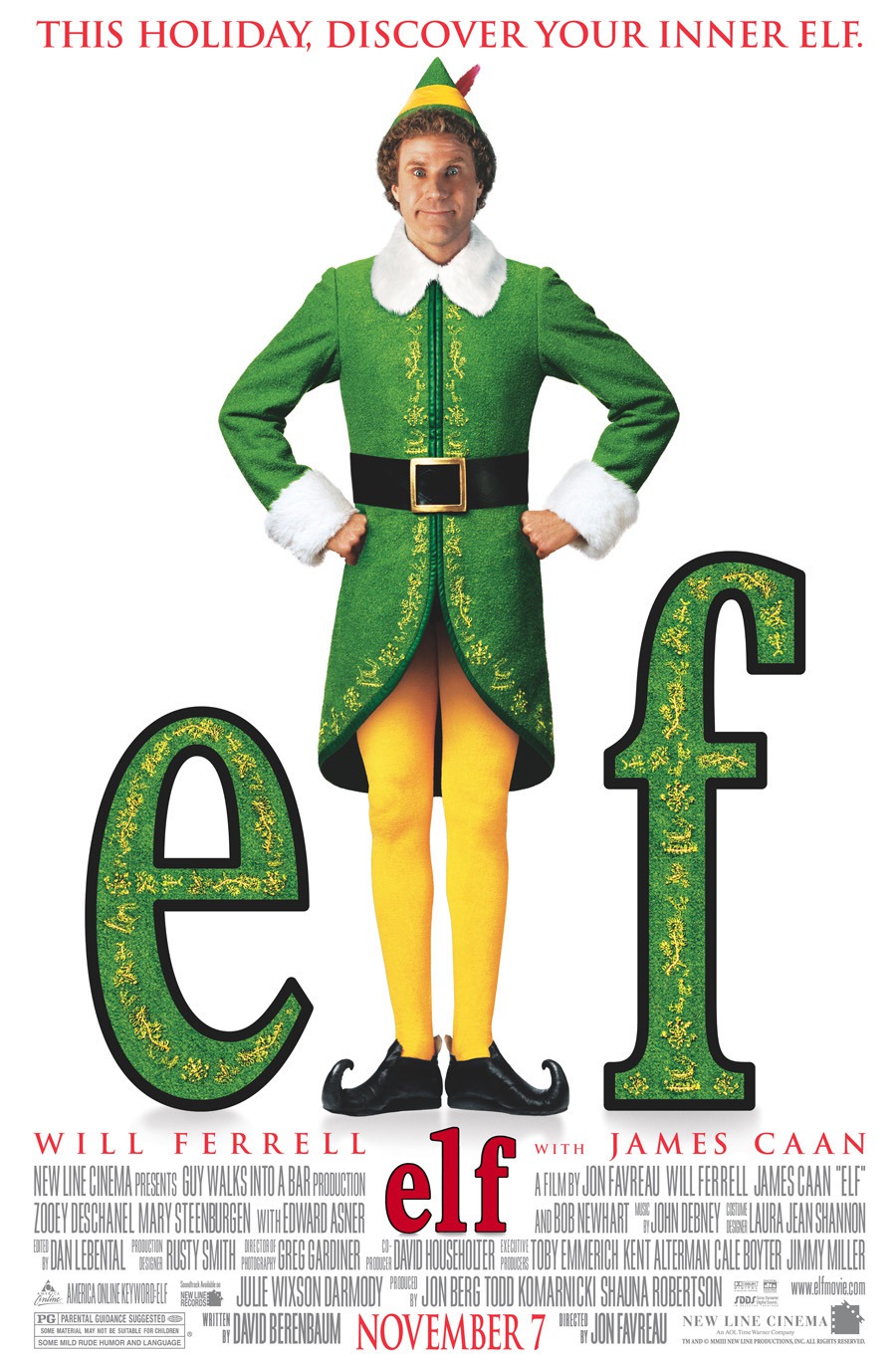 My wife Diane joins me to talk about the modern Christmas classic Elf, why it hasn't been a part of our annual Christmas watching, and how it maybe should be.
Download or listen to the episode here.

A Christmas Carol (2019), Chapter One: The Human Beast
 I'm usually a year behind on new Christmas movies, so I didn't see the FX mini-series adaptation of A Christmas Carol until this year. I've heard that it's especially odd and several people have asked what I think of it, so I'm going to watch it in its three parts and comment on each of them separately. With each episode taking an hour to tell only a fraction of the story, I'm curious to see what events they expand on.
Chapter One covers everything up through Marley's visit and spends its extra time in three areas. One is Scrooge and Cratchit's workday on Christmas Eve. I was surprised to see Scrooge lay out four pieces of coal for Cratchit's use before Cratchit even arrived. Scrooge also stains his shirt on that fourth piece, which he humorously regrets as just payment for trying to do something nice. There's another moment later in the episode where Scrooge is kind to a couple of chilly horses, so this version is going out of its way not only to humanize Scrooge, but to show that he's not yet irredeemable.
Once Cratchit arrives, he and Scrooge argue about the appropriate time for Cratchit to go home. Cratchit's asking for an hour early, but Scrooge has an assignment that he thinks will take Cratchit all day to complete. When Cratchit finishes it early (and perfectly), Scrooge points out the humor in Cratchit's doing it to spite Scrooge, when Scrooge has no reason to be anything other than pleased. Cratchit is a smart, capable, funny guy who doesn't mind letting Scrooge know what he really thinks of him. Scrooge points out the precariousness of Cratchit's situation, but Cratchit seems to think that if Scrooge were going to fire him, he'd have done it by now.
During all of this, Scrooge's nephew Fred comes to visit and I don't like that he says this is his last year inviting Scrooge to Christmas dinner. Fred says that the ultimatum is his wife's idea, but that doesn't soften it for me. Part of what I love about Fred is his relentlessness in reaching out to his uncle. Scrooge continually slaps the hand away and Fred keeps on extending it. It's uncharacteristic to have Fred reach his limit.
The charitable solicitors also appear in the episode, but they're just on the street collecting like the Salvation Army and Scrooge starts an argument with them.
The second thing Chapter One expands on is Cratchit's family, which is ironic considering that the number of people in it has shrunk considerably. Gone are Peter, Martha, and the two younger siblings, so that Belinda and Tiny Tim are the only kids left. I guess that Martha could show up on Christmas Day, since she doesn't live with them even in the book, but no one mentions her.
The big addition here is that someone once gave the family some money that helped them through a crisis with Tiny Tim's health. Mary Cratchit claims that it was an American cousin, but there's a lot of reason to disbelieve that story. She questions why Tim continues to write thank you notes, claiming that they're not necessary. Bob doesn't understand why not since the help saved Tim's life. Mary is also inconsistent with the spelling of her alleged cousin's name. And when she offers to post the thank you letter, she ultimately burns it. I've heard some spoilers about what might actually be going on here, but I don't know for sure and would rather pretend I don't know anything at all until the mini-series unfolds it for me.
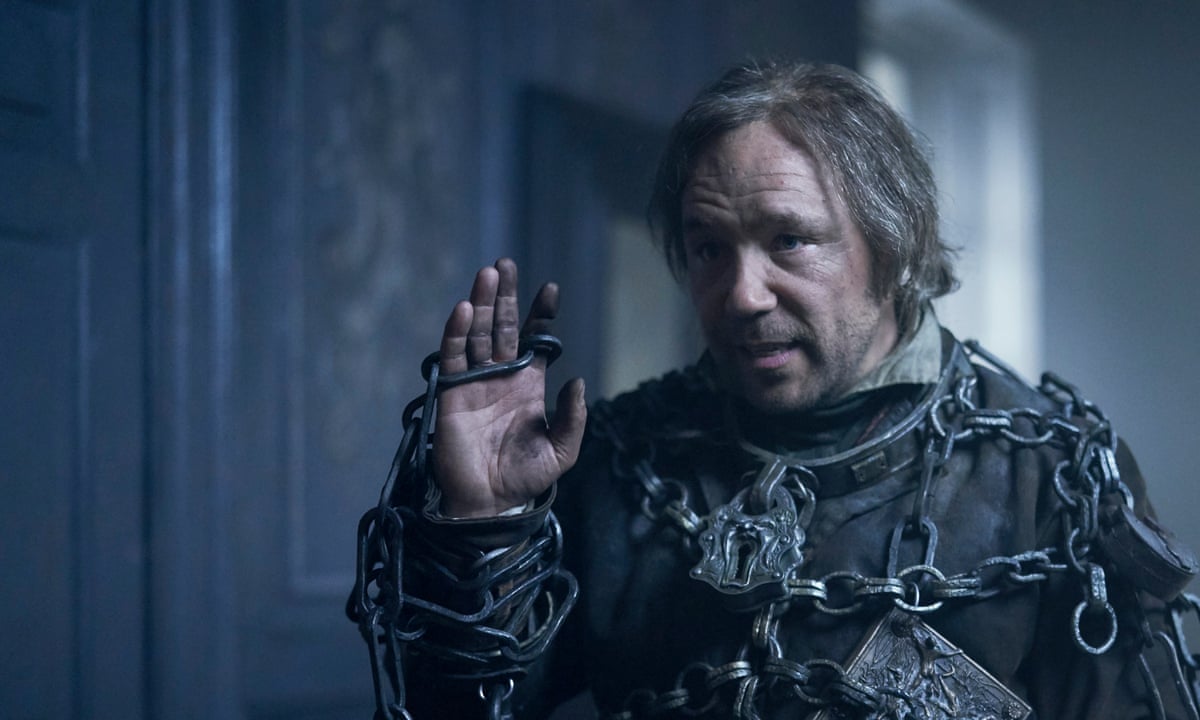
Finally, and I've saved the biggest for last, Chapter One expands on Jacob Marley and his journey towards becoming Scrooge's door-knocker (and hopeful savior). I love the idea of building out this part of the story, because the book is pretty vague about it outside of a couple of lines of dialogue. And I'm intrigued by how it plays out here. Marley has apparently been kept conscious in his coffin for the last seven years, but is finally taken to Purgatory this year where he's presented with his chains (by a blacksmith who is also the spirit of a man who died in one of Marley and Scrooge's factories). Marley also has a pre-Scrooge meeting with the Ghost of Christmas Past that I don't totally understand, but that might become more clear once I've seen the rest.
The thing I don't like about all of this is how - like with Fred - the adaptation changes Marley's character. In Dickens, Marley tells Scrooge that he himself procured Scrooge's chance and hope of escaping Marley's fate. In other words, it was his idea to return and warn Scrooge. In this adaptation, the spirits explain to Marley that his fate is tied to Scrooge's. Since they were partners in so much evil, they both need to repent of it. Marley has repented, but Scrooge hasn't. And unless Scrooge does, the two of them will be doomed together. This makes Marley's actions selfish. Instead of begging year after year for the chance to go and save his only friend and finally being given permission to do so, he's roped into it in service to his own self-interest. I'm not into it.
The look of the series is pretty great though - dark and spooky - and I like Guy Pearce's not young, but younger, more vital Scrooge. He's an fascinating character that I'm interested in exploring with the series. Some glitches in Fred and Marley's characterizations notwithstanding, I'm liking it so far.

December 21, 2020
“Another Idol Has Displaced Me” | Patrick Stewart (1999)
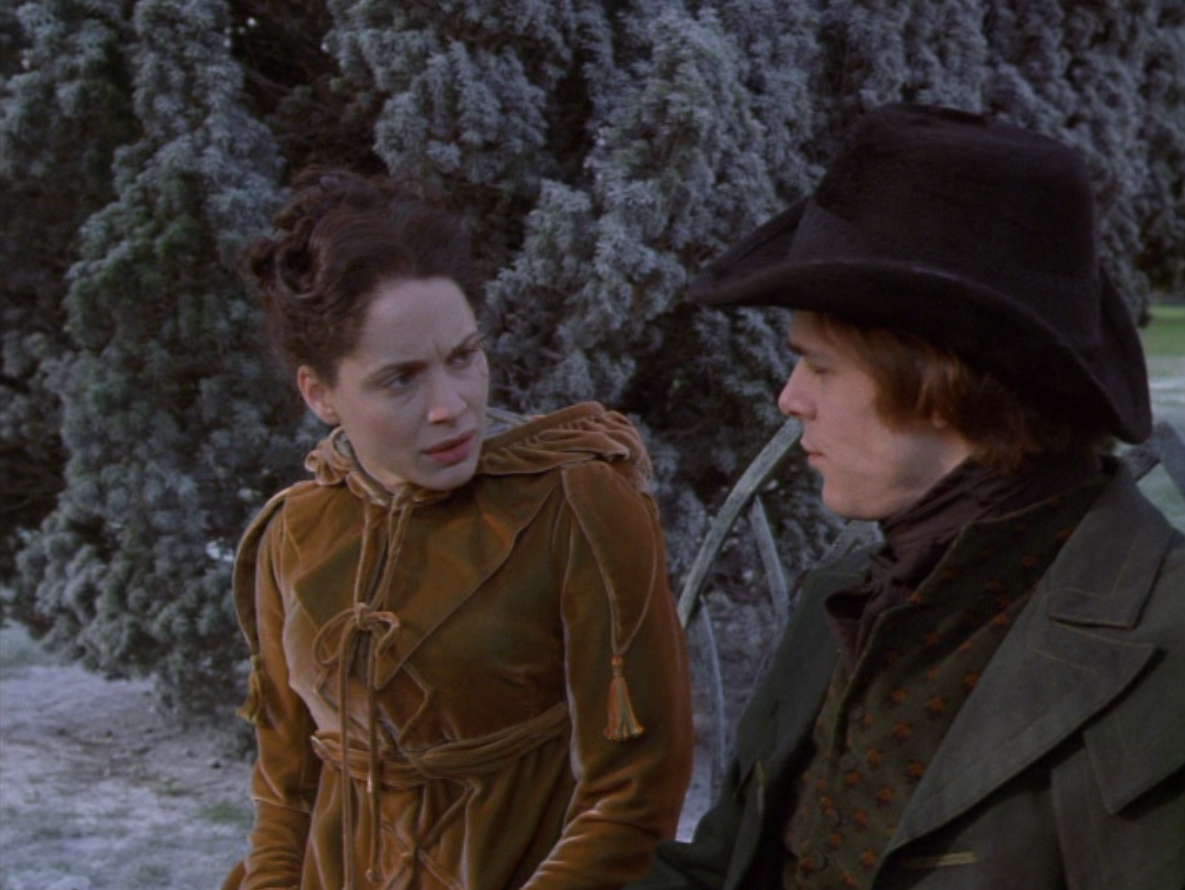 The TNT adaptation of this scene opens with Old Scrooge and the Ghost in the foreground of a park, watching as Young Scrooge and Belle walk towards them along a wet, leafy path. Old Scrooge knows what's coming. "The years change people," he says. "I don't wish to look, sir."
He turns to walk away, but the Spirit grabs him by his clothing and physically turns him back towards the couple. "You must," the Ghost says. It's not quite the manhandling that Dickens describes when the Ghost forces Scrooge to look at the vision of Belle's family, but it's reminiscent of that. And since that second vision doesn't appear in this version, I like the reference.
We cut to Young Scrooge and Belle who are already mid-conversation. She's not wearing mourning clothes, so the conversation hasn't started because of a change in her fortunes. Scrooge is making his "There's nothing the world is so hard on as poverty" speech and Belle tells him that he fears the world too much. We don't know what any of this is in reference to, but I can imagine that it's just a philosophical disagreement so far. She may not have accused him of anything yet.
But she soon does. She crosses the path to a little bench and sits down, explaining that his current philosophy is indicative of his changed attitude about wealth. She's clearly given this a lot of thought - in fact, she says so outright - and is pained by the conclusion she's reached. From her face, she's also rather disgusted by it. Not by him specifically, perhaps, but by his attitude and what it's done to the person she fell in love with.
Young Scrooge is engaged in the conversation. He thinks they're having an argument that he can talk his way out of. But Belle has already made up her mind. The camera keeps cutting back to Old Scrooge who watches all of this with distress. When Belle says that she can finally release Scrooge, his older self cries, "No! No!"
She asks him if he would seek her out and try to win her now if he had it to do over again. He can't answer and looks away from her, but it bothers him that he can't. He realizes that she's probably right, but I don't think he's ever thought about it before. She looks sad as she sighs and nods in understanding. She answers for him. "No."
He still can't look at her, but makes a face and shakes his head. "You think not?" It's a feeble answer.
"I know you wouldn't, my love." There's such compassion in her face and this isn't the last time she'll call him "my love" in the conversation. She really wants this to be going differently.
So does Old Scrooge. He steps forward and pleads with his younger self. "Speak to her!" He looks desperately at the Ghost. "Why doesn't he speak to her?!" Oh, to be able to go back and change this moment.
But Young Scrooge is finally starting to see himself through Belle's eyes and it's awakening him to the person he's become. He scowls thoughtfully, but doesn't argue with her anymore.
She finishes her goodbyes and leaves. Old Scrooge tells his young self to go after her and - surprisingly - the young man leans forward to stand up. But he catches himself and sits back.
"Don't be afraid!" Old Scrooge cries, literally. "Go after her!"
Belle even looks back at Young Scrooge a couple of times to see if he'll come, but he's made up his mind now. She eventually disappears into the fog and snow.
Old Scrooge has now had enough and demands to be taken home. Which, surprisingly, the Ghost immediately does. They're immediately back in Scrooge's house and he's climbing the stairs as the Ghost stands at the bottom and watches Scrooge walk away.
I've loved the emotion in this version and the performances are excellent all around, but the scene ends in a weird way that I don't care for. Scrooge is headed back to bed and the Ghost is just letting him go, but Scrooge stops on the stairs and turns back around. "Haunt me no longer!" he screams. It's weird, because I get the impression that the Ghost is already done haunting him. The visions are over and Scrooge is free. Why the outburst?
The Ghost, cryptically, just shakes his head. He could be saying, "No, I won't bother you anymore," or, "No, I'm not listening to you; there's more to come." I don't know that Scrooge even understands, but apparently what's bothering him is that the Ghost is even still there. He hurries back down the stairs, grabs the Ghost's extinguisher cap, and forces it down over the Ghost's head.
It's a struggle for Scrooge. The Ghost isn't visibly resisting, but Scrooge still has to put a lot of effort into getting that cap to the floor. And even when it's there - like in Dickens - light still spills brightly out from around the base. It's so much light that Scrooge even has to put up his hands to shield his face from it.
He's still doing that when the shot fades to black (for a commercial break, I assume). When we come back, Scrooge will be asleep in his own bed.

December 20, 2020
AfterLUNCH | Christmas TV Episodes
 Christian Nielsen and new guest Karen Flieger join Rob and I to talk about our favorite Christmas episodes of TV shows. In discussions of The Beverly Hillbillies, Bewitched, Friends, and Justice League, the Clampetts learn about the politics of gift-giving, the Stephens' help an orphan boy discover the spirit of the season, Ross tries to teach his son about Hanukkah after a lifetime of Santa, and Superman invites Martian Manhunter home for the holidays.
 Featuring music by Straight No Chaser.
Download or listen to the episode here.

“Another Idol Has Displaced Me” | Michael Caine (1992)
 Like so many other versions, The Muppet Christmas Carol introduced Belle at Fezziwig's (I'm sorry, "Fozziwig's") party and has the breakup scene out of doors. As introduced at the party, this Young Scrooge came from a miserable home where he didn't feel loved, so he gets his sense of value from succeeding at work and accumulating wealth. Fozziwig called him "the finest young financial mind in the city" and I sense that this version of Scrooge is sort of a prodigy when it comes to business. So much so that he wasn't able to fully enjoy Fozziwig's party because he saw all the red it put in the accounting books. Now that same business genius is going to keep him from fully enjoying or appreciating Belle.
When this scene opens, Belle is complaining that he's put off their wedding for another year. And we'll find out during the conversation that it's not the first time. She's not wearing mourning clothes, so instead of her parents' recently dying, it sounds like this new delay is the reason for her deciding finally to end things.
Young Scrooge is pretty patronizing when he tells her that the delay can't be helped, like he's explaining it to a child. They don't have enough money saved away for a decent home; his investments haven't paid out like he hoped. But she's heard all of this before.
She points out the progress that they've made. He's a partner in his own firm now. But he claims that they're barely clearing expenses. She thought the partnership was the goal, but he keeps coming up with extra reasons to hold off the marriage. He claims that he loves her and that he's doing it for her, but she's run out of patience.
This is a serendipitous year to be talking about this scene, because the Muppet version of it has a complicated story. As originally shot, Muppet Christmas Carol included a song called "When Love Is Gone" in this scene. After Young Scrooge insists that he does love Belle, she says, "You did once," and begins to sing:
During all of this, she gets up and moves away from him. He follows her a couple of times, but finally she moves away again and he stays put, ultimately turning and walking away to leave her alone to finish the song.
There was a time when I was sure That you and I were truly one That our future was forever And would never come undone And we came so close to being close And though you cared for me There's distance in your eyes tonight So we're not meant to be
The love is gone The love is gone The sweetest dream That we have ever known The love is gone The love is gone I wish you well But I must leave you now alone
There comes a moment in your life Like a window and you see Your future there before you And how perfect life can be But adventure calls with unknown voices Pulling you away Be careful or you may regret The choice you make someday
At this point, Old Scrooges walks into the frame behind her to join her in a duet.
When love is gone When love is gone The sweetest dream That we have ever known When love is gone When love is gone I wish you well But I must leave you now alone
Or he tries to, anyway. He breaks down about halfway through, weeping openly as she finishes alone, looks back at the direction Young Scrooge has gone, then walks away herself. It's super emotional and gets me every time. And it's no wonder that when Belle passes Gonzo and Rizzo, Rizzo is sobbing his tiny little eyes out.
It was almost love It was almost always It was like a fairytale we'd live out you and I And yes, some dreams come true And yes, some dreams fall through And yes, the time has come for us to say goodbye Yes, some dreams come true And yes, some dreams fall through Yes, the time has come for us to say goodbye
The problem was that Disney's Studio Chairman at the time, Jeffrey Katzenberg, thought the scene was too emotional and adult for kids to sit through, so he had it cut from the theatrical release. It was added back in for the VHS release, but the footage was lost shortly after that. So on my DVD copy, I have the choice of either watching the widescreen theatrical release without the song, or a crappy pan-and-scan VHS transfer with the song. Frankly, I usually choose the widescreen version, but it's always jarring to go from Belle's "You did (love me) once" to Rizzo's passionate bawling. It's still a sad scene without the song, but it's so much more powerful with it.
And that's before we even bring up the reprise/sequel of "When Love Is Gone" at the end of the movie, retitled "When Love Is Found." Again, it works just fine without knowing that there was an earlier version of the song that the finale is mirroring, but it's way more effective with that balance intact.
Happily, this year the scene (like Love) was found and is going to be added back into the movie for its 4K remaster release.
Getting back to the movie, the Ghost doesn't show Scrooge a final vision of Belle's family without him. He still has tears in his eyes as he pleads, "Spirit, show me no more." And he adds, "Why do you delight in torturing me?"
He resents it when she reminds him that these visions are what they are because of his own decisions. "Leave me!" he says, angrily. And she does without argument or his having to attack or extinguish her. She just disappears as the vision darkens and he's returned to his bedroom.