Michael May's Blog, page 155
October 15, 2014
When Elephants Rule the Earth... [Guest Post]
 By GW Thomas
Manly Wade Wellman won himself a place in Fantasy history as the author of the Silver John stories that first appeared in Fantasy and Science Fiction in the 1960s and later in novels. Before that he had a prolific career writing in the SF Pulps beginning in 1931 in the pages of Wonder Stories Quarterly. After that he appeared in practically every SF magazine until the 1950s including John W. Campbell's Astounding. As an SF writer he penned many tales under his own name (such as the Hok the Mighty series for Amazing Stories) as well as under pseudonyms like Gans T. Field (in Weird Tales) and Levi Crow (in Fantasy and SF), as well as under house names like Will Garth.
One of those times he used a nom de plume was when he wrote "Elephant Earth" as Gabriel Barclay for Astonishing Stories, February 1940. I am not sure why he chose to publish this story under a different name since he does not appear in the same issue under his own name, the usual reason for such changes. He did use the same pseudonym for "Hollow of the Moon" (Super Science Stories, May 1940) also edited by Fredrick Pohl, so he may have intended it as a name for Pohl publications alone.
 No matter the by-line, "Elephant Earth" is an unusual and charming tale. It follows a man named Lillard who has been put into suspended animation, waking to find the human race destroyed by a mysterious plague, though a handful of humans may have escaped to Venus. The elephants, in Man's absence, have developed language and civilization. The elephants take Lillard to their leader so that he can decide what to do with him. Three factions vie for the last man on earth. The Medicals want to dissect him. The Mechanicals want to use him for delicate work that the elephants find impossible to do. And the last group, containing the Lillard's sole friend, Aarump, are space scientists who want to use him as a test pilot. While the chief of the elephants is deliberating on these choices, the scientists sneak him away and send him into space. Lillard lands on Venus, feeling even more lonely when he hears a female, human voice...
 Wellman has great fun with this story, doing a good job of reversing the roles between man and animal. He allows us to see just how cruel humanity is in its attitudes towards beasts of burden. The majority of elephants have no concern for what Lillard wants any more than we would have for what a dog or a horse desires. Rod Serling captured this same disregard almost 30 years later in the film The Planet of the Apes (1968). Wellman has a few good chuckles like the Apes films, like when the elephants discover that the humans they admire most from ancient books, Tarzan, Sherlock Holmes and Robinson Crusoe, are all fictional characters.
  And we could leave Wellman there easily enough, but circumstances would arise that Manly would get a second chance at his elephant story. In 1951, Wellman, along with other Pulpsters like Eando Binder (Earl and Otto Binder) had moved to writing comics as the Pulps began to fade. Wellman wrote for the DC comic Strange Adventures. In issue #11 (August 1951) Wellman produced "The Reign of the Elephants" (drawn by Jim Mooney and Frank Giacoia). This tale appeared alongside Pulp old-timer Edmond Hamilton's "Chris KL-99", loosely based on his Captain Future character, a character Wellman had written as well in the pages of Startling Stories. It must have felt like old times. But I digress.
This time around the elephant tale begins the same but very quickly changes. The elephants have no desire to dissect the man, now named Clay Parks. (He is given a thought translator to make conversation easier than in the Pulp story.) When invaders come from the stars, it is up to Parks to show the elephants the art of war. Clay meets one of the invaders and sees she is a beautiful woman, not a human fled from earth but a product of parallel evolution. The invaders try to sway the last man on earth to betray his planet but he uses the thought transmitter to set a trap. Once the invaders are in the elephants' control, it is easier to sue for peace. The story ends with Parks and Lylla, the beautiful space girl, in love, and men and elephants working together.
 In the second version of the tale we get to see Wellman rework his original idea, going for more action. The thought translator could have been just a cheat but he is a pro and makes it the key to the story's resolution. The original story strikes me as a more powerful tale, while the comic elephants are more passive and less convincing. In "Elephant Earth," Wellman extrapolates things like elephant architecture and their mental outlook, which lacks the concept of luck. Ultimately this could be a matter of medium. A constraint of the comic book storytelling is that things must be shown while in a story the more esoteric stuff is limited only by the length of the tale. All that aside, it is intriguing to see how an author plays with the same idea in two different ways. And there are few authors more able and fascinating than Manly Wade Wellman.
GW Thomas has appeared in over 400 different books, magazines and ezines including The Writer, Writer's Digest, Black October Magazine and Contact. His website is gwthomas.org. He is editor of Dark Worlds magazine.


Penny Dreadful | "Night Work" and "Séance"

This is kind of breaking my Countdown to Halloween format, but Penny Dreadful certainly counts as horror viewing, so I'm rolling with it. There were only eight episodes in its first season, so for the rest of the week, I'll talk about a couple of episodes each day. Unfortunately, I won't be able to do this spoiler-free, so even though these won't be full recaps of each episode, be aware that I'm not going to tiptoe around major plot and character developments as they come up.
Basically, Penny Dreadful is League of Extraordinary Gentlemen done right. After a couple of shocking scenes to set the tone, it opens in Victorian London with Vanessa Ives' (Eva Green) hiring a travelling gunslinger/showman named Ethan Chandler (Josh Hartnett) for a little "night work." Chandler pretends to be a devil-may-care womanizer, but Ives sees through that and uses her insight to manipulate him into being her hired gun for the evening.
The job turns out to be assisting Ives and Sir Malcolm Murray (Timothy Dalton) as they hunt a creature that's abducted Murray's daughter. Bram Stoker fans will quickly realize who Murray and his daughter are and there's a little Allan Quartermain in Murray too as it turns out he used to be world-traveling adventurer. Ives and Chandler are more enigmatic and if they're based on literary characters, I haven't figure it out yet. Both are obviously wrestling with inner demons (and that may not even be a figure of speech for one of them), so part of the show's hook is wanting to uncover those secrets.
The hunt turns out partially successful. They find and kill a vampire-like monster, but it's not the one Murray wants and his daughter Mina is nowhere to be found. Hoping that the monster's corpse will reveal a clue, they take it to a medical school where students learn anatomy on human corpses obtained through questionable means. One very serious student is off working by himself and he's the one whom Murray and Company approach. He refuses them at first - saying that he's only interested in the research he's doing - but changes his mind when he sees what they brought. The monster's body is covered with a thick, leathery carapace, but the young doctor peels some of it back to reveal a second skin beneath, covered in Egyptian hieroglyphs.
From there, the story begins to split. Ives offers Chandler continued work that he refuses, but he does decide to stay in London instead of going with the rest of his Wild West show to the continent. In the second episode, "Séance," he befriends an artists' model/prostitute named Brona Croft (Billie Piper), but where that relationship is going and how it ties into the main story remains to be seen.
Meanwhile, Murray tries to convince the young doctor to join his cause, but the doctor refuses, saying that his work is much more important and rewarding to him than anything Murray may be involved with. The end of "Night Work" reveals what that is when the doctor goes into a secret lab behind his apartment and begins tinkering with a stitched together corpse. It was about that point that I remembered his earlier interest in Chandler, because the Americans had made such great strides in the study of electricity. By the time the stitched together corpse moves and the doctor reveals his name to it, there's already no question of who he is.
"Séance" continues Murray and Ives' investigation into the markings on the vampire's corpse as they consult a famous (and hilariously dandy) Egyptologist named Ferdinand Lyle (Simon Russell Beale). He invites them to a party at his house where Ives meets an intriguing young man named Dorian Gray (Reeve Carney) and a séance takes place. During the séance though, Ives accidentally upstages the medium by going into a trance and channeling some kind of spirit. From its accusatory tone and the effect it has on Murray, it sounds like it could be the ghost of Murray's child, but not necessarily Mina. I may not have caught all of that, so I'm hopeful that it'll be made more clear later.
Back to Frankenstein, he begins teaching his creature who chooses for himself the name Proteus from a random page of Shakespeare. I was fascinated by this part of the story, because I'm a huge Frankenstein fan and Penny Dreadful seemed to be deliberately riffing on that story in some interesting ways. Besides having Victor Frankenstein live 100 years after the time of Mary Shelley's novel, the care and affection that he showed Proteus was completely different from the thoughtless loathing that the literary Frankenstein had towards his creation. I was curious to see how Proteus would develop with the loving nurture of his "father." Would something happen to turn him into Shelley's vengeful monster?
But then, just when I'd fully embraced this different direction for Frankenstein's story, Penny Dreadful revealed in a totally shocking way that "Proteus" was a misnomer. In the hardest way possible, the poor guy learns that he wasn't Frankenstein's first creation after all. And now we have a different, much more familiar creature to get to know.


October 14, 2014
Isle of the Dead (1945)

Who's In It: Boris Karloff (Frankenstein, The Mummy), Ellen Drew (The Mad Doctor, The Monster and the Girl), and Alan Napier (Batman).
What It's About: A ruthless general (Karloff) becomes increasingly suspicious that a young woman (Drew) on a quarantined island is a vampire-like creature.
How It Is: I need to see more of producer Val Lewton films. It's been years since I've seen The Body Snatcher, but Cat People is one of my favorite horror movies and I also enjoyed its less spooky sequel, The Curse of the Cat People. On of my favorite things about Cat People is something it shares in common with Isle of the Dead, so I'm curious to see if it pops up in more of Lewton's films.
Cat People and Isle of the Dead would make a great triple feature with Night of the Demon, which wasn't produced by Lewton, but was directed by sometimes Lewton collaborator Jacques Tourneur (who made Cat People, I Walked with a Zombie, and The Leopard Man for Lewton, as well as the less frightening Tale of Two Cities). What Cat People, Night of the Demon, and Isle of the Dead really have in common though is the theme of skepticism vs belief. All three films have characters claiming that something supernatural is occurring while other characters disbelieve. But better than just that, all three movies also wait until the very end to reveal who's right.
In Isle of the Dead, Karloff is the skeptic. He's trapped on a quarantined island with a varied group of people that includes a British consul named St Aubyn (Napier), his wife, and the wife's paid companion Thea. There's also a superstitious housekeeper who sees how ill Mrs St Aubyn is, how vibrant Thea is, and concludes that Thea is a supernatural creature draining the life from her mistress. Karloff's General Pherides scoffs at first, but the more he observes, the more he becomes convinced that there may be something to the housekeeper's tale.
I won't reveal whether or not Thea actually is some sort of life-sucking demon, but it's not spoiling anything to say that since Isle of the Dead is coy about the revelation for most of its run time, it progresses more like a thriller than a horror story. There are a couple of levels of danger going on: the danger that Mrs St Aubyn is in if Thea is a monster, and the danger that Thea is in from Pherides if she isn't.
It's a cool set up and the script adds another layer by having these conversations about skepticism and belief spill over into discussions of religion. At the beginning of the movie, Pherides doesn't just laugh at the housekeeper's theories, he's also an atheist. But as the story progresses, his openness towards the idea of a life-sucking monster is also reflected in his softening about religion. That raises all kinds of interesting questions about the connection between faith and imagination. Isle of the Dead doesn't attempt to answer these deeper questions, but I love that it makes me think about them.
Rating: Four out of five obsessed officers.


October 13, 2014
Creature (2011)

Who's In It: Mehcad Brooks (True Blood), Serinda Swan (Aphrodite in Percy Jackson, Zatanna on Smallville), Dillon Casey (Nikita), Aaron Hill (Greek), Amanda Fuller (Grey's Anatomy), Pruitt Taylor Vince (True Blood, The Mentalist), Daniel Bernhardt (Parker), and Sid Haig (Spider Baby, Diamonds Are Forever, Jason of Star Command).
What It's About: A group of young people head out to the woods to... hey, wait! Where you going?! No, seriously. Just stick with me...
How It Is: My heart sank at the opening shot in Creature when I saw a truck full of three couples heading into the Louisiana bayou for a vacation. I barely made it through Shark Night; I didn't think I was ready for another just like it so soon. On the surface, the main characters in Creature look like all those other cabin-in-the-woods stereotypes. There's the obnoxious guy who's going to get everyone into trouble (Casey), there's the slutty girl (Fuller), the virginal girl (Lauren Schneider), the jock (Hill), the token black guy (Brooks), and the token black guy's super hot girlfriend (Swan). All that was missing was a nerdy stoner. But as the characters kept talking, I realized that something different was going on.
For one thing, Casey and Fuller play brother and sister and not an especially annoying couple as I first thought. It makes sense that they have similar personalities coming from the same family. And that both of them are single, because the only people who can sort of tolerate them are each other. But more importantly, Brooks and Hill are playing Marines and it doesn't take long to realize that they're smart, serious ones. Casey and Fuller are wild cards in the group, but it's quickly obvious that Creature isn't about a bunch of stupid kids getting into trouble. It's about a group of friends that actually feels like a real group of friends. I especially like Brooks and Swan who convinced me that they're a normal, healthy couple in love with each other. And the fact that a couple members of the group are highly trained in combat means that this isn't just going to be all screaming and running when the alligator-man shows up.
That's kind of how the whole movie goes. It starts with apparent stereotypes and then reveals them to be honest-for-real characters. There are scary rednecks in this movie (led by the awesome Sid Haig and including the always spooky Pruitt Taylor Vince), but they have genuine motivations and complicated feelings about what they're doing. Even the alligator-man (Bernhardt) has a touching - though sick and creepy - backstory that adds facets to him as a character.
I'm in danger of overselling it, so let me dial back a little. Creature is super cheesy in places. The rubber, alligator-man suit looks cool, but there's no getting around that it's a rubber suit. And director Fred Andrews loves a slow motion shot a lot more than I do. There's also some really disturbing stuff in the movie. It earns its R rating not just on what you see and hear, but on tone and theme, too. It's neither a completely serious horror film nor a fun homage to B-movies; it walks a thin line somewhere between those two. It does so well, but what it's going for is a specific enough thing that I suspect not everyone will dig it. For me though, I was pleasantly shocked by how much I enjoyed it.
Rating: Four out of five totally beautiful couples whom I actually hoped would live.


Mummy Monday | The Mummy's Tomb (1942)

Who's In It: Lon Chaney (The Wolf Man, The Ghost of Frankenstein), Dick Foran (The Mummy's Hand), Elyse Knox (the Joe Palooka movies), George Zucco (The Mummy's Hand, Tarzan and the Mermaids), Wallace Ford (The Mummy's Hand), and Turhan Bey (The Mad Ghoul, The Amazing Mr. X).
What It's About: Thirty years after the events of The Mummy's Hand, the guardians of Ananka seek revenge on the party who invaded her tomb.
How It Is: As the Mummy series becomes more throwaway (Tomb is only an hour long and 15 minutes of that is recapping Hand) it also becomes more fun. For better or worse, we're in full-on children's adventure mode now.
It doesn't make much sense why the evil high priest Andoheb (Zucco) has waited 30 years to go after Stephen Banning (Foran) and his buddy Babe (Ford), but as Tomb opens, Andoheb is way too old for the job. Hand started with Andoheb receiving his evil priestly commission from his predecessor and Tomb begins the same way, with Andoheb's passing it on to the next guy, a dashing fellow named Mehemet Bey (Turhan). Mehemet takes the mummy (Chaney, taking over from Hand's Tom Tyler) to the United States to murder Banning and Babe and all their relatives.
Unfortunately, Mehemet suffers the same weakness of the flesh that Andoheb did in Hand and falls in love with Isobel (Knox), the girlfriend of Banning's son. After a couple of murders, Mehemet deviates from his mission and diverts the mummy to kidnap Isobel. This leads to one of my favorite moments in the movie, where the mummy mutely (and unsuccessfully) tries to change Mehemet's mind. Through all of Hand and most of Tomb, the mummy is simply an instrument of the high priest, but in that one moment he has a mind of his own, which makes him potentially much more dangerous. I forget if the rest of the series follows up on that, but I kind of hope it does. Or maybe I don't.
It's not like the mummy would be more of a threat if he acted on his own. He's plenty deadly and plenty scary as the weapon of an evil cult. And as cool as Karloff's portrayal is in the original Mummy, I actually prefer Tyler and Chaney's cartoonish, silent, shambling versions that have more successfully infiltrated pop culture. And Chaney's is even more so than Tyler's, introducing the famous step-drag walk to the character.
There's nothing special at all about the plot of The Mummy's Tomb. Mehemet is a cool-looking villain, but he's dumb as dirt and reveals himself as the mummy's master in a ridiculously stupid way. But that lack of cleverness keeps the movie short and focused on what I came to see: the mummy shuffling around scaring and killing people. And I'm not sure I want it any other way.
Rating: Three out of five kidnapping, cognizant corpses.


October 10, 2014
Twixt (2011)

Who's In It: Val Kilmer (Batman Forever), Bruce Dern (Django Unchained), and Elle Fanning (Maleficent).
What It's About: A struggling writer (Kilmer) arrives in a small town on his book tour and is convinced by the sheriff (Dern) to stay and use a local mystery as the plot of his next book. But the writer's dreams of a young ghost (Fanning) begin to blur the lines between reality and fiction.
How It Is: Francis Ford Coppola is in an interesting stage of his career right now where he's able to just make movies because he wants to and not because a studio finds them potentially profitable. Twixt is a great example of that. Based on a dream that Coppola had, but was unable to finish, the movie feels really small and personal in an idiosyncratic way. Coppola's totally indulging himself, but there's nothing necessarily wrong with that. Twixt is loose and sloppy, but it's got a cool story and a fantastic cast.
In addition to its three stars it also has appearances by Kilmer's ex-wife (and Willow co-star) Joanne Whalley, character actor David Paymer, and Don Novello (aka Father Guido Sarducci). Ben Chapman (Murder by Numbers) has an especially cool role as the ghost of Edgar Allan Poe who serves as sort of a muse/spirit guide for Kilmer's character.
The movie is funny and charming, but also weird and - depending on your tolerance level - possibly pretentious. There may or may not be vampires, and that's not just me being coy. After Shark Night and Black Rock though, I was in the mood for something strange and daring and Twixt delivered.
Rating: Four out of five gothy ghost girls.


October 9, 2014
Black Rock (2012)

Who's In It: Katie Aselton (The League, Our Idiot Brother), Lake Bell (Surface, In a World...), and Kate Bosworth (Superman Returns, Homefront).
What It's About: Three friends try to overcome personal baggage while camping on an island and running from sociopathic former soldiers.
How It Is: After Shark Night I was questioning some of the movies on my watchlist, but once I started watching Black Rock I quickly figured out why I wanted to see it. I love lonely islands, both in real life and as settings for movies. Come to think of it, that and the sea creatures were probably my initial attraction to Shark Night. Then there's the female-led cast in a survival movie directed by a woman and written by her husband.
The director is Katie Aselton, who also heads the cast. She shot the movie in and around her hometown in Maine and there's some really nice stuff in it. The scenery is amazing, the soundtrack by The Kills is great, and it's got a couple of actors I really like. I've been a fan of Lake Bell since the too-short-lived series Surface and I'm one of the three people who really liked Kate Bosworth as Lois Lane. I wasn't very familiar with Aselton, but she does a great job playing a very flawed, but relatable character. Once things go wrong on the island, the action often feels brutally real, though going after that kind of authenticity doesn't always work in the movie's favor.
I don't know how much of the dialogue was scripted and how much was improvised, but it certainly feels improvised in a lot of places. Sometimes that works, but there are some important, dramatic moments that could have used another take or two. Scenes that should feel powerfully emotional sometimes come off awkward. Not always, but more often than should be and in some important parts of the plot. Because of that, some crucial motivations feel unnatural, which calls the whole story into question.
But look, it could've been so much worse. Maybe I'm just glad it wasn't another Shark Night, but for what's essentially a homemade movie, Black Rock has a lot more going for it than I expected. That's barely praise, I know, but it hit enough of my favorite buttons that I enjoyed it.
Rating: Three out of five isolated islands.


October 8, 2014
Shark Night (2011)

Who's In It: Sara Paxton (Superhero Movie), Dustin Milligan (The Butterfly Effect 2), Katherine McPhee (American Idol), and Donal Logue (Blade, Gotham).
What It's About: A group of college students go to a rural area on a saltwater lake and are attacked by catfish. Just kidding. It's sharks.
How It Is: Every cabin-in-the-woods cliché ever is packed into this thing, including creepy rednecks. There's a slight attempt at characterization by giving Sara Paxton's character a backstory that ties into what's going on with the sharks, but it's stupid, barely sketched out, and isn't the kind of thing that happens to real people. The movie does one clever thing by gender switching the virginal character into a boy (Milligan), but that and Paxton's bikini are really the only things Shark Night has going for it.

No wait, that's a lie. I don't know if this was in the theatrical release, but the DVD has a post-credits rap song performed by the cast and shot while they made the movie. And it is awesome. Truly and unironically. I mean, it's awful, but it's hilariously, entertainingly awful and I wish the movie was as good. It's funnier if you've seen the movie, but because it made sitting through that garbage worthwhile, here it is:
Rating: Two out of five mother-sharking hammerheads.

Gothic Gotham [Guest Post]
As promised, occasional guest-Adventureblogger GW Thomas is back. He's actually sent in a couple of posts that I wanted to have up before now, but needed to figure out how to fit in with Countdown to Halloween. Not tone-wise, but just schedule-wise. Having to post a couple of times a day for the last couple of days helped me figure that out though, so this morning we have GW on the importance and influence of gothic literature (very timely for the season!). Then this evening I'll talk about another horror movie. Enjoy! And thanks to GW for the great piece! -- Michael
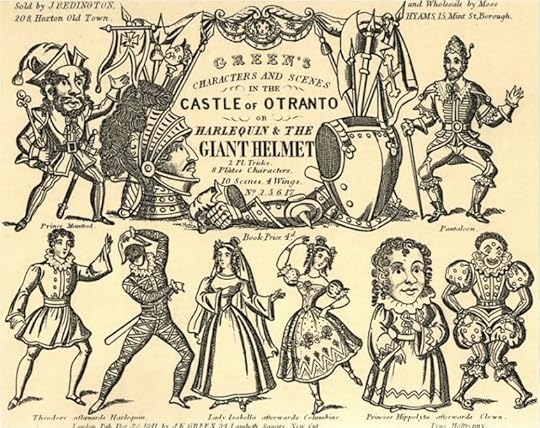 In 1764, a bored English peer, no longer active in politics, builder of a fairy tale castle in the middle of Twickenham, came up with a strange idea for a book. He wanted to tell a modern story but with elements of days gone-by. You know the kind of thing: ghosts, violent sword-fights, secret doors, family curses, desperate adventures. The only problem was he lived in the Age of Reason. Nobody wrote that kind of silliness anymore. Man had Intellect. He had Science. Books were for instruction, logic and improvement. Why would anyone want to read such an anomaly, such an anachronism?
But he wrote it anyway. And published it under a pseudonym. It was a bestseller. For the second edition, he revealed his authorship and some felt it was a cheat. For he had presented it as an old manuscript, not a new story. Others didn't care and wrote more stories just like it. The book was called The Castle of Otranto (published in 1765). It was the first Gothic novel and it's importance (or perhaps more importantly the Gothic's importance) is only now being truly revealed. Horace Walpole's tale of lost heirs, gigantic armour, family curses, fleeing through tunnels, improbable plot twists and operatic dialogue seems quaint by today's standards, but its legacy drives all the most popular media of today.
 The Gothic is the fountainhead from which all genre fiction springs. Its inspiration of the Horror genre is pretty easy to see. It's not that far from Otranto to Dracula. From the dreams of a young woman, Mary Shelley, it became Science Fiction. From there it sprang, through the genius of Gothic master, Edgar Allan Poe, into the Mystery and Detective genre. The mainstream toyed with the Gothic for a while, taking in and then kicking it out again, but not before such writers as the Bronte Sisters, Sir Walter Scott and Henry James borrowed from it for "serious" novels. From these it became the less serious Gothic Romance. Blending with mythology and fairy tales, it became Sword-and-Sorcery and Modern Fantasy. The daring-do of the Gothic inspired flamboyant heroes as far apart as the Scarlet Pimpernel, Captain Blood and Allan Quatermain. It was the Pimpernel that would grandfather Jimmy Dale, the Gray Seal, (by Frank L. Packard) the first of the Masked Avengers, siring the Pulp heroes from the Shadow to Phantom Detective. And it was only a very short bus ride from there to the Comics.
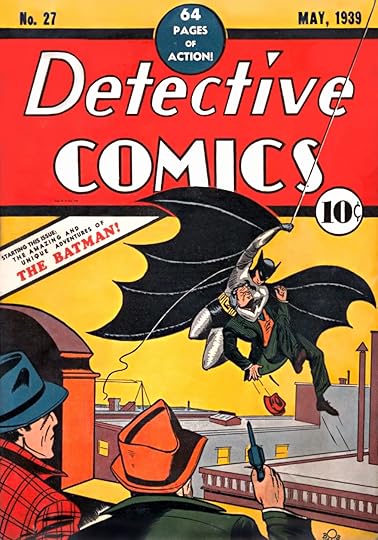
Let's skip ahead 174 year after Otranto to 1939. A young artist named Bob Kane teams up with writer Bill Finger to produce a new, stranger kind of detective to stand out from the crowd of Superman wannabes. Masked (of course) but winged as well, he was Batman (first appearance Detective Comics #27, May 1939). Not since Superman started leaping tall buildings in a single bound had a character caught the public's fancy so strongly. But unlike the Man of Steel, Batman is dark, creepy and utterly Gothic. Where Superman is an alien from another planet, Batman is just a man tortured by loss, the Heathcliff of superheroes. Where Superman gained powers given him by his birthright, Batman has to rely on his own inventiveness to create new gadgets. Superman faces forces from outer space, while Batman deals with insane criminals of a more earthly nature.
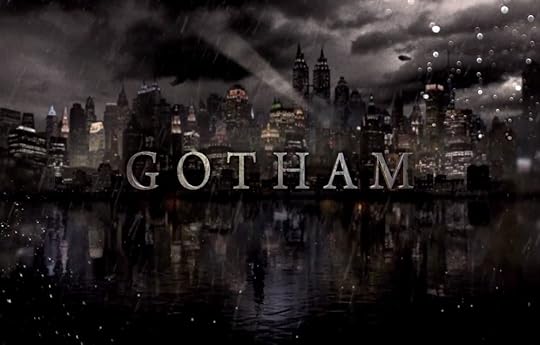 I was struck by all this recently while watching the pilot of the new Gotham series. Even though the detectives mentioned things like DNA and used computers, the feel of Gotham is so close to Bill Finger and Bob Kane's original dark vision. The fun of the show for some is the old "Year One" effect. In other words, let's see where all these heroes and villains came from. And in this way I did enjoy it too. But it was actually the Gothic effect that really made me watch. The driving force of Gothic is the past trying to destroy the future. The death of Bruce Wayne's parents begins a course of action that will lead to everything that will happen to Batman. Like a good Noir novel (a very Gothic enterprise, indeed), the tragedy that makes Bruce Wayne the Batman pulls in two directions. It makes him a superhero, more than an ordinary man, but it also consumes him, robbing him of any kind of ordinary happiness. It is this conflict that makes Batman so enduring. It is this frisson that keeps us watching even when the plot lines get convoluted and (let's be honest) so improbable that we could not possibly buy it if presented any other way. The Castle of Otranto has this same goofy logic that has earned it the hatred of the Reasoners, those scientific Rationalist who poo-pooed the Gothic back in the 1700s (Jane Austen's Northhanger Abbey hinges on this contempt and the idea that reading Gothics ruined young women's minds.) It was the same hatred that Fredric Wertham presents in Seduction of the Innocent (1954) and for the Senate Committee on Juvenile Deliquency (and I would extend that even to the vitriol heaped upon Dungeons & Dragons in the 1980s. I have almost forgiven Tom Hanks for being in Mazes and Monsters (1982). Almost.)
I have often thought humanity divides pretty easily here. Let's call it the Otranto Line. For some the world of facts, ledgers, evening news, sports, DIY and all things seeable, proveable. On the other side: Walpole's camp, are the dreamers, the LARPers, the fanboys, those who stood in line for hours to see The Lord of the Rings first, who see that this season we have Arrow plus three other DC shows and cry tears of joy. These are my people. They are the Children of the Gothic. Those who dwell upon the unseeable, the unproved. Who felt a little chill the first time Michael Keaton said "I'm Batman!" Long live the Gothic!
GW Thomas has appeared in over 400 different books, magazines and ezines including The Writer, Writer's Digest, Black October Magazine and Contact. His website is gwthomas.org. He is editor of Dark Worlds magazine.
 In 1764, a bored English peer, no longer active in politics, builder of a fairy tale castle in the middle of Twickenham, came up with a strange idea for a book. He wanted to tell a modern story but with elements of days gone-by. You know the kind of thing: ghosts, violent sword-fights, secret doors, family curses, desperate adventures. The only problem was he lived in the Age of Reason. Nobody wrote that kind of silliness anymore. Man had Intellect. He had Science. Books were for instruction, logic and improvement. Why would anyone want to read such an anomaly, such an anachronism?
But he wrote it anyway. And published it under a pseudonym. It was a bestseller. For the second edition, he revealed his authorship and some felt it was a cheat. For he had presented it as an old manuscript, not a new story. Others didn't care and wrote more stories just like it. The book was called The Castle of Otranto (published in 1765). It was the first Gothic novel and it's importance (or perhaps more importantly the Gothic's importance) is only now being truly revealed. Horace Walpole's tale of lost heirs, gigantic armour, family curses, fleeing through tunnels, improbable plot twists and operatic dialogue seems quaint by today's standards, but its legacy drives all the most popular media of today.
 The Gothic is the fountainhead from which all genre fiction springs. Its inspiration of the Horror genre is pretty easy to see. It's not that far from Otranto to Dracula. From the dreams of a young woman, Mary Shelley, it became Science Fiction. From there it sprang, through the genius of Gothic master, Edgar Allan Poe, into the Mystery and Detective genre. The mainstream toyed with the Gothic for a while, taking in and then kicking it out again, but not before such writers as the Bronte Sisters, Sir Walter Scott and Henry James borrowed from it for "serious" novels. From these it became the less serious Gothic Romance. Blending with mythology and fairy tales, it became Sword-and-Sorcery and Modern Fantasy. The daring-do of the Gothic inspired flamboyant heroes as far apart as the Scarlet Pimpernel, Captain Blood and Allan Quatermain. It was the Pimpernel that would grandfather Jimmy Dale, the Gray Seal, (by Frank L. Packard) the first of the Masked Avengers, siring the Pulp heroes from the Shadow to Phantom Detective. And it was only a very short bus ride from there to the Comics.
Let's skip ahead 174 year after Otranto to 1939. A young artist named Bob Kane teams up with writer Bill Finger to produce a new, stranger kind of detective to stand out from the crowd of Superman wannabes. Masked (of course) but winged as well, he was Batman (first appearance Detective Comics #27, May 1939). Not since Superman started leaping tall buildings in a single bound had a character caught the public's fancy so strongly. But unlike the Man of Steel, Batman is dark, creepy and utterly Gothic. Where Superman is an alien from another planet, Batman is just a man tortured by loss, the Heathcliff of superheroes. Where Superman gained powers given him by his birthright, Batman has to rely on his own inventiveness to create new gadgets. Superman faces forces from outer space, while Batman deals with insane criminals of a more earthly nature.
 I was struck by all this recently while watching the pilot of the new Gotham series. Even though the detectives mentioned things like DNA and used computers, the feel of Gotham is so close to Bill Finger and Bob Kane's original dark vision. The fun of the show for some is the old "Year One" effect. In other words, let's see where all these heroes and villains came from. And in this way I did enjoy it too. But it was actually the Gothic effect that really made me watch. The driving force of Gothic is the past trying to destroy the future. The death of Bruce Wayne's parents begins a course of action that will lead to everything that will happen to Batman. Like a good Noir novel (a very Gothic enterprise, indeed), the tragedy that makes Bruce Wayne the Batman pulls in two directions. It makes him a superhero, more than an ordinary man, but it also consumes him, robbing him of any kind of ordinary happiness. It is this conflict that makes Batman so enduring. It is this frisson that keeps us watching even when the plot lines get convoluted and (let's be honest) so improbable that we could not possibly buy it if presented any other way. The Castle of Otranto has this same goofy logic that has earned it the hatred of the Reasoners, those scientific Rationalist who poo-pooed the Gothic back in the 1700s (Jane Austen's Northhanger Abbey hinges on this contempt and the idea that reading Gothics ruined young women's minds.) It was the same hatred that Fredric Wertham presents in Seduction of the Innocent (1954) and for the Senate Committee on Juvenile Deliquency (and I would extend that even to the vitriol heaped upon Dungeons & Dragons in the 1980s. I have almost forgiven Tom Hanks for being in Mazes and Monsters (1982). Almost.)
I have often thought humanity divides pretty easily here. Let's call it the Otranto Line. For some the world of facts, ledgers, evening news, sports, DIY and all things seeable, proveable. On the other side: Walpole's camp, are the dreamers, the LARPers, the fanboys, those who stood in line for hours to see The Lord of the Rings first, who see that this season we have Arrow plus three other DC shows and cry tears of joy. These are my people. They are the Children of the Gothic. Those who dwell upon the unseeable, the unproved. Who felt a little chill the first time Michael Keaton said "I'm Batman!" Long live the Gothic!
GW Thomas has appeared in over 400 different books, magazines and ezines including The Writer, Writer's Digest, Black October Magazine and Contact. His website is gwthomas.org. He is editor of Dark Worlds magazine.
October 7, 2014
John Dies at the End (2012)

Who's In It: Chase Williamson (Sparks), Rob Mayes (The Client List), Paul Giamatti (Planet of the Apes, The Amazing Spider-Man 2), Clancy Brown (Highlander, Carnivàle), Glynn Turman (Super 8), and Doug Jones (Hellboy).
What It's About: A young man named Dave (Williamson) tells a reporter (Giamatti) how he and his pal John (Mayes) developed supernatural powers and saved the world from extra-dimensional invaders.
How It Is: Freaky. Really weird. Not that that's a bad thing.
It's a kitchen sink movie with just tons of stuff thrown in. It reminds me a little of Buckaroo Banzai like that. There's time travel, alien invasion, a sentient dog, a meat demon, a sentient drug, teen romance, a one-handed girl, a flying moustache, a Cthulhu-like being with a cult of naked followers, a vengeful detective, a mysterious dude who keeps showing up in back seats of cars, the Tony Stark of mentalists, and lots of other crazy stuff more spoilery than I want to mention. Surprisingly, it all holds together in a convincing story. It has cult movie written all over it, and if you're a fan of Buckaroo Banzai or Big Trouble in Little China, you should check it out.
It's not perfect though and one of its biggest flaws is that all of the insanity revolves around a couple of pretty bland characters. Dave and John (not telling whether the title is actually a spoiler or not) are supposed to be just everyday slackers, but they succeed at that too well. They're not especially charismatic or interesting on their own and neither are their friends for that matter. There's a lot to like about John Dies at the End, but it needs some interesting heroes to make it great.
Rating: Three out of five awesome dogs.