Michael May's Blog, page 149
January 8, 2015
5 Movies I Didn't Care For from 2014
35. I, Frankenstein
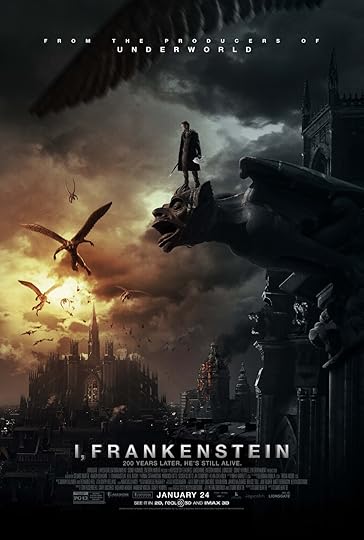
A lot of people give the Underworld movies a hard time, but I genuinely and unironically love them. So when I heard that the creators of that were taking on my favorite monster of all time, I didn't expect the bland, forgettable mess that it it was. My hope was that if it was bad it would at least fail spectacularly, but it doesn't take enough chances for that. It's not awful, it's just lukewarm, and that's the worse crime.
34. Transformers: Age of Extinction
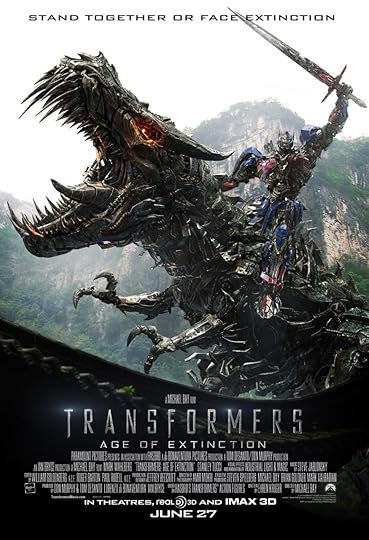
I thought I'd given up on the Transformers movies after the second one and didn't see the third, but they pulled me back in with dinosaurs. And I admit that Pain and Gain softened some of my distaste for Michael Bay movies. Age of Extinction has all of Bay's usual flaws though and the dinosaurs don't even show up until the final act, so I think I can safely say that I'm out again. Unless Stanley Tucci comes back, because he's awesome and his character is awesome and I pretty much want a movie that's just about him. But please lets not have any Transformers or Michael Bay in it.
33. This Is Where I Leave You
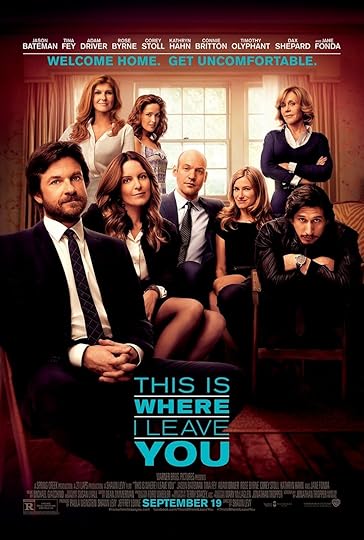
I love these big family comedy-dramas with huge casts and my mouth was watering to watch one with Jason Bateman, Tina Fey, and Timothy Olyphant in it. It has its funny moments, but sadly the characters don't feel like real people. Instead, they're just problems in need of solutions and the only answers the movie has for them are trite and unconvincing.
32. The November Man
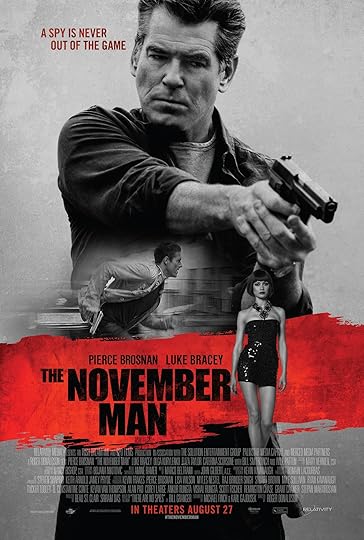
Though the Pierce Brosnan Bond films are my least-favorite run in that series, it's not because of Brosnan and I usually like him in other kinds of spy movies. But this isn't one of his better ones. It makes a brave choice in pitting Brosnan's older spy against his younger protege and not giving the audience an easy choice of whom to root for. Unfortunately, that approach backfires. Both men are seriously screwed up and both have moments of heroism, but they're balanced so well against each other that I gave up caring who would win. Instead, I focused on Olga Kurylenko. Which isn't a horrible option. She's not a main character and doesn't get enough screen time, but when she is there she's pretty great.
31. The Monuments Men
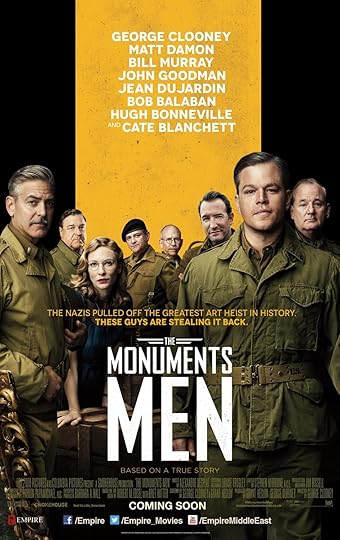
I wrote a pretty thorough post on my problems with The Monuments Men, but the short version is that while it has a great cast and characters I cared about, it asked me to take their mission more seriously than it did. I wanted either a fun heist movie or a film that would make me feel deeply about the importance of art, but by trying to be something in between, The Monuments Men is neither of those things.

A lot of people give the Underworld movies a hard time, but I genuinely and unironically love them. So when I heard that the creators of that were taking on my favorite monster of all time, I didn't expect the bland, forgettable mess that it it was. My hope was that if it was bad it would at least fail spectacularly, but it doesn't take enough chances for that. It's not awful, it's just lukewarm, and that's the worse crime.
34. Transformers: Age of Extinction

I thought I'd given up on the Transformers movies after the second one and didn't see the third, but they pulled me back in with dinosaurs. And I admit that Pain and Gain softened some of my distaste for Michael Bay movies. Age of Extinction has all of Bay's usual flaws though and the dinosaurs don't even show up until the final act, so I think I can safely say that I'm out again. Unless Stanley Tucci comes back, because he's awesome and his character is awesome and I pretty much want a movie that's just about him. But please lets not have any Transformers or Michael Bay in it.
33. This Is Where I Leave You

I love these big family comedy-dramas with huge casts and my mouth was watering to watch one with Jason Bateman, Tina Fey, and Timothy Olyphant in it. It has its funny moments, but sadly the characters don't feel like real people. Instead, they're just problems in need of solutions and the only answers the movie has for them are trite and unconvincing.
32. The November Man

Though the Pierce Brosnan Bond films are my least-favorite run in that series, it's not because of Brosnan and I usually like him in other kinds of spy movies. But this isn't one of his better ones. It makes a brave choice in pitting Brosnan's older spy against his younger protege and not giving the audience an easy choice of whom to root for. Unfortunately, that approach backfires. Both men are seriously screwed up and both have moments of heroism, but they're balanced so well against each other that I gave up caring who would win. Instead, I focused on Olga Kurylenko. Which isn't a horrible option. She's not a main character and doesn't get enough screen time, but when she is there she's pretty great.
31. The Monuments Men

I wrote a pretty thorough post on my problems with The Monuments Men, but the short version is that while it has a great cast and characters I cared about, it asked me to take their mission more seriously than it did. I wanted either a fun heist movie or a film that would make me feel deeply about the importance of art, but by trying to be something in between, The Monuments Men is neither of those things.


January 7, 2015
The Legion of Space: Lest We Forget [Guest Post]
 By GW Thomas
We live in a world that ignores its past. "Everything old is new again" is a kinder way to say it. Even Science Fiction does this. I was reminded of this when I finally got around to reading Jack Williamson's The Legion of Space. Written in 1934 as a serial novel for F Orlin Tremaine's Astounding (the one in between the BEMs of the Clayton Astounding and the Golden Age of John W Campbell's Astounding Science Fiction). The novel offers a roller-coaster ride of wonders, fights, and escapes, as you would expect before things got serious (and frankly often dull) in that "Golden Age." What I hadn't expected was the blueprint for hit after hit of Science Fiction's most popular films.
Star Wars is the most obvious. You have a democracy (The Green Hall) guarded by a small corps of elite warriors (The Legion) who are supplanted by devious means by an evil empire (The Purple Hall). The character of Adam Ulnar is Palpatine, trying to get his weaselly nephew on the new throne. His other kin, John Star, is Luke Skywalker, who refuses to join the dark side and falls in with the Three Musketeers of the tale: Jay Kalam, Hal Samdu, and the ever annoying Giles Habibula. Their job is to rescue the princess from an impenetrable base where she is being tortured for information. The scene where John Star enters her cell is hauntingly familiar. The only thing missing is the line, "Aren't you a little short for a stormtrooper?" The bunch escape through the sewers and everybody gets medals at the end.
 That's just Star Wars. There's more. The princess in question is Aladoree Anthar, a kind of goddess who possesses a super weapon called AKKA. She's up against the evil race of aliens known as the Medusae who are about to claim the Solar System. Aladoree, who has suffered greatly, is too weary to fight any longer. Only John Star's declaration of love is enough to revive her and to vanquish all evil in the universe. Sound familiar? Leeloo and The Fifth Element. But as they say on television, "Wait! There's more!" The evil Medusae who have invaded Earth with their squidgy tentacles have a giant ship that will kill the heroes. A brave hero (actually that Palpatine stand-in, Adam Ulnar, in a Darth Vader moment of reconciliation) smashes the ship The Purple Dream into the alien vessel, saving everyone. All we need is Randy Quaid's middle finger to finish this scene from Independence Day.
I'm sure there are others. Star Trek. Hitchhiker's Guide to the Galaxy. And it goes to show how we forget. George Lucas based his Jedi on the samurai of Akira Kurosawa's Forbidden Fortress, but he must have read The Legion of Space at some point. As must have Luc Besson. And Dean Devlin and Roland Emmerich. Or did they? Science Fiction has tropes, motifs and clichés, handed generation to generation, inherited almost on the genetic level, hidden in the canon that is Sci-Fi. The similarities are just so strong I can't quite believe it. Could George Lucas get these ideas second-hand through the Flash Gordon serials he loved as a kid?
 I have to shake my head and think that much more of Jack Williamson. The man was influential, important, germane to Science Fiction. He gets mentioned for "With Holded Hands" (a story that has its own legacy as the inspiration for The Terminator series), but SF snobs down-play his more adventurous stuff like The Legion of Space. And it makes us "forget" how important it was. Along with writers like Edmond Hamilton, CL Moore, Leigh Brackett (who wrote The Empire Strikes Back script with Lawrence Kasdan) and EE 'Doc' Smith, Jack Williamson shaped Space Opera into a thoroughly enjoyable form of Science Fiction that fills us with wonder and excitement.
With the explosive appearance of Guardians of the Galaxy in 2014 (and the much anticipated return of Star Wars in 2015) Space Opera is back in fashion, zipping and zapping across the cosmos once again. And I think of Jack, whom I was fortunate enough to meet briefly in Vancouver back in 1985, and how he never got the accolades he deserved. But that is also Science Fiction in the old days. Its writers gave willingly, almost feverishly to its cause, and unless you were a complete glory-hog like Isaac Asimov, you didn't get the ticker-tape parade (or the big Hollywood bucks). I try to imagine Jack sitting through the first screening of Star Wars back in 1977 and being filled with both the glory of seeing something he had created forty years earlier jumping across the screen, and also with the knowledge that no one in that audience knew he was the one who accomplished that. Bittersweet reward. Thank you, Jack.
GW Thomas has appeared in over 400 different books, magazines and ezines including The Writer, Writer's Digest, Black October Magazine and Contact. His website is gwthomas.org. He is editor of Dark Worlds magazine.

January 6, 2015
2 Movies I Hated from 2014
37. At Middleton
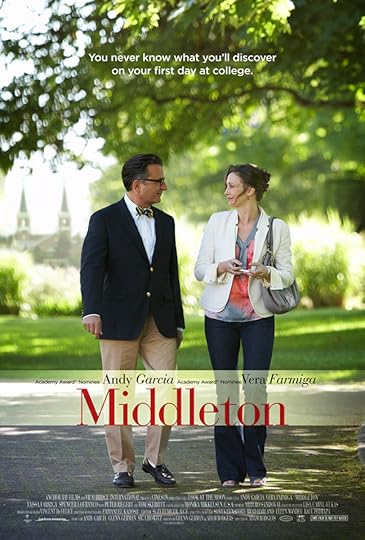
I have two major issues with At Middleton. First, it's a victim of its own marketing. It advertised itself as a fun, romantic comedy between a couple of middle-aged people who meet while visiting a prospective college campus with their kids. I'm a big fan of Andy Garcia and enjoy Vera Farmiga in most things as well, so I was super invested in watching them meet cute and fall in love. But that's not what At Middleton actually is and I resented the bait-and-switch.
It's actually a melancholy drama about unhappy marriages and adultery. But even as that, it's still majorly flawed. It deals honestly and unflinchingly with the complex emotions involved when someone falls in love with someone other than his or her spouse, but it could have been even more powerful if it had paid any attention to Garcia and Farmiga's absent spouses. Instead, it forces the kids to act as solo defendants for the marriages. That works to a limited extent, but it's still silencing a couple of major voices in this drama.
36. Lucy
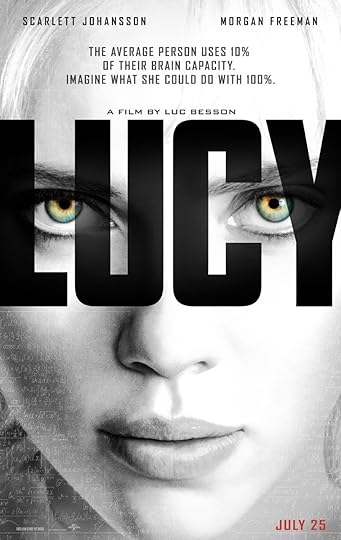
I had a hard time not making this my most hated movie of the year, but at least it has some scenes of Scarlett Johansson kicking butt. Beyond that though, the plot is dull and the point the movie wants to make is ridiculous. The character of Lucy becomes less interesting as she becomes more powerful and Morgan Freeman is only there for exposition.
The movie's ultimate message (which it thinks is pretty darn profound) is that the reason humanity exists is to pass along knowledge to later generations. That's not only bleak, it's pointless. Knowledge has no value unless it's used for some purpose, but Lucy offers no suggestion of what ultimate knowledge might be used for. It's simply about accumulating information for its own sake.

I have two major issues with At Middleton. First, it's a victim of its own marketing. It advertised itself as a fun, romantic comedy between a couple of middle-aged people who meet while visiting a prospective college campus with their kids. I'm a big fan of Andy Garcia and enjoy Vera Farmiga in most things as well, so I was super invested in watching them meet cute and fall in love. But that's not what At Middleton actually is and I resented the bait-and-switch.
It's actually a melancholy drama about unhappy marriages and adultery. But even as that, it's still majorly flawed. It deals honestly and unflinchingly with the complex emotions involved when someone falls in love with someone other than his or her spouse, but it could have been even more powerful if it had paid any attention to Garcia and Farmiga's absent spouses. Instead, it forces the kids to act as solo defendants for the marriages. That works to a limited extent, but it's still silencing a couple of major voices in this drama.
36. Lucy

I had a hard time not making this my most hated movie of the year, but at least it has some scenes of Scarlett Johansson kicking butt. Beyond that though, the plot is dull and the point the movie wants to make is ridiculous. The character of Lucy becomes less interesting as she becomes more powerful and Morgan Freeman is only there for exposition.
The movie's ultimate message (which it thinks is pretty darn profound) is that the reason humanity exists is to pass along knowledge to later generations. That's not only bleak, it's pointless. Knowledge has no value unless it's used for some purpose, but Lucy offers no suggestion of what ultimate knowledge might be used for. It's simply about accumulating information for its own sake.
January 5, 2015
34 Movies I Missed Seeing from 2014
It's time again to run through and rank all the movies from last year that I saw. I'll be doing that over the next couple of weeks, but first: here's the traditional post of movies that I wanted to see from last year, but haven't yet. That's partly to explain why some movies didn't make it into the rankings, but it's also to build a watch list for myself.
This year, work was crazy during the fall and leading up to the holidays, so I didn't get out to the theater as much as I usually do. The Missed List typically has around 20-30 movies on it, but this time there are 34 that I need to catch up on in 2015. I still saw more than I missed though, so I'm happy about that. We'll start on those in the next day or two.
For now, here's the Missed List, more or less in the order that the movies were released:
1. The Wind Rises
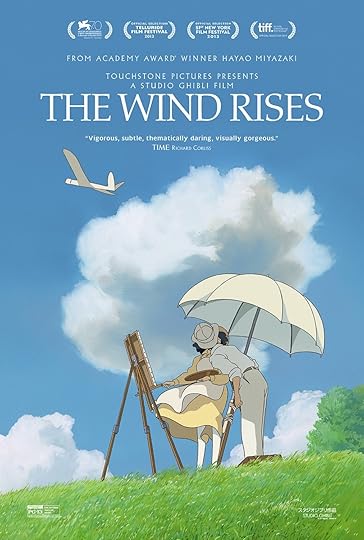
Hayao Miyazaki's last film. I'm a fan of Miyazaki and have seen all his feature films since Castle in the Sky, but I'm not a superfan and The Wind Rises is different enough from his fantastical stuff that I didn't rush to see it. Going to correct that soon though.
2. The Grand Budapest Hotel
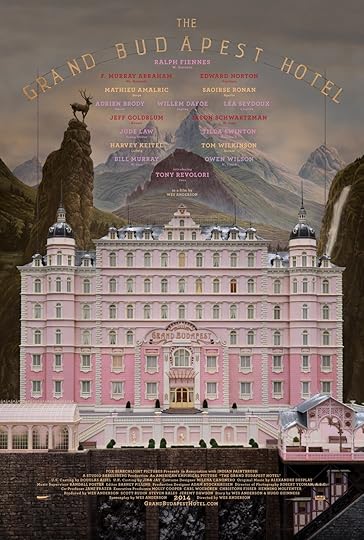
I experience mixed results from Wes Anderson, but I very much enjoyed Moonrise Kingdom and what I hear about Grand Budapest Hotel makes me think it's even more in my wheelhouse from its cast and setting to its themes and the way it's shot. I love hotels and stories set in them, but there's also that whole Upstairs Downstairs/Downton Abbey angle of telling stories of both the servants and the served.
3. Joe
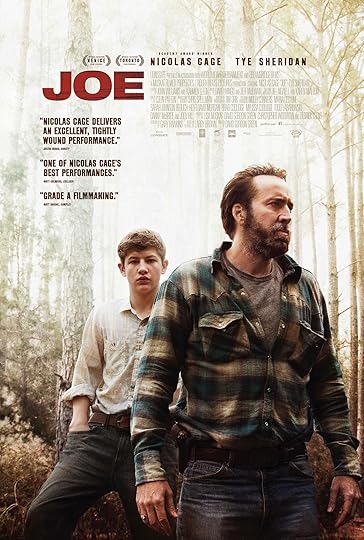
I would love to like Nicolas Cage in a movie again and if I can't get National Treasure 3, this seems like the way to do it.
4. Locke
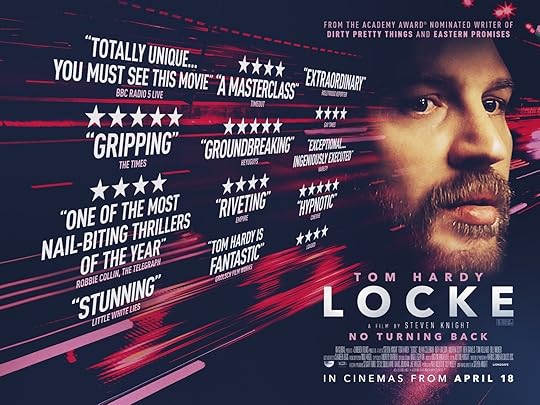
A couple of years ago, I wouldn't have been the least bit interested in a movie that's set entirely in a car with a dude on the phone. But I do dig Tom Hardy and I'm curious about the mystery of where he's driving to.
5. Chef
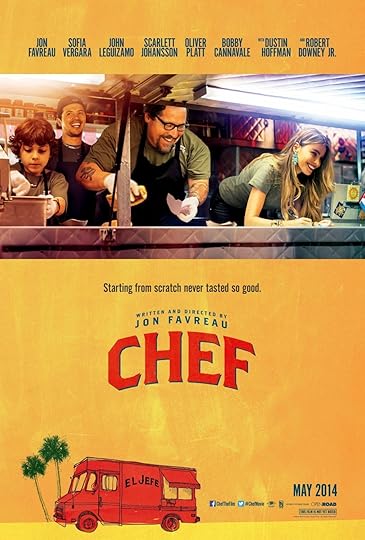
This is mostly about the cast and Favreau as a director, but I also love some nicely shot food porn.
6. God's Pocket
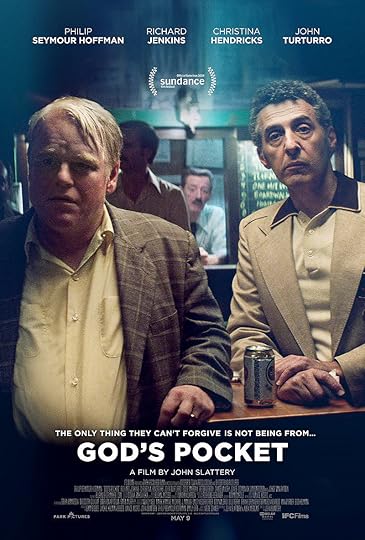
Hasn't gotten good reviews, but I saw a trailer that caught my interest and I miss Philip Seymour Hoffman, so I'm seeing it.
7. Snowpiercer
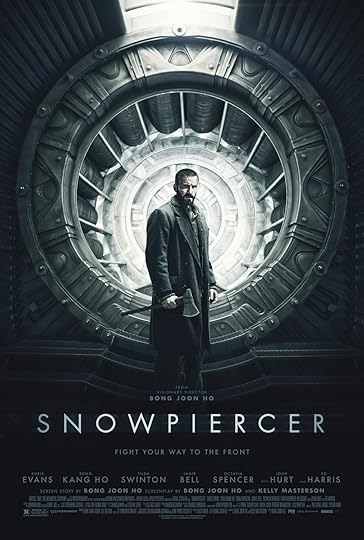
I was more interested before I heard how whackadoo and borderline nonsensical it is, but I'm still curious if for nothing more than that cast.
8. Boyhood
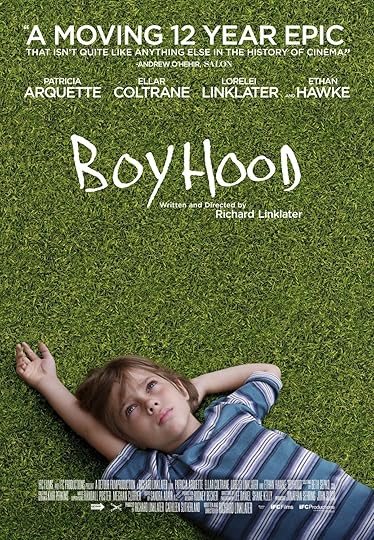
Just need to see for the technical achievement of filming the same group of actors growing up over a period of 12 years. Hoping there's more to it than just that.
9. Hercules
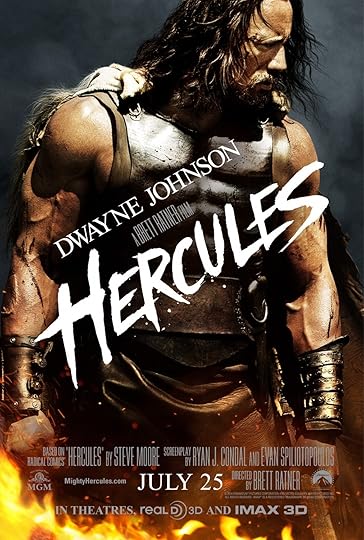
My disinterest in Brett Ratner movies is overcome by my love for this character and The Rock.
10. Magic in the Moonlight
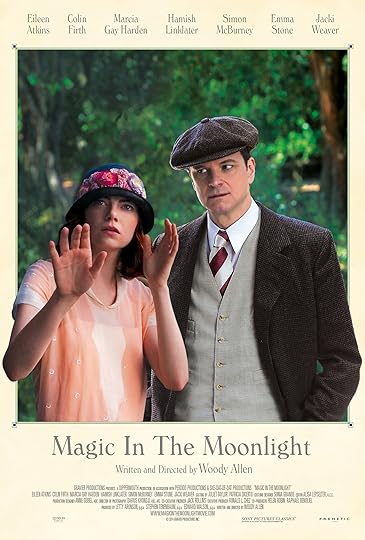
Woody Allen is another hit-or-miss writer/director for me, but Colin Firth and Emma Stone are always hits. I'm also super attracted to the theme of finding wonder and magic in reality.
11. What If
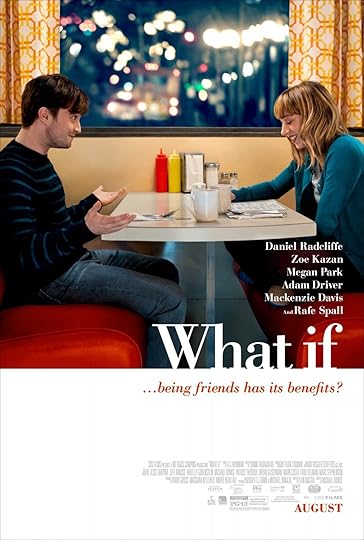
Basically, I just dig Daniel Radcliffe and want to see him in a romantic comedy instead of another fantasy/horror movie.
12. The One I Love
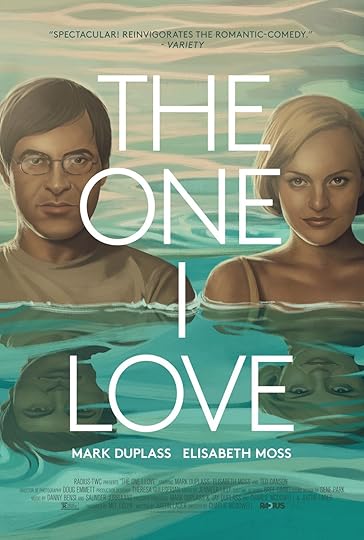
If you don't know the premise, I won't spoil it for you, but it was spoiled for me and I'm intrigued by how it will use that premise to talk about romantic relationships.
13. God Help the Girl
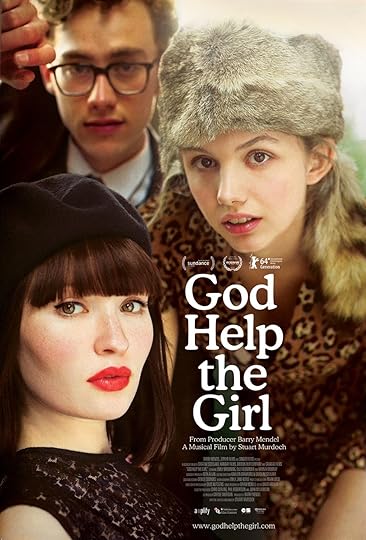
I'm going to pretend my interest is about how the film uses music to tell its story, but let's be honest: it's all about Emily Browning.
14. Frontera
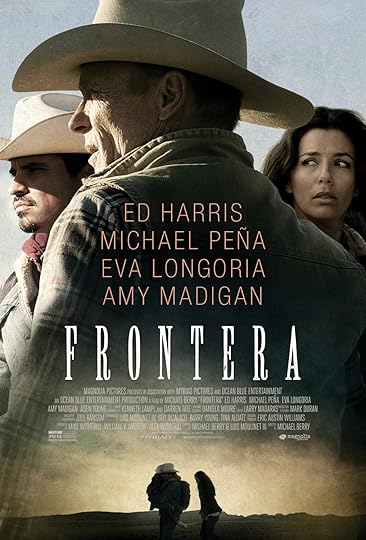
Didn't even know this existed until preparing this list, but it's a Western starring Ed Harris and that's all I need to know.
15. The Disappearance of Eleanor Rigby
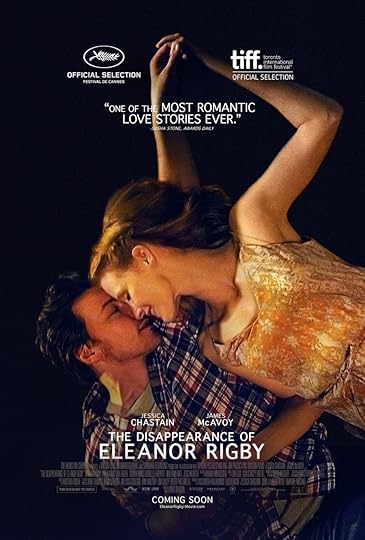
I'm even more drawn to the experimental structure of this/these movie(s) than I am to Boyhood. Writer/director Ned Benson shot a double-feature, The Disappearance of Eleanor Rigby: Him and The Disappearance of Eleanor Rigby: Her, with each movie telling the story of a relationship from the exclusive point of view of one of the characters. I want to see the movies that way as opposed to the mashed-up and edited-down version The Disappearance of Eleanor Rigby: Them that was released in 2014.
16. The Guest
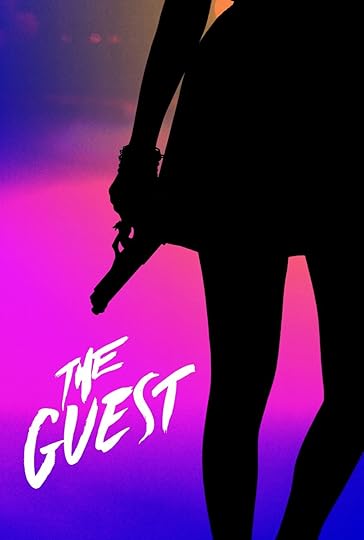
I like Dan Stevens (Downton Abbey) and hear that the movie is a fun, wild hybrid of actiony genres. Looking forward to it.
17. Tusk
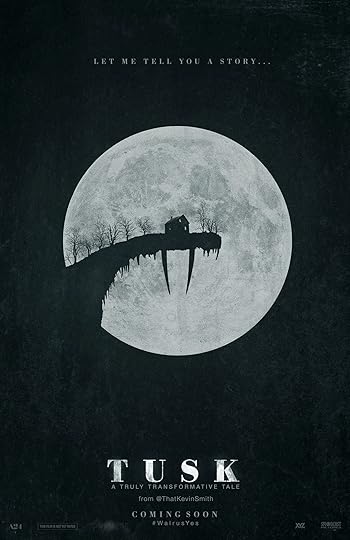
I'm curious about Kevin Smith's making a goofy horror movie on a bet, but I'm even more curious to catch up with Haley Joel Osment.
18. The Boxtrolls
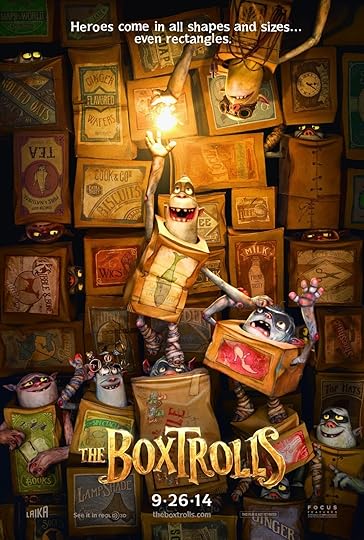
Not super fascinated with the premise, but it's Laika, so I'm in.
19. The Judge
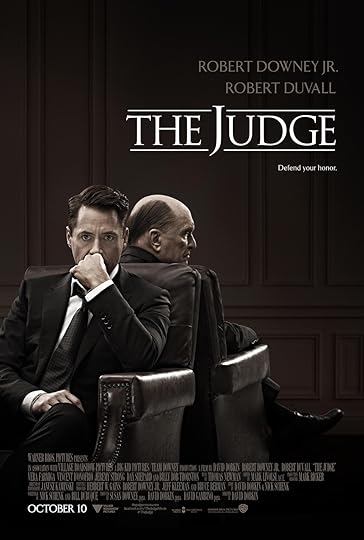
The plot sounds like a billion different films I've seen before, but not with these two actors together.
20. Dracula Untold
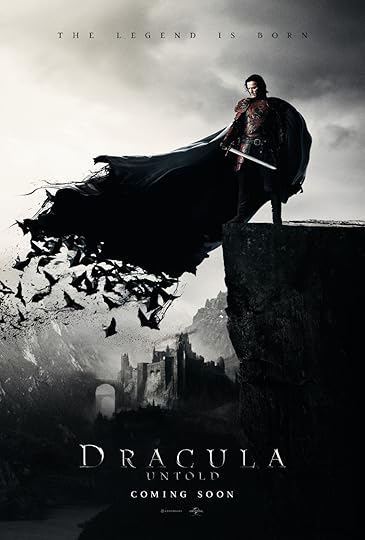
I love me some Luke Evans, but was totally disinterested in this prequel/origin story until Universal made the calculated and cynical marketing move to tack on a last-second epilogue that ties it into their upcoming, Marvel-style "universe" of monster action movies. They got me and I am clearly part of the problem.
21. St. Vincent
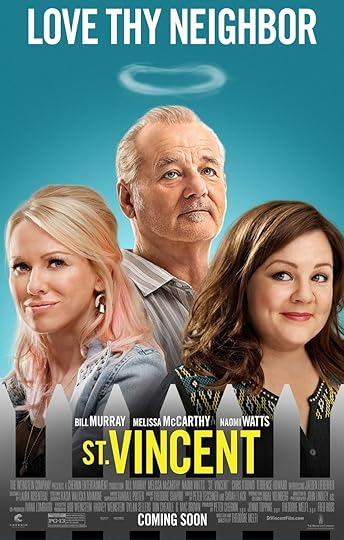
(See: The Judge)
22. The Book of Life
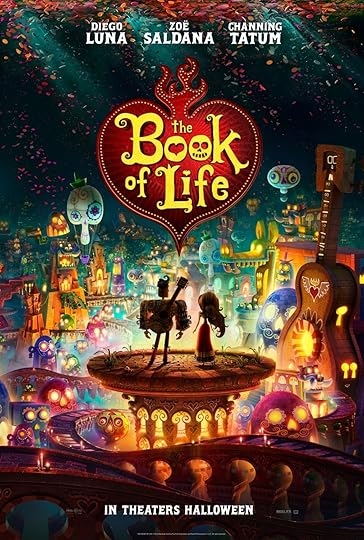
Love how it seems to capture the colors, themes, and flair of la Dia de los Muertos. I'm actually more excited about this than any other animated movie from 2014.
23. Exists
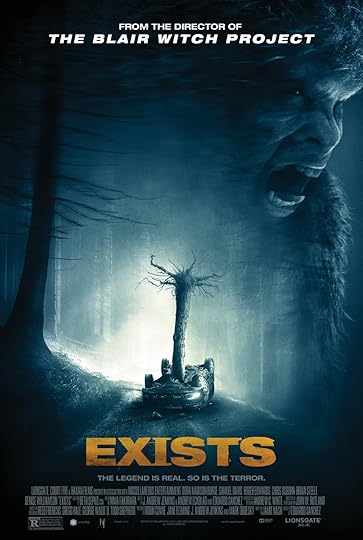
There are some concepts that catch my attention no matter how questionable everything else about the movie is. Bigfoot is one of those.
24. Big Hero 6
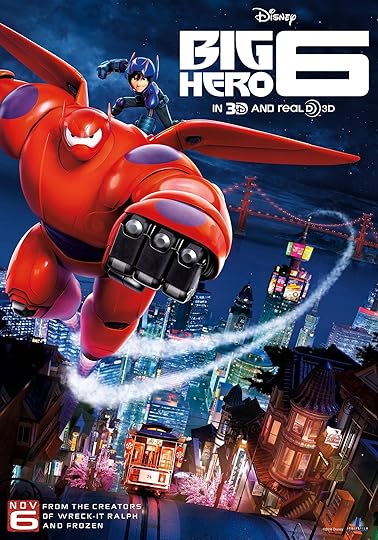
I will watch this until the very last end credit hoping against all hope for even a throwaway, Easter Egg of a reference to Alpha Flight (the birthplace of these characters). I'm prepared for crushing disappointment on that level, but also prepared to love the rest of it if all of humanity can be trusted, because that's who else seems to enjoy it.
25. The Hunger Games: Mockingjay, Part 1
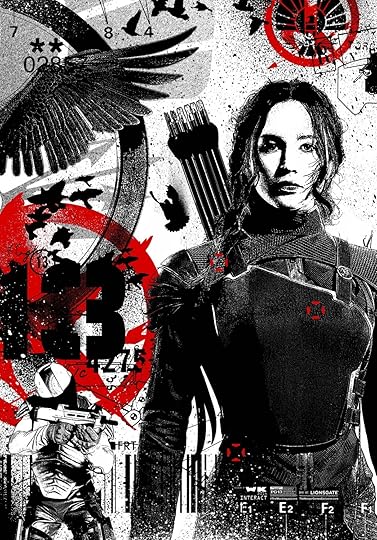
Mockingjay was the darkest and my least-favorite of the Hunger Games books, but worth reading for its perfectly satisfying conclusion. So getting the dark, least-favorite parts without the bit I like? Not all that exciting for me. Think I'm gonna wait and catch this at home before Part 2 comes out.
26. The Imitation Game
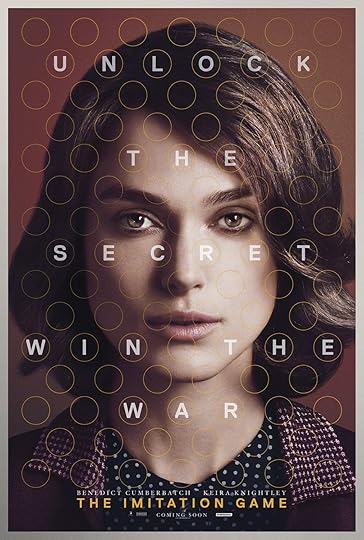
Four words. And they're all right above the title in that poster.
27. The Babadook
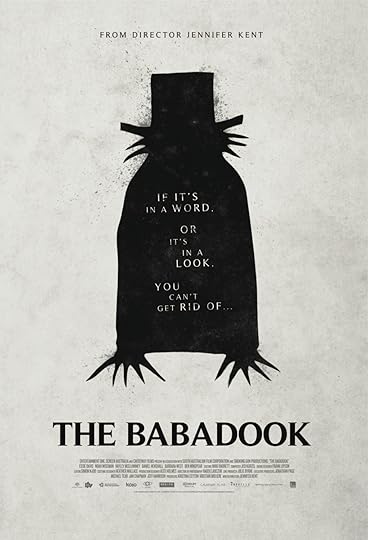
When people ask me if I like horror movies, I always hem and haw. I enjoy being scared, but it takes some real talent to do that. Showing me someone's guts or having a cat jump out of the closet aren't scary things and so, no, I don't like most horror movies. But every once in a while a movie like The Ring or the first Paranormal Activity or The Conjuring comes out and everyone says that it's awesome and truly frightening and then I get extremely excited. The Babadook is apparently the next one of those.
28. The Pyramid
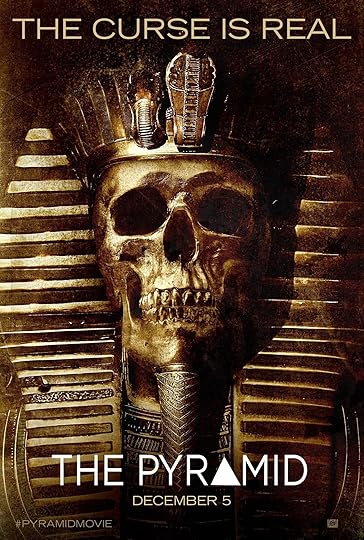
(See: Exists. Substitute "Bigfoot" with "Mummies".)
29. The Hobbit: The Battle of the Five Armies
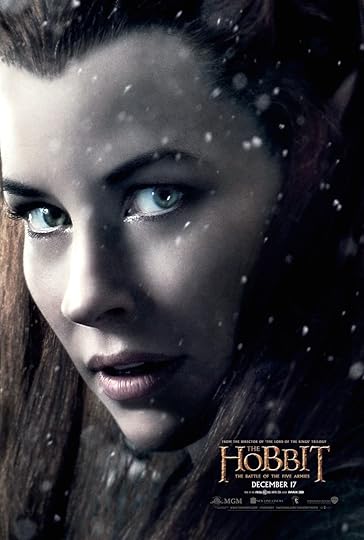
There's no bigger testament to how crazy busy this holiday season was than my not making it to see this yet. It's first on my list to see in theaters in 2015. I very clearly see the flaws in Jackson's Hobbit movies so far, but I understand why they exist and I love the whole endeavor in spite of them.
30. Annie
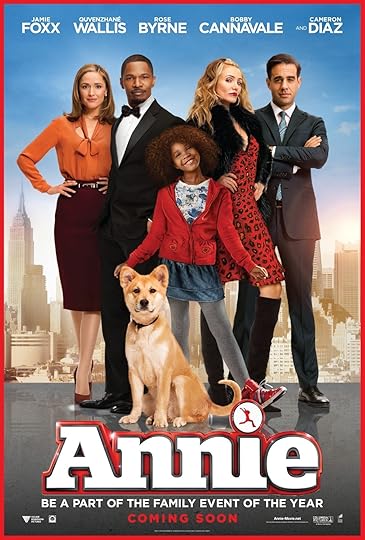
Sad that some of the songs have been cut, but I'll be happy to hear updated versions of the ones that are still there. And Jamie Foxx is awesome.
31. Night at the Museum: Secret of the Tomb
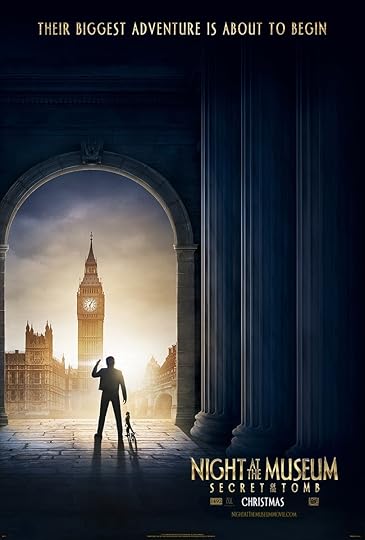
I enjoyed the previous two, but I'm feeling like this is probably going to be one too many. Still: any chance to see Rebel Wilson.
32. Into the Woods
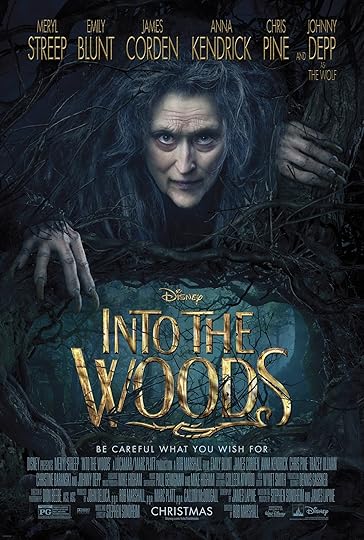
Never seen the musical and don't even know that much by Stephen Sondheim (except for Sweeney Todd, which doesn't really do it for me). But fairy tales are cool and I'm interested by everything that I've heard Sondheim does with them in his play.
33. Selma
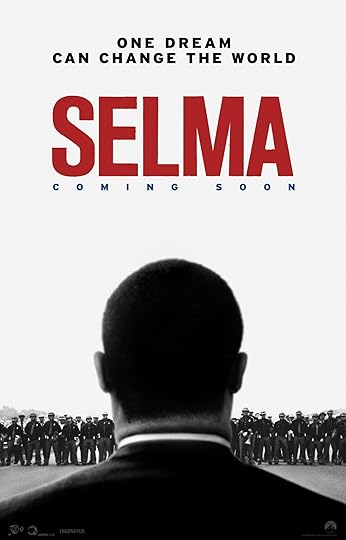
I'm a sucker for movies about race relations in general, but especially about MLK and his approach to them.
34. Big Eyes
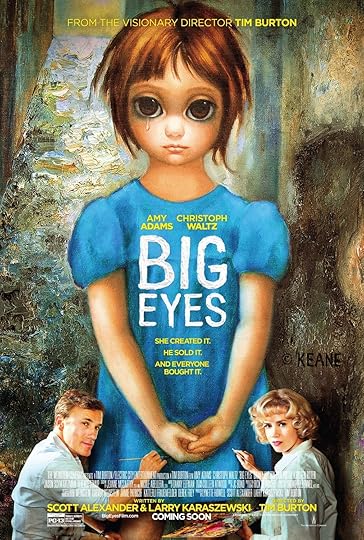
I'm very eager to support a Tim Burton movie without Johnny Depp or Helena Bonham Carter in it.
So that's what I need to catch up on. Knowing me, I'll probably tackle them in more or less the order they're listed above, but let me know what I should be most excited about. Or let me know which ones you haven't seen yet, but are also anticipating.
This year, work was crazy during the fall and leading up to the holidays, so I didn't get out to the theater as much as I usually do. The Missed List typically has around 20-30 movies on it, but this time there are 34 that I need to catch up on in 2015. I still saw more than I missed though, so I'm happy about that. We'll start on those in the next day or two.
For now, here's the Missed List, more or less in the order that the movies were released:
1. The Wind Rises

Hayao Miyazaki's last film. I'm a fan of Miyazaki and have seen all his feature films since Castle in the Sky, but I'm not a superfan and The Wind Rises is different enough from his fantastical stuff that I didn't rush to see it. Going to correct that soon though.
2. The Grand Budapest Hotel

I experience mixed results from Wes Anderson, but I very much enjoyed Moonrise Kingdom and what I hear about Grand Budapest Hotel makes me think it's even more in my wheelhouse from its cast and setting to its themes and the way it's shot. I love hotels and stories set in them, but there's also that whole Upstairs Downstairs/Downton Abbey angle of telling stories of both the servants and the served.
3. Joe

I would love to like Nicolas Cage in a movie again and if I can't get National Treasure 3, this seems like the way to do it.
4. Locke

A couple of years ago, I wouldn't have been the least bit interested in a movie that's set entirely in a car with a dude on the phone. But I do dig Tom Hardy and I'm curious about the mystery of where he's driving to.
5. Chef

This is mostly about the cast and Favreau as a director, but I also love some nicely shot food porn.
6. God's Pocket

Hasn't gotten good reviews, but I saw a trailer that caught my interest and I miss Philip Seymour Hoffman, so I'm seeing it.
7. Snowpiercer

I was more interested before I heard how whackadoo and borderline nonsensical it is, but I'm still curious if for nothing more than that cast.
8. Boyhood

Just need to see for the technical achievement of filming the same group of actors growing up over a period of 12 years. Hoping there's more to it than just that.
9. Hercules

My disinterest in Brett Ratner movies is overcome by my love for this character and The Rock.
10. Magic in the Moonlight

Woody Allen is another hit-or-miss writer/director for me, but Colin Firth and Emma Stone are always hits. I'm also super attracted to the theme of finding wonder and magic in reality.
11. What If

Basically, I just dig Daniel Radcliffe and want to see him in a romantic comedy instead of another fantasy/horror movie.
12. The One I Love

If you don't know the premise, I won't spoil it for you, but it was spoiled for me and I'm intrigued by how it will use that premise to talk about romantic relationships.
13. God Help the Girl

I'm going to pretend my interest is about how the film uses music to tell its story, but let's be honest: it's all about Emily Browning.
14. Frontera

Didn't even know this existed until preparing this list, but it's a Western starring Ed Harris and that's all I need to know.
15. The Disappearance of Eleanor Rigby

I'm even more drawn to the experimental structure of this/these movie(s) than I am to Boyhood. Writer/director Ned Benson shot a double-feature, The Disappearance of Eleanor Rigby: Him and The Disappearance of Eleanor Rigby: Her, with each movie telling the story of a relationship from the exclusive point of view of one of the characters. I want to see the movies that way as opposed to the mashed-up and edited-down version The Disappearance of Eleanor Rigby: Them that was released in 2014.
16. The Guest

I like Dan Stevens (Downton Abbey) and hear that the movie is a fun, wild hybrid of actiony genres. Looking forward to it.
17. Tusk

I'm curious about Kevin Smith's making a goofy horror movie on a bet, but I'm even more curious to catch up with Haley Joel Osment.
18. The Boxtrolls

Not super fascinated with the premise, but it's Laika, so I'm in.
19. The Judge

The plot sounds like a billion different films I've seen before, but not with these two actors together.
20. Dracula Untold

I love me some Luke Evans, but was totally disinterested in this prequel/origin story until Universal made the calculated and cynical marketing move to tack on a last-second epilogue that ties it into their upcoming, Marvel-style "universe" of monster action movies. They got me and I am clearly part of the problem.
21. St. Vincent

(See: The Judge)
22. The Book of Life

Love how it seems to capture the colors, themes, and flair of la Dia de los Muertos. I'm actually more excited about this than any other animated movie from 2014.
23. Exists

There are some concepts that catch my attention no matter how questionable everything else about the movie is. Bigfoot is one of those.
24. Big Hero 6

I will watch this until the very last end credit hoping against all hope for even a throwaway, Easter Egg of a reference to Alpha Flight (the birthplace of these characters). I'm prepared for crushing disappointment on that level, but also prepared to love the rest of it if all of humanity can be trusted, because that's who else seems to enjoy it.
25. The Hunger Games: Mockingjay, Part 1

Mockingjay was the darkest and my least-favorite of the Hunger Games books, but worth reading for its perfectly satisfying conclusion. So getting the dark, least-favorite parts without the bit I like? Not all that exciting for me. Think I'm gonna wait and catch this at home before Part 2 comes out.
26. The Imitation Game

Four words. And they're all right above the title in that poster.
27. The Babadook

When people ask me if I like horror movies, I always hem and haw. I enjoy being scared, but it takes some real talent to do that. Showing me someone's guts or having a cat jump out of the closet aren't scary things and so, no, I don't like most horror movies. But every once in a while a movie like The Ring or the first Paranormal Activity or The Conjuring comes out and everyone says that it's awesome and truly frightening and then I get extremely excited. The Babadook is apparently the next one of those.
28. The Pyramid

(See: Exists. Substitute "Bigfoot" with "Mummies".)
29. The Hobbit: The Battle of the Five Armies

There's no bigger testament to how crazy busy this holiday season was than my not making it to see this yet. It's first on my list to see in theaters in 2015. I very clearly see the flaws in Jackson's Hobbit movies so far, but I understand why they exist and I love the whole endeavor in spite of them.
30. Annie

Sad that some of the songs have been cut, but I'll be happy to hear updated versions of the ones that are still there. And Jamie Foxx is awesome.
31. Night at the Museum: Secret of the Tomb

I enjoyed the previous two, but I'm feeling like this is probably going to be one too many. Still: any chance to see Rebel Wilson.
32. Into the Woods

Never seen the musical and don't even know that much by Stephen Sondheim (except for Sweeney Todd, which doesn't really do it for me). But fairy tales are cool and I'm interested by everything that I've heard Sondheim does with them in his play.
33. Selma

I'm a sucker for movies about race relations in general, but especially about MLK and his approach to them.
34. Big Eyes

I'm very eager to support a Tim Burton movie without Johnny Depp or Helena Bonham Carter in it.
So that's what I need to catch up on. Knowing me, I'll probably tackle them in more or less the order they're listed above, but let me know what I should be most excited about. Or let me know which ones you haven't seen yet, but are also anticipating.
December 31, 2014
Careful What You Wish For... [Guest Post]
 By GW Thomas
I was recently ruminating with my cousin about how our kids, now all in their twenties, don't want the legacies we have gathered. Legacies? Millions of dollars? No, but millions of words. I'm talking about "The Collection," a mass of speculative fiction and comics going back to the 1970s. Sure, you can eBay it, but what we always thought we'd do with it was pass it along to our kids.
Only thing is... they don't want it.
It's hard to believe. They don't want boxes and boxes of treasures: gems like copies of Crypt of Cthulhu, complete runs of Dragon magazine, Erbdom, Doctor Who videos (the early stuff before Christopher Eccleston), Gold Key Star Trek comics, paperbacks by Silverberg, Goulart, Chalker, and on and on.
 First, this raises the question: why are these treasures? Well, despite the '70s being pretty good for Science Fiction and Fantasy (think Space 1999, Kolchak the Night Stalker, Joe Kubert's Tarzan, Barry Smith's Conan the Barbarian, and those wonderful Hildebrandt LotR calendars!), most of the time it was still a desert, with small oases of delight. The rest: dull. Watergate, Viet Nam, the Energy Crisis. Well, if not dull, at least terrestrial. We had the Moon Landing, but we wanted the stars...
And so we hoarded with a possessiveness that only Gollum could match. Dragon-like, we kept all our Uncanny X-Men comics in a pile and slept on them (including that precious #94). Despite the addiction to the Fantastic, we were willing to share, because there just weren't enough of us out there. Folks who could discuss why Star Trek was better than Star Wars while a third muscled in that Doctor Who was better than either.
But if you were born in 1990, you entered an entirely different world. My kids grew up in a world where Sword and Sorcery was a click away on a game console. They didn't have to watch The Man from Atlantis religiously or write letters to networks to rerun Hawk the Slayer. Their dinosaurs were CGI, not the rubber ones of At the Earth's Core. So when you guide them through the labyrinth of boxes to the center of that great SF/F/H trove, they look at it and say, "Meh."
 Tears well up. You want to disown them. And this raises the question: where did we go wrong? We thought we were raising them right. Magic the Gathering cards instead of hockey cards. Hobbits, not hobby horses. Velociraptor instead of bunnies. Damn it, we did our duty as fan-parents (I think I just coined a new word!) and yet...
Meh. An expression so bland and disengaged you want to punch it in the face. Meh. Did I not give you Edgar Rice Burroughs? I would have died without old ERB. He was the gateway drug that lead to Leiber, Lovecraft, Tolkien, Frank Herbert, Stephen King, all of it. Eddie Burroughs made me a reader first, and a writer second. Without that first Neal Adams-adorned copy of The Jungle Tales of Tarzan in the black Ballantine wrapper I'd be... much more ordinary. And my treasure trove would be... I can't imagine it as I shudder with George Bailey-like terror down the street this way and that. "Mother, don't you know me?" "My son died when he was eight years old, crushed by a stack of Weird Tales." (Slam!)
So be careful what you wish for. Because I can remember in 1973, that second issue of Thongor in Creatures on the Loose #23 clutched in my sweaty ten-year-old hands and thinking, "Why can't this stuff be everywhere?" I can remember dreaming back in 1979 about a world in which Star Wars could be available to you at the push of a button (that was when an 8-minute super 8 highlight reel sold for a whopping $100.)
 And I think we got the dream. Science Fiction, Fantasy and Horror are everywhere, from The Walking Dead to Spider-Man movies to the Lord of the Rings franchises to video games that let you run whole armies to (orgasmic delight) a John Carter of Mars film. We are living in world that has embraced SF/F/H. It's all gone mainstream.
And I should be delighted, but instead I'm looking at this stack of Burroughs' Venus novels (with their superb Frank Frazetta covers) and thinking my kids don't care. Amtor, with its winged klangaan warriors, its bug-eyed monsters, its maze of seven deaths. What's that compared to FallOut 3 or World of Warcraft or Skyrim?
But I take what I can get. A little 1st edition D&D with the boys when I can. Arkham Horror is a nice middle ground between the old Call of Cthulhu box set and the latest multi-million selling X-box game. One kid likes Eragon, the other Hitchiker's Guide to the Galaxy. I didn't fail completely. Or perhaps at all. It's not like they call me up and say "Hey, what did you think of that Oilers game, eh?" Maybe, just maybe, we all need to gather our own treasure trove, only to cast it away when we die. Or better yet, to have it piled around us and set on fire, Viking-style. Yes, that's what I want. To go up in smoke along with my Turoks, and my Lancer paperbacks, my old D&D character sheets, my Doc Savage, Man of Bronze books and a complete set of Arak, Son of Thunder. Up I'll go. And my boys can look on. Who's "Meh" now?
GW Thomas has appeared in over 400 different books, magazines and ezines including The Writer, Writer's Digest, Black October Magazine and Contact. His website is gwthomas.org. He is editor of Dark Worlds magazine.

December 26, 2014
The 3 Worlds of Gulliver (1960)

Who's In It: Kerwin Mathews (The 7th Voyage of Sinbad, Jack the Giant Killer) and June Thorburn (Tom Thumb).
What It's About: A doctor (Mathews) goes to sea against the wishes of his fiancée (Thorburn) and winds up stranded on two fantastical islands where he learns important lessons about dreams and control.
How It Is: Jonathan Swift's novel is famous as a piece of social satire, so I wasn't sure how well it would translate into an adventure film. Having Ray Harryhausen on the visual effects convinced me to give it a shot though and I'm glad I did. Except for an impressive man vs. crocodile fight towards the end, most of the effects are about making Gulliver either huge or tiny in relation to the islanders he encounters, but there's a lot more to the film than just that. It works as an adventure film, but it works as social commentary, too.
The three worlds in the title refer to Gulliver's native England and the two major islands he visits: Lilliput (where he's much larger than everyone else) and Brobdingnag (where he's much tinier). In England, he has a serious argument with his fiancée Elizabeth. She just wants to get married and settle down at all costs, even if it means buying a dilapidated cottage and Gulliver's continuing to get paid for his medical services in livestock and produce. Gulliver has bigger dreams though. He wants to go to sea and earn his fortune so that he can Be Somebody. Only then will he feel prepared to marry Elizabeth and start his life.
What I like about the movie is that neither side is presented as absolutely correct. In fact, the islands Gulliver visits each teach him (and Elizabeth, who stows away on his ship) something about their desires. On Lilliput, Gulliver is treated as a god, but that doesn't prevent the people from trying to manipulate him into doing what they want. All that prestige and power he craved comes with a cost.
By the time he gets to Brobdingnag, he's sick of the responsibility and at first welcomes the way the giants there treat him and Elizabeth as sort of pets. But though the couple's needs are all taken care of, it's at the cost of their freedom. Lack of responsibility is both blessing and curse.
I mentioned in some of my Christmas Carol discussion that I've been thinking about control a lot lately. It's just something I'm mulling over in my personal life: how much control do we ever really have and how much should I try to maintain. The 3 Worlds of Gulliver adds some important thoughts to that conversation. Too much control/power/responsibility doesn't make you happy (not if we've learned anything from Spider-Man), but too little is just as bad. That's a theme I remember struggling with in another of my favorite movies, Finding Neverland, and it's about time I revisit that one too. There's a lot to be said for retaining a sense of childlike wonder about the world, but it shouldn't keep us from living up to our responsibilities. I don't know that I'll ever find the right balance, but until I do movies like Finding Neverland and 3 Worlds of Gulliver will continue to fascinate me and make me think.
And it doesn't hurt for them to have fights with giant crocodiles at the end either.
Rating: Four out of five enormous osteolaemi.


December 25, 2014
Merry Christmas, Everyone!

Not my tree topper (sadly), but check out my Tumblr for a monstrous helping of similar Christmasy goodness. I went kind of nuts this year.
Hope you're all having a happy, peaceful holiday season.

December 24, 2014
The Adventures of Santa Claus [Guest Post]
 By GW Thomas
Santa Claus, Father Christmas, Kris Kringle, Pere Noel. Whatever you call him, he is a busy guy. Every year he has to make billions of toys and deliver them all in one night. When would Santa have time to have any adventures? Well, he gets around more than you'd think.
In 1901, L Frank Baum who had recently seen his book The Wonderful Wizard of Oz sell well was looking around for another idea. Why not the story of Santa Claus? What child could resist a tale of Old St. Nick? What Baum produced was The Life and Adventures of Santa Claus (1902), a minor Fantasy classic in its own right, though it wasn't followed by multiple sequels like Dorothy's adventures in Oz.
 Santa begins life as a foundling in the mythical forest of Burzee, home to Fairies, Knooks, Ryls and Nymphs. There, Ak the Master Woodsman rules and he allows the baby to be raised by the nymph Necile. He is given the name Claus, which means "little one", and "Ne" is added when he is adopted, "Ne-Claus" or Nicholas. In this way, Baum explains Christmas tradition after tradition, making up new and intriguing ways to explain everything from toys to mistletoe.
 Now the plot could be pretty dull if Claus didn't have enemies to face. These are the Awgwas, creatures halfway between the fairy immortals and humans. They are giant in size and able to go from one place to another with magical speed. Their only agenda is to cause pain and suffering wherever they can. So, of course, they plan to steal Claus's toys that he makes to please the suffering masses of humanity.
This leads to a fantastic battle between Good and Evil (that Santa misses) with fire-breathing dragons, Goozle-Goblins, the Giants of Tartary, and many other fantastic monsters against Ak and his amazing ax. Baum doesn't give us Robert E Howard style blow-by-blow (the pity), but Good wins and Claus can go about his business of making toys.
The rest of the novel falls short of that great battle scene but Santa slowly figures out how to deliver the toys all in one night. When he reaches old age, Ak gives him immortality so he can go on lightening the hearts of humankind forever. The episodic tale does a good job of blending a new myth with an old holiday.
 Baum had one last chance with Santa when the Jolly Old Elf made an appearance, accompanied by his friends, in The Road to Oz (1909). In this odd volume, Baum ties all of his series together in a multiverse worthy of Michael Moorcock. Children's books would now feature Santa on a more regular basis, since Baum had opened the door, but CS Lewis's The Lion, The Witch and the Wardrobe (1951) is probably the most memorable. His Father Christmas gives out swords and bows, not just tea cakes. Lewis's battle scene between Good and Evil is much more detailed, though St. Nick doesn't take part.
But the kids weren't having all the fun. In January 1938, Weird Tales' popular author who usually wrote of the occult detective Jules de Grandin, presented what many consider his masterpiece, "Roads." Seabury Quinn builds his story slowly, beginning at the birth of Christ and ends in the 16th century. The story was illustrated by Virgil Finlay, and these drawings were used in the 1948 Arkham House edition.
 Quinn tells the story of Claus in three parts. In the first section, "The Road to Bethlehem," we meet Claudius, a gladiator in the time of King Herod, a blond giant of a warrior. He wins his freedom in the ring and then wishes to return home. Before he can do this, he saves a baby from the purge that Herod's men are making. This is the baby Jesus, who makes Klaus immortal and sets him on a road to a great destiny.
In the second section, "The Road to Calvary," Claus, now a Roman Centurian, witnesses the death of the baby, now grown to a man. At the passing of Christ there is an earthquake, and Claus rescues the love interest of the tale, a girl named Unna. Quinn's action sequences take a page from Robert E Howard's prose style and spirit. Howard had been dead just eighteen months when Quinn wrote "Roads" and his red-dipped pen was sorely missed.
 In the last part of the tale, "The Long, Long Road," we follow Claus and Unna, both immortal, as they move through history. Fleeing humanity's ills, Claus finds the elves and begins the last transition to becoming Santa Claus. As the baby Jesus tells him, his fate is not to die in battle but to become a person whom all children love and adore. Like Baum before him, Quinn peppers his tale with explanations on how certain Christmas traditions came about. Sam Moskowitz said that "Roads" was “the greatest adult Christmas story written by an American.” Quinn had achieved for adults what Baum had done for children.
The idea of an heroic Santa, sword-swinging and powerful, a Hyborian Claus if you will, appeals to me on so many levels. And I'm not alone. Sony Studios is producing a new version of Baum's novel (now in the public domain) called Winter's Knight, featuring an ax-wielding Santa like you've never seen. This isn't the quiet Rankin-Bass adaptation from 1985, nor the less interesting Robbie Benson cartoon of 2000. It's not even the boisterous Santa of William Joyces's Rise of the Guardians (which borrows the spirit of Baum). It's a Roadsian version, a Howardian version, filled with violence and magic and blood. I can't wait.
Viking Santa art above is by Caio Monteiro. Art below is by Jakob Eirich.
GW Thomas has appeared in over 400 different books, magazines and ezines including The Writer, Writer's Digest, Black October Magazine and Contact. His website is gwthomas.org. He is editor of Dark Worlds magazine.


“If Quite Convenient, Sir" | Patrick Stewart (1999)

Index of other entries in The Christmas Carol Project
As the charitable solicitors leave Scrooge's office, they pass a small group of carollers serenading next door. TNT's Christmas Carol often makes an effort to present the story in a new way, so their carol isn't "God Rest Ye Merry Gentlemen," but the more obscure "While Shepherds Watched Their Flocks."
The group gets a donation from their audience and the youngest member mischievously announces, "I'm gonna try Scrooge's!" The others warn him against it, reinforcing the idea from earlier that Scrooge has a reputation in this part of town. The boy's determined though, so off he goes and starts up "Good King Wenceslas" as a solo act at Scrooge's door.
Cratchit is the first to hear him and his look is pure shock, like he can't believe his ears that anyone would have the gall. Scrooge tries to ignore it at first, but the film's score introduces chilling strings that grow in intensity and become more unsettling, letting the audience feel Scrooge's irritation at the song. When Scrooge finally grabs a ruler from his desk and gets up, it's actually a relief. The strings continue though until Scrooge opens the door and rears back the ruler with a growl. He looks like he's truly going to beat the kid, though he stays his hand and lets the whippersnapper run off, pursued by his shrieking friends. I get the feeling that the kid never thought he'd get a donation from Scrooge, but was simply testing his own bravery.
When Scrooge goes back inside, the clock is chiming 7:00. He verifies against his own watch and silently starts to put on his coat. In the background, Cratchit is up and doing the same thing. These are men who work together, but communicate as little as possible.
Still, there's a matter to attend to and Scrooge brings it up. Cratchit says, "If it's convenient, sir" with a bit of a smirk, not that Scrooge is looking at him. That moment perfectly defines their relationship. Richard E Grant's Cratchit has some gumption with his boss, but it's not the annoying kind like in Rankin-Bass' The Stingiest Man in Town. Mostly that's because Patrick Stewart's Scrooge is a stronger, more complicated character than Walter Matthau's.
Stewart's is defined by severe isolation and loneliness, but it seems to be something that he's intentionally brought on himself. Since he truly wants to be left alone, it's hard to feel sorry for him when people steer clear. Stewart's a great enough actor that he still generates some pity, but I can't fault Cratchit for getting irritated with the old man or getting in his digs where he can. There's some swagger in his "It's only once a year, sir." He knows he's won this argument and he's not afraid to be pleased about it.
At the same time, he does his best not to be too obnoxious. Scrooge sounded serious earlier when he threatened Cratchit's job, so this isn't a match of equals. When Cratchit starts to wish Scrooge a Merry Christmas, he catches himself and stops. Scrooge challenges him. "You were about to say something, Cratchit?" But Cratchit's smart enough to say, "Nothing, sir" even though he's smiling at his own mistake. I quite like him.
Scrooge goes out first and we stay with Cratchit just long enough to see him pick up the keys and blow out the last candle. We've already had some Christmas street scenes and the film doesn't need a sliding scene for Cratchit either. The sliding scene is usually to show us that Cratchit has a joyful life away from Scrooge, but this production has already implied that by giving him a sense of humor and an independent spirit even in the office. It's going to leave Cratchit for now and have us follow Scrooge as his adventure begins.

December 23, 2014
“If Quite Convenient, Sir" | Michael Caine (1992)

Index of other entries in The Christmas Carol Project
Scrooge is absolutely beside himself after his encounters with Fred and the solicitors. Slamming the door on Honeydew and Beaker, he sees Fred's wreath where Fred hung it before leaving, grabs it off the wall, and tries to rip it up. It's just then that a small voice outside starts singing "Good King Wenceslas" (the substitute of choice for carollers who don't go for Dickens' "God Rest Ye Merry Gentlemen").
Scrooge yanks open the door and bares his teeth at the young, singing rabbit. "What do you want?!" he snarls, daring the boy to ask him for something. Unfortunately for the boy, he does. "Penny for the song, governor?" Scrooge slams the door on the kid, goes back to trying to tear up the wreath, then opens the door again to chuck the wreath at the boy. It's a unique and clever take on Scrooge's threatening the kid with a ruler, made cooler because it develops Scrooge's character in a powerful way. I haven't seen another version of Scrooge get this flustered and furious. It makes him vulnerable without taking away from his meanness.
That carries over into the next scene, which is closing time. Cratchit has to step into Scrooge's office to announce that the work day is over. Scrooge looks up from his work, sullenly. He's not joking like he was earlier in the day. In fact, he's sulking. "Very well," he says, "I'll see you at 8:00 in the morning."
The exchange between Cratchit and Scrooge here is awesome. Cratchit reminds Scrooge that the next day is Christmas, so Scrooge says that he'll let the staff come in at 8:30 then. Cratchit has to fight for the whole day off. There's no question about whether or not it's convenient and Scrooge makes it very clear that he's being persecuted and put upon. Caine is amazing and gives us a Scrooge who's still hurt from the earlier scene. I feel genuinely sorry for him and a more passive Cratchit would totally cave and come in. But Kermit isn't that Cratchit.
Kermit's role in the Muppets has always been to be the calm in the center of the chaos, so he continues that here. Whether he's managing his unruly staff of rodent accountants or managing Scrooge's bad moods, he keeps it together and sticks up for what's right. What's strange is that Scrooge seems to respect him for this. Earlier, he treated Cratchit as a valued, even trusted employee. Now, he begrudgingly grants the day off ("take the day," like a spoiled child who's being forced to share a toy) even though it's the last thing he wants to do. Though to be fair, Cratchit also defeats Scrooge with logic: explaining that other businesses will be closed and there'll be no one to do business with.
Scrooge leaves Cratchit and the rats to close up with a final, "Be here all the earlier the next morning!" then stalks off. As the staff cleans the office and shuts everything down, Cratchit sings "One More Sleep 'Til Christmas," an ode to the excitement of Christmas Eve that serves the same purpose of Dickens' sliding scene. With Scrooge out of the picture, the festivities can commence.
Of course, the sliding scene still makes it into the movie. Cratchit's song continues after he locks up and moves into the street. Outside, a group of penguins are having a "skating party" and Cratchit joins in as well as Gonzo and Rizzo.
He finishes the song and heads home and it looks like the film is going to let the Christmas street celebration be nothing but fun and joy. But surprisingly, as Cratchit leaves the frame, the camera pans down to the shivering bunny who was singing earlier and is now trying to keep warm wrapped in newspapers. It's a touching bit of darkness and Dickensian social commentary in what we might expect to be nothing more than a feel-good film. Nice job, Muppets.