Ken Brack's Blog, page 6
October 22, 2014
Listen to the survivors
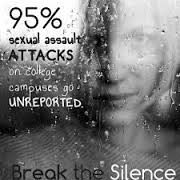 For sure, progress is being made to address sexual violence and other harassment on many college campuses. Yet amidst the commotion of new regulations, official promises, and the occasional push back against victims, one thing remains clear:
Stop your noisemaking and listen first to the survivors.
Andrea Pino was sexually assaulted twice at the University of North Carolina, Chapel Hill. The second time a fellow student she didn’t know raped her; she suffered a concussion and internal bleeding. She had not been drinking. In fact, she had recently been hired as an RA, and had just walked a friend to a party.
“I couldn’t call it rape for a very long time,” Pino told attendees at a conference last week. “I only started to after hearing about it from my hall mates. In a hall of 36 women, 17 of us were sexually assaulted by the time we finished our sophomore year — different degrees, perpetrators, and circumstances, but we had the same narrative of not knowing what to do.”
Pino, like too many other young women — and young men as well — ran into an uninformed bureaucratic wall. It took three semesters to learn what her rights were under federal law. After dropping multiple classes, an academic advisor told Andrea that perhaps she was just being lazy and could not handle UNC.
This disgrace is changing on some campuses — although many still fail to comply with minimum standards for handling sexual assault complaints fairly, and to assist survivors in meaningful ways. Check out my article this week in The Huffington Post for more on this.
In a hall of 36 women, 17 of us were sexually assaulted by the time we finished our sophomore year.
First, please listen to Pino again. As a second-generation Cuban American, she was the first in her family to attend college. She hasn’t completed her degree yet. Fearing for her safety, Pino dropped out of UNC. Yet she has found her voice helping other students know their rights, and connecting other activists and other assault survivors on campuses across the country, in part as a co-founder of End Rape On Campus.
A week or so after her second ordeal Pino ran a half marathon. “But it was after that I realized my body wasn’t the same as it had been during training, and it wasn’t because I hadn’t been running enough,” she said. “It was because my body had been damaged.”
On Monday, federal education authorities issued final regulations meant to help students with these ordeals, the Violence Against Women Act amendments to the Clery Act. More information on strategies and practices that are helping institutions prevent and respond to sexual violence are available at the nonprofit Clery Center for Security on Campus.
Please pay attention, especially if you have a college-age daughter or son. And listen closely to the survivors.
For related articles, check The Huffington Post’s “Breaking the Silence” section.


October 11, 2014
Rainy day books infusion
 To infuse one’s muse, it feels good to step back on occasion and take stock of others’ writing and artistic work.
On a rainy fall day, for a few moments I’m gathering in some recent and ongoing reads. These few titles help refresh my imagination and inspire with their myriad tools of storytelling craft.
This is a season when some bemoan, “All is dismal” in America. We seem inept to prevent the spread of disease, and depending on your viewpoint, surging Islamic fighters and new terrorist threats. Solutions to so many nagging problems seem unreachable. The bipartisan divide continues to grow, the virulent echo chamber deafening as an election nears. So what to do?
Hitting the pause button may help.
Perhaps turn back to that fictional work that’s been enticing you. As my daughter says, spend some time with “creative types” who are questioning, sculpting, remolding, and challenging the status quo.
The “non-creatives” may be running us into the ground.
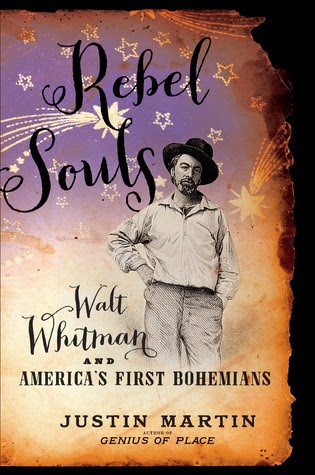
To that end, I’m currently reading a newly-released nonfiction book, Rebel Souls: Walt Whitman and America’s First Bohemians, by Justin Martin. The scene begins in the late 1850s in a basement saloon on Broadway in NYC, where Whitman and an assortment of writers, actors, editors and barflies carve out a space and legacy that is the forerunner to the Beats, and the experimentation of other creatives a century later.
How some of these characters respond to the prolonged bloodletting of the Civil War and Lincoln’s assassination will surely be interesting.
Recently, I fully enjoyed a bit of literary fiction, The Dante Club (Matthew Pearl, 2003), which my wife must have given to me some years back. An elite group of Bostonian literary giants — including Henry Wadsworth Longfellow, Oliver Wendell Holmes and James Russell Lowell — find themselves at the center of a series of grisly murders inspired by Dante’s Inferno soon after the Civil War. Anyone who has ever accessed The Divine Comedy and enjoys a spirited thriller would like this.
Over the summer I also read some great fiction. I found Khaled Hosseini’s And The Mountains Echoed (2013) compelling in many ways, yet it fell short of his earlier works, especially The Kite Runner. While the life arcs of a young boy and his younger sister who is given away by her father in Kabul are endearing, I thought the plot strayed too far with some disjointed minor characters.
I felt mesmerized finally reading a novel by one of my favorite authors, the prolific Barbara Kingsolver, The Lacuna (2009). In part an exploration of how artistic expression intersects with political movements and radical change, Kingsolver brings us on a journey from Mexico in the time of artists Diego Rivera and Frida Kahlo to America during WWII and J. Edgar Hoover’s reign. Her savory descriptions of the protagonist’s childhood in Mexico, the smells in the kitchen and sounds by the ocean, all will pull you in.
That’s plenty for now. Soon on my list is another book close to my own project — Nurturing Healing Love by Scarlett Lewis (2013), who lost her son Jesse during the Sandy Hook Elementary School shootings in 2012.
What are you reading? What helps you step back now and again?
September 26, 2014
The buzz is back
Nearly 15 years later, we’re lifted again by open-hearted people who continue to show up.
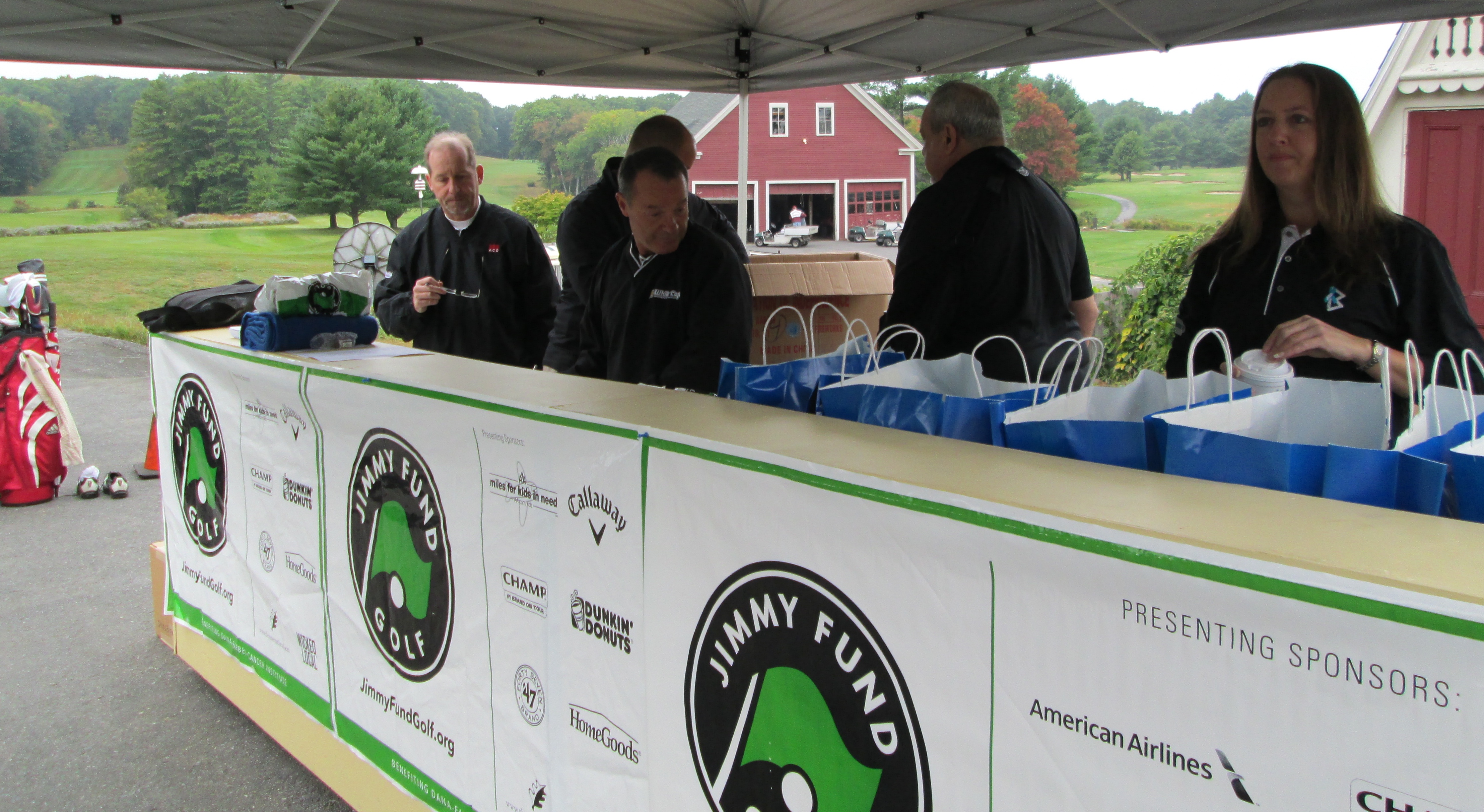
Our thanks to the golf committee volunteers including John, Doug, Jim, and April at the 15th annual Joan H. Brack Memorial Golf Tournament Sept. 25!
Yesterday a lively group of about 135 golfers and a core of volunteers including many of my dad’s former colleagues in the steel rebar business gathered in Stow for a tournament supporting ovarian cancer research at the Dana-Farber Cancer Institute. A group of Barker Steel Co. employees initiated the golf outing in 2000 a few months after my mother Joan was taken by disease.
The day was a complete success. Many remarked on a resurgence of energy and camaraderie. “There’s a buzz we haven’t felt in years,” one stalwart member of the golf committee offered. Our numbers were up again.
Yet of course, it’s about so much more than that.
After enjoying a round amidst the crisp colors beginning to unfold at Stow Acres, we resumed the real business at hand: catching up with contacts and old friends, and hearing an update on the state of research.
My mother’s oncologist Dr. Ursula Matulonis joined us once again. Ursula is medical director of Gynecologic Oncology at the Susan F. Smith Center for Women’s Cancers at Dana-Farber.
She explained how vital this tournament dedicated to my mother’s memory has become to their work. Using funds we’ve earmarked for research at the center, and from other sources, Matulonis described a clinical trial with promising new results. For many women with ovarian cancer that has recurred after initial treatment, a two-drug combination can significantly extend the time that the disease is kept in check.
“There’s a buzz we haven’t felt in years!”
The trial was initially funded in 2008-12 with federal stimulus money through the National Institutes of Health. But once stimulus funds dried up, Dana-Farber has relied on sources like Joan’s tournament and other Jimmy Fund-related fundraising events to help fill the gap. The need for private sources may deepen, Matulonis suggested, with the prospect of more federal funds being sequestered just a few years ahead.
Please check here for details on this advancement in ovarian cancer research from the DFCI web site, which sums up, “In a report on the trial in the online edition of The Lancet Oncology, researchers compared the drugs cediranib and olaparib, versus olaparib alone, in their ability to stall the advance of ovarian cancer in women with a recurrent form of the disease that responds to platinum-based chemotherapy agents.”
We cannot yet fathom whether a cure to this disease will be in sight within our lifetime.
Yet we know this well. When a group of people whose first connection is their work — suppliers, fabricators, and contractors, grizzled veterans and next-generation managers — and they get together year after year to support a higher cause, that is something else. Sustaining the work ahead.
When you hear and sense the respect and loyalty so many have for your dad, what he helped build and perhaps foremost, the primacy of relationships he tended and instilled in a company’s culture — that is endearing. A continuing legacy.
When you see dear friends of your parents taking an afternoon to stop by, the collective reach of those years still within our grasp — and even having a chance to talk with guys you grew up with, hearing about one of their son’s passions as he begins college — this is a profound counterweight to occasionally feeling alone, and wondering where many of those you once knew have gone.
Thanks to everyone who made it again yesterday, and others who read and may be ignited by this.
I can feel my mother smiling again in the Indian Summer sunlight, perhaps humming to something like:
How sweet it is to be loved by you.
September 19, 2014
What every woman should know
 Sometimes as we keep grinding away, it’s easy to loose sight of the big picture.
For any of us whose loved ones or friends have been impacted by cancer — in this case, ovarian cancer — here is a reminder of real progress underway, another touchstone of hope.
My mother Joan’s oncologist, Dr. Ursula Matulonis, medical director of the Gynecologic Oncology Program at the Dana-Farber Cancer Institute, is featured with a patient in this YouTube video from the recent Stand Up To Cancer telethon. Move ahead to presentation number 20 on the playlist to view “SU2C Dream Team Gives Beverly A Second Chance.” It offers a moving firsthand look at someone lifted up by the work and passion of these amazing practitioners and researchers.
For a detailed look at the the latest advances in ovarian cancer therapy, check out a webchat this week with Dr. Matulonis and other doctors at the Susan F. Smith Center for Women’s Cancers. They discuss the progress being made to offer personalized treatment for each patient as researchers better understand different subtypes of ovarian cancer, including how molecular alterations guide decisions for different therapies.
“I think in ovarian cancer we need to really do a better job in improving how we are treating women,” Matulonis says, “and one of the exciting steps in clinical trial development has been sub-splitting out the different subtypes of treatment.”
Links to other webchats with updates on treatments of other cancers at Dana-Farber are available here.
If I can speak briefly for other members of my family and an incredible group of former and current colleagues of my dad’s and brother Bill’s from Barker Steel Co, Inc., we feel very fortunate to stay connected to the work of Dr. Matulonis and others — and to play a small role supporting patient care and research at DFCI.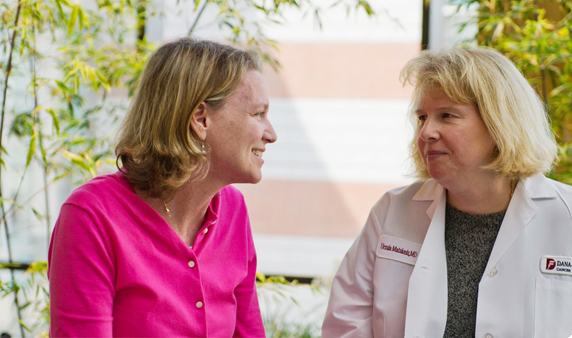
Next Thursday, Sept. 25 will be the 15th Joan H. Brack Golf Tournament at Stowe Acres, Stowe, Ma., to continue supporting the cause. plans to be there once again to give us an update, and cheer everyone on.
If you have a moment, please check out the ongoing work of my mother’s foundation on the new web site. Here also is a link to register for the tournament!

September 11, 2014
Giving back again on 9/11
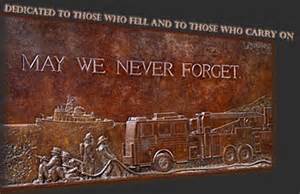 Jay Winuk, who lost his brother Glenn 13 years ago at the World Trade Center, spent last weekend with his son visiting colleges in Washington, D.C.
Among Justin Winuk’s prospects is George Washington University. His father was asked to speak there during freshmen orientation, and Jay’s topic was one that he’s pursued with a distinct passion ever since his 40-year-old brother rushed in to help at Two WTC on 9/11.
An attorney whose office was nearby, Glenn Winuk flashed his volunteer firefighter’s and EMT credentials so he could do triage before the tower collapsed.
Moved by the selfless response of Glenn and countless people across the country, Jay and another Long Island native eventually helped establish today’s anniversary as a National Day of Service and Remembrance. As people give blood, assist a neighbor, thank a first responder, or take a reflective moment, they do it in small part because of Justin’s Uncle Glenn.
Orientation at GWU includes a required day of service activities, which brought father and son to help paint and refurbish a local fire house.
“It was really very special, and very good for him to see some more about what I do, and an opportunity to volunteer around 9/11,” Jay said earlier this week. “And here are 2,000 incoming freshmen who are called to action in honor of his uncle and all those who perished.”
Today, as we pause to remember those lost during 9/11, many people will also step out of their routines to help either a stranger or someone else they care about.
Last year 47 million people around the world observed the anniversary by doing good deeds, according to MyGoodDeed, the nonprofit Winuk helped start to facilitate service projects. “Paying it forward” has become ingrained in the way we live — and not just once a year.
For sure, the 9/11 anniversary remains a complicated, bittersweet tangle in many other facets. There’s another fight in Congress over extending Zagroda Act funding for ongoing medical treatments of thousands of first responders. Controversy also lingers over what our government and others knew in advance about the terrorist attacks themselves. Most recently, as the New Yorker reported this week, there are questions why 28 pages redacted from the 9/11 Commission report remain classified, documents which compiled allegations that the Saudi royal family and government was complicit in the hijackers’ plot.
For survivors and victims’ relatives like the Winuk family, balancing remembrance with the cruel memories requires ongoing vigilance, as this column in the New York Daily News suggests.
For some, the crush of 9/11 has not abated. Images of that day get replayed again, triggering some of our worst fears, and we may also ponder what lessons were truly learned. Yet there are also fresh and thoughtful ways emerging to memorialize loved ones, including the opening of a new “Family Room,” an exhibition at the New York State Museum in Albany. This is a staggering collection of momentos family members gathered and sealed in a private office looking down at Ground Zero.
None of this will stop people like George Martin from helping out somewhere today.
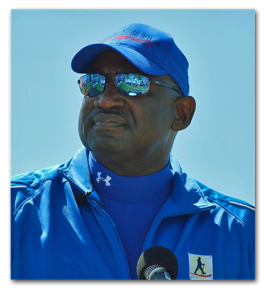 He is a friend of Winuk’s who took to the streets a few years ago to aid survivors. Best known as a N.Y. Giants star defensive end of the 1970s and 80s, Martin crossed the country on foot, raising $2 million for first responders’ and recovery workers’ medical care. He wore out 27 pairs of shoes on the trek.
Martin wrote a new book in part about his journey for 9/11, Just Around The Bend
.
He is a friend of Winuk’s who took to the streets a few years ago to aid survivors. Best known as a N.Y. Giants star defensive end of the 1970s and 80s, Martin crossed the country on foot, raising $2 million for first responders’ and recovery workers’ medical care. He wore out 27 pairs of shoes on the trek.
Martin wrote a new book in part about his journey for 9/11, Just Around The Bend
.
Back in 2008, Jay joined George along the walk in Phoenix and Missouri, and later helped promote Martin’s book through his public relations agency.
I met Martin last year in New York during a family fun day for 9/11 families near the WTC site. He and Jay had just walked a 5K, George this time wearing neon lime sneakers. “These guys safeguard our freedom and it’s the least we can do to show our appreciation,” Martin said, reflecting on his trek to San Diego. He offered that efforts such as what Jay Winuk helped launch — which has become the “I will” day of service — will continue to thrive.
“Out of 365 days a year, if you can give one day of service, that’s not too bad to ask,” he said.
Not too bad at all.
Glenn Winuk’s story and the creation of the 9/11 National Day of Service and Remembrance is chronicled for the first time in Ken Brack’s forthcoming book, The Ten-Year Quilt.
September 4, 2014
The Ten-Year Quilt, a forthcoming work of narrative non-fiction
Seeking to salvage meaning after losing his oldest son in a car crash, journalist Ken Brack sets out to find how people facing catastrophic loss transform their ruptured lives, chronicling the transformation of families who begin to heal by finding a new purpose.
 The book conveys stories of people struggling to make sense of the unspeakable. Their accounts are threaded by the author’s drive to reconcile his family’s grief during a decade while intersecting with others who cried out: Why me? What now? Across the country Brack meets moms and couples, students and entrepreneurs, and three brothers who survived the Holocaust and continued to give witness in their staggered paths to confront their trauma and become witnesses.
While traversing isolation and despair, these families’ disparate arcs may ultimately offer hope to readers. Also featured are two parents whose response to tragedy helped break the silence about sexual assaults on college campuses, and friends inspired by a volunteer firefighter’s unselfishness to create the national day of service and remembrance honoring 9/11 victims. Their complete journeys are gathered for the first time, occasionally told in unvarnished firsthand accounts. Moving through adversity, many of these people also rediscover gifts their loved ones left.
The Quilt: Metaphor and Method
As reflected in the visual motif for this web site, a patchwork quilt is a central metaphor for the book. Ten years after losing their son, Ken’s wife decided to make quilts for their two other children using Mike’s clothes — some of his signature t-shirts and pants — a creative, restorative step which she needed to carefully prepare herself for. The design embedded here replicates her first quilt — made for the two parents. On one level, cutting and sewing together pieces of his clothes into something new and lasting, replete with memories of Mike’s antics and laughter, represents their attempt to make meaning from his loss. While the book is anchored in the family’s struggle, it focuses mostly on others who transform their lives after trauma and loss, facing their pain and vulnerability and forging something lasting from it.
On another level, the quilt signifies the writer’s method documenting the stories of some nine or 10 families and groups, threaded by his experience and sensibilities. The crafting and style of this work is a hybrid of narrative non-fiction blended with literary journalism and seams of memoir. All of which means that most of the time Brack conveys true stories of other people, and while occasionally forming composites of events with existing accounts, the voices of these protagonists remain paramount. The expression and integration of his family’s ordeal losing their son shapes the author’s questions and interactions with others, and during intermittent stretches Brack embeds with them as both a seeker and guide for the reader.

While this full-length work relays accounts of staggering heartbreak, it’s more about what comes next. It’s about how we get up from the couch, keeping our hearts open and moving through grief, rather than “getting over it” per se. Interwoven themes include pushing the limits of resilience and reconciliation, finding ongoing spiritual connections with loved ones, and separating from traditional faith moorings. Brack also examines the fractures couples face after losing a child, and in one section track the origins and growth of peer-based child bereavement supports across the United States. He began research and writing in 2010, interviewing more than 300 people across the country and continuing with many on multiple occasions over several years. Anticipated publication is in the summer of 2015.
August 5, 2014
PMC road crew lifts event, rain or shine

June 6, 2014
Upcoming PMC events include June 11 book talk

May 30, 2014
‘Not one more’ must come from each of us
“In such a world of conflict, a world of victims and executioners, it is the job of thinking people, as Albert Camus suggested, not to be on the side of the executioners.” — Howard Zinn, A People’s History of the United States: 1492 to Present
 The killing of six college students a week ago near the campus of the University of California at Santa Barbara has undoubtedly shaken many of us. Yet will we commit to bringing about change before inevitably moving on?
While trying to process this latest mass tragedy, I wondered what Zinn, the late activist and historian of people’s movements, would suggest. We could use some Zinn-like perspective now.
I won’t try to delve far into the embittered so-called debate regarding gun control. Misinformation continues to rage from the “firearms fanbase” to “soft liberals,” while everyday people, moms and dads from Newtown and other places try to move us towards common-gound approaches to reduce gun violence.
One thing Zinn would remind us it that it won’t be the politicians leading the nation to find solutions. It’s rarely worked that way.
On gun violence they’ve caved, dithered, and while there’s movement this week on securing background checks, in many states the pols have actually loosened gun restrictions since the Sandy Hook massacre in 2012.
It will take those like Richard Martinez, whose son Christopher was killed in Isla Vista, to inspire us. He led thousands of UCSB students gathered in a chant of “Not one more,” which spread like wildfire across social media for gun legislation. (#IslaVista #gunviolence #backgroundcheck #GUN SAFETY, etc)
“The problem with piecemeal legislation is it’s like building a car out of parts from different manufacturers, and expecting it to run effectively,” Martinez said in an interview Wednesday with The New York Times. “That’s not an effective way to approach such a complicated problem.”
This week, Congress took a symbolic step to fund a national background check system for gun sales.
The measure would provide $19.5 million in additional grant financing to help states submit records to a federal database aimed at preventing felons and the mentally ill from buying weapons. Important in one sense, yet that seems like peanuts scattered on the floor under the circus tent.
Still, police in California say 22-year-old Elliott Rodger purchased his guns legally, reportedly despite years of psychological therapy.
“Our national criminal background check system is only as good as the data you put in it, and right now all the information isn’t getting into the system,” the bill’s sponsors, led by House Democrat Mike Thompson, said after the vote. “When this happens, we can’t enforce the law, and criminals, domestic abusers, or dangerously mentally ill individuals who otherwise wouldn’t pass a background check can slip through the cracks and buy guns.”
Such holes in the system led to the 2007 Virginia Tech massacre of 32 people.
Of course, there are no easy solutions. But hopefully we care enough to at least gather more facts, and begin or continue a dialogue with others, especially those who may disagree with us.
Here is one such resource, the Law Center to Prevent Gun Violence.
If you’re already inclined to take action in favor of meaningful background checks, here is a petition from the advocacy group Everytown for Gun Safety.
One more resource: this analysis last December by the NYT found that about two-thirds of 109 new state laws passed since Sandy Hook ease restrictions and expand the rights of gun owners.
In my hometown, a gun shop called “Outback Arms” opened a year or so ago. Maybe I’ll go in to check out what they think. Not to rant, but to listen first.
To bring about change, it will take another movement of the people.
Finally, consider these words from President Truman, who made his remarks when establishing a Committee on Civil Rights in 1946. (This comes from Zinn’s signature book, page 449.) The context, while different — after World War II, Truman acted to combat the hypocrisy and juxtaposition of heroic segregated black American troops returning to a racist homeland — may resonate:
“The United States is not so strong, the final triumph of the democratic ideal is not so inevitable that we can ignore what the world thinks of us or our record.”
‘Not one more’ must come from each of us