Ken Brack's Blog, page 5
June 11, 2015
Embracing the positive

“If Only,” a film produced by Jim Wahlberg about the opiods epidemic, premiered earlier in June. Source: Wahl St. Productions
Recently I’ve become more inspired by people doing good works on a small scale, committing their grit and sweat to bring about change. While working on larger platforms is vital and requires foot soldiers at the grassroots level, I also appreciate those who work day to day without grandiose schemes and battering egos to help us progress.
I’d like to share three examples of people doing heart work here with both local and far-reaching implications. Each of these may lift us in different ways.
* In neighboring Plymouth, Mass., a small group including young moms and a friend gather around a dining room table. They are organizing a PMC Kids Ride for the third year, an event in the nearby state forest that gives children a way to help raise money for cancer research and patient care at the Dana-Farber Cancer Institute.
Coordinator Katie Dayie, who has three children herself and is flush with energy, set a goal to raise $15,000 for the cause, and hopes to get at least 65 riders. Surrounded by stacked bins filled with crayons, magic markers, garment pens and other supplies, a half dozen volunteers chipped in their ideas. This year, children will be asked to design a “I Ride For …” placard that will be attached to their bike. There will also be a decoration station, cancer ribbons, a radio station broadcast, and other arts and crafts.
Sustained by this energy and commitment, The PMC Kids Ride – Plymouth on Sunday, June 28 is a guaranteed success. Third-grader by sixth-grader, it will help the Pan Mass Challenge bike-a-thon meet its goal of contributing a cumulative $500 million to DFCI.
Everyday people standing up during challenging times.
* Last week, a father whose son lost his long struggle to opiods addiction spoke to some parents and other adults touched by this epidemic. Barely 14 months into his grief, Tony LaGreca has researched the underlying causes of addiction, such as the crush of prescriptions written for so-called pain management. He has become an activist, donning a “Fed Up” T-shirt over his white button-down shirt, which references a rally he attended with others concerned about painkiller and opiate addiction.
LaGreca’s audience was small at Hope Floats Healing & Wellness Center, a bereavement center my wife and I started in 2008. We had expected more parents in the community seeking information or interested in a father’s experience would come out. Perhaps the barriers, like the stigma many parents feel, are just too high.
Yet Tony is committed to speaking out. He will continue advocating for the government to take more effective steps such as opening more treatment centers. More beds. Longer stays to support recovery, such as 60 days, rather than the “spin-cycle” of 30 days, as one participant noted. And continuing to spread the word to parents: beware of the physicians, dentists, and others whose prescriptions to manage pain initiate a lethal dependency.
Tony also shared a small role he played in an upcoming indie film that’s bound to help spread the word. “If Only” which premiered last week, follows the story of two teenage boys who experiment with and become addicted to drugs. The movie was produced by Jim Wahlberg, brother of actor Mark Wahlberg.
LaGreca was among scores of Massachusetts residents who have lost loved ones to drug addiction asked to be extras in the film. This January, he and other relatives drove in a snowstorm to a Catholic church in Tewksbury, where Jim Wahlberg’s crew was filming. Everyone was asked to dress for a funeral Mass. They carried photographs of their loved ones, sitting as mourners for the scene. They had to do five or six retakes.
As LaGreca continues reaching out and spreading his advocacy, others will certainly benefit.
The ultimate measure of a man is not where he stands in moments of comfort and convenience, but where he stands at times of challenge and controversy.
— Martin Luther King Jr., Strength to Love, 1963
* Then there those who try to live the maxim, “Think globally, act locally.”
Maybe it’s partly because I feel the need to shift my own life to be more holistic, ideally more sustainable and spiritual, but I find myself refreshed by scientists, activists, and everyday Joes committed to green causes. Such as the growing voices warning us about the poisoning of the oceans; the importance of restoring saltwater marshes that are such crucial buffers and filters of carbon; and returning estuaries and inlets to their traditional food-producing role. Co-existing with these respected resources, rather than treating them as our waste dumps.
Within this greater context, an ongoing regional concern for those of us in southern New England: the Pilgrim nuclear power plant in Plymouth.
The latest news: Environmental groups issue call to terminate Pilgrim’s water permit.
It is well documented that Entergy’s operation of Pilgrim causes massive marine destruction and pollution of Cape Cod Bay, according to the group Cape Cod Bay Watch. This week, a state-wide coalition of two dozen public health and environmental groups called on state and federal regulators to terminate the Clean Water Act permit for Entergy’s outdated “once through” cooling water system at Pilgrim nuclear.
Saying that U.S. EPA and MassDEP had dragged their feet for too long, the groups cited a report showing that Entergy’s permit expired 19 years ago and is based on outdated technology from the 1960s.
The report reveals the contents of thousands of pages of internal agency documents and relies on Entergy’s own reports showing the destruction of marine life-from fish to plankton that is a food source for North Atlantic right whales. It also documents the wastefulness of Entergy’s operation, showing that Pilgrim operates at only 33% efficiency.
This may seem like a quixotic fight to some. To me, it’s another example to me of everyday people standing up during challenging times.
Author’s note: A different version of this post appears in Ken’s regular column in Psychology Today online.


May 21, 2015
Confronting an epidemic

Photo by Kiran Foster, Flickr
The numbers of those lost to opiate addiction are staggering. Tony LaGreca’s son Matthew is one.
Seeking to educate and help prevent other families from going through the same hell, LaGreca will speak June 1 at Hope Floats Healing & Wellness Center in Kingston, a nonprofit bereavement center that my wife and I founded. His free presentation at 7 p.m. is open to the public.
LaGreca will share both his personal journey and discuss the history of this devastating problem, which he has dug into with his own research.
His presentation is geared for family members and friends of someone struggling with addiction who may benefit from a father’s perspective and the information he has compiled. Among his findings:
2011–More people in the US are now dying of prescription drug overdoses and heroin than car accidents.
2012–Heroin use numbers hit 620,000. 82 percent were introduced through a pain killer prescription from their doctor.
2013–Every nineteen minutes on average one person dies from prescription drug abuse, the Centers for Disease Control reports.
Federal data from 2011 shows 80 percent of those who had used heroin in the previous year started with a prescription painkiller. Doctors wrote 131 million prescriptions of pain pills for 47 million patients, many of whom were under age for legal alcohol.
LaGreca’s talk is one of several upcoming educational forums on opiate addiction planned at Hope Floats. The goal is to share preventive strategies and help educate and support participants who have loved ones struggling with addiction. To register, go to the “Events Page” at www.hopefloatswellness.org or call (781) 936-8068.
Meanwhile, attempts to end this epidemic are being tried on many fronts.
One is that some states — including Massachusetts, Maine, and Connecticut — have passed or are considering laws to make new opioids that deter abuse more affordable for patients seeking pain relief.
Currently, insurance companies charge more for those drugs than they do for other types of pain medication. According to a report this week on National Public Radio, states like Maine are considering requiring insurance companies to cover them equally. Yet some physicians are skeptical that the strategy will work.
The numbers are staggering.
In advance of the NPR broadcast, Maine Public Broadcasting Network reported that Dr. Noah Nesin, chief medical officer at Penobscot Community Health Center in Bangor, said the current opioid problem has largely been driven by misguided prescribing practices. Making abuse-deterrent opioids more available, he says, could exacerbate the problem, “creating a dynamic in which we think, ‘Oh – here’s a safer alternative,’ is an extremely relative comparison.”
For more on what other states and the federal government are trying, a recent comprehensive article in The Hartford Courant states:
“Five years after the Food and Drug Administration approved the marketing of a tamper-resistant version of OxyContin, a brand of oxycodone, there are now several other brand-name opioid formulations that can be sold as abuse-deterrent, including Targiniq and Hysingla. At least 20 more are in development. The FDA also has begun the process of developing regulations for abuse-deterrent generic versions of the medications.”
May 5, 2015
Before liberation, a tormented flight
Marking 70 years of freedom from a Nazi concentration camp, a survivor recalls his late wifeʼs flight
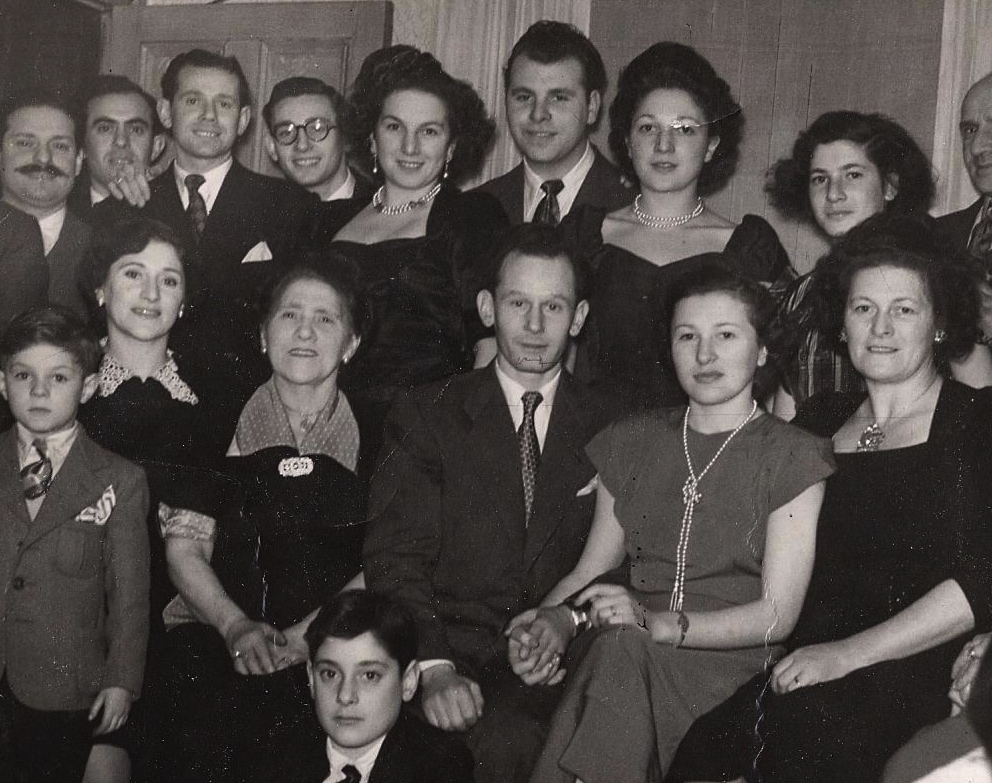
Nathan and Helen Offen at their engagement party in London, 1950 (third and fourth from left). Nathan’s brothers Sam and Bernard are in the top row, second and third from left. Photo courtesy of Stephen Freedman.
Rounding age 92, Nathan Offen sounded slightly perturbed when rain canceled his tennis match this morning.
After missing his favorite outlet for about 18 months, a platelet-rich plasma treatment that Offen has been receiving in Florida seems to have paid off.
“It didnʼt cure me, but it took away most of the pain in my left knee,” he said in a gravelly voice. Renowned just a few years ago for mashing down younger opponents on the court, heʼs been able to play doubles again a few times this spring.
Offen is a Holocaust survivor who was liberated from Mauthausen 70 years ago today. On the verge of starvation, he weighed 50 or perhaps 60 pounds. He could barely feel the sores all over his body, and a respiratory infection was spreading as he tried to recover from a beating.
Looking out a small window from his rancid, second-tier bunk, the sun shining into his eyes, Nathan heard the rumble of vehicles. A few tanks with big white stars and half-tracks approached the gate, a platoon of the Eleventh Armored Division that came upon the concentration camp in Upper Austria by accident.
He and his older brother Sam were liberated by the 41st Cavalry Reconnaissance Squadron, Mechanized, on May 5, 1945. The Offensʼ younger brother Bernard was on a forced march from Lansdberg-Kaufering, a sub camp of Dachau near Munich, when German soldiers disappeared May 2, and he found some American GIs nearby.
Nathan Offen tries to not complain about much these days.
Heʼs thankful for more than having survived the Shoah. Nathan and his two brothers each endured slave labor at several concentration camps while more than 50 of their relatives were murdered.
The Offens grew up in Kraków, Poland, and each of the brothers came to the United States in 1951. Sam Offen settled in Detroit, raising a family and becoming a successful furrier, while educating thousands of students and adults across Michigan and the Upper Midwest about the Holocaust. He died in 2012.
Bernard Offen, who spends half the year in Kraków, is a documentary film maker who continues giving tours of the former ghetto and nearby camps, including Auschwitz, which he also survived.
He still knew that for both of them, their liberation came at a great cost.
Nathan raised three daughters in New Jersey and worked mostly as a pattern maker in New York Cityʼs garment district. Like each of his brothers, while confronting his memories later in his life, Nathan decided to remind the world in occasional talks and by writing a memoir.
“I am just grateful that I am still alive and can tell my story, that I am a witness to it,” he told me, speaking from his condominium in Delray Beach. “I am still alive, and my memory is still pretty good.”
Please click here to continue reading this post in Ken’s blog on Psychology Today.com. The story of how the Offens survived and confronted their trauma is a major part of my forthcoming book, The Ten-Year Quilt. This article is adapted from an excerpt.
April 29, 2015
Lifting each other up
Somewhere up there, our son is surely hooting at the marvel taking place in our lives.
One of Mike’s closest and lasting friends is a special needs educator in a nearby town. At times effusive, loquacious, and highly-driven, Travis works with a group of students and young adults who are on the autism spectrum. As part of his job, Trav arranges for a few of them to help out at our bereavement center once in a while.
One in particular, whom I will call Aaron, is the sweetest young man you can imagine. So thorough and eager, whether vacuuming or raking leaves to perfection, cleaning windows, or whatever task is at hand. Just meeting him once in a while and sensing that doing a few hours of work to help our nonprofit means something to him can halt my overwrought thinking.
Hope Floats Healing and Wellness Center holds its 2nd Annual Memory Walk Saturday May 2, at 4 Elm Street, Kingston, Ma. Registration begins at 8:30 a.m., the walk starts at 10:00. This community event helps sustain free bereavement supports for families.

Photo by Karen Alves, Design Principles
There’s more. As my wife Denise–who directs Hope Floats Healing and Wellness Center–says, Aaron also seems to understand what the center is about. He sees a picture of our son Mike in the entry way. Michael was only 18 when he died in a car crash in 2002. Aaron knows that people who have lost a loved one are in pain. He yearns to help.
And for Mike to see his buddy Travis taking care of Aaron and the others–he may chuckle thinking of their high school exploits, but I’m sure he’s also very proud.
For Travis to stay connected to his friend–and not just rekindling memories, but by supporting and even participating in some of Mike’s legacy in a unique way–well, what can I say?
It stops a barrage of clanging thoughts.
It helps lighten the load my wife and I occasionally feel, especially for her, providing supports for people who are grieving.
This work can be draining, taking phone calls from other adults who have lost children or their spouses to illness, to sudden catastrophe, to overdoses and suicide. She wears many hats, such as organizing and facilitating support groups for adults. There are also workshops and wellness classes to schedule, bills to pay, and rooms to clean. Gardens overflowing with perennials to tend and weed.
And then there is the shift whenever someone lifts us up. We may not even feel it right away.
A group of women gather in the living room, taking charge of which local businesses to contact for gift certificates and other goods for a raffle at our fundraising event. Some introduce us to new sponsors. Others contact the local media, while another mostly listens and offers helpful ideas.
Another mom who finds a support group helpful, because it’s there she finds others who get it, who can share shards of angst and regrets and reminiscing, feeling less isolated and ostracized–this mom goes to her employer and convinces them to sponsor Hope Floats. A guy who runs a small business and whose son died of an overdose donates from his company to help sustain our programs. On it goes.
We dare not take for granted or downplay what is going on here.
We meet couples and families so fresh in their loss, including those who grapple with trauma that never should have come their way. Just as my wife and I once sat in shock after his car crash, crying, Why us? Where was God? What now?
Good friends of ours, those both longtime and recent, approach two years, nine months, 14 years after losing a beloved dad, their only son, and a son and brother to many.
This week we feel momentum rising again. From Travis and Aaron, from our volunteers and fundraising team, from dear friends and parents who’ve been around during many of our darkest hours.
We know Mike will be smiling or perhaps circling above, his spirit riding with a red-tailed hawk, when Hope Floats holds its second Memory Walk this Saturday.
This will be another community event. A community of people sustaining one another. The countenance of so many lifting each other up.
March 26, 2015
Hope and willingness
Photo by Kiran Foster, Flickr
“I had a little willingness, and I ran with it … it keeps me grateful for what I have today, that I can help these people.” — Aaron Fitzgerald
A doctor who specializes in treating student athletes for concussions warns parents to scrutinize prescriptions for dangerous pain medications written by other physicians and practitioners.
The manager of a support network for parents with children who are addicted to heroin, OxyContin and other drugs is pained less by the known numbers than by those unseen families who continue to suffer in silence.
A father with a son and daughter both recovering from opiate addictions recalls being on his knees begging them to get help, describing mornings when he literally felt unable to get dressed for work.
“It’s not stopping. It’s just getting worse and worse,” says one recovering addict, a young man raised in New Hampshire who has stayed sober and been helping others for more than three years.
The continuing surge of heroin addictions and other opiods abuse seems to be the monster public health threat of our day, especially affecting young adults in their late teens through their thirties. Preventing and overcoming addiction feels like trying to capture the proverbial giant squid or white whale. Many of those involved in this pursuit recognize the multiple hands and angles it will take to get their arms fully around this threat. This includes a greater government commitment to fund treatment and recovery, integrated health care initiatives that address patients’ substance abuse and behavioral needs, monitoring and reducing prescriptions written for pain medications, taking on Big Pharma, establishing more drug courts, and much more.
In the region where I live, Plymouth County in southeastern Massachusetts, official overdose deaths spiked from 33 in 2009 to 72 last year. Some authorities believe that number does not reflect the actual impact, and of course, statistics only tell part of the story.
Families and communities everywhere are being ravaged by addiction. It may seem like public awareness is growing—just in the past month I’ve gone to three well-attended forums in neighboring towns offering strategies to families, for example—while hospitals and parents’ groups appear to be stepping up their commitment.
But are we really making headway? And when the glare of media reports and our often short-lived attention spans have moved on, what remains that’s truly useful for those going through this?
Until a massive effort is made to combat gargantuan forces—providing more inpatient beds, and attempts such as my state’s bid to ban controversial painkillers like Zohydro ER, come to mind—for now, isn’t this just a quixotic chase?
Please click here to Ken’s blog on Psychology Today to continue reading, especially about recovering addict Aaron Fitzgerald’s commitment to help others, and strategies that arise from his family’s experience.
Author’s Note: This is one in a continuing series of posts about opiate addiction and preventive strategies for families. This dovetails with upcoming educational forums to be hosted at Hope Floats Healing & Wellness Center in Kingston, Ma. Please feel free to share this with friends, especially throughout southern New England and our immediate area.
Are we really making headway?
February 27, 2015
Stopping the enablers
As an epidemic of heroin overdoses surges, parents cry out for the tools to save their families

Photo credit: Sergio Bruno, Fox News.com
Standing up to a child who tries to hide a drug addiction goes against many of our parental instincts. As a surging epidemic of heroin and other opiate addictions blister many regions, adults are crying out for the tools to save their families.
I live in southeastern Massachusetts, where opiate drug abuse and overdoses are rampant. Despite the relative prosperity many enjoy here, the Bay State is among many places where overdoses have more than doubled during the past decade, due both to heroin and prescription opiates. Just in the small town of 12,700 next to mine, in Kingston rescue crews responded to 42 overdose calls last year, and there were two fatalities.
While public awareness of this scourge is growing, less forthcoming are resources for parents to help their sons and daughters confront the cycle of addiction, and begin treatment. Certainly there is an acute shortage of treatment centers themselves. And some parents and advocates criticize short-term steps like 30-day programs ordered by the courts, which they say are not enough to initiate recovery.
Yet there also exists a kind of disbelief gap among parents who find themselves ill-equipped to deal with this crisis. Thrust into dealing with a teenager or young adult who lies, steals, sneaks out to get high, cuts himself off from family, makes perilous choices with ragged new friends, sometimes leapfrogging from prescription meds supplied by pals or by theft to stronger opiates—up against all this, many adults are confounded.
“A parent’s natural instinct is to give more—more money, chances, support,” says one father. “It’s unnatural. But the addict must hit rock bottom and take steps himself.”
Across large areas of our state and others, clusters of adults who have endured addiction trials continue reaching out to other parents as peers, trying to help them bridge this divide. As one father from Cape Cod with a son who is three years into his recovery told me, some adults need to be educated to say no. “Stop enabling your son or daughter,” he says. It was a hard lesson for him to accept.
Doing that may involve some tough love, which is not always so straightforward to dispense. “A parent’s natural instinct is to give more—more money, chances, support,” says Dave, which is not his real name. “It’s unnatural. But the addict must hit rock bottom and take steps himself.”
There is often denial—at least by one parent, which may lead to fractures with the other demanding they take a harder line. There is the fallout on other siblings who see the family unit being torn apart: fights, blame, and widening cracks.
There is also the stigma attached to having a child addicted to drugs. A crushing shame as friends and relatives scatter, driving the surviving family members further inward.
Lisa Murphy’s teenage daughter Tina got hooked on Percocet that was prescribed when she had six teeth taken out and her braces fitted. Her mom had no idea the pills were addictive. Murphy left them on the counter “and expected her to take them as she should. That’s where it all started.”
What followed was several years where Tina abused prescribed meds and lurched into new ones. She stole pills from a boyfriend’s father, and after a back injury became hooked on another pain reliever, then began mixing alcohol with other drugs—leading to heroin. “There were instances where she and her boyfriend were beating each other up,” her mother says. “All of that is not normal. So a parent is left with, ‘I know something is going on.’ No one has to tell me this is not normal.”
To continue reading, please click here to see Ken’s full blog on Psychology Today.
One suggested resource for parents is Learn to Cope, a peer-led support network with many groups across Massachusetts and many other states.
January 31, 2015
Shuttered In
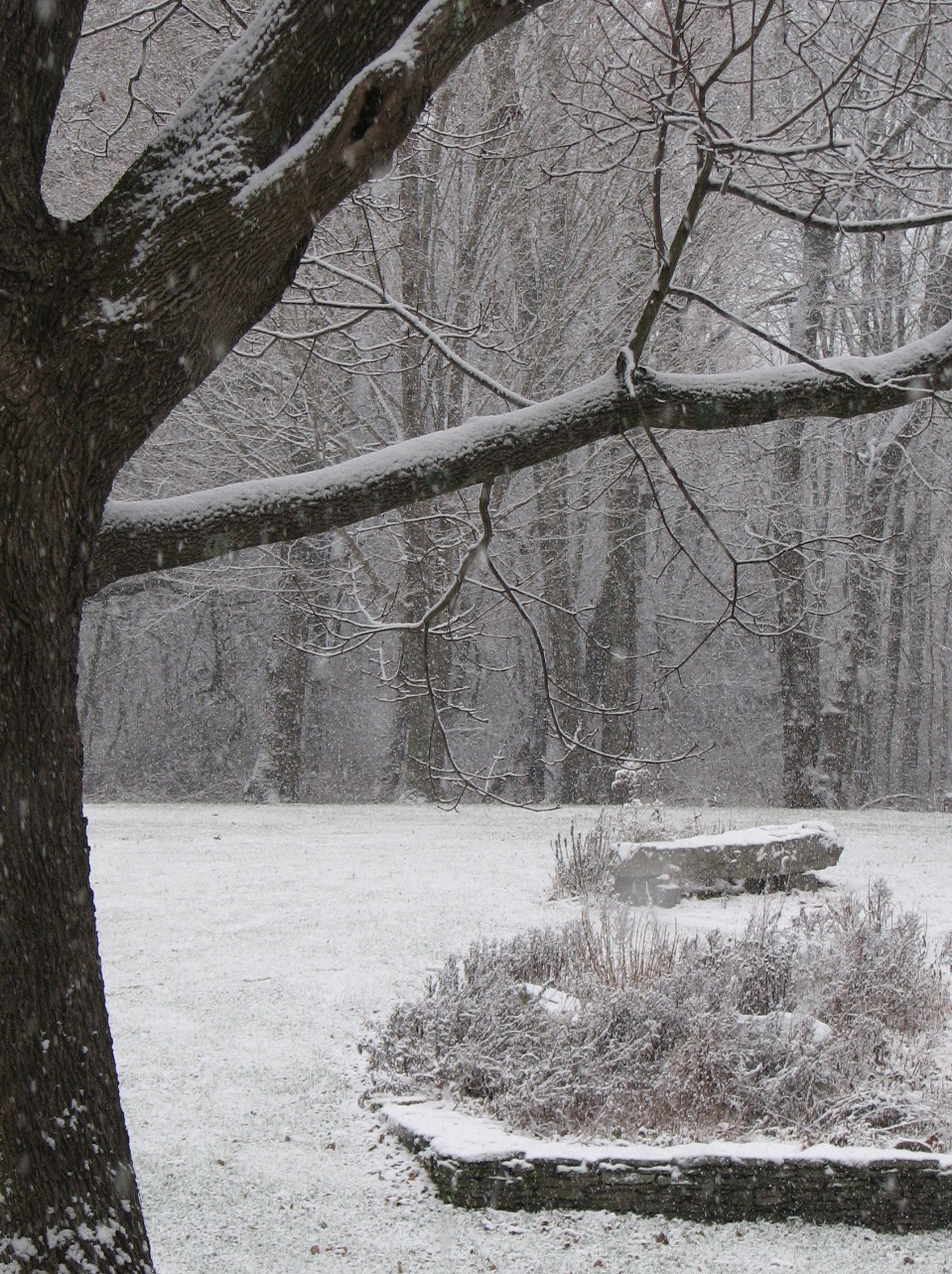 Are you feeling shut in with the mid-winter blahs?
Or perhaps beyond the harsh weather, are you avoiding or attempting to deny the emotional impact of something that feels frozen inside? Or know someone who seems locked in this state?
You are certainly not alone. Please click here for my post on Psychology Today’s web site, where I am thrilled to begin regular blogging (and will aim for twice a month) in their Personal Perspectives section. My posts will be gathered under “Unspeakable Gifts.”
No one really believes these things are ever going to happen to them—whether addiction, chronic illness, or sudden loss. When it does, and the lights flicker off, perhaps that’s exactly the time to button up and face the elements.
This season has a way of compounding isolation for many who are enduring life’s trials. Hopefully you can step outside of the literal or figurative shell that’s around you, or reach out to someone who needs to hear from you.
December 22, 2014
Heading into darkness to reclaim the light
“In the depth of winter, I finally learned that within me there lay an invincible summer.” – Albert Camus

For many people, this last stretch into the holidays is the pits.
Those of us who grieve, battle depression, or for anyone whose life seems to be seized by other sources of despair, the early arrival of darkness during this season amplifies our pain and anxieties.
While others around us take joy or rush towards a festival of consumption, we’re doubly reminded of who and what we’ve lost. In the depths of this darkness, we’re supposed to remind ourselves that during Winter Solstice, as the world prepares to turn a corner, so can we.
Of course, cultures everywhere have long observed the longest night of the year, celebrating the inevitable return of light with varied rituals. The sun, which may appear frozen at its lowest noontime elevation for several days around the solstice, embodies a stillness that reinforces this heightened time of reflection and spiritual awareness. While many sacred and ancient rituals have evolved, our need to ensure the sun’s daily return endures.
Similarly, we all need to believe in a renewal of summer and hope. Whether through resilience, or avoidance, by facing our pain and trauma directly, or by unhealthy forms of suppression, we muddle through another day.
Especially in this season, it seems easier to shutter our grief, fear, and despair. It is understandable how we forget or deny that dealing with these emotions precisely during the lowest moments of our trials offers a path through the darkest days. This may sound like common sense. But the real question is how do we do this? Whether or not we’re aware of the ancient grounding of this wisdom—expressed by Camus‘ awareness of “invincible summer”—we still need to make a space for it.
Jim and Dolly Sullivan may not be completely out of the woods of despair yet, but they’re making tracks forward.
The Sullivans, who live in central Massachusetts, lost their only son Christopher in Iraq nearly a decade ago. An Army captain, he was killed by a roadside bomb, and since then his parents’ agony has multiplied. His widow returned to her native Germany with the Sullivans’ grandson, a toddler who his father had only known during two stretches of leave and training. She has denied the Sullivans any contact with blonde-haired David, who is now 11. She even became estranged from his maternal grandparents, who had been the Sullivans’ sole point of contact with David. They are fortunate to have other grandchildren and two daughters, but the gaps are growing, their holiday memories of Chris and his son limited to one bittersweet day at their rural home.
At times, their struggles to keep their son close have been compounded by feeling others move away from them. They recall the initial gestures from neighbors in their small community. It snowed heavily before Christopher’s memorial service, and Jim Sullivan, who is a Vietnam veteran, remembers that “Bob Mason up in town plowed a lot. He went in with a front end loader and took every bit of snow out of the cemetery. Things like that get to you.” Their son’s tenth anniversary is January 15.
Captain Christopher James Sullivan’s remains are interred in Section 60, gravesite 8545 at Arlington National Cemetery, which his parents visit several times a year. They usually go there during the spring, on Veterans Day, and always again in December for wreath-laying.
During the years both parents have fought their own internal battles. But they haven’t shirked from facing them. One thing that’s helping them both move ahead is connecting with other military families, including Gold Star mothers, who also need support. It’s often striking what they have in common, and it continues to move both Dolly and Jim how people lift each other up.
The past few years the Sullivans have given themselves a Christmas present.
They join truckers and families in the Wreaths Across America tour, the massive delivery of goodwill and tribute to Arlington National Cemetery started by a Maine couple in 1992. Earlier this month the Sullivans took a week on the tour, which starts at Quoddy Head, the eastern most point of the U.S., winding through New England and down the coast — stopping in small towns, at the Statue of Liberty, Annapolis, and the Pentagon. Then they helped place wreaths on many of the more than 340,000 graves.
Helping with the wreaths “sort of makes you feel better about your son,” Jim Sullivan says. “It’s not that he’s been forgotten. I think that’s the worst thing, feeling that people forgot about your son, that it didn’t mean anything.”
“It’s healing and comforting,” Dolly says. “It’s very emotional, but just spending time with those other families. We’re in the same place, and every year we meet one or two new families.”
 Please click here to read more of this article in The Huffington Post.
November 21, 2014
In darkening days, survivors of suicide unite
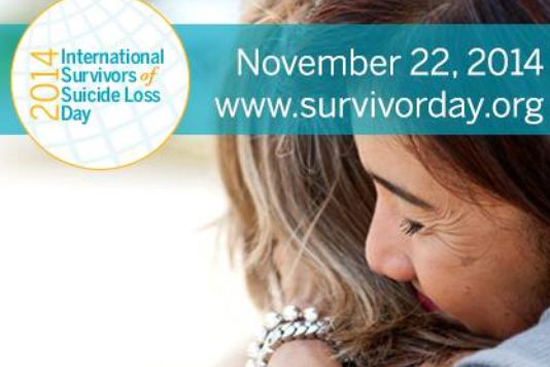 Thousands of survivors of suicide loss will gather together around the world Saturday for mutual support and practical guidance on coping with grief.
While no one chose to walk this journey of being a survivor of suicide loss, we can find comfort and hope by being with others who understand.
Every 40 seconds someone in the world dies by suicide.
Every 41 seconds someone is left to make sense of it.
If you have lost someone to suicide and you live in greater Boston or southeastern Massachusetts, please join us for a supportive program Nov. 22 at Hope Floats Healing & Wellness Center in Kingston, Ma., from 2:00 pm to 5:00 pm.
The programs is sponsored by Hope Floats, Cranberry Hospice and Palliative Care, and the Plymouth County Suicide Prevention Coalition, at 4 Elm Street, Kingston.
Gathering and sign in @ 2:00
Opening Circle @ 2:15
Snacks and Coffee served
Closing Ceremony 5:00
For more information or to register: Paul 617.312.0767 paulgabe@live.com or visit Hope Floats.
In the city, Boston University will observe the day with a program featuring personal testimonies of healing and hope, from 10 a.m. to 2 p.m. at at the George Sherman Union Terrance and Ziskand Lounges. The event is free and open to the BU community.
The American Foundation for Suicide Prevention’s 16th Annual International Survivors of Suicide Loss Day will be held Saturday, November 22, from 10 a.m. to 2 p.m. in the George Sherman Union Terrace and Ziskand Lounges.
November 18, 2014
Facing the onset of grief’s winter

A couple whose son died earlier this year recently asked my wife and I how we coped with losing ours. How did we handle those first holidays? What did we do for our other children? How do we hold on to him, and to each other?
Their grief is so raw, their upheaval and torment so pressing, it was unavoidable that getting together would retrigger our own pain and self-recriminations. Yet we may have something helpful to offer this family. While facing the loss of our son and our emotions to some degree every waking day, we’ve been able to make something meaningful from the wreckage.
Our son Michael was killed in a horrible car crash 12 years ago last weekend. While it was not his fault and he was not driving, there is little solace in that. The weeks leading into his anniversary are always difficult, mired in a grey foreshadowing of winter — the very act of raking the last fallen leaves and dwindling daylight hours bring us back. Still, we feel fortunate to sustain an ongoing connection with him.
There are no magic words or prescription to offer others facing the onset of grief. Certainly no cure per se, other than to suggest that it’s quite possible to move through your worst times, and grow from them.
To continue reading Ken’s post, please click here to go to the National Alliance for Grieving Children (NAGC) web site, where this was first published Nov. 17, 2014.
 November is Children’s Grief Awareness month, and during this time the NAGC is shining a light on the needs of children and teens grieving a death. Leading up to the holiday season, the NAGC aims to share insights about how to be sensitive to the needs of grieving children and their families now and throughout the year. Click here for excellent resources and links.
Although the holidays are typically a joyful time for many of us, the season of celebration can also be particularly difficult for bereaved children and teens. Often referred to as the “forgotten mourners,” children who are grieving the death of a loved one frequently feel isolated and alone, while family members and friends overcome with their own grief may struggle to provide the necessary support that children need.
How do we hold on to him, and to each other?
Since it is estimated that approximately one out of 20 children in the United States will experience the death of a parent or sibling before the age of 18, childhood grief is a widespread issue that can have a lifelong impact on the affected child’s emotional well-being.
In fact, according to a 2014 study that surveyed more than 27,000 people, the unexpected death of a loved one is the most frequently reported traumatic event in one’s life.
Please help lift up children and families going through this, especially during their first or early approaching winters without a loved one.
Author’s Note: Denise and Ken Brack are the founders of a nonprofit bereavement center, Hope Floats Healing & Wellness Center, in Kingston, Ma. The center offers free support groups and other services primarily for adults and their families, and complementary wellness programs.