Ken Brack's Blog, page 3
June 16, 2017
Fathers and sons, swells and circles
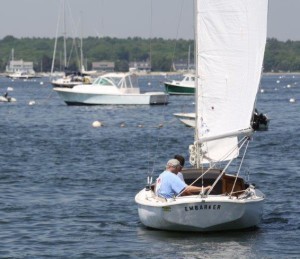
The Embarker takes off for her 50th year. Photo by Jean Perry, The Wanderer, Mattapoisett, Ma.
Earlier this week, I had a chance to join my dad for a once-in-a-lifetime occasion.
We watched a marine sling lift lower his 19-foot sailboat into the water at Mattapoisett Boatyard to start its fiftieth consecutive season.
Climbing aboard, we adjusted a few things, raised sail, pulled the Embarker to the end of the pilings, and headed off into a light breeze.
On one hand, her launch was a nondescript event befitting a minor luxury that my family has long enjoyed.
Yet it’s been fifty years. Where did it go?
Reaching this benchmark means so much to my father. Nearing 79, he is experiencing a dwindling circle of dear friends while facing his own natural limitations. For several years we’ve worried about his balance on the spongy fiberglass deck. Sailing alone is out of the question—not because he cannot do it, but hustling to the bow to pick up the mooring is problematic.
A dad’s gift of affirmation
Still, I don’t foresee much preventing him from heading out into Buzzards Bay in decent weather, even during a gusty southwesterly skirmish that typifies a summer afternoon there. At least one of us will be along to assist.
And appreciate the time together, dashed by salt spray on a tack, or settling in to the rhythm of small rollers easing us downwind.
Reminded again, as a good friend of mine insists, that we dare not take this moment for granted.
Taking stock of the circle of seasons, and how things come round with those we love best.
I’ve been thinking about what being a dad means this week.
The most vital thing I learned from my father is not his just tenacious and beneficent work ethic. He built a company that provided for hundreds of people. That continues to be an inspiring achievement, driven in part by his engineer’s skill set and entrepreneurial zeal. And also by something deeper, as both a provider and humanist, to help others have meaningful careers and sustain their families.
For me, the bedrock he provided was validation. An openness to accept me as an individual pursuing other dreams. Unconditional support when I wavered, not without firm admonishment at times, but softened a bit like a large swell pushing the boat’s stern off-wind.
As a dad myself, hopefully I continue to convey some of the same.
An affirmation of our children’s passions and life choices. Appreciating who they are rather then trying to mold them into some likeness of myself. Celebrating their steps forward, while acknowledging the occasional gaps, their anxieties, or when pain resurfaces about the loss of their brother, or the occasional divides and contradictions that span a family.
Year in and out, we crave acceptance and forgiveness. Acknowledgment of our strengths—and support for our shortcomings.
We dare not take this moment for granted
Sailing again out towards Nye’s Ledge, my dad’s memories remain clear. He and his longtime friend, John Flood, also a civil engineer, took an inaugural sail on Embarker on November 11, 1967. It was a mild day in the 60s with only 10-12 knots of wind.
My dad had never docked a sailboat before. Returning to the boatyard dock, he knew enough to turn it into the wind. “We missed it by three feet,” he laughs.
There would be other November sails returning her for the winter.
We’ve heard many of the stories, and longing for them again, we settle in, listening to the light thump of a breaking wave.
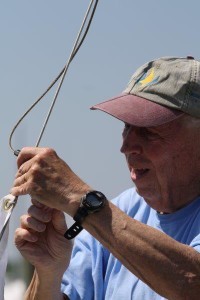
My dad, Bob Brack, on board. Photo by Jean Perry, courtesy of The Wanderer.


May 9, 2017
Running with his best
Photo of the Wareham River, 3/17/2017 by J. Douglas Wright
Three days before he died, Doug messaged me on Facebook for my birthday:
“Burn a candle for me, old man,” he wrote.
John Douglas Wright, I’m overdue to light that flame.
Gregarious and loved by many, Doug was a light in our lives going back to junior high school, at least. A gifted athlete, he was funny, chortling, the spiritual fifth member of a cranking band in his college-to mid-20s days, an expert on plants, a nurseryman, patio builder, long the stud of our crew, youngest brother of five, a creator with his drawings and landscape design, adored by his late parents and family.
We cannot forget his infectious laugh, the smile bursting open ruddy cheeks, his solid, eclectic musical tastes, his heart—his good core.
How do we carry forward the best that was Doug?
As his friends and brothers know, there was also another side. He was deeply wounded if not saddled by survivor’s guilt following a car crash that killed his close friend when Doug was 25. The trauma of Gonzo dying in his arms, the cruel randomness of being struck by a stolen car going the wrong-way in a high-speed chase—this may have largely set the stage.
He veered down and sometimes lived in that hellhole where addicts and alcoholics go. For long stretches when I was not in his life—not knowing the depths of his descent—the disease ran him aground.
I don’t wish to linger long there, since those who love him already know.
We are left to wonder: which among Doug’s gifts can we run with? How do we do this?
Perhaps one answer is recognizing the positive things that came to light—as we take stock of his life and how others tried to help him, or came together remembering the man as they knew him best.
Despite some setbacks, he was doing better the past two years. Living with two close friends of ours, they became a family unit, often cooking meals together and making it through another week. He and Dianne competed to see who Pugs would jump up to for belly scratches on the couch. They gave him so much, a step out of the isolation that had been his life.
As friends gathered for a double-edged celebration of his life on Sunday, we basked in a momentary reunion, albeit tamped down by a chilly, grey afternoon that somehow seemed more appropriate than the previous day’s sunshine. I can only hope that this will continue as we occasionally evoke his spirit.
Taking stock of his life, how others helped him, or came together remembering the man they knew
Another of Doug’s longtime friends told me that as he discovered the extent of Doug’s troubles, early on he wished he could shake him up. Wasn’t there something he might say to help him understand that it was okay to live his life again? To give himself permission to let go?
Ultimately, this friend realized that he could not carry that weight of self-blame if Doug failed to turn it around. It would always be Doug’s choice.
Yet this friend never stopped checking in. Calling. Reaching out. Sensing when Doug was in a downward spiral, when he hadn’t heard from him, or when he knew something was off.
I think this is what strikes me the most: we don’t stop trying. We forgive. We clasp shoulders with those we grew up with who now live very different lives. We look to the sky for slants of light through clouds. We keep showing up.
And we dare not forget the best in him.
Some of us who were close to Doug have gnawing questions and laments. We may feel we did not do enough. This is unfair, especially for our friends who took him in. At times we looked the other way, or were worn out by his issues.
A bit hardened even while reconnecting with Doug three years ago, I felt that he had dodged responsibility to face his trauma and clean up. As if this was some ultimate failure. As if I sat in judgment. “How are you honoring your friend’s life?” by succumbing to this?
This is not what Gonzo would want you doing to yourself, I cried.
He may have been trying to climb out. Inching forward, even when set back again.
As spring arrived at Dianne’s house, Doug poked around outside doing what he was most passionate about. Pruning overgrown trees and edging gardens until neighbors asked him to do theirs. Spreading mulch and caring for annuals and tomato plants. Enjoying the sun on their porch and or walking Pugs.
There was more to do, but hopefully, for Doug, not so much left unsaid.
Let’s run with what we loved best in him.
March 23, 2017
Malice’s puny orbit
 What is this mean streak being unleashed all around us?
How do we keep a balance to stay positive and move forward?
What are we doing here?
Recently, while traveling to Vermont to visit my sister, my wife and I were stuck in traffic for nearly two hours. An empty milk truck had crashed at a construction site on I-93, dangling over an overpass.
Just as we finally approached the bridge and an inevitable bottleneck of lanes, I moved over making way for a state trooper hustling through. Two jerks then hurtled by on the trooper’s heels, cutting us and others off.
To gain maybe an extra thirty feet. As if their time, their puny orbit, was all that matters in this world.
Is expressing gratitude enough these days?
Moments later, we saw a large tow truck with a crumpled white car on its bed. There was a gaping hole in the guard rail just before a bridge where the tanker—by then extricated— had threatened to crash down an embankment.
The worst fear that someone had perished coursed through us. We were shaken at the thought, of another family, and friends being devastated by the unthinkable. Fortunately, no one was killed; the tanker spilled some gas.
And while the traffic snag was an inconvenience, we hadn’t minded it all that much, literally slowing down and listening to a book.
Yet I seethed at those two drivers, and a grim-faced man in a Lincoln who similarly cut us and others off to gain a few seconds just before the crash scene.
A few precious seconds.
Why do people have such disregard for others? Such narrowness, when a small gesture of civility or kindness opens incredible reciprocity.
Do you, too, feel malice on the rise these past few months? Or is that my misperception—even myopia?
And if I simply rail at those drivers, or judge and rant at the direction certain interests are taking this country, what good is that?
I am struggling with this.
Each morning, I try to pause and think of at least one thing I am grateful for. Naming it, and sometimes writing briefly in my gardener’s journal. Denise does this more fluently and regularly than myself. Being thankful for the positive people in our lives, and the good things happening to them—and ourselves.
Some wise person long ago must have started this practice. Helping to keep us anchored in appreciation, and perhaps seeking salvation.
When the world goes crazy, just look for the helpers, a friend of ours advised.
Yet is expressing gratitude enough these days?
”I had a career in identifying absurdity, and I know it when I see it.” – Senator Al Franken
Across the country, malice is on the rise. This is less a political statement than an observation of our national tone, and gaping flaws. I don’t wish to alienate friends or supporters of our nonprofit who may see things differently. I respect and am open to different viewpoints.
But I see meanness growing on many fronts.
Who believes a load of meat is more valuable than a man’s life?
Why are hate crimes growing, including the spiking number of white nationalist groups, anti-Semitic threats, and harassment and attacks on people perceived, “correctly or not, to be Muslim”? Has the mask finally been ripped off?
Why did the nominee for the Supreme Court side with a trucking company that felt a load of meat was more valuable than a man’s life?
Certainly Judge Neil Gorsuch deserves to be weighed on his full record, but his handling of the frozen trucker’s case, for only one, suggests Gorsuch lacks empathy and a regard for what everyday justice is about.
As Senator Al Franken, the former Saturday Night Live cast member, said during Gorsuch’s hearing, ”I had a career in identifying absurdity, and I know it when I see it. And it makes me—you know, it makes me question your judgment.”
Why has the concept of mercy has been turned on its head?
Surely, there is no “mercy,” as Rep. Joseph Kennedy III declared, in making “health care a luxury. There is no mercy in a country that turns their back on those most in need of protection: the elderly, the poor, the sick, and the suffering. There is no mercy in a cold shoulder to the mentally ill.”
Why are we heading backwards in so many areas?
Surely, there is also malice in the disdain for science—converging with an overt policy takeover by oil-gas-coal interests (read: carbon climate forcing). In perhaps another indicator of pending climate disaster, Arctic sea ice dipped to a record low for winter.
What gives here?
So how do we align ourselves with what’s nurturing and growing, rather than succumbing to what’s destructive? And avoid being washed out by absurdity.
If you find out, please let me know.
January 23, 2017
Crossroads and Bookends
 Tonight Denise and I will spend the last night in our home of nearly a quarter century.
We will undoubtedly raise a toast with firelight dancing from our woodstove one last time. A few tears may come. I expect we will sleep soundly with the solace of having put all of ourselves into this expanded Cape, into raising and holding our children through thick and thin.
Preparing to take a new leap, I am reminded of the quandary—and opportunities—many of us face when standing at life’s crossroads.
We may not want to be here. We may long for more certain times, old routines, and loved ones and friends who are gone.
Yet it is precisely at this juncture, in this vulnerability, when so much is open to us.
Infusions of new energy and stepping out of our ruts. Finding new meaning—even when struggling to overcome unspeakable pain.
Rededicating ourselves to people and causes we believe in. And recommitting to our partners or community—and perhaps to our highest ideals, our higher selves.
“It’s better to light one small candle than to curse the darkness” – Confucious; also attributed to Adlai Stevenson paying tribute to Eleanor Roosevelt in 1962.
Is it just me, or does anyone else find that when facing such a juncture, you notice more people doing parallel things around you?
Others about to take big steps, even leaps of faith. Daring to reach more people through service. Striving to improve themselves. Or activating for a better world, however they define it.
Part of what intrigues me as a writer is the juxtaposition of what may seem like opposites when we’re at these crossroads. Fire and ice. Whiskey and wine.
Two parents who lost a baby daughter to SIDS commited to funding research and grassroots education for the next 25 years. A recent widower who is a reflexology practitioner dedicates herself to easing others’ pain as she applies pressure to specific points corresponding to certain organs and systems.
David Paine, co-founder of 9/11 Day, a day of national service and remembrance, is among the people I admire in this light.
Paine, whose story is featured in my forthcoming book later this year, embraces silver linings in a toxic haze. He feeds off the apparent paradox that in the grand scheme of things, events that are perceived to be punishing crises become transformational opportunities.
“Great beauty and compassion live side by side with some of the worst things imaginable,” Paine chuckles. “It’s odd that good and evil are so closely intertwined, and sometimes you can’t tell the difference between the two.”
In a related context, thought leaders like Dr. Brené Brown have helped dispel the myth that our vulnerability is a weakness. Brown, author of Daring Greatly—which a friend recently introduced me to—explains how vulnerability “is both the core of difficult emotions like fear, grief, and disappointment, and the birthplace of love, belonging, joy, empathy, innovation, and creativity.”
Vulnerability is a crossroads of sorts. One we should not distance ourselves from—if we’re searching for a higher purpose or fulfillment.
Embracing silver linings in a toxic haze.
I find myself marveling at the bookends I recognize at such intersections.
In our case, the obvious one is how a new start arises from the sale of our house. Another is that as we prepare for a new chapter, we just learned that our son is negotiating to buy his first home, expanding the foundation for his life in a far away city. In addition, other family members who have long deserved their own place just received word that their future, too, looks bright.
Tonight I’ve still got more boxes to pack.
Our daughter, a professional illustrator, has long since gathered up countless drawings in her bedroom. Gear and toys from our two sons’ childhood, cleats, skates, and K’nex and Legos, have been sorted through.
I can cry when coming across some of my older son Michael’s things—a soccer trophy, a dusty team bag that still carries a remnant of his sweat. I will pause before we leave, looking back towards the woods that once enclosed us with the crust of life’s toughest winters.
Open, wounded, and anticipating, I can then go on.
December 21, 2016
Allowing the light back in
 Many of us know the disparity of the holidays too well.
In what should be a time of festivity and joy, this season instead doubles down on our pain. The isolation from loss or other upheavals in our lives, such as the distance from estranged family members or friends feels magnified.
Especially on this day of relative darkness, the winter solstice, it’s worth noting that the light will return. If we find ways to usher it in.
I mainly wish to offer a few uplifting excerpts and chords, if you will, that resonate from other sources.
And wishing you and those you hold close an enduring season of returning light.
With peace, sans rancor, both within yourselves and out in the world.
Pausing to acknowledge that your grief may feel difficult to manage at this time of year can be an important first step toward coping with the season.
First, here are two excerpts from a blog post, “A Light in the Darkness: On Grieving in the Winter,” by our friends at The Children’s Room. TCR is a well-respected family bereavement center in Arlington, Ma.
Acknowledge the darkness
“Though winter can place many extra demands on us, it is important to remember that winter, too, has its place in the course of seasons, and darkness has its place in relationship to light. Similarly, when feeling overwhelmed, pausing to acknowledge that your grief may feel difficult to manage at this time of year can be an important first step toward clarifying how you might cope with the season. Taking time to understand that the season’s changes may be affecting you, and naming the ways that it might be doing so, can help you start to identify the best ways of supporting yourself and your family.”
Make time for self-care
Making time for your own needs and self-care is especially important in winter. It may seem too difficult or unrealistic to put your own needs first, but neglecting to make self-care a regular part of your daily routine can compound stress and negativity.”
Second is this recent essay, “Loving my son after his death,” by Nora Wong in the New York Times, which my wife just shared on Hope Floats’ Facebook page.
The author’s son died three years ago at 22 of a rare seizure disorder. Wong asks, in part:
So unbearable was my occluded heart that I called out to him in desperation one day: “What will I do with my love for you, Daniel?”
The question of reconciliation: can you give yourself the space and permission to let go?
Finally, for myself, at least, this season poses the question of reconciliation.
Can we forgive those who’ve done someone terrible harm? Who have neglected or trounced another’s feelings, or even deny what they have done?
Can I forgive myself?
A guided meditation my wife and I recently did offered some splinters of light here. The guide asked us to envision meeting someone we have negative energy for in a sunny field. Someone I may even need to let go of, whom I picture walking toward me.
I discovered that both of us are connected by a rope of guilt or dysfunction, or by heavy strands of regret and acrimony. It weighs on both sides more than we will admit. The suggestion is that meeting this person halfway, perhaps affirming his weakness or mistake, is one step to relieve that weight. Affirming the place he or she is in.
Another is giving yourself space and permission to let go—of the anger, and of carrying it around.
In some cultures, the winter solstice also signifies a time of reconciliation—even if this is a momentary offering of forgiveness.
For example, the ancient Roman Saturnalia festival, in honor of Saturn, father of the gods, was marked by showing goodwill towards all men. As Beliefnet, an inspirational website notes, slave owners served their slaves and people showered each other with gifts.
Still, I must wonder how this all really works out. Can we actually reconcile with the self-imposed blindness the other side doesn’t see, or won’t admit?
How do we go forward in our lives? Can we sustain this?
Perhaps that is some of the challenge embedded in turning from darkness to light.
November 22, 2016
The long road ahead
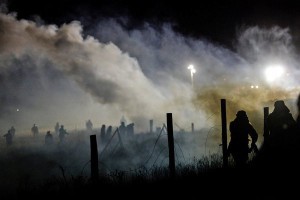
Police near Cannon Ball, N.D., fired tear gas Nov. 20 at protesters opposed to plans that would run the Dakota Access pipeline near the Standing Rock Indian Reservation.
Stephanie Keith/ Reuters
Rounding nearly three weeks after surgery to remove a cancer-threatened gland, I appreciate what a long haul this is going to be.
I must relearn patience to recover.
Too often this is merely a fleeting thought. A construct that seems to have been intended for someone else. But it stares me right in the face each day, at every 2 a.m. wake up.
And humility. If I hadn’t know it before I live it now. The repercussions of losing one’s prostate and rebuilding bladder control. While knowing, as many of you likely do, other men, partners and families who have gone through far worse.
Perseverance. It can sound so cliché. Yet it’s another gut check: striving to be whole again. While also trying to support the one lifting me up, who needs self-care herself.
These values will come roaring back.
At the core, I’m learning this involves righting oneself every day when I begin tilting too far to one side.
Perhaps it’s a new application of something I recognized years ago as a teacher in the inner city. When I was spent, having given everything, noticing my students returning to class amidst the dysfunctions and odds that many faced, even just showing up, that was exactly the moment when I needed to dig back for more.
And roar back.
I need that now.
It seems to me that more broadly, America needs some of these same attributes to heal post-11/9. While they may seem nascent, we certainly have them. And while the road ahead appears to be long and tortuous, I believe these values will come roaring back.
Please bear with me; this is not politics as usual. We can do this. By choosing an openhearted path finding common ground instead of one maligned with narrow prejudice.
By acting with intention and without illusions.
“And what’ll you do now, my blue-eyed son?”
I’m going back outside where voices are shaking,
Water cannons blasting hypothermic protesters of fracked oil
Piped under stained sovereign land
threatening life’s blood,
Dialing the Morton County Sheriff to let them know
We’re watching hatred and
Stand with those forgotten in the shadow of Towers
Turnin’ pages and minds so quickly overrun.
I’ll walk to the depths of the deepest black forest.
With my pulse wide awake, my mind a reelin’
In a valley of misinformation, false news squealing’
Pigs in a sty of propaganda acting as sources,
Click bait and misogynists who control a generation
Where the playbook is repeated and the strategy empty
Poisoning minds with collapsed veneration,
I struck a conversation with a man on the other side
Three online rounds, maybe done, he offered his points
I listened, responded, casting arrogance aside
I heard the war of a wave that could drown the whole world.
When draining the swamp is a foul paradox
A crescendo of egos in their late Cretaceous dance,
Cryptic deniers now nakedly exposed
their world fast shrinking
Yet few seem to show
Beware of darkness, a blight that cuts
The hopelessness around you
In the dead of night.
Reclaim patience,
Stay humble,
Persevere
as you lift others up.
And I’ll know my song well before I start singing.
*****
Note: Credit for the italicized lyrics of course goes to Bob Dylan, “A Hard Rain’s A-Gonna-Fall” (1963) and George Harrison, “Beware of Darkness” (1970).
Watch out now, take care
Beware of the thoughts that linger
Winding up inside your head
The hopelessness around you
In the dead of night. — George Harrison
November 1, 2016
Nonelective surgery
“I’ve got the apolitical blues. And that’s the meanest blues of all.” – Little Feat
 On Thursday my son Chris will be on a red-eye flight from Oregon in order to be with his dad during surgery the next day.
I am having my prostate removed because I have cancer. Thankfully, two malignant lesions appear to be contained within the gland and my surgeon and oncologist are very optimistic.
So are Denise and myself. We feel lifted by many friends and our family showering us with prayers and good thoughts. Naturally, it’s been an unsettling few months after a biopsy and MRI uncovered this.
I debated whether or not to blog about my situation, so here is why I decided to write.
This is not a woe-is-me scenario. Each of us knows others who have undergone devastating illnesses, or have ourselves experienced tragedies and setbacks far worse. My prospects are fine.
My wife, my soul partner, is with me always–as are my children, Amanda, Chris, and Mike. If anything, I worry most about the load on Denise, her natural fears, even an avoidance of really taking care of herself during my recovery.
We’ve both prepared pretty well for this. We are fully informed about the surgery and its ramifications. We’ve taken time to reflect, meditate, and try relaxation methods gearing up for the procedure. I’m playing a bit more guitar and look forward to really digging in, trying to be centered and expressive. Several great books are lined up, and our two dogs will be happy to have me more sedentary—for a short while, hopefully.
Whatever your position, take a stand with an open heart.
Yet I have to admit, besides a slight-to-surging angst about my surgery, the vicious mood heading into the election is unsettling. It’s toxic.
As much as I’ve tried to prepare putting myself in a good place, the juxtaposition with the Nov. 8 climax is jarring. Negativity feels inescapable. It can set one back.
I’m not entering a political rant here. Bonds of friendship far exceed any differences in our opinions. If there’s one thing I’ve learned regarding relationships I care about, it’s to listen and appreciate a different stance. I welcome those conversations.
Instead of this type of dialogue, in defiance of the norms of factual persuasion and compromise that make a democracy work, on a national level we have the opposite.
And on a local level, or among contacts through Facebook and other social media, I’ve never seen such distortion and disregard for facts. Everywhere you turn, someone is spewing innuendo and spin, if not outright vitriol against the other side. The fear-mongering and hatred coming from some quarters, couched in coded words for decades and now out in the open, is staggering.
“I don’t care if it’s John Wayne. I just don’t want to talk with him now.”
Both candidates are mightily flawed; most of us wish we had other sensible options. But we should all respect one another’s rights to differ—hopefully based on real representations and policy choices, not on ignorance and distortion.
I’ll step off the generalized soap box now. The main thing I want to offer is this:
Whatever your position is, take a stand with an open heart.
Be open to other arguments and contexts you don’t know; stay open to others’ experiences, to the frustrations about to boil over; be open to how words inflame actions against the powerless and those often preyed upon. Take a close look before you judge. Try to stay open, rather than closing to the other side.
When I was teaching high school, I had this quote from Martin Luther King, Jr. affixed to a classroom wall. I believe it applies in this context.
“The ultimate measure of a man is not where he stands in moments of comfort and convenience, but where he stands at times of challenge and controversy.”
Where does your heart stand? Open—or closed?
If we choose the path of vengeance and righteousness, led either by elitists or demagogues, won’t more of us just drop out? I’ve got my guitar and a bubble of seclusion waiting.
The telephone was ringing. They told me it was Chairman Mao.
I don’t’ care if it’s the ghosts of Ronald Reagan and Tip O’Neil toasting after work. I just don’t want to talk to him now.
September 9, 2016
This 9/11, remember cohesion
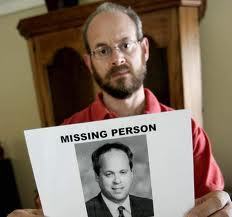
Jay Winuk, co-founder of 9/11 Day, with a missing person’s flier of his brother, Glenn Winuk, a firefighter who died in 2001. Courtesy of Jay Winuk
Jay Winuk has a message for all of us this weekend.
Unity.
Recognize it. Pause from the negative. Restore it.
Winuk, who lives in Mahopac, N.Y., will again remember his brother, Glenn J. Winuk, a volunteer firefighter who died while doing triage in the South Tower at the World Trade Center.
He does this in part by inspiring people across the country to rekindle the compassion and generosity that was our bedrock response to the terrorist attacks. His brother, an attorney, headed the wrong way from his office to help before the tower collapsed.
Jay Winuk is the co-founder of 9/11 Day, a national nonprofit that facilitates service projects to honor the fallen and commemorate the spirit of this response. He was instrumental in establishing the federally recognized September 11 National Day of Service and Remembrance.
An expected 30 million Americans will honor those lost by doing charitable service and good deeds this weekend on the 15th anniversary. Small, unheralded acts such as helping a neighbor, to large projects like preparing packages for active duty military personnel.
“Not from a political point of view but from a societal point of view.” — Jay Winuk
Putting aside our differences in tribute. Just as many did in what feels like a lifetime ago.
For Winuk, this year’s observance carries an extra punch.
He feels urgency for people to come together again. To step back from toxic politics and the helpless feeling of watching a world spin out of control. To “focus on our common humanity, rather than on those things that tend to separate or compartmentalize us,” he wrote in an Op-Ed piece for The Journal News of Westchester County, N.Y.
Also recognizing the absence of unity. And doing something about it—even for one day.
He is not alone in this.
Marian Fontana, the widow of a New York City firefighter, wrote in The Boston Globe, “I am heartbroken about how far we have fallen from the unity we had after 9/11. I am deeply concerned about our country, its future, my son’s future, all of us.”
Sure, some may say this sounds illusory, like holding hands to sing “Kumbaya.” A soft response, when so many have deep fears stirred by all the dysfunction.
Winuk argues otherwise, with conviction. This is in fact the season, the exact moment, when unity and understanding are needed more than ever.
Putting aside our differences in tribute.
This year, 9/11 Day began partnering with more than 40 faith, education, youth, 9/11, and service-related organizations. Called “Together Tomorrow,” the coalition is encouraging Americans to renew their cohesion—through faith-based reflection, service, and the unscripted acts many do privately.
Winuk’s group is non-political, “agnostic,” he says, bipartisan from the start. Yet its members, and likely many participants in 9/11 observances, are motivated by seeking commonality to address deep problems. “We want to be part of that conversation,” Jay told me this week, “not from a political point of view but from a societal point of view.”
To accomplish this, we may need a gut check on what it means to understand if not reconcile with people who have different views. In a different context this week, conservative radio host Glenn Beck advocated why “Empathy for Black Lives Matter” in The New York Times.
Beck suggested that if we fail to reach out to people we don’t yet understand, “What we have seen this year will be just the beginning of the hate we are about to unleash.”
Recognizing the absence of unity. And doing something about it—even for one day.
On Sunday, Jay Winuk along with his wife and daughter, a high school freshman, will join several thousand people in assembly lines packing meals for those at risk for hunger. Perhaps, even for a few hours, volunteers will be miles and years away from the wrath and poisons threatening to consume us. The logistics preparing a half-million meals at Pier 36 on the East River—and then distributing the food–are almost mind-boggling.
But not so much the unity of their purpose.
July 28, 2016
Stretching to the new
“Vulnerability is the key to resilience.” – Mitch Carmody
 I hope many of you are finding a way to recharge this season, despite the searing heat wave.
My wife and I are both former teachers who used the summer months to stretch—and by that I mean both relaxing, and stretching forward. We read great books and extended our skills. By August I’d begun planning new lessons, trying not to count the days left.
Our work today likewise involves gearing up to take new risks, and try new outreach. She runs our nonprofit bereavement center, which we opened for families like ourselves who struggle in their grief and feel cast off from an unknowing world.
This fall, Hope Floats Healing and Wellness Center, located in Kingston, Ma. south of Boston, will expand supports for grieving children for the first time. In partnership with a local hospice, we’ll host groups of children—little ones, pre-teens, and adolescents—who together do activities that help them process and express what they feel.
Through creative projects like making memory boxes or just playing with others walking a similar road, we anticipate that these children and teens will nurture each other. We’re joining a broader community that offers peer-based supports, led by trained facilitators. People who understand that while kids need boundaries and structures like an opening circle, they also crave making their own choices. People who also know that when kids act out or vent, their behaviors are most often a normal attempt to cope.
As Donna Schuurman, executive director emeritus at The Dougy Center in Portland, Oreg., recently summed up, “Death is a life-altering event, but grief is not a pathological condition.”
For many, doing this work involves an extraordinary vulnerability, which I actually consider a gift.
When my wife Denise set out to start Hope Floats, she took a great risk. She gave up a fulfilling career. She started support groups on the fly, managing every aspect of a fledgling operation.
Mostly, she opened her heart to other families. Having lost our son in a car crash in 2002, she knew too well how a parent’s shock can turn to isolation—and perhaps worse.
Taking in slants of reverent joy.
Pretty soon, she was surrounded by other open-hearted, caring people. Each doing what they could to ease others’ pain.
We are far from alone in doing this. Close to seven hundred child-based centers provide supports for grieving children and teens across the country. Many of these were started from scratch by moms or other relatives, and by supportive providers and social workers.
One key to sustaining this work is having the courage to remain open to face both the darkest stuff, and embrace those occasional uplifting signs of growth.
There’s a similar vein for many adults and children who eventually move forward towards acceptance and even serenity. “They are not running from their grief, they’re running with their grief,” says Mitch Carmody, a grieving dad in Minnesota who is also a speaker and artist.
“The courage to be vulnerable, to take it all in,” Carmody told an audience at The Compassionate Friends national conference earlier this month. “Not half in, but this is my life now, I must take it all in.”
We’ll need more used furniture and art supplies … and we’ll need to take another chance.
Mary Ann Emswiler, a mental health counselor and co-founder of The Cove Center for Grieving Children in Connecticut, expressed this another way recently.
Emswiler, who helped organize early providers of peer-based children’s bereavement, continues to be impressed by the humanity in the field. “The willingness and ability to hold, to cradle really, both crushing grief and abundant joy,” she told the National Alliance for Grieving Children’s annual symposium in June.
“One of the great gifts of doing grief work, I think, is that it grows kindness in us as we recognize our common brokenness.”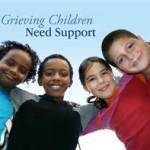
Affirming the hundreds of other risk-takers, she urged NAGC attendees to keep stretching, while taking in those slants of what she called “reverent joy.”
“What’s the point saving the world if we can’t, at the same time savor it?” Emswiler asked.
Certainly, there will be much to sort through as we repaint some upstairs rooms at Hope Floats preparing for the kids this fall.
We’ll need more used furniture and art supplies. New creative ideas to help them strengthen bonds with loved ones, and regain some control over events. which may have severed them from friends and community. We’ll learn more about how teens and younger kids deal with separation distress, the circumstances of a loved one’s loss, and their identity angst. The so-called adaptive versus maladaptive responses. We’ll use new assessment tools and metrics.
Mostly, we’ll simply take another chance. Open to the moment when a little girl wants to talk about her dad.
June 1, 2016
Rave on, slow lane
From the complications of loving you
I think there is no end or return.
No answer, no coming out of it.
— Mary Oliver, “A Pretty Song”
 Do you ever find yourself wondering how life streams by so fast?
Each week we seem to pack more in. Deadlines and commitments never fail to ratchet up. A spring rush oozes from winter dreams mired in the disappointment of a prior year.
It’s so hard to slow down.
Yet at times we also catch ourselves in a pure wash of remembrance, suspended for moments or even a late afternoon. Feeling close to loved ones and their essence, hearing their laughter again. Doing so winnows the chafe from our lives
Undiminished and brilliant, altered in the shifting light of memory and time.
Conveying that, yes, summer will eventually return.
Being present, even with the past.
By this I don’t mean being frozen in nostalgia or inertia. Rather, like a couple who sits in Adirondack chairs regarding their perennials and a light breeze, they take notice–rather than rushing out to do more errands with more highway maniacs.
Being present, even with the past. And with those whose bright futures build from the energy and gifts of their parents and elders.
We all have associations with those we miss, whether marked this recent Memorial Day weekend, or every day. I carry many with my mother, who gave us a magnolia tree when my children were small. We transplanted it to our current home more than two decades ago, and after struggling to adapt in new soil, the tree bloomed every year, a creamy fragrance filling one’s senses on the front lawn.
Curiously, the magnolia did not bloom this year. As Denise and I prepare to sell our home, letting go of the place we raised a family, and turn it over to another, readying to let go of the space we clung to while grieving our son, including his room, this tree, healthy as ever, may be sending us a message. Perhaps it was stunted by an erratic, cold spring. Perhaps she’s not quite ready for us to leave.
We believe that the silky blossoms will return. We choose to believe. We must.
Surely, it will pop and rave again.
I have many other associations with her, and here is one from this weekend. My wife and I traversed much of the state of Maine together, first to see the graduation of our good friend’s daughter up in Limestone, where Eva thrived at the magnet Maine School of Science and Mathematics.
Being with our friends to celebrate her accomplishment and their nurturing footings as a family felt right. And something my mother would have done as well. Grounded in the joy of a daughter’s voice and her confident, loping stride during commencement, a full life opening before her.
Finding places and time to sit with those we love.
A day later, we found ourselves on a granite bench overlooking Machias Bay. It is my mom’s bench, a place near where she loved to be outside our family’s camp. Grounded in a place where she and our family seek solace, and often, healing.
Near ledges where we again saw seals playing, rising from the water as if channeling a teenager’s spirit and muscle.
Yes, we, traveled many highway miles last weekend—more than I’d like to count. But we also found places and time to sit with those we love.