Nora Lester Murad's Blog, page 2
December 5, 2018
Freedom is Claimed, Not Granted: The Central American Caravan and Gaza’s Great Return March
Freedom is claimed, not granted
by Nora Lester Murad for Transformation
Today’s actions by Central Americans and Palestinians show a historic convergence of resistance to borders.
A photograph of Maria Virginia Duarte sits on my desk, and as I watch the coverage of the migrant caravan approaching the US border I think about her again. Maria arrived in the United States without documents from El Salvador in in the early 1970s. She became part of my family, and when I had my first daughter Maria dipped her finger in a cup of coffee and put it in my baby’s mouth (apparently in El Salvador that’s considered good for babies).
In 1986, Maria was one of the almost three million “illegal aliens” granted amnesty by Ronald Reagan, and she no longer needed to live in hiding. When she and her sister decided to visit El Salvador for the first time since they had escaped, I went with them. I met their relatives on both sides of the brutal civil war that took the lives of 75,000 people between 1980 and 1992. I took rickety buses on narrow, unpaved mountain roads to visit relatives who had no water, sewage or electricity. I was in the marketplace when in the blink of an eye, all the young boys disappeared into shops and houses just minutes before government forces marched around the corner to “recruit” child soldiers.
Nearly four decades later, Central Americans continue to risk their lives to escape conditions caused in great part by US foreign policy, only to find themselves unwelcome in the oft-touted “land of immigrants.” But something feels different this time around. Individuals and families are marching together. It is not ‘merely’ that thousands of scared people are risking their lives to stay alive as we have seen in the exodus from Syria. It is also a protest of sorts, a refusal to comply, and it’s being met not only with humanitarian aid but with political solidarity.
It might just be me, influenced by 35 years of being married into a Palestinian family including 13 years living under Israeli military occupation, but no matter how they are portrayed in the media, the Central American caravan and Gaza’s Great Return March feel to me like a convergence. Regular people are taking brave steps, inspiring others to join, and building community while claiming freedom.
Today’s protests stand firmly on generations of resistance. They are parts of movements, cultivated over decades out of smaller attempts and in response to increasing repression that has made clear to people that freedom is claimed not granted. And our claims for freedom must be global.
Of course there are many differences in the situations of the Palestinians in Gaza and the Central Americans on the caravan, but there are also a surprising number of similarities. The Central Americans are running away from their homelands to find refuge in the United States. They are challenging the borders that prevent them from living in safety with respect for their human rights. The Palestinians in Gaza are running towards their homeland and challenging theblockade of a “border” that illegally prevents two million people from returning (1.3 million of whom are documented refugees).
The Central Americans are seeking the legal status of asylum, which is part of refugee law, while in Gaza, legally-recognized refugees are denied their right of return. In both cases, the US and Israel distort the law in an attempt to claim that the relevant protections don’t apply.
For example, the US government portrays Central Americans not as asylum seekers but as migrants – people who choose to move “not because of a direct threat to life or freedom, but in order to find work, for education, family reunion, or other personal reasons,” as the UN puts it. This enables the authorities to evoke their rights as sovereign states to deny entry across their borders, and say that caravan participants should apply using existing immigration procedures or face deportation. In fact, Trump has repeatedly called them “invaders,” subject to a security rather than a humanitarian response.
This is nearly identical to Israel’s portrayal of the Gaza protesters. They are deemed a security risk to Israel, criminal, and not subject to any rights and protections – certainly not the right to return to their homeland, the right to protest to secure their human rights, or the right to international protection from a belligerent occupying power.
In fact, according to UNHCR, the UN Refugee Agency:
“State responsibility starts with addressing root causes of forced displacement. Strengthening the rule of law and providing citizens with security, justice, and equal opportunities are crucial to breaking the cycles of violence, abuse and discrimination that can lead to displacement.”
Yet in both cases, the US and its allies have not fulfilled their obligations to prevent displacement. Instead, they have invested in funding conflicts and then erecting obstacles to rights-claiming by those who are displaced as a result. Israel constructed an Apartheid Wall that has been deemed illegal; Trump is trying to construct a similar wall along the US-Mexico border, even citing the Israeli wall as a model.
One mechanism used in both cases is the outsourcing of foreign policy enforcement, often paid for with foreign aid. Israel outsources enforcement to the Palestinian Authority (paid for by international donors), while the US has outsourced enforcement to Mexico, again paid for with aid.
In both cases, governments and multilateral organizations are complicit in the violation of human rights. The most obvious example is the Gaza Reconstruction Mechanism (GRM), ostensibly created to facilitate the reconstruction of Gaza after the 2014 Israeli attack by putting the United Nations in charge of vetting materials and beneficiaries using Israeli-approved criteria.
In my own research I found that the GRM potentially legalizes the perpetuation of a wrongful act (the blockade of Gaza), and also potentially enables the perpetuation of violations by Israel, while the United Nations did not follow a correct process in becoming a legal party to the GRM agreement and inaccurately portrayed its role as a mere facilitator. In addition, the UN and other parties failed to fulfill their legal obligation of due diligence to ensure that the GRM agreement did not violate human rights, and the agreement appears unbalanced in assigning rights and responsibilities in Israel’s favor, while obligations are borne by the United Nations and the Palestinian Authority. Finally, the GRM potentially compromises the humanitarian principles of neutrality, impartiality, humanity and independence (for example, by allowing Israel a veto power over aid beneficiaries).
It doesn’t take much digging to uncover the shameful failure of international organizations to protect the rights of Central Americans too. A recent article in an official United Nations news source reported that the “Secretary-General António Guterres was urging all parties to abide by international law, including the principle of ‘full respect for countries’ rights to manage their own borders.’” The failure to prioritize the protection of displaced Central Americans, Palestinians, Syrians, Rohingya, Afghanis, South Sudanese, Somalis and so many more demonstrates that an ongoing battle between human rights and states rights is at play – an existential fight to realize or crush the aspirational potential of international law and global governance.
When the declaration of a “humanitarian situation” becomes a justification for a military build-up, checkpoints, and the collection of personal information that threatens security (as in both these cases), people increasingly recognize that this as a rhetorical slight-of-hand. When Donald Trump says that Central American migrants who throw stones would be shot, a policy almost identical to Netanyahu’s stance against Palestinian rock throwers, people see what they are up against: this cadre of power-mongers intend to criminalize communities that seek to protect human beings from the unconstrained power of militarized states.
But people like Maria Duarte and my friends in Gaza have no intention of giving up, nor of succumbing to the cowardly strategy of divide-and-conquer. Like the generations of activists on whose achievements we stand today, we will respond by recognizing the parallels and similarities in our struggles and in our aspirations for a safe place to live with dignity, and call home.
Read the full article on openDemocracy: Transformation here.


“Rest In My Shade” is This Week in Palestine’s Book of the Month!
Review by Ata R. Hindi .
“I met Nora Lester Murad one day in a café in Ramallah. I remember my coffee. Black. We spent over an hour discussing the illegality of the blockade of Gaza. We spoke about the role of states and international actors in perpetuating that blockade. We spoke about ways to change it. That was the first of many meetings and, a few years later, not much has changed. It seems that this is the motto of the Palestinian cause: Not much has changed.
We wonder – do they not see us?
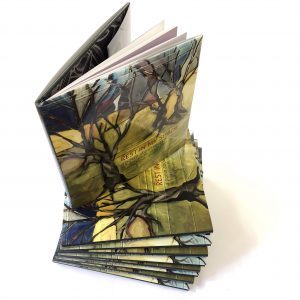
Fast forward to last week. It was an absolute privilege to be given the opportunity to review Rest in My Shade. The book consists of a poem written by Nora Lester Murad and Danna Masad and features the work of Palestinian artists.
Olive trees adorn the cover – a message of hope with a cascade of colors in its leaves. The dedication – a shout-out: “For refugees and displaced people everywhere.” It is a fitting message of solidarity from a people who long for home.
The poem begins with an olive pit. A narrative not unlike the extraordinary wordplay of the contemporary Palestinian poet. A series of symbols and personifications that revolve around Palestine and the Palestinian people. It is a poem of our growth and our struggle. It is a reminder of our roots as Palestinians through strokes of the pen and the paintbrush.
The poem’s olive tree is one of many. It lives through a history of war, despair, love, anger, and fear. It is taken away from its home. After its journey, it is put on display. Void of its meaning – and perhaps its identity. It is forgotten. It longs for home.
This past olive season, I was part of the diaspora again. My family owns a wealth of olive trees just outside Jerusalem. My ancestors were fellahin – as are we. Our olive tree wealth was greater before they came and stole our land. They built on that land a highway for themselves and put up walls. When they razed the olive trees, they left one standing. I will never forget it.
I could not join the olive harvest this time. I longed for home.
The poem ends with a call. The olive tree calls to us – its young and its children. “May people rest in my shade and be home.”
This beautiful poem is interspersed with the work of Palestinians artists. A beautiful mix of styles – from photos to oil to pastel – a cultural collection of Palestine and the Palestinian people. The olive trees, the families, and the keffiyehs. The words and the art belong to each other like the olive tree and its soil.
“I was more,” says the olive tree. Those are Palestinian words. They are words of longing and despair.”
Read Ata R. Hindi’s full review here at This Week in Palestine.
September 10, 2018
Put my book on your shelf!
September 2, 2018
Early praise for Rest in My Shade!
“An exquisite love song to Palestine and all its wonderful long-suffering people, to patience, the joy of fruitful simple living, and the power of holy, resilient trees. May the energy of tending and protecting our ancestral nourishment long endure.”
—Naomi Shihab Nye, author of Voices in the Air: Poems for Listeners
“As elegant as the rolling hills of the countryside that is its backdrop, as startling as the violent upheaval that is the refugee experience, Rest in My Shade is truly a story of all of us.”
—Saul Takahashi, Former Deputy Head of Office, occupied Palestinian territory office, Office of the United Nations High Commissioner for Human Rights
“I celebrate this wondrous book. It illumines the world as olive oil might, regardless of the fire that’s touched it. Palestine and Palestinians continue to produce enduring imaginative art. They’re here to stay.”
—Fady Joudah, author of Footnotes in the Order of Disappearance
“These exquisite canvases and poetic commentary …. resonate with the work of other indigenous eco-artists whose land and animals have been the unfortunate targets of colonial greed.”
—Sharif S. Elmusa, author of Flawed Landscape
May 30, 2018
Valley Shore Community TV Features “Rest in My Shade”
Faisal Saleh and Dina Omar are guests on Valley Shore Community Television’s segment on “Poetry of Immigrants,” talking about the Palestine Museum US, and Palestinian culture. From 50:45-54:09, the host reads an excerpt from “Rest in My Shade,” which is being sponsored by the Palestine Museum. See the video at http://www.esenetworks.com/player.aspx?id=51988&content-id=175391.
March 30, 2018
Crowdsourcing art
We knew there was a lot of fantastic art of olive trees made by Palestinians, but it wouldn’t be easy to find it for consideration for our book. We decided to crowdsource the art on a Facebook page dedicated to Rest in My Shade, and what a great idea that was! Friends all over the world shared examples of their favorite art by Palestinians of olive trees or olive tree-themed art in all media. Thanks to all those who participated! Please keep sharing our page and asking friends to like it.