
Elaine Pinter's Blog
March 18, 2020
Writing Tip #3: Word Puke

This is my very favorite tip of all. I’ve gotten the privilege of volunteering in my son’s classes since he started school, and I love it when I get the chance to help the kids with their writing. But this tip isn’t just for them—it’s for all of us.
After the teacher explains the assignment and the kids have thrown out some ideas, there’s often a silent moment where every pencil in the room is hovering above a clean sheet of notebook paper and I’m waiting for a hand to go up, but no one moves. It’s the same thing that happens to me even after an idea has been bouncing around in my head for days. It’s not writer’s block because we know what we’re supposed to do, what we want to do. I think the pathway from brain to pencil (or keyboard) gets clogged up by everything we’ve been taught about language arts: spelling, capitalization, verb agreement, sentence length, and so on. And even more than that, there’s fear—fear that we’ll make a mistake, and worse yet, that someone will see it. After all, we’re writers and we should know all this stuff. But the thing about writing is that the first step is a creative process and that takes a different frame of mind than the editing and polishing processes do.
So, how do you capture and transfer all of those great ideas, images, and feelings going on in your imagination? Word puke. Yep, it sounds gross, and it is because it can get messy. But it’s a whole lot better to have something in front of you to clean up than a great idea trapped in your head and a blank page in front of you. Go ahead and forget about punctuation and grammar. Throw down sentence fragments and stick in quick notes about setting. Choose a symbol (I use an asterisk) and use it to mark items you need to come back to and research. This works really well because you can search your document for the symbol you used and work through each one later.
Whether you write spontaneously or outline every last detail before starting a manuscript, this is a great way to get started on building your story. Just let it flow, and once it does, it will begin to take shape and before long, come to life on the pages. Sure, it looks ridiculous and no one will understand it but you, but that’s okay because you can switch to your editing frame of mind later and then polish those words until they gleam.
Here’s my approach. I open my custom word template (see Writing Tip # 1) and add a few page breaks. These may or may not become chapters later, but for now, they represent different scenes in the story, keeping them in order, but separated. Pull out your notebook (see Writing Tip #2) and dig in. I rarely start at the beginning of a story, so I skip to a page break in the middle—or even the end—and build back and forth from there.
Here’s an example from the book I’m currently writing. There were a couple of specific lines of dialogue that I knew I wanted to use, so those were easy. I didn’t know how far Brett could’ve reasonably walked, or really how much time would’ve passed, so I marked that to research later. I also threw in a quick reminder to describe that the later part of the scene took place in the morning even though I didn’t know how it started. My word puke looked like this:
My dad had gone too far helping Brett’s pre basic training training.
Made up an excuse to borrow mom’s minivan. Early hours of morning. Found him walking down the mountain on the edge of the highway. *how fast can a person walk?
“I don’t have the energy to fight with you right now. I just need you to believe in me.”
“I do believe in you.”
After a few passes with my researching, describing, editing, and polishing frames of mind, it now looks like this.
One Saturday night, though, I realized my dad had gone too far. I waited for Brett’s goodnight call, but it never came. I dialed his number while I was taking out the trash. Weirdly, I heard a phone ringing in the distance. I hung up without leaving a message and tried again. Same thing. It seemed to be coming from my dad’s truck. I peered past the streetlight glare on the passenger side window, and not only was Brett’s phone in there, but so was his jacket. I chucked the trash bag into the garbage can and slammed the lid.
It was late, but I dialed Nora’s number anyway.
“Do you know where Brett is?” I asked her as soon as she answered.
“Not entirely.”
“Is this another one of my dad’s ideas for helping Brett prepare for basic training?”
“I know it sounds bad, Rylynn, but your dad told me what he was planning to do, and I agreed with him. He said that no matter how hard he is on Brett, he strives harder to succeed, no matter what he throws at him. So your dad promised me that he would make it so bad that this would be the end of it.”
“What did he do?” I demanded.
She let out a conflicted sigh. “He kidnapped him and left him in the mountains.”
“What? Why would he do that?”
“To treat him like a prisoner of war, to disorient him, make him vulnerable so that he’ll realize how dangerous and serious things could get, and that he can’t get himself out of everything.”
“Please, Nora, do you have any idea where he is?”
“I don’t know for sure. You know your dad and his maps, but he said something about an old logging road. But don’t worry—he said he’ll go back tomorrow and bring him home, and then we can all move on. Look, I trust your dad. You should, too.”
I contained my anger and wished her a good night. I rooted around in my dad’s truck and found a map under Brett’s stuff. The area circled on the map was secluded and I knew there wasn’t much I could do in the dark. I went into the house and asked my mom if I could borrow her minivan first thing in the morning so that I could get in an early workout. The night dragged, but finally, I headed out into the hazy gray of predawn light.
As I navigated the steepening curves in the road, the houses and storefronts thinned into an occasional ranch house or riverside cabin. I couldn’t believe it when I saw Brett walking down the gravelly edge of the mountain highway. He was miles from where my dad had left him up in the pine trees, but he still had a long way to descend among the brushy, rolling foothills. I passed him, made a three-point turn, and then pulled up next to him. He had a split lip and friction burns on both wrists.
My rescue was anything but well-received. When he didn’t get in, I rolled the window down.
“What are you doing here, Ry?” he asked through gritted teeth.
“Get in. It’s freezing.”
“Go home,” he said, continuing to walk.
“Get in and I will.”
“I have to do this on my own.”
“No, you don’t. He is not your captain or your boss or whatever. There is absolutely no reason to do this. It is not normal; it’s completely dysfunctional!”
“I don’t have the energy to fight with you right now. I just need you to believe in me.”
His hurt rolled over me like a wave. “I do believe in you.”
There was a slight look of relief on his face. I continued to coast next to him, but he ignored me.
“Please, at least take your jacket” I said. “And I brought a bottle of water and a protein bar, too.”
He slowed and started to reach out his hand but then pressed ahead again.
“You are making this harder,” he said.
“I’m sorry, I . . . .”
That was never my intention. So I left him there and snuck his stuff back into my dad’s truck. Instead of a grumble at the soft knock on the door that came a few hours later, I heard the chuckle my dad used in the rare moments he was pleased.
“Not bad, James,” he whispered.
Ten minutes later, my dad returned and sat down to brunch as though it were perfectly normal to treat your daughter’s boyfriend like a prisoner of war, and even more so that said prisoner could stroll back on into town like that.
This scene may yet change as the story grows, let alone with final editing, but you get the idea and you can do it, too. Just remember: pencils have erasers and keyboards have delete keys. After all, it’s only word puke.
(And as always, thank you to my son for the awesome drawings he makes for me!)


June 21, 2019
The Next Step

Seven years ago, I had no idea that the story of Eternal Mercury was about to begin unfolding inside my head. Forget writing a book—I didn’t have time to read the book a friend had loaned me. I mean, my then four-year-old son was recovering from surgery, and it wasn’t his first. But I was wrong. I found solace in that book (and a few others), which then led me to a place where the emotions I was feeling could do something more than stay stuck inside my head. Before long, I had an overwhelming drive to share the story I’d written. Somehow I stumbled my way through self-publishing a book. I seriously had no idea what I was doing and I made a lot of mistakes. My path looks a lot like the visual I show the kids I get to talk to about writing: it’s what your story arc should not look like (thank you to my son for his awesome drawings).

Luckily, I’ve learned a lot along the way, and although I certainly have a lot more to learn, the drive to share this story and its message hasn’t changed. So, I’ve released the third edition of Eternal Mercury, complete with a new cover. I’m excited to find out where this next step in my writing journey will lead, especially the people I’ll meet, the feedback I’ll get, and most of all, the new things I’ll learn.
March 2, 2018
It Doesn't Matter
I got the privilege of being the guest speaker in a third grade class the other day. They had just read “Author: A True Story” by Helen Lester, which I really enjoy. She’s a children’s author and it’s an inspiring and sweet story book whether you’re a writer or not. During the Q&A part of my presentation, kids this age usually ask a variation on a few questions, like how hard writing is or how long it takes to write a book. I was amazed at the insightful questions this class asked, though. The teacher had asked them to name a character trait that an author might need to have. They came up with “brave.” So the question was, with all the criticism that can come along with writing, how can a writer be brave?
I wasn’t prepared for that question. I mean, how should I know? I’m not brave. I love hanging out with kids, but my nerves start acting up days before a presentation. Yes, for a presentation in front of third graders. My hands shake, I need a water bottle, and somehow God hides that and makes the words come out. But amazingly, I answered that question instantly with the best piece of advice I’ve ever been given about that: It doesn’t matter.
The person who gave me this advice is someone who knows me but has absolutely no obligation to pump me up or even check in about my writing. That’s important to know because it tells you just how genuine her advice is. She does bother to check in with me, though. Not long after my first one-star review, I gave her the “Oh, you know, everything’s fine” answer at first, but then she asked how it was really going. “It’s hard,” I told her. “Yeah,” she agreed. To which I answered, “No, you don’t understand what it’s like—” But she didn’t let me finish. She cut in with a firm, very matter of fact, “It doesn’t matter.” I started again, “But I can’t—” She dismissed those words with, “It. Doesn’t. Matter.” And they were gone, which made me stop and think, really think. After a few moments, I asked, “It doesn’t?” She responded, “You told me yourself that the stories in your head have to get out and be shared.” She was right. I had forgotten that, but I did. And they do.
So, that’s what I told the kids. I told them about the shame I felt, especially right after that review was posted, which was something I never thought I’d talk about anywhere. I told them that people are going to have opinions on just about anything you do, whether it’s writing or something else, and we can sure learn from criticism. The truth is, there’s no reason to feel shame as long as you’ve tried your hardest. In the end, I didn’t tell them how to be brave because I really don’t know how to do that. Instead I told them (and myself, and maybe even you, too) that we all have gifts that are meant to be used. We have to be true to those gifts because even if they touch just one person, well, that’s what does matter.
I wasn’t prepared for that question. I mean, how should I know? I’m not brave. I love hanging out with kids, but my nerves start acting up days before a presentation. Yes, for a presentation in front of third graders. My hands shake, I need a water bottle, and somehow God hides that and makes the words come out. But amazingly, I answered that question instantly with the best piece of advice I’ve ever been given about that: It doesn’t matter.
The person who gave me this advice is someone who knows me but has absolutely no obligation to pump me up or even check in about my writing. That’s important to know because it tells you just how genuine her advice is. She does bother to check in with me, though. Not long after my first one-star review, I gave her the “Oh, you know, everything’s fine” answer at first, but then she asked how it was really going. “It’s hard,” I told her. “Yeah,” she agreed. To which I answered, “No, you don’t understand what it’s like—” But she didn’t let me finish. She cut in with a firm, very matter of fact, “It doesn’t matter.” I started again, “But I can’t—” She dismissed those words with, “It. Doesn’t. Matter.” And they were gone, which made me stop and think, really think. After a few moments, I asked, “It doesn’t?” She responded, “You told me yourself that the stories in your head have to get out and be shared.” She was right. I had forgotten that, but I did. And they do.
So, that’s what I told the kids. I told them about the shame I felt, especially right after that review was posted, which was something I never thought I’d talk about anywhere. I told them that people are going to have opinions on just about anything you do, whether it’s writing or something else, and we can sure learn from criticism. The truth is, there’s no reason to feel shame as long as you’ve tried your hardest. In the end, I didn’t tell them how to be brave because I really don’t know how to do that. Instead I told them (and myself, and maybe even you, too) that we all have gifts that are meant to be used. We have to be true to those gifts because even if they touch just one person, well, that’s what does matter.
June 9, 2017
The Shoes
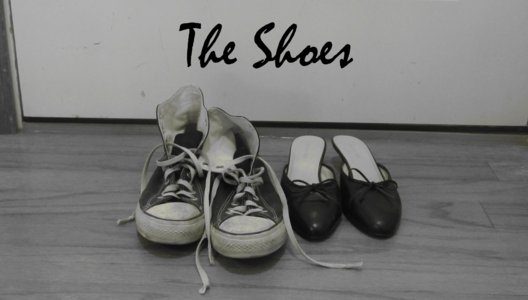 I’m often asked where my ideas come from. The truth is, I never know exactly what will inspire me, when it will happen, or where it will lead, but I do know that it’s always something that touches me emotionally. “The Shoes” is a great example of this.
Here’s how it went . . . .
A couple of years ago, my dad was in the hospital for a few days. His room was at the end of the hallway and I spent a lot of time coming and going. I visited at all different hours, checking on him before work, after putting my son to bed, and whatever other times I got the chance during the day. It didn’t take me long to notice the shoes in the room down the hall—they were always there, and they were the inspiration for this piece. I hope you enjoy it.
The Shoes
The shoes were in the same place every day during visiting hours. They were large and black with two Velcro straps. They were the type of shoe that only the elderly wear. White socks covered his ankles, but everything above that was obscured by the privacy curtain pulled across the open doorway. Although nothing more could be seen from the hallway, it was no surprise that everything in the room, even the bedside chair he sat in, was identical to that in every other room. Everything in every hospital room was identical. But what wasn’t identical, what was so perfectly unique, were the feet inside those shoes. And not even just the feet themselves, but especially the steps they had taken.
His first step had taken place in one of the most down-and-out times in history. But just like his steps, the times strengthened and became steady and solid. They were simpler times, times when letters were written with the strokes of a pen and deals were sealed with nothing more than a handshake. They were times when swing gave way to rock ‘n’ roll and cars grew fins. And for him, those times were just the beginning.
He was stopped in his tracks the first time he saw her. Sock hops were not his preferred pastime, but he quickly shed his loafers just so he could be the first one to ask her to dance. His smile more than outshined his two left feet, granting him every dance that night. And in the kiss he stole after walking her home, lay the promise that he’d be by her side to the very end.
It was a borrowed pair of wingtips that carried her across the threshold of a tiny bungalow. His sneakers looked so big, yet so right, next to the dainty slip-ons she wore everywhere. The longest year of his life was the one spent sweating in black combat boots caked with foreign soil and scarred by war. But when he came home, back to her, it was the steel toes that really fit. In those, he earned just what his family needed, and sometimes, even a little more here and there.
The three additional pairs of shoes inside the entryway of the bungalow constantly grew in size until it seemed they had disappeared. But they came back, and when they did, they each brought along a perfectly complementary pair. And to those, five additional, much smaller pairs like those that used to be there, had now been added. He knew those were her favorite days, days when sixteen pairs of shoes lay scattered about and the tiny bungalow was filled with heartfelt laughter and a the aroma of a home-cooked meal.
He knew it was time to call them. He wondered if it was selfish that he wanted a few more moments alone with her first, hoping for one more chance to look deeply into those precious eyes. He looked at her so frail in the bed, but she was still just as beautiful as the first day he’d seen her. It was her devotion to their journey of intertwined steps, the promise of seeing where they led, no matter the trials, the tears, or the heartache, that made her more beautiful now than ever.
And now, somewhere in the neighborhood of 200 million steps later, those last steps were the ones that really mattered. And, no, they weren’t the last steps they’d take together. Although he’d have to take a few, the hardest ones of his life, by himself, his steps would find their way the best they could until he could follow hers, until the day their steps would fall back into line, perfectly in sync, side by side, forever.
February 3, 2017
Writing Tip # 2: Carry a Notebook Everywhere
You may have already thought of this one, but I didn’t at first. I took me a while to realize that there seems to be some kind of correlation between an amazing idea and the availability of something decent to write on and/or with. I’m not all that good with putting notes in my phone, and it turns out that a cold pen from your glovebox just rips receipts instead of writing on them.
After too many of those experiences, I started carrying a small notebook and a mechanical pencil in my purse so I can jot down that perfect line or setting detail before it fades away. My chances to write often come late at night or early in the morning, and I’ve found that having even just a quick note from when the idea was fresh in my mind helps me break through fatigue and get me back in the moment. All I have to do is open the Word document I created from my custom template (see Writing Tip # 1) and I can jump right in. As I work through the notes, I cross them out so the notebook doesn’t become overwhelming.
Another great thing about always having a notebook with you is that you never know when you might get stuck waiting somewhere. A writer can be occupied for hours on end with just a pencil and a little bit of paper.
So maybe you can’t write anything down while you’re in the shower, driving, or doing your day job, but having a notebook within close reach makes sure you can capture those magical sparks as soon as you can reach a towel, park your car, or take a break.
Write on!
After too many of those experiences, I started carrying a small notebook and a mechanical pencil in my purse so I can jot down that perfect line or setting detail before it fades away. My chances to write often come late at night or early in the morning, and I’ve found that having even just a quick note from when the idea was fresh in my mind helps me break through fatigue and get me back in the moment. All I have to do is open the Word document I created from my custom template (see Writing Tip # 1) and I can jump right in. As I work through the notes, I cross them out so the notebook doesn’t become overwhelming.
Another great thing about always having a notebook with you is that you never know when you might get stuck waiting somewhere. A writer can be occupied for hours on end with just a pencil and a little bit of paper.
So maybe you can’t write anything down while you’re in the shower, driving, or doing your day job, but having a notebook within close reach makes sure you can capture those magical sparks as soon as you can reach a towel, park your car, or take a break.
Write on!
September 29, 2016
Writing Tip # 1: Create Your Own Custom Template in Word
I promised a long time ago to share whatever I learn about the writing/self-publishing process. Trouble is, I still have A LOT to learn, not to mention that my list of things that don’t work is a lot longer than my list of things that do. But as I sat down to start writing the other day, I noticed something that I wish I would’ve thought of a lot sooner. Instead of diving right into my new book idea while it was fresh in my mind, I found myself trying to remember the formatting that I needed to set up in Word first. Trust me, you’ll save yourself a giant headache by formatting your document ahead of time. And by creating your own custom template, you can skip both the headache and losing your new story idea.
I kept my custom template as simple as possible. Later, after the piece is finished, I’ll save multiple copies and tailor each one to the specific requirements of each platform I publish on.
To create a template, open up a blank document in Word. The first thing I change are the paragraph settings. I use first line indents for my paragraphs (as opposed to block paragraphs). You can’t use spaces or tabs at the beginning of each paragraph because it won’t translate correctly into ebook formats. To set up first line indents, click the small arrow in the bottom right corner of the “Paragraph” group on the ribbon at the top of your blank document, and a small box will pop up. Change “Special” to “First Line.” Now, set “By” to .3” (.5” works just fine, too). Under “Spacing,” change “After” to 0 because this separation between paragraphs isn’t needed when first line indents are used. The last thing I do in this box is set “Line Spacing” to “1.5 lines.” Click “OK” and the box will close. From the ribbon on the blank document, you can change the font to the theme and size you prefer. (I use 12 point Times New Roman.) Now the basic formatting is set up, but here’s something really important: Word has an underlying default for paragraph settings and font. What this means is that you need to make your changes in one more place. If you don’t, things may not appear the way you want on some e-readers. All you have to do is click on the small arrow in the bottom right corner of the “Styles” group on the ribbon. In the box that pops up, click on the paragraph symbol next to “Normal” (this is the style you automatically use most of the time). Choose “Modify” and then click on “Format” on the bottom left of the box. Choose “Paragraph” (the box that appears should be familiar) and make your choices again. Click “OK,” which will bring you back to the “Modify Style” box. Update your font settings before clicking “OK.”
Another handy thing to do with styles is to make a “New Style” you can use for centering. Since we just set a first line indent, that’s going to be automatically included even when you click the “Center” button on the ribbon. Instead, click on the arrow in the “Styles” group again. Choose “New Style” at the bottom of the box that pops up. You can name your new style (I call it “Centered”). Then press the “Center” button right below the font. Next, click “Format” and then “Paragraph.” This time, change “Special” to “None.” Save it and it will appear in the “Styles” group on the ribbon. Now you can just click it whenever you want to center and then go back to “Normal” when you’re done.
I learned most of what I know about formatting from Mark Coker’s Smashwords Style Guide. You can download it for free: https://www.smashwords.com/books/view/52. If you’re going to self-publish, I highly recommend it. It seems very overwhelming (believe me), but just go through it slowly, piece by piece, because he really knows what he’s talking about. You’ll find a lot more in-depth advice on formatting than what I’ve shared here, especially if you prefer a different layout such as block paragraphs. You’ll also want to research the requirements of each publishing platform you plan on using. And templates don’t just have to be for writing a novel—they’ll save you time on any type of document you create on a regular basis. Once you get your document specific to your needs, all you have to do is save it as a Word Template. To do this, do a “Save As” and change the file type to “Word Template,” which is a “.dotx” file type. And that’s it—now you can just open up your custom template and get down to writing!
I kept my custom template as simple as possible. Later, after the piece is finished, I’ll save multiple copies and tailor each one to the specific requirements of each platform I publish on.
To create a template, open up a blank document in Word. The first thing I change are the paragraph settings. I use first line indents for my paragraphs (as opposed to block paragraphs). You can’t use spaces or tabs at the beginning of each paragraph because it won’t translate correctly into ebook formats. To set up first line indents, click the small arrow in the bottom right corner of the “Paragraph” group on the ribbon at the top of your blank document, and a small box will pop up. Change “Special” to “First Line.” Now, set “By” to .3” (.5” works just fine, too). Under “Spacing,” change “After” to 0 because this separation between paragraphs isn’t needed when first line indents are used. The last thing I do in this box is set “Line Spacing” to “1.5 lines.” Click “OK” and the box will close. From the ribbon on the blank document, you can change the font to the theme and size you prefer. (I use 12 point Times New Roman.) Now the basic formatting is set up, but here’s something really important: Word has an underlying default for paragraph settings and font. What this means is that you need to make your changes in one more place. If you don’t, things may not appear the way you want on some e-readers. All you have to do is click on the small arrow in the bottom right corner of the “Styles” group on the ribbon. In the box that pops up, click on the paragraph symbol next to “Normal” (this is the style you automatically use most of the time). Choose “Modify” and then click on “Format” on the bottom left of the box. Choose “Paragraph” (the box that appears should be familiar) and make your choices again. Click “OK,” which will bring you back to the “Modify Style” box. Update your font settings before clicking “OK.”
Another handy thing to do with styles is to make a “New Style” you can use for centering. Since we just set a first line indent, that’s going to be automatically included even when you click the “Center” button on the ribbon. Instead, click on the arrow in the “Styles” group again. Choose “New Style” at the bottom of the box that pops up. You can name your new style (I call it “Centered”). Then press the “Center” button right below the font. Next, click “Format” and then “Paragraph.” This time, change “Special” to “None.” Save it and it will appear in the “Styles” group on the ribbon. Now you can just click it whenever you want to center and then go back to “Normal” when you’re done.
I learned most of what I know about formatting from Mark Coker’s Smashwords Style Guide. You can download it for free: https://www.smashwords.com/books/view/52. If you’re going to self-publish, I highly recommend it. It seems very overwhelming (believe me), but just go through it slowly, piece by piece, because he really knows what he’s talking about. You’ll find a lot more in-depth advice on formatting than what I’ve shared here, especially if you prefer a different layout such as block paragraphs. You’ll also want to research the requirements of each publishing platform you plan on using. And templates don’t just have to be for writing a novel—they’ll save you time on any type of document you create on a regular basis. Once you get your document specific to your needs, all you have to do is save it as a Word Template. To do this, do a “Save As” and change the file type to “Word Template,” which is a “.dotx” file type. And that’s it—now you can just open up your custom template and get down to writing!
August 2, 2016
A Few More Thoughts on Organ Donation
The blog tour is over and the giveaway winner has been announced. (Congratulations, Julie L.!) I loved “meeting” so many new people as Eternal Mercury made its way to all the stops along the tour. But most of all, I feel blessed to have had the chance to share the facts about organ donation.
I was in elementary school when my grandmother began to get sick from polycystic kidney disease. She was on peritoneal dialysis (this is a procedure you do yourself a few times per day) until the day a brave family made the choice to turn their tragedy into hope for others. Because of that selfless act, my grandmother was given thirteen more years of life. What does thirteen years mean? It means that instead of my Gram fading as a distant childhood memory, I actually got to know her. It means that my brother and my youngest cousins, who would’ve never even had the privilege of a fading memory, got to know her, too. Of course it wasn’t just us kids—it was everyone around her who got the chance to see what it looks like to be unstoppable no matter where you came from or what you’re going through. And even at the end of those thirteen years, it was cancer—not kidney failure—that took her home to Heaven. That was a very long time ago, but the gratitude I still feel today for getting the chance to have such a neat lady in my life is more than words can express.
The facts surrounding death are a tough thing to think about, but I truly believe that knowing the facts about organ donation can give us the opportunity to finish well. Organ donation is a gift, a deeply beautiful and precious gift, but a gift just isn’t a gift if it isn’t done willingly. If it isn’t right for you, don’t do it because you should never do something that isn’t right for you. Whatever your decision, please make it known so that your loved ones don’t have to wonder if they’ve made the right choice for you. That’s definitely the right thing to do.
Here are the facts:
*Over 100,000 people, including kids, are in need of transplants. Over 20 of them die waiting each day.
*One person can save up to eight lives by donating their heart, liver, kidneys, lungs, pancreas, and small intestine. That same person can improve the lives of many others through the donation of tissues such corneas, skin, veins, tendons, ligaments, and bones.
*You won’t receive less medical care if you decide to become a donor. Doctors and nurses make every possible effort to save their patients’ lives and will not even consider organ donation unless a person dies.
*Income, social status, and race are not factors in deciding who receives organ transplants. You’ll be helping people who need it the most and your family will not be charged for the procedure.
*Most major religions support organ donation. I’m not sure that there could be a more loving or selfless gift, but don’t be afraid to check with your spiritual advisor.
*Almost anyone can be an organ donor. Age and/or medical history don’t necessarily disqualify you.
Thank you to each and every one of you for taking the time to check out a message that means so much to me!
I was in elementary school when my grandmother began to get sick from polycystic kidney disease. She was on peritoneal dialysis (this is a procedure you do yourself a few times per day) until the day a brave family made the choice to turn their tragedy into hope for others. Because of that selfless act, my grandmother was given thirteen more years of life. What does thirteen years mean? It means that instead of my Gram fading as a distant childhood memory, I actually got to know her. It means that my brother and my youngest cousins, who would’ve never even had the privilege of a fading memory, got to know her, too. Of course it wasn’t just us kids—it was everyone around her who got the chance to see what it looks like to be unstoppable no matter where you came from or what you’re going through. And even at the end of those thirteen years, it was cancer—not kidney failure—that took her home to Heaven. That was a very long time ago, but the gratitude I still feel today for getting the chance to have such a neat lady in my life is more than words can express.
The facts surrounding death are a tough thing to think about, but I truly believe that knowing the facts about organ donation can give us the opportunity to finish well. Organ donation is a gift, a deeply beautiful and precious gift, but a gift just isn’t a gift if it isn’t done willingly. If it isn’t right for you, don’t do it because you should never do something that isn’t right for you. Whatever your decision, please make it known so that your loved ones don’t have to wonder if they’ve made the right choice for you. That’s definitely the right thing to do.
Here are the facts:
*Over 100,000 people, including kids, are in need of transplants. Over 20 of them die waiting each day.
*One person can save up to eight lives by donating their heart, liver, kidneys, lungs, pancreas, and small intestine. That same person can improve the lives of many others through the donation of tissues such corneas, skin, veins, tendons, ligaments, and bones.
*You won’t receive less medical care if you decide to become a donor. Doctors and nurses make every possible effort to save their patients’ lives and will not even consider organ donation unless a person dies.
*Income, social status, and race are not factors in deciding who receives organ transplants. You’ll be helping people who need it the most and your family will not be charged for the procedure.
*Most major religions support organ donation. I’m not sure that there could be a more loving or selfless gift, but don’t be afraid to check with your spiritual advisor.
*Almost anyone can be an organ donor. Age and/or medical history don’t necessarily disqualify you.
Thank you to each and every one of you for taking the time to check out a message that means so much to me!
July 16, 2016
Eternal Mercury Blog Tour Giveaway
As part of the blog tour for Eternal Mercury, I'm sponsoring a $25 giveaway good for an Amazon Gift Code or Paypal Cash. You can enter at any of the awesome blogs that had me as guest. Please check out the links below, not only to enter, but also for reviews, spotlights, and giveaways on lots of books and other products. Good luck in the giveaway!
http://www.iamareader.com/2016/07/ete...
Review: http://mycreativelyrandomlife.blogspo...
http://the-avidreader.blogspot.com/?z...
http://literarychanteuse.blogspot.ca/...
http://musingsbymaureen.blogspot.com/...
http://deliciouslysavvy.com/eternal-m...
http://whynotbecauseisaidso.blogspot....
http://cheshirecatlookingglass.com/gu...
http://carolineclemmons.blogspot.com/...
http://www.fictiondreams.com/2016/07/...
http://storeybookreviews.com/2016/07/...
http://www.herewegoagainready.com/ete...
https://bloomfieldofthoughts.blogspot...
http://www.bookroomreviews.com/eterna...
Review: http://www.nimiarora.com/2016/07/book...
http://kellysluckyyou.com/group-givea...
http://jenniferfaye.com/hearts-scribb...
http://www.yabookdivas.com/2016/07/et...
http://cbybookclub.blogspot.com/2016/...
Review: http://katiescleanbookcollection.blog...
http://www.ziliinthesky.com/2016/07/e...
http://acreads.blogspot.com/2016/07/s...
http://cuzinlogic.com/2016/07/eternal...
http://www.hottbooks.com/giveaway-ete...
http://www.singinglibrarianbooks.com/...
http://www.bookhoundsya.net/2016/07/2...
https://silvybooksaremylife.wordpress...
http://www.cassandramsplace.com/2016/...
http://leahsaysviews.com/eternal-merc...
https://authorcameliamironskiba.com/2...
http://pwpendleton.blogspot.com/2016/...
https://readingnook84.wordpress.com/2...
http://tiannaholley.com/eternal-mercu...
http://www.fundinmental.com/giveaway-...
http://christyscozycorners.com/2016/0...
http://melsshelves.blogspot.com/2016/...
http://roomwithbooks.com/eternal-merc...
http://too-clever.blogspot.com/2016/0...
http://dianasbookreviews.com/eternal-...
http://booksaresanity.blogspot.com/20...
http://paulettespapers.com/?p=11575
Review: http://www.tifferzandhersisterz.com/2...
http://gustosa-giveaways.blogspot.jp/...
http://www.iamareader.com/2016/07/ete...
Review: http://mycreativelyrandomlife.blogspo...
http://the-avidreader.blogspot.com/?z...
http://literarychanteuse.blogspot.ca/...
http://musingsbymaureen.blogspot.com/...
http://deliciouslysavvy.com/eternal-m...
http://whynotbecauseisaidso.blogspot....
http://cheshirecatlookingglass.com/gu...
http://carolineclemmons.blogspot.com/...
http://www.fictiondreams.com/2016/07/...
http://storeybookreviews.com/2016/07/...
http://www.herewegoagainready.com/ete...
https://bloomfieldofthoughts.blogspot...
http://www.bookroomreviews.com/eterna...
Review: http://www.nimiarora.com/2016/07/book...
http://kellysluckyyou.com/group-givea...
http://jenniferfaye.com/hearts-scribb...
http://www.yabookdivas.com/2016/07/et...
http://cbybookclub.blogspot.com/2016/...
Review: http://katiescleanbookcollection.blog...
http://www.ziliinthesky.com/2016/07/e...
http://acreads.blogspot.com/2016/07/s...
http://cuzinlogic.com/2016/07/eternal...
http://www.hottbooks.com/giveaway-ete...
http://www.singinglibrarianbooks.com/...
http://www.bookhoundsya.net/2016/07/2...
https://silvybooksaremylife.wordpress...
http://www.cassandramsplace.com/2016/...
http://leahsaysviews.com/eternal-merc...
https://authorcameliamironskiba.com/2...
http://pwpendleton.blogspot.com/2016/...
https://readingnook84.wordpress.com/2...
http://tiannaholley.com/eternal-mercu...
http://www.fundinmental.com/giveaway-...
http://christyscozycorners.com/2016/0...
http://melsshelves.blogspot.com/2016/...
http://roomwithbooks.com/eternal-merc...
http://too-clever.blogspot.com/2016/0...
http://dianasbookreviews.com/eternal-...
http://booksaresanity.blogspot.com/20...
http://paulettespapers.com/?p=11575
Review: http://www.tifferzandhersisterz.com/2...
http://gustosa-giveaways.blogspot.jp/...
July 4, 2016
Eternal Mercury, Organ Donation, and Cellular Memory
When I first realized that I wanted to write a book, I knew that I wanted it to be different. Shortly after I began brainstorming for that unique idea, a car-crash scene on a mountain highway started playing in my head. Not only was I looking for a unique story idea, but I was also looking for a positive message. I began to wonder if, instead of something scary like a ghost, could something good be left after someone died? The answer became clear to me: organ donation. What could be more beautiful than that? And what could be more romantic than true love that could survive the boundaries of death? To my surprise, the idea turned out to be more realistic than I expected. Through research I discovered the phenomenon of cellular memory. Cellular memory is when people who receive transplants take on traits of people whose organs they receive. It’s rare, but when it does happen, it can come in the form of food cravings, changes in musical taste or hobbies, and sometimes even glimpses at other things about the donor.
Although the level of cellular memory I portrayed in Eternal Mercury is fictional, the need for organs definitely isn’t. It’s hard to think about death, and the common misconceptions about organ donation don’t help. But by understanding the facts and then making your decision known, you just might be able to bring something good out of the bad. That part of Eternal Mercury isn’t based on fiction.
Here are the facts:
*Over 100,000 people, including kids, are in need of transplants. Over 20 of them die waiting each day.
*One person can save up to eight lives by donating their heart, liver, kidneys, lungs, pancreas, and small intestine. That same person can improve the lives of many others through the donation of tissues such corneas, skin, veins, tendons, ligaments, and bones.
*You won’t receive less medical care if you decide to become a donor. Doctors and nurses make every possible effort to save their patients’ lives and will not even consider organ donation unless a person dies.
* Income, social status, and race are not factors in deciding who receives organ transplants. You’ll be helping people who need it the most and your family will not be charged for the procedure.
*Most major religions support organ donation. I’m not sure that there could be a more loving or selfless gift, but don’t be afraid to check with your spiritual advisor.
*Almost anyone can be an organ donor. Age and/or medical history don’t necessarily disqualify you.
The most important thing you can do is let your family know whether or not you want to be an organ donor. No matter what you decide, telling your family will save them from the pain of trying to guess your wishes at a time when that’s the last thing they need. And if the choice is right for you, to let someone else continue on when you’ve reached the end down here, don’t think about what it means for you; instead think of the incredible gratitude you’d feel if someone did it for you or someone you love.
This post was written for a blog tour organized by http://www.iamareader.com/ in the hopes of spreading the word about one of the most important messages in Eternal Mercury.
Although the level of cellular memory I portrayed in Eternal Mercury is fictional, the need for organs definitely isn’t. It’s hard to think about death, and the common misconceptions about organ donation don’t help. But by understanding the facts and then making your decision known, you just might be able to bring something good out of the bad. That part of Eternal Mercury isn’t based on fiction.
Here are the facts:
*Over 100,000 people, including kids, are in need of transplants. Over 20 of them die waiting each day.
*One person can save up to eight lives by donating their heart, liver, kidneys, lungs, pancreas, and small intestine. That same person can improve the lives of many others through the donation of tissues such corneas, skin, veins, tendons, ligaments, and bones.
*You won’t receive less medical care if you decide to become a donor. Doctors and nurses make every possible effort to save their patients’ lives and will not even consider organ donation unless a person dies.
* Income, social status, and race are not factors in deciding who receives organ transplants. You’ll be helping people who need it the most and your family will not be charged for the procedure.
*Most major religions support organ donation. I’m not sure that there could be a more loving or selfless gift, but don’t be afraid to check with your spiritual advisor.
*Almost anyone can be an organ donor. Age and/or medical history don’t necessarily disqualify you.
The most important thing you can do is let your family know whether or not you want to be an organ donor. No matter what you decide, telling your family will save them from the pain of trying to guess your wishes at a time when that’s the last thing they need. And if the choice is right for you, to let someone else continue on when you’ve reached the end down here, don’t think about what it means for you; instead think of the incredible gratitude you’d feel if someone did it for you or someone you love.
This post was written for a blog tour organized by http://www.iamareader.com/ in the hopes of spreading the word about one of the most important messages in Eternal Mercury.
January 13, 2016
Between the Starlight Book Giveaway
I’m currently sponsoring a giveaway on Goodreads for my new YA romance novel, Between the Starlight. Here’s the book description:
Sometimes the curves in your path are what end up leading you in the right direction.
Alexa Evans’ life is right on course. Graduation is just over two months away and she knows exactly where she’s headed. But when her final essay assignment makes her take a deeper look at herself, she starts to feel like she’s missing something. A chance meeting with Gavin Phillips seems to be just what she needs. The only problem is that he doesn’t believe in love any more than she believes in Heaven. When an accident leaves her trapped between life and death, she discovers her journey for answers has only just begun.
So, if it sounds good to you, be sure to enter for a chance to win 1 of 3 signed paperbacks here: https://www.goodreads.com/giveaway/sh.... Don’t wait too long—the giveaway ends January 20th. And if you haven’t signed up for a Goodreads account yet, you should. It’s free to join and it’s a great way to discover books, not to mention all the other giveaways you can enter.
Good luck!
Sometimes the curves in your path are what end up leading you in the right direction.
Alexa Evans’ life is right on course. Graduation is just over two months away and she knows exactly where she’s headed. But when her final essay assignment makes her take a deeper look at herself, she starts to feel like she’s missing something. A chance meeting with Gavin Phillips seems to be just what she needs. The only problem is that he doesn’t believe in love any more than she believes in Heaven. When an accident leaves her trapped between life and death, she discovers her journey for answers has only just begun.
So, if it sounds good to you, be sure to enter for a chance to win 1 of 3 signed paperbacks here: https://www.goodreads.com/giveaway/sh.... Don’t wait too long—the giveaway ends January 20th. And if you haven’t signed up for a Goodreads account yet, you should. It’s free to join and it’s a great way to discover books, not to mention all the other giveaways you can enter.
Good luck!


