Michael S. Robinson's Blog, page 2
September 27, 2013
Two Truths & A Lie: The Get-To-Know-Obamacare Game
 Today, the media is wrought with truths, half-truths, small fibs and blatant lies about the benefits and pitfalls of Obamacare. The massive health care reform that rolls out on October 1, 2013 was marketed by the President and his staff as the road to affordable and universal healthcare. It was to be a cure for our nation’s fiscal ails– the remedy for reducing preventable disease. The veracity of these brash claims will soon be verified, and I expect that Obamacare will fail to meet this Administration’s lofty expectations. However, in the meantime, let’s play nice and break the Affordable Healthcare Act ice via a simple game of truths and lies.
 TRUTH: The floodgates will be opened, and you can start comparing rates and shopping for insurance exchanges on October 1, 2013.
TRUTH: People who opt not to get health insurance will be charged $95 or 1% of their annual income – whichever is higher. The penalty for non-compliant individual is set to rise until it hits $695 or 2.5% of an individual’s annual income in 2016.
LIE: Obamacare provides universal healthcare for Americans. Among others, people in the lowest income brackets, or whose premiums would exceed 8% of their household income would be free to go uninsured without penalty.
NOTE: The CBO estimates that 24 million people
will be left legally uninsured in 2016.

TRUTH: Many experts predict that the health care reform will lead to a shortage of doctors to the tune of approximately 100,000 physicians.
LIE: The American people support Obamacare. Just see the polls.
Filed under: Budgeting, Business Savvy, corporate taxes, Economy, Events, Follow up, high taxes, job creation, Job Market, marketing, Michael S Robinson, Misc., New York State, New York State Economy, New York State Jobs, News, News & Articles, NY, NYS, overregulation, Public Policy, research, small business, Strategic Planning, The American Dream, The Michael S. Robinson Show, world news







September 25, 2013
Small Business + Obamacare: Compliance Help for the Economy’s Lifeblood
 If you’re like most small to medium-sized business owners, I’m certain that the ambiguity of the approaching Affordable Healthcare Act is daunting. Since it was passed in March 2010, the cumbersome legislation has seen its share of stops and starts. It has been delayed, reworded, postponed, and ultimately, forced on the American people. So, what’s an entrepreneur to do? How can we ensure that we are in compliance with the new law so as to avoid severe penalties and/or consequences? Note the following 5 basic guidelines to get the ball rolling:

(1) Whether you like, loathe, support or oppose Obamacare, it begins on October 1, 2013 and will legally require all business owners with fewer than 50 employees to provide their full-time staff with health insurance. From October 1, 2013 through March 31, 2014, these companies will be able to begin comparing rates and shopping around for insurance plans via government-issued exchange programs.
(2) The cost of non-compliance is $3,000 per employee. [This is in addition to the .9% increase on the Medicare part A tax that will be rolled out for businesses making over $250,000 in profits.]
(3) If a small business operates in more than one state, it will have the option to select an insurance exchange from a state that it operates in with more favorable rates.

 (4) Should a business grow beyond 50 employees in 2014, it will not be kicked out of the exchange program. Note: The exchanges will be available to all businesses with up to 100 employees by 2016.
(5) All small businesses must be in compliance with the new Obamacare rules and regulations by January 2015.
For more information, check out my blog Does Obama Care?, click on any of the embedded links above, check my June 2, 2013 podcast, follow me on Twitter and Facebook and tune in every Saturday to The Michael S. Robinson Show on AM970 The Answer.
Filed under: Budgeting, Business Savvy, Economy, Job Market, News & Articles, overregulation, Photos, small business, Strategic Planning, The American Dream




September 20, 2013
Branding Basics: Promoting Your Public Persona
 These days branding is not just for business. Every day one billion names are searched in Google. Chances are, your name (and in essence your personal brand) has been searched at least once. The line between our personal and professional lives is becoming increasingly more transient. More of our private affairs are publicly available online. It is now more important than ever to closely monitor the brand messages we transmit. Our personal choices– Facebook statuses, Twitter updates, blog posts and even our Yelp reviews– can be discovered, judged and used to affect future opportunities for us.
On this blog, we’ve already discussed the importance of being mindful of your social media messaging, the ways in which to reinvent yourself for new opportunities and some how-to’s for managing your personal brand once it has been established. However, what if you are new to branding or need help developing a strong brand identity? Fear not. Read on:

Discover the real you. One of the most important steps to developing a brand is to really consider the unique characteristics that make you you. What are your likes, interests, strengths, assets?

Note: Focus on the positive. You want to put the best you forward.
Know your competition. It is fierce, and you will have to understand the personal qualities that you possess that set you apart from others looking to land the same job, scholarship, client, etc.

Get feedback. Ask your closest friends, family, clients, colleagues and mentors to help you cull down your list of best attributes and to identify the areas where you might need work.
Create a communication plan. This figurative roadmap should include an analysis of the tools that you will need to get your brand message out there. While a Pinterest page might be ideal for a florist, it might not serve a criminal attorney as well. Blogs are extremely helpful in promoting a brand. However, be as specific as possible. You must not only decide on the tools, but also the frequency with which you will post on them.
Execute. You’ve considered and defined your personal brand. Now, just wake up and be the best you every day.
Measure results. Has one internet outlet brought in more leads for you? Have any employers called after reading an impressive blog you wrote? Are your friends, family and colleagues commenting positively on your updates? If so, great! If not, start back at one and try again. You’ll get it eventually.
For more on branding, browse my blogs, tune into this Saturday’s The Michael S. Robinson Show at 10AM EST on AM970 The Answer and follow the conversation on Twitter and Facebook.
Filed under: Business Savvy, Corporate Social Responsibility, Follow up, Interview Techniques, job creation, Job Search, marketing, Media, Michael S Robinson, Misc., News & Articles, reinvest, research and development, small business, social media, Strategic Planning, Talk Radio, The Michael S. Robinson Show




September 18, 2013
All Eyes On Syria: Why America Must Act
 President Barack Obama’s credibility is on the ropes once again. This week, the President’s buddy and first round pick for the imminent Federal Reserve Chairman opening, was forced to withdraw his nomination amidst vehement opposition within the Democratic Party. Despite the world’s recognition that President Bashar al-Assad has been encouraging vicious civil warfare, American fair-weather friend and Assad’s ally, Vladimir Putin, is being hailed champion of diplomacy for his support of Assad’s potential surrender of chemical weapons by mid-2014. In the meantime, Iranian President, Hassan Rowhani, has publicly reaffirmed his support of Assad and declared that now is the “opportune time to take new action regarding the West’s contentions over the Iranian regime’s nuclear program.” His country will not stop enriching uranium.
Congress dodged a bureaucratic bullet last week when Obama decided to postpone a vote that would gauge its sentiments over sending more troops to the Middle East. The polls suggest that had the issue gone to Congress, the President would have almost certainly lost face as the war-weary officials would have voted not to act. But is it really in our best interest to remain complacent?

Personally, I stood in favor of President Barack Obama’s plan for a limited military strike. Though the President and I differ on many issues, I felt that turning a blind eye to such terrorism would be both politically and militarily irresponsible.
We’re living in a world where countries are trying to assert their military power, often at the cost of innocent lives. What we don’t lose in lives, we lose in material resources. Our military presence in several countries along with the recent wars in Afghanistan and Iraq has created a huge financial burden on our country. We are still slowly emerging from the Great Recession, and I understand that the cost of a new military strike may be prohibitive as it’s an issue of delicately balancing the cost of action versus the cost of reaction.
I believe that we have to assert a proactive approach to dealing with terrorist regimes like Assad’s. Otherwise, they will see our lack of action as a green light to pursue their cause.
President Obama explicitly called the use of chemical weapons, “a red line” that would not be crossed without severe repercussions. America’s tolerance for chemical weapons use abroad would open the U.S. up to potential chemical and nuclear warfare at home.
 Ultimately, the world is watching. What we do next will be marked in history and will directly affect our ability to preserve democracy and the American standard of living – the standard that makes our nation great.
Check back for updates on the Syrian crisis and other issues.
While you’re at it, join the conversation and give me your feedback by following me on Twitter and Facebook.
Filed under: Economy, Events, Misc., News, News & Articles, The American Dream, world news


September 11, 2013
It’s a [Wo]Man’s World: The Business of Fashion Part II
 Tomorrow, the Spring 2014 Mercedes Benz Fashion Week at the Lincoln Center comes to an end. All week, ambitious styles for the distant warmer months have been praised and panned by the critics. World class designers, their staffs, the models and NYC visitors will soon be back to life as usual – having spent nearly $1 billion dollars for events and activities tied to the fashion extravaganza.
Last week, this blog and The Michael S. Robinson Show honored #MBFW by exploring the business of menswear. So, this week, we’ll look at the economic impact of women’s wear on our economy.

This year, people will spend $1.2 trillion dollars on online purchases, with clothing and accessories making up the largest percentage of sales.
In the United States, over $250 billion is spent on fashion annually.

Revenue for women’s clothing stores alone are expected to grow 2.3% to $42.1 billion by the close of 2013.
Moreover, revenue is anticipated to grow through 2018 as women stock up on essential wardrobe items they avoided purchasing during The Recession.
Every year Forbes magazine pays tribute to the world’s most powerful women. But this year, Diane von Furstenberg, Gisele Buchen, Anna Wintour, Tory Burch, Rosalia Mera, Miuccia Prada and Angela Ahrendts all made the list proving that fashion is truly a force to be reckoned with. 
Filed under: Business Savvy, Corporate Social Responsibility, Economy, Events, Follow up, Forbes Magazine, job creation, marketing, Media, Michael S Robinson, Misc., News, News & Articles, Photos, Strategic Planning, Talk Radio, women-owned business, world news


September 6, 2013
The Business of Fashion: Menswear, Revenue, and Style
 The Big Apple’s fashion fixation is big business. In NYC, the industry generates nearly $10 billion in wages, $2 billion in tax revenues and employs nearly 5% of the city’s entire workforce. So, in honor of this year’s Fashion Week, I’m dedicating the next two Saturdays of The Michael S. Robinson Show to the business of style. Let’s start with menswear.
 Nationwide, the menswear industry raked in a whopping $95.7 billion dollars in revenue in 2009 and is expected to pull in $139.2 billion by 2017.
Bespoke /biˈspoʊk/ 1) a British English word that means clothing item made to a buyer’s specification 2) Also the name of Duncan Quinn’s high end and exclusive men’s shops in NYC, LA and Miami.
 Man-around-town /man-around-town/ 1) Elliot Aronow, designer, writer and RCRD LBL co-founder. 2) A worldly socially active man.
Fashion Week generates over $860 million dollars a year for New York City, and a portion of that is almost always reserved for Ms. Audrey Smaltz, backstage management extraordinaire, and her Ground Crew.
So tune in to AM970 The Answer at 10a EST, Saturday, September 7, 2013 as I chat with Quinn, Aronow and Smaltz about menswear – the trends, the classic styles and the business- with my co-host, former designer and Project Runway contestant, Emmett McCarthy.
Bonus: NYC Mayoral candidate Bill Thompson will also join me live! You don’t want to miss it.

All images via Google search.
Filed under: News & Articles






August 27, 2013
5 “Staycation” To Do’s To Enjoy This Labor Day
Labor Day. How bittersweet. It is the symbolic end of summer and also a celebration of the contributions and achievements of all American workers. Labor Day reminds us that it will soon be time to bid our long warm days, “Adieu,” while serving as a reminder of the efficacy of millions of people working together to do his or her own part. So, in honor of the holiday and to help you make the most of your Monday, here are 5 last-minute “stay-cation” ideas for Labor Day 2013:
(1) Beach-themed Barbecue.
 Whether you live in a coastal town or land-locked metropolis you can host one last end-of-summer beach-themed cookout. Invite your friends to your home or rent a space at a local park. Tell them that the dress code is beachwear. Then set up your volley ball net and pull out the inflatable pools for the right effect.
(2) Tour By Bike.

This spring, NYC was swept up in the cycle share revolution when rentable Citibikes cropped up around The Big Apple. Today, similar share programs also exist in Boston, Denver, Chicago and San Francisco to name a few. So, grab a bike and hit the town.
(3) Seen Sights?

Play tourist in your hometown by trying out a highly-rated restaurant that you’ve never been to, checking out your nearest museum’s new exhibit, attending an action-packed local sporting event or seeing a live show. Note: Sites like Groupon and Livingsocial are great resources if you’re looking for budget-friendly fun.
(4) Deal Dash.

Conventional wisdom says that September is the best time to buy a car. But did you know that patio furniture, grills, luggage, bicycles and wine also see lower prices at this time of year?
(5) Host a Roast.

If you’re not keen on the idea of a beach-themed BBQ, there is still time to throw a backyard camp cookout. Simply invite your friends for late-night stargazing and roasted marshmallows.
Filed under: News & Articles


August 23, 2013
Are You Safe or Sound?
 Remember: Fear can be a friend. It is often our greatest motivator (check out May 12, 2013 podcast). But at which point does fear become public enemy number one? Terror, uniquely characterized as intense overpowering fear, is at best unproductive and at its worst extremely destructive. For centuries, oppressive regimes have employed environments of dread to keep their citizens repressed. Today, fear is still used by anti-American extremists and others to kill innocent people and destroy entire communities.
If you can recall from your 6th grade history lessons, reprieve from fear of governmental oppression was the primary reason our Constitution and Bill of Rights were written 225 years ago. Within the hallowed texts our rights were written to be “unalienable,” never to be superseded or ever to be taken away. But a lot has changed since then.
At times it seems that some of our modern day leaders have prescribed to beliefs that serve only to promote fear and their own personal agendas. Take a look at two of today’s most controversial issues that some are calling terrorism at home.
STOP & FRISK
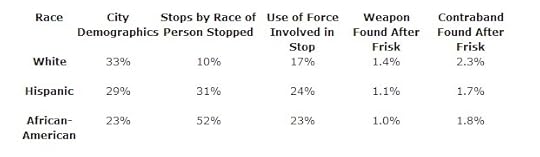
What’s going on? The NYPD’s Stop, Question and Frisk policy is based on the 1968 Terry v. Ohio ruling, which allows “police officers to stop and detain a person based on a ‘reasonable suspicion’ that s/he might be about to commit a crime.” Furthermore, the officer is allowed to frisk the individual if s/he has facts that lead him/her to believe that the individual is armed and dangerous.
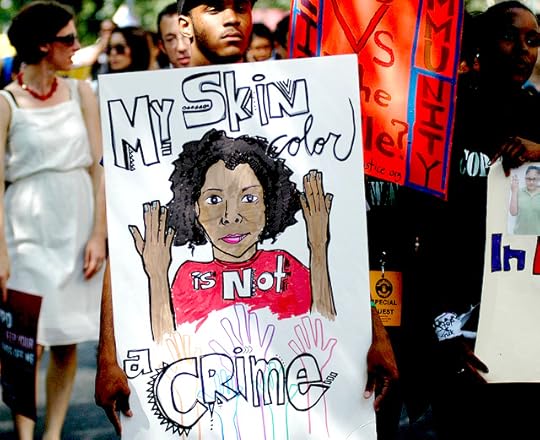
Fear factor. Stop and frisk has been proven to disproportionately target the young and minority communities, and only 12% of all stops resulted in an arrest or summons. Additionally, critics argue that the vague nature of the “reasonable suspicion” language in the text leaves entirely too much room for police misconduct and unfair profiling.
 NSA SURVEILLANCE
What’s going on? An NSA data collection program, which started in 2005 as Iraqi roadside bombings peaked, was designed to collect all Iraqi texts, emails and phone calls in an effort to thwart terrorists’ plans to attack the U.S. and to root out illegal bomb making factories in Iraq. However, it has since expanded and began to collect all of the text message, email and phone call data of American citizens here at home.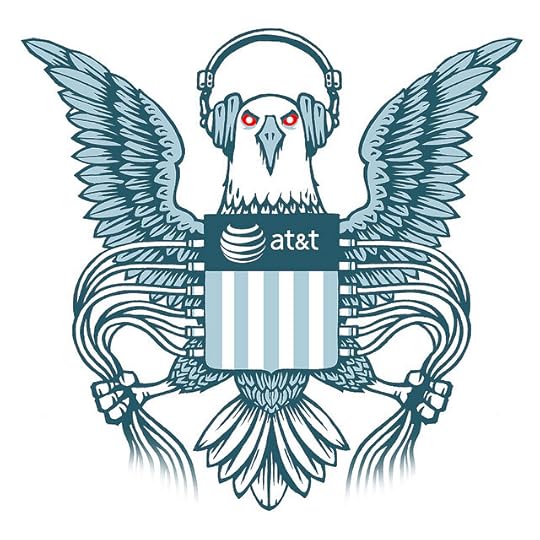
Fear Factor. Innocent American civilian are being watched– we are all being watched. And this has thousands of people concerned with the lack of privacy that is a result of such an intrusive search.
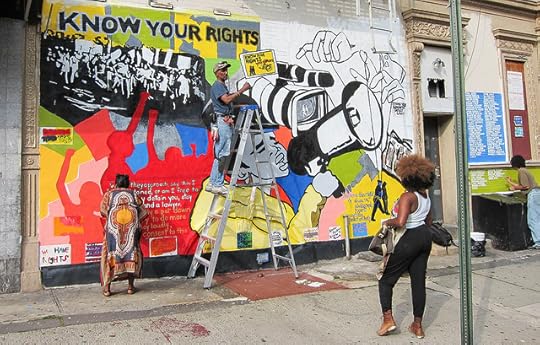 Ultimately we cannot let the conversation end here. The unifying fear factor here is that our Fourth Amendment right is under attack. No longer can we be so sure that our freedom is “unalienable.” The government and its officials are losing the American people’s confidence as some bureaucrats seem more and more desperate to expand government and chip away at the principles that founded our nation and made it great. Our international and business relationships are being strained as our allies and partners fear that they too will be unfairly sucked into unreasonable probes.
For more on these National Security matters and more, tune in to this Saturday’s The Michael S. Robinson Show at 10a EST. I’ll be discussing new developments in the NSA scandal, the issues with Stop & Frisk and more with Cato Institute Director of Information Policy Studies, Jim Harper, and Congressman Peter King. Call in with your questions and comments to 866-970-9622.
Filed under: Events, Follow up, Media, Michael S Robinson, Misc., New York State, New York State Economy, News, News & Articles, NY, NYS, Public Policy, Talk Radio, The American Dream, The Michael S. Robinson Show, world news






August 15, 2013
Women in Business
 In the nearly five months since Sheryl Sandberg of Facebook fame published her controversial guide book, over 7,000 Lean In-themed women’s groups have cropped up around the world. Their focus? To encourage women to pursue their ambitions and to change the conversation away from what they can’t do to what they can do. Lean In as a book, an organization and a movement has revitalized a centuries old debate on women’s right to equality in the workplace and beyond.
As always there are two sides to the argument. The first argues that women have been placed at both social and systematic disadvantages in Corporate America. The second, that today’s women are leading major corporations, starting successful businesses and operating far beyond a need for the international discussion. Ultimately, I believe the former. Women today still make only 77% of what men make in the workforce. Large corporations have been slow to inculcate female executives into their upper ranks. While there is still much to be done, there are lessons to be learned from the hard working, qualified and fortunate female few who’ve reached the top of their industries.
Check out these nuggets of knowledge from this week’s The Michael S. Robinson Show guest. Then tune in to AM970 The Answer at 10a EST this Saturday for a live, open discussion with some of today’s most powerful leading ladies:

Desiree Rogers
On being herself… “I didn’t try to make a splash… Everywhere I go people know [my] face. It’s more annoying than anything. [But] I’m a pretty secure person and I know what I know…I’m a pretty strong and tough girl.”
– Desiree Rogers, CEO of Johnson Publishing Co. & Chairman of Choose Chicago

Carla Harris
On networking and building business relationships…
“I don’t think [women are] our own worst enemies. At the end of the day, I think women certainly have the qualifications, the experience. If there’s a place that I think we should invest more [time] in, it’s in relationships. Those relationships really make a difference.”
– Carla Harris, Vice Chairman of Global Wealth Management at Morgan Stanley, Author & Recording Artist
On learning from yesterday’s pioneers… “I’m not them…but I can take what I’ve learned from them and put that into my voice.”
– Jaimee Paul, Recording Artist

Jaimee Paul
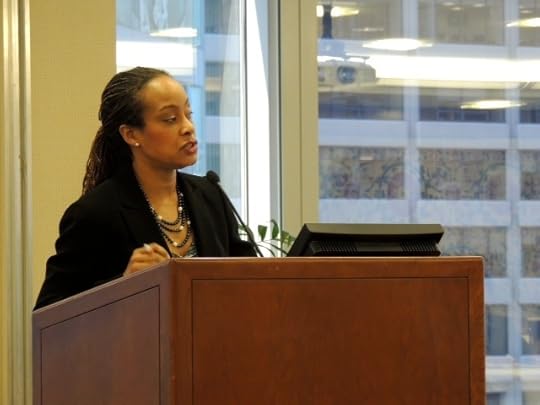
Javette Hines
On knowing when to say no… “Many women feel the need to be a superwoman. And I believe we can do and be all things. But we have to be careful of assuming superwoman status for everything in our lives. It’s okay to say no.”
– I. Javette Hines, SVP of Supplier Diversity at Citigroup
Filed under: News & Articles






August 8, 2013
Time Theft Takes Us For Billions
Wait. Don’t agree? Think about it. Time is necessary for… well, everything.
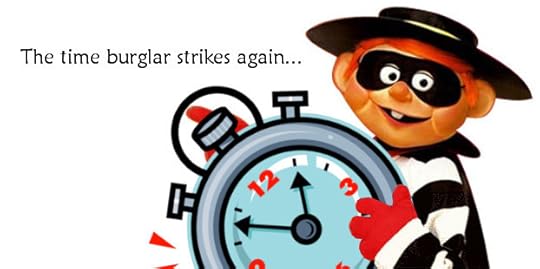
In life, you only get so many years, days, hours and minutes to achieve your goals. Whether your mission is to earn a degree or to complete your office assignments in order to make it to happy hour, time management is imperative. In business, employees and managers alike expect to be paid for their hours worked. Contractors seek compensation for the time and energy they spend creating merchandise and achieving results. And consumers require the items they purchase to last long enough to be of value to them.
 “Time theft” occurs when people knowingly waste or abuse time during which they should be working.
Consider that important project awaiting your attention, yet you steal time away from it as you focus on something more trivial.
While regrouping and recharging your batteries increases on-the-job productivity, adapting a culture of permissible time abuse has been proven to hinder output, strain relationships and damage morale.
The U.S. Department of Commerce even estimates that stolen time costs American businesses more than $177 billion a year!
 Ultimately, while likening the value of time to that of diamonds or oil is a lofty claim, it is one that has substance. The comparison is especially relevant when you consider how necessary, valuable and extremely limited time is.
So, in an effort to offer a solution to the problem, I’ve crafted these 6 tips for curtailing time theft…
(1) Clear the clutter. Organize your space by discarding the useless and keeping only the useful.
(2) Focus, focus, focus. This requires you to clear the clutter in your head. You must keep your goal at the forefront and stay centered in your mind and grounded in your being.
(3) Create an agenda. This will help you to best prioritize your tasks. BONUS: Experts have long agreed that there is a feeling of reward and accomplishment when you can start to physically strike items from your list.
(4) Be reasonable. Give yourself ample time to complete each task. Don’t allot five minutes to answering emails when you know it will take an hour.
(5) Reward yourself by taking the time to have fun after you’ve accomplished your goals.
(6) Tune into The Michael S. Robinson Show as I discuss the value of time with world renowned time management expert and New York Times Best Selling author Julie Morgenstern, and ask the question, “Is time an intangible commodity that we take for granted?”
Remember, as I always say, “This is your time. Use it wisely.”
[Images via 1 & Clip Art, 2 3]
Filed under: Business Savvy, Job Search, Michael S Robinson, Misc., News & Articles, small business, social media, Strategic Planning, Talk Radio