Rob Mclennan's Blog, page 90
May 28, 2023
Autobiography
1.
Fora fraction of a moment,
thislayered barcode of homespunwisdom:
apinch of salt
tokeep new jeans from dimming; kitty litter
ina tied-up sock
tomaintain an unfrosted interior
overnightfront windshield. A remote source
ofany Ottawa winter.
2.
Astatement as quick asthe human heart.
Adept , and sensible,
webrace against steel. Since I ambackground,
foreground,empty. Both pleasure and displeasure,
werevise, reorganize. Amend.
Wordle:of the day , I’m dead.
3.
Mondaymorning’s tempest of circulated
Januaryair. Christine
isolatingin the girls’ room , solo having
testedCovid-positive. Both of us boosted
,parenthetical. Daythree
ofa potential five.
4.
Theysay there is a language
forevery season. Solitude, soluble. A trick
ofthe eye. How a telescope can capturelight
estimated at some fourteen billion years.
Adnan:I need to circle the mountain,
becauseI am water. As she knewthen:
becausethis continues to be aboutwho remains,
andwho might still advance. Andwhat
thedifference.


May 27, 2023
12 or 20 (second series) questions with Jamie Tennant
 Jamie Tennant is a writer, author and broadcast(er) director based in Hamilton, ON. He has covered music pop culture both locally and nationally. His debut novel The Captain of Kinnoull Hill was released in 2016. Jamie also hosts the weekly books and literature program/podcast
Get Lit
.
River, Diverted
is his second novel.
Jamie Tennant is a writer, author and broadcast(er) director based in Hamilton, ON. He has covered music pop culture both locally and nationally. His debut novel The Captain of Kinnoull Hill was released in 2016. Jamie also hosts the weekly books and literature program/podcast
Get Lit
.
River, Diverted
is his second novel.1 - How did your first book change your life? How does your most recent work compare to your previous? How does it feel different?
It was the realization of a childhood dream, having a book published. That's indescribable. It also opened up doors to a new community of people - Canadian writers, publishers, etc., which has led to speaking engagements, substantive editing jobs, and the radio show I do, Get Lit, on which I interview authors (and others in the book world). I feel like my work hasn't changed too much; it's more of a constant evolution. I only have two books published and they're quite different, in my opinion, though readers may disagree. My second book feels different in that, while the protagonist is less like me, the story is more personal.
2 - How did you come to fiction first, as opposed to, say, poetry or non-fiction?
That's hard to answer other than to say I was always interested in stories. As a child I got so excited reading Richler's Jacob Two-Two Meets The Hooded Fang that I wrote what is essentially fan-fiction based on it (if you can call stealing the Child Power idea and turning myself into the Fearless O'Toole - or was it the Intrepid Shapio? It's been a while - fan-fiction and not simply outright plagiarism).
3 - How long does it take to start any particular writing project? Does your writing initially come quickly, or is it a slow process? Do first drafts appear looking close to their final shape, or does your work come out of copious notes?
It varies. I stopped writing fiction for about a decade, due to fatherhood and an overwhelming amount of freelance journalism. Since I started again, though, the ideas have been accumulating and there's always something to work on. The first two books were initially part of one long, impossible-to-write, even-more-impossible-to-publish novel. I separated them and finished them as separate novels. It's a slow process for me, though, because of the limited writing time I have. First drafts generally approximate the shape of the final novel, but the changes within that frame are often huge.
4 - Where does a work of fiction usually begin for you? Are you an author of short pieces that end up combining into a larger project, or are you working on a "book" from the very beginning?
So far, it has always been a "book" from the get-go. I get ideas for stories and just kind of jump into them. Recently I had two ideas for a novel - one is well underway, while the other I've just started. Yet the newer idea seems to be giving me more inspiration, so I'm going with that one.
5 - Are public readings part of or counter to your creative process? Are you the sort of writer who enjoys doing readings?
I wouldn't say they're part of the process, because I'm always hesitant to read works-in-progress. It's a confidence thing. As for readings in general, though, I absolutely love it. I'm a former theatre kid, and always appreciate a chance to "perform" especially if it's my own work.
6 - Do you have any theoretical concerns behind your writing? What kinds of questions are you trying to answer with your work? What do you even think the current questions are?
At this point I have not really delved into too many of the "big" questions. What might those even be? I don't know. There's so many of them, in this fouled-up world. I guess I think there are others who address the questions so brilliantly that I don't feel I'm the best person to approach them. I'm often trying to answer questions on a personal level; questions about an individual's existence within society. My first book was largely about the possibility, within an individual, to change who they are and how they behave in the world. My second was about nostalgia and memory, and the unreliability of knowing our own past.
7 – What do you see the current role of the writer being in larger culture? Do they even have one? What do you think the role of the writer should be?
Writers have many roles. I feel that mine is to tell stories that entertain but also reflect on what it means to wrestle with our inner demons (if I may use that over-used term). Reflecting society and addressing the injustices of our world is important. Connecting with readers - of any kind, in any number - is important. Connecting to a book is remarkably powerful for readers.
8 - Do you find the process of working with an outside editor difficult or essential (or both)?
More essential than difficult. It's one thing to write and produce your own album, for example. If I wrote twelve songs, I could imagine honing those three or four minute chunks into something resembling a finished work. With a novel it's so easy to get lost in the woods because the words go on for what seems like forever. Also, my grammar is questionable, so a copy editor is crucial.
9 - What is the best piece of advice you've heard (not necessarily given to you directly)?
Think of writing as a practice, like yoga. Something you make time for and do every day (or close to it). This completely changes your attitude and even your goals. Writers write because we're writers. That sentence barely makes sense, but it's true. Writing is a part of us, not just something we do.
10 - How easy has it been for you to move between genres (fiction to journalism)? What do you see as the appeal?
That's been easy for me. Certainly journalism has given me the tools I need to be straightforward and direct with my prose. Fiction, on the other hand, has always shown me the importance of turning an article into a true story instead of simply a bio and a re-worked press release.
11 - What kind of writing routine do you tend to keep, or do you even have one? How does a typical day (for you) begin?
I wish I had one! The day job and freelance work really messes up my attempts at routine. For a spell I woke up at 5 am to write, but my sleep is not the best, so that idea went by the wayside. Now, I simply try to fit it in where I have the time. That's often at lunch or after work, and usually for no more than an hour, which is difficult but not impossible (somehow I have managed two published novels with this non-routine).
12 - When your writing gets stalled, where do you turn or return for (for lack of a better word) inspiration?
I don't stall too much. I"m lucky that way. That said, I turn to art of any kind, or I turn inward. Taking a couple of days to go away somewhere and write isn't always possible, but it's very effective. Half that time is spent pacing the AirBnB talking out loud to myself.
13 - What fragrance reminds you of home?
Incense. My spouse burns it, so no matter which fragrance it is, it reminds me of home.
14 - David W. McFadden once said that books come from books, but are there any other forms that influence your work, whether nature, music, science or visual art?
Fun fact: David was the first "real" writer to help me with my work, when he was writer-in-residence at the HPL in the '80s! I think all those things are influential. Everything is influential. Music has always been a big part of my life, as well as film, so they're fundamental. However I've been inspired by everything from friendships to chronic illnesses to 1970s television commercials.
15 - What other writers or writings are important for your work, or simply your life outside of your work?
I doubt I could pick anything recent, as I read about a book a week for the radio show. It builds up into one giant mass of influence. In my life, I'd have to go with Stephen King. He taught me how to tell a story, how to make a character real, and how to use the surreal/horrific (though I don't write horror both my novels have wee monsters in them). I'd also add that reading works from within my community (i.e. by people I know) is important to me because I often get to talk to the author about what they've done; I get to hear the ideas, inspirations and processes behind the work.
16 - What would you like to do that you haven't yet done?
Write the next novel. Ask me again in a decade, it'll probably be the same answer.
17 - If you could pick any other occupation to attempt, what would it be? Or, alternately, what do you think you would have ended up doing had you not been a writer?
Well, I probably would have ended up exactly where I am, running a community radio station. I do think, though, that I might have gone on to do more theatre, or possibly continued making music (I was in a band very long ago). Something creative or performative would have been in my life, no question.
18 - What made you write, as opposed to doing something else?
Habit. Love. Need. History. A love of books. A love of words. A day job, so I didn't need to make money at it :D
19 - What was the last great book you read? What was the last great film?
I truly enjoyed Andrew F. Sullivan's The Marigold. Satire, horror, humour, all in my wheelhouse. The last great film was probably Everything Everywhere All At Once .
20 - What are you currently working on?
That depends on the day. I've been messing with my Hamilton rock'n'roll opus for a while, but it's coming together in segments and I'm finding it difficult (maybe it's too close to home?). Either way, I shelved it for now, and started on another novel instead. It's about two boys who become friends; one is a disturbed creative genius while the other has a secret gift. It's about friendship and forgiveness and fake religions and magic powers. I think of it as a cross between A Prayer For Owen Meany and the film Rushmore. Now that I write that down, it sounds entirely wrong! Still, if it ended up being one thousandth as good as either of those, I'd be happy.
12 or 20 (second series) questions;
May 26, 2023
Allison Blevins, Cataloguing Pain
When my legs slowlyparalyzed—heavy rain, wood, stone—I spent hours holding tight to the kitchentable trying to lift each knee into the pressing air. An editor once asked inan encouraging rejection letter why the manuscript had to be so depressing. (“CataloguingPain as Marriage Counseling”)
 Andso opens Minnesota-based Allison Blevins’ latest collection,
Cataloguing Pain
(Portland OR: YesYes Books, 2023), the first poem in an opening ten pagesequence of one short prose stanza per page. Following
Slowly/Suddenly
(Vegetarian Alcoholic Press, 2021) and
Handbook for the Newly Disabled, A Lyric Memoir
(BlazeVOX, 2022), Cataloguing Pain holds echoes of Torontopoet Therese Estacion’s recent poetry debut, Phantompains (Toronto ON:Book*hug, 2021) [see my review of such here], both of which approach details toarticulate living with and through relatively recent physical disabilities,from the experience of living with chronic pain to the physical needs and requirementsof the body. As she writes as part of the sequence “Fall Risk”: “I want to askyou // to touch me, but it is Wednesday—shot day—and you’ve already loaded /the injector, swiped in outward concentric circles, pinched my stretched // andmarked skin between your thumb and forefinger. / I want to fall less in love withyou.”
Andso opens Minnesota-based Allison Blevins’ latest collection,
Cataloguing Pain
(Portland OR: YesYes Books, 2023), the first poem in an opening ten pagesequence of one short prose stanza per page. Following
Slowly/Suddenly
(Vegetarian Alcoholic Press, 2021) and
Handbook for the Newly Disabled, A Lyric Memoir
(BlazeVOX, 2022), Cataloguing Pain holds echoes of Torontopoet Therese Estacion’s recent poetry debut, Phantompains (Toronto ON:Book*hug, 2021) [see my review of such here], both of which approach details toarticulate living with and through relatively recent physical disabilities,from the experience of living with chronic pain to the physical needs and requirementsof the body. As she writes as part of the sequence “Fall Risk”: “I want to askyou // to touch me, but it is Wednesday—shot day—and you’ve already loaded /the injector, swiped in outward concentric circles, pinched my stretched // andmarked skin between your thumb and forefinger. / I want to fall less in love withyou.”“Itrack pleasures through color and sound.” she writes, as part of the sequence “ACatalogue of Repetitive Behaviors,” “When we wake the morning, our love is likean alarm blaring—pink-orange-morning-blues swirl and striate like cream incoffee. Love wakes the body like cologne lingers on the neck: this chair aproposal, this shirt a birthday surprise dinner.” There is such an intimacy tothese poems, and an interesting way that the narration occasionally shifts fromthe main narrator to the voice of their spouse, offering the poems a broaderportrait of how the changes affect them both, from pain into care, fromparenting and pregnancy into attempting different ways to expand their small family.“My wife writes a letter to our son every year on his birthday.” she writes, aspart of the sequence “A Catalogue of Repetitive Behaviors,” “In the days afterthis diagnosis, the rhythm of footfalls and the running washer across our housekeep me awake and safe. I hear the clocks’ ticking in every room. I know thesmell of her neck so well—lift me from the bed, help me with the socks.”Or, as the final poem in the six-part sequence “During the Days After MyOfficial / MS Diagnosis” reads:
I can’t casually discusswhat is coming for me. Our marriage won’t survive you explaining long term careinsurance again. Today, in your group: a cousin in diapers, paralyzed child,incoherent texts from a sister in an assisted living facility, blind mother ofsix. Tonight, I will kiss our sleeping children in their beds. One last kissbefore I turn off the living room light and walk across the house to ourbedroom. I’ll brush my teeth. I’ll undress. I’ll climb into bed.
Blevinsfocuses on the form of the prose poem, including the prose sequence, to holdher accumulative insights; utilizing the form as needed, whether as bluntinstrument, emotional force or as something more fine-tuned and precise, evenliquid. “You ask how I feel.” she writes, further into the opening sequence, “CataloguingPain as Marriage Counseling,” “This is a trap. If I say my body hurts, not inmy skin or fascia but in the spreading of pain along my nerves from my mother tomy daughters. If I say inside me pain learns something new: how to web into thesmall and wet, loiter in the old rooms of diving and blue. You will reply, I’msorry. I’d rather argue.” The poems in Cataloguing Pain areremarkably powerful through their subtlety, and deeply intimate across an arrayof notes, effects and difficulties catalogued alongside all that still remainspossible, whether despite or through, pushing this as a collection that readsas fiercely optimistic, structurally dense and emotionally open. Everything aboutthis book offers it as required reading.
May 25, 2023
Jenny Molberg, The Court of No Record
REDIRECT EXAMINATION BYTHE
ALPHA’S ATTORNEY
The MeToo poem wasshocking, was it not? This was her dogged power of persuasion and not youractions, correct? The accused has written a poem about your treatment of her,has she not? And the poem, though it does not name you, leads people to believeyou are the abuser because the whole world is watching, correct? She takes yourprivate statements wildly out of context in this poem that details her experiencewith “abuse,” does she not? Though you did none of these things, you recognizeyourself in the poem, correct? You are baffled, are you not, to have beenMeToo-ed? This causes you great emotional and professional harm, yes? her poemsexceed the boundary of creative expression, yes? And the other woman, sheaffirmed the false claims of this poet, did she not? She is a liar too, is shenot? And all the other women, liars as well, correct?
 Missouri-based poet Jenny Molberg’s third full-length collection, following
Marvels of the Invisible
(winner of the Berkshire Prize, Tupelo Press, 2017) and
Refusal: Poems
(Baton Rouge LA: Louisiana State University Press, 2020), is
The Court of No Record
(Louisiana State University Press, 2023), a collectionof lyrics composed as an exploration of violence, with a focus on gendered domestic/partnerviolence and abuse. Set with opening poem, “MAY THE STARS GUIDE YOU SAFELY HOME,”and three sections of poems—“EXPECTING,” “THE COURT OF NO RECORD” and “WHATLOVE DOES”—Molberg composes a narrative thread of violence and its effectsacross a sequence of first-person lyrics, writing from domestic violence into asecond section entirely focused on and around a court system that often accomplisheslittle beyond re-traumatizing any accuser. “Her thighs— / out of nowhere,” thepoem “EVIDENCE” writes, “purple blossoms surfaced. / Eruptions, as if no onehad / struck her.”
Missouri-based poet Jenny Molberg’s third full-length collection, following
Marvels of the Invisible
(winner of the Berkshire Prize, Tupelo Press, 2017) and
Refusal: Poems
(Baton Rouge LA: Louisiana State University Press, 2020), is
The Court of No Record
(Louisiana State University Press, 2023), a collectionof lyrics composed as an exploration of violence, with a focus on gendered domestic/partnerviolence and abuse. Set with opening poem, “MAY THE STARS GUIDE YOU SAFELY HOME,”and three sections of poems—“EXPECTING,” “THE COURT OF NO RECORD” and “WHATLOVE DOES”—Molberg composes a narrative thread of violence and its effectsacross a sequence of first-person lyrics, writing from domestic violence into asecond section entirely focused on and around a court system that often accomplisheslittle beyond re-traumatizing any accuser. “Her thighs— / out of nowhere,” thepoem “EVIDENCE” writes, “purple blossoms surfaced. / Eruptions, as if no onehad / struck her.”Whilethis is the first collection I’ve seen of Molberg’s, I remember discovering herwork in an issue of Ploughshares back in 2018, struck even then by theno-nonsense swagger of her lyrics, a poem from which I suspect might sit in thiscurrent collection (I’m unable, naturally, to find my copies of the journal toconfirm). The poems in The Court of No Record offers a crash andstagger, a clear through-line and fierce lyric, writing on power and ourfascinations with violence, examining how such fascination might actually bedoing little to diminish either the possibility of violence or its oftendevastating effects. “After I call the cops to ask for a protective order,” shewrites, to open “MAY THE STARS GUIDE YOU SAFELY HOME,” “I read about thegirlfriend of a serial killer. What she knew, // what she didn’t. how it seemswe’re always punished / for asking questions. America is watching a show //about a man who is fascinating. His eyes ice / behind the fog of his glasses.// Such a nice guy. Such a quiet guy. The flooded house. / I don’t careabout him.” She writes of violence, and of desperation. “My neighbor held a gunto his own chest / and with the other hand, his son,” she writes, to open thepoem “SHOOTING AT OAKBROOK APARTMENTS,” “captive for being his son.”
Molbergwrites of power, and it is interesting to be moving through this collection inlight of the recent E. Jean Carroll verdict, held as yet another example of thedifficulty of holding certain individuals to account. In The Court of NoRecord, the notion of power is also one of balance, from white privilege tocycles of abuse to the blatant depictions offered of women as liars and manipulatorsagainst young men too often seen as something wholesome, almost holy. “Perceptionis in / the eye of the beholder.” she writes, in the poem “OUR ATTORNEY’SCLOSING STATEMENT,” “To a hammer, everything looks like a nail. It’s got / tobe anything but the hammer, he thinks. Not me, he thinks.” Molberg’s poems offerwitness, and are forceful, even brutally stark, composed in a manner that providesits own power, through her clear eye and stunning lyric. “The sky isstrangulation blue.” she writes, near the end of the poem “RECESS IN BROKENMIRROR COUNTY.” As the piece ends:
The November air says I belongto the earth and not the court. Guard your heart, a poet friend tellsme. By abiding with those who have not been accompanied by our systems ofjustice, you are on the side of the angels. The newly planted lacebark elmswhisper the court’s atrocities. They push through their concrete dividers. The childof me held by security at the gate.
May 24, 2023
12 or 20 (second series) questions with Anuja Varghese
 AnujaVarghese (she/her) is a Pushcart-nominated QWOC writerbased in Hamilton, ON. Her work appears in The Malahat Review, Hobart,The Fiddlehead, and Plenitude Magazine, as well as the BestWomen's Erotica Volume 6 and Queer Little Nightmares anthologies,among others. Anuja serves as Fiction Editor for
The Ex-Puritan Magazine
,as well as a board member for gritLIT, Hamilton’s literary festival, andco-host of LIT LIVE, Hamilton’s monthly reading series. Anuja holds a degree inEnglish Literature from McGill University and is currently pursuing a CreativeWriting Certificate from the University of Toronto, while working on a debutnovel. Her short story collection,
Chrysalis
(House of Anansi Press,2023), explores South Asian diaspora experience through a feminist, speculativelens. She can be found on Instagram, Twitter and TikTok (@anuja_v acrossplatforms), or by visiting her website www.anujavarghese.com.
AnujaVarghese (she/her) is a Pushcart-nominated QWOC writerbased in Hamilton, ON. Her work appears in The Malahat Review, Hobart,The Fiddlehead, and Plenitude Magazine, as well as the BestWomen's Erotica Volume 6 and Queer Little Nightmares anthologies,among others. Anuja serves as Fiction Editor for
The Ex-Puritan Magazine
,as well as a board member for gritLIT, Hamilton’s literary festival, andco-host of LIT LIVE, Hamilton’s monthly reading series. Anuja holds a degree inEnglish Literature from McGill University and is currently pursuing a CreativeWriting Certificate from the University of Toronto, while working on a debutnovel. Her short story collection,
Chrysalis
(House of Anansi Press,2023), explores South Asian diaspora experience through a feminist, speculativelens. She can be found on Instagram, Twitter and TikTok (@anuja_v acrossplatforms), or by visiting her website www.anujavarghese.com. 1- How did your first book change your life? How does your most recent workcompare to your previous? How does it feel different?
Mymost recent work IS my first book! It feels different from having storiesincluded in literary magazines or anthologies because it’s very recognizable asMY book. It has felt a little life-changing to have the book out in the worldat book stores, festivals, events, etc. and to meet and hear from readers whoare connecting with the stories and characters in different ways.
2- How did you come to fiction first, as opposed to, say, poetry or non-fiction?
Iam in awe of poets and the alchemy of poetry, but it’s not where I hear my ownvoice. I’ve published a few creative non-fiction pieces here and there, but Ifind it really hard and draining – especially if I’m trying to tell the truth(or some version of it) about my own life. Making shit up has always been wherethe creative energy is for me.
3- How long does it take to start any particular writing project? Does yourwriting initially come quickly, or is it a slow process? Do first drafts appearlooking close to their final shape, or does your work come out of copiousnotes?
Mostof my stories start with a very clear moment, or particular voice/character,and flow from there. Sometimes that unfolding of the story in differentdirections comes very quickly and I’ll have a first draft in a few days. Othertimes, I’ll get stuck somewhere along the way and it can take weeks or monthsto figure out where the story wants to go (or if it has anywhere to go at all).I tend to edit as I go, so by the time I have a completed first draft, it’susually pretty close to the final shape of the piece, although it always takesa few subsequent drafts to finetune.
4- Where does a work of fiction usually begin for you? Are you an author ofshort pieces that end up combining into a larger project, or are you working ona "book" from the very beginning?
WhenI first started sending out my work and getting published in literary magazinesand anthologies, I wasn’t thinking about putting them together in a book. Mystories weren’t connected in any way, and some were what you would call“literary fiction” while others were “speculative fiction.” I was very lucky tohave Farzana Doctor as an early mentor and she was the first to look at my workand say, “Maybe there’s a book here?” Once I gave myself permission to collapsethe walls between “literary” and “speculative,” Chrysalis really startedto take shape as an intentionally genre-blending book.
5- Are public readings part of or counter to your creative process? Are you thesort of writer who enjoys doing readings?
Ilove it! A lot of my stories have elements of fable and fairy tale in themwhich lend themselves well to being read aloud. For me, the work comes alive ina new way when I get to read it to an audience.
6- Do you have any theoretical concerns behind your writing? What kinds ofquestions are you trying to answer with your work? What do you even think thecurrent questions are?
Moreand more, I’m seeing conventional genre distinctions as outdated and elitist,in terms of both content and form, so I’m interested in exploring questionsaround writing beyond genre constructs and how we can blend or subvert genreexpectations to create new stories and ways of storytelling.
7– What do you see the current role of the writer being in larger culture? Dothey even have one? What do you think the role of the writer should be?
I have an art piece commissionedfrom artist and writer Hana Shafi (@frizzkidart on Instagram) that features thequote “The role of the artist is to make the revolution irresistible.” - Toni Cade Bambara. I believe thestories writers tell, the characters we allow to be heroic in big and smallways, and the possibilities we put on the page for the way the world could be areall part of the role we play in shaping/changing the culture.
8- Do you find the process of working with an outside editor difficult oressential (or both)?
Ihave been fortunate to work with really excellent editors, both for Chrysalis,and for individual stories that have been published in other places. As thewriter of the work, I’m sometimes too close to it to see it clearly. A goodeditor can look at the piece as a whole and ask the right questions to fill ingaps, clarify ideas, create tension, and cut dead weight. Overall, I think the editorial process hasbeen essential to strengthening my work.
9- What is the best piece of advice you've heard (not necessarily given to youdirectly)?
Iwas in a workshop with Silvia Moreno-Garcia and she said “Publishing is atreadmill, not an escalator, so you better learn to walk.”
10- How easy has it been for you to move between genres (literary fiction,speculative fiction and erotica/romance)? What do you see as the appeal?
Forme, moving between genres isn’t just easy – it’s necessary. For a while, I wastrying to be very disciplined and only write “Capital-L-Literary” fiction andthe work felt so forced and stilted. Now, I always have a few different writingprojects on the go – whether it’s a short story, a bit of fanfic, a script, orprogress on the novel, and being able to move between genres/projects helps tokeep me in a generative space.
11- What kind of writing routine do you tend to keep, or do you even have one?How does a typical day (for you) begin?
Inaddition to my writing practice, I have a full-time job, two kids, and my workas Fiction Editor with the Ex-Puritan Magazine. So… the short answer isthere is no routine. I write very much in the spaces in between the rest of mylife. Sometimes, the best (and quietest) window of writing time for me is12-3am. I do take myself on a few weekend writing retreats a year, where I’llhole up in a hotel room, order room service, and be allowed to get lost in thework in a way that everyday life doesn’t allow.
12- When your writing gets stalled, where do you turn or return for (for lack ofa better word) inspiration?
Igo back to books or movies, or sometimes, particular scenes in either, thatevoke emotional or sensory cues that relate in some way to what I’m trying towrite. I also try to write where the energy is – so if I’m stalled on onewriting project, I’ll move to something else, and often one will inspire newdirections in the other.
13- What fragrance reminds you of home?
Jasmine.My mum always has jasmine plants growing in her kitchen. It’s also a scent Iassociate with Kerala, where my dad is from. It’s not my home, but it was his, andthere are memories of heat and food and dust and family tied up in that.
14- David W. McFadden once said that books come from books, but are there anyother forms that influence your work, whether nature, music, science or visualart?
Musicis a powerful influencer for me and I tend to have very specific playlists dependingon what I’m working on. My current WIP is historical fiction/fantasy/romance(love that genre blending!) based on medieval India and the music that has beenthe background of this work is a mix of Carnatic music, arrangements for kathak(a form of Indian classical dance), and soundtracks.
15- What other writers or writings are important for your work, or simply yourlife outside of your work?
Ursula K. Le Guin’s writing has been hugely important and influential for my own work,and her approach to infusing her writing and her life with feminism,imagination, empathy, humor, and balance speaks to the values I try to beguided by, in terms of my creative work, my work as a partner and a parent, andmy work as a member of my local and literary communities. As a short storywriter first, I also consistently go back to masters of the craft like Alice Munro and Jhumpa Lahiri. Every time I read their work, I come away withsomething new, which in turn inspires and sharpens my own writing.
16- What would you like to do that you haven't yet done?
Writea novel that inspires a slew of (preferably smutty) fanfic, voice a video gamecharacter, adapt something I’ve written for the screen, sleep under the starsin the Sahara.
17- If you could pick any other occupation to attempt, what would it be? Or,alternately, what do you think you would have ended up doing had you not been awriter?
Mymother still holds out hope, I think, that I may one day be a lawyer and Ithink I might have ended up doing that if I hadn’t been lured into a life ofcreative pursuits.
18- What made you write, as opposed to doing something else?
Idon’t know how to do anything else!
19- What was the last great book you read? What was the last great film?
Ijust finished Lindsay Wong’s new short story collection Tell Me Pleasant Things about Immortality and it’s fabulous – so weird and funny and sharp. Ithink the last film that really moved me was Everything Everywhere All at Once. Again – super weird in so many ways, but also weaves together allthese beautiful threads about family and survival and hope amidst chaos. Plus,Michelle Yeoh is just a fucking treasure and I would watch her in anything.
20- What are you currently working on?
A novel thatwill hopefully inspire a slew of (preferablysmutty) fanfic!
12 or 20 (second series) questions;
May 23, 2023

May 22, 2023
Endi Bogue Hartigan, oh orchid o’clock
hour entry: Gyms areThanksgiving for clocks
Gyms are Thanksgiving forclocks, because people are only there for so long and there is the question ofeconomy which is a mathematical relation to the consumption of their lives. I dressin a woman’s locker room in which you must be 13 at least to be, so it is apost-pubescent locker room and the women speak frankly as they dress.
Listen: there is a prayerto speak less or less mathematically than speech. I speak about the ellipticalclock-count, the 30-minute sign up, I endeavor not to speak of prayer chartsbut they exist too consumed by marigold and sheets. They are consumed in beinglegible to God so the moment I utter something it is written in the ether logonto them and at the same moment vanishes, I hope, received.
I can’t tell you howgrateful I am for this erasure.
 Thethird full-length poetry collection, following
One Sun Storm
(Center forLiterary Publishing, 2008) and
Pool [5 choruses]
(Richmond CA: Omnidawn,2014) [see my review of such here] by Pacific Northwest poet Endi Bogue Hartigan is
oh orchid o’clock
(Omnidawn, 2023). Appearing nine yearsafter the publication of her prior full-length collection, oh orchid o’clockis a book about time, from delineations and attentions to the very loss oftime: time sits at a marker from which all else is perceived, written, achievedor ignored. Even an absence of time is an outline, shaping what is no longerthere. Are we out of time, perhaps? “At least three times last week,”she writes, to open the prose poem “hour entry: At least three timeslast week,” “I broke the time space agreement and the squealing of /interplanetary railroads began.” Offering notes on and around time, Hartigancomposes a temporal sequence of measures through a suite of prose poems andlonger lyric jumbles organized as individual parts of a much larger whole. Thisis a book about time, after all, and there’s no time like the present; all elseis time. Hartigan offers time as both metaphor and structure, writing of endtimes, lost times, made-up time, violent time, the times we pay for in advance.She composes this collection as an expansive tapestry of lyric squares, temporalshards and narrative moments, some in motion and others held in amber; time heldand held up, turned slowly in the light. “Do not mistake headlines formeasure.” She writes, to close out the prose poem “hour entry: WhenJohn Adams wrote,” “We were held in God’s soft / pocket. Do notmistake automatic grieving for water.” She writes a chronology of notesthat layer, fold in and accumulate, writing the multiplicity of perceptionaround how such an impossible measure might be considered.
Thethird full-length poetry collection, following
One Sun Storm
(Center forLiterary Publishing, 2008) and
Pool [5 choruses]
(Richmond CA: Omnidawn,2014) [see my review of such here] by Pacific Northwest poet Endi Bogue Hartigan is
oh orchid o’clock
(Omnidawn, 2023). Appearing nine yearsafter the publication of her prior full-length collection, oh orchid o’clockis a book about time, from delineations and attentions to the very loss oftime: time sits at a marker from which all else is perceived, written, achievedor ignored. Even an absence of time is an outline, shaping what is no longerthere. Are we out of time, perhaps? “At least three times last week,”she writes, to open the prose poem “hour entry: At least three timeslast week,” “I broke the time space agreement and the squealing of /interplanetary railroads began.” Offering notes on and around time, Hartigancomposes a temporal sequence of measures through a suite of prose poems andlonger lyric jumbles organized as individual parts of a much larger whole. Thisis a book about time, after all, and there’s no time like the present; all elseis time. Hartigan offers time as both metaphor and structure, writing of endtimes, lost times, made-up time, violent time, the times we pay for in advance.She composes this collection as an expansive tapestry of lyric squares, temporalshards and narrative moments, some in motion and others held in amber; time heldand held up, turned slowly in the light. “Do not mistake headlines formeasure.” She writes, to close out the prose poem “hour entry: WhenJohn Adams wrote,” “We were held in God’s soft / pocket. Do notmistake automatic grieving for water.” She writes a chronology of notesthat layer, fold in and accumulate, writing the multiplicity of perceptionaround how such an impossible measure might be considered.Thereis something reminiscent here of New York City poet Brenda Coultas’ The Writing of an Hour (Middletown CT: Wesleyan University Press, 2022), a collectionthat framed itself, at least in the opening section, around a temporalstructure [see my review of such here], but Hartigan’s temporal articulationsare far more fractured and fragmented, offering their accumulation as a kind oflayering throughout the larger collection. There is almost something of the “daybook” to how Hartigan writes about time, but one untethered to hours orcalendar years, days or even weeks; hers are composed as moments, each weighingno more and no less than any other. Inherently equal, which might even beimpossible. And yet.
I walked throughhandwritten clouds
“All clocks are clouds.” —Michael Palmer
/there was no one
on the playground maybeswingset dew
/I was leaning towardbelief that I can speak
with you a while whilespeech
leaks out of us in failedflower clusters
/italic numeralsmechanically pinned
to the clockface theclockface to the sun
/I walked throughover-said worlds, I walked
through handwrittenclouds
/the aspiration “I am always
praying” are youalways praying
/the pressurized cloudbank: always
May 21, 2023
12 or 20 (second series) questions with Jason Emde
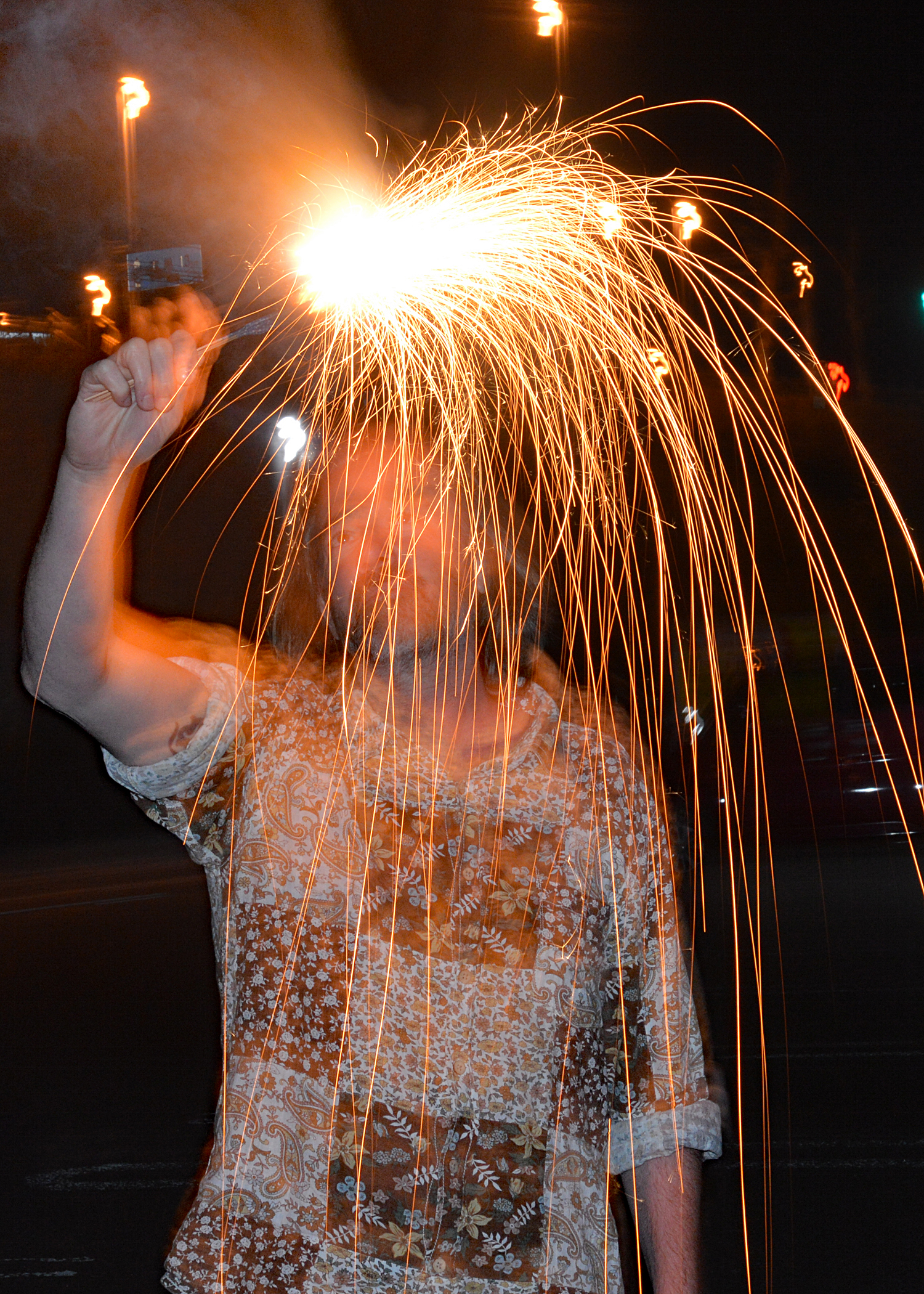
Jason Emde is a teacher, writer, undefeatedamateur boxer, Prince enthusiast, and podcaster with an MFA in Creative Writingfrom the University of British Columbia. A finalist for the CBC CreativeNonfiction literary award, Jason is also the author of MyHand’s Tired & My Heart Aches (Kalamalka Press, 2005) and little bit die (Bolero Bird, 2023). Focused on roving, expatriation,pilgrimage, loss, and systematic derangement of the senses, his work hasappeared in Ariel, The Malahat Review, Prometheus Dreaming, OxMag, SoliloquiesAnthology, Ulalume Lighthouse, PopMatters, The Watershed Review, Brush Talks,The Closed Eye Open, Short Writings from Bulawayo III, and Who Lies Beautifully: The KalamalkaAnthology, as well as featuring in Orange Lamphouse’s Post-a-Poem project. Emdelives in Japan with his wife, Maho, and their typhoon sons, Joe and Sasha.
did your first book or chapbook changeyour life? How does your most recent work compare to your previous? How does itfeel different?
Myfirst book changed my life by changing nothing at all. I fully expected it tovault me to the toppermost of the poppermost in no time flat and after it soldabout twenty-seven copies I realized the world, literary and otherwise, wasn’tlining up to pat me on the back and reward me or even notice me at all. Whichwas a very useful lesson. As for my most recent work, I like to think it’s lessindecently solipsistic than my previous stuff. It’s still often about me, butit’s also about where I am, about landscape and place. I’ve learned to noticenot just the thing—me—but the things aroundthe thing, too. At least a little bit, anyway.
How did you come to poetry first, asopposed to, say, fiction or non-fiction?
Icame to plagiarism first. My first“book”—created in elementary school, grade three or thereabouts—was a truncatedrewrite of The Tower Treasure byFranklin W. Dixon, the first Hardy Boys adventure. I stole the characters, theplot, some dialogue, copied a couple of the illustrations, and added a fewlittle mysterious touches of my own. I got to poetry a little later, around 15or so, scribbling graceless, awkward lines in little notebooks, and probablystill plagiarizing—if slightly less obviously—the poets and lyricists I wasinto at the time. I read a lot of fiction when I was a kid—almost only fiction, actually—but I think I wasdrawn to poetry because it seemed both easier and sexier. I was wrong aboutthat, of course. Or half-wrong, maybe.
How long does it take to start anyparticular writing project? Does your writing initially come quickly, or is ita slow process? Do first drafts appear looking close to their final shape, ordoes your work come out of copious notes?
Itdepends. If I’ve got a non-fiction piece in mind, I tend to let it brew andtransude and filtrate for a while, and take it for walks, and make littlenotes, so that when I sit down to actually write it I’ve done a lot of workalready and the basic structure tends to be more or less intact. After thatit’s minor fixes and incremental improvements and linking up the connections.When I’m writing poetry I tend to be a little more spontaneous, or in any casetry to be. That means a lot of my notebook scribbling turns out to be unusablecrap, but occasionally I dash off something workable and there it is, almostready to go. Susan Musgrave said, “Mystery, unknowing, is energy.” For me thequickest way to access that energy is to go in not really knowing what’s goingto happen or where I’m going or anything. Being comfortable with unknowing andthen not being afraid to tread all over the place.
Where does a poem or work of fictionusually begin for you? Are you an author of short pieces that end up combininginto a larger project, or are you working on a "book" from the verybeginning?
RobertFrost once wrote, “A poem begins with a lump in the throat; a homesickness or alovesickness. It is a reaching out toward expression; an effort to findfulfillment.” That’s more or less how things begin with me. A throb, a wisp, ahint, a clue. And I’ve worked on projects in both directions: assembling littlepieces that start, somehow, to click together until a bigger possibility, abigger idea, begins to show itself, and also sitting down and writing the firstsentence of what I know is a book. Depends on the project. Depends on theparticular homesickness and lovesickness, too.
Are public readings part of or counterto your creative process? Are you the sort of writer who enjoys doing readings?
Iused to do readings quite a bit in college, and always dug them in anegomaniacal way. I’ve always wanted to be a rock star, to be Prince or MichaelStipe or Ace Frehley or Lucinda Williams, or rather Prince and Michael Stipe and AceFrehley and Lucinda Williams, andwear cool clothes and crazy make-up on stage in front of tons of rapturous fansand lots of women with exotic tastes. Doing readings was the closest I evergot. And the best compliment I ever got after a reading was overheard by afriend of mine: “You know that guy who looks like Michael Stipe? He read a poemabout his penis!” Don’t think I’vedone a reading in Japan, or at least nothing public. The foreign communitywhere I live is very small, and the slice of that community that’s interestedin poetry or even reading at all is even smaller. Everything is Twinkle Pandavideo games you play on your phone. Nobody cares about my dopey little poemsexcept for a few tender and very intelligent friends.
Do you have any theoretical concernsbehind your writing? What kinds of questions are you trying to answer with yourwork? What do you even think the current questions are?
Ithink the current question is the same it’s always been: how to get through theday without doing too much damage to your dignity or damaging anybody else’s.That’s about it.
What do you see the current role of thewriter being in larger culture? Do they even have one? What do you think therole of the writer should be?
It’svery weird to care deeply about scribbling in notebooks and blackening pagesand reading all the time and buying too many books and hosting a podcast aboutwriting and being interested in what your friends are reading and writing andsending actual letters and postcards to people and agreeing with Morrissey whenhe sings “There’s more to life than books, you know, but not much more” andthen finding yourself talking to some guy in an airport bar and the guy says,“Why read books? I haven’t read a book since high school” and he’s proud of it. I’m all for whatever getsyou through the night—and for me it’s books, it’s always been books—but formost people, and more and more, it seems to be other stuff. If people want tospend their time playing Shiny Bubblegum Princess games on their phone that’sup to them, but it doesn’t give meany pleasure. The writer’s role is clearly much diminished. But all that reallymeans is that if you still feel compelled to write, knowing nobody gives ashit, it means you’re really awriter. It also means you’re free to write whatever the hell you want. Nothaving a role, or having a role so small it amounts to the same thing, meansspirit is free to play where it will. And maybe that then becomes the role. The more people who are free, on whatever level,to do what they love, creatively, the more energy must be injected into thelarger culture. In any case it’s very pretty to think so.
Do you find the process of working withan outside editor difficult or essential (or both)?
Essential.There’ll always be stuff I miss, either mistakes or connections. I’m always allparts grateful when somebody points them out to me. I’ll take all the help Ican get my hands on.
What is the best piece of advice you'veheard (not necessarily given to you directly)?
Thebest advice I ever heard is in Gary Snyder’s poem “Stories in the Night”:
I try to remember machinery can
always be fixed - but be ready to
give up the plans that were made
for the day - go back to the
manual - call up friends who know
more - make some tea - relax with
your tools and your problems, start
enjoying the day.
Idon’t think of poems as machinery, but this is beautiful advice for life and writing.
How easy has it been for you to movebetween genres (poetry to fiction)? What do you see as the appeal?
BecauseI lack imagination, I’ve always mined my own life for material, which meansI’ve written very little fiction. I took exactly one fiction class when I wasdoing my Master’s and got my lowest grade. It was a bit of a struggle, frankly.Recently I’ve started reading moreand more fiction—Paul Lynch’s Gracegot me started again, because it’s brilliant and beautiful—but I’m still notparticularly interested in writing any. I lack the strength and skills for suchadventures. As for moving between non-fiction and poetry, it’s never beendifficult, which probably means I’m more interested in journalism than beauty.But we all have our crosses to bear.
What kind of writing routine do youtend to keep, or do you even have one? How does a typical day (for you) begin?
Apartfrom trying to write something—anything—every day, I don’t really have aroutine. I keep trying to implement one but I never manage to stick toanything.
When your writing gets stalled, wheredo you turn or return for (for lack of a better word) inspiration?
Longwalks. Nothing else works half as well.
What fragrance reminds you of home?
Somebodysmoking outside when it’s really cold out always reminds me of Canada, becausemy best pal Stan and I started smoking in a serious way in the fall and winterof 1988, on long walks around town. As for my home now, there’s a certain typeof incense that I burn a lot. I burn so much of it that when I took somepaperbacks to the foreign book exchange corner in the Bier Hall here in Gifuand my pal Tom picked one of them up sometime later, he immediately knew it hadbeen mine because of the smell. The whole book smelled like home. My home.
David W. McFadden once said that bookscome from books, but are there any other forms that influence your work,whether nature, music, science or visual art?
Definitelymusic. I’ve probably been more influenced by my favourite singer-songwritersthan everything else combined. Bob Dylan, Leonard Cohen, Tom Waits, MichaelStipe, Joni Mitchell, and Morrissey all had, and have, a tremendous impact onmy work.
Imet David McFadden once, and asked him what question he always hoped somebodywould ask him but no one ever did. He said, “Can I buy you a drink?”
What other writers or writings areimportant for your work, or simply your life outside of your work?
Thereare some writers who just make me feel better, who help me get through thenight, who make me love being alive, who make me excited to go outside and lookaround and talk to people. Jack Kerouac, Don DeLillo, Joan Didion, David Foster Wallace, William Faulkner, Susan Musgrave, Paul Lynch, Gary Snyder, Sharon Olds, Lucia Berlin, John McPhee, Ottessa Moshfegh, Louis-Ferdinand Celine,Dazai Osamu, Allen Ginsberg, Martin Amis, Walt Whitman, Janet Malcolm.Loveliness.
What would you like to do that youhaven't yet done?
Getrich from writing. Like, megastrophically rich.
If you could pick any other occupationto attempt, what would it be? Or, alternately, what do you think you would haveended up doing had you not been a writer?
Ithink I’d like to be a criminal mastermind with a sinister master plan.
What made you write, as opposed todoing something else?
Idon’t really know; maybe it’s like what Adam Gopnick writes in The Real Work: “There was no primitivetrauma in history that made mankind as it is any more than there is a primaltrauma in childhood that made us as we are. We are this way because it’s theway it happened.” In other words it came to pass as most like it was. But I’dimagine that growing up in a house full of books, with two parents who weregreat readers, and having had one or two very encouraging teachers early on hadsomething important to do with it. And it’s a great privilege to have a part,now, no matter how small, in the world of books. A very great privilege indeed.
What was the last great book you read?What was the last great film?
Lastgreat novel: Ian McEwan’s Lessons.Last great book of poetry: Susan Musgrave’s ExculpatoryLilies. Last great piece of non-fiction: Gary Snyder’s The Practice of the Wild. Last great film: Barton Fink. I watched BartonFink with my dad only yesterday, actually. It was great. He’d never seenit.
What are you currently working on?
It’sonly in the percolating phase right now, but I want to write something—I don’teven know what, yet—about my neighbourhood here in Japan. The few blocks aroundmy house, the little postage stamp of land where I live. Deep focus on a smallarea. Intense focus on where I am. Robert Frost again: “Locality gives art.”I’m only now learning what John Lent tried to teach me a long time ago: whereyou are is interesting. You don’thave to go to New York or Paris to find a place to write about, there areenough interesting blunders and fiascos and little bits of beauty and all kindsof fascinations all over the place and the trick is to believe in the dignityand worth of your own experience and be right in your body right in the middleof it all, noticing. It’s like I’m constantly telling my son, when his mindwanders to what might happen in thirty minutes or what the next thing is goingto be, in the future where it’s bound to be better and more interesting than itis here, at this moment: be where you are.Be here now. It took me a long timeto even begin to understand that that’s the real work, and I want to seewhat I can do with it in my notebook. Oneof my notebooks. I’ve got quite a few.
May 20, 2023
Weyman Chan, Witness Back at Me
Tired yet strong, you tellme to read the White Paper. Nothing
knows its place. Sundayyou help me dig daikon, radishes like ice
stab the red earth ofHeng Ha. Rain to atmospheric mist.
River mist, you aren���t lichenor reparation, don���t mouth off or
look back. Water is the firstdrum, though places forget.
Rats of the bang, wronghuman, Paxil. We face the land we forget ���
North west thaw, Devonianchinquapin. Tokuhon
plasters collide me withthe daikon of my dad. Limbs drunk on
camphor, he loved StampedeWrestling. Kroffat vs. Kamata
raised thee rat x2:Dad���s rage, 1923 vintage exclusion. Rat, times
July 1 pharma-gradeplunge, equals Dad spiked with alcohol. (���SITTING WITH SHARRON���)
 Composedas a collage-elegy is Calgary poet Weyman Chan���s sixth full-length collection,
Witness Back at Me
(Vancouver BC: Talonbooks, 2023). Subtitled ���mis-mothering &transmigration,��� Witness Back at Me is a book-length elegy of witnesscomposed through a lyric of stunning complexity around language, loss, griefand connection. As the back cover offers: ���Suffused with a collage-like immersionof stream-of-conscious voices, Witness Back at Me parallels Chan���schildhood loss of his mother to breast cancer with the loss of his Two-Spirit M��tisfriend and mentor, writer Sharron Proulx-Turner.��� The book is structured in fiveparts������Did Nietzsche Have a Navel,��� ���My Surname Is Dust,��� ���The Hole to HeavenYou Dug,��� ���That Old Vast Emptiness��� and ���Inscrutably Mis-Mothered������and thecollection is a wealth of sound, jumble and narrative layering, weaving in andthrough lines on and by Proulx-Turner, offering a through-line of the heart. Thepoems examine her work and his relationship to her, and to her work, providingan image of his mentor and her work that looks back at him, as well. ���I too /am split from monster.��� he writes, as part of the poem ���DEFUNDING MY FEELY MAP.���The poem writes, further along: ���if sorrow is / a stomach in a pond / or aclavicle neither beside nor / behind, if sorrow is / an op-ed that helped menot die // will you witness back at me? / that crow-wing blanket that helpedyou fly / above your own terror // Sharron, if I get lost // if parchment wasever innocent of its writ / to not have at least five tricks played on you [.]���The poems are masterful, richly evocative with a density of syntax, texture andsound. ���how do I witness / when I am the land that I forget?��� he writes, toclose the opening sequence, ���SITTING WITH SHARRON,��� ���I did not / plan to live outside the dead // orjust by thinking this / haven���t I already changed the outcome [.]��� As part of his���Afterword,��� Chan offers:
Composedas a collage-elegy is Calgary poet Weyman Chan���s sixth full-length collection,
Witness Back at Me
(Vancouver BC: Talonbooks, 2023). Subtitled ���mis-mothering &transmigration,��� Witness Back at Me is a book-length elegy of witnesscomposed through a lyric of stunning complexity around language, loss, griefand connection. As the back cover offers: ���Suffused with a collage-like immersionof stream-of-conscious voices, Witness Back at Me parallels Chan���schildhood loss of his mother to breast cancer with the loss of his Two-Spirit M��tisfriend and mentor, writer Sharron Proulx-Turner.��� The book is structured in fiveparts������Did Nietzsche Have a Navel,��� ���My Surname Is Dust,��� ���The Hole to HeavenYou Dug,��� ���That Old Vast Emptiness��� and ���Inscrutably Mis-Mothered������and thecollection is a wealth of sound, jumble and narrative layering, weaving in andthrough lines on and by Proulx-Turner, offering a through-line of the heart. Thepoems examine her work and his relationship to her, and to her work, providingan image of his mentor and her work that looks back at him, as well. ���I too /am split from monster.��� he writes, as part of the poem ���DEFUNDING MY FEELY MAP.���The poem writes, further along: ���if sorrow is / a stomach in a pond / or aclavicle neither beside nor / behind, if sorrow is / an op-ed that helped menot die // will you witness back at me? / that crow-wing blanket that helpedyou fly / above your own terror // Sharron, if I get lost // if parchment wasever innocent of its writ / to not have at least five tricks played on you [.]���The poems are masterful, richly evocative with a density of syntax, texture andsound. ���how do I witness / when I am the land that I forget?��� he writes, toclose the opening sequence, ���SITTING WITH SHARRON,��� ���I did not / plan to live outside the dead // orjust by thinking this / haven���t I already changed the outcome [.]��� As part of his���Afterword,��� Chan offers:Decades before herpassing, Sharron braided me a rope of sweetgrass. It hangs on my car mirror asa talisman. I couldn���t have been loved & mentored by a more thoroughlyin-tune soul & spirit. My book of witnessing is a tribute to truth-telling&, by sheer luck of the draw, of finding my way to a safer place to land,on settler land that my father sailed to by means of a dead child���s identity, boughton paper. My shaky narrative of soul wandering & reintegration is a tributeto all of my get-togethers with Sharron & her children. The amazing Frenchonion soup with globs of cheese, her description of blues & greenshallowing the eye on a summer���s day.
May 19, 2023
Marie-Andr��e Gill, Heating the Outdoors, translated by Kristen Renee Miller
Sometimes I close my eyesand pretend I���m there:
You flip the choke, yankthe cord, and we take off in a black cloud. With this much snow, we can���t breakdown; I���m not even wearing a coverall. I���m enveloped by something like thatsaying, everything in its own place. You steer through trees in thedark, turn on a dime. Branches in my face, flakes in my eyes���with you I���d neverget stranded.
It would make a goodtitle for something, I tell myself: Dances with ski-doos. (���LIKE NOTHINGEVER HAPPENED���)
 Itis curious to realize that I know the name of Montreal-based Ilnu Nation member Marie-Andr��e Gill through the review J��r��me Melan��on did over at periodicities:a journal of poetry and poetics of
Chauffer le dehors
(La Peuplade, 2019).That same collection, her third to be published in the original French, has nowappeared in English translation via translator Kristen Renee Miller, publishedas
Heating the Outdoors
(Toronto ON: Book*hug, 2023) as part of Book*hug���s���Literature in Translation��� series. The back cover offers that Heating theOutdoors ���describes the yearnings for love, the domestic monotony ofpost-breakup malaise, and the awkward meeting of exes. As the lines betweeninterior and exterior begin to blur, Gill���s poems, here translated by KristenRenee Miller, become a record of the daily rituals of ancient landscapes thatinform her identity not only as a lover, then ex, but also as an Ilnu and Qu��b��coisewoman.��� Composed into clusters of sketched-out fragments that feel composed inreal time, Gill���s book-length lyric is structured in a quartet of lyric suites,threads of accumulating sections: ���LIKE NOTHING EVER HAPPENED,��� ���SOLF��GE OFSTORMS,��� ���THE RIOT STARTS WITHIN��� and ���THE FUTURE SHRUGS.��� ���On a bed of firsaplings,��� she writes, near the end of the second section, ���we touched thatmute, ephemeral / beauty. We stumbled out, uncertain, searching for the edible/ root of language, nursing our dazzling wounds. Together we / drove a streetsweeper over our ghosts. // In any case, we knew what to do with our bodiesbetween / thunderstorms.��� Gill writes a sequence of meditative sketches on the wildsof domestic matters and domestic matter into clusters of lyric propulsion,moments captured in turned light, and the intimacy of each small moment,contained and collected, simultaneously holds an infinite space. ���Still writingto survive,��� she offers, in the first section, ���I make to-do lists, interpretfading / images from good dreams: fried onions and hot soups, / chanterellesand apple tarts, our accidents of simple / happiness.���
Itis curious to realize that I know the name of Montreal-based Ilnu Nation member Marie-Andr��e Gill through the review J��r��me Melan��on did over at periodicities:a journal of poetry and poetics of
Chauffer le dehors
(La Peuplade, 2019).That same collection, her third to be published in the original French, has nowappeared in English translation via translator Kristen Renee Miller, publishedas
Heating the Outdoors
(Toronto ON: Book*hug, 2023) as part of Book*hug���s���Literature in Translation��� series. The back cover offers that Heating theOutdoors ���describes the yearnings for love, the domestic monotony ofpost-breakup malaise, and the awkward meeting of exes. As the lines betweeninterior and exterior begin to blur, Gill���s poems, here translated by KristenRenee Miller, become a record of the daily rituals of ancient landscapes thatinform her identity not only as a lover, then ex, but also as an Ilnu and Qu��b��coisewoman.��� Composed into clusters of sketched-out fragments that feel composed inreal time, Gill���s book-length lyric is structured in a quartet of lyric suites,threads of accumulating sections: ���LIKE NOTHING EVER HAPPENED,��� ���SOLF��GE OFSTORMS,��� ���THE RIOT STARTS WITHIN��� and ���THE FUTURE SHRUGS.��� ���On a bed of firsaplings,��� she writes, near the end of the second section, ���we touched thatmute, ephemeral / beauty. We stumbled out, uncertain, searching for the edible/ root of language, nursing our dazzling wounds. Together we / drove a streetsweeper over our ghosts. // In any case, we knew what to do with our bodiesbetween / thunderstorms.��� Gill writes a sequence of meditative sketches on the wildsof domestic matters and domestic matter into clusters of lyric propulsion,moments captured in turned light, and the intimacy of each small moment,contained and collected, simultaneously holds an infinite space. ���Still writingto survive,��� she offers, in the first section, ���I make to-do lists, interpretfading / images from good dreams: fried onions and hot soups, / chanterellesand apple tarts, our accidents of simple / happiness.���