Bill Cheng's Blog, page 99
May 12, 2013
colchrishadfield:
With deference to the genius of David Bowie,...
With deference to the genius of David Bowie, here’s Space Oddity, recorded on Station. A last glimpse of the World.
Huge thanks in the making of the video to the talented trio of Emm Gryner, Joe Corcoran and Andrew Tidby, plus Evan Hadfield and all at the CSA.
WHAT


I’m bringin’ it back
I’m bringin’ it back
Thanks to Alex Gilvarry who sent this to me (who I will be in...

Thanks to Alex Gilvarry who sent this to me (who I will be in conversation with at 7:30 this Tuesday)
ALSO on display is The Flame Throwers by Rachel Kushner (of which I am hearing tons of great things) and is that Neil Gaiman’s looking roughish roguish out through the glass?
May 11, 2013
millionsmillions:
Take an exclusive sneak peek at the first 35...
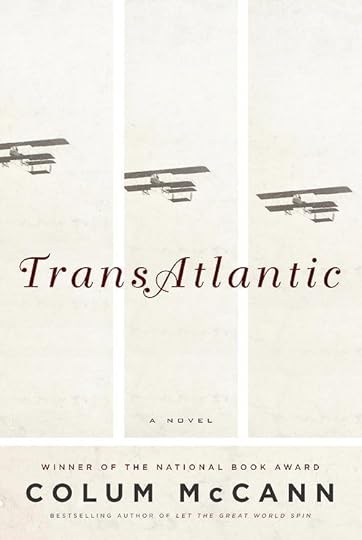
Take an exclusive sneak peek at the first 35 pages of Colum McCann’s forthcoming novel, why don’t you?
Why Haruki Murakami Translated F. Scott Fitzgerald's "The Great Gatsby" Into Japanese
An essay by Haruki Murakami.
When someone asks, “Which three books have meant the most to you?” I can answer without having to think: The Great Gatsby, Fyodor Dostoevsky’s The Brothers Karamazov, and Raymond Chandler’s The Long Goodbye. All three have been indispensable to me (both as a reader and as a writer); yet if I were forced to select only one, I would unhesitatingly choose Gatsby. Had it not been for Fitzgerald’s novel, I would not be writing the kind of literature I am today (indeed, it is possible that I would not be writing at all, although that is neither here nor there) … Though slender in size for a full-length work, it served as a standard and a fixed point, an axis around which I was able to organize the many coordinates that make up the world of the novel.
Full essay: Click.
biologicalmarginalia:
Hey, wait a second…
From Heintzelman’s A...
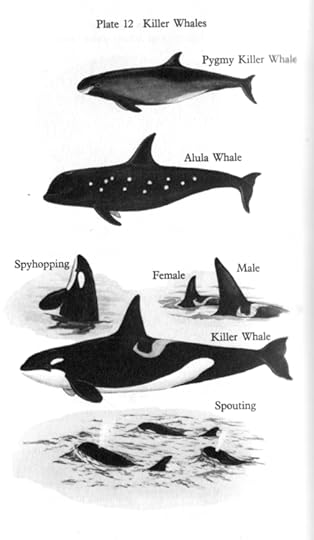
Hey, wait a second…
From Heintzelman’s A World Guide to Whales, Dolphins, and Porpoises (1981):
Alula Whale Orcinus mörzer-bruynsus
Other Name: Alula Killer.
Length: 24 feet (7.2 meters).
Weight: 4,000 pounds (1,814 kilograms).
Description: A sepia brown Orcinus whale with a well-rounded forehead and white, star-like scars on the body. The dorsal fin, about 2 feet (0.6 meters) high, is prominent and often protrudes well above the surface of the water. This species was discussed and illustrated for the first time, but not formally named, by W. F. J. Mörzer Bruyns in Field Guide of Whales and Dolphins.
Food: Information unavailable.
Habitat: Deep coastal waters.
Distribution: Eastern Gulf of Aden to Socotra.
So what the hell is this thing? I can’t help but think of the recently recognized Antarctic Orca variants, some of which are yellowish or brownish (Types B and C) and one of which does have a blunt head (Type D). So could this be a little-recognized Orca variant hiding off the Arabian peninsula? None of the known variants lack a saddle or eye patch and the drawing seems a bit Pilot Whale-like to me. Oceanic Dolphins are capable of really odd and sometimes fertile hybrids (Pseudorca x Tursiops, Tursiops x Grampus), which could explain the lack of subsequent sightings. Or maybe, Bruyns made a mistake and this is an unusually recent fantastical sea monster.
May 10, 2013
“Writing out my confession, I have tried to capture the...
“Writing out my confession, I have tried to capture the essence of my life. Because everything I write about is in the past, I don’t see myself as living anymore… The present is shifted instantly in the past, and what had once seemed unfathomable— torment, misery, profound suffering— is now actual.
Now that I approach the end of my confession, I find that I am beginning to lose hold of my character. I have become removed from the hero of my own story, you see. To lose hold of your own character must be part of the natural order of things in No Man’s Land.” —Boy Hernandez, From the Memoirs of a Non-Enemy Combatant, by Alex Gilvarry
I’ll be in conversation with Alex at the Greenlight Bookstore in Brooklyn this Tuesday at 7:30
myimaginarybrooklyn:
Claire Messud is a Novelist, Not a “Woman...
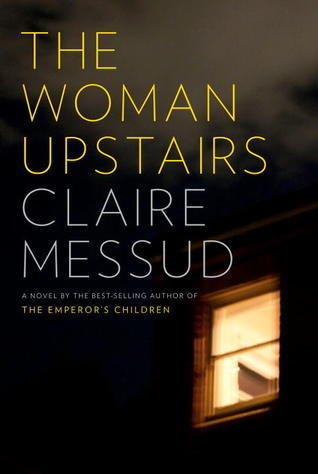
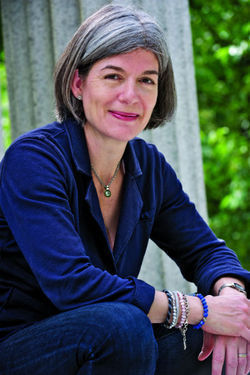
Claire Messud is a Novelist, Not a “Woman Novelist”
“How angry am I? You don’t want to know,” begins the gripping first chapter of Claire Messud’s new novel, The Woman Upstairs (Knopf). The furious voice belongs to Nora Eldridge, an unmarried 37-year-old elementary schoolteacher, dutiful daughter, and all-around good girl who no one would guess is boiling with rage on the inside. Why she’s so angry (she wants to put “FUCK YOU ALL” on her gravestone) has much to do with the mother of a new child in her class, a sophisticated European artist named Sirena, who reignites Nora’s secret passion to be an artist and ultimately betrays her. A riveting psychological thriller, Messud’s fourth novel is her first book since the bestselling The Emperor’s Children, which was long-listed for the 2006 Man Booker Prize.
She reads at 7 p.m. tonight at Barnes & Noble (2289 Broadway), and at 7 p.m. on Thursday at the Center for Fiction. Over the phone from her house in Cambridge, she discussed her epiphany at the age of 37, her working relationship with her husband, New Yorker book critic James Wood, and how having children might have helped her to become a bestselling author.
Where did the idea come from to write about this schoolteacher who finally decides, at age 37, to pursue her secret dream to be an artist? Any book comes from lots of different impulses and strands that come together, like a bird making a nest. But one of them certainly was my own realization, at about that age, that time wasn’t infinite. I feel as though we’re very privileged—not everybody—but many of us in our contemporary American culture are privileged to have a really long youth compared to people historically. In some other cultures in the world today, you have to be a grownup by the time you’re 12. But certainly we’re able to feel that everything lies before us for a long time, and then there comes some moment where you think, you know, it’s not all before me actually. [Laughs.] Now some of it is behind me.
The first chapter begins with this terrific rant from Nora before she tells us the story of why she’s so angry. We definitely don’t get enough good angry female rants in fiction. Is this always how you wanted to start the book? Or did you write that much later? No, that’s what I wrote first, and for a while that’s all there was. That voice sort of came to me. I’ve always loved a rant as a reader. And I felt, as you just said, the ranting women are sort of thin on the ground. And so, partly I wanted to make space for that voice. I do think, in that question of where there are still gender differences in this world, we live in a time when anger is discouraged—not wrongly necessarily, but it’s discouraged—and it’s always been totally unacceptable for women to be angry. I can cite experiences of working in offices where there were men who would blow their tops and shout and everyone would roll their eyes and say, “You know, that’s just Roger.” But if a woman were to do the same thing, she’d be considered unhinged. But I don’t think that means that women don’t experience anger.
Readers will likely assume that you relate best to Sirena, the successful artist who has it all. But do you ever relate to Nora, the woman who feels pressured to put others before herself and her art? I was brought up with, on the one hand, a sort of strong feminist ethic, but also with the understanding that—and I wouldn’t say even that women should do these things, but that one should do these things—taking care of family and being kind to others and being a decent citizen and doing your part were important. At some point, the people who, like Sirena, get the most done, they throw over being a decent citizen. The thing about reaching the age of 37 and realizing that not all time is still before you is also this realization that you have to make choices. Every time you choose to visit the sick or listen to a friend talk about her troubles or volunteer at the food bank, any time you’re doing those things, you’re not doing the other things.
Even if you think you’re not making a choice, you think you’re just doing your duty, it’s tantamount to a choice. You might as well be consciously aware that you’re making that choice. Which doesn’t mean you can choose otherwise. Sometimes it doesn’t feel like a choice. When my parents were ill, it’s not as though it was a choice for me whether I would spend time with them. But there are many who wouldn’t have, and I was aware of that. I was aware that the choice, which was the only choice I could make, was also one that was putting my family before my work. And, if you had some statistical demographic analysis of that, you’d find that that was more a woman thing than a man thing.
There is that fear among female authors that if they choose a female protagonist that their books won’t be as successful. Is that something you worried about before starting this book or ever think about in regards to your work? It is certainly something that I have thought about over the years. Nobody wakes up in the morning and thinks, “I want to be a woman novelist,” any more than anybody thinks “I want to be an Asian-American novelist.” No, you just want to be a novelist. You hope that you will be able to reach as broad of an audience as possible. In writing this book, the story felt urgent to me for all sorts of reasons, and so I wasn’t thinking about it. Usually when I’m writing something, I’m not worrying about who’s going to read it. But I was aware that if any of my books could be said to be one that women are more likely to read, this would be one. But I also felt like, well, that’s fine. There are plenty of novels about baseball, and I don’t read them. The novel is about being human, and it should be of interest to everybody. But if it’s not, then that’s OK.
Writers, especially female writers, are told that having children will prevent them from writing books. Your first bestseller came not long after your two children were born. Is parenthood good for writing fiction? Parenthood generally has got to be good for writing fiction because you learn so much. So you have to feel that it’s gotta be better than knowing less. But I also felt, for me, The Emperor’s Children was written in such a different way than things I’d written before. I can be a little obsessive in the revision. I would go over and over things, and I just couldn’t as much that time. I always wondered if that was actually better, if that had actually been an improvement. Perhaps the prose was less tortured or less something.
Did you try to use that same approach this time? There was a lot of revising with this book. But it’s always a little bit like learning the lines for the school play. You don’t really know how you do it. You just fumble along until you get to the end. So I don’t really know.
Recently, in the Sydney Morning Herald, you described your husband’s role as your first reader as that of “a vague but loving cheerleader.” It almost sounds like he’s not very critical of your work. No, he’s more critical the more there is. If I have 50 pages, and I ask him to read it, he’s supportive unless he thinks they’re really dire and says ditch this project. But if he doesn’t say that, he’s unlikely to say, “You know, the section from 28 to 32 really needs work.” He’s not going to do that at that point. When he’s first reading things, he’s mostly saying, “Keep going! Great! I’m interested!” And that’s it. And when there is a whole manuscript, then it’s different. Then, he reads it in a different way. It’s like if you have a little shoot in the garden, you don’t want to cut it, you wait till it’s bigger to trim it.
Being too nitpicky at first can be stifling or make you overthink things. Right. Basically, in the early stages when he reads it, he’s doing me a favor. And, really we both secretly know that what I want is a sort of pat on the back to say keep going. And then later it’s different. I guess he’s still doing me a favor later. It’s a different sort of favor.
May 9, 2013
I’m still reeling from my book launch yesterday at...

I’m still reeling from my book launch yesterday at B&N, then Swift’s Hibernian Lounge (thanks all, for coming)— and I’ve bubbled up from the deepest recesses of my hangover to settle on the scummy miserable surface that we call consciousness. Anyhow, quick update:
I’m in the New York Times today.
I was on WNYC’s Leonard Lopate Show yesterday afternoon.
(Also, didn’t mention it earlier but I was also on NPR’s All Things Considered last week…)
I wasn’t lying: B&N picked me to be their Discover Pick for the Summer. (Q&A past the click-through)
My book is with great company on Amazon’s May picks.
And don’t forget about this next week at Greenlight Bookstore.
PLEASE KEEP IT DOWN
May 8, 2013
explore-blog:
James Joyce plays the guitar, 1915. Though...
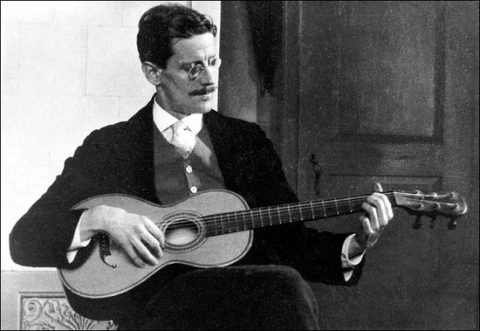
James Joyce plays the guitar, 1915. Though best-known for his formidable fiction, Joyce was a man of many lesser-known talents, including poetry and children’s books.