Bill Cheng's Blog, page 19
October 6, 2014
thekurosawaproject:
Film stills don’t get much better than...
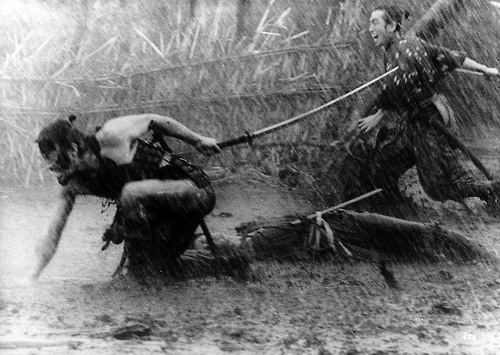
Film stills don’t get much better than this. Mifune (L) and Seiji Miyaguchi (R) in “Seven Samurai” (1954).
After “Ikiru,” Kurosawa and his screenwriting team - Shinobu Hashimoto and Hideo Oguni - wanted to make a film exploring a day in the life of a samurai, but the idea was too vague. Looking over the enormous amount research material compiled, Kurosawa found a tidbit about a group of samurai who came together to protect a village from bandits.
The team sat down to explore the idea and ended up writing a 500 page script.
I need to re-watch Ikiru actually…


scinote:
What is it like to live and do science at a South-Pole...
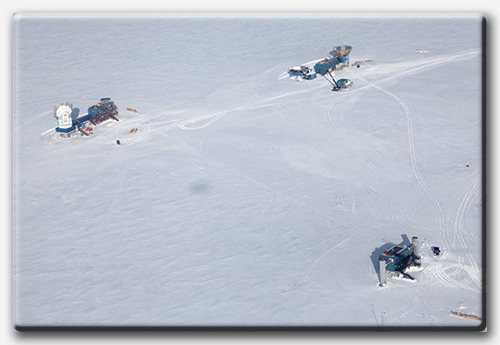
What is it like to live and do science at a South-Pole research station?
Can you imagine living in the frigid and utterly desolate environment of the South Pole for nearly 11 months? Well, we can’t either, but Jason Gallicchio, a postdoctoral researcher at the Amundsen-Scott South Pole Station, has done it.
Gallicchio, an associate fellow for the Kavli Insitute of Physics at the University of Chicago, is part of an astrophysics experiment at the South Pole Telescope. He knows all about the challenges of building and maintaining such a complex scientific instrument in one of the most unforgiving places on the planet. Gallacchio was primarily responsible for the telescope’s data acquisition and software systems, and he also occasionally assisted with some maintenance work.
You might ask why anyone would even put a telescope in such a hostile environment in the first place. It’s not an accident, I promise! Actually, placing the telescope at the South Pole minimizes the interference from the Earth’s atmosphere. One of the primary objectives of the South Pole Telescope is to precisely measure temperature variations in the cosmic microwave background, and getting such precise measurements requires the telescope to be put in a high, dry, and atmospherically stable site.
The South Pole Telescope is 10 meters across and weighs 280 tons. Researchers use this telescope to study cosmic microwave background radiation (or CMB, as it’s often affectionately called), hoping to uncover hints about the early days of our universe.
As Erik M. Leitch of the University of Chicago explains, CMB is a sort of faint glow of light that fills the universe, falling on Earth from every direction with nearly uniform intensity. It is the residual heat of creation—the afterglow of the Big Bang—streaming through space in these last 14 billion years, like the heat from a sun-warmed rock, re-radiated at night.
Click here to read more about life at the Amundsen-Scott South Pole Station.
You can learn even more about the topics discussed in this summary at the links below:
Amundsen-Scott South Pole Station
A brief introduction to the Electromagnetic spectrum
Cosmic microwave background
A day in the life of South Pole Telescope
Big Science With The South Pole Telescope
Submitted by Srikar D, Discoverer.
Edited by Jessica F.
Losing My Religion: A Reading List
“How Does It End?” (David Burr Gerrard, Guernica, September 2014)Scott Cheshire’s past as a child preacher intersects with his current writing in unusual, apocalyptic ways. In this interview, Cheshire discusses the power of literature, growing up a Jehovah’s Witness, and the writing process for his novel, High as the Horses’ Bridles: “From the beginning, I wanted to write a novel with a hole in it—at least that’s how I referred to it. It was the only way I could articulate the problem, because faith does not fall away in a day—and sometimes reluctantly or not entirely at all.”
October 5, 2014
historical-nonfiction:
In 2012, the state-run media in the Democratic Peoples Republic of Korea...
In 2012, the state-run media in the Democratic Peoples Republic of Korea reported that archaeologists had found the ancient home of the kirin, a mythological chimeric beast that, according to legend, was ridden by King Dongmyeong of Goguryeo in the 1st century BCE. The North Korean government claims that the discovery proves that Pyongyang is the historic capital of Korea. Everyone else said, what is a kirin?
October 4, 2014
Why Not Eat Octopus?

Silvia Killingsworth on the ethics of eating an animal that has been characterized as “the closest we’ll get to meeting an intelligent alien”:
"It is impossible for us to fully know the inner lives of octopuses, but the more we continue to study them and other forms of life, the…
October 3, 2014
readingsbooks:
Intense, ironic, heartfelt, and heartbreaking,...
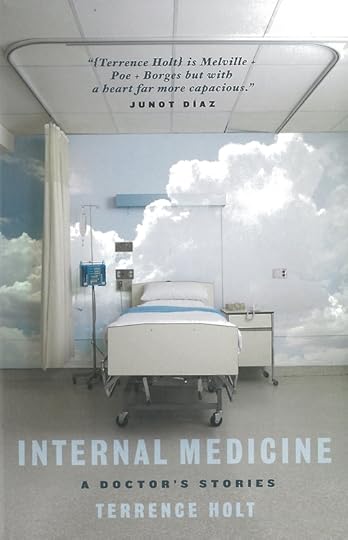
Intense, ironic, heartfelt, and heartbreaking, these nine vivid stories put us at the bedside of a patient dying in a house full of cursing parrots, through a nightmarish struggle to convince a man that he has cancer, at a life-and-death effort to keep an oxygen mask on a claustrophobic patient, and in the lounge of a snowbound hospital where doctors swap yarns through the night.
I BEGGED for an ARC of this book. Go read it.
October 2, 2014
September 30, 2014

September 28, 2014
bumblebookbee:
"It was a game, just another game, with G.D....
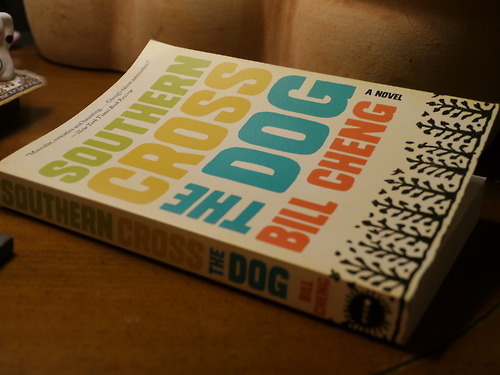
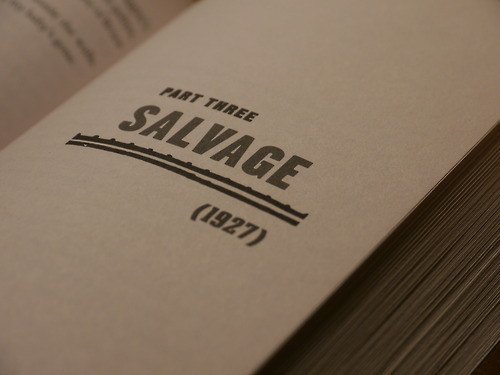
"It was a game, just another game, with G.D. again leading them on. She was their Sally Water again. They watched her part her hair, run her hand along the side of her neck, feeling the deep invisible currents of her body. Shake it to the east. Shake it to the west. And the thought came to them, separately, in that moment, that no one has to suffer."
-Bill Cheng, Southern Cross the Dog