Bill Cheng's Blog, page 127
February 22, 2013
On Characterization, the West Wing, and Marriage
me: you wouldn't cry if your husband were shot
me: you'd think. "Where should I hide this gun?"
wife: you know, and I had to pause my show to type this, but I just had the sick thought that an excellent place to hide a gun would be inside the person you just shot
wife: no one would think to look inside right away
though I suppose they'd do an autopsy
me: it would be the first place they'd look
wife: but if you hid it really deep somewhere they probably wouldn't even think to look there like in the stomach or something
if you managed to somehow surgically place it in the stomach
me: How would you get it in there?
wife: if you were a surgeon...
me: this is the most convoluted and worst murder idea ever
wife: There would be a scar. yeah ok. nevermind
you know, if I ever get tried for murder this is going to be used against me
wife: for the record: I AM JUST JOKING AROUND HERE
me: I feel like I need to blog this!
wife: cheng, I'll kill you
seriously, I will


90outloud:
From Carson McCullers’s The Heart is a Lonely...
From Carson McCullers’s The Heart is a Lonely Hunter, read by CJ Hauser. You can find the book at http://www.amazon.com/Heart-Lonely-Hunter-Oprahs-Book/dp/0618526412 and other major bookstores.
CJ writes: “I swear I only read for 90 but with my mugging it’s longer. I hope that’s okay!”
Only when you do it
Keep up with CJ at CJHauser.com
“Shenandoah” featuring Tom Waits and Keith...
“Shenandoah” featuring Tom Waits and Keith Richards, from ‘Son Of Rogues Gallery: Pirate Ballads, Sea Songs & Chanteys’
Throw your money at this
February 21, 2013
writersnoonereads:
[The following is a submission from C....
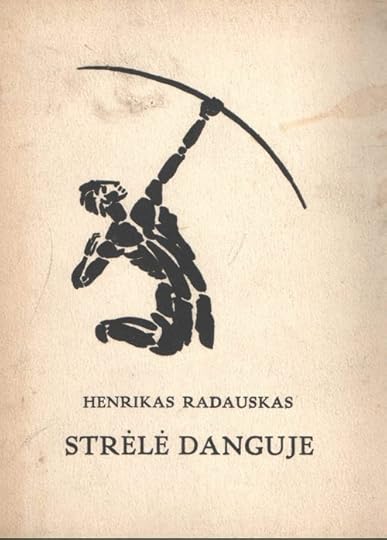
[The following is a submission from C. Torre, who blogs at Belcimer.]
What is the limit of human endurance, what tools do we have to fight against the forces that seek to overwhelm us – these are the impossible questions the Lithuanian poet Henrikas Radauskas once tried to answer. Radauskas is not read by anyone in the English-speaking world, and in truth he is now probably unknown to anyone outside his homeland. Yet his work is an example of the greatest determination, deserving to be read alongside that of Akhmatova and Mandelstam and the countless other poets who by intense labor sought out a measure of life in the midst of the unspeakable.
Born in 1910 in the city of Panevėžys in central Lithuania, the entirety of Radauskas’ life was determined by years of upheaval and devastation. As a youth he absorbed the writings of the French Romantics, the Russian symbolists, the Acmeists, the Polish poet Julian Tuwim; by the year of his death in 1970, had spent time as a teacher, a radio-announcer, a secretary, a manual laborer, and a librarian in Russia, Germany, Baltimore, Chicago, and Washington D.C. In 1946 he escaped from Soviet-occupied Berlin only to find himself in a displaced-persons camp where, under conditions of intense confinement, he resumed the artistic project he had been forced by war to set aside.
Four small volumes of poetry were published in Radauskas’ lifetime: Fontanas (The Fountain, 1935), Strėlė danguje (Arrow in the Sky, 1950), Žiemos daina (Winter Song, 1955), and Žaibai ir vėjai (Lightnings and Winds, 1965) and there is a notable fifteen-year gap between his first collection, made while still in Lithuania, and his second, produced by the émigré press abroad. To date only a single, slim collection has ever been available in the U.S., published by Wesleyan University Press in 1986 as part of a series under the title Chimeras In the Tower. The selections in that volume are divided between verse and prose and are frequently short, less than a page.
The entirety of a poem called “Winter and Summer” is this:
Everything was so warm and round:
Heaven and the sun, pears and grapes,
And the breasts of a young girl
Who waited for love in the shade of a cloud.
Autumn crushed the weeping grapes,
Winter strewed the fields with lime,
And the sun, dead bird of paradise,
Falls through my window like a stone.
Another, entitled “Speed” reads:
Pouring time and space into one straightaway, shivering in a great wind, speed, having smashed its steel hand across the landscape, sees that trees and poles, eyes shut with fear, fly screaming toward their inevitable destiny.
In both of these poems are the techniques that recur throughout Radauskas’ work: an aggressive, palpable sense of imagery, coupled with the description of a force beyond the reach of human comprehension. The reader finds little that is overtly specific, nothing unique – no places, houses, families, or towns are mentioned – everything presented in a simple, straightforward language that seems to strip the parts of things down to the element itself. And yet, despite this simplicity, everything is quite suddenly thrown on its end.
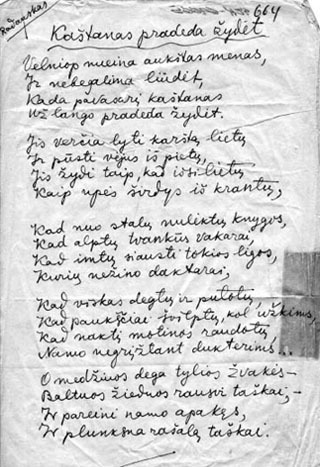
A poem titled “A Mechanical Angel,” presents a seemingly familiar myth:
A mechanical angel’s duties are not difficult:
Feed chimeras in the tower every hundred years,
Step softly so the metal does not clang,
Cloak freezing caryatids with fog.
That is immediately contradicted:
A mechanical angel’s duties are difficult:
Blockade the door, do not let Death in,
And if she enters, show her a sleeping brother,
And convince her he doesn’t have a soul.
This is a world in which the subjects are as condemned as the souls in Purgatory. That which is familiar is forever and inevitably subjected to a destabilizing paradox, as if the universe, being infinite, cannot yet be entirely determined.
In an essay, Radauskas’ translator Jonas Zdanys names his subject’ approach “applied aestheticism” – an attempt by the poet, in his view, to fashion a world beyond the reach of his terrible history and pain and freed from the sense of his world’s destruction. Zdanys uses as an example of purpose the poem “Arrow in the Sky”
I am an arrow that a child shot through
An apple tree in bloom beside the sea;
A cloud of apple blossoms, like a swan,
Has shimmered down and landed on a wave;
The child is wondering, he cannot tell
The blossoms from the foam.
I am an arrow that a hunter shot
To hit an eagle that was flying by;
For all his strength and youth, he missed the bird,
Wounding instead the old enormous sun
And flooding all the twilight with its blood;
And now the day has died.
I am an arrow that was shot at night
By a crazed soldier from a fort besieged
To plead for help from mighty heaven, but
Not having spotted God, the arrow still
Wanders among the frigid constellations,
Not daring to return.
Though Zdanys’ assessment overlooks, I think, the presence of destruction, he is perceptive in noting that Radauskas’ poems are otherwise not totally preoccupied with despair. They are not like those of Trakl or Baudelaire - there is still a sense, a very slight sense, that the future can be left unwritten (which is to say that the inverse might also be true: if the apocalypse is real, it may have already happened).
It is a sense of reflection after ending. Radauskas writes of eloquently in the poem “Muse”:
The dressmaker muse from Denis’s painting
Puts her sewing on the bench, rises,
Walks down an empty street of summer
Yellowed like a Chinese face.
The checkered dress begins to climb the stairs,
And beneath her feet an oak voice
Scans running words into iambs.
She goes through the heavy sleeping door
Like the wind and suddenly
Grows like a statue in the room.
Seeing the blind stone face
The children scream and start to run,
But she throws the children out the window,
And the geranium and the canary,
And the infants, flapping their wings,
Set down like angels in the square.
The flower sings in the street like a bird
And the canary sprouts
A bright yellow blossom. And the stone
Hands the man a pen and a notebook
And languidly begins to dictate.
“The stone/Hands the man a pen and a notebook/And languidly begins to dictate.” There is no better personification for the unreasonableness of art.
In his lifetime Radauskas translated into Lithuanian the writers Martin du Gard, Thomas Mann, Stefan Zweig, Verlaine, Heine, Goethe, and Achmatova. His poems have been translated into English, Latvian, Estonian, Finnish, Polish, and German.
Readers unfamiliar with mid-century Lithuanian poetry might find the introduction to Chimeras In the Tower useful: Zdanys provides a summary of the history of the Lithuanian language and its idiosyncrasies in syntax.
Some of the poems of Chimeras have been included alongside uncollected poems here.
firsttimeuser:
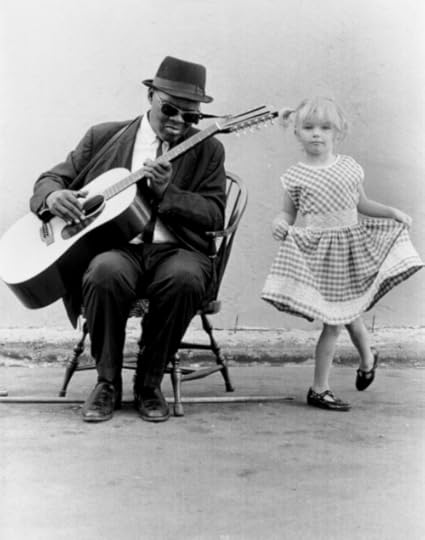
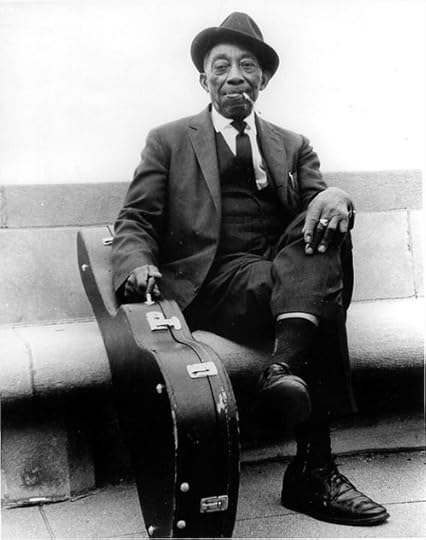
Gary Davis and dancer..
how long do I have to...
February 20, 2013
theparisreview:
“For me, that process of taking a first draft...
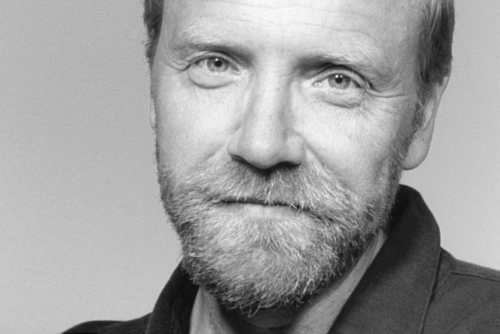
“For me, that process of taking a first draft and working with it over a period of months is EVERYTHING. That’s where a person finds out what he really means and (you could argue) who he really IS.”
Read more from our “G-Chat” with George Saunders here.
February 19, 2013
90outloud:
From David Foster Wallace’s posthumous novel, The...
From David Foster Wallace’s posthumous novel, The Pale King, read by Jeffrey Calzaloia
The Pale King can be purchased at http://www.amazon.com/Pale-King-David-Foster-Wallace/dp/0316074225 and other major book stores.
You can find Jeffrey on facebook at https://www.facebook.com/jeffrey.calzaloia!
Derangement of the Senses, March 15th
(Trying to find a SFW video for Derangement of the Senses is probably missing the point…)
Good news! I got a spot reading for Derangement of the Senses in March.
If you’ve never been, Derangement is the best damn monthly reading/burlesque/musical variety show east of the Hudson. It’s curated by my great friends Kevin Carter, Miracle Jones and Jason Laney.
There’ll be fiction and music and poetry and burlesque and the best of tidings! So if you can, come out to the Happy Ending, March 15th around 7:30.
Hope to see you this Ides of March!