Bill Cheng's Blog, page 115
March 26, 2013
myimaginarybrooklyn:
penamerican:
William Faulkner’s Nobel...
:
:
William Faulkner’s Nobel Prize Acceptance Speech
“I decline to accept the end of man. It is easy enough to say that man is immortal because he will endure: that when the last ding-dong of doom has clanged and faded from the last worthless rock hanging tideless in the last red and dying evening, that even then there will still be one more sound: that of his puny inexhaustible voice, still talking. I refuse to accept this. I believe that man will not merely endure: he will prevail. He is immortal, not because he alone among creatures has an inexhaustible voice, but because he has a soul, a spirit capable of compassion and sacrifice and endurance. The poet’s, the writer’s, duty is to write about these things. It is his privilege to help man endure by lifting his heart, by reminding him of the courage and honor and hope and pride and compassion and pity and sacrifice which have been the glory of his past. The poet’s voice need not merely be the record of man, it can be one of the props, the pillars to help him endure and prevail.”
In grad school, we did presentations of all the Nobel Prize acceptance speeches in literature. Faulkner’s was a fantastic one. Mine was Kenzaburo Oe.
I recommend this practice to every writer who wants to be taken seriously.


Some Books Are Better Than Others
This can not be said enough:
We have now a wide array of tools to assign relative value to the books we read. Likes on Facebook, reviews on Goodreads, stars on Amazon, homilies or pans on blogs: all of these are in the service of separating the good from the bad.
The problem, though, is that there are no “good” and “bad” books, and so all this energy that goes into judging books is misspent, and I think does more damage to reading culture than it does good.
Read the rest of Jeff O’Neal’s piece on bookriot.
maxernstman:
Zak Smith - scenes from Pictures Showing What...
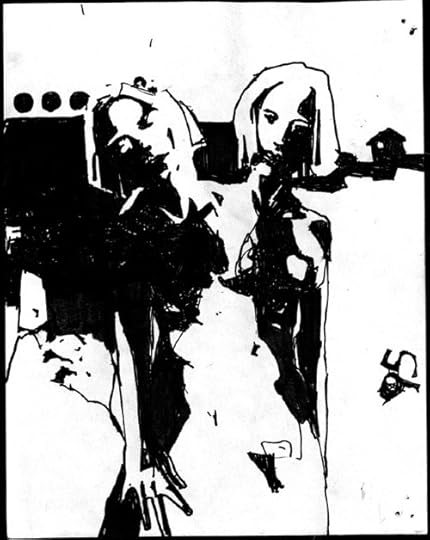
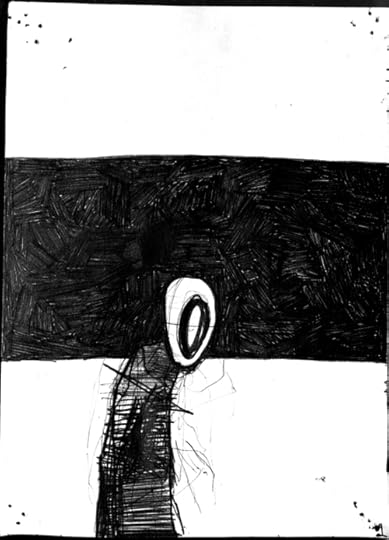
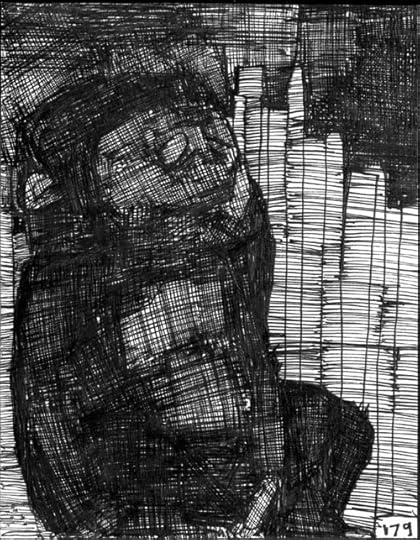
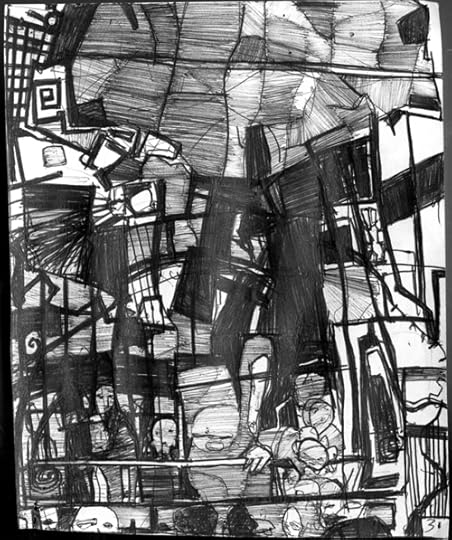
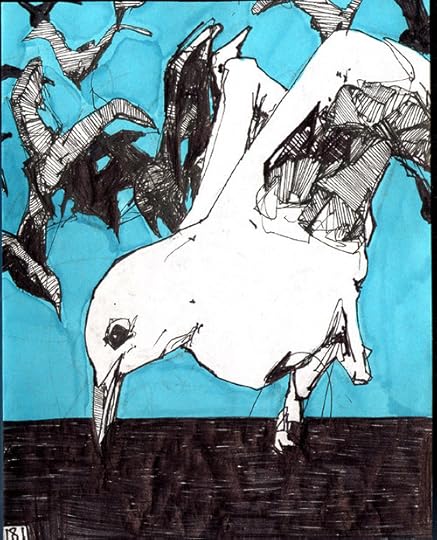

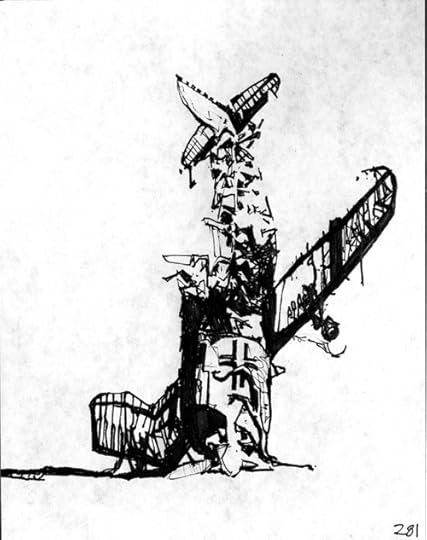
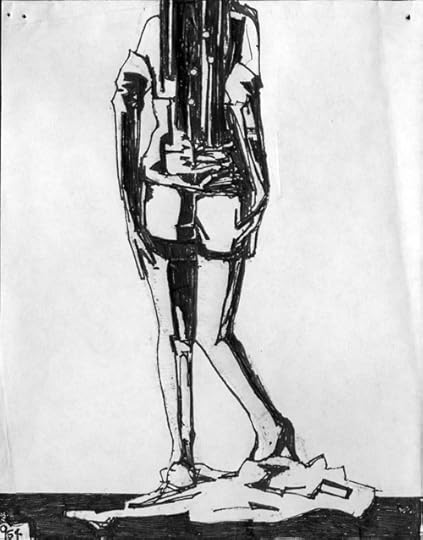
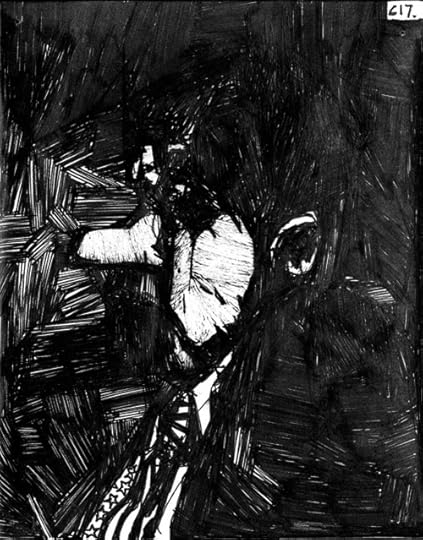
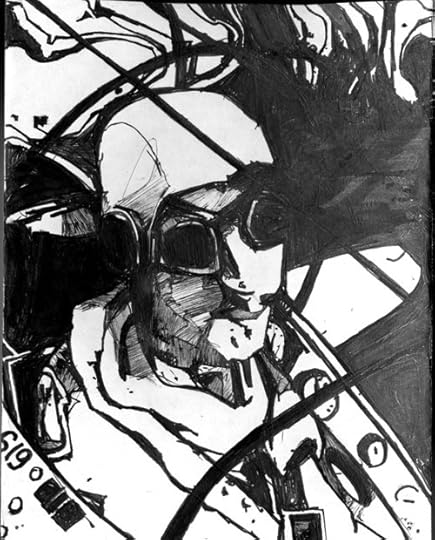
Zak Smith - scenes from Pictures Showing What Happens on Each Page of Thomas Pynchon’s Gravity’s Rainbow. (2006)
The entire book can be seen here.
March 25, 2013
Inspired by my buddy Tim’s 90outloud, I started listening...
litvideos:
Ben Fountain, author of “Billy Lynn’s Long Halftime...
Ben Fountain, author of “Billy Lynn’s Long Halftime Walk,” discusses how to write about a war you’ve never witnessed.
March 24, 2013
Tolstoy Reads from ‘A Calendar of Wisdom’.
This one...
Tolstoy Reads from ‘A Calendar of Wisdom’.
This one comes thanks to my buddy Keith.
Background and context: http://www.brainpickings.org/index.php/2013/03/18/tolstoy-reading-rare-1909-recording/
The fascinating story of A Calendar of Wisdom, with selected highlights: http://www.brainpickings.org/index.php/2013/03/15/a-calendar-of-wisdom-tolstoy/
90outloud:
90outloud now has a Google Voice line! You can...

90outloud now has a Google Voice line! You can leave us a message of your 90-second reading at (347) 927-5075.
Make sure to say your name, where you’re calling from, as well as the title and author of the book you’re about to read. You’ll have 90 seconds after the tone. Thanks again!
Fyi
sagansense:
We Petition The Obama Administration To:Repeal The...


We Petition The Obama Administration To:
Repeal The Sequester’s Cuts On NASA’s Spending In Public Outreach And Its STEM Programs
The Sequester’s recent cuts on NASA’s spending in public outreach and its STEM programs must not be allowed. These cuts would end the many programs NASA has for educating the children of our society, as well as many other forms of public outreach held by NASA.
In an internal memo issued on the evening of Friday, March 22, the Administration notes that “effective immediately, all education and public outreach activities should be suspended, pending further review. In terms of scope, this includes all public engagement and outreach events, programs, activities, and products developed and implemented by Headquarters, Mission Directorates, and Centers across the Agency, including all education and public outreach efforts conducted by programs and projects.”
Created: Mar 22, 2013
Signatures needed by April 21, 2013 to reach goal of 100,000
I try not to post on this tumblr items not related to writing or something I’m writing about, but this is important.
The act of storytelling is fundamentally an act of discovery. We (or at least I) tell stories because it shines some small light on who we are, where we’re going, how we live. NASA, at its core, does the same thing. Astronomy and star science is not removed from the ebb and flow of our everyday lives— it is very much at its core. It asks the same questions that great religions annd novels and poems ask— Who are we? What is our place in the universe?
It gives a context to both the smallness and largeness of our individual lives. It enriches rather than stifles, penetrates rather than mollifies. It sets our gaze both skywards and inwards and builds the argument that our origins are tied to the same events that swung the planets to their places, that birthed the stars.
This petition is trying to gain 100,000 signatures in a little less than a month. As of now, it’s at about 2,300. I’m #2,165. So please sign and convince others to sign.
NASA teaches us to be curious and to ask questions. These are traits that build both good writers and good citizens.