Bill Cheng's Blog, page 110
April 10, 2013


April 9, 2013
Why is this the first I’ve heard of this?
Ben Crystal...
Why is this the first I’ve heard of this?
Ben Crystal demonstrating the difference between received pronunciation and Shakespeare’s original pronunciation.
One on One: Jason Merkoski and the View of E-Books from the Inside
Q. You also say, in discussing the tech companies’ power: “What moral or literary sensibilities do the executives at Amazon have? What about the retailers at Barnes & Noble or Google or Apple? You have to ask yourself whether you trust these men.” Well, do you?
A. There are three dimensions of trust here. Do I trust retailers not to censor books, do I trust them with my personal data, and do I trust them to curate great books for me to read? Frankly, I don’t trust the executives at any e-book retailer when it comes to censorship. I know many of them. If push came to shove, I think most of these execs would rather pull e-books from the store, effectively censoring them, if that would avoid bad press. These are major retailers, not your quirky corner bookstores. They’re manned by former management consultants in clean shirts and pressed Dockers, not eccentric book-lovers with beards and cats.
togatherinc:
Here at the Togather office, we’ve all been...
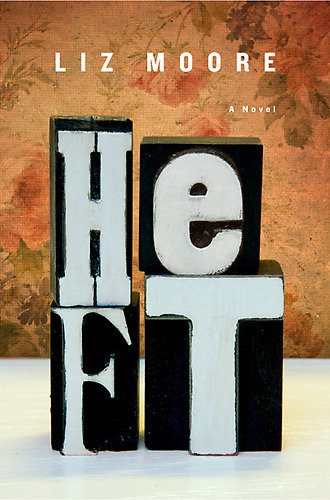
Here at the Togather office, we’ve all been reading books by Togather authors. Here’s our library outreach coordinator Dana Skwirut’s report on Liz Moore’s novel Heft, which makes us want to create a book club event with Liz, stat.
I’ll admit it. Heft made me cry.
It’s hard to explain why without embarking on a tl;dr journey that is ultimately too TMI for even my high school livejournal account, let alone a very public place like this. It’s also hard to explain without giving too much away. Also, I don’t even like admitting that it happened.
Heft is the story of Arthur Opp, an obese former academic who has not left his Brooklyn home in nearly a decade, and Kel Keller, an all-star high school athlete living in Yonkers. Kel is the son of one of Arthur’s former students, Charlene, who sets the story in motion by calling Arthur, who she hasn’t spoken to in nearly twenty years.
I really had no idea what to expect when I started reading Heft, and I certainly didn’t expect what happens or the effect it had on me, but Liz Moore’s characters are entirely relatable and live through events that are universally human. They remind us that even though our individual details are different, we are all still able to connect through shared feelings and experiences.
April 8, 2013
Millions Millions: The Slow Death of the American Author
Author Scott Turow discusses the impact of a new Supreme Court decision to allow for the importation of foreign editions of American works into the US.
Until now, courts have forbidden such activity as a violation of copyright. Not only does this ruling open the gates to a…
EDIT: I’ll be honest. I’m not certain how much I agree with this. I’ve yet to be in a position where this affects me directly except as a consumer though I suspect that will soon no longer be the case.
On the one hand, copyright should be vigorously protected so that those who create can preserve the legitimacy and value of their creations. We work and should be compensated fairly for that work. The value the larger society assigns to the work we do is best translated by the amount we’re paid. It’s crass, and perhaps an overly-simplified model, but at the very least, practical and easy to understand. In undercutting that amount, it devalues the work of not only the author, but the many people who’ve worked to bring that book to the shelves.
And quite frankly, no one likes the feeling of being taken advantage of.
On the other hand, as storytellers— as contributors to a wider culture— isn’t one of the points to provide access? To make the larger world smaller? To bring together rather than add to the wasteland of divisions that already pervade the culture?
I think so.
At Hunter College, I studied with Nathan Englander who treats stories like a religion. He is convinced of its need and use in the world, of what it returns to people and I think that’s right. What we do, we will continue doing despite shrinking advances, threat to copyright, dissolution of booksellers and publishing houses, the demands of the marketplace etc. We write because we are called to, we cannot stop telling stories. It can’t be helped.
This means that between the extremes of being rich and unread, and being poor and appreciated— I imagine most would choose the latter.
Everyone wants a fair world. The cost of an apple should equal the cost of an apple. But I’m not sure that fairness can be found in overly restrictive copyright law or legislation that demonizes those who care the most about the work. But, as I said, I don’t know.
You can’t beat technology. Anything that is made can be stolen, perverted, or abused and the only means I can see of altering that pattern is to cultivate a society that values art— not just aesthetically, or economically, but culturally. Believing that this song, this book, this painting needs to not only be accessible, but valued.
I don’t think that can be done through bullying or instilling overly punitive measures. I don’t have practical answers except that I think those that create should be sincere and earnest in dealing with not only how we protect our work but how we protect our readers.
May the last living breath of Man be the end of a story.
Any thoughts?
"As much as Roger Ebert ‘belongs’ to film, so too does he belong to us writers. We ought to consider..."
- Joel Breuklander, ”A Writer’s Role Model: Roger Ebert” (via millionsmillions)
housingworksbookstore:
Fans of You’ve Got Mail might be...
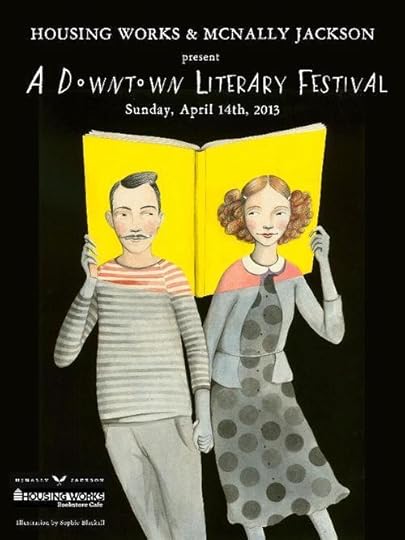
Fans of You’ve Got Mail might be surprised by the cordiality flaunted by McNally Jackson and Housing Works bookstores, located two blocks apart in SoHo. Although the two have exchanged joking Twitter jabs, they’ve also collaborated on literary events. Next Saturday [Sunday!], April 14, they will join forces to host the inaugural Downtown Literary Festival. The daylong (10 a.m. - 5 p.m.) extravaganza will include readings, panels and a walking tour about literature below 14th Street, all followed by a Russian lit-themed after-party. (via PAPERMAG: Booksellers Team Up for the Downtown Literary Festival)
Bookstore love!
Jessica Soffer (author of Tomorrow There Will be Apricots) will be there. Ergo, I will be there.
libraryjournal:
Book Patrol: Beware of Unemployed Librarians!
I...
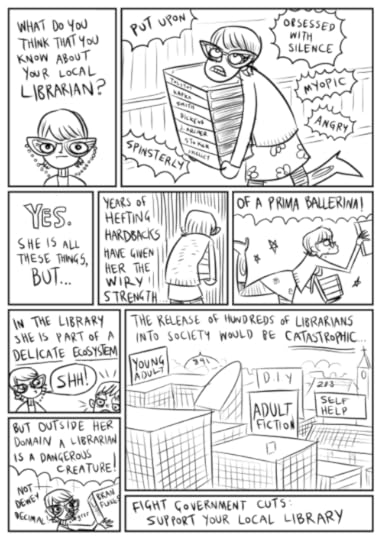
Book Patrol: Beware of Unemployed Librarians!
I don’t think I would mind an whole building of and for adult fiction, but that might just be me.
My friend Jessica Soffer’s Tomorrow There Will be Apricots...
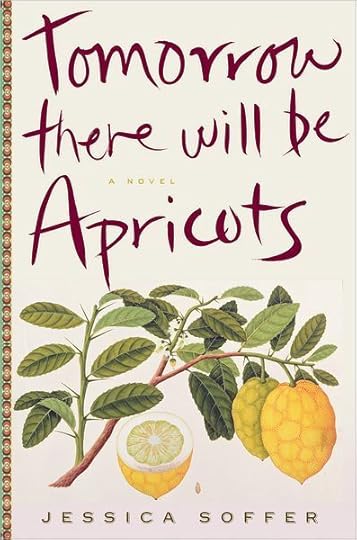
My friend Jessica Soffer’s Tomorrow There Will be Apricots (THE AUDIOBOOK) is out now and was delivered this morning to my fancy device! Print editions out April 16th.