Brandon C. Jones's Blog, page 14
January 16, 2014
The Stories We Hear
The Bible is mostly stories. Sure, there’s non-story stuff in there too, but chances are if you flip to a page you will happen upon a story. Jesus loved to tell stories that had fictitious relatable characters. Most of us have come across a dumb relative, annoying acquaintance, foolhardy rich man, shrewd assistant, or a little old lady. Jesus also liked for his stories to have a surprise at the end. The idiot son was welcomed home by his father. The shrewd assistant was actually rewarded for his questionable behavior. The little old lady’s pennies in the offering plate were worth more to God than the huge cardboard checks given publicly by rich people who like to put their own names on buildings around town. A lot of people in Jesus’ audience despised these surprises, but not everyone did. Kids, for instance, love surprises.
Anyone who has ever been around a kid also knows how much they love stories. They can hear the same story more than 49 times without it ever getting old. They don’t even mind hearing a story repeated right after it ended. They will also notice if you dare skip over one little part of a beloved story. You better read to them every word on every page. No shortcuts.
Each Tuesday afternoon our church hosts about a dozen kids after school to tell them about Jesus. We also eat snacks, play games, sing, and even dance a little—if organized jumping counts as dancing. When I asked them what they remembered about Jesus since our Christmas break some of the older kids gave me concise propositions. “Jesus saves,” said one boy. But the younger kids who raised their hands remembered the stories. “Well, Marci had shared about Jesus being in a boat during a bad storm, but not being afraid,” said a girl. Another little one raised her hand and said, “I remember a story about Jesus sharing food with a bunch of people.”
I smiled as I was about to share a story about Jesus. I said my story could be a little scary, because it is about Jesus giving peace to a man who had evil spirits in him (You can checkout the story yourself by looking it up in Mark 5:1-20). We all agreed we had never met anyone who had evil spirits in them, so I said I could relate to being troubled and in need of peace like the man in the story. I shared about my Dad dying and being sad and restless about it. One boy shared about his parents’ divorce. Another one spoke up about her Mom’s death and her Dad’s imprisonment. Others followed suit with things that troubled them. And for a few minutes in an old church basement we shared a sacred moment, and it was all because of a story. There is something about stories that make us re-think everything we know about the world. Stories are far more interesting than propositions.
Could that be why God chose to tell us so many stories? Some are nice to hear. Others are grizzly. But, somehow, through all of them God reveals something we ought to know. As N. T. Wright once suggested, God’s storytelling can also be frustrating. Wright explains by asking us to imagine receiving a phone call and the voice on the other end speaks another language and assumes we live in a different time and place, and to make everything harder we know this voice is in some way authoritative for everyone’s life. That’s hard enough, right? Now, Wright says, imagine that the voice shares story after story with us. And so it goes with our hearing of God’s voice throughout much of Scripture. But, despite all the barriers, God still shares his stories with us, and we get them.
Jesus liked to make up his characters, but most of God’s stories are about what God has actually done. God’s stories stick with us, and not just the kids among us. They stick with me too. I find myself sharing stories more often, sometimes God’s stories and sometimes my own. I want to hear stories more often too because stories are the stuff of life. Stories shape us into who we are. Stories are shared too, so why not share with your neighbors a story or two about God at work? Who knows what else you might get to share, even if only for a moment.
*For more on the role of sharing stories that involve good and evil with your children, checkout N. D. Wilson's article, here.


January 9, 2014
It's not what you think, it's what you desire
A story was once told a few hundred years ago that humans are primarily thinking things. What really matters, this modern story goes, are our minds, so logical arguments and compelling evidences are the stuff that really matters. Even some Christians got in on the game, matching argument for argument coherent reasons in defense of the faith. These Christian apologists told themselves, “If we can just get people to think through things, then they will reasonably change their ways—perhaps even desire God’s good news for them.”
While much can be commended for having people think clearly through things, the relationship between thoughts and desires works the other way around. The modern story got it backwards. Desires inform thoughts, experiences inform desires, and senses inform experiences. For example, one of our few family traditions is eating salty meatballs on New Year’s Day. I won’t share the secret family recipe with you, but there are so many spices and sauces involved that each meatball has enough sodium to parch someone who just guzzled a gallon of water. My Dad would devote hours to the process, meticulously shredding bread (yes, lots of bread goes into these things), rolling balls that must look identical to one another, and then frying them in small batches. The smells and flavors of it all to this day remind me of being a kid, and, of course, remind me of Dad. As I used my hands to mix the meatball ingredients last week I couldn’t help but think of Dad. I hadn’t been thinking of him much that day until the sights, smells, and textures rushed into me all at once and took me back to another time and place. I desired to be with Dad again, and my strong craving came directly from my senses, not my thoughts.
Since my Dad died of cancer, a few people have asked me if I think of my Dad whenever I enter a hospital or visit a dying parishioner. I understand such concerns. They make good rational sense, but they never ring true for me. My Dad was not just some guy who spent many of his last days dying of cancer in a hospital: he was my Dad. I desire him most when I do something that reminds me of him, or smell something, or see something, or hear something, or feel something. You get the point. It’s not the thoughts, but the senses that matter.
The God who created us understands this perfectly. After humans brought onto themselves a curse that mixes up how they crave and think, God responded by designing worship that gets to the root of our being. He came up with worship that involves all of our senses, using water, bread, and wine. Previously, he came up with worship for Israel rooted even more deeply in our senses. He knows that to remind us of him he needs to tap into our experiences and desires, and then he will win over our thoughts too. He reveals to us we were created by him and will be newly created by him in his future kingdom. To be sure, he reminds us we are thinking things, but we are also more than that. We are creatures full of experience, wonder, and cravings. Sin has made all of those things crooked, so God works to straighten them out. Sure, he will straighten them out by revealing how we ought to think too, but he doesn’t stop there. And God is no modernist, so he doesn’t start there either.
January 2, 2014
Two Years a Pastor
Saturday afternoon I was alone in an otherwise empty sanctuary. The lights were on as I sat quietly, facing several empty pews. Only the fierce prairie winds made a sound as they beat furiously against the north side of the church building. I couldn’t be happier.
One of the highlights of my week is when I relish in the quietness of our empty sanctuary and pray aloud to a God who hears me and hold his people close to his heart. I walk up and down the aisle imagining who might sit in each pew come tomorrow, asking God’s Spirit to blow and burn within all our hearts whenever we gather for worship. I gaze at the communion table, which heads up this sacred space and imagine it set with bread and wine, symbolizing Christ’s presence among us. It is an honor to be in this place at this time.
There are other things that are part of my Saturday afternoon routine. I do a sound-check, setup things for Sunday School, rehearse my sermon, and deliver correspondence in the office. And such is the stuff of serving as a solo-pastor. On the one hand, I am privileged to offer Christ’s presence to others during times of crisis. I also get to encourage, train, and equip fellow Christians to work out their salvation day in and day out. But I also process mail, field random phone calls, setup chairs, and try hard to stay out of the middle of endless minor decisions made by our spiritual family. All of these things allow our institution to function, so I’ll take them too.
I’ll take them all, because I count it a privilege to serve as a pastor. I’ve worked a lot of jobs over the years. I’ve made sub sandwiches, cleaned high schools, made cold calls on the phone, boxed newly slaughtered beef, bound school calendars, sold cheap furniture, stocked groceries, handled packages off trucks, boxed and shipped light bulbs, processed foreclosure paperwork, and adjusted total loss property insurance claims. These jobs all had their ups and downs, and I’m thankful for the men and women who help make our society work by performing them, but none of them proved to be a satisfying career for me. Being a pastor has been different. I’ve not once regretted it and have been thankful for these past two years.
Thanks to all of you who have endured (and will continue to endure) my growing pains in learning how to preach, teach, pray, administer the sacraments, run board meetings, and schedule events.
Thanks to all of you who have shared intimate spaces of your life with me. We have laughed, cried, been anxious, and calm.
Thanks to all of you who have sent words of encouragement and also words of criticism. I have needed them both.
Thanks to all of you who have prayed with me and for me. Were it not for your prayers, who knows how these past two years would have gone?
Most thanks goes to God, who has allowed me to represent him as an undershepherd. On my best days I hope I do him proud, and on my worst I’m thankful for his grace. Here’s to another year together!
December 23, 2013
Go big or go home: On weddings and Christmas in America
About 20% fewer couples are getting married in the States today than thirty years ago, and as the number of weddings goes down the average cost of each ceremony has skyrocketed. Just after World War II an average American wedding cost between two and three thousand dollars. By 1990 that number had grown to around $15,000 and since then it has nearly doubled, coming close to $30,000 today and rising.
There are numerous reasons these expenses have grown so much higher than the rate of inflation over the years. Yet, I have a hunch that one factor has less to do with economics and more to do with something difficult to calculate. As marriage itself means less to the couples getting married, they try to compensate with bigger weddings. Many couples are well into adulthood, have already been living together for months, and been engaged for well over a year when they end up undergoing some ceremony for marriage. After all is said and done they will then return to their pre-wedding lives and find little has changed.
Despite the magazines, shows, and stores that claim otherwise, a fancy dress, lavish cake, professional band, big reception, and swanky venue will not make anyone’s marriage more meaningful. Especially when we tell people to wait until their late twenties or early thirties before settling down. Or when we tell people to give their partner a “test drive” before committing to them legally, as if vowing to commit to a lifelong partner is the same as purchasing a new car. The legal aspects of marriage too get overvalued, since that is just about the only change for so many couples getting married today. With that mindset, who really cares about the churchy stuff involving vows and sacraments? Marriage is supposed to be completely about others, so who wouldn’t rather invest in wedding ceremonies that are only about ourselves. Of course, some of these couples may throw in the God stuff too, as long as they can find some church and minister to go along with their wishes for their big day.
The wedding industry is booming as marriages are reeling, and I wonder if we are doing the same thing to Christmas? Historically, Advent was a month-long preparation for Christmas. It was a season of fasting before the feasting. It was a time of anxious waiting and expectation, reminding us of the need to wait as God’s people and of our need of salvation for our sins. Somehow, God taking on our human nature to save us from our sins became boring. Re-enacting the waiting for him to come in order to remember our duty to wait for him to return, has grew tiresome. Fasting before feasting is really hard. Whereas the gospel was supposed to change our lives every day, somehow we ended up living the same as others who have no gospel. In order to make our faith mean something more to us, we turned to building up the Christmas season itself with more parties, more presents, and more cheer. We removed all fasting and prolonged the feasting. By the time December 25th actually comes around, the presents are all torn through, the egg nog is drank, the numerous events have been attended, and we are much too spent to ponder what Christmas means in the first place.
In order to solve our failure in appreciating the gospel message every other day of our lives, we tried to build into the Christmas season a year’s worth of Christian living. But, as Christoph Blumhardt says, “Either Christ’s coming has meaning for us now, or else it means nothing at all.” Despite all the programs that claim other wise, earlier feasts, more numerous parties, and overflowing trees will not make our faith any more meaningful. Just as the solution to meaningless marriages will never be bigger wedding ceremonies, the solution to a stunted faith will never lie in bigger Christmas seasons. Instead, we must repent and ask God to change our hearts. Will we let God’s Spirit shape and mould us to love him and others day by day, or will we keep telling ourselves we are all good, generous people deep down inside all by ourselves? The gospel is in the former, while Christmas in America is in the latter. Brennan Manning once said, “As Christmas approaches, an honest question is: do I want to be or merely appear to be a Christian?”Two related posts are: John Steinbeck on two kinds of Christmases and my previous post differentiating the spirit of Christmas from the Spirit of Christ.
December 19, 2013
Top Seven Posts of 2013
2013 has been a good year, and one of the best functions of the Internet is to present us annual "best of" and "worst of" lists. For a good laugh, checkout this list of worst Christian book covers of the year.
Without any further ado, here are the top seven posts from our humble corner of the interwebs this calendar year. Enjoy!
7. Elf in the dock: An open letter to children growing up in church. I must have struck a cord last week by questioning our jolly good friend, the elf on a shelf.
6. Messages from my Father. This title is an homage to one of my favorite authors and fellow Kansas City native, Calvin Trillin. Of course, the content is soaked through and through with my Dad, Rick.
5. A Royal Wast of Time. This title is also an homage to another favorite author, Marva Dawn, but the post was inspired by my brief time so far spent behind the pulpit. Trust me it's a little different than the view from the pew.
4. Good news for people who love bad news. This title came from an old Modest Mouse album, but the content is one of the few forays into politics you'll find on here.
3. Psalm 103: A Bible in Itself. The Prince of Preachers, Charles Spurgeon, was our guide to king David's thoughts on this post.
2. Three Steps to Praying Everyday. You won't see any infographics on here, and few pictures, so it should be no surprise that when I put things into steps the clicks will come.
1. Three Steps to Reading Your Bible Everyday. And the most clicks by far. I hope it helped some poor souls using google searches this year.
Well, that's the list from the audience as a whole. What's your list?
Without any further ado, here are the top seven posts from our humble corner of the interwebs this calendar year. Enjoy!
7. Elf in the dock: An open letter to children growing up in church. I must have struck a cord last week by questioning our jolly good friend, the elf on a shelf.
6. Messages from my Father. This title is an homage to one of my favorite authors and fellow Kansas City native, Calvin Trillin. Of course, the content is soaked through and through with my Dad, Rick.
5. A Royal Wast of Time. This title is also an homage to another favorite author, Marva Dawn, but the post was inspired by my brief time so far spent behind the pulpit. Trust me it's a little different than the view from the pew.
4. Good news for people who love bad news. This title came from an old Modest Mouse album, but the content is one of the few forays into politics you'll find on here.
3. Psalm 103: A Bible in Itself. The Prince of Preachers, Charles Spurgeon, was our guide to king David's thoughts on this post.
2. Three Steps to Praying Everyday. You won't see any infographics on here, and few pictures, so it should be no surprise that when I put things into steps the clicks will come.
1. Three Steps to Reading Your Bible Everyday. And the most clicks by far. I hope it helped some poor souls using google searches this year.
Well, that's the list from the audience as a whole. What's your list?
December 12, 2013
Elf in the dock: An open letter to children growing up in church
Dear Children,
I am sorry we big people have done so poorly at proclaiming to you the good news of Jesus Christ. We are far better at telling you to perform well, so God will reward you like he supposedly did Abraham, Isaac, Jacob, Joseph, Moses, Joshua, Job, Deborah, Gideon, David, Daniel, Esther and anyone else I might have missed. The message of their stories, as we tell them to you (not exactly as you might find them if you look in the Bible yourself), is about great people doing great things. Of course, some of you may aspire to be just like them some day. Most of you, though, realize you are regular kids, not biblical heroes, so you might wonder if God will overlook you.
Of course, we never want you to think God would overlook you, so we also focus on God’s opposition to sin. He clearly hates it. That is not the same as hating you, but we may not have been too clear about that. In fact, you might think he is watching for you to slip up, maybe even hoping to catch you in the act. That way he can feel good and you can feel bad. When you feel bad we tell you to say a prayer and to try really hard at doing better next time. That way God will have to take care of you, even if he is not too thrilled about you as a person most of the time, always letting him down.
We also tell you about grace, forgiveness, mercy, and love, especially during Christmas time, but those things can easily get drowned out by other messages we like to tell you. On the one hand we want you to know about the gift of Jesus, who graciously saves us from our sins, offers us adoption into his family, and a place in the kingdom of his Father without any of us deserving any of it. But on the other hand we also say you better be great people who do great things or at least nice people who do nice things in order to get some stuff as a reward. When you put all of that together it doesn't make much sense. Sorry about that.
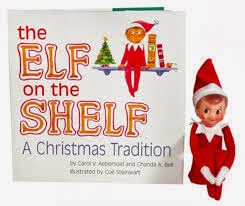
The good news of Jesus Christ does not make much sense to us either. That is actually one of the main themes of the New Testament. That is not to say the good news of Jesus is complete nonsense like claiming the number nine has a tummyache. The good news just seems so one-sided. There is no balance to it. God most definitely hates sin, but he is also hurt by it because of the ruin it brought to great things he created, including us. Instead of leaving us alone in sin he did something about it himself. He took on our nature to forgive us our sins while still accounting for their high costs. He did it all himself out of his love for us. We did not do anything except trust his offer of forgiveness.
Forgiveness means someone else takes on the responsibility for my wrongful actions, which goes against about everything else you hear growing up, doesn’t it? And that is exactly what God has done in Jesus. He took on the responsibility for our sins. That is part of what it means for him to save us from our sins. There is more to it than that, including his defeat of the forces of sin at work against us and the world, his adopting us into his family, his outpouring of his own life into us forever, his offer of a kingdom in which we, with renewed physical bodies, will live an amazing life that never ends on a renewed physical earth. I wish we told you more about those things, but we don’t.
I have some guesses on why we don’t. The gospel, which means good news, is foreign to all we think we know about life. We have understood all too well that other message we have been giving you—the one about performing well, or else. After all, we too heard it growing up. As you grow older and our hearts become more intertwined into yours, maybe you will help us better understand God’s grace, forgiveness, and good news. Until then I am sorry we have not taken more time to understand it ourselves before trying to tell you about it. I hope you can forgive us. More than that, I hope you can trust that God forgives you in Jesus, for there are no naughty and nice lists in him.
Sincerely,Brandon
December 5, 2013
Cats, Dogs, and Scapegoats! Oh, my!
About a year ago I took my kids out for pizza and somehow came home with a cat. A few weeks ago I returned home from a trip and heard a strong pitch for our family to get a dog. I’d heard versions of this pitch before, but I had recently softened my stance from “Absolutely not!” to “What kind of dog do you want?” Our new dog is small, cuddly, and curious. Unfortunately, our cat doesn’t agree. He finds her presence to range anywhere from deathly threatening to extremely annoying.
When I was a kid there was a Looney Tunes series about Ralph the Coyote and Sam the Sheepdog. Ralph and Sam got along fine as friends and neighbors until they each clocked in on their jobs and antagonized each other. Our dog and cat have a similar setup. Things will be peaceful with everyone calm and happy until something sparks an uproar. The two animals will then fixate on each other’s whereabouts for hours to the point at which they have adjusted the entire way they live their lives. They spend so much time worrying about what the other is doing they both stop enjoying the things they would be doing normally. The stress has taken its toll on both animals, and people have told me it will eventually stop as each animal gets used to the other.
Playing referee between our animals has made me think about similar human behavior. René Girard says humans, especially acting in groups, get anxious and envious of other groups to the point at which they turn violently against each other. Of course, violence carries a hefty price for all involved, so Girard argues that an agreed substitute for direct violence is having multiple groups release their anxious envy on some third-party, called the “scapegoat.” There is a continual cycle in which anxiety and envy builds up until it must be released on some poor scapegoat. True peace, true healing, and true atonement must break this cycle rather than repeat it. And that brings us to Christ, the Lamb of God who takes away the sins of the world.
The term “scapegoat” comes from Old Testament sacrifices in which Israel’s priests were to select two goats for sacrifice, but only one of them would be slaughtered on the Day of Atonement. The other goat was to be released into the wilderness (Lev 16). In America when we talk about scapegoats we are really talking about what Leviticus portrays as the slaughtered goat, not the one that escaped. The scapegoat was to represent God’s people, forgiven of their sins due to the price paid by another. The slaughtered goat took the penalty of other people’s sins, which is what John the Baptist means when he calls Christ God’s lamb who has come to take away our sin. Christ takes the place of the slaughtered goat and we take the place of the scapegoat. The penalty was due for us, but we were let go because Christ was crucified once for all.
And there lies one of the many differences between goats and Christ. The goats were selected each year for slaughtering and escape as the cycle continued throughout Israel's history. But Christ’s sacrifice and resurrection undid the very principalities and powers that cause our anxiety and envy. As Paul says, “When you were dead in your sins and in the uncircumcision of your flesh, God made you alive with Christ. He forgave us all our sins, having canceled the charge of our legal indebtedness, which stood against us and condemned us; he has taken it away, nailing it to the cross. And having disarmed the powers and authorities, he made a public spectacle of them, triumphing over them by the cross” (Col 2:13-15). As Christ’s people we are here to proclaim a new way of life. The powers have been disarmed. There is no fear. There is no condemnation. There is no anxiety. We no longer have to live enslaved to the old ways of life. And that is very good news.
One of these days my dog and cat will figure out that the other is no threat to them. The sooner they do, the better it will be for our entire household. I hope Christ’s church will soon figure out that anxiety and fear of death and of “others” is really no threat at all. That way we can stop being distracted from what we’re really here to be and to do.
November 28, 2013
On Preparing for the New Year
Sunday brings a new year for Christians around the world. Sure, January 1st is still a ways off, but Sunday December 1st is the first Sunday of Advent, marking the beginning of a new year for Christ's church.
Historically, different dates for new years have come and gone. God wanted his people, Israel, to mark each new year on their calendars around their exodus from Egypt, but that never really happened. In recent centuries in the west there were several different calendars in use, all with different new year's days, and some countries held out until the twentieth century before adopting the calendar most everyone uses now, although I hear Ethiopia still uses thirteen month calendar.
For Christians who observe the rhythm and flow of the church calendar this is a key time to reflect on the past year. While December 31st is usually marked with staying up and waiting until midnight, Advent brings in a new year for Christians with four weeks of waiting. And that is fitting, because the Gospels begin and end with people waiting. Today, God's people are still waiting for Christ's return. Each new year reminds us to wait.
There are several different ways to wait. Technology allows us to talk on the phone or play a game on some electronic device while we wait. Some people like to listen to music while waiting. Others file through the day's events and think about what happened. Some people get anxious. Some people get angry. Some people leave altogether, not wanting to wait. In America we think of waiting as a waste of time as if it is always, as Henri Nouwen puts it, "waiting from nothing to something." But Nouwen reminds us that as Christians we wait for something already begun in us, so our waiting is always "a movement from something to something more." This is the same kind of waiting we see in the Gospels when we read about Zehariah, Mary, Elizabeth, Simeon, and Anna.
This kind of waiting requires focus. We must remember who we are and who God is. Worship and the sacraments help us remember. Spiritual disciplines help too. I would add that paying attention to the church calendar can also be helpful. While the news focuses on weather, retail sales, politics, and sports, we Christians can focus on how well we are waiting. Are we waiting like Simeon was in the temple, looking for Israel's Messiah? Or are we waiting like countless people were at an inn in Bethlehem, distracted by the task at hand that we've no time to worry about God's activity in the world?
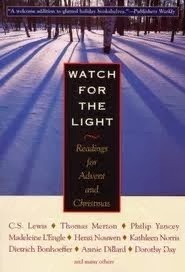
This Advent season I recommend setting some time each day to reflect on what it means to wait well for Christ. I highly recommend the devotional book Watch for the Light: Readings for Advent and Christmas. Each day is a brief entry about what God has revealed to us in Jesus Christ. Take some time this new year to ruminate on actively waiting. Perhaps you'll never view December the same way again!

Historically, different dates for new years have come and gone. God wanted his people, Israel, to mark each new year on their calendars around their exodus from Egypt, but that never really happened. In recent centuries in the west there were several different calendars in use, all with different new year's days, and some countries held out until the twentieth century before adopting the calendar most everyone uses now, although I hear Ethiopia still uses thirteen month calendar.
For Christians who observe the rhythm and flow of the church calendar this is a key time to reflect on the past year. While December 31st is usually marked with staying up and waiting until midnight, Advent brings in a new year for Christians with four weeks of waiting. And that is fitting, because the Gospels begin and end with people waiting. Today, God's people are still waiting for Christ's return. Each new year reminds us to wait.
There are several different ways to wait. Technology allows us to talk on the phone or play a game on some electronic device while we wait. Some people like to listen to music while waiting. Others file through the day's events and think about what happened. Some people get anxious. Some people get angry. Some people leave altogether, not wanting to wait. In America we think of waiting as a waste of time as if it is always, as Henri Nouwen puts it, "waiting from nothing to something." But Nouwen reminds us that as Christians we wait for something already begun in us, so our waiting is always "a movement from something to something more." This is the same kind of waiting we see in the Gospels when we read about Zehariah, Mary, Elizabeth, Simeon, and Anna.
This kind of waiting requires focus. We must remember who we are and who God is. Worship and the sacraments help us remember. Spiritual disciplines help too. I would add that paying attention to the church calendar can also be helpful. While the news focuses on weather, retail sales, politics, and sports, we Christians can focus on how well we are waiting. Are we waiting like Simeon was in the temple, looking for Israel's Messiah? Or are we waiting like countless people were at an inn in Bethlehem, distracted by the task at hand that we've no time to worry about God's activity in the world?
This Advent season I recommend setting some time each day to reflect on what it means to wait well for Christ. I highly recommend the devotional book Watch for the Light: Readings for Advent and Christmas. Each day is a brief entry about what God has revealed to us in Jesus Christ. Take some time this new year to ruminate on actively waiting. Perhaps you'll never view December the same way again!
November 21, 2013
The Passover and the Church
Jesus celebrated the Passover meal his entire life, including the night before he died in which he transformed the meal from pointing back to Israel’s exodus from Egypt to pointing forward to his imminent death. Although Christ transformed the Passover long ago, it still has a surprising meaning for Christians today.
The Passover is a celebration of God’s power over the forces of bondage, and God’s distinction between those who are his people and those who are not his people. On the night of the first Passover Israel had to stay inside all night to be safe from the forces of death going on all around them. While they stayed inside that night God commanded they share a meal for generations to come that would remind them of God’s mighty acts in Egypt. They would prepare for the meal a week in advance by removing all the leaven in their houses, symbolizing their purity in removing all that is unclean and unholy among them (Exod 12:15-20).
The Passover was a key part of Israel’s birth, and like so many of Israel’s rites it points to Christ whom Paul even calls our “Passover lamb.” While we often think lambs and atonement for sin always go together in the Old Testament, the Passover was a little different, which is why Paul brings it up when telling the church in Corinth to get rid of those who are proudly unholy and impure among them (1 Cor 5:7). At the time a man in the church was also in an incestuous relationship the likes of which even the pagans of the community would not tolerate. To make matters worse, the church body responded with pride that this man was one of them, because he was able to flaunt the liberty he and the rest of them supposedly shared in Christ. Paul’s response was for them to be ashamed of his behavior and mournfully put this man out of fellowship with them until he repents and can be restored.
Paul then refers to the Passover for the rationale behind his instructions, saying: “Your boasting is not good. Don’t you know that a little yeast leavens the whole batch of dough? Get rid of the old yeast, so that you may be a new unleavened batch—as you really are. For Christ, our Passover lamb, has been sacrificed. Therefore let us keep the Festival, not with the old bread leavened with malice and wickedness, but with the unleavened bread of sincerity and truth” (1 Cor 5:6-8). Paul then goes on to explain that the church is not to associate with people who claim to be one of them, but are also openly behaving in ways that are sexually immoral, greedy, idolatrous, slandering, drunkardly, or swindling. The key for Paul is whether such people claim to be a brother or sister in Christ while behaving in those ways. He says that for the church to refuse to associate with such people in the world would be impossible, “in that case you would have to leave this world” (1 Cor 5:10).
We do not know for sure how the church in Corinth responded to Paul’s instructions. Nonetheless, God’s people have handed down Paul’s letter as inspired words from God himself, and this is one area in which many churches struggle to obey God’s word. We may not be openly proud of people among our membership who behave badly for all to see, but we may be inclined to respond in a different way to their behavior than the way Paul lays out above.
Our hesitation to follow Paul’s instructions is a result of our forgetfulness of the Passover. If Christ is our Passover lamb, then he was slaughtered in order for God’s people to be freed from slavery to the oppressive forces of sin. God commanded his people to be free from impurities and to get rid of that which made them unholy, because inside the church is salvation—outside is destruction. For Paul the mistake in Corinth was their welcoming of malice and wickedness into the church, which ought to be a shelter of sincerity and truth.
What would it look like to follow Paul’s instructions today? For starters, it would be helpful for church membership to be something spiritual instead of formal. Paul’s instructions presume that there is a definite understanding of who is in and out of the church. Next, Paul’s instructions do not apply to people who are confessing their sin and struggling to be more and more like Christ. His instructions are for people who are defiant and willing to justify and defend their sinful behavior and for churches that encourage such behavior instead of condemn it. Lastly, churches should look at all of Paul’s list, which he got from Deuteronomy, instead of cherry picking certain ones, namely sexual behaviors. What comes to mind when you think of someone being proud of their greed (Luke 12:13-21)? What about swindling? Do the IRS and insurance companies count?
The heart of Paul’s instruction is his love for the church. Paul’s concern is that the church in Corinth might live up to the standards of being Christ’s body, so Christ can use it to reach out to its community with the counter-cultural message of the good news of God’s kingdom. For Paul, that message is compromised when the surrounding culture seeps into the church like leaven in a lump of dough and changes what should be Christ’s body on earth to just another social club.
November 14, 2013
A Messy Birth in Egypt
Birth and death are polar opposites. Birth has a defined term of gestation preceding it. Death comes when it pleases. Birth is joyous. Death is grim. Birth is messy. Death is often restrained. Birth is loud. Death is often quiet. God’s people were born in the land of Egypt. There was a term of gestation dating back to Abraham, there were many labor pangs leading up to the exodus from Egypt, including the ten plagues that fell on the land, and the final result was one big mess. If you think of childbirth, you can read about the plagues of Egypt in the book of Exodus through a proper lens.
Sure, most kids who grow up in church know about the ten plagues. If you were a boy they seemed pretty cool: Rivers turning to blood, frogs everywhere, locusts plundering every field in sight (and growing up in Kansas City we had loud locusts that do not resemble at all the locusts of North Africa that look like really big grasshoppers), gnats, flies, dead animals, boils, thunderous hail storms, darkness for three days, and lastly the death of each firstborn son in Egypt.
The account of these plagues in Exodus is quite repetitive. God tells Moses and Aaron to go to Pharaoh, the king of Egypt, and request him to let God’s people go worship him in the wilderness for three days, taking along their families, animals, and stuff. Pharaoh at first refuses, asking who Yahweh (the Lord) is that he should bother listening to what this God says. God tells Moses and Aaron to do something bad to Egypt and then go to Pharaoh again to request that he let the Israelites go, and then the cycle repeats itself several more times.
God knows he will have to get Pharaoh’s attention by “using his mighty hand” or in other words making Pharaoh an offer he can’t refuse. At first whatever God has Moses and Aaron do to Egypt Pharaoh also has his best and brightest scientists, engineers, and magicians replicate. But the pain and suffering all over Egypt eventually become a bit too much, so Pharaoh starts listening and negotiating with God through his prophets. Perhaps Israel can worship their God locally in Egypt? Perhaps Israel’s men can go and worship but leave their families behind? Perhaps all Israelites can go and worship but leave their animals and stuff behind? Through the process Pharaoh says he will listen to God in exchange for relief from the current plague, but after relief comes Pharaoh flip flops and decides against listening to the Lord.
Eventually, Pharaoh’s wizards of smart fail to mimic the plagues, starting with the gnats. They asked Pharaoh how long he will let Moses and the Israelites be a snare to all of Egypt. “Do you not realize that Egypt is lost?” (Exod 10:7). While they and the rest of the suffering people of Egypt may have realized that, Pharaoh didn’t catch on until two more plagues hit his kingdom. He did not want to relinquish his control to this new God, Yahweh. In the process he let his kingdom become ruined.
Despite trouble all around him, Pharaoh’s flip-flopping isn’t that strange, considering what he had at stake in keeping Israel as his slaves to labor at his whim. However, some of his requests in the process do seem odd. The first instance of someone requesting prayer from someone else in Scripture is when Pharaoh asks Moses to pray for him. Pharaoh even asks for his sin to be forgiven at one time (Exod 10:17). After the last and most deadly plague—the one in which every firstborn son in Egypt dies in a single night—Pharaoh tells the Israelites to go before saying to Moses, “And also bless me” (Exod 12:32).
It is difficult to explain exactly what role Pharaoh played in the birth of Israel. Sometimes he seems prideful and stubborn; other times he speaks out of torn desperation. His kingdom—once the greatest of the known world—became lost and ruined under his watch all because he, the king of Egypt, refused to acknowledge the King of Kings and Lord of Lords. But under his watch God also gave birth to his people, Israel. After everything was said and done, God introduces himself to his people by saying, “I am the Lord your God who brought you out of the land of Egypt” (Exod 20:2).
It was partly because of Pharaoh, who was blind to who God is, what God can do, and what God actually did to his kingdom, that the birth of Israel was so messy. Pharaoh couldn’t see what was lost, which is the condition a lot of people find themselves in without Christ. The saying goes for people like Pharaoh that “some people have to learn the hard way.” It took plagues for Pharaoh, what did it take for you? What would it take for others? Birth is messy, and new birth is too. It won’t happen unless someone realizes they’re lost and in ruins. The good news is there is a Savior who rescues lost and ruined people and gives them new birth—new life.