Sarah Martinez's Blog, page 4
September 26, 2012
Behind the Scenes: Sex and Death in the American Novel #2
In between the first version that you can find here at Katie’s blog, and this version, exactly a year had gone by. In that year I worked with a developmental editor who had been a very well published novelist and professor at the University of Washington. This editor looked at over twenty pages of supplemental material that I had sent, including quotes, and excerpts from novels that helped me shape the idea for this book, plus a lot of my rambling about what I was trying to do. She based her suggestions for how to steer the book’s development on what I said I wanted, not on what she thought would sell.
In this second version Vivi’s father has already passed away. After reviewing the book again and the notes from the editor, I saw that unless Vivi’s father was going to be more a part of the story, I needed to get rid of him. This worked better for me anyway because an idea I was also working in the novel was the notion that we have continuous relationships with people and our authors even after death. With both of my parents and the writer Marco Vassi, who I discovered after his death, I have an ongoing relationship. I wanted to show that in my book.
Often what happens with rewrites, especially those that take this much time between versions, is that you can be aware that a particular point needs addressing, but have no idea how to do that, and often suggestions do not seem to fit the bill either.
Another beta reader really wanted Vivi’s father to be alive at the end so he could attend one of Vivi’s award ceremonies. I had strong feelings against this suggestion. Why let him be redeemed? He was a lousy father, why should we reward him for this? I needed the focus of the book to be on Vivi and her feelings about her father, not her father himself. So this reader’s suggestion was not taken at all, but the spirit of what he wanted was there. Vivi’s father became, by way of Vivi’s constant discussion of him, more alive than he ever would have been had he been a walking around spitting out lines of dialogue.
Version 2
In the days that followed we stayed busy, planning the service. Busy was better than the alternative. We set the service for a week’s time, had Tristan cremated as was family tradition and his wish. The funeral home offered a service where you could get a little necklace with some of the ashes inside. Mother and I both ordered one of these, tiny infinity shapes in pewter. I wrote up the obituary and she took a day rewriting them. We posted them in the Seattle Times, and Whidbey Island’s local papers, plus the Missoulian and Spokesman Review, which she decided on at the last minute.
Mom worked with a church in Seattle, near where we used to live, where most of the people would be coming from, plus the church was much more elaborate than anything she could have found on the island. The service was heavily attended by everyone from old girlfriends to acquaintances of both of my parents, some of Tristan’s old students, and band mates.
I was so glad to see Eric. Here was someone who really knew me and my brother. My mother was happy to see him too. Having Eric to cling to seemed to make her feel more secure. When I hugged him I didn’t let him go for several long minutes. He let me hang on him and held my mother’s hand at the same time. At the first look from Eric I started crying, big gulping sobs from deep in my stomach, making my eyes bug out and my face hurt. My mother went to talk to the priest, and Eric walked outside with me.
We sat on a cold stone bench in front of a little fountain. He looked at his heavy silver watch and said, “We have a few minutes.”
“I shouldn’t even have to do this, this is too much. A week ago my brother was angsting about quitting writing, but he seemed fine, almost relieved you know? Now he’s gone. How am I supposed to do this?
“You don’t love. You can’t.”
“Is it wrong to be mad at a dead person?”
Eric pulled me to him, “Never stopped you from being pissed at your dad did it?”
At the mention of my father, and the thought of how very different my feelings were for the two men in my family I started crying again. Once I started up he just let me go on, rubbing my shoulders and touching his head to mine. When I collected myself he said, “Glad to see you’re letting it all out. You never cried like this for your father.”
“He didn’t deserve it. I don’t think I could ever get all this out. I’m crying, and it feels like the thing to do but it also seem like I’m pretending. I keep expecting Tristan to slap me on the arm and tell me to stop bawling over him. None of this feels real. How could he do this?”
“He…I don’t know Viv.”
I studied the ground, the separate pieces of lush green grass. “I wanted to have them play Fade to Black. Mom nixed that even though that’s what Tristan would have wanted. We got into it in the car about it. I was really pissed off and brought it up again even though we went around about it once already. Her hands were shaking and her voice got all psycho and I kept pushing it.”
Eric’s voice was gentle, “Why?”
“I liked pushing it. I wanted to hurt her.” Instantly furious with him I took a breath and let it out, and with that breath went some of the hostility I needed to direct somewhere. “It’s not what I would want…you know my brother. That’s what he wanted to play at dad’s funeral. Mom nixed it then too. She knew…she knows. She just doesn’t want to look weird in front of all her respectable friends.”
Eric held up his hands.
“What? Just say it.”
After eyeing me for another moment he said in a firm but understanding tone, “Let her have that Viv. What did you say at your dad’s funeral when she was yelling at your brother over where you guys should sit to avoid your stepmother?”
I waited, hoping the smooth tone of his voice would rub off on me. “Funerals are for the people who are still alive. Get through this and you can listen to whatever you want when you get back to your apartment.”
A car door slammed. Hushed voices drifted toward me. I wiped my eyes. The thought of my apartment, so far removed from all of this gave me something to look forward to--a measure of peace. He put his arm around me and stroked my arm.
We sat and listened to the hushed voices on their way into church, then we walked together back inside. Just like Tristan would have done, Eric sat between my mother and I, with one arm around me and let my mother hold his hand.
Leah, my brother’s last serious girlfriend was the first person to speak and the only one I listened to. The last time I saw her she had long hair with purple streaks though it. Now she wore a short brown bob, and a black dress over patterned black tights. “I was so impressed by how much he knew, how much he never said that he did know,” she closed her eyes for a moment and took a breath, “He never bragged about the things he’d done, or where he came from,” she let her eyes rest on my mother, then moved to me before facing the audience again. “I don’t think any of us could have imagined this for him.” She stopped and took a breath and looked around the room, smiling and giving a short wave to a guy in leather who sat three rows back from my mother and I. “When I first met Tristan Post I knew there would never be anyone as smart, talented and dedicated as he was. He was first a poet, then a musician. You could talk to Tristan, and he would listen.” Leah stepped down from the podium, her body language summing up what I’d been feeling since this nightmare began.
My mother made a strangled sound and put one hand to her mouth and reached across Eric to grip one of mine with the other. Her hand felt cool, papery and dry. Pews creaked and people adjusted their clothing, there was a cough.
Neither my mother nor I could say anything on Tristan’s behalf. Every time I tried to read what I’d written to myself my throat would close up and my voice would crack, or worse I would be gripped with an insane urge to laugh. Instead we printed the elegies up on pretty green paper and put them out at the reception along with an assortment of pictures.
It was amazing to see how many people turned out for someone who had spent so much of the last years of his life almost entirely alone.
As was his wish, he was scattered from the top of Holland Lake Falls in Montana. A day after the service, Mom and I drove out to Montana and Eric came with us. It was a quick trip, we hiked up to the top in silence, scattered what was left of my brother, less the tiny bit we kept for ourselves in the small pendants, and then went to the cabin my father left Tristan, the one I now owned, and sat up all night drinking wine from the considerable stash my father left under the stairs.
***
Head over to Katie’s blog tomorrow to see her reactions to my rewrites. I swear, this woman was hard to make happy. She was relentless with this one. Like a smut writer with a bone to pick, she kept at this scene until it was right, and for this tenacity and attention to detail I will always be grateful. At the time, however, I was sure she was LOCA!


September 24, 2012
Virtual Book Launch for Sex and Death in the American Novel
The launch for Sex and Death in the American Novel was held at Benaroya Hall, Saturday September 8, 2012. In addition to the readings and short speeches, Maureen O’Donnell worked up an original tribal belly dance number to “Deformography,” by Marilyn Manson. I also had Michelle Badion, my first dance instructor perform two numbers with her partner Koa Hons.
After the formal program, people continued to mingle, I signed a few more books, then we danced to everything from “Suavemente,” by Elvis Crespo to “Rough Sex,” by Lords of Acid.
It was glorious. I could not have asked for a more fun bunch to share the evening with.
I want to thank everyone who attended. You brought much appreciated enthusiasm about my book, excitement for the event and an open mind regarding my topics and musical influences. You guys really did make this night for me. Thank you so much.
Through this post, and the video links, I hope to lay out how the evening went so you may pick and choose what you might want to look at.
The lighting for one of the dance numbers was less than ideal for camera, but was wonderful for the live audience. My apologies in advance.
Specifics:
At 6:30 I signed books outside the Founder’s Room while people mingled inside. Here is a short compilation that also includes bits from Maureen’s dance if you just want something quick. This piece doesn’t include any of the speeches or reading and doesn’t show as much of the tango sections.
At 7:15 Michelle and Koa danced their first number while people gathered for the formal part of the program.
Next, Maureen performed to “Deformography.” I can’t tell you how incredible it was to watch someone who already represented the spirit of my character Vivianna perform to music that represents so much about what it means to be an artist. The weirdo in me was finally given a visual representation and it was more exciting than I ever imagined.
Katherine Sears, Booktrope CMO introduced me and I spoke, both are on this clip.
I missed a critical part in my speech where I was supposed to thank my husband for all the things he does that make this writing life possible. Amazing what you forget when you’re up there with all those eyes on you.
Michelle and Koa danced to “Oblivion,” by Astor Piazzolla.
I read from the first page and then skipped over to the part that takes place at Benaroya Hall.
Maureen ended the formal portion of the night.
A small but dedicated group of us left the Hall a little before midnight and headed over to Neighbours and afterward, as in the book, we hit 13 Coins. It was so much fun to see all the places I featured in the book and show one of my editors exactly where certain events took place.
Two attendees were kind enough to post their thoughts on the launch and the book.
Tamsen Schultz: I especially appreciated her interpretation of my comments on music.
Isla Mcketta: Love the thoughts on the artistic sensibility as well as the more removed interpretation of the event.
August 18, 2012
What I Learned By Being Edited (with visual aids)
Now that the editors have finished proofing Sex and Death in the American Novel, I am able to reflect. One thing I know for sure, authors need editors. I know in my deepest heart that I need them, so I listen when they question me or suggest changes, even if the child inside wants to thrash and scream. Often I take their advice. Sometimes I don’t, and those times are proving to be both instructive and gratifying.
Saying no when I am sure that changing a line will alter the way I want my reader to absorb the words I put down affirms that I do actually have a vision, intention, a reason for what I am doing. This has given me confidence during a process that seems designed to tear every last shred of belief in myself as a writer from my soul. It appears I survived; I am stronger than I was going in, and I have learned a lot.
One description that I held fast on--that every single editor strongly suggested I remove--was this:
“the pretty waiter with the long braided hair”
Each time I had to explain why the waiter could indeed be pretty, I had to think for myself why it was important and why it was necessary to make the statement at all.
The best way to describe what I am talking about is to throw up some pictures. I have been thinking lately about the idea of beauty, and words like “pretty” and what it means to be seen.* Who and what can we call beautiful? And what does it mean to be an object of beauty, especially if you are a man? We hardly ever use this word on men though some rightly deserve it for the same reasons women do.
Who remembers this lovely creature?
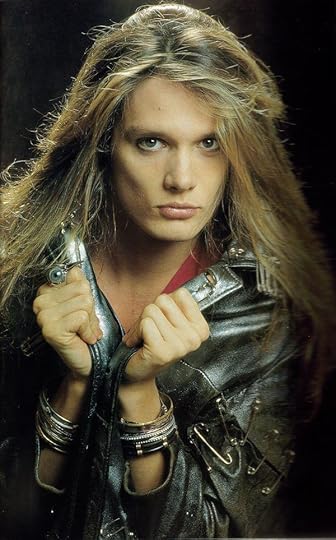
It’s The Princess Bride! No wait, that’s this lovely creature…
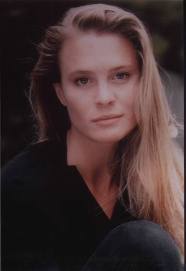
I came of age during a time when men and women in popular culture looked alot alike.
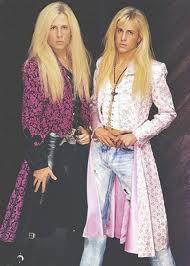
Maybe we actually don’t look that much different. If all the waxing joints blew up one day we would really know.
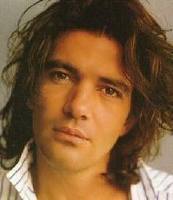
Handsome or beautiful? What is the difference?
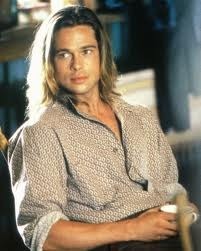
Beauty and substance…
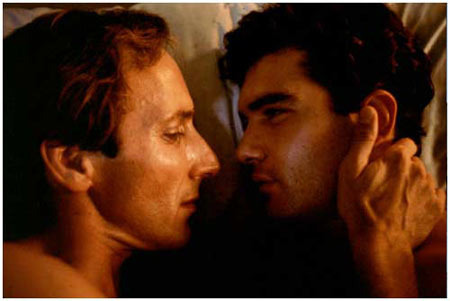
Does it matter who is on top?
* This serves as a precursor to a more in-depth and personal post on beauty that I have been fiddling with for some time that features Mr. Rush Limbaugh! Stay tuned.
August 3, 2012
...and Death in the American Novel
Fiction that isn’t an author’s personal adventure into the frightening or the unknown isn’t worth writing about for anything but money.
—Jonathan Franzen
My husband's aunt in Mexico just lost her father. I spoke to her in the best Spanish I could, both of us frustratingly aware of how bad it is. I desperately wanted to convey all the things I had learned since my father died, and even if my Spanish were perfect, I am aware of how frustratingly inadequate language is when trying to express the most important sentiments. Even in English it is near impossible to capture the emotion and thought process I’ve been working to articulate since my father died.
Grief--the other side of Sex and Death in the American Novel.
The core of what I was trying to get to in that book was one particular aspect of grief. One that seems unique to my own experience though I know this can’t be true. Someone out there must have gone as nutty as I did over the loss of someone they loved.
When my mother passed in October of 2006 I hardly wrote at all and therefore didn’t examine much about the situation. I still scribbled notes and story ideas or little snippets of observation, and I did a small amount of journaling, though mostly I was busy trying to deal with a constant crippling exhaustion and spent any coherent thought time trying to figure out why I was so tired all the time. I don’t actually remember much about that time, except trying to pull off a birthday party for my daughter and knowing deep down in my bones that I was a horrible mother because I did not want to do it. It did not, even as I hung streamers and smiled at people when they came over to help her celebrate her second year on earth.
What got me out of bed and back to my life was deciding that we needed a new place to live. Six months after my mother died I threw myself into managing all the details that go into finding a house and making a move.
I should add that I spent a good chunk of the time when my mother was alive hating her, cutting her off, avoiding her phone calls, trying to protect the sanity and drama free life I was trying to hold together. I would change my phone number, and avoid stopping by her house when I would go back to visit friends. While she was able to express love, she was also able to express rage, and just a look or exhalation over the phone lines could provoke a deep fear, anxiety, and a sense of impending doom that took weeks to shake off.
Many people who knew her will agree, my mother could be scary; she could also be the most charming woman on the planet. I spent much of my life running away and hiding, then missing her and coming back. I joked with friends that she looked like Jack Nicholson though this was not actually far from the truth. One of my clearest memories is of the first time she had to be locked up. I was eleven. She followed me through my grandmother’s house in the middle of the night quoting passages from the book, I’m OK--You’re OK. I had just seen The Shining and from then on always thought of her and Jack as being the same person in some cosmic realm. They both had crazy eyes, short dark hair that struck out in greasy wisps, they both chased people down long hallways, in those jeans that didn’t want to sit right on the hips, in my mother’s case because she wore men’s jeans and filled the front pockets with what seemed like pounds of coins, keys and small bits of hardware.
She took a long time to die. Even at her weakest, she was still manipulative, still capable of stirring up so much drama. By the end though I had spent enough time with her to feel like I had made amends for some of the horrors I had inflicted on her as a teenager, and done what needed to be done to keep her hometown from ending up on City Confidential. In the months after I quit my job to go back and help her move into a new home, I was able to talk to her in ways that were not possible when she was more energetic and focused on all her many “wheelings and dealings.” We were OK when she died and it was a matter of pride that when the hospice worker had us all do the last formal meeting she just looked at me and said, “I don’t have much to say to you.” She looked at me with her tired puffy eyes, the thin-lipped lopsided grin, and there was a softness in her voice that I have craved since earliest childhood.
I was there when she directed her eyes to a specific spot on the ceiling, a definite action, as if her head were pulled by an unseen thread. I watched the color leave her face, and I went running for the nurse, as if she could do something, as if she wasn’t sitting downstairs doing paperwork, oblivious to the buzzer I had rung so many times from my mother’s room. I grieved for my mother and I grieve still, I see her in old broken people hooked up to oxygen tanks, or wheeling around on scooters with dogs tied to the side. But when I see these people I feel a longing and appreciation for what I had, the anger is long gone.
When my father died more than three years later in March of 2010, I expected the same basic experience.
He had a few years to deteriorate as well, though in his case he had a wife to look after him. She would call every so often to ask me to stay with him while she took a much needed break. Dad and I would drive around the state of North Carolina, revisit childhood vacation spots and listen to Neil Diamond or Don Williams, both of whom would send him into fits of smiles and laughter, saying “thank you, thank you.” I was at last able to redeem myself from the screw up I always represented for him.
He told me once while I drove us toward the sunset that he thought he should not have left my mother, and that he should have been a better father. I hoped that meant he regretted keeping me in Straight for months after it was obvious that the place was so wrong. He never did admit this. I was sure we were good even though I resented the awards on his wall that he had received for working with troubled youth, during the exact same time my sisters and I were calling to report our mother’s latest split from reality. After I began running away from home, after my trip to California, after Straight, we were never able to really talk in that honest and pure way we had when I was younger. When he lost his mind, it seemed that I had my Daddy back and we could just be together. Though sometimes we would still do it, most of the time there was no need to talk, just to listen to music and look at the passing scenery in the car or watch King Kong, Star Wars or Superman and remember better times.
Two weeks before he died I went out to see him. He stopped eating and drinking, then recovered some when the hospital rehydrated him and sent him back to the rest home. I spent a pleasant couple of days reading to him and watching old movies until the afternoon he sent me away with a firm shake of his head. My father could say as much with his eyes as my mother could and I knew he wanted me to leave him alone. I was devastated. I wanted to be with him, as I had with my mother.
He didn’t want me.
I flew home and did my best to forget it.
Several days later my stepmother called to say that he had again stopped eating and the nurses this time were not going to do anything to revive him. My sister and uncle flew out as well. This time, when I talked to him, I asked him if he remembered how I was as a little child. He acknowledged me with a tear that slipped from his eye and a hitching gasp for breath and continued to look at me. Then he swiveled his head toward a spot on the ceiling, as if his attention had been pulled there by something I couldn’t see just like my mother had done. My sister came around to the other side of the bed. She talked to him and told him it was ok to go. She told him that he had seen everyone that there was to see. She then told me that we should leave. “He is an introvert. He would not want us to be here for this.” Of course she was right. I was grateful in that moment for her wisdom, for her being there when I so obviously had no clue how to handle him.
When someone called the next morning to deliver the news that he had passed, all the random bits of things started to happen. We drove to the rest home, to the funeral home, and God knows where all else that day, a few people worked on his obituary, made calls. I drove back to the home to collect more stuff, and when I was busy I did in some ways feel like I had when my mother passed. A weird energy pervaded everything. I had no parents left and I was alone, alone like when I landed at LAX a month after my fourteenth birthday, I was on my own for the first time and it was both terrifying and exhilarating.
I was also angry with my father, I was fully aware of how selfish it was, he was the one who died, he was the one who suffered, still, I began to build a case against him. I thought of how he sent me away, how he’d tried to keep me in Straight, how he’d spent precious hours with stranger’s kids while his youngest slid into drug addiction and criminal behavior, how he had utterly and completely failed my mother. How different this was from the way I viewed my parents when they were alive, my mother the crazy, the evil, my father the saint who tried to hold the family together until he had to get out and save himself.
To make matters worse I began to focus on the people around me and how inadequate they were. My husband had no sincere words of comfort and I could tell by his tone of voice on the phone that he just wanted me to come home and get back to normal. My stepmother and her family seemed to be trying to act as if nothing had happened and continued to have dinner parties and talk about their jobs and vacations as if my father dying were old news. I couldn’t get the thoughts out of my head, I made harsh judgments that I knew were not fair, I tallied in my mind every way everyone had failed me and my father, how stupid and idiotic absolutely everything they said was.
When I couldn’t stand it anymore, I went to the beach and in a cheery enough hotel room, it sunk in how unprepared I was for this new way of handling death. With my mother I had been irritable. I probably even took my frustrations out on a few inanimate objects, but that did not come close to this consuming rage, this active hate, this scary new me.
The anger at my father is not gone, though I love it when I catch sight of an old guy who also has Dad’s pancake butt. I ogle the butts of old men because I miss my father. A part of me knows that no matter what, I was a disappointment to him and I am angry with us both for this. My mother constantly complained of his inability to engage. Maybe this was just him and the distance I felt had very little to do with me. Often I can think about him in ways that are more logical, more fair, more pragmatic, but hatred is once in a while still satisfying. I spent a large amount of energy trying to justify my feelings to myself, as if there were some psychic committee I had to explain circumstances to.
So the thing I always try to explain about grief and wish I could prepare other people for is the way we can beat ourselves up for not doing it in the way we think we should. I want people to know how totally futile that is. One of the things I tried to work out in the writing of my novel was the question of how I could hate a dead person, especially someone I loved.
Death has proven to be so much more complicated than I would have ever expected. Even if I was sure I was doing it wrong, in the end I was able to process it best when I simply let it be all that it wanted to be, this fucking monster in my heart who goes by such a puny name—Grief.
July 20, 2012
I Write Because
I write because I have too many ideas and I have to get rid of them. I write because I have never heard anyone else say the exact mix of things that I want to say. I write because it makes me feel good. I write because I want to make my ideas and feelings and dreams real. I write because it is comfortable. I write because writing makes me feel that I am making progress. I write because I want to leave something behind. I write because I know there are people who feel alone with the same scary things I have experienced and they need to know they are understood. I write because I want to show off my brilliance. I write because it is fun. I write because I want people to know who I am. I write because I want to stay sane. I write because this world is my life. I write because it works for me. I write because I love the feeling I get when it works. I write because writing is the best thing I have ever done with my time. I write because I admire writers. I write because I love writers. I write because it is an outstanding outlet for my insanity. I write to meet others who are like me. I write because I am and have always been a reader. I write because I care about words and meaning. I write because being a writer gives me an identity separate from Mommy. I write because Grandfather was a writer. I write because Mom who wrote said, “just write,” before she died. I write for Vivi who knew I could do it. I write because I can. I write because it gives my life a greater sense of purpose. I write because I don’t know of anything better to do with pen and paper.
July 18, 2012
Book Review: Praise of Motherhood
As a way to prepare the reader I offer a quick summary from the back of the book:
Psychoanalysis, poetry, and confession all merge to tell the story of an ordinary woman whose death turned her into a symbol for extraordinary motherhood.
Reading this book made me feel like I was meeting a very delicate and vulnerable person and needed to be careful not even to think the wrong thing, lest I shatter a carefully constructed façade. You are in the middle of another person’s most painful and complex thoughts at a terrifying and lonely time. I strongly encourage anyone who picks up this book to read the introduction by Caleb J. Ross as preparation.
One of the beautiful things about this book is how the author managed to present so clearly the intimacy of his relationship with his mother and the experience of remembering her in grief. I have never before read a book where the voice of someone who has already passed comes to life so convincingly. By the end of the book I thought of the author not as “Phil Jourdan,” but “Philippe,” the child she loved.
The author narrates from the perspective of an impetuous young person, and as such insists upon breaking many of the usual rules and conventions which results in various delightful effects. At one place a dream is rendered with all its unsettling details from the beginning, and expected bits of punctuation are left out. Chapter eleven deserves an especially close reading as a voice that is rarely heard from makes a brief appearance.
The best things, though, are the passages that introduce us to the distinctive intelligence at work and a powerful honesty. Early on the author presents these words:
The taboo of the child enamored of his parent is easy to misunderstand. The vulgarity of treating love as a purely sexual thing should be dismissed immediately. To be in love with your mother does not have to mean what common parlance would have it mean. When she died, I tried to think up things about my mother that I found repulsive: there was little. Perhaps, then, I had idealized her to such an extent that I was, in the literal sense, in love with her.
Passages like this set the reader up to understand that though expected rules are not followed, though we are often in the mind of someone who is very troubled, we know the author is in control of every device and trust that our careful reading will be rewarded.
One unique aspect of this book is a sense of extreme intimacy with the workings of another mind and the trials of another soul. This is what makes Praise of Motherhood so important.
For more information about Phil Jourdan or Praise of Motherhood please visit: www.slothrop.com.
July 7, 2012
My First Author Appearance: Bookfest
Bharti Kirchner is hosting an author panel titled, "Brave New Books." Along with other writers whom I have not met yet, I will be appearing with the wonderfully raw and talented author, teacher and poet Jack Remick.
The panel will be held on Saturday September 22, 2012 at 4pm.
I will be available to sign books afterward. That means you get to interact with me! I am already practicing my book signing expressions so I don't look too excited and scare away any potential readers.
Jack Prelutsky, Elizabeth George, and Ivan Doig are just a few of the other great authors who will be there as well. There will be lots of activities for kids as well so bring the whole family to the festival this year.
June 30, 2012
Another Way to Explore the Senses
This post gets graphic. You have been warned.
As a writer, there are a lot of activities that are necessary to explore what it’s like to exist inside a soft and squishy human body, to access the vivid sensations that come with fully appreciating all that these bodies are capable of. What I am about to describe is just one activity that my husband and I took up to keep things interesting.
There are many things couples can do to get closer, to understand each other better, to please one another. Marriage counselors, toys, books, videos, lotions, pills*, and even food can be employed in the interest of strengthening the bonds.
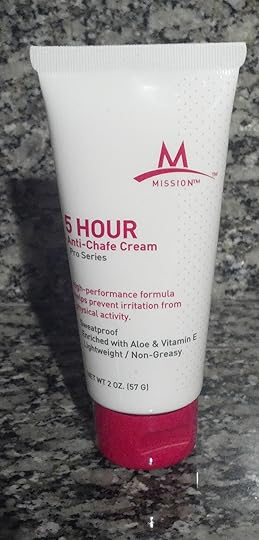
In this post I want to focus on one activity: the run, specifically the long run, the half marathon. I still have a certain amount of junk in my trunk, not to mention a limited amount of time in which to train. Weight is just one thing I become aware of on a run—extra pounds, weak joints, tired feet, and most often the hardest to cope with: mental baggage.
Every year my mind kicks on with the helpful suggestions to slow down, walk more and reminds me that I never finish in the time I set for myself. A know-it-all voice asks me why was I thinking this year was going to be different. An old guy I used to know always said, “The mind is a terrible thing.” Ain't that the truth at mile ten!
As with other activities; meditation, sex, gardening… moving away from my thoughts and focusing instead on the physical sensations before me works wonders. I am aware of thirst, hunger, sweat collecting beneath my clothing, and eventually—it always sneaks up on me— euphoria with all its tingling of skin, and intense thoughts bouncing off the inside of my head like pinballs. I consider my heart rate, the location and function of my intestines, my impossibly hot red face which as the day wears on becomes covered in a fine gritty salt proving that I am working near my full potential.
Besides becoming aware of what my own eventual corpse is doing, I also get to watch other people and become keenly aware of what it is like to exist in their skin. Body functions lose all associated shame on a run. Shiny yellow or dull green snot rockets hit the pavement or land farther away in the dewy grass, often narrowly missing a passing runner, spit shoots out and down so often you may be glad for a light rain just to clean the pavement beneath your feet. Guys are constantly ducking into the bushes and can be seen readjusting themselves on the return trip. Last year at a particularly open section of grass off to one side I saw several guys wizzing away and returning to the road seconds later as determined as ever. No evidence of shame on their faces. Where else would you see this outside of a toddler playdate? The mere presence of all the Porta Potties and the hundreds who wait in line is a constant reminder of how much came in and what must go out. Clean hands? Fahgettaboudit! Most of the potties are out of hand sanitizer an hour before the run starts.
Bumping into other people is so common it barely garners a reaction, though often the one you will get is friendly and open, like one woman who passed me somewhere around mile six. As she did, she ran a hand over my shoulder blades and said, “Good job, coming around!” Where else but a church service would anyone feel bold enough to do something like this? I am short and this may mean my hand comes into intimate contact with some guy’s crotch as he passes, but all is good. No problem, he signals with one open palm in the air and a genuine smile.
You see all body types on the course: men who would never be on the cover of Men’s Health, they are too hairy, too chunky or too skinny in the arms and legs, nonetheless they impress me for their yellow bibs and metallic blankets which signal that they have finished the full marathon—26.2 miles! Senior citizens with leathery flesh and wiry muscles finish strong. Large women with red faces hold hands as they cross the finish line. There are of course the expected gazelle types, all those Guevara’s and Iron Men in their tiny shorts and half shirts. All are welcome, even me.
The energy at these things is amazing. You will likely never find yourself in this thick of a crowd outside of a crisis situation. We wove and ducked and pushed our way through thousands of people just to drop off our stuff with one of forty or so UPS trucks lined up at the far end of the Seattle Center. You get a sense of how many people there are standing in line for the hundreds of porta potties, or finally when we are mashed together in our corral. All of these instances could be cause for concern or at the very least, anxiety anywhere else, not here.
People are overwhelmingly supportive of each other, polite in how they look the other way when the guy beside them pees into a bottle right before the start and they hardly ever step on me. I can’t say this about the last concert I attended. There is so much goodwill that I do what I can to soak up all this great energy for those times back in the real world when people are flipping each other off in traffic, pushing and shoving during Black Friday, or cheating each other out of anything and everything on the TV news.
The attitude and activity surrounding the run serves as a reminder of what we as humans are capable of when we are focused on something positive, in all ways; physical, spiritual and emotional. Every year I am grateful for the experience and since I want to handle sex and sensual topics in my work, running is one more way to observe every aspect of being human, not just what goes on in the bedroom.
June 14, 2012
Three quotes, one music video, and two unanswered questions
Ladies and gentleman, start your engines. I present for your examination three quotes.
The first comes from Fear of Flying, by Erica Jong, high priestess of observation, who wrote:
“Besides, the older you got, the clearer it became that men were basically terrified of women. Some secretly, some openly. What could be more poignant than a liberated woman eye to eye with a limp prick? All history’s greatest issues paled by comparison with these two quintessential objects: the eternal woman and the eternal limp prick.”
Here is a quote from Otto Weininger’s Sex and Character. Is there a difference between the muse and a full blown obsession? This dead Austrian is mine.
“I have shown that woman is engrossed exclusively by sexuality, not intermittently, but throughout her life; that her whole being, bodily and mental, is nothing but sexuality itself. I added, moreover, that she was so constituted that her whole body and being continually were in sexual relations with her environment, and that just as the sexual organs were the centre of woman physically, so the sexual idea was the centre of her mental nature. The idea of pairing is the only conception which has positive worth for women.….Pairing is the supreme good for the woman; she seeks to effect it always and everywhere. Her personal sexuality is only a special case of this universal, generalized, impersonal instinct.”
I wonder what he would have thought of this?
The last thought to ponder comes from The Gentle Degenerates by Marco Vassi:
“There was a time when I felt cunt to be holy, and to enter a woman was the most sublime and tender of moments. There was a definite religious awe about penetrating past the opening and into the actual body of another human being, especially when that opening led to the deep mysterious folds of birth and consciousness. But in so few instances was my feeling reciprocated, so often did it get lost in the woman’s fears and fantasies, that fucking was relegated to an act of mere symbolic sensation. And after a while my sensibilities got dull, and one day I found I was past the point of feeling anything...”
I am still in search of the answers to the questions that drove Sex and Death in the American Novel.
Why do so many brilliant men avoid the topic of sex in their work? Otto Weininger didn’t, Marco Vassi didn’t.
And why, for God’s sake! are the only writers-- with the enormous exceptions of Priscilla Long and Erica Jong-- who ever blew my socks off still men?
June 5, 2012
Kerry Cohen's Loose Girl: Part 2
SM: Loose Girl is a necessary book because it addresses a side of female sexuality that I have hardly heard talked about so honestly, and definitely not this fairly to the guy’s side. In my own search for ways to explain my adolescence I have fielded various interpretations about what I did and none have ever seemed to fit right.
You were emotionally disturbed and as such, fucking around was your way of acting out, or using others to make yourself feel better. That one at least feels honest, though doesn’t address much beyond the obvious, it doesn’t tell me anything about myself that I didn’t already know.
You were a victim. Of all the ways that teenage sexuality is presented, the way girls are portrayed as victims, unable to make their own decisions or go after boys on their own, this one has always made me the most insane. It feels like many women are more comfortable believing that we are simple victims of these big bad men forcing this or that on us, and we had no part in our own destruction, much less any culpability for using them for our own purposes and enjoying it. And not just the sex either, I am talking about the whole twisted power trip. To ignore our own motivations in favor of pretending some sort of innocence is to actually lie about what it is to grow up in a female body.
Women are so very good at judging each other, and don’t often acknowledge that we sometimes reflect back to each other what we don’t like to believe about ourselves. The things that other women do that disgust me the most are always things that I have been ashamed of doing as well. Your book’s example of this would be judging the desperate looking woman at the writing conference and then acknowledging how close the behavior was to other things you did. Your honesty about that was refreshing and gave me more to think about. I am really glad that you write YA as I expect your honesty will rub off on at least some of your young readers, and hopefully help them become more sincere and aware young women. When I heard that you got hate mail, I was sad for you, but I also thought, well, that must mean she hit on something true!
KC: I do get hate mail here and there, but I want to point out that I overwhelmingly get fan mail. Tons of it! I only post the hate mail on facebook because I usually find it funny. I get more nasty comments online on articles I write than hate mail in truth. But in general I think people tend to be really triggered by the sorts of things I write about and how I write about them. Sometimes the anger comes from not wanting to address those issues in themselves. Other times, they have a different experience than me, and rather than simply recognize they don't relate, they get furious that I'm not validating their experience (which makes me think they perhaps aren't that secure in their experience?) I have a lot of feminists who get angry with me because I tend to write about experiences that come directly from being a woman, influenced negatively by our culture, and they don't like me affirming such a thing. They want all experiences to be sex positive, fat positive, etc etc, and when I suggest they aren't for me, they feel I'm perpetuating old stereotypes, I think, or keeping women down by noting my experiences.
SM: I enjoyed getting to know your thought process better by reading the questions and answers at the back of Loose Girl. When asked why you wrote this book, your answer was:
“So many women feel alone with feelings similar to the ones I wrote about in Loose Girl. I want them to feel seen. I also hope readers will gain a deeper understanding of female promiscuity, that more often than not it’s not simply “asking for it” or (another belief growing out there these days) being empowered. It’s a girl who is likely trying to fill her emptiness with what feels like an easy fix. It’s a girl who is trying, and failing, again and again to be loved. It’s a girl who doesn’t love herself.”
Two things about this struck me: being seen and what that means, and the idea that random fucking around isn’t as empowering as we might hope. When I edited Stripping Down I reflected on the fact that I was aware of my own dishonesty even at thirteen. I love how both you and Sheila Hageman were able to bring that awareness to your stories. I knew when I was trying to fill the emptiness inside by attracting a certain type of attention that I was cheating my way out of an important life test. I understood that even then, and I knew it was easier to continue the way I was rather than change something about the way I was living so that I could be proud of myself for something legitimate.
The notion that we as developing girls need to “be seen” is something that I have been thinking about since working on Stripping Down. I like to think that as we age, the people in our lives really see us and care about who we really are more than what it was like as a kid when just having someone tell me I was pretty was the high point of my week. These days I hardly ever hear anything about how I look and the people who make me feel beautiful and important tell me the stuff that matters: that they see what I am doing as a mother, wife, writer, editor, friend and appreciate it and find value in the things I do. If you have any other thoughts on this I would love to hear them.
KC: For me, the issue of being seen has been central to my life. I get told that the story I wrote in Loose Girl is tons of girls' stories, and yet they all felt alone with it. How can this be? How can we have not shared this truth with one another? I believe it's because the narrative of girls and sexual behavior has been so limiting. There's the generic narrative: girls don't want it or do it. There's the slut narrative: girls are only promiscuous when they're mentally ill or deeply abused. And then there's the feminist narrative of empowerment: we do it and we have agency and love it. None of these narratives worked for me. None of them felt true to my experience. And yet my experiences were so driven by my experiences with boys. By writing about my experience, I wanted all those other girls and women to feel seen and less alone.
SM: Your comments on promiscuity as empowerment were interesting and frankly scared me. I write about women who take charge in bed and in every other aspect of their lives; they pursue who they want and aren’t hung up on marriage and who is going to take care of them. My concern was whether or not I am attempting, in my fiction, to glorify negative behavior. Obviously there is more going on in my work, the times when my female character is extremely promiscuous she is aware of this as her own way to drown grief and is not proud of it for that reason. So… I wanted to get you to talk a little bit more about this idea of what it really means for a woman to be empowered and how some may confuse sleeping around with being empowered.
KC: The empowerment thing has been a real issue of contention for feminists reading my work. They are bothered that I suggest that we aren't there yet as a culture that girls can have sexual agency and get respected and feel good about it all. I just don't think we're there yet. I think women can do this more than teen girls, for sure. But in general, I'd say the messages and pressures from our culture make it nearly impossible to find pure sexual desire and make choices solely based on that without being ostracized or the like.
SM: Since you talked about some women being unable to reconcile the differences in their stories from yours, I thought I would bring up part of how I felt I was different in case anyone else can relate to this type of thinking.
I had this feeling that the ideal way to be was to have no feelings. I somewhere got this idea that boys had no feelings and so it was ok to use them for things I needed. I wanted to have sex like a boy, I wanted to be tough and trade my ass for a place to stay, cigarettes, food, a ride, whatever. I had this image of myself as some sort of rough and tumble adventurer and believed that I was stronger and braver than other kids my age for being able to do the things I did. Do you ever remember feeling like being able to use your body to make things happen was an asset? (not that this is an asset, I am referring to the thinking) I thought my ability to disassociate from my body and feelings was what made me strong. It wasn’t until years later that I started dealing with the fact that I had no idea how to connect with my own body.
KC: Body as asset: yeah, sure. I would say Loose Girl is partially about how I used my body and sexuality to try to get things I wanted.
SM: I am interested in how you said you didn’t believe in change as a therapist, you only became aware of your problems and began behaving differently. To quote you: “We all have the opportunity to find that place where awareness trumps our actions.”
KC: The main thing that happened for me is I stopped believing in the fantasy about boys, that they would save me from my pain. Once you don't believe in that anymore, it's nearly impossible to keep behaving in those ways.
SM: Thanks Kerry, keep doing what you do.
For more information on Kerry Cohen, please visit her website.