Sarah Martinez's Blog, page 3
January 14, 2013
Why Marco Vassi is so Important
Marco Vassi is the most innovative writer, thinker, storyteller and human I have come across in my reading life. My review of The Stoned Apocalypse sums up my thoughts on this pretty well. Reading this book was the first time I felt my outlook on the world and my relation to it had been altered permanently. Not only did he address sex as a vital part of the human condition by giving it more narrative space than I had ever seen in a book, he also was the first writer ever to give me access to the workings of the male mind in a way that made me feel for once, like men were more like me than not. I felt more grateful to him for this reason than I have felt to any writer before or since.
His books The Gentle Degenerates --a book he said was 90% autobiographical--and A Driving Passion were also important to me and I often refer back to these in conversation. A Driving Passion is especially good for anyone who is interested in his thoughts on topics ranging from jealousy to procreation. It is a quick read and will give you a fairly good idea of who he was as a thinker and also captured his sense of humor.
He defied labels, and for this my work owes him so much. Anne Rice is the only other author I have read who spent so little time worrying over who was doing who and why. In his books people are people and they do their glorious thing, without the narrator hanging around "forgiving them" or judging their preferences. People are free to be themselves in his books and that leaves the reader free as well. In Vassi's words I found a thoughtfulness that might remind some of Henry Miller as he spends pages pondering what it all means.
It wasn't just sex that he covered. Marco Vassi examined the entire spectrum of what it meant to be human; he wrote about psychology, religion, politics, as well as sex and drugs as he questioned what society expects of all of us, and how these expectations limit our potential. He revealed himself in his work as impatient, jealous, petty, loving, kind, generous, and everything in between. Because he revealed so much of his own inner landscape, I felt validated for the imperfect being that I am and soaking up his outlook on the world allowed me to consider other people with the same generosity of spirit that he did.
Until recently when I talked about him, nobody had ever heard of him, which still seems incredible given how much he wrote, who spoke up for his work*, and the radical topics he handled. But lately I have found a few people who not only knew him but wrote about him!
The photographer and writer David Steinberg gives us some very intimate and important details in this essay, and anthologized his work in two books. Erotic Impulse, an anthology that also includes work by Lenore Kandel, Susie Bright, Henry Miller and others, contained the essay "Bodhi is the Body," which is one I think everyone should read. Not only did he point out the female contribution to sex and life, instead of once more turning the female body into at best a pretty receptacle, he also made it clear how important he thought sex was as a part of a spiritual path. In Erotic by Nature, erotic images are combined with poems, essays and stories, including Vassi's erotic fable, "The Kingdom of Come." That may be a funny title, but a story that will also make you think.
David Guy, a writing instructor at Duke University, has written several books that deal with sexuality from an honest and human perspective. In his book The Red Thread of Passion he devoted an entire chapter to Marco Vassi. I was especially grateful to find that he paid attention to the spiritual aspect of sex, and focused on this angle of Vassi's work.
Michael Perkins, in his book The Secret Record, a literary examination of erotic writing, also devoted an entire chapter to him.
I highly suggest all of these books for people who are interested in Marco Vassi and erotic writing that has something important to say.
Lastly, Marco Vassi's literary agent and friend Richard Curtis maintains a blog and has posted about him as well, you can find one post here. I also suggest looking around his site as he posted some thoughtful pieces on erotic writing and digital publighing among other things.
On this the 24th anniversary of his death, Vassi's work is more important than ever. Erotic writing is, in many people's minds, still limited to the topics of bondage and submission, or it is nothing more than a racy romance flouting explicit love scenes, or a polite word used to coneal crudely written come shots, or formulaic writing whose sole aim is to get people to stick their hands down their pants.** Marco Vassi is a writer who could do all of that and dared to be so much more.
In 2013 women and men still give up their creativity, their passion, and their independence to play the roles of wife and mother, husband and father, caregiver and provider. In 2013 gay, bisexual, transgender, and plain old "different" men and women are still fighting stereotypes, violence, and ignorance as they work toward equality. In 2013, though whips, chains, ropes and the like serve as props in movies and music videos, those who practice BDSM still fear the conscequences for their families and reputation if they are found out. In 2013 women are still judged by and valued for their appearance--not what they offer each other and the men around them on a spiritual, emotional, and intellectual level. In 2013 popular media has trivialized all angles of sexuality to the point of banality. In 2013 Marco Vassi is more important than ever.
Rest in Peace, dude. You are still the fucking Man.
* Norman Mailer blurbed several books and said that he hoped A Driving Passion would,"lead readers to explore the bold literary contribution olf Marco Vassi."
** He might ask, what is wrong with that?


December 12, 2012
Thoughts on a recent "Dirty Books" article in GQ, a plug for Marco Vassi, and a bit of insecurity
It has gotten to the point that people know enough about me and my particular interests that they send me all sorts of wonderful random bits: articles about porn stars, books on male sexuality, photographs that display sex in a novel way, and referrals to professors who have been doing all sorts of cool work on related topics. I love this. It makes me feel important, and keeps me engaged with the world, though sometimes I get more than I can keep up with. I got an email head’s up that December’s GQ featured an article on erotic writing. “A Reading Man’s Guide to Dirty Books,” by Tom Bissell. It has taken me three weeks to get this post up. Too much good stuff, too little time.
The year is 2012 and books that include depictions of sex are still called dirty. Why not “The Thinking Man’s Guide to Primal Interaction?” I know, roll your eyes, and onward we move….
Tom Bissell cited five books that he thinks every guy should read. I will talk more about these books, but as a reader, I was thrilled to see book recommendations.
I just spoke with a very nice guy who said he was going to read more erotic books and he was starting with Fifty Shades because that was what his girlfriend was reading. “Oh, no.” I said as he got his pen and paper handy. “That would be like me reading Hustler to understand the male mind. That book made me feel sorry for guys. In my opinion the single most effective thing that book did was to tap into the fantasy of being with someone who pays attention. The book is a fantasy.”
Fantasy…get it, like not real. Kinda like the picture that goes with the article. A topless woman with a large and lovely pair of breasts, and these super skinny legs. Just sayin.’ That is sort of what fiction is, and when it is written as a quick piece of entertainment, that’s all you get. I wish people would stop bashing FSOG for being silly. This is not Lonesome Dove or even Story of O and that wasn’t the author’s intent either. Check out this wonderful interview with the EL James where she says this and a few other things I already suspected.
Back to the list. Guess who was not on it? John Updike’s Couples (1968) was on the list. James Salter’s A Sport and a Pastime (1967) was on the list. Nothing by Marco Vassi was on the list! Maybe that was because he actually had something new to say but didn’t have the right pedigree. It couldn’t be that simple could it?
Michael Perkins wrote an entire book of literary criticism titled The Secret Record (1976) that dealt exclusively with erotic fiction. He devoted one whole chapter to Marco Vassi. David Guy, who wrote The Red Thread of Passion (1999) also devoted an entire chapter to Marco Vassi. David Steinberg, the artist and sex writer, has anthologized Vassi’s essays and still talks about him.
Now to the positive portion of this thingy…sort of.
One of the better lines from “A Reading Man’s Guide to Dirty Books”:
“A hot literary sex scene is, above all else, truthful about sex as it’s felt and experienced by actual human beings. A bad literary sex scene is cynical—a commercial for impossible sensations.”
I was so grateful that he discussed the importance of honesty, but also wondered, why does the scene need to be hot? Is it not possible to discuss sex without making an ad for it, without trying to get your reader to stick their hand down their pants? As if that were the only reason why one would read about sex in the first place.
“Isn’t at least half of what makes sex sex what we’re thinking while having it? Not all those thoughts are kind. Some in fact, are privately cruel. Intimacy with another human being is nothing if not being constantly aware of how easily you can hurt them.”
Hallelujah! What I loved more than anything when I found Marco Vassi was the honesty with which he handled these sorts of moments. He also showed us some of the most important ones. His essay, “Bodhi is the Body” dealt almost entirely with the revelation he had--while fucking, as that was where he had many of his best revelations--that women were capable of giving men something incredibly important, but because both eastern and western religions have removed women from discussions related to the path toward enlightenment, that spiritual contribution has been totally overlooked.
And this echoed something I have always tried to be:
“To write about sex well, you have to be brave. To read about sex well, though, you have to be honest. You have to be willing to be turned on, and you have to be willing to be disgusted; you also have to understand the difference between being turned on and being disgusted.”
…and what did I say about “dirty books?” Ok, does anyone else wonder what is wrong with the physical state of being turned on? It is actually a quite fun place to be I think, though if that were the goal of everything I read I would be disappointed indeed.
I don’t know about telling people how they should or should not read, but the quote addresses the fact that sex writing serves so many purposes. For me erotic writing is all about freedom. This also reminds us that reader’s reactions will always be varied. The thing that irks me most lately about discussions of erotic writing that always go back to a simple romance books are that they show how very watered down, cynical and just plain stupid our discussions of sex and what is even possible in our art have become. They also prove I have been talking to the wrong people.* The lines above at least go further toward addressing the need for a more generous and open approach to reading and writing about sex.
I went online to find a link to include here and found this instead. It is one woman’s response to Tom Bissell’s article that gave me a huge amount to consider. When I read “A Reading Man’s Guide to Dirty Books,” I was glad someone was handling the topic of erotic writing with any sort of thought, and that he gave book references. When I was done reading this woman’s article I wondered if there was something wrong with me because I wasn’t offended…that is a topic for another post, or a memoir probably, but I want to include a link because it helps to give an even more balanced perspective on this article and other issues that may interest readers.
She addresses the fact that the author talks about how to relate to women by reading them books with sex in them. Wasn't this just a cutesy way to introduce his topic? Maybe I should be more outraged... Am I a bad woman because I applaud a guy who tries at all to understand us, even if he does it by being condescending and lumping us all into the same category? Admittedly, he does the easy and annoying thing of dismissing simple feminine fantasies during a time when I can still sit down at a Hooter’s, examine the cover of half a dozen magazines or glance at any billboard and be subjected to the male version.
Lately I have become aware of how incredibly low my standards were in terms of what I expected people to say in regards to sex writing. When I find people who are actually thoughtful at all I jump all over them, only to find that even more enlightened people have been writing and publishing for years and I have just, stupidly, been unaware. I am at present already on my way to fixing this situation. All that to say, I keep finding more that adds to my understanding of what is available to read and get more clarity on why it is that I want to include sex and related topics in my work.
I am troubled by the fact that I was so willing to applaud this man for his article when another woman out there was clearly so outraged by almost everything in it. On the other hand, life is nothing if not interesting, and different viewpoints and opinions are part of what make it that way.
And lastly, just to add a few of my own book recommendations:
Exit to Eden, Anne Rice
The Stoned Apocalypse and The Gentle Degenerates, Marco Vassi
The Lover, Marguerite Duras
And if you appreciate the outlandish and raunchy, House of Holes by Nicholson Baker
I have been promising forever and still plan to deliver interviews with several writers and artist who are handling sex in ways that I admire and think people should be aware of.
December 6, 2012
Goodreads Giveaway for Sex and Death in the American Novel
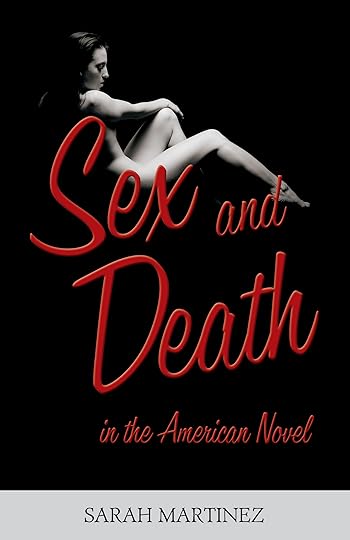
Visit goodreads within the next five days and register to win a free signed copy of Sex and Death in the American Novel!
December 1, 2012
Needles
Spotify
November 25, 2012
Book Review: Blood by Jack Remick
I’ve been trying to get this review up since I finished Blood several months ago. The book covered so much and has so many layered parts to it, I will never do justice to the experience. I would love to hear from other readers since there may be something you found in the reading that I have been unable to express.
As I read this on my kindle, I threw up passages from the book almost every day. I love books that reference other books; they work like an introduction to new worlds. Blood not only referenced titles that were relevant to me, it also covered some familiar topics: creative process, freedom, writing, philosophy and classic erotic literature.
Here are a few of my favorite lines:
It’s hot in the laundromat. Hot and moist as the inside of a woman’s mouth.
It is a forbidden book. It is a handbook of sin, a worm in the heart of decency. Irresistible.
I learned that a man’s mettle is measured by his grace when he loses. I found that I wasn’t the man I wanted to be because all too often, I gave into my addictions of self pity, self hate, self loathing, self gratification.
The next couple of exchanges cracked me up. Here they are in the prison library, one of my favorite settings in the book. I especially appreciated being reminded of the power and possibility represented on one forgotten library shelf…
This Faulkner guy is weird, Mitch. He’s got a guy doing this babe with a corn cob. Can you believe it? Are you hungry?
Have you finished dusting the Fs?
You know there’s a whole lot of titles that start with F, I mean a whole lot, but you know Mitch, not one of them Fs got read? You know? Can you believe it? All the Fs is Virgins, Mitch.
Here’s another one:
What’s a declarative, Mitch? He asked.
It’s when you say something direct, I told him. Like you suck cock. That’s a declarative sentence.
What base element of life does not make an appearance in this book? We’ve got semen, tears, sweat, urine, and blood flowing through almost every scene.
I especially treasure books that refer to other books; they remind me that I am first a reader, held in thrall to an artist god. Often we have rituals as we read; Hank Mitchell’s reminded me that I am not alone in my appreciation of words, literature, and the all-powerful Author. Blood reminded me how vital books can be for us during the darkest times of our lives.
Hank writes on toilet paper, graduates to notebook paper, then a typewriter and finally works on a computer. This represented for me the growth of an artist in a most novel and vivid way.
Reading Blood was an experience like I have not had with any other book, it was a reaction, it was a journey, it was a nightmare, though its opening pages read like a dream. It is harsh, it is vivid, ugly, erotic and brutal. Though the book is set in a prison, all the elements of a rich life are represented here: justice, literature, salvation, art, loss, hatred, guilt, innocence and love.
One aspect of the book that I continue to struggle with were the things humans so casually do to each other. One part of me cheered for finally finding depictions of gay sex that aren’t self-conscious. Another cringed at the psychology behind giving yourself to another for reasons that are far different from those portrayed in Disney movies and jewelry commercials. The way some of the relationships evolved disturbed me and made me examine why. To be brave we often have to face things that make us uncomfortable and as a writer I especially admire others who not only go to these, but stay and invite the rest of us to have a look around.
Blood is a book I will read again and still talk about.
I talk to my friends and other writers about going as far as you can to see what you are capable of, and in that discovering what can be revealed. Blood is an excellent example of going all the way.
November 3, 2012
Thoughts at the End of a Saturday Night
This fuzzy stuff at the top is good. It is creamy.
Humans need security. We will sacrifice our own happiness to ensure it.
Someone needs to invent a glass that will stay cold for longer than five minutes.
Human beings are a part of nature, and as such we are more complicated than we will ever understand, though we will continue to try.
I don't know the difference between Porter and Stout, but I like Porter better.
October 31, 2012
My Class on Sex Writing: Be There or Be Square
This Saturday, November 3, I will be running a workshop with Jack Remick for the PNWA Winter session. That's at 1:00 out at the PNWA cottage in Issaquah. Here's all the info you'll need:
03 Nov 2012 1:00 PM 3:30 PM Writers' Cottage
317 NW Gilman Blvd, space #8
Issaquah, WA 98027
Click here for registration information.
* We will stick around afterward to sign books and chat with participants.
...
"Writing Sex: Breaking the Self-Censoring Barrier"
presented by Sarah Martinez and Jack Remick
The Rewards of Vice, the Misfortunes of Virtue: Lessons the Marquis can teach us. What are your limits? What are your forbidden words? Why? Where do you stall out when you write that sex scene? When we write, there is a censor inside many of us that still wants us to please our elders or avoid offending our mother, who, we imagine, is looking over our shoulder. Sarah Martinez and Jack Remick will lead you through a series of exercises to break through that self-censoring barrier. You will need pen and paper, computer, or some writing instrument. This is an active, participant-driven workshop.
Email: pnwa@pnwa.org
Phone: (425) 673-BOOK (2665)
Fax: (425) 961-0768
October 30, 2012
Exercise: Whore
My mother hated the word whore. It means you have devalued a person, the whore has no value, she has become a thing. Objectify women! This is one whore doing that whores don’t care about. So people say does a whore know that people think she is an object? I would imagine she does if sometimes when I was in bed I felt like a whore. I also think that a whore is a person outcast, hard core, when I think hard core I think of a whore, messed up, lipstick smeared, or no lipstick but cracked lips, the whores skin is greasy with old makeup and street grit, whores don’t need to look good up close, whores can only be felt in the dark or from behind or from above as the top of the whore’s head may reveal sores, or bugs or baldness, whores are pure though aren’t they? You know the motives of the whore but can you know her heart, the piece she saves, the whore’s soul must be pure for it is tucked away and whores learn how to do this and the rest of us who are not whores do not. We at first and later hang our special parts out for whores know but I don’t about the baseball bat that is humanity. Whores can’t forget the ugly side—and it is not the sex side—whores know all the sides of human failure, whores know disappointment in their elders, whores know not to trust. Whores know how to survive though don’t they? A whore has had to assess the survival situation. A whore like a pussy, has gotten a bad rap. A whore is misunderstood, disrespected, when a whore really is quite strong, must be strong, whores endure, always. Whores live in the moment, whores tell lies, but don’t hide it. Whores can pretend and play games like a child, but a whore also doesn’t say it’s for the good of us all.
October 9, 2012
Official Sex and Death Book Trailer
Brian C. Short did a beautiful job on this. It features his video and still pictures, me reading the first page, and in the background is this incredibly touching music by Phil Jourdan of Paris and the Hiltons. Click the link on his name, you'll see why this is a big deal.
Andrea Hurst is the reason Whidbey Island was featured so prominently in my novel. Brian did a fantastic job capturing the images from around the island, most notably for those who have read the book, the view from under the bridge at Deception Pass. Brian read my novel, is an artist himself, and really got the spirit of my words to come through in the visuals.
I want to mention one more thing. Every day I find it more and more ironic that the two sets of people I spent the most time having my main character ridicule and rage at were men and academics.
Some of my most thoughtful readers, and the ones who have been the most supportive of me as an artist, have been men-- several of them also happen to be academics. I am planning a series of posts that will go into this in much more detail, stay tuned!
What a wonderful world.
Enjoy.
September 28, 2012
Behind the Scenes: Sex and Death in the American Novel--Final Scene
Editors often work in Word, with something called “track changes.” This allows us to leave notes and the author can respond. In the scene itself I will show Katie’s notes and my comments in bold so you get a sense of how that looked since this is the last installment of this editorial drama.
I would also like to address Katie’s comment in her last blog post about how the funeral scene felt formless before. I actually liked this. To me, scenes like this in real life feel formless, unreal, often disconnected to events before or after. As a writer, I have to make sure my readers are able to follow along to make it to the next part of the book. It is important that I represent that feeling of being disconnected, having emotions that bounce all over the place, and still make sure the reader knows why this is happening, or can follow my character’s reasons for the feelings.
In fiction, unless you have a narrow audience and other more experimental goals in mind, you have to make more sense than in real life. You have to, or there is no common ground where we can connect. A few people who already understand grief may get what I am doing, but wouldn’t it be better if most, or even all of my readers could keep up as well? How important is it to show the way a funeral feels if the actual goal of the scene is lost by doing so because most of my readership is lost?
Katie: This is almost there. You've got the foundation for a trajectory with Vivi's anger at her mother for controlling everything, but that tapers out halfway through. My suggestions may or may not contradict themselves:
• Don't let the confrontation come so soon. Have Vivi appease her mother with the obituary; then have her fight but ultimately appease her mother with Leah's song; have a third instance where Vivi wins against her mother, maybe when they're dropping the ashes. This way the conflict you set up is carried throughout the scene.
Sarah: This issue is a very good example of a compromise and how I, as the author, ultimately “won.” I did not take Katie’s suggestion here. I kept Leah playing the song so that Vivi got her way which seemed the only way this could go in my mind, knowing Vivi. I used the ash scattering as a way to keep the “unfocused” feeling Katie mentioned. By working more on the other aspects of the scene she had issues with, like showing Vivi’s emotions through her body language, like showing the conflict and argument, I was able to give the scene more shape, but in the end I got to keep the anticlimactic feeling that was important to me.
By showing how hard Vivi fought for her brother, even in death, I was able to represent her fighting for something that was important to her, something she was compelled to do. Her mother fought just as hard to have her way. In my experience, this is how these things go. Whatever strange behavior I demonstrated under normal circumstances was amplified in grief. I don’t like to throw things away. When it comes to the almost totally worthless possessions of loved ones, I do crazy stuff like spend $500 to mail my loved one's items to myself, only to have the unopened boxes sit in storage for years. The same was true for people I observed. One family member has always been removed and introverted so when each of my parents died, this person became even more collected. Another who was controlling and tended towards arrogance became even more so and the rest of us simply moved out of the way so they could do as they wished.
Katie: Consider whether Eric is necessary. When Vivi tells him her emotions, we don't experience them with her and we don't see how they affect her actions (except in retrospect). If you do want to keep him, how can he interact with the conflict without diffusing it?
Sarah: I knew Eric was necessary, there is no way they could have the strong relationship they did without him being there for her at her brother’s funeral. I worked on his gestures and dialogue and her reactions to these to dramatize what was going on inside her. I spent less time having Vivi explaining the arguments with her mother to Eric and more time on the fight over the song. This way the reader gets to see the fight with her mother instead of hearing about it when she tells Eric about it.
Final Version
In the days that followed, I stayed on the island with my mother. We were busy, planning the service, busy making each other crazy, busy rearranging his stuff, busy making phone calls, busy not sleeping. Busy was better than the alternative. We set the service for a week’s time, had Tristan cremated as was family tradition and his wish. The funeral home offered a service where you could get a little necklace with some of the ashes inside. Mother and I both ordered one of these, tiny infinity shapes in pewter.
One morning we sat at one end of her dining table with her laptop open in front of us. I wrote up the obituary and she drug me through an entire day rewriting it. If that wasn’t bad enough, we had to alter each version to fit the individual newspapers we sent it to.
“It just has to be right Vivi, he was my boy…” She stared at me as if I could bring him back, as if I could take away the sense that everything we did on his behalf was not good enough, was not big enough, would not impress enough people.
At one point late in the afternoon, when the deadline for sending one of the obituaries to make the paper was only a half hour away I said, “Mom. If we don’t ever send these nobody is going to come to the funeral.”
She balled her fists, spread her fingers out and balled them up again. I knew that feeling, the need to break every single thing in sight. Overwhelming frustration. Nothing was working. Nothing was right. What I was quickly coming to understand was that nothing would ever be right, so why bother? She wanted the obituaries posted in the Seattle Times and The Whidbey Examiner, plus the Missoulian,Katie: what about “the Missoulian, even though we don’t actually know anyone there”? If you don’t give us details, it is disorienting.
Also, you made a comment below (that got deleted with the scene) about including this detail to show how many small decisions had to be made. If that’s the case, focus more on the decision rather than the details. Something like, “Mom started listing newspapers to put the obituary in and started debating which would reach the most people.” Rather than showing what she decided, show her deciding. Does that make sense?
Sarah: That feels like too much. I don’t know that they would say that. Vivi and her mother know that the Missoulian is the paper in Missoula, the town Tristan went for his MFA...I want to keep this. (Ultimately the reader will decide. I still think that giving too much explanation of small details that readers are likely to skim over if they don’t understand, but can gleen through the context of the story, will serve to distract. As a reader, one thing I appreciate is the need to once and a while learn something, and not feel like I am being handed everything, as this makes me feel like I am being talked down to.)
which she decided on at the last minute. “We want as many people to know as possible right? Doesn’t...didn’t he still have friends from college living there?”
“He had friends everywhere Mom,” I regretted the tired tone, but it was starting to look like we should just send the announcement to every paper within a five hundred mile radius. I wanted to curl up and sleep for a month. Instead I nodded and looked up the email address for the Missoulian while she stalked around the kitchen smoking.
“And don’t forget The Spokesman Review…”
“You’re kidding.”
“What if someone is traveling…or…”
I almost tossed the laptop across the room but the desperate look on her face stopped me. “Ok, Mom. I’ll send one there too.”
Mom located a church in Seattle, near where we used to live, where we could hold the service. I know she was happy because the church was much more elaborate than anything she could have found on the island.
The service was heavily attended by everyone from old girlfriends to acquaintances of both of my parents, some of Tristan’s old students, and band mates.
Leah, my brother’s most serious girlfriend showed up early as she promised she would. We met her at her car and we both hugged her. The last time I saw her she had long hair with purple streaks though it. Now she wore a short brown bob and a black dress over patterned black tights. Mom made small talk, which seemed completely inappropriate, for a couple minutes until I thought I was going to jump out of my skin. I turned to Leah. “Did you bring it?”
“Sure did, sweetie.” She reached into the backseat of her car and brought out her guitar case and dug several pieces of sheet music from her purse.
“What’s this?” my mother asked.
“She’s going to play Fade to Black. Remember, Tristan wanted to play that at Dad’s funeral.”
My mother looked from me to Leah. “I know you two mean well, but I am not sure that is the best idea.”
“Vivi already talked to me about how you’d want it played really soft,” Leah said.
My mother continued to bare her teeth in what was supposed to be a smile and we began moving forward.
Leah looked from me to my mother before turning toward the church. “Well, you two just let me know what you want and I will play that.”
I could tell Mom wasn’t happy, but hoped she would just let this one small thing go. When Leah went through the doorway, my mother stopped me.
“Look, I know you have your brother’s interests in mind here, and I do remember your father’s funeral, but it wasn’t appropriate then and it is not appropriate now.”
“Why the fuck not? Tristan was my brother too. Why do you have to be in charge of everything? Why can’t this be for everyone?”
“It is, my girl. Everyone is welcome. Look, there is Eric…” She was trying that old ploy she used on me as a kid, redirection, as if that could possibly work now.
“Mom. Mom. Stop. I am still talking here,” I said when she tried to walk away.
“Music was important to him. This is his funeral. Not yours.”
Eric stood before us with his lips pursed. Leah was talking to the priest and setting up near the side of the altar.
My mother swept her eyes across the pews and the people settling in. “This just isn’t appropriate, that is not music for a church service.”
“Who says?”
She crossed her arms. “I say.”
I was not going to lose this one. It felt like the last battle to save my brother’s honor, or his soul, or his memory, or my sanity.
I didn’t blink and she didn’t blink until I said, “I am going to tell Leah to play it and if you try to stop her or me I will scream my goddam head off until everyone is watching us. Would you rather have that?”
Her face turned red. I was glad to see the reaction. It felt good to hurt her. I left her there with Eric while I went to tell Leah to continue with our original plan. When I came back she was dabbing her eyes and squeezing Eric’s hand.
I hugged him and I didn’t let go for several long minutes. He let me hang on him and held my mother’s hand at the same time. Finally he spoke into my hair. “How you doing babe?”
At the sound of his voice I started crying, big gulping sobs from deep in my stomach, making my eyes bug out and my face hurt. My mother smoothed the front of her suit and went to talk to the priest. Eric walked outside with me.
We sat on a cold stone bench in front of a little fountain.
“I shouldn’t even have to do this, this is too much. A week ago my brother was angsting about quitting writing, but he seemed fine, almost relieved you know? I was relieved too, if you want to know the truth. I wanted him to quit being so unhappy. Now he’s gone. How am I supposed to do this?
“You don’t, love. You can’t.”
“Is it wrong to be mad at a dead person?”
Eric pulled me to the warmth of his solid chest. “Never stopped you from being pissed at your dad.”
At the mention of my father and the thought of how very different my feelings were for the two men in my family, I started crying again. Once I started up he just let me go, rubbing my shoulders and touching his head to mine. When I collected myself he said, “Glad to see you’re letting it all out. You never cried like this for your father.”
“He didn’t deserve it. I don’t think I could ever get all this out. I’m crying, and it feels like the thing to do but it also seem like I’m pretending. I keep expecting Tristan to slap me on the arm and tell me to stop bawling over him. None of this feels real. How could he do this?”
“He…I don’t know Viv.”
I studied the ground, the separate pieces of lush green grass. “Never thought I would have to throw down over some fucking song. So many stupid random things feel like life or death anymore. I have to be able to remember how his books were lined up, like something really bad will happen if I don’t. I couldn’t even get rid of his glasses and this gross Corona t-shirt he cut the sleeves off of. You’d think this shit had a life of its own.”
Eric’s voice was gentle. “Why?”
“I don’t know. I really don’t. All I know is that the alternative feels like death. I will keep this crazy need before I will give in to nothing. My mother…all I’ve done for the past week is jump through these ridiculous hoops to keep her together.” Instantly furious with his open face, I took a breath and let it out, and with that breath went some of the hostility I needed to direct somewhere. “Anyway, it’s not even about what I would want…you know my brother. He wanted this song for my father. Shouldn’t that be enough? She knows that. She just doesn’t want to look weird in front of all her snooty friends.”
Eric held up his hands.
“What? Just say it.”
After eyeing me for another moment, he said in a firm but understanding tone, “Funerals are for the people who are still alive. Get through this and you can listen to whatever you want.”
“The funny thing is that the thought of listening to music just makes me feel empty, like I know it won’t work anymore. Nothing is going to feel the same after this.”
A car door slammed. Hushed voices drifted toward me. I wiped my eyes. The thought of my silent apartment, so far removed from all of this gave me something to look forward to. He put his arm around me and stroked my arm.
We sat and listened to the heels clicking and keys jangling as people made their way to church, then we walked together back inside. Just like Tristan would have done, Eric sat between my mother and me, with one arm around me, and let my mother hold his hand.
Leah did play Fade to Black and my mother kept her lips tightly closed through the entire beautiful performance. Leah was also the first person to speak and the only one I listened to. “I was so impressed by how much he knew, how much he never said that he did know.” She took a look around. “He never bragged about the things he’d done, or where he came from.” She let her eyes rest on my mother then moved them to me before facing the audience again. “I don’t think any of us could have imagined this for him.” She stopped and took a breath and looked around the room, smiling and giving a short wave to a guy in leather who sat three rows back from my mother and me. “When I first met Tristan Post, I knew there would never be anyone as smart, talented and dedicated as he was. He was first a poet, then a musician. You could talk to Tristan and he would listen. He was the first person in my life who really listened to me.”
Leah stepped down from the podium, her body language summing up what I’d been feeling since this nightmare began.
My mother made a strangled sound and put one hand to her mouth and reached across Eric to grip one of mine with the other. Her hand felt cool, papery and dry. Pews creaked and people adjusted their clothing. There was a cough.
Neither my mother nor I could say anything on Tristan’s behalf. Every time I tried to read what I’d written to myself my throat would close up and my voice would crack, or worse I would be gripped with an insane urge to laugh. Instead we printed the elegies up on pretty green paper and put them out at the reception along with an assortment of pictures.
It was amazing to see how many people turned out for someone who had spent so much of the last years of his life almost entirely alone.
A day after the service, Mom and I drove out to Montana and scattered the almost weightless baggie of ashes from the top of Holland Lake Falls. We hiked up to the top, once in a while pointing out the ever-expanding view of the blue lake between the whispering Douglas Fir and proud Ponderosa until we reached the top. When it was final, his ash blew toward all points on the horizon, over the falls, disturbingly some drifted into piles at our feet until I scooped it up, along with some dirt and tossed it over the embankment. As he wanted, as he had said not long ago, he was now a part of the mountain.
Sarah: When I worked on this part I liked this last line. I know this ash scattering bit isn’t very long and I am still not sure how else to mess with it. I don’t want this scene to get too long, and I also want Vivi and Mom to just be getting through, fighting, forgiving each other, and I like that Vivi sticks up for her brother yet again in death and gets the dumb song he wanted played for their father. She is, if nothing else the strong one, especially where her brother is concerned. I can’t think of anything to add that doesn’t make this feel like I am spending too much time on the scene and event itself. I want most of the energy to go into the grieving afterward. Maybe in context with the other changes this will read differently?Katie: The scene is working for me now. I think showing Leah playing the song and Mom dealing with it helped.
YAY!! See, so even with Katie Flanagan, the most tenacious editor ever, if you stick to your guns, you can get your way. Just make sure it counts if you have to throw down. And really, what say you, the reader? What if she was right, and I should have accepted even more of her changes? Had I done this not believing in them, would this have been her book or mine?
Thanks for joining us for this series of posts. Hopefully you now have more insight into the process of working with an editor, and watching me fight (maybe you decide I was ultimately wrong!) will help you decide when to give in, when to stick to your guns, and most importantly, when to let an issue sit until the right answer comes.
If nothing else, it became even more obvious that the most important element of my personal process is time.