Sarah Martinez's Blog, page 2
April 26, 2013
Author Interview: Jessica Karbowiak—In Praise of the Little Fish
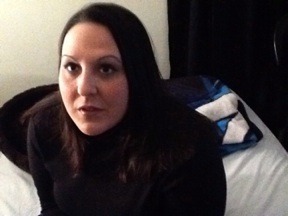
Jessica Karbowiak is an author I know through working with Pink Fish Press. I am happy for the fact that I had no say in publication decisions or the editorial process, nor do I have any financial stake in whether or not this book does well. I am really really grateful for this because I feel like everything I say about the book is at the same level as what I say about Marco Vassi or Erica Jong.
In addition to my admiration for the writing and decisions the author made about how to structure these narratives (something I find separates the books I like from the ones I rave about), I loved this book because it did something I have struggled to do for years, and that is to handle—but in a new and novel way—personal topics that as Jessica herself mentions, have been done to death. A couple of days ago I posted a book review on my blog. Now through Saturday April 27th, you can download the e-book for free on Amazon.
SM: This was a beautiful and unique book. What gave you the idea to mix in real events with stories featuring such different women as Ilse Koch (The Bitch of Buchenwald) and Saartjie Baartman? Did you use any models for the structure?
JK: When I started the collection, it read much like the old-school ‘navel-gazing’ of the Romantic period—that is, the whole first section dealt with my own traumas, my own losses. When I think of the first section, I think of that part in Catcher when Holden Caulfield is sitting at the bar and gets really drunk. Salinger writes:
I was the only guy at the bar with a bullet in their guts. I kept putting my hand under my jacket, on my stomach and all, to keep the blood from dripping all over the place. I didn’t want anybody to know I was even wounded. I was concealing the fact that I was wounded sonuvabitch (195).
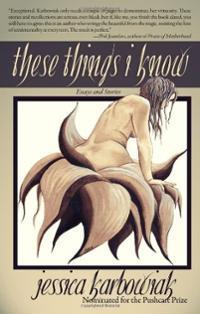
I wanted the arc or shape of the whole work to move away from the madness and isolation that trauma often causes. I wanted to move away from The Concealment, and have the work flow much like the cover illustration flows—from the personal ever-outward into some sort of holistic spiritual place. Moving beyond myself and my small hurts into the larger world. This was so important to me, and why I chose to shape the collection the way it is including the creative nonfiction accounts of famous people who have suffered back to my own, hopefully more informed, little life in section three. No formal models but my own weird movement, in writing and in life.
SM: The reviews on Amazon are all very positive. Two stories in this collection were nominated for the Pushcart Prize. What a great validation before the book ever came out. Since its publication, what type of feedback have you received from readers?
JK: Due to the lack of an agent and advertising know-how, the book has had little critical reception. This often makes me sad—and let me clarify, not really from a bloated ego—just that I do think it’s a weird, sharp little book. I wish it could reach more people. But still, I am grateful to have it out there. To move on to the next project. I feel like for me, if Renda Dodge and Pink Fish Press hadn’t published this work, I would be paralyzed and still in that place of trying to write out this overall narrative. That can happen.
SM: You open These Things I Know with the account of your rape. I appreciated your including the details that you did, especially the ones where you watch yourself from years later, judging the decisions you made. Much of that felt very familiar to me. In my own work I am only able to get events like these down in fiction, removing myself from them in that way, but also being able to see them more clearly for the distance. How long after it happened did you feel you were ready to write about this in any form?
JK: I wrote snippets about the topic of rape for years without any clarity or insight—I believe I was still in the middle of things, so to speak. It took a long while, years even, to be able to write about trauma in a way I thought spoke to the trauma. Like sort of trying to marry form and content in my own way.
SM: Had you talked to other women or read many other accounts before you wrote yours down?
JK: I’ve read lots of Survivor Tales over the years. They never speak to me. Like that quote from one of Joy Williams’ novels—one of her characters says something that speaks to this: “’I’m a survivor,’ she said. ‘People dismiss me as a survivor.’”
SM: I completely agree, it seems like once people slap a label on someone; victim, survivor, whatever, it makes it so much easier to discount what they say. These words come with so much baggage already.
JK: I think this is where the danger is writing about The Big Things—people can easily dismiss you as writer. I’ve been told that these topics are so potent that writers can bring little to them that isn’t already done or there. My favorite eloquent response is Bullshit. Every writer I have ever admired writes about the big things, maybe through the small things, but yeah, it’s still there. That’s what writing is.
SM: Exactly. A post I put up a few weeks ago where I reflected on what both Junot Diaz and Chris Abani do with material like this proves your point. It seems that the actual events are not really all that important, but more how they affect us and what we do with them that matters. This is why I was so impressed with what you did in this book. It was so mature, and magical. It made me think I could look at the events of my life and use them to make something that will matter as well.
SM: Who do you admire the most among writers and other artists?
JK: I’m a Salinger fanatic—mostly his stories and novellas. I love William Gay’s stories. Junot Diaz is a more contemporary favorite.
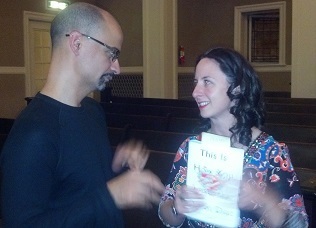
SM: Did I tell you that I got to meet him? This never gets old! I doubt any other experience will top that. He is one of my favorites and I’ve used him as sort of a virtual mentor more times than I can count. He gives incredible talks for young writers and is always reminding me to pay attention to what is going on in the world. I didn’t know we had this in common!
JK: I also love magical realism like in Marquez and Bombal—I can thank a UT-Austin professor, Pete LaSalle, for that. I love Borges and George Saunders. I recently got turned onto a Michigan poet, Robert Fanning. I dig his stuff. I don’t have any parameters—anything that tells a narrative in a way I can follow and appreciate. I love poetry, fiction, creative nonfiction. Not a real fan of plays, though.
SM: I am a writer and an editor; I know how much gets removed at the editing stage. Were there any topics that did not make it into the book and if so, what were these?
JK: There was one snippet of an essay about my hearing that got cut out for clarity’s sake; the fact that I was born 60%-80% deaf and had to have an operation as a child which in turn led to Super Sonic Hearing. It clouded the narrative’s purpose so my editor proposed either elaboration or omission. Omission made sense. Also, a narrative I wrote called “Lady of The Waves” got cut—it was about the 1900 Galveston storm in Texas and an orphanage. It didn’t really fit.
SM: The cover artwork is striking. Can you tell me some about the image?
JK: The image on the cover was illustrated by my brother, Matt Karbowiak. He is a carpenter by trade, but initially went to school for his BA in Illustration at The University of Hartford. He did all the illustrations throughout. He’s wicked good though he forgets to remember this sometimes. It was a great collaborative experience. I wanted the cover to show what I spoke about in terms of the shape of the collection itself—the rugged and beautiful terrain of moving outside of oneself. I definitely think of it as a flowering of some sort, so that’s where he got the idea for a weird cocoon-ish woman.
SM: Your use of language is one reason I will read this book again, hoping to absorb something I can use to make me a better writer. I loved the way you worked so much hope in—especially at the last page. I am eager to know about anything new you are working on and when you will have that out.
JK: Hope is essential for me; I don’t feed off it or live by it desperately. Most people who know me well think of me as cynical in relation to how people can behave, how we choose to treat one another.
However, hope becomes, well hopeful and not a crutch through beautiful things in my life like my students, my animals, my teaching and my art. These are the aspects of my life that never betray me. So different from lovers, friends, family, myself. I don’t know. Then getting beyond heartbreak becomes an experience leading to wisdom and can be eased by these things, rather than the idea of hope erasing pain. That doesn’t happen.
I’m percolating new ideas this year and moving beyond this first collection. It is taking longer than I expected it to. I’m not sure why this is—perhaps because the reception was small and people I thought would champion me chose not to, and some people who I didn’t know well became dear friends and confidantes by receiving my voice and work with loving-kindness. Weird how that can happen sometimes.
SM: As I spend more and more time working on essays and my next novel, I find it more difficult to balance promotion work with creative work. It is hard for me to switch from the introspective contemplative space to the outgoing personality I need for be for promotion. Since you are a writer I admire, and you are juggling career, work and promotion, do you have any words of advice?
JK: No advice. I am horrible at promotion. In some essential way, I feel like it is bullshit writers of small presses and books have to go through so many hoops to be heard or appreciated. I have no delusions of grandeur; however, I bristle at the whole carnival atmosphere—like running in circles it feels like sometimes. I take part when I can—I have a Facebook page (mainly devoted to my dogs), and I’m on Amazon, Goodreads, and a few other places. I put my book out there for some small awards and hope it gets noticed. I’m not holding my breath.
I mostly rely on the kindness of people like you, Sarah (!), my editor and friend Katie Flanagan, and readers who end up claiming me. I claim them right goddamn back. Everything else falls away. I’m not going to give up my day job—I wouldn’t want to—but we don’t live in an atmosphere where I could if I wanted to anyhow. I’m a small fish.
SM: Where can we see or hear more from you, I am speaking here mostly about how readers can get in touch with you and learn about your next steps.
JK: I mostly show up online this year. Google me if you like me. Write me on Facebook. I love hearing from people. They tell me their own stories. I value them and honor them in my own small way, I hope. One awesome aspect of being a small fish is you are relatable to people, not anyone they cannot reach out to speak with or become part of their writing experience. Because of this, I don’t mind staying a little fish forever.


April 24, 2013
Book Review: These Things I Know
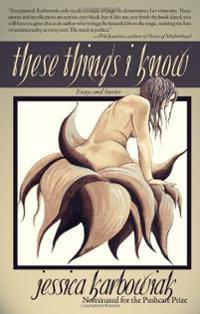
To prepare you all for my interview with the author and the e-book going free on Amazon Friday and Saturday, I am posting my review to get you good and ready.
Note the front cover...the original and haunting image...note the blurb by Phil Jourdan (LitReactor co-founder who recently spoke at Oxford on memoir writing)...note that the author along with one of the stories in this book was nominated for a Pushcart Prize!
For all of you who have been discussing writing projects with me, this is one to study for an example of what can be achieved when you do your own thing. You will also find the glorious vision of something that is always near and dear to my heart: a book that doesn't fit. Is this a short story collection or creative non-fiction...is it, could it be...both? For all of you who have recently attended a writing conference populated with agents and editors telling you what sells, this is why you go with a small press.
This is the kind of book I read at least twice. Once for story, a second time to savor the language and as a writer I will go back a third time for study. These words make me want to be a better writer, a stronger woman, and a more compassionate human. The details in this book are so intense, the images, settings and situations are so vivid, they still pop into my head at odd times.
To read this book is to be shown, in a novel and interesting way, what it feels like to be in a fleshy, fragile, finite human body.
The poetic lines stayed with me even after I put the book down. The author's observations were both universal and familiar and for this I am grateful. When I find my own thoughts echoed in the words of another person I know that I am not alone.
Scenes in this book call up images that are either beautiful or terrifying and for the places where they are both, you know you are dealing with an Artist.
Life changingly good books come along so rarely, this is one is a real gift.
Tell your friends, book groups, doctors, veterinarians, local booksellers and libraries then please return for the interview with the author tomorrow.
April 5, 2013
I Finally Got It Up! Male Sexuality...the long awaited review
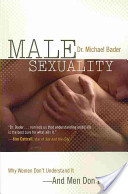
--Google Books
“This is a book about the value of understanding. It assumes that when we oversimplify male sexuality or demonize any form of it, everyone suffers. It assumes that when men understand themselves, they feel less shame, and that when women understand men, they feel more connected to men and more compassionate.”
--Michael Bader, from the Introduction to Male Sexuality
If you are at all interested in looking past old assumptions about the minds and hearts of these wonderful creatures, this is the book for you. If you are just curious, you will still be rewarded by reading. At the very least you will come away with a new appreciation for the cum shot.
There was a time when I based what I thought about men’s internal lives on what I saw in porno movies, predators I encountered when I was running the streets and badly executed sexual experiences as a teenager. I am sure I was influenced to some extent by the jokes people made on TV and everywhere else about which head guys used to think with, or the bored housewife who contemplated what color to paint the ceiling while hubby was on top of her.
In contrast to this, there were always boys and men that I admired, and appreciated for their thoughtfulness and kind words at certain times in my life. I hoped, but I wasn’t convinced, that men were actually capable of thought and feeling while their sex parts were engaged. The ex-boyfriend reinforced this idea by saying all men ever wanted was to get laid and would lie, cheat, steal and sometimes murder to do it. One bit of advice I never forgot: “They all cheat. Put a man in a room alone with a woman who is ready to go. He. Will. Cheat. The smart ones just know how to keep themselves out of that situation.” Every single man I have told this to has confirmed the validity of the statement.
Depressing if you’ve ever taken on a relationship commitment that assumes you, the dutiful woman are expected to be faithful.
What I imagined went on in their minds went something like this: Gooood. Weeeeeeeeet. Soooooooooooft. Tight! Over and over until the big bang. The men I questioned did little to help. Whenever I asked what sex was like I got some variation of this: “Really good! Ummm. Like, it’s hot and wet and umm, even when it is bad it feels really good.”
Now I see I was asking the wrong question. I still wonder what things would have been like if I had read Marco Vassi as a teenager.
Common jokes and frustrations are explored in this book, from porn addiction, workplace aggression, infidelity, and what one might call plain old selfishness…He’s already done, and you Oh My Sister, were about to achieve full levitation. He might as well have dropped your ass on the cold hard floor. It’s Not Fair!!!*
Bader argues that this behavior might actually be a sign that he is more worried about pleasing you than you might assume as you lay dying.** He says that what the guy is really dealing with is an excessive concern about the wellbeing of women, beginning of course with his mother. This results in an additional sense of responsibility, and leads to an increase in anxiety which results in them ignoring their own feelings, and those of the women they are with.
If you’re like me you’ll have one eyebrow raised as you read this. You may even scratch your head and think, you mean he’s not just being a jerk because he has gotten away with it his whole life? By the end of the book, you might find the author makes an excellent case for at least considering the possibility that more is going on.
And if this is true, you’ve opened yourself up to everything else the book suggests. He introduces the notion that men are only allowed to show their feelings with women who are not equipped to understand everything about them; this burdens women and limits men in their emotional development. Huge! Did you know there were things called Men’s Groups? Awesome deals these…
Several topics in the book will benefit women directly. He addresses the power of fantasy (sex is all in the mind, baby) pathogenic beliefs--thoughts that cause you to do things that are unhealthy and one of the most important: ruthlessness, a concept that means you must be selfish in order to get off. He says that excitement breaks down under worry or guilt. Ah-hah! So let go of those miserable thoughts, (often planted by advertisers) that plague the bedroom. Stop worrying about your breath, your jiggling whatever or the noises you make, and as the author encourages, stop worrying about him! You are already in bed, enjoy yourself and he will too.
Chapters that cover youth fantasies, rape fantasies (this one was a real eye opener and I suggest reading this very closely before jumping to conclusions as some other reviewers did) aggression and pornography, make this book really really valuable.
The examples he gives of patients he has seen in his thirty year career worked really well to make this book accessible. One example he gave was a man who liked to have sex from behind so he could be spared the inevitable (in his mind) look of disappointment on the woman’s face. *** Another was about a couple who were having sexual problems due to changes in the wife’s body. Neither one of them would stop to consider the reasons for what the other was feeling. The wife felt hurt because the husband refused to use extra lubricant as part of their bedroom scene, and the husband felt insulted because she was no longer able to get wet when she was with him. He felt that this was a reflection on him as a person. If you’re able to set aside whatever judgments are easy to make in this type of situation, the lesson about communication is a powerful one.
The reviews on Amazon are interesting. Some are in praise, some are angry, as if the author is trying to encourage deplorable behavior. It made me wonder how much the mass psyche is invested in the notion that male (or any for that matter) sexuality is a dangerous thing. The author is not saying that lying, cheating, and investing precious time in addictive behavior is admirable, but does give excellent reasons why these things happen.
The author agrees that wives have a right to be angry when husbands lie, or spend time away from home maintaining extra-marital affairs, or nursing fantasy relationships instead of putting that energy into their own real life relationship. The author also offers (again, setting aside the seductive need to judge) that the wife should be aware that real life may come with the belief, that home and his wife are where he has to face his failure, his inadequacy, his inability to truly make her happy. The fantasy women whether they are strippers, prostitutes, women behind a chat room screen or actors in adult movies represent a place to go to be free of all that and just enjoy themselves.
Because I believe that this book merely opens the door to a much larger discussion, I have included some links to other male writers who are thoughtfully talking about sex.
Marco Vassi: Gentle Degenerates, The Stoned Apocalypse, A Driving Passion, are all great places to start with this author. Even in his straight up porn he is more thoughtful than most other writers I have found.
David Steinberg: This article is worth a read and represents what is possibile when people are thoughtful. I will post more shortly on this very important author. Click on his name and check out his website, this is the best place to read his take on sexuality, art (he is a poet and photographer as well), and everything in between. His honesty and bravery remind me of Marco Vassi. The advantage with this author is that he is still alive and commenting on the culture we live in now.
Michael Castleman: Sexual Solutions and Great Sex. These books offer more specific discussions of particular topics.
David Guy: The Red Thread of Passion, The Autobiography of my Body, The Man Who Loved Dirty Books.
Jack Remick: Blood is a mind blower and not for the faint of heart. I loved the way he handled sexuality, not to mention all that semen! The book was more than a little disturbing, but will leave the reader with so much to consider about art, sex, books and the human experience.
Junot Diaz: This is How You Lose Her
Phil Jourdan: This young blogger’s posts don’t generally cover sex, but this post rocked my world, and his write up on feminism for authors is well...I wish this had been available when I was first beginning to navigate the world. Click his name and visit his website. He also posted information on a dude named Lacan who offers one sidetrip you can take to get an entirely new perspective on all of this.
Ryan Snyder Ananat: Not much here specific to sex, though I have found that reading a guy talk this much about his feelings has a positive effect on my old delusions. Plus he is just scary smart this one. I expect to see a lot of great things coming from this direction in the near future.
*I had to include this anthem ‘cos I’m just weird that way. I am really really glad younger women are exposed in a fun and accessible way to the concept that they get to feel good too. When I was growing up, a girl’s job was to look pretty. Being good in bed meant making him happy. She was expected to lead him around and make him work for it, for that matter he is still expected to go to fucking Jared, but God forbid he catch on that you really liked it too.
**Michael Castleman in his book Sexual Solutions exposed me to the idea that many of them get in the habit of finishing quickly when they are young. It has something to do with worrying that at any moment they are going to get kicked off and will never ever get another chance. The whole idea of scarcity is another issue which is important to consider. If the word “slut” would just evaporate, maybe this problem would too? I know, not likely…
*** You mean he doesn’t just like the view? Isn’t this how people often talk about sex? One of the wonderful things about this book is how we get to look past the usual jokes and assumptions to get to a more thoughtful and productive place.
April 2, 2013
In Favor of the Sensitive Man
When I read Michael Bader’s book, Male Sexuality, Why Women Don't Understand It and Men Don’t Either, I found validation for my need to understand men. This post serves as a precursor to my review of his book. The story below should lend context to what I will talk about in that review as well as back story for those interested in where I get my ideas.
Chris was what many people would call Poor White Trash. If you don’t know what this is code for just repeat after me: these people don’t count.
When I met him I was sixteen, he was nineteen. Through his eyes, through the confirmation of someone* believing in me to the extent that he did, through his example, his pride in me, I came to believe in myself.
With him I was not the fuck up who had ruined my family, that was what Straight taught me I was. Through his eyes I was someone who had values, principles and most importantly—a future. It took years, but eventually I began to take his belief in me for granted. I don’t know that I can emphasize enough where my head was when I left Straight. Their motto was, “We tear you down and then we build you back up.” This was a promise they only partway kept. When I left there I had no belief in myself and was convinced that I was doomed to fail at anything I attempted. My mother’s continuing threats to kick me out of the house if I messed up again didn’t help. She also had a special instinct for reminding me just how well and thoroughly I had screwed up by bringing up examples in the presence of her friends and mine.
In the beginning, he was my best friend. We drove all over the state of Montana, burning through daylight, midnight, and every hour in between blaring Metallica and AC/DC until the sound began to distort through my little car’s speakers. We smoked unfiltered Camel cigarettes and drank Jolt Cola and didn’t eat anything but gas station burritos.
After a couple year’s worth of friendship, he became really good at what I think of as the Puppy Dog approach to flirtation. Once when I was talking to a group of people, he held my eyes through the entire event, then when someone asked him what he was going to do after he went home he continued to hold my gaze and said, “I’m gonna go home and jaaaack.” He drew the last word out to express frustration, but he was also making a show in front of all those people, how little he cared for pride, and how much of an affect I supposedly had on him. At eighteen years old, this was high praise. I also can’t tell you how much it meant to have someone separate my value and worth from my appearance and at the same time validate what I was doing by giving me his undivided attention.
Judge however you will.
When the relationship finally changed, we fucked wherever we felt like, whenever we felt like: beneath the Ponderosas at the base of Holland Lake Falls, at the far corner of the rest stop on the way to Helena, or in a parking lot in Great Falls at three in the morning. We went camping and ran around naked, we jumped off bridges, we talked about everything and nothing and spent many happy hours in silent enjoyment of the other’s company.
With him nothing I had done made me worth less than him, it made me tough. With him I was not ashamed. With him I was enough.
Chris was more damaged than I was. He had spent time in jail. Both of his parents put together might have been as crazy as my mother.
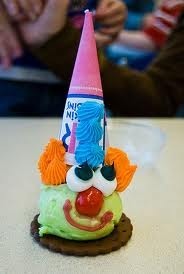
Once he told me about the time he got up to go to the bathroom in the middle of the night. He was finishing up when a strange man pushed open the door and began to shoot up. He was too young to know how old he was when that happened. At age five his father lost him at a concert and he had to go up to the stage to have someone make an announcement for his father to come get him. On one birthday his mother had to beg his father to stop and get him a birthday cone from Baskin Robbins, you know the ones where the scoop of ice-cream is on the bottom with a face painted on it in icing, and the cone is the hat. An argument ensued, his mother finally won, barely. Apparently this was too much to spend on a kid’s birthday. This may have been one of the only times he expressed disappointment with his father. Usually all I ever heard was that his father was a bad-ass who spent years in prison, had incredible drug tolerances, and had an impressive way with women.
His mother was an alcoholic who routinely left the dinner table to throw up because she drank more than she ate. All these things he told as if they were a matter of course, nothing he couldn’t handle. Even as a kid. The way he told it, because of these things he was stronger than most people.
I am sure there were stories he never told me.
He was not as smart as I was**. He barely got his GED and was dedicated to a life of manual labor that allowed him to prove how tough he was. He did not read. He made fun of how much I read and could not understand why I insisted on dragging boxes of books to each new apartment we moved to. When he talked to people about me and my books though, he told them much I knew about and how I was going to do something big someday. He believed that women were supposed to be more intelligent than men (at least the ones who were not posing nude) and that a man’s job was to make use of his physical strength. Here I must be honest in saying that something about that added to his charm. After so many years of feeling like I was inferior, this was wonderful. With him I was free to be me and explore what that meant without judgment or competition.
Somewhere in our fifth or sixth year together I got tired of fucking off at various odd jobs and decided I needed to settle down and work in an office like an adult.*** The quickest route I could see was a small college that offered computer classes, basically secretarial school. At this he expressed extreme displeasure, one of the only times he told me I was wrong. “Babe, you should go to business school or some big shit like that,” he said holding my eyes until I was forced to nod in agreement.
He was more deranged than I was by a lot. When I met him he had already spent time in jail. He was tough. He walked tough, with his chest puffed out, he talked tough, using words like cunt, pussy, motherfucker and cock, a word he loved to drag out when he was telling a story. Grown men would follow him around, imitate his language, his mannerisms. They tried and failed repeatedly to compete with his stories. He had stories about everything from fighting with the school bully to drunken brawls at parties, or lurid ones like the time he and another guy screwed a prostitute at the same time.
He told stories that were usually both disgusting and riotously funny. One of the ones he told the most often was about a party in the woods where some guy got too close to the campfire. “See, the fucker’s shorts were nyyyylon, so the shit melted,” he held his hands in front of his crotch for emphasis, “to like his coooock, and all his shit! Dead serious.” Here he would take a break to puff on his cigarette, pick a random bit of tobacco off his lip, answer questions and then begin again with his hands flying, mimicking the movements of this poor guy as he hopped around in pain.
He also used the words cunt, whore and bitch with an emphasis particular to him. Porn and degrasion-- his own word, one he pronounced with a snarling laugh in his voice-- were his favorite topics. He particularly liked to watch and talk about something he called “pulling a train.” This would be a scene where a woman would take one man after another. The higher the number, the better. Strippers were entertainment and I prided myself on the fact that it didn’t bother me that he went to see them. Why should I care? He told me every day that I was different, that I was smart, that he loved me and made a huge show of telling everyone he admired about my integrity, honesty and strength. What he saw in me were things he said made me unique and special. I was not like the strippers whose only function was to be pretty. Once he’d shot his load beating off thinking about them, they did not matter.
He used to say, “Babe, you’re a rare breed.”
Sometimes he would make his voice into a child’s and stare at one corner of my mouth then lean over and kiss me just there and say, “special spot!” Bouncing on the balls of his feet he would tip his head from right to left to show his delight.
He was sappy in unexpected ways. Many of the road trips we took were to see either one or both of our grandmothers. He got so attached to a cat I drug home that he wouldn’t hear of putting it down when it started attacking people--even when it attacked his grandmother. “Just the thought of it hurts my heart.” When I tried explaining that we could get sued if it tore some kid’s face off, he got angry and said, “This is why I told you I didn’t want it. I knew I would get attached!” He went on to tell about a dog his father had made him get rid of when he was a kid. He said he never wanted to relive that pain. Dead serious.
After a few months together he told me that the time he’d spent in jail was for raping a classmate. But that was all a misunderstanding. Had been offered a deal that got him much less jail time if he pled guilty. He explained that the alternative would have been to possibly lose his case and end up in prison for many years. I believed him--I wanted to believe him—and the story seemed plausible enough. The alternative was being intimate with, and in so doing, rewarding a person who had done something that is supposed to be unforgivable.
If it was true that he had raped this girl, then she surely had the same bullshit in her head that I did. She would—because of him—have the same disconnect between her mind and body, and she likely also held the same fear of using the word no, or otherwise doing anything that would cause conflict in bed. If this was true then he was a monster and I was a traitor in the worst way. Strangely I did not feel especially guilty, but I did see the irony in the situation.
People who had been robbed because they were walking around flashing designer purses, or had their cars broken into because they left wallets on the seat would make him laugh. He would then launch into a lecture about what he called vics. This was his word for victims. He hated anyone who came from a place of advantage. People who came from money, or pretty women who had things handed to them because of the way they looked merited at least five passionate minutes on how worthless they were. People who trusted other people, who expected good things to come their way, were stupid and just waiting to be vicked off, his term for being victimized. When anything like this happened he would laugh and say, “I knew it. Dumb fucker,” or “Look what that stupid cunt did. What kind of fucking,” here his voice would get really heavy to emphasize the word, “idiot leaves a $500 purse on the seat of their car?” His expression and tone of voice were a mixture of outrage and amusement that I have never heard expressed by anyone else.
Once I tried to talk to him about a movie I had seen where a girl let her boyfriend talk her into doing adult movies. The movie ended with her overdosing on cocaine. Anything like this where a woman made a bad decision started him on a rant about the bitches in high school that went for the guys who had the nice cars or did well at sports. These women were too stupid to know that men only used them, degraded them and then made fun of them behind their backs. How could these women be so stupid not to know what men were up to? “They are always lying, Babe. Always. Fuckin’ guy will say anything to get laid.” The movie The Last American Virgin made him shake and ball his fists up before he stormed out of the room.
As an interesting contrast, he liked to joke about men being raped in prison. We spent one depressing Thanksgiving Day with his best friend watching American Me. When one man was gang raped and then murdered by having a knife inserted into his anus before he was ripped open, Chris bounced to the end of the couch, one arm extended toward the television, “Dude, you see that shit?” His eyes were glowing.
I finally rewarded this man who was the first to show me what I was capable of by leaving him. The final years were the worst. While more and more porn came into the house, and he spent more and more nights out at the casinos and strip clubs, I began to wonder if I had made a mistake by having such a lax attitude about it all.
For the last half of that relationship I couldn’t sleep with him without feeling nauseous, depressed and empty afterward. I was gratefully distracted by my new college life, and the friends I was making who did not use words like nigger, cunt and spic in daily conversation. They had goals, and looked forward to the opportunities their education afforded them. I did the same.
I could not ignore the fact that even if I liked to think I was different, I was also a woman. Before my mother blew most of it during a manic land buying spree, I also had money for college and attended a private high school.
Growing up for me had as much to do with coming to terms with who I was in relation to that man and recognizing that I wanted more from life than what he had to offer as it did with seeing myself through his eyes. No matter what anyone might say about women who apologize for men who behave badly, I know that he made a real difference in my life. A positive one.
When I got out of Straight it was nearly impossible for me to hear anyone who didn’t scare the shit out of me. What he offered me amounted to a middle ground between the scary, the hard-core and the loving. By the time I was old enough to see how ugly the relationship had become, I was also strong enough to leave.

* At this age I also met a woman who was in college and she took me on as a sort of charity case. This woman also deserves her own blog post. She stepped in when my mother was especially difficult to deal with and treated me with understanding and was firm in her direction. She did more for me in a practical sense than my mother ever could have.
** This is true in the book sense. He was a master with people and dealing with crowds. He could usually size a person up pretty thoroughly upon meeting them and often his assessments were spot on.
* **He offered to support me while I focused on my writing, but I knew if I took him up on this offer I would change the balance of power in the relationship.
March 22, 2013
Official Sex and Death Book Trailer...Again!!!
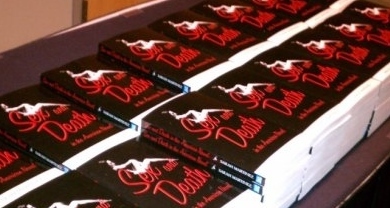
I am reposting this in honor of temporary new pricing of Sex and Death in the American Novel . Beginning Friday March 22nd through Wednesday March 27th, you can download the e-book for 99 cents on Amazon.
You cannot put a price on Art. The book trailer is one of the single best representations of the book I can send out and it may even outlive the story itself.
It can be accessed here!
Enjoy it. Enjoy it multiple times. Enjoy it with the sound off. Enjoy it with your eyes closed. Enjoy it until your toes curl and your muscles thrum. Enjoy it, for you will never see or hear anything like this ever again.
Brian C. Short did a beautiful job in such a short clip. It features his video and still pictures, me reading the first page, and in the background is this incredibly touching music by Phil Jourdan of Paris and the Hiltons. Click the link on his name, you'll see why this is a such a big deal.
Andrea Hurst is the reason Whidbey Island was featured so prominently in my novel. Brian did a fantastic job capturing the images from around the island, most notably for those who have read the book, the view from under the bridge at Deception Pass. Brian read my novel, is an artist himself, and really got the spirit of my words to come through in the visuals.
I want to mention one more thing. Every day I find it more and more ironic that the two sets of people I spent the most time having my main character ridicule and rage at were men and academics. Some of my most thoughtful readers, and the ones who have been the most supportive of me as an artist, have been men--several of them also happen to be academics.
What a wonderful world.
March 15, 2013
At His Feet
Call me pretty; tell me I'm hot.
I get an ego boost that lasts about two seconds and then I forget about it. Just like I'll forget about you.
Tell me I am brave, say that you are proud to know me because I get things done.Those words will stay with me forever--like my memories of you--the one who calls me friend.
March 5, 2013
Chris Abani, Junot Diaz, and What I Have Been Afraid You All Will Find Out
Much of what he said blew right past me, but the stuff that stuck hit me right between the eyes, lodged in the forefront of my brain and prompted full on catharsis. He talked about the importance of bearing witness to the things that shape our world view, and those things don't have to be the terrors I have been so focused on lately. The example he gave was the sort of thing that makes me think people need to just grow the fuck up and stop whining.
A day later it really sunk in. Just because the events are lame doesn’t mean they aren't important to who I am and how I handled myself as I went through life.
What if the truth of a person’s experience isn’t the worst thing that ever happened to them, just the first?
Thinking back to what that was for me wasn’t hard.
I was ugly.
*
When I was eleven I stole money from my parents and used it to buy candy. I would pass it out to the kids at school so they would be nice to me. I was desperate to find a way out of the hell that school became after we moved to the east coast. The taunts and teasing, the jokes and the insults, the rude remarks and the hateful notes were hourly distractions from what was supposed to be a place for me to improve myself. As a result I pulled even farther into my books and fantasies. If it weren't for Stephen King and Clive Barker, I doubt I would be so well adjusted now.
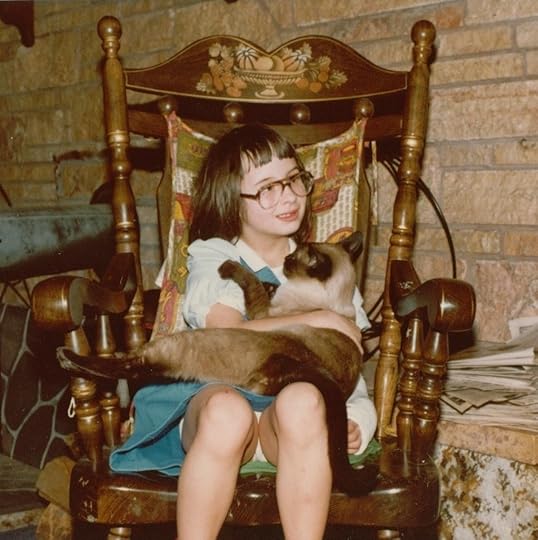
The truly pathetic thing--what I was most ashamed of--was my failure to defend myself. They made fun of my glasses (unoriginal), my crooked bangs (it got old), my clothes (they were terrified someone would find out they shopped at K-mart), my last name (the reworking of it was used so many times I was amazed none of them got tired of it). It wasn't enought that I was visually horrifying, apparently I was so disgusting that they couldn’t even sit in a chair I had vacated, and wiped themselves off after touching me. When Mr. H. announced the names of the students who had books outstanding at the school library, mine was Stranger With My Face. The entire class erupted in laughter and all I did was stare straight ahead, pretending that I didn’t care.
What I learned from watching Sixteen Candles and Revenge of the Nerds brought my situation into even more vivid relief. Nerds were the lowest of the low, and I was lower than a nerd. At least they had their brains. They could help other kids with their homework or build machines that in the end did something cool. I was so lost in my books that I cared little for homework. My grades sucked, so not only was I repulsively ugly, I was stupid too.
In seventh grade I figured out how to get the worst of the bullies to leave me alone and even found a way to enlist him in my defense.
I blew him.
It did not work because he liked this, or because he wanted me to do it again. It worked because whenever he began the taunts or joined in when someone else started them, I was able to stop him with a knowing look. The last thing he wanted was for anyone to find out that he had been with me.
When Junot Diaz gave this talk at Rutgers University in 2007 he said:
“It's that if you want to make a human being into a monster, deny them, at the cultural level, any reflection of themselves.”
From Scooby Doo to MTV to movies, music and glossy magazines, ugly girls who are not smart do not exist. Worse, they are a waste of space. If most of the people I spent my time with during the day were to be believed, my presence was actually a hindrance to their personal happiness. To those kids I was a monster. Because I saw myself through their eyes, I was a monster. The knowledge that they were cruel, small minded people who had their own sets of problems, did not mean I took their words any less seriously. When ninth grade rolled around I switched to a new school. From then on I was terrified someone would find out what I really was. Even as I grew into new roles: runaway,slut, druggie...no label was ever as revealing as the first one I had worn.
When I met Junot Diaz I was frustrated by the fact that there was no way to explain how important his work and example have been to me. I told him I loved him--in English and Spanish. I babbled about how prizes didn’t matter. Celebrity didn’t matter. I told him that I was Nilda. I was actually much worse than Nilda. Nilda wouldn’t have been caught dead with me, but he had read from that story so it seemed to fit.
I certainly couldn’t articulate how Drown was the single most disturbing book I have ever read in my life. It made me feel like I had been found out and I was both grateful for the fact that someone else got it, and resented him for exposing the feelings. After so many years of pretending to be a member of normal society, Drown reminded me all over again that I am still not quite right.
Junot Diaz showed me what I was, even when the mirror he held up looked nothing like me on the outside.
Chris Abani reminded me of the importance of being honest about what I am and this has nothing to do with sex, or Straight, or even being a mommy or a writer. It does however have everything to do with what makes me, me.
*For the guys out there who believe that all I need is a bit o’ male attention, this post most definitely is not an attempt to reel in compliments, start a flirtation, nor is this an invitation to send your thoughts on how much my appearance has changed over the years. The way I look now, or even how I looked them, is not the point, so please, please, please don't start.
~There were a few kids who were nice to me. Somehow though they were not the ones in most of my classes! Their friendship and kindness worked like lily pads in the slimy muck filled hallways of that middle school. Their attention proved that I was still human and for the little ways they included me in their lives, I am still grateful.
February 25, 2013
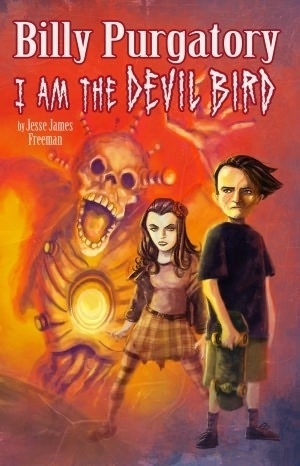
Author Interview: Jesse James Freeman
After hours spent trading pictures of canoes on twitter and facebook, I finally got to meet—in person-- Jesse James Freeman at a golf club in Snoqualmie Washington. First I was struck by his incredible size. Next I was struck by how much he can talk.
In the course of the interview we covered everything from Satanism to fanboy culture to Joseph Campbell and Carl Jung. Only a small part of that conversation appears here. I mean, I am usually the one who takes over at these functions! This dude can hold court almost as well as I can. He is very well read, thoughtful and makes everything he does entertaining.
***
SM: First I knew you as an author, now you serve as Director of Community Management at Booktrope. You are such a dynamic figure: mysterious, capable, and effective. You seemed to have arrived out of nowhere. What did you do before you started writing about Billy Purgatory?
JJF: When I was a kid I asked Papa Freeman where our family came from. I think we were doing some project at school about heritage/ancestry and whether or not you were related to some old queen or other as Morrissey would sing. He didn’t miss a beat and said, “No idea. I figure we just walked out of the woods one day.” So, to answer your question in regard to all the really nice things you said about me just now, I don’t really have a clue. It all just kinda happened and nobody is more surprised about what I’m doing now than I am.
I have always written, but I was never sure exactly what the right medium for me to write in would be. I went to film school and had this idea that I was going to be a famous film director, but I was always a better writer than I was a director. When I showed up in Hollywood with no money and knowing literally nobody (the first time I saw the Pacific Ocean was when the 10 turned into the PCH and I realized that I had just driven as far west as I would be able to unless I was willing to do a Dukes of Hazard off the Santa Monica Pier) the people that I ultimately fell in with and became friends with were the writers. I guess I always knew that writers were my kind of drunken, moody assholes. Or, I was that anyway, not to stereotype all the lovely people reading this. It was all about screenwriting back then and trying to get the foot in the door. It was still near enough to the indie movie craze and charging up all your credit cards to make your own movie still sounded like a really swell idea back then. A few of us banded together and shot a movie that we thought was pretty funny, but ultimately never saw the light of day.
The important thing that I was learning, and didn’t realize at the time, was I was finally learning a methodology that ordered my writing. I had always just rambled before, and I guess some it was good rambling. Learning script formatting gave me something I had never had before, which was a set of rules to follow and a respect for plotting and story structure. It also taught me how to write hard and fast and to leave out the stuff that doesn’t matter. The best compliment I’ve gotten on my novel writing recently was something to the effect of, “Well, he certainly doesn’t ramble.”
When I got over screenwriting and left LA and had no idea what was next, I decided I’d take some of my ideas and turn them into a novel. What I learned pretty quickly is that just because you got screenplays all figured out doesn’t really mean much when you’re approaching a novel. Novels are snatched up by Hollywood and they hire someone to turn it into a script so they can go turn it into what may or may not end up being an awful movie. What I did was go backwards and take something that was already written as a script and turn it into a novel. It wasn’t nearly as easy to accomplish as I had lied myself into believing.
It’s a conversation that you and I have touched on before, how much rambling can you get away with and how many tangent trails can you go down exploring the emotional this-and-that of your characters and still be on target so you deliver a product that isn’t a complete rambling mess? How much of a responsibility as a novelist do we have to really grab onto those big world literary contentions and squeeze the very life out of them so they’re screaming and bleeding emotion onto the page?
SM: I LOVE THIS! Here is where you show you are educated enough to be a pretentious a-hole, but smart enough to know you don’t want to be one.
JJF: When does it turn into responsible writing and cross over into that samsara wasteland of masturbation and the delusion of the importance of our voice?
SM: I just recently posted this line from David Foster Wallace’s essay, “The Nature of the Fun” which speaks beautifully to this:
“You discover a tricky thing about fiction writing: a certain amount of vanity is necessary to be able to do it at all, but any vanity above that certain amount is lethal. “
JJF: I guess there’s a fine line in my head between showing off and giving the reader what they need. I like to think that I make the reader the most important member of the equation and what I’m doing is almost secondary.
Realistically, if I do anything even remotely literary at all, and I’m sure that’s a topic that will always be open for debate, I mask it all with genre tropes, skateboards, and monster fights.
SM: In 2003 Stephen King was the recipient of the National Book Foundation’s medal for the Distinguished Contribution to American Letters. In Walter Mosley’s speech on that day he said that what Papa King does is to honor the achievements of average working people amidst all of the monsters and demons and such. Every reader wants to see a piece of himself in the books he reads, or a way to transcend his own experience. Billy reminds me of this sort of hero.
Junot Diaz said that we find out the most about a society by reading it’s marginalia-- the sci-fi, the porn, the horror…He also refers us all to read Victoria Nelson’s The Secret Life of Puppets which looks at why our “important” literature does marginalize the supernatural--while so many people are still so entranced by it-- in favor of more “rational” topics.
JJF: I think I went off topic from what you even asked me by like a lot.
SM: Is this a hint that I need to get back to the interview and quit tossing off supplemental information?

JJF: In closing I had a lot of shitty jobs as either a bartender or a waiter and I was an actress’s personal assistant for awhile. Oh, and I used to design kitchens and sell people cabinets.
SM: Through part of the first Billy Purgatory book I could not help remembering scenes from Clash of the Titans. How much research did you do into Greek Mythology?
I have always had maybe not a love, more like a sick “I’m in the tree with a pair of binoculars outside your house, Persephone” fascination with mythology. It started with my grandmother’s World Book Encyclopedias back in the day and it transcended into my sociology minor with emphasis on world religion. …and mythology minor.
SM: COOL!! I am in this weird Catholic phase. Twisted considering I can’t get down with most of the actual teachings...I think it has something to do with a desperate need to escape into memories of my childhood.*
JJF: One of my college textbooks was actually the transcript from the Bill Moyers interview with Joseph Campbell The Power of Myth.
SM: Mine too!
JJF: I have had this love affair with Campbell ever since. Not like I want to have his babies love, but the way he was able to connect the threads of different myths together from around the world and sort of point out that Jung was definitely onto something was a big deal for me.
I know Campbell makes a lot of people groan, and he does have kind of a bad rap in some circles, mostly due to how lazy Hollywood has become with telling the same story over and over again in the Joe Campbell format. To me though, his works are essential reading, and I still listen to the audio from his lectures all the time. Right now I either fall asleep to Campbell, old Art Bell Coast to Coast episodes, or Peter Gabriel’s soundtrack to the Last Temptation of Christ.
I promise, all that being said, that I’m the life of any party.
SM: And you are fun to have around the adults too!
SM: As you know, my novel featured a red canoe in one of the final scenes. I heard you were going to include a canoe in Billy 3. What do you think it is about canoes, specifically red ones, that has so captured the writer’s imagination?
JJF: There is a very important little section in Billy Purgatory: Tacos Before Armageddon, where my female protagonist, the emotionally-unavailable vampire Anastasia, finds herself waking in a red canoe. I’m not sure it symbolizes the same thing in my book that it symbolizes in yours, but she is gliding across this near frozen lake towards a remote cabin surrounded by trees. It’s a dream world sequence for me, and it has a lot to do with playing off King Arthur sailing into Avalon, Viking funerals, and crossing the River Styx. It’s a vessel to carry her spirit on a new adventure to this place that exists outside of what we generally consider to be reality. A lot of what I write includes that jumping off point where to go on the adventure you have to leave what is safe and familiar behind, because until you do you’ll never reach the underworld or Nirvana or wherever it is you’re supposed to be headed so you can learn things and decide if Heaven is the right choice for you, or if Hell is more your thing.

Also, putting that in there was not only my way of showing appreciation for the amazing work you did in Sex and Death in the American Novel, but was a way to really freak you out for a couple of weeks while you wondered what I was going to do with it and whether I was goofing on you or not.
You’re safe though, if I goof on anyone it’s generally me.
SM: Sadist. I guess I can cancel the thrice weekly shrinky sessions I had booked. You really had me going… just for that, how about you tackle this question?
As a male writer who includes female characters who are often very strong and unemotional, at least in the usual typecast sense, I am curious as to what you think of the following quote.
Our great novelists, though experts on indignity and assault, on loneliness and terror, tend to avoid treating the passionate encounter of a man and a woman, which we expect at the center of a novel. Indeed, they rather shy away from permitting in their fictions the presence of any full-fledged, mature women, giving us instead monsters of virtue or bitchery, symbols of the rejection or fear of sexuality.
--Leslie A. Fiedler, Love and Death in the American Novel
I sadly agree with him, and I don’t really understand why that is. I’m not sure if the ultimate context of his quote involves all writers or if it’s more directed at male writers – and in wondering that I’m not trying to get a dig in on anyone, but I’ll go ahead and say it: I think a lot of male writers don’t do females justice. I think in the literary realm they do a much better job than in the trenches I generally play around in of more genre based fiction. There’s a female comic book writer whose work I enjoy named Gail Simone, she coined a term that I’ve gone back to from time to time: Women in Refrigerators.
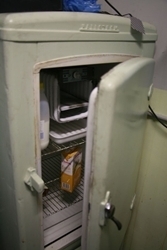
Basically, she came up with the term in relation to comics, which is as genre as it gets, to illustrate how many female comic characters have met with ill-treatment for the sake of moving a lazy plot forward. Simone started a website of the same name to illustrate just how rampant this was in comics. The term comes from a 90’s Green Lantern comic in which Green Lantern comes home and finds that his girlfriend has been killed and (you guessed it) stuffed into a refrigerator. (I’m paraphrasing some while looking at Wikipedia, lest anyone think I’m plagiarizing here while fact checking what I write). Just because it was illustrated so effectively by looking at trends in comic book plotting by Simone, doesn’t mean that it’s not going on in all forms of media, which it most definitely is.
SM: I read this article a while back that explained how a woman who dared to criticize this community got horribly ripped up over the internet. Who knew bullying was something that happened to adults?
JJF: Well, the worst part of fanboy, or any, culture can go misogynistic and homophobic and all the other horrible “ics” that are present in the backwaters of any group. I think when it veers into unconscionable territory a lot of that comes from the sort of peering through the looking glass at that which you’ve chosen to worship and making the decision to ignore your true reflection in exchange for that you idolize. Where you're never going to be the big strong guy with the muscles and save the hot girl in the metal bikini. That deep seated idolatry that composes the building blocks of the altar of the alpha male hero. You're not using mythology as it's meant to be utilized. You're not looking for the hero within yourself through the song of the myth. You're falling in love with the ideal of the hero, you're skipping a step and headed straight into blind devotion so you don't have to look within yourself. At their most reverent, they want to pull down Batman's tights and blow the guy, but they don't want their friends to know the fantasy goes quite that far.
I try to really be cognizant of who I’m writing and what their place is in the story. I’ve always tried to write strong female characters in my fiction and I think I actually write women pretty well. Our mutual editor has told me so, and I can’t argue with Katie Flanagan. Beyond the respect that I have for people in general, and my characters as a whole, I think I’m doing bad by my readers if I was to create anyone, male or female, that was there simply to die so I can shove them into a refrigerator and get some shock reaction out of my readers. The Billy Purgatory world is a rough place, and people die and it’s my typing fingers that commit all these murders. I made the decision that a pretty popular character with my readers was going to die in the second book, and I really questioned myself a lot while I was writing it and wondered if I was doing right by her or not.
It’s something that really irks me though, the cookie-cutter weak female character who is just there to look pretty until she gets kidnapped by the evil mastermind and then she can look all messy while she screams for him to swing down and save her from the crocodiles. It’s just a worthless enterprise from my point of view. I think Billy and Anastasia are currently pretty even as far as sacrificing themselves and saving one another so far. I plan to keep it that way.
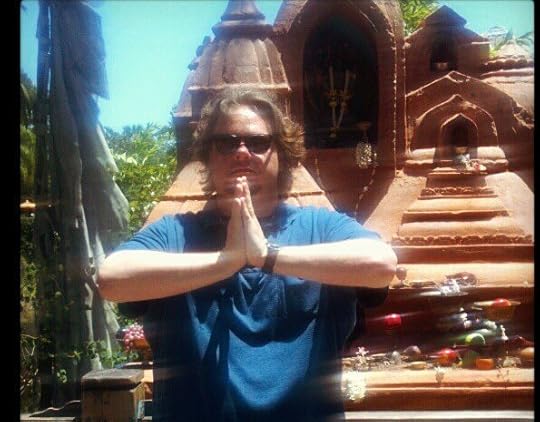
I think that if I reach a point where I’m writing women that don’t sound like women, don’t feel like women, don’t have the desires and longings that make up a woman’s soul, then it’ll be time to hang it up.
I think Billy and Anastasia are pretty equal at being monsters of bitchery too.
I’m not sure if I agree that my female characters are unemotional. I use the joke ‘emotionally-unavailable’ when I’m describing them a lot, and it applies equally to both of them. I think my female characters are just as strong, and can be just as withholding, as the male characters are in the world. I know that Anastasia can seem very cold at points in the story, especially in the first book. A lot of that has everything to do with being a vampire, and being raised that she was superior to humans and that they were nothing more than prey. What ultimately breaks that cycle for her, is that she does care and she doesn’t buy into the whole hunter mentality, not fully. If she wasn’t that way, in my mind, she wouldn’t have that redemptive arc that is so important for me to present, from my standpoint anyway. The books are called Billy Purgatory, but in my head they have always been just as much about Anastasia.
She has to learn that she’s not a monster, like so many of us have to learn, you can be a little cold when you take those first steps out of the dark.
I was afraid I was taking his quote out of context. But if it says what I think it's saying then I completely agree with it -- I think women are used as plot device doormats in so much fiction, genre is the worst, but it occurs across the board in some of the oddest places.
SM: On Leslie Fiedler…he was analyzing literature in America--up until the 1960s-- and comparing it to European literature and the traditions it comes from. The reason his big book, Love and Death in the American Novel was relevant to my novel and to this discussion is because he made a pretty convincing case for men in American literature wanting to be with each other! That blew a lot of minds, then he went on to say that he thought the men who represented the “savages,” or natives, in many books also represented freedom. If there are no women out there in the woods, but the guys are still as manly and lusty as ever, they have to be fucking somebody. Fiedler used Adventures of Huckleberry Finn and The Last of the Mohicans as two famous examples. Men want to go off and be woman (responsibility) free, so they go to the wilderness and build things and kill things. Women just bug them to have kids, go to church and wipe their feet when they come in the door. Even though he wrote these things over five decades ago, as I read Charles Frazier’s Thirteen Moons and Jonathan Franzen’s Freedom I could not help recalling all of this and wondering if some of what he argued for remains relevant in more modern fiction.
JJF: And with the rest of it, how can it not be that way? I realize you’re making a point about high-literature, but I’m still stuck on comics. You're reading stories about hot bodied perfect male specimens, usually in tights. Why can't Superman be Superman in a pair of jeans and sweater? I think that type of hero-love is a lot of times actual love to the point of wanting to be Wonder Woman to their heroes Superman. I think a lot of it begins as “It'd be great to be that guy” and eventually turns into “It’d be great to get saved by that guy and then be with that guy.”
It's idol worship of the highest order just like the tribes of old. It's very base culture.

SM: My specialty! Imagine the trouble I would get into if I looked like this.
JJF: Now, Leslie was probably making more of a point with “They don't look like us so they must be the bad guys. We don't know where they're coming from and what motivates these savages. We should probably kill them, but it would be kinda awesome to go native. But, we should probably kill them first.” Hasn’t the argument always been that the contentions of our society are holding us back? So maybe the idea is that you give up that which is unnecessary and let the natives take you into the unknown lands with them. They provide you freedom and you provide them with whatever they need in return.
The more I keep turning the question around in my head the more confused I make myself. I think I’d like to close by saying that anyone who wants to be Wonder Woman should be Wonder Woman and that’s okay with me.
SM: Chelsea Quinn Yarboro was writing them in the 70s, Anne Rice in the 80’s, now Jesse James in the new century. What is it about vampires and mythology that makes you want to write, whereas maybe a western or romance would not?
JJF: Yeah, what is it about vampires? I like how they channel id emotions and I like how they live in this place that’s slightly outside of our own world. They run through the night hunting prey and pretending they’re human so they can get close enough to us with their beguiling ways and then they latch onto our necks and take everything that was important to us, that we didn’t realize was so important, in an instant. They’re our killers, but they’re also our angels, because the last thought that crosses your mind when it’s too late to get away, is that none of the bullshit we chase our tails and break our necks to add to our personal treasure troves means anything in the cosmic scheme of things. All your hopes and dreams flow out of you and into them, so they can discard your silly fantasies along with your lifeless corpse.
To me, they are the quintessential perfect monster. There will always be a place for them in folk tales, and good books, and nightmares.
In the 70s it was probably a drug metaphor. I think with Anne it was a lot to do with turning away from our desires that we felt we should be ashamed of and then once we’ve finally given in and taken it too far, finding redemption – which kind of takes it full circle now doesn’t it? Apologies to Anne if I’m reading too much into it. Vampires currently, I have no idea and will not even begin to try and comment on the big, sparkling elephant in the room.
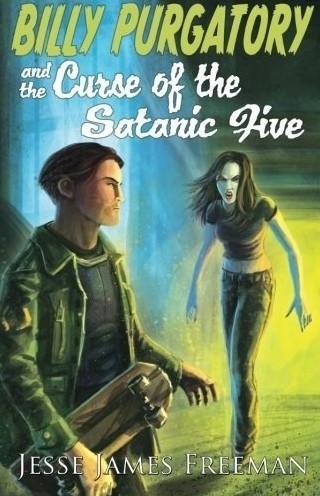
Billy Purgatory gets labeled a vampire book a lot, and I don’t really fight that too much because again, vampires are a huge deal and vampires sell. Realistically though, it’s not a vampire book in the same vein (wow, I really just typed that) as Lestat and Dracula and Salem’s Lot and 30 Days of Night is. It’s a book that happens to have a very important character in it who is a vampire. Because I am an obsessive, crazy-type person, I can’t leave well enough alone and I felt like I had to go back and get into all the history, and the subculture, and how they thought and what motivated the species. What it was that made my set of vampire powers different than all the other books (not a lot really, although, I worked in some quirks).
I think the main thing that I did was to decide that most vampires in my universe weren’t pure any longer, and that includes Anastasia. She had a vampire father and a human mother, so she’s half-vampire, and yeah, that’s been done 1000 times before I got around to it. I think a lot of where she ended up shining is in dealing with the two halves of her nature, the vampire versus human. There’s a chapter in the first book where she decides that she doesn’t want to be a vampire any longer, she’s fallen on some hard times and in her mind, it’s become pointless. So she enrolls in university, and begins living life in a way that’s reliant on her human side, she becomes one of us.
She’s still beholden to the rules and vampire hang-ups at first, but she starts to slowly change and almost doesn’t notice it. She doesn’t feed on humans any longer and the taking blood from others changes her. The fangs don’t pop out anymore and she realizes that she’s walking around in the day and no longer beholden to the night. She makes friends and falls in love and eats our food and gets the sniffles.
Anastasia reaches the point where she’s acclimated to a human life, to the point that she begins to question if she ever really was a vampire. It seems silly to her that she might have at one time believed herself to be one and that they even existed. It was something fun to play around with, and she discovers a lot about her true nature in becoming something else and tapping into that place inside herself that she had always kept hidden from all, especially to herself.
SM: At this point I was struck by a woozy sensation and became dazed--drunk on enlightenment. Booktrope founder Ken Shear helped me to a chair. I sipped a chilled beverage while concerned party goers tried to help by waiving copies of Caramel and Magnolias in my face. 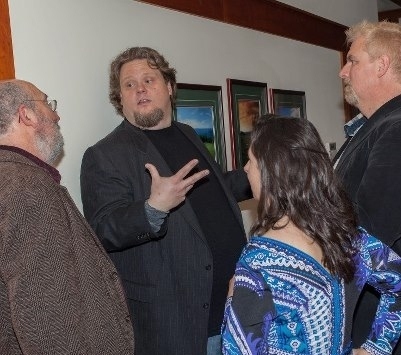
Both Billy Purgatory: I am the Devil Bird and Billy Purgatory and the Curse of the Satanic Five are available on Amazon.
--If you're curious as to why my blog interview format has changed so radically, Mr. Freeman himself has been the inspiration. If you haven't heard enough, check out the interview I did with him here.
*here we went on at length about Anton LaVey, world religions, porn stars and Warren Ellis. Sadly I had to cut it for interview continuity. I may have him come back and cover these topics for part deux!
February 15, 2013
Check out the latest review of Sex & Death to go live
Until then, here is a new perspective on my novel from Nikki McCormack, a popular blogger and local writer who hardly ever does book reviews!
February 11, 2013
On the value of the badly written sex scene
First came the Bad Sex in Fiction Award, several of the yearly nominees are funny and make my point that some authors in literary fiction—a category of books which purports to offer honest commentary about what it means to be human—give less crafty attention to sex than other subjects in their writing. As much as I like it when people who are smarter than I am make my points for me, what I am concerned about is the effect this sort of thing has on discussions of writing as a whole. Censorship by fear.
Next come the untold numbers of writer/bloggers who weigh in on the subject of whether or not to include sex in their writing, they criticize others for writing about sex at all. They say sex scenes as a rule are to be avoided. These bloggers disapprove because the sex isn’t “hot” enough, it is clumsily written, or, worse if you claim to speak for the “serious” writers, it is too perfect and does not honestly depict the way sex shakes out in real life. The latest one I read lamented the important details so often left out: lockjaw, the ill-timed cough, and the awkward removal of clothing, ending her list with the inattentive male.
First I had to recover my critical faculties--stunned as I was by the revelation that there are women out there who do not like to give head--I decided once and for all I had to get something up to address this infuriating argument.
Wake up people!! Sex was an integral part of life, literature and art before your fear, before your insecurity, before your bitterness. Stop trying to censor the rest of the world with your puritanical bullshit.
My heart goes out to him…Poindexter, MA, PhD, PTSD.
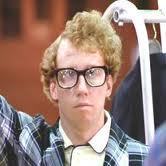
His most common sexual experience is beating himself off while typing one handed messages in an internet chat room or to internet porn. He will never include this in his work--even if this is valuable because it lets me in on what its like to be him with his particular sets of challenges and interests—because he fears ridicule. We will surely never get to read about the hopes, fears, disappointment and triumph that make up his first time with an another human for the same reasons. Why stop at sex? What about childhood traumas, adult humiliations, attempts at humor, or God forbid, real insight or original thought? Consider what else he avoids writing about because he is trying to please his teachers, classmates, and those "real writers" in his workshops who mustn't find out that he is not the bright literary star he pretends to be but a messy pile of insecurity and angst.
What if they don’t take him seriously?
What if they call him a hack?
What if they make fun of him?
Well, Dex, believe this: we need you, the real you, not another recycled opinion.
I challenge every writer who reads this to sit down and write the crankiest, sloppiest, most profane piece of filth you can, turn around and rewrite it, polish it until the scary nugget at the heart of your work can’t be mistaken for anything but the ugly, naked truth about you (and the rest of us!) that it is. Next, read it at the top of your voice, preferably for your family, friends and anyone else you can get to listen. Do this until you are sick of hearing those words, then move on to the next subject you’re afraid to explore.
Be honest; be real. There will always be someone waiting to tear you down--don’t mind them, they don’t contribute anything that matters. Those mall minded sado-mo-fos will never change. If you do this, you will have given the rest of us something of untold value, because it was different, because it was revealing, because it was really you.
Fuck them critics who tell you to write tame, to adhere to the rules of good taste, to write for polite society. Write scary and write nasty and go as deep as you can.
If you keep at it long enough, you might just get your own gushy post on this very blog!