V. Moody's Blog, page 96
October 22, 2012
Words: The More The Muddier

The idea that the more words used
the clearer the meaning becomes is one that trips up a lot of writers.
Not that additional details are
always a bad thing, but the ‘a little more information couldn’t hurt’ approach
is very definitely wrong. It can very much hurt.
If I want to visit you then there
is a minimum amount of info (street and house number), and an optimum amount (best
route, which exit to take) that I need. And then there’s an excessive amount (the name of
your neighbour’s dog).
On the other hand, what
difference does it make if you mention the neighbour’s dog? It’s not going to
make the address harder to find.
This is usually where a story
gets muddled, even though what it’s telling you isn’t hard to understand. It’s
not that you can’t use language to paint a picture or a mood, but you also need
to be aware that words on a page have an effect that has nothing to do with
their literal meaning. Words have the power to impact readers on a more primal
level.
The number of words used to
impart an idea or description, the length of sentences and of paragraphs, can
all change the way words enter a reader’s brain. You can use this knowledge to
create different effects, but the effects will also be there even when you
don’t mean them.
If you are unaware of what these
effects are, you can end up unconsciously creating a reading experience you did
not intend. And not all experiences are good experiences.
Short sentences, short
paragraphs, lots of white space on the page, speeds things up. It can be choppy
and lack flow if used to excess, but generally that won’t cause too much
problem for a reader.
Long sentences can be lyrical and
evocative. But the instinctual reaction is to assume more words equals more
important. If your aim is only to describe something clearly, you can’t relate
that to the reader just by thinking it while you write.
If June is going to a party and I
want the reader to know what she looks like in her new outfit I might take my
time describing each item of clothing. But it’s also going to have other
effects.
The longer I go on, the more
important clothing is going to seem to this woman. The clothes may also start
to carry an implication that later they will play a part in the story. Thematically,
clothes and other features of her outfit (the colours, the style, the language
used) will be assumed to be important to what follows.
If these things are intentional,
that’s fine. But if they aren’t, it’ll still be assumed that they are. And if
that isn’t followed through, the story will be judged as a failed attempt at
something that was never intended.
As well as importance, number of
words also correlates to time. This is not optional, it always happens.
“Where are you going?” asked James.
Karen turned around. Her hair was lank and unwashed. She was wearing
the same t-shirt, the green one that said ‘I’m with this idiot’ with an arrow
pointing up at herself, and the same jeans as the day before. Her nails were
filthy.
“Nowhere,” she said.
No matter what my intention, that
will be read as a pause between question and answer. If my intention is to let
the reader know what Karen looks like, but the conversation to be without
break, that’s not how it will be read.
And the longer the stuff between question and answer, the longer the
pause. Even if it’s possible for James to take in her appearance in a single,
quick glance, that’s immaterial. How long I take to tell you what he sees
instantly will be what the reader uses to judge the passage of time (unless I
specifically point out that James saw all the things described in an instant).
This becomes a big deal when
writers choose to use a heavily descriptive style. It’s not just about purple
prose or claiming literary fiction as a defence, but about placement and
structure. If people are pausing for minutes at a time in between a basic
conversation, or thinking encyclopaedia-length thoughts as they walk from the
sitting room to the kitchen, it’s going to feel weird and unrealistic. And very
slow.
Equally, if you use very short sentences in a scene that’s not very tense,
you’re going to create a rushed, urgent feel.
The point here isn’t that there’s
anything wrong with slowing things down or speeding them up, but more that
often writers will not put any thought into the choice other than going with
whatever takes their fancy. If you feel like writing a long paragraph painting
a picture of the sky, why not? And the answer is because your characters are in
the middle of a gunfight, and that’s not the best time to write 500 words on
the colour blue.
It’s not always possible to be
aware of these things when you are in full flow and trying to get an early
draft completed, but when going over a piece of writing it’s worth considering the
amount of text you’re giving to detailed description and action sequences in
order to gauge whether the pacing and focus on events is appropriate to what’s
happening in the scene.

If you found this post of use, please give it a retweet. Or leave a comment. Or maybe go make a cup of tea or coffee and have a think about it.


October 18, 2012
The Single-Mindedness of the Novel Writer

Working out if you’re meant to be
a writer is both the easiest and the hardest thing to do.
Talent doesn’t come into it. The
truth is, if you are a moderately intelligent, imaginative person, chances are
you have the ability (at your best) to write something someone somewhere will
want to read.
Of course, connecting with those ideal
readers isn’t quite so easy, but that’s another post entirely.
No, the way you can determine
whether you are a novel writer is quite straightforward. You have to write a
book. See, it’s easy. And also very hard.
First you need an idea. Doesn’t
have to be the greatest idea ever. There’s no point going into this with perfection as
your goal. It could turn out that way, certainly. Maybe you’re the next Harper
Lee. But for mere mortals craft takes graft, and also time.
Once you have an idea, something
that you think is interesting, the
next thing is to write it. How you approach this is up to you. Planning it out,
winging it, whatever. What you write isn’t all that important. Finishing it is.
There are some people who really
want to lose weight, but never do anything about it. Others get going on the
diet and the exercise, but it only lasts a few days, if that. Then there are
those who approach it with the eye of the tiger, lose the weight, take the
photo standing in one leg of their fat pants, and then six months later the
belly’s back. And obviously some people keep the weight off.
It’s pretty much the same with
writerly aspirations.
It’s impossible to know how
you’re going to feel once you reach your goal (assuming you do), but that
self-realisation can be the making of you, and not just as a writer. Some
people don’t really want to know. Hope tastes better than reality. Which is
fair enough.
But if you want to be a writer,
you have to write complete stories. You have to reach the finishing line and to
do that you have to know where the finishing line is.
When you get to that last page, that ISN’T the
end. That’s just the halfway point (not even that for some writers—me
included).
Your approach to rewrites and
revisions is up to you. There are various methods and techniques. But if you
rush to the end of your first draft, thinking it’s all over bar a little polish
and spellcheck, you aren’t going to be in the right frame of mind for the next
leg of the journey. You have to be realistic and you have to be prepared to put
in the effort.
You might be the kind of writer
who produces work that’s 90% done, I guess, but if the first thing that pops
into your head is the best you can come up with, then either you’re a genius
(possible) or you’re kidding yourself (probable).
Harsh as it may sound, if you are
the type of person who loses interest after the first draft, you probably aren’t
cut out to be a writer. Because going over the same thing again and again is a
big part of how you get a story to work.
That process of getting from
start to finish and then going back to the start, for as many times as it takes,
can get very tedious. You have to approach it with gritted teeth and a
determination that you will only entertain self-doubt and critical assessment
AFTER you reach the end. Doing so at any other time is pointless.
Doesn’t matter if it feels like everything
you’ve written so far is an utter waste of time. When you’re old and
experienced and have plenty of insight into your own process, sure, go ahead
and abandon your latest effort halfway through. Until then, a writer is the one
who writes the whole story.
It won’t be easy.
You need focus, motivation,
energy and single-mindedness.
Can you succeed without pouring
your whole life into one thing? Sure. Many do. The wealthy, the connected, the
lucky—they all do fine. I’m sure their success is no less enjoyable. We could
all fall into good fortune. I don’t even have to buy a ticket to win the
lottery, one could fall out of someone’s pocket and blow into my hand on a
helpful breeze.
But by and large the people who
make it, do so because of their focus and dogged refusal to give up. What looks
like an overnight success is often the hundredth attempt, it’s just the first
one to hit. You think Kim Kardashian just happened to get lucky with a sex
tape? No, from the moment she wakes up to the moment she falls asleep, there’s
only one thing on her mind: penis, penis, penis, penis...
It worked for her and it could
work for you. Single-mindedness, that is, not penises.

If you found this post mildly diverting, please give it a retweet. Cheers.


October 15, 2012
Characters Should Think Progressively

Written fiction allows access to
a character’s mind in a way that no other medium can. What someone thinks often
gives a new perspective on events, can reveal aspects you hadn’t considered, or
add depth to the way you perceive a character.
Often this is presented as a
snapshot of the character’s current state of mind. This is what’s happening,
and this is what the MC thinks about it. But what makes a character interesting
isn’t just who they are or what they do, it’s how they get there.
And while ‘it’s the journey not
the destination’ may seem obvious, knowing exactly which part of the journey is
the interesting bit may not.
Travelling from here to there is
no more interesting in detail or summary, as show or tell, if it’s just a
description of a man walking up a flight of stairs. It’s not the accurate description
of events that holds the attention.
What’s important is the change
along the way. How it’s caused, how it’s proceeds, how it’s received. If there
is no change, if it’s just one step after the other, it's hard to hold a reader’s
attention. The brilliant lawyer who wins the difficult case brilliantly isn’t
much of a story. The washed up lawyer who’s offered a fortune to lose but doesn’t,
is.
Seeing the struggle, internally
as well as externally, is what pulls people into a story and makes it worth following. But thought is not
a static thing, and only in extreme cases do things pop into a person’s head
out of the blue. Usually there’s a process of getting to a certain place.
Reactions and attitudes are built on a progression.
If Lauren is waiting for Bill at
the restaurant and she’s fuming, thinking angry things about him for standing
her up, and then he come in all apologies, and she swears at him and walks out,
you can follow that scene fairly clearly.
If Lauren hopes Bill won’t be
much longer, and she tries to avoid the look on the waiter’s face that says he
thinks she’s been stood up—so embarrassing. She checks the clock on the wall,
then her watch, then her phone. He wouldn’t stand her up, not after he promised.
The same as he did last time. And the time before that... The barman’s looking
now. And the couple holding hands, whispering. She counts the number of times
Bill has left her hanging, and the number is fourteen, which is definitely in doormat
territory. What the hell is she doing? She should just go home. Cut her losses,
all fourteen of them. No more! She heads for the door just as Bill walks in,
smiling, waving, and she punches him in the face.
In both scenes it is clear Lauren
is mad and why. But participating in the progression from hopeful to livid makes
it much easier to get on board with Lauren, and so follow her into the next
scene. Because letting us into a character’s head isn’t just so we get to
know what they think, it’s so we get to know them.

If you found this post interesting, please give it a retweet. Cheers.
------------------------------------------------------------
I'm publishing short stories on Smashwords as an experiment in self-publishing (blog post to follow on my findings). If you fancy reading one for free you can download it here. Any comments or reviews welcome (even bad ones).


October 11, 2012
Putting Emotion In Story

The travails and adventures of your characters should
have more than a superficial effect on the reader. Ideally, the impact should be
somewhere between enthralling and devastating.
But how do you convert words on a page to tears in eyes, lumps
in throats or hearts in mouths?
There are two basic ways to transfer emotion from page to
reader: sympathetic and empathetic.
Sympathetic
When we see a display of emotion, the emotion becomes contagious.
How much is dependent on various factors, but the simple physical sign of an
emotion is enough to create sympathetic emotions in the observer.
So, by and large, if you’re in a crowd that’s laughing
and upbeat, you will feel likewise. If you’re in a room full of misery guts,
you’re going to be on a downer. And if someone is crying their eyes out, even
if you have no idea why they’re crying, you will feel upset too.
This means when you write a scene where you describe
someone is a particular emotional state, there is a natural instinct for the
reader to relate. Big fat tears rolling down cheeks, snot dripping from nose,
fists clenches in distress and sobs being smothered... you get the idea.
Now, this is a very superficial way to convey emotion.
It’s clear what the emotion is and a skilled writer can evoke it very
viscerally, but if it is purely put in these externalised terms how strongly it
hits the reader will be modified by lots of other factors: the mood of the
reader, their general sensitivity, their relationship with the character, the
appropriateness of the emotion to the situation.
In short, it is easy to lose the reader’s engagement, and
this is compounded by things like clichés, melodrama and context (sixteen year
olds breaking up may seem a big deal to teenagers, not so much to 40 year
olds).
This all leads to the conclusion that sympathetic emotion
is best used as a way to emphasise and guide the reader. To be honest it’s pure
manipulation (and if it’s only that, the reader can end up being resentful),
but if used in conjunction with deeper emotions, it can work very effectively.
Empathetic
If you are close to someone, or if you’ve experienced
similar situations to the one they’re now going through, then the way you react
to their turmoil can be very much deeper than otherwise. Feeling someone’s pain
or joy, in the sense that you experience it as though you were directly
involved, is very powerful.
When it comes to writing, it can sometimes feel that if
you make the situation clear, the emotions should be self-evident. If Mary
loses her child, isn’t it obvious how she feels? If Jane finds out her husband
is cheating on her with her best friend, do you really need to spell out her
reaction?
And the answer is it should be entirely obvious how Mary
or Jane feel... if you happen to be a close friend of theirs.
If someone tells you a girl at their work had a
miscarriage, you might think that it’s terrible and be very sorry for her. If
your sister calls you up and tells you she’s had a miscarriage, it’s going to
feel like someone just kicked you in the stomach.
You have to be connected to people to feel what they
feel. And in fiction the key to that is what characters think and do, and
specifically what that tells you about them as people. Knowing characters lets
readers relate to them.
That doesn’t mean going into intense detail about their
likes and dislikes, where they went to school or how they decorated their
bedroom. If you know someone well, you will end up knowing all the little insignificant
details about them, but it doesn’t work in reverse. Knowing all the little
insignificant details about them doesn’t mean you know them well.
As a writer you have to be much more specific. In fact
you have to be devious.
If you want the reader to experience what Jane feels when
she discovers her husband cheating, then you have be aware that that’s what you
want. And well before you get to that point, you need to establish a
counterpoint to that emotion.
If in the early part of the story, Jane is flirting with
guys, sleeping around, or treating her hubby like crap, when she finds out he’s
cheating on her, will you feel upset for her?
On the other hand, if she’s shopping for his birthday
gift, cooking him his favourite meal, feeling sorry for her friend who’s been
dumped, then her finding out is all the more devastating.
Emotion in fiction works best when it’s given something
to contrast against. And setting up the characters to be most vulnerable to
what you’re about to inflict on them puts the reader in simpatico with them.

If you found this post interesting, please consider retweeting. Cheers.


October 8, 2012
Story Is A Drug

Making the reader want to know
what happens next in a story is an excellent way to get them to turn the page
and keep reading. But that’s not what hooks readers.
Curiosity will only provide part
of the glue that makes readers stick with a story. The truth is even if the
reader knows what happens next, if they’ve read it before, seen it before,
heard spoilers, know the original version... they can still enjoy it.
But if you already know what
happens in a story, why is it still worth reading?
You may have noticed when
watching the coming attractions at the movies (or possibly online) that
trailers give away a lot of the story. In fact they give away pretty much
everything. The best gags, the coolest effects, the big twist. Why?
Movie people aren’t dumb, not
when it comes to making money. They may not give a damn about you and your
move-going experience, but they want your cash, so what is their rationale for
stripping naked first, and then asking you if you want to pay for a lap dance?
The thing is, finding out what
happens in a movie or a book is a very small part of storytelling.
How you feel about what happens is the important part.
When it comes to making money
with movies, it’s getting people to see the movie more than once (sometimes
five, six, seven times) that makes a movie a blockbuster.
Those people who go again and
again, they know what happens. They know the twists and turns and that the best
friend will betray the hero and what-have-you. It’s not the ‘finding out’ that
people are going for.
What people respond to is the way
they feel when the lovers finally
kiss, or the timer on the bomb stops on one second, or the Karate Kid kicks
that guy in the face. It’s the emotion that’s important, not the reveal. You know
Rue’s going to die, but you still feel it every time Katniss gives the salute.
And like a rollercoaster, you may
know what’s coming, you may have ridden this ride many times, but your stomach still
does flip-flops. It’s a physical reaction — and so are emotions. And they can
be repeated by the same trigger. Not always at the same intensity, but close
enough to make it a powerful experience. You still get the hit.
Wanting to know what happens next
is a technique. It’s a way of creating a cascading momentum that keeps you
moving forward through a story. It’s what makes you automatically give the
correct response to a knock-knock joke, even if you hate knock-knock jokes.
But the satisfaction of a good
story isn’t from finding out what happens next, it’s from experiencing genuine emotion (even though it's created artifically).
So in order to make your story as
impactful on the reader as possible, keeping back information that you then
reveal (it was his best friend who was the bad guy!) has limited use.
The
emotions reaction (Oh, no, not the best friend!) is the important part.
Finding a way to make that as visceral and deeply felt as possible for the
reader is what will make the reader value the experience.

I’ll be looking at how to make scenes
emotionally effective in Thursday’s post (I’m back to two posts a week now that the summer's over).
If you found this post useful please give it a retweet, cheers.


October 4, 2012
Chapter One: The Casual Vacancy

This is another of my posts on
how a successful author hooks the
reader at the start of the story, what information she feels is necessary at
this point and how she approaches things like POV, character and voice (other first chapter I’ve analysed can be found here: Chapter One Analyses).
I chose The Casual Vacancy by JK Rowling
partly because it’s in the news, but also because it was a good opportunity to
see how an author goes about winning over readers who might be sceptical or
wary of her attempt at a new genre.
I should point out I haven’t read the whole
book and my only aim is to look at the opening on a technical level,
with a view
to taking it apart to see what works, what doesn’t (and how she got round
that), which conventions are used well, and which are broken to good effect. I will not be passing judgement on the novel
in terms of content or its place in literature.
Barry Fairweather did not want to go out to dinner.
The books starts with a prologue
wherein Barry, somewhat reluctantly, takes his wife out for an anniversary
dinner. He gets as far as the golf club car park and promptly drops dead of a
brain aneurysm.
This is the inciting incident
that sets things in motion for the rest of the book, so it’s important. In
terms of how it’s presented, it’s fairly direct and underplayed. His death
isn’t dramatic or sensational in any way. Just one of those things.
There is one moment of blunt
foreshadowing: They were watching
television when he said good-bye to them for the last time, and only Declan,
the youngest, turned to look at him, and raised his hand in farewell.
That ‘for the last time’ tells us
in advance that daddy won’t be coming home. This sets up a feeling of anticipation,
I guess.
The POV starts off in third
person, close to Barry. His thoughts, his attitudes, his emotions. But it ends
up being omniscient, a POV not all that popular these days (or so we’re told).
The next chapter (chapter one
proper) is about Miles and Samantha, a well to-do couple, very middle-class,
who were in the car park when Barry keeled over. The main action here is Miles
phoning his father to tell him Barry’s dead, while Samantha thinks snippy
things about her husband, his parents and life in general.
The idea that Barry’s death is a
big deal to this community comes across strongly (it’s pretty much central to
everything).
The POV is now very definitely omniscient.
We get a lot of what Samantha is thinking, but the observation on what she
looks like is presented from a less than flattering outsider’s view. Her fading
good looks and leathery over-tanned skin are mentioned repeatedly.
The difference between omni and
head-hopping (where we jump from one character’s perspective to another’s) is
that omni is presented from a singular perspective, that of the author’s.
Here, there is a very definite
judgemental view of these people. You aren’t supposed to like them and the author
isn’t shy about informing you of that fact.
Up to this point I was having a
hard time figuring out why anyone would care about these people. Not likeable
and not much going n, is how it felt. The chapters are quite short so I decided
to read the next one, which is where I started to see things more clearly.
Next we shift to another family
at breakfast. The news here is also about Barry, but events are more focused on
familial problems, mainly that one of the children has been caught smoking
in the garden shed and the father is very angry. This escalates to the point
where he becomes threatening to the wife and there is an indication he has been
physically abusive in the past and that the family live in fear of him.
Most of
this comes through the thoughts of the eldest son, who hates his father. There
is also an extreme amount of swearing in this chapter; fuck, cunt, shit, all
the big guns.
So now I start to get it. First,
the short chapters linking a large cast of characters through Barry’s death are
present in mosaic fashion. You may not see the purpose of this scene now, but
watch the ripples expand and collide.
This is a difficult thing for a new
writer to attempt, since slow, seemingly inconsequential events could lead
somewhere but often don’t. For JK, she can afford to test her readers’ patience
a little, and if it works out it will be seen as an ambitious approach (and
what other approach would you expect from her?).
She also creates tension in
scenes not through direct conflict (although that may happen later in the book)
but by having two contrasting views of each scene: what we see happening, and
what the characters are really thinking about it.
I can’t be sure she does this
for the whole book, but so far she chooses one character in each scene and
tells us what they really think, which isn’t how things appear on the surface.
This is an unusual POV choice. It
isn’t Limited 3rd POV where you stick with one character’s perception, the narrative
here tells us lots of things the main character can’t know. After Barry dies, for
example, we continue to get information about what’s happening even though we
were seeing events from his perspective until then.
But we also get the inner
thoughts of one character in the scene which offers a contrast to how things
seem to be happening, and that character can be anyone. Which adds to the
mosaic feel of things.
This clash of external and
internal provides the tension. I don’t know if the whole book is in that style,
but it’s an interesting way to present a story, where no one’s being honest about
their feelings, because of fear, embarrassment, manners, middle-class
repression and a host of other reasons.
The short chapters help keep
things moving, although they do lend the characters are slight caricature vibe,
middle-class people who belong to the golf club and have the vicar round for tea,
and turn out to be swingers.That may not be a fair assessment of the book as a whole, I'm sure depth is added as the sory goes on, but that's the immediate impression.
There’s also a very strong sense
of the author telling you who to like and who to scoff at in mocking fashion. Not subtle.
That kind of spoonfeeding the reader is a little more
acceptable in children’s books where the bad guy killed your parents, but I can
see it getting people’s backs up it they don’t share the same views about such people
(or if they are such people).
Overall, though, the key
technique used to lure readers in, I think, is the dual POV. The objective
overview of what people are doing (well, objective with a dash of judgemental derision),
contrasted with the inner (often vitriolic) thoughts of one of the characters
caught up in the scenario.
While I don’t think most new
writers will be afforded the chance of such a long, slow build up, I do think that
approach of showing things not to be how you might think is an interesting
alternative to direct confrontation.

You can find more Chapter One
Analyses for books across many genres (YA, MG, Romance, Crime, Horror,
Thriller, Sci-Fi and Fantasy) here.
If you found this post useful, please give it a retweet. If you are JK Rowling, please don't sue me. Cheers.


October 1, 2012
Story Structure is Simple

Sure, a story needs a Beginning,
Middle and End, but apart from that what else do you need to build a satisfying
and effective story structure?
The answer is simple: Nothing.
In the same way that the four building
blocks of DNA enable the creation of all life on Earth, so B, M and E, if
positioned, combined and repeated correctly, can produce an endless variety of
story.
BME. First, my definitions:
Beginnings explain what’s going
on.
Middles show what you’re going to
do about it.
Ends deal with the outcome. What
it is, and how it affects people.
A man’s child is kidnapped. He goes to extreme lengths to find the
child. He gets the child back.
That is a simple BME for a story.
But within that overview, each chapter, each scene, each section of a scene has
its own BME, sometimes multiple BMEs strung together.
But the thing about BMEs is that
they don’t have to appear in that order.
A man is naked in a bedroom. He gets dressed and then climbs out of the
window. He walks round the front as a woman says, “I thought your flight was
coming in the evening,” to a man getting a suitcase out of his car.
When we see the man in the
bedroom we don’t know what’s going on, we’re in the Middle. When he passes the
front of the house we get the Beginning, the explanation of what’s going on.
You could have just had him hear what she said from the bedroom door and then
escape, but you don’t have to.
But, if I had the man leave out
of the window and go off without ever explaining why (even though it’s pretty
obvious he’s avoiding someone), that would leave readers annoyed and
frustrated. You leave out one of the blocks and the structure collapses.
Each unit also can double up, so
what is the End of one section can also simultaneously be the Beginning of
another.
The man who finds his lost
daughter has reached the end of the ‘looking for daughter’ part of his story.
If she turns out to be possessed by a demon, that same scene is also the
beginning of the ‘What do I do about my demon-daughter?’ thread.
Or the middle of one characters
thread can intersect with the middle of another character’s.
If the man searching for his kid
is fighting a bunch of men who are involved with the kidnapping, and a new
character bursts in and shoots the men and tortures one for info, then clearly
new guy is in the middle of his own story.
Imagine if I brought in this new
guy to help out our hero, but never explained why he’s also after these guys.
No Beginning. Or if he helped out and then disappeared? No Ending. Again,
structure collapses.
BTW, it is possible to leave off
Ends so that it is left open-ended or open to interpretation, but those are
rarely satisfying.
Most people can understand the
concept of Beginnings and Endings. You can still construct them out of shorter BMEs to make them more
interesting, but you could reduce them to a single line if you wanted. It’s
Middles that writers find most difficult in creating something that holds up
and works across multiple pages and chapter.
The key to Middles is not to make
them boring (usually because they’re too easy/predictable/static/passive/clichéd/inconsequential).
That comes down to personal judgement. But in terms of structure, all you need
is: this is what's up/this is me
trying to do something about it/this is how that turned out.
You can present it in that simple
a manner, but you can also get a bunch of these threads and mix them up. It’s
like writing a tune with three chords—it can make an awful din, or the greatest rock
song of all time.
How you sequence, layer and mix the
basic units is up to you and your artistic judgement. But as long as you
complete each BME, even if they’re in the wrong order or chapters apart, the
structure will be sound.

If you found this post useful please give it a retweet. Cheers.


September 24, 2012
Cliffhangers For Unscrupulous Writers
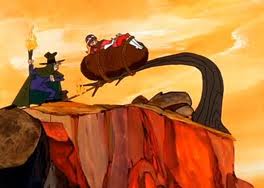
The dirty secret about
cliffhangers is that they work.
Whether they’re corny, cheesy,
clichéd, obvious, predictable or downright contrived.
Sure, you may well get called a
hack and a cheap manipulator, but cliffhangers only guarantee the reader will
cross the chapter break, they don’t guarantee they’ll like what they find when they
get there.
Obviously, it would be preferable
if writers used this technique for good instead of evil. But we all know that's not how cliffhangers are used for the most part. Anyone with a television set can
see the abuse and misuse they are put to nightly. Still, it’s worth having this
weapon in your arsenal. How you use it is your affair.
Danger
The simplest and the most common:
physical peril. If doom is impending, seeing how a character manages to avoid
it works even when the solution turns out to be fairly straightforward (he
ducked!).
The Dilemma
Rather than a simple choice, the
dilemma offers the added cliffhanger of ‘The Consequences’. If Jack is clinging
for dear life off a cliff, and in the next chapter he manages to get a handhold
and work his way to safety, that’s the end of that. But if Jack’s only chance
of survival is to cut fellow climber Tim loose, sending him plunging to his
death, and then climb to safety, the consequences of his actions have already
become the next cliffhanger. Chaining cliffhangers together is an excellent way
to give readers no convenient point of disembarkation.
What’s in the box?
When something hidden is
revealed—in a safe, behind a curtain, the contents of a letter—opening the box
but not revealing what’s in it never fails. Cheap? Yes. Effective? No doubt.
Will they or won’t they?
Romance outcome is always going
to keep the attention. Doesn’t matter how obvious it is that they will end up
together, readers want confirmation. And once they have it, they will lose all
interest, so best to save it for as near the end as possible.
Why did he do that?
Unexpected behaviour, something
unusual or out of place, requires explanation. If the bank robbers prepare to
go into the bank—guns, masks, explosives—and then they all put on their tap
dancing shoes, you’re going to want to know what the hell they plan to do.
Discovery
When someone’s secret is
discovered, when the thing they’ve always feared would ruin them gets out, what
happens? How do people react? How does the owner of the secret react? Is it as
bad as they feared? Worse? The only real reason to give a character a secret is
to see what happens when it’s revealed.
Will it work?
When you go to the trouble of
coming up with a complicated plan to get the thing you really want, whether
it’s a girl or a diamond or a murder, the moment the plan is put into action,
the reader wants to know whether it will be successful.
It’s gone wrong!
When things don’t go to plan,
what’s our hero going to do? Give up? No way. Improvising a solution is more
exciting than when things go smoothly. Let’s see you get out of this one, says
the reader.
I’m about to explain all
At some point he figures it out.
He knows who did it, or how it was done, or whatever. But just because the
character knows, that doesn’t mean he’s going to spill the beans right away.
Very annoying, but no one’s going to stop reading now, right?
Anticlimax
Of course, it’s best not to set
up a cliffhanger and then reveal there was no real danger. It was just the cat,
or a wrong number or a dream. That’s lazy and amateurish. But it still works.
Every time. Not saying you should use it. Just saying.
Delayed Punchline
You set up the big cliffhanger at
the end of Ch.4, with the girl tied to the bomb, the countdown on ten seconds,
the hero still locked in a police cell on the other side of town. Then Ch.5, a
man buying cheese in a cheese shop... WTF? No bomb, no girl, no hero. How can
this be? Oh, it can be, alright. It’s irritating,
it’s frowned upon, it’s hated by readers... but they’ll keep reading.
Disclaimer: I’m just splitting
atoms for the purposes of science.
If you found this post useful, please give it a retweet. Cheers.


September 17, 2012
Dialogue Clinic

Dialogue is one of the most
important parts of a story. Readers will skim through everything else, but
rarely will they skip over dialogue. It’s engaging, it’s fun, it brings a story
to life. Plays, movies, radio are all constructed around speech.
Turning functional dialogue into
something more, something that rivets and entertains, is difficult. It would be
great if we could just listen to people talking and naturally condense it into
sparkling dialogue—and some people do have that facility—but for most of us it
takes a bit more effort.
The following three areas are key
to good dialogue. You can ignore them all and still write engaging dialogue, but it’s a lot easier if you keep them in mind.
1. Saying exactly what you mean
is boring.
2. People agreeing makes for
terrible conversation.
3. What you say is more important
than how you say it.
1. Saying exactly what you
mean is boring
As the writer you know what a
character is trying to say. You know how they feel, you know what their
concerns are, so the obvious thing would seem to be to just have them say it.
While you might easily grasp that telling someone you love them can be a
difficult thing to spit out, it may not be so obvious why you lose if someone
says, “Can I borrow your car?” if he wants to borrow the car.
And the truth is you don’t lose
anything. But you don’t gain anything either. The whole point of dramatic
fiction is to build. Whether that’s tensions or suspense or emotion or curiosity
or whatever. What you don’t want is a very long wall that’s only one brick
high, you want to put the bricks on top of each other, and you can do that
quicker by giving characters less simplistic dialogue.
— Can I borrow your car?
— Why the hell would I let you anywhere near my car?
The first line is set up. It
doesn’t get interesting until the second line. As opposed to:
— Hey, your car’s looking dirty. Want me to take it to the car wash?
And already the suspiciously
helpful offer is raising questions.
The problem is that not saying
what you mean can feel counter-intuitive. And if you do try to make things less
straightforward you can end up just making things vague or confusing.
2. People agreeing makes for
terrible conversation
Conversations come alive when the
people talking hold different viewpoints and are able to express themselves.
Two people on the same side turns into a monologue, which can still be entertaining,
but it’s much harder work.
An uneven pairing is also dull.
This happens a lot with political views where one person has all the best lines
and makes a lot of sense, and the other is a moron. Fun to write, not much fun
to read (unless you completely share the author’s beliefs).
One person telling another facts
and info, getting the occasional prompt to continue (“Uh-huh, and then what
happens?”) demonstrates a lack of skill and technique. It’s important to get certain
information to the reader. Regurgitating it in dry text-book fashion isn’t necessarily
the best way to do it.
The three types of conversations
I’ve just outlined as not very interesting can totally be used to good effect
if you’re a skilful dialoguist. But a lot of that relies on you being able to
judge what makes a good topic for conversation.
— I just got Mike to propose marriage and I made him think it was his idea.
— How did you do that?
versus
— I just got a job at the cardboard box factory.
— How do they make cardboard boxes?
But if you have the characters on
different sides of the conversation, you immediately raise the level of
interest, bother for the characters and the readers.
3. What you say is more
important than how you say it
The secret to good dialogue is
simple. You want to be able to evoke whatever emotion, tone, mood, attitude
through what people say.
Just by reading the dialogue, you
should be able to tell who’s thinking what.
You could just state it in the
narration.
“Can I talk to you?” asked James, his usual pushy self.
“Okay, come in,” said Sally, obviously not happy to see him.
Or you could dress it up a bit by
adding description to the scene. Instead of telling the reader Sally wasn’t
happy, you could show it through her actions and facial expressions. But all
that would still be poor writing.
“Can I talk to you?” said James. “Just ten minutes, I swear.”
“You’ve got two.” Sally looked at her watch. “Starting now.”
The key isn’t in how someone
speaks, it’s in what they say. This is quite a tricky thing to learn. The
obvious way to put emotion into speech is to use language the way we hear it.
“Mr Smith, where were you the night of the fifth?”
“The fifth? Oh, er, let me think. The fifth ... the fifth... hmm.”
And so on. The problem with that
kind of writing, apart from it being bloated and very easy to get carried away
with while convincing yourself you’re writing is ‘real’, is that it’s tedious
to read (imagine the guy above stalling for a full page). It’s not that bad to
hear, in a movie or play, where an actor is selling it to you in the guise of
characterisation, but on the page it’s deathly dull and longwinded.
Trying to figure out what someone
could say that would both make it clear to the reader what tone you’re going
for while still being subtle and interesting is difficult.
“Mr Smith, where were you the night of the fifth?”
“I didn’t kill no one.”
“Who said anything about—“
“You can’t come in without a warrant. I know my rights.”
That’s not say you can’t add
physical actions, facial expressions or speech patterns to make the scene more
vivid, but a conversation is only going to have real impact on a reader if what’s
being talked about has more relevance than general chit-chat or banter.
The best way to develop an ear
for this sort of dialogue, I’ve found, is to read screenplays. Specifically,
screenplays to movies you haven’t seen so you aren’t swayed by the actors’
interpretation. Obviously you want to read the scripts of good movies, but it’s
relatively easy to find that out. It doesn’t really matter about the genre or
even the age of the script. You aren’t reading to find out how people speak,
you’re reading to find out how you convey emotion through dialogue.
When you read an exchange between
two people and you feel something—sadness or fear or whatever—look closely at
how the conversation started, how it built, and at what point it transcended
information and became emotion.

If you found this post kinda-sorta interesting, please give it a retweet. Cheers.


September 10, 2012
Good Endings Are Hard To Find

Readers want you to tie up all
the loose ends, bring things to a close, make it satisfying and logical, and
they want it to feel right.
And they don’t want to hear any
nonsense about realism and how sometimes in life there is no answer, no proper
endings, no closure. But then, ending a story isn’t about realism.
And they all lived happily ever after... What the hell does that even
mean?
The end is just a place for
passengers to disembark. Journey’s end. But what you need to have achieved in
order to call it an ending isn’t always so obvious.
Often, though, the type of ending
that your story needs has been foretold already. In the beginning. It doesn’t
really matter what happens in the beginning, but whatever the tone is, whatever
the mental and emotional state of your main character, by the end of the story
they’re going to be in a different one.
If you start with Little Johnny
playing innocently with his friends, by story’s end his innocence will be over
(a good example of this kind of book is To Kill A Mockingbird, where the first
section is the kids playing in idyllic summer, fearing imagined monsters, and
by the end of the story they know what real monsters look like).
Not that you need to go for the
diametrically opposite vibe, but for a satisfying climax, the sense of journey
and transformation a story requires will be better realised if there’s some
distance between MC at the start and MC at the climax.
Because of this, if you know how
your story starts you’ll have a pretty good idea of how to end it. And the
reverse is true also. If you know your ending, that will give you a leg up on
the opening.
Let’s say our story is about
Milly and her fiancé, Dirk. Milly has a terrible temper, always accusing Dirk
of things he hasn’t done or complaining about things he was supposed to, until
she finally drives him away. She reassesses her life and then meets someone new—Frank.
She keeps her temper in check and then on her wedding day she discovers Frank’s
been having an affair with her best friend, Gladys. Milly flips out and kills
Frank and Gladys and everyone in the chapel.
The story starts with Milly an
angry mess, and it ends with Milly as an angry mess. While you could write the
story as a dark comedy, as a genuine story about a woman dealing with her
insecurity and fears it’s going to feel lacking. You could have saved everyone
a lot of time and just have her kill Dirk for leaving her in the first place.
But say you like the opening.
Milly’s anger drives men away and she spends the story learning how to cope
with it. She meets Frank and thinks all is well with the world, but then
discovers his infidelity. If I don’t have her revert to Livid Milly, where can
I go? Well, since her personal journey was about learning to cope without anger
and fear, I might have her see the situation for what it is—a close call where
she almost married a douche. Instead of becoming enraged as everyone in the
church expects, she could burst out laughing and wish Gladys good luck with the
scumbag.
The events of the story are the
same, but the change in her outlook on life informs her reaction.
On the other hand, if you liked
the ending of the original example, where Milly loses her mind and kills everyone,
then that story should start with Milly as shy and unsure of herself, maybe
taken advantage of and abused. Eventually she can’t take any more and turns on
her persecutors (an example of this kind of story would be Stephen King’s
Carrie).
I’m using quite extreme examples
to show the differences in stark contrast, but it doesn’t have to be quite so
over the top. The key point is to have your MC changed by the experiences they
go through during the story so they end up in a different mental state from where
they were at the start.
Often, you will find that the
first scene will naturally contain the character’s state of mind, although it
may be buried or the scene might be a bit dull. If your character wakes up and
feels crappy about going to work, then that shows he is unhappy with his life
and feels stuck in a rut. But waking up and brushing his teeth isn’t a very
dynamic opening, so the trick is to transfer that same sentiment into a more
interesting scene.
Maybe he’s at the office hating
what he does—still sounds quite dull. Or he could be out in the field on
assignment—opportunities now starting to open up. Maybe he’s in a client’s
small plane and the client ahs a heart attack at the controls. My point is his
lack of enthusiasm for his job can take place anywhere I choose. And because I
have a handle on what the character’s about, even though a reader might not
immediately associate a man screaming as the plane he’s in plummets to the
ground as being about not liking your job, if I know, then I can use it to
create a satisfying ending to the story.
That’s not to say the way it ends
is preordained. He could get a new job he likes, he could find a better reason
to like the job he has, he could even accept his life as it is because of the
things happening in the rest of his life—or myriad other options.
The actual specifics of what
happens and how it goes down are still completely open to whatever you can come
up with, but knowing where you need to get your character to mentally can help
guide you. It’s that process of change that readers react to and find engaging.

If you found this post useful, please give it a retweet. Cheers.